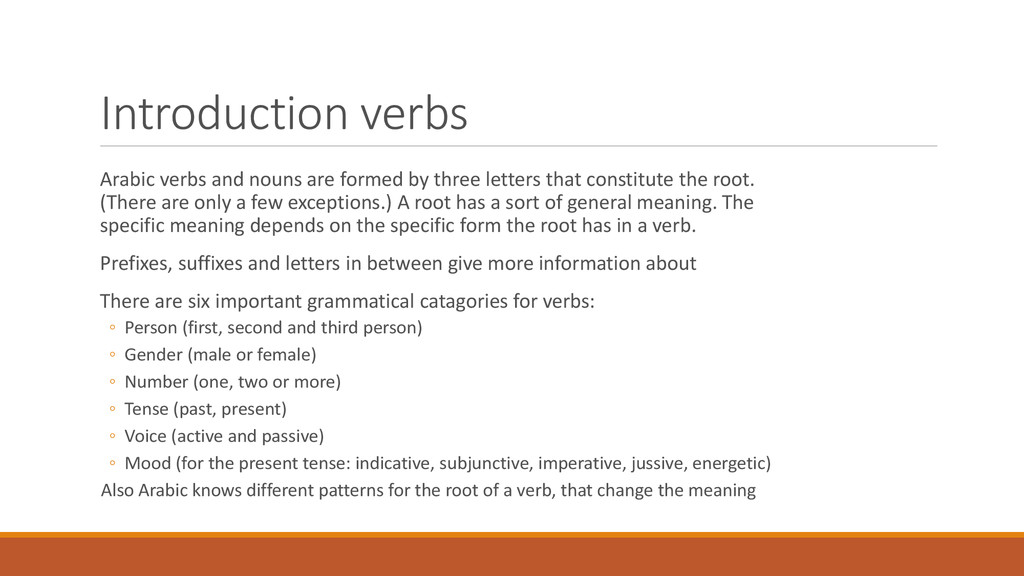
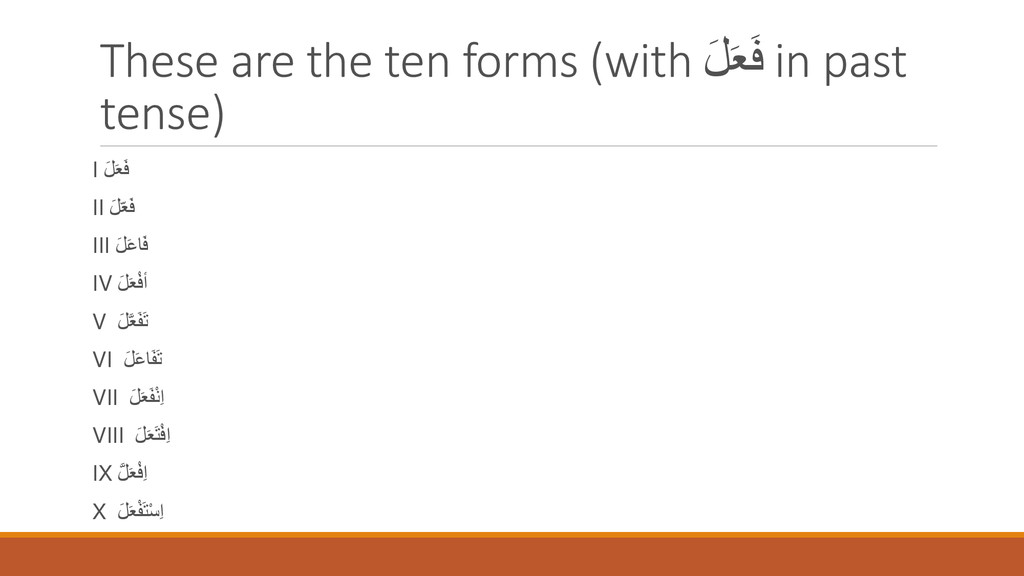
letters that constitute the root. (There are only a few exceptions.) A root has a sort of general meaning. The specific meaning depends on the specific form the root has in a verb. Prefixes, suffixes and letters in between give more information about There are six important grammatical catagories for verbs: ◦ Person (first, second and third person) ◦ Gender (male or female) ◦ Number (one, two or more) ◦ Tense (past, present) ◦ Voice (active and passive) ◦ Mood (for the present tense: indicative, subjunctive, imperative, jussive, energetic) Also Arabic knows different patterns for the root of a verb, that change the meaning
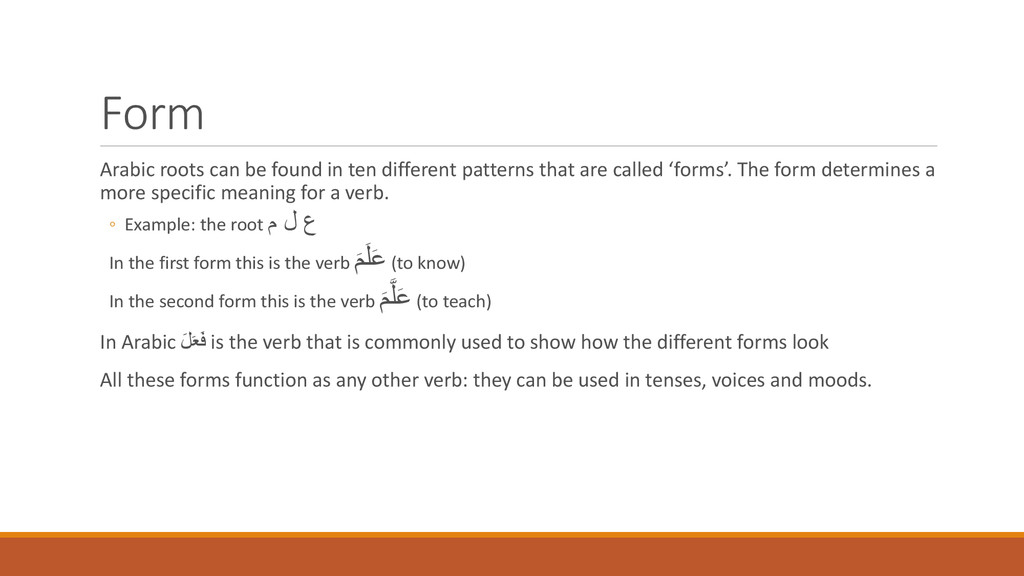
that are called ‘forms’. The form determines a more specific meaning for a verb. ◦ Example: the root م ل ع In the first form this is the verb َمَلَع (to know) In the second form this is the verb َمَّلَع (to teach) In Arabic َلَعَف is the verb that is commonly used to show how the different forms look All these forms function as any other verb: they can be used in tenses, voices and moods.
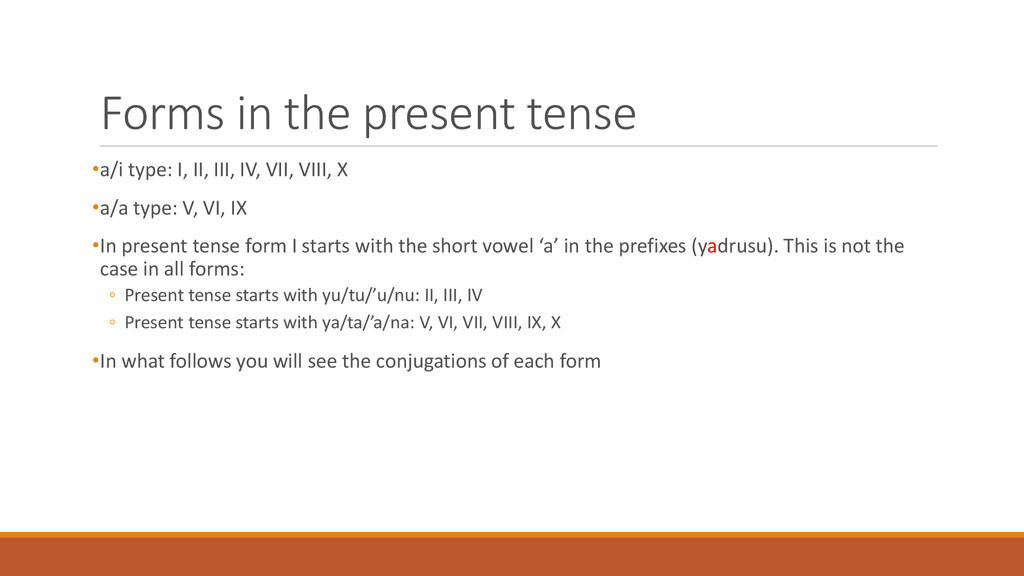
IV, VII, VIII, X •a/a type: V, VI, IX •In present tense form I starts with the short vowel ‘a’ in the prefixes (yadrusu). This is not the case in all forms: ◦ Present tense starts with yu/tu/’u/nu: II, III, IV ◦ Present tense starts with ya/ta/’a/na: V, VI, VII, VIII, IX, X •In what follows you will see the conjugations of each form
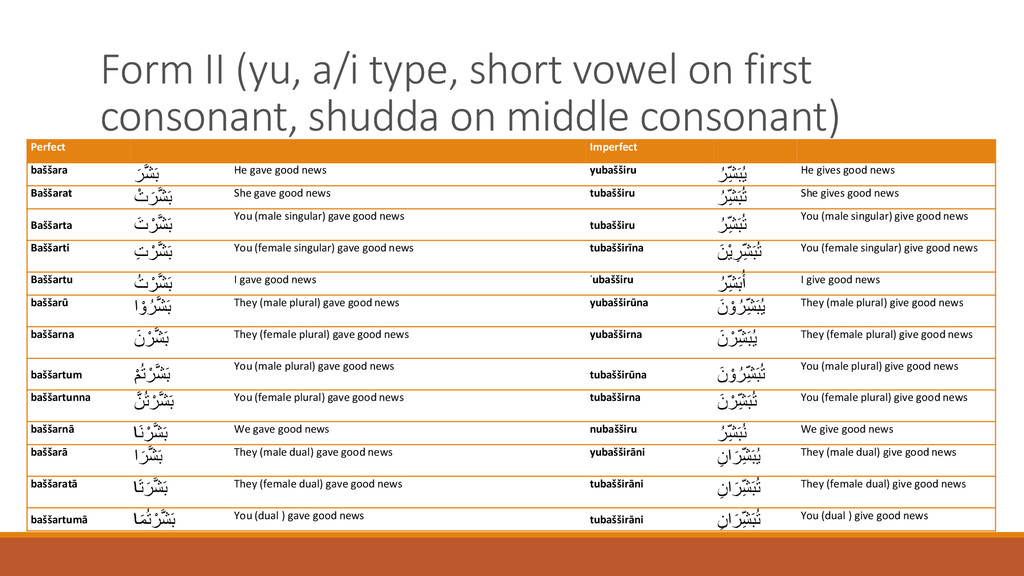
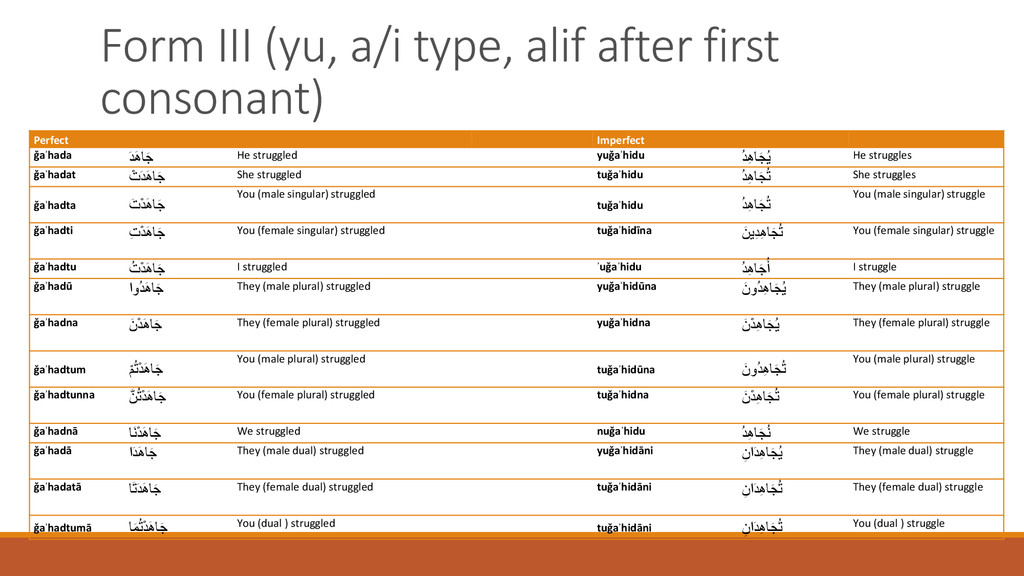
shudda on middle consonant) Perfect Imperfect baššara َرَّشَب He gave good news yubašširu ُرِّشَبُي He gives good news Baššarat ْت َرَّشَب She gave good news tubašširu ُرِّشَبُت She gives good news Baššarta َت ْرَّشَب You (male singular) gave good news tubašširu ُرِّشَبُت You (male singular) give good news Baššarti ِت ْرَّشَب You (female singular) gave good news tubašširīna ِ رِّشَبُت ََْي You (female singular) give good news Baššartu ُت ْرَّشَب I gave good news ʾubašširu ُرِّشَبُأ I give good news baššarū ا ْوُرَّشَب They (male plural) gave good news yubašširūna ُرِّشَبُي ََ ْو They (male plural) give good news baššarna ََ ْرَّشَب They (female plural) gave good news yubašširna ْرِّشَبُي ََ They (female plural) give good news baššartum ْمُت ْرَّشَب You (male plural) gave good news tubašširūna ُرِّشَبُت ََ ْو You (male plural) give good news baššartunna ََُّت ْرَّشَب You (female plural) gave good news tubašširna ْرِّشَبُت ََ You (female plural) give good news baššarnā اَن ْرَّشَب We gave good news nubašširu ُرِّشَبُن We give good news baššarā ا َرَّشَب They (male dual) gave good news yubašširāni َرِّشَبُي َِا They (male dual) give good news baššaratā اَت َرَّشَب They (female dual) gave good news tubašširāni َرِّشَبُت َِا They (female dual) give good news baššartumā َمُت ْرَّشَب ا You (dual ) gave good news tubašširāni َرِّشَبُت َِا You (dual ) give good news
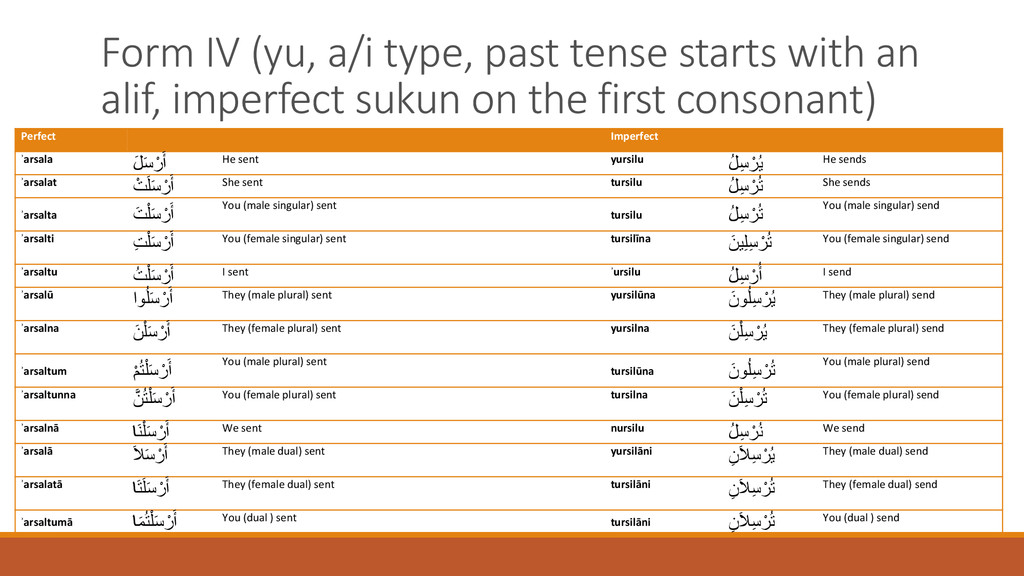
alif, imperfect sukun on the first consonant) Perfect Imperfect ʾarsala َلَس ْرَأ He sent yursilu ُلِس ْرُي He sends ʾarsalat ْتَلَس ْرَأ She sent tursilu ُلِس ْرُت She sends ʾarsalta َتْلَس ْرَأ You (male singular) sent tursilu ُلِس ْرُت You (male singular) send ʾarsalti ِتْلَس ْرَأ You (female singular) sent tursilīna يِلِس ْرُت ََ You (female singular) send ʾarsaltu ُتْلَس ْرَأ I sent ʾursilu ُلِس ْرُأ I send ʾarsalū اوُلَس ْرَأ They (male plural) sent yursilūna ََوُلِس ْرُي They (male plural) send ʾarsalna ََْلَس ْرَأ They (female plural) sent yursilna ََْلِس ْرُي They (female plural) send ʾarsaltum ُتْلَس ْرَأ ْم You (male plural) sent tursilūna ََوُلِس ْرُت You (male plural) send ʾarsaltunna ُتْلَس ْرَأ ََّ You (female plural) sent tursilna ََْلِس ْرُت You (female plural) send ʾarsalnā َنْلَس ْرَأ ا We sent nursilu ُلِس ْرُن We send ʾarsalā َلَس ْرَأ They (male dual) sent yursilāni ََِلِس ْرُي They (male dual) send ʾarsalatā َتَلَس ْرَأ ا They (female dual) sent tursilāni ََِلِس ْرُت They (female dual) send ʾarsaltumā ُتْلَس ْرَأ اَم You (dual ) sent tursilāni ََِلِس ْرُت You (dual ) send
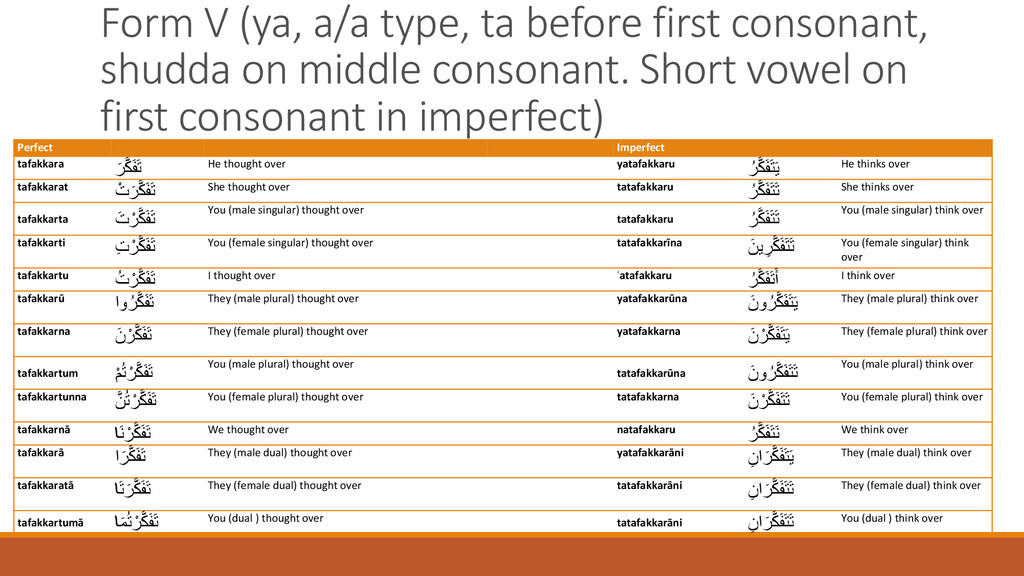
on middle consonant. Short vowel on first consonant in imperfect) Perfect Imperfect tafakkara َرَّكَفَت He thought over yatafakkaru َّكَفَتَي ُر He thinks over tafakkarat ْت َرَّكَفَت She thought over tatafakkaru َّكَفَتَت ُر She thinks over tafakkarta َت ْرَّكَفَت You (male singular) thought over tatafakkaru َّكَفَتَت ُر You (male singular) think over tafakkarti ِت ْرَّكَفَت You (female singular) thought over tatafakkarīna َّكَفَتَت ََي ِر You (female singular) think over tafakkartu ُت ْرَّكَفَت I thought over ʾatafakkaru ُرَّكَفَتَأ I think over tafakkarū وُرَّكَفَت ا They (male plural) thought over yatafakkarūna َّكَفَتَي ََوُر They (male plural) think over tafakkarna ََ ْرَّكَفَت They (female plural) thought over yatafakkarna َّكَفَتَي ََ ْر They (female plural) think over tafakkartum ُت ْرَّكَفَت ْم You (male plural) thought over tatafakkarūna َّكَفَتَت ََوُر You (male plural) think over tafakkartunna ُت ْرَّكَفَت ََّ You (female plural) thought over tatafakkarna َّكَفَتَت ََ ْر You (female plural) think over tafakkarnā َن ْرَّكَفَت ا We thought over natafakkaru َّكَفَتَن ُر We think over tafakkarā ا َرَّكَفَت They (male dual) thought over yatafakkarāni َّكَفَتَي َِا َر They (male dual) think over tafakkaratā َت َرَّكَفَت ا They (female dual) thought over tatafakkarāni َّكَفَتَت َِا َر They (female dual) think over tafakkartumā ُت ْرَّكَفَت اَم You (dual ) thought over tatafakkarāni َّكَفَتَت َِا َر You (dual ) think over
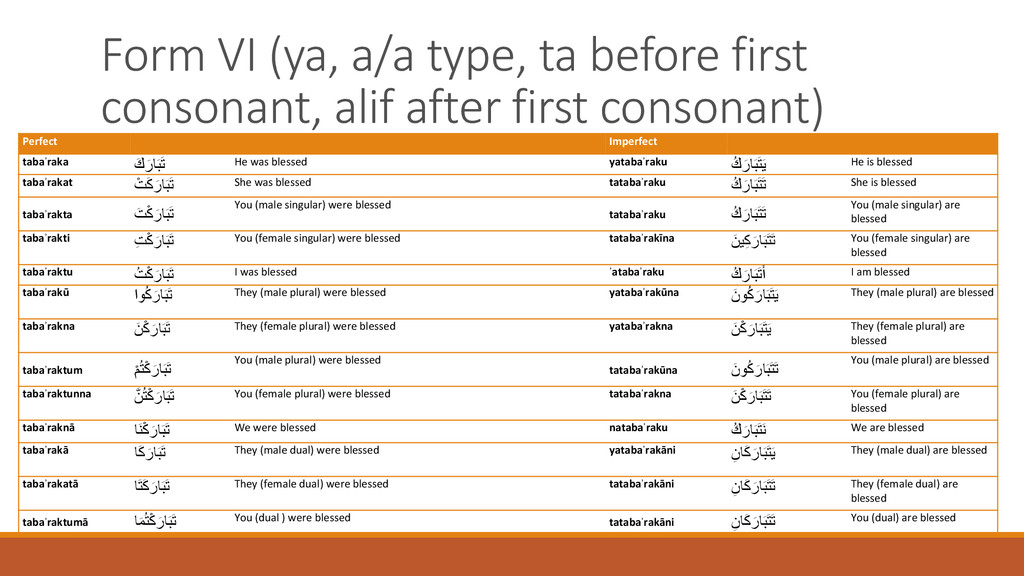
after first consonant) Perfect Imperfect tabaʾraka َك َراَبَت He was blessed yatabaʾraku ُك َراَبَتَي He is blessed tabaʾrakat ْتَكَراَبَت She was blessed tatabaʾraku ُك َراَبَتَت She is blessed tabaʾrakta َتْكَراَبَت You (male singular) were blessed tatabaʾraku ُك َراَبَتَت You (male singular) are blessed tabaʾrakti ِتْكَراَبَت You (female singular) were blessed tatabaʾrakīna ََيِكَراَبَتَت You (female singular) are blessed tabaʾraktu ُتْكَراَبَت I was blessed ʾatabaʾraku ُك َراَبَتَأ I am blessed tabaʾrakū اوُكَراَبَت They (male plural) were blessed yatabaʾrakūna ََوُكَراَبَتَي They (male plural) are blessed tabaʾrakna ََْكَراَبَت They (female plural) were blessed yatabaʾrakna ََْكَراَبَتَي They (female plural) are blessed tabaʾraktum ْمُتْكَراَبَت You (male plural) were blessed tatabaʾrakūna ََوُكَراَبَتَت You (male plural) are blessed tabaʾraktunna ََُّتْكَراَبَت You (female plural) were blessed tatabaʾrakna ََْكَراَبَتَت You (female plural) are blessed tabaʾraknā اَنْكَراَبَت We were blessed natabaʾraku ُك َراَبَتَن We are blessed tabaʾrakā اَكَراَبَت They (male dual) were blessed yatabaʾrakāni َِاَكَراَبَتَي They (male dual) are blessed tabaʾrakatā اَتَكَراَبَت They (female dual) were blessed tatabaʾrakāni َِاَكَراَبَتَت They (female dual) are blessed tabaʾraktumā َمُتْكَراَبَت ا You (dual ) were blessed tatabaʾrakāni َِاَكَراَبَتَت You (dual) are blessed
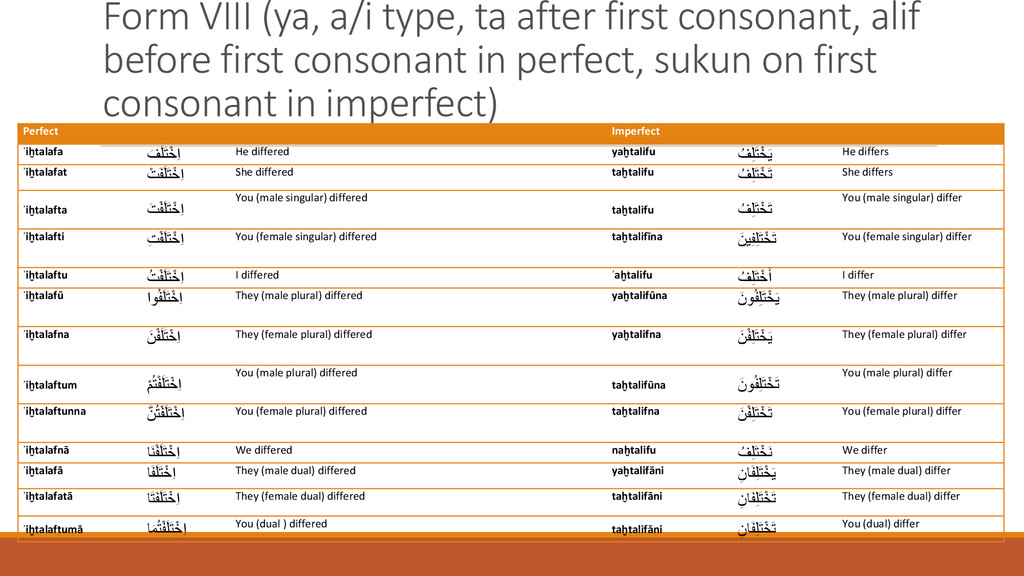
before first consonant in perfect, sukun on first consonant in imperfect) Perfect Imperfect ʾiḫtalafa َفَلَتْخِا He differed yaḫtalifu ُفِلَتْخَي He differs ʾiḫtalafat ْتَفَلَتْخِا She differed taḫtalifu ُفِلَتْخَت She differs ʾiḫtalafta َتْفَلَتْخِا You (male singular) differed taḫtalifu ُفِلَتْخَت You (male singular) differ ʾiḫtalafti ِتْفَلَتْخِا You (female singular) differed taḫtalifīna ََيِفِلَتْخَت You (female singular) differ ʾiḫtalaftu ُتْفَلَتْخِا I differed ʾaḫtalifu ُفِلَتْخَأ I differ ʾiḫtalafū وُفَلَتْخِا ا They (male plural) differed yaḫtalifūna ََوُفِلَتْخَي They (male plural) differ ʾiḫtalafna ََْفَلَتْخِا They (female plural) differed yaḫtalifna ََْفِلَتْخَي They (female plural) differ ʾiḫtalaftum ُتْفَلَتْخِا ْم You (male plural) differed taḫtalifūna ََوُفِلَتْخَت You (male plural) differ ʾiḫtalaftunna ُتْفَلَتْخِا ََّ You (female plural) differed taḫtalifna ََْفِلَتْخَت You (female plural) differ ʾiḫtalafnā َنْفَلَتْخِا ا We differed naḫtalifu ُفِلَتْخَن We differ ʾiḫtalafā اَفَلَتْخِا They (male dual) differed yaḫtalifāni َِاَفِلَتْخَي They (male dual) differ ʾiḫtalafatā َتَفَلَتْخِا ا They (female dual) differed taḫtalifāni َِاَفِلَتْخَت They (female dual) differ ʾiḫtalaftumā ُتْفَلَتْخِا اَم You (dual ) differed taḫtalifāni َِاَفِلَتْخَت You (dual) differ
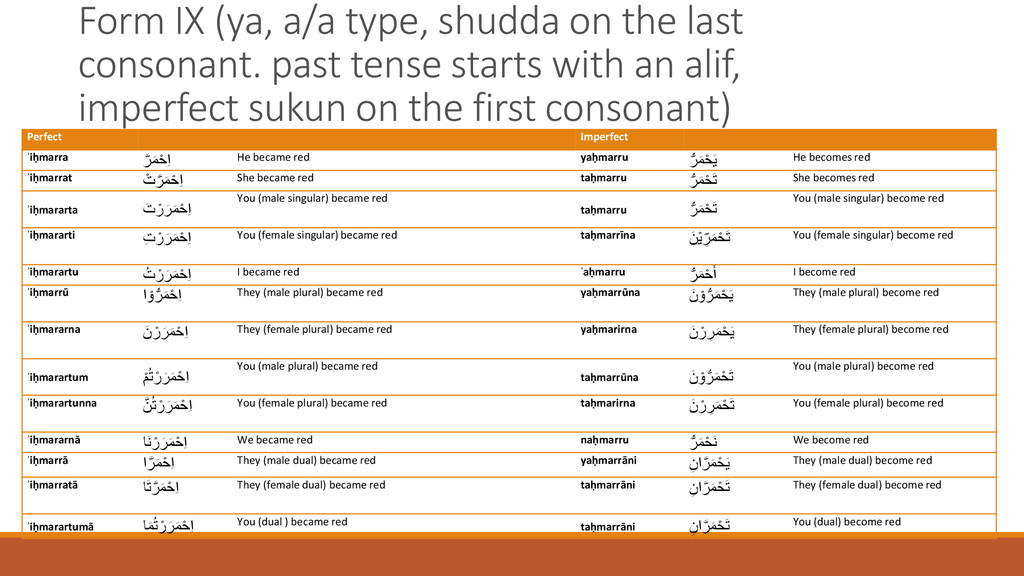
past tense starts with an alif, imperfect sukun on the first consonant) Perfect Imperfect ʾiḥmarra َّرَمْحِا He became red yaḥmarru رَمْحَي He becomes red ʾiḥmarrat ْتَّرَمْحِا She became red taḥmarru رَمْحَت She becomes red ʾiḥmararta َت ْر َرَمْحِا You (male singular) became red taḥmarru رَمْحَت You (male singular) become red ʾiḥmararti ِت ْر َرَمْحِا You (female singular) became red taḥmarrīna ََْي ِّرَمْحَت You (female singular) become red ʾiḥmarartu ُت ْر َرَمْحِا I became red ʾaḥmarru رَمْحَأ I become red ʾiḥmarrū ا ْو رَمْحِا They (male plural) became red yaḥmarrūna ََ ْو رَمْحَي They (male plural) become red ʾiḥmararna ََ ْر َرَمْحِا They (female plural) became red yaḥmarirna ََ ْر ِ رَمْحَي They (female plural) become red ʾiḥmarartum ُت ْر َرَمْحِا ْم You (male plural) became red taḥmarrūna ََ ْو رَمْحَت You (male plural) become red ʾiḥmarartunna ُت ْر َرَمْحِا ََّ You (female plural) became red taḥmarirna ََ ْر ِ رَمْحَت You (female plural) become red ʾiḥmararnā اَن ْر َرَمْحِا We became red naḥmarru رَمْحَن We become red ʾiḥmarrā اَّرَمْحِا They (male dual) became red yaḥmarrāni َِاَّرَمْحَي They (male dual) become red ʾiḥmarratā اَتَّرَمْحِا They (female dual) became red taḥmarrāni َِاَّرَمْحَت They (female dual) become red ʾiḥmarartumā ُت ْر َرَمْحِا اَم You (dual ) became red taḥmarrāni َِاَّرَمْحَت You (dual) become red
Learner's Guide. John Wiley & Sons. Ryding, K. C. (2005). A reference grammar of modern standard Arabic. Cambridge University Press. Stoetzer, W. F. G. J. (1991). Arabische grammatica in schema's en regels. Coutinho.


 amber89
 emna__ayadi
 michielstock
 szymonslowik
 akihiro_kokubo
 akosma
 nikkihalliwell
 twada
twada
 coloredviolet
 kimpetersen
 jonoalderson
 greggifford
 jakevdp