verbs: Person (first, second and third person) Gender (male or female) Number (one, two or more) Tense (past, present) Voice (active and passive) Mood (for the present tense: indicative, subjunctive, imperative, jussive, energetic) Forms So far we have discussed period, gender, number, tense, voice and forms. Now we will discuss the mood, starting with the indicative, subjunctive and jussive. This presentation wil end with the energetic. The imperative wil be treated in a seperate presentation.
of moods: the indicative, subjunctive and jussive (past tense has no moods) You can recognize them by the ending of the verb. The indicative is the ‘normal’ kind of mood. The verbs in the present tense we have seen so far, are in the indicative mood. In some contexts a verb can be placed in the subjnunctive or jussive mood.
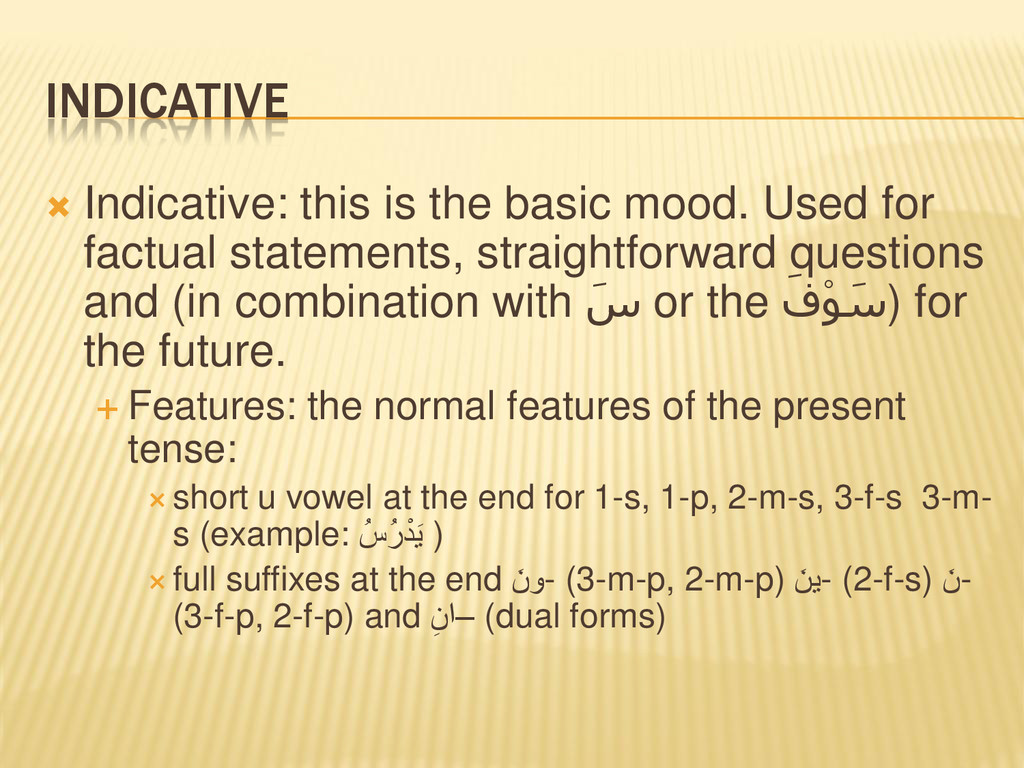
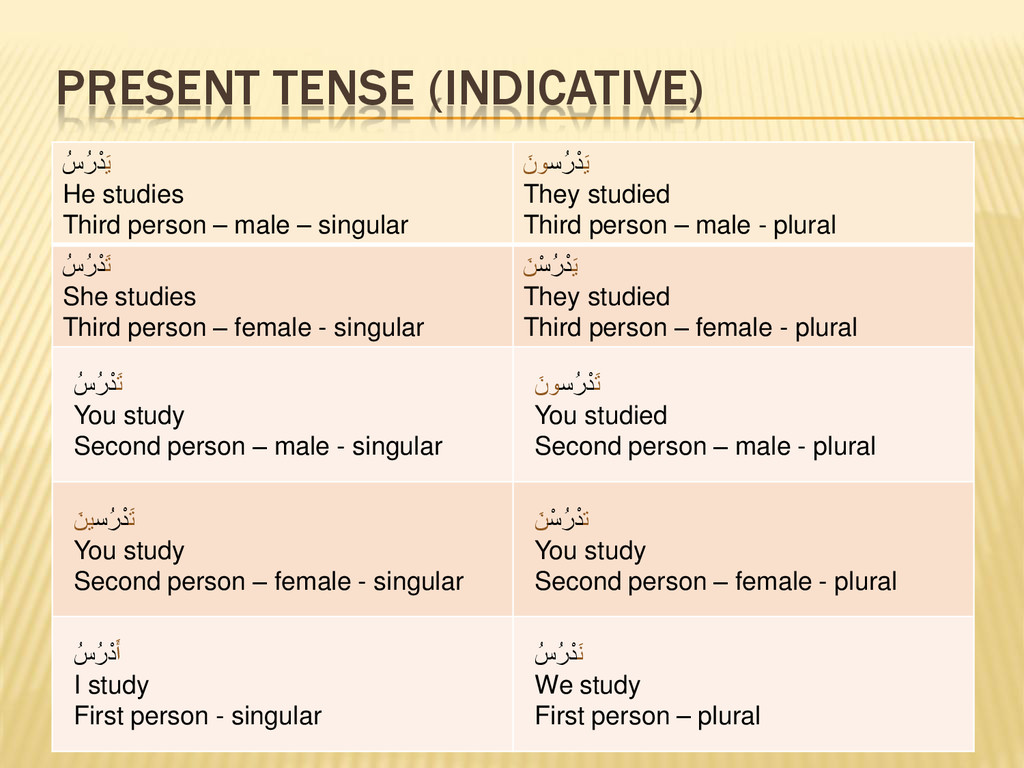
factual statements, straightforward questions and (in combination with َ س or the َ فْو س) for the future. Features: the normal features of the present tense: short u vowel at the end for 1-s, 1-p, 2-m-s, 3-f-s 3-m- s (example: ُُسُرْدَي ) full suffixes at the end َُنو- (3-m-p, 2-m-p) َُني- (2-f-s) َُن- (3-f-p, 2-f-p) andُِنا– (dual forms)
– male – singular ُ َي ُرْد َُنو They studied Third person – male - plural ُ َت ُُسُرْد She studies Third person – female - singular ُ َي ُْ ُرْد َُن They studied Third person – female - plural ُ َت ُُسُرْد You study Second person – male - singular ُ َت ُرْد َُنو You studied Second person – male - plural ُ َت ُرْد َُني You study Second person – female - singular ت ُْ ُرْد َُن You study Second person – female - plural ُ َأ ُُسُرْد I study First person - singular ُ َن ُُسُرْد We study First person – plural
َي ُرْد ُِنا they (dual, male) study Third person – male – dual ُ َت ُرْد ُِنا They (dual, female) study Third person – female – dual ُ َت ُرْد ُِنا You (dual) study Second person - dual
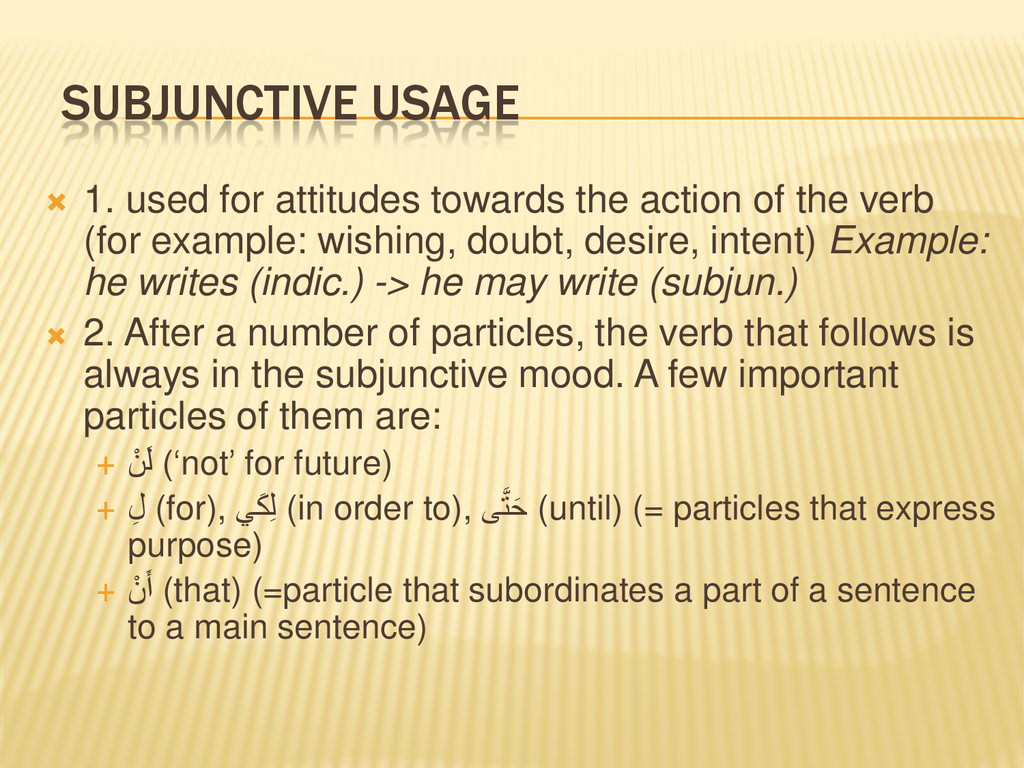
of the verb (for example: wishing, doubt, desire, intent) Example: he writes (indic.) -> he may write (subjun.) 2. After a number of particles, the verb that follows is always in the subjunctive mood. A few important particles of them are: ُْنَل (‘not’ for future) ُِل (for), يَكِل (in order to), ىَّتَح (until) (= particles that express purpose) ُْنَأ (that) (=particle that subordinates a part of a sentence to a main sentence)
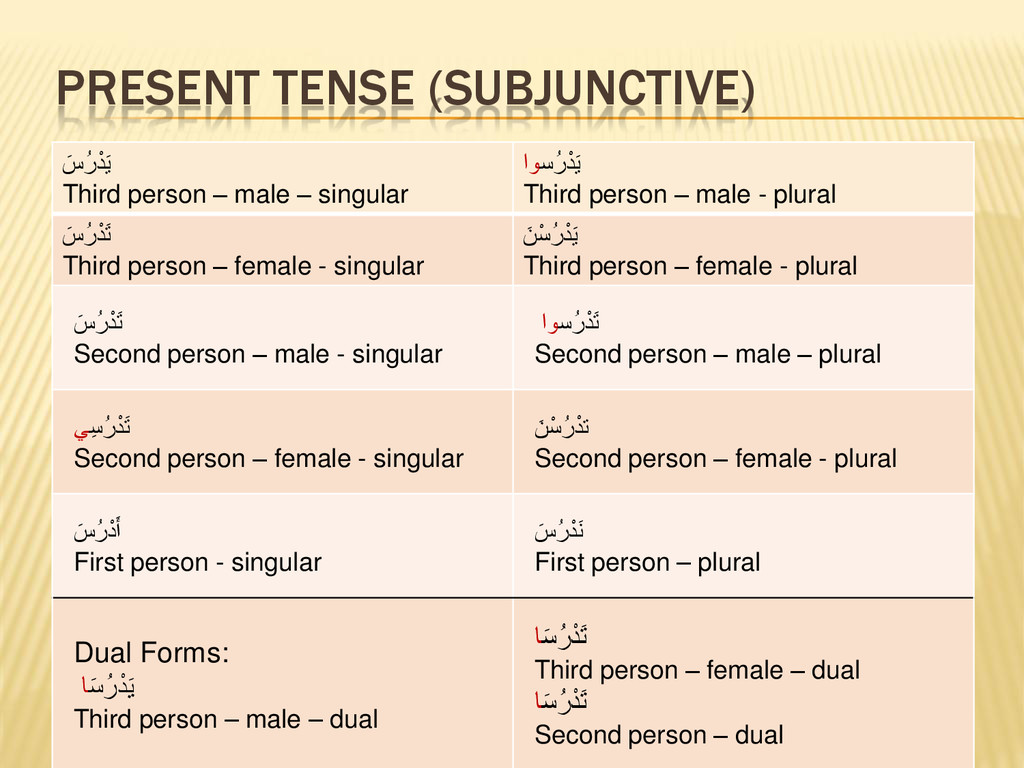
present tense change somewhat: short a vowel (in stead of u) at the end for 1-s, 1- p, 2-m-s, 3-f-s 3-m-s (example: َُسُرْدَي) The nun is left out in the long suffixes. They become: او- (3-m-p, 2-m-p) ي- (2-f-s) andُا– (dual forms). َُن- (3-f-p, 2-f-p) stays the same.
ُرْدَي او Third person – male - plural َُسُرْدَت Third person – female - singular َُنْ ُرْدَي Third person – female - plural َُسُرْدَت Second person – male - singular ُرْدَت او Second person – male – plural ُِ ُرْدَت ي Second person – female - singular َُنْ ُرْدت Second person – female - plural َُسُرْدَأ First person - singular َُسُرْدَن First person – plural Dual Forms: َُ ُرْدَي ا Third person – male – dual َُ ُرْدَت ا Third person – female – dual َُ ُرْدَت ا Second person – dual
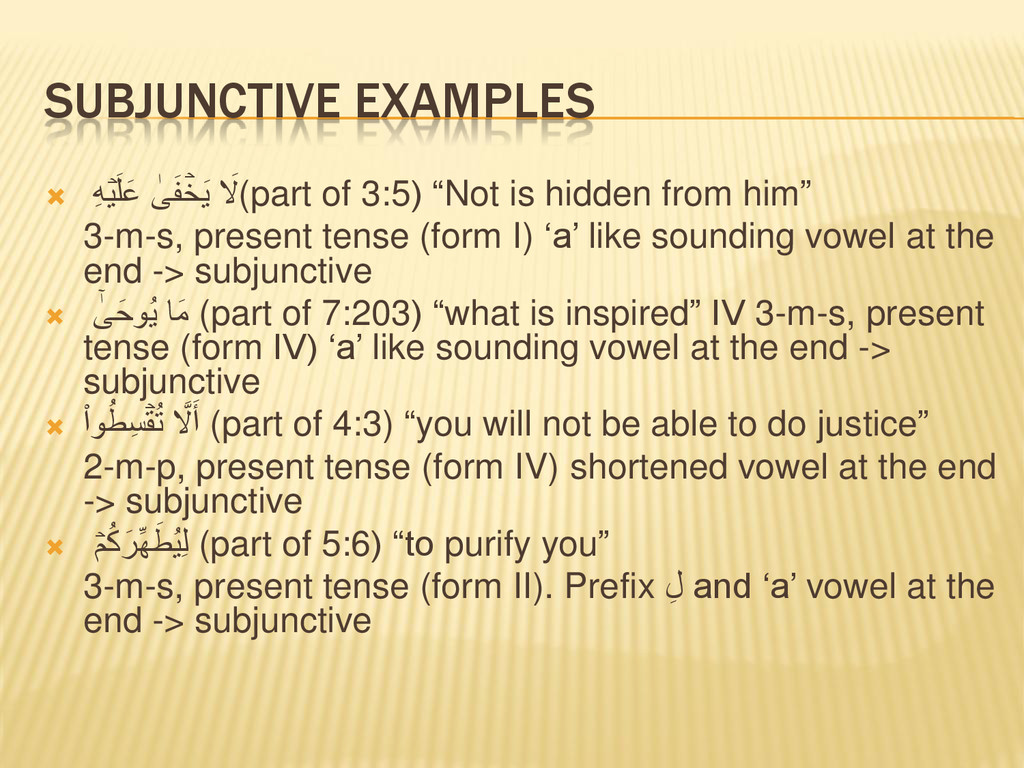
لَ(part of 3:5) “Not is hidden from him” 3-m-s, present tense (form I) ‘a’ like sounding vowel at the end -> subjunctive ُ ٰٰٓ ىَحوُيُاَم (part of 7:203) “what is inspired” IV 3-m-s, present tense (form IV) ‘a’ like sounding vowel at the end -> subjunctive ُ َّ لََأ ُ ْاوُطِ ۡقُت (part of 4:3) “you will not be able to do justice” 2-m-p, present tense (form IV) shortened vowel at the end -> subjunctive ُۡمُكَرِّهَطُيِل (part of 5:6) “to purify you” 3-m-s, present tense (form II). Prefix ُِل and ‘a’ vowel at the end -> subjunctive
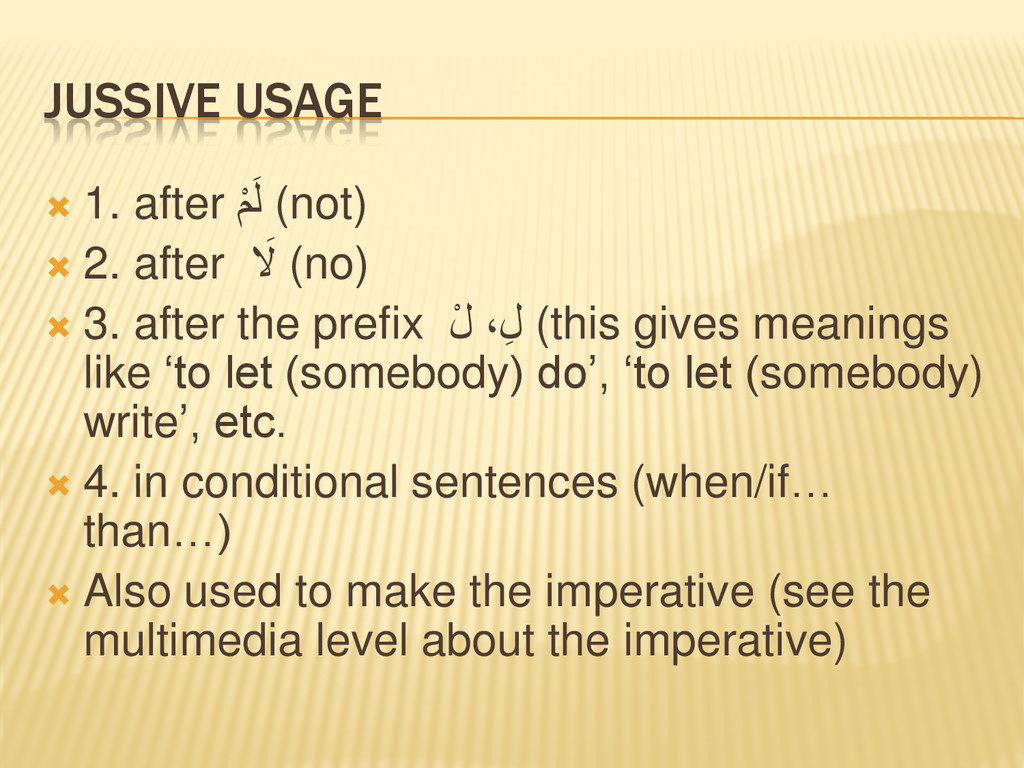
after َُ لَ (no) 3. after the prefix ُْلُ،ِل (this gives meanings like ‘to let (somebody) do’, ‘to let (somebody) write’, etc. 4. in conditional sentences (when/if… than…) Also used to make the imperative (see the multimedia level about the imperative)
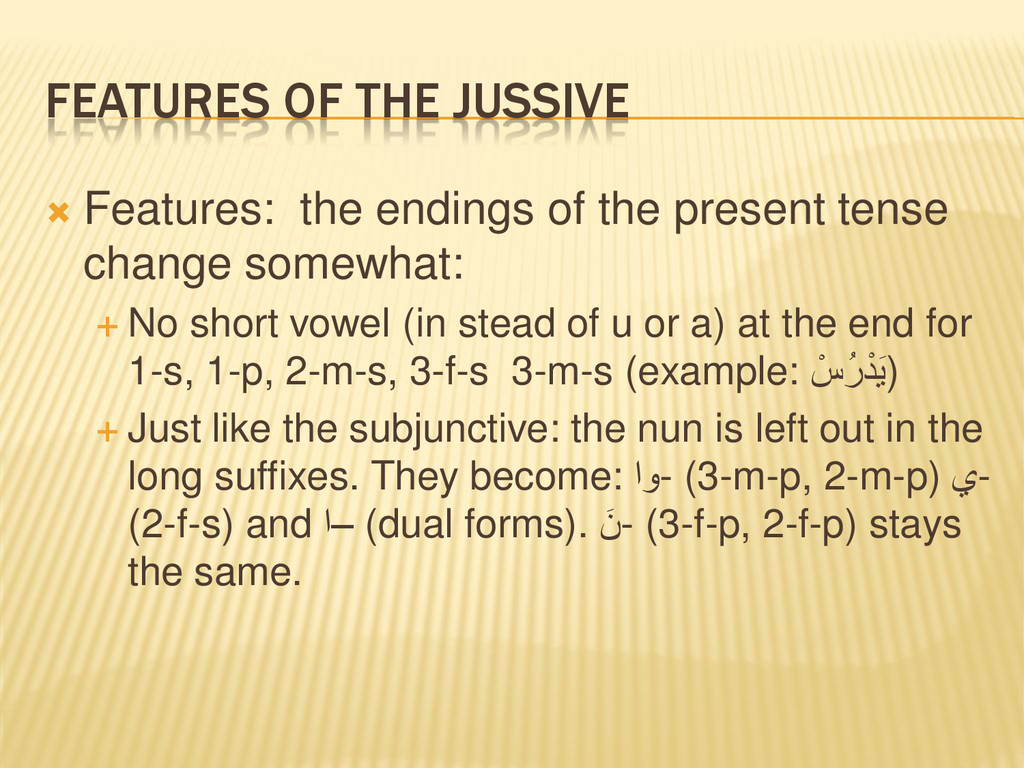
present tense change somewhat: No short vowel (in stead of u or a) at the end for 1-s, 1-p, 2-m-s, 3-f-s 3-m-s (example: ُْسُرْدَي) Just like the subjunctive: the nun is left out in the long suffixes. They become: او- (3-m-p, 2-m-p) ي- (2-f-s) andُا– (dual forms). َُن- (3-f-p, 2-f-p) stays the same.
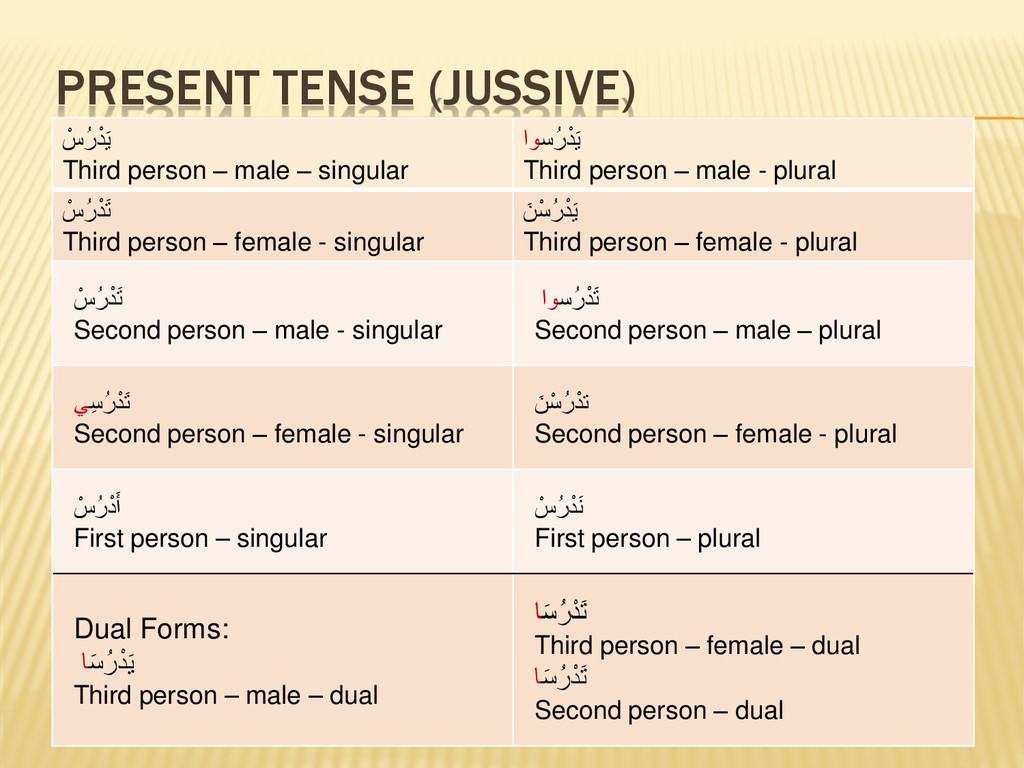
ُرْدَي او Third person – male - plural ُْسُرْدَت Third person – female - singular َُنْ ُرْدَي Third person – female - plural ُْسُرْدَت Second person – male - singular ُرْدَت او Second person – male – plural ُِ ُرْدَت ي Second person – female - singular َُنْ ُرْدت Second person – female - plural ُْسُرْدَأ First person – singular ُْ سُرْدَن First person – plural Dual Forms: َُ ُرْدَي ا Third person – male – dual َُ ُرْدَت ا Third person – female – dual َُ ُرْدَت ا Second person – dual
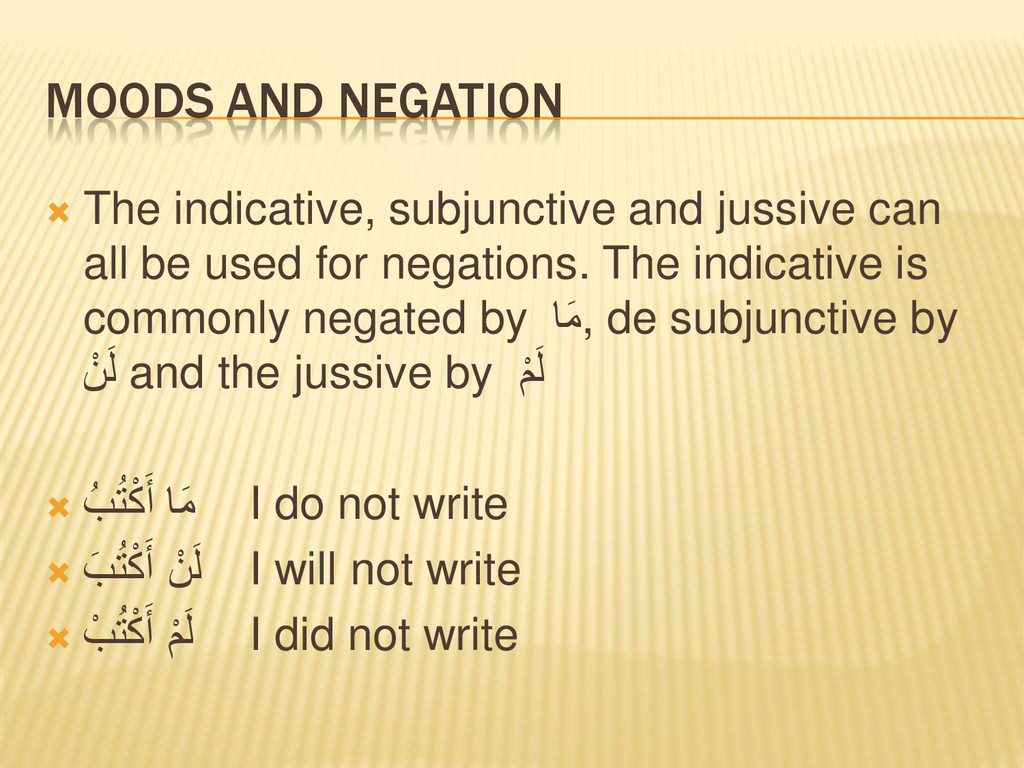
all be used for negations. The indicative is commonly negated by ُاَم, de subjunctive byُ ُْنَل and the jussive by ُ ْمَل ُاَم ُُبُتْكَأ I do not write ُْنَل َُبُتْكَأ I will not write ُ ْمَل ُْبُتْكَأ I did not write
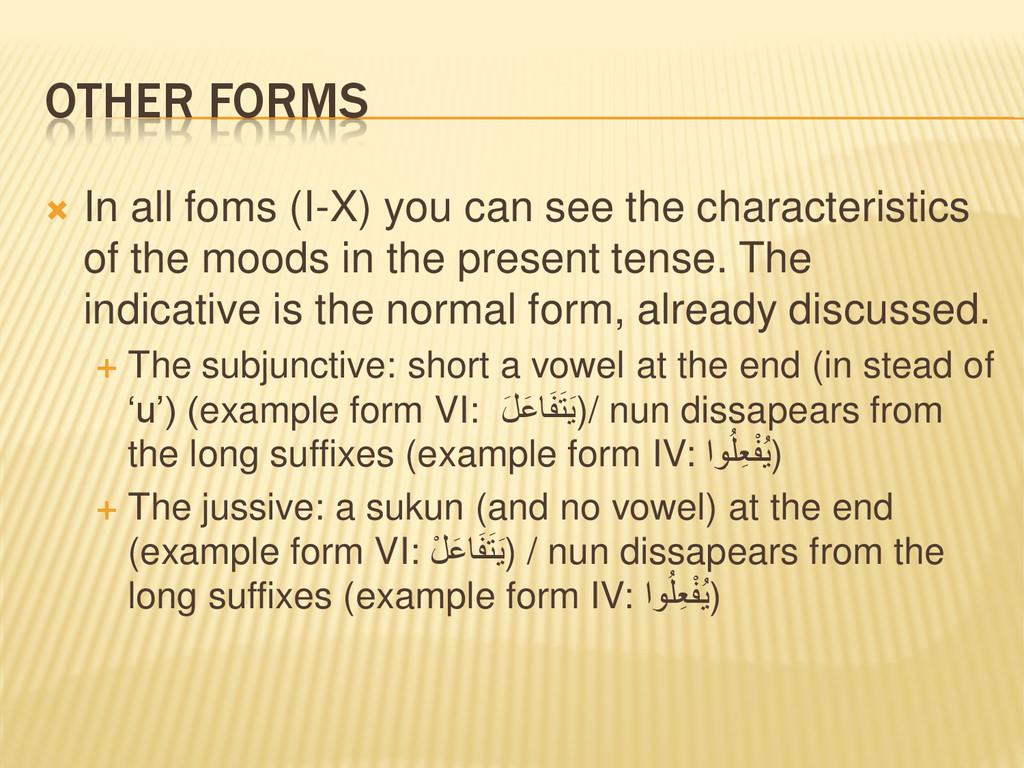
the characteristics of the moods in the present tense. The indicative is the normal form, already discussed. The subjunctive: short a vowel at the end (in stead of ‘u’) (example form VI: ُ َلَعاَفَتَي )/ nun dissapears from the long suffixes (example form IV: اوُلِعْفُي) The jussive: a sukun (and no vowel) at the end (example form VI:ُْلَعاَفَتَي) / nun dissapears from the long suffixes (example form IV: اوُلِعْفُي)
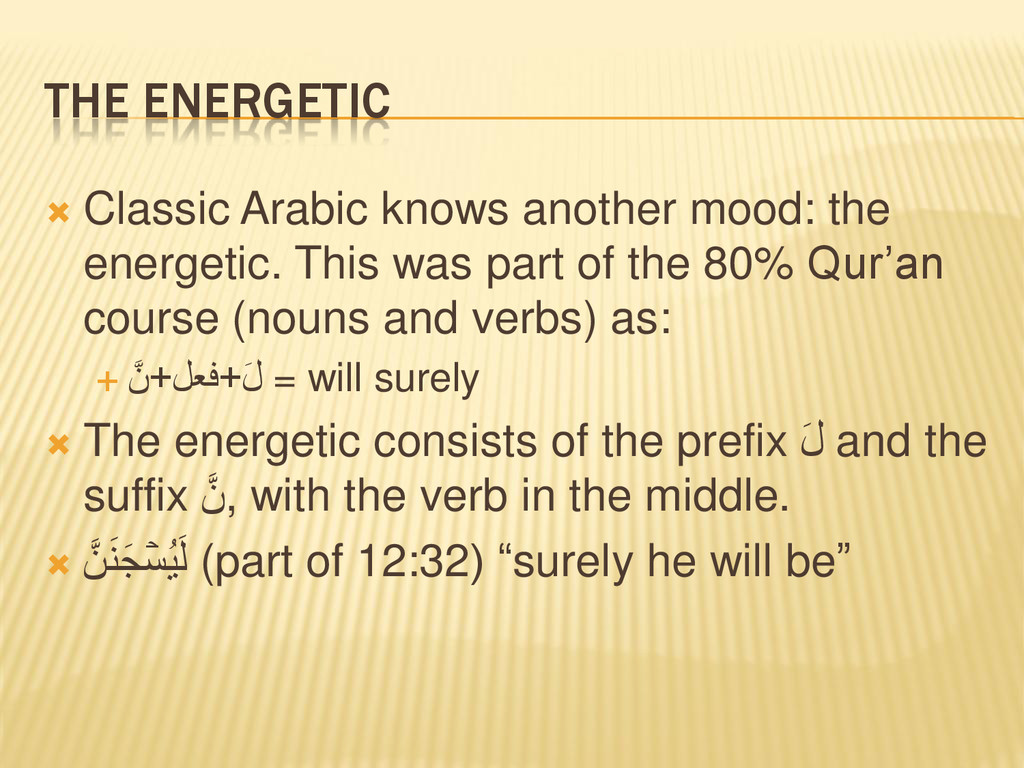
This was part of the 80% Qur’an course (nouns and verbs) as: ُ َل + لعف + َُّن = will surely The energetic consists of the prefix ُ َل and the suffix َُّن, with the verb in the middle. َُّنَنَج ۡ ُيَل (part of 12:32) “surely he will be”
modern standard Arabic. Cambridge University Press. Ziadeh, F. J., & Winder, R. B. (2003). An introduction to modern Arabic. DoverPublications. com. Ingham, B. (1994). Najdi Arabic: Central Arabian (Vol. 1). John Benjamins Publishing. Stoetzer, W. F. G. J. (1991). Arabische grammatica in schema's en regels. Coutinho.


 amber89
 inesmontani
 jacobian
 codingconduct
 chikuwait
 katarinadahlin
 baasie
 lara
lara
 nikkihalliwell
 stuffmc
 427marketing
 marcelosomers
 bluesmoon