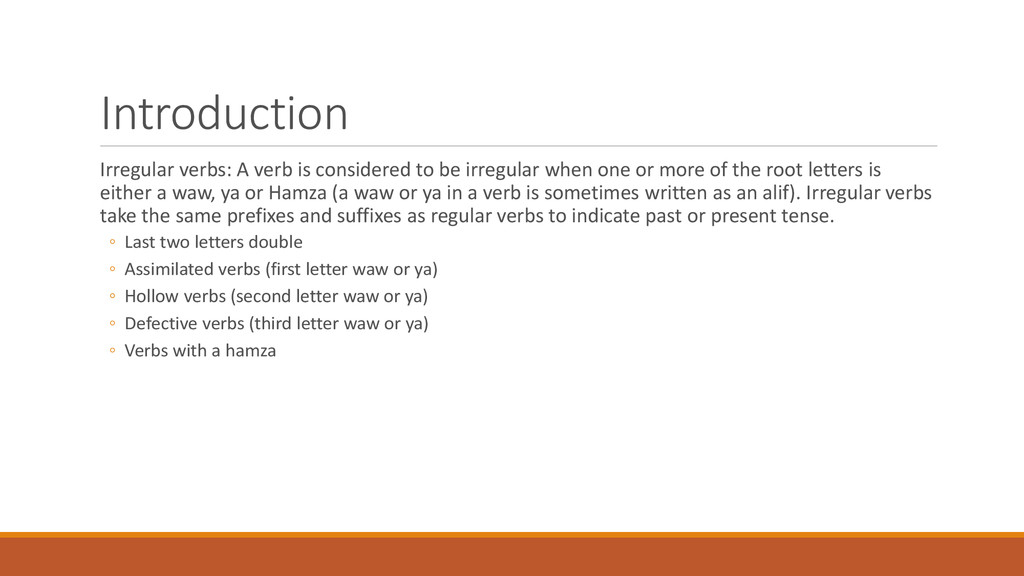
when one or more of the root letters is either a waw, ya or Hamza (a waw or ya in a verb is sometimes written as an alif). Irregular verbs take the same prefixes and suffixes as regular verbs to indicate past or present tense. ◦ Last two letters double ◦ Assimilated verbs (first letter waw or ya) ◦ Hollow verbs (second letter waw or ya) ◦ Defective verbs (third letter waw or ya) ◦ Verbs with a hamza
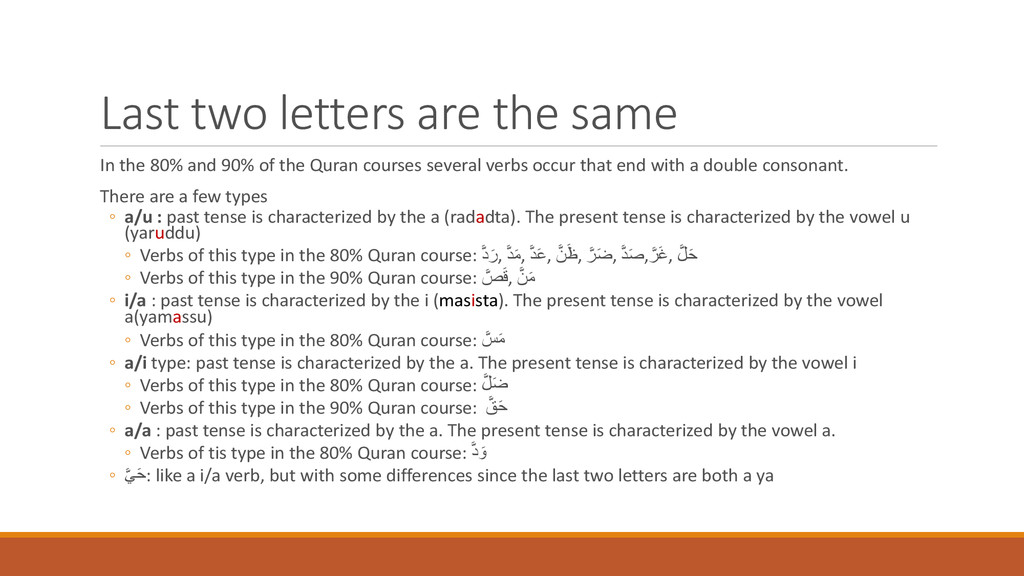
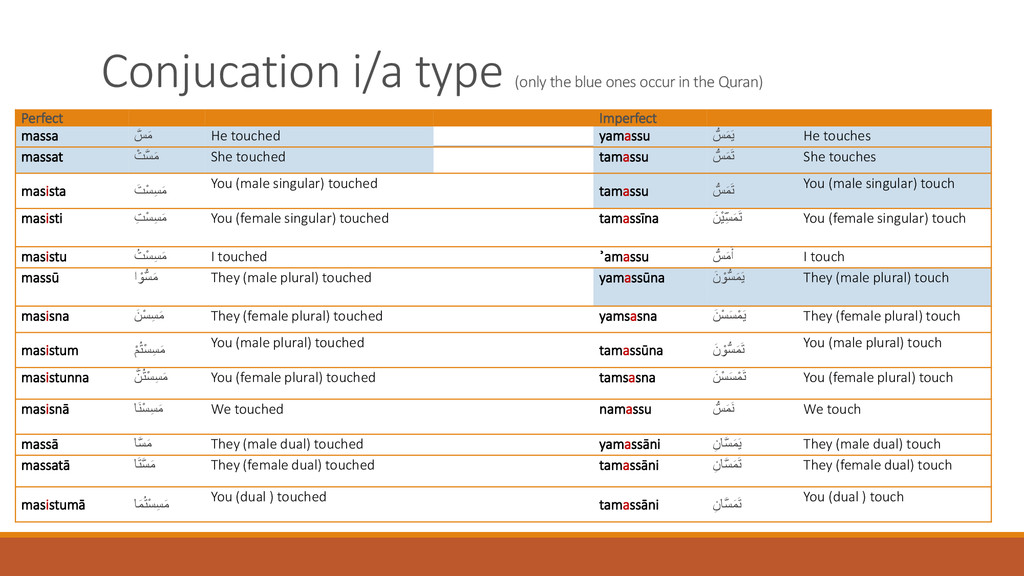
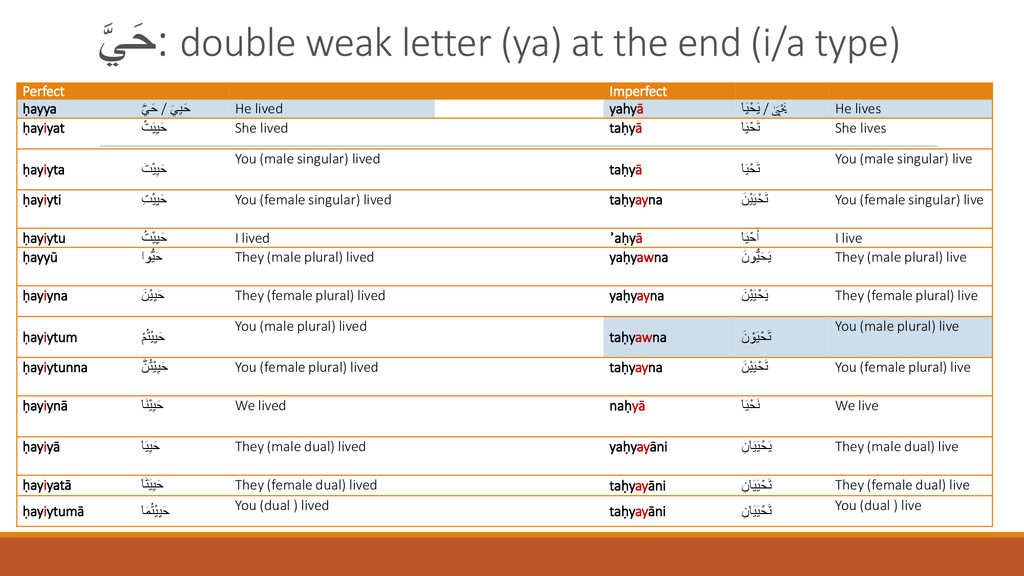
90% of the Quran courses several verbs occur that end with a double consonant. There are a few types ◦ a/u : past tense is characterized by the a (radadta). The present tense is characterized by the vowel u (yaruddu) ◦ Verbs of this type in the 80% Quran course: َّ د َر, َّ دَم, َّ دَع, َّ نَظ, َّ رَض, َّ دَص,َّ رَغ, َّ لَح ◦ Verbs of this type in the 90% Quran course: َّ صَق, َّ نَم ◦ i/a : past tense is characterized by the i (masista). The present tense is characterized by the vowel a(yamassu) ◦ Verbs of this type in the 80% Quran course: َّ سَم ◦ a/i type: past tense is characterized by the a. The present tense is characterized by the vowel i ◦ Verbs of this type in the 80% Quran course: َّ لَض ◦ Verbs of this type in the 90% Quran course: َّ قَح ◦ a/a : past tense is characterized by the a. The present tense is characterized by the vowel a. ◦ Verbs of tis type in the 80% Quran course: َّ د َو ◦ َّ يَح: like a i/a verb, but with some differences since the last two letters are both a ya
َر He returned yaruddu َّ دُرَي He returns raddat َّ ت د َر She returned taruddu َّ دُرَت She returns radadta ََّت دَدَر You (male singular) returned taruddu َّ دُرَت You (male singular) return radadti َّ ت دَد َر You (female singular) returned taruddīna َّ ي دُرَت ََّن You (female singular) return radadtu َُّت دَد َر I returned ʾaruddu َّ دُرَأ I return raddū ا و دَر They (male plural) returned yaruddūn a َّ و دُرَي ََّن They (male plural) return radadna ََّن دَد َر They (female plural) returned yardudna ََّن دُد رَي They (female plural) return radadtum َّ مُت دَدَر You (male plural) returned taruddūn a َّ و دُرَت ََّن You (male plural) return radadtunna َّ نُت دَد َر You (female plural) returned tardudna ََّن دُد رَت You (female plural) return radadnā اَن دَد َر We returned naruddu َّ دُرَن We return raddā ا دَر They (male dual) returned yaruddāni َّ نا دُرَي They (male dual) return raddatā اَت د َر They (female dual) returned taruddāni َّ نا دُرَت They (female dual) return radadtumā اَمُت دَد َر You (dual) returned taruddāni َّ نا دُرَت You (dual) return
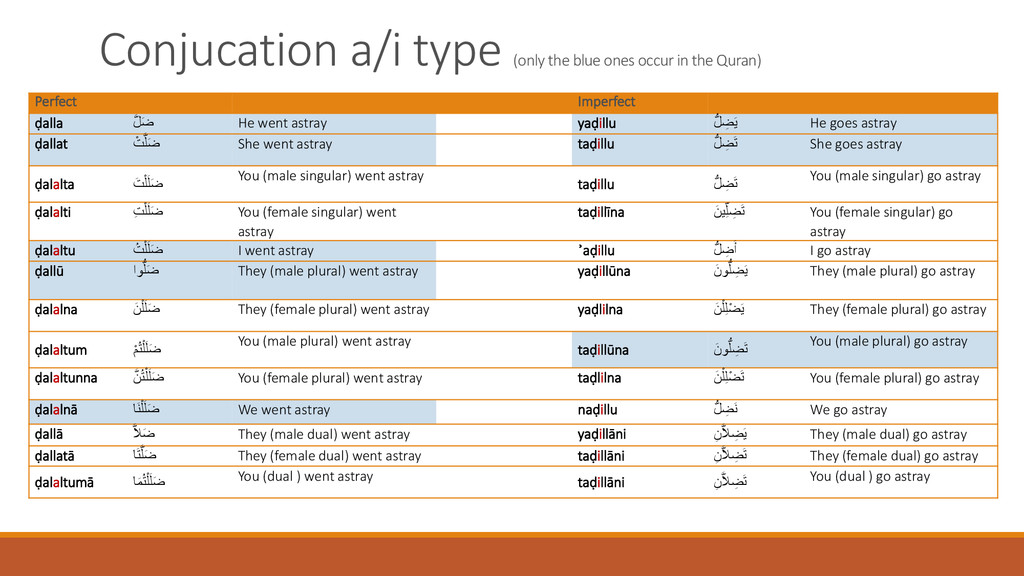
Quran) Perfect Imperfect ḍalla َّ لَض He went astray yaḍillu َّ ل ضَي He goes astray ḍallat َّ ت لَض She went astray taḍillu َّ ل ضَت She goes astray ḍalalta ََّت لَلَض You (male singular) went astray taḍillu َّ ل ضَت You (male singular) go astray ḍalalti َّ ت لَلَض You (female singular) went astray taḍillīna ََّني ل ضَت You (female singular) go astray ḍalaltu َُّت لَلَض I went astray ʾaḍillu َّ ل ضَأ I go astray ḍallū او لَض They (male plural) went astray yaḍillūna ََّنو ل ضَي They (male plural) go astray ḍalalna ََّن لَلَض They (female plural) went astray yaḍlilna ََّن ل ل ضَي They (female plural) go astray ḍalaltum َّ مُت لَلَض You (male plural) went astray taḍillūna ََّنو ل ضَت You (male plural) go astray ḍalaltunna َّ نُت لَلَض You (female plural) went astray taḍlilna ََّن ل ل ضَت You (female plural) go astray ḍalalnā اَن لَلَض We went astray naḍillu َّ ل ضَن We go astray ḍallā َّ لَض They (male dual) went astray yaḍillāni َّ ن ل ضَي They (male dual) go astray ḍallatā اَت لَض They (female dual) went astray taḍillāni َّ ن ل ضَت They (female dual) go astray ḍalaltumā اَمُت لَلَض You (dual ) went astray taḍillāni َّ ن ل ضَت You (dual ) go astray
Quran) Perfect Imperfect wadda َّ د َو He loved yawaddu َّ د َوَي He loves waddat َّ ت د َو She loved tawaddu َّ د َوَت She loves wadadta ََّت دَد َو You (male singular) loved tawaddu َّ د َوَت You (male singular) love wadadti َّ ت دَد َو You (female singular) loved tawaddīna ََّني د َوَت You (female singular) love wadadtu َُّت دَد َو I loved ʾawaddu َّ د َوَأ I love waddū او د َو They (male plural) loved yawaddūna ََّنو د َوَي They (male plural) love wadadna ََّن دَد َو They (female plural) loved yawdadna ََّن دَد وَي They (female plural) love wadadtum َّ مُت دَد َو You (male plural) loved tawaddūna ََّنو د َوَت You (male plural) love wadadtunna َّ نُت دَد َو You (female plural) loved tawdadna ََّن دَد وَت You (female plural) love wadadnā اَن دَد َو We loved nawaddu َّ د َوَن We love waddā ا د َو They (male dual) loved yawaddāni َّ نا د َوَي They (male dual) love waddatā اَت د َو They (female dual) loved tawaddāni َّ نا د َوَت They (female dual) love wadadtumā اَمُت دَد َو You (dual ) loved tawaddāni َّ نا د َوَت You (dual ) love


 amber89
 katarinadahlin
 marcelosomers
 emna__ayadi
 inesmontani
 bluesmoon
 ianozsvald
 akihiro_kokubo
 rkendrick25
 gr2m
gr2m
 sarafernandez