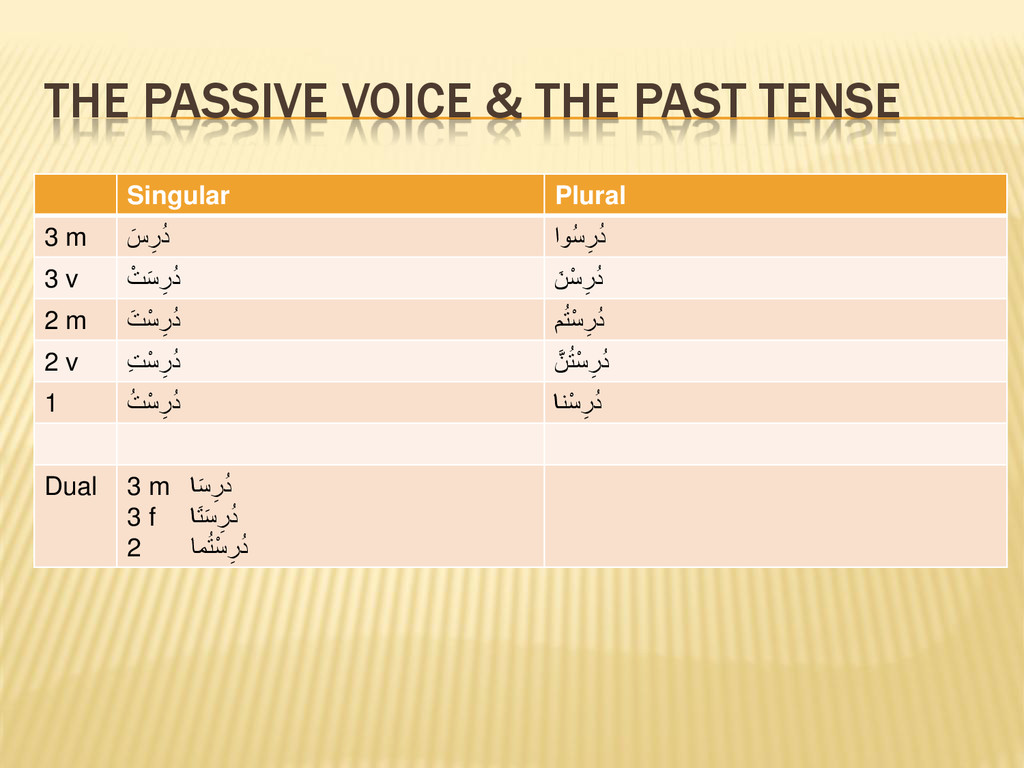
(first, second and third person) Gender (male or female) Number (one, two or more) Tense (past, present) Voice (active and passive) Mood (for the present tense: indicative, subjunctive, imperative, jussive, energetic) Forms (patterns for the root of a verb) We have dealt with person, gender, number, tense and forms. This part of the course is about the voice: active (like we have already seen) and passive
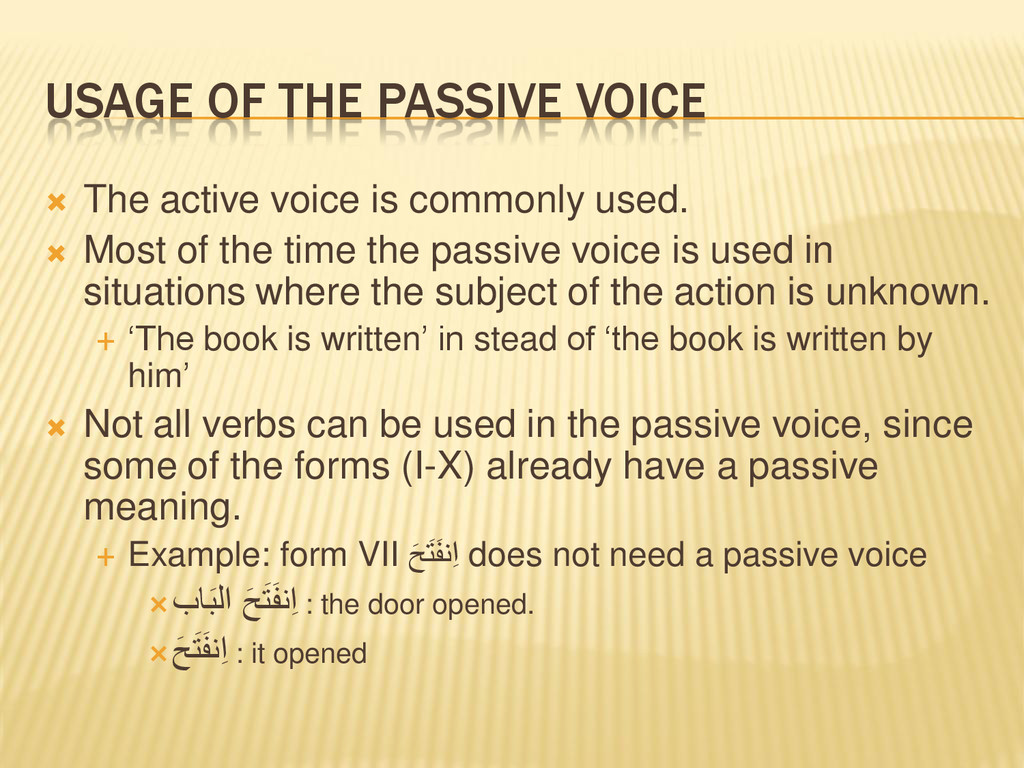
commonly used. Most of the time the passive voice is used in situations where the subject of the action is unknown. ‘The book is written’ in stead of ‘the book is written by him’ Not all verbs can be used in the passive voice, since some of the forms (I-X) already have a passive meaning. Example: form VII ََحَتَفنِا does not need a passive voice باَبلاََحَتَفنِا : the door opened. ََحَتَفنِا : it opened
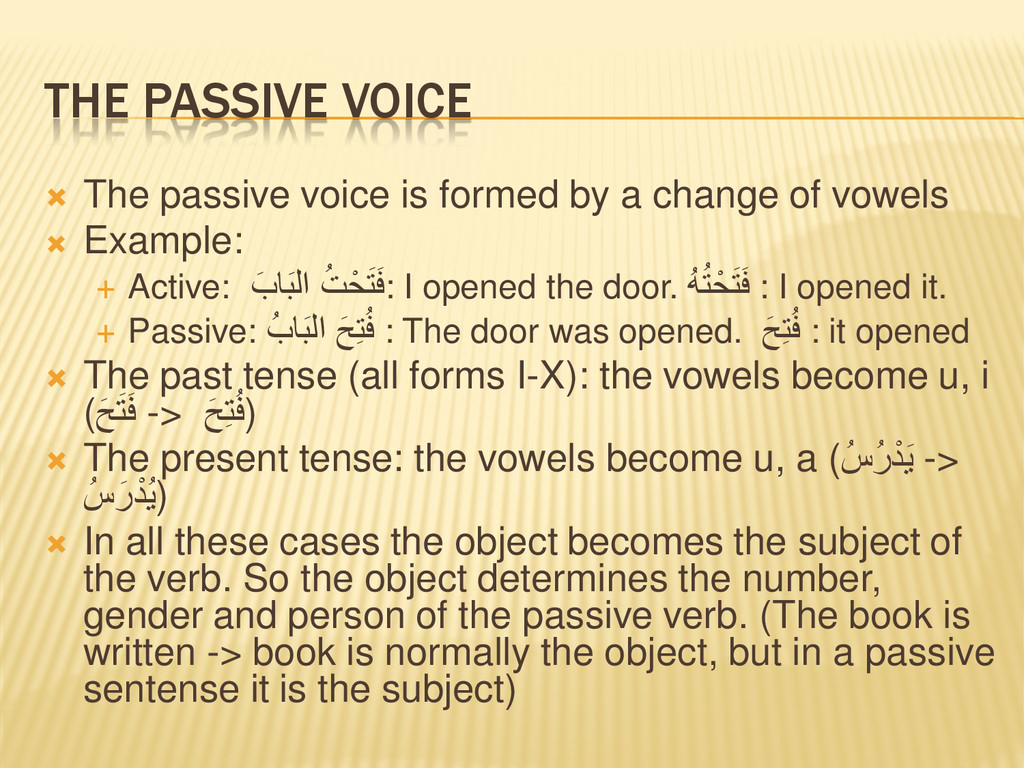
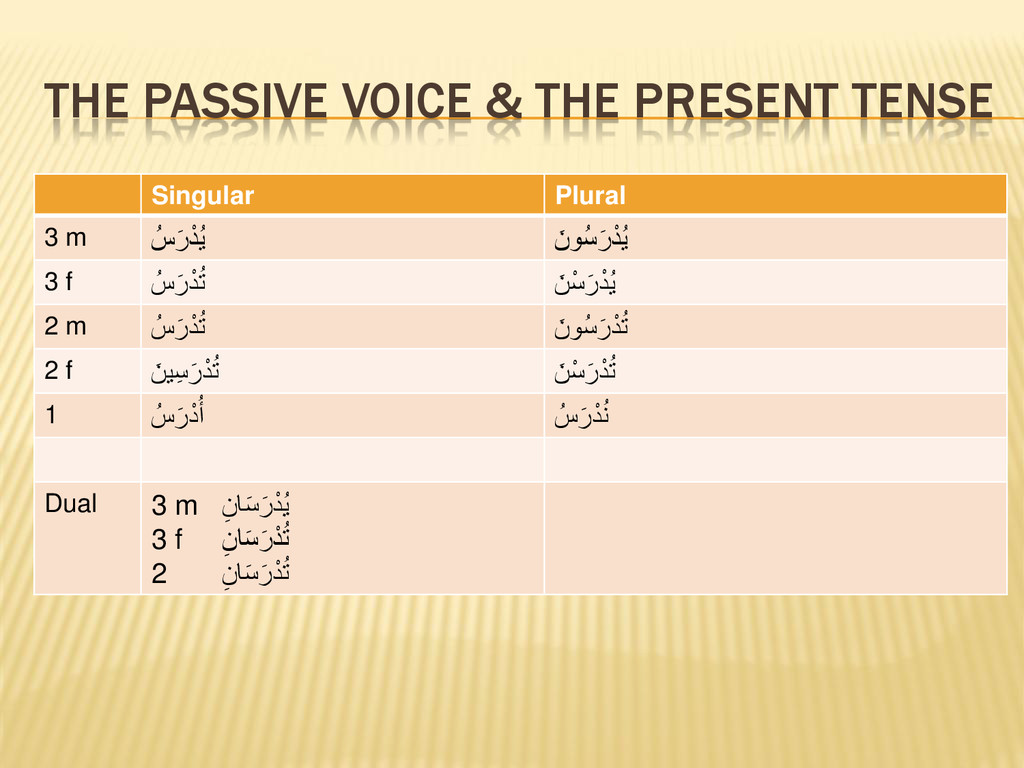
a change of vowels Example: Active: ََباَبلاَُتْحَتَف : I opened the door. َ ُهُت ْحَتَف : I opened it. Passive: ََحِتُف َُباَبلا : The door was opened. ََحِتُف : it opened The past tense (all forms I-X): the vowels become u, i (ََحَتَف -> ََحِتُف ) The present tense: the vowels become u, a (َُسُرْدَي -> َُسَرْدُي) In all these cases the object becomes the subject of the verb. So the object determines the number, gender and person of the passive verb. (The book is written -> book is normally the object, but in a passive sentense it is the subject)
m َُسَرْدُي ََنوُسَرْدُي 3 f َُسَرْدُت ََنْسَرْدُي 2 m َُسَرْدُت ََنوُسَرْدُت 2 f ََنيِسَرْدُت ََنْسَرْدُت 1 َُسَرْدُأ َُسَرْدُن Dual 3 m َِناَسَرْدُي 3 f َِناَسَرْدُت 2 َِناَسَرْدُت
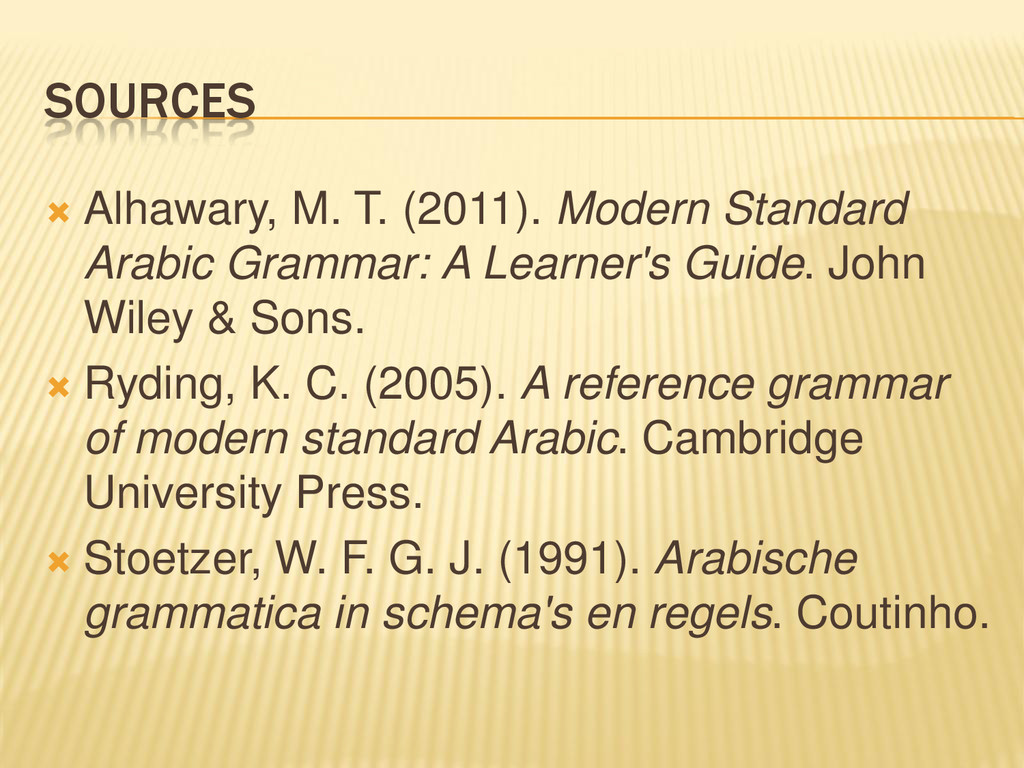
A Learner's Guide. John Wiley & Sons. Ryding, K. C. (2005). A reference grammar of modern standard Arabic. Cambridge University Press. Stoetzer, W. F. G. J. (1991). Arabische grammatica in schema's en regels. Coutinho.


 amber89
 rakko
rakko
 aemeredith
 denniskardys
 mongodb
 eileencodes
 brad_frost
 keathley
 michaelherold
 davidcarrasco
 productmarketing
 jonoalderson
 jct
jct