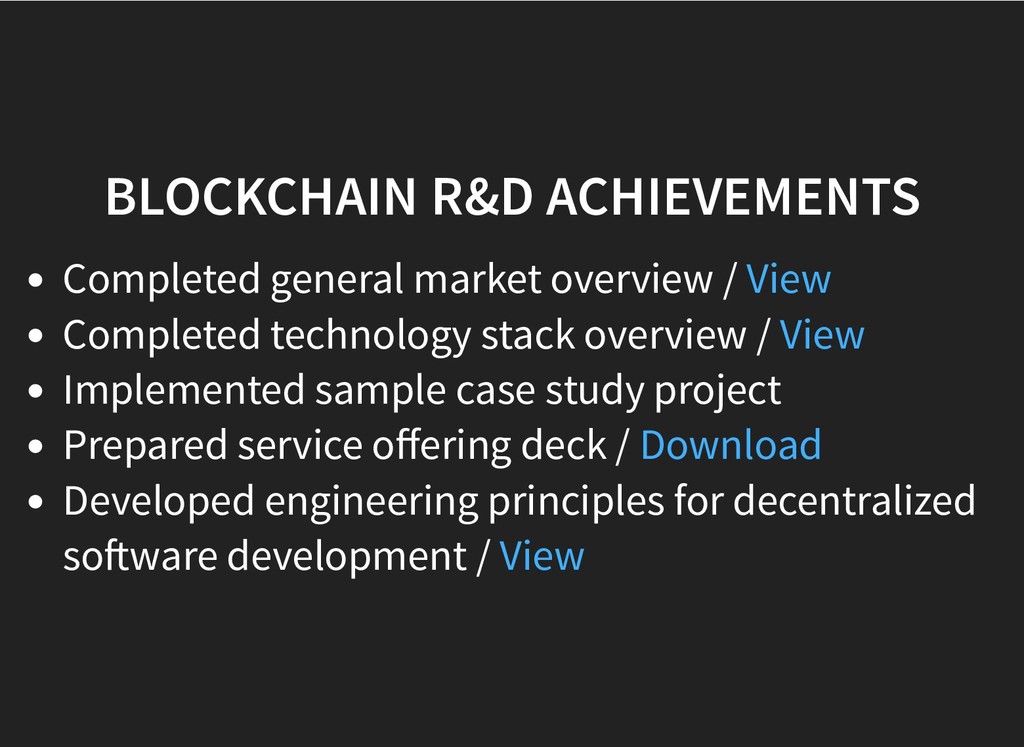
/ Completed technology stack overview / Implemented sample case study project Prepared service offering deck / Developed engineering principles for decentralized so ware development / View View Download View
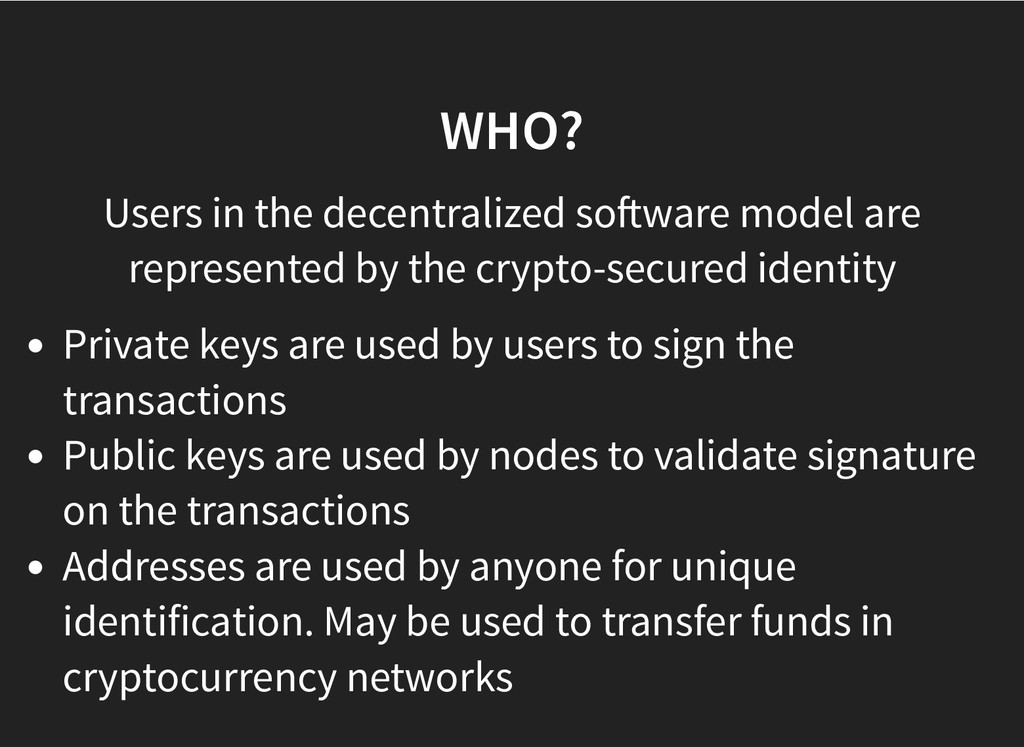
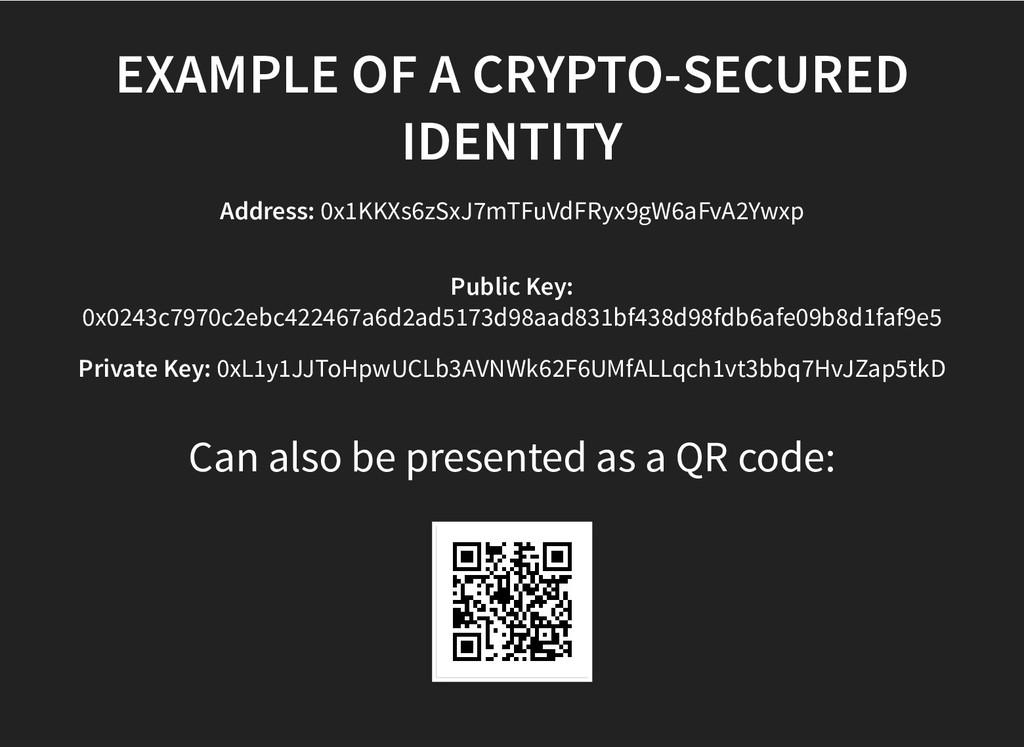
represented by the crypto-secured identity Private keys are used by users to sign the transactions Public keys are used by nodes to validate signature on the transactions Addresses are used by anyone for unique identification. May be used to transfer funds in cryptocurrency networks
Address: 0x1KKXs6zSxJ7mTFuVdFRyx9gW6aFvA2Ywxp Public Key: 0x0243c7970c2ebc422467a6d2ad5173d98aad831bf438d98fdb6afe09b8d1faf9e5 Private Key: 0xL1y1JJToHpwUCLb3AVNWk62F6UMfALLqch1vt3bbq7HvJZap5tkD Can also be presented as a QR code:
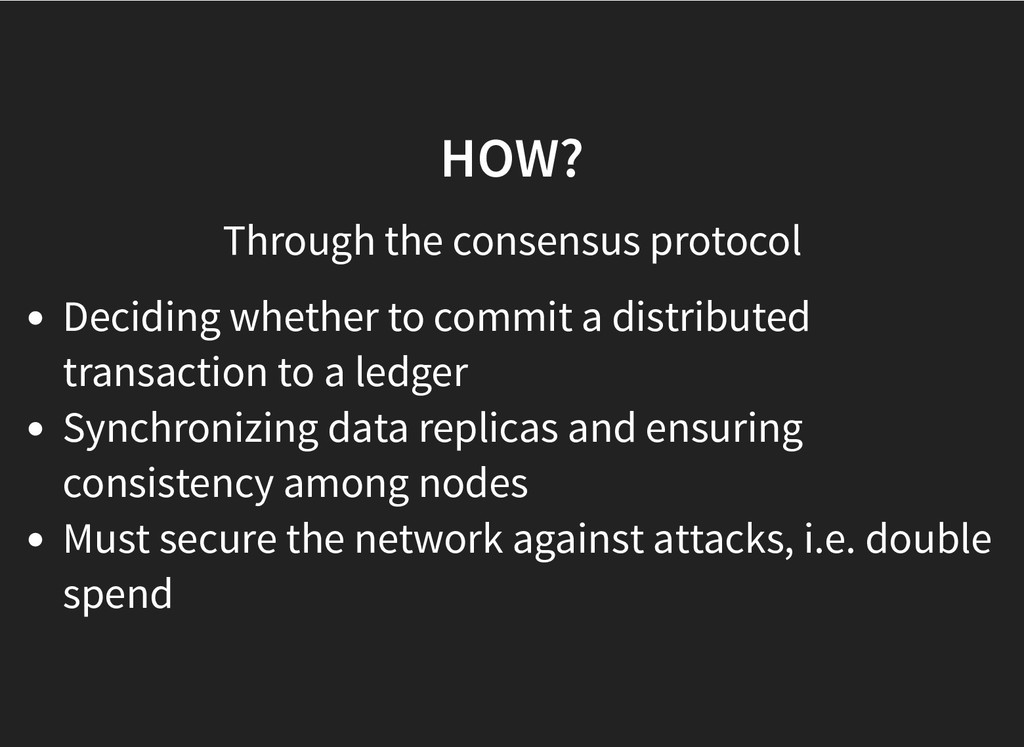
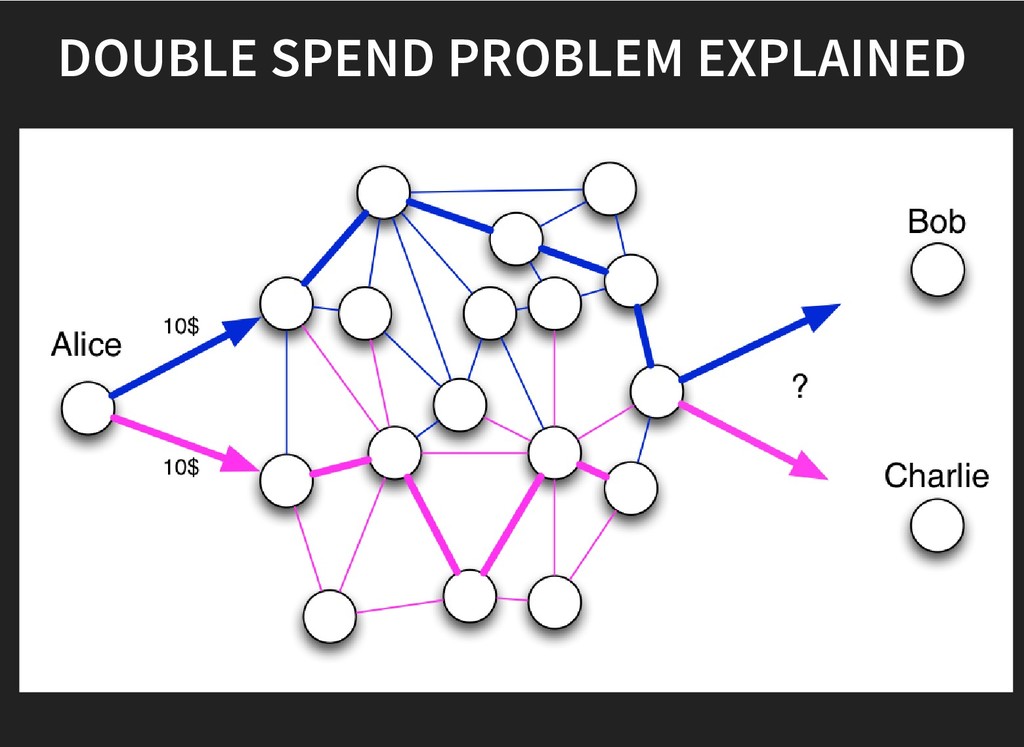
a distributed transaction to a ledger Synchronizing data replicas and ensuring consistency among nodes Must secure the network against attacks, i.e. double spend
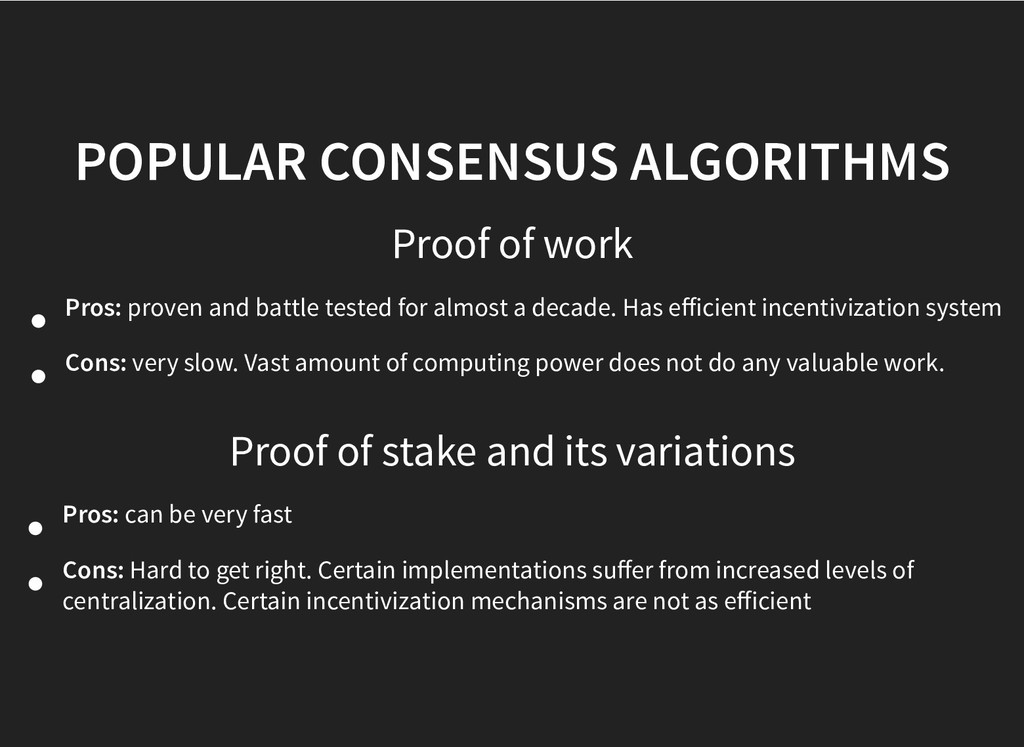
proven and battle tested for almost a decade. Has efficient incentivization system Cons: very slow. Vast amount of computing power does not do any valuable work. Proof of stake and its variations Pros: can be very fast Cons: Hard to get right. Certain implementations suffer from increased levels of centralization. Certain incentivization mechanisms are not as efficient
massively more vulnerable No regulation mechanisms established by legal authorities Currently popular public blockchain networks are slow and expensive to use
Establish a different trust model in which there is no trust required between parties and there are no authorities in place Allows to encourage previously poorly connected parties to cooperate
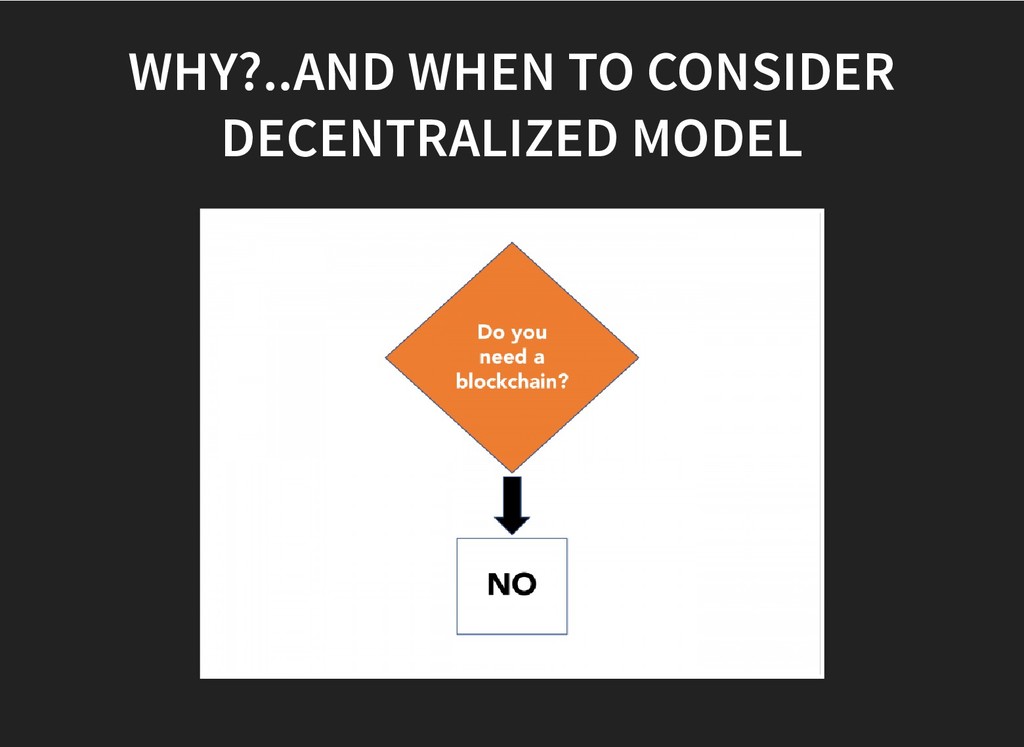
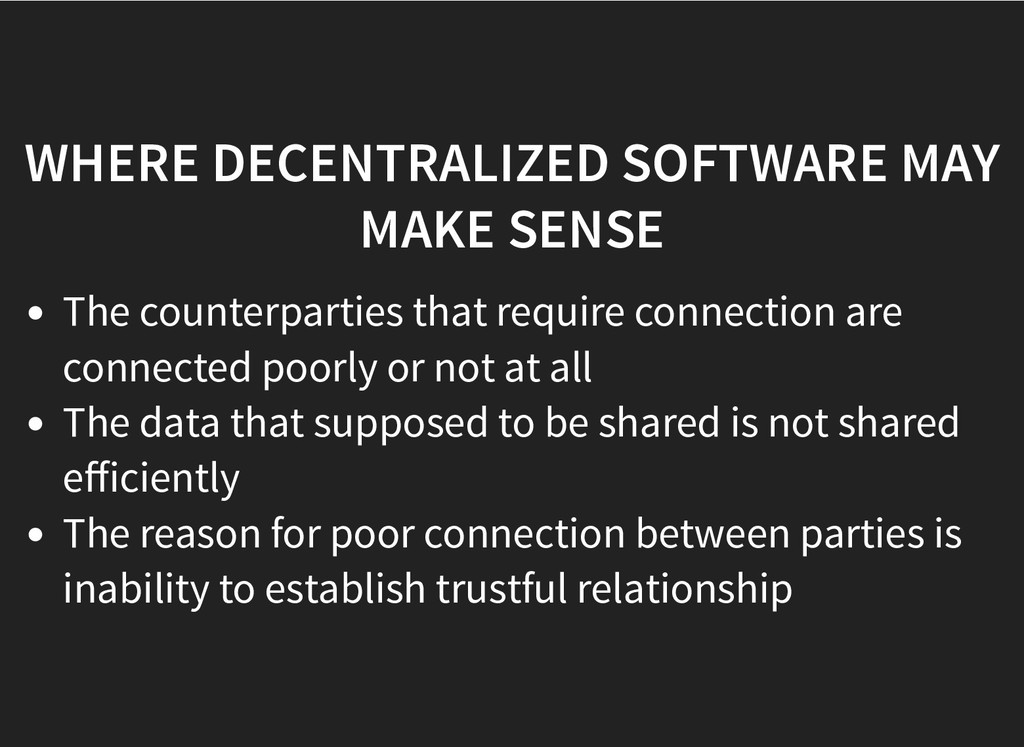
MAKE SENSE The counterparties that require connection are connected poorly or not at all The data that supposed to be shared is not shared efficiently The reason for poor connection between parties is inability to establish trustful relationship


 ashevc
 kmars0605
 rshindo
 marcoroth
 mofurune
 andpad
 hschwentner
 ryu1013
 econanringo
 akit37
 optim
 htkym
 artoy
 inesmontani
 tamaranovitovic
 bluesmoon
 tessaabrams
 axbom
 codingconduct
 marketingsoph
 reverentgeek
 eileencodes
 kristinabergwall1
 aleyda
 chriscoyier