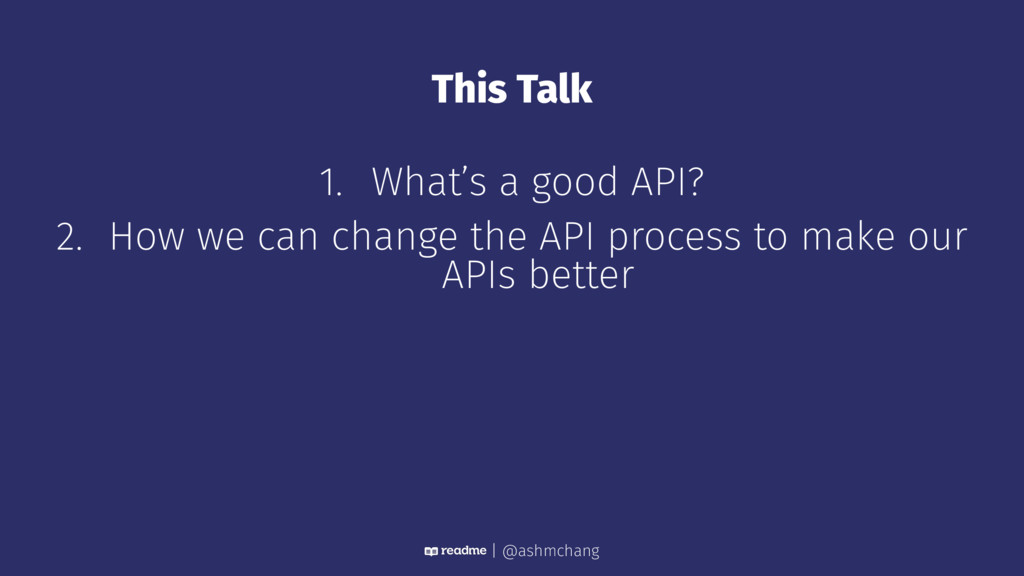
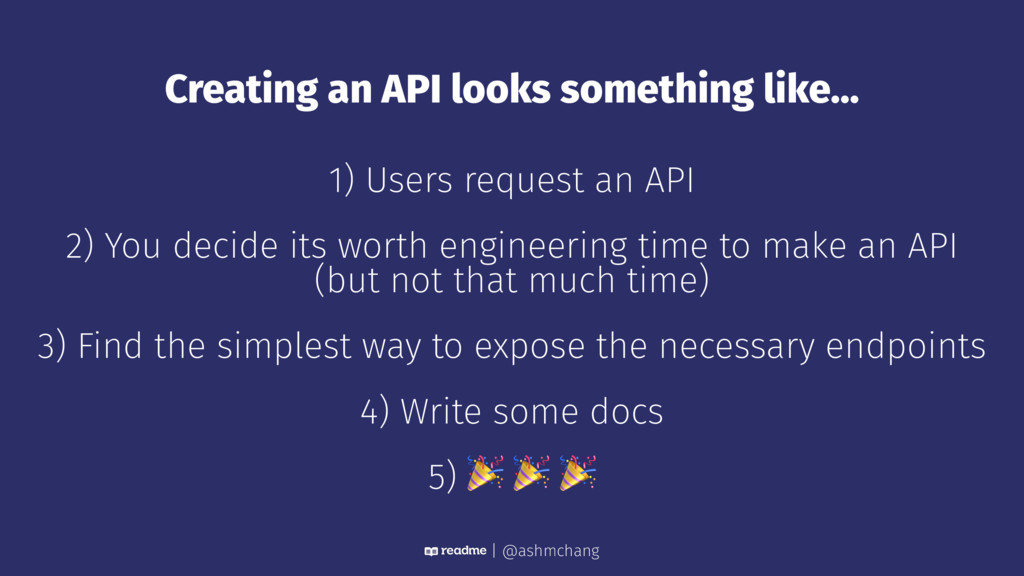
API 2) You decide its worth engineering time to make an API (but not that much time) 3) Find the simplest way to expose the necessary endpoints 4) Write some docs 5) ! ! ! | @ashmchang
to know our user → Expose endpoints in a way that makes sense for them → More time up front, less time writing docs & supporting users later | @ashmchang
not be how other people feel. → Refine the problem. A good solution comes from a clear understanding of what the problem is. → Insight. What workarounds have people created? How successful is your solution? Users are experts on the problem, not the solution | @ashmchang
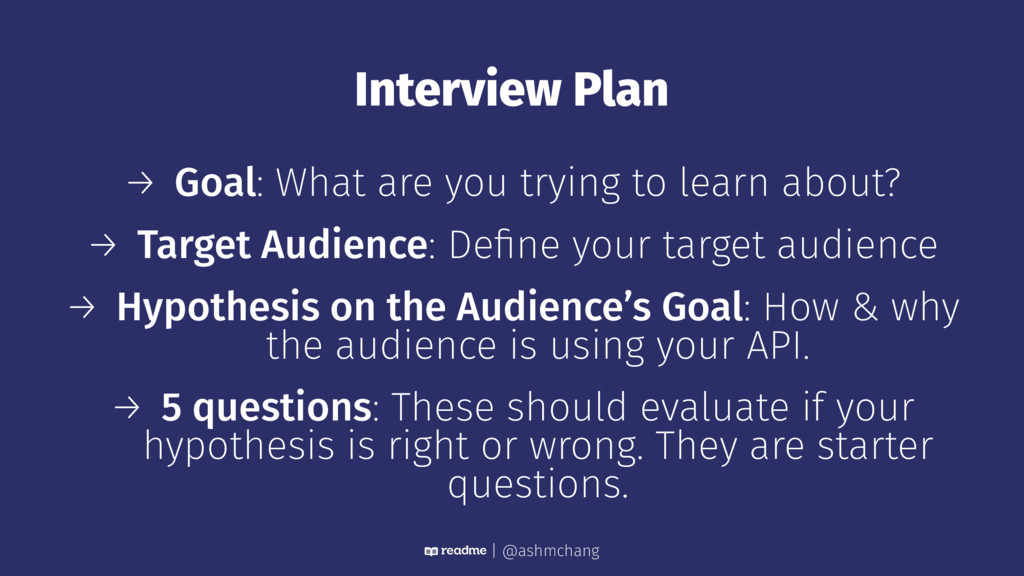
about? → Target Audience: Define your target audience → Hypothesis on the Audience’s Goal: How & why the audience is using your API. → 5 questions: These should evaluate if your hypothesis is right or wrong. They are starter questions. | @ashmchang
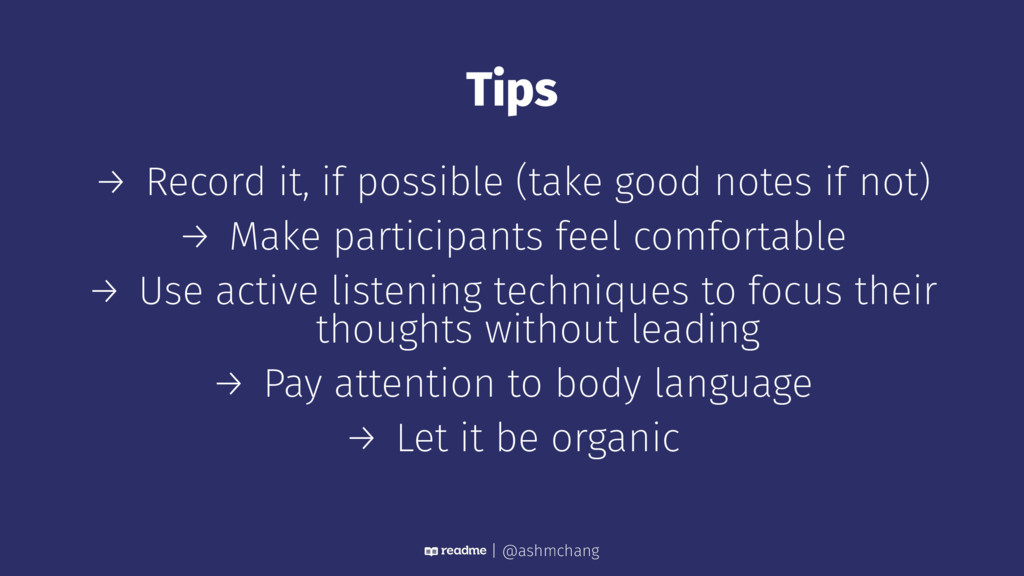
not) → Make participants feel comfortable → Use active listening techniques to focus their thoughts without leading → Pay attention to body language → Let it be organic | @ashmchang
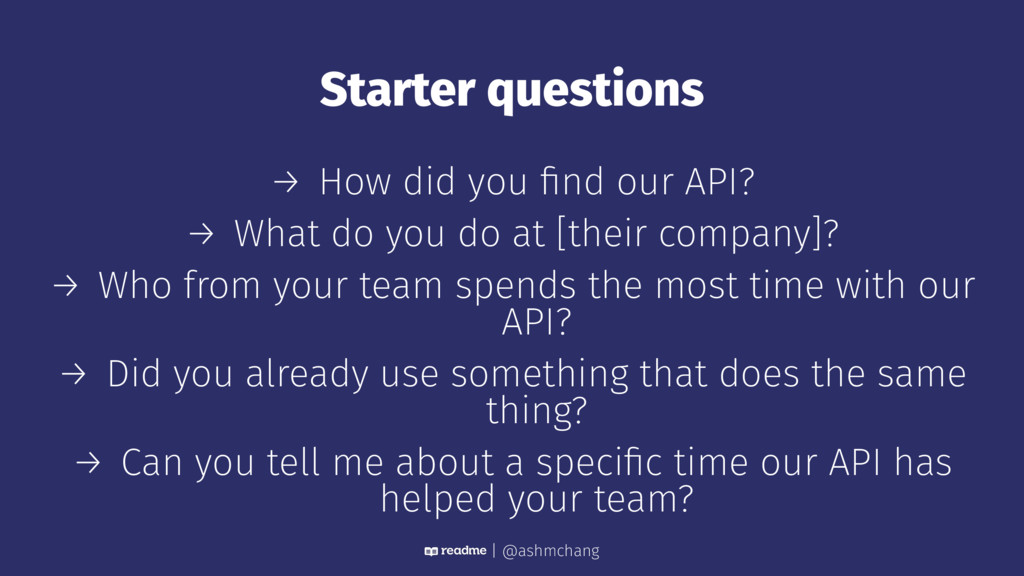
What do you do at [their company]? → Who from your team spends the most time with our API? → Did you already use something that does the same thing? → Can you tell me about a specific time our API has helped your team? | @ashmchang
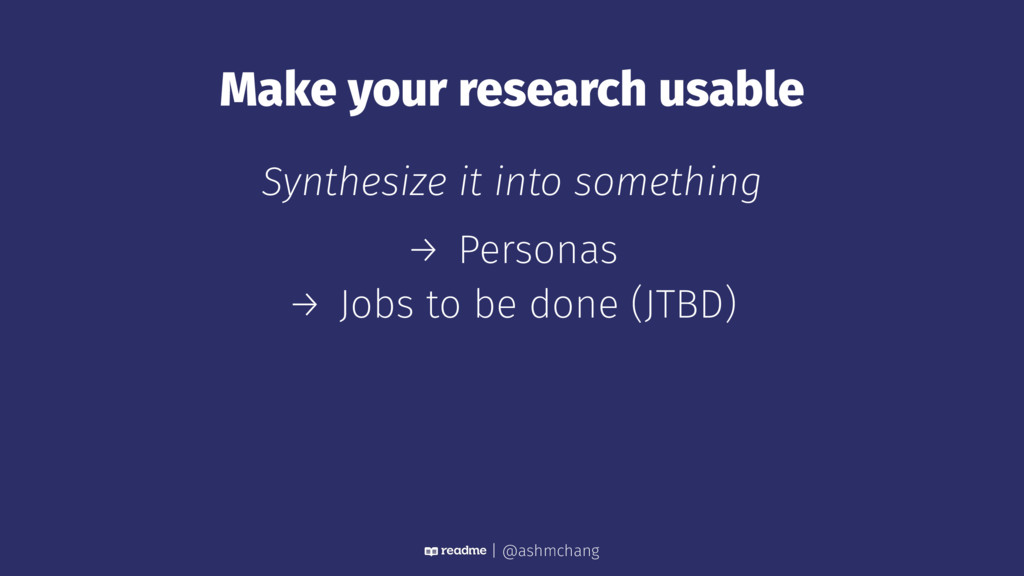
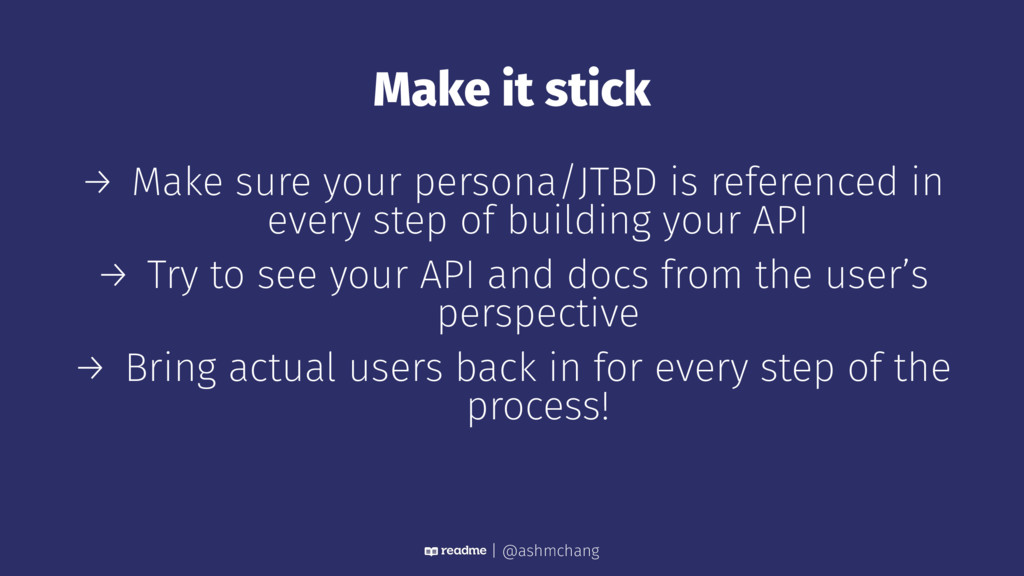
in every step of building your API → Try to see your API and docs from the user’s perspective → Bring actual users back in for every step of the process! | @ashmchang
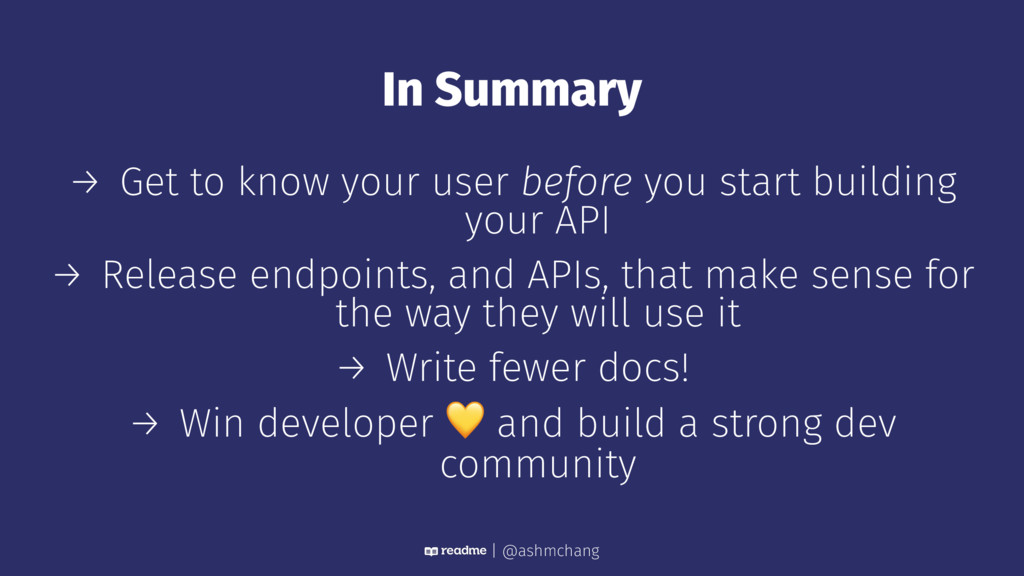
start building your API → Release endpoints, and APIs, that make sense for the way they will use it → Write fewer docs! → Win developer ! and build a strong dev community | @ashmchang


 greenmidori
 grimoh
 riyaamemiya
 occhi
occhi
 bgpat
bgpat
 yahonda
 makocchi
 tokuty
 pfn
pfn
 genda
genda
 kairim0
 recruitengineers
 destraynor
 marcoroth
 marktimemedia
 tammyeverts
 aleyda
 akihiro_kokubo
 stephaniewalter
 tessaabrams
 pedronauck
 jacobian
 keithpitt