Upgrade to Pro — share decks privately, control downloads, hide ads and more …

Inside the Mind of Malware: Analysis & Investig...

Avatar for Athis SN Athis SN
May 25, 2025
16

Inside the Mind of Malware: Analysis & Investigations Unraveled

A talk on Malware Analysis covering areas like -

Introduction to Malware & Its Types
Initial Access & Infection Techniques
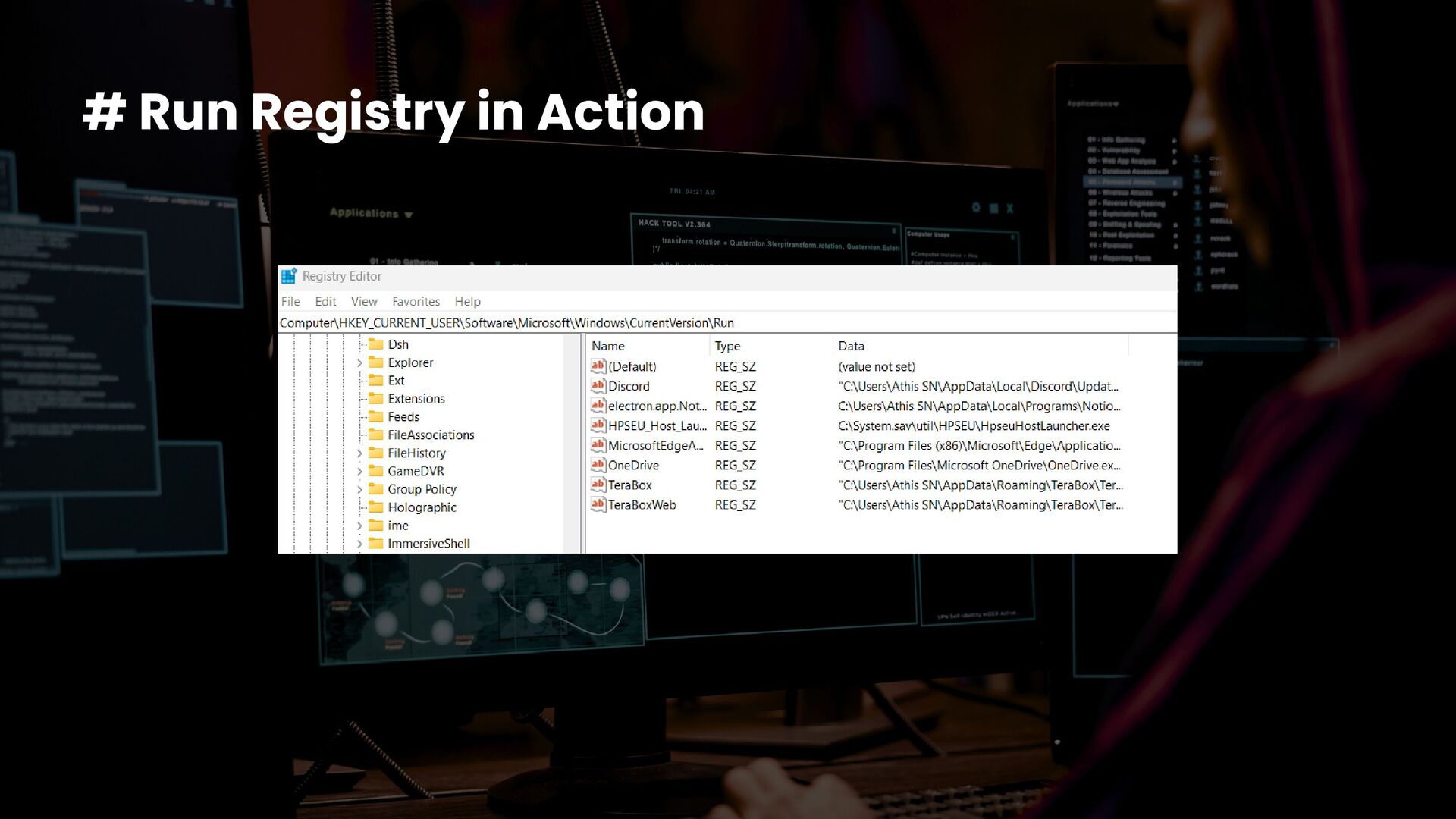
Persistence Techniques Used by Malware
Packers 101
OS Internals: PE Structure, DLL & Windows API
Malware Analysis: Static Analysis
Glimpse into Malware Reverse Engineering
Memory Forensics 101
Anti-Analysis Techniques

Avatar for Athis SN

Athis SN

May 25, 2025
Tweet

Transcript

  1. Agenda Introduction to Malware & Its Types Initial Access &

    Infection Techniques Persistence Techniques Used by Malware Packers 101 OS Internals: PE Structure, DLL & Windows API Malware Analysis: Static Analysis Glimpse into Malware Reverse Engineering Memory Forensics 101 Anti-Analysis Techniques
  2. Undergrad @VELS 7+ years of Experience in Information Security Security

    Engineer @Azefox Head @DEF CON Chennai DCG9144 CRTP & MCRTA Red Team Operations, Exploit Development, Application Security, Malware Analysis & Threat Research Whoami
  3. Malware 101 Malicious Software Purpose: Theft, Espionage, or Financial Gains.

    Can Target Individuals, Organizations, and Government. Spreads via Email Attachments, Removable devices etc. Used By: APT, Nation-State & Other Cyber criminals. MaaS ( Malware As A Service) Success Of Malware - EDR & AV Evasion, Persistence, Lateral Movements, Fileless Execution. Malware
  4. #Evolution of Malware 1990s: Emergence of Macro based virus targeting
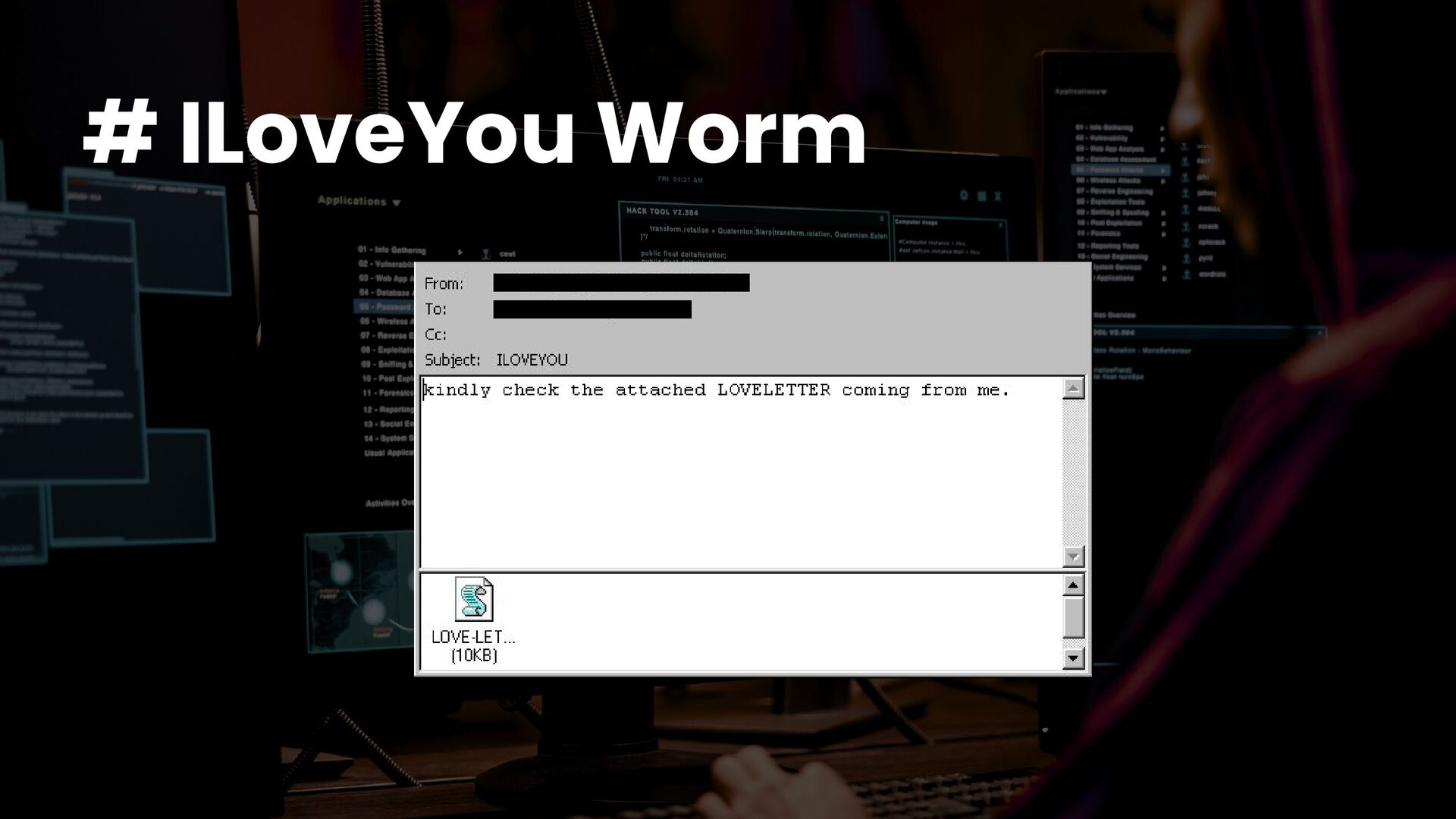
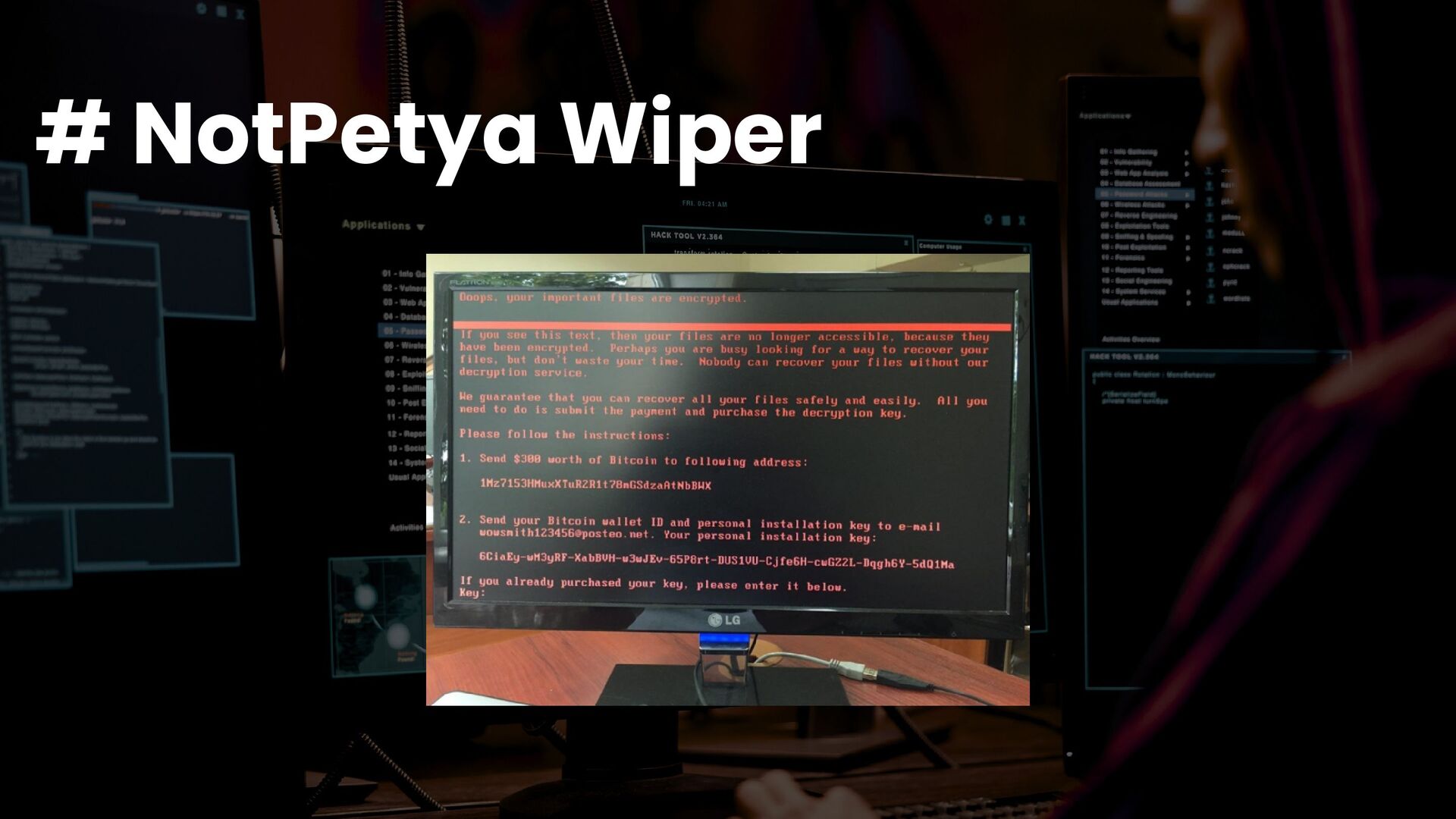
    Microsoft Docs - Melissa 2000s: Rise of Botnets, Spyware - ILoveYou Worm 2010s: Sophisticated Nation-State Malware - NotPetya, Pegasus
  5. # Types of Malware Virus & Worm Spyware & Adware

    Ransomware Downloader/Dropper Botnet Infostealer Keylogger Backdoor RAT Rootkit/Bootkit
  6. # Initial Access & Infection Techniques Supply Chain Attacks Drive-By

    Downloads Email Attachments Removable Devices Exploiting Vulnerabilities Malvertising Watering Hole Attack
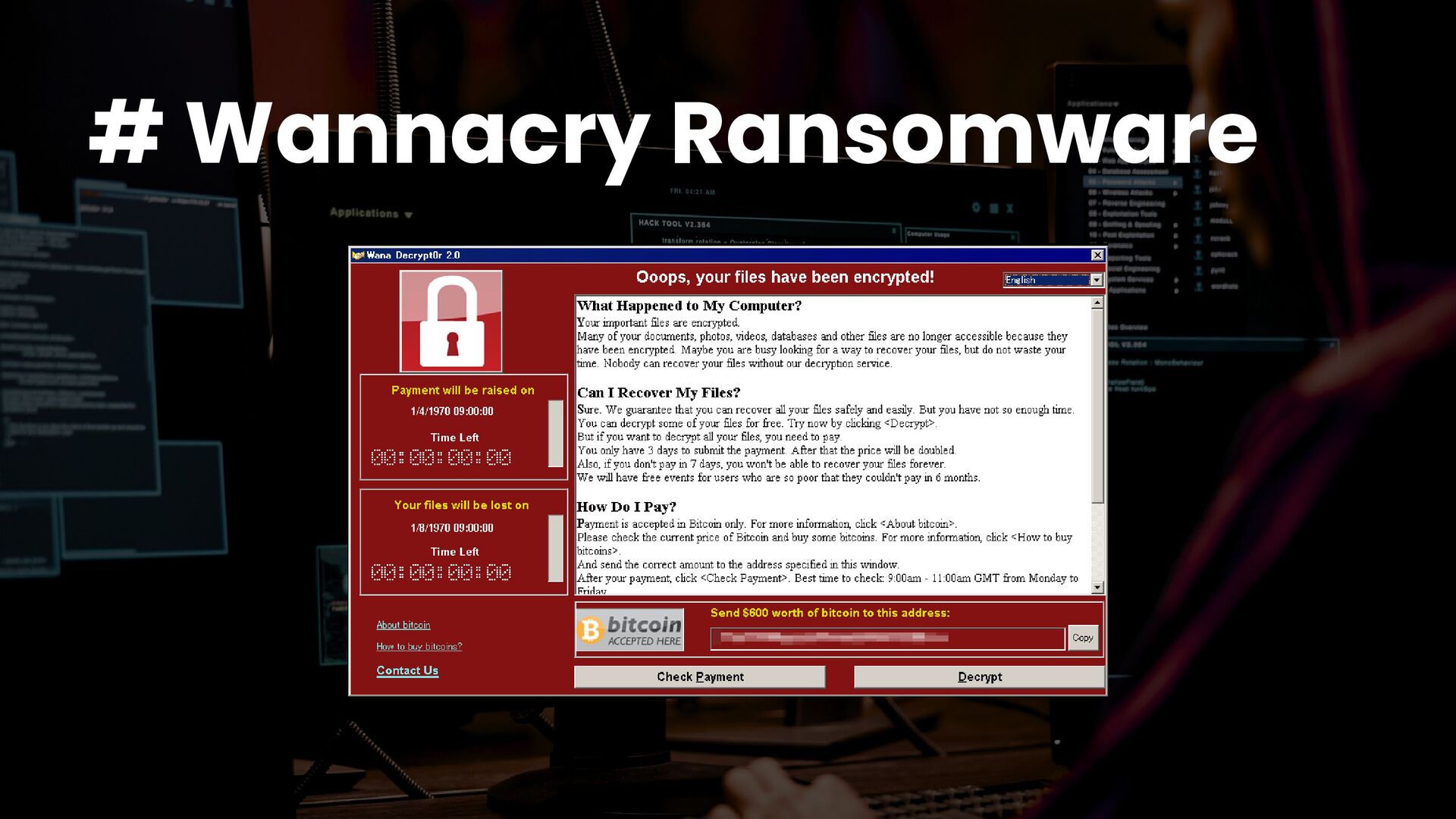
  7. # Well Known Malware Stunext (2010) NotPetya (2017) Mirai Botnet

    (2016) Wannacry Ransomware (2017) Zeus (2007) Emotet (2017) Ryuk Ransomware (2018)
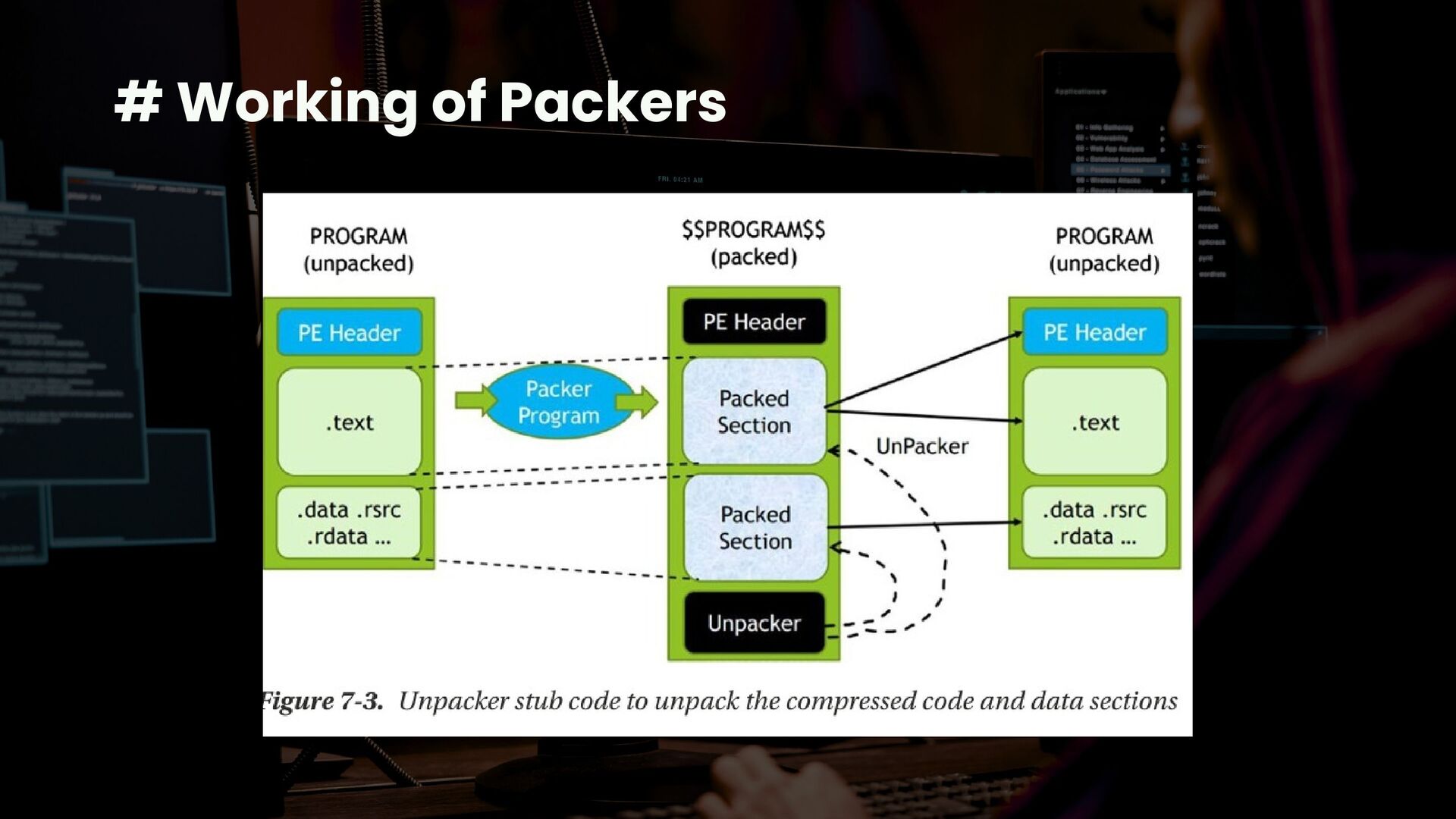
  8. # Packers Software that compresses or modifies executables to obfuscate

    their original structure Compression is the core of Packing Produces New Executable which is less is size Unpacker stub to decompress at runtime Provide Obfuscation to the code, making it hard to detect Known Packers - UPX, MPRESS Custom Packers by Adversaries
  9. # Portable Executable (PE) 101 File Format MZ or 5A4D

    Example: .EXE, .DLL, .SYS, .DRV, etc Contains Information required by OS to Load it into memory OS Loader Reads Information from the PE Header, then loads the content from F -> M Portability across Windows OS
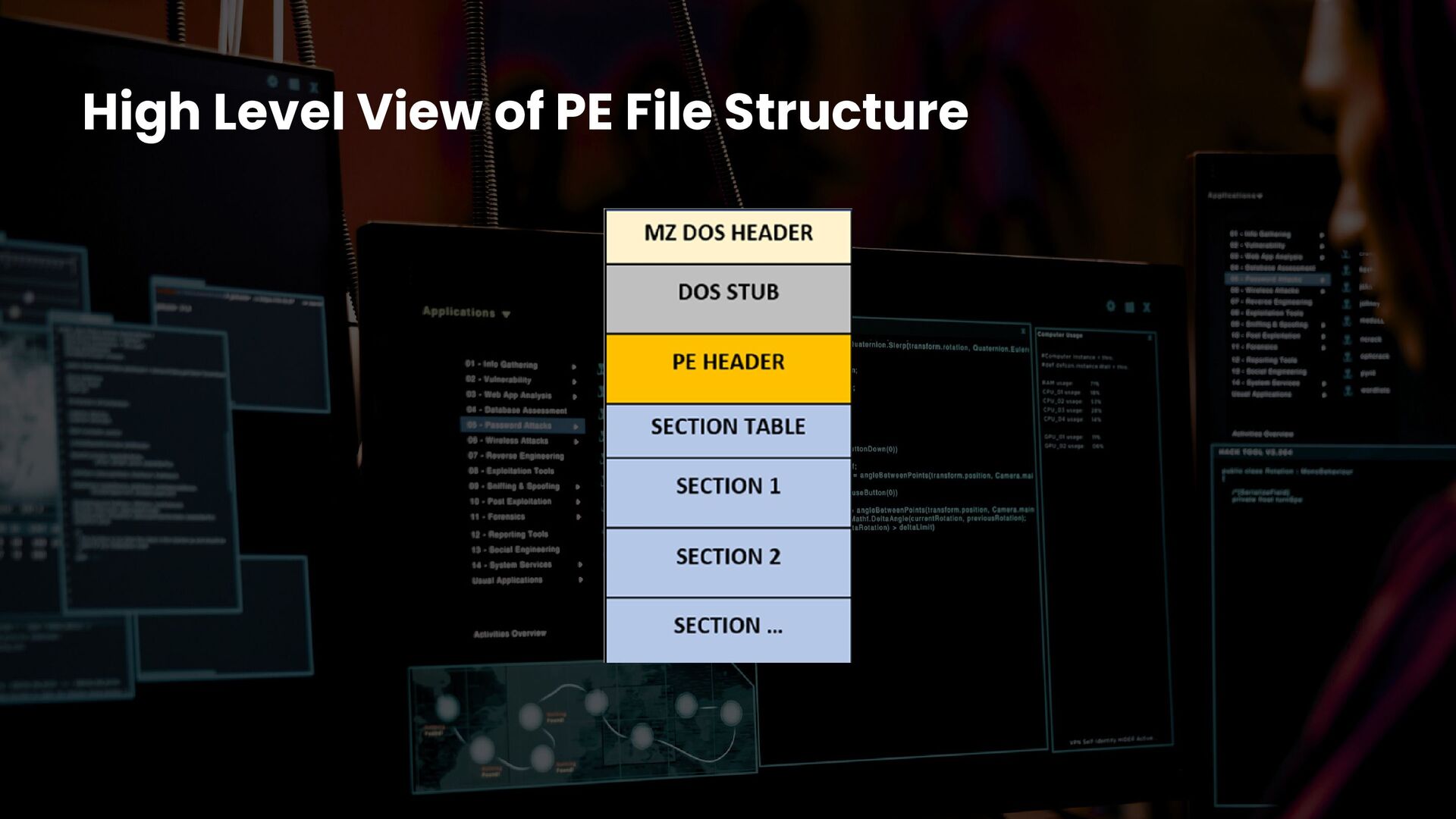
  10. # PE Structure Overview DOS Header (IMAGE_DOS_HEADER) - e_magic, e_lfanew,

    DOS Stub NT Header (IMAGE_NT_HEADER) - File Header (IMAGE_FILE_HEADER), Optional Header (IMAGE_OPTIONAL_HEADER): AddressofEntryPoint Section Table And Sections - IMAGE_SECTION_HEADER - .text, .rdata, .idata, .edata, .bss, etc DEMO: CFFExplorer
  11. Code Reusability Loaded into a process memory at runtime Processes

    can access functions within the DLL Common Windows DLLs - kernel32.dll, User32.dll, ntdll.dll DLL Attacks - DLL Hijacking, DLL Search Order Hijacking, DLL Sideloading, etc # Dynamic Link Library (DLL)
  12. # Windows API 101 Set of Functions that Allow apps

    to interact with OS Common Windows API - CreateFile(), DeleteFile(), etc Also used by Malware Authors for Code Injection & Hooking Techniques DEMO: Windows API in Action
  13. # Static Analysis Examining Suspected File without executing it Reveals

    different information about the file Initial Step Advantages - Safe and Quick
  14. # Techniques Determining File Type Fingerprinting AntiVirus (AV) Scanning String

    Analysis Detecting Packers Linked Libraries and Functions
  15. # Determining File Type Targeted OS and Architecture Can deduce

    our investigation Core Techniques - Manual Method - Hex Editor File Command DEMO: File Type Identification
  16. Generating Cryptographic Hashes of the file Commonly used Algorithms -

    MD5, SHA1, SHA256 Indicator of Compromise (IoC) Determine whether the sample has been previously searched DEMO: Hashmyfile # Fingerprinting The Malware
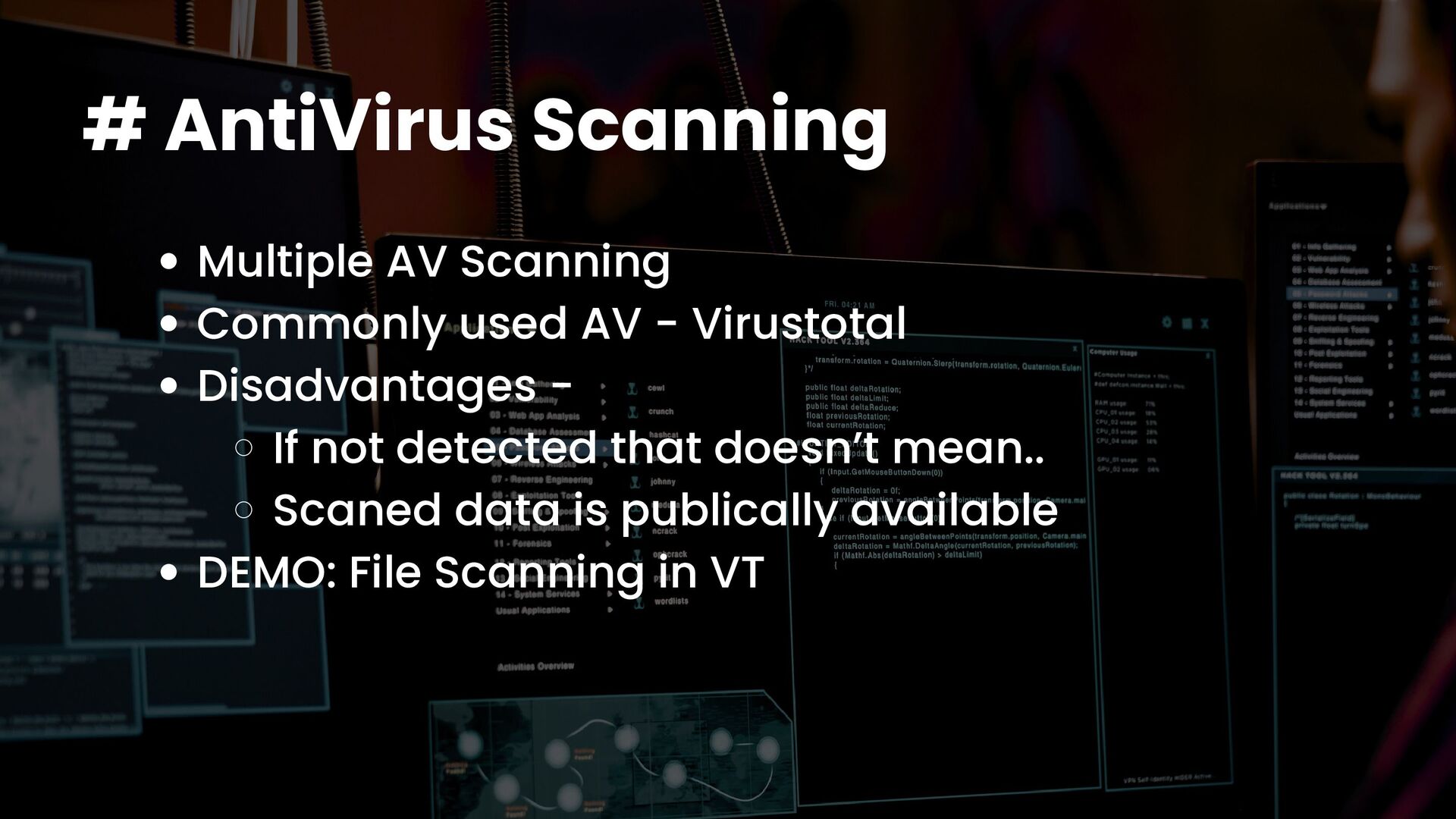
  17. # AntiVirus Scanning Multiple AV Scanning Commonly used AV -

    Virustotal Disadvantages - If not detected that doesn’t mean.. Scaned data is publically available DEMO: File Scanning in VT
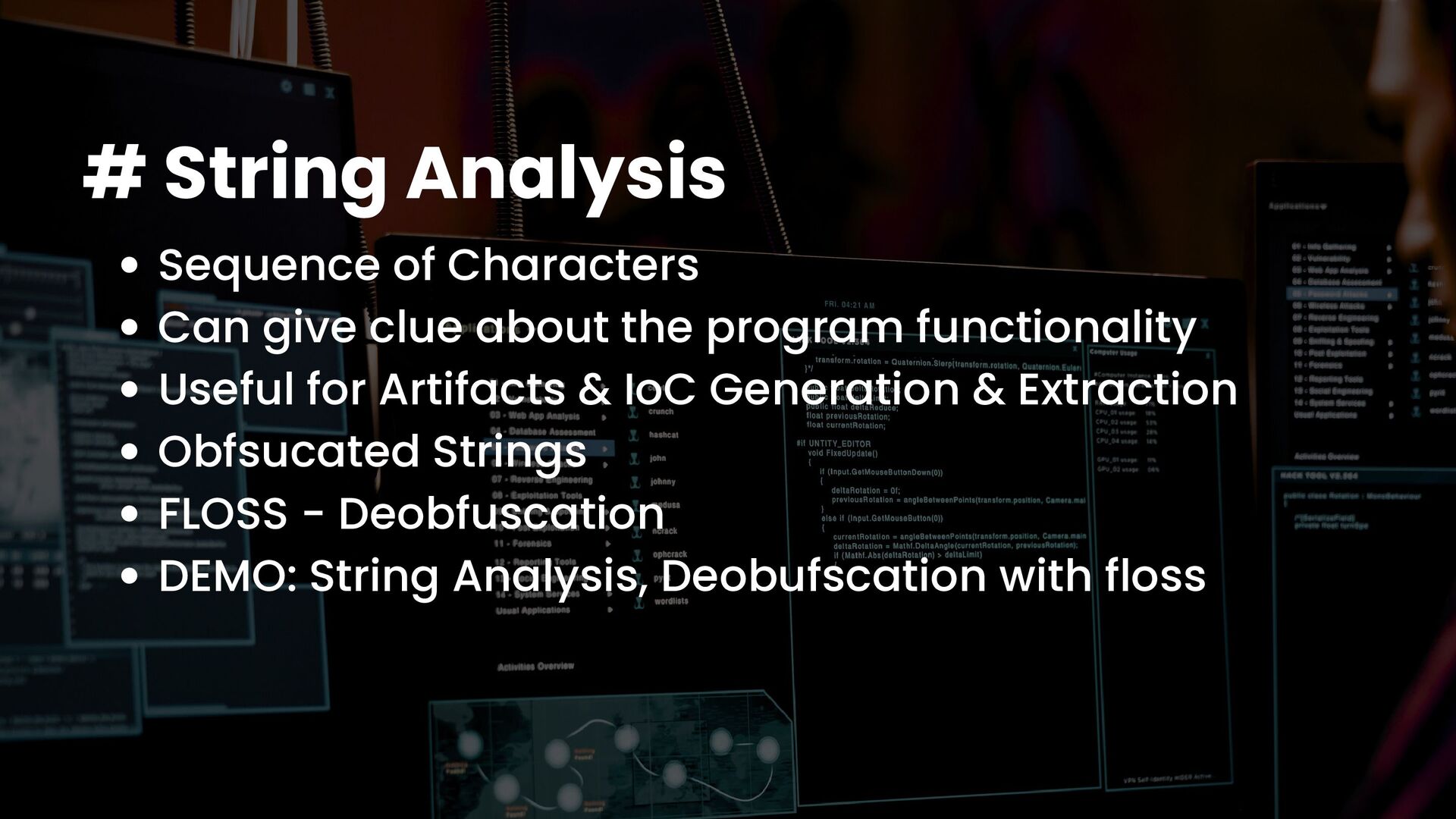
  18. # String Analysis Sequence of Characters Can give clue about

    the program functionality Useful for Artifacts & IoC Generation & Extraction Obfsucated Strings FLOSS - Deobfuscation DEMO: String Analysis, Deobufscation with floss
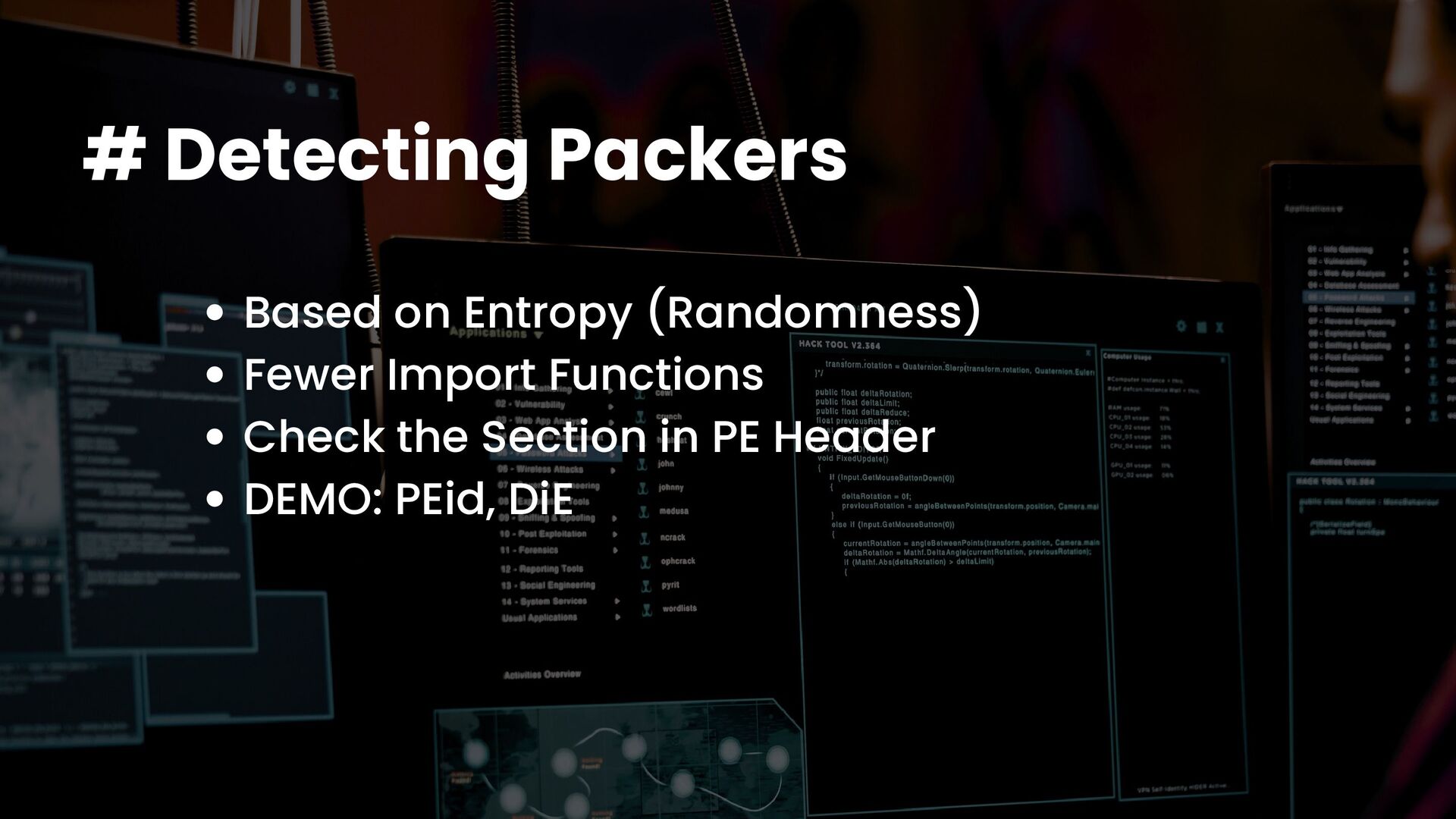
  19. # Detecting Packers Based on Entropy (Randomness) Fewer Import Functions

    Check the Section in PE Header DEMO: PEid, DiE
  20. # Linked Libraries & Functions Malware Interacts with files, network,

    registries, etc but how? DLL & WinAPI Functions Imported & Exported Functions Examining PE Resources Examining Compiliation Timestamps DEMO: PEStudio, Resource Hacker
  21. # Reverse Engineering Understanding how something works Key Part in

    Low-Level System Security Core: Disassembly Debuggers Decompilers
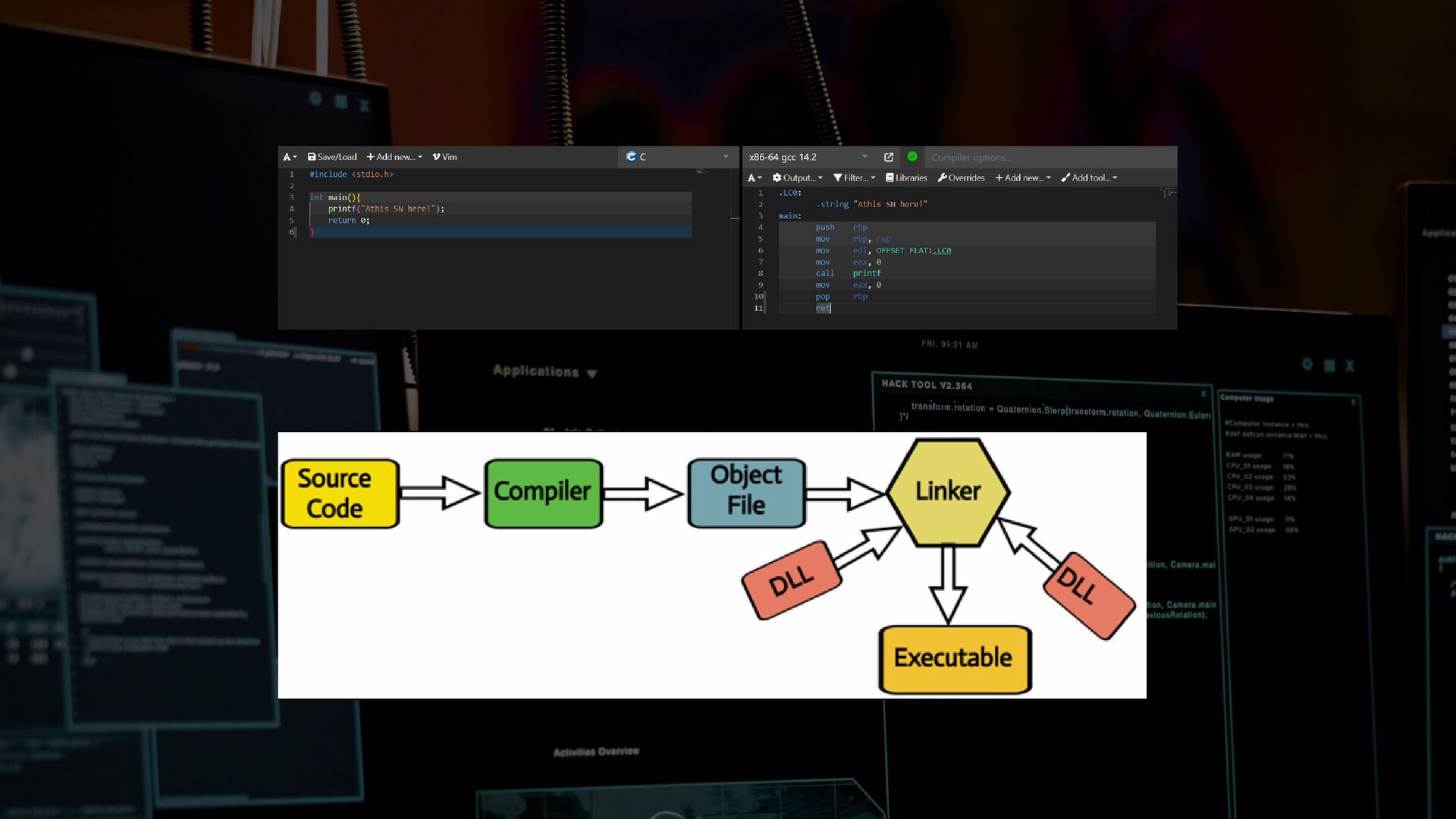
  22. # Disassembly Converts Machine code into Assembly Language Useful in

    understanding malware logic and func Tools: IDA, Binary Ninja, Cutter Drawbacks: Junk Instructions, Obfuscated Code, etc DEMO: Disassembly 101 in Action
  23. # Debuggers Step-by-Step Execution BreakPoints - Software (INT 3), Hardware

    (D0 - D3) Bypassing Anti-Analysis Techniques Tools: IDA, x64dbg, Ollydbg, GDB, Radare2 DEMO: Debuggers 101 in Action
  24. # Decompilers Converts compiled machine code into a high-level programming

    language Tries to restore source code logic Tools: Ghidra, Binary Ninja DEMO: Decompilers 101 in Action
  25. # Memory Forensics 101 Analyzing Volatile Memory Extracting Artifacts, Running

    processes, etc Crucial in Incident Response (IR) Detecting Fileless Malware Tools Used: Volatility DEMO: Memory Forensics in Action
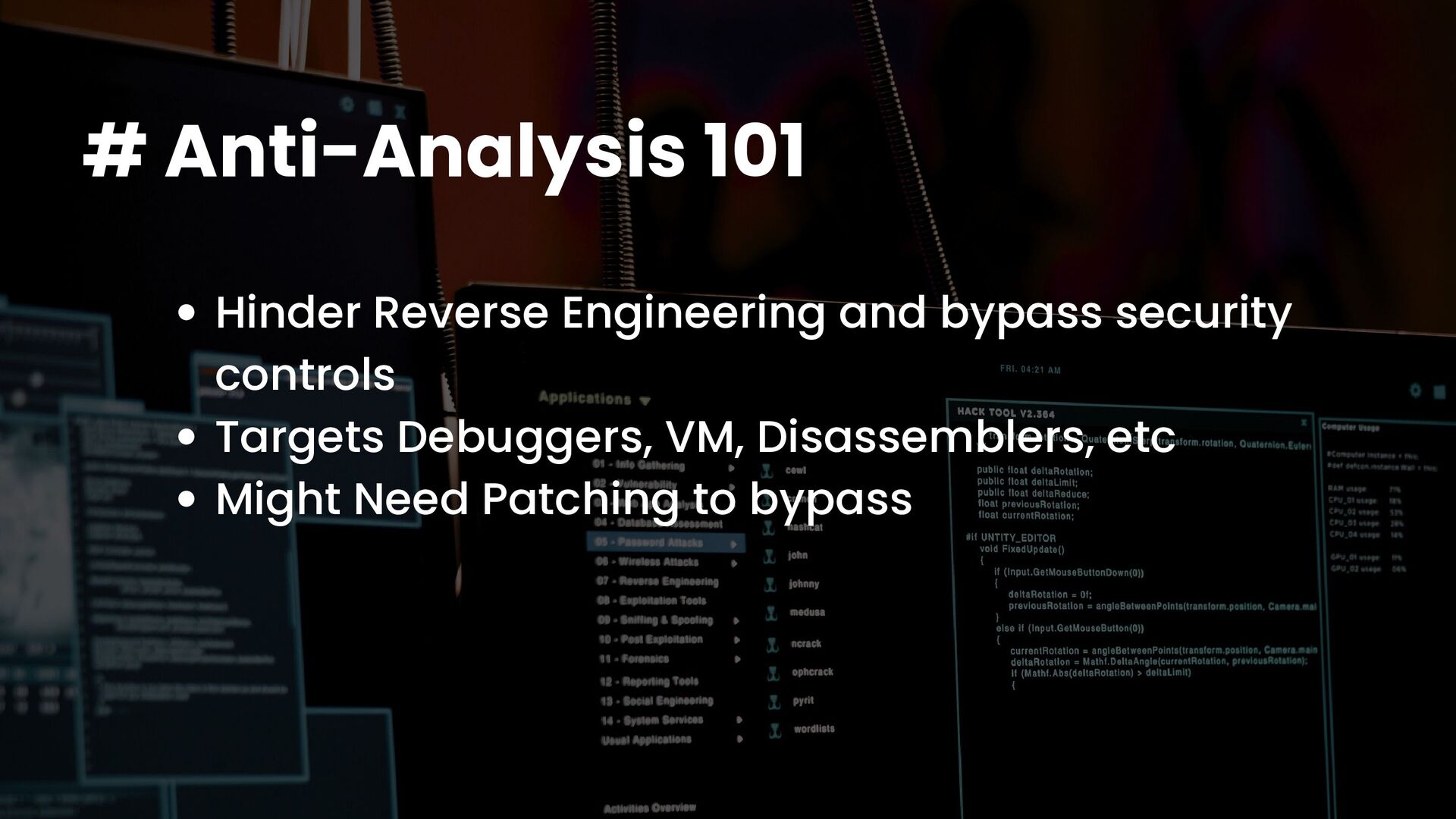
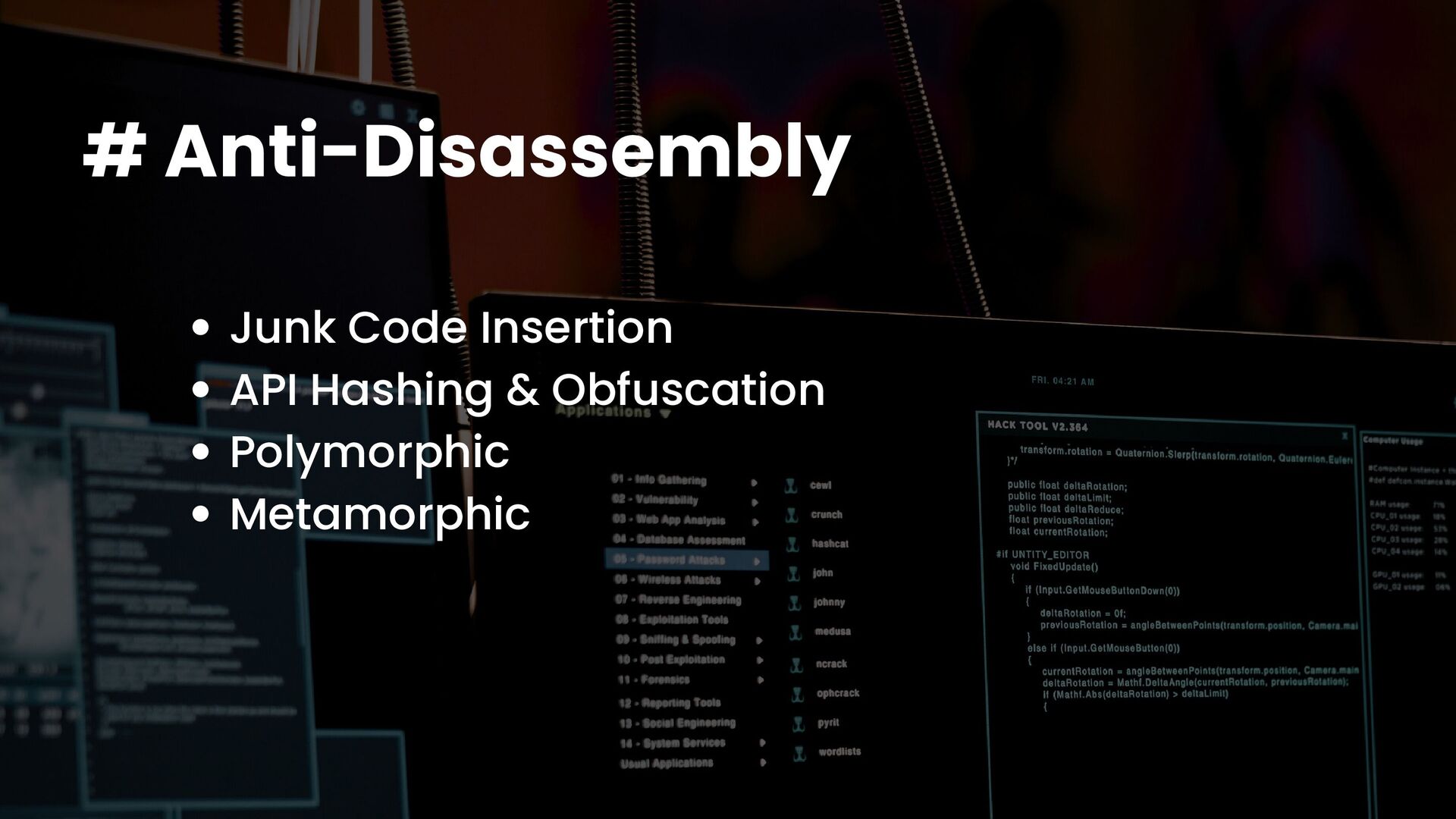
  26. # Anti-Analysis 101 Hinder Reverse Engineering and bypass security controls

    Targets Debuggers, VM, Disassemblers, etc Might Need Patching to bypass
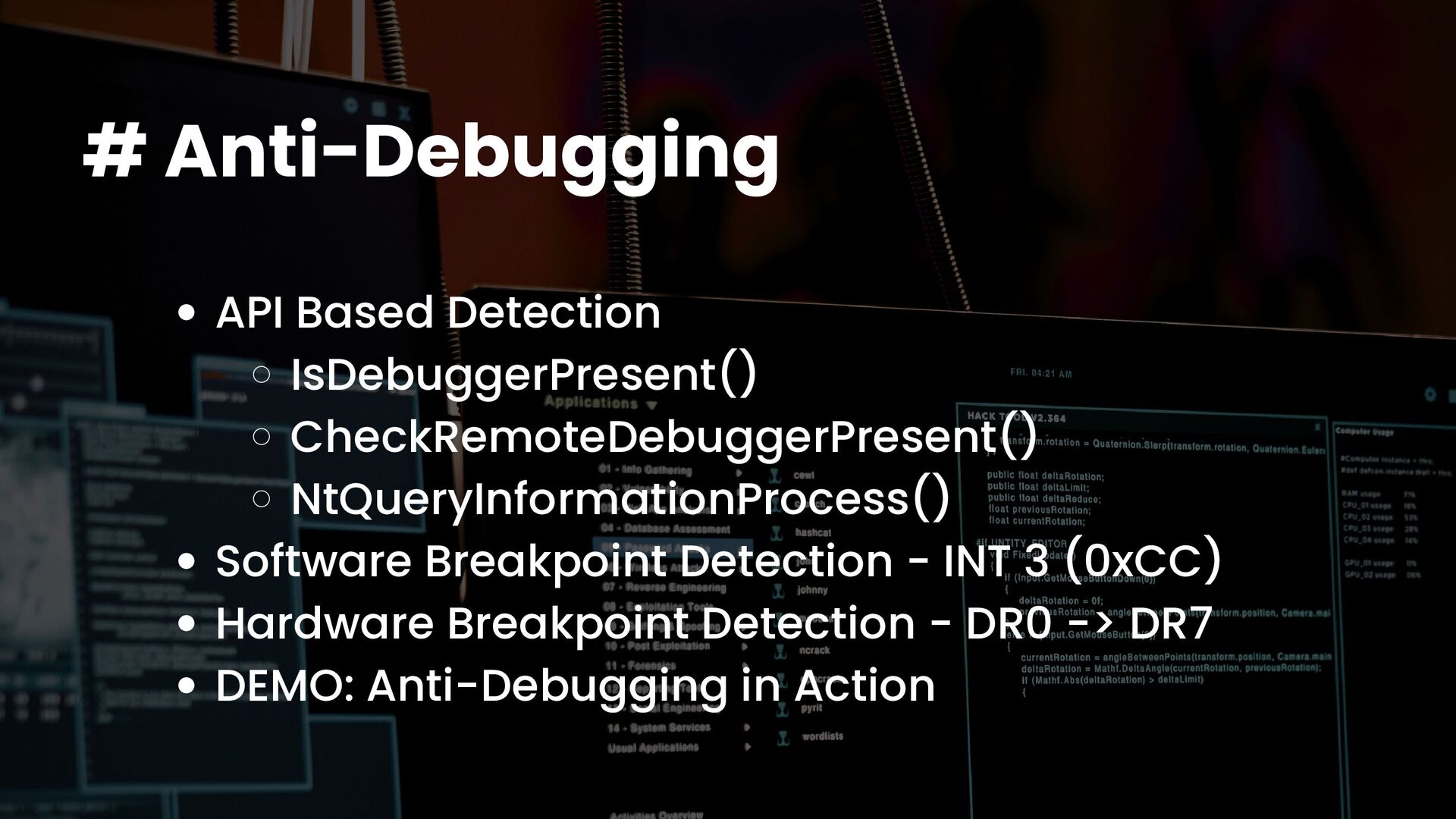
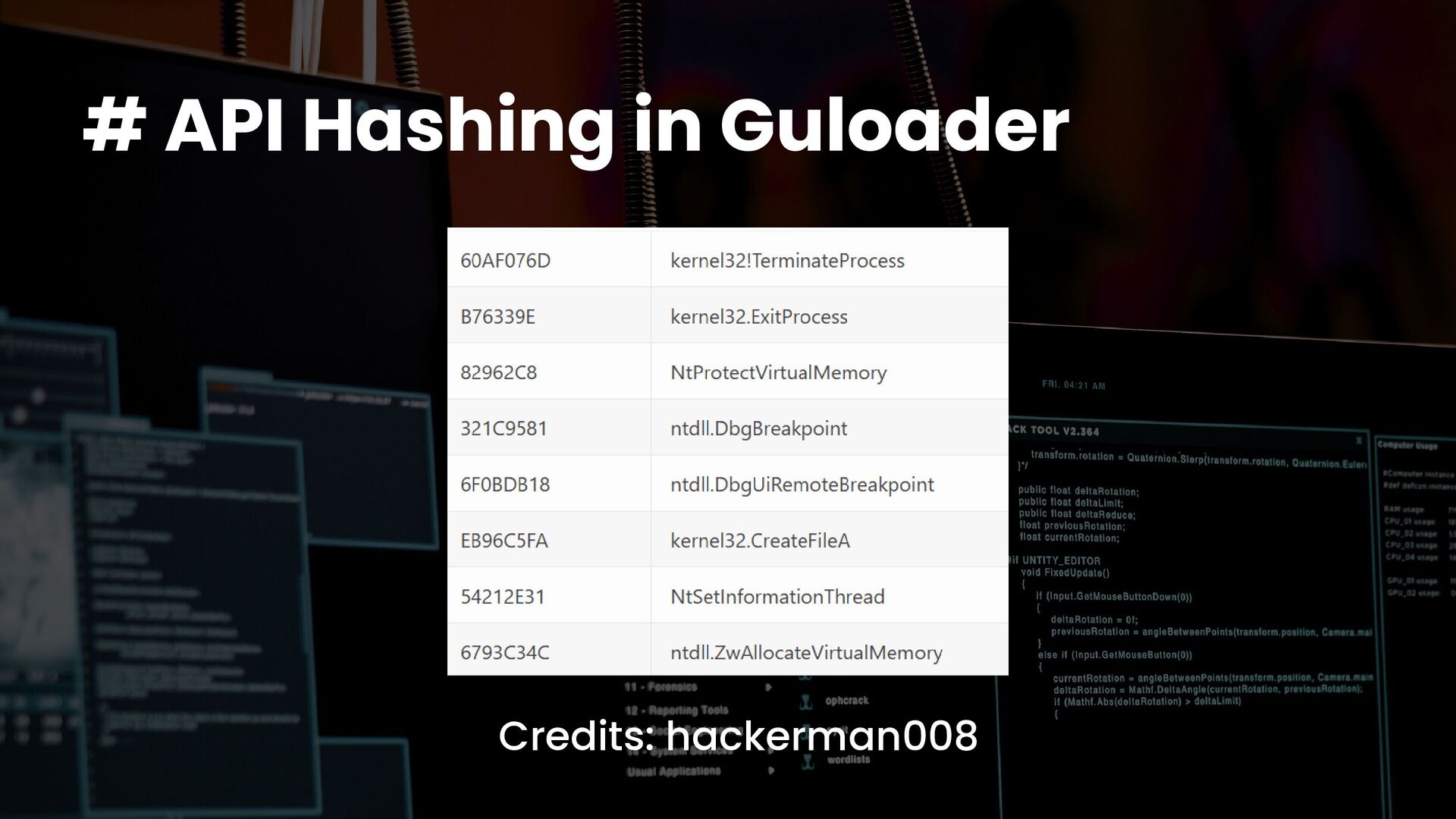
  27. # Anti-Debugging API Based Detection IsDebuggerPresent() CheckRemoteDebuggerPresent() NtQueryInformationProcess() Software Breakpoint

    Detection - INT 3 (0xCC) Hardware Breakpoint Detection - DR0 -> DR7 DEMO: Anti-Debugging in Action
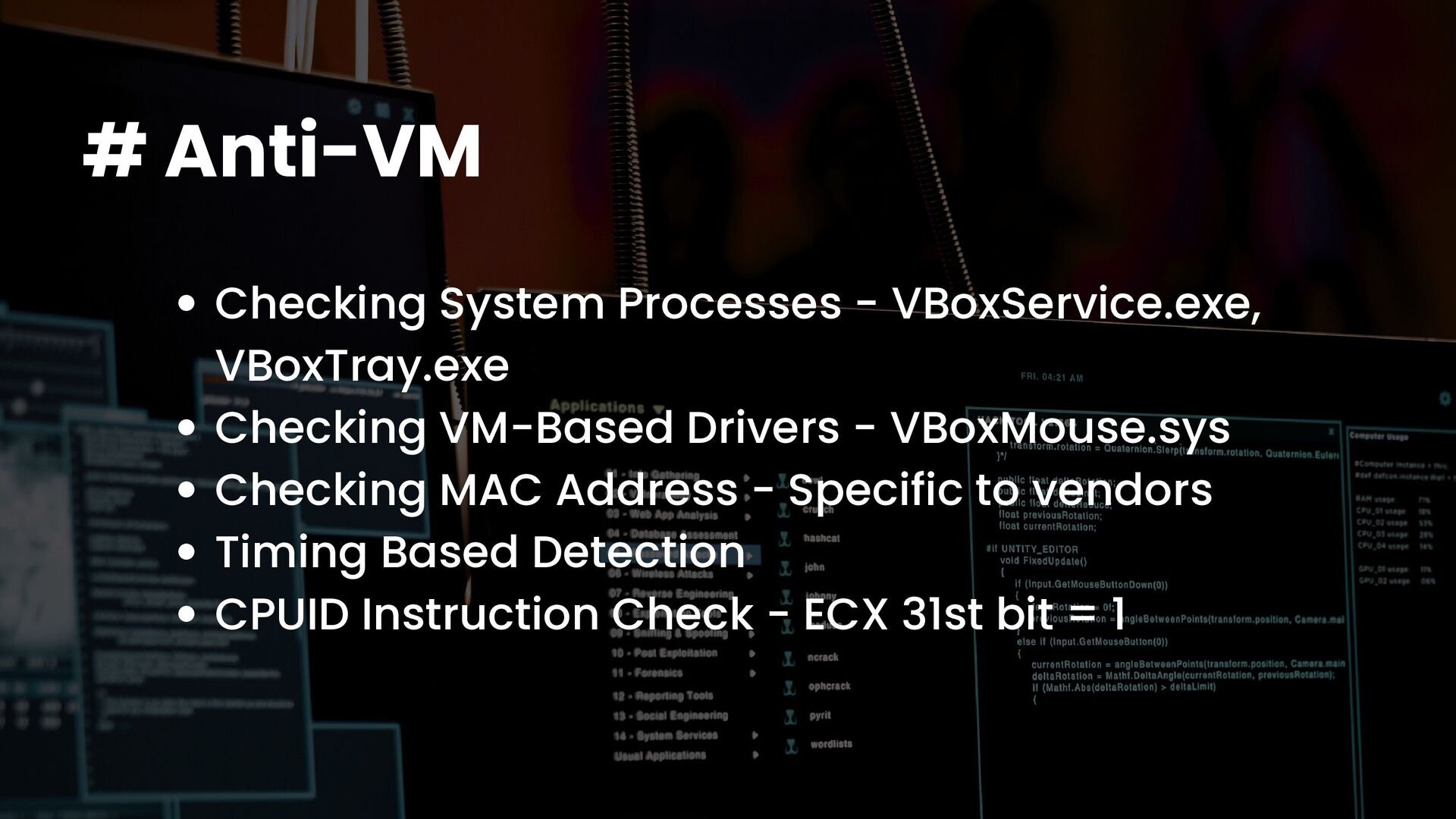
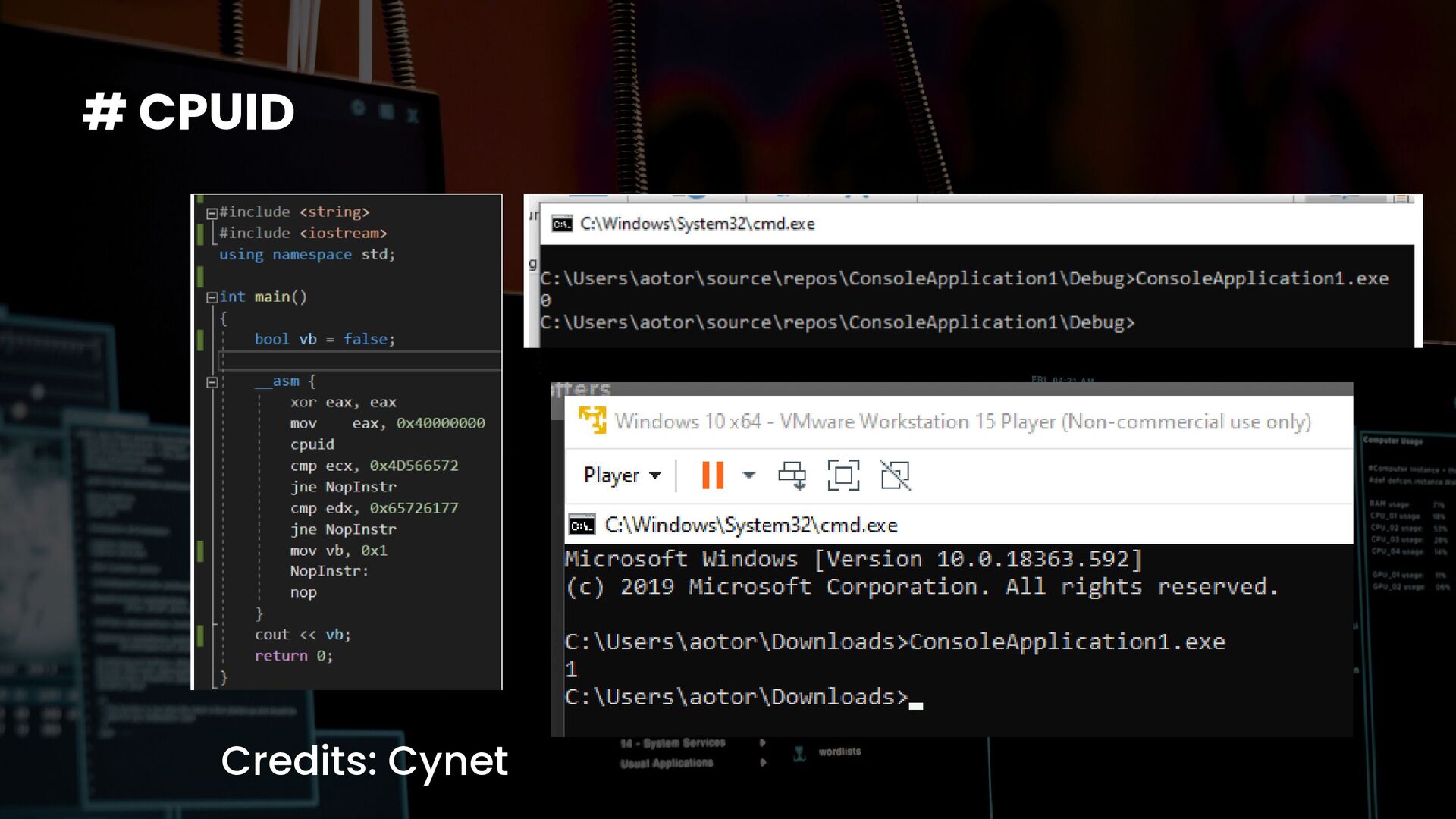
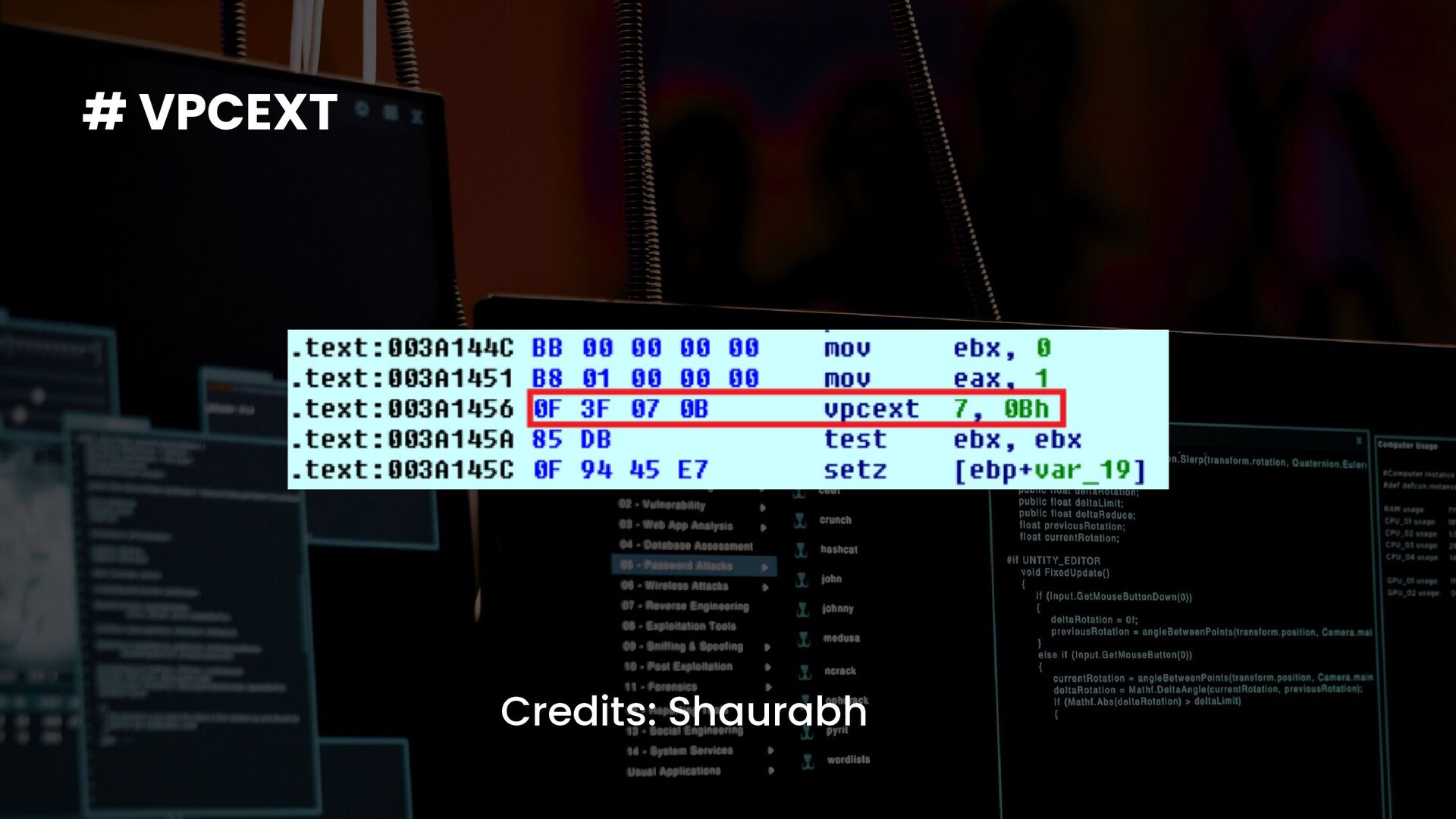
  28. # Anti-VM Checking System Processes - VBoxService.exe, VBoxTray.exe Checking VM-Based

    Drivers - VBoxMouse.sys Checking MAC Address - Specific to vendors Timing Based Detection CPUID Instruction Check - ECX 31st bit = 1