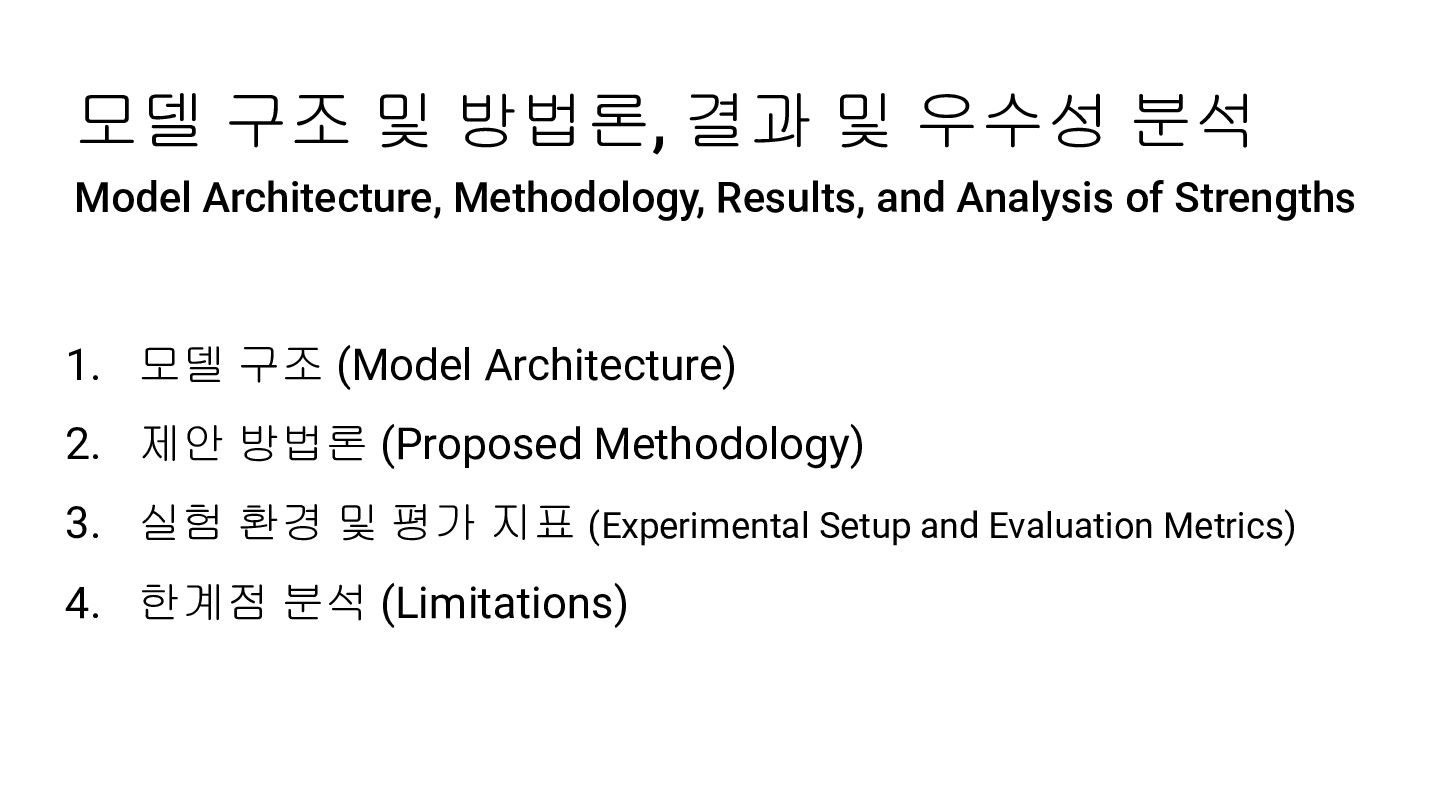
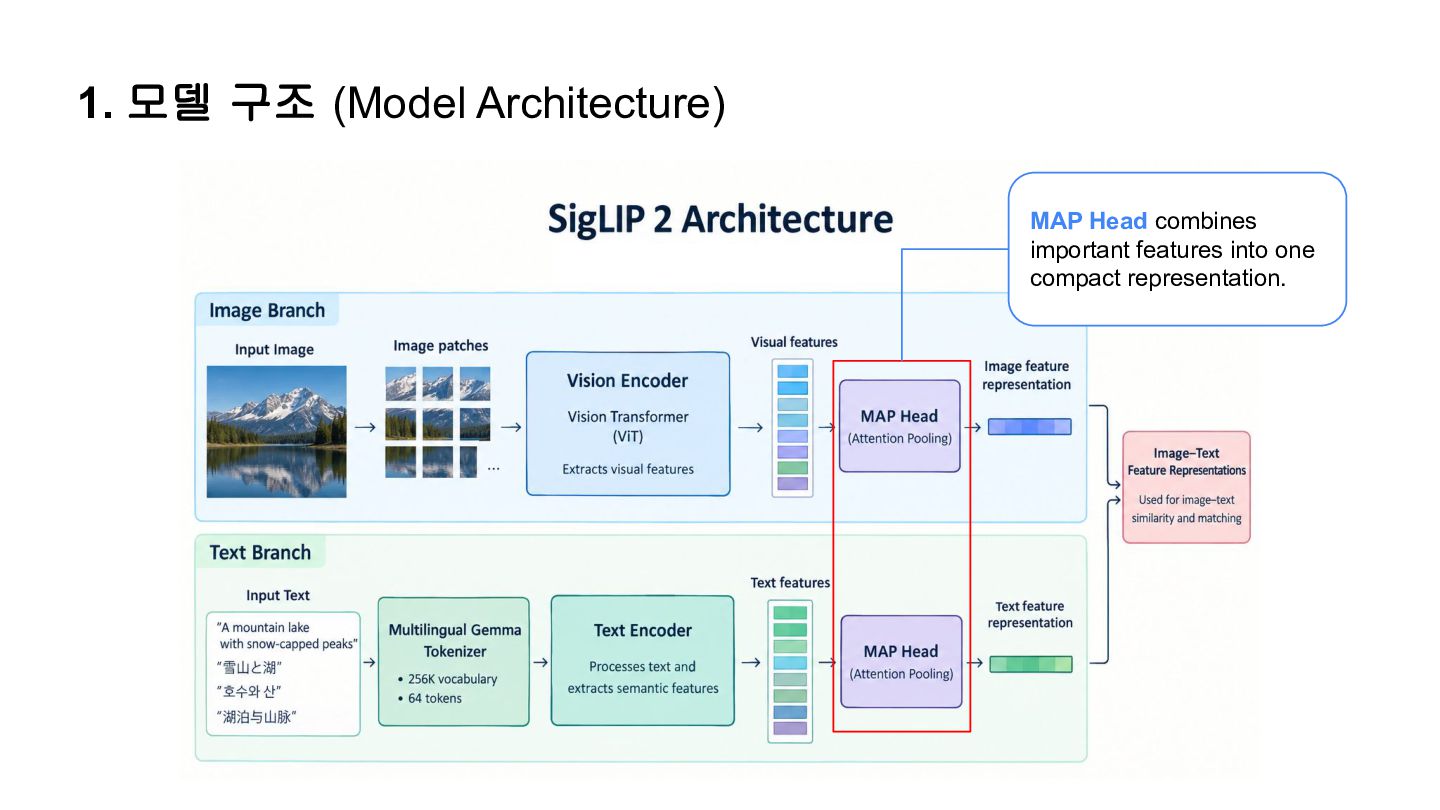
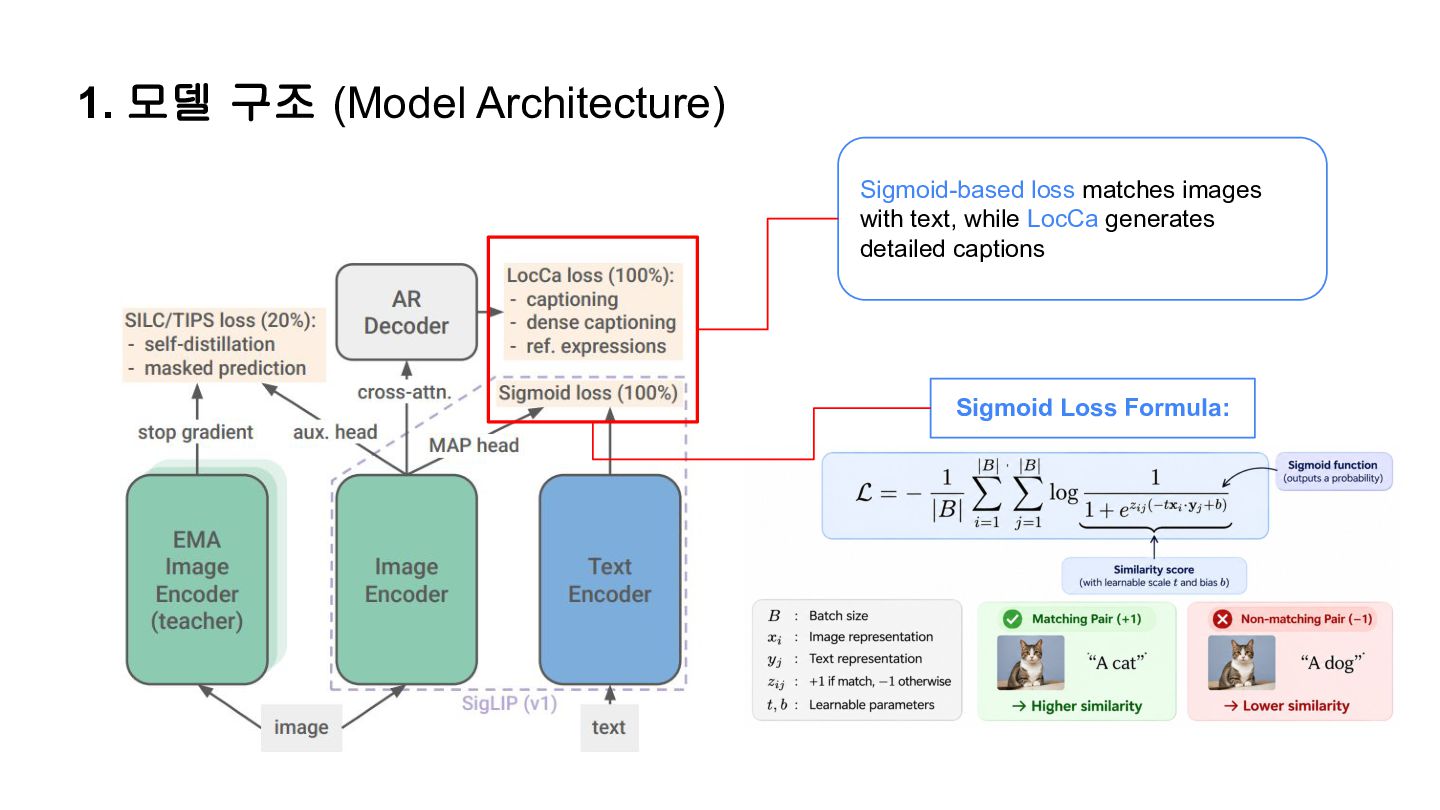
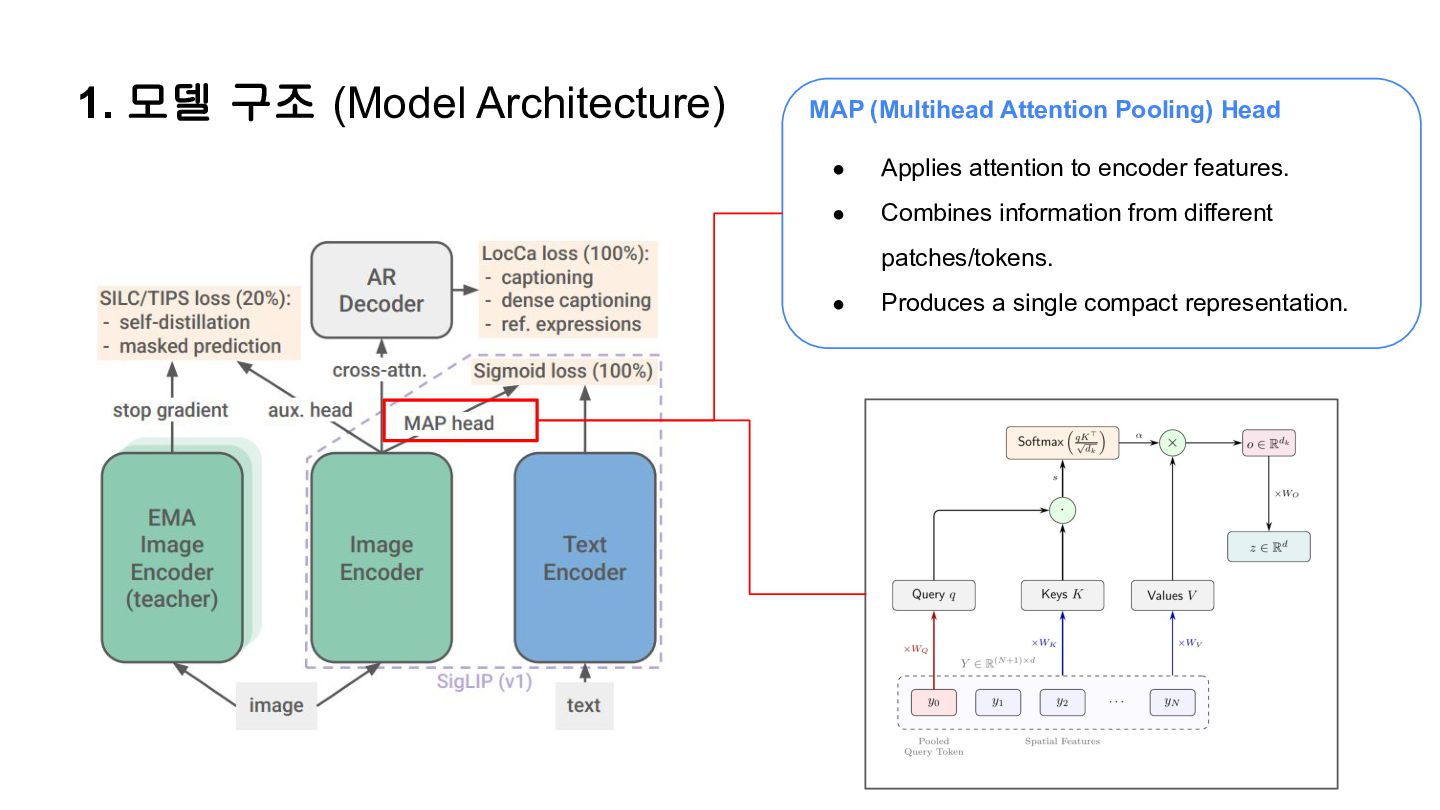
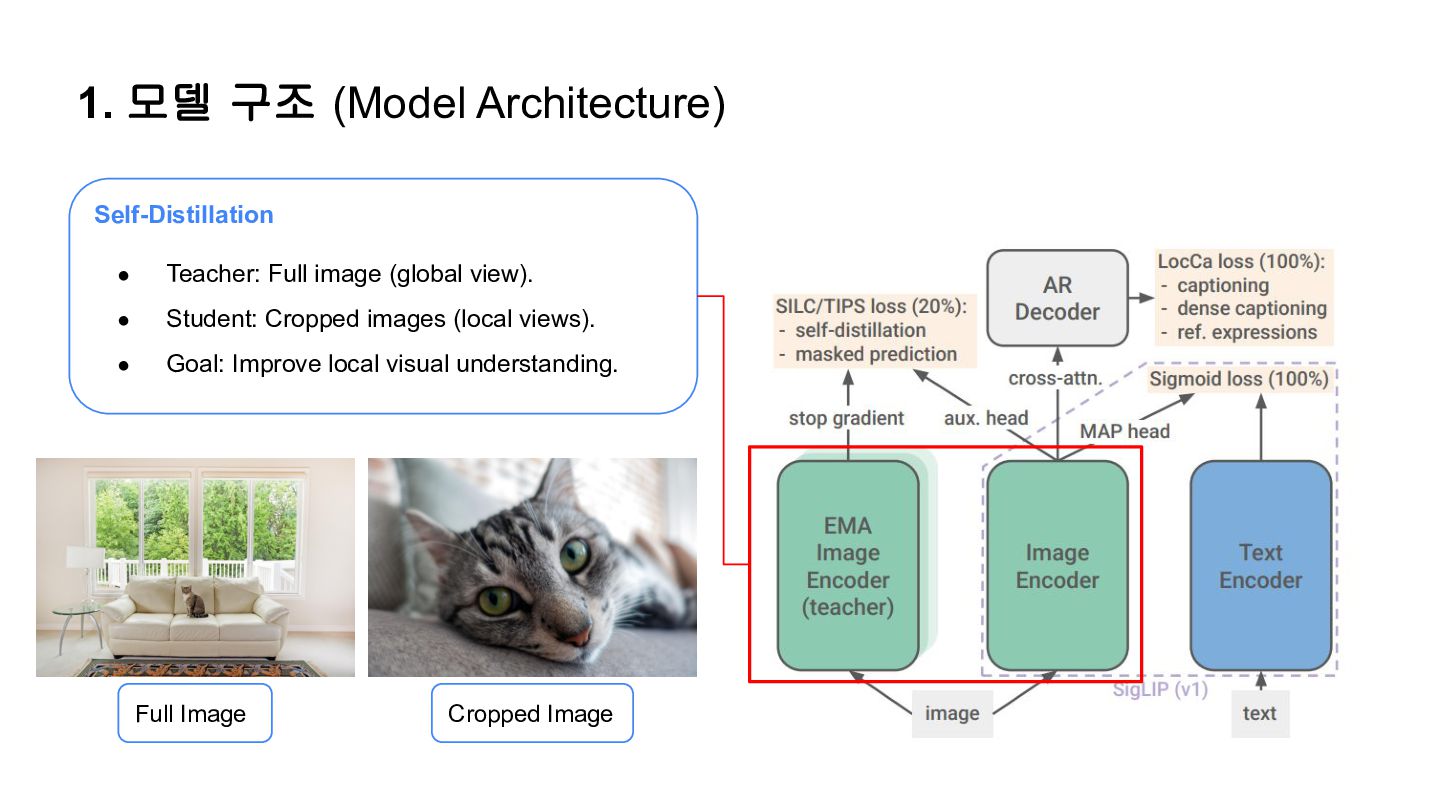
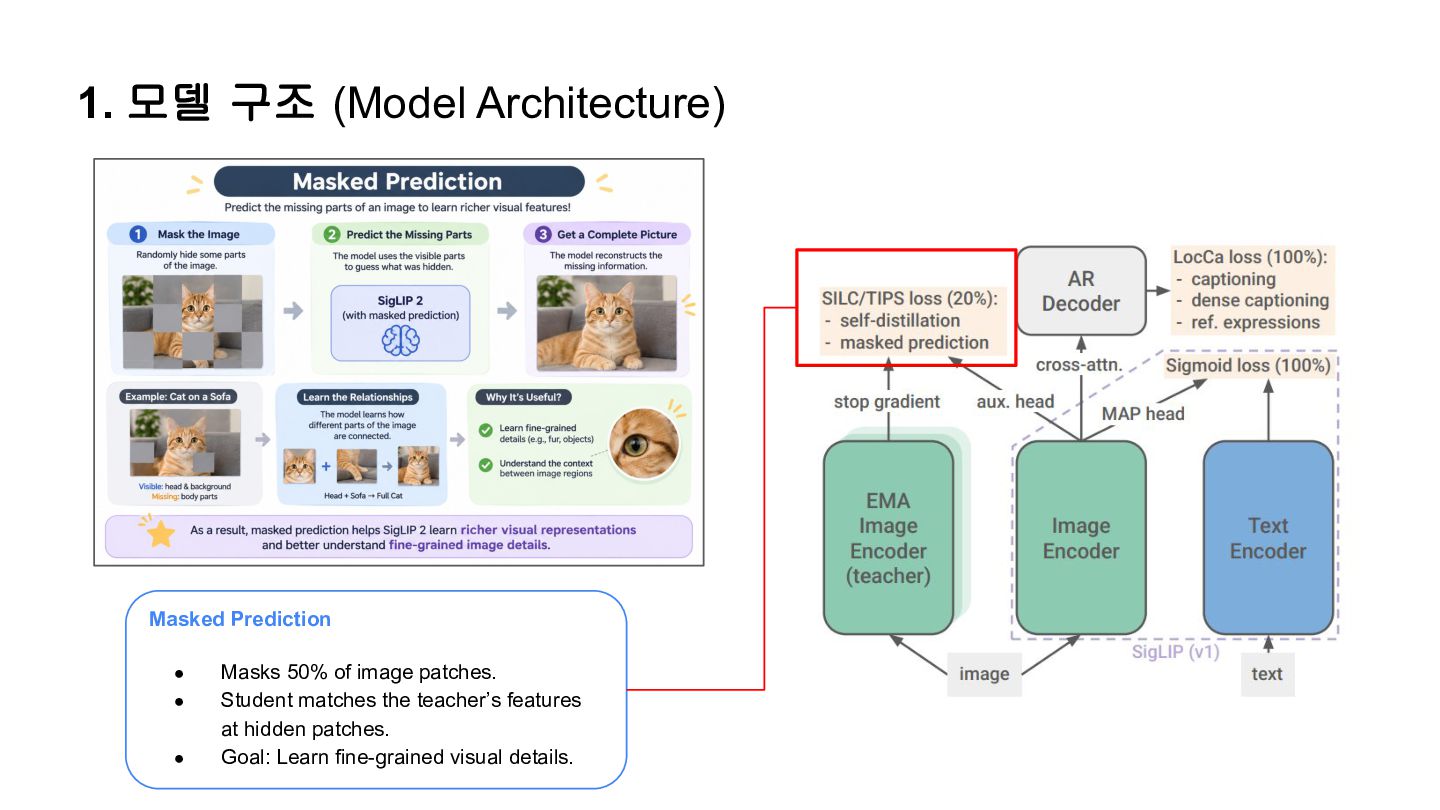
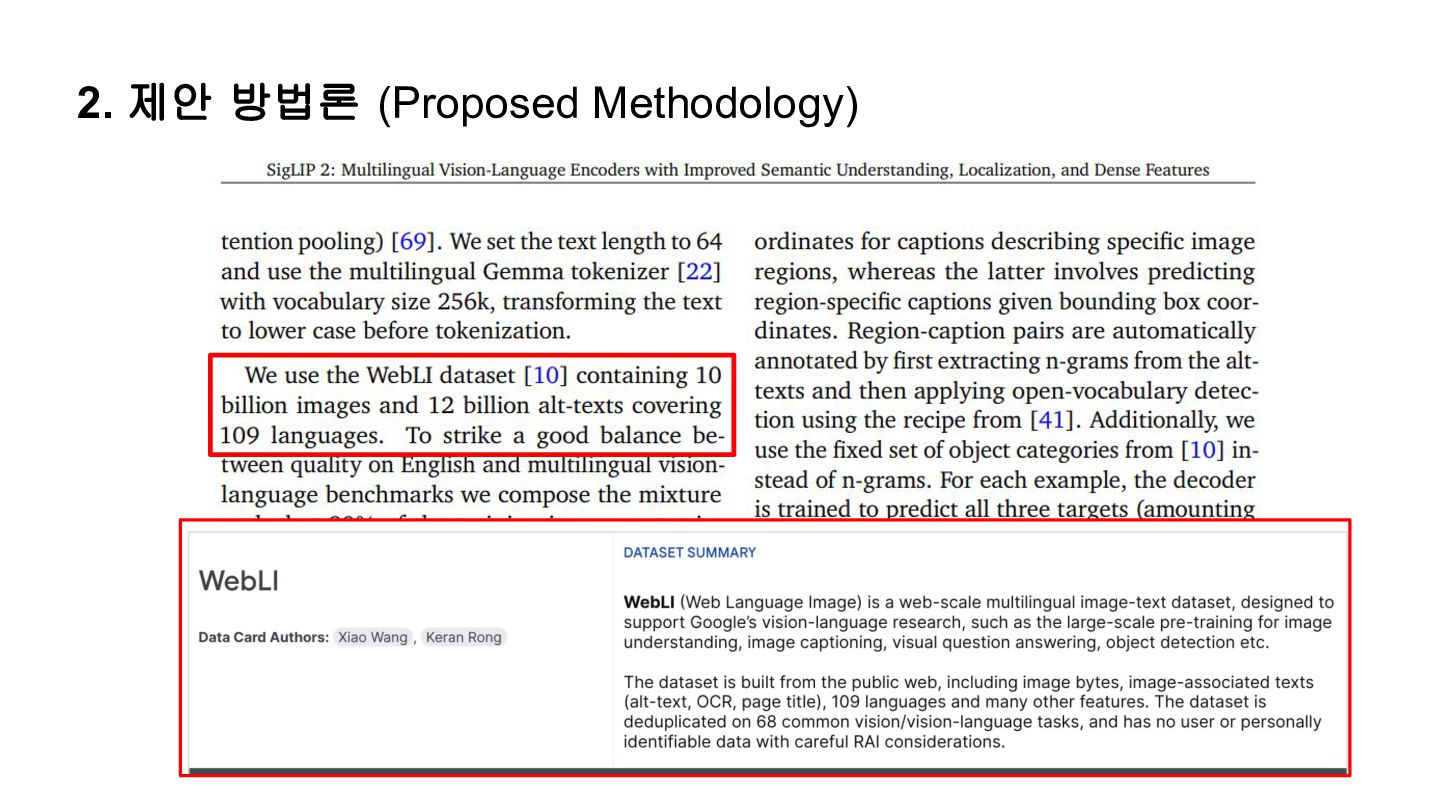
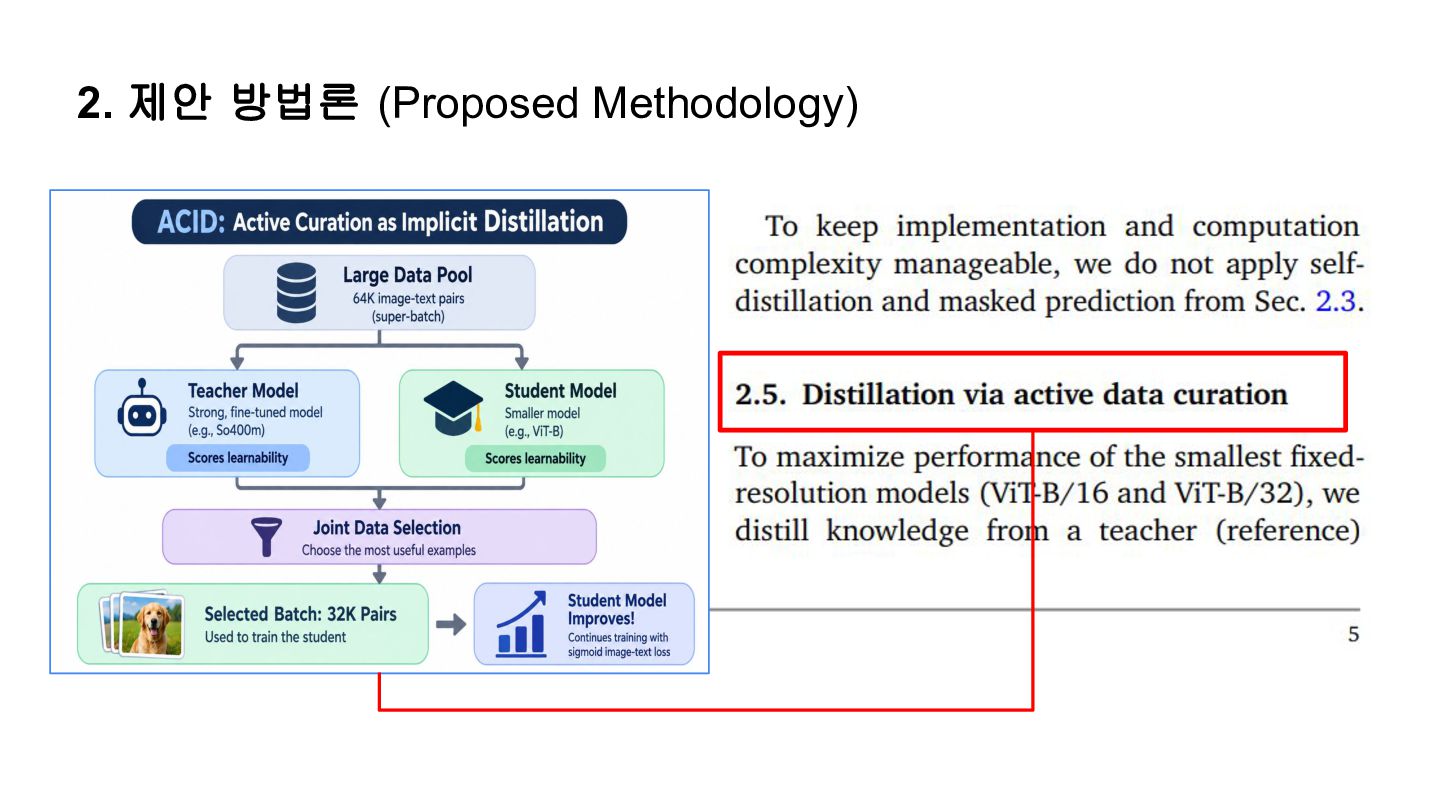
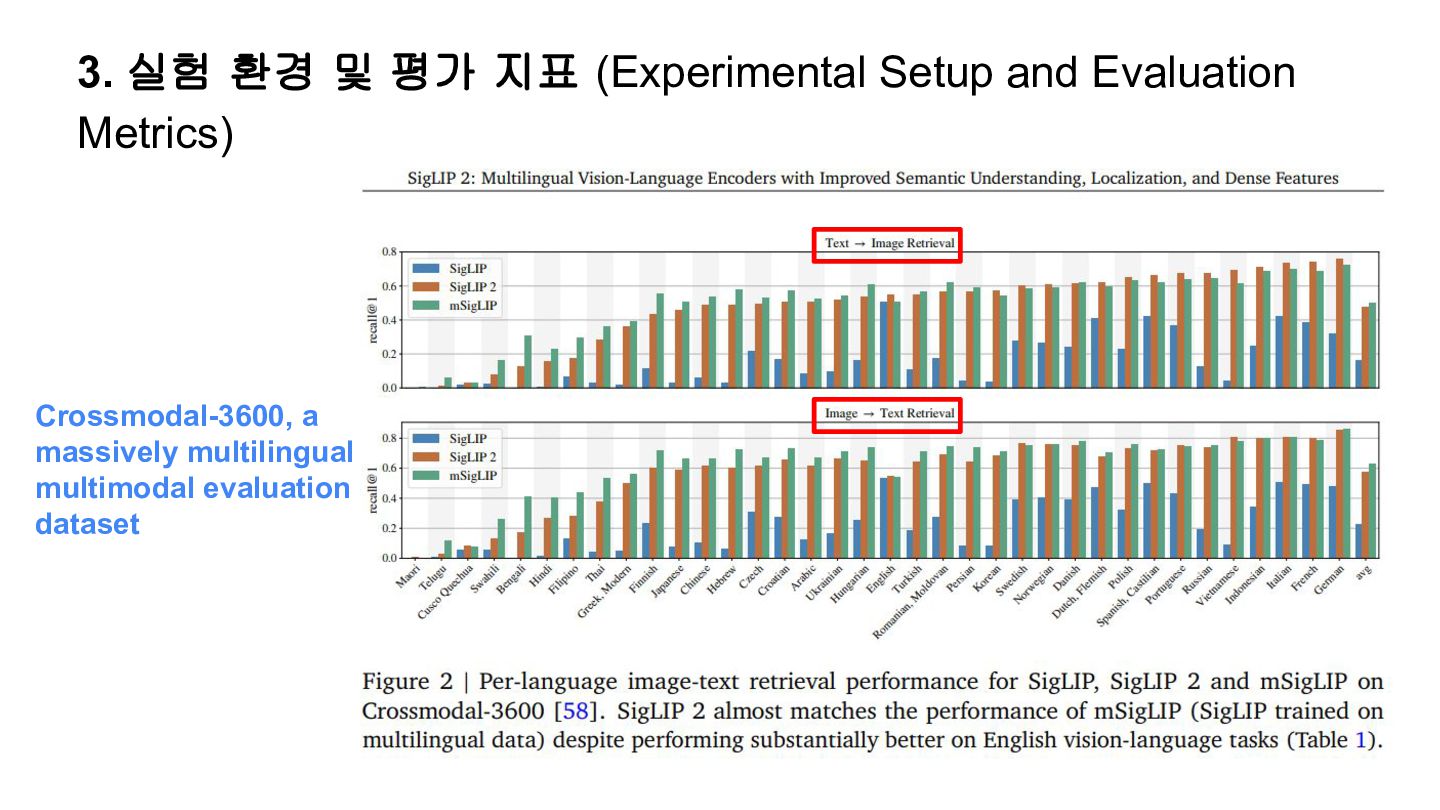
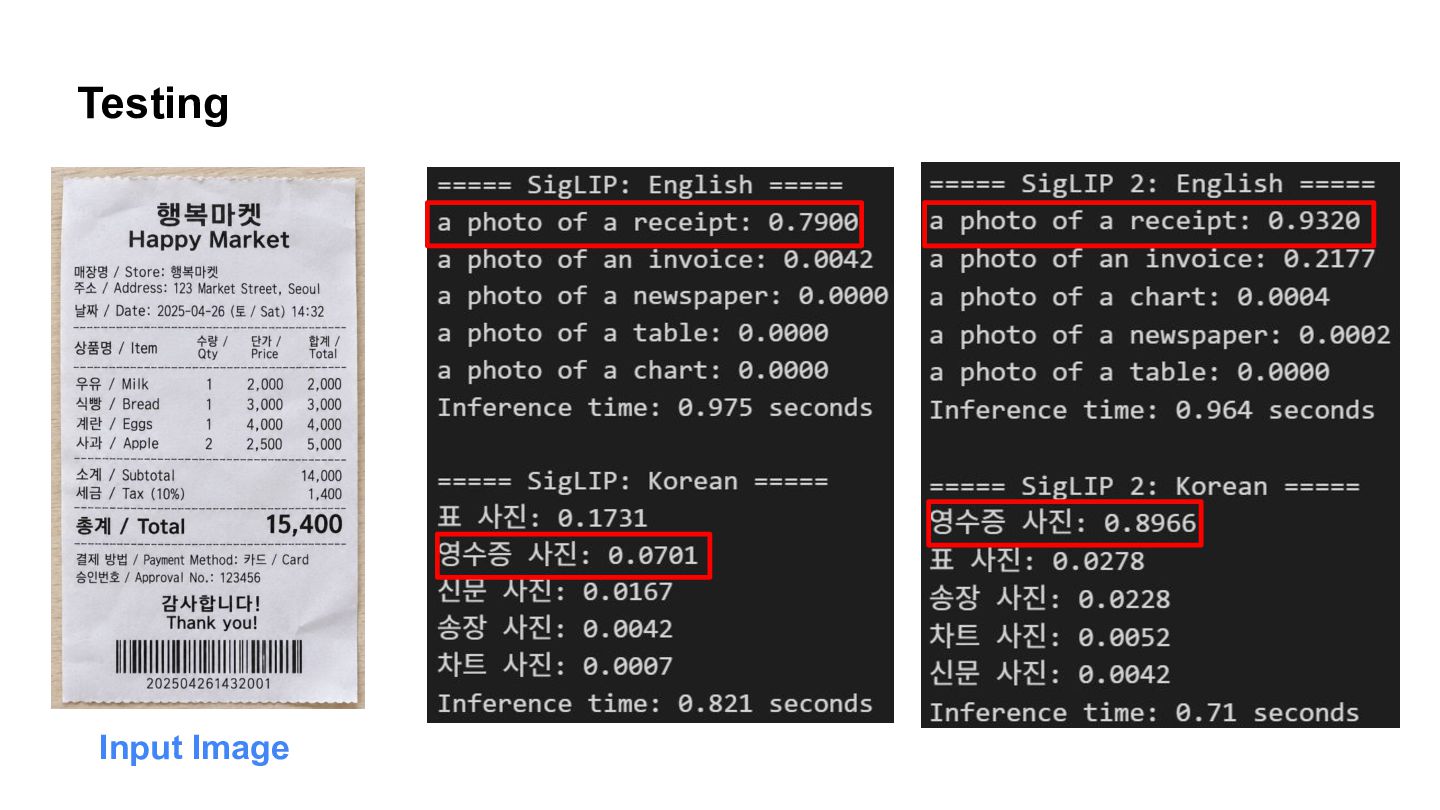
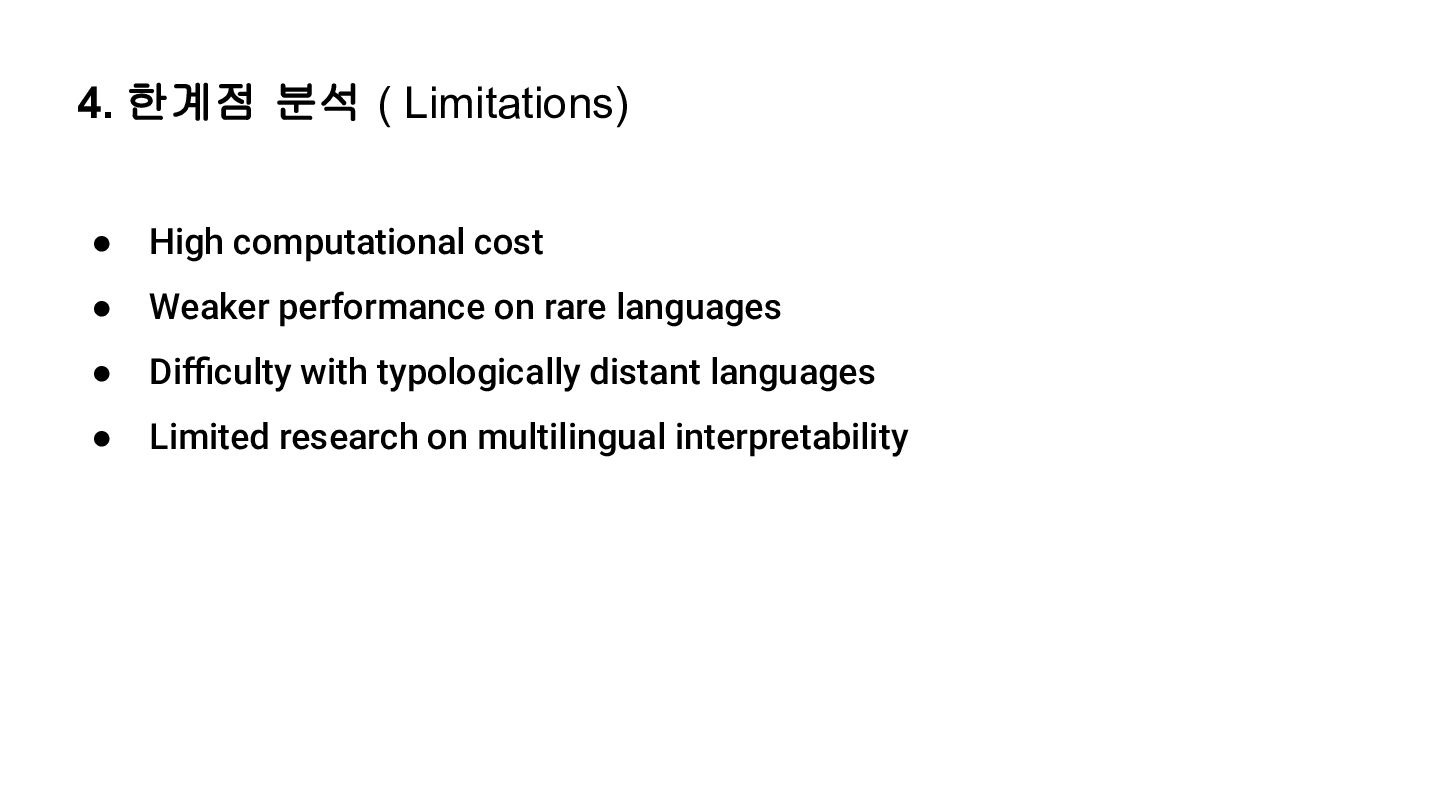
Methodology, Results, and Analysis of Strengths 1. 모델 구조 (Model Architecture) 2. 제안 방법론 (Proposed Methodology) 3. 실험 환경 및 평가 지표 (Experimental Setup and Evaluation Metrics) 4. 한계점 분석 (Limitations)
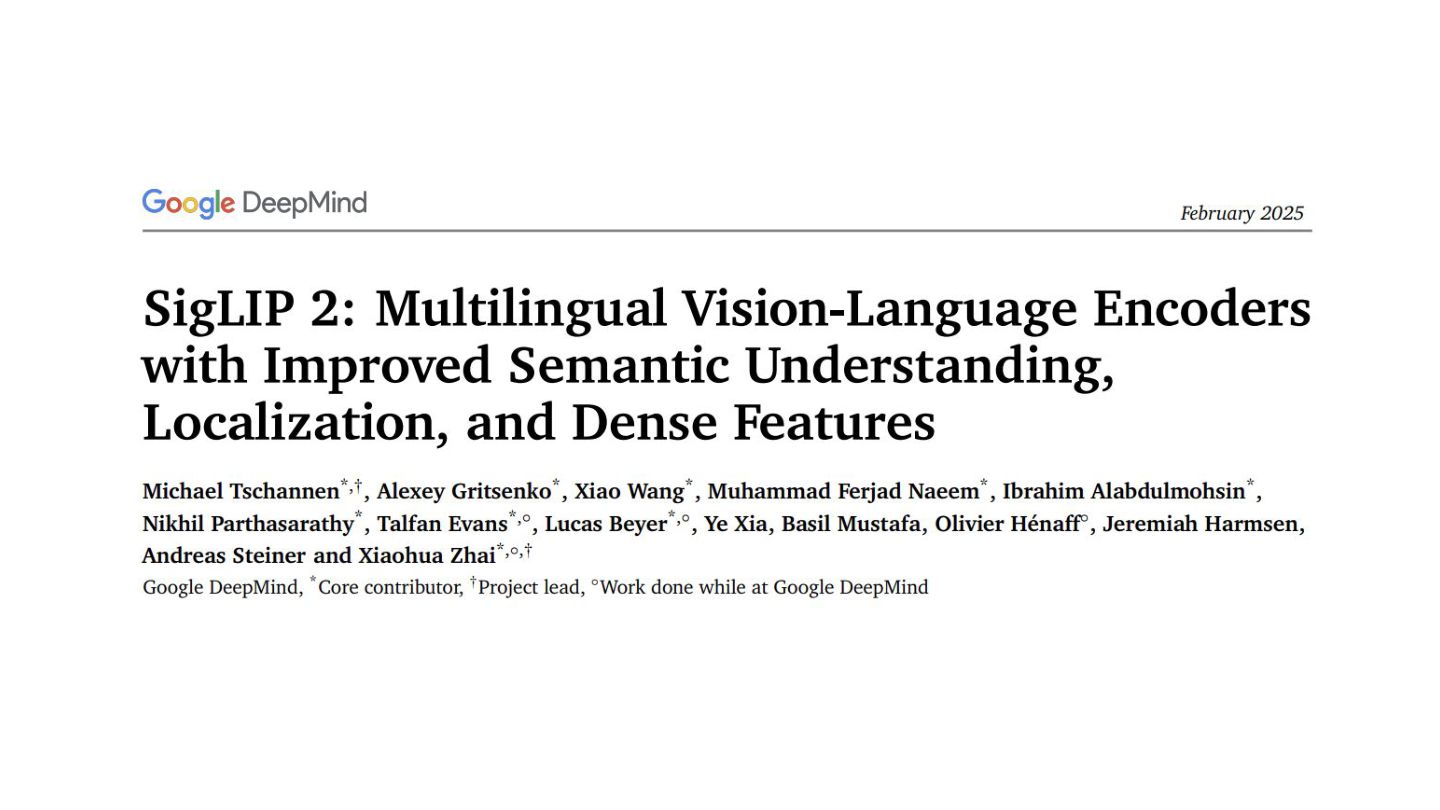
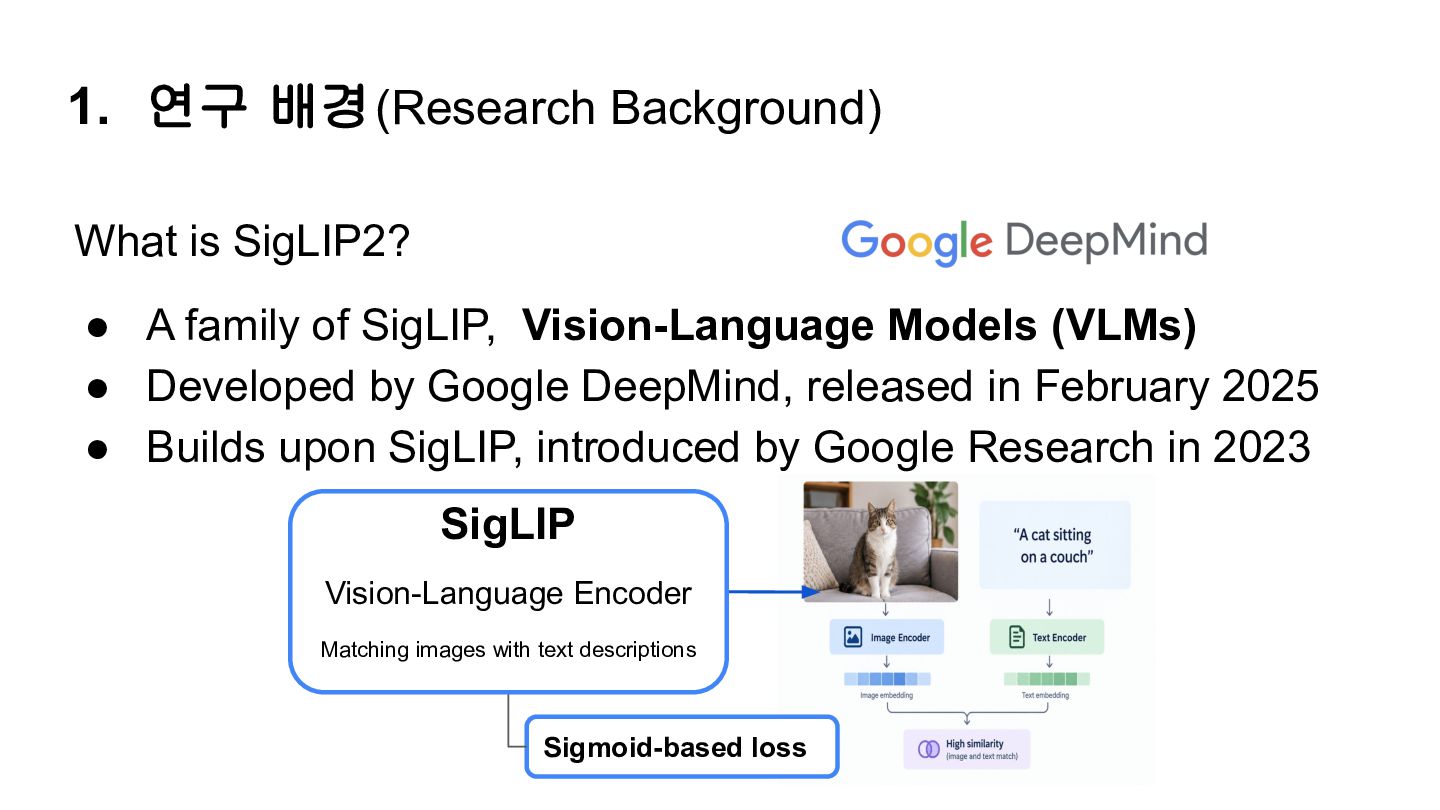
family of SigLIP, Vision-Language Models (VLMs) • Developed by Google DeepMind, released in February 2025 • Builds upon SigLIP, introduced by Google Research in 2023 SigLIP Vision-Language Encoder Matching images with text descriptions Sigmoid-based loss
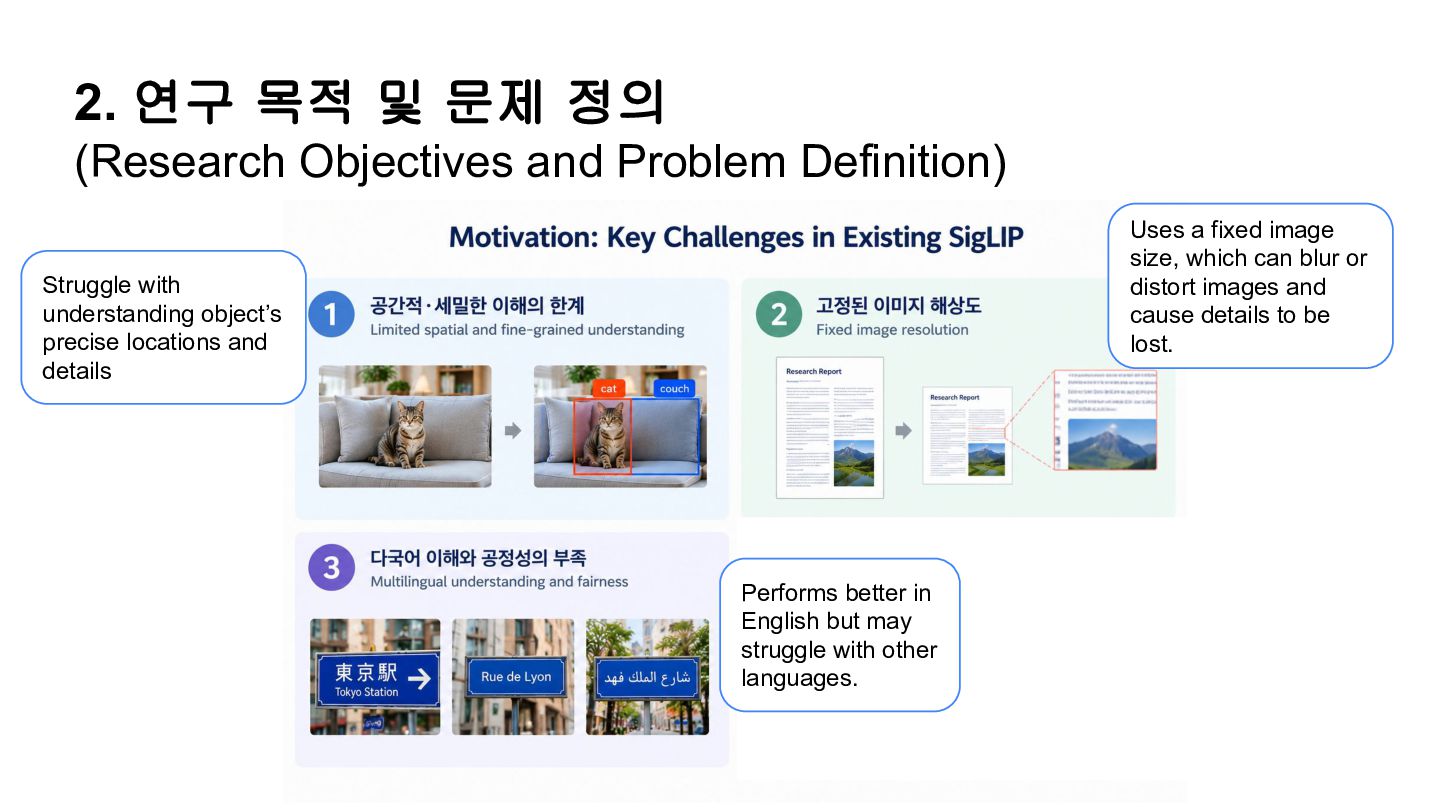
Definition) Uses a fixed image size, which can blur or distort images and cause details to be lost. Struggle with understanding object’s precise locations and details Performs better in English but may struggle with other languages.
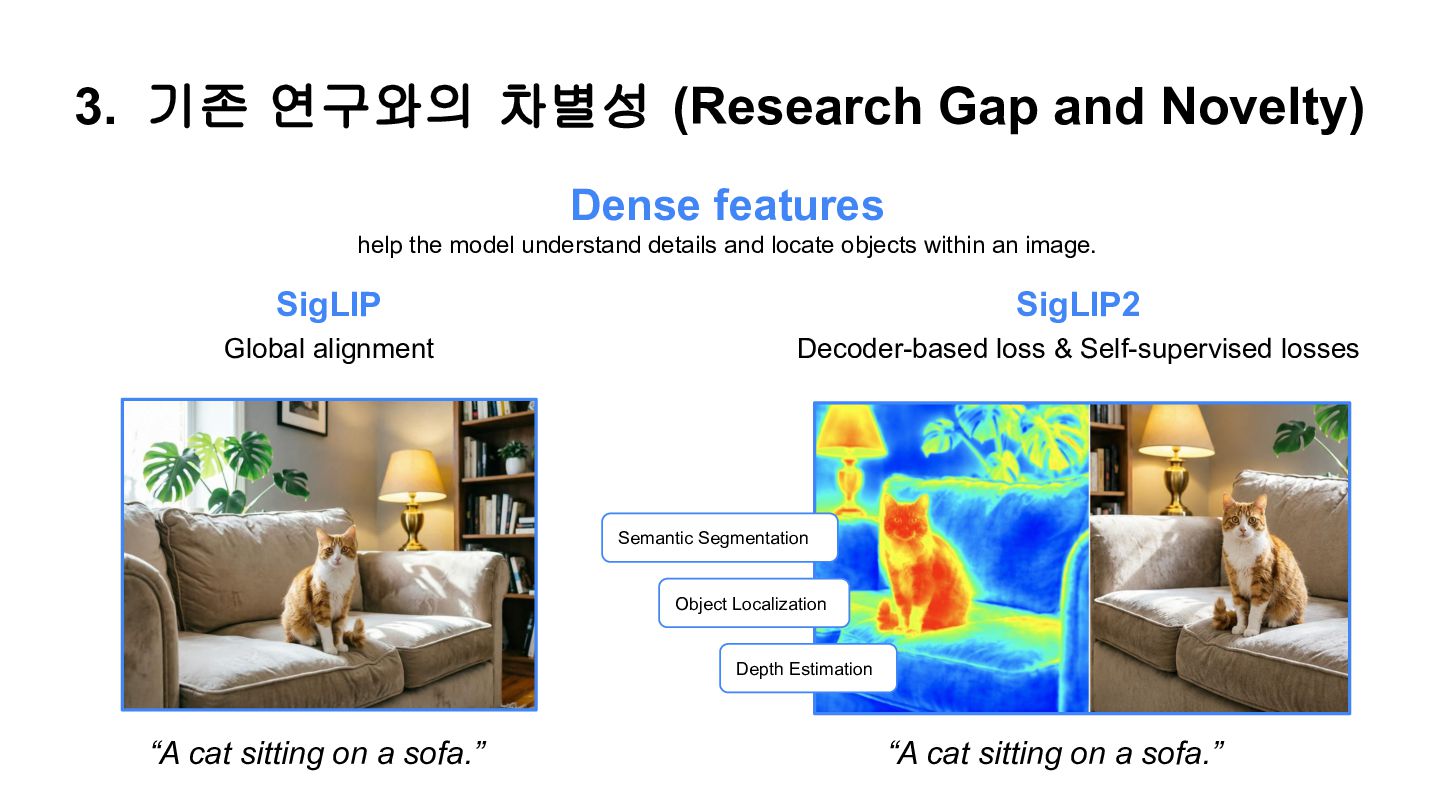
help the model understand details and locate objects within an image. SigLIP SigLIP2 Global alignment Decoder-based loss & Self-supervised losses Semantic Segmentation Object Localization Depth Estimation “A cat sitting on a sofa.” “A cat sitting on a sofa.”
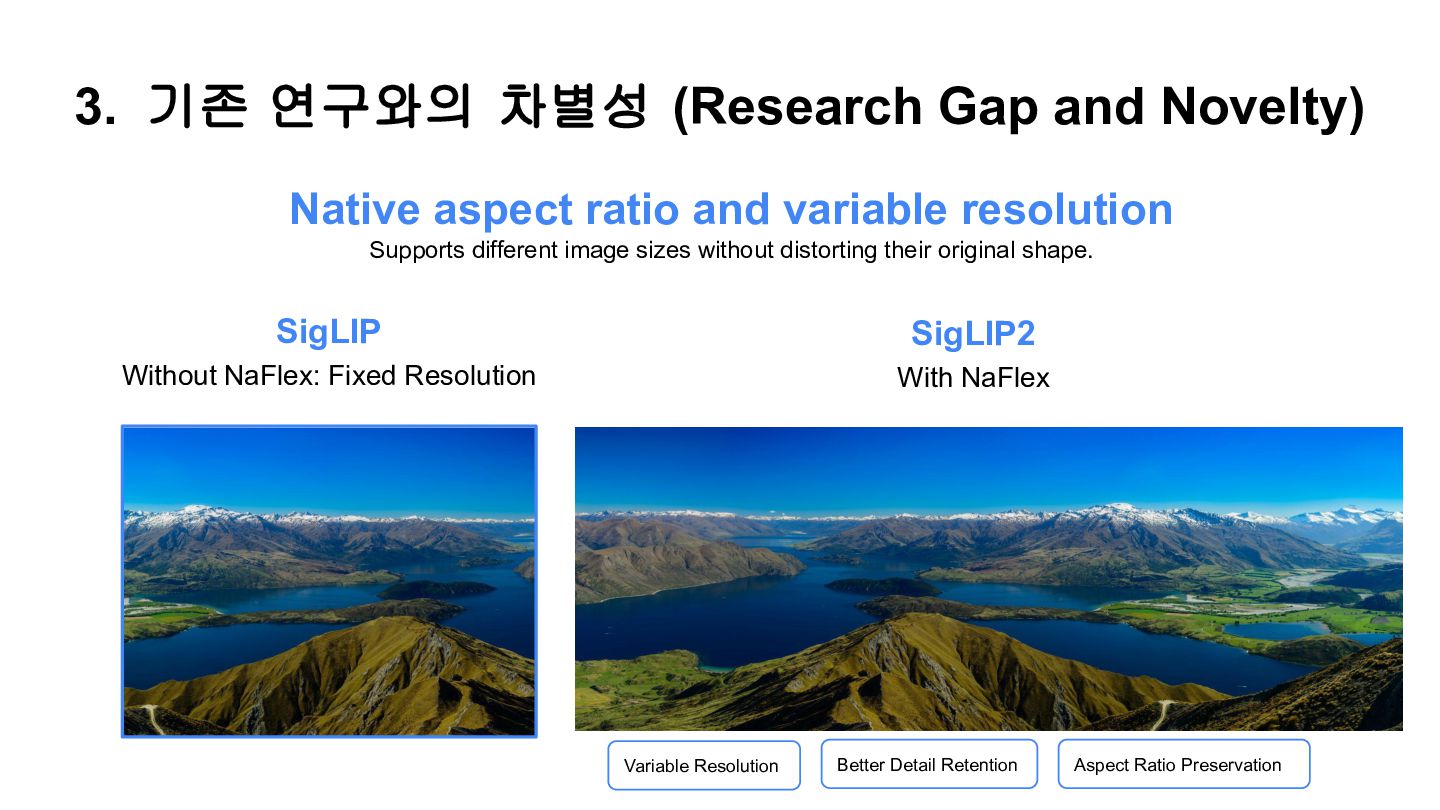
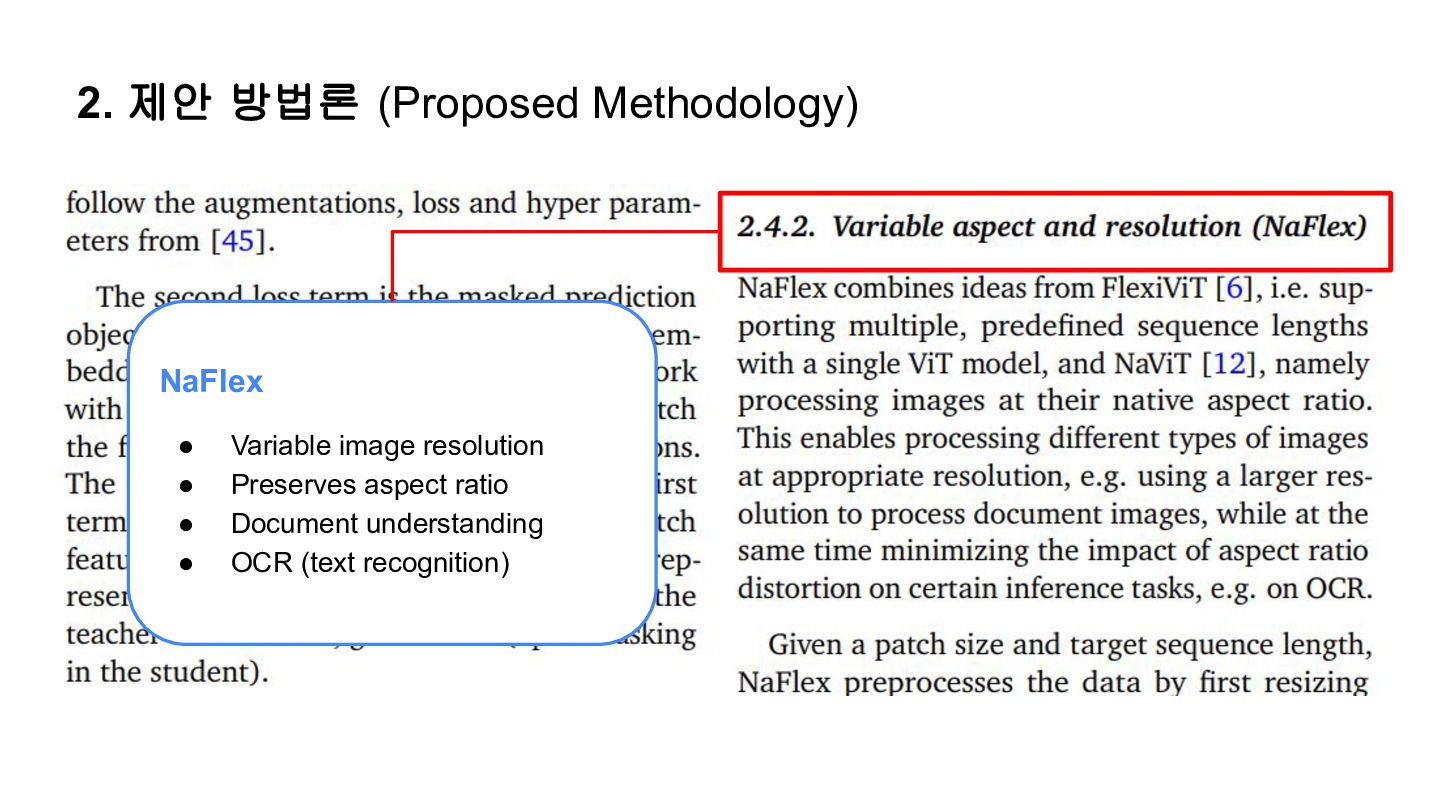
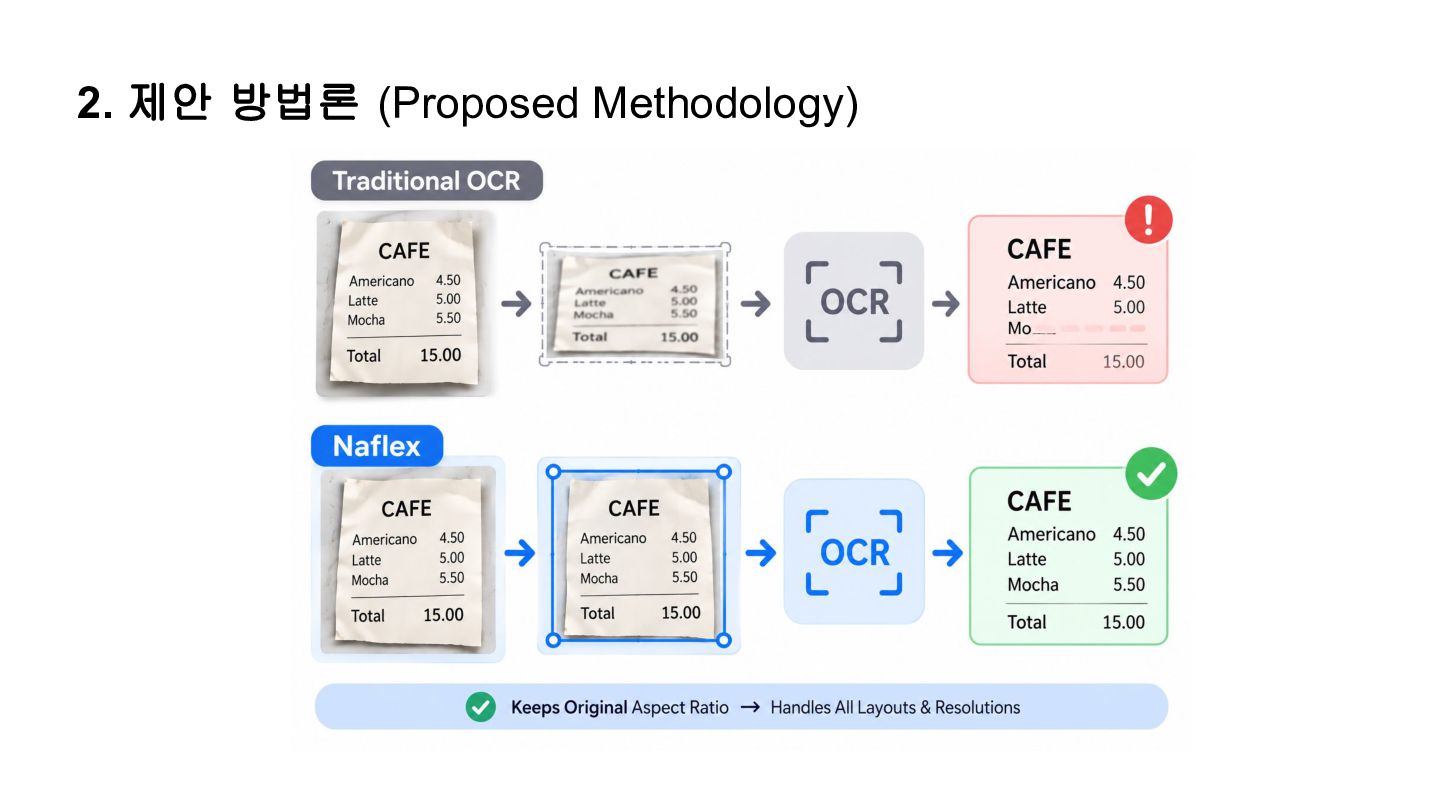
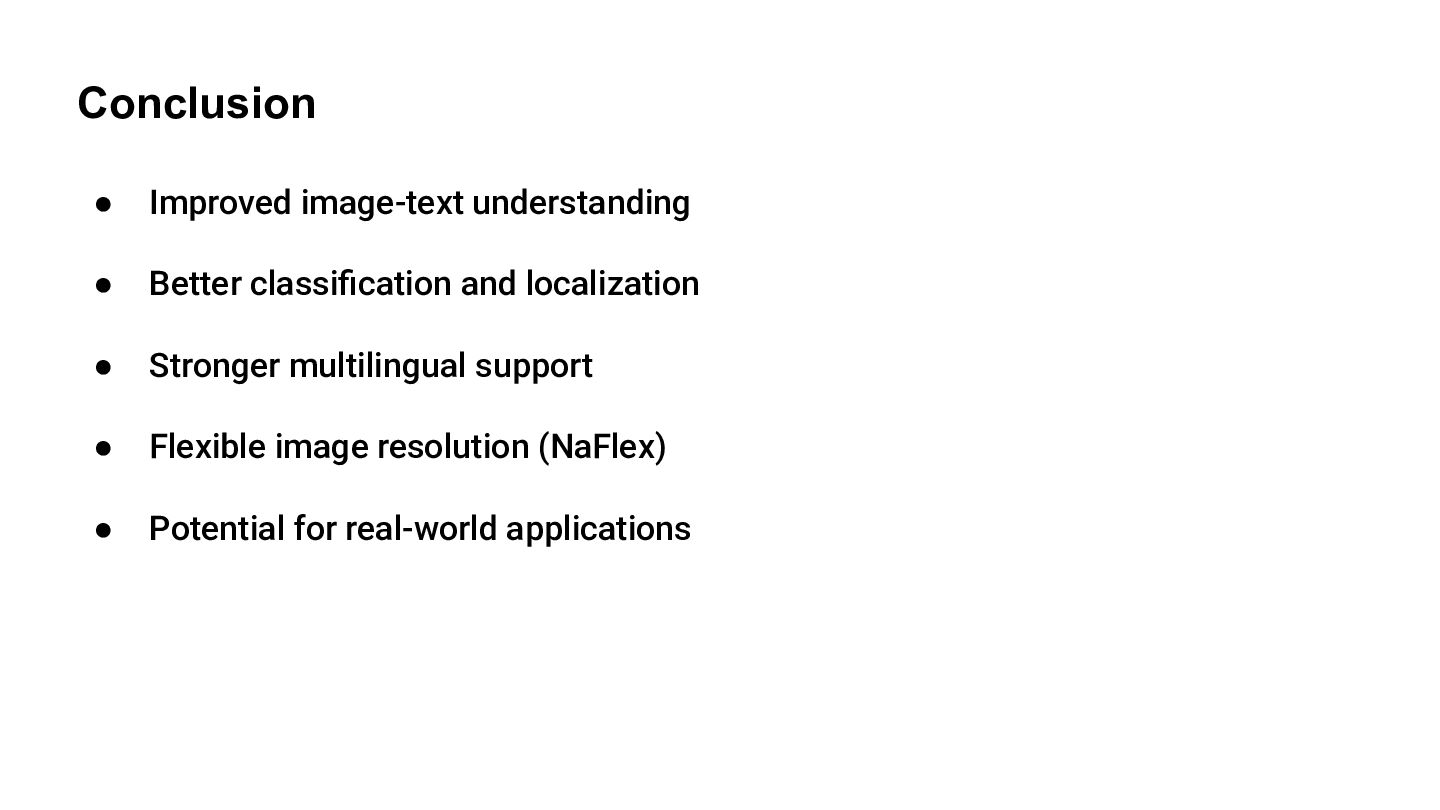
ratio and variable resolution Supports different image sizes without distorting their original shape. SigLIP SigLIP2 Without NaFlex: Fixed Resolution With NaFlex Variable Resolution Better Detail Retention Aspect Ratio Preservation
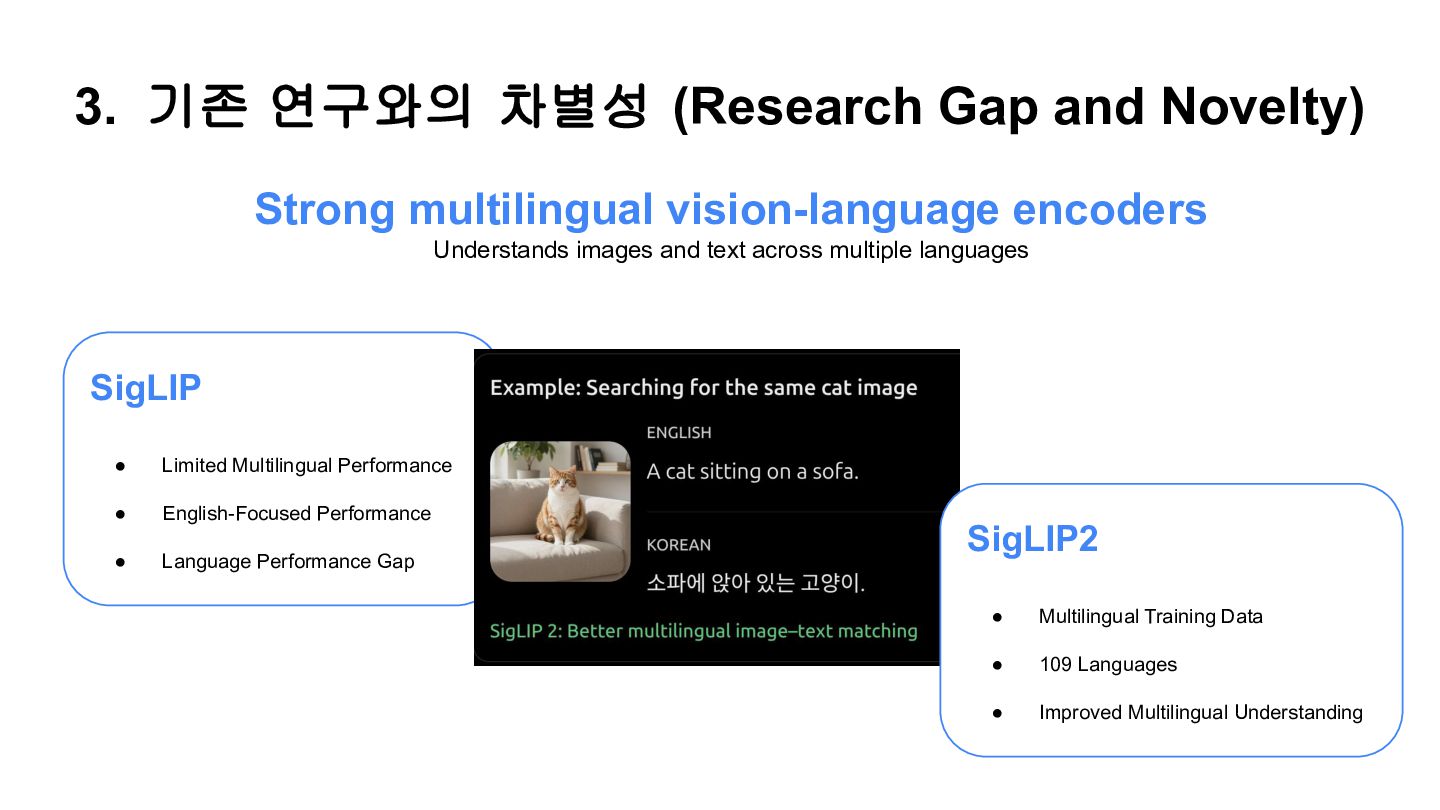
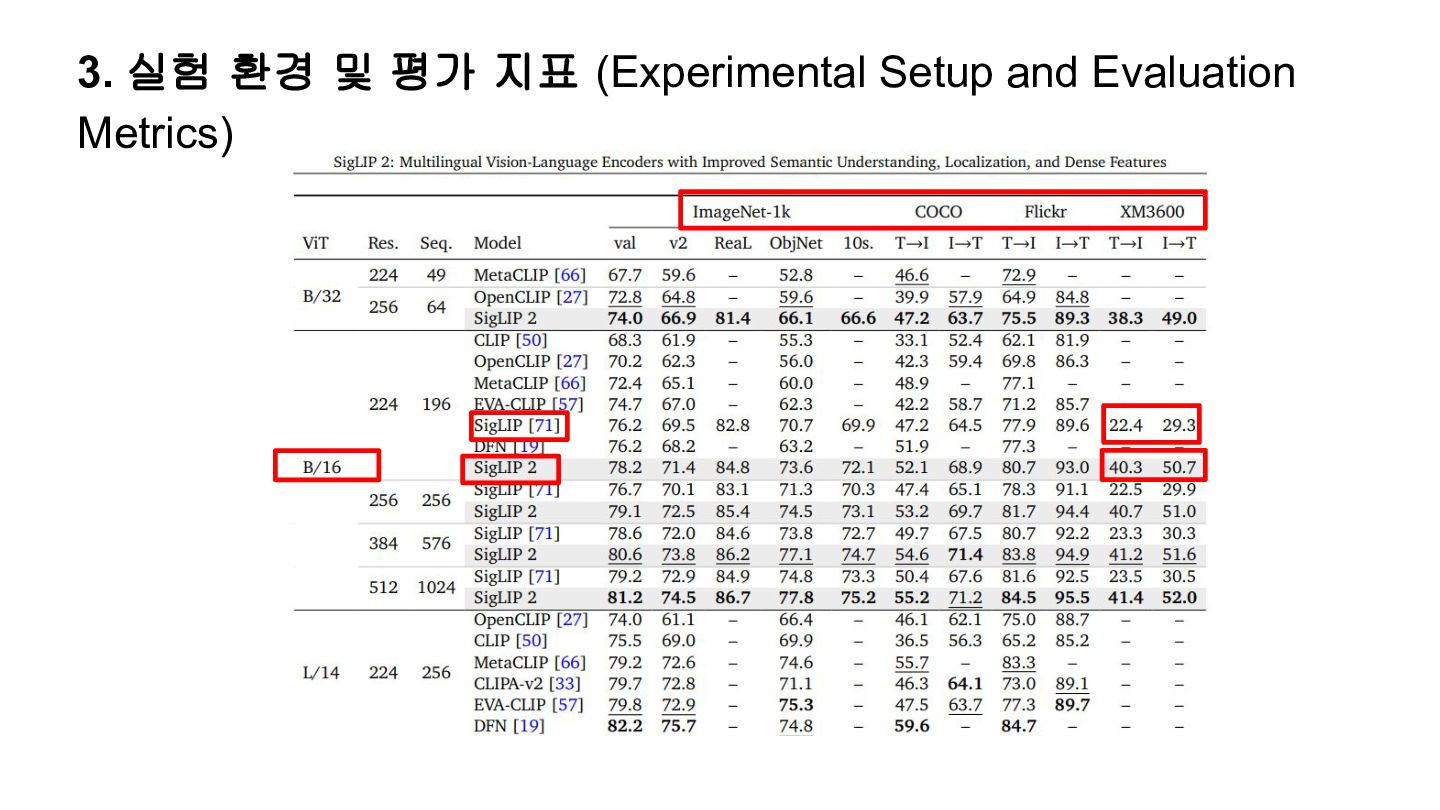
vision-language encoders Understands images and text across multiple languages SigLIP • Limited Multilingual Performance • English-Focused Performance • Language Performance Gap SigLIP2 • Multilingual Training Data • 109 Languages • Improved Multilingual Understanding


 institutdelelevage
 kohlerjohannes
 imai448
 takasehideki
 sishi
 beale
 tkng
 stktu
 ldcn
 wayneb77
 swwweet
 cromwellryan
 kevinliebholz
 aemeredith
 portentint
 ivargrimstad
 eileencodes
 mfonobong
 nmsamuel
 hatefulcrawdad
 jonrohan