• The ideas and opinions shared are those of the presenter and do not necessarily reflect the views or policies of King Mongkut’s University of Technology Thonburi (KMUTT).
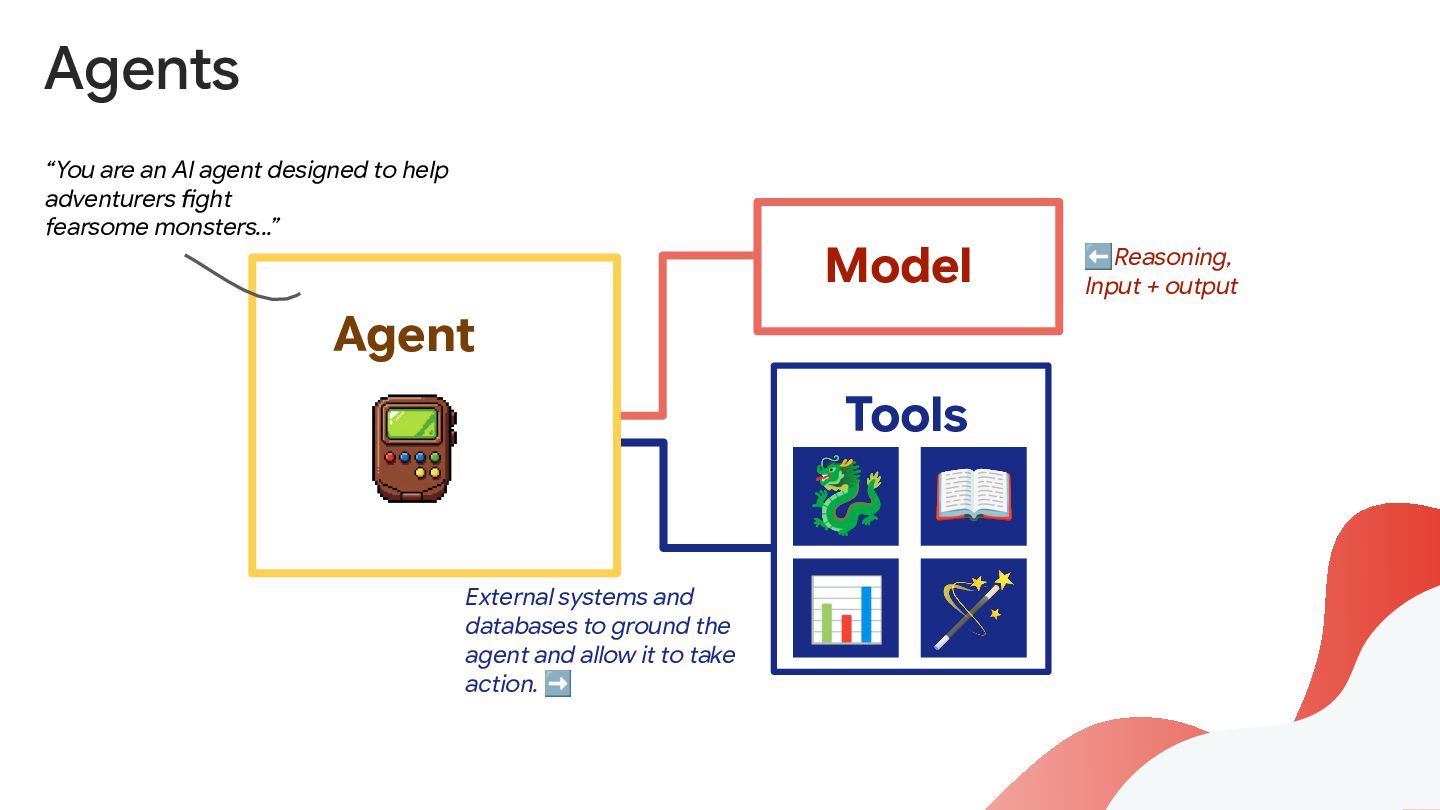
fight fearsome monsters...” Model Agent Tools External systems and databases to ground the agent and allow it to take action. ➡ ⬅Reasoning, Input + output
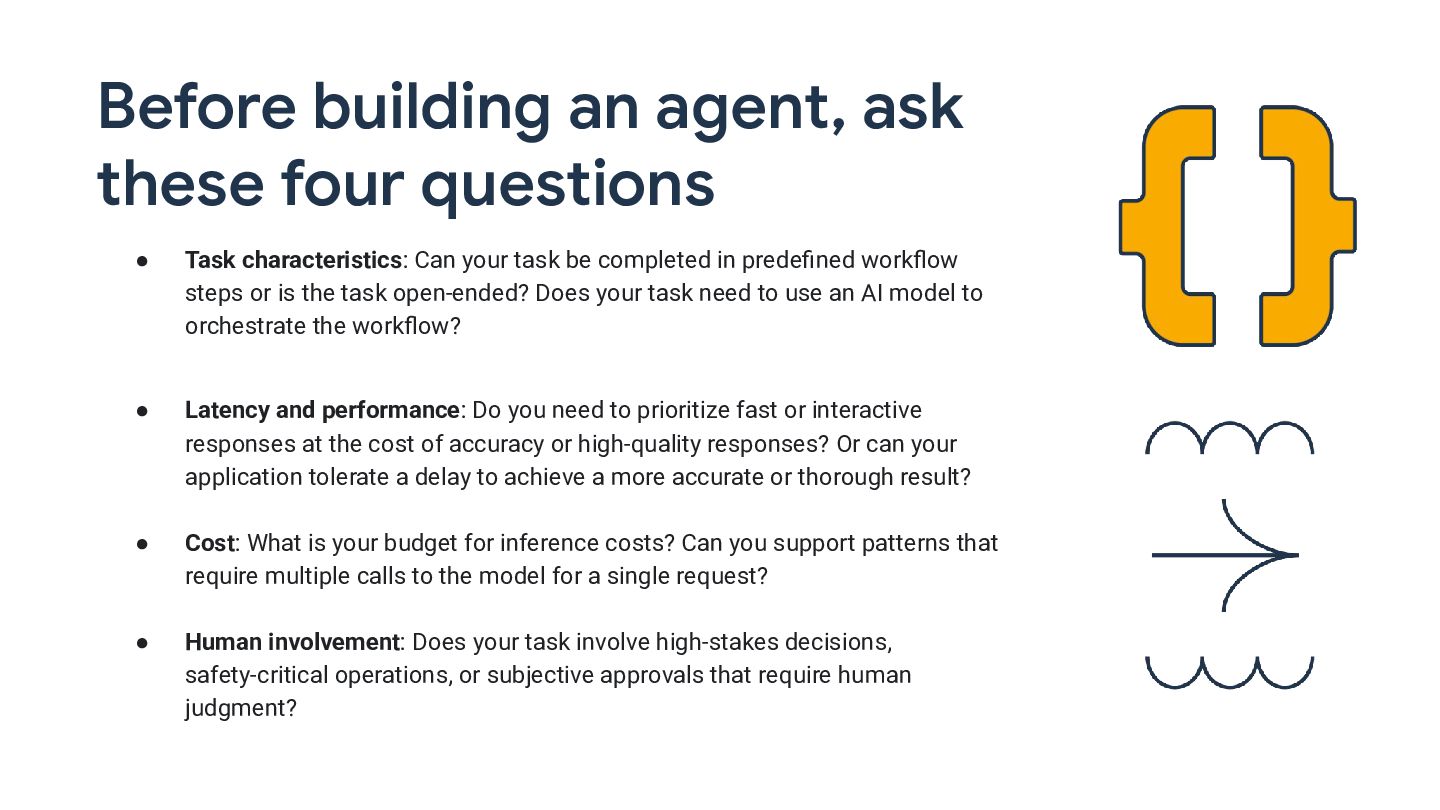
characteristics: Can your task be completed in predefined workflow steps or is the task open-ended? Does your task need to use an AI model to orchestrate the workflow? • Latency and performance: Do you need to prioritize fast or interactive responses at the cost of accuracy or high-quality responses? Or can your application tolerate a delay to achieve a more accurate or thorough result? • Cost: What is your budget for inference costs? Can you support patterns that require multiple calls to the model for a single request? • Human involvement: Does your task involve high-stakes decisions, safety-critical operations, or subjective approvals that require human judgment?
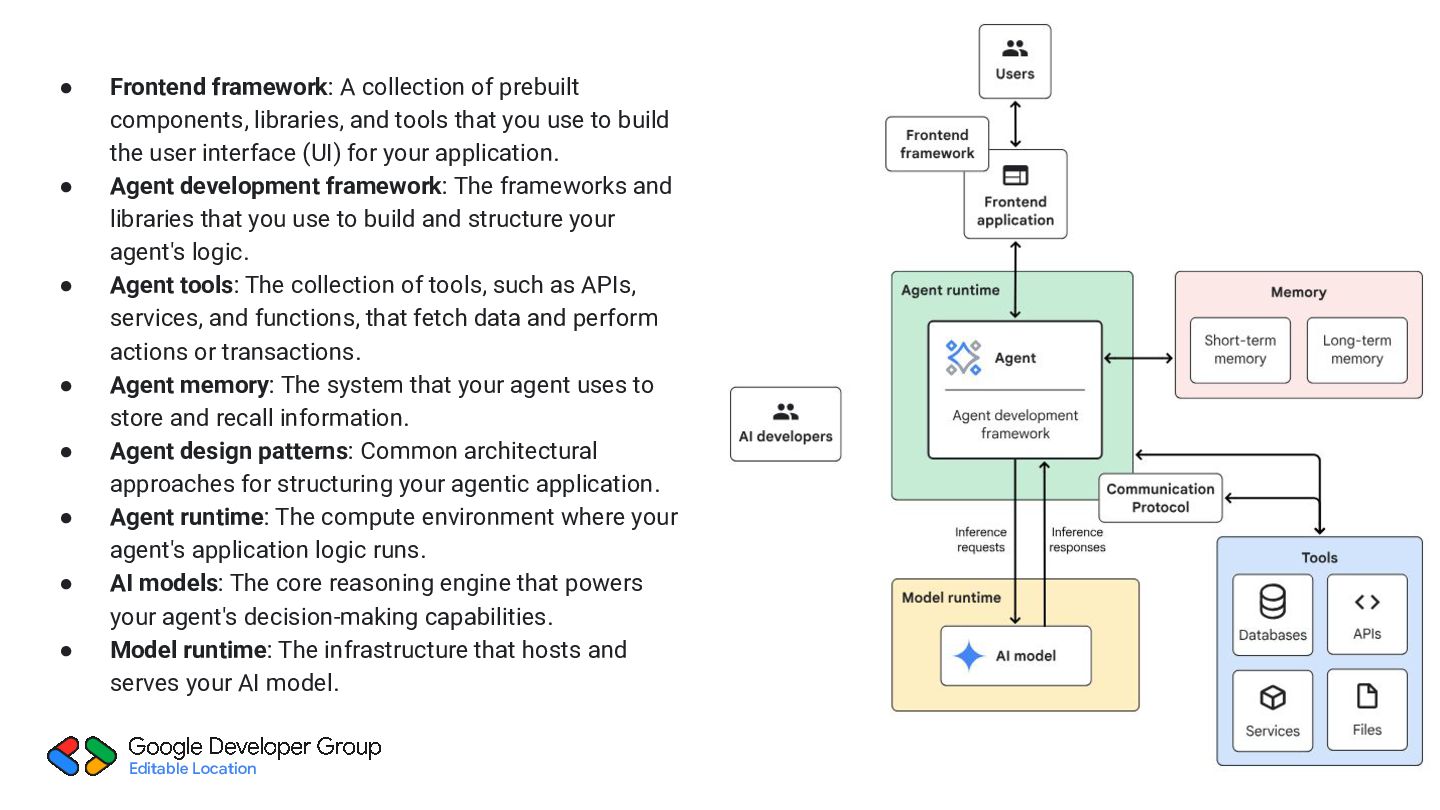
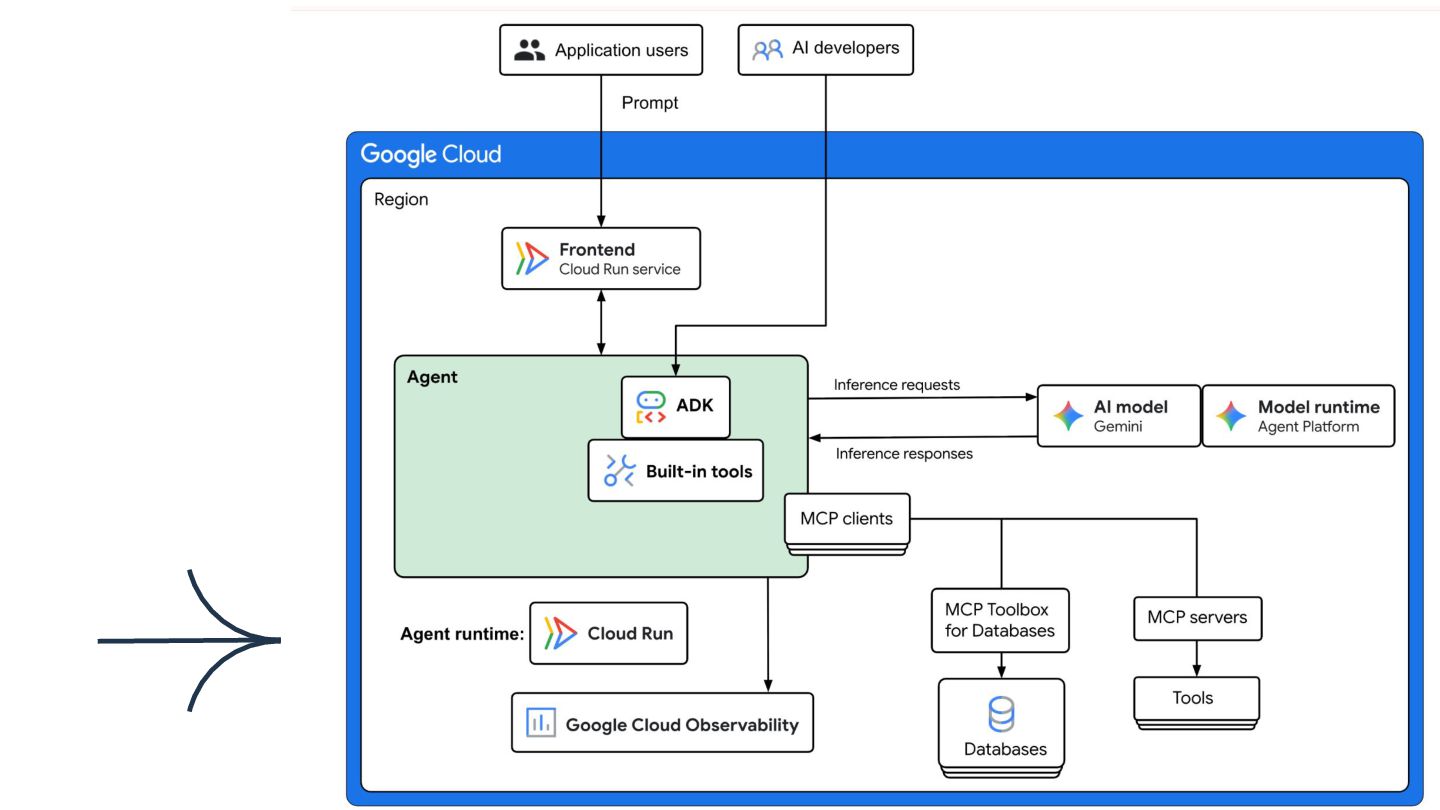
A collection of prebuilt components, libraries, and tools that you use to build the user interface (UI) for your application. Agent development framework: The frameworks and libraries that you use to build and structure your agent's logic. Agent tools: The collection of tools, such as APIs, services, and functions, that fetch data and perform actions or transactions. Agent memory: The system that your agent uses to store and recall information. Agent design patterns: Common architectural approaches for structuring your agentic application. Agent runtime: The compute environment where your agent's application logic runs. AI models: The core reasoning engine that powers your agent's decision-making capabilities. Model runtime: The infrastructure that hosts and serves your AI model. Editable Location
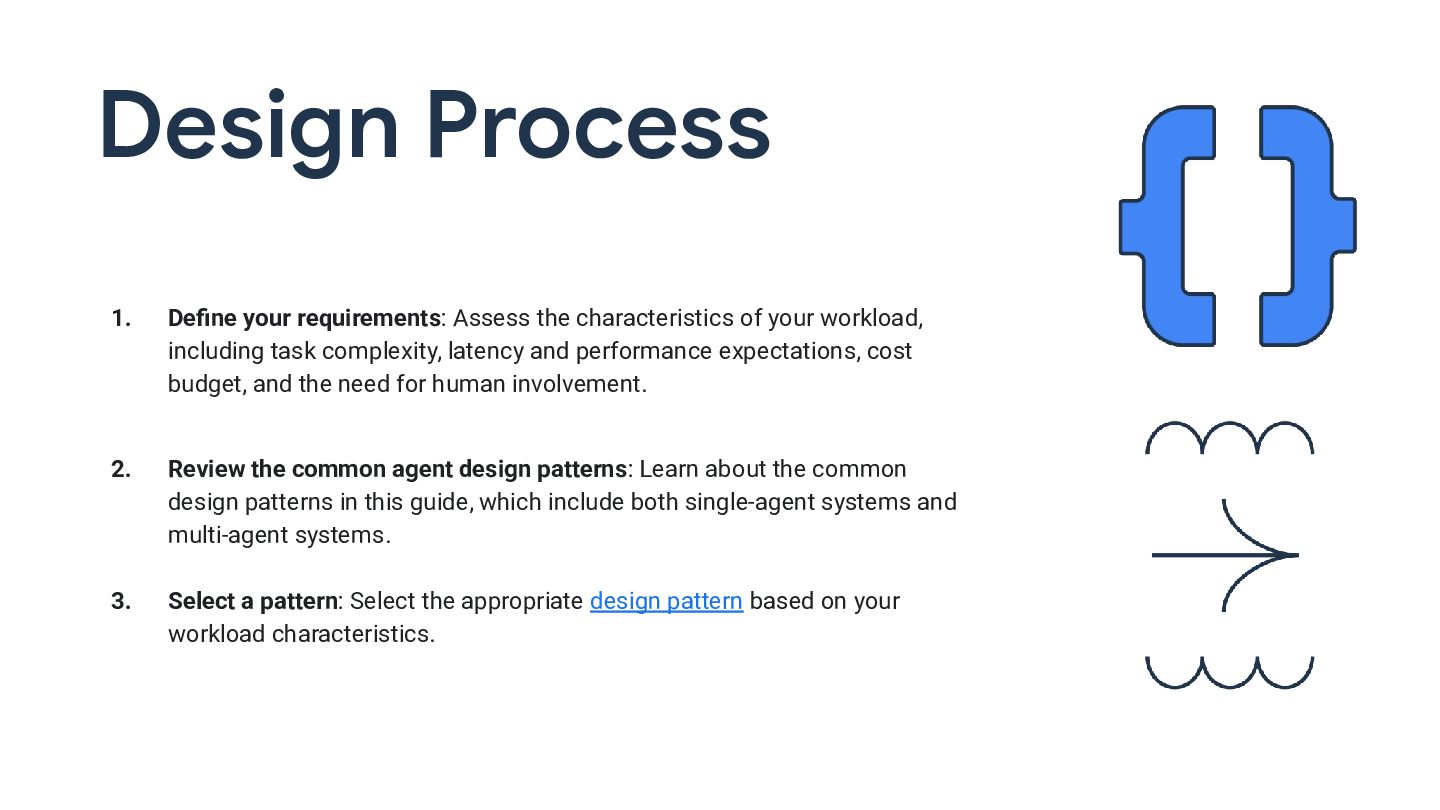
your workload, including task complexity, latency and performance expectations, cost budget, and the need for human involvement. 2. Review the common agent design patterns: Learn about the common design patterns in this guide, which include both single-agent systems and multi-agent systems. 3. Select a pattern: Select the appropriate design pattern based on your workload characteristics.
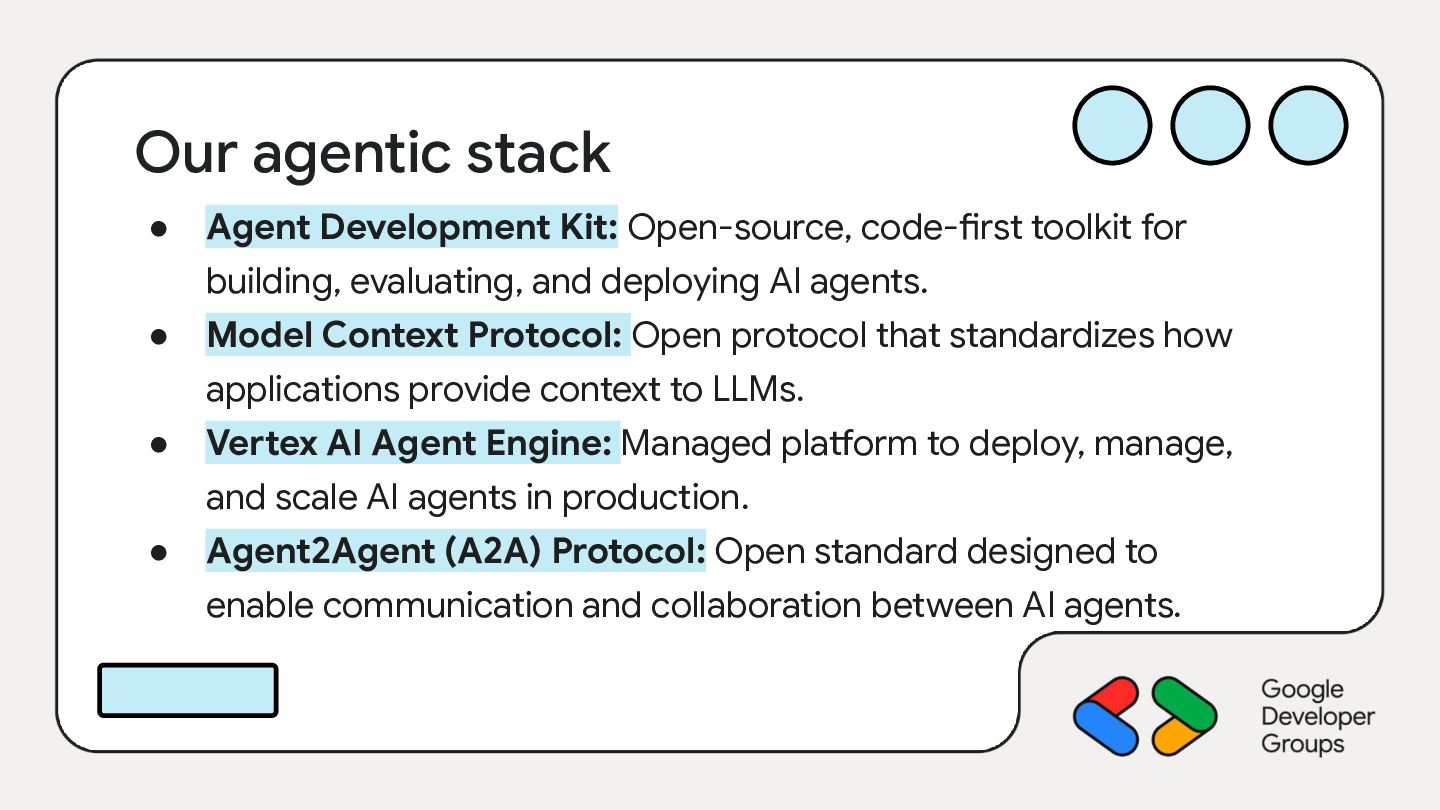
Open-source, code-first toolkit for building, evaluating, and deploying AI agents. Model Context Protocol: Open protocol that standardizes how applications provide context to LLMs. Vertex AI Agent Engine: Managed platform to deploy, manage, and scale AI agents in production. Agent2Agent (A2A) Protocol: Open standard designed to enable communication and collaboration between AI agents.
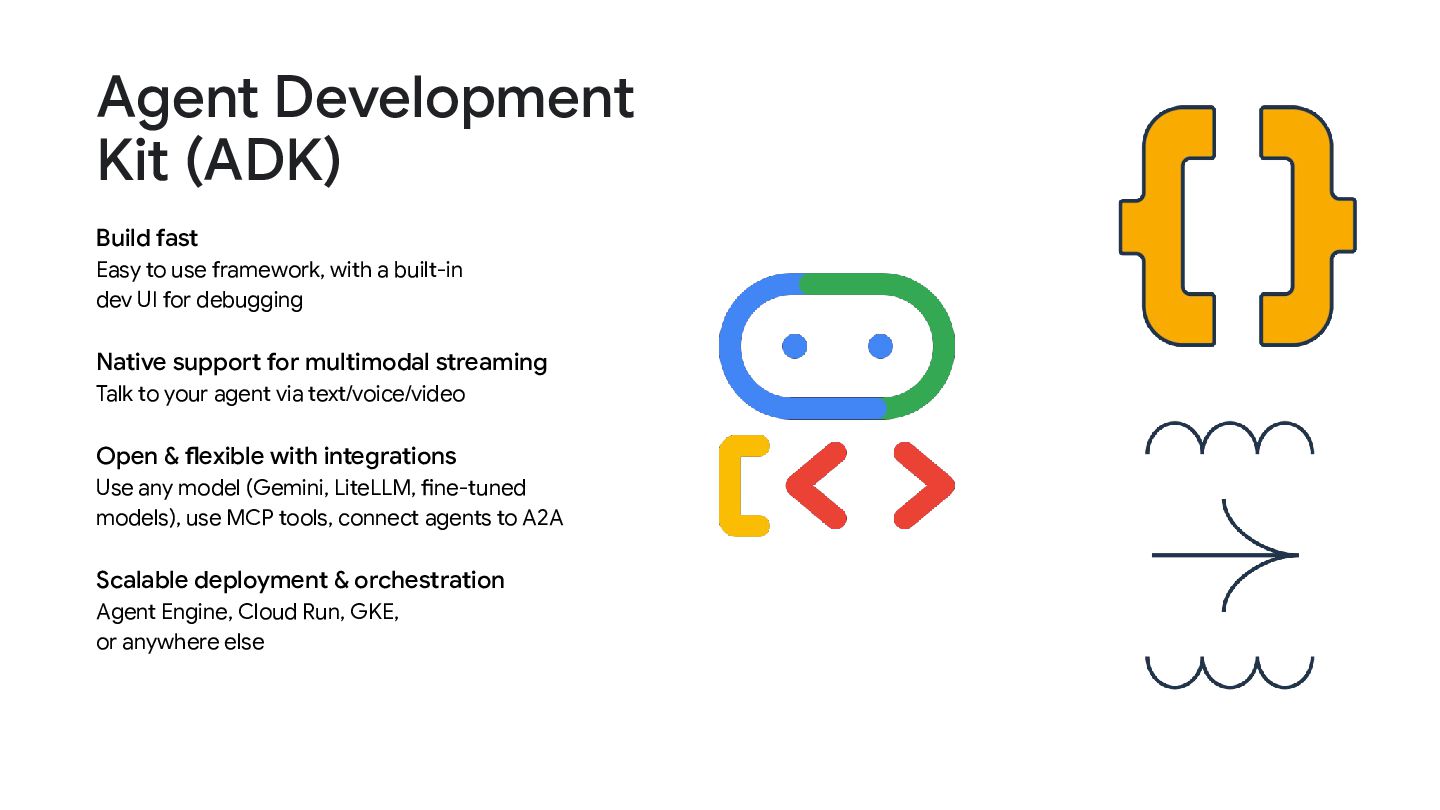
with a built-in dev UI for debugging Native support for multimodal streaming Talk to your agent via text/voice/video Open & flexible with integrations Use any model (Gemini, LiteLLM, fine-tuned models), use MCP tools, connect agents to A2A Scalable deployment & orchestration Agent Engine, Cloud Run, GKE, or anywhere else
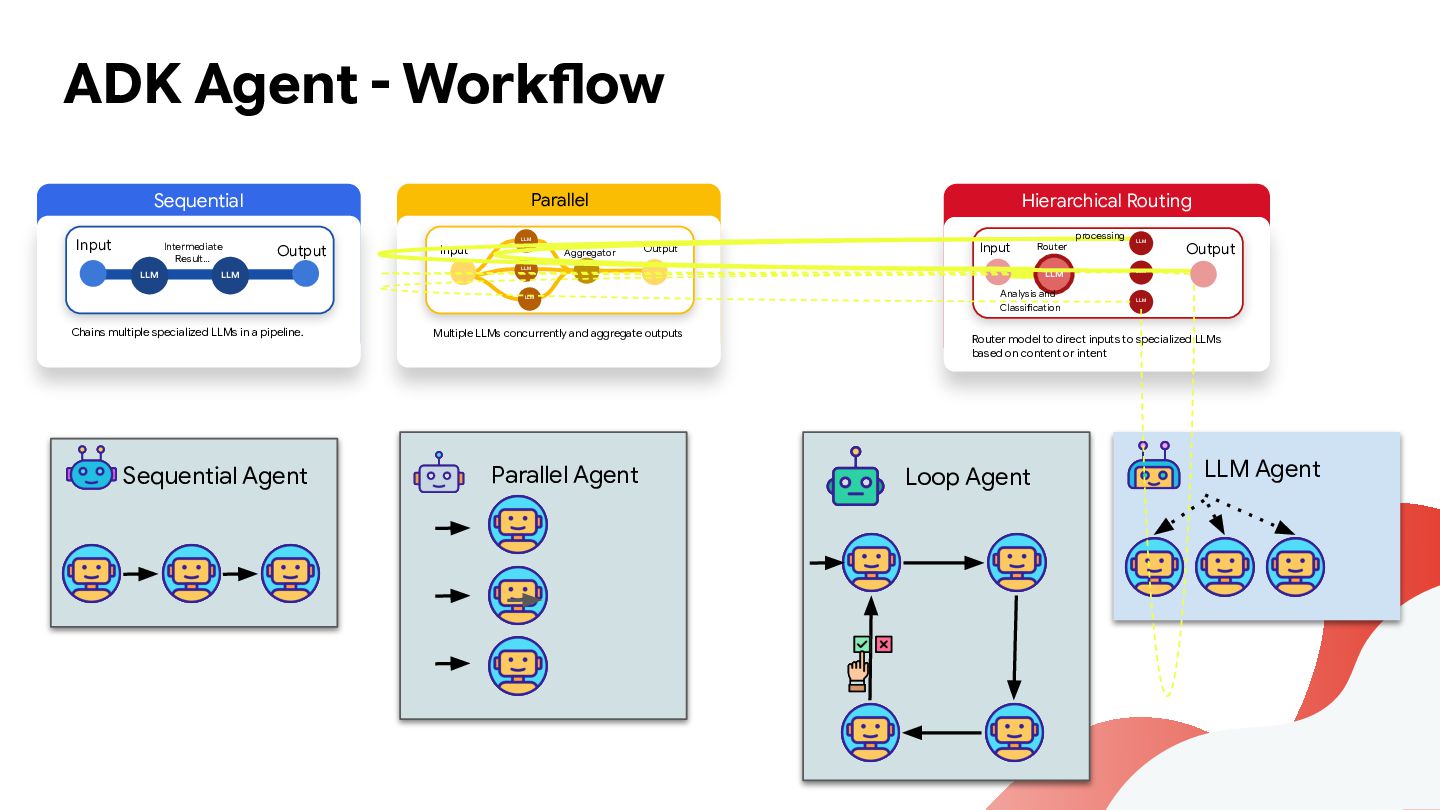
Output LLM Input LLM Aggregator Hierarchical Routing Output LLM LLM Chains multiple specialized LLMs in a pipeline. Sequential Agent Input Multiple LLMs concurrently and aggregate outputs Parallel Agent Router LLM Analysis and Classification processing LLM Output LLM LLM Router model to direct inputs to specialized LLMs based on content or intent Loop Agent LLM Agent
https://cloud.google.com/blog/topics/developers-practitioners/ building-collaborative-ai-a-developers-guide-to-multi-agent-sy stems-with-adk GET THE SLIDE HERE


 ayehninnkhine
 terurou
 oikon48
 recruitengineers
 pauli
pauli
 kizawa2020
 mkdev10
 kakakakakku
 shogo4131
 sansantech
 camiha
 kairim0
 palkan
 inesmontani
 seathinner
 techseoconnect
 mza
mza
 szymonslowik
 stuffmc
 baasie
 pedronauck
 colly
colly
 axbom
axbom
 garrettdimon