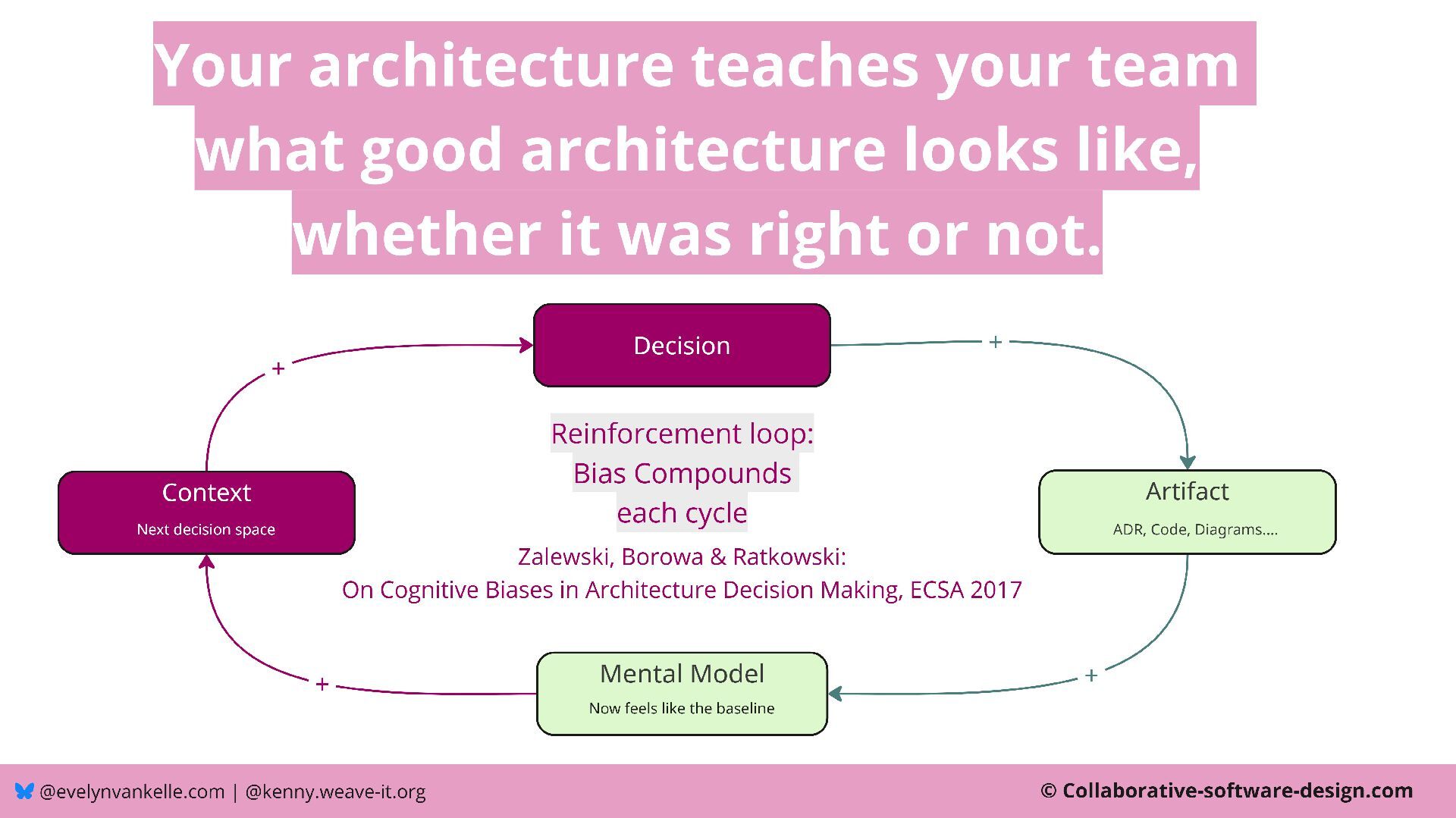
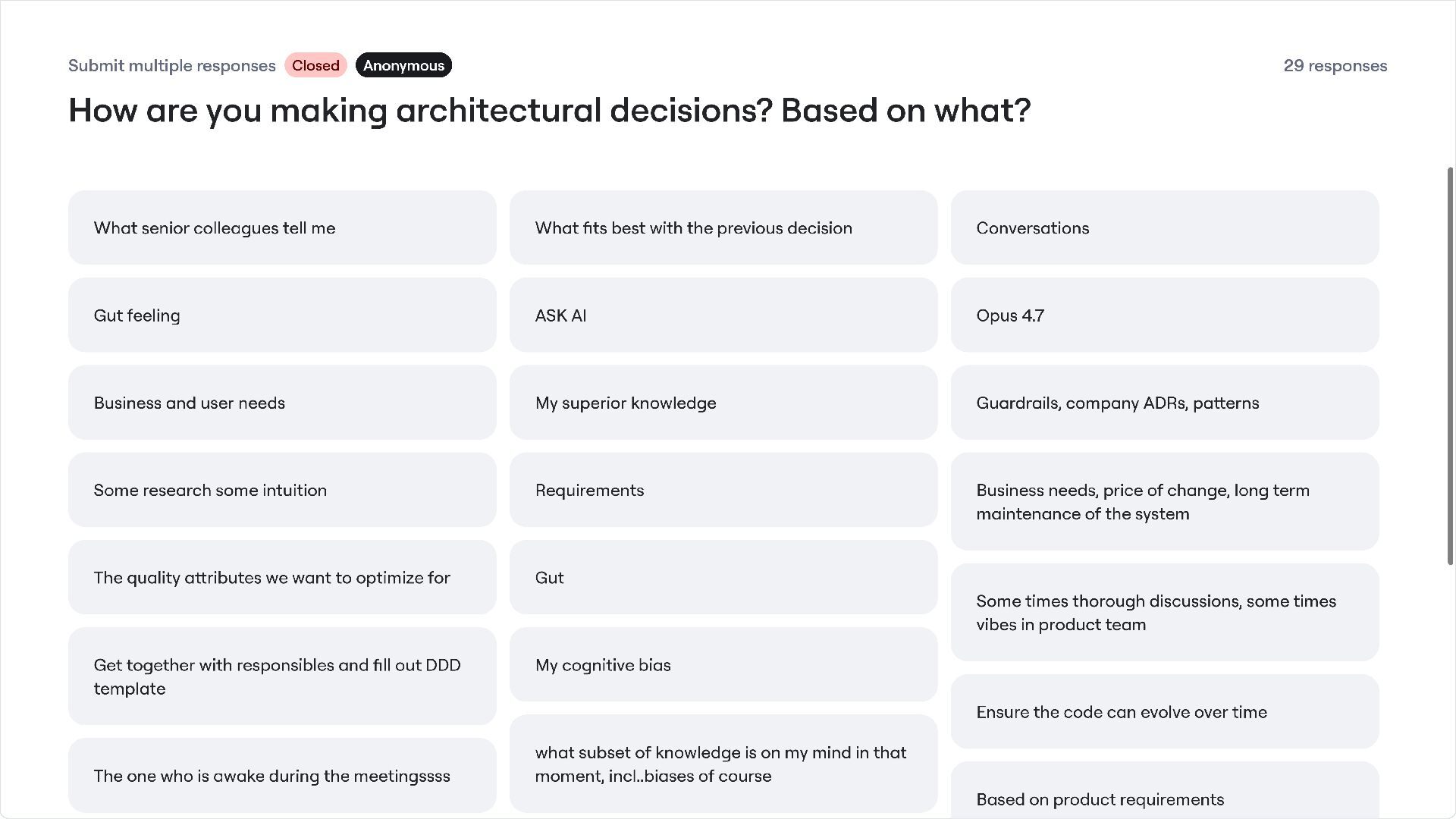
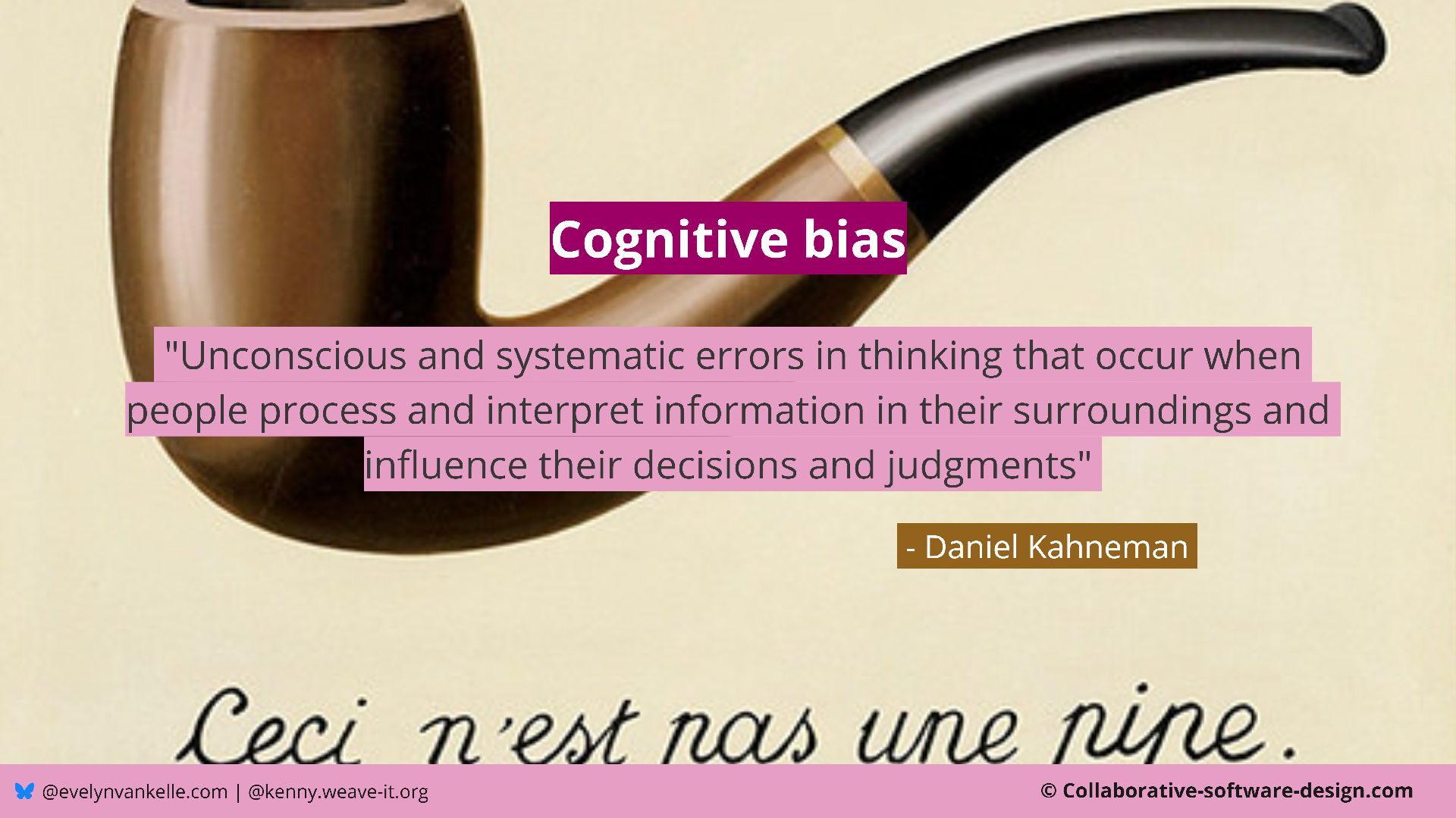
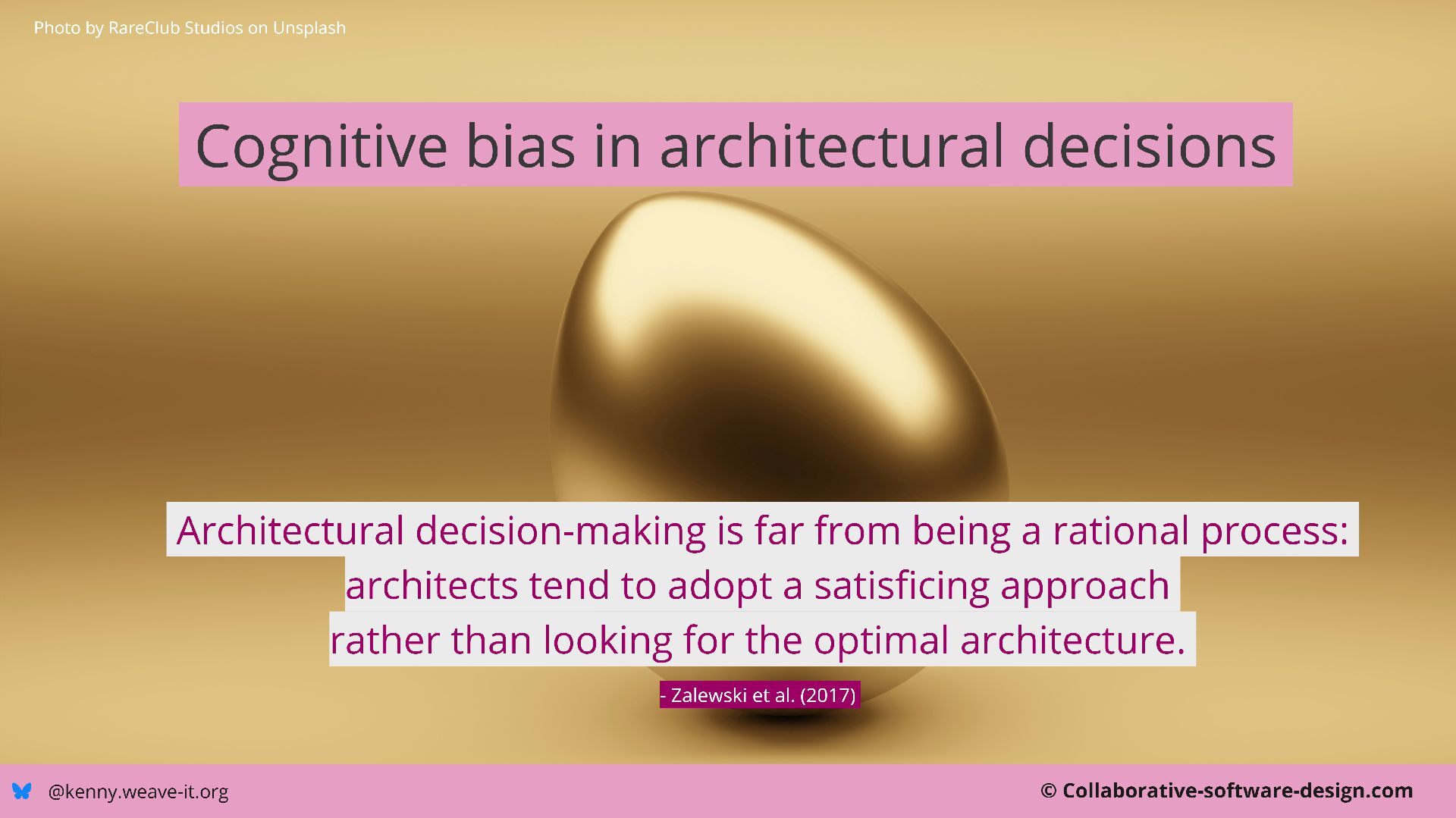
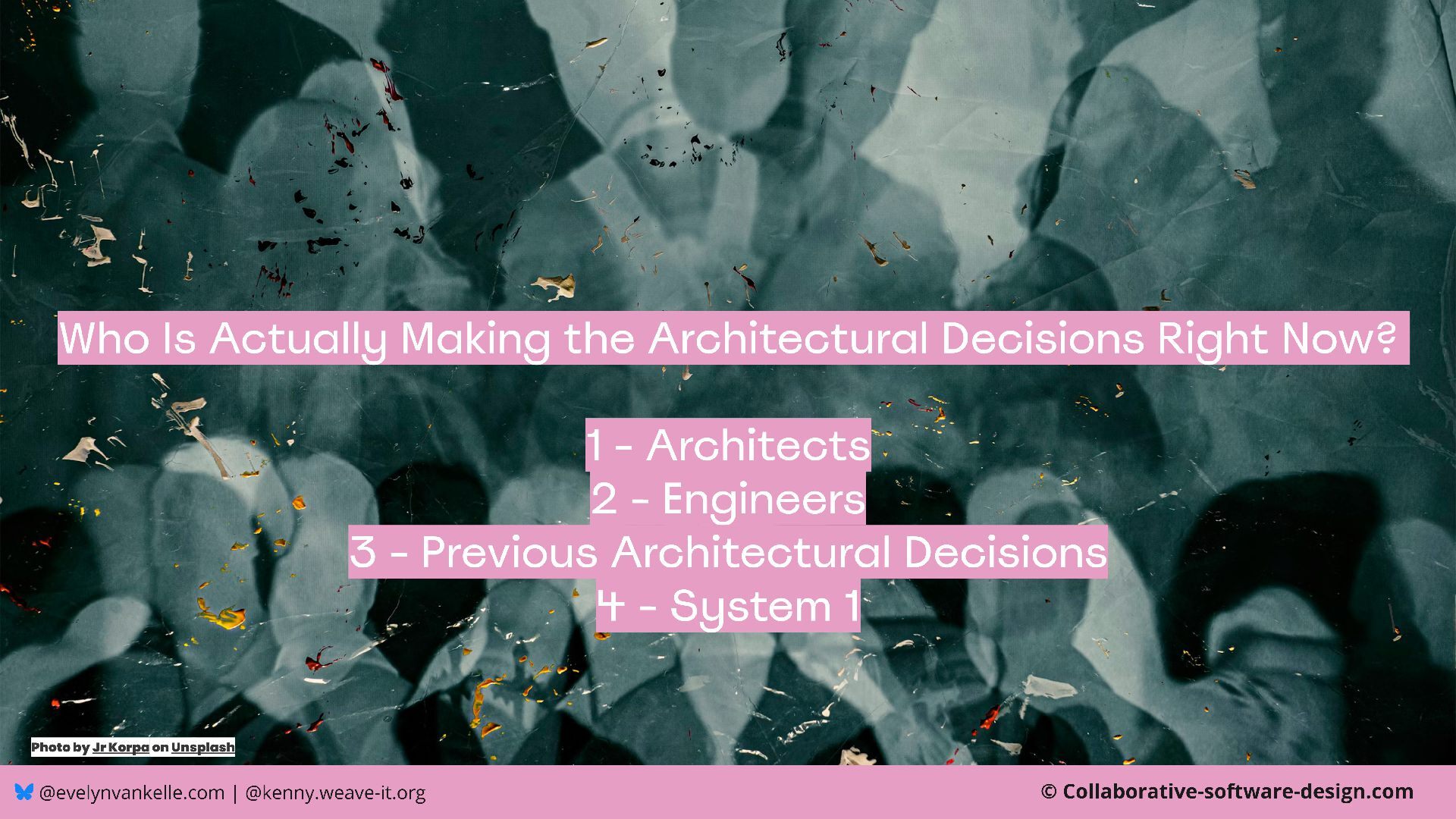
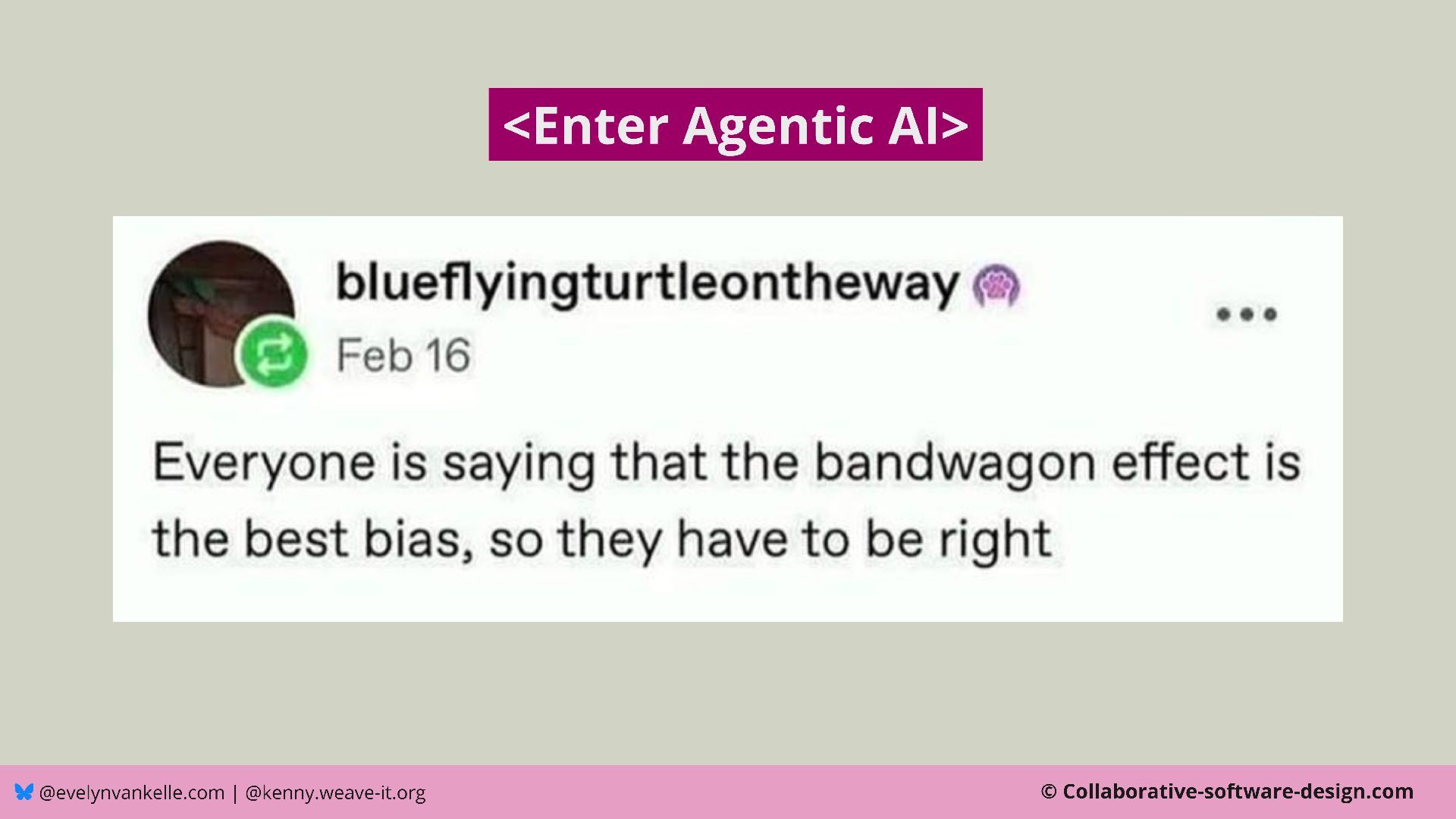
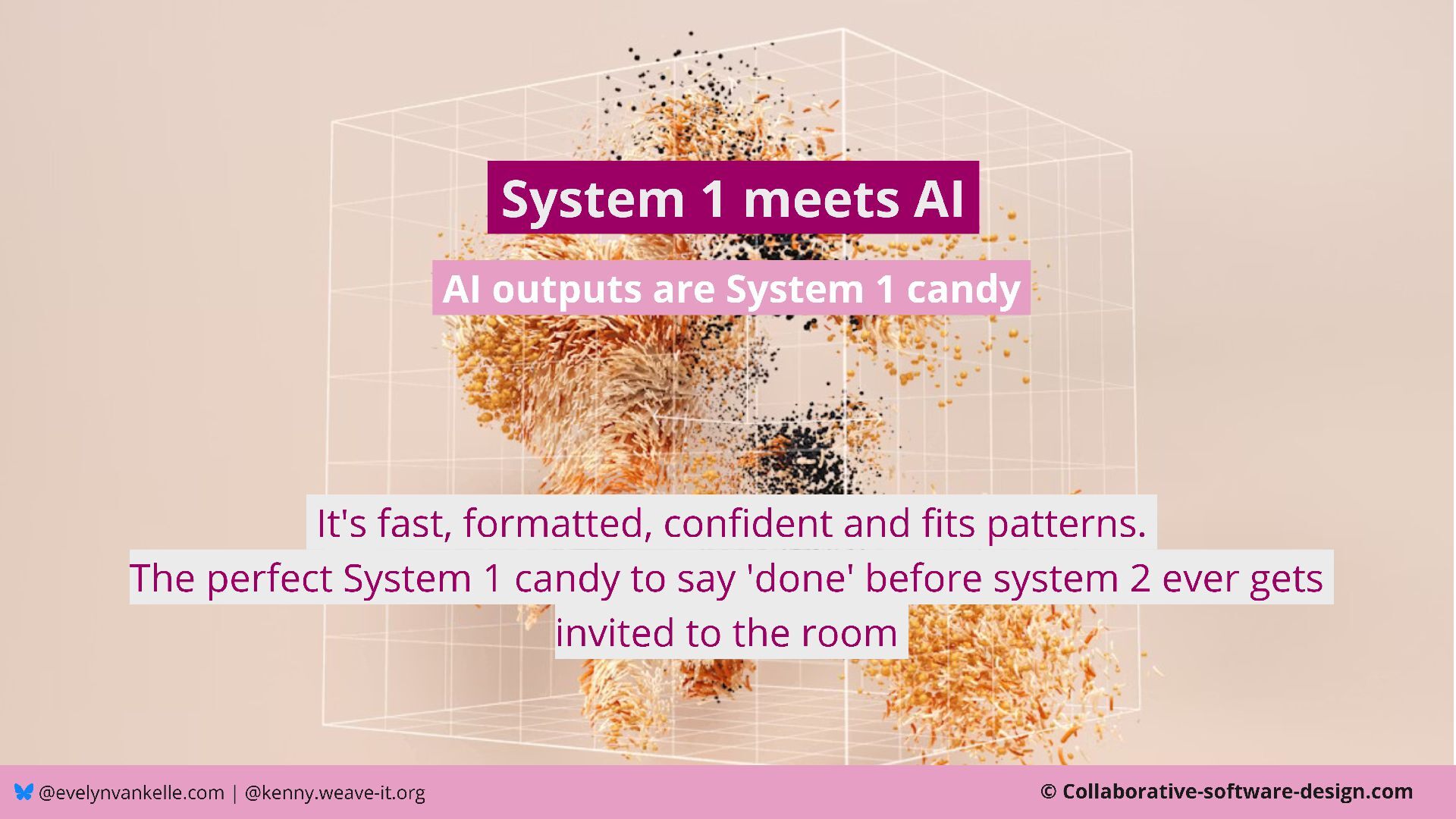
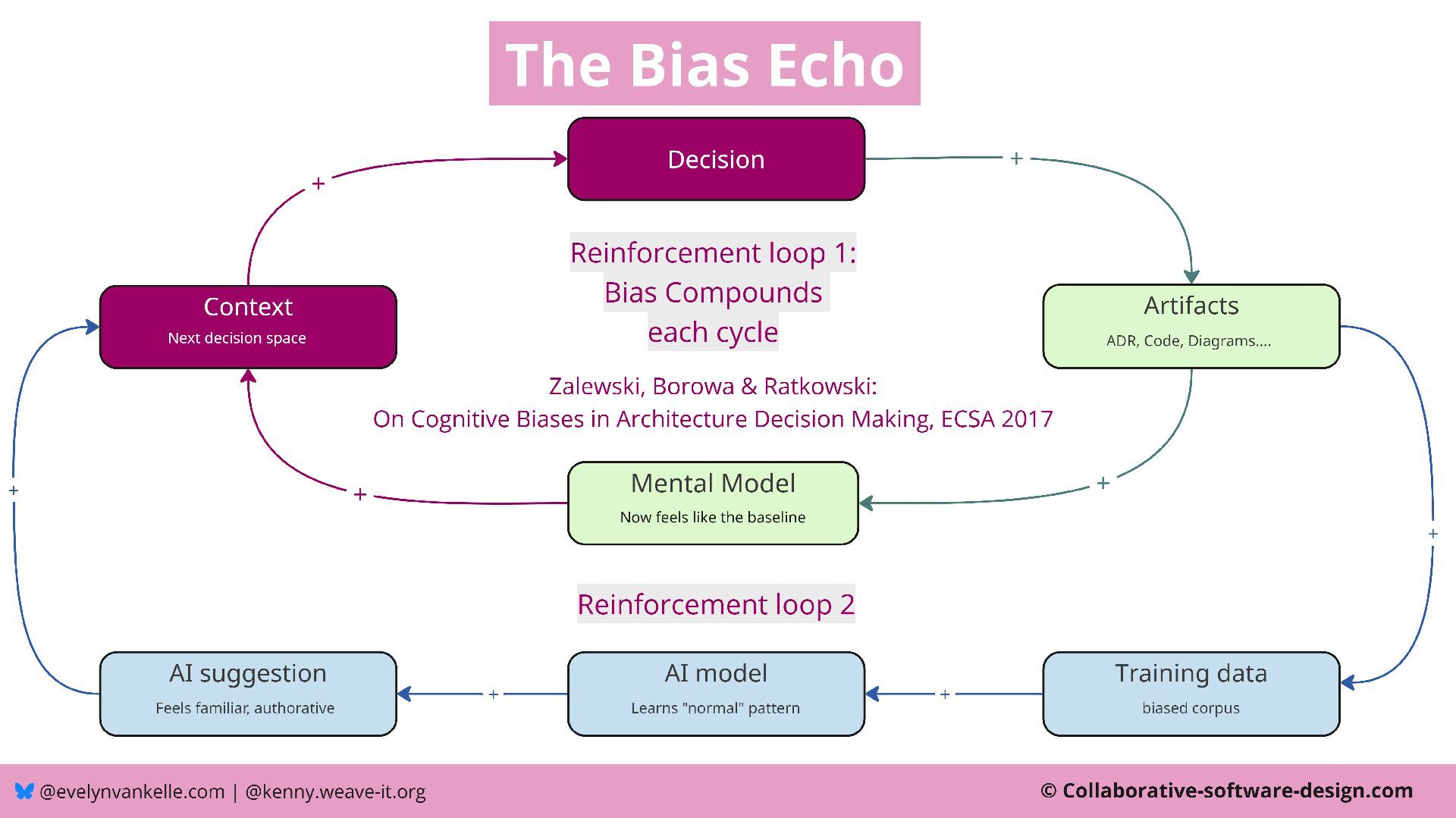
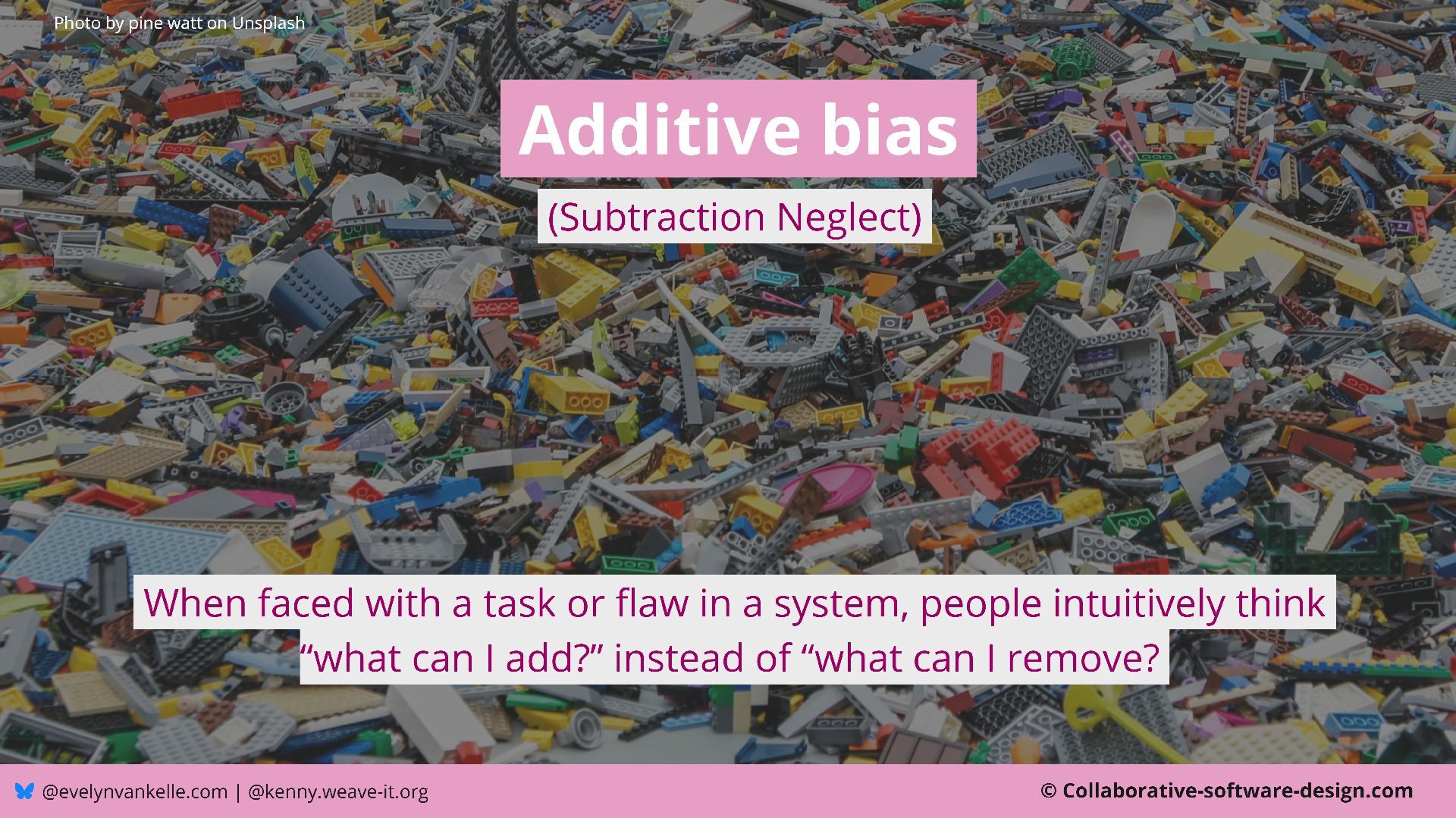
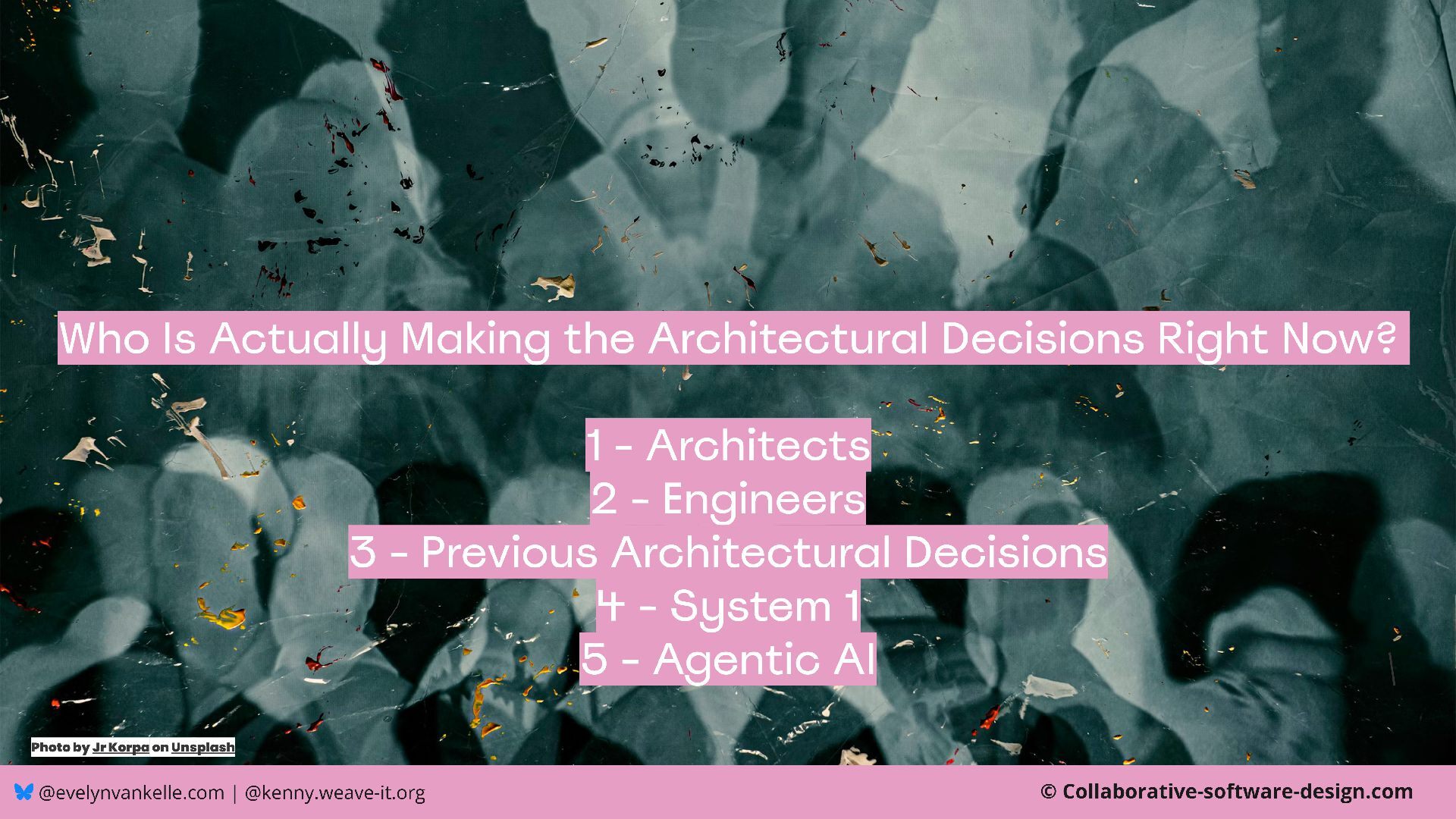
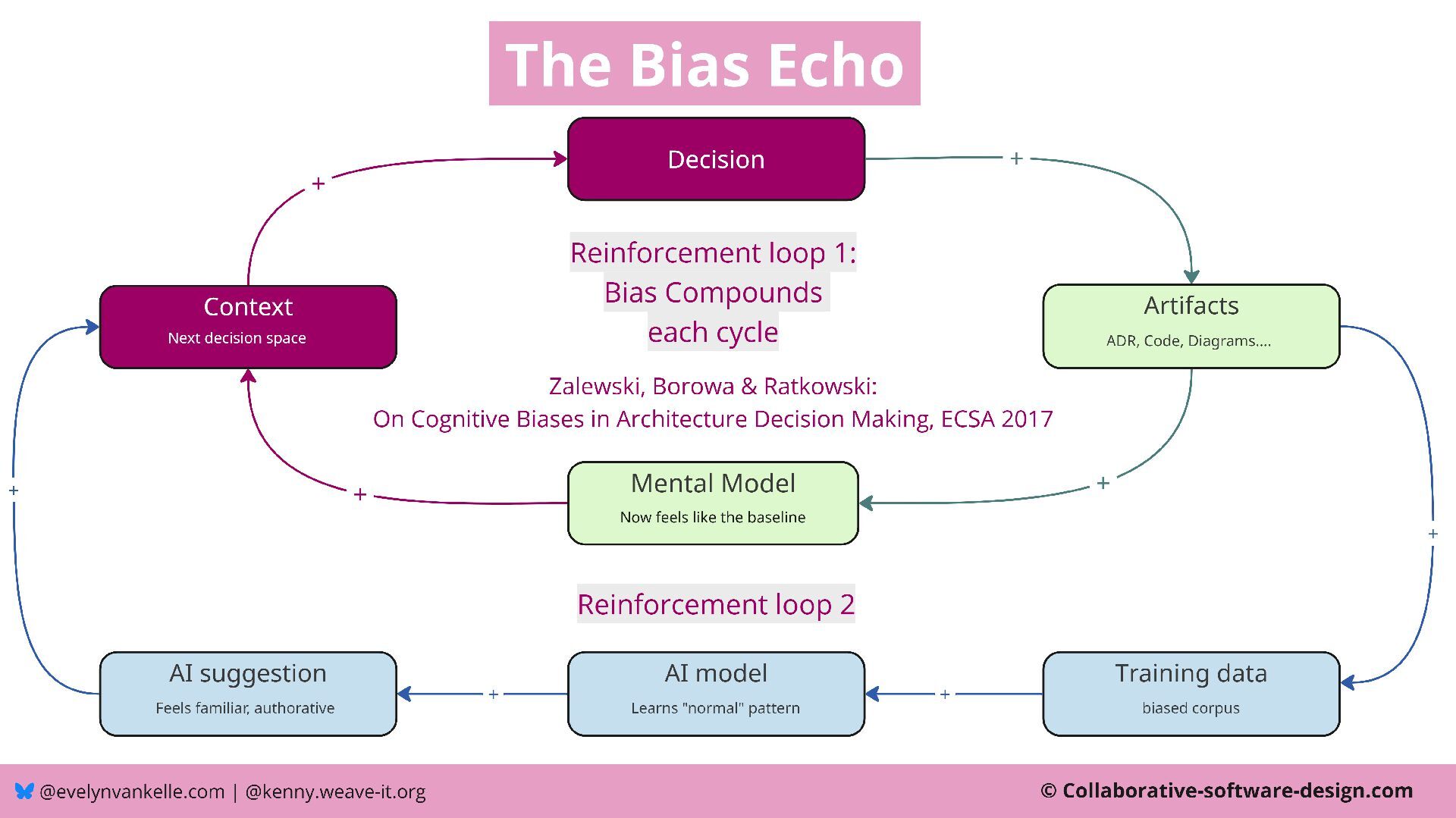
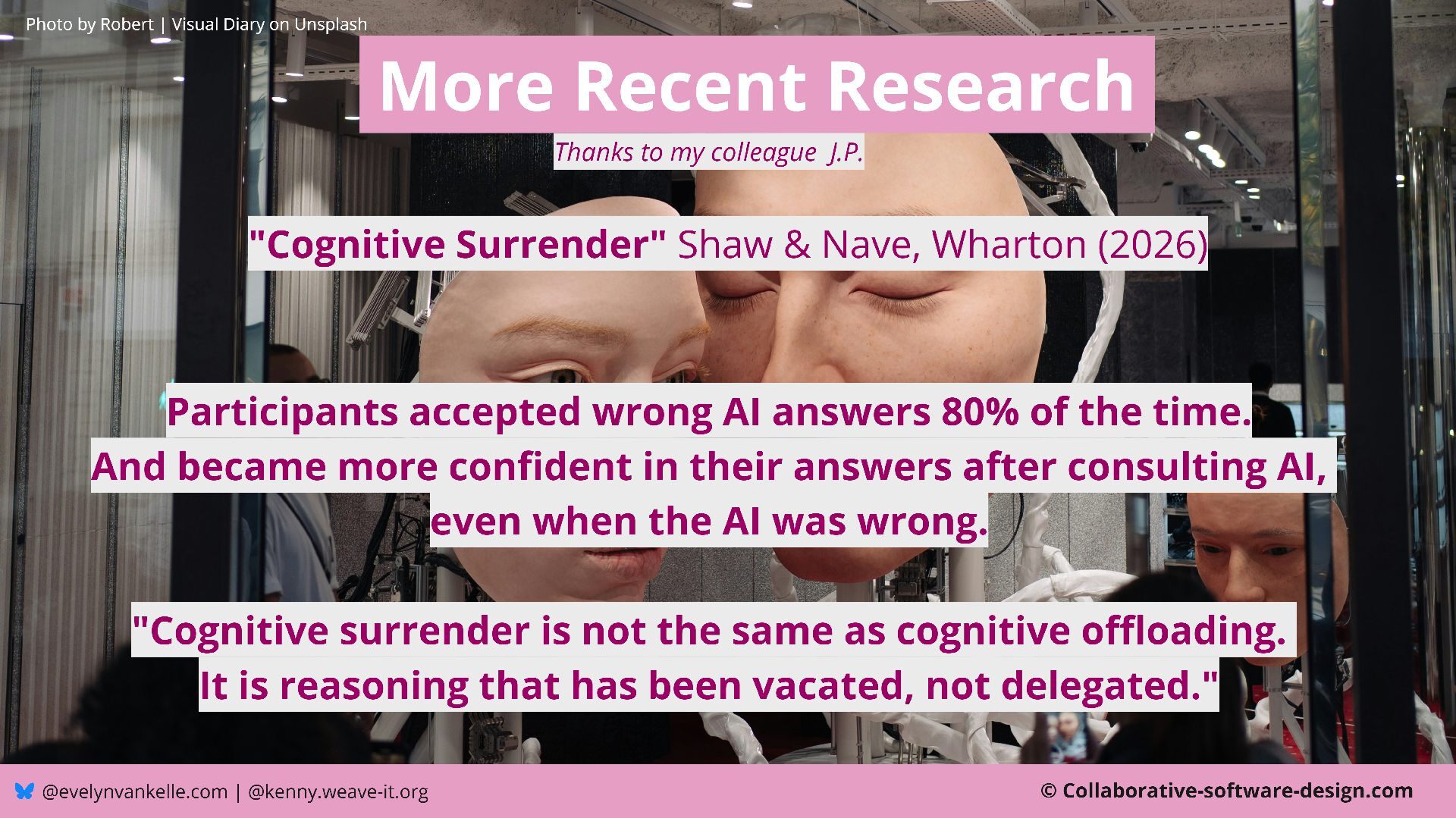
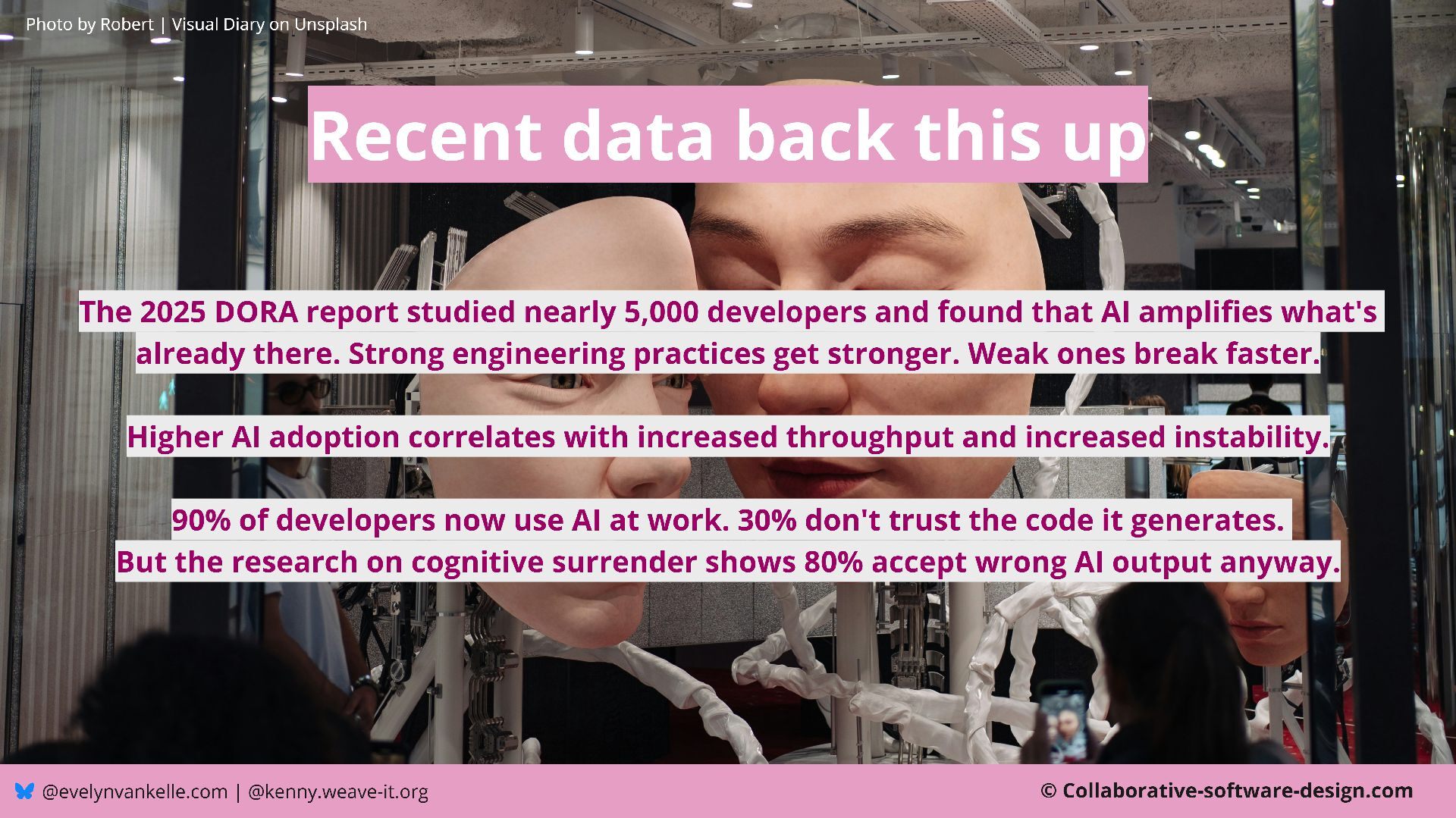
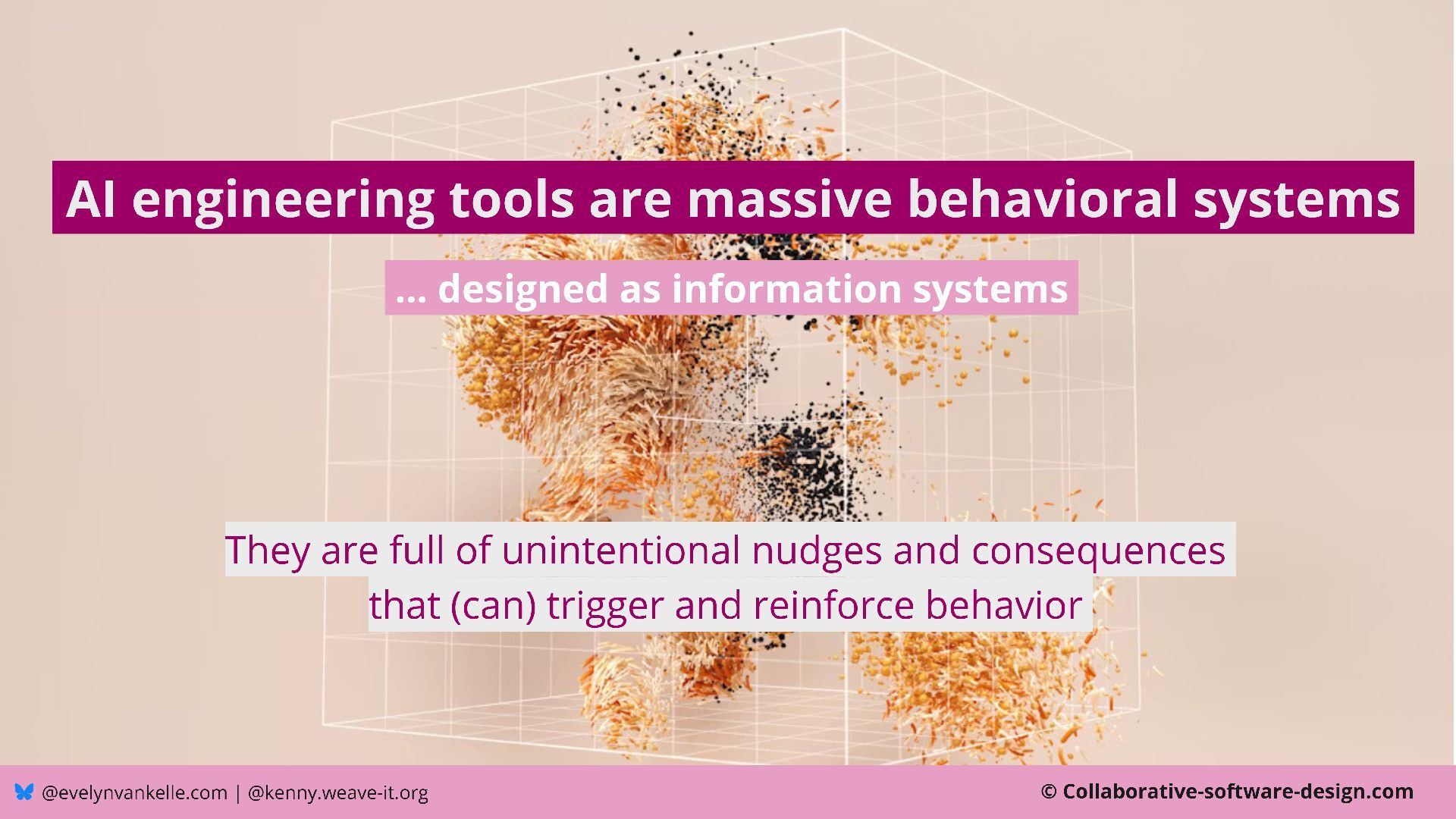
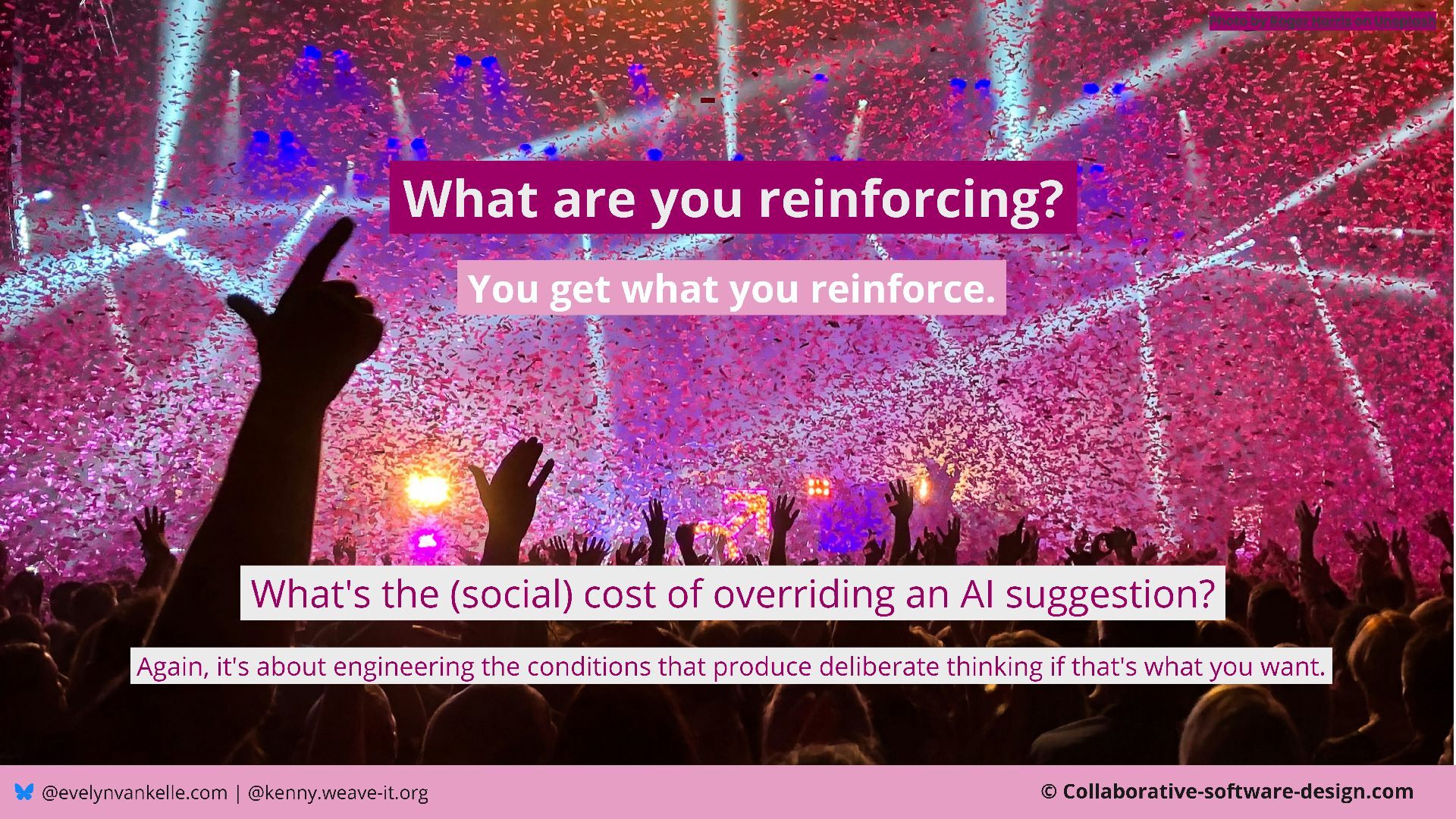
Developers have always made implicit architectural decisions. What has changed is the speed at which those decisions get delegated to AI agents. When a developer who doesn't deeply understand the problem prompts an AI, the AI doesn't understand it either. It fills that gap with assumptions that are fluent, convincing, and invisible. We treat that confident output as authoritative and lower our scrutiny. What researchers call cognitive surrender. AI-generated code doesn't just inherit our biases. It compounds them in a reinforcement loop: biased decisions produce biased context, which produces more biased suggestions.
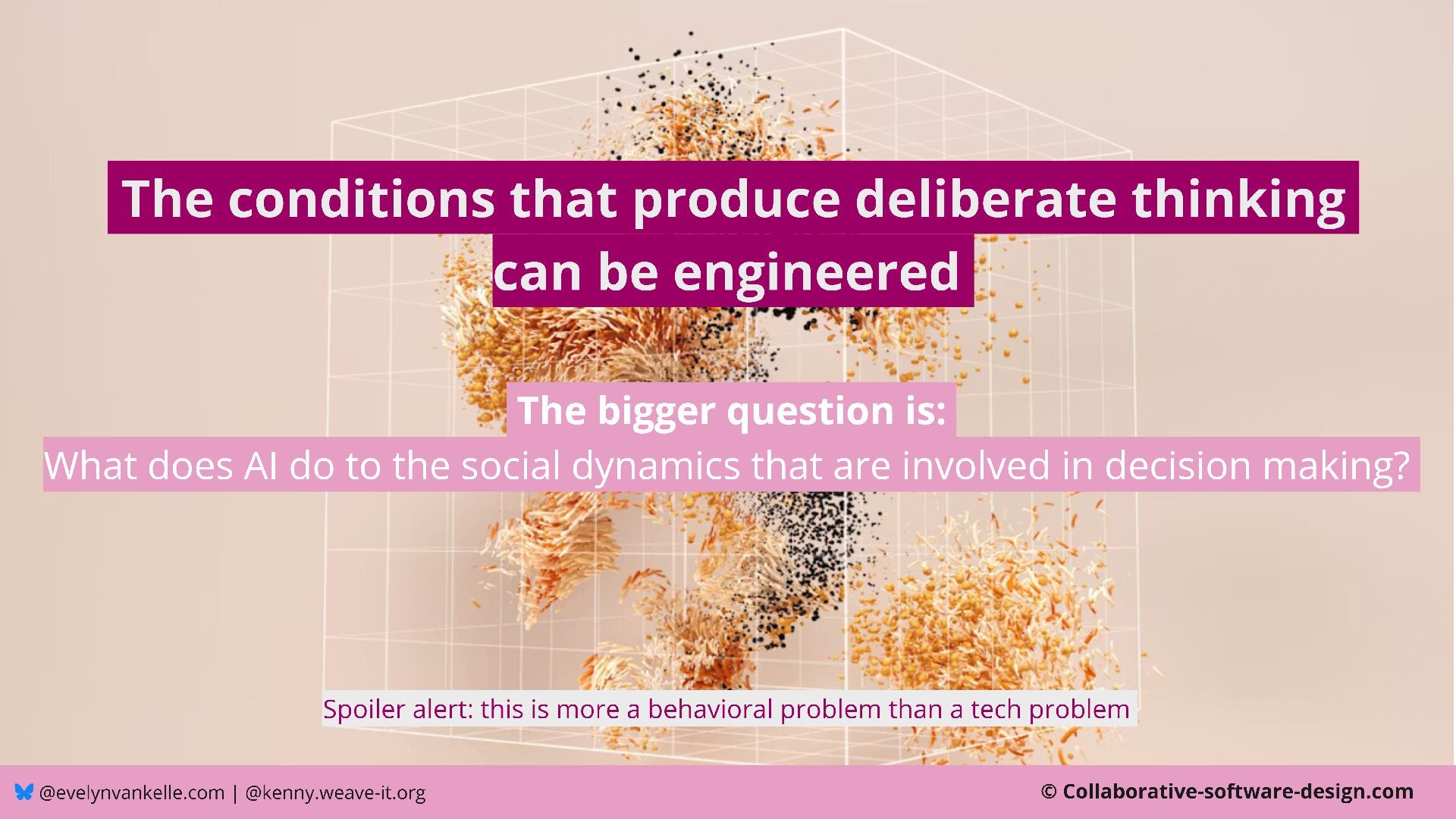
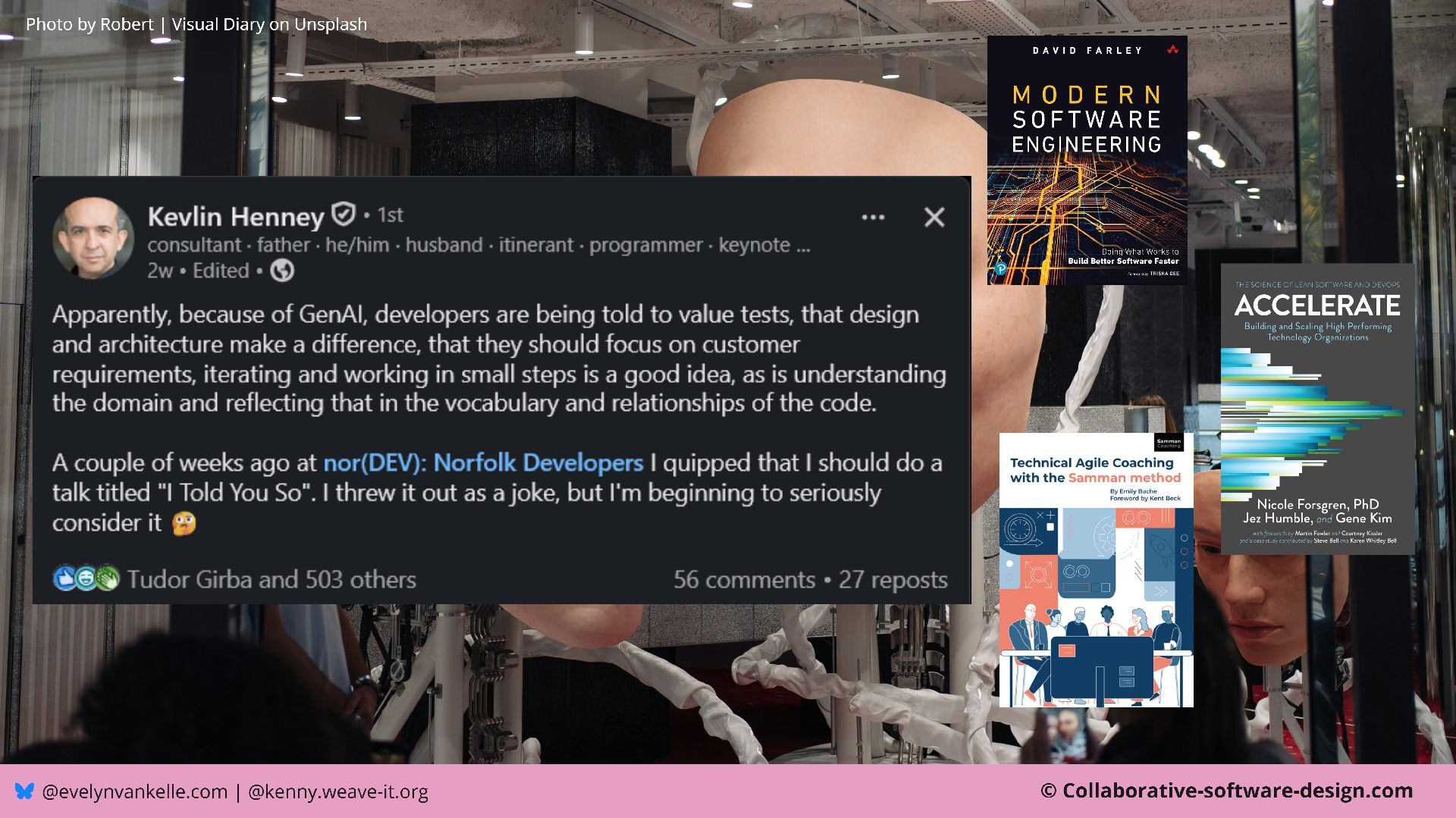
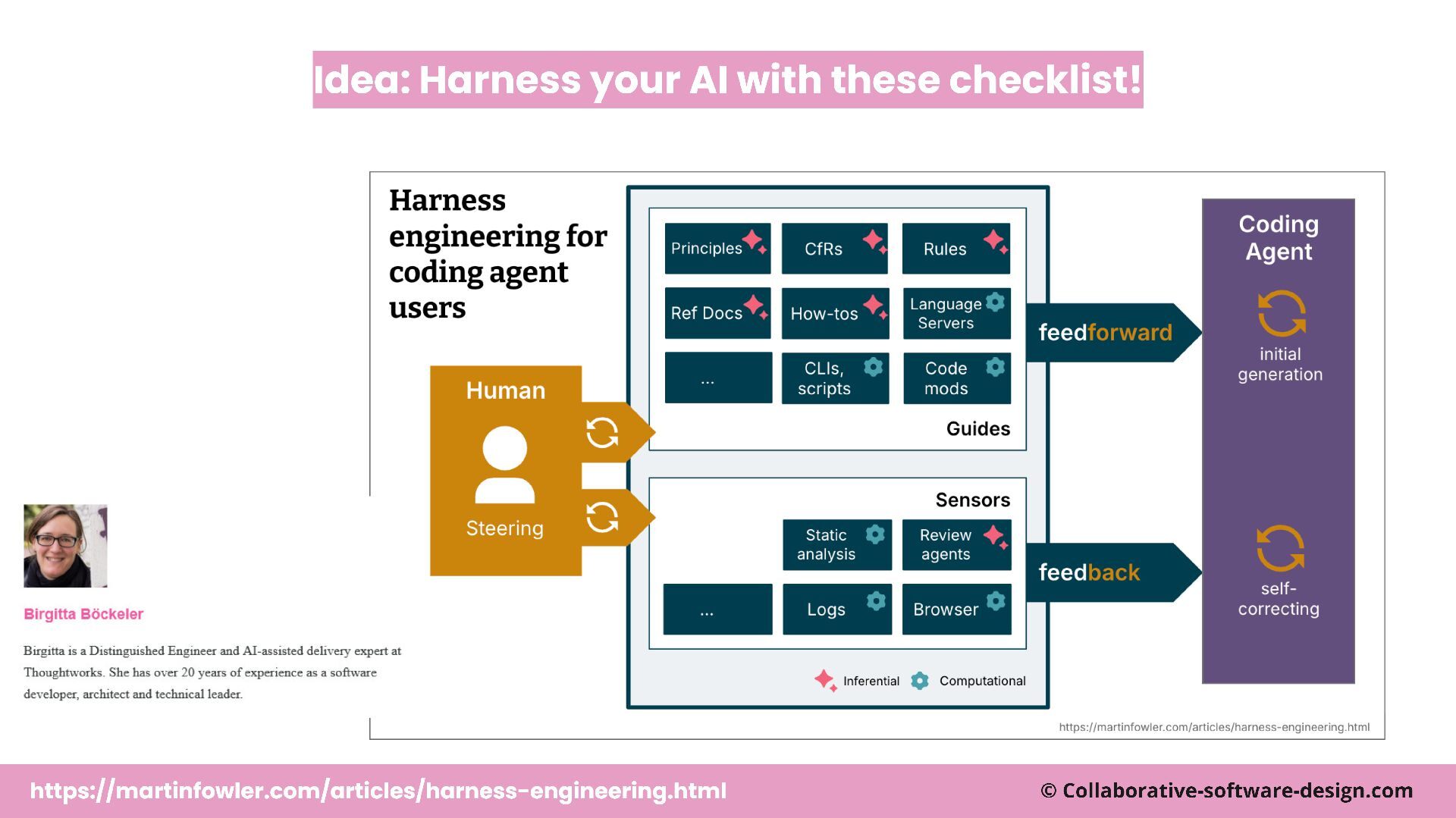
This is not just an AI problem. It's an architecture problem that AI makes visible, and more urgent. As teams move faster with AI, centralised architecture governance becomes an even bigger bottleneck, pushing more decisions into the implicit. But AI also creates an opportunity: we can feed engineering and architectural principles forward into the software development lifecycle, earlier and more explicitly than before. That requires facilitating and coaching architecture at the team level, not reviewing output after the fact. Real practitioner stories on facilitating software architecture consistently confirm: the answer is not more control, but collaborative practices and strong engineering principles that make architecture a shared team capability.
This is an interactive session. Expect to think out loud, share how you make architectural decisions today, and explore together what it takes to keep architecture intentional, explicit, and human-led in an AI-accelerated world.


 baasie
 shichijoyuhi
 htan
htan
 kameitomohiro
 ennael
 mewuto
 tanakaseiya
 mtpooh
 recruitengineers
 kairim0
 dada4386
 harutiro
 husengs7
 caitiem20
 kneath
 rakko
rakko
 irinanazarova
 tapps
tapps
 keavy
keavy
 axbom
axbom
 helmedeiros
 emna__ayadi
 letsgokoyo
 mclloyd
 productmarketing