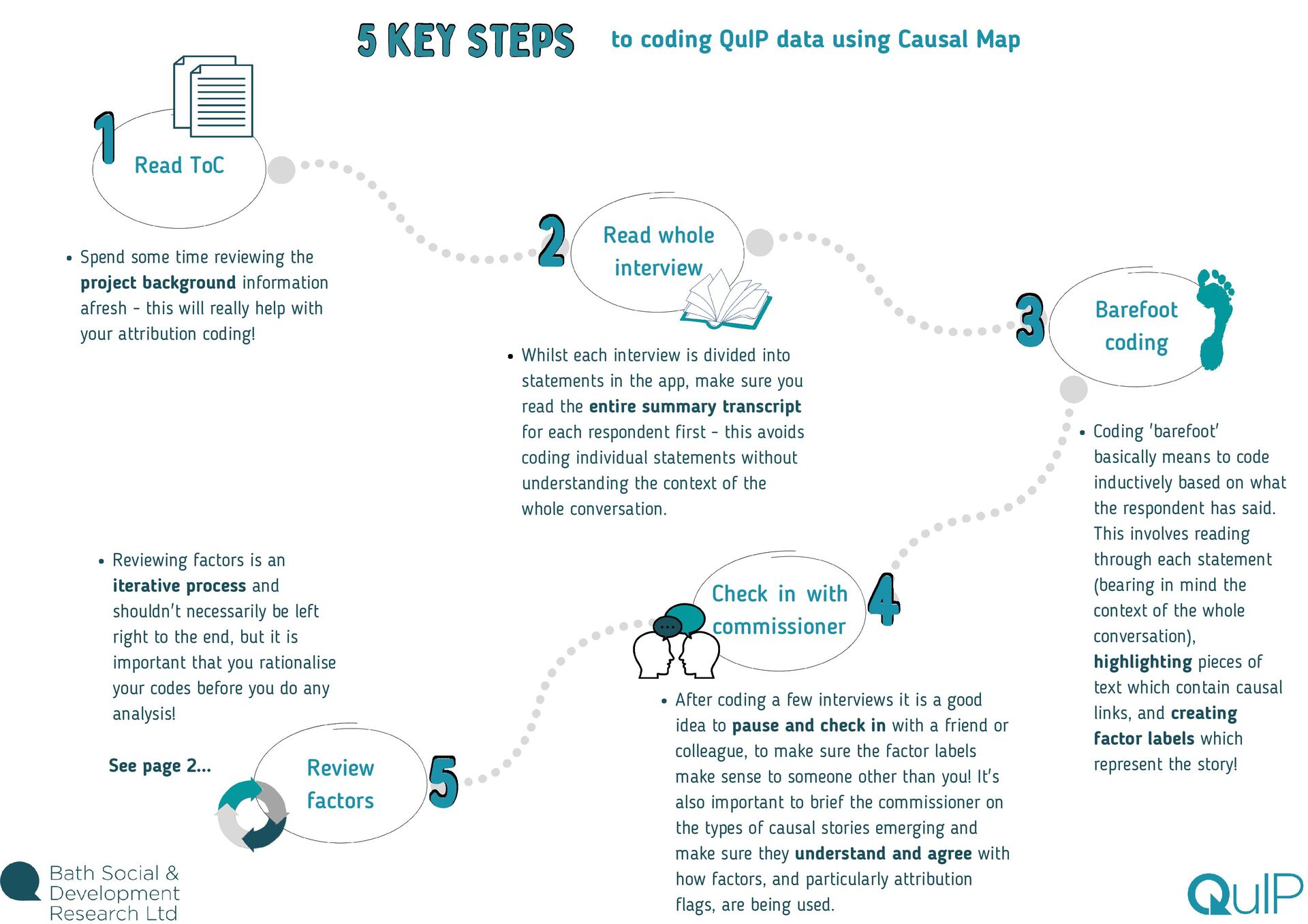
this will really help with your attribution coding! Reviewing factors is an iterative process and shouldn't necessarily be left right to the end, but it is important that you rationalise your codes before you do any analysis! See page 2... Whilst each interview is divided into statements in the app, make sure you read the entire summary transcript for each respondent first - this avoids coding individual statements without understanding the context of the whole conversation. After coding a few interviews it is a good idea to pause and check in with a friend or colleague, to make sure the factor labels make sense to someone other than you! It's also important to brief the commissioner on the types of causal stories emerging and make sure they understand and agree with how factors, and particularly attribution flags, are being used. Coding 'barefoot' basically means to code inductively based on what the respondent has said. This involves reading through each statement (bearing in mind the context of the whole conversation), highlighting pieces of text which contain causal links, and creating factor labels which represent the story! Read ToC Review factors Read whole interview Check in with commissioner Barefoot coding 1 5 2 4 3 to coding QuIP data using Causal Map 5 key steps
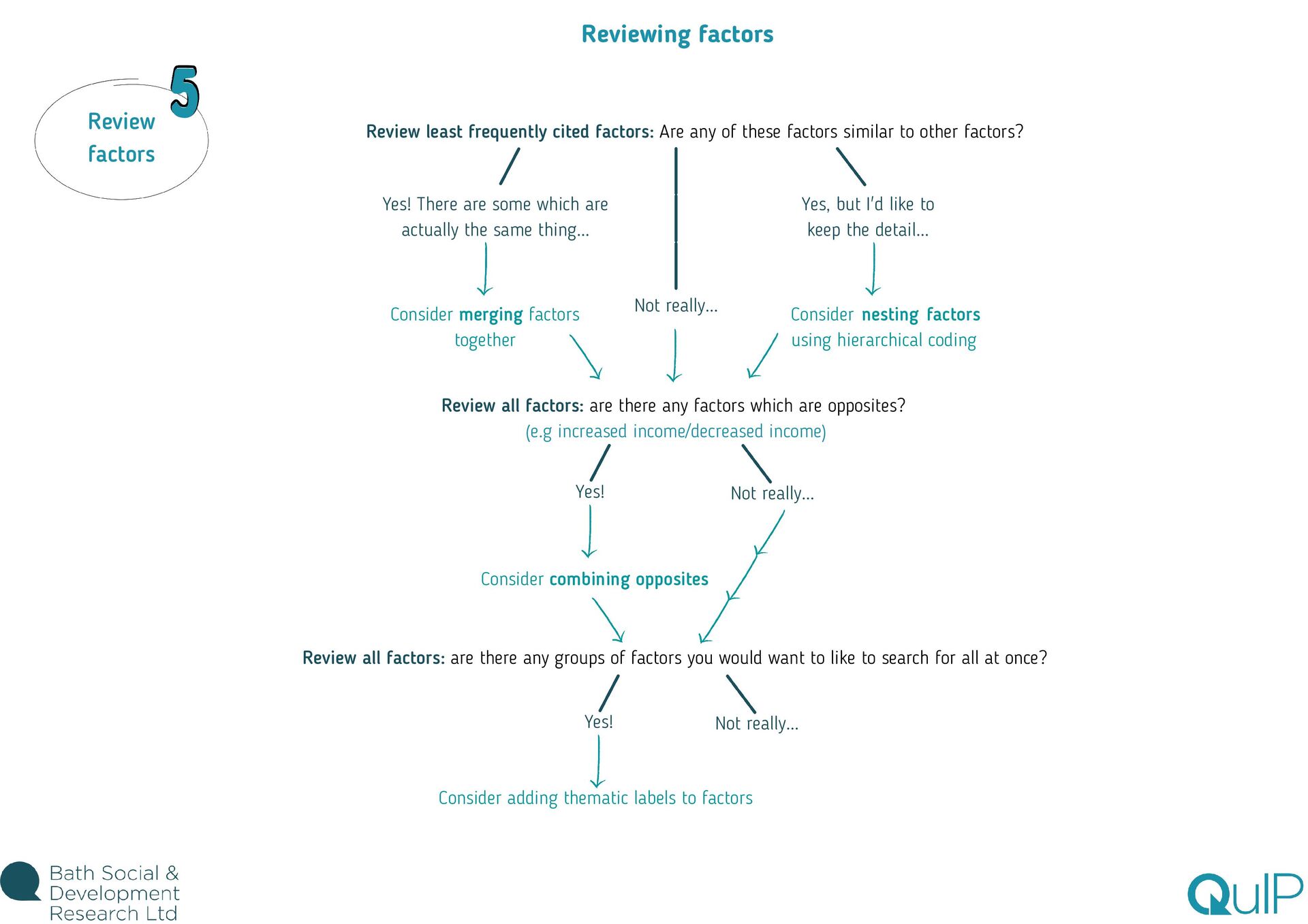
some which are actually the same thing... Yes! Not really... Consider adding thematic labels to factors Not really... Not really... Review all factors: are there any factors which are opposites? (e.g increased income/decreased income) Yes, but I'd like to keep the detail... Consider nesting factors using hierarchical coding Review least frequently cited factors: Are any of these factors similar to other factors? Consider combining opposites Review all factors: are there any groups of factors you would want to like to search for all at once? Reviewing factors 5
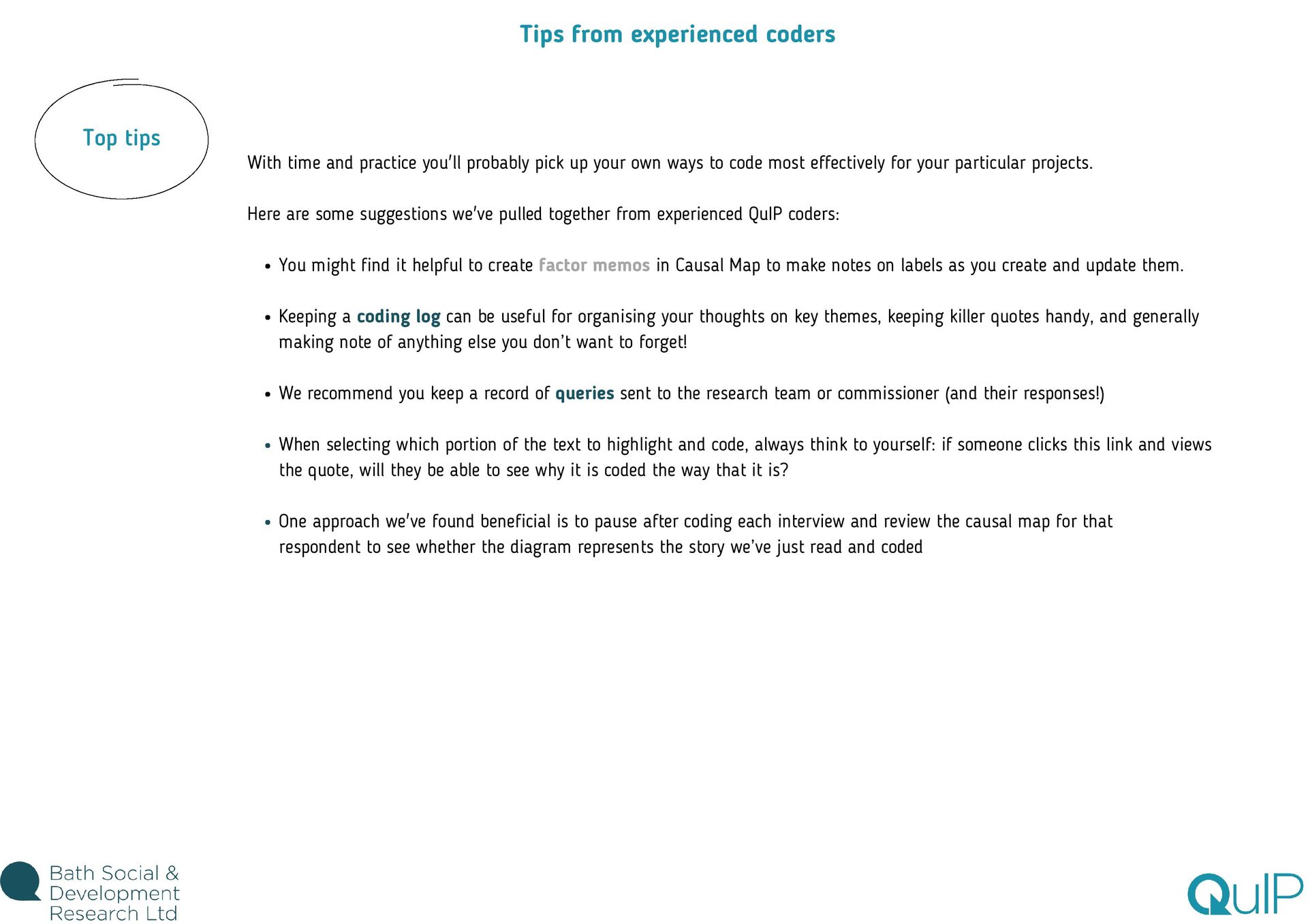
you'll probably pick up your own ways to code most effectively for your particular projects. Here are some suggestions we've pulled together from experienced QuIP coders: You might find it helpful to create factor memos in Causal Map to make notes on labels as you create and update them. Keeping a coding log can be useful for organising your thoughts on key themes, keeping killer quotes handy, and generally making note of anything else you don’t want to forget! We recommend you keep a record of queries sent to the research team or commissioner (and their responses!) When selecting which portion of the text to highlight and code, always think to yourself: if someone clicks this link and views the quote, will they be able to see why it is coded the way that it is? One approach we've found beneficial is to pause after coding each interview and review the causal map for that respondent to see whether the diagram represents the story we’ve just read and coded


.png)
.png)
.png) bathsdr
bathsdr
 leimatthew05
 eileencodes
 rabernat
 427marketing
 skipperchong
 mkilby
 ipullrank
 techseoconnect
 cassininazir
 swwweet
 aleyda