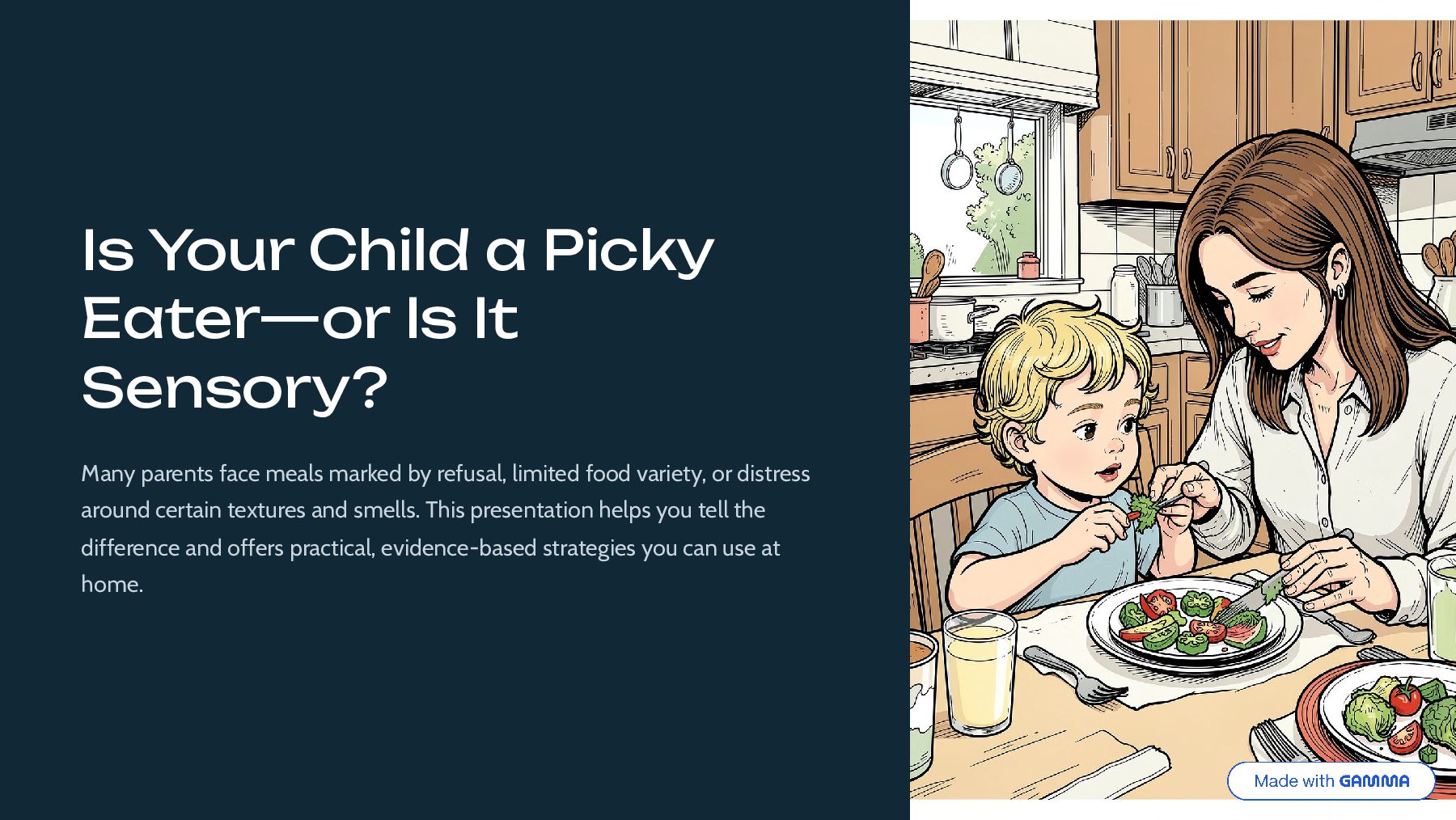
Many parents face meals marked by refusal, limited food variety, or distress
around certain textures and smells. This presentation helps you tell the
difference and offers practical, evidence-based strategies you can use at
home.
parents face meals marked by refusal, limited food variety, or distress around certain textures and smells. This presentation helps you tell the difference and offers practical, evidence-based strategies you can use at home.
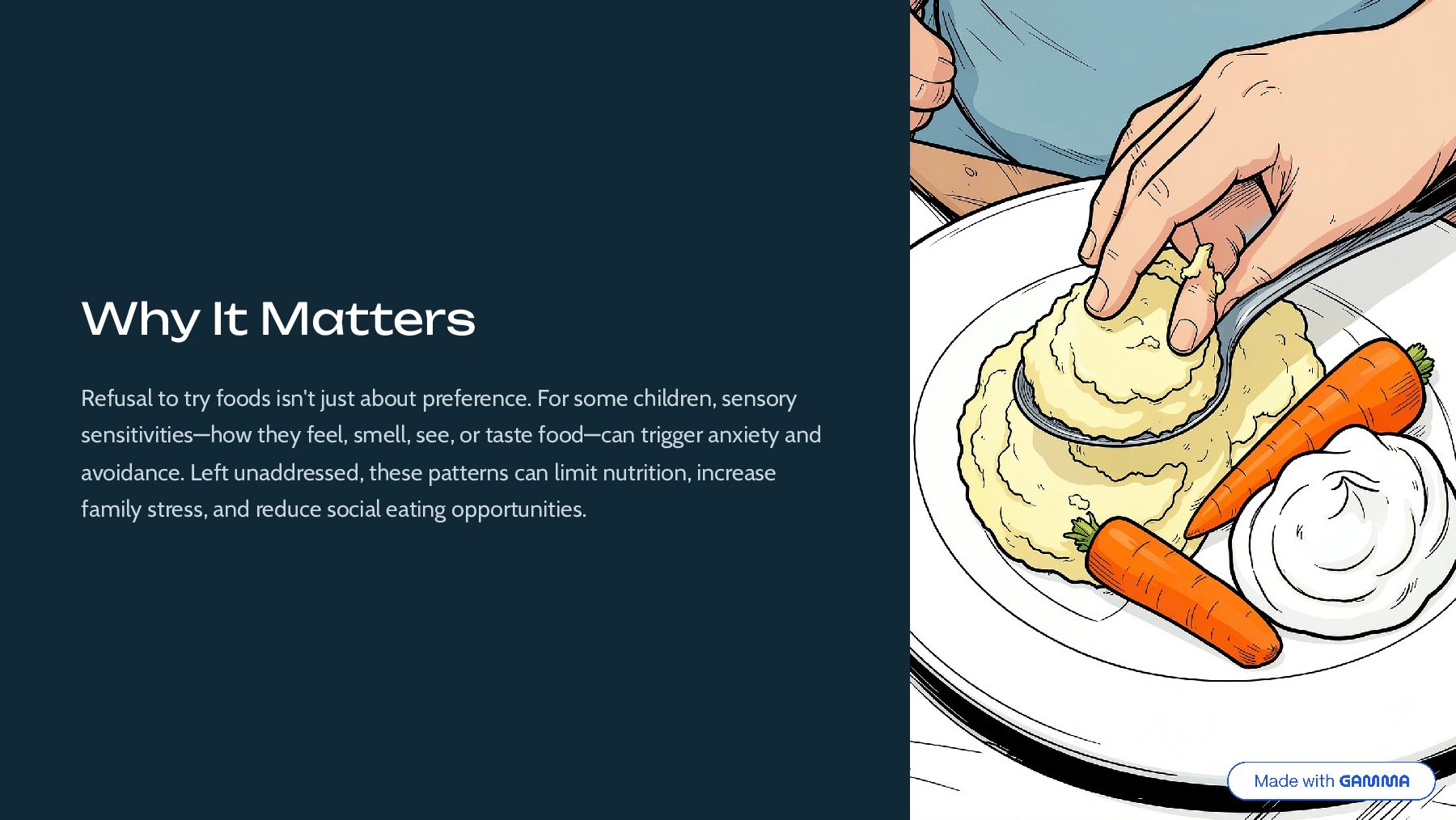
preference. For some children, sensory sensitivities—how they feel, smell, see, or taste food—can trigger anxiety and avoidance. Left unaddressed, these patterns can limit nutrition, increase family stress, and reduce social eating opportunities.
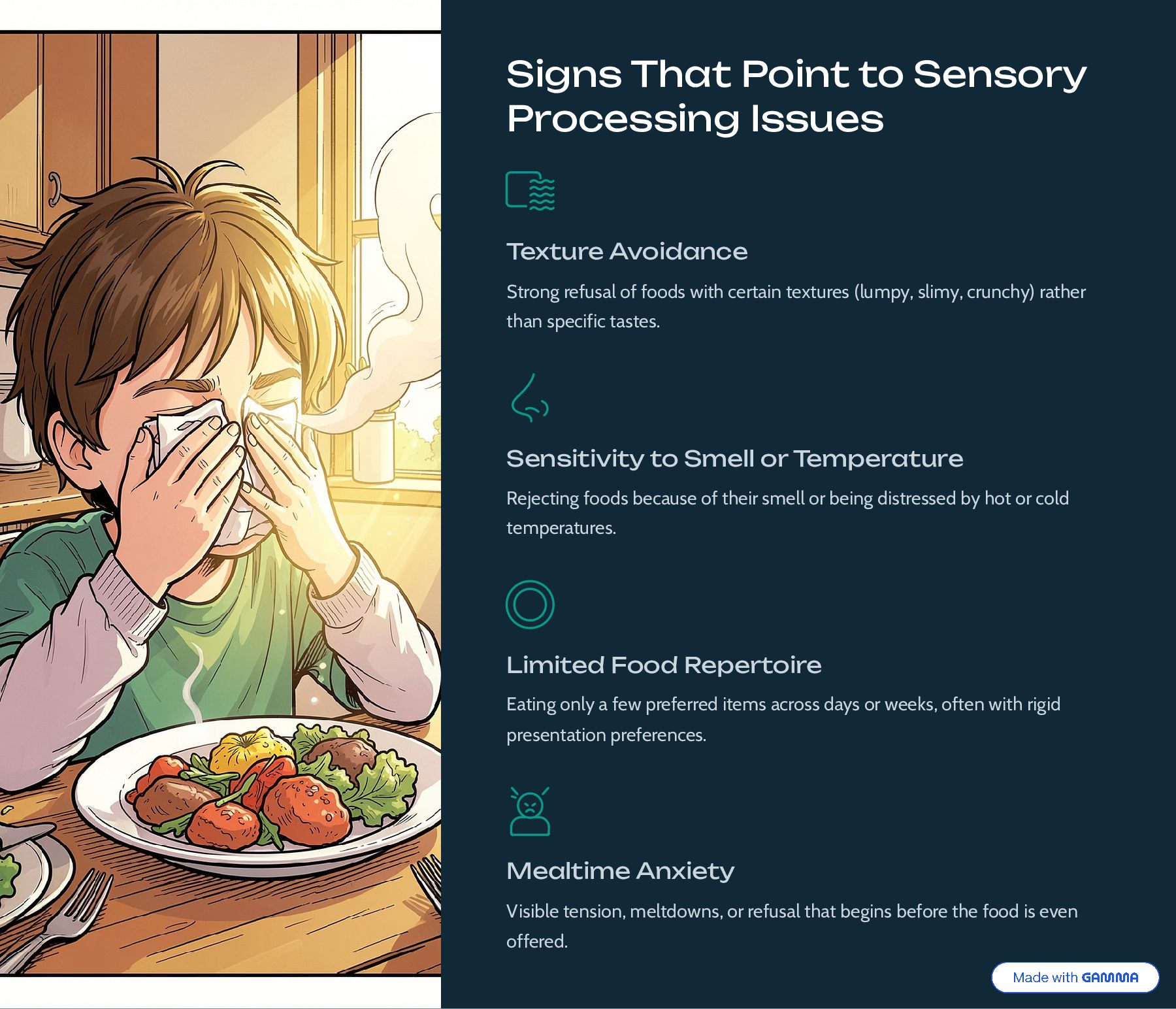
refusal of foods with certain textures (lumpy, slimy, crunchy) rather than specific tastes. Sensitivity to Smell or Temperature Rejecting foods because of their smell or being distressed by hot or cold temperatures. Limited Food Repertoire Eating only a few preferred items across days or weeks, often with rigid presentation preferences. Mealtime Anxiety Visible tension, meltdowns, or refusal that begins before the food is even offered.
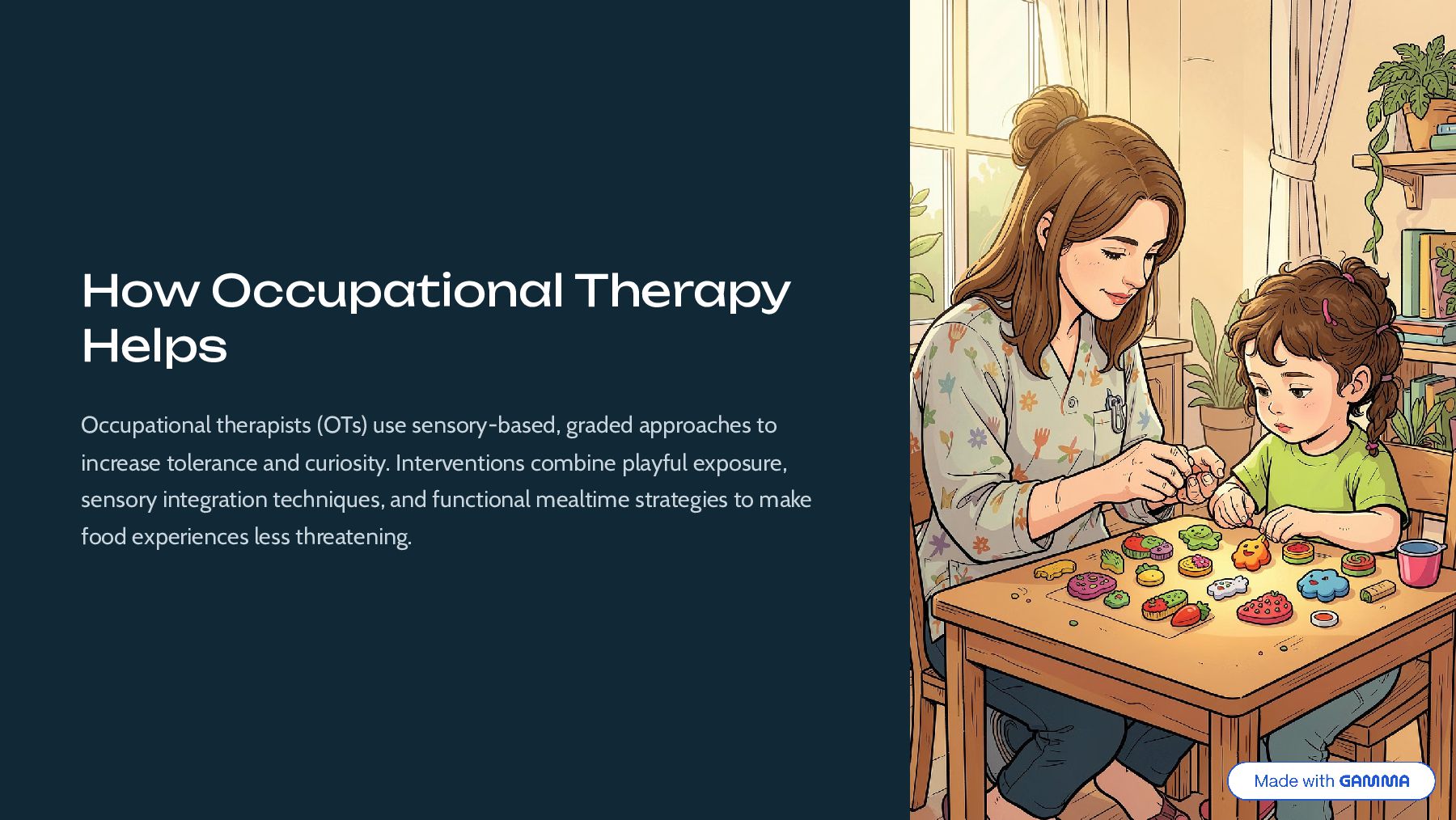
approaches to increase tolerance and curiosity. Interventions combine playful exposure, sensory integration techniques, and functional mealtime strategies to make food experiences less threatening.
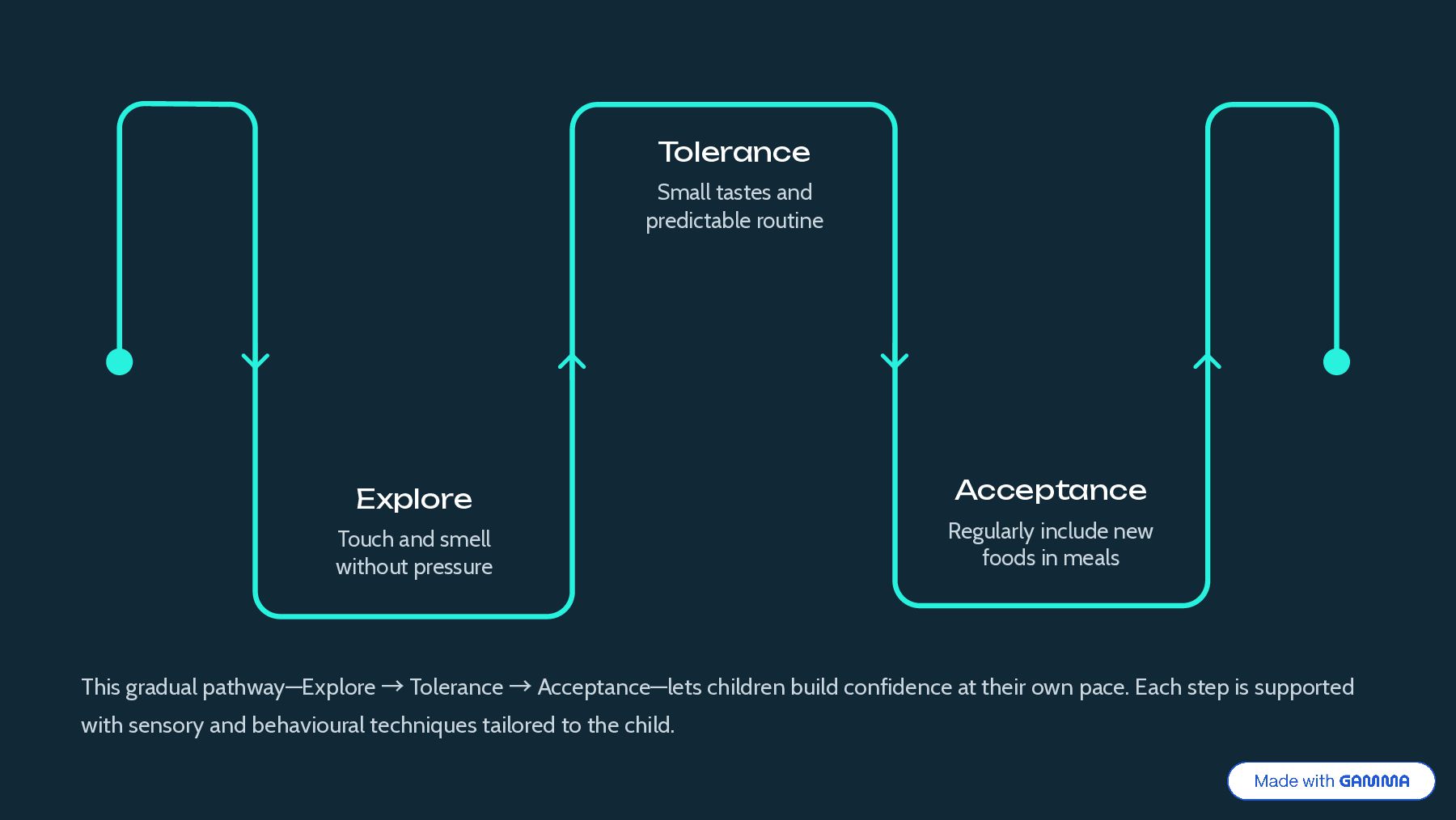
foods in meals Tolerance Small tastes and predictable routine This gradual pathway—Explore → Tolerance → Acceptance—lets children build confidence at their own pace. Each step is supported with sensory and behavioural techniques tailored to the child.
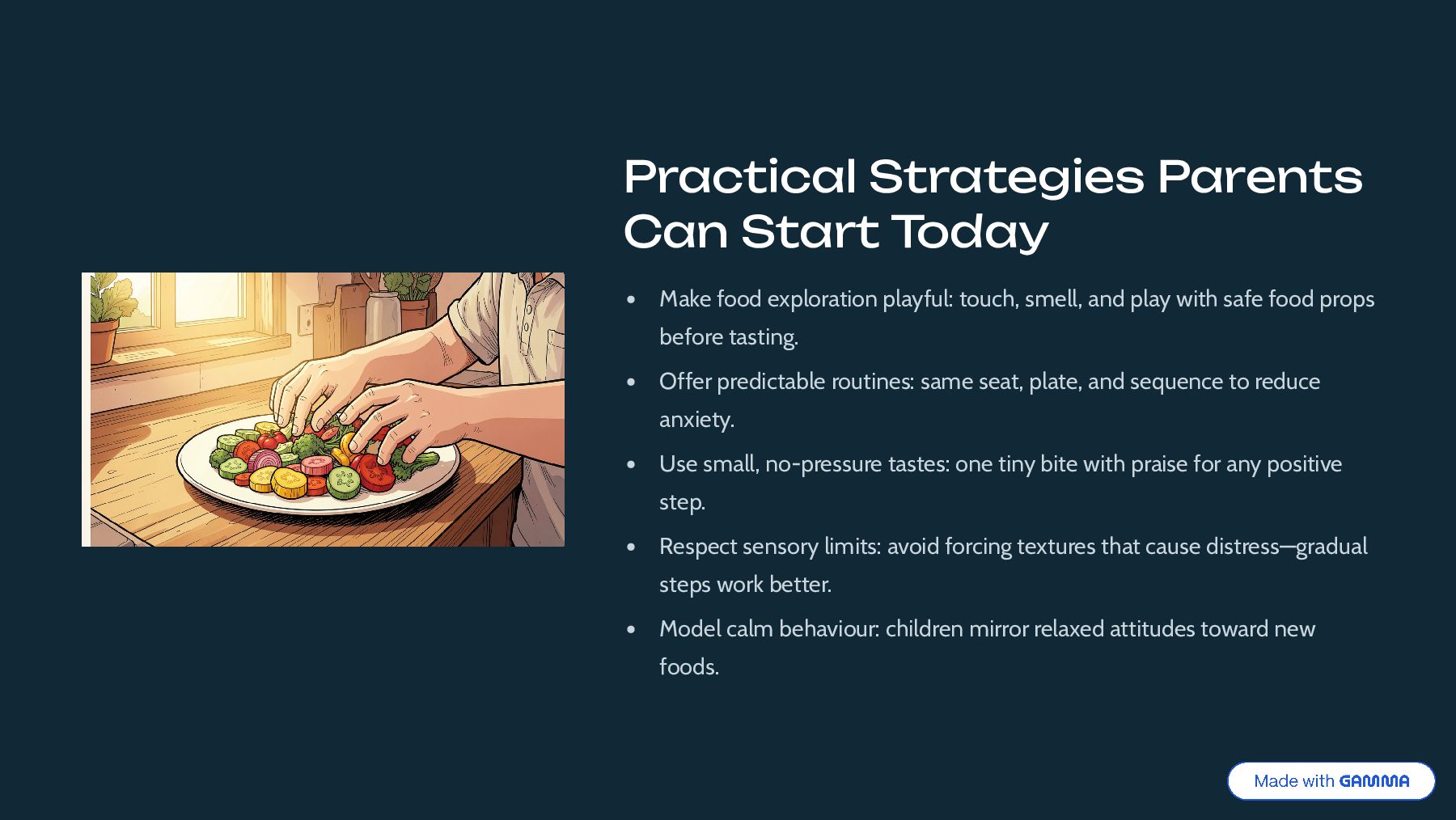
touch, smell, and play with safe food props before tasting. Offer predictable routines: same seat, plate, and sequence to reduce anxiety. Use small, no-pressure tastes: one tiny bite with praise for any positive step. Respect sensory limits: avoid forcing textures that cause distress—gradual steps work better. Model calm behaviour: children mirror relaxed attitudes toward new foods.
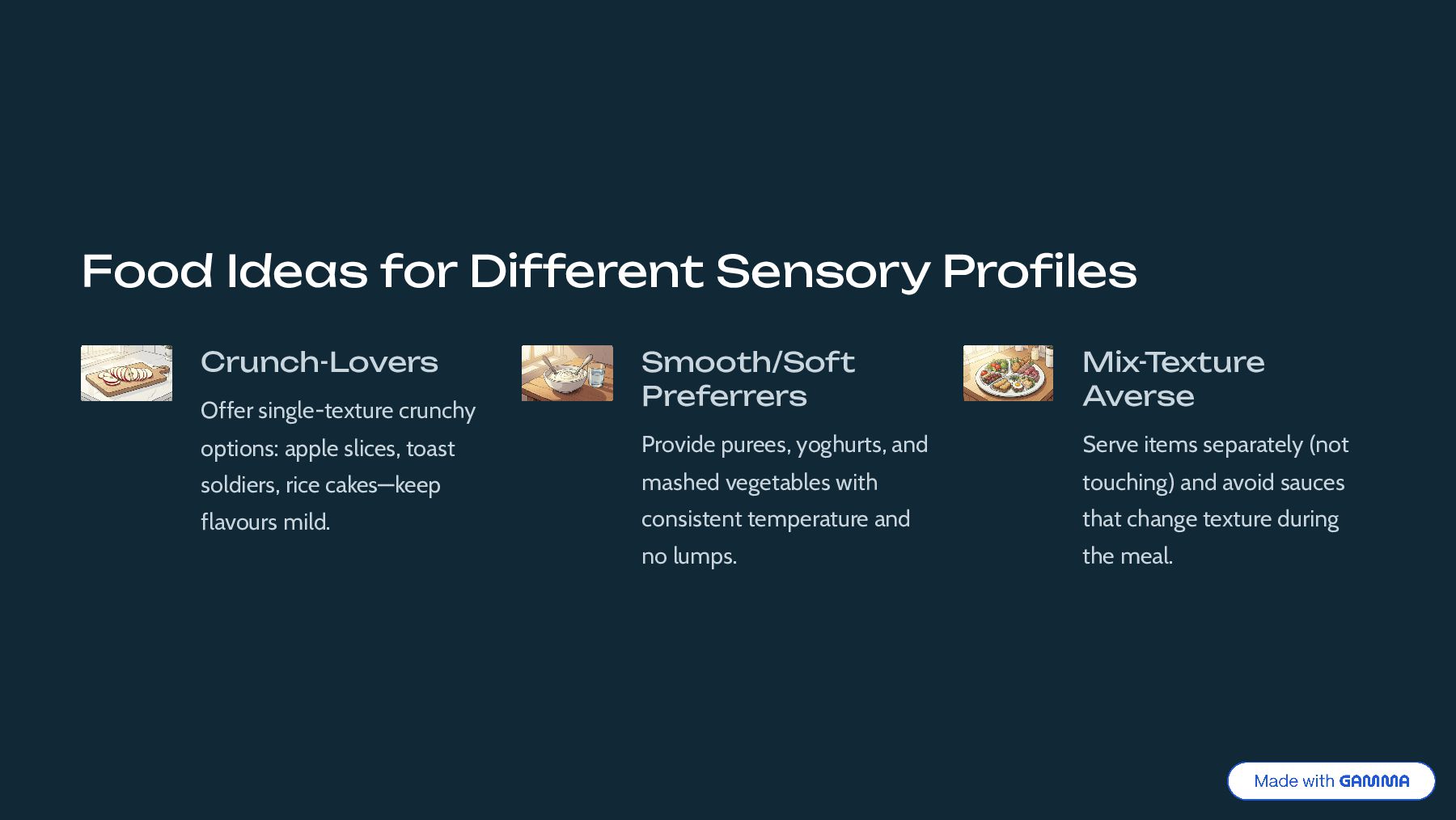
options: apple slices, toast soldiers, rice cakes—keep flavours mild. Smooth/Soft Preferrers Provide purees, yoghurts, and mashed vegetables with consistent temperature and no lumps. Mix-Texture Averse Serve items separately (not touching) and avoid sauces that change texture during the meal.
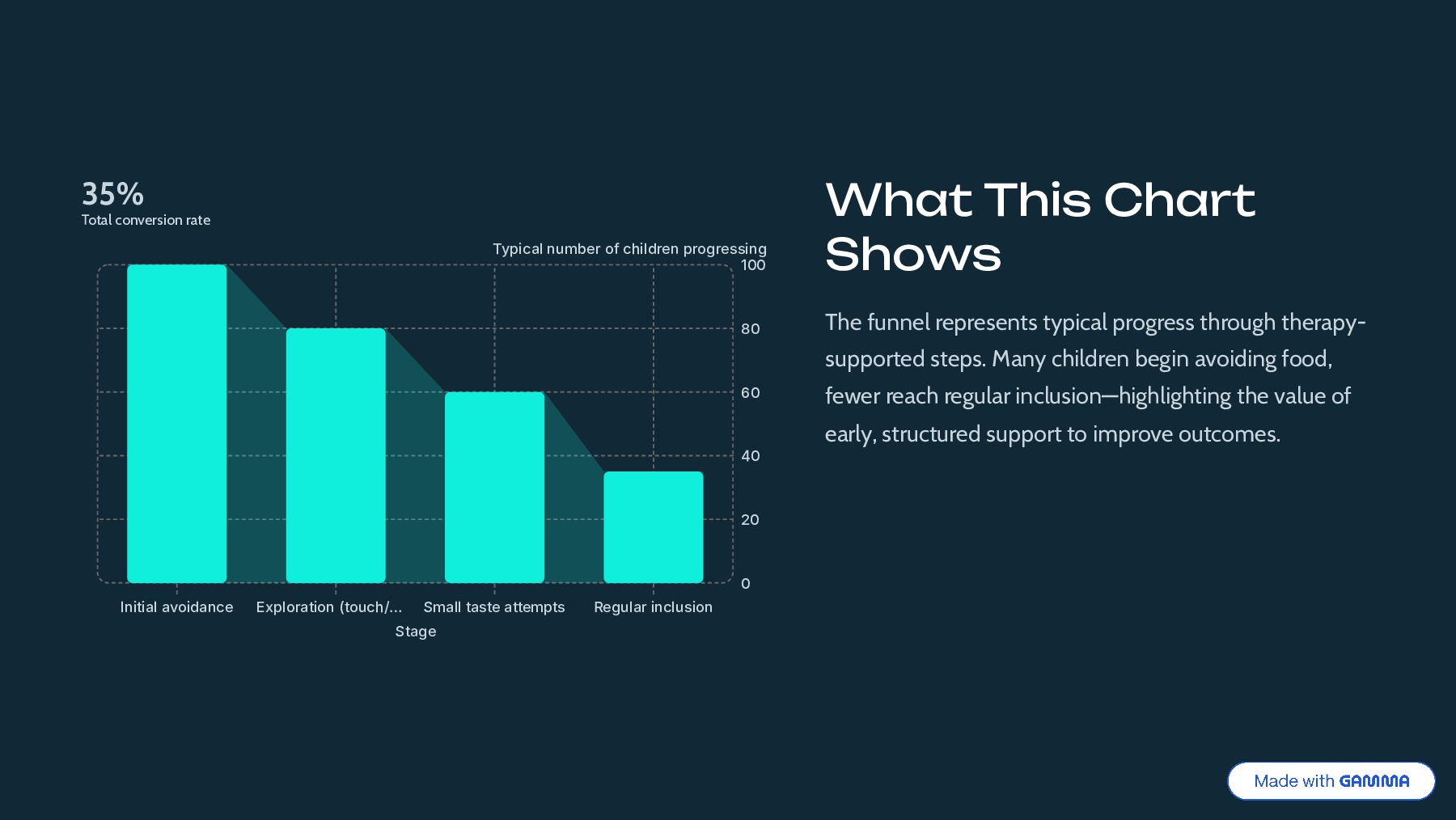
Typical number of children progressing Initial avoidance Exploration (touch/… Small taste attempts Regular inclusion Stage What This Chart Shows The funnel represents typical progress through therapy- supported steps. Many children begin avoiding food, fewer reach regular inclusion—highlighting the value of early, structured support to improve outcomes.
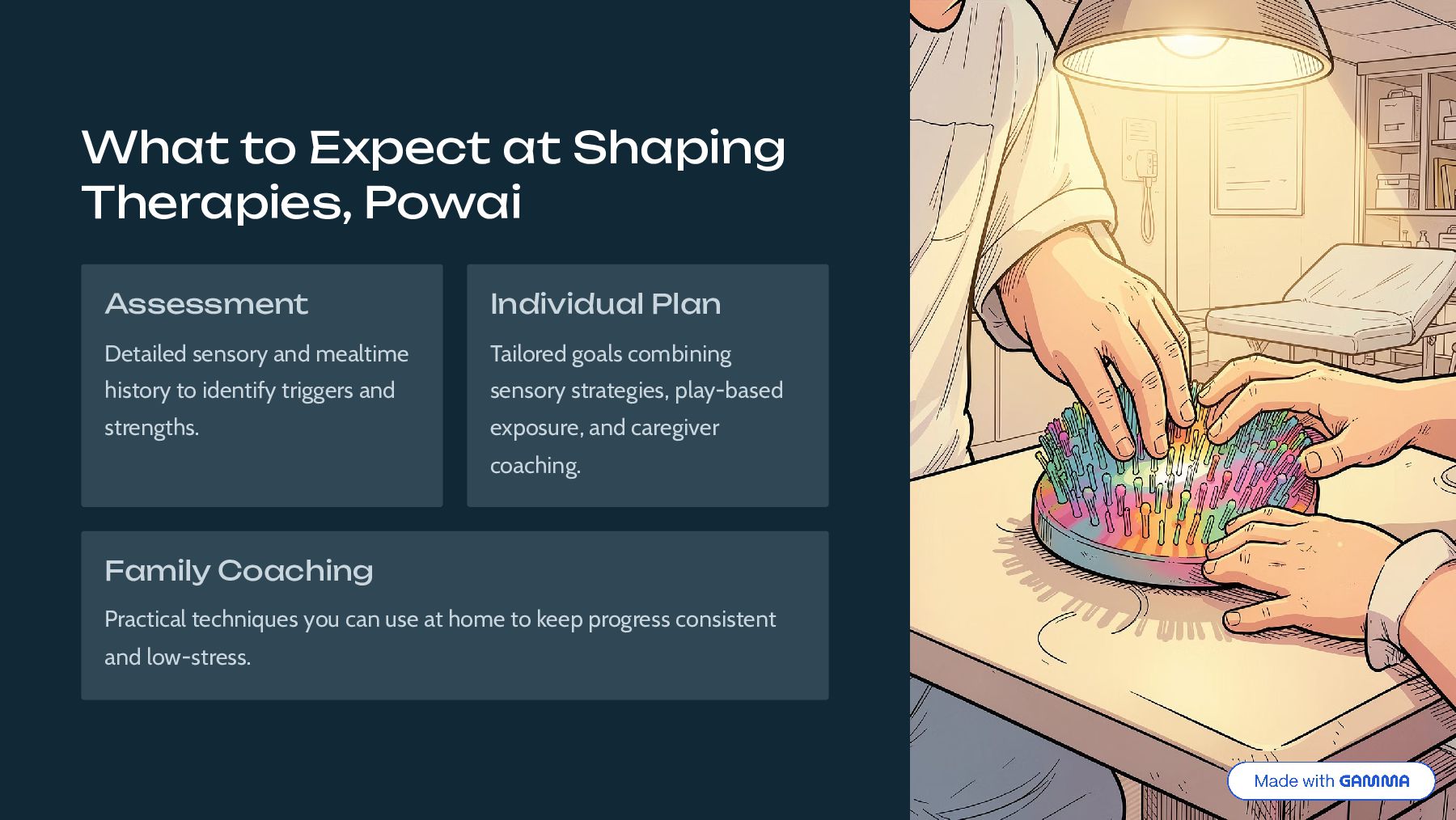
and mealtime history to identify triggers and strengths. Individual Plan Tailored goals combining sensory strategies, play-based exposure, and caregiver coaching. Family Coaching Practical techniques you can use at home to keep progress consistent and low-stress.
seek professional assessment if your child's eating patterns limit nutrition or cause intense distress. For appointments and tailored therapy plans, contact Shaping Therapies, Powai —our team provides compassionate, sensory-aware support for your family. If you're unsure whether to seek help, an initial assessment can clarify whether behaviours are developmental, behavioural, or sensory-based.


 masakiokuda
 kfujita
 cbtlibrary
 2720japanoke
 frievea
 juanmartin2026
 hiola
 ytapples613
 signer
 akiraasano
 pawan_pharm
 rashwhitman
 pedronauck
 elsirapls
 keithpitt
 asonas
 matthewcrist
 nikkihalliwell
 reverentgeek
 gr2m
 mongodb
 ryanjones
 dougneiner
 caitiem20