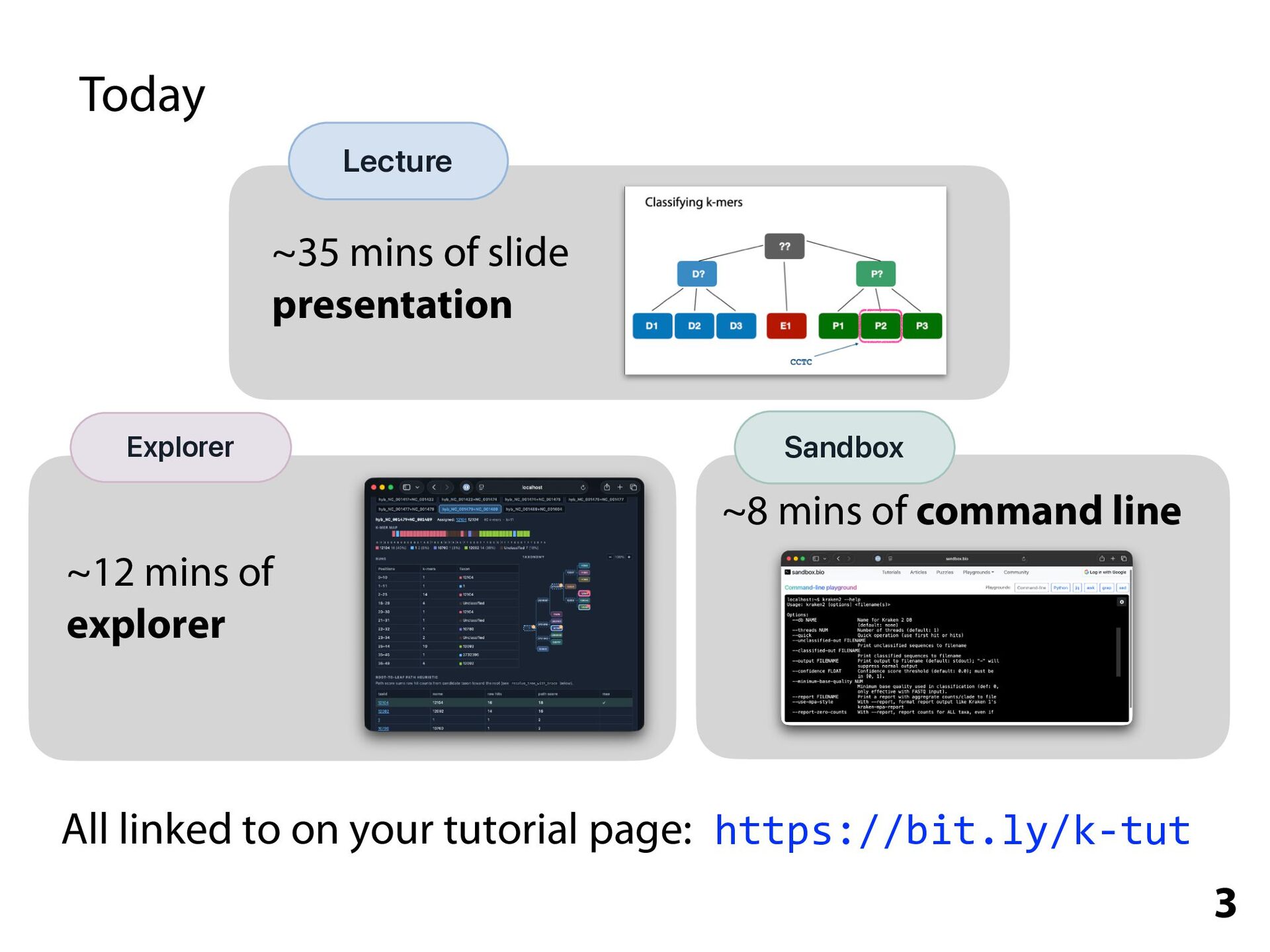
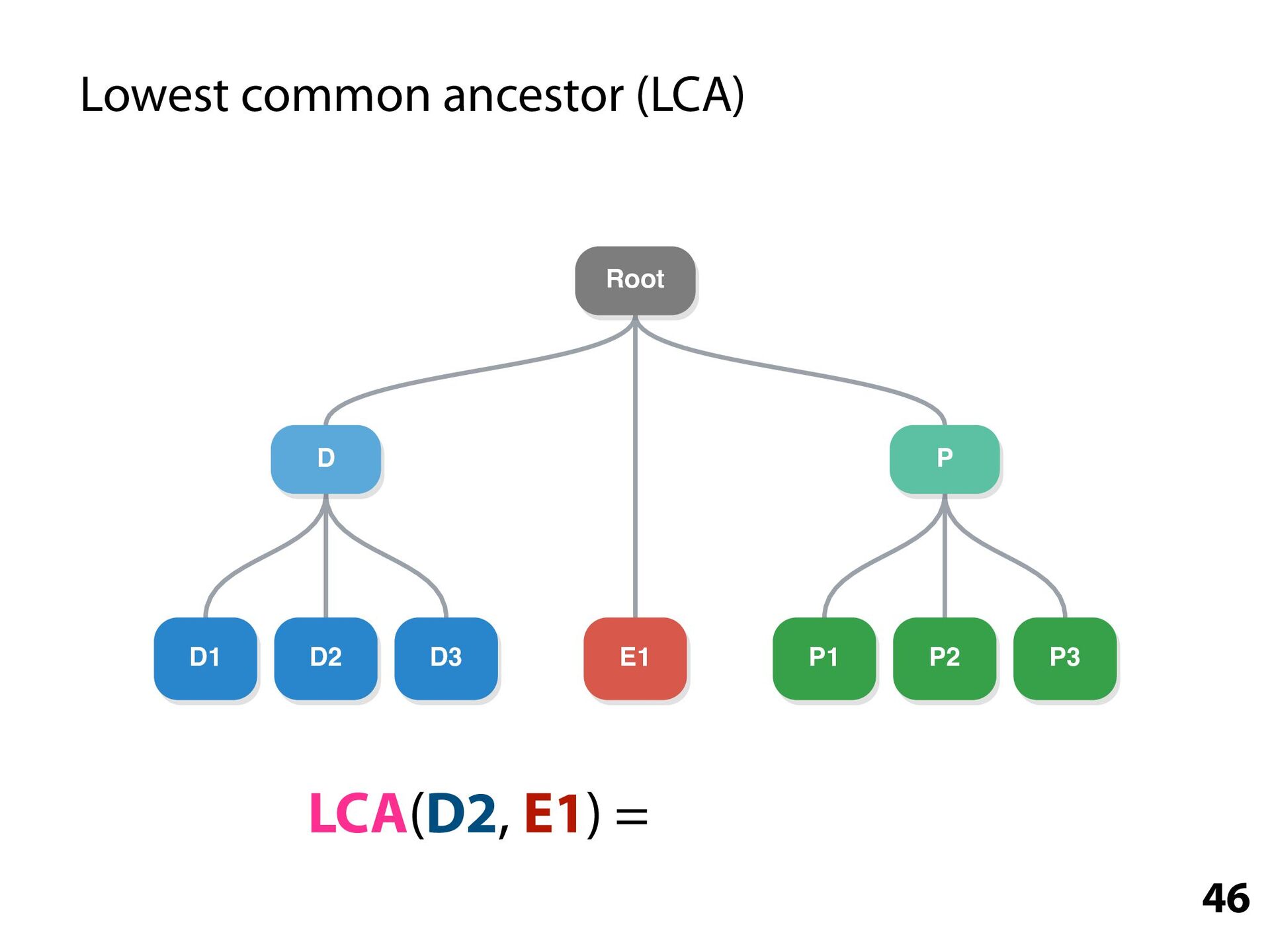
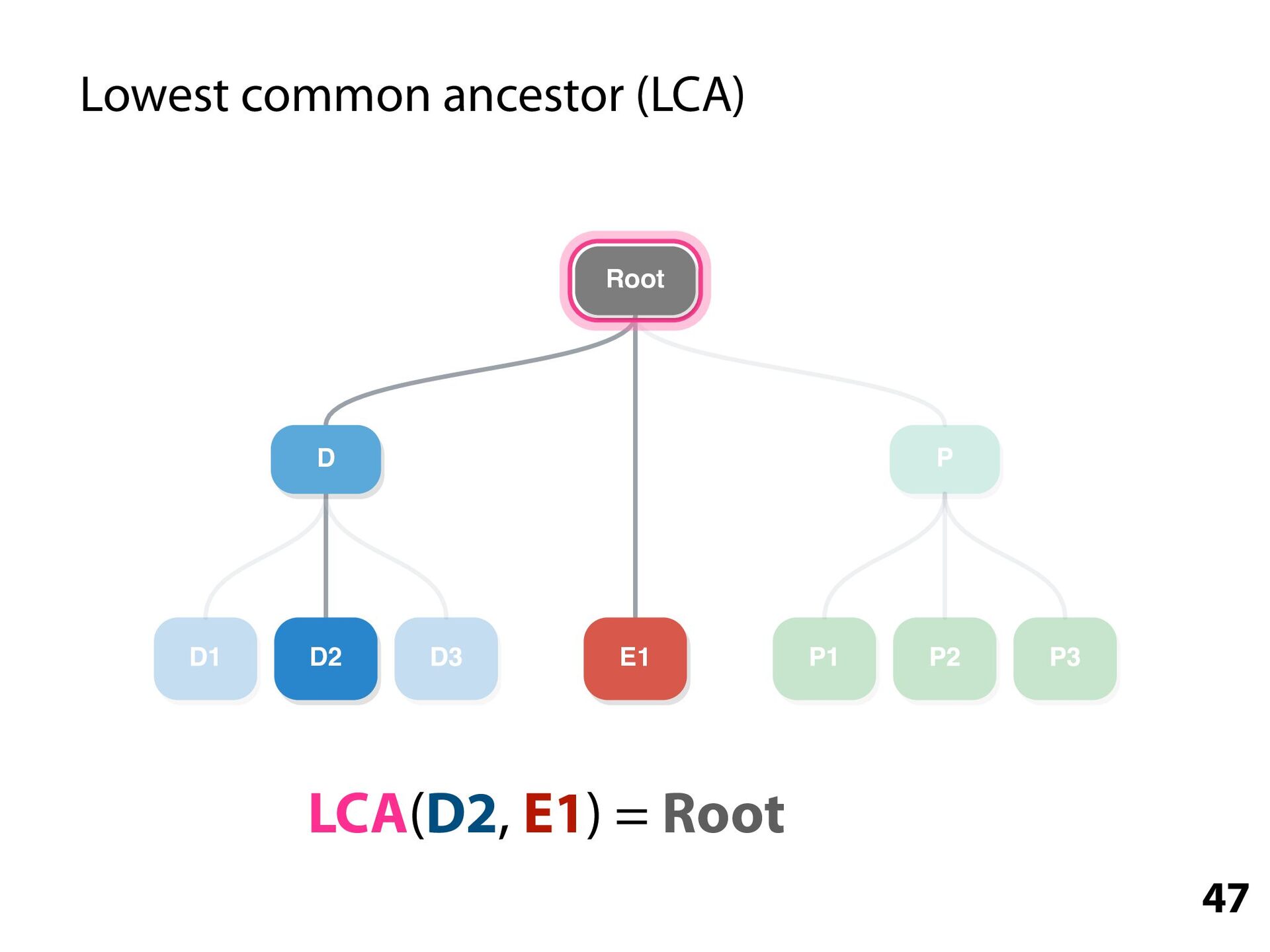
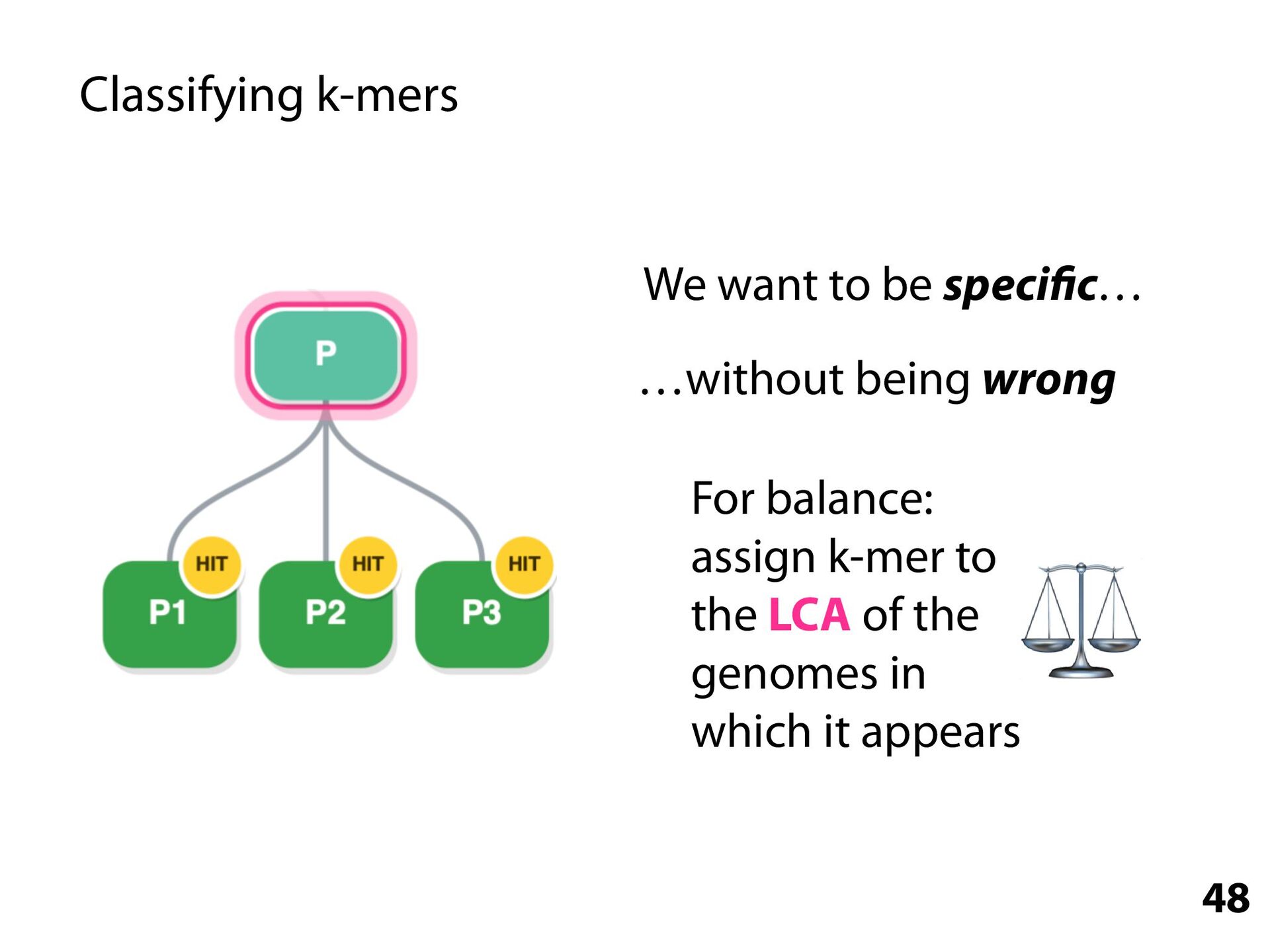
A tutorial on taxonomic classification with the Kraken suite, given at an ISMB 2026 tutorial session on July 12, 2026 at the Washington Hilton in Washington DC.
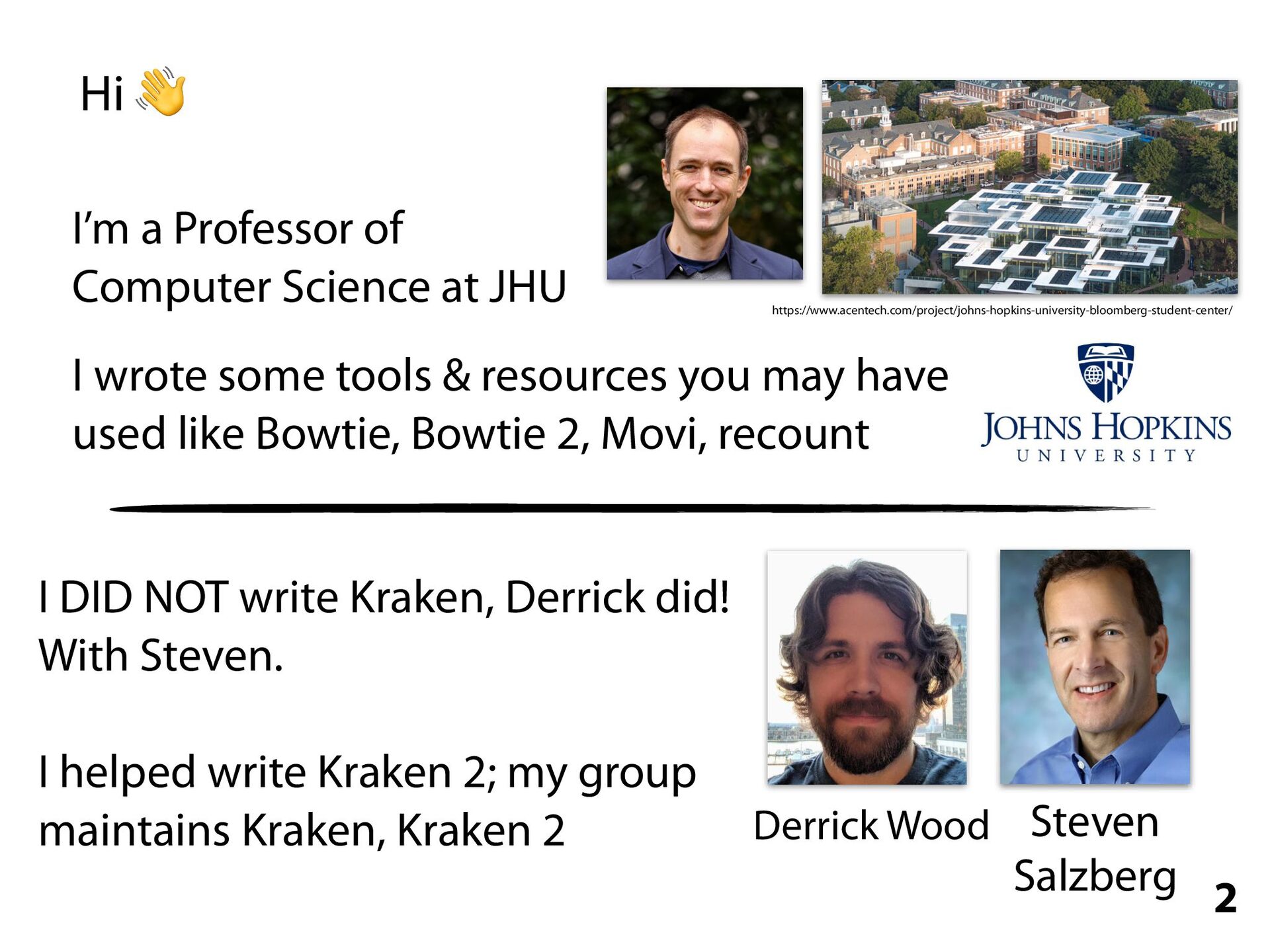
JHU I wrote some tools & resources you may have used like Bowtie, Bowtie 2, Movi, recount I DID NOT write Kraken, Derrick did! With Steven. I helped write Kraken 2; my group maintains Kraken, Kraken 2 Derrick Wood Steven Salzberg https://www.acentech.com/project/johns-hopkins-university-bloomberg-student-center/
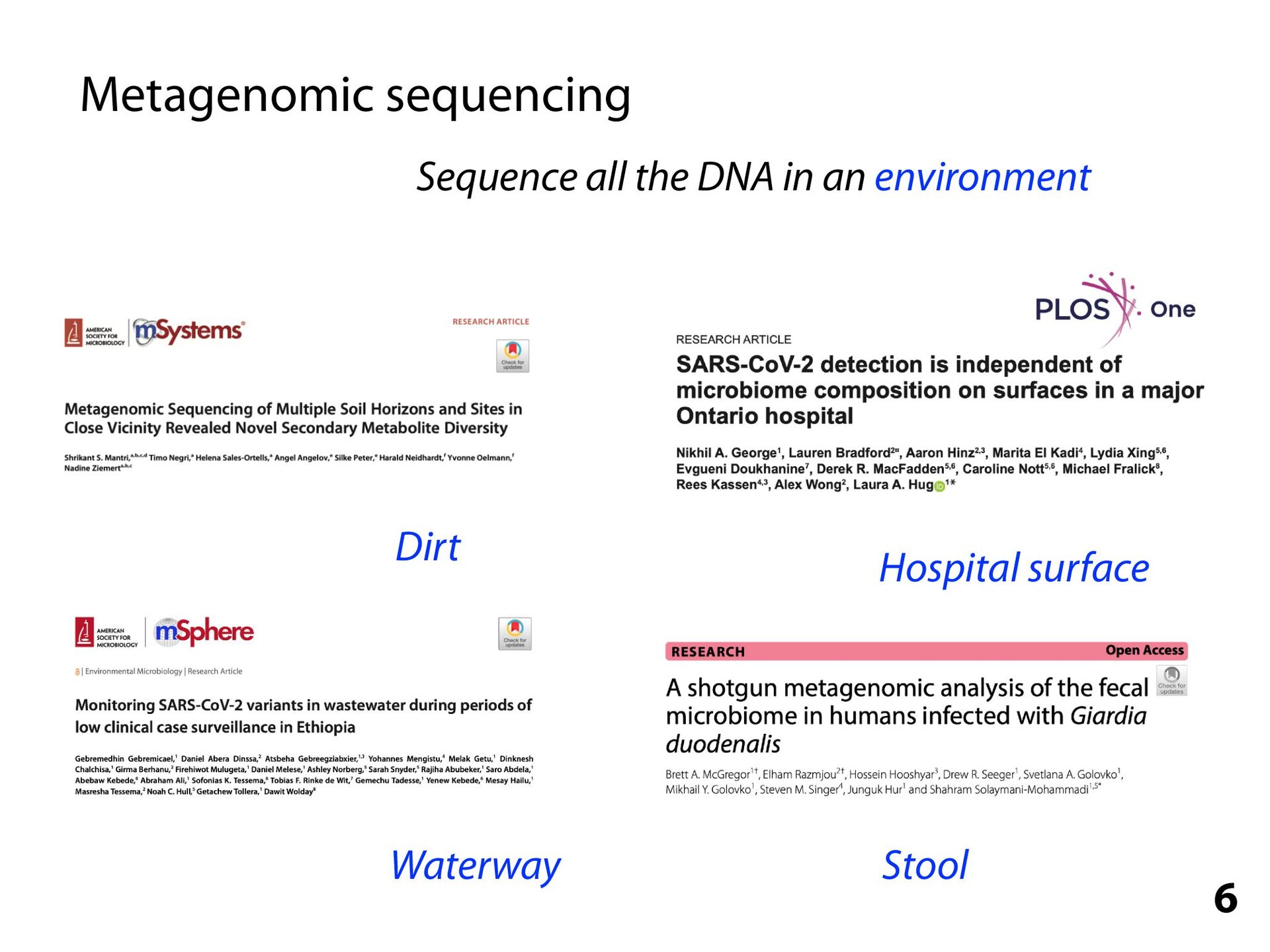
characterize biodiversity To detect pathogens and map their spread To screen for new antibiotics and understand microbial resistance To study “microbiomes” on or in humans that a ff ect our health 4
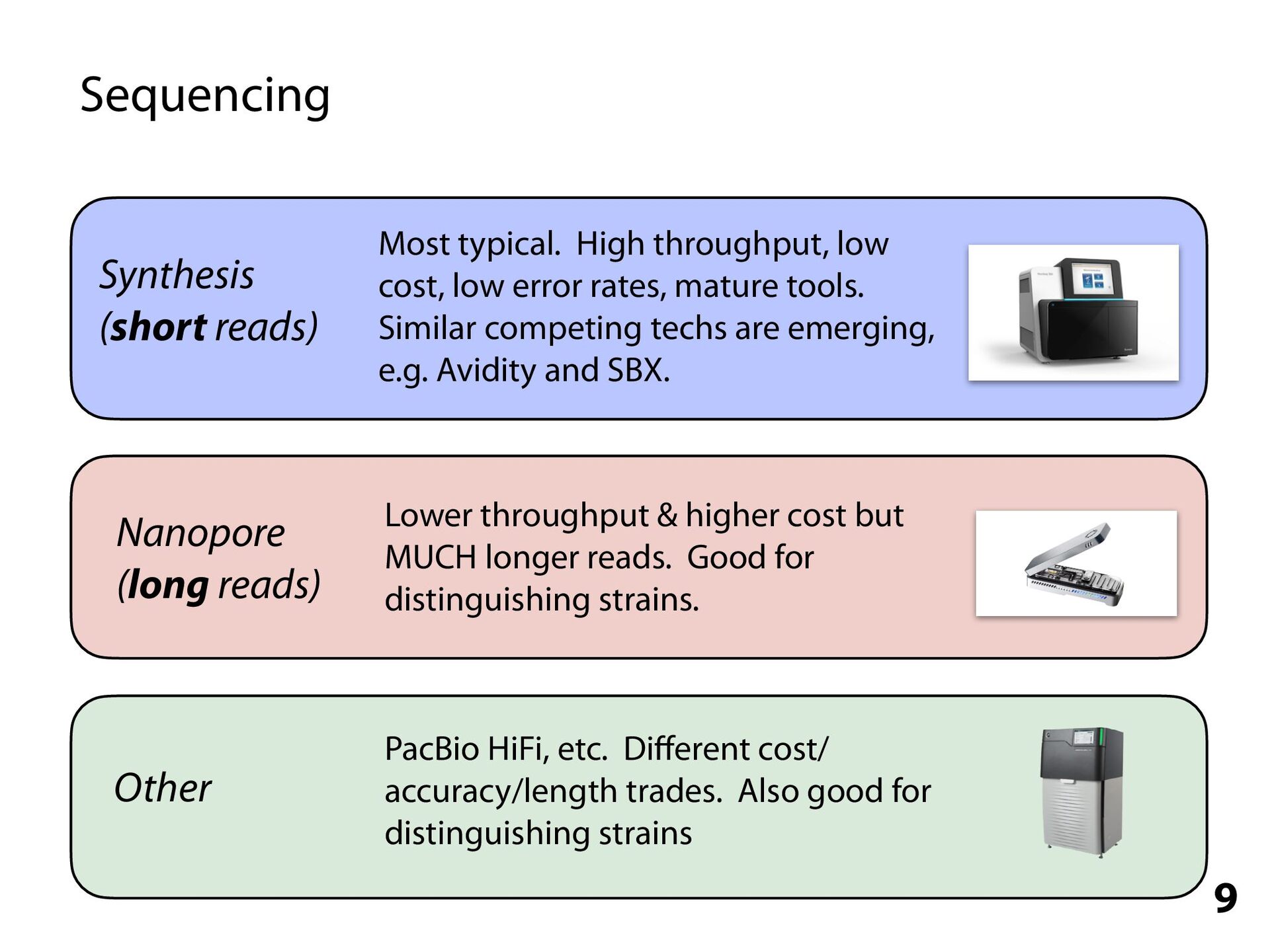
low error rates, mature tools. Similar competing techs are emerging, e.g. Avidity and SBX. Nanopore (long reads) Lower throughput & higher cost but MUCH longer reads. Good for distinguishing strains. Other PacBio HiFi, etc. Di ff erent cost/ accuracy/length trades. Also good for distinguishing strains 9
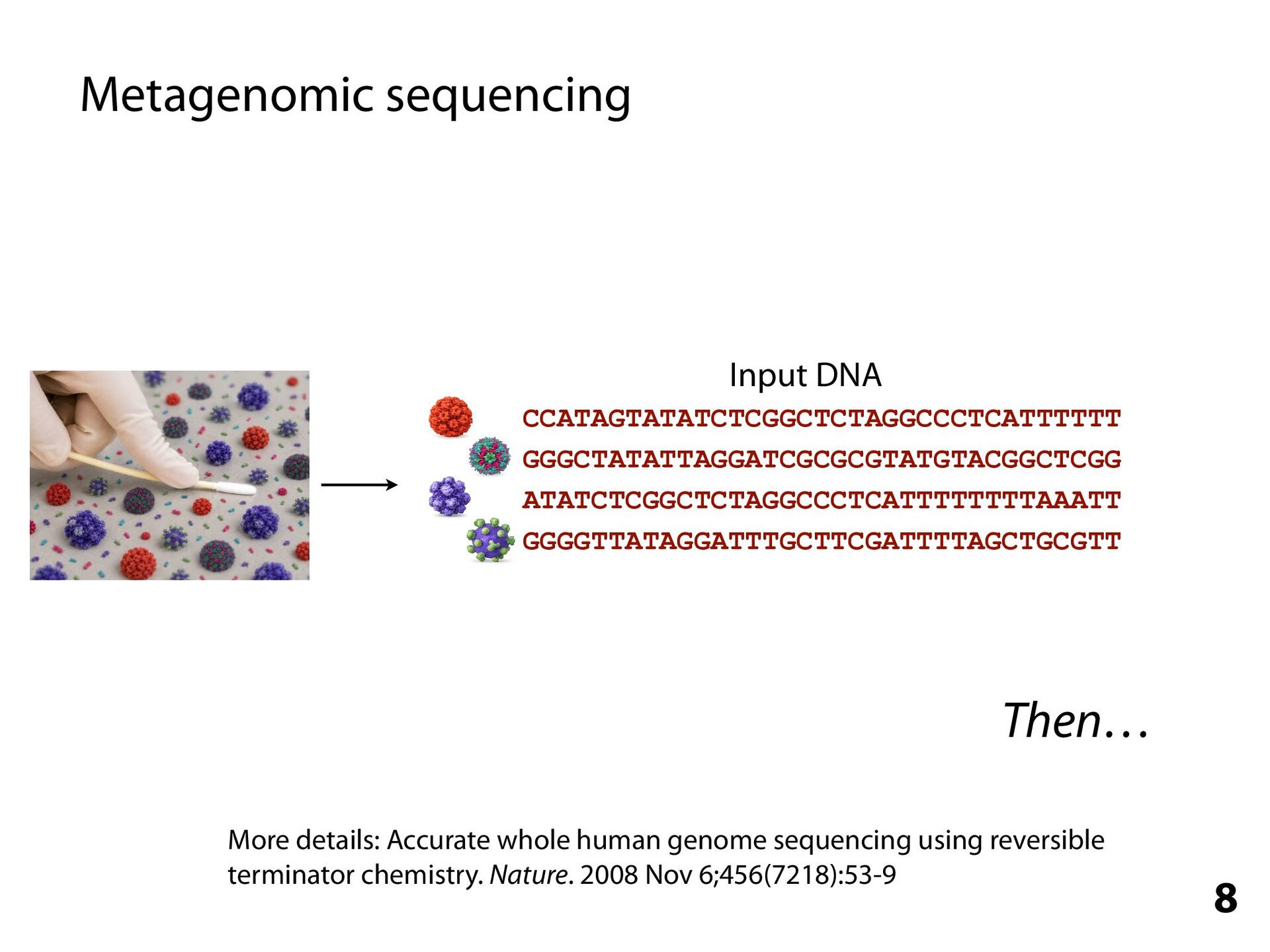
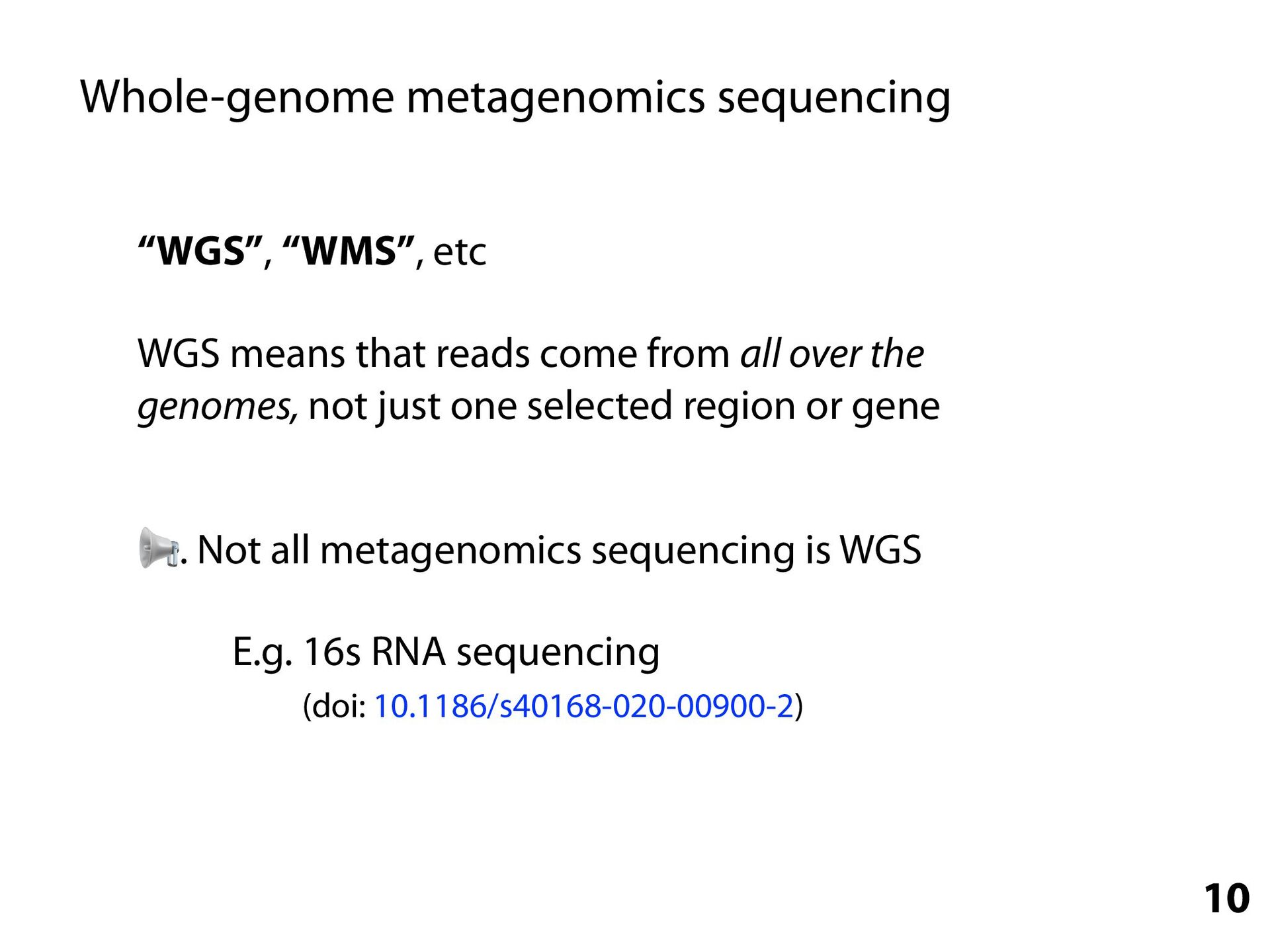
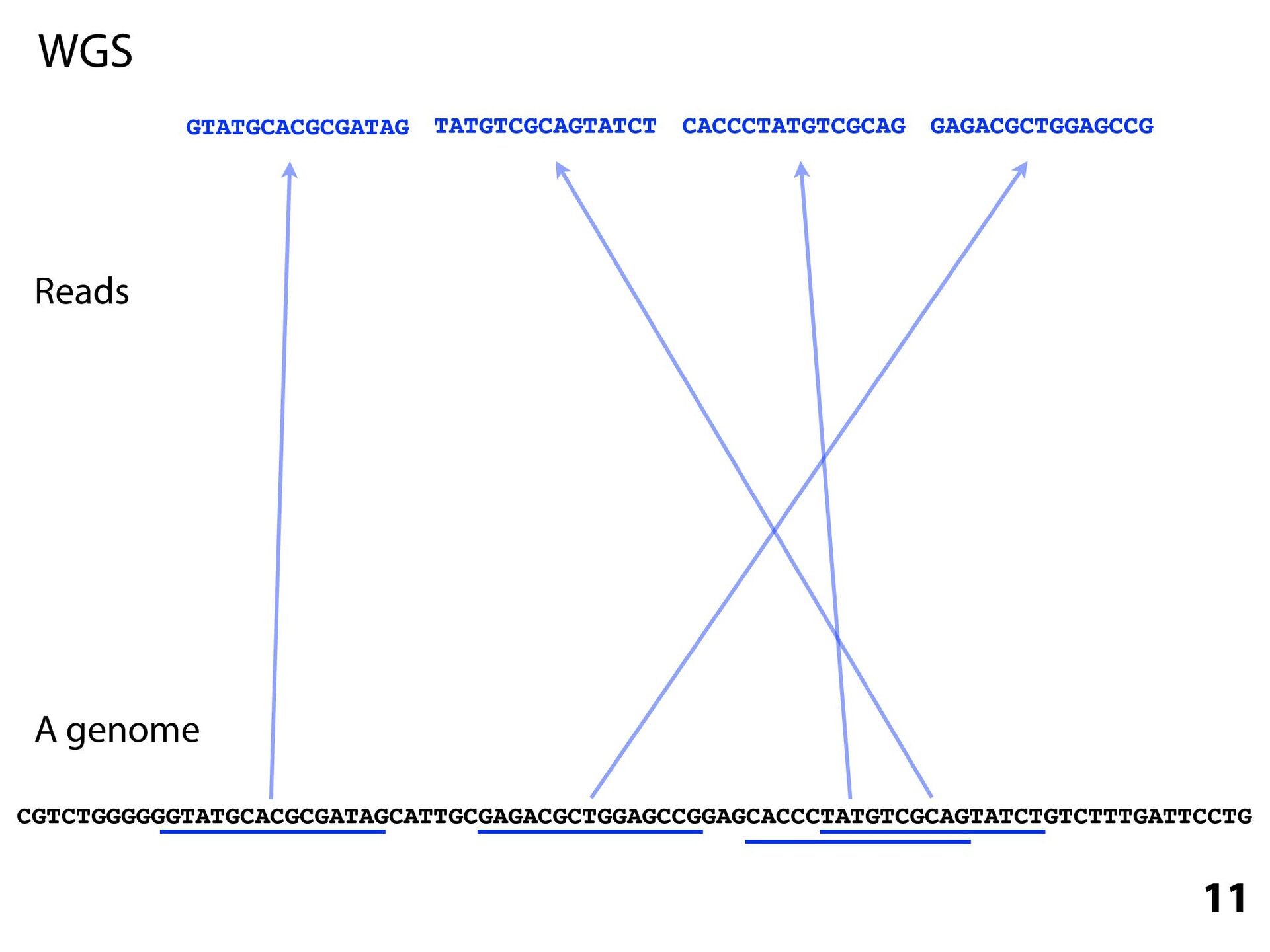
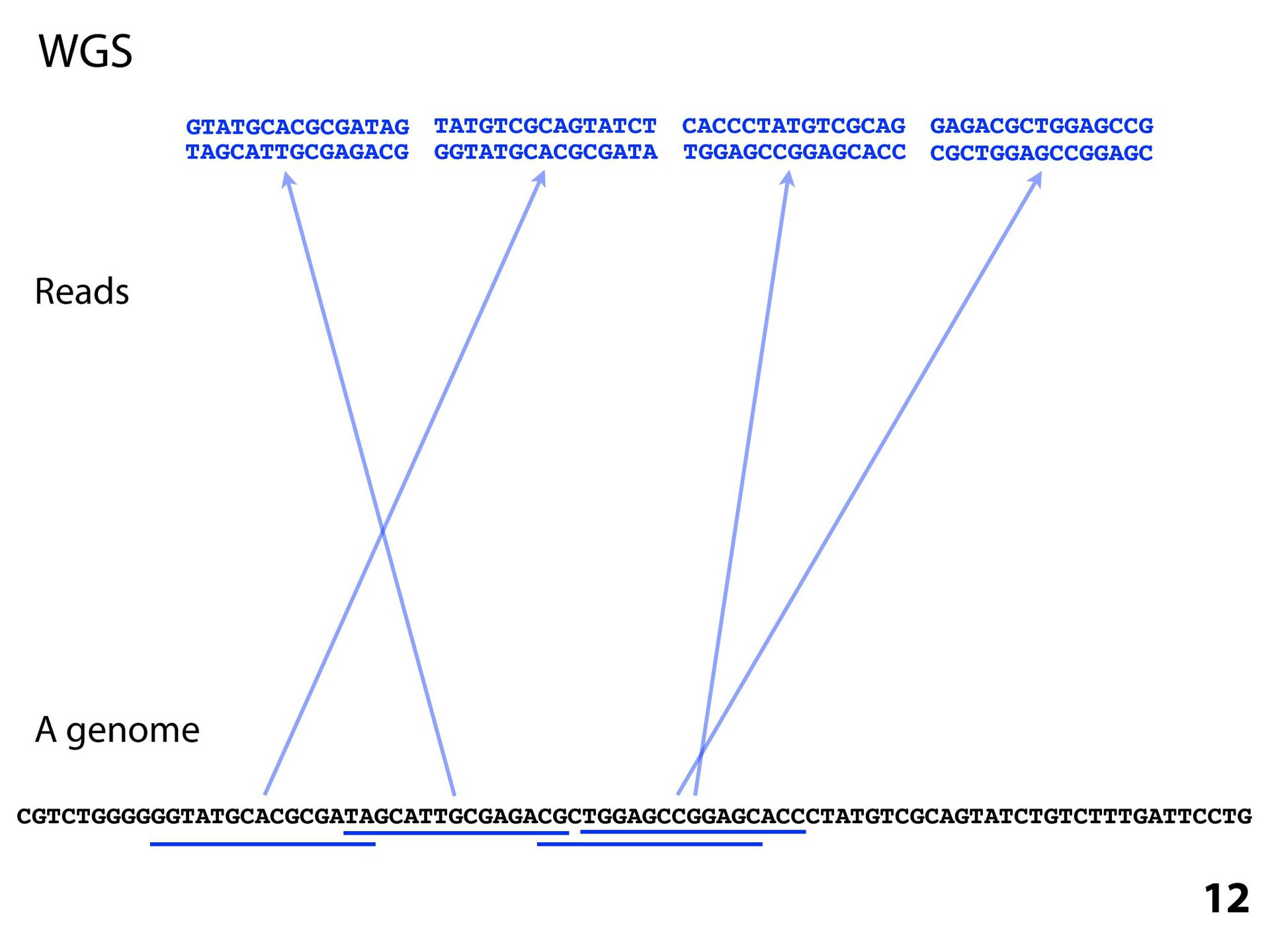
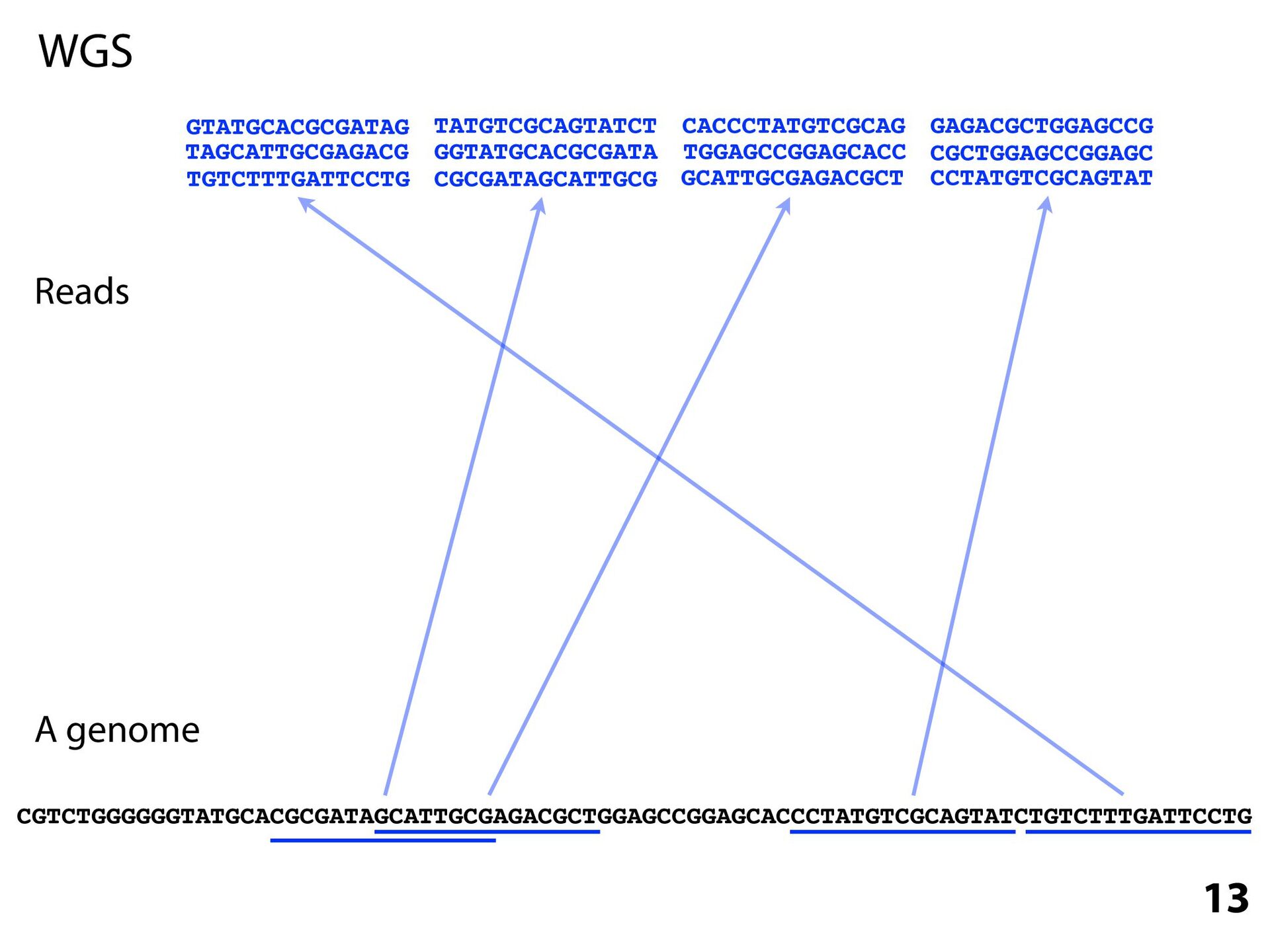
come from all over the genomes, not just one selected region or gene 📢. Not all metagenomics sequencing is WGS E.g. 16s RNA sequencing (doi: 10.1186/s40168-020-00900-2) 10
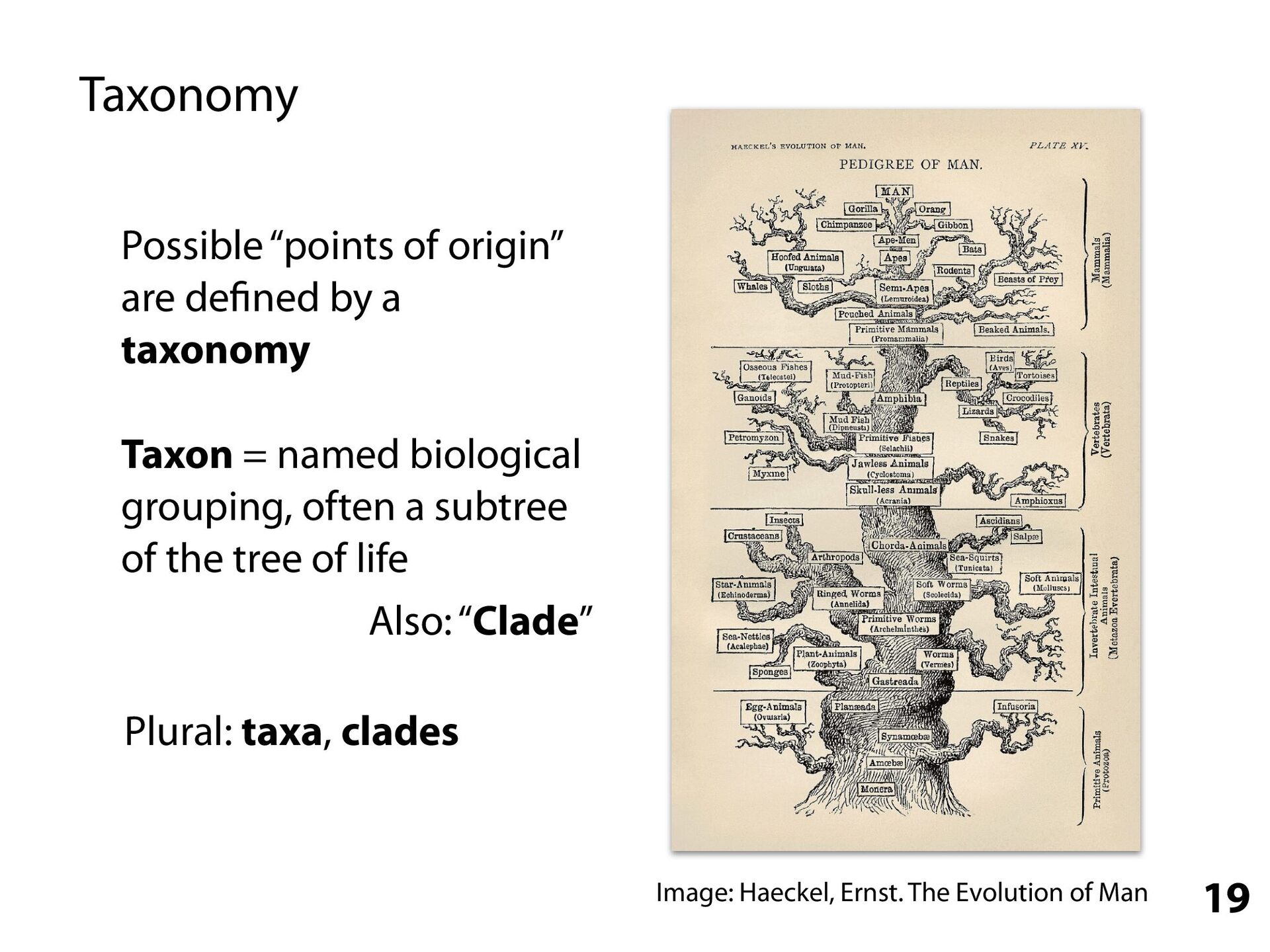
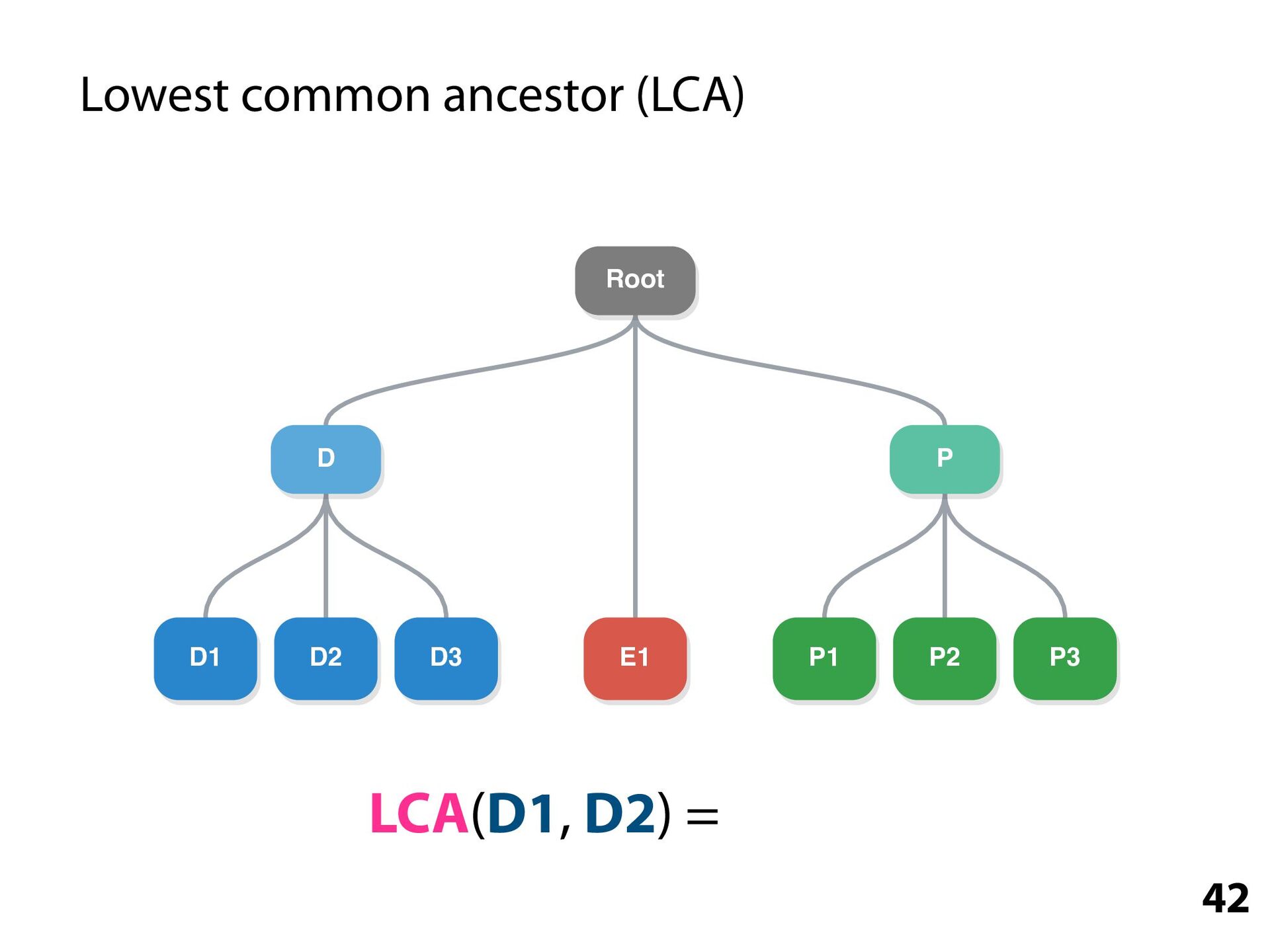
a taxonomy Taxon = named biological grouping, often a subtree of the tree of life Also: “Clade” Plural: taxa, clades 19 Image: Haeckel, Ernst. The Evolution of Man
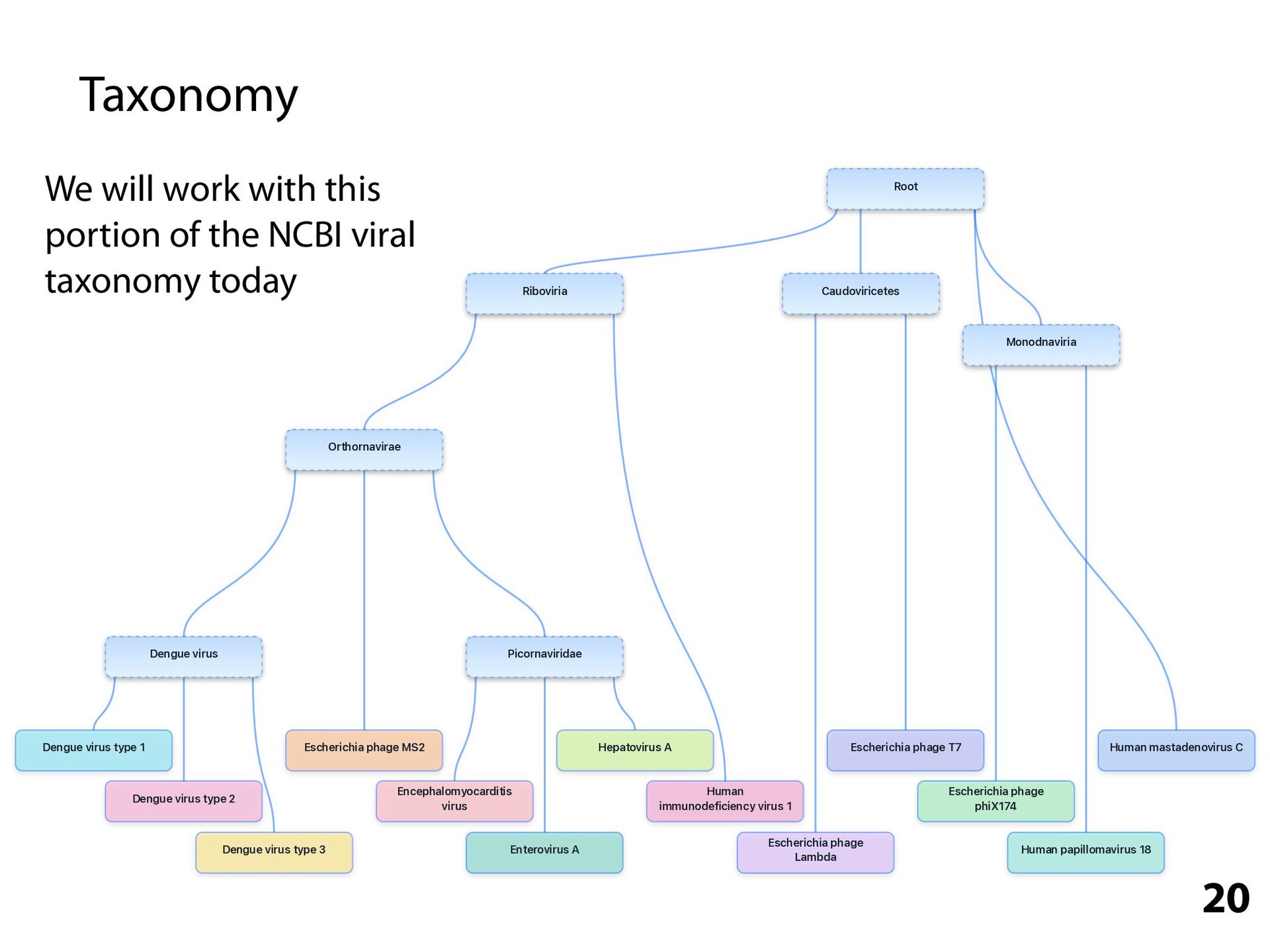
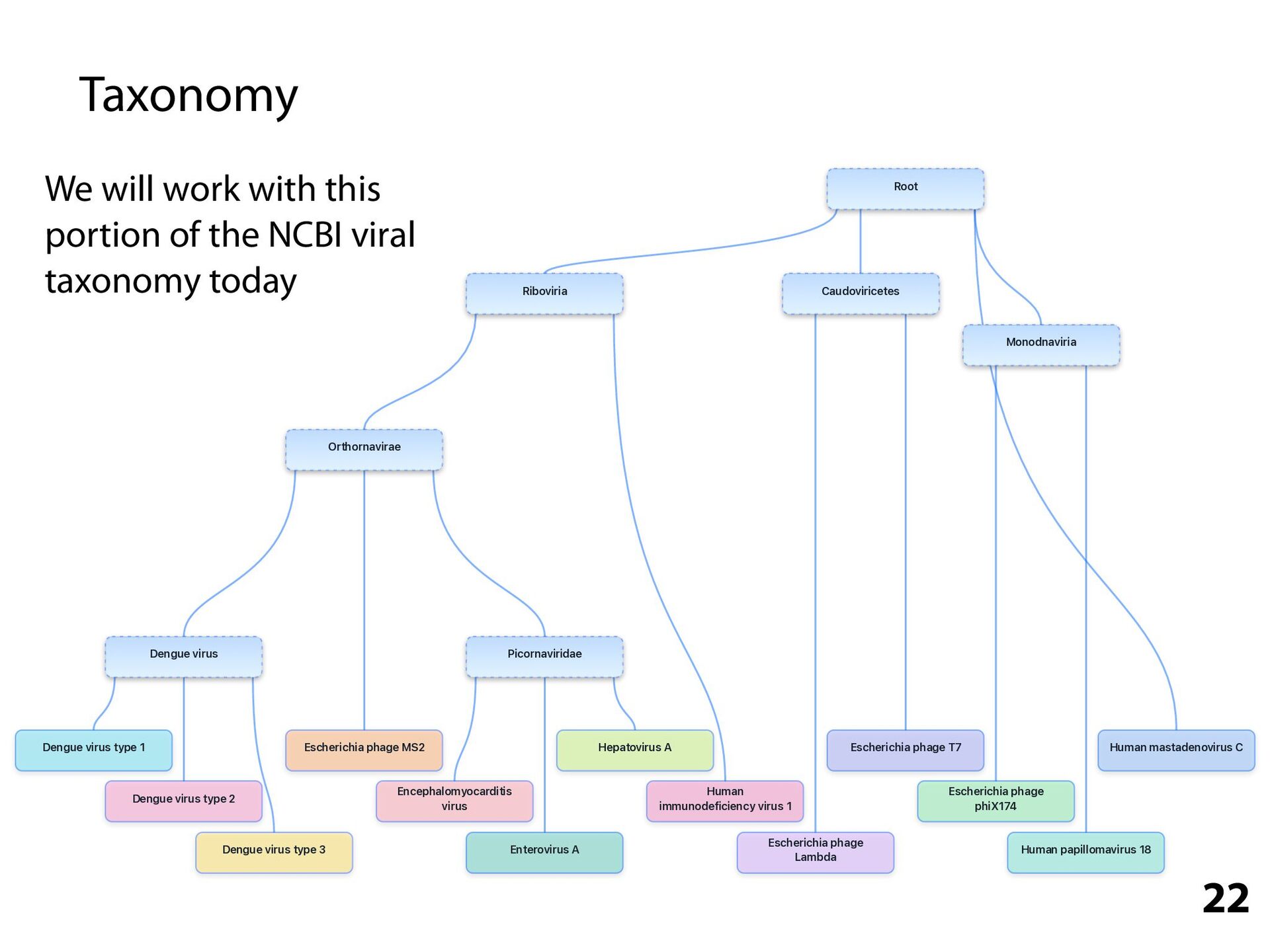
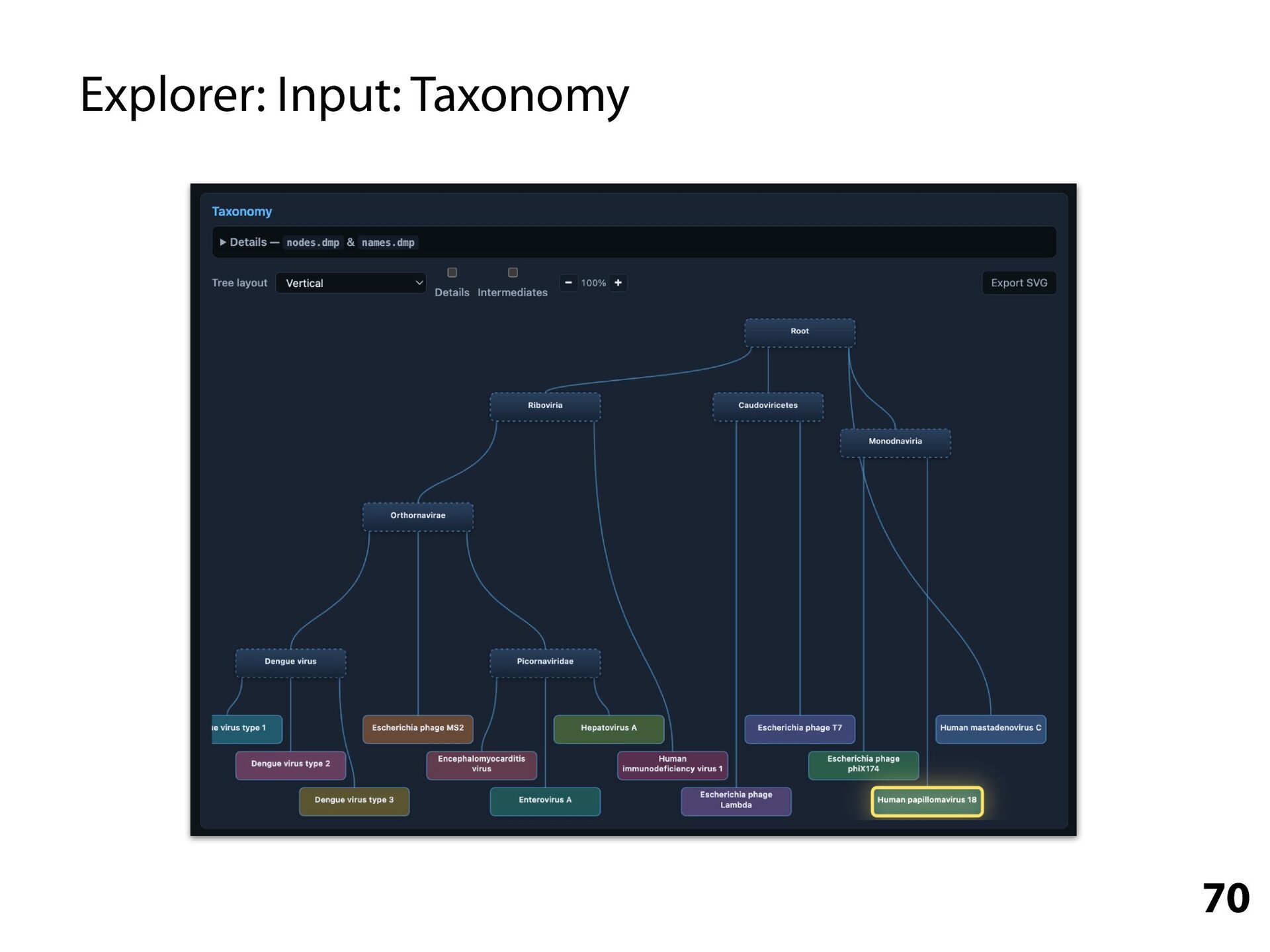
virus type 3 Dengue virus Escherichia phage MS2 Encephalomyocarditis virus Enterovirus A Hepatovirus A Picornaviridae Orthornavirae Human immunodeficiency virus 1 Riboviria Escherichia phage Lambda Escherichia phage T7 Caudoviricetes Escherichia phage phiX174 Human papillomavirus 18 Monodnaviria Human mastadenovirus C Root We will work with this portion of the NCBI viral taxonomy today 20
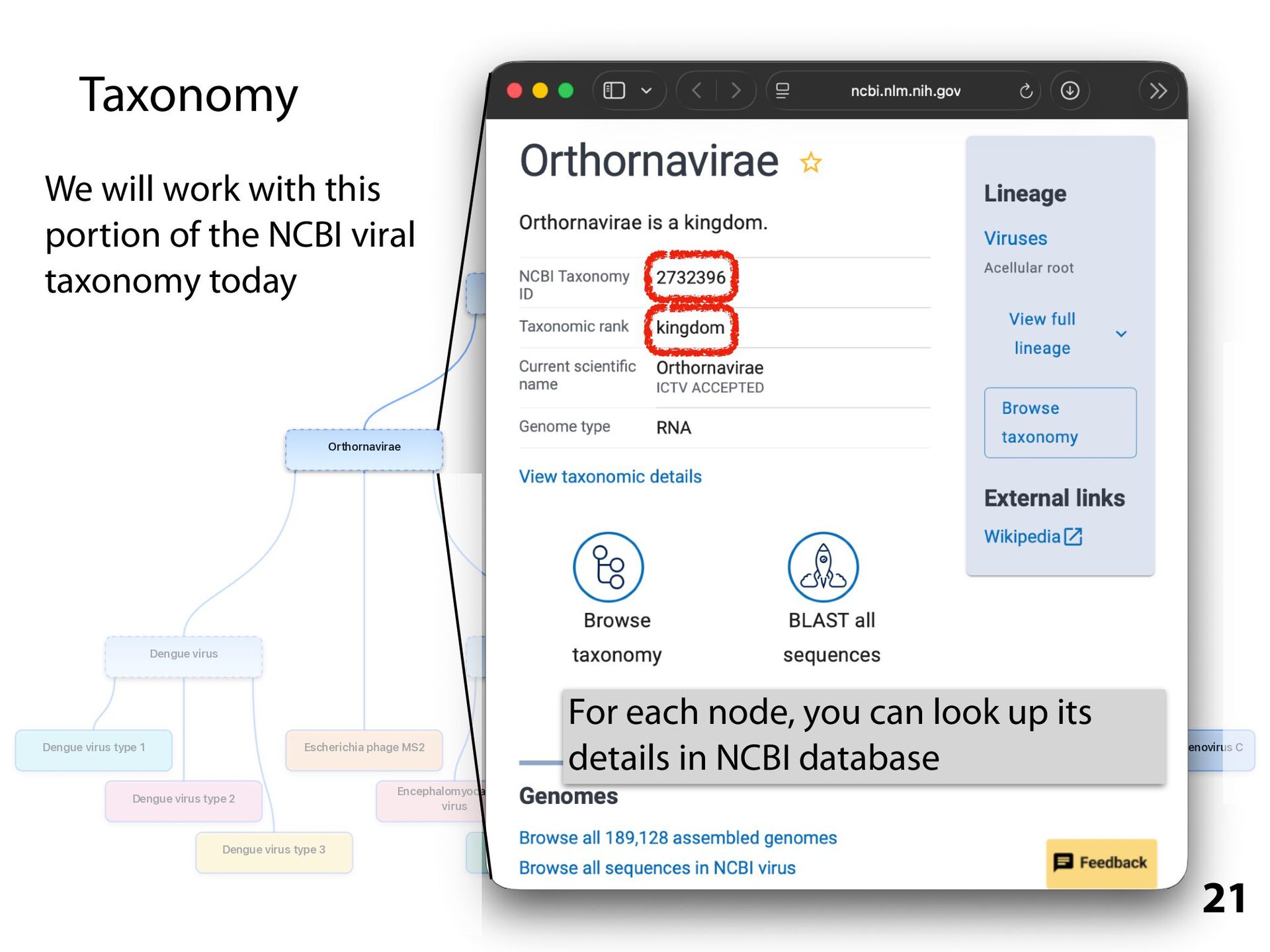
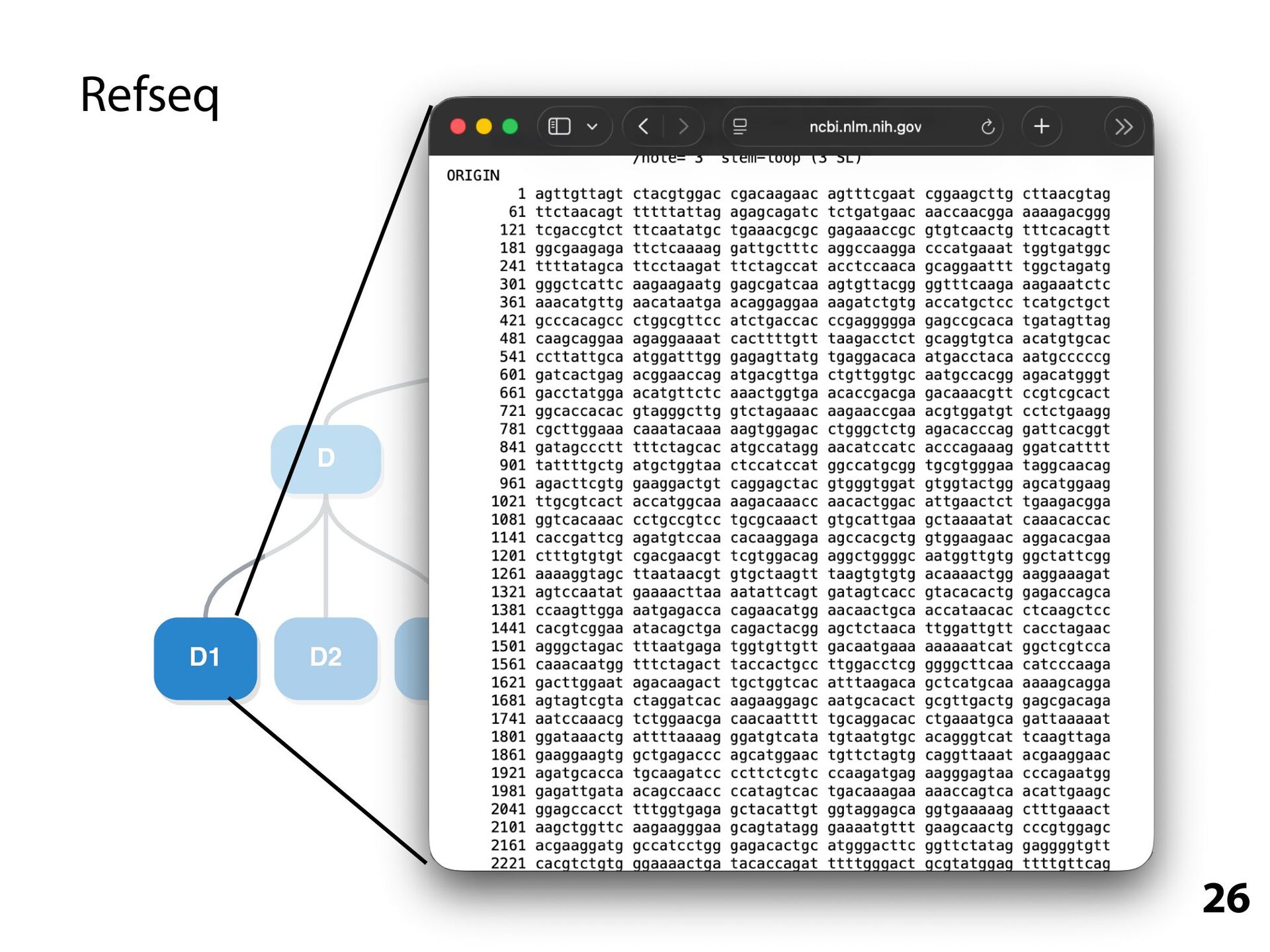
virus type 3 Dengue virus Escherichia phage MS2 Encephalomyocarditis virus Enterovirus A Hepatovirus A Picornaviridae Orthornavirae Human immunodeficiency virus 1 Riboviria Escherichia phage Lambda Escherichia phage T7 Caudoviricetes Escherichia phage phiX174 Human papillomavirus 18 Monodnaviria Human mastadenovirus C Root For each node, you can look up its details in NCBI database We will work with this portion of the NCBI viral taxonomy today 21
virus type 3 Dengue virus Escherichia phage MS2 Encephalomyocarditis virus Enterovirus A Hepatovirus A Picornaviridae Orthornavirae Human immunodeficiency virus 1 Riboviria Escherichia phage Lambda Escherichia phage T7 Caudoviricetes Escherichia phage phiX174 Human papillomavirus 18 Monodnaviria Human mastadenovirus C Root We will work with this portion of the NCBI viral taxonomy today 22
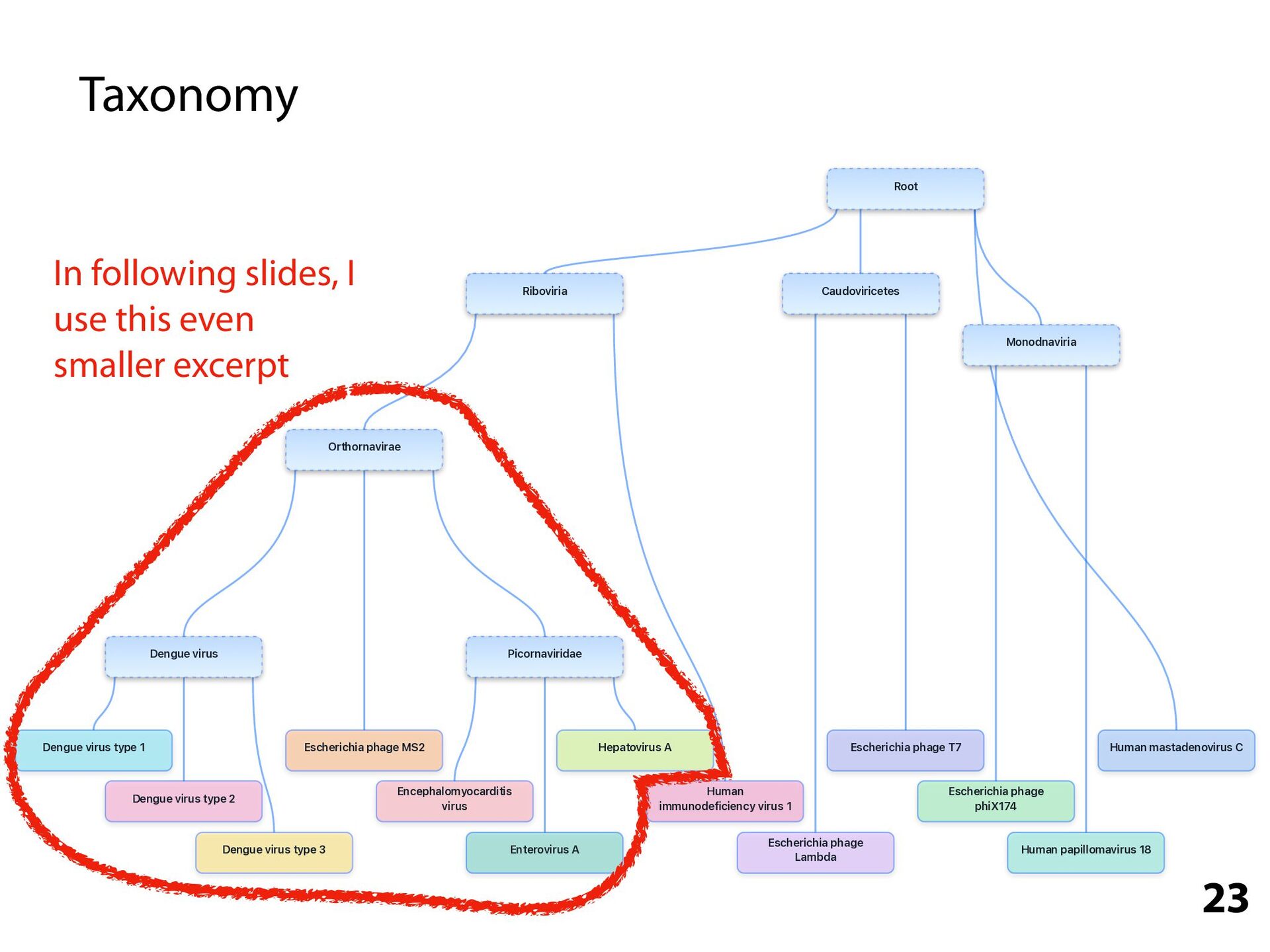
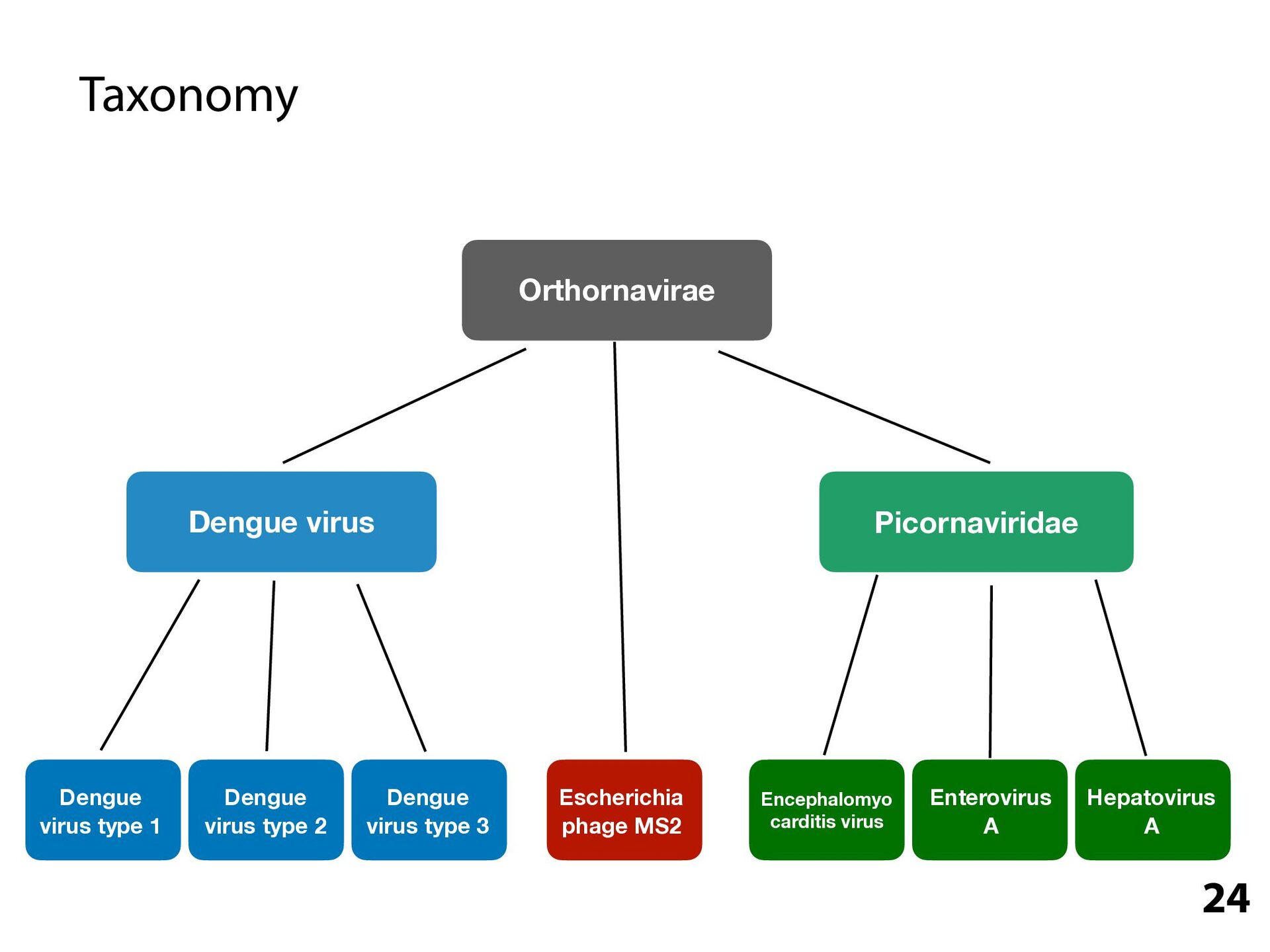
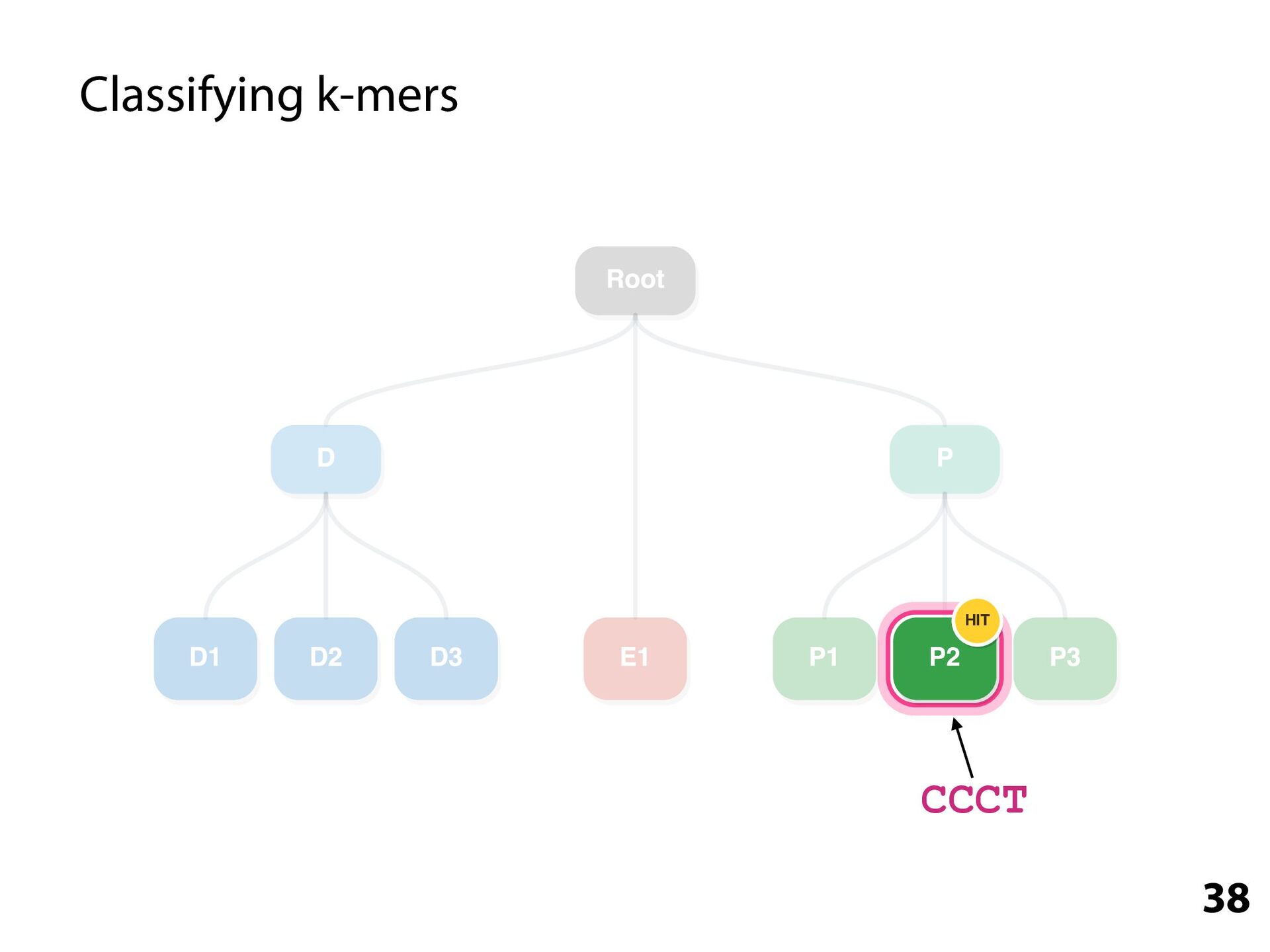
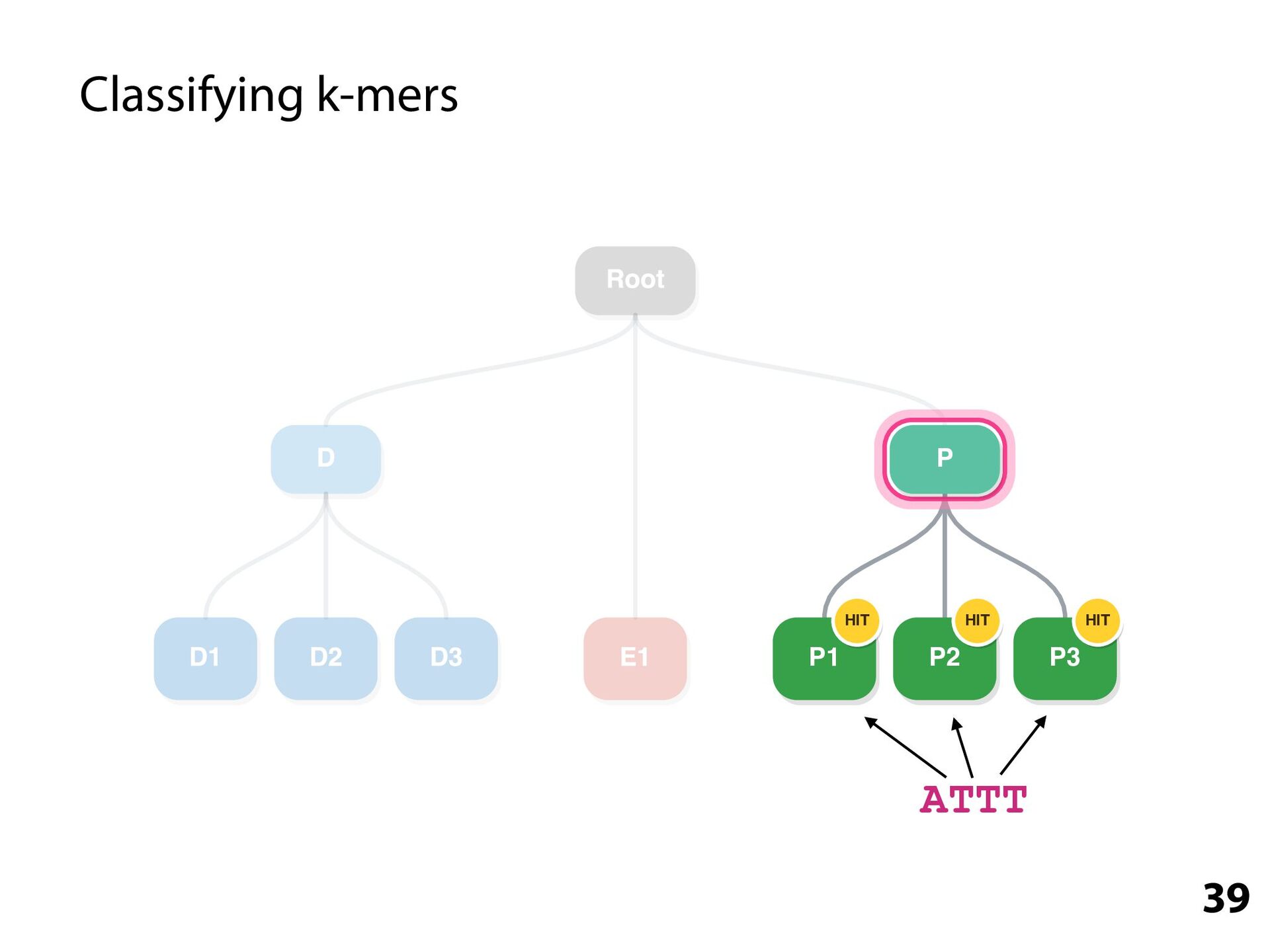
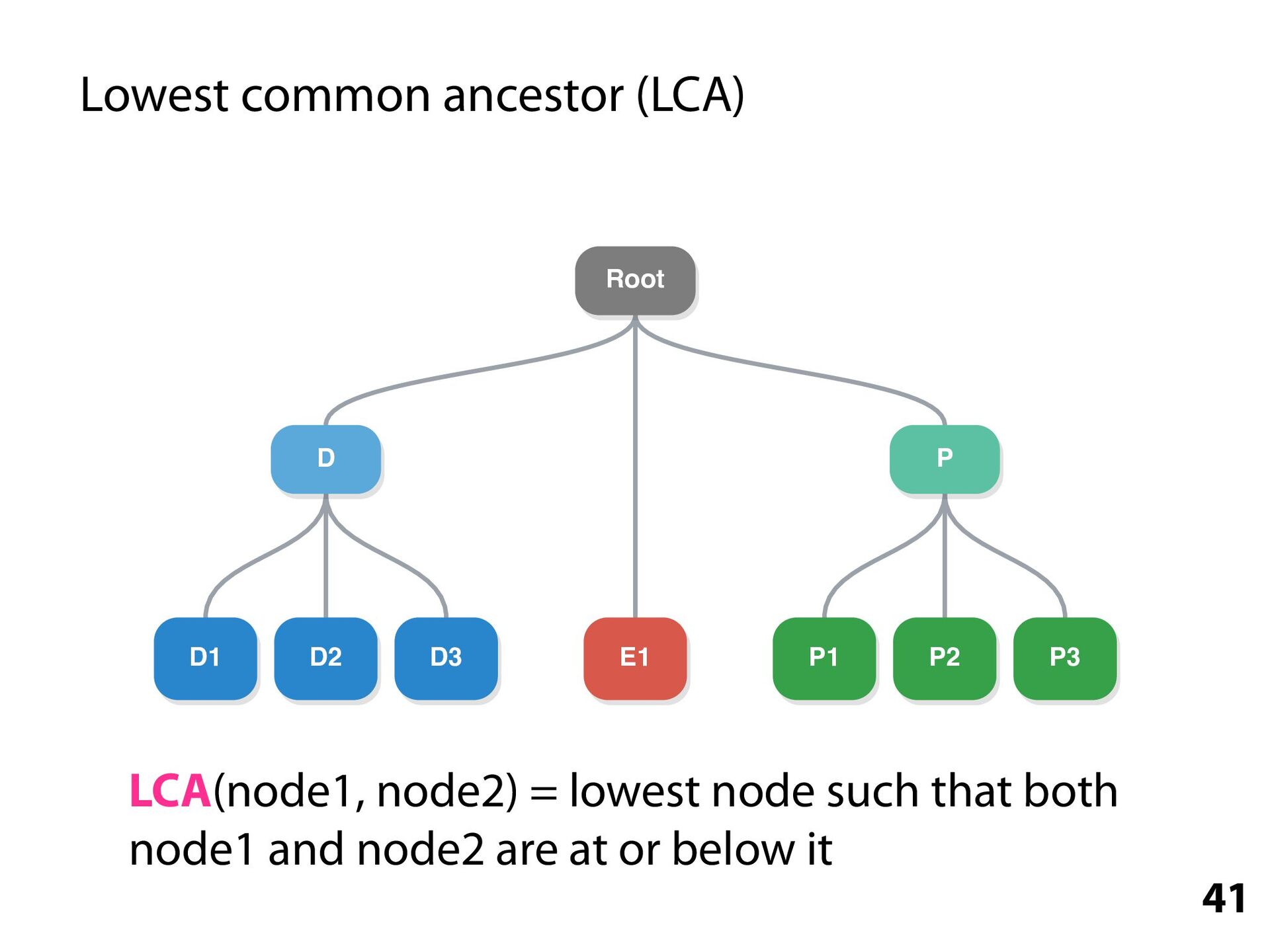
virus type 3 Dengue virus Escherichia phage MS2 Encephalomyocarditis virus Enterovirus A Hepatovirus A Picornaviridae Orthornavirae Human immunodeficiency virus 1 Riboviria Escherichia phage Lambda Escherichia phage T7 Caudoviricetes Escherichia phage phiX174 Human papillomavirus 18 Monodnaviria Human mastadenovirus C Root In following slides, I use this even smaller excerpt 23
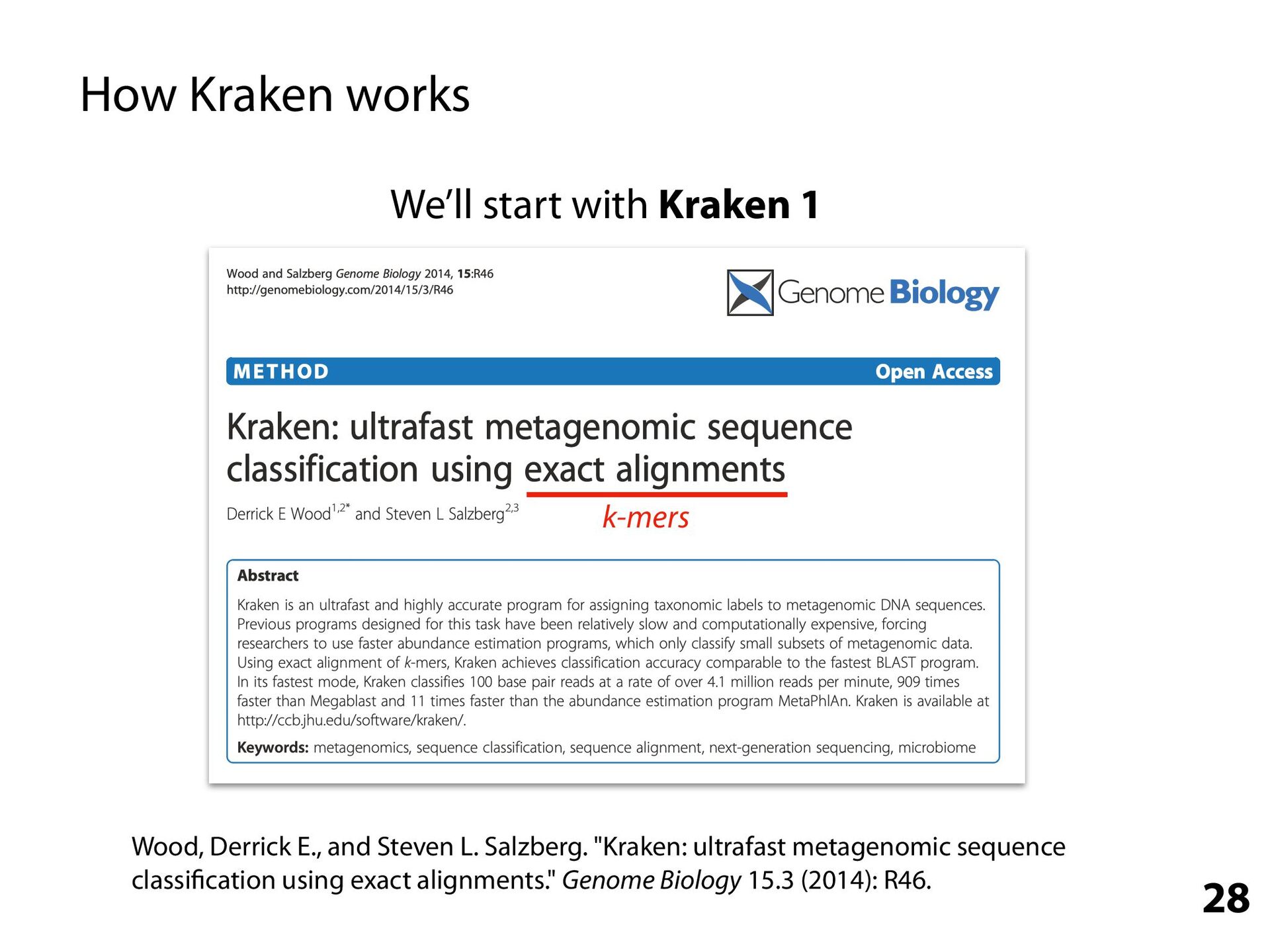
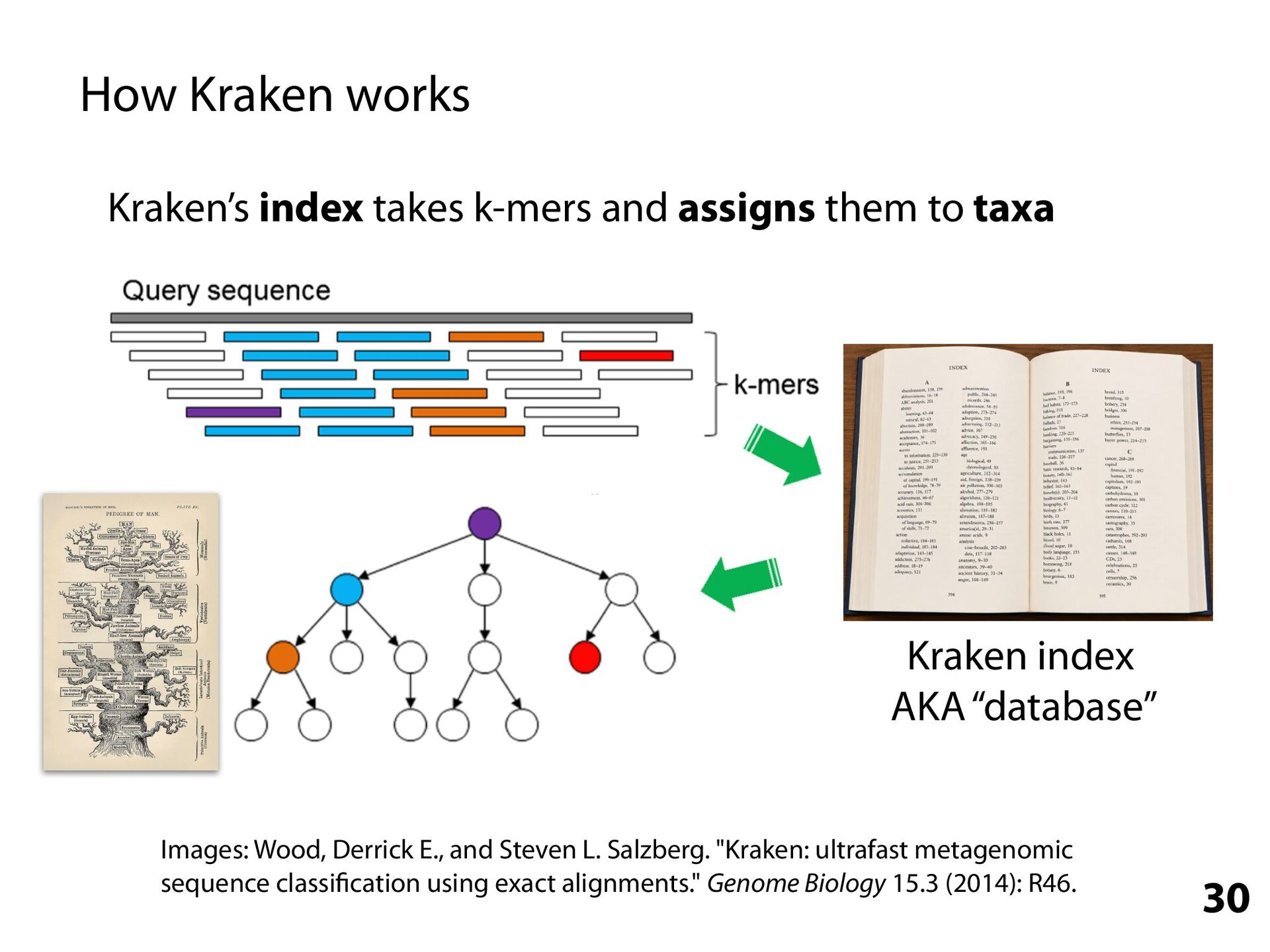
E., and Steven L. Salzberg. "Kraken: ultrafast metagenomic sequence classi fi cation using exact alignments." Genome Biology 15.3 (2014): R46. 28 k-mers
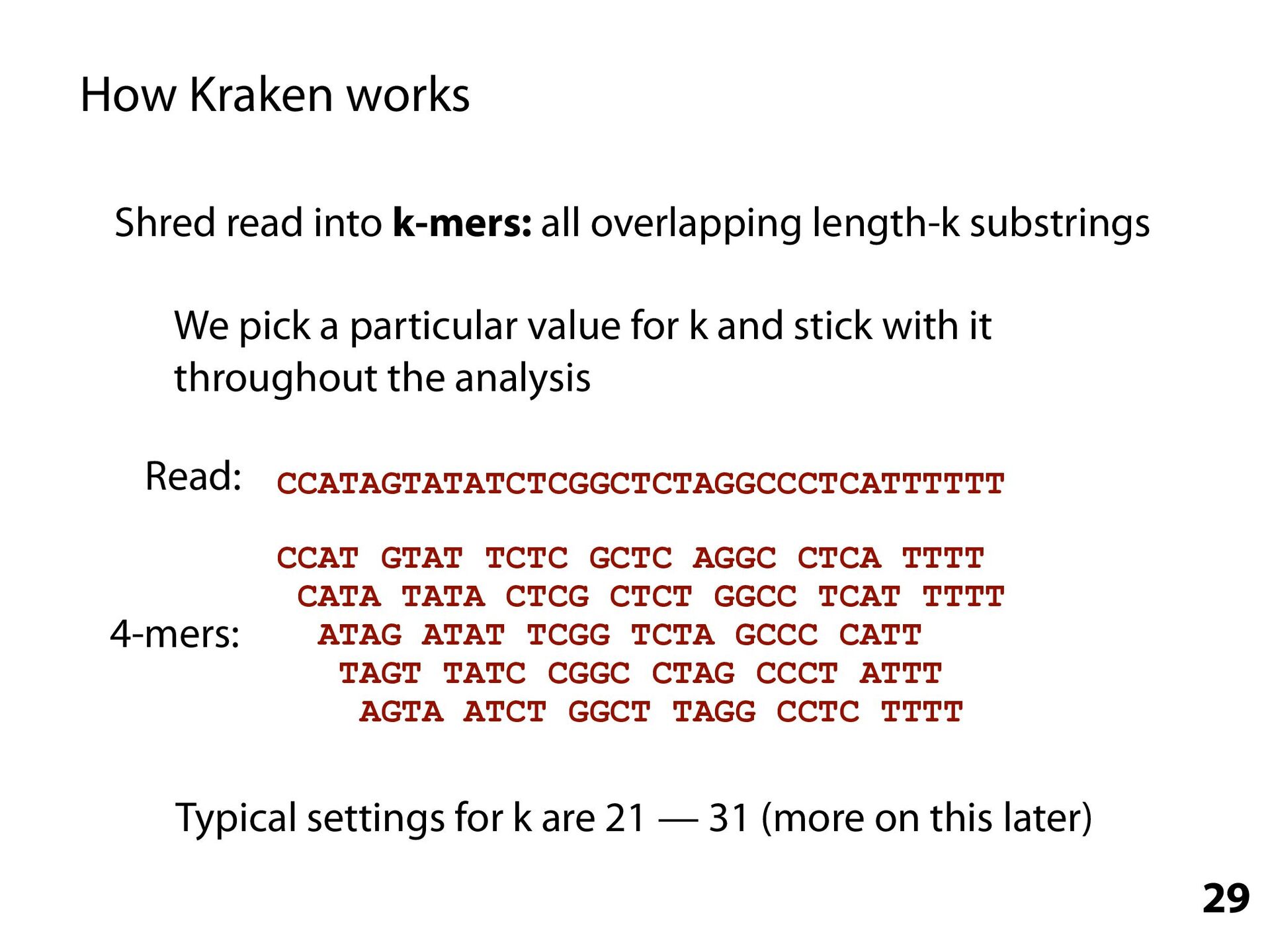
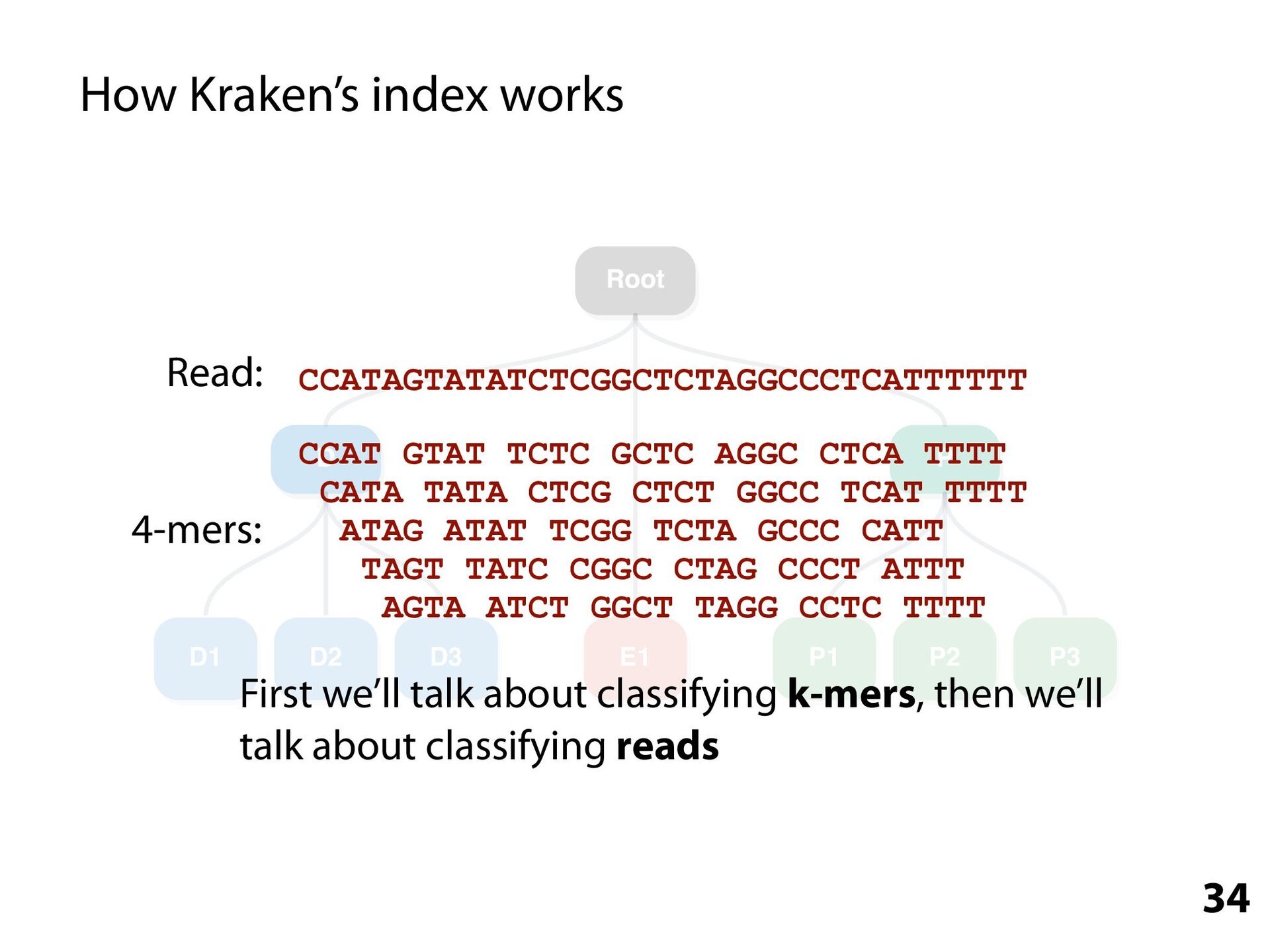
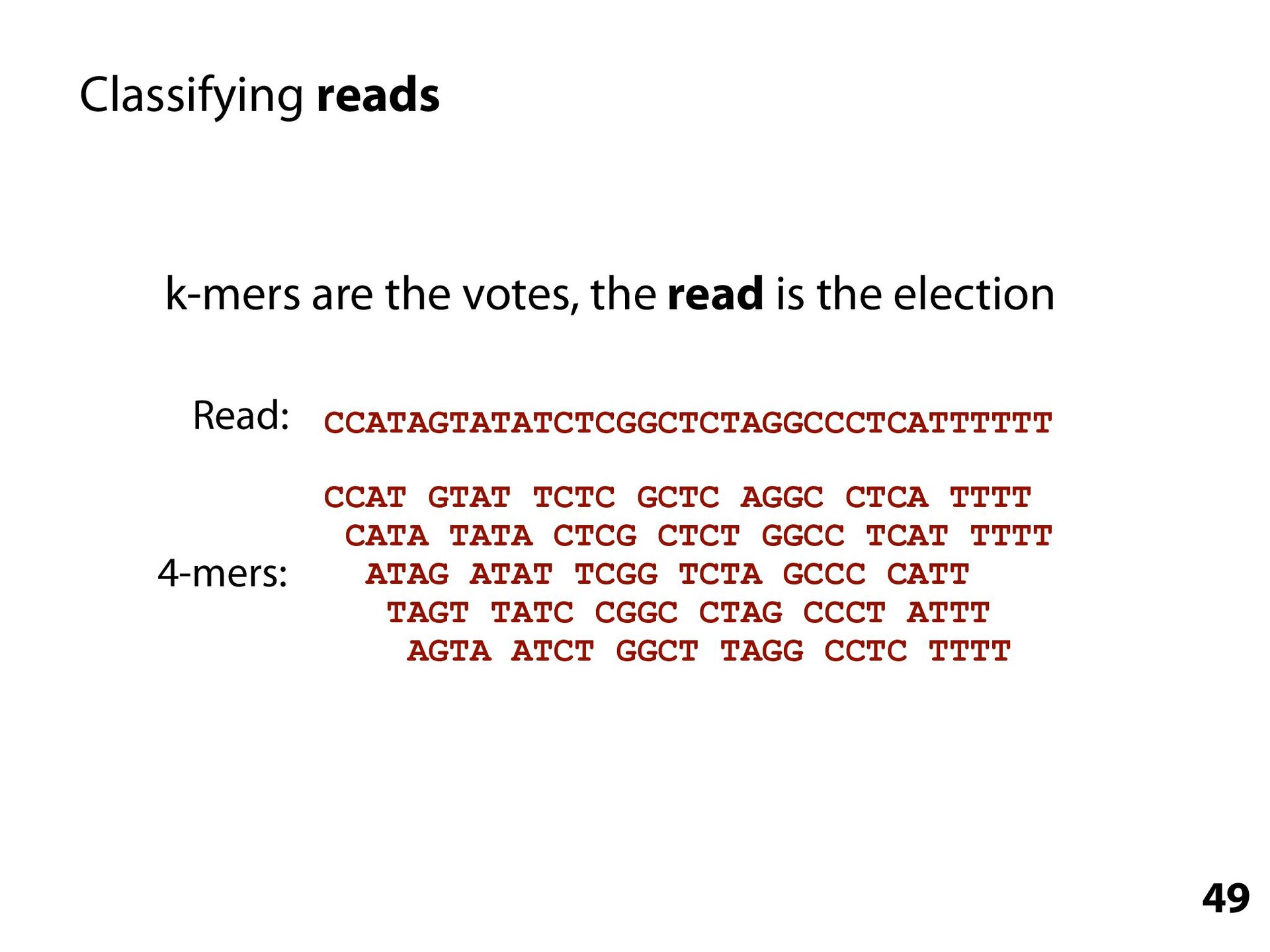
substrings We pick a particular value for k and stick with it throughout the analysis CCATAGTATATCTCGGCTCTAGGCCCTCATTTTTT CCAT GTAT TCTC GCTC AGGC CTCA TTTT CATA TATA CTCG CTCT GGCC TCAT TTTT ATAG ATAT TCGG TCTA GCCC CATT TAGT TATC CGGC CTAG CCCT ATTT AGTA ATCT GGCT TAGG CCTC TTTT Read: 4-mers: Typical settings for k are 21 — 31 (more on this later) 29
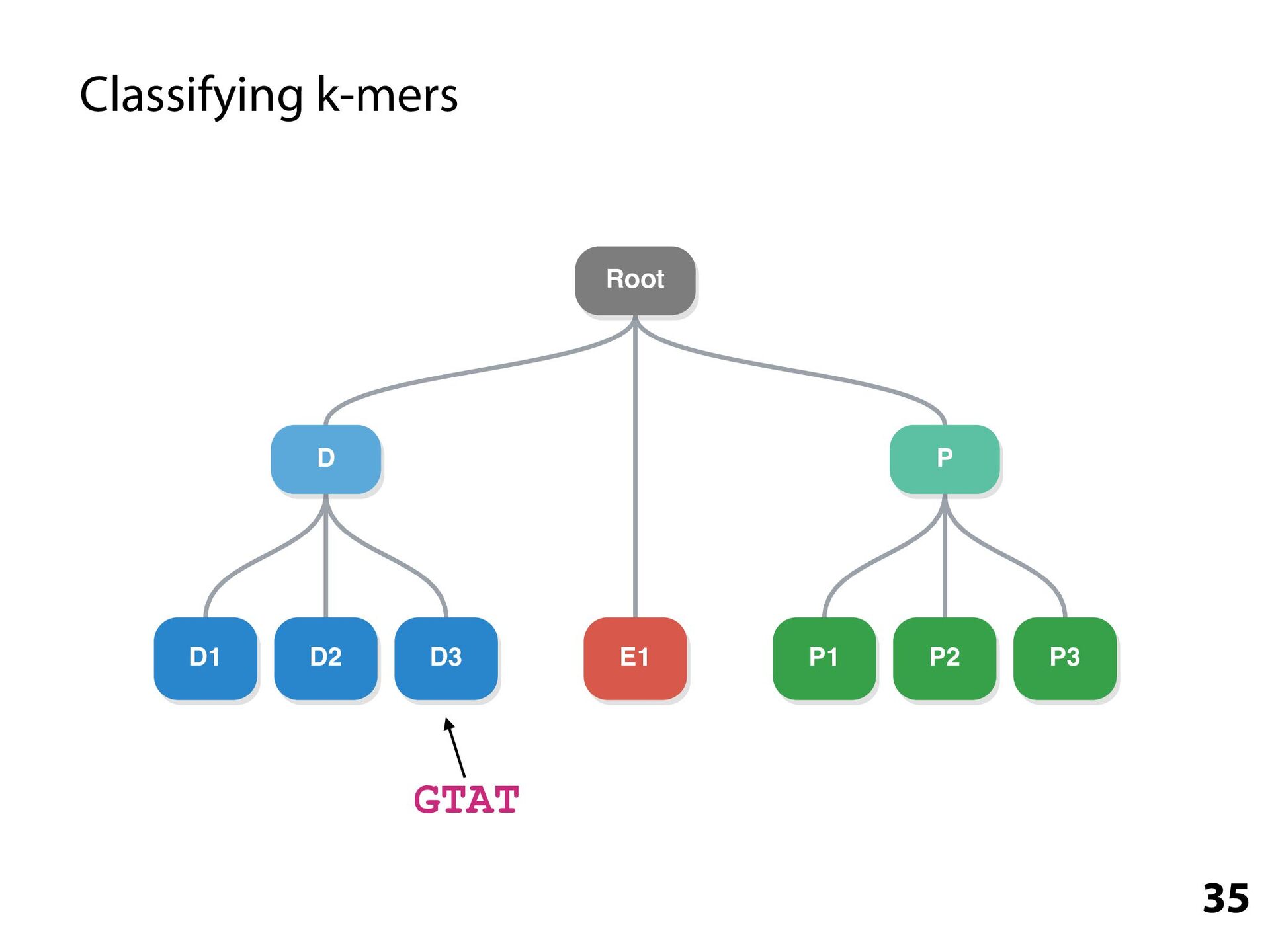
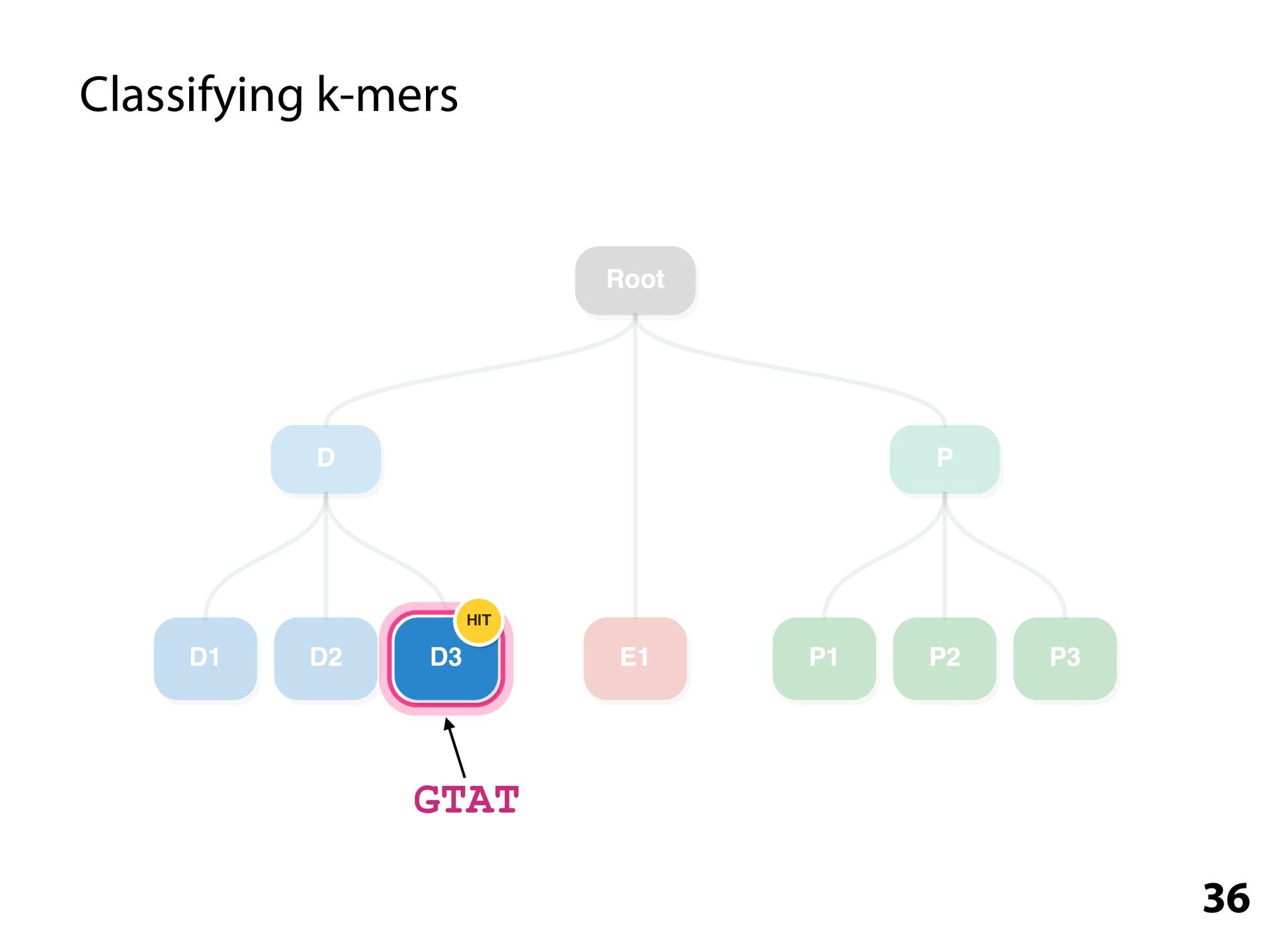
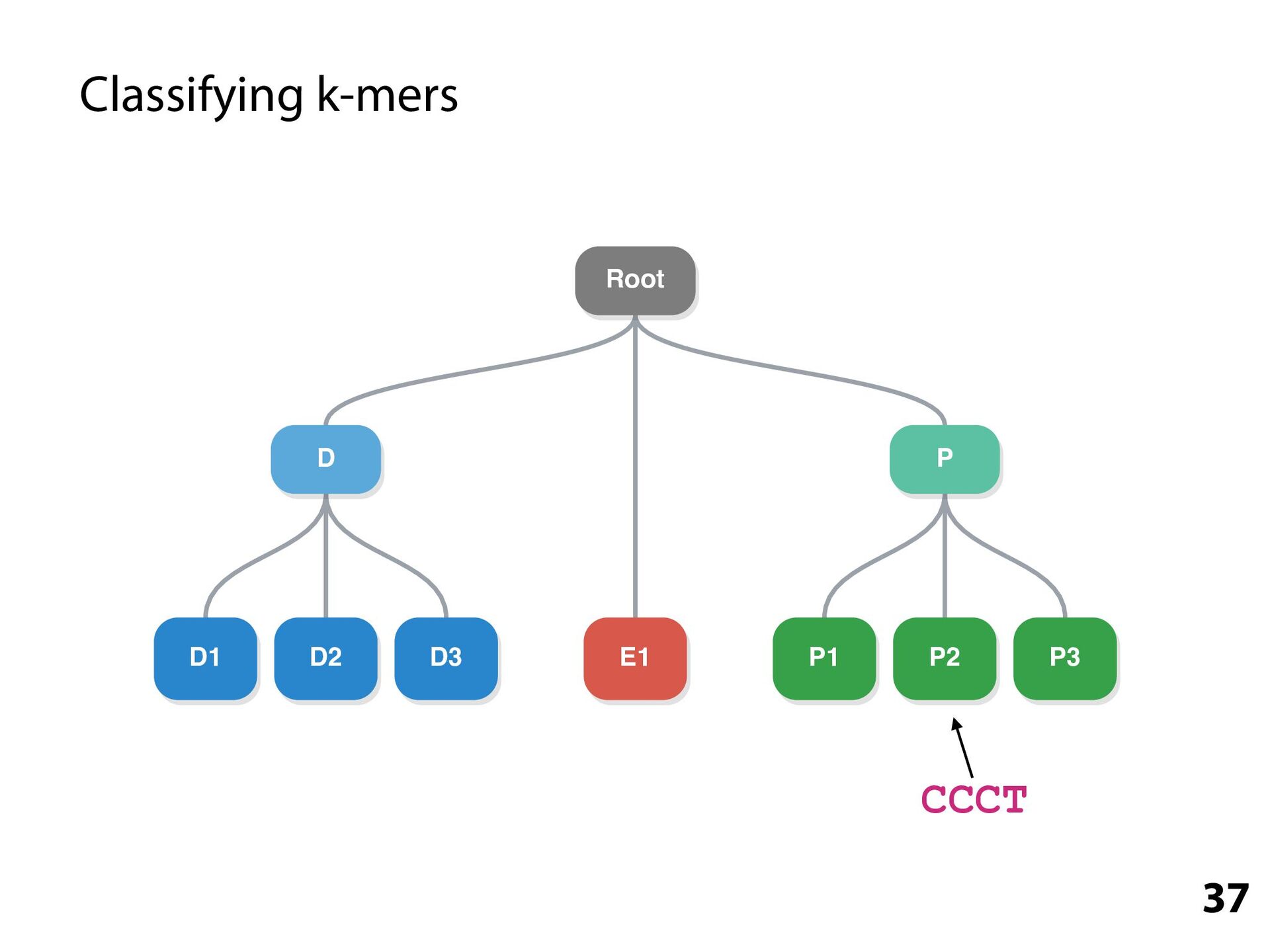
to taxa Images: Wood, Derrick E., and Steven L. Salzberg. "Kraken: ultrafast metagenomic sequence classi fi cation using exact alignments." Genome Biology 15.3 (2014): R46. Kraken index AKA “database” 30
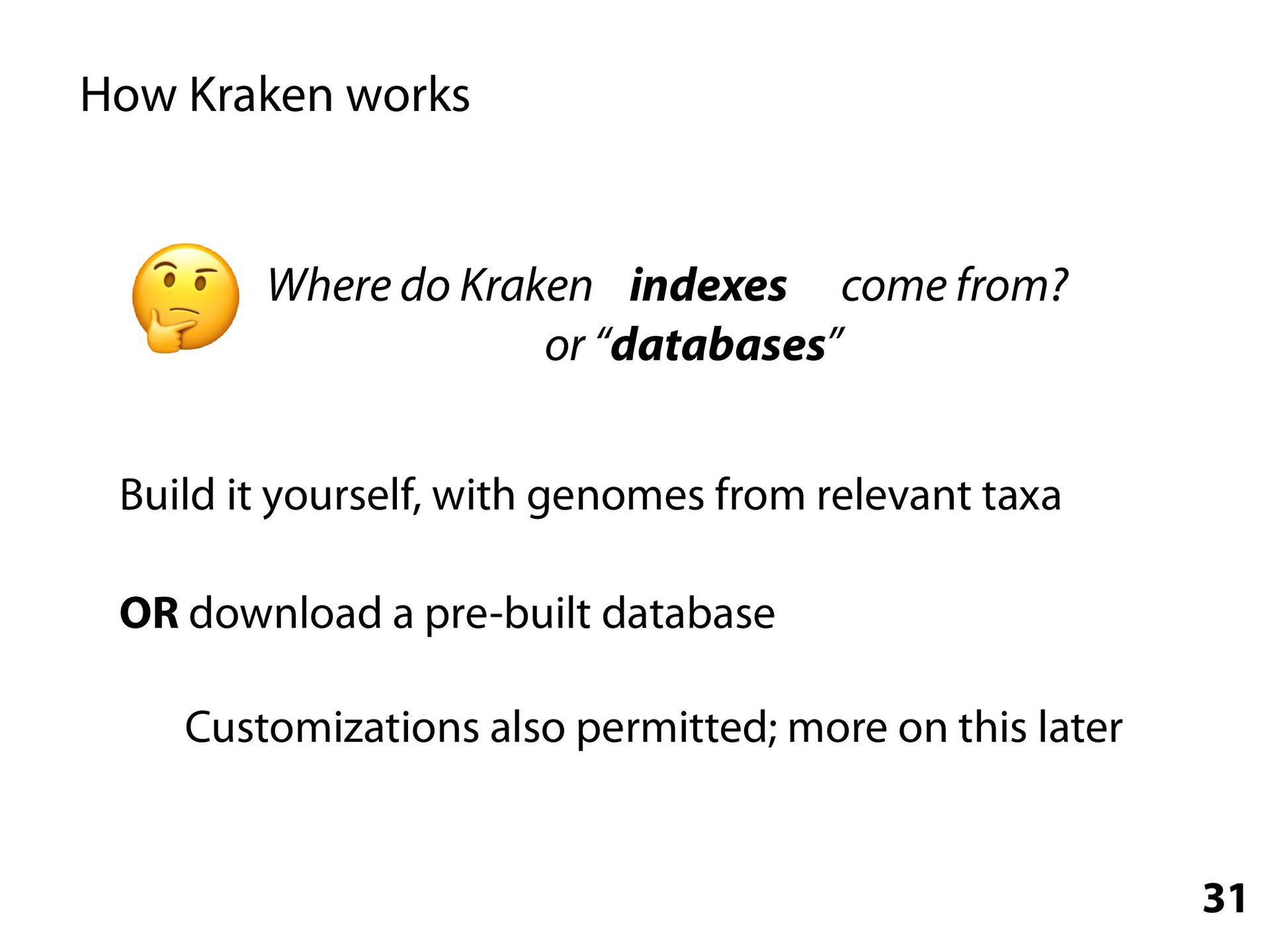
or “databases” Build it yourself, with genomes from relevant taxa OR download a pre-built database Customizations also permitted; more on this later 31
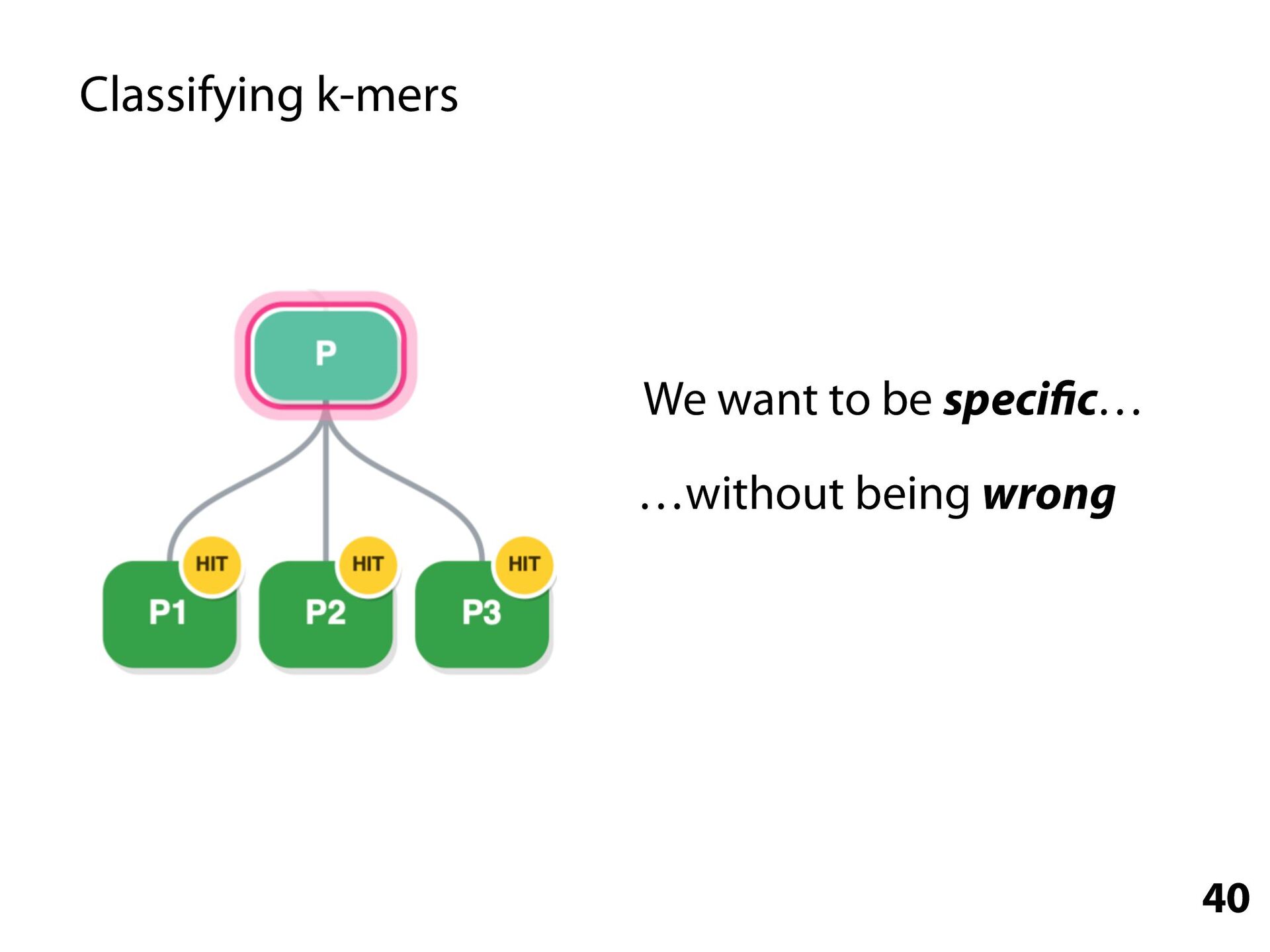
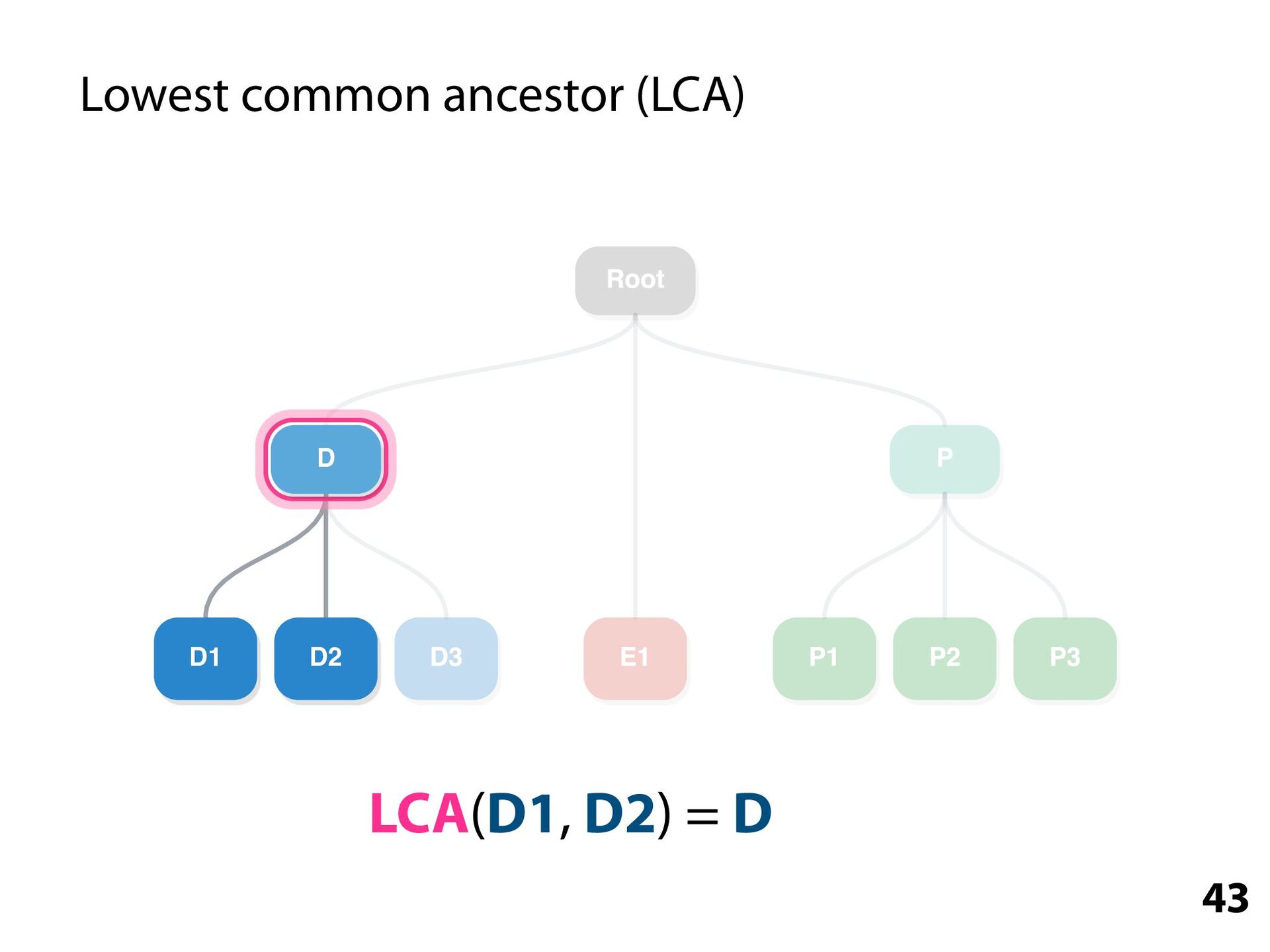
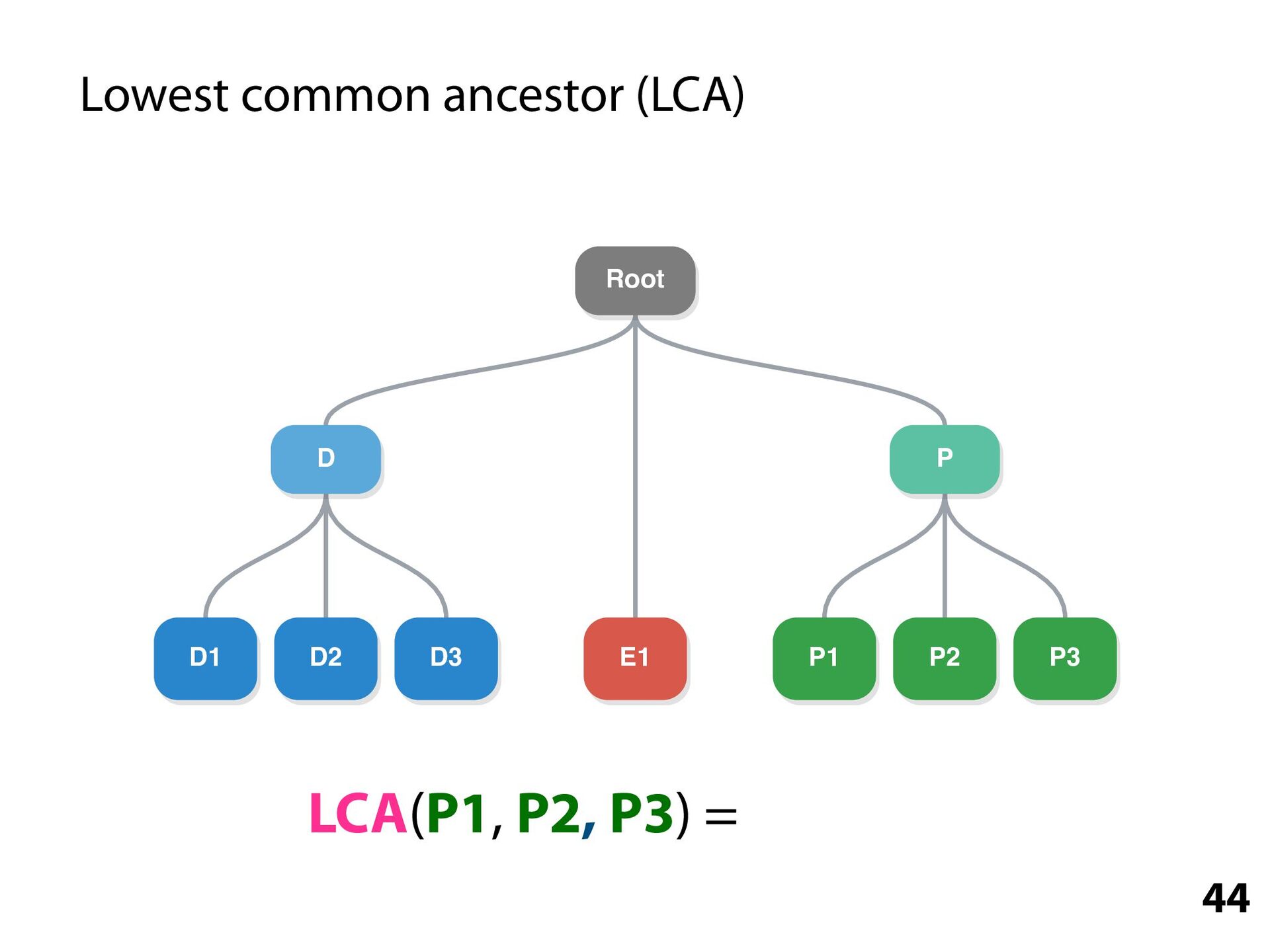
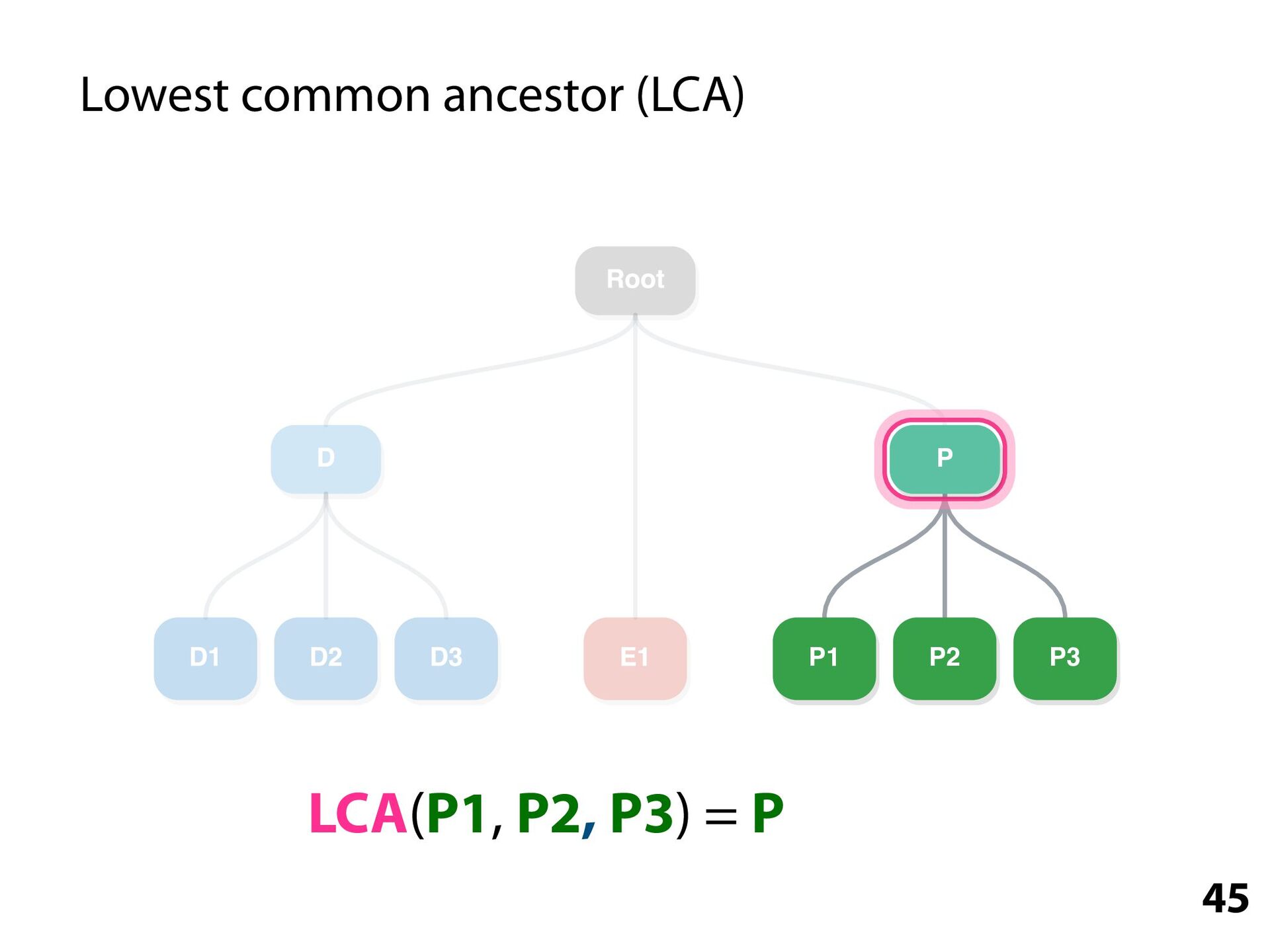
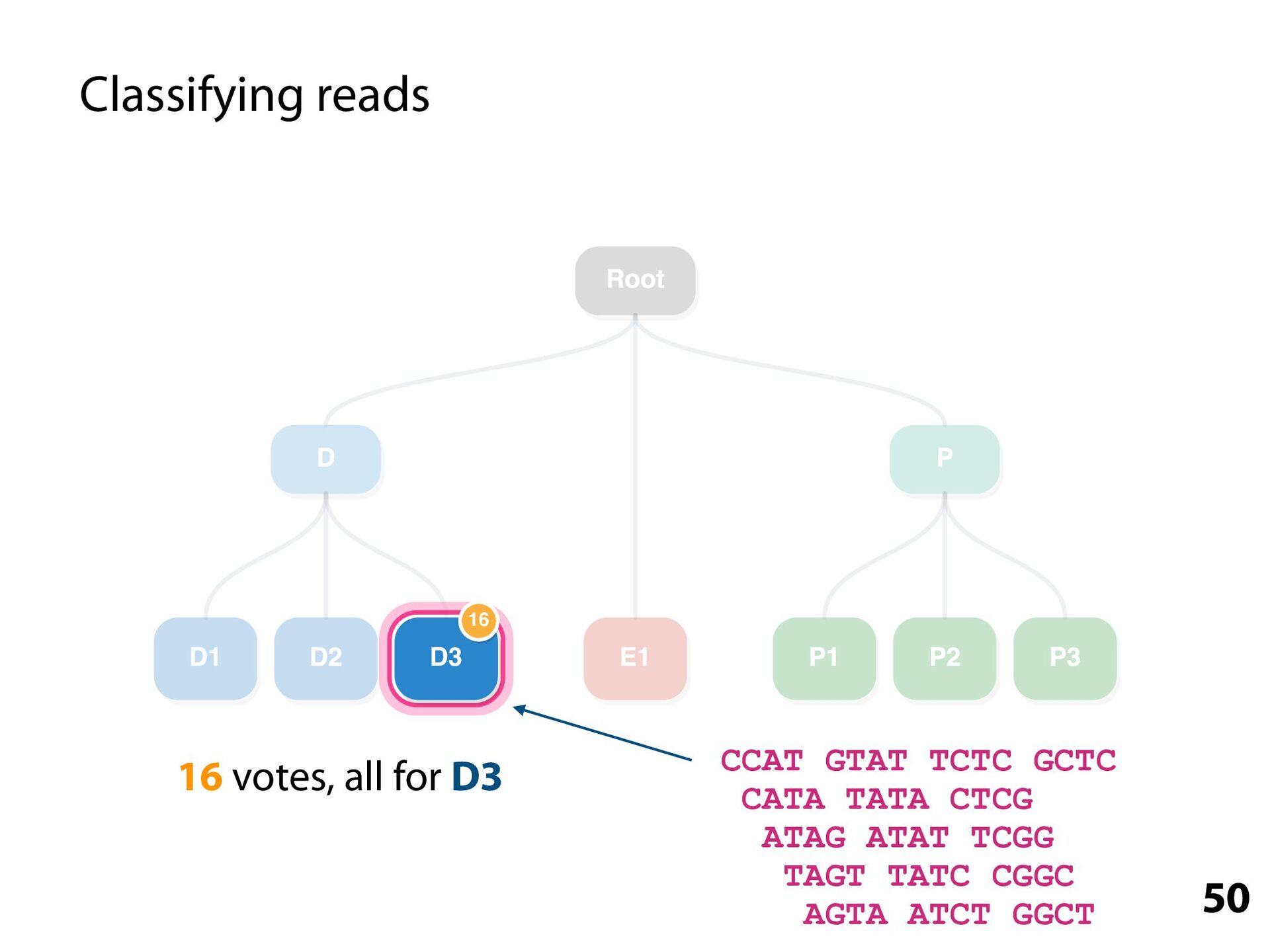
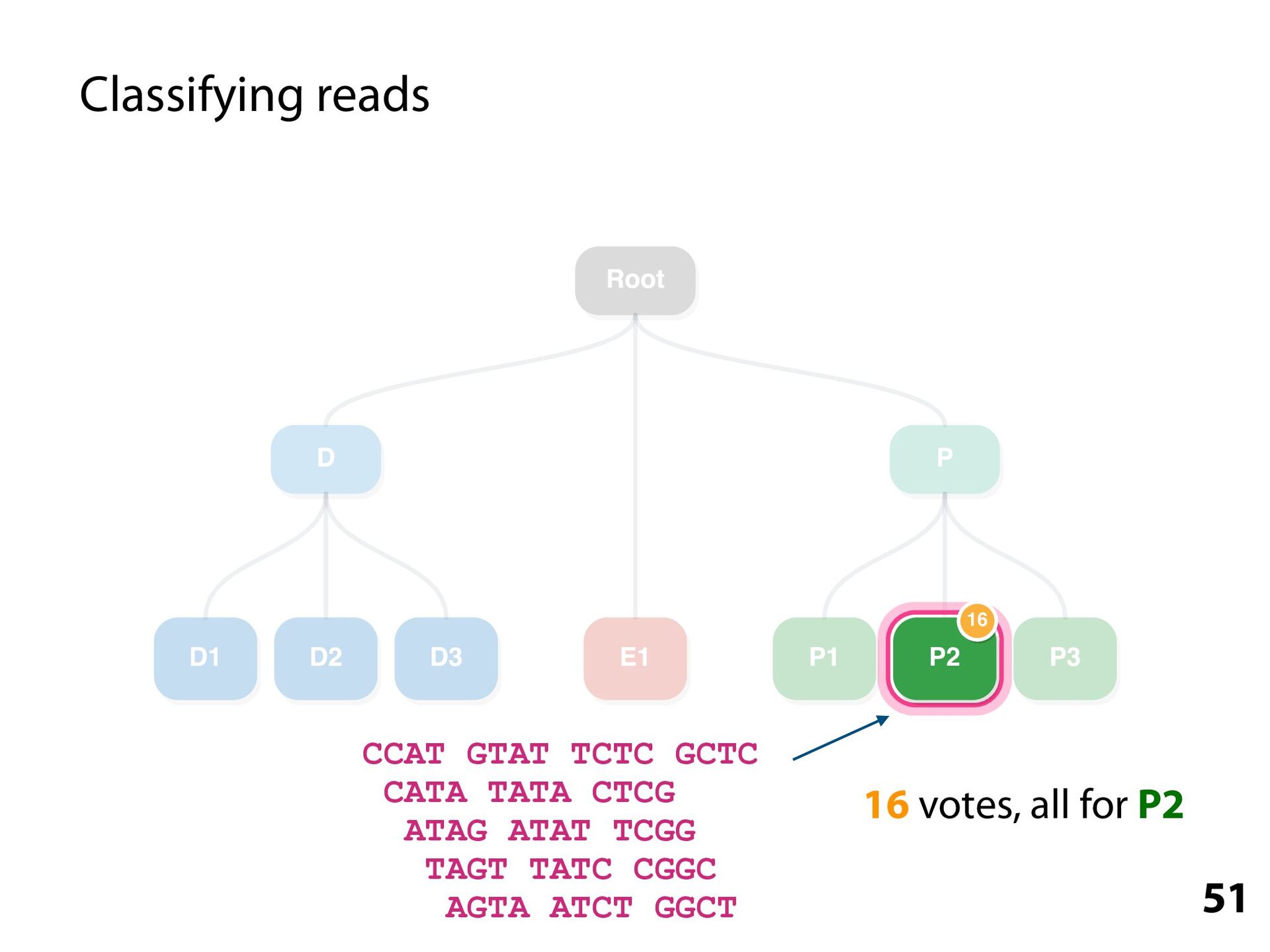
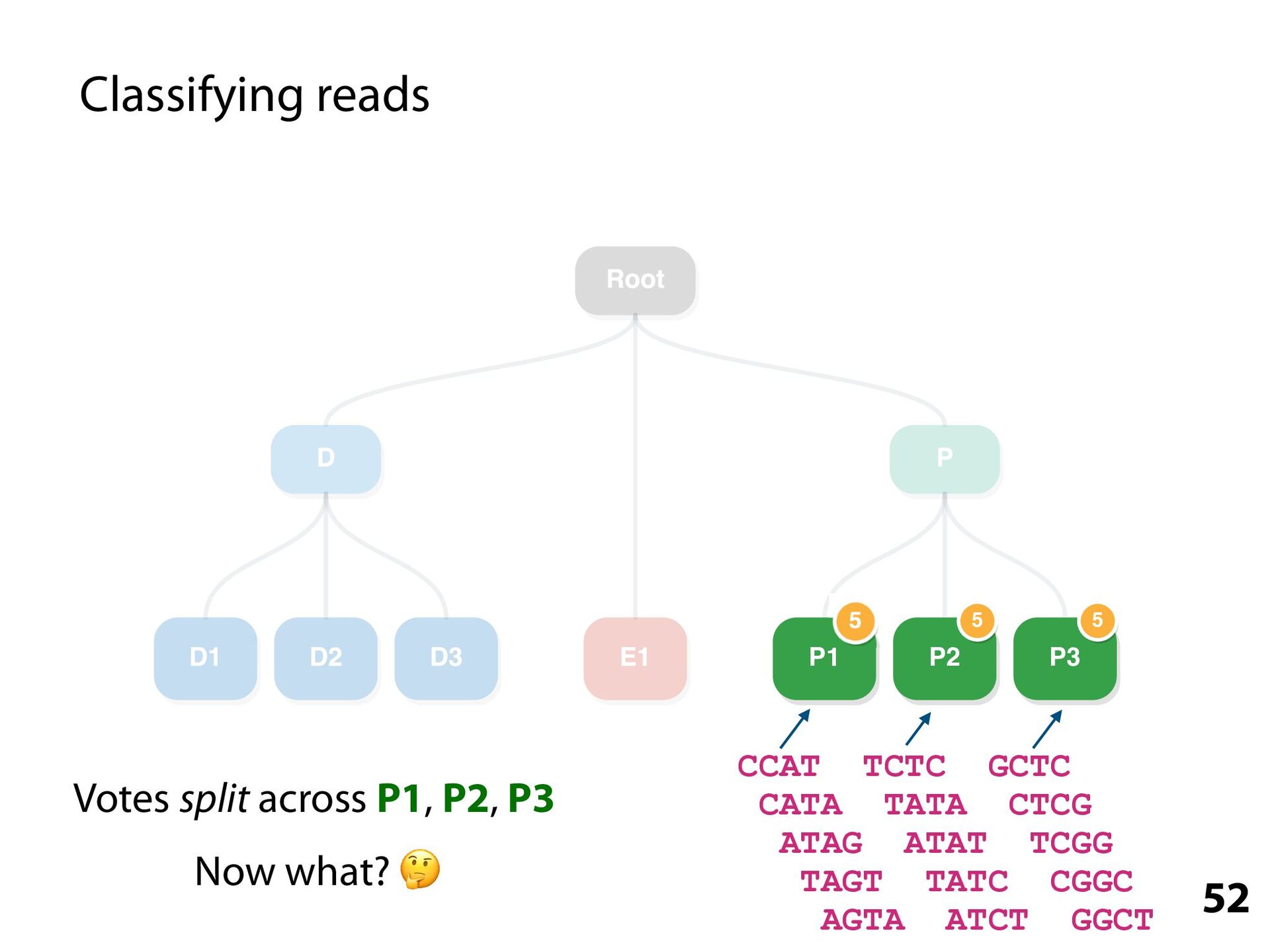
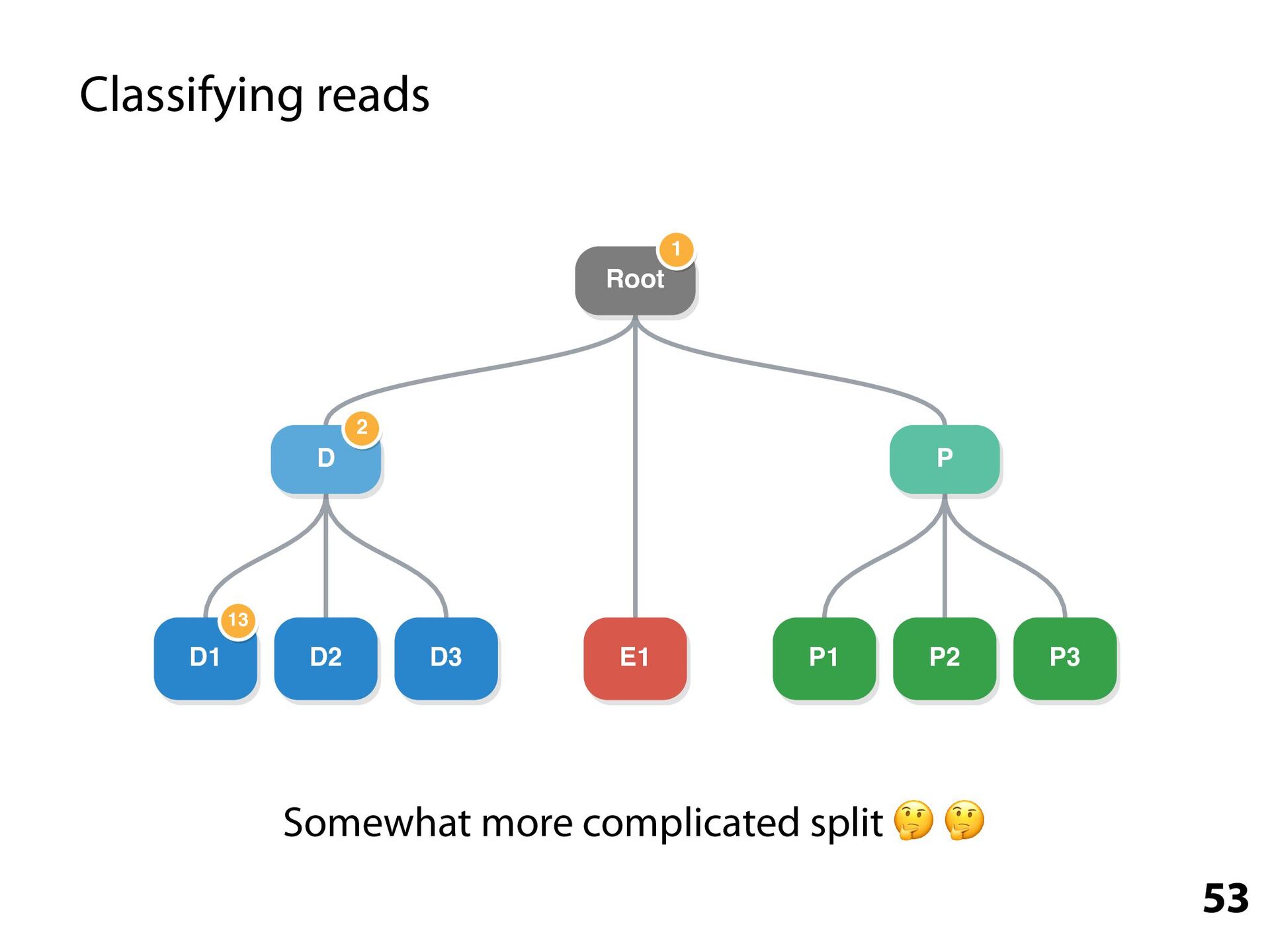
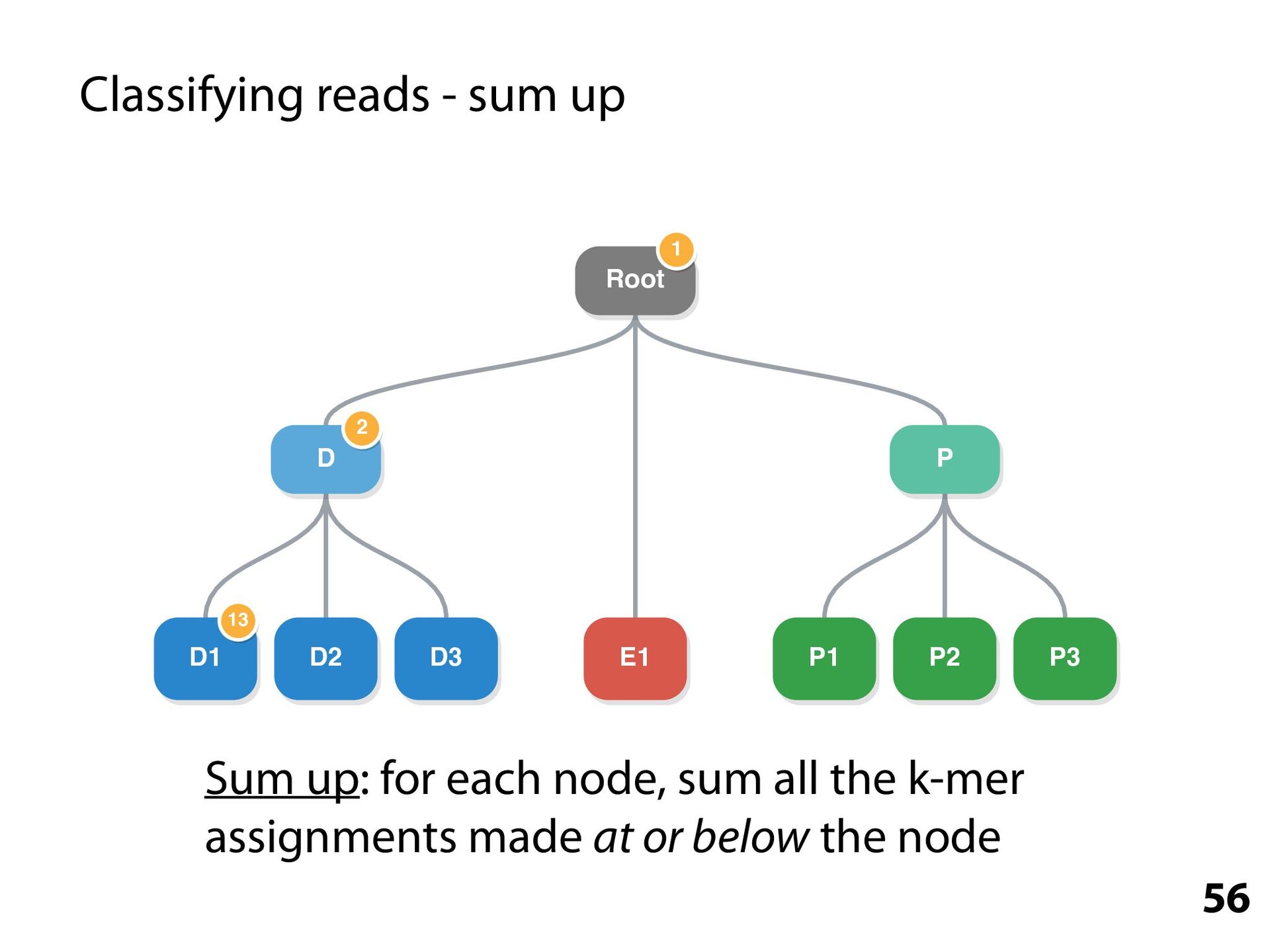
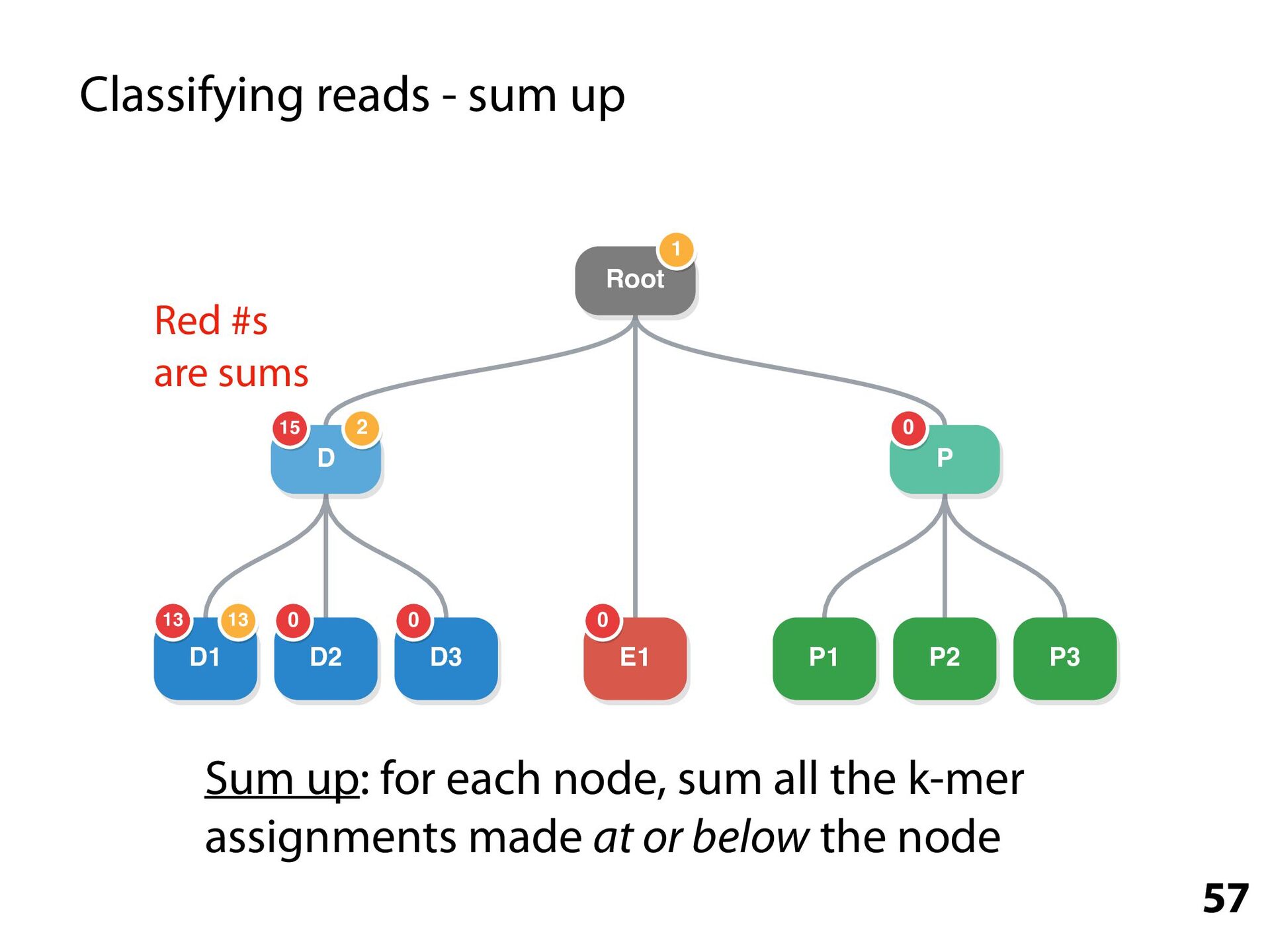
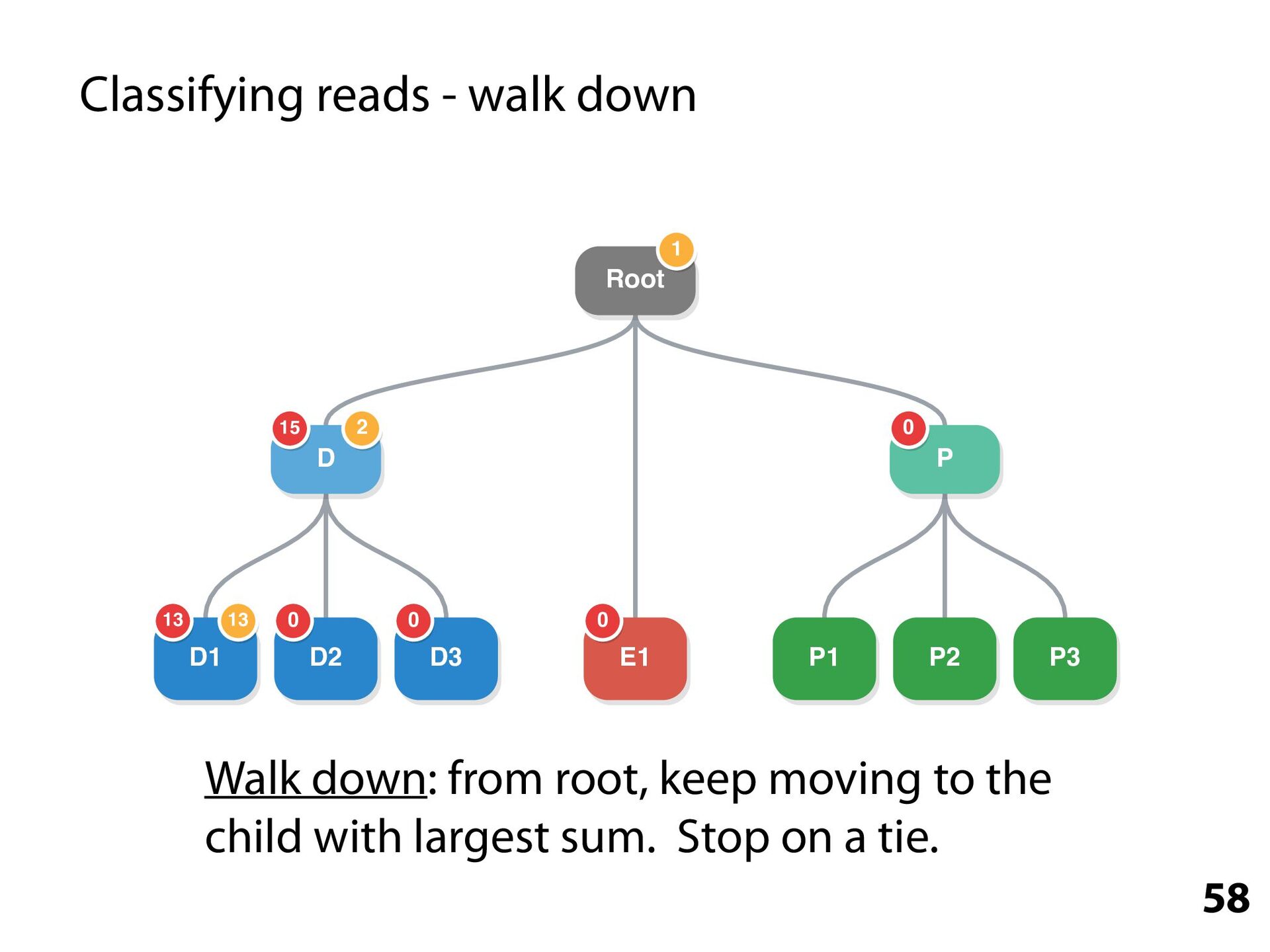
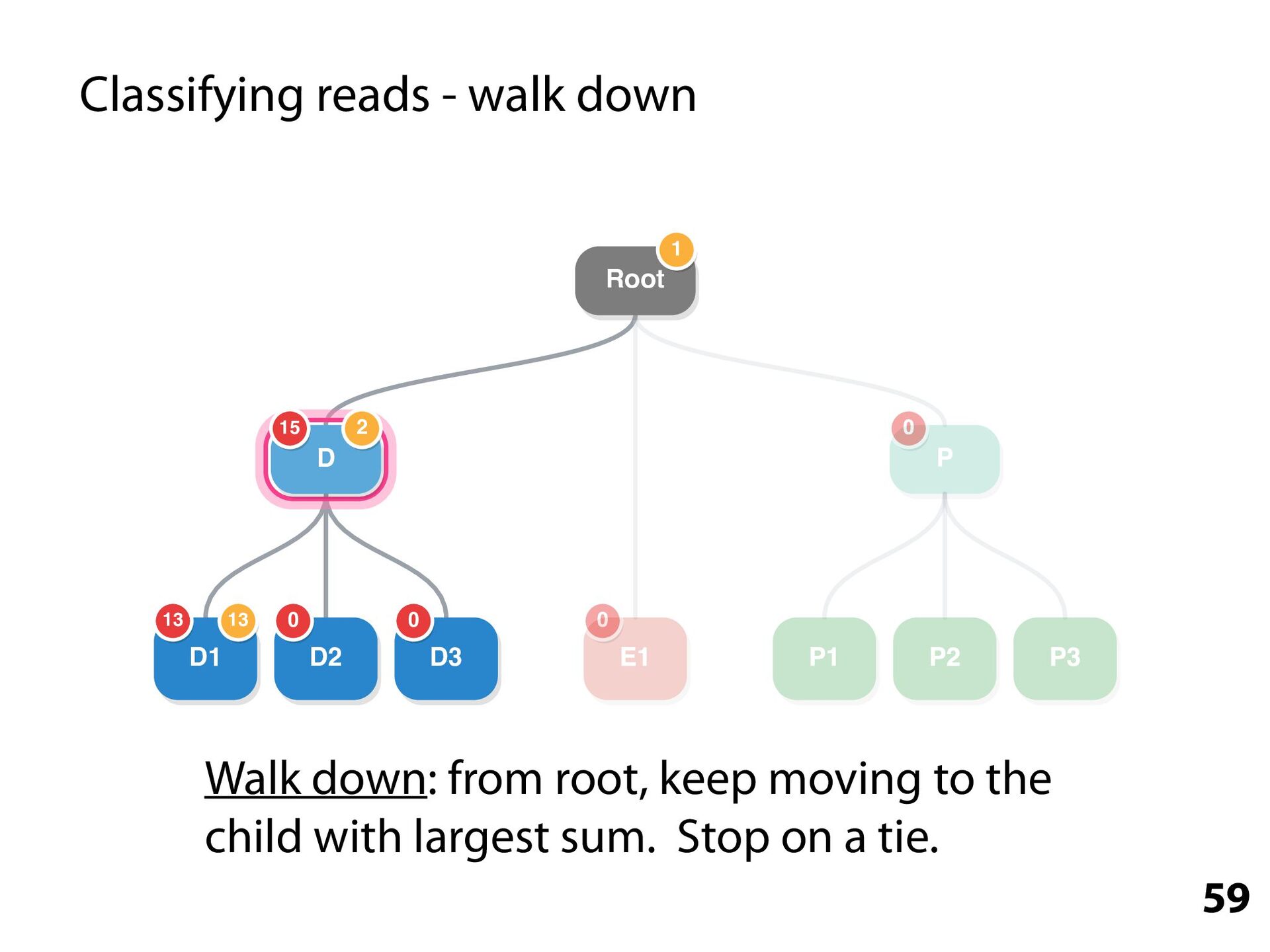
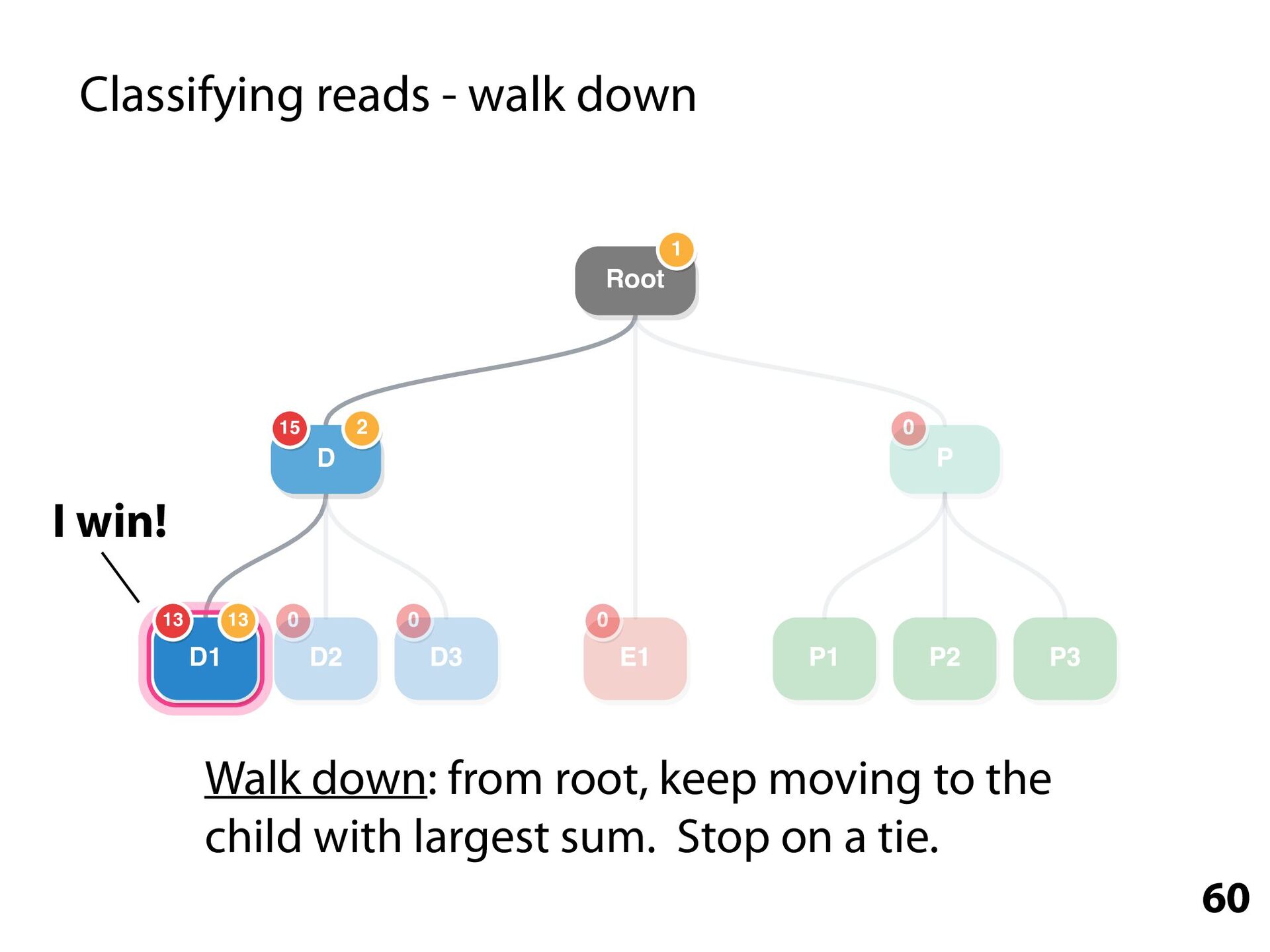
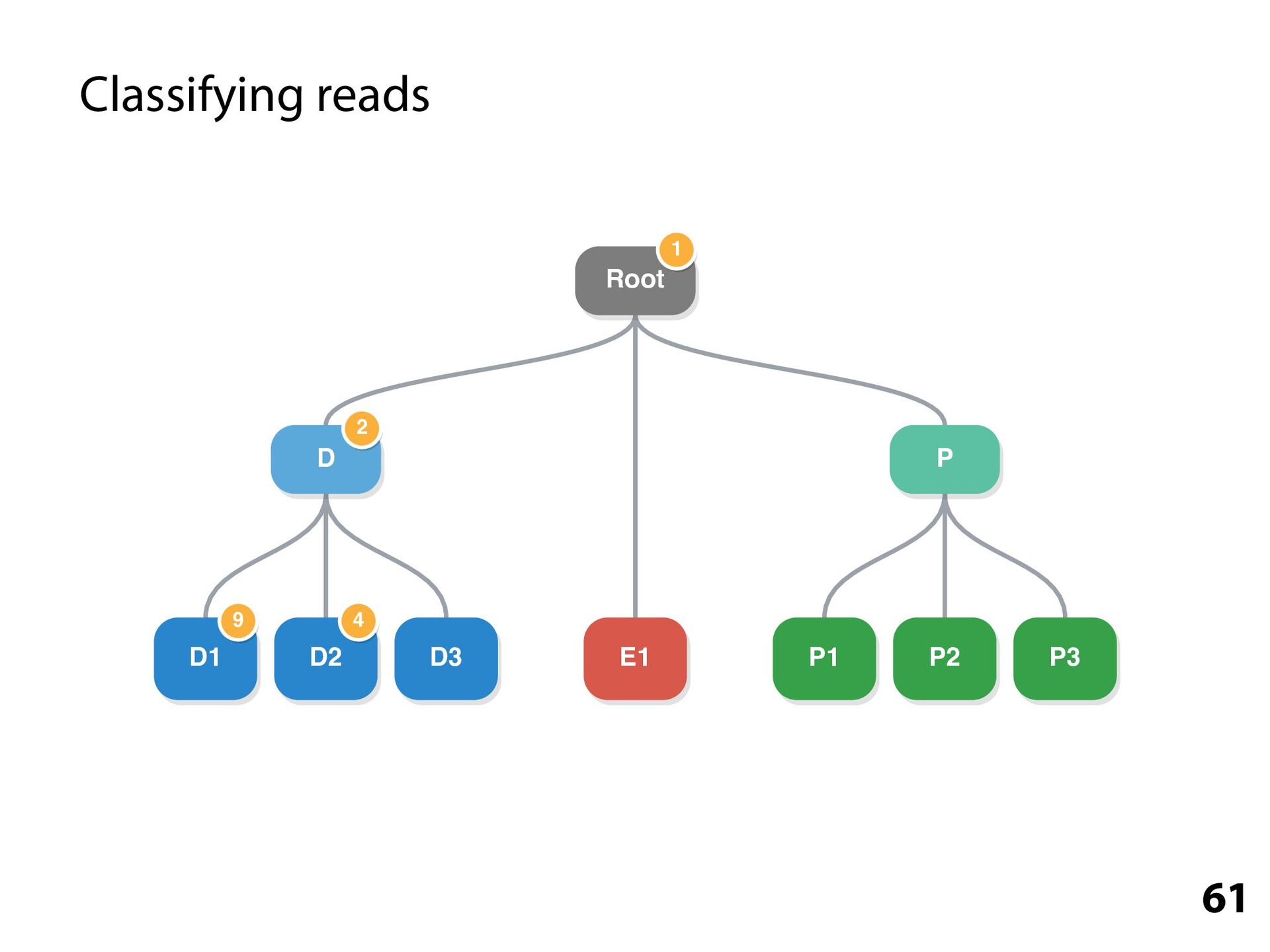
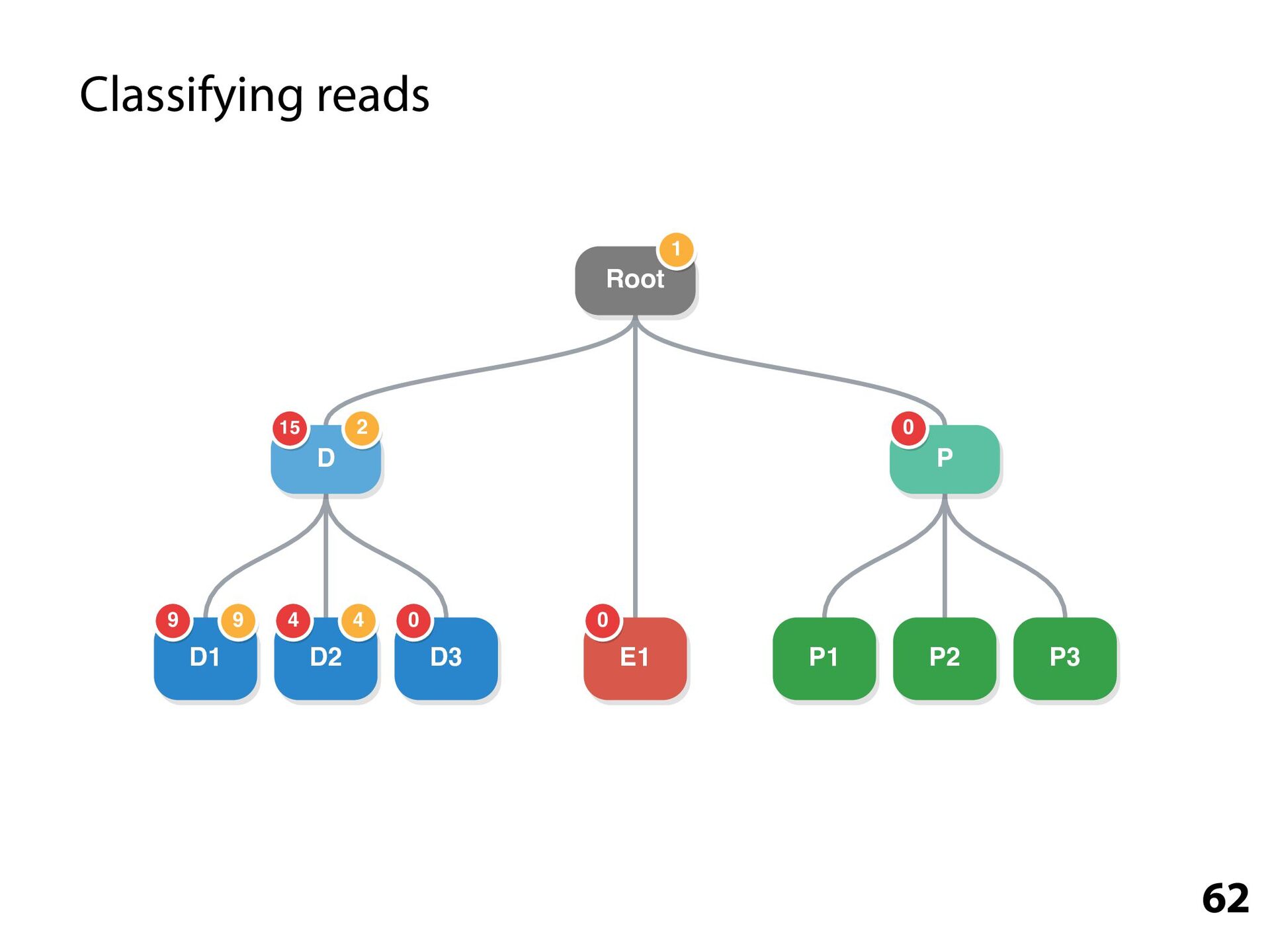
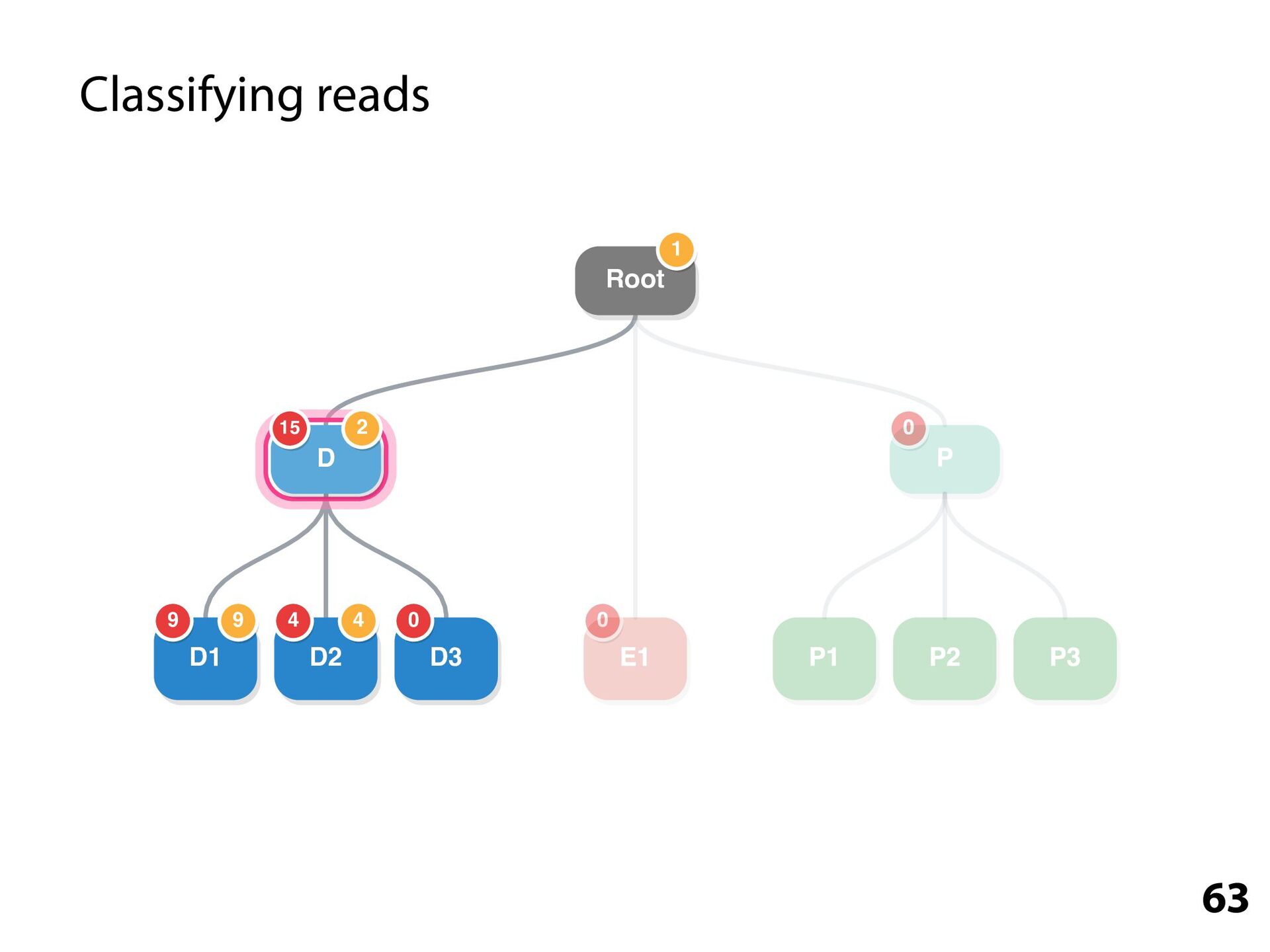
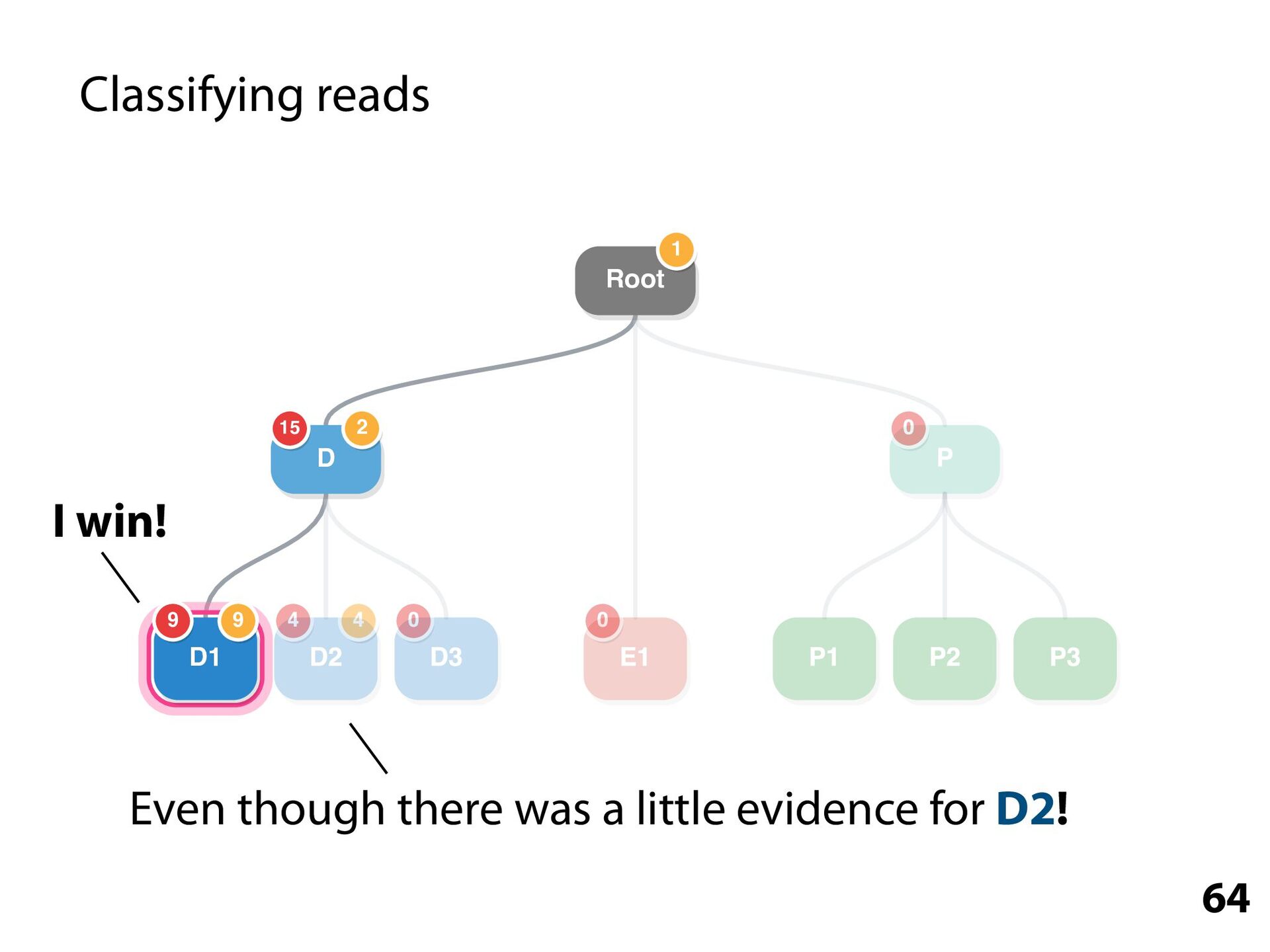
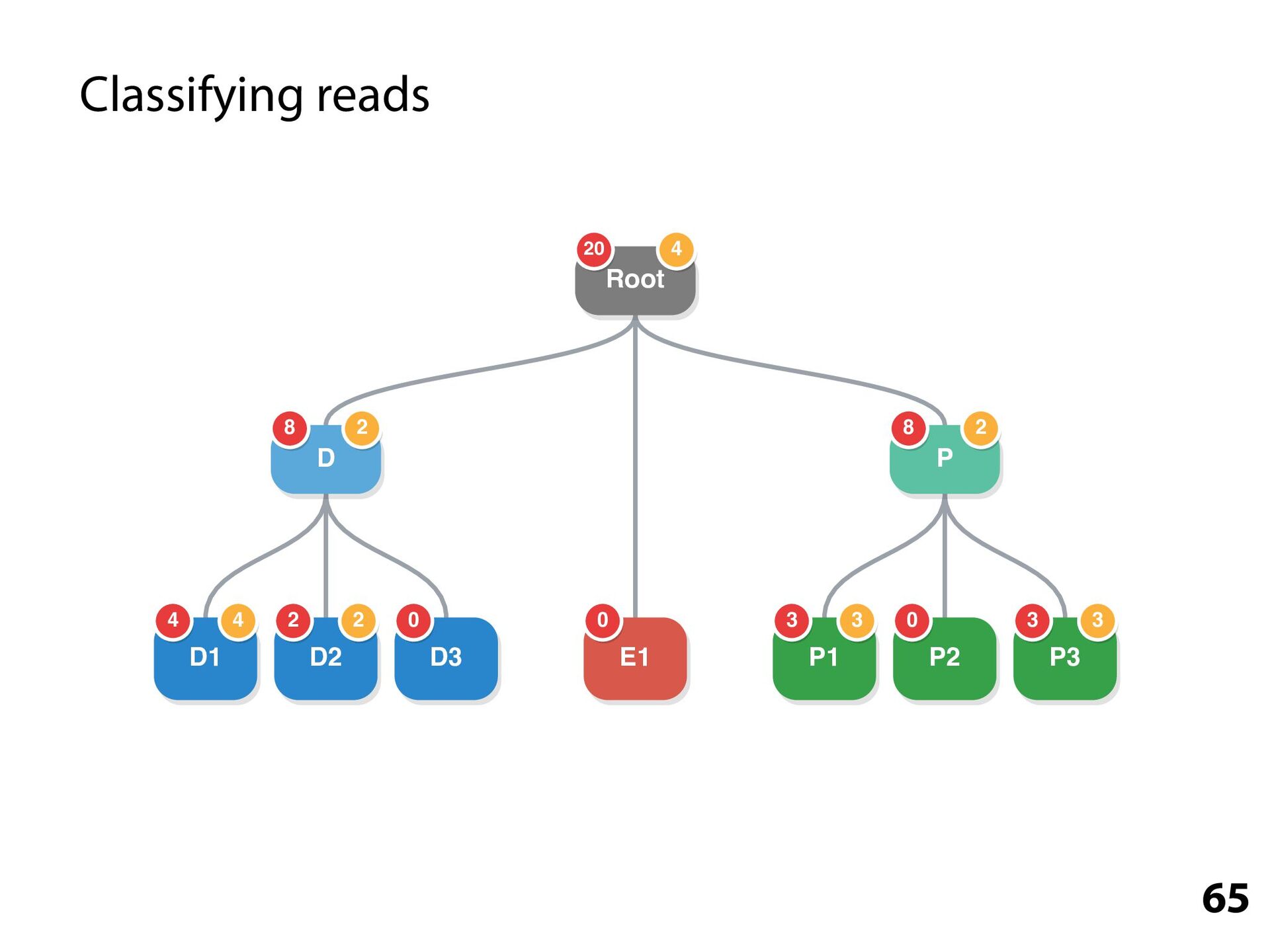
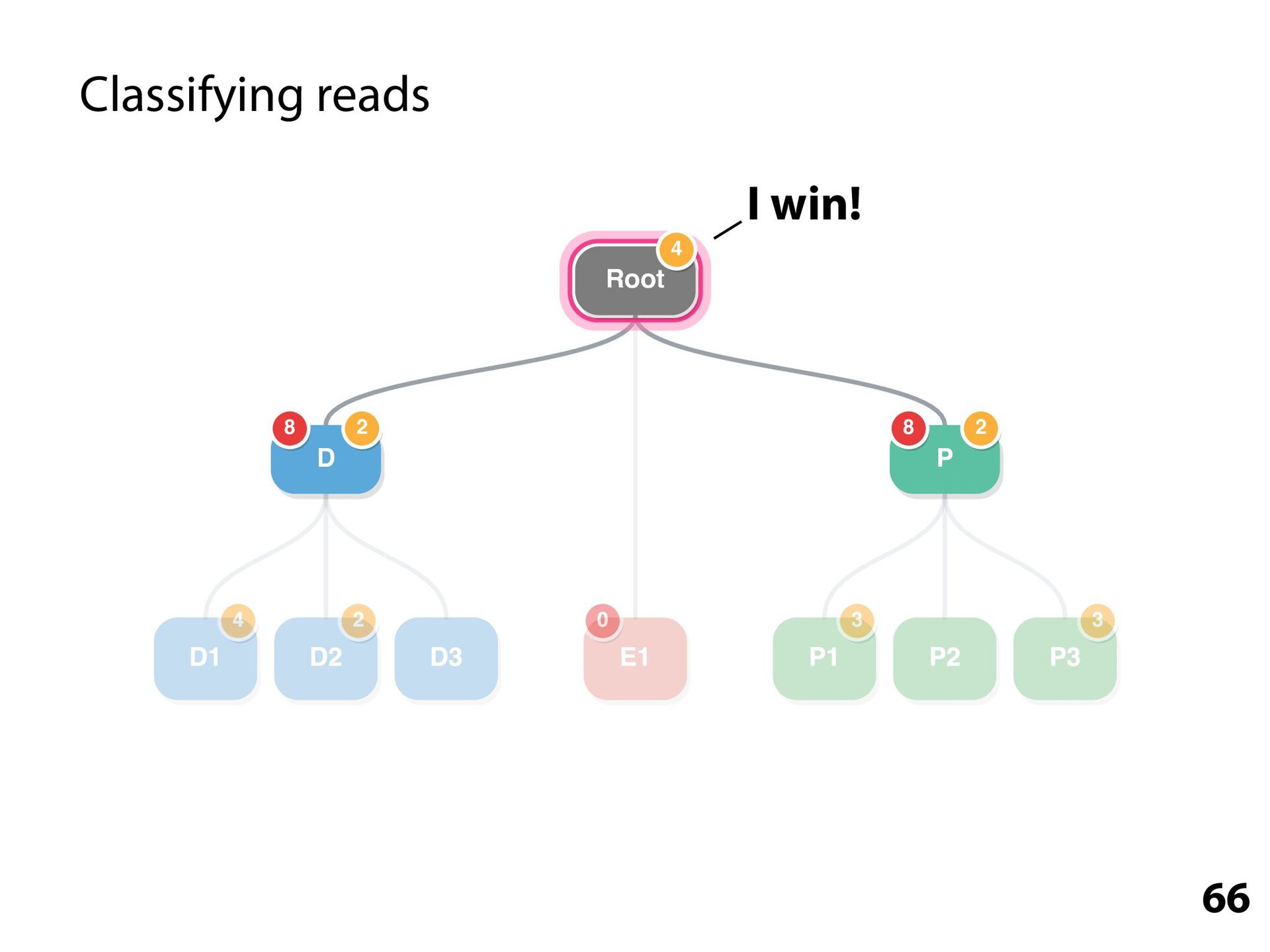
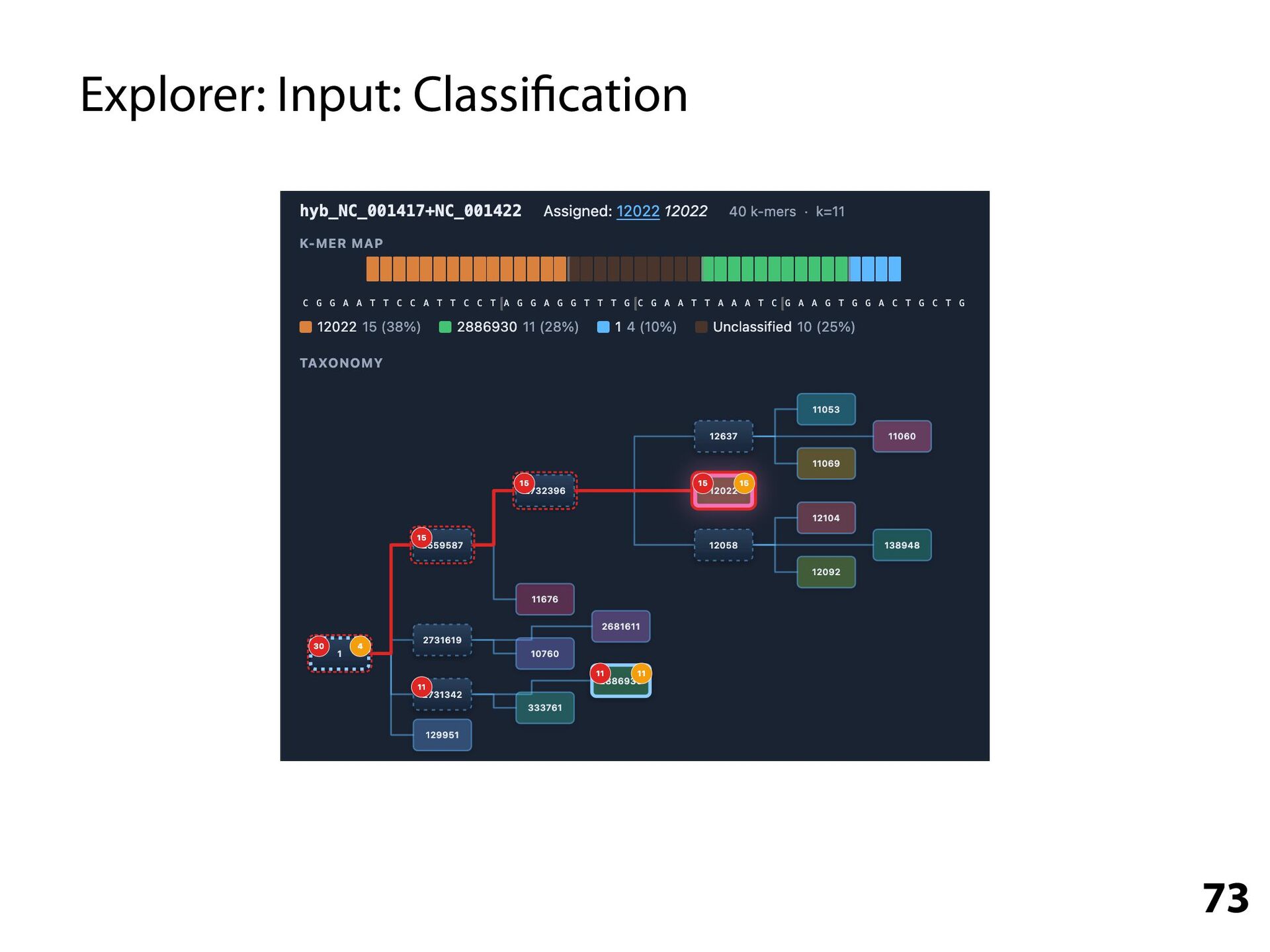
Once we’ve assigned k-mers, the principle for classifying the read is called the root-to-leaf path heuristic It has two parts: (a) sum up, (b) walk down Wood, Derrick E., and Steven L. Salzberg. "Kraken: ultrafast metagenomic sequence classi fi cation using exact alignments." Genome Biology 15.3 (2014): R46.
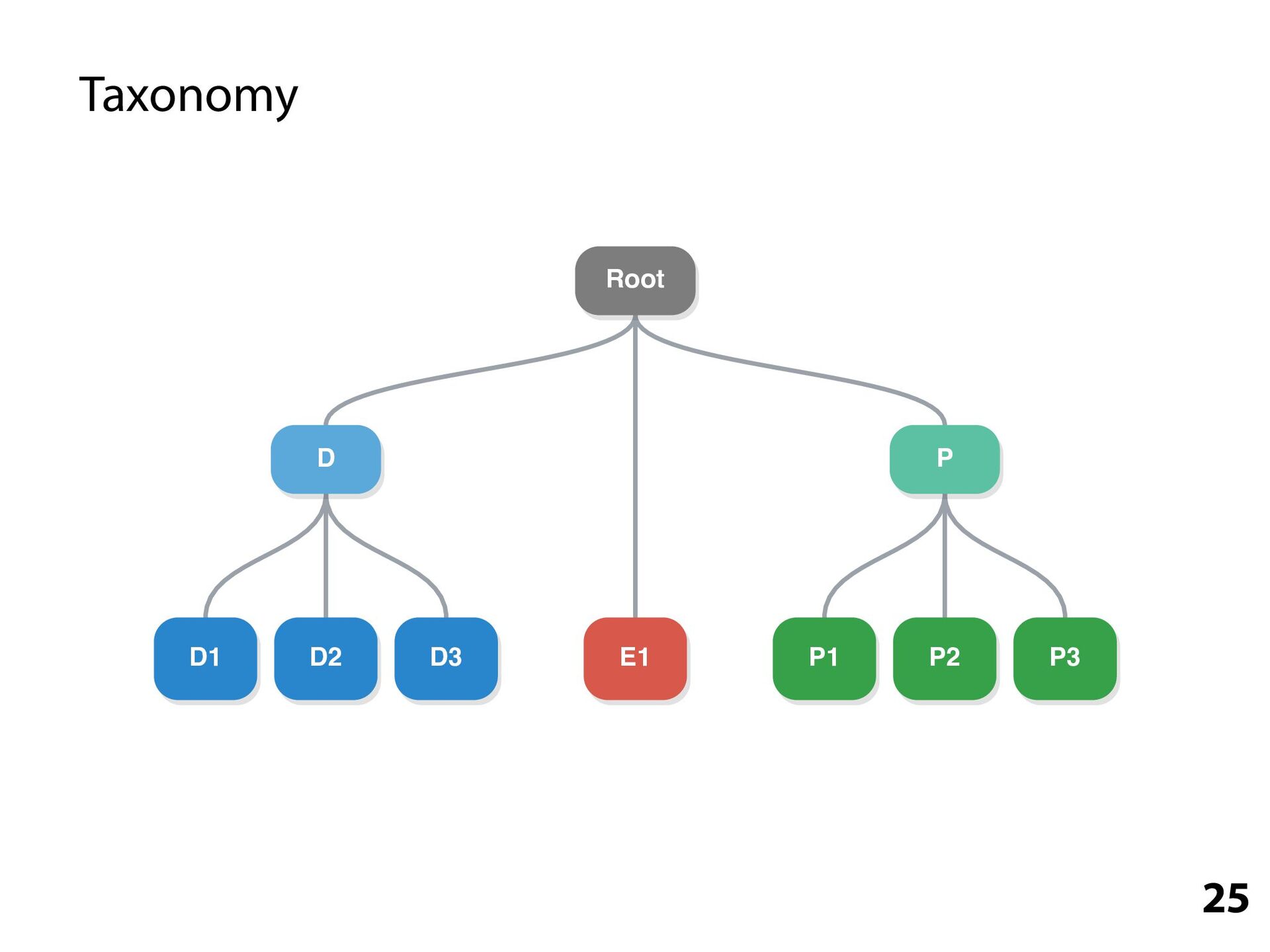
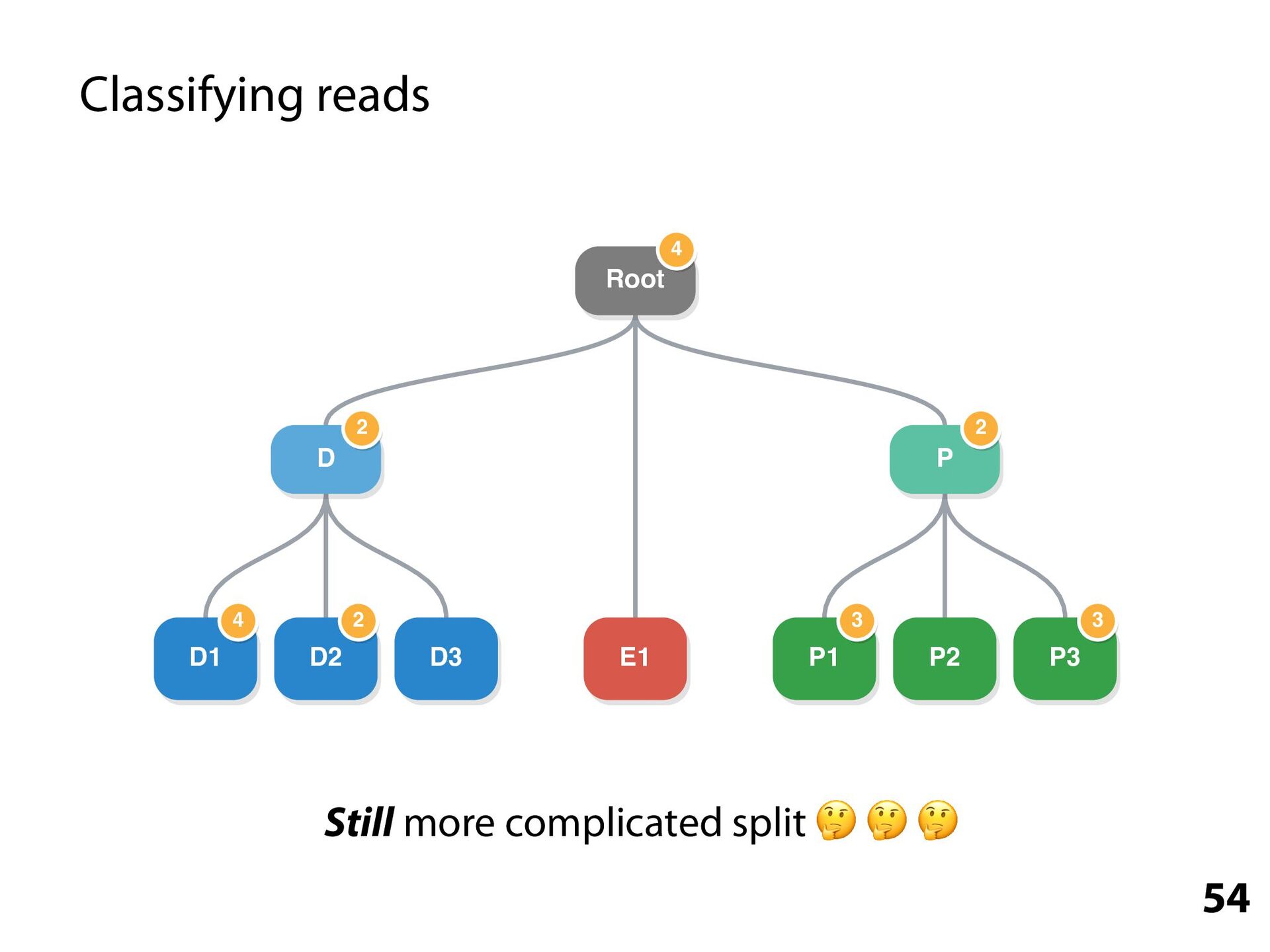
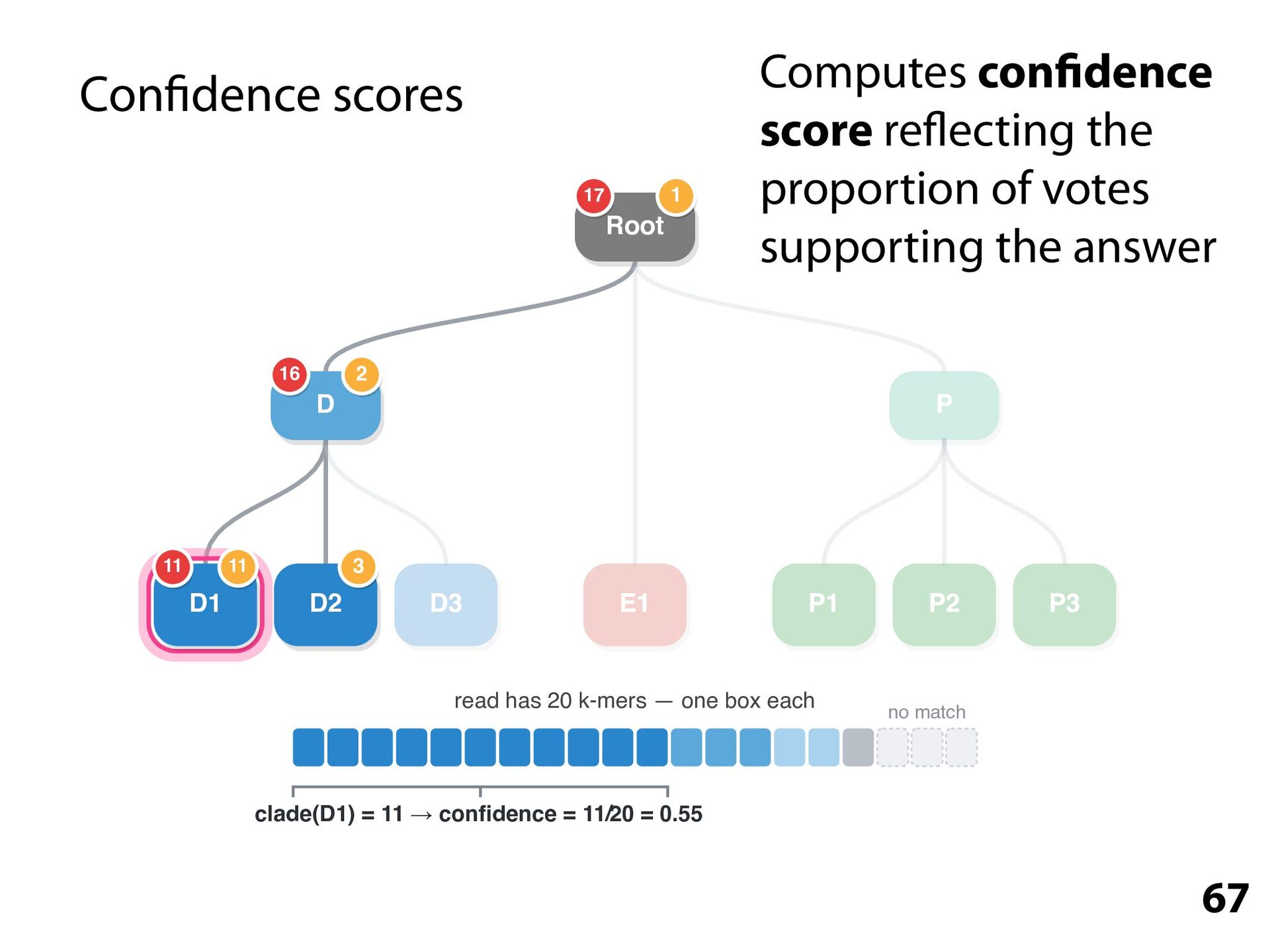
1 read has 20 k-mers — one box each no match clade(D1) = 11 → confidence = 11/20 = 0.55 clade(D) = 16 → confidence = 16/20 = 0.80 Con fi dence scores 67 Computes con fi dence score re fl ecting the proportion of votes supporting the answer
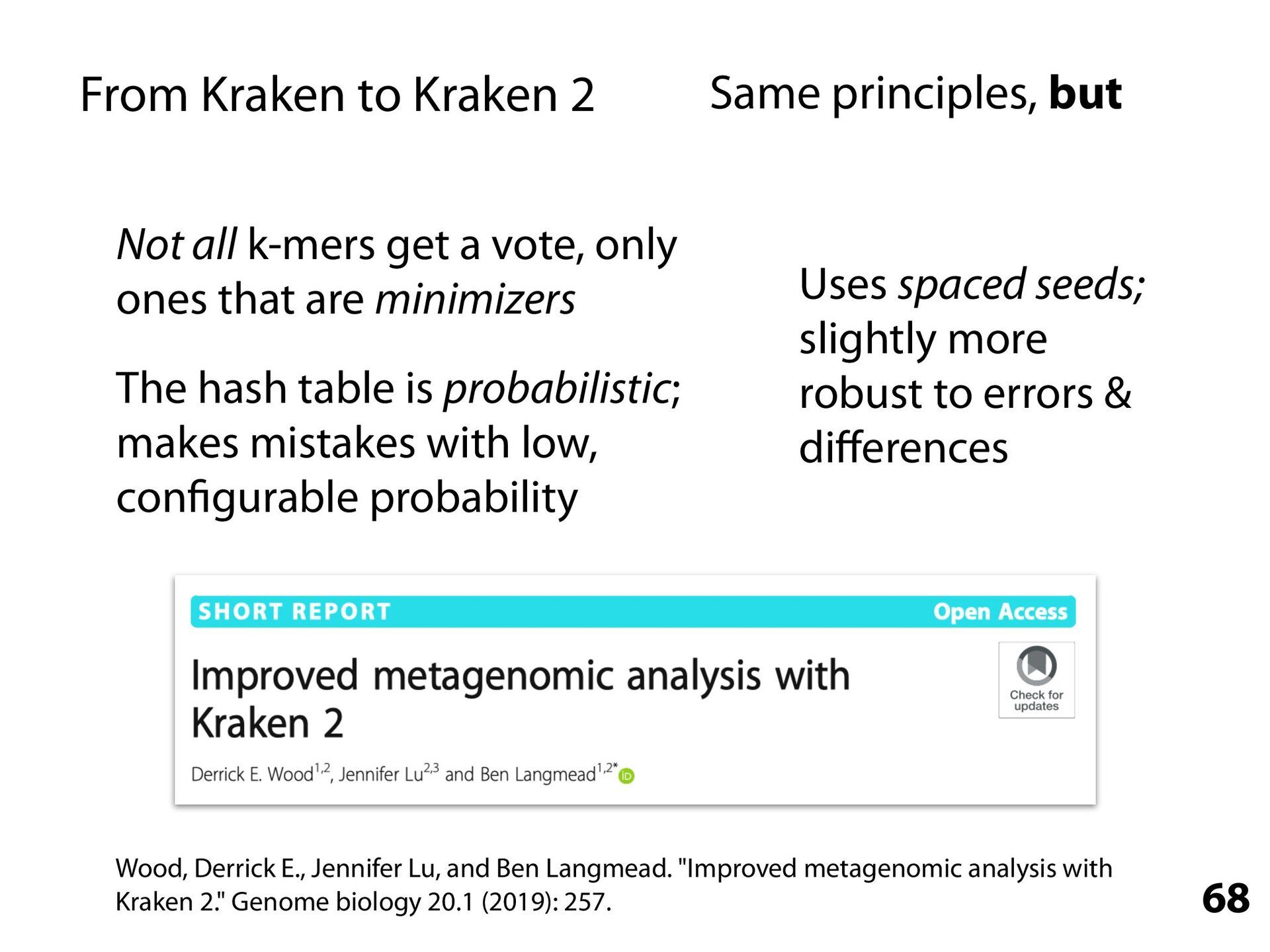
k-mers get a vote, only ones that are minimizers The hash table is probabilistic; makes mistakes with low, con fi gurable probability 68 Uses spaced seeds; slightly more robust to errors & di ff erences Wood, Derrick E., Jennifer Lu, and Ben Langmead. "Improved metagenomic analysis with Kraken 2." Genome biology 20.1 (2019): 257.
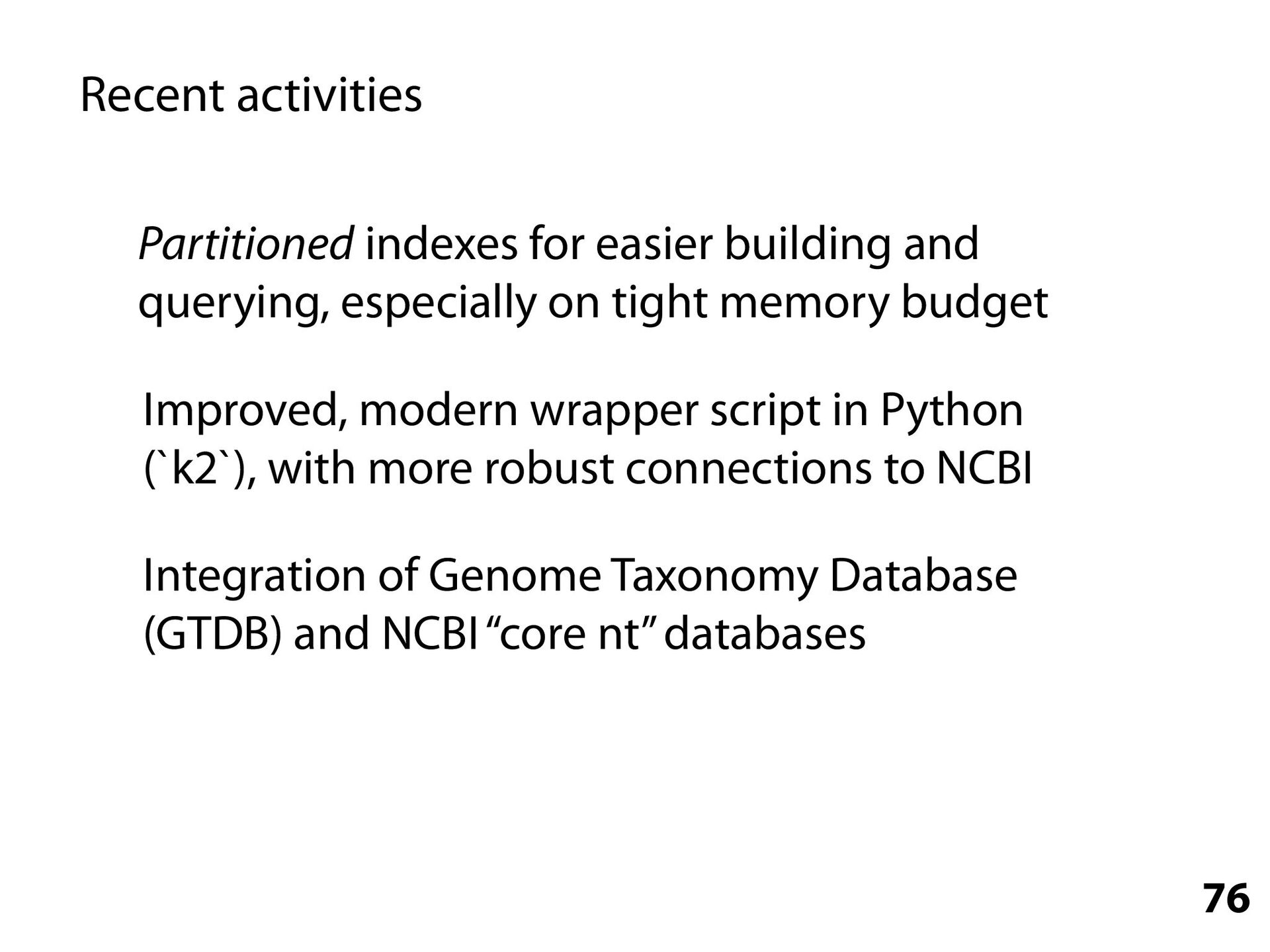
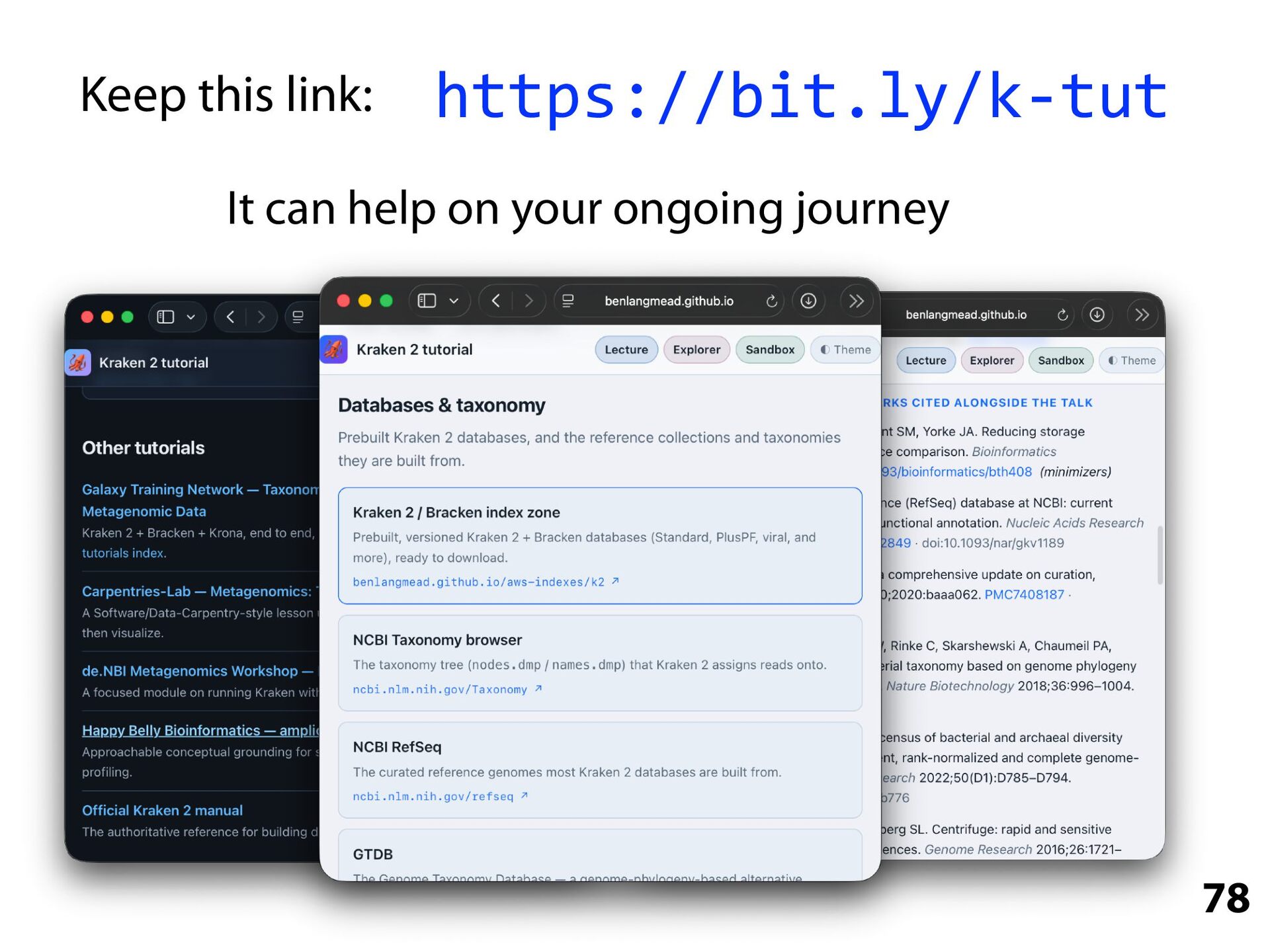
especially on tight memory budget Improved, modern wrapper script in Python (`k2`), with more robust connections to NCBI Integration of Genome Taxonomy Database (GTDB) and NCBI “core nt” databases
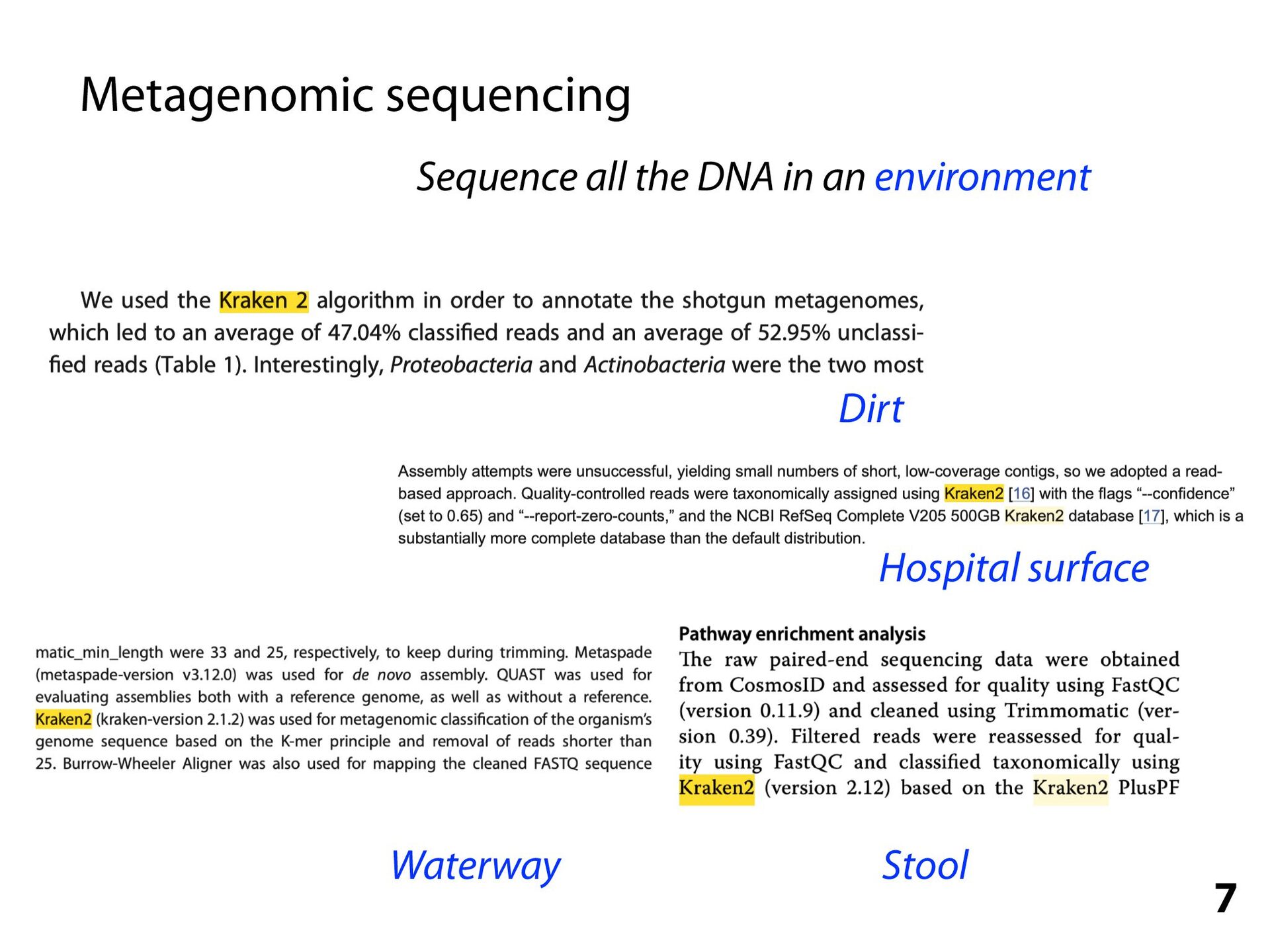
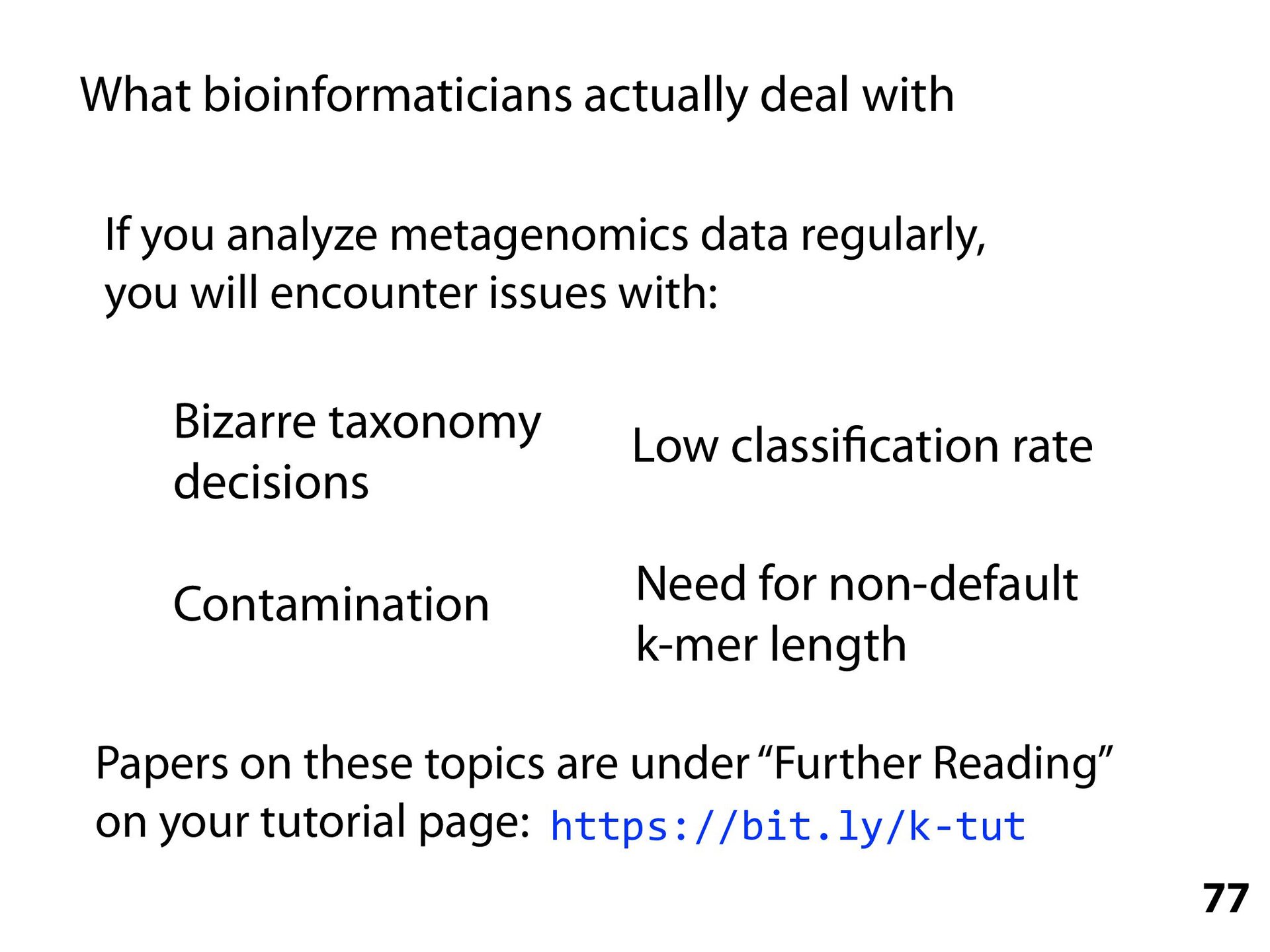
regularly, you will encounter issues with: Bizarre taxonomy decisions Contamination Low classi fi cation rate Need for non-default k-mer length 77 Papers on these topics are under “Further Reading” on your tutorial page: https://bit.ly/k-tut
Je ff . West 7/15 17:20 (EvolCompGen) Nathaniel Brown, poster (HiTSeq) Please see my great students’ talks & posters Authors of Kraken, Kraken 2, KrakenUniq, Bracken 79 Derrick Wood Jen Lu Rone Charles Steven Salzberg Florian Breitwieser Peter Thielen Daniel Baker Support for Kraken 2 & Index zone: NIH R35GM139602 Amazon Web Services + me THANK YOU Ali & the organizers
depends on: sequencing error rate density of sampled genomes assembly quality core versus accessory… If k-mer length becomes a puzzle in your work, keep an eye out for methods that use maximal exact matches or matching statistics instead The list goes on My group has some; see talks by Mao-Jan Lin, Stephen Hwang, posted by Nate Brown
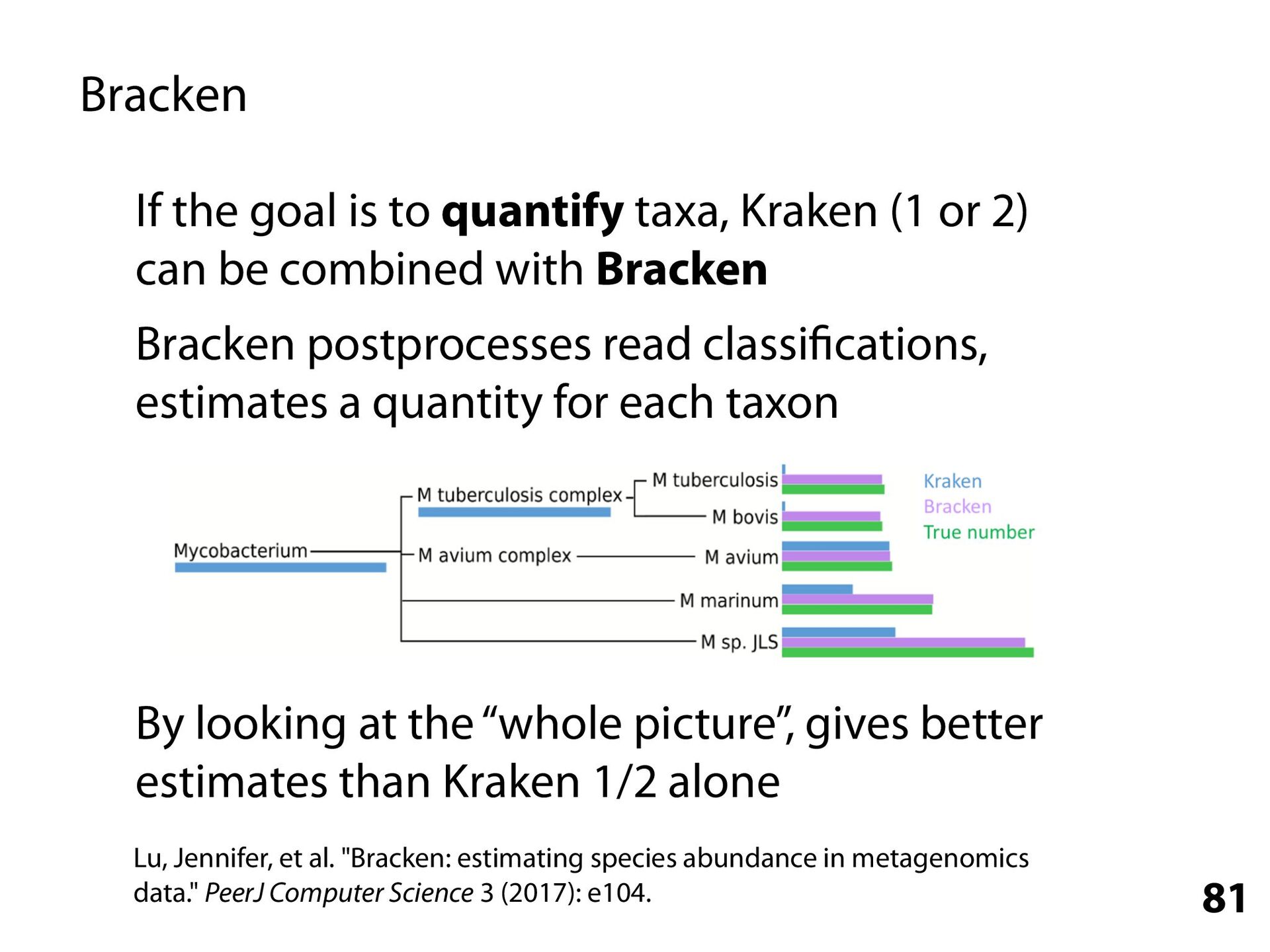
or 2) can be combined with Bracken Bracken postprocesses read classi fi cations, estimates a quantity for each taxon 81 Lu, Jennifer, et al. "Bracken: estimating species abundance in metagenomics data." PeerJ Computer Science 3 (2017): e104. By looking at the “whole picture”, gives better estimates than Kraken 1/2 alone
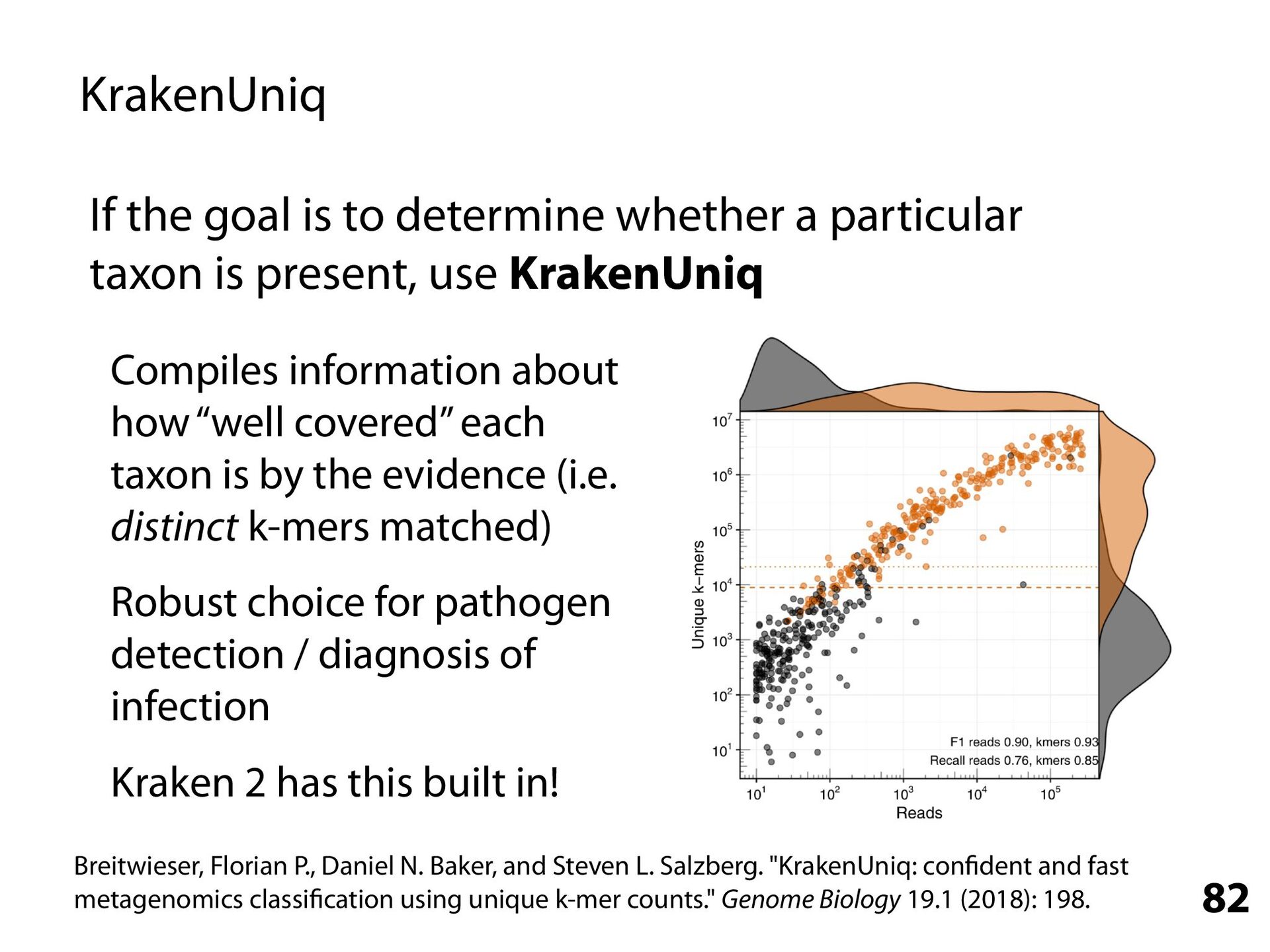
taxon is present, use KrakenUniq Compiles information about how “well covered” each taxon is by the evidence (i.e. distinct k-mers matched) 82 Robust choice for pathogen detection / diagnosis of infection Breitwieser, Florian P., Daniel N. Baker, and Steven L. Salzberg. "KrakenUniq: con fi dent and fast metagenomics classi fi cation using unique k-mer counts." Genome Biology 19.1 (2018): 198. Kraken 2 has this built in!


 benlangmead
 gurzu
gurzu
 reverentgeek
 andyhume
 afnizarnur
 notwaldorf
 codingconduct
 jonrohan
 sstephenson
 shlominoach
 khoart
 tammyeverts