Lock in $30 Savings on PRO—Offer Ends Soon! ⏳

Maintaining Public Safety During Civil Unrest

Maintaining Public Safety During Civil Unrest

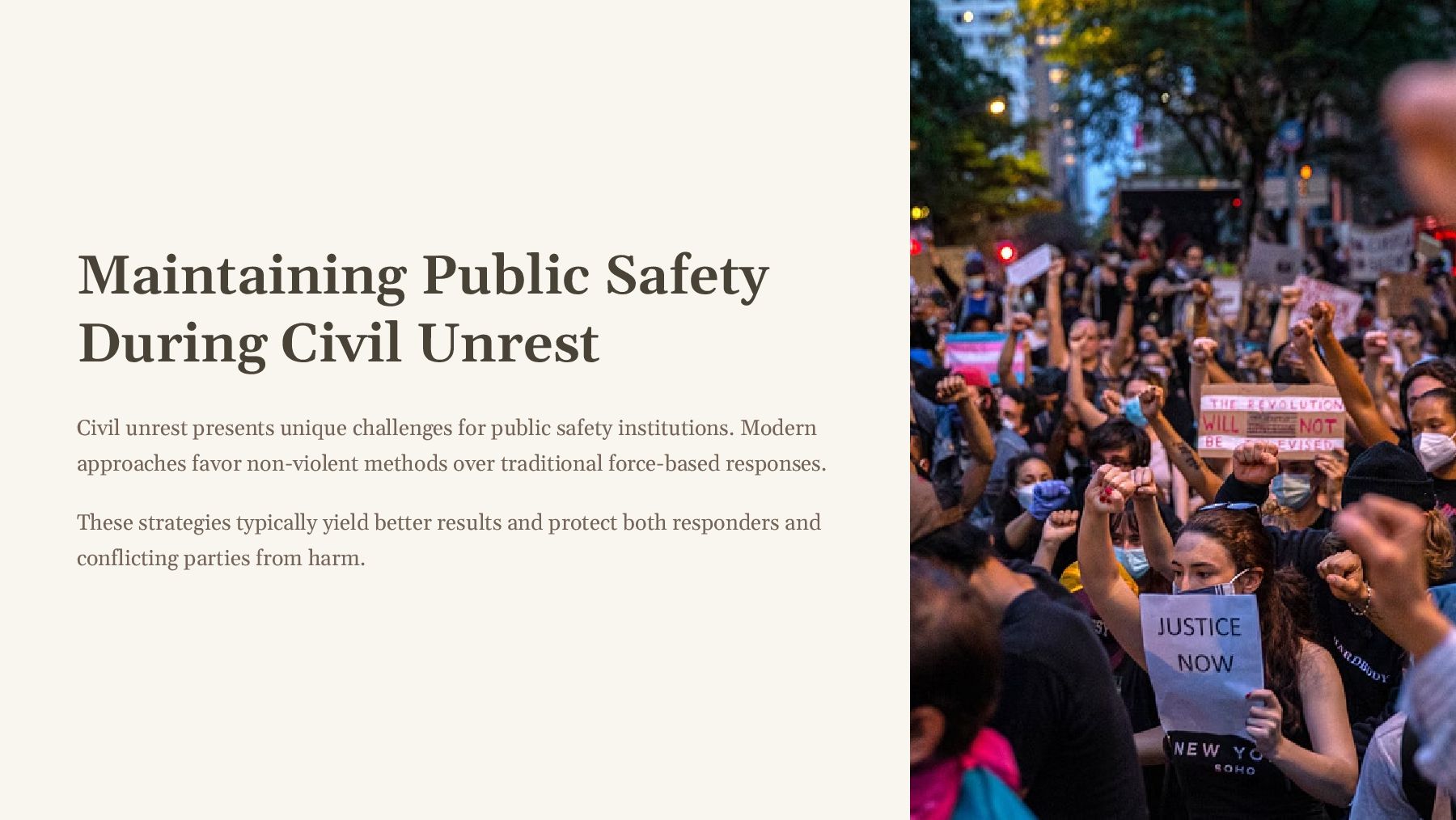
Civil unrest presents unique challenges for public safety institutions. Modern approaches favor non-violent methods over traditional force-based responses.

These strategies typically yield better results and protect both responders and conflicting parties from harm.

Avatar for Brian Uridge

Brian Uridge

May 20, 2025
Tweet

Other Decks in Education

Transcript

  1. Maintaining Public Safety During Civil Unrest Civil unrest presents unique

    challenges for public safety institutions. Modern approaches favor non-violent methods over traditional force-based responses. These strategies typically yield better results and protect both responders and conflicting parties from harm.
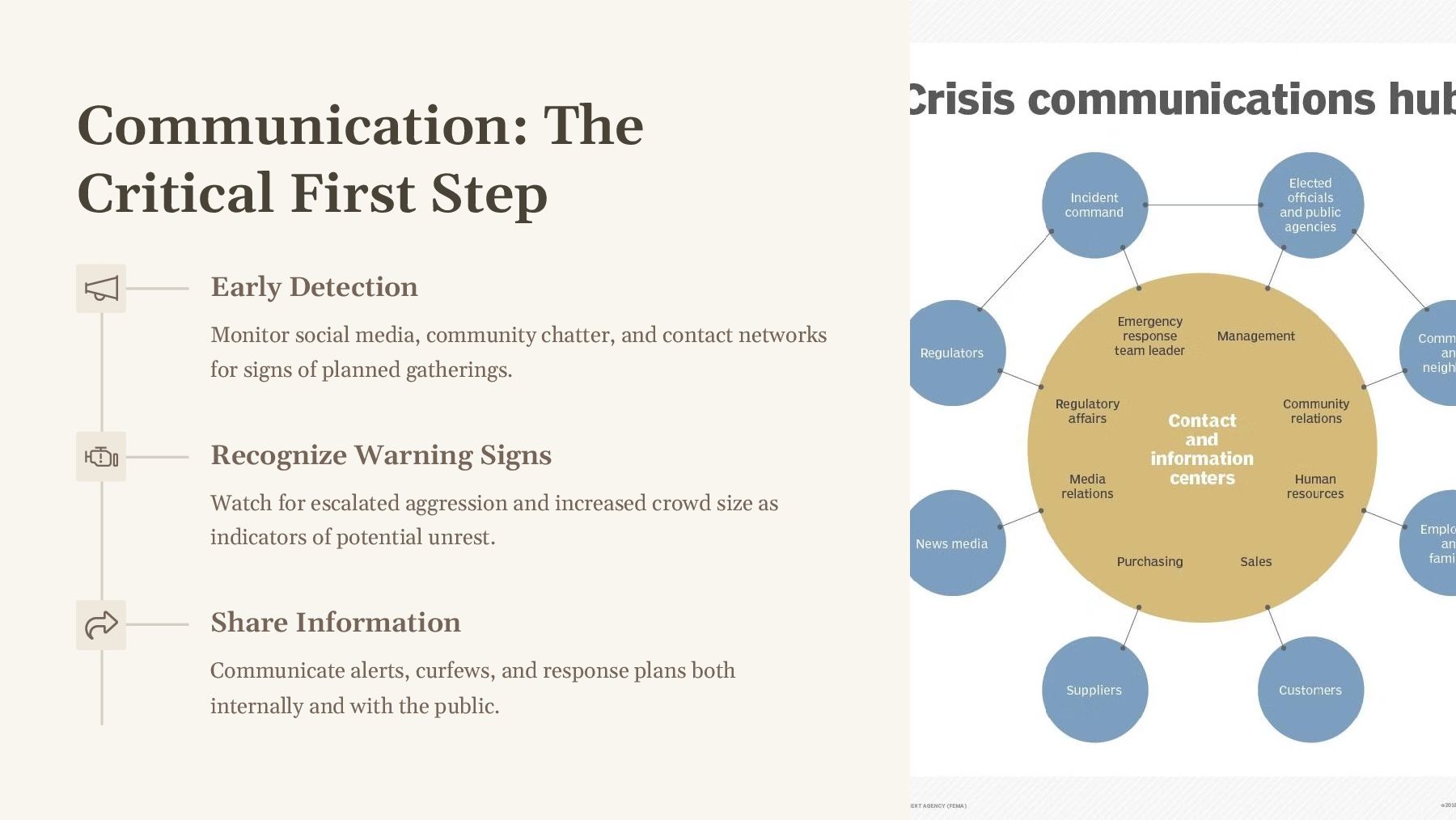
  2. Communication: The Critical First Step Early Detection Monitor social media,

    community chatter, and contact networks for signs of planned gatherings. Recognize Warning Signs Watch for escalated aggression and increased crowd size as indicators of potential unrest. Share Information Communicate alerts, curfews, and response plans both internally and with the public.
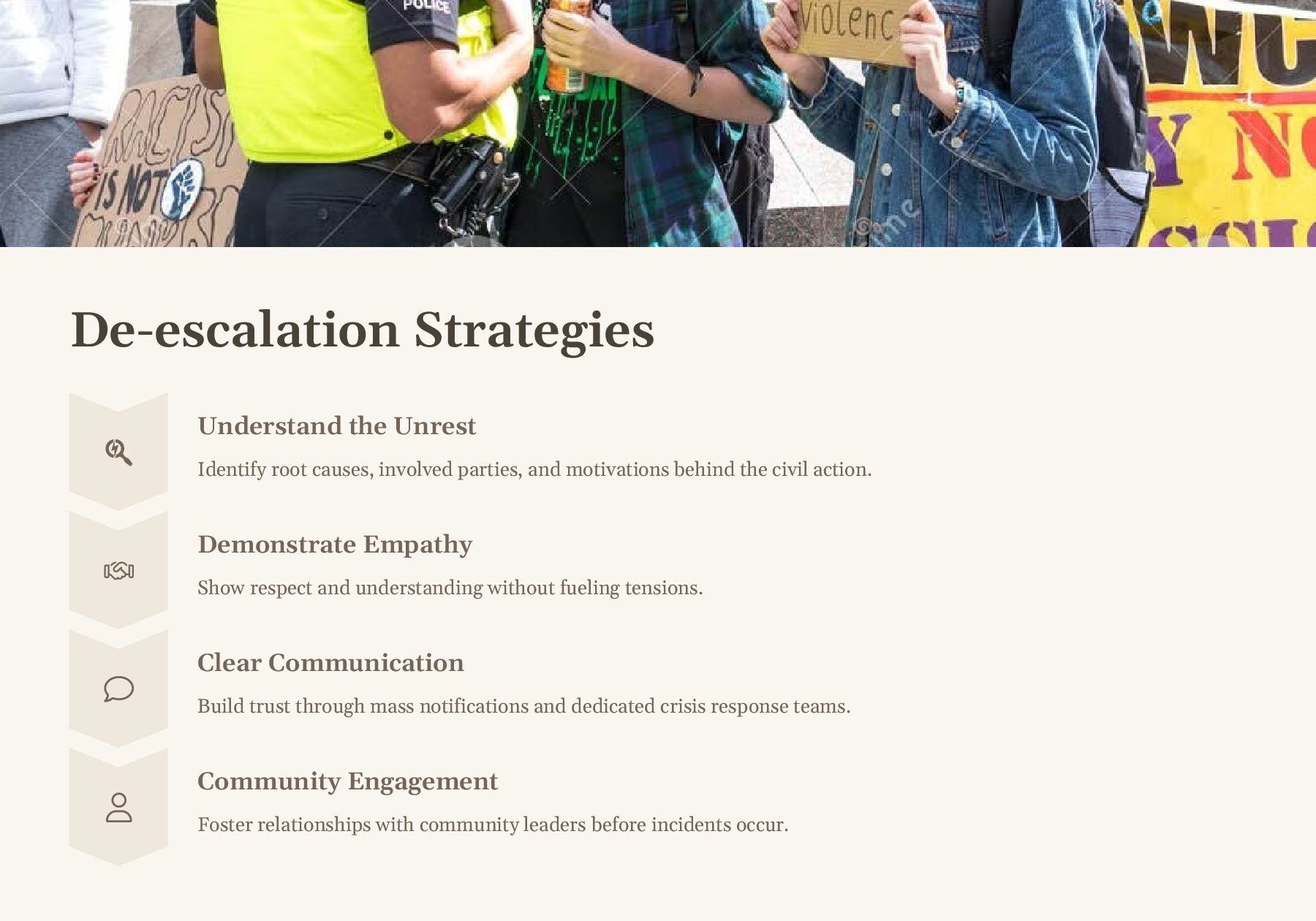
  3. De-escalation Strategies Understand the Unrest Identify root causes, involved parties,

    and motivations behind the civil action. Demonstrate Empathy Show respect and understanding without fueling tensions. Clear Communication Build trust through mass notifications and dedicated crisis response teams. Community Engagement Foster relationships with community leaders before incidents occur.
  4. Community Policing Approach Build Social Bonds Develop strong relationships with

    community members and leaders. Participate in Events Actively engage in community programs to establish trust. Identify Flashpoints Gain knowledge of potential triggers before they escalate. Mediate Conflicts Help communities understand policies that may trigger unrest.
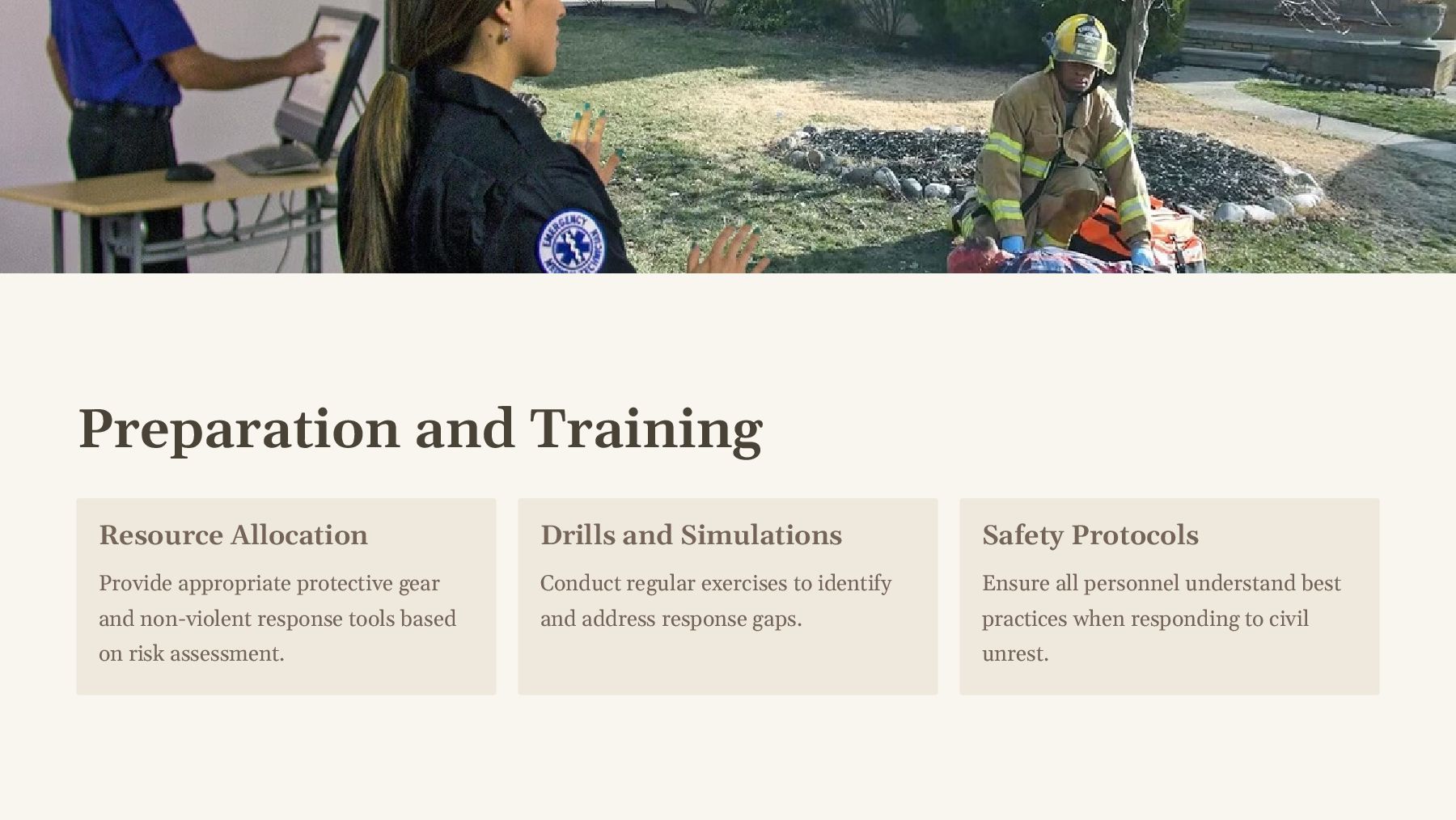
  5. Preparation and Training Resource Allocation Provide appropriate protective gear and

    non-violent response tools based on risk assessment. Drills and Simulations Conduct regular exercises to identify and address response gaps. Safety Protocols Ensure all personnel understand best practices when responding to civil unrest.