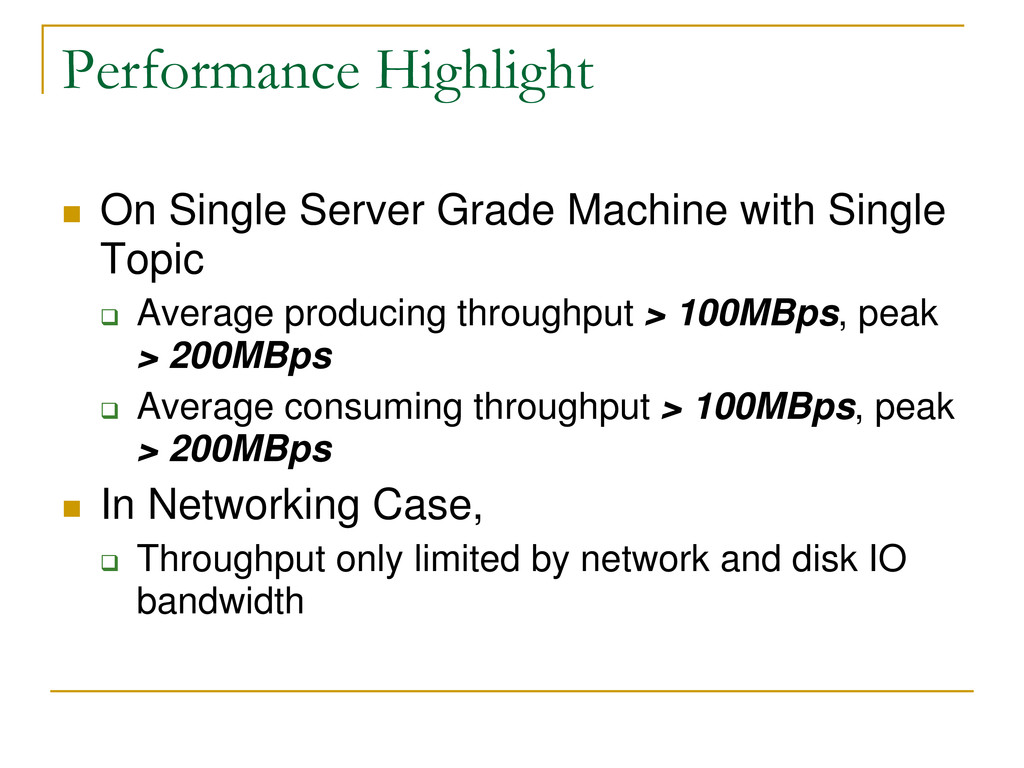
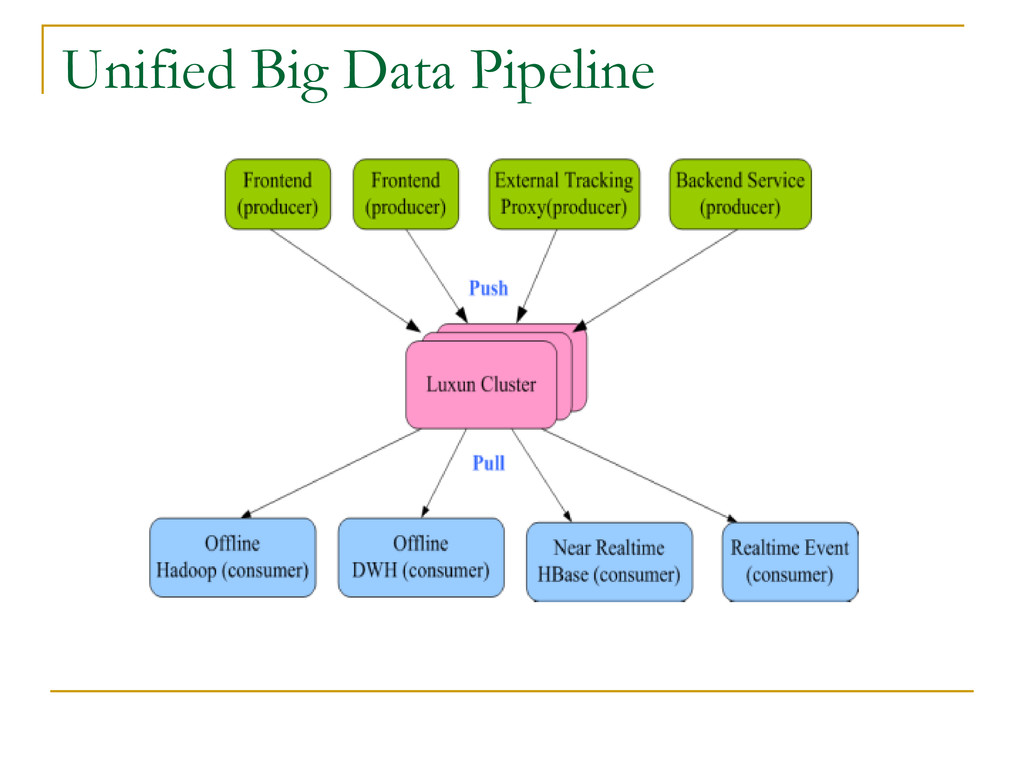
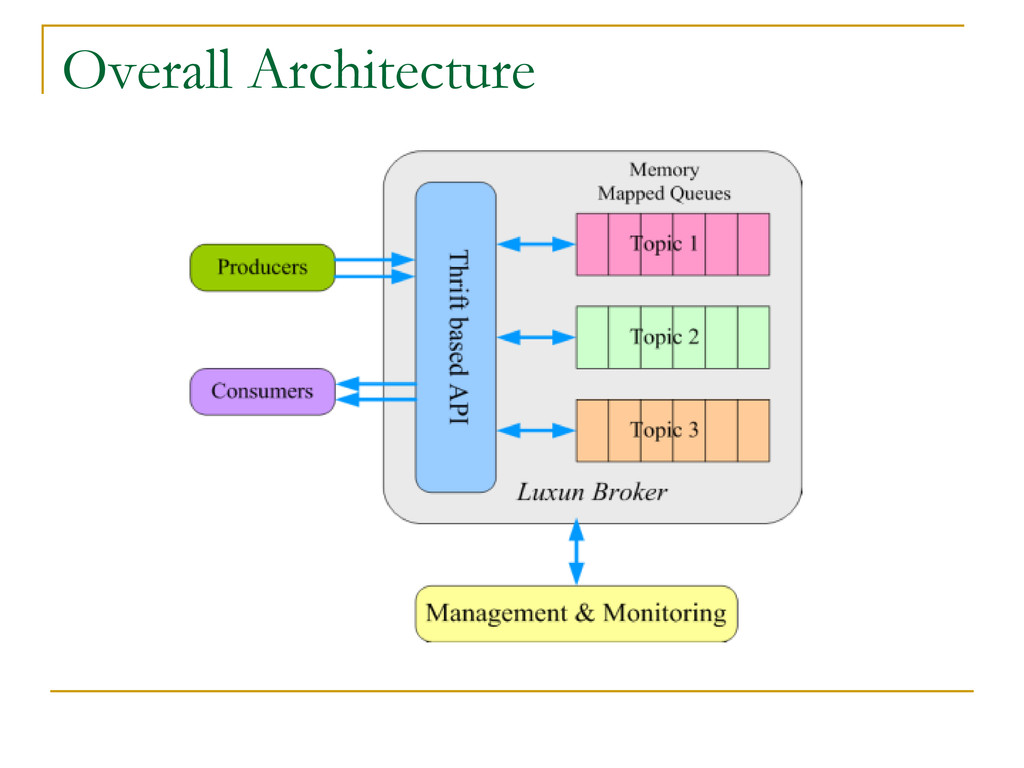
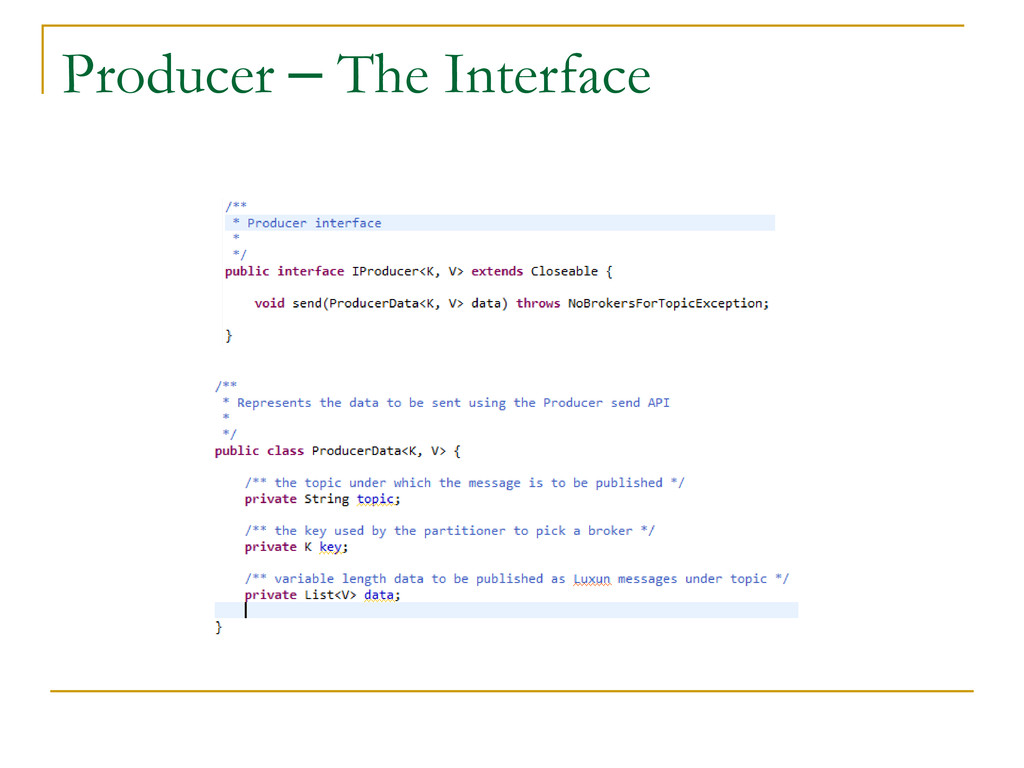
Topic Average producing throughput > 100MBps, peak > 200MBps Average consuming throughput > 100MBps, peak > 200MBps In Networking Case, Throughput only limited by network and disk IO bandwidth
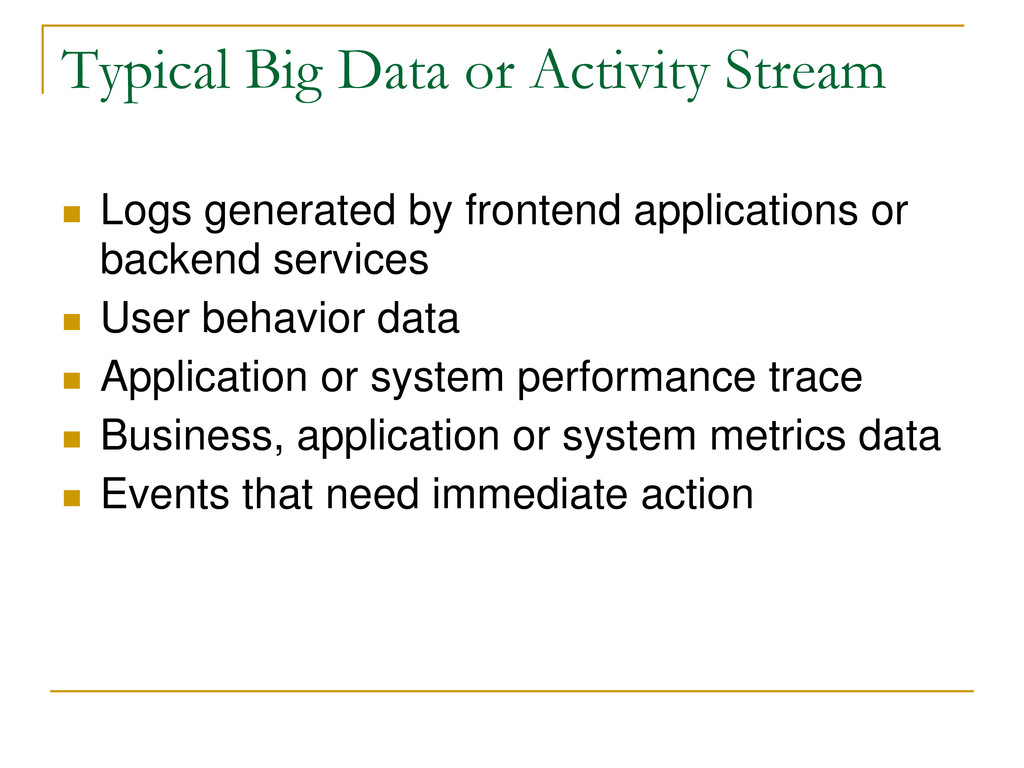
applications or backend services User behavior data Application or system performance trace Business, application or system metrics data Events that need immediate action
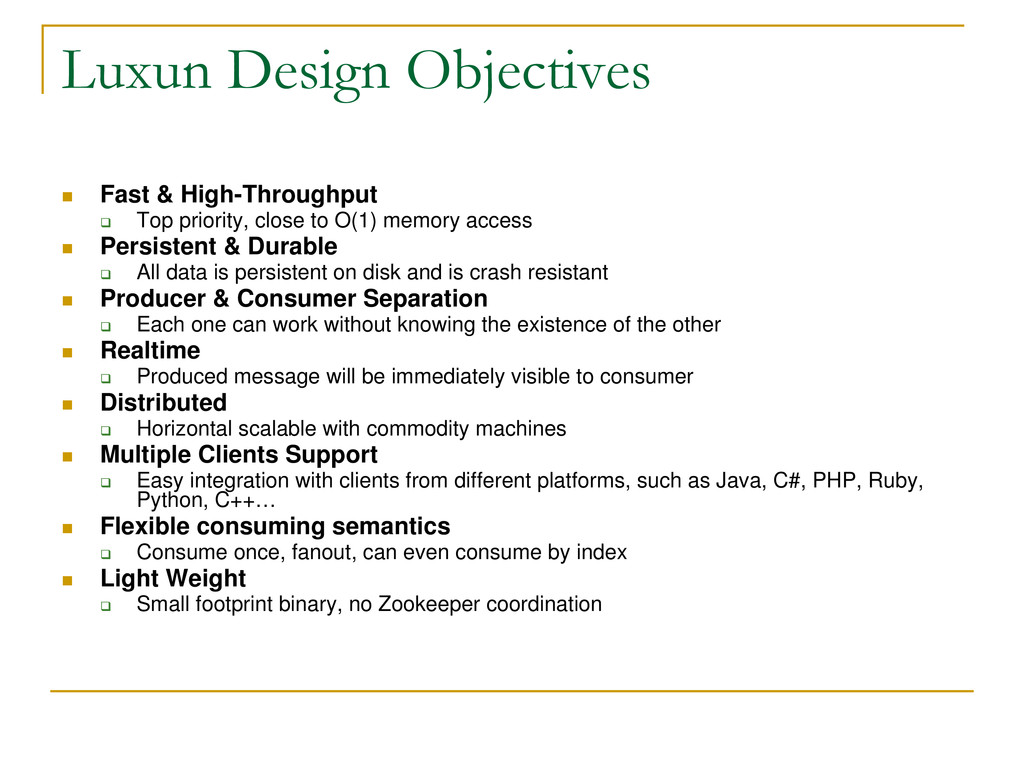
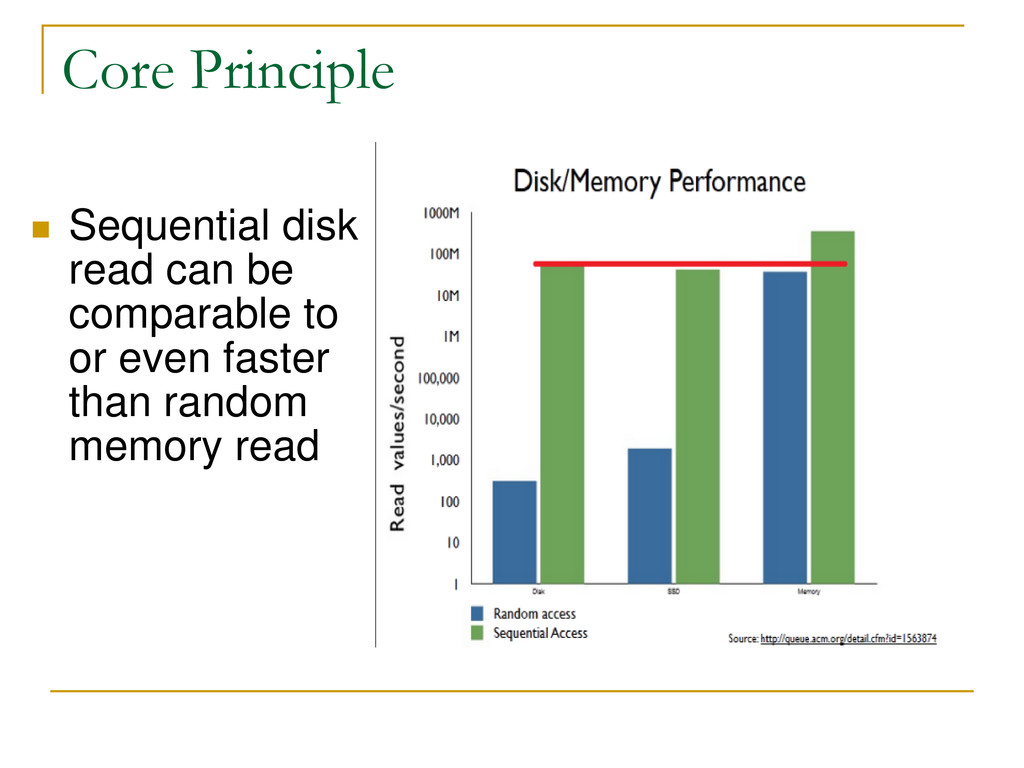
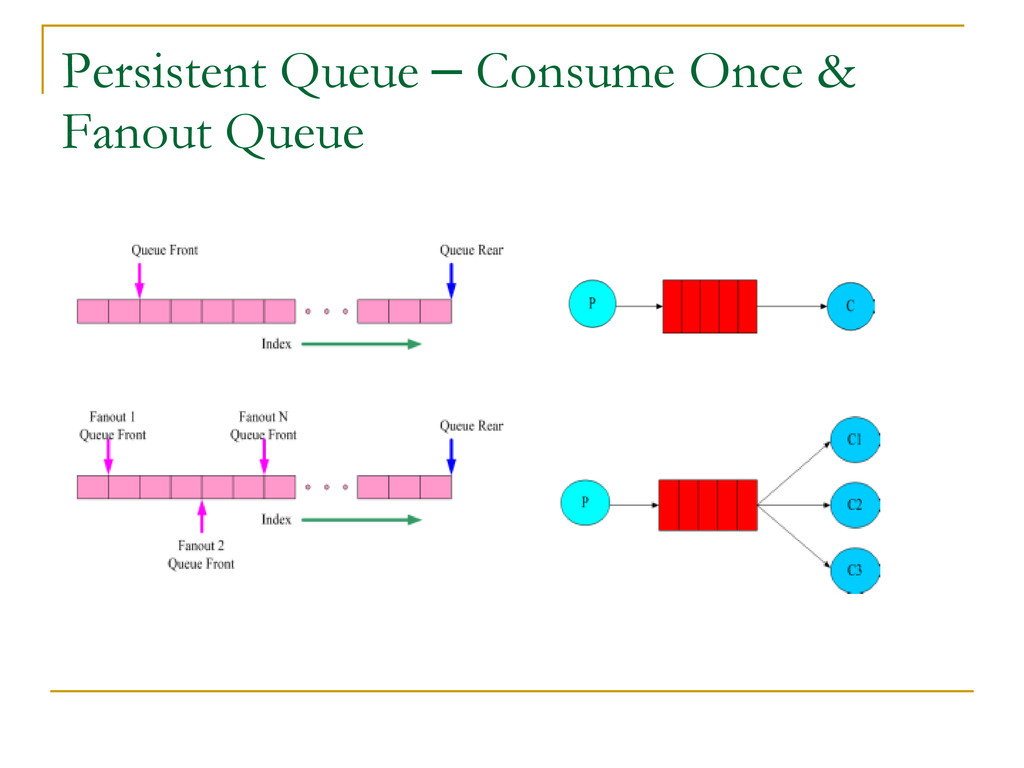
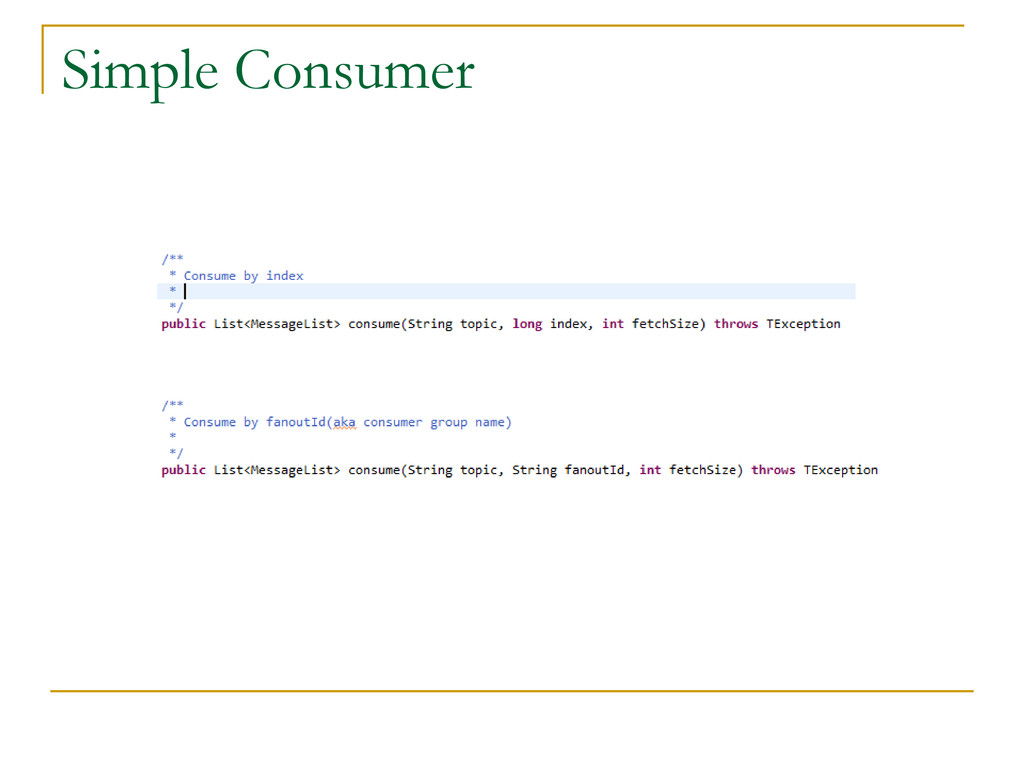
to O(1) memory access Persistent & Durable All data is persistent on disk and is crash resistant Producer & Consumer Separation Each one can work without knowing the existence of the other Realtime Produced message will be immediately visible to consumer Distributed Horizontal scalable with commodity machines Multiple Clients Support Easy integration with clients from different platforms, such as Java, C#, PHP, Ruby, Python, C++… Flexible consuming semantics Consume once, fanout, can even consume by index Light Weight Small footprint binary, no Zookeeper coordination
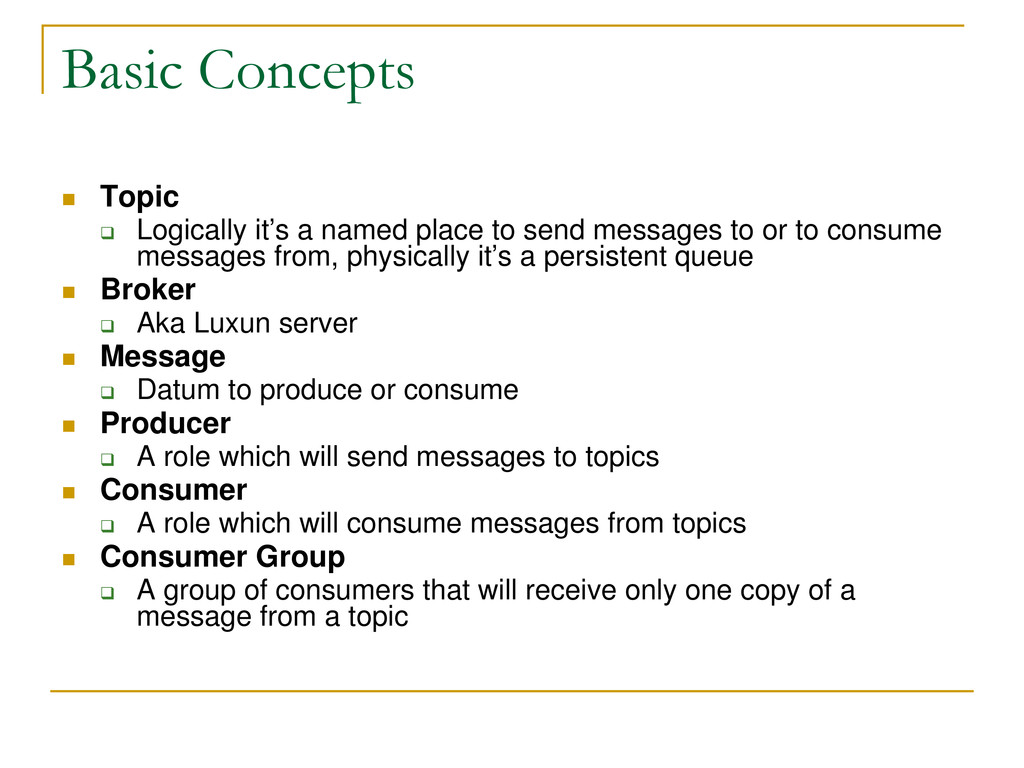
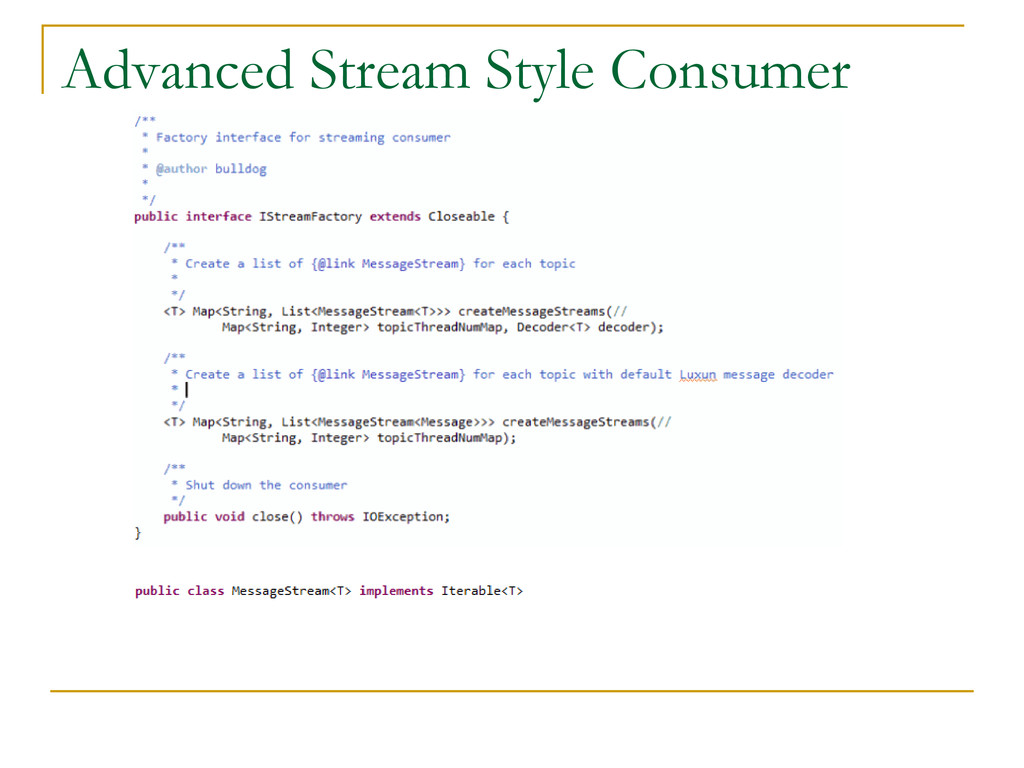
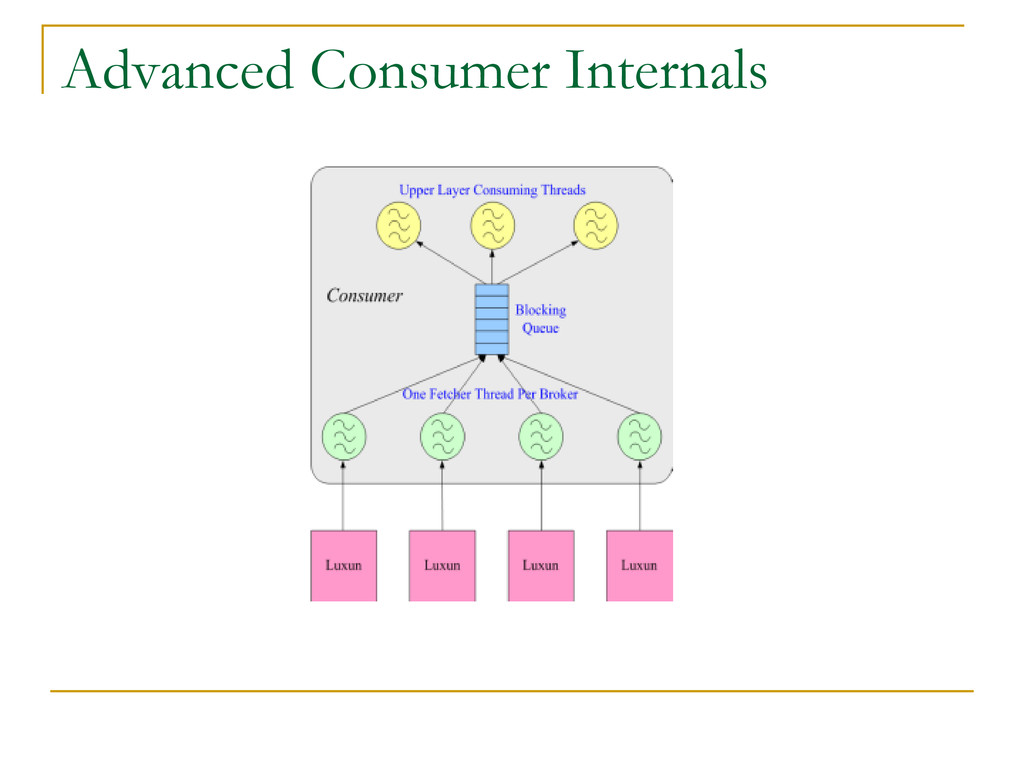
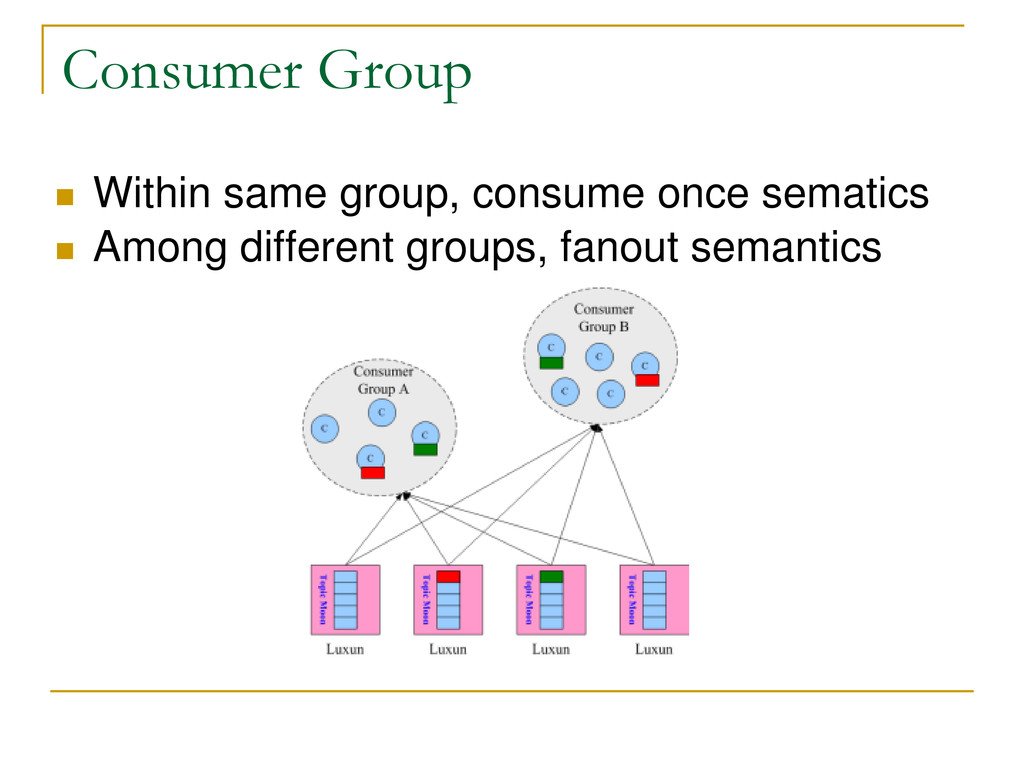
send messages to or to consume messages from, physically it’s a persistent queue Broker Aka Luxun server Message Datum to produce or consume Producer A role which will send messages to topics Consumer A role which will consume messages from topics Consumer Group A group of consumers that will receive only one copy of a message from a topic
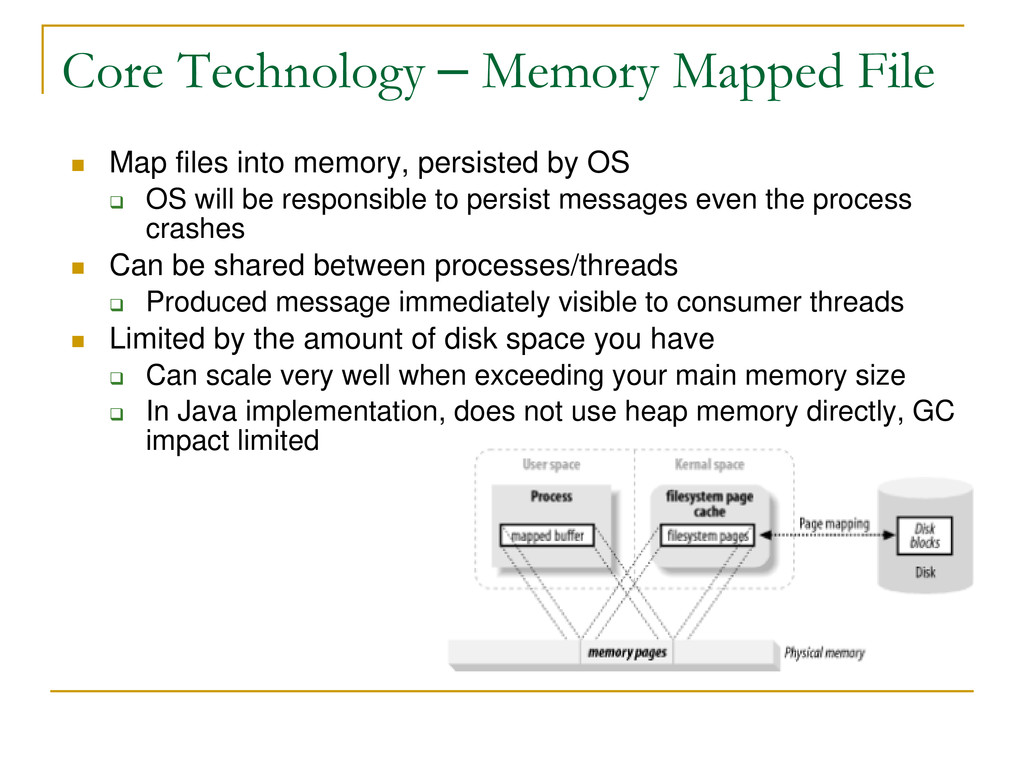
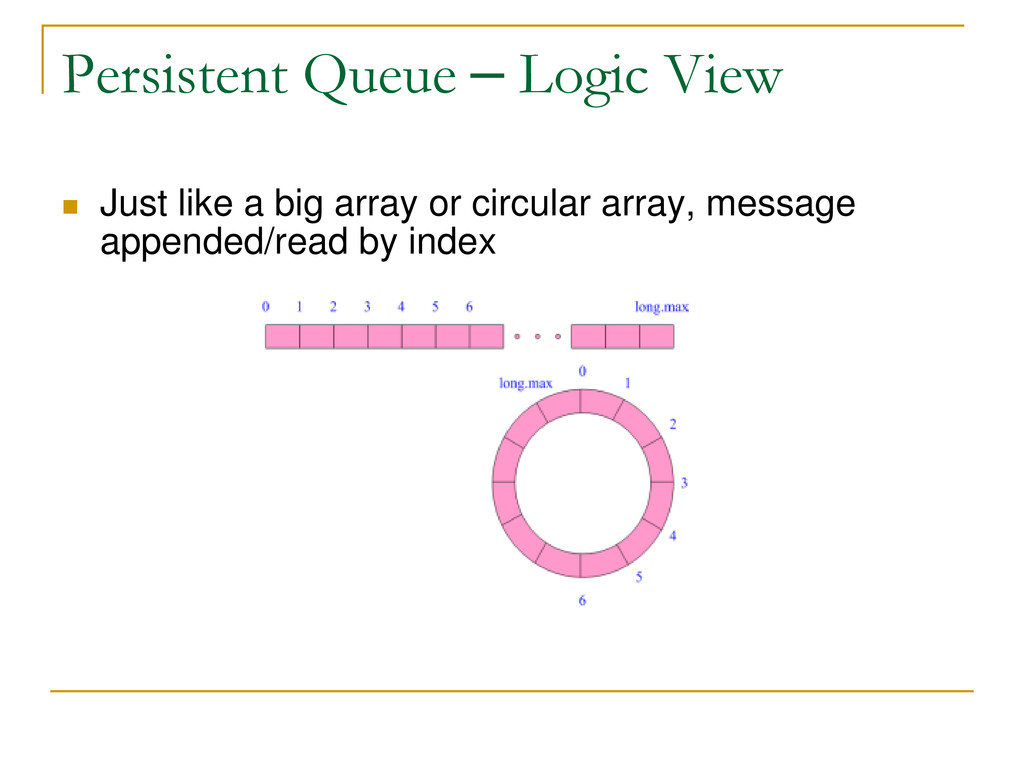
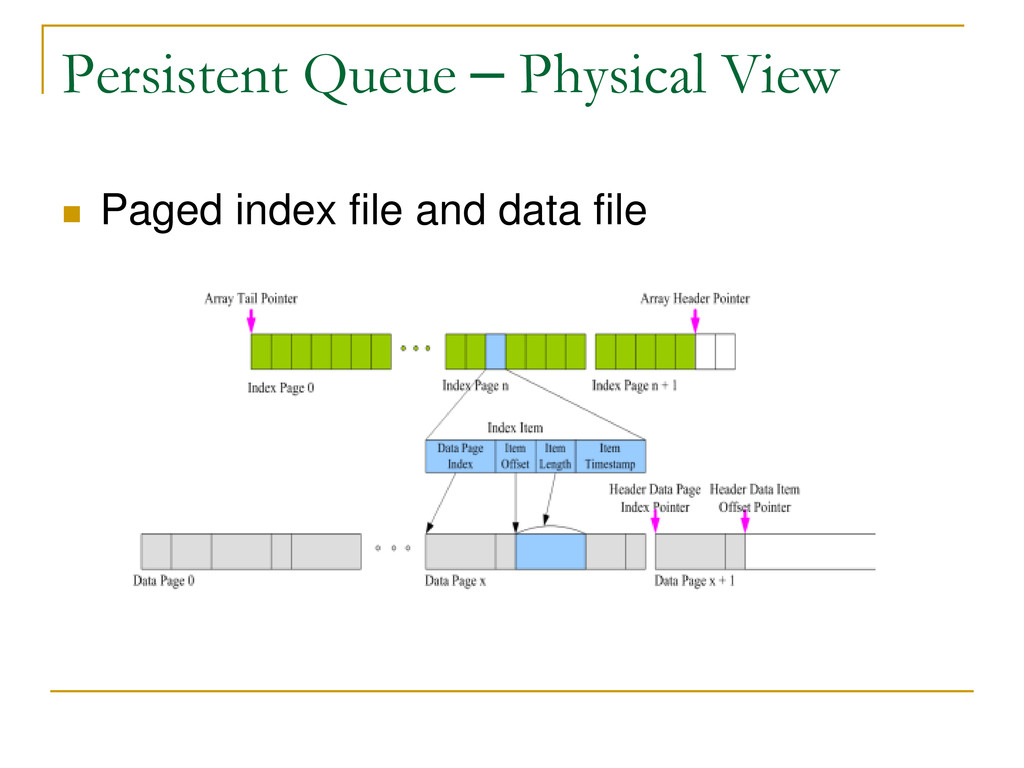
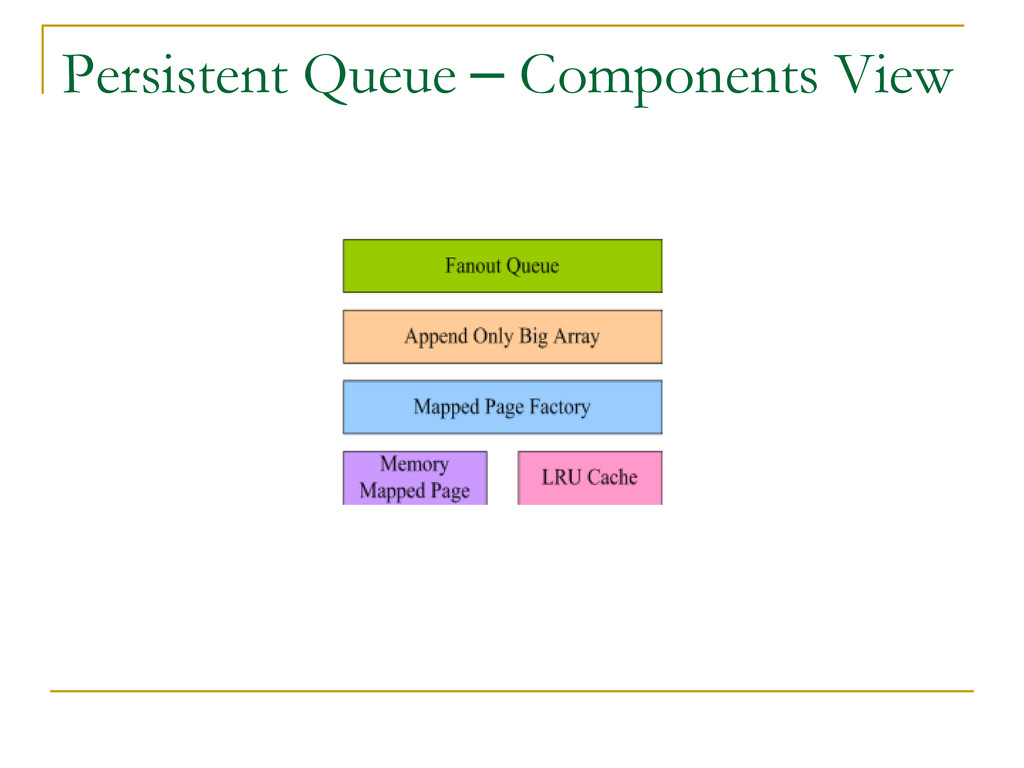
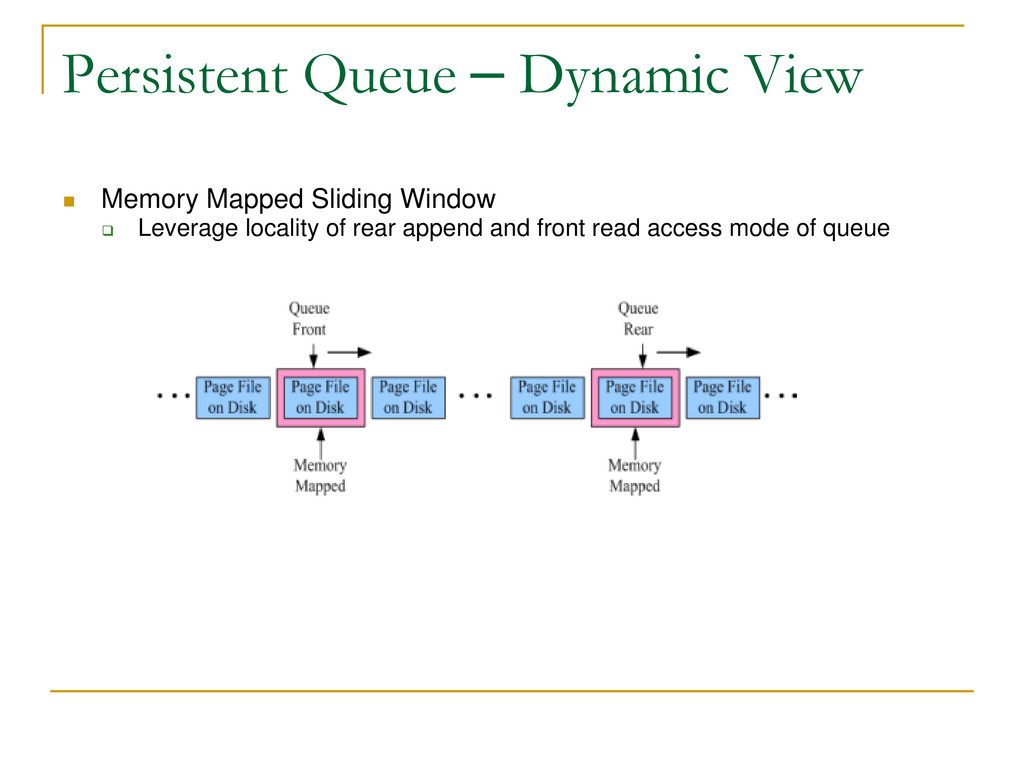
persisted by OS OS will be responsible to persist messages even the process crashes Can be shared between processes/threads Produced message immediately visible to consumer threads Limited by the amount of disk space you have Can scale very well when exceeding your main memory size In Java implementation, does not use heap memory directly, GC impact limited
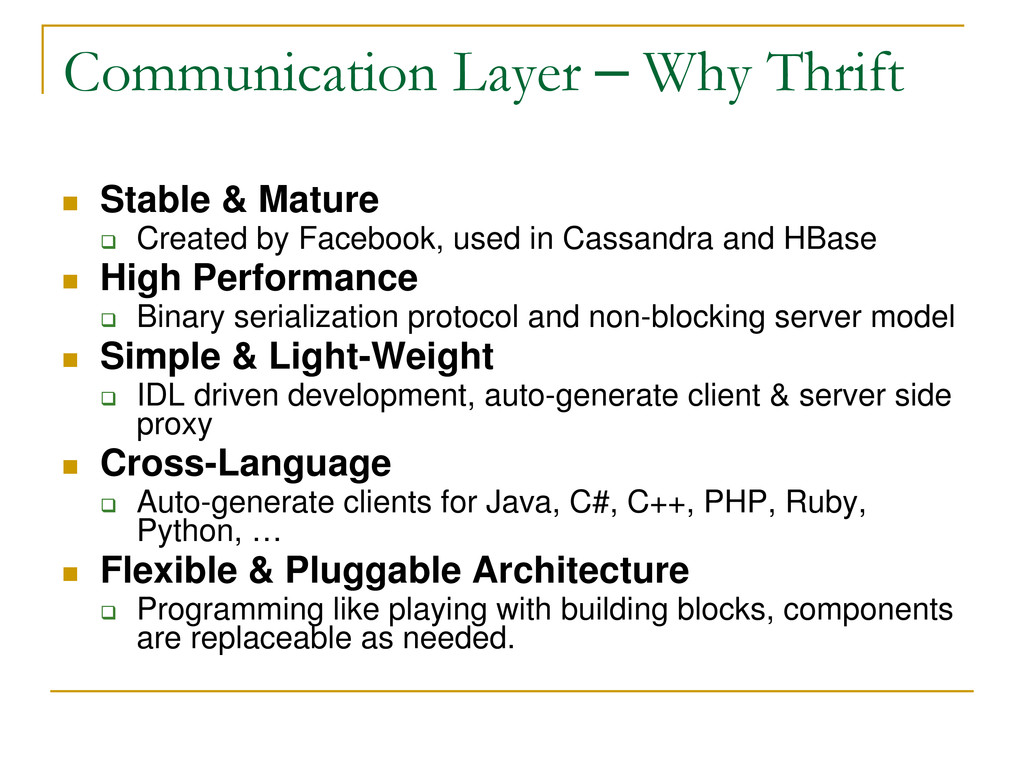
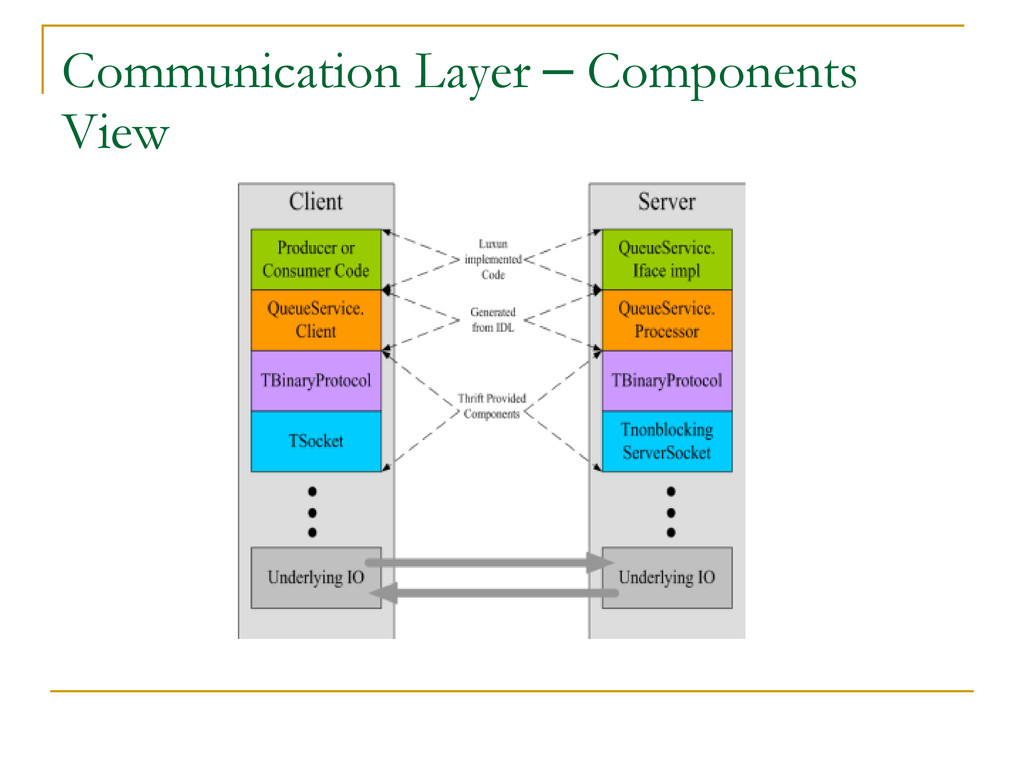
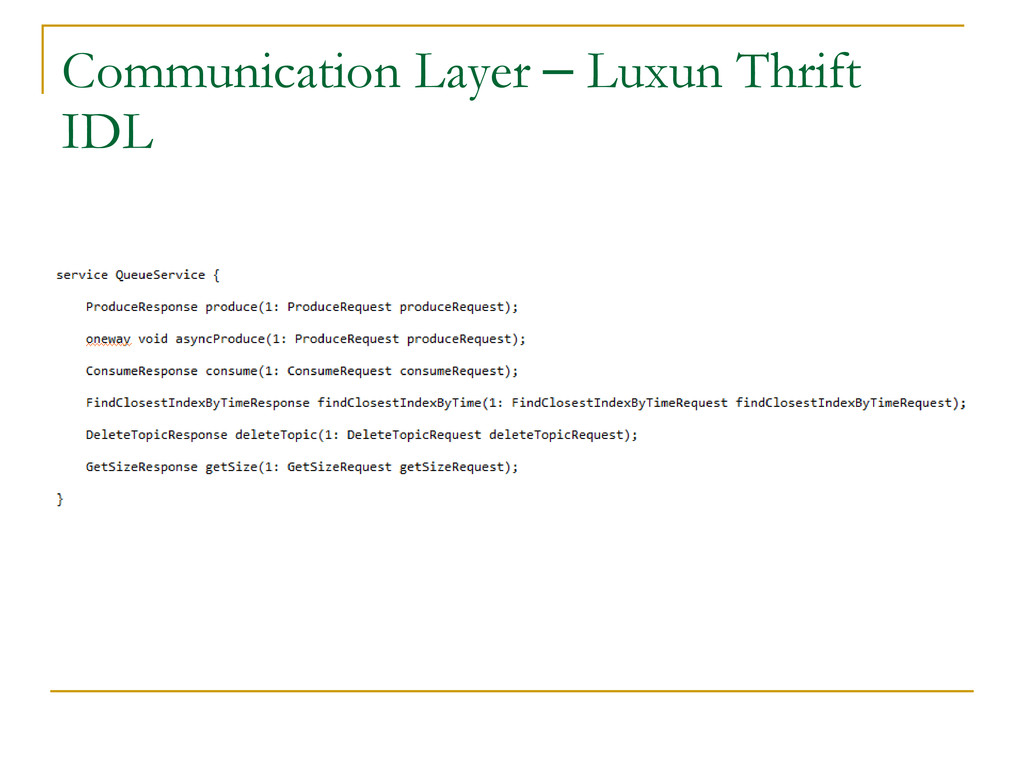
by Facebook, used in Cassandra and HBase High Performance Binary serialization protocol and non-blocking server model Simple & Light-Weight IDL driven development, auto-generate client & server side proxy Cross-Language Auto-generate clients for Java, C#, C++, PHP, Ruby, Python, … Flexible & Pluggable Architecture Programming like playing with building blocks, components are replaceable as needed.
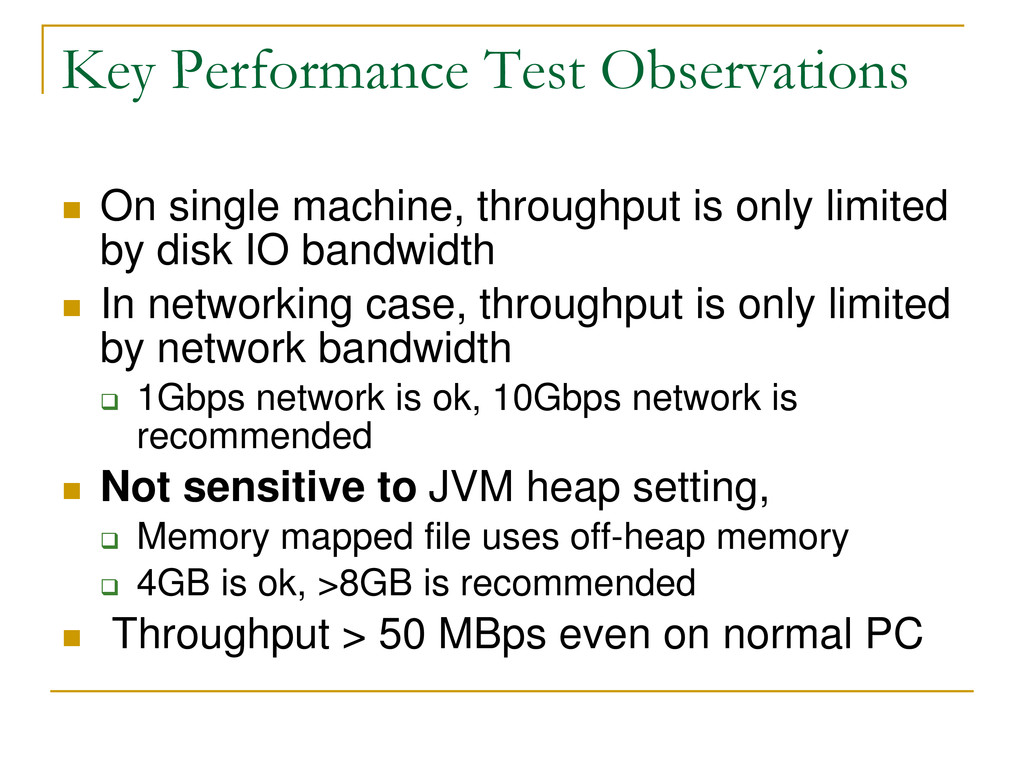
limited by disk IO bandwidth In networking case, throughput is only limited by network bandwidth 1Gbps network is ok, 10Gbps network is recommended Not sensitive to JVM heap setting, Memory mapped file uses off-heap memory 4GB is ok, >8GB is recommended Throughput > 50 MBps even on normal PC
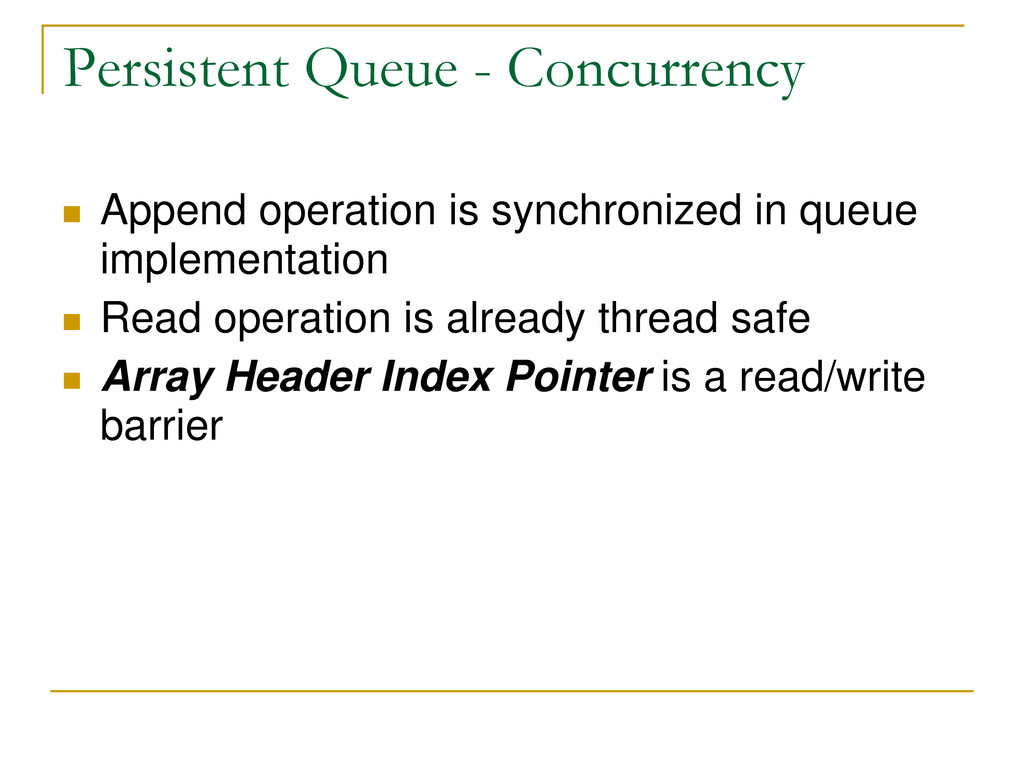
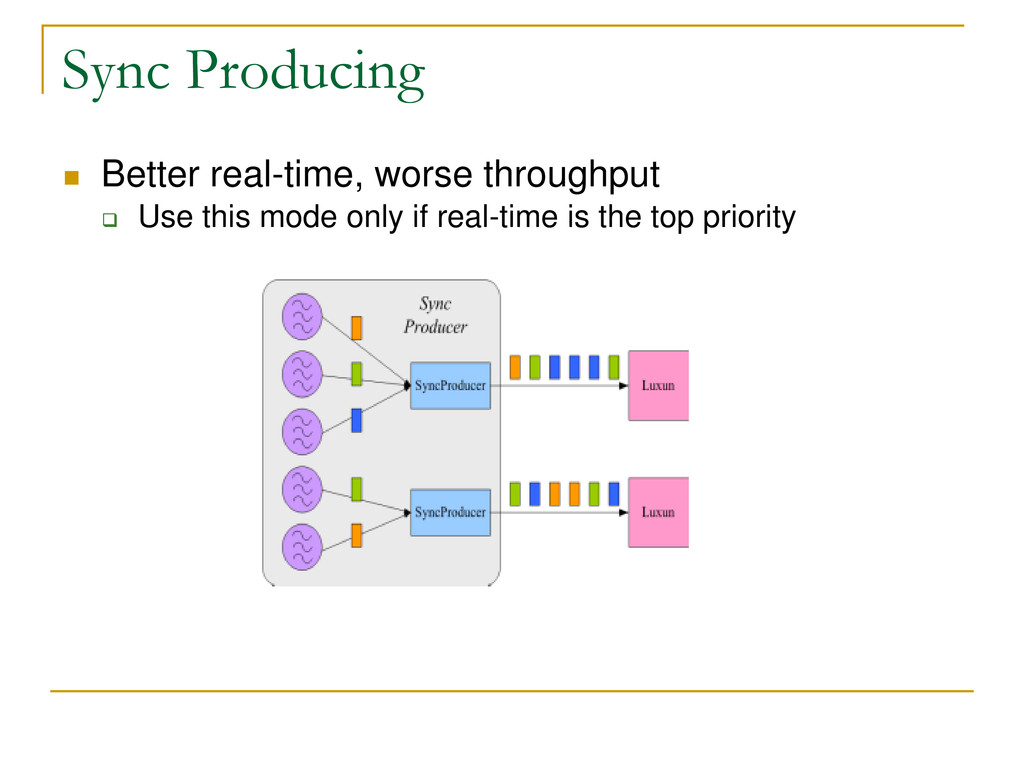
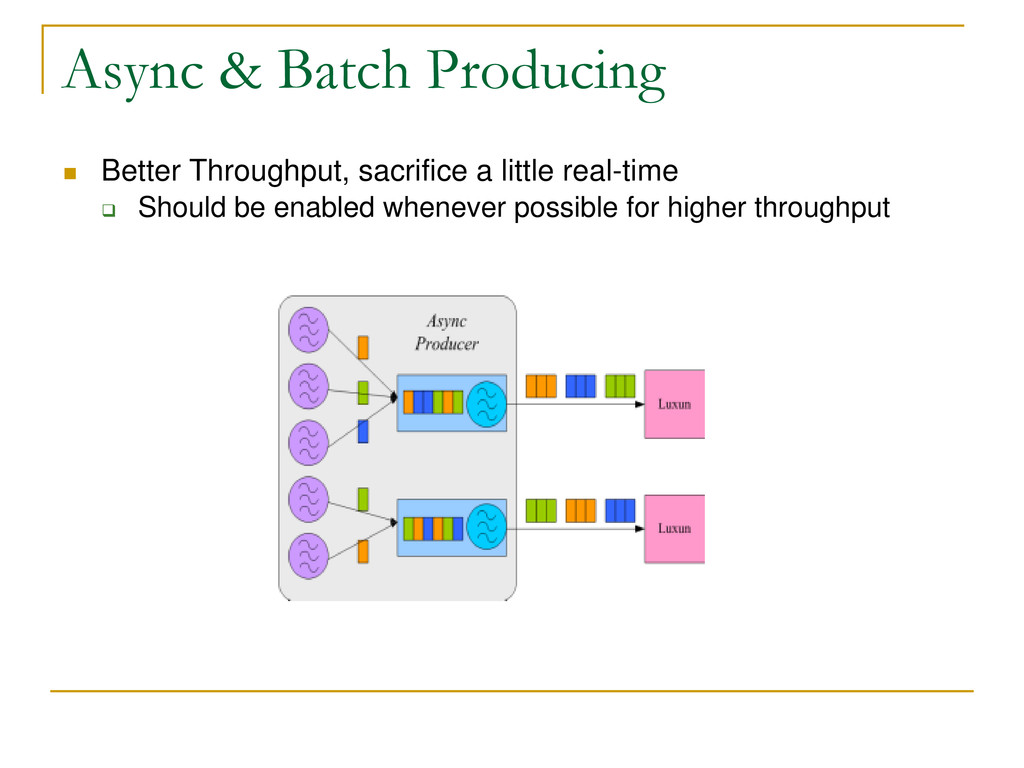
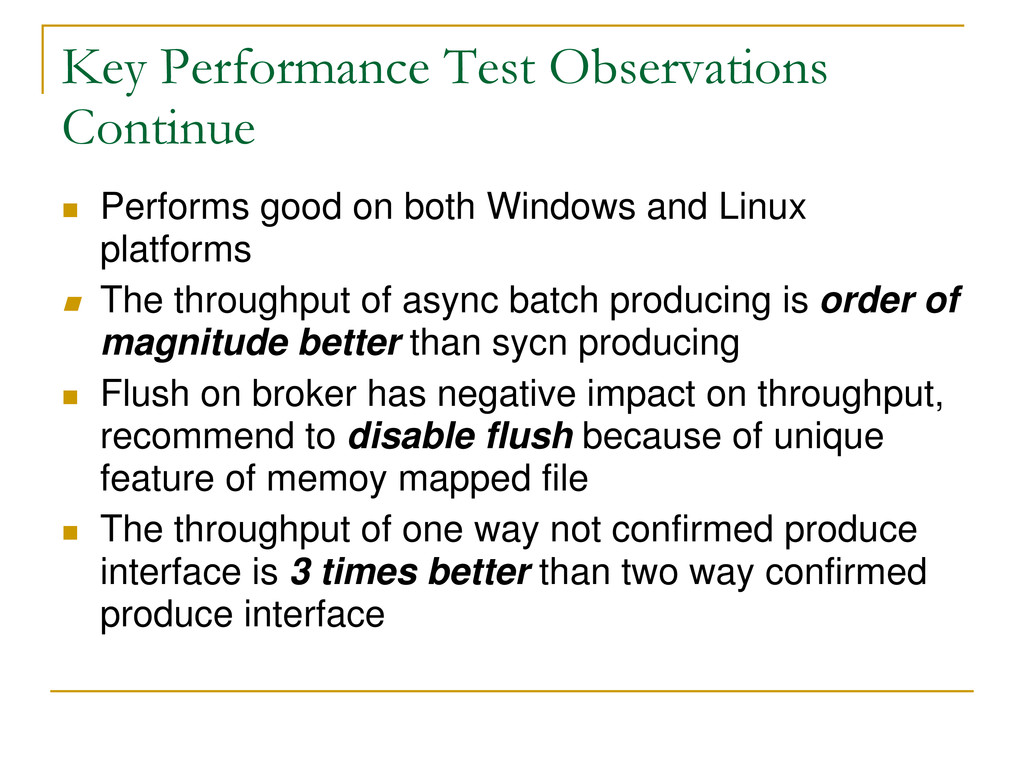
and Linux platforms The throughput of async batch producing is order of magnitude better than sycn producing Flush on broker has negative impact on throughput, recommend to disable flush because of unique feature of memoy mapped file The throughput of one way not confirmed produce interface is 3 times better than two way confirmed produce interface
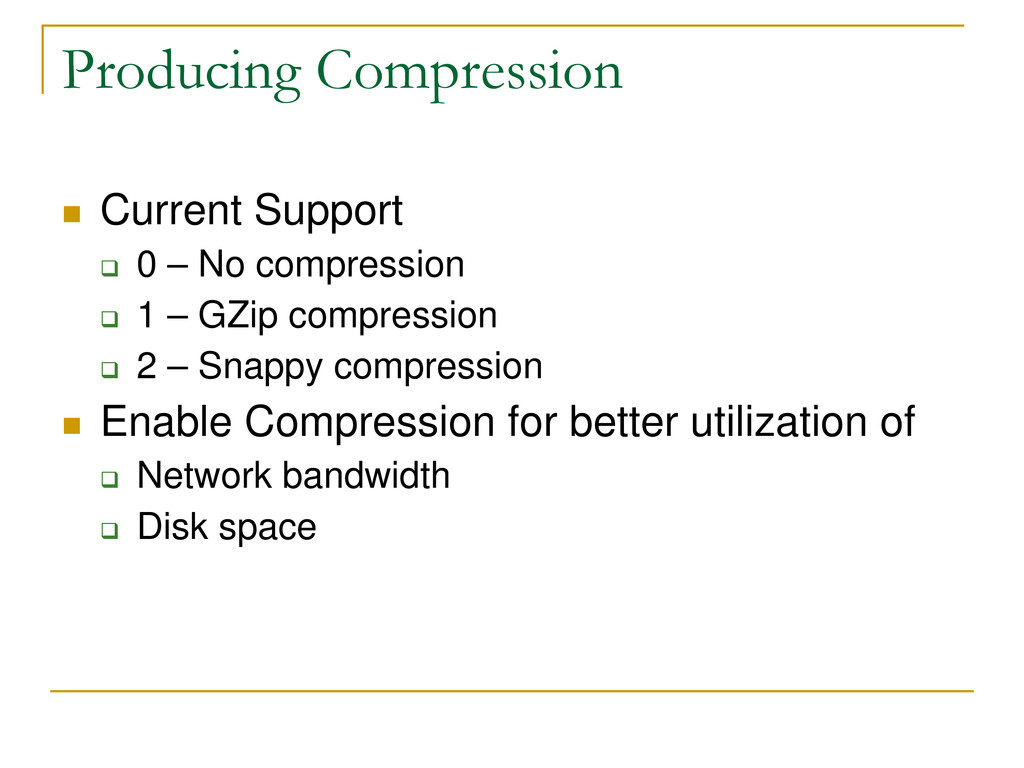
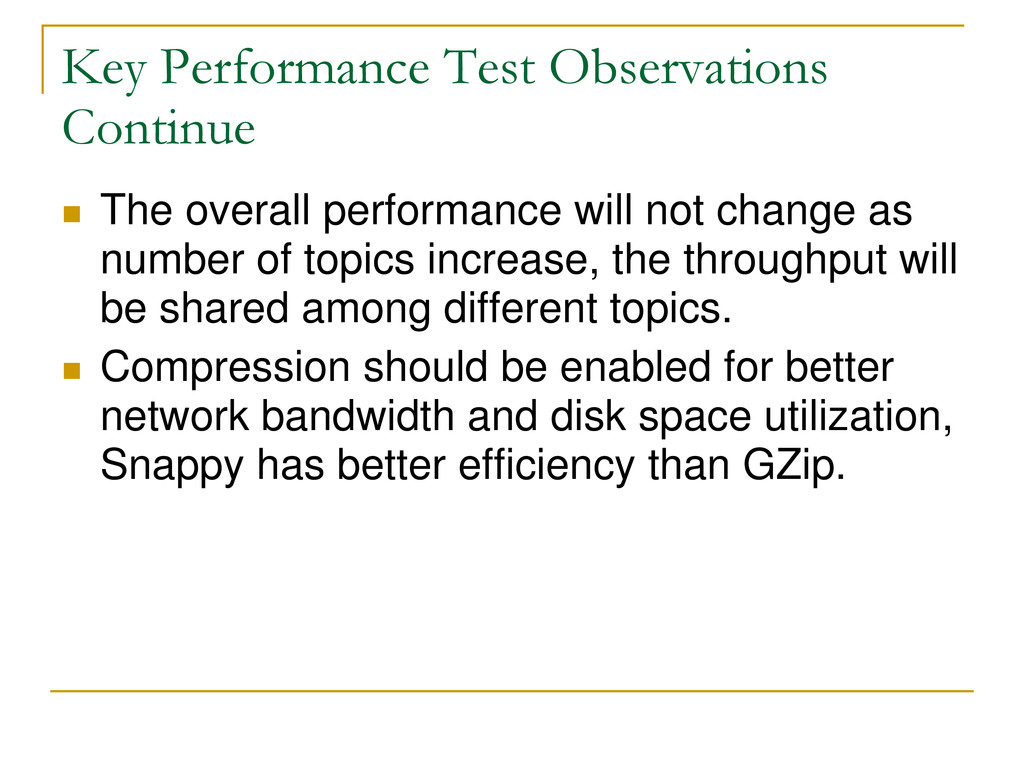
change as number of topics increase, the throughput will be shared among different topics. Compression should be enabled for better network bandwidth and disk space utilization, Snappy has better efficiency than GZip.
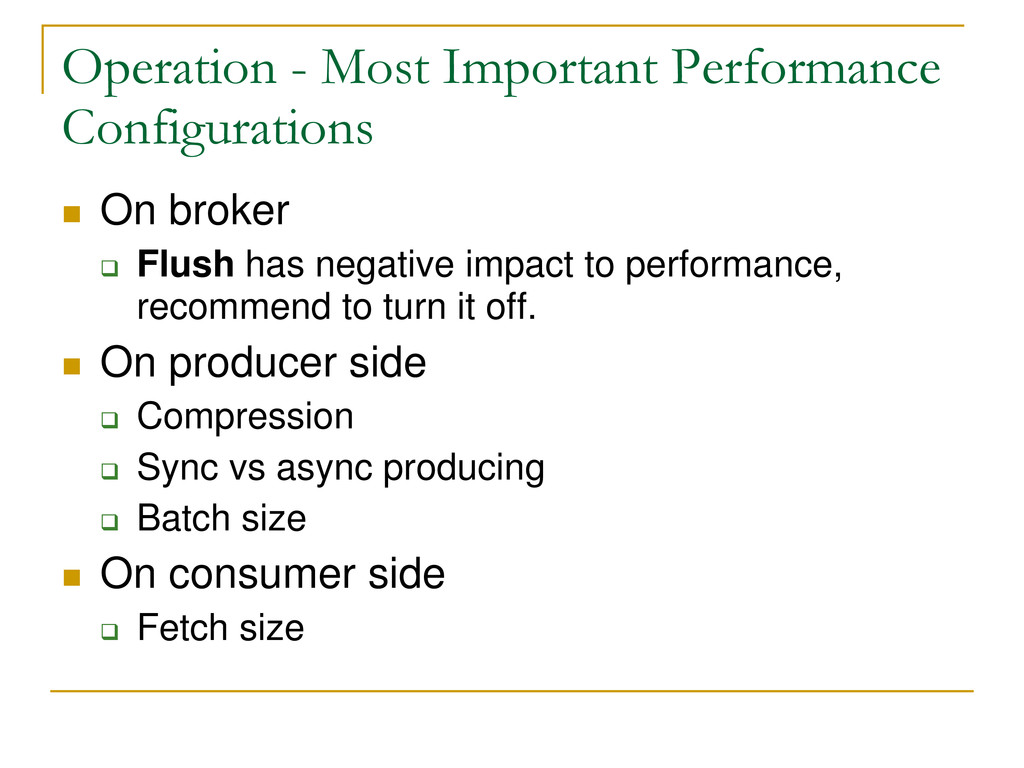
has negative impact to performance, recommend to turn it off. On producer side Compression Sync vs async producing Batch size On consumer side Fetch size
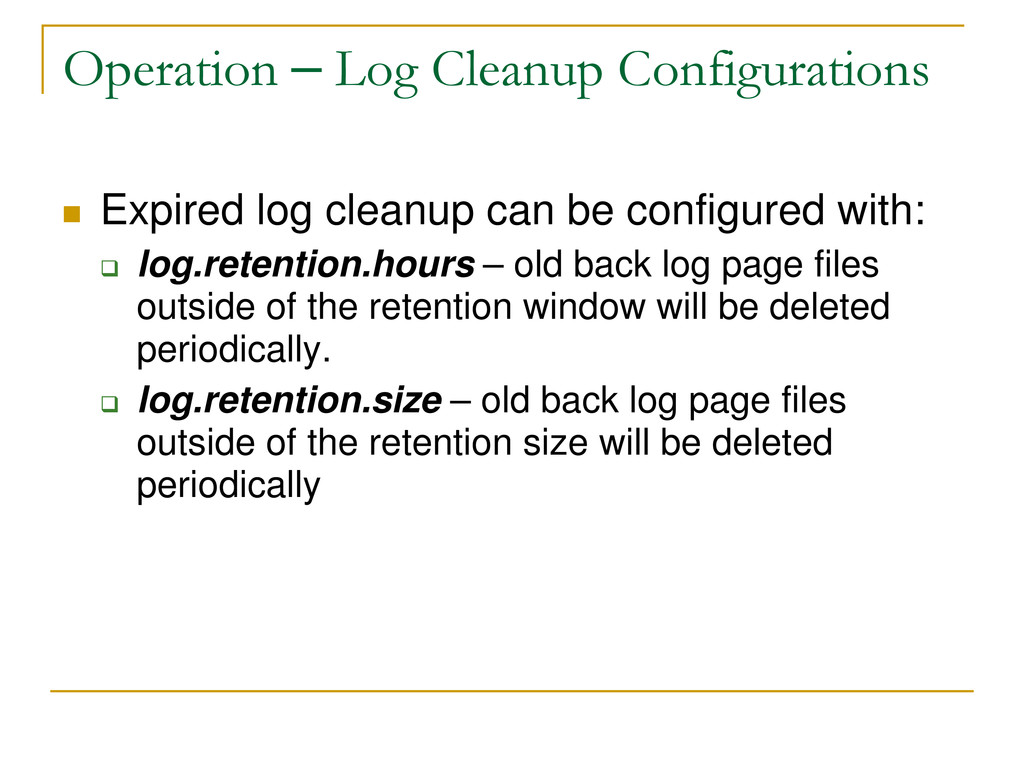
configured with: log.retention.hours – old back log page files outside of the retention window will be deleted periodically. log.retention.size – old back log page files outside of the retention size will be deleted periodically
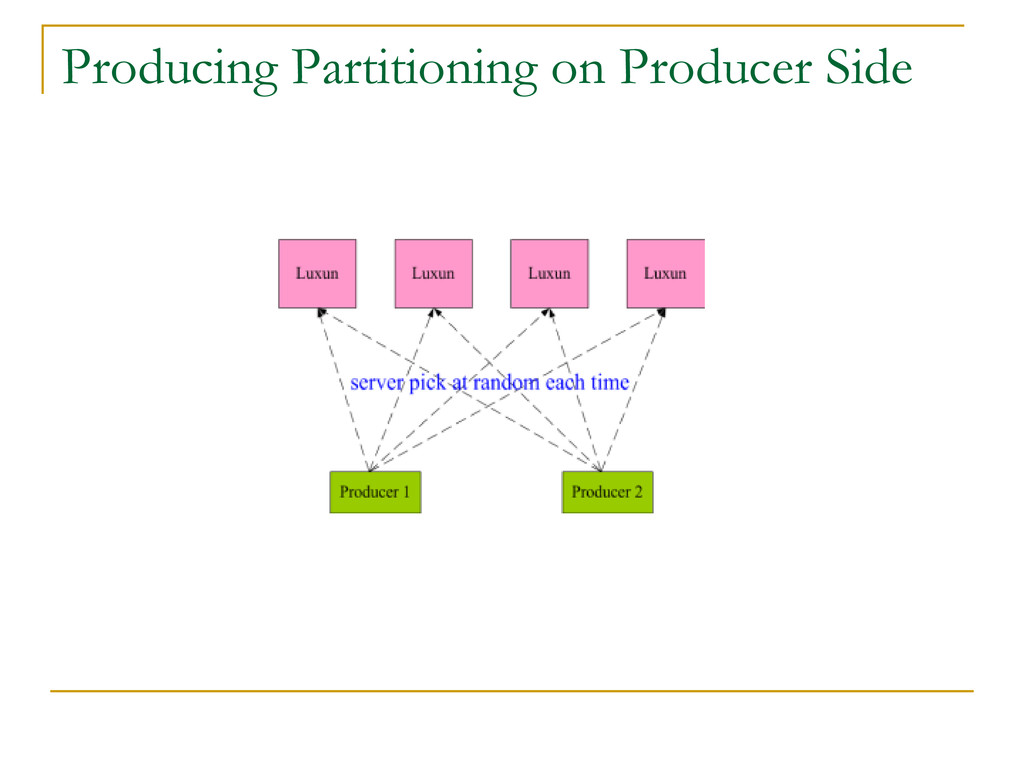
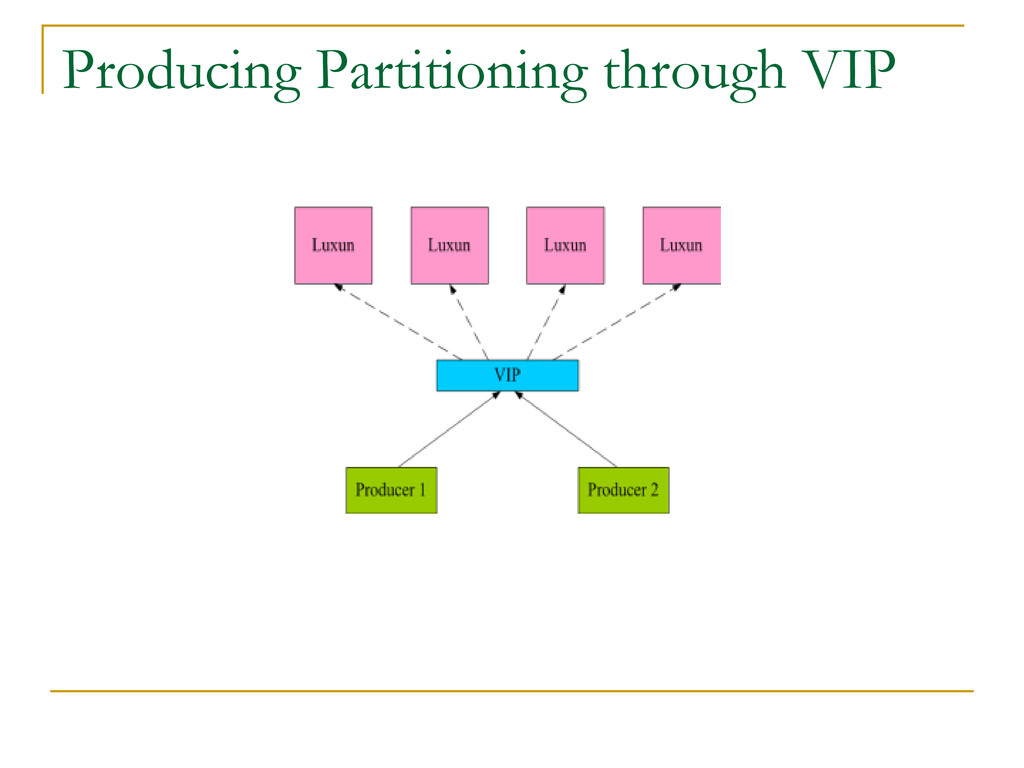
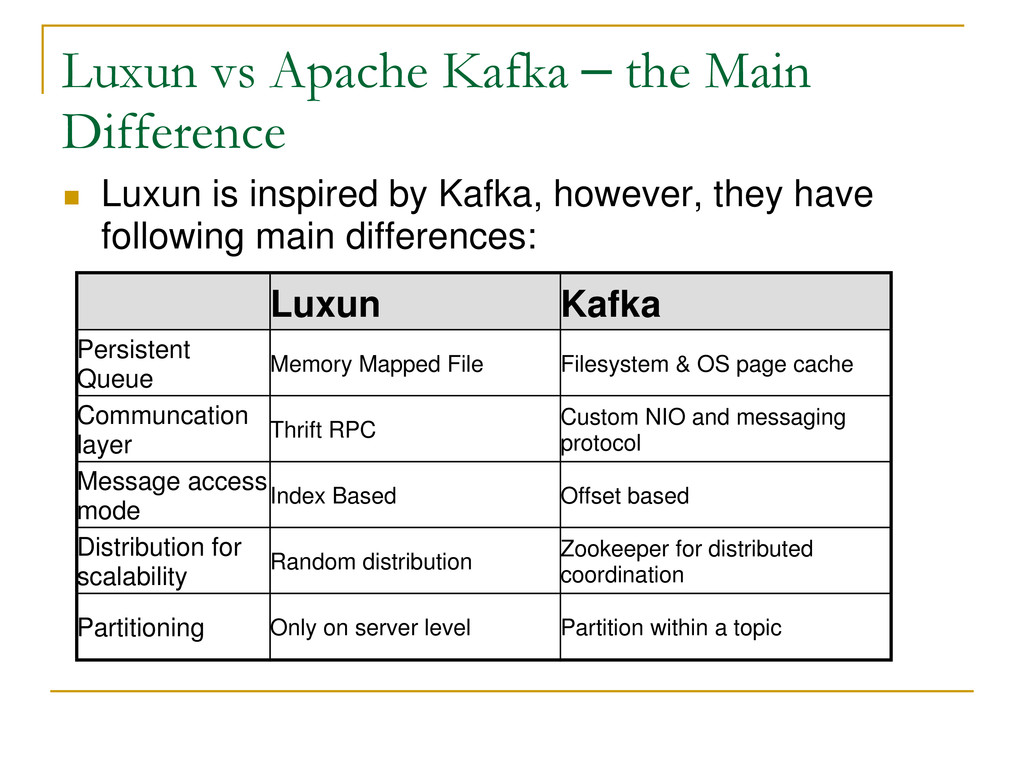
inspired by Kafka, however, they have following main differences: Luxun Kafka Persistent Queue Memory Mapped File Filesystem & OS page cache Communcation layer Thrift RPC Custom NIO and messaging protocol Message access mode Index Based Offset based Distribution for scalability Random distribution Zookeeper for distributed coordination Partitioning Only on server level Partition within a topic
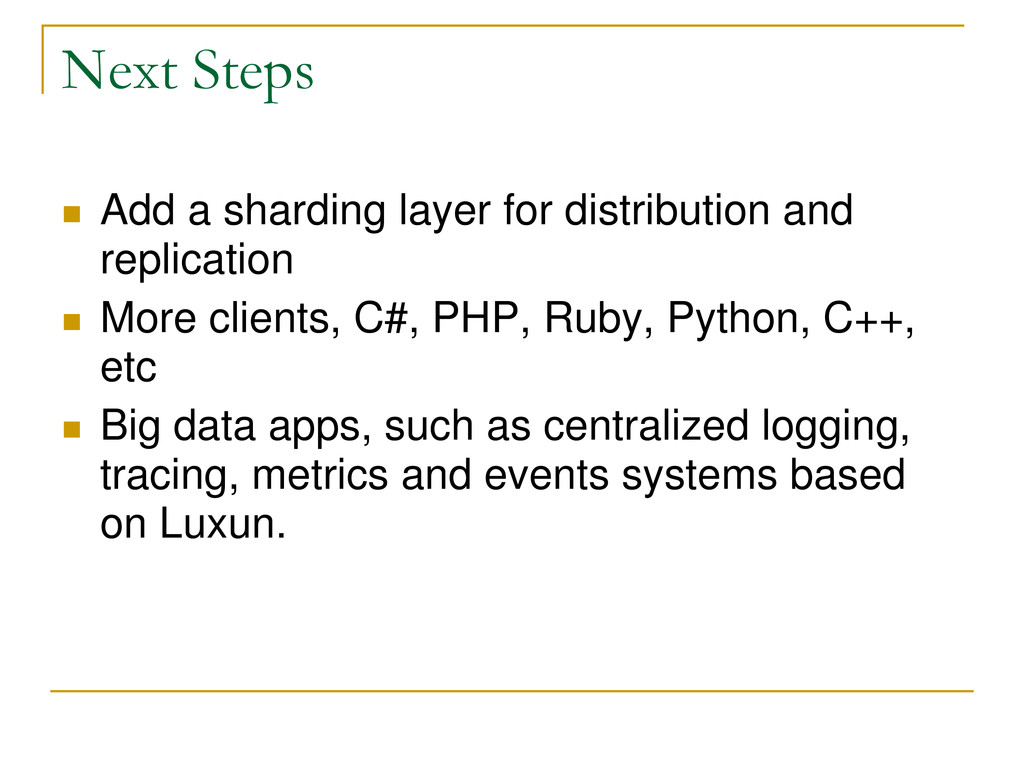
replication More clients, C#, PHP, Ruby, Python, C++, etc Big data apps, such as centralized logging, tracing, metrics and events systems based on Luxun.


 bulldog2011
 ivry_presentationmaterials
 yazm
 techtekt
 puhitaku
 bgpat
 koukihosaka
 bengo4com
 riyaamemiya
 pfn
 yut0naga1_fa
 kash1064
 oasis1994liveforever
 codingconduct
 auna
 techseoconnect
 rasagy
 cromwellryan
 tammielis
 axbom
 addyosmani
 madoxten
 rkendrick25
 geshan
 ipullrank