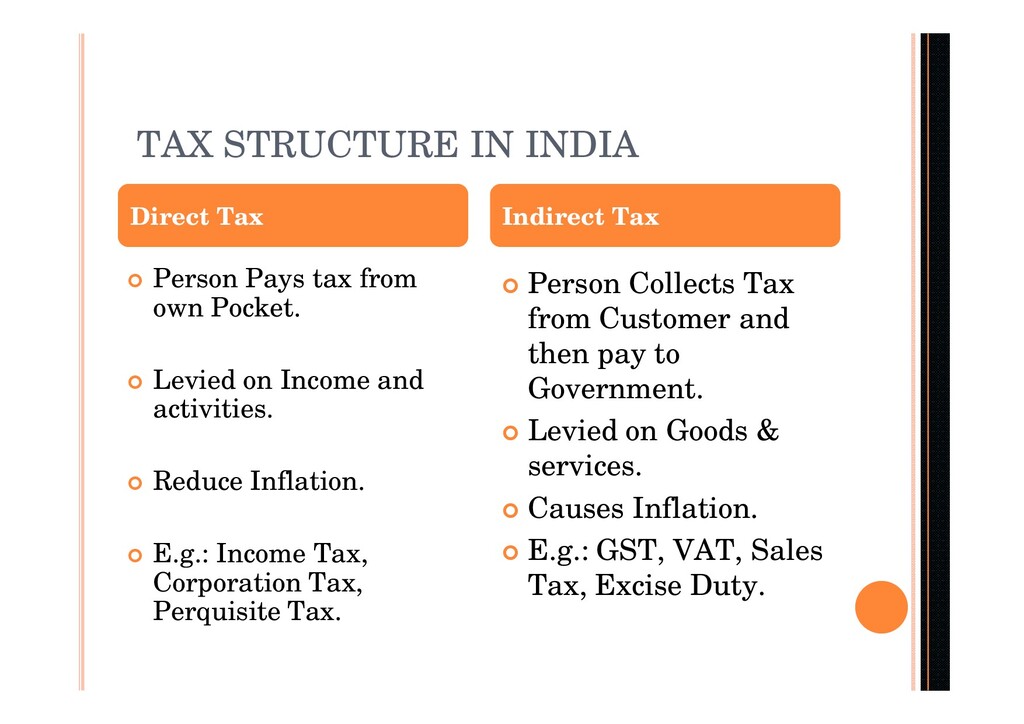
Pocket. Levied on Income and activities. Reduce Inflation. E.g.: Income Tax, Corporation Tax, Perquisite Tax. Person Collects Tax from Customer and then pay to Government. Levied on Goods & services. Causes Inflation. E.g.: GST, VAT, Sales Tax, Excise Duty. Direct Tax Indirect Tax
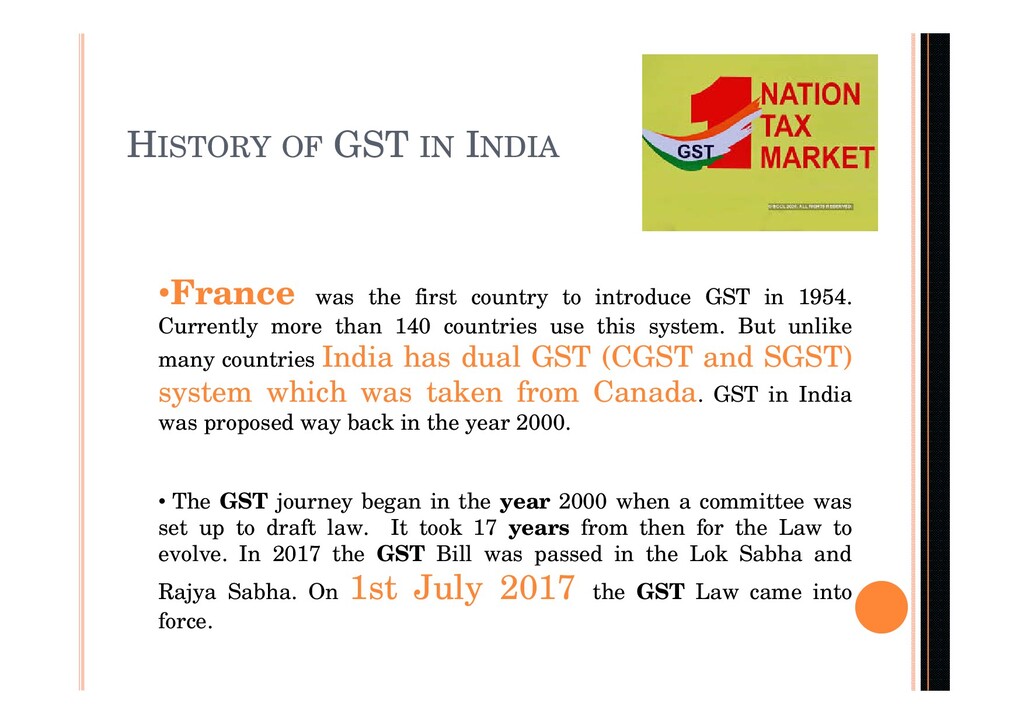
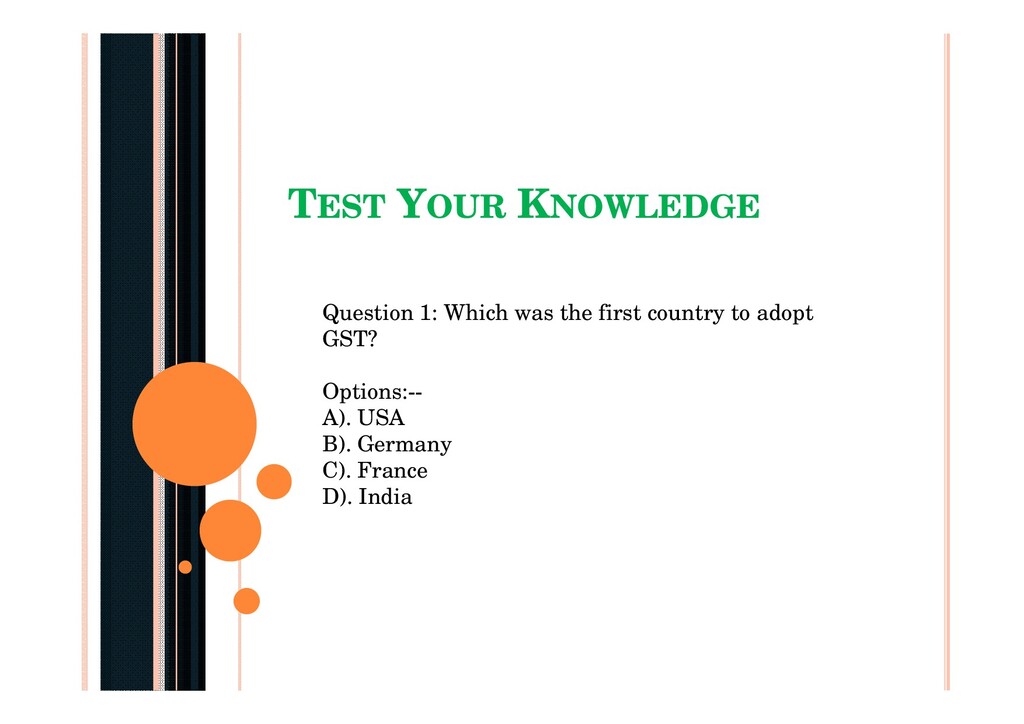
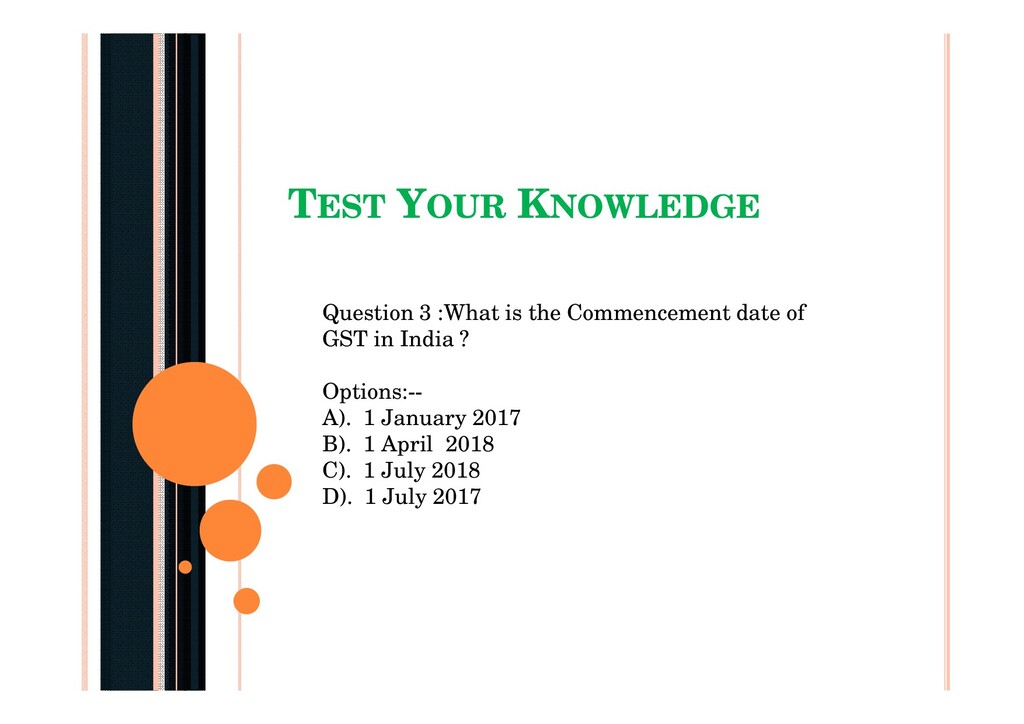
to introduce GST in 1954. Currently more than 140 countries use this system. But unlike many countries India has dual GST (CGST and SGST) system which was taken from Canada. GST in India was proposed way back in the year 2000. • The GST journey began in the year 2000 when a committee was set up to draft law. It took 17 years from then for the Law to evolve. In 2017 the GST Bill was passed in the Lok Sabha and Rajya Sabha. On 1st July 2017 the GST Law came into force.
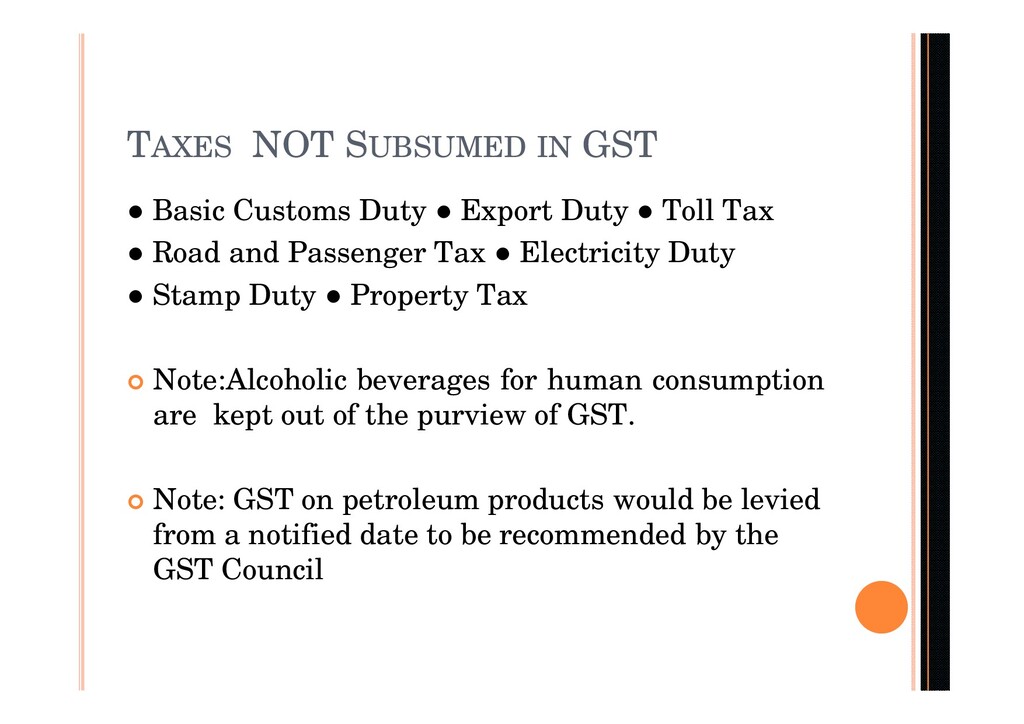
Export Duty • Toll Tax • Road and Passenger Tax • Electricity Duty • Stamp Duty • Property Tax Note:Alcoholic beverages for human consumption are kept out of the purview of GST. Note: GST on petroleum products would be levied from a notified date to be recommended by the GST Council
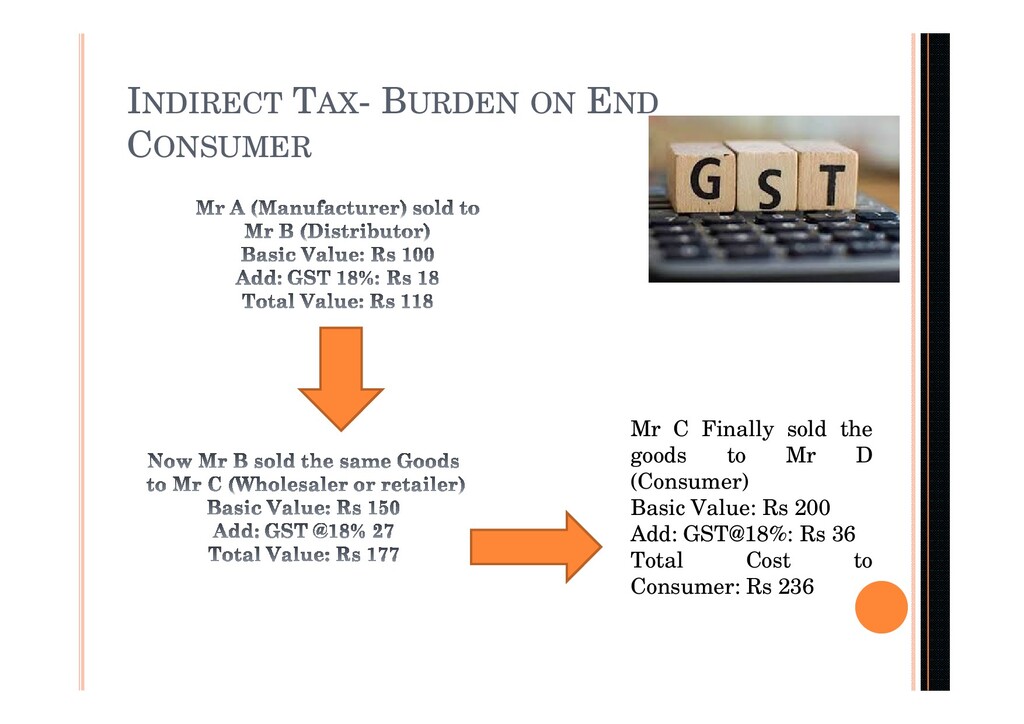
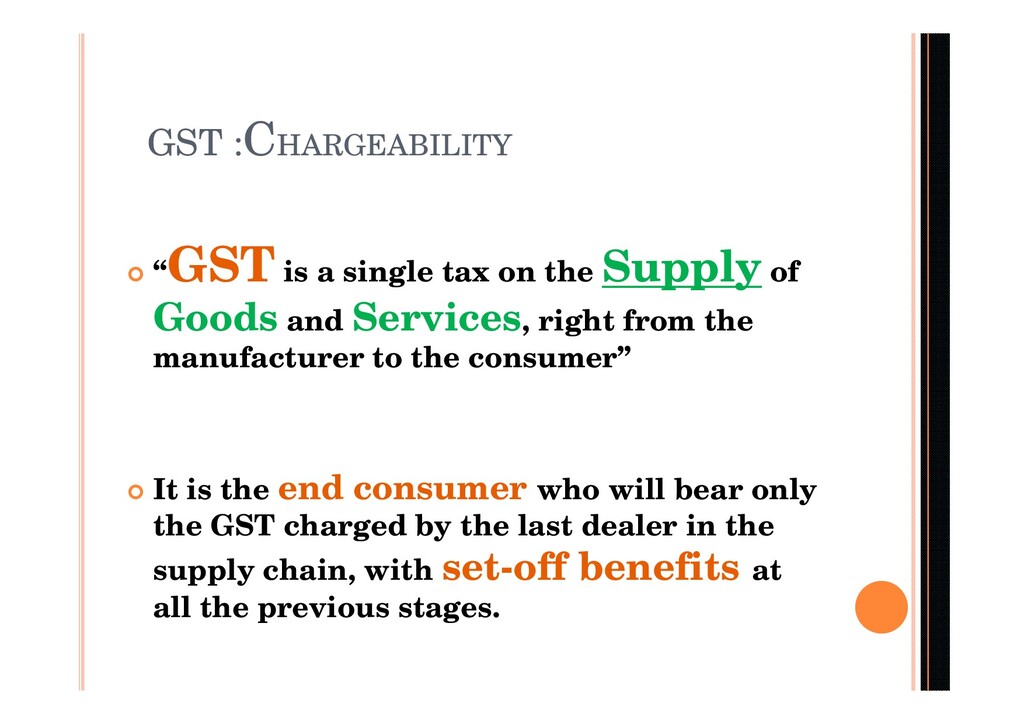
Supply of Goods and Services, right from the manufacturer to the consumer” It is the end consumer who will bear only the GST charged by the last dealer in the supply chain, with set-off benefits at all the previous stages.
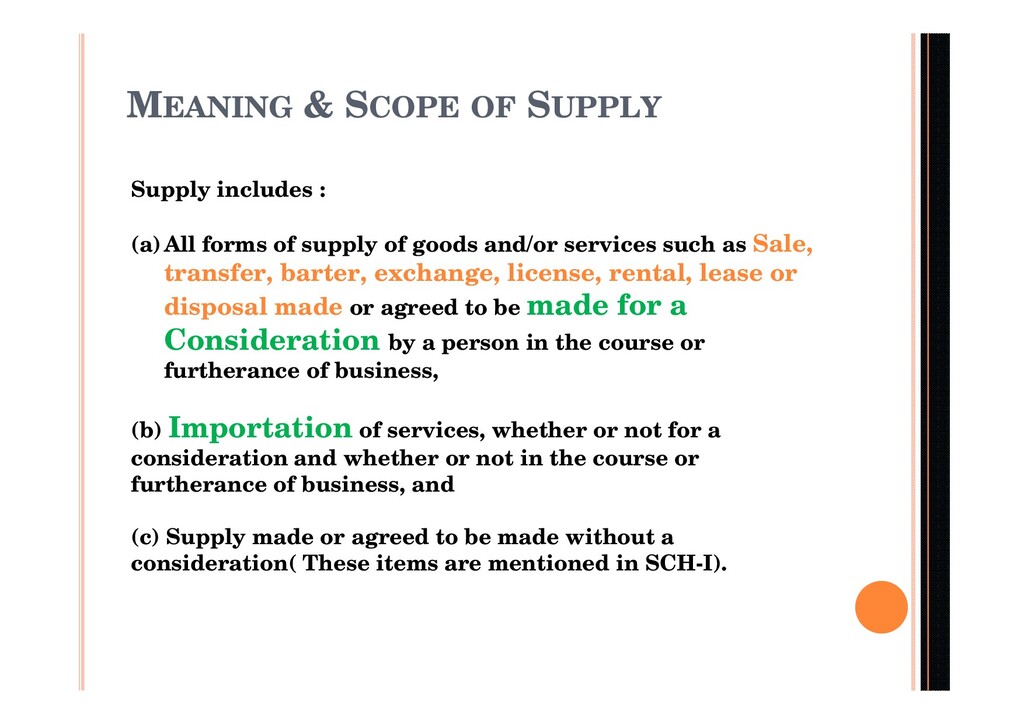
of supply of goods and/or services such as Sale, transfer, barter, exchange, license, rental, lease or disposal made or agreed to be made for a Consideration by a person in the course or furtherance of business, (b) Importation of services, whether or not for a consideration and whether or not in the course or furtherance of business, and (c) Supply made or agreed to be made without a consideration( These items are mentioned in SCH-I).
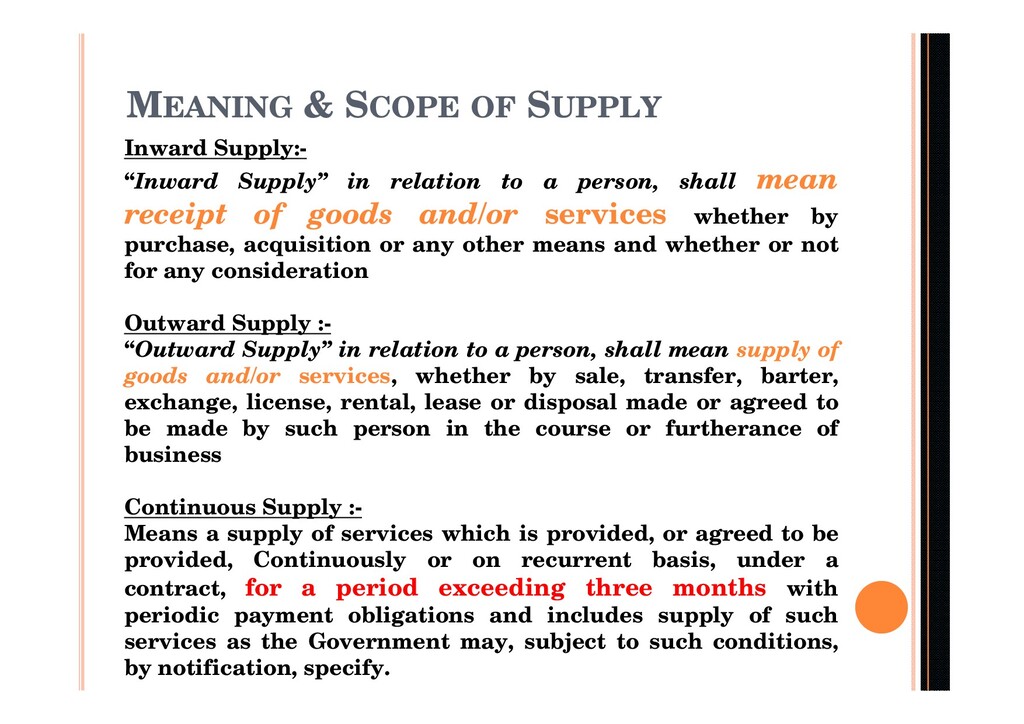
relation to a person, shall mean receipt of goods and/or services whether by purchase, acquisition or any other means and whether or not for any consideration Outward Supply :- “Outward Supply” in relation to a person, shall mean supply of goods and/or services, whether by sale, transfer, barter, exchange, license, rental, lease or disposal made or agreed to be made by such person in the course or furtherance of business Continuous Supply :- Means a supply of services which is provided, or agreed to be provided, Continuously or on recurrent basis, under a contract, for a period exceeding three months with periodic payment obligations and includes supply of such services as the Government may, subject to such conditions, by notification, specify.
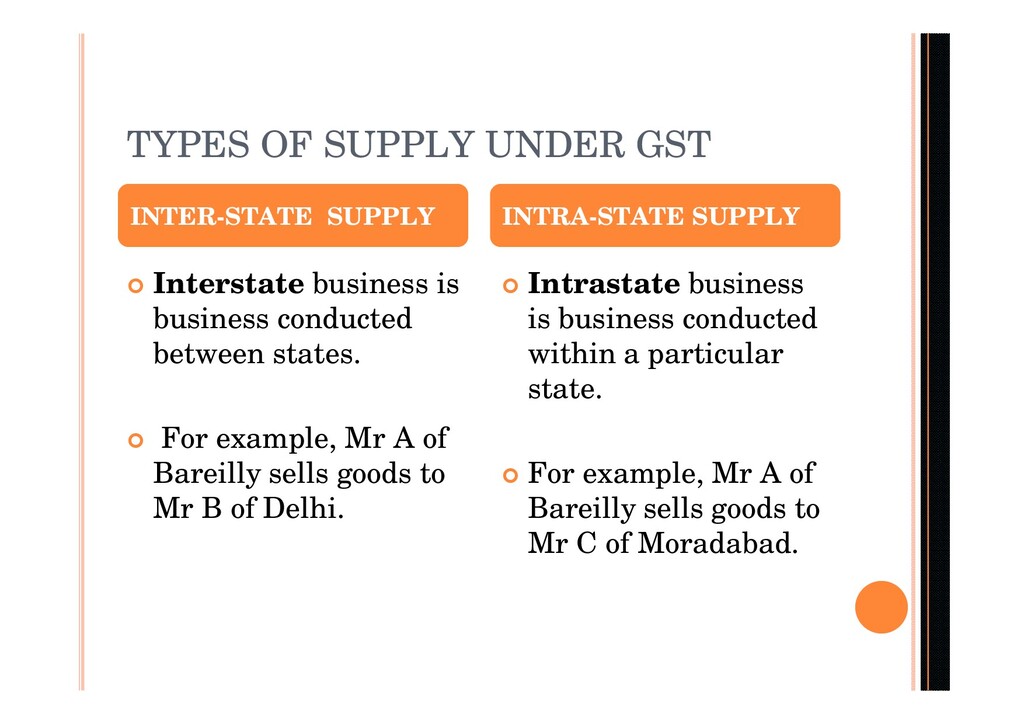
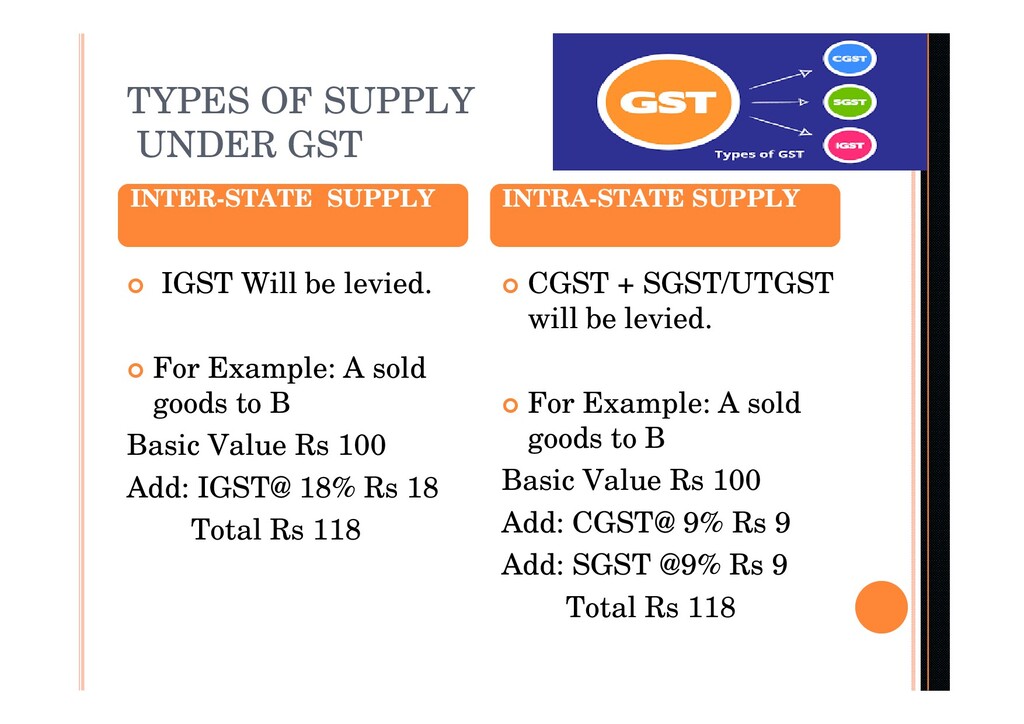
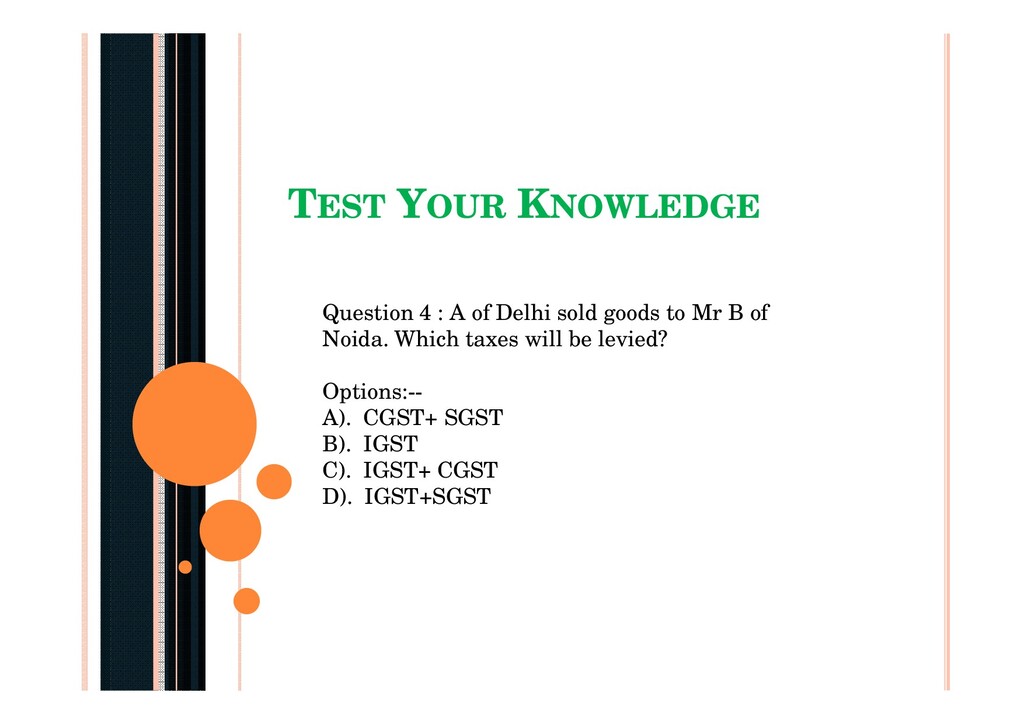
conducted between states. For example, Mr A of Bareilly sells goods to Mr B of Delhi. Intrastate business is business conducted within a particular state. For example, Mr A of Bareilly sells goods to Mr C of Moradabad. INTER-STATE SUPPLY INTRA-STATE SUPPLY
For Example: A sold goods to B Basic Value Rs 100 Add: IGST@ 18% Rs 18 Total Rs 118 CGST + SGST/UTGST will be levied. For Example: A sold goods to B Basic Value Rs 100 Add: CGST@ 9% Rs 9 Add: SGST @9% Rs 9 Total Rs 118 INTER-STATE SUPPLY INTRA-STATE SUPPLY
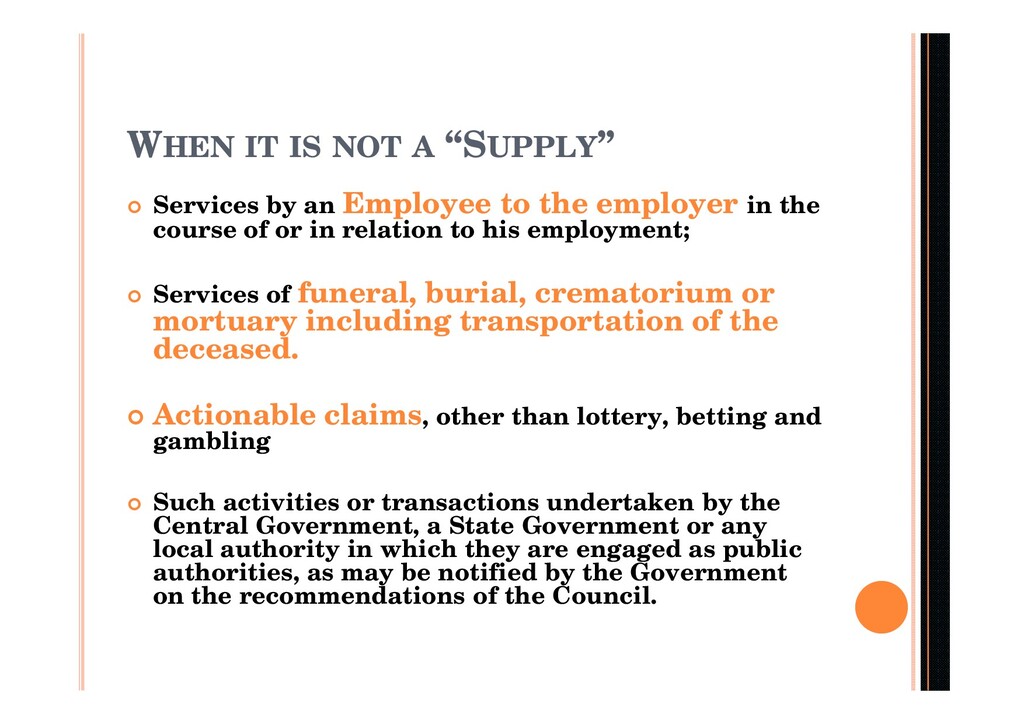
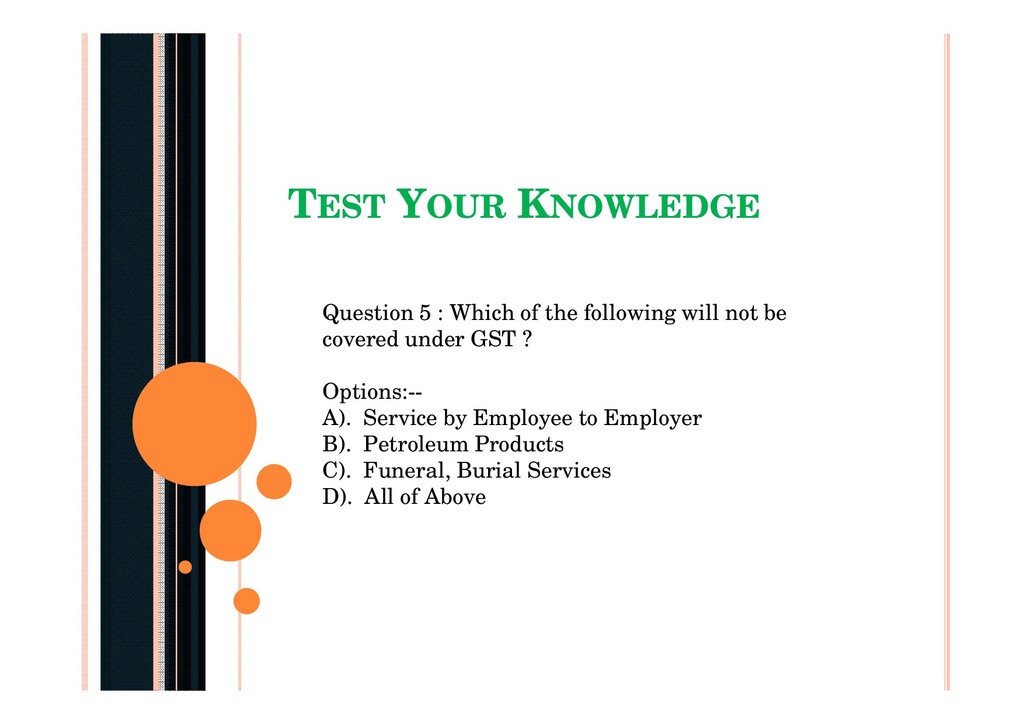
Employee to the employer in the course of or in relation to his employment; Services of funeral, burial, crematorium or mortuary including transportation of the deceased. Actionable claims, other than lottery, betting and gambling Such activities or transactions undertaken by the Central Government, a State Government or any local authority in which they are engaged as public authorities, as may be notified by the Government on the recommendations of the Council.
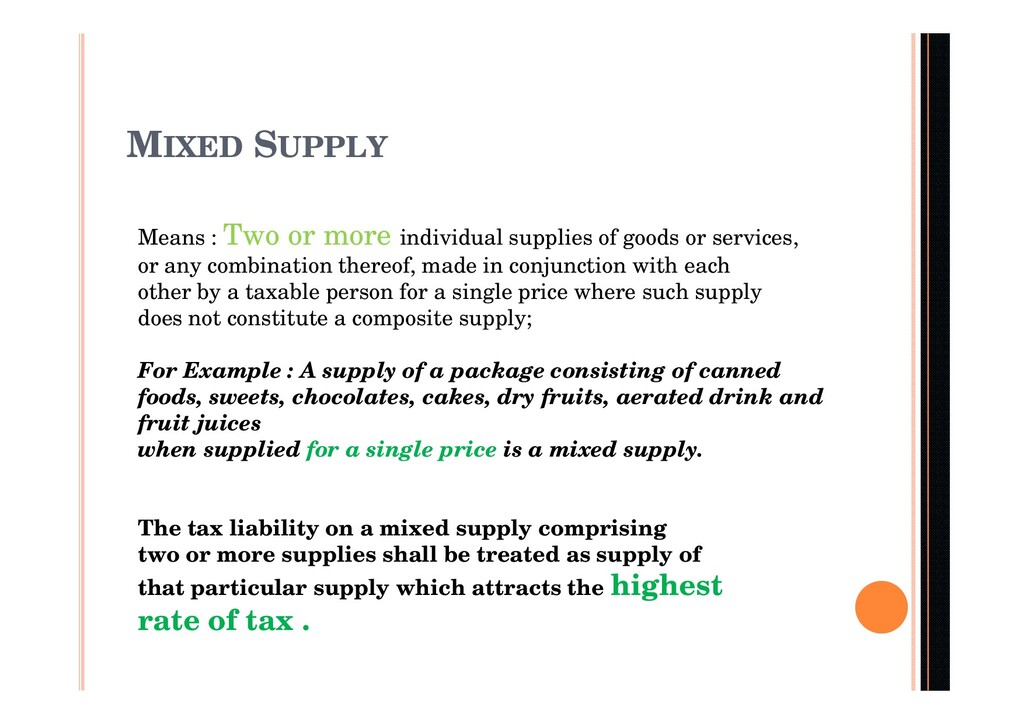
goods or services, or any combination thereof, made in conjunction with each other by a taxable person for a single price where such supply does not constitute a composite supply; For Example : A supply of a package consisting of canned foods, sweets, chocolates, cakes, dry fruits, aerated drink and fruit juices when supplied for a single price is a mixed supply. The tax liability on a mixed supply comprising two or more supplies shall be treated as supply of that particular supply which attracts the highest rate of tax .
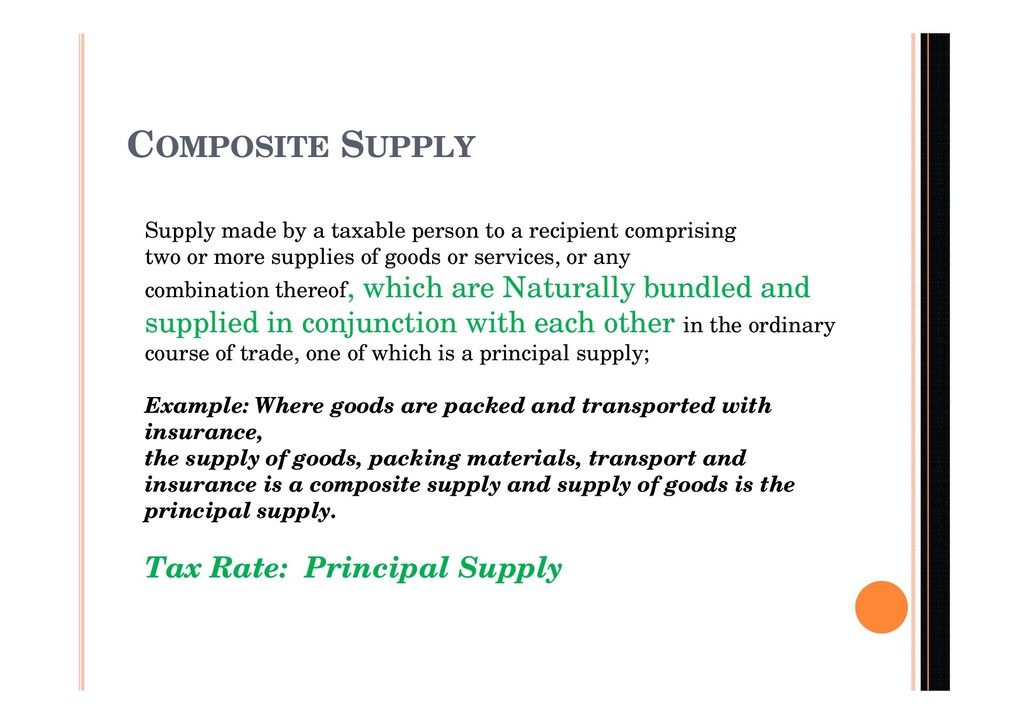
recipient comprising two or more supplies of goods or services, or any combination thereof, which are Naturally bundled and supplied in conjunction with each other in the ordinary course of trade, one of which is a principal supply; Example: Where goods are packed and transported with insurance, the supply of goods, packing materials, transport and insurance is a composite supply and supply of goods is the principal supply. Tax Rate: Principal Supply
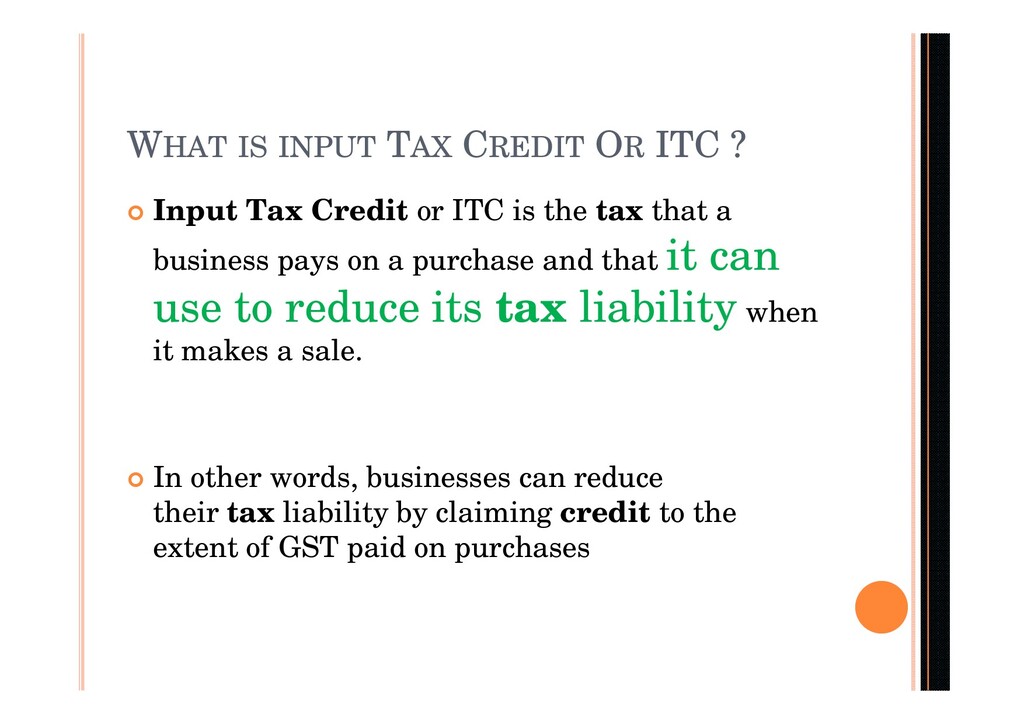
Tax Credit or ITC is the tax that a business pays on a purchase and that it can use to reduce its tax liability when it makes a sale. In other words, businesses can reduce their tax liability by claiming credit to the extent of GST paid on purchases
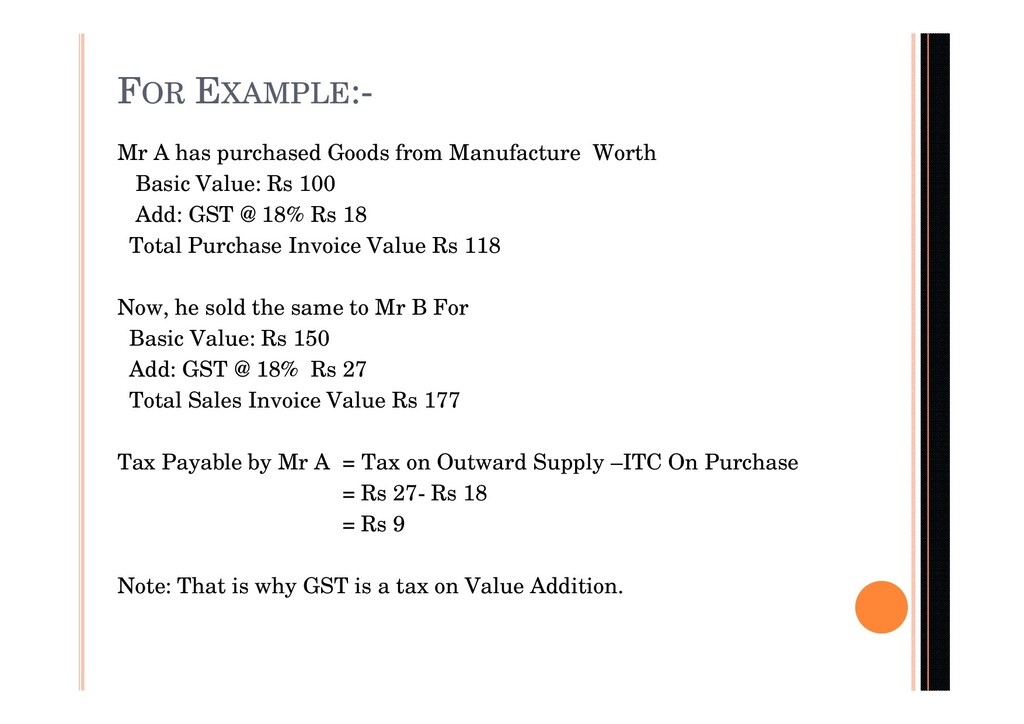
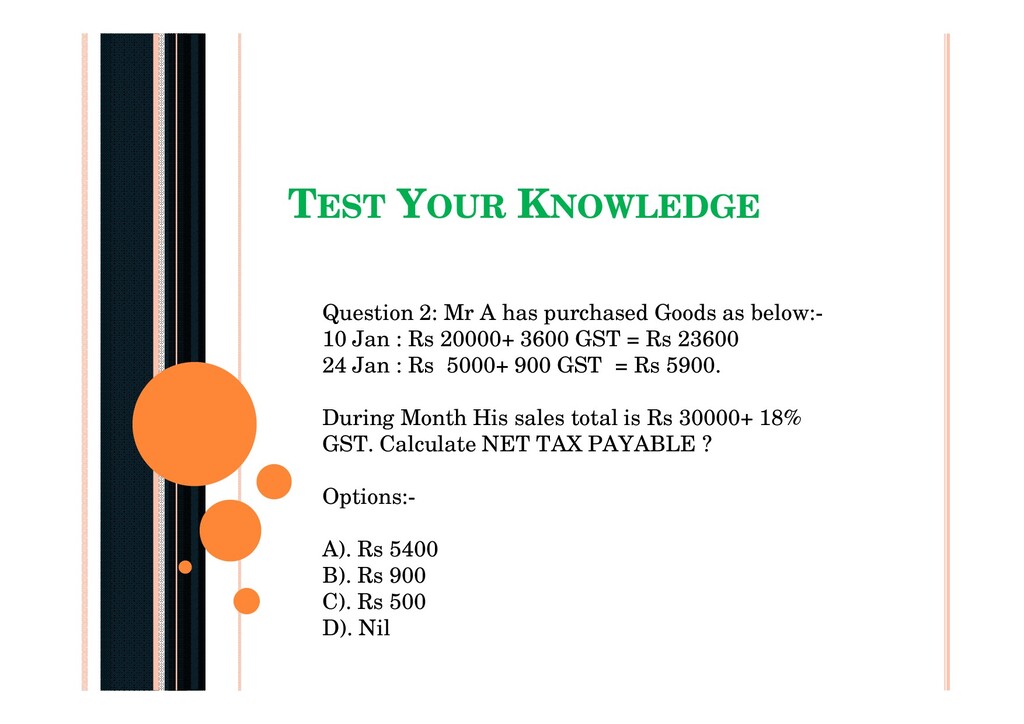
Basic Value: Rs 100 Add: GST @ 18% Rs 18 Total Purchase Invoice Value Rs 118 Now, he sold the same to Mr B For Basic Value: Rs 150 Add: GST @ 18% Rs 27 Total Sales Invoice Value Rs 177 Tax Payable by Mr A = Tax on Outward Supply –ITC On Purchase = Rs 27- Rs 18 = Rs 9 Note: That is why GST is a tax on Value Addition.
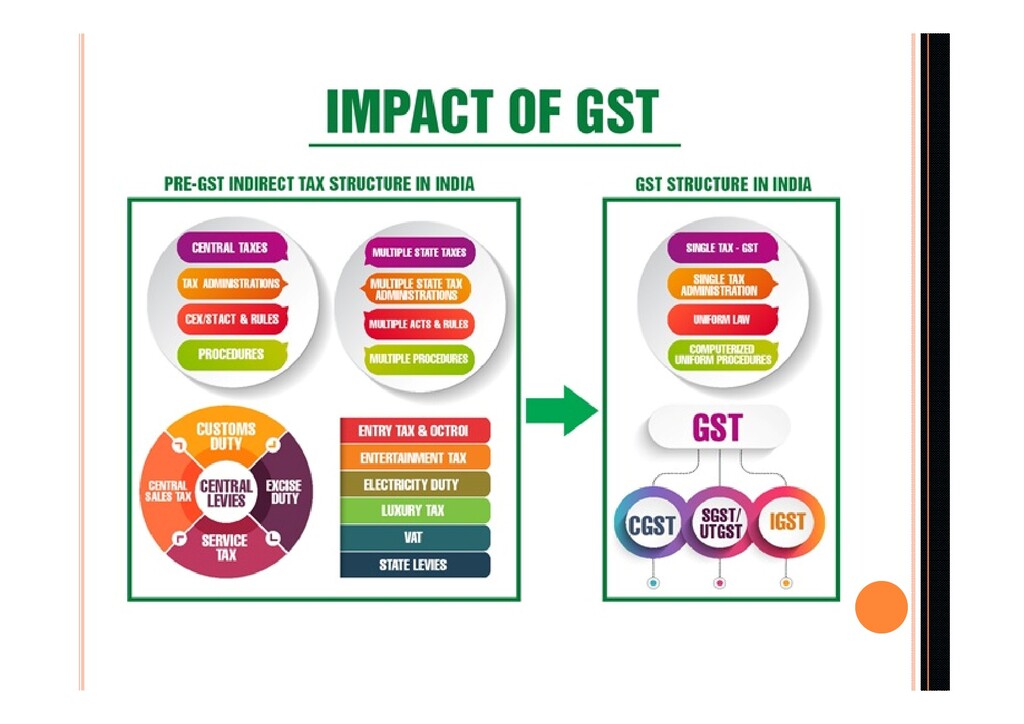
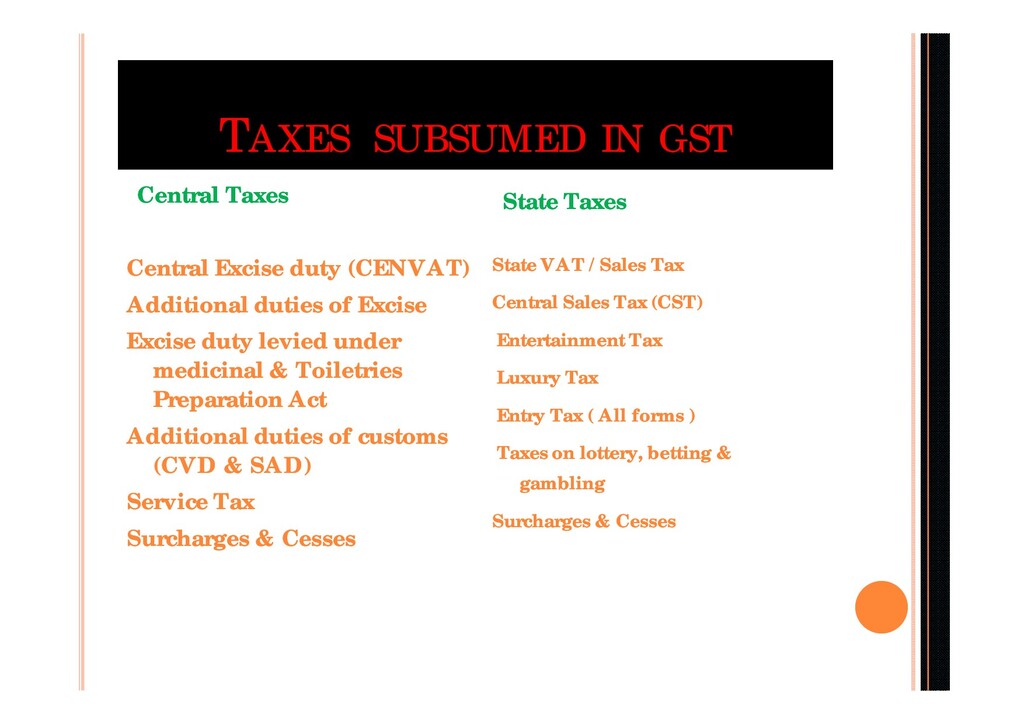
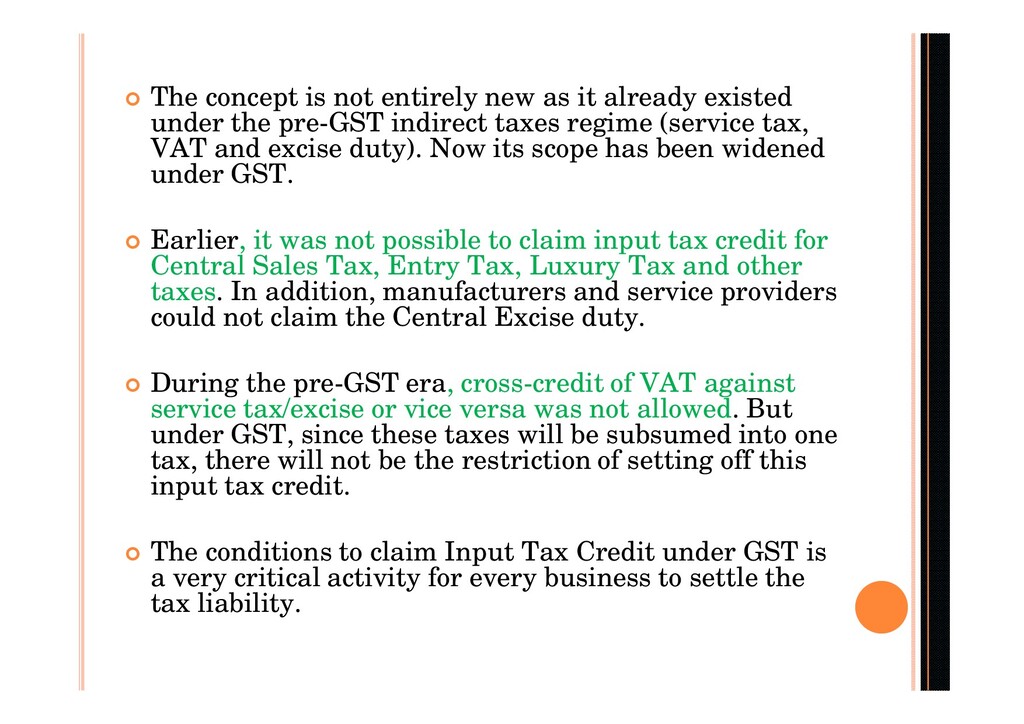
existed under the pre-GST indirect taxes regime (service tax, VAT and excise duty). Now its scope has been widened under GST. Earlier, it was not possible to claim input tax credit for Central Sales Tax, Entry Tax, Luxury Tax and other taxes. In addition, manufacturers and service providers could not claim the Central Excise duty. During the pre-GST era, cross-credit of VAT against service tax/excise or vice versa was not allowed. But under GST, since these taxes will be subsumed into one tax, there will not be the restriction of setting off this input tax credit. The conditions to claim Input Tax Credit under GST is a very critical activity for every business to settle the tax liability.
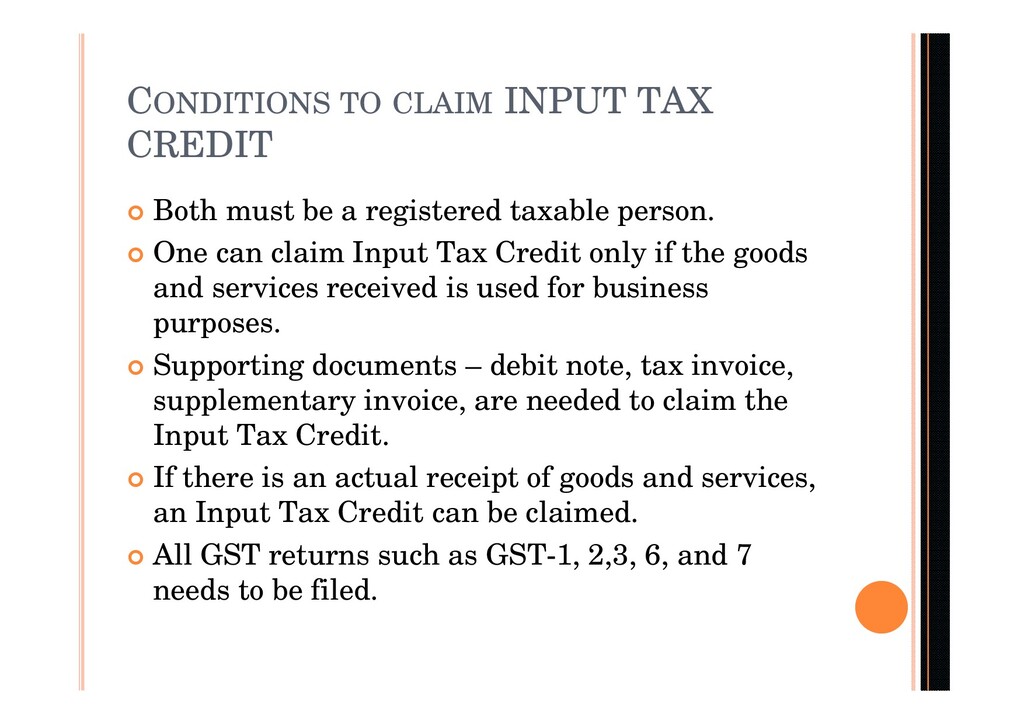
a registered taxable person. One can claim Input Tax Credit only if the goods and services received is used for business purposes. Supporting documents – debit note, tax invoice, supplementary invoice, are needed to claim the Input Tax Credit. If there is an actual receipt of goods and services, an Input Tax Credit can be claimed. All GST returns such as GST-1, 2,3, 6, and 7 needs to be filed.
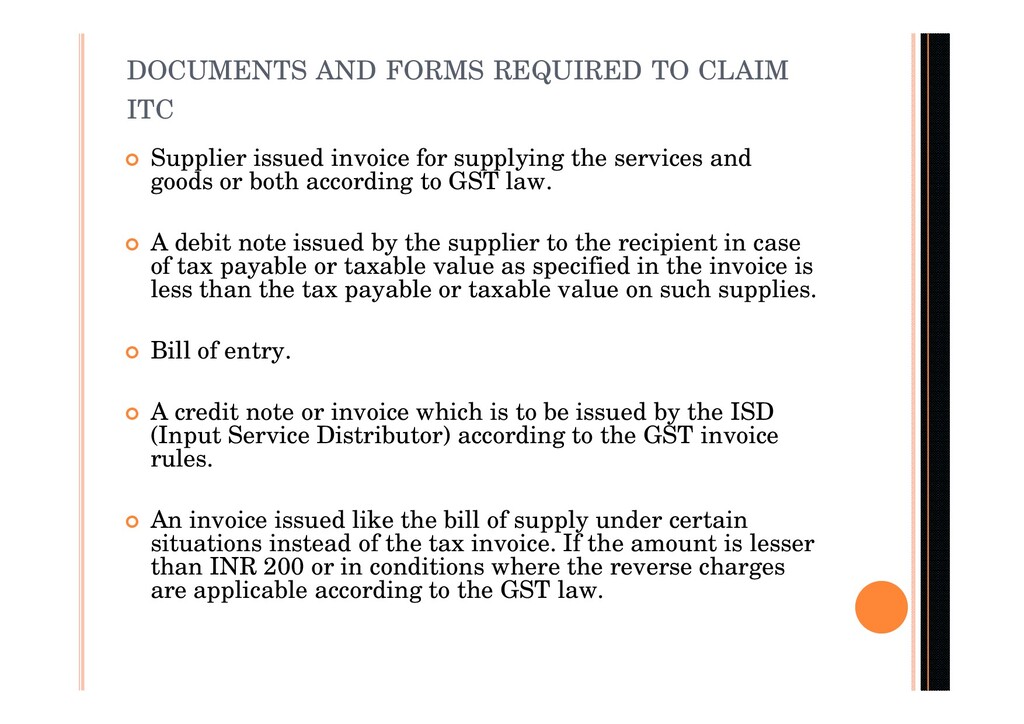
invoice for supplying the services and goods or both according to GST law. A debit note issued by the supplier to the recipient in case of tax payable or taxable value as specified in the invoice is less than the tax payable or taxable value on such supplies. Bill of entry. A credit note or invoice which is to be issued by the ISD (Input Service Distributor) according to the GST invoice rules. An invoice issued like the bill of supply under certain situations instead of the tax invoice. If the amount is lesser than INR 200 or in conditions where the reverse charges are applicable according to the GST law.
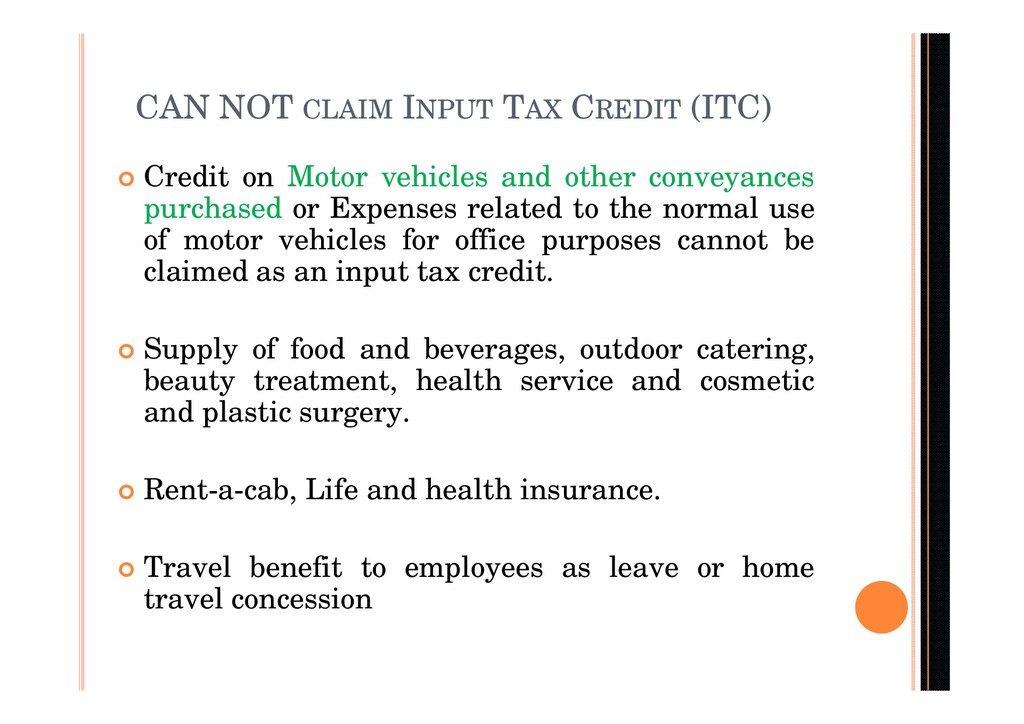
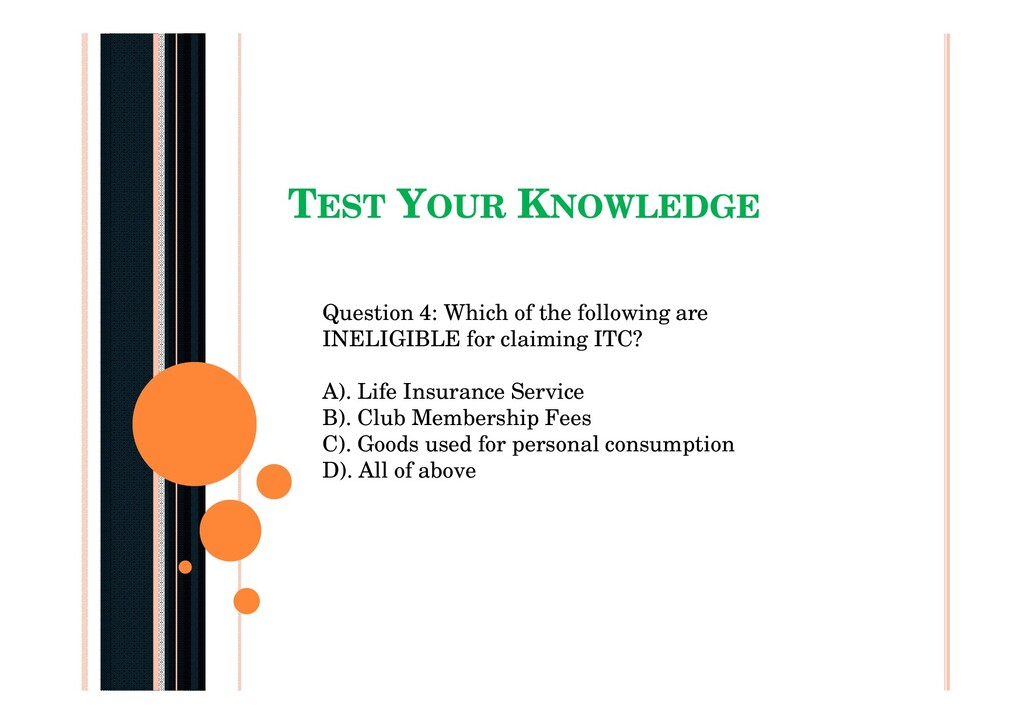
Motor vehicles and other conveyances purchased or Expenses related to the normal use of motor vehicles for office purposes cannot be claimed as an input tax credit. Supply of food and beverages, outdoor catering, beauty treatment, health service and cosmetic and plastic surgery. Rent-a-cab, Life and health insurance. Travel benefit to employees as leave or home travel concession
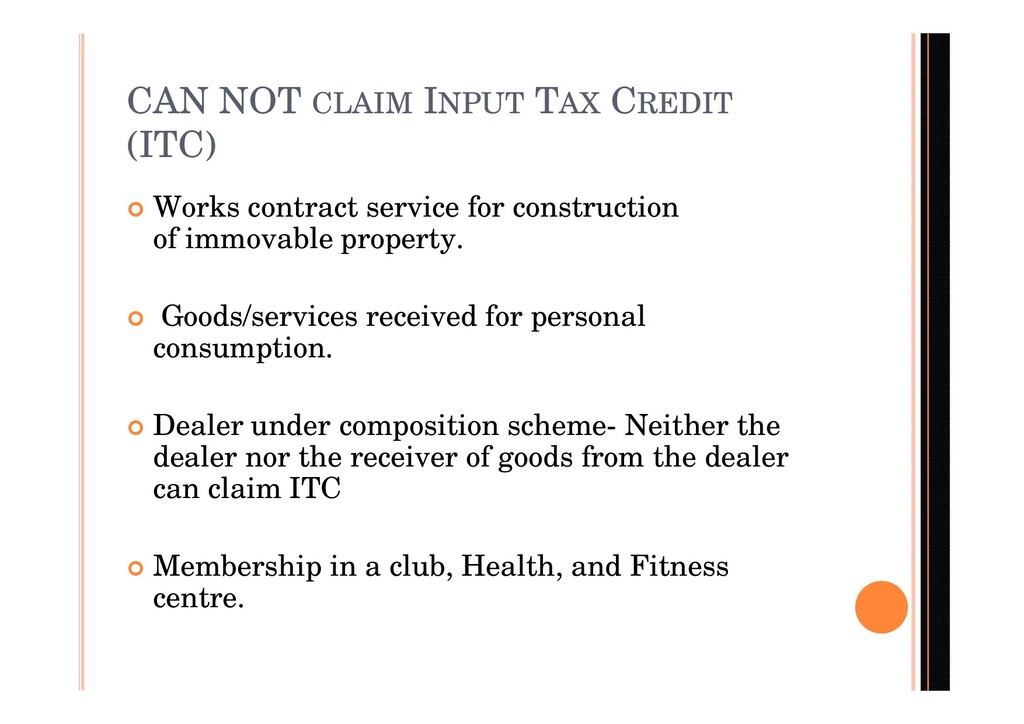
service for construction of immovable property. Goods/services received for personal consumption. Dealer under composition scheme- Neither the dealer nor the receiver of goods from the dealer can claim ITC Membership in a club, Health, and Fitness centre.
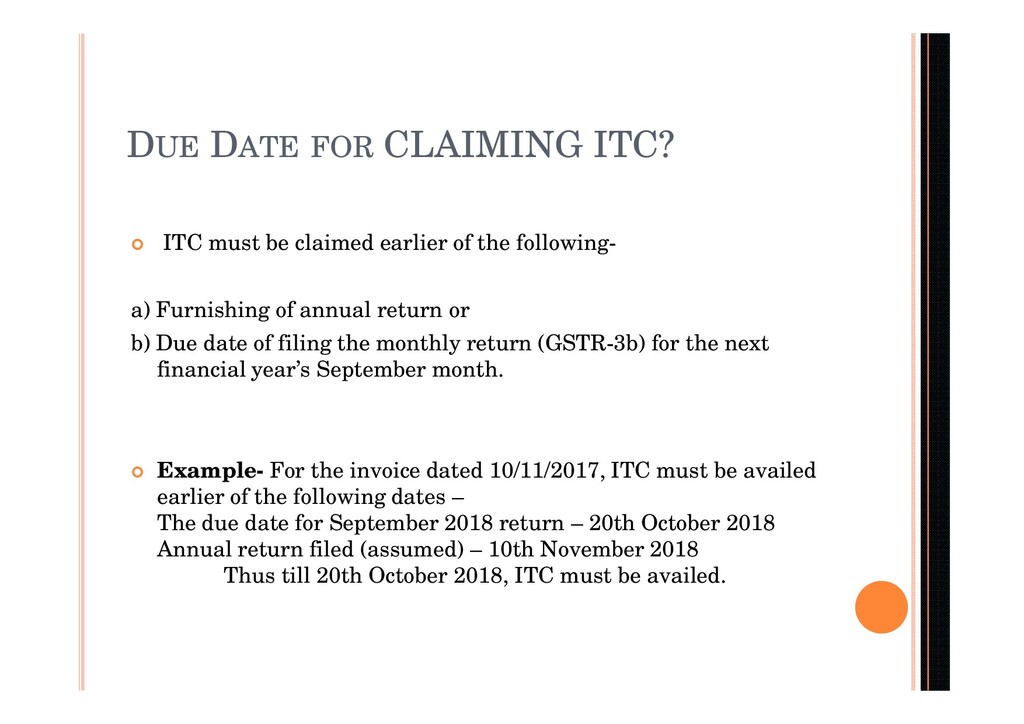
earlier of the following- a) Furnishing of annual return or b) Due date of filing the monthly return (GSTR-3b) for the next financial year’s September month. Example- For the invoice dated 10/11/2017, ITC must be availed earlier of the following dates – The due date for September 2018 return – 20th October 2018 Annual return filed (assumed) – 10th November 2018 Thus till 20th October 2018, ITC must be availed.
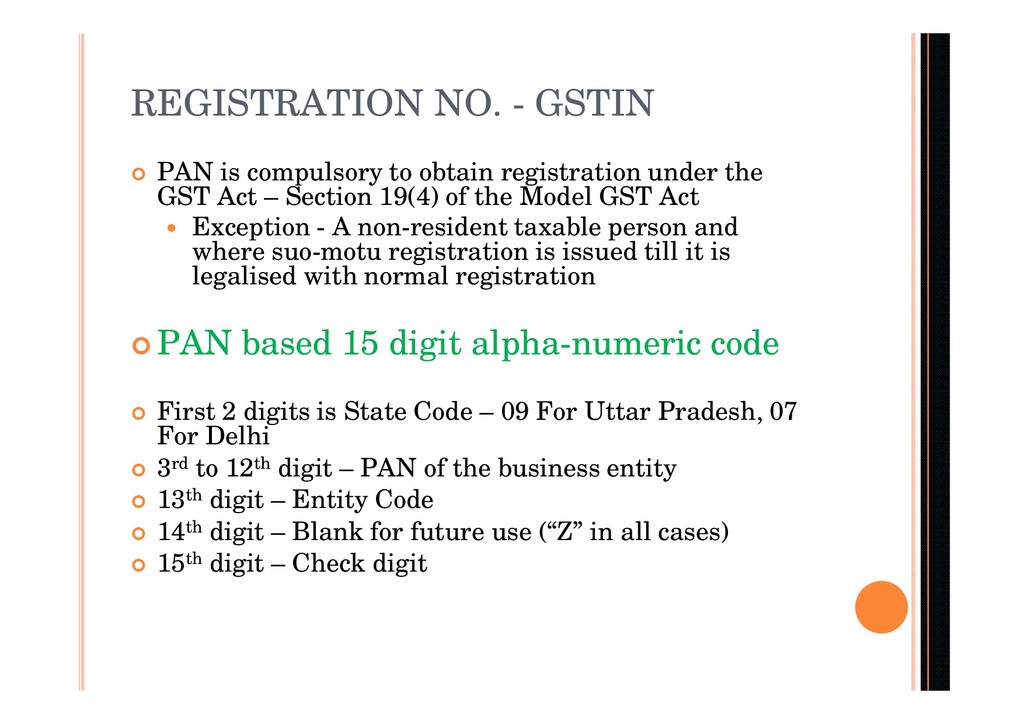
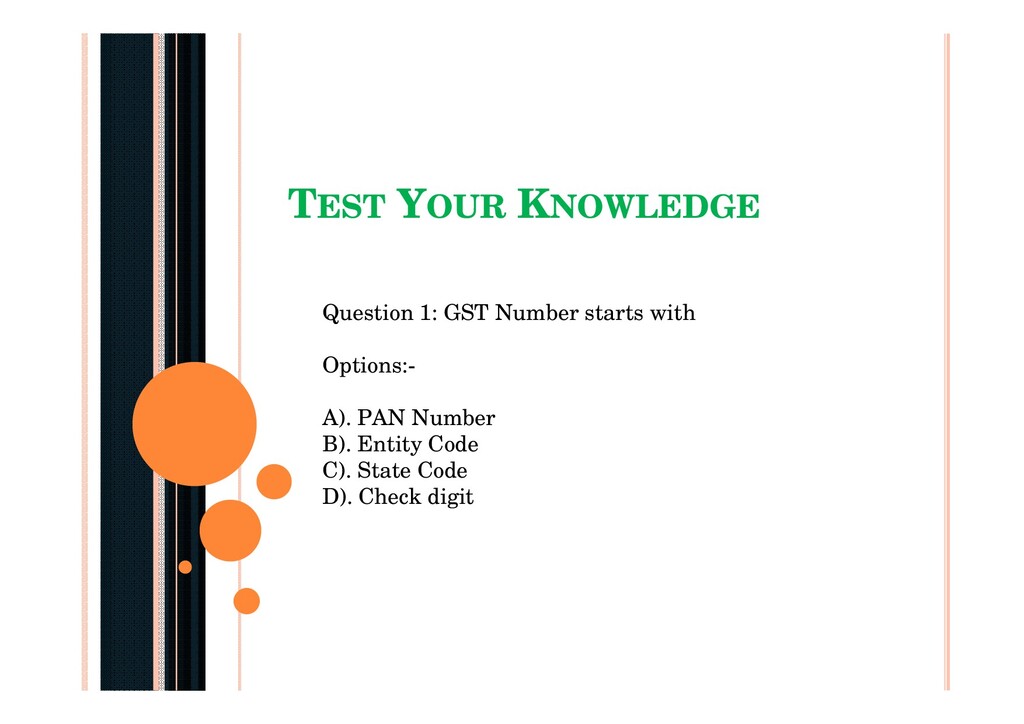
registration under the GST Act – Section 19(4) of the Model GST Act Exception - A non-resident taxable person and where suo-motu registration is issued till it is legalised with normal registration PAN based 15 digit alpha-numeric code First 2 digits is State Code – 09 For Uttar Pradesh, 07 For Delhi 3rd to 12th digit – PAN of the business entity 13th digit – Entity Code 14th digit – Blank for future use (“Z” in all cases) 15th digit – Check digit
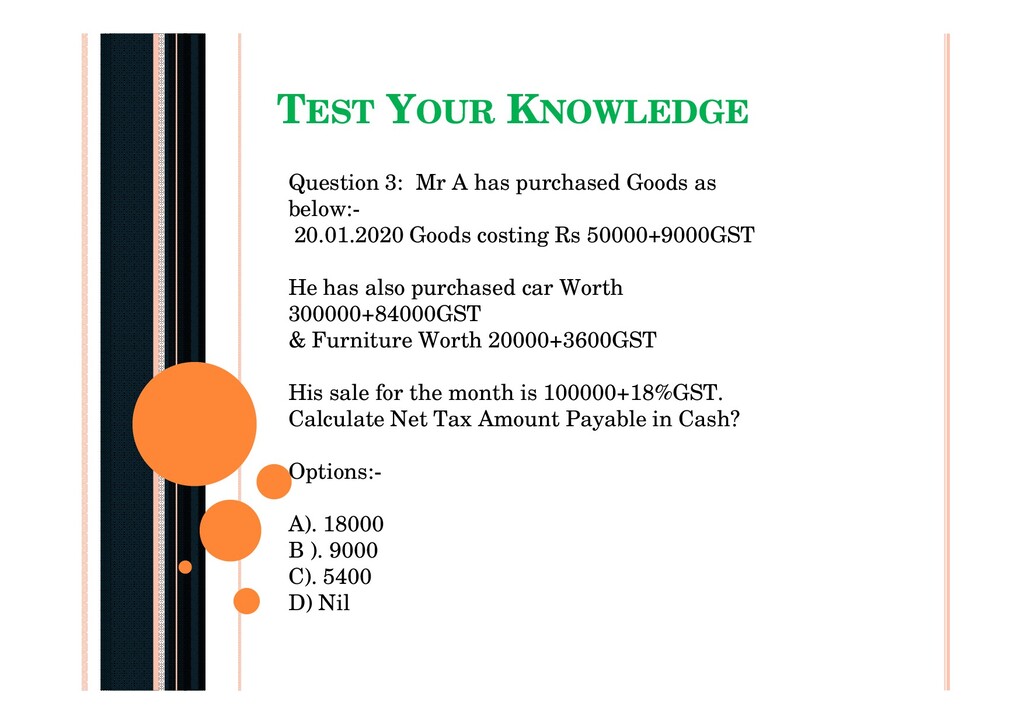
as below:- 20.01.2020 Goods costing Rs 50000+9000GST He has also purchased car Worth 300000+84000GST & Furniture Worth 20000+3600GST His sale for the month is 100000+18%GST. Calculate Net Tax Amount Payable in Cash? Options:- A). 18000 B ). 9000 C). 5400 D) Nil


 frievea
 coderdojojapan
 pawan_pharm
 bvr7352
 cbtlibrary
 juanmartin2026
 robintux
 sciencetokyo
 matleenalaakso
 ainischool
 akosma
 inesmontani
 rakko
 smashingmag
 hatefulcrawdad
 reverentgeek
 thekraken
 mclloyd
 panda_program
 rocio
 livdayseo
 codingconduct