Upgrade to Pro — share decks privately, control downloads, hide ads and more …

Why I Decided to Ditch Dev and Dive into UX

Why I Decided to Ditch Dev and Dive into UX

As a developer I was fascinated by this concept of usability, a seemingly magical quality that somehow makes a world of difference for the ones that use our product. I spent the first 10 years of my career as a dev, went through a phase as a TDD fanatic, then landed up getting into interaction design and user experience. I was able to teach myself about UX from mostly free resources I found online.

So, what is it like for a software developer to transition their career into doing UX full time? Experience design, like any other discipline in software, is one that can be learned by anyone who is willing to invest the effort. I will share why I decided to quit programming for a career in UX and a few insights about how designers and developers can work together more effectively from a shared understanding.

Avatar for Chris Dawson

Chris Dawson

March 28, 2019

Other Decks in Technology
Transcript

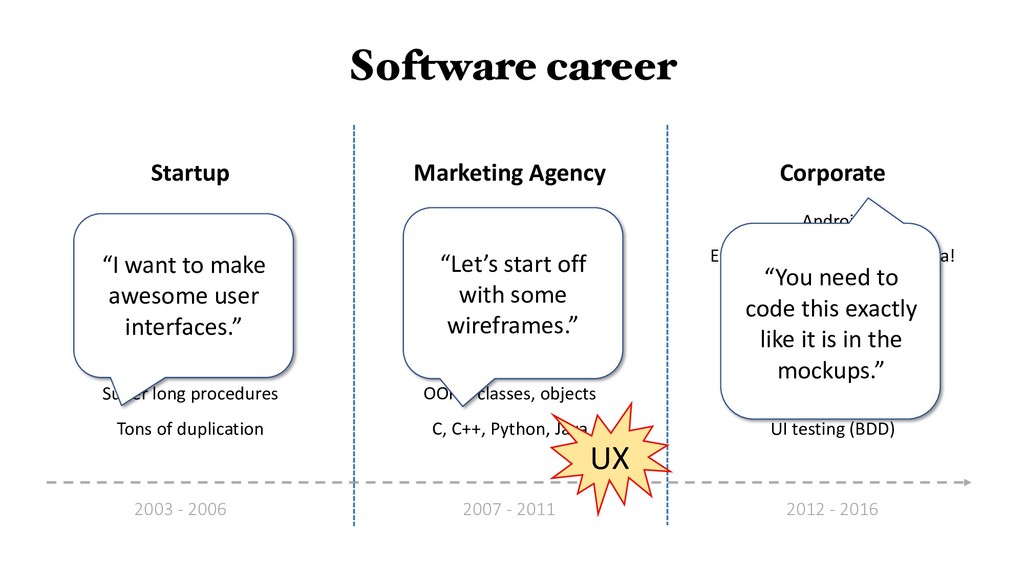
  1. Software career 2003 - 2006 2007 - 2011 2012 -
    2016 Startup B2B, M2M Full stack HTML, CSS, JS, PHP SQL, FTP, SSH, SOAP No version control Super long procedures Tons of duplication Marketing Agency Drupal, Wordpress Facebook apps Mobile – J2ME, Mxit bots SVN & Git REST, Web services OOP – classes, objects C, C++, Python, Java Corporate Android Enterprise systems - more Java! Design Patterns SOLID Clean, testable code jUnit & Mockito (TDD) UI testing (BDD) “I want to make awesome user interfaces.” “Let’s start off with some wireframes.” “You need to code this exactly like it is in the mockups.” UX
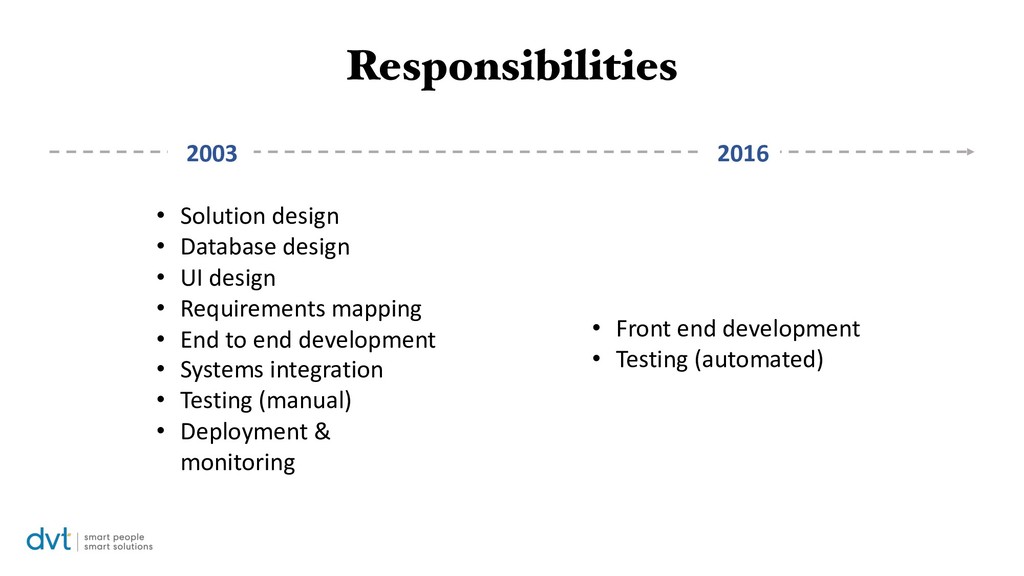
  2. Responsibilities 2003 2016 • Solution design • Database design •

    UI design • Requirements mapping • End to end development • Systems integration • Testing (manual) • Deployment & monitoring • Front end development • Testing (automated)
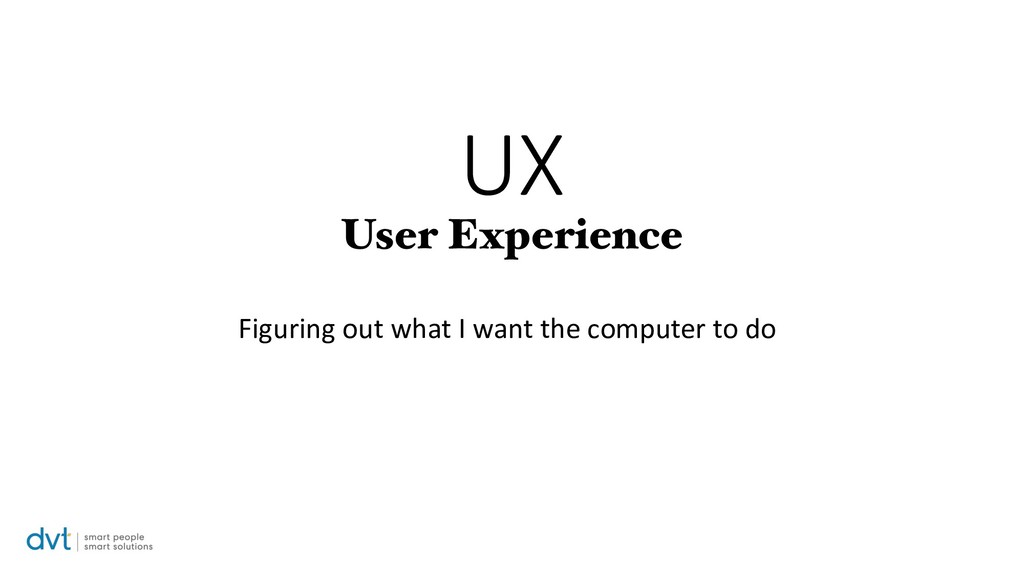
  3. UX Figuring out what I want the computer to do

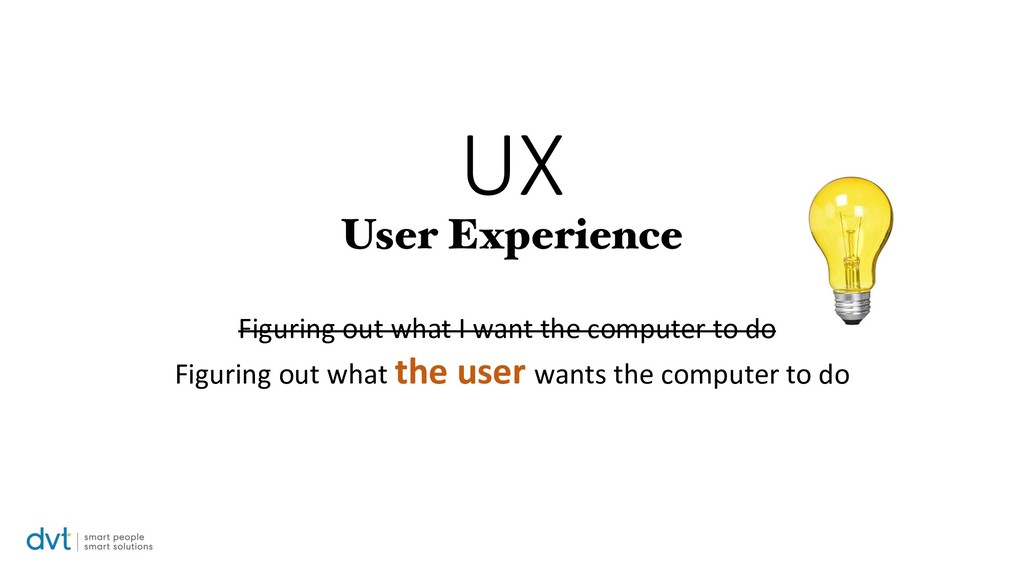
    User Experience Figuring out what the user wants the computer to do
  4. UX Figuring out what the user wants… and finding a

    way to give it to them User Experience
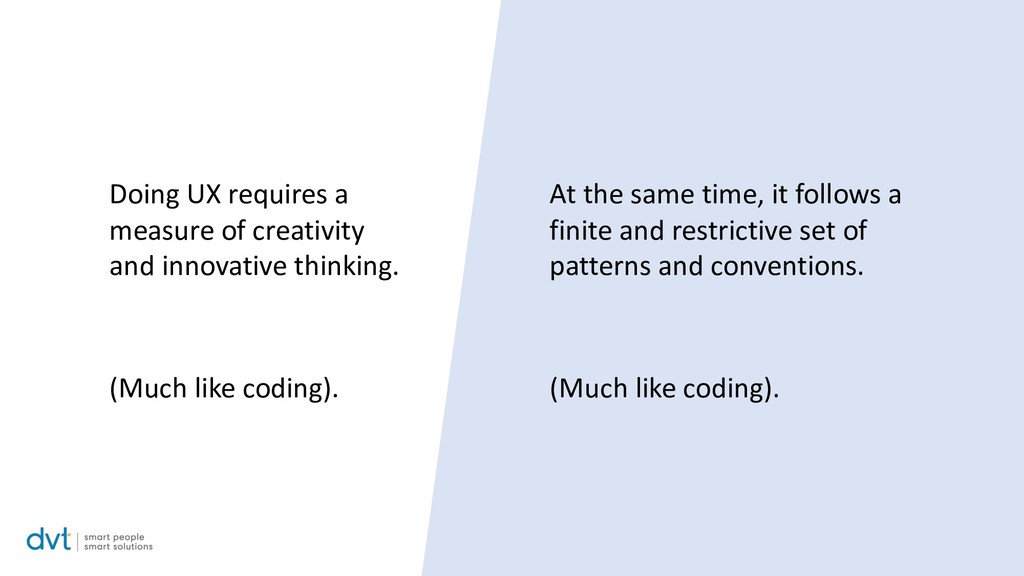
  5. At the same time, it follows a finite and restrictive

    set of patterns and conventions. (Much like coding). (Much like coding). Doing UX requires a measure of creativity and innovative thinking.
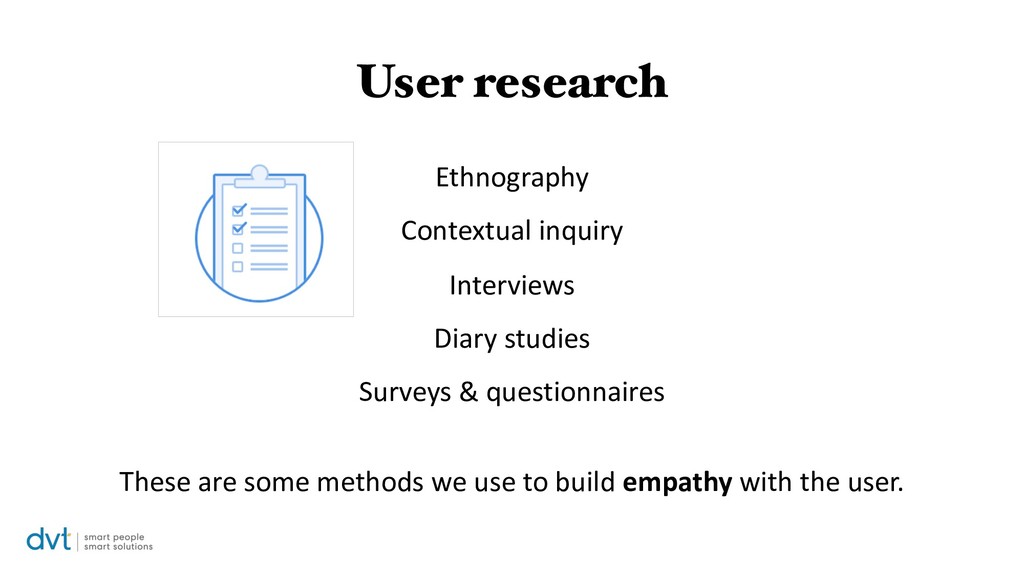
  6. User research These are some methods we use to build

    empathy with the user. Ethnography Contextual inquiry Interviews Diary studies Surveys & questionnaires
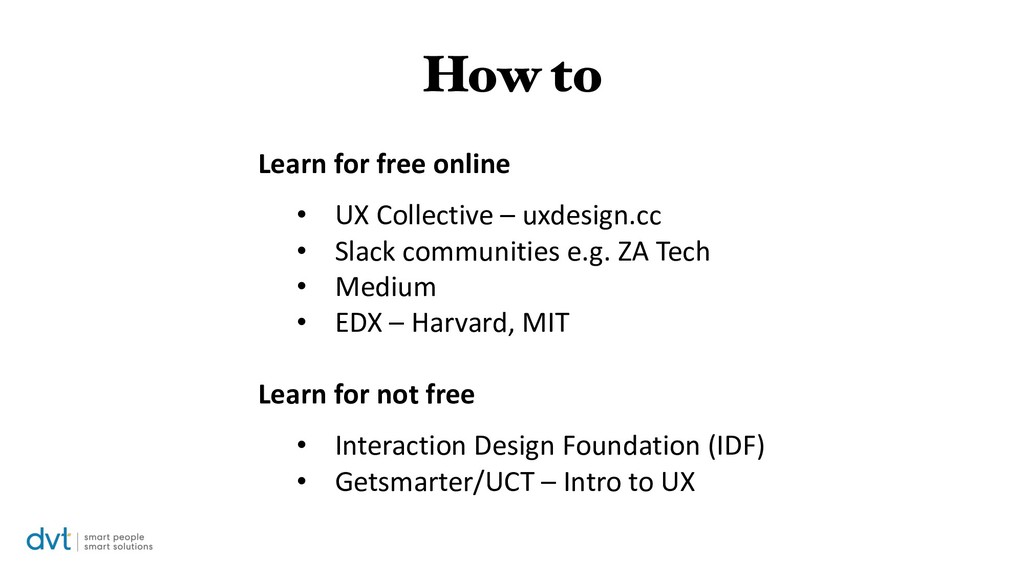
  7. How to Learn for free online • UX Collective –

    uxdesign.cc • Slack communities e.g. ZA Tech • Medium • EDX – Harvard, MIT Learn for not free • Interaction Design Foundation (IDF) • Getsmarter/UCT – Intro to UX
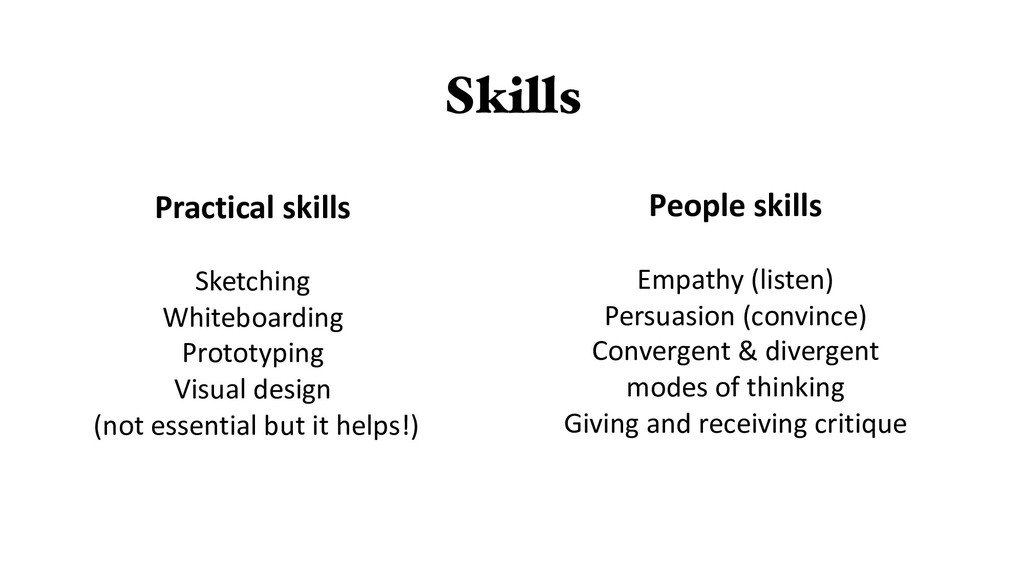
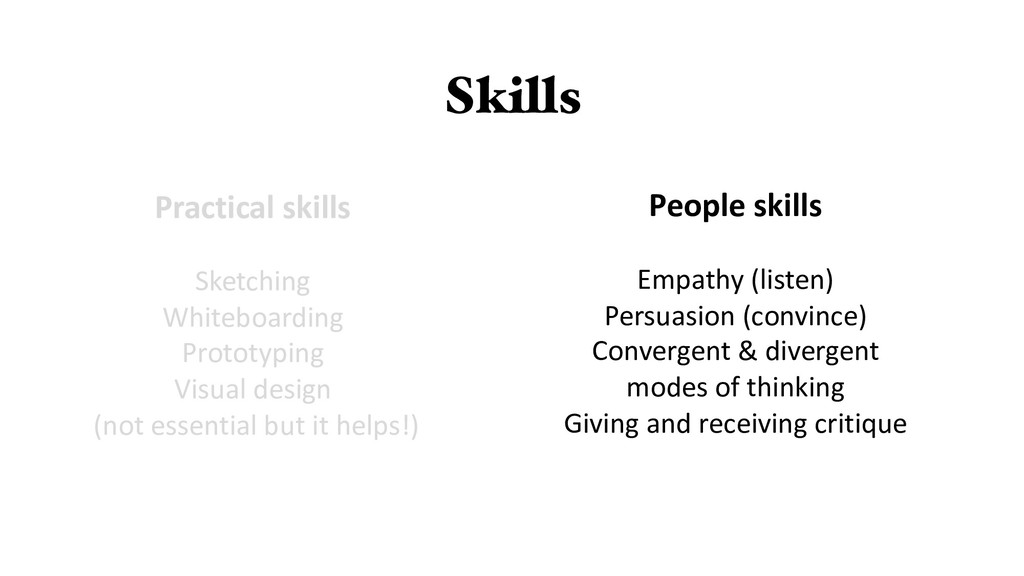
  8. Skills People skills Empathy (listen) Persuasion (convince) Convergent & divergent

    modes of thinking Giving and receiving critique Practical skills Sketching Whiteboarding Prototyping Visual design (not essential but it helps!)
  9. Skills People skills Empathy (listen) Persuasion (convince) Convergent & divergent

    modes of thinking Giving and receiving critique Practical skills Sketching Whiteboarding Prototyping Visual design (not essential but it helps!)
  10. Skills People skills Empathy (listen) Persuasion (convince) Convergent & divergent

    modes of thinking Giving and receiving critique Practical skills Sketching Whiteboarding Prototyping Visual design (not essential but it helps!)
  11. What’s the ROI? • Clients usually don’t understand it •

    Business usually doesn’t want to pay for it • Prepare to feel less valued • Be ready to explain & justify what designers do
  12. TL;DR • We’re making software for humans • You already

    have the skills – build on these • Soft skills are the hard skills • You don’t have to go full unicorn