Upgrade to Pro — share decks privately, control downloads, hide ads and more …

Prometheus at Google NYC Tech Talks Nov 2016

Sponsored · SiteGround - Reliable hosting with speed, security, and support you can count on. →

Prometheus at Google NYC Tech Talks Nov 2016

November 2016 Google NYC SRE tech talk

Cindy Sridharan

November 16, 2016

Transcript

50 slides
  1. Monitoring at a startup imgix • 19 employees • 7

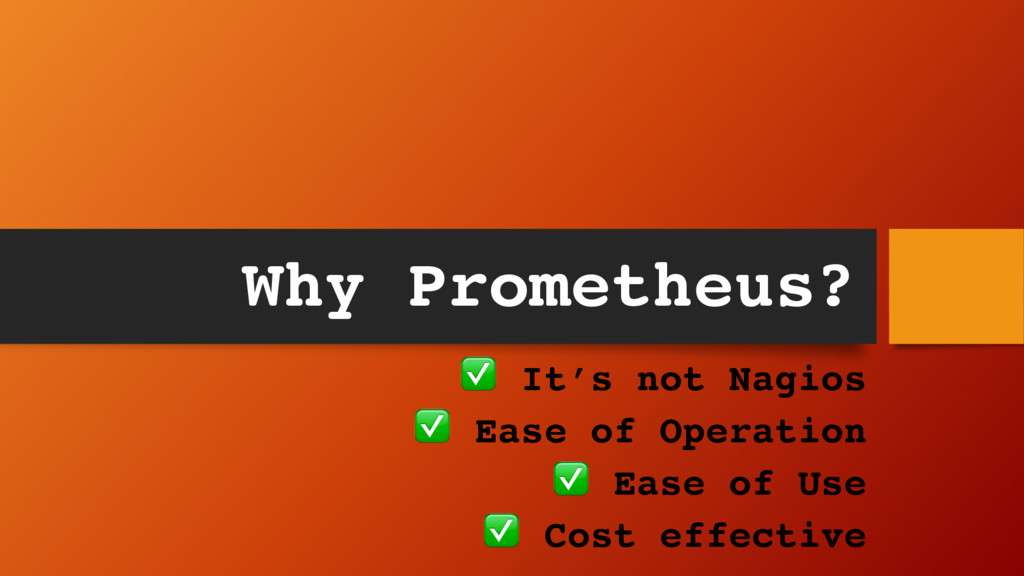
    engineers Requirements • Ease of Use • Ease of Operation • Cost Effective
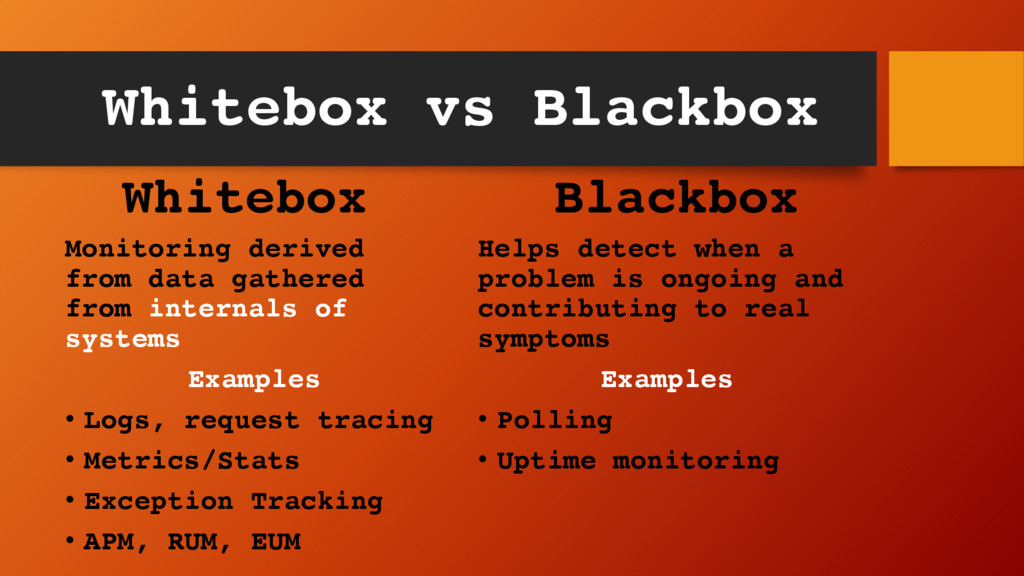
  2. Whitebox vs Blackbox Whitebox Monitoring derived from data gathered from

    internals of systems Examples • Logs, request tracing • Metrics/Stats • Exception Tracking • APM, RUM, EUM Blackbox Helps detect when a problem is ongoing and contributing to real symptoms Examples • Polling • Uptime monitoring
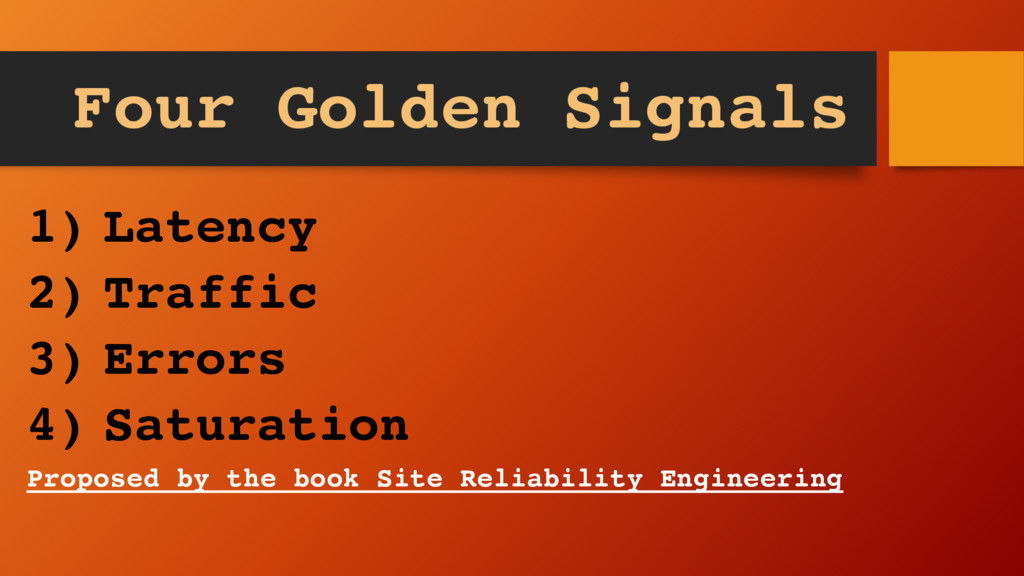
  3. Four Golden Signals 1) Latency 2) Traffic 3) Errors 4)

    Saturation Proposed by the book Site Reliability Engineering
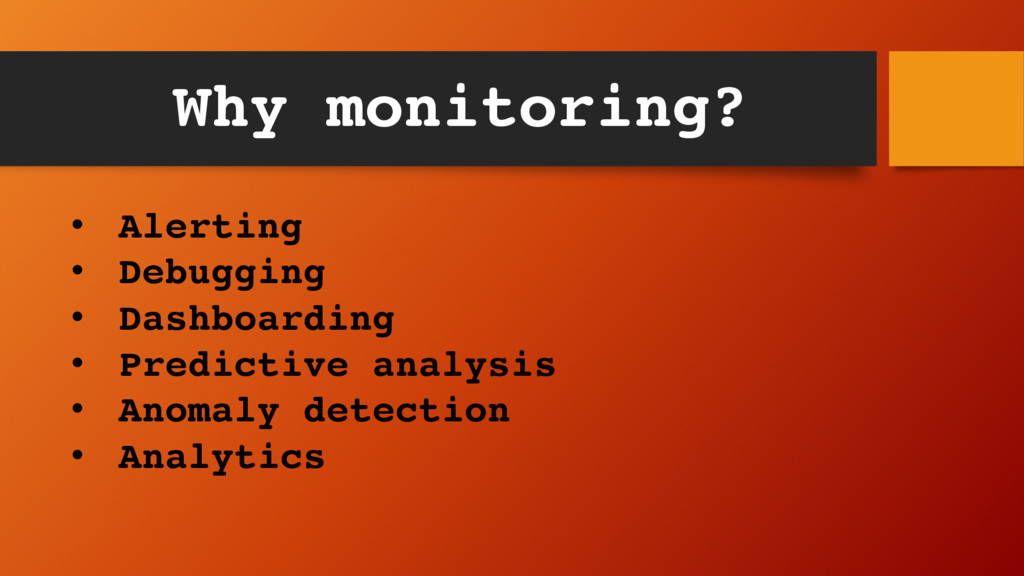
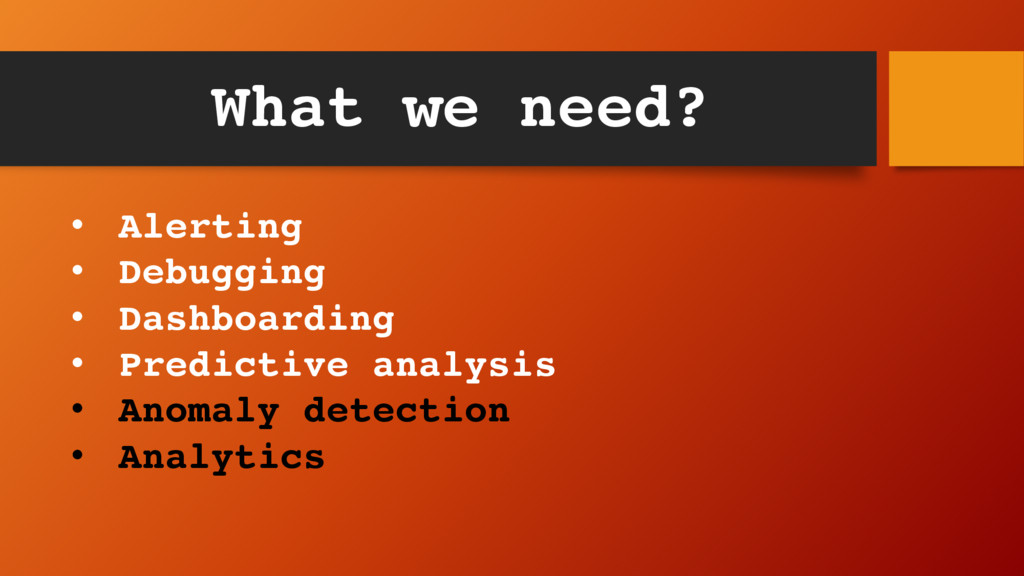
  4. What we need? • Alerting • Debugging • Dashboarding •

    Predictive analysis • Anomaly detection • Analytics
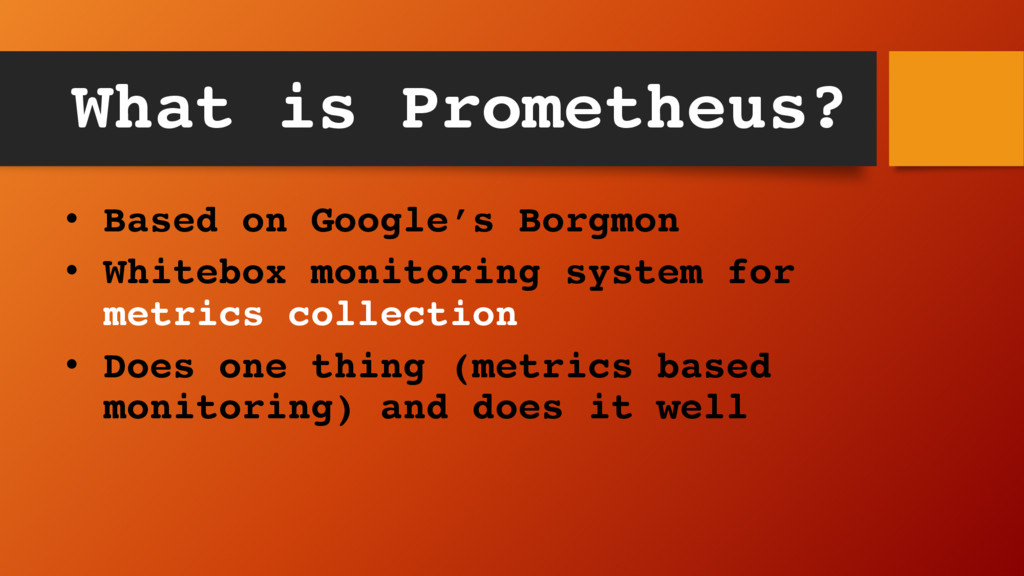
  5. What is Prometheus? • Based on Google’s Borgmon • Whitebox

    monitoring system for metrics collection • Does one thing (metrics based monitoring) and does it well
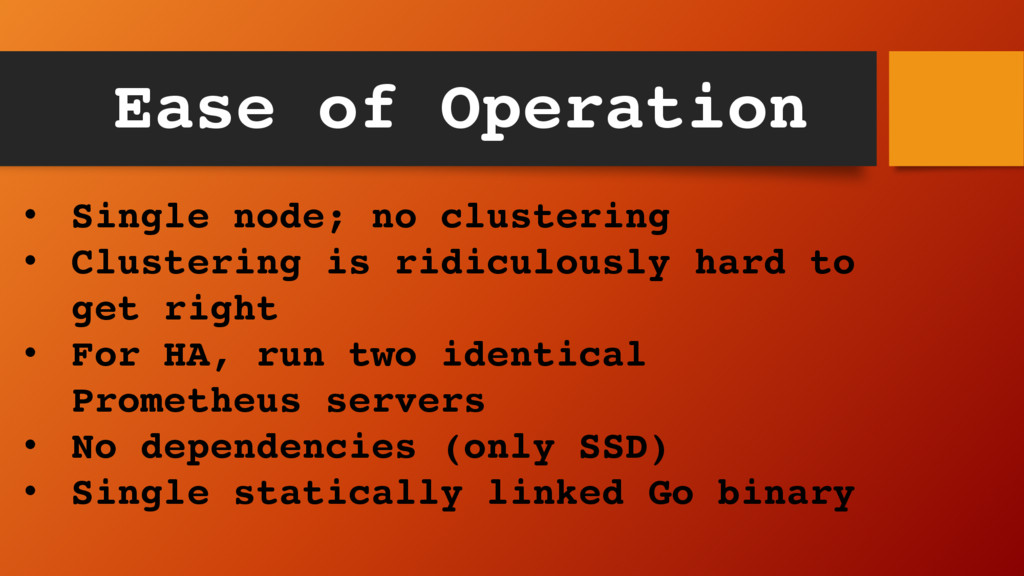
  6. Ease of Operation • Single node; no clustering • Clustering

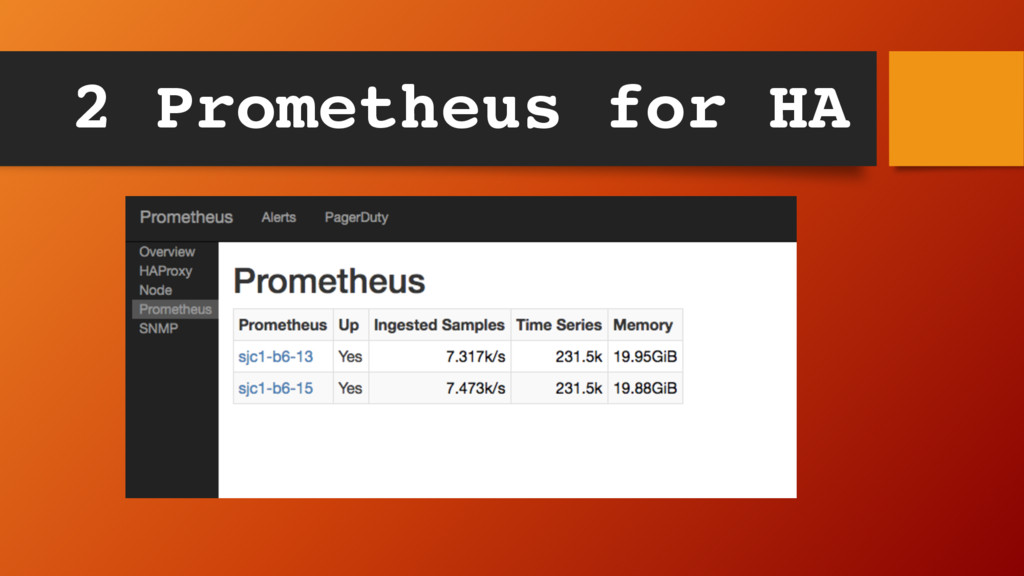
    is ridiculously hard to get right • For HA, run two identical Prometheus servers • No dependencies (only SSD) • Single statically linked Go binary
  7. Ease of Use • Very easy for developers to instrument

    new applications • Just need to expose an HTTP endpoint for Prometheus to scrape • A “push-gateway” available for short lived jobs
  8. 1) Ingestion + Metrics Collection 2) Processing + Storage 3)

    Visualization 4) Alerting 5) Analysis How does Prometheus work?
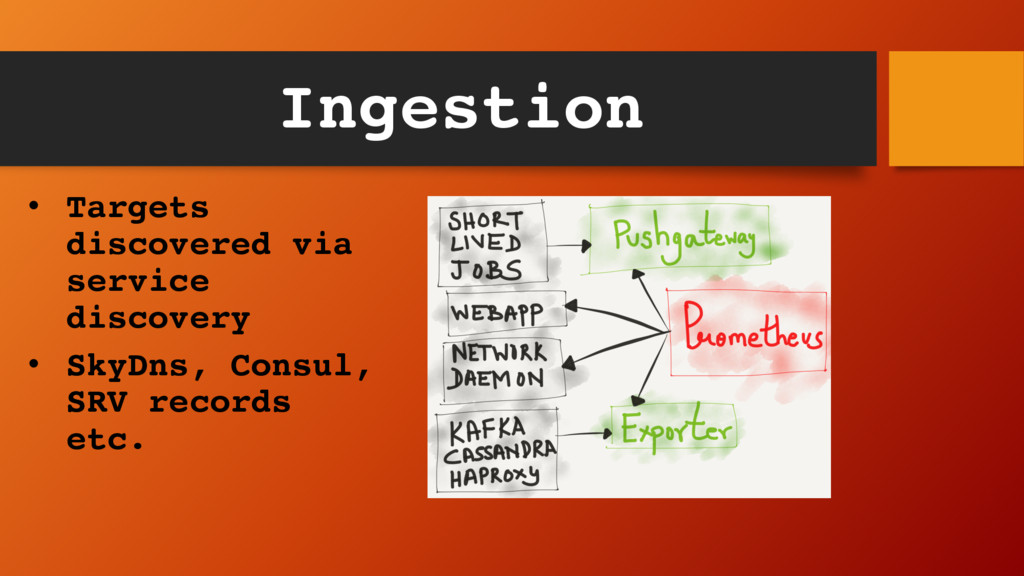
  9. Stateful Clients help instrument applications directly Clients pre aggregate –

    much more efficient Pushgateway for short lived jobs Exporters – JMX exporters, node exporters etc. Fairly easy to write new exporters - https://github.com/imgix/s6_exporter - https://github.com/imgix/heka_exporter Ingestion
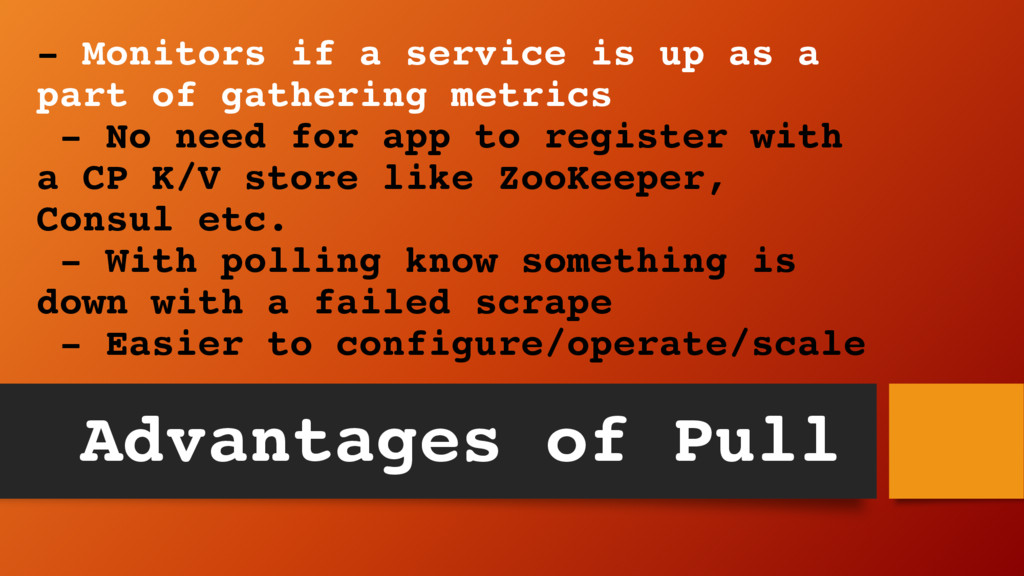
  10. - Monitors if a service is up as a part

    of gathering metrics - No need for app to register with a CP K/V store like ZooKeeper, Consul etc. - With polling know something is down with a failed scrape - Easier to configure/operate/scale Advantages of Pull
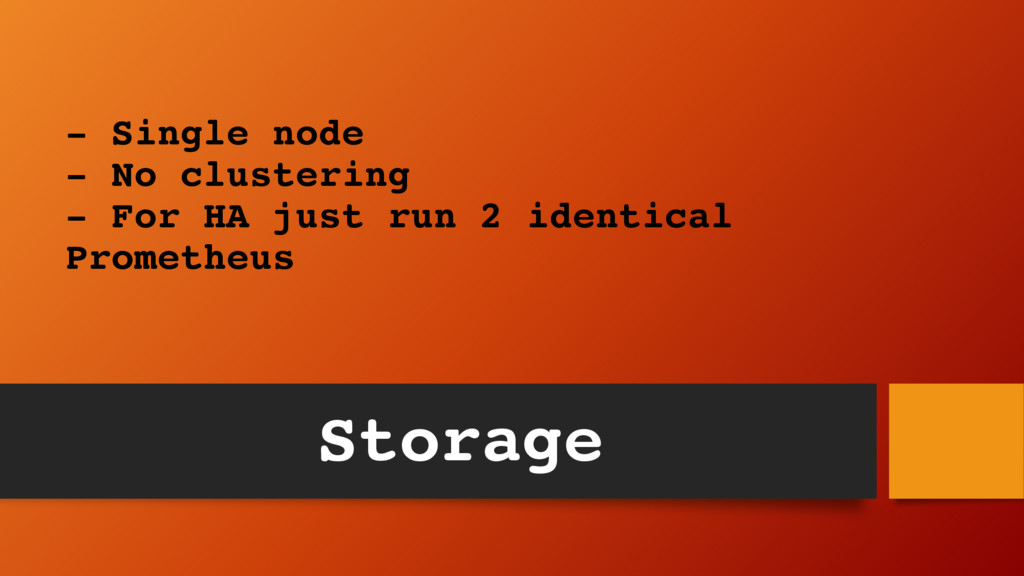
  11. - Single node - No clustering - For HA just

    run 2 identical Prometheus Storage
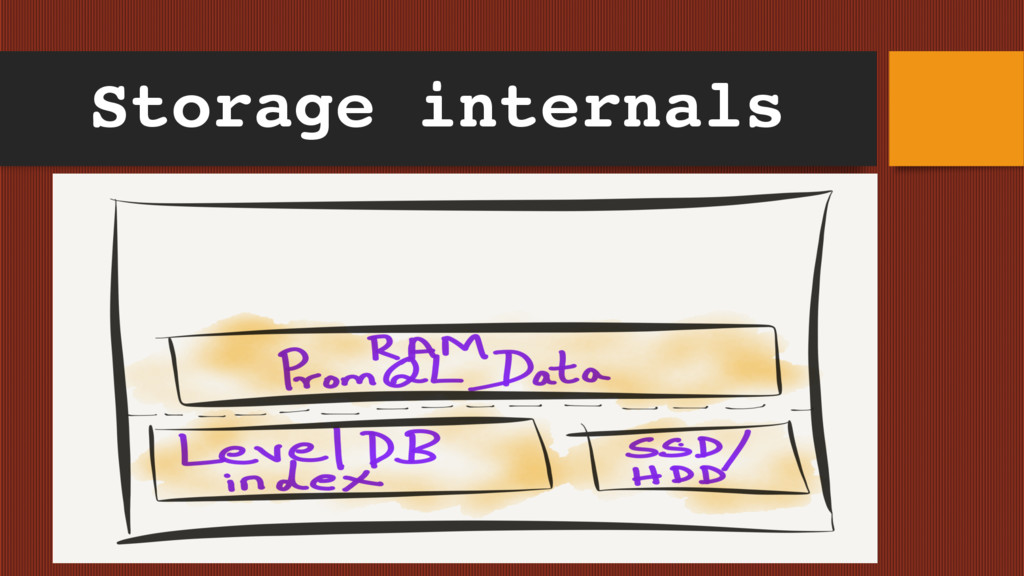
  12. - LevelDB for indexing for PromQL queries - Indexes used

    to fetch time series is required for evaluating a PromQL expression - All data required for a PromQL query evaluation needs to be in memory Indexing
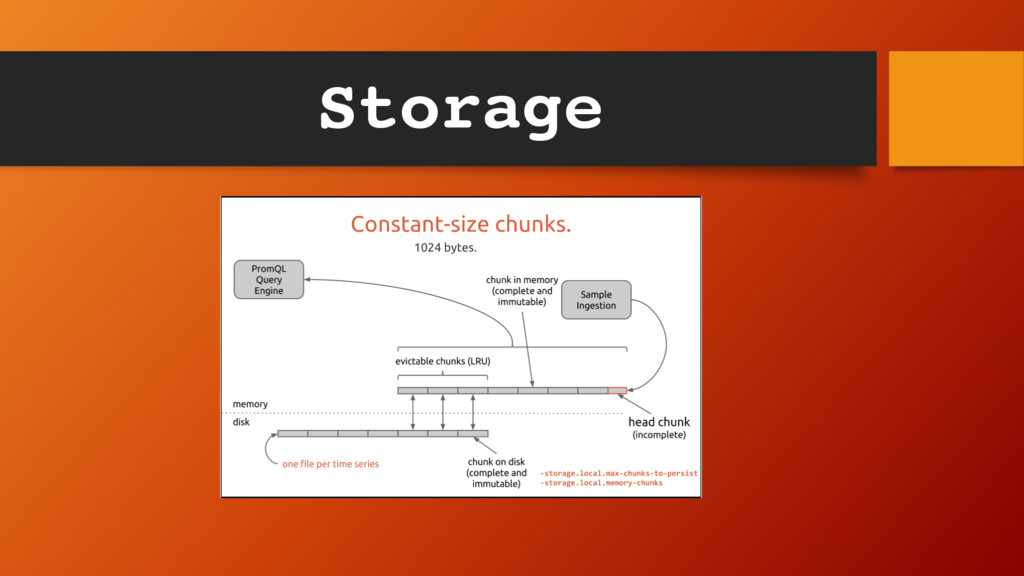
  13. - Custom storage layer – 1024 bytes in memory chunks

    synced to disk - compression + batched writes to timeseries files on disk - 3 different types of chunk encoding: - delta - double delta - variable bit width encoding https://promcon.io/2016-berlin/talks/the- prometheus-time-series-database/ Storage
  14. - 3X RAM required than needed by the memory chunks

    alone - If chunk size exceeds 10% of configured value, Prometheus will start throttling ingestion till value is exceeded by only 5% - This is done by skipping scrapes Storage
  15. - More the chunks in memory per time series, better

    the batching of writes to disk - PromQL queries that need large number of time series (large number of chunks) make heavy use of the LevelDB cache - storage.local.memory-chunks – most recently used memory chunk size (default 1048576); configurable Storage
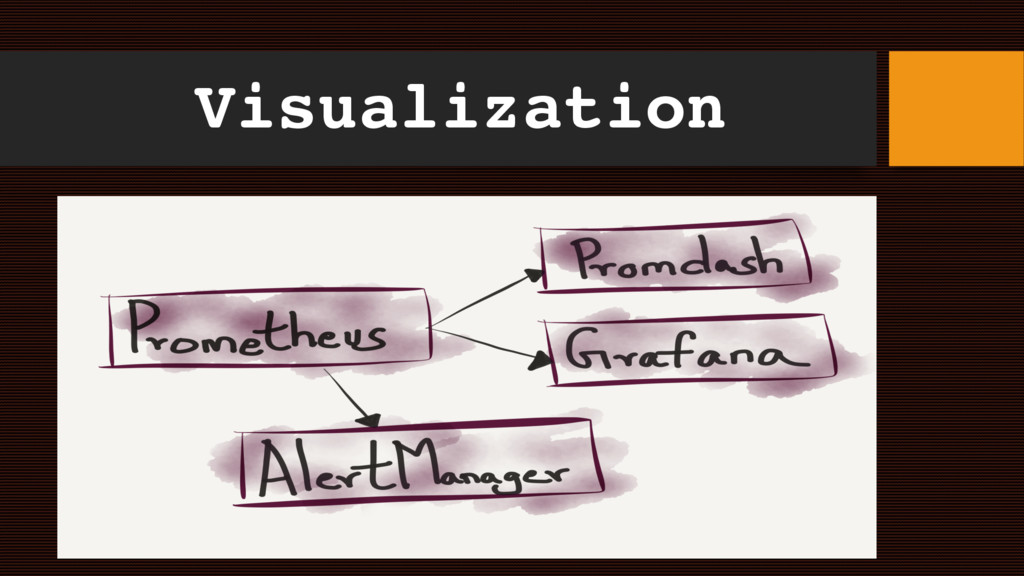
  16. Visualization - PromDash - Grafana (data source for Prometheus is

    included since Grafana 2.5.0 (2015-10-28)) - Arbitrary templates using Go’s txt/template package
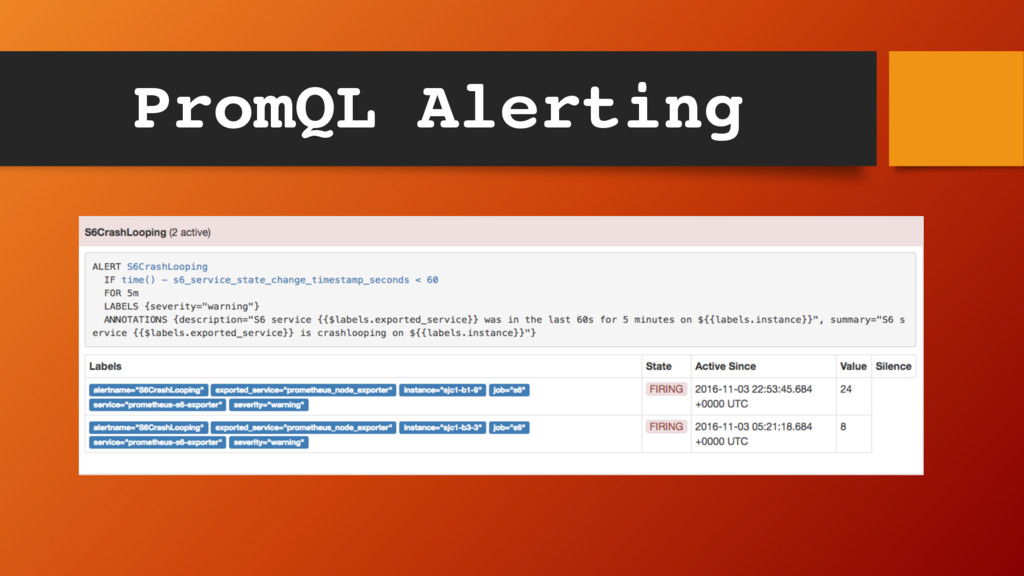
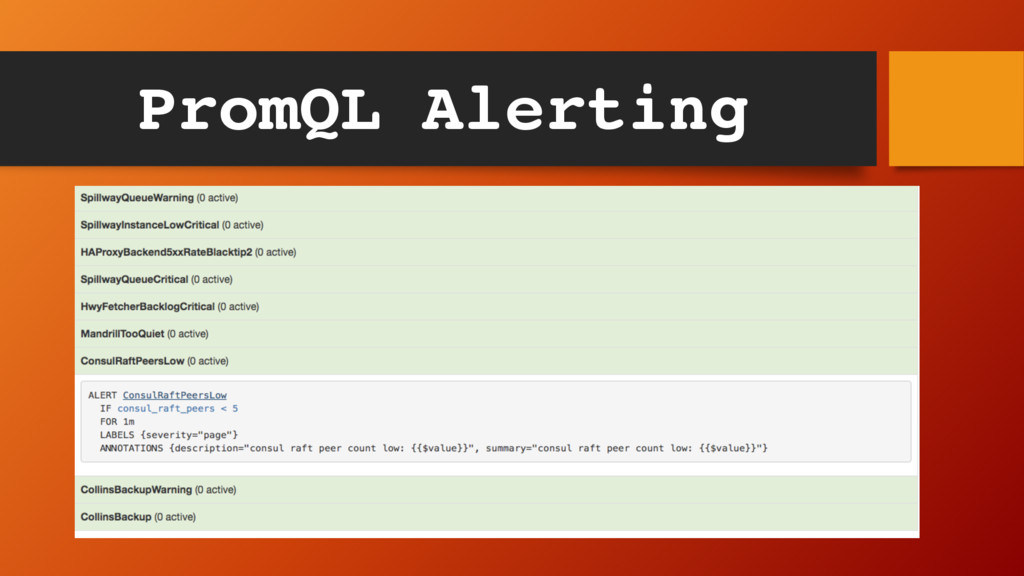
  17. Alerting • Configurable Rules based on Prometheus expression language •

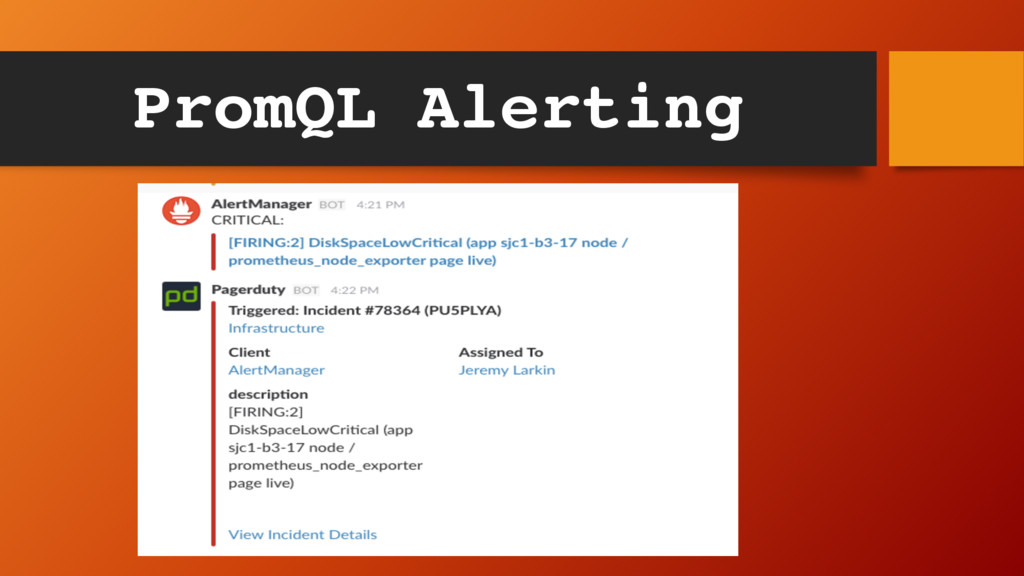
    Alertmanager – a system that acts upon alerts • Alertmanager dedupes, routes alerts, makes decisions based on rules etc. • Integrates with Slack, HipChat, PagerDuty etc
  18. Analysis - PromQL - One of the greatest strengths of

    Prometheus - Non SQL, Turing complete query language - Only for reads of times series in memory
  19. Multidimensional Data Model Data model – labels, not hierarchy Labels

    – • More flexible • More efficient • Dimensional queries
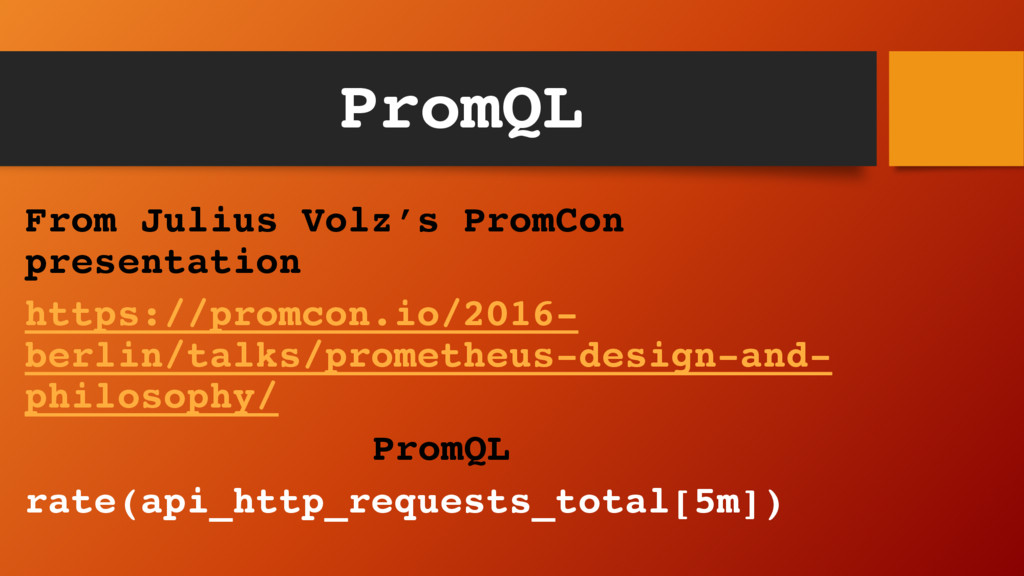
  20. PromQL vs SQL PromQL rate(api_http_requests_total[5m]) SQL SELECT job, instance, method,

    status, path, rate(value, 5m) FROM api_http_requests_total
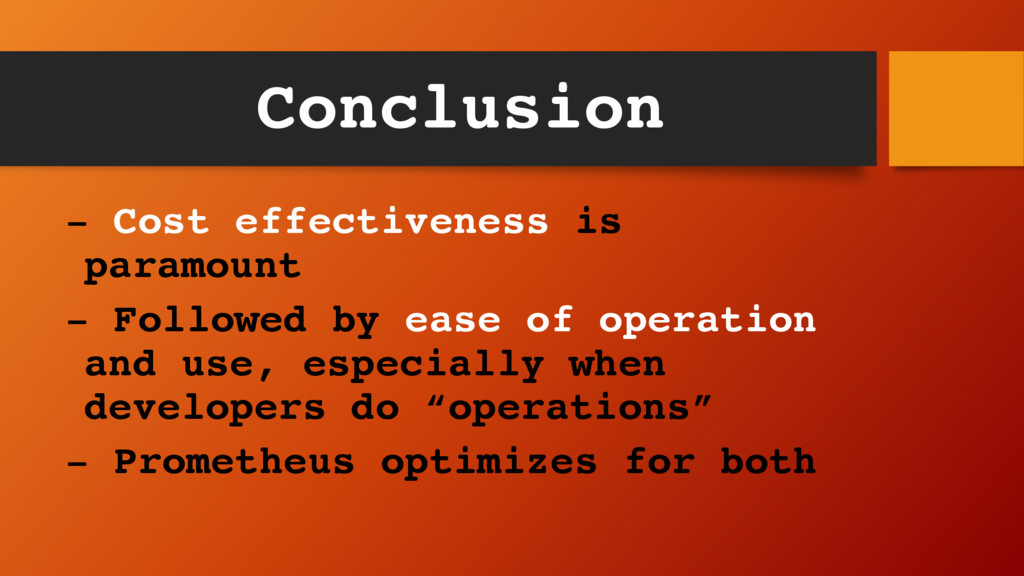
  21. Conclusion - Cost effectiveness is paramount - Followed by ease

    of operation and use, especially when developers do “operations” - Prometheus optimizes for both

More Decks by Cindy Sridharan

Other Decks in Technology