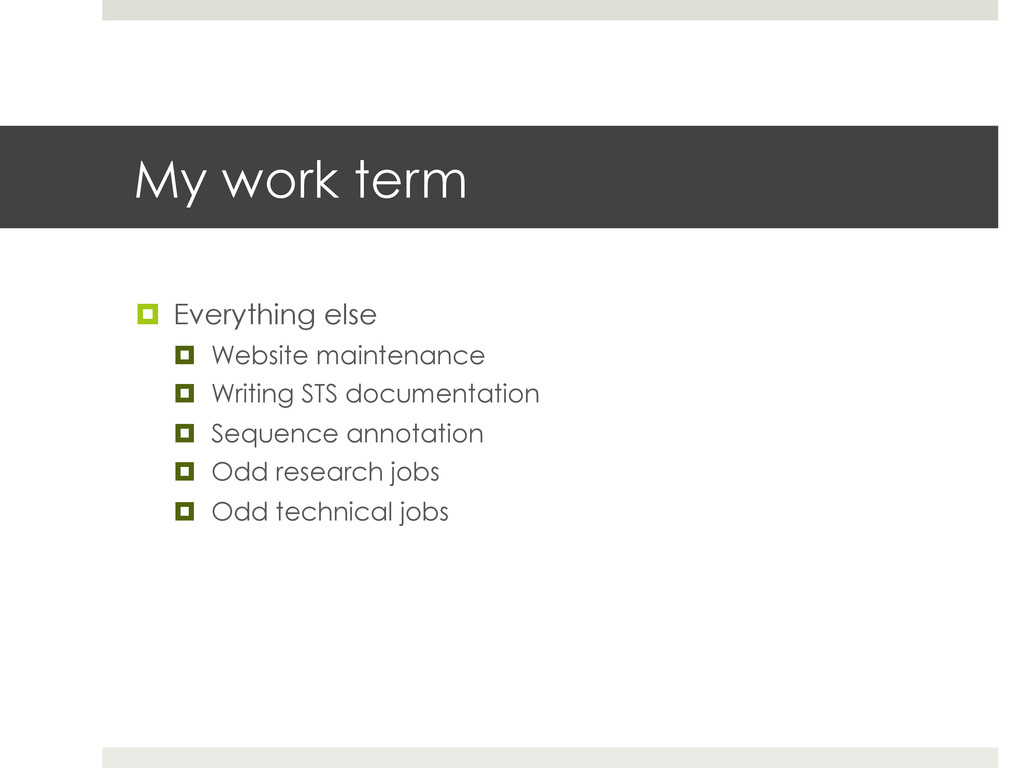
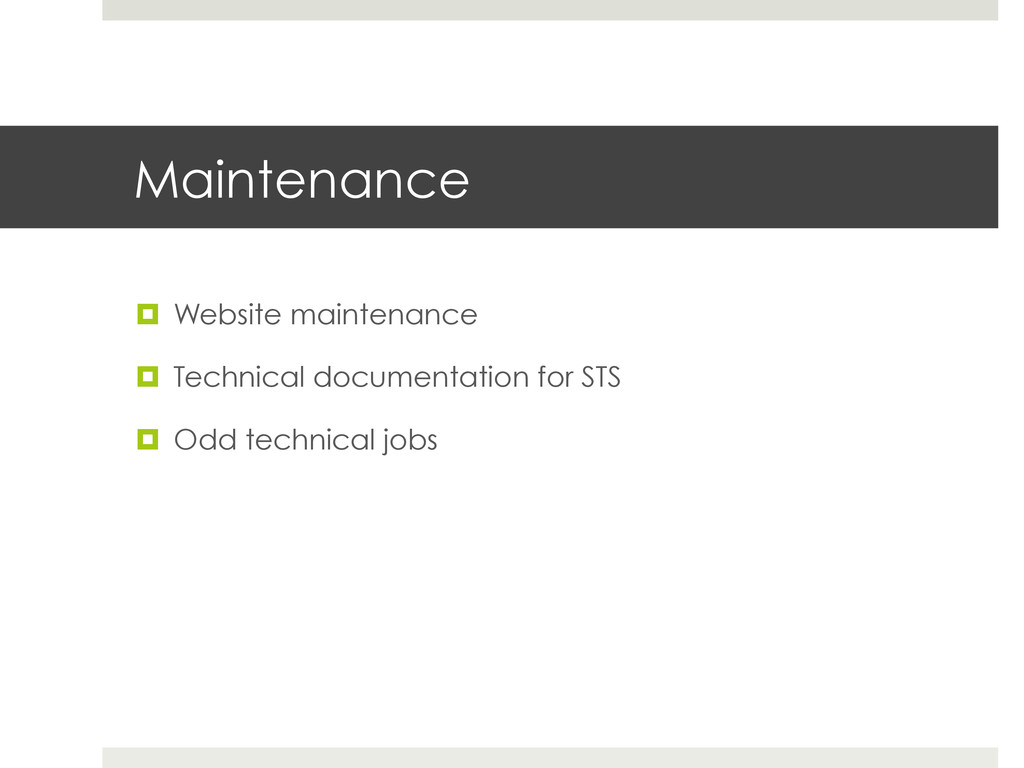
VBRC maintains the domain virology.ca, which Provides resources for the use of other laboratories Maintains a database of viral sequences + annotations Provides access to open source sequence analysis tools
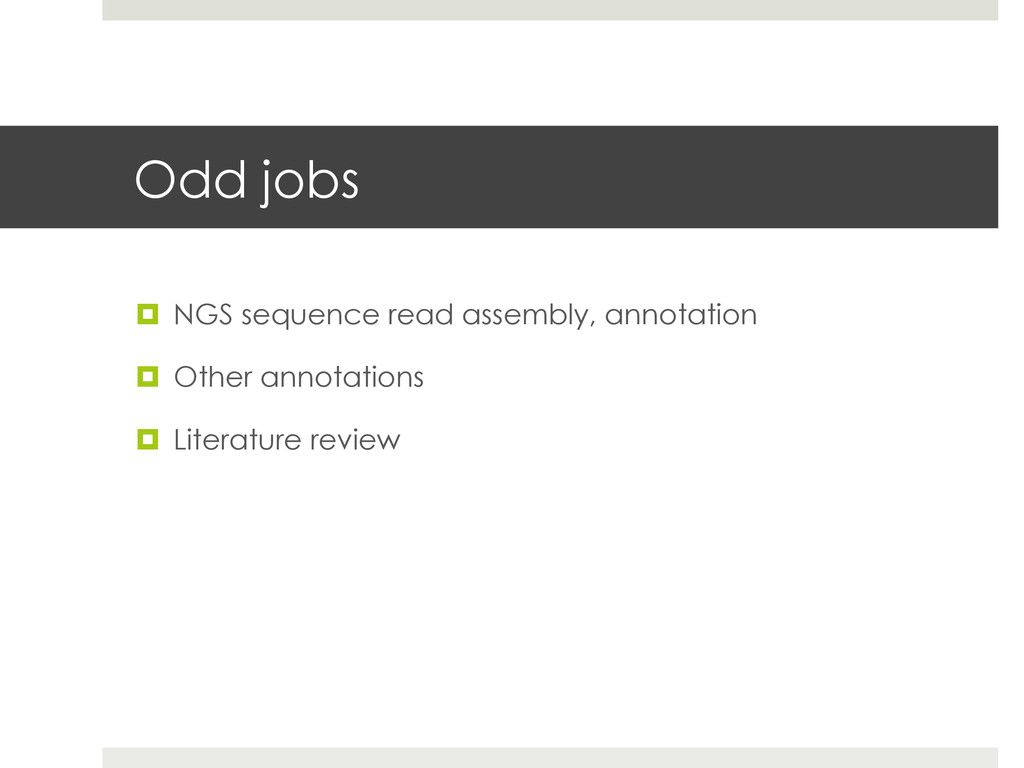
work in the lab (in general): Programmers Create and maintain tools (Mostly Java, utilizing Java Web Start distribution) Systems administration – primarily website maintenance. Odd technical jobs Biologists Annotations / sequence analysis Maintenance of quality data
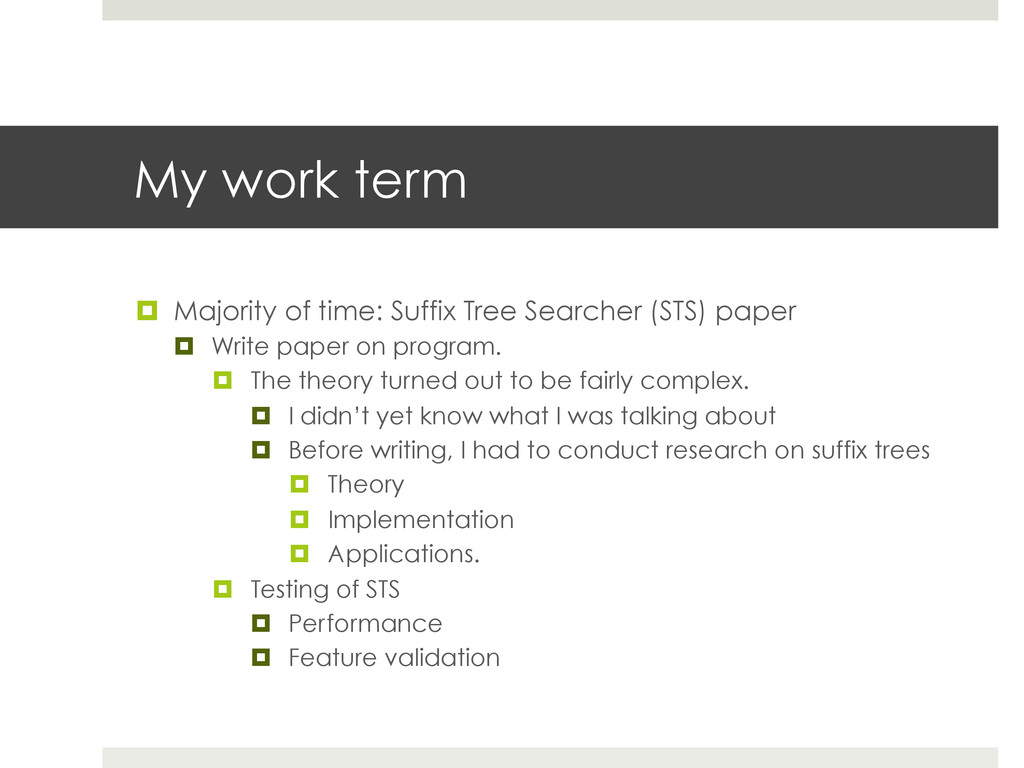
(STS) paper Write paper on program. The theory turned out to be fairly complex. I didn’t yet know what I was talking about Before writing, I had to conduct research on suffix trees Theory Implementation Applications. Testing of STS Performance Feature validation
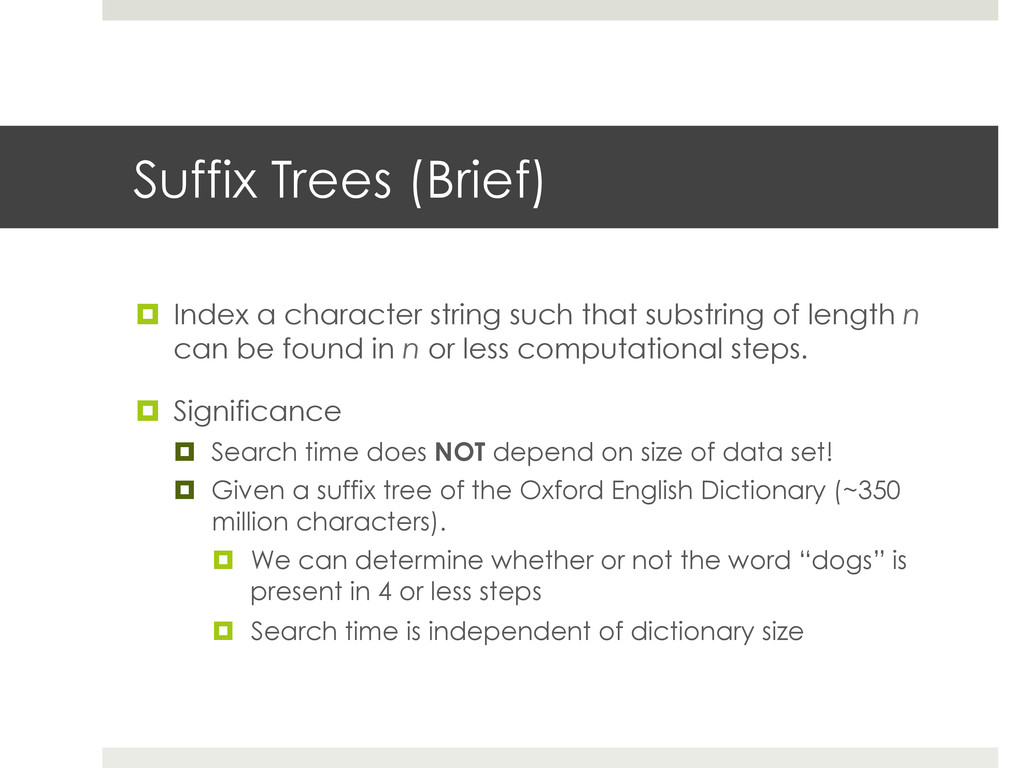
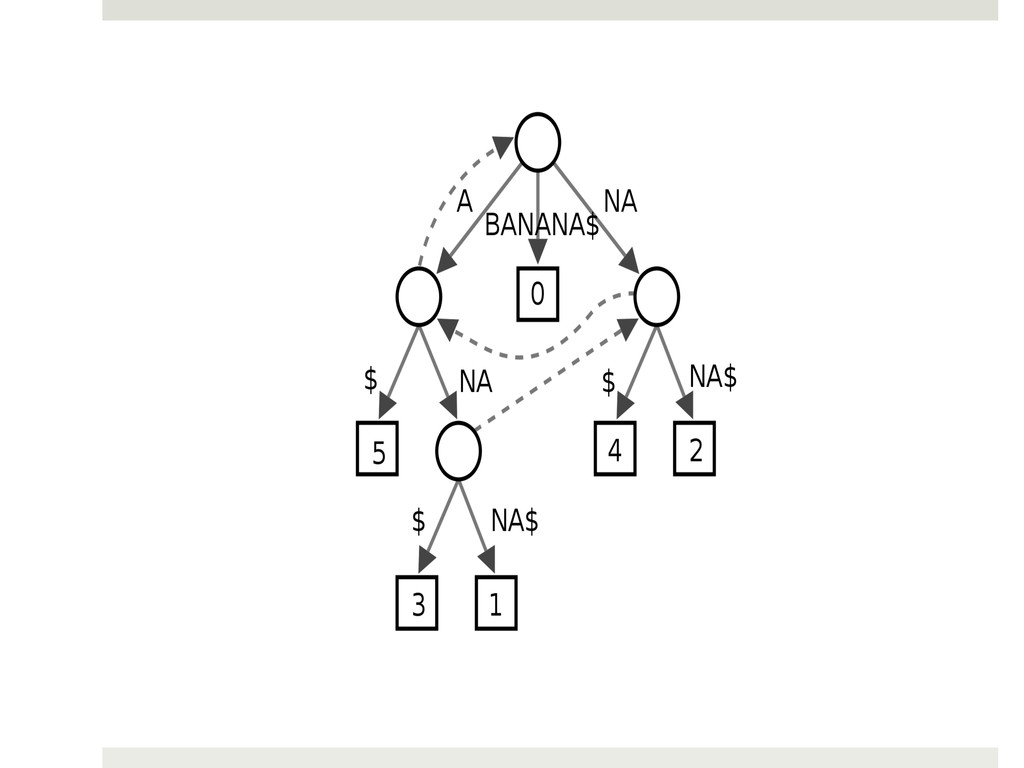
substring of length n can be found in n or less computational steps. Significance Search time does NOT depend on size of data set! Given a suffix tree of the Oxford English Dictionary (~350 million characters). We can determine whether or not the word “dogs” is present in 4 or less steps Search time is independent of dictionary size
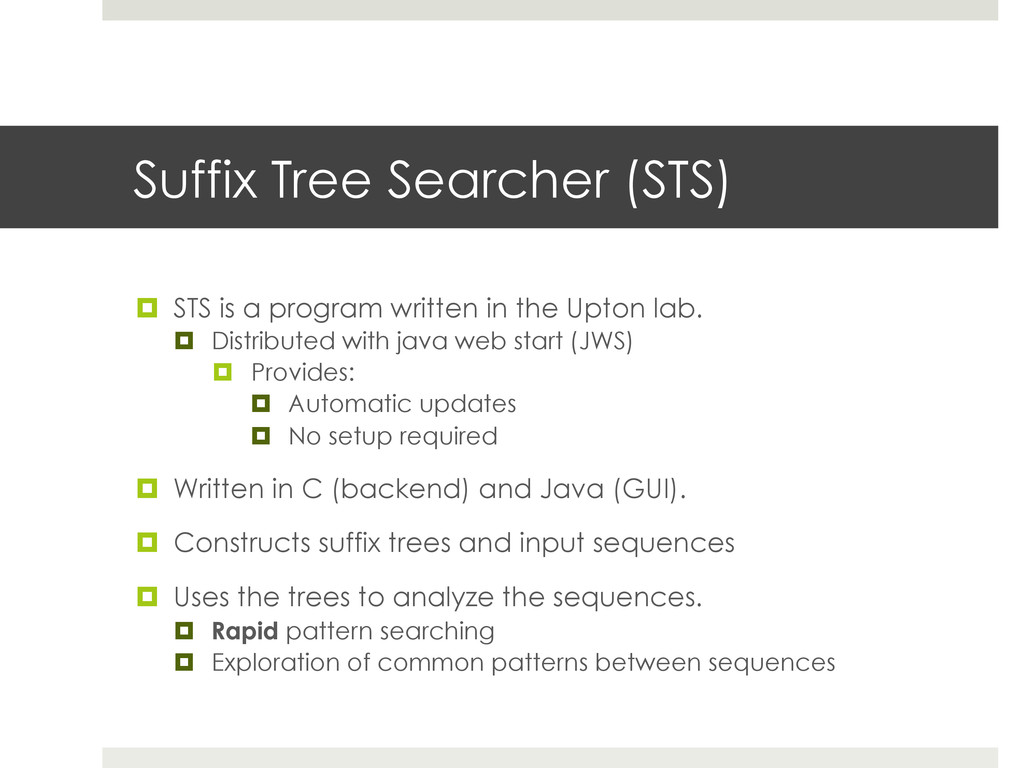
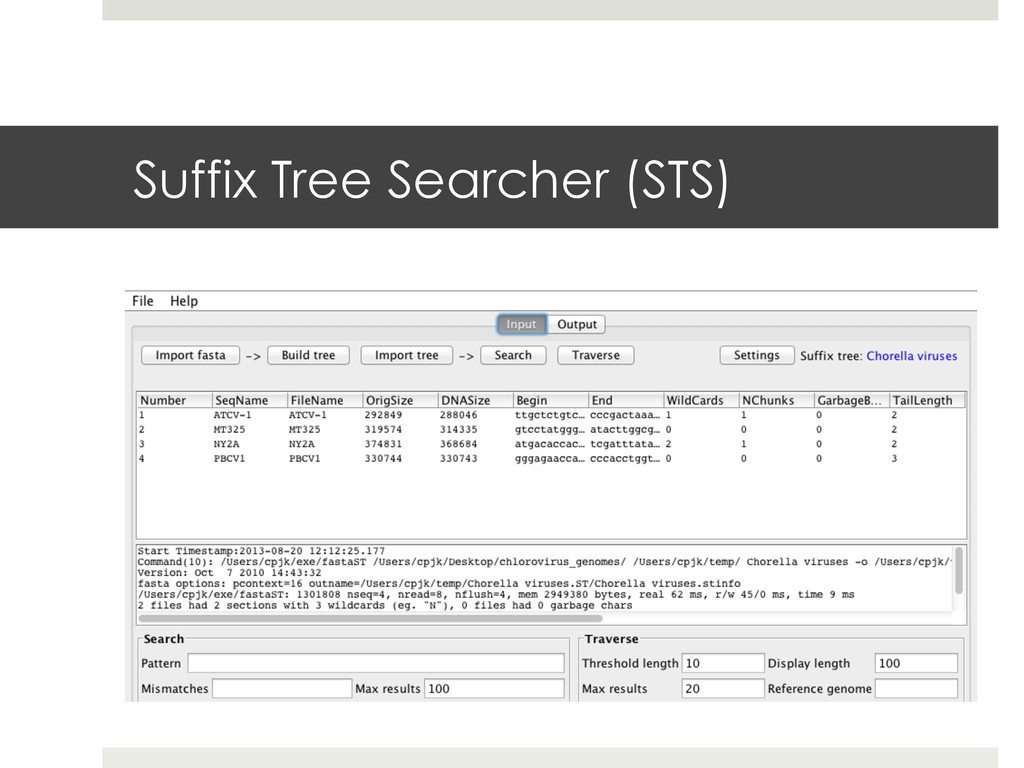
in the Upton lab. Distributed with java web start (JWS) Provides: Automatic updates No setup required Written in C (backend) and Java (GUI). Constructs suffix trees and input sequences Uses the trees to analyze the sequences. Rapid pattern searching Exploration of common patterns between sequences
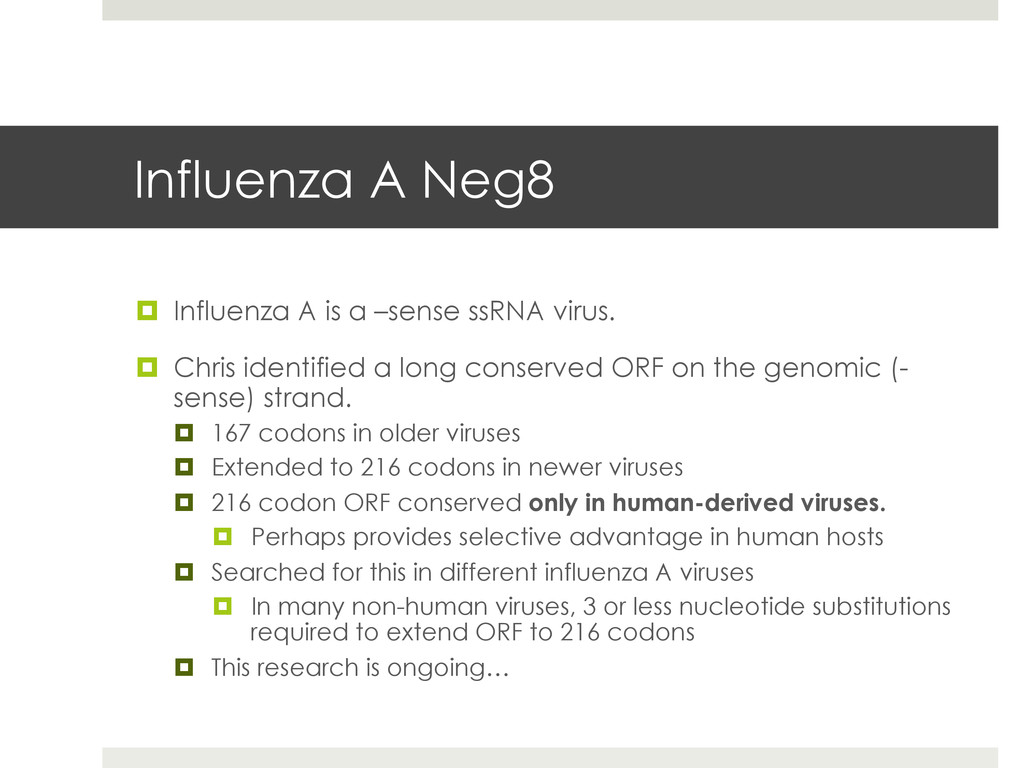
virus. Chris identified a long conserved ORF on the genomic (- sense) strand. 167 codons in older viruses Extended to 216 codons in newer viruses 216 codon ORF conserved only in human-derived viruses. Perhaps provides selective advantage in human hosts Searched for this in different influenza A viruses In many non-human viruses, 3 or less nucleotide substitutions required to extend ORF to 216 codons This research is ongoing…


 nwiizo
 rasagy
 nikkihalliwell
 mayatellez
 rocio
 aleyda
 marketingsoph
 mraible
 lynnandtonic
 eileencodes
 chriscoyier
 reverentgeek