Upgrade to Pro — share decks privately, control downloads, hide ads and more …

Building Developer Products in the Agentic Age

Building Developer Products in the Agentic Age

This is a talk given by Ching-Wei Chen at the LeadDev New York Meetup on Mar 25, 2026.
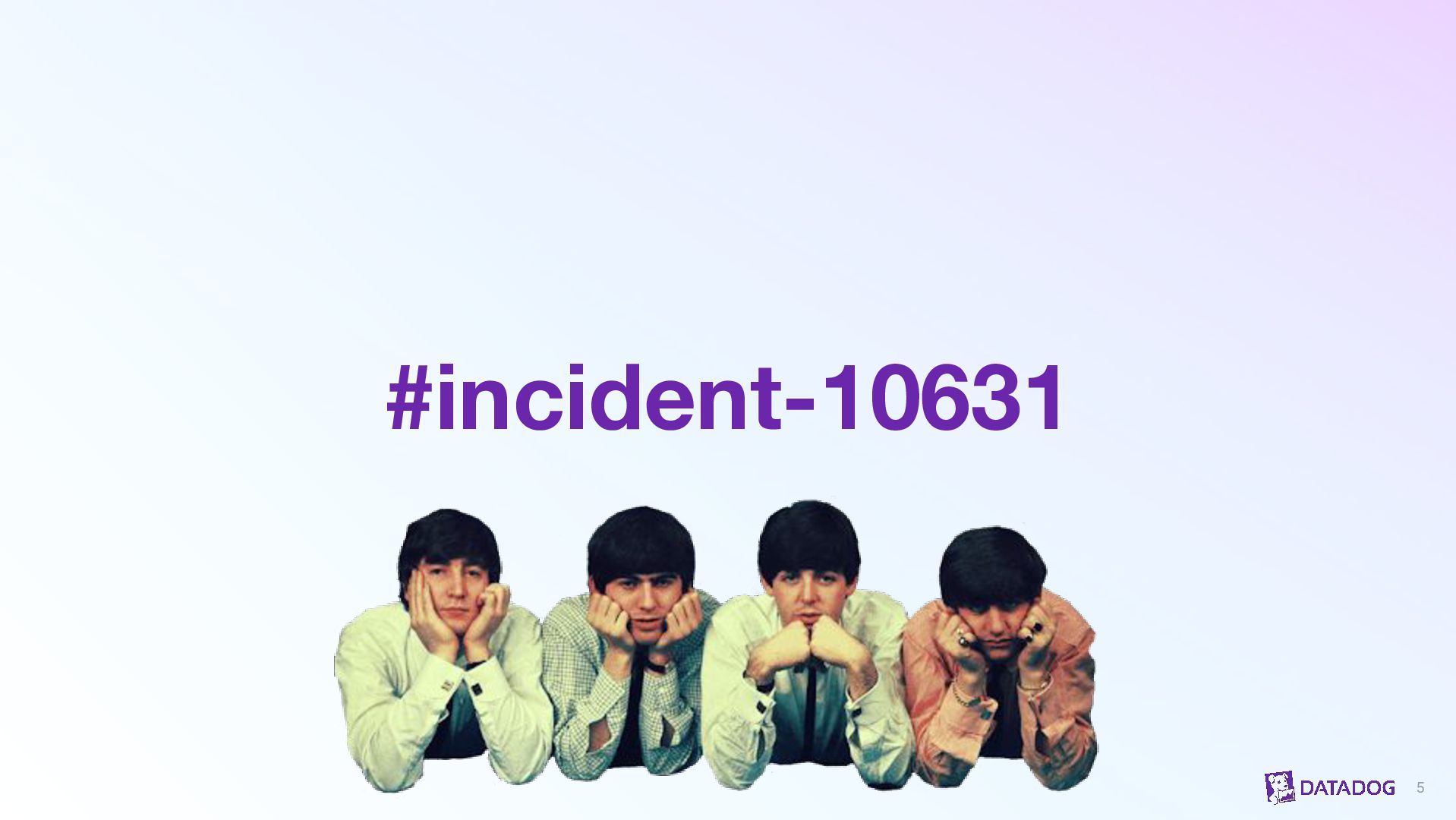
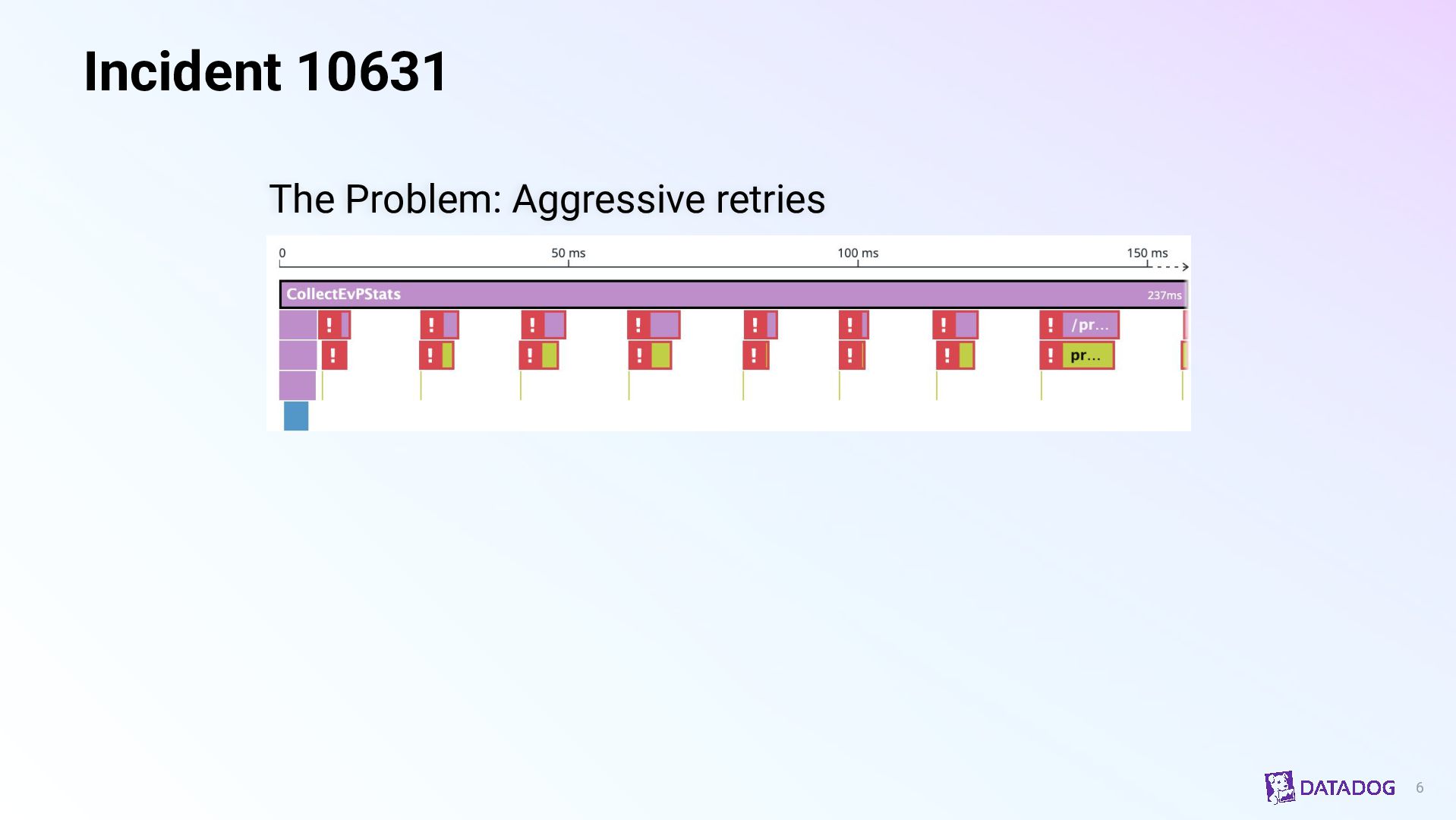
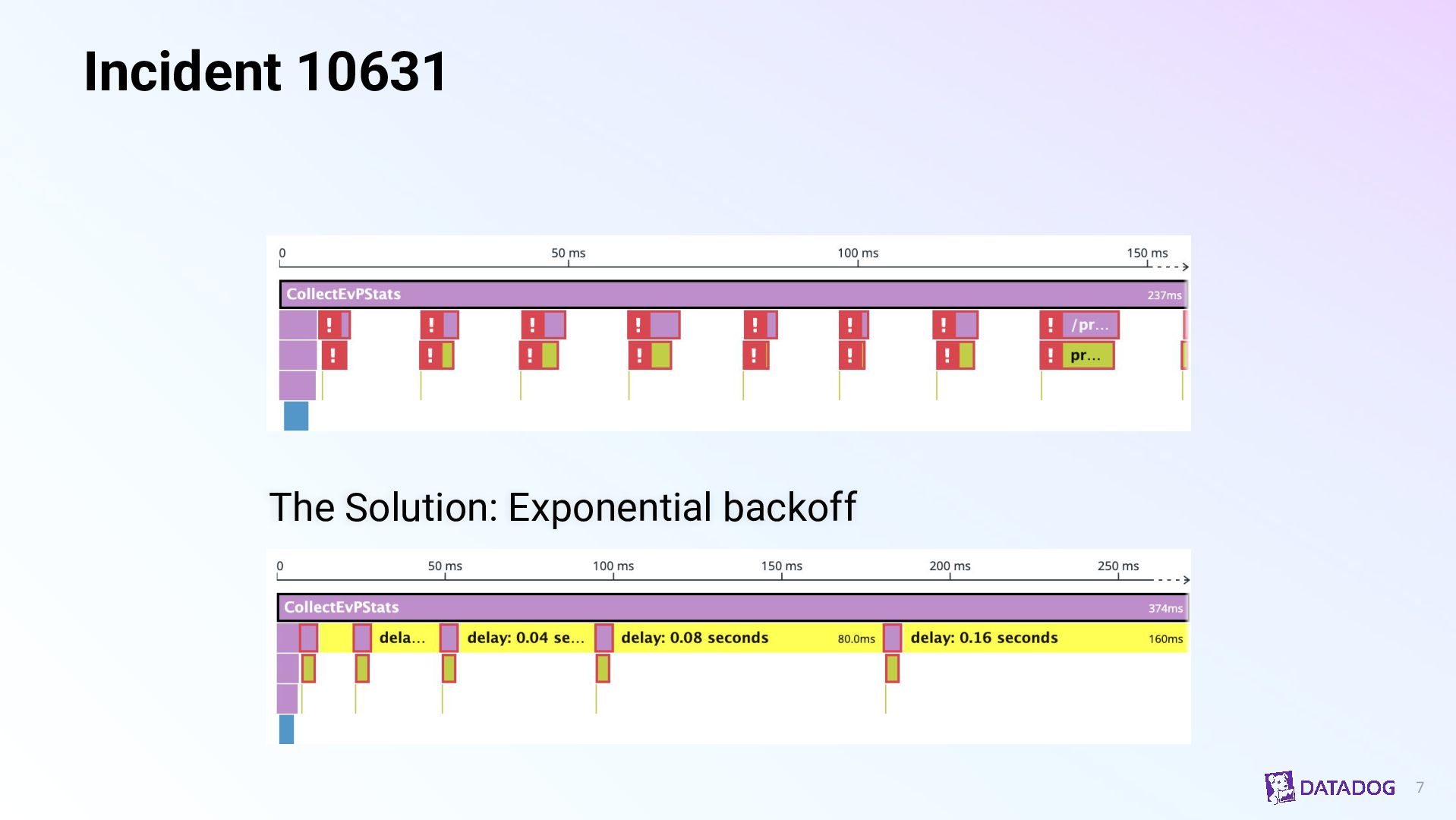
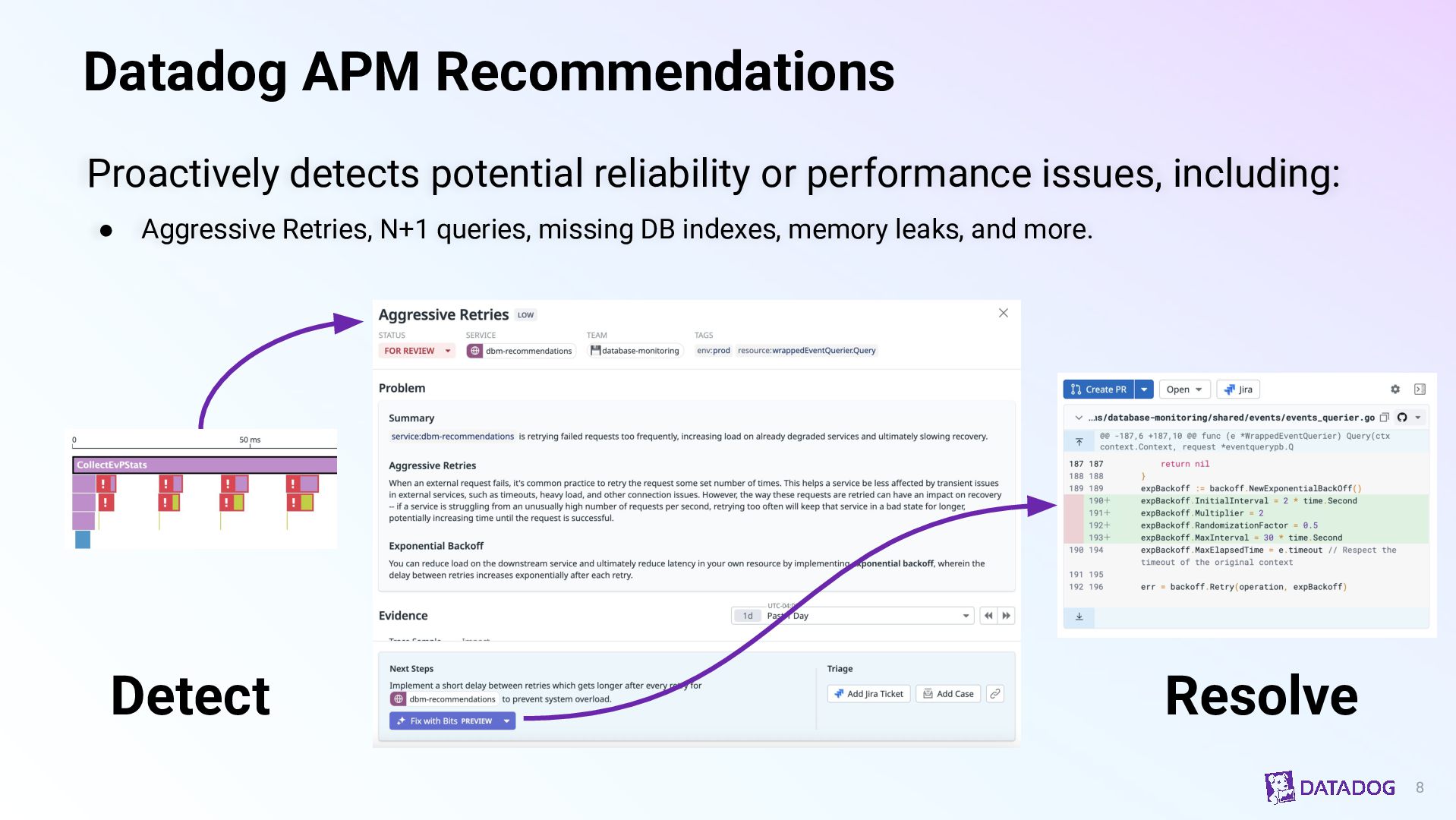
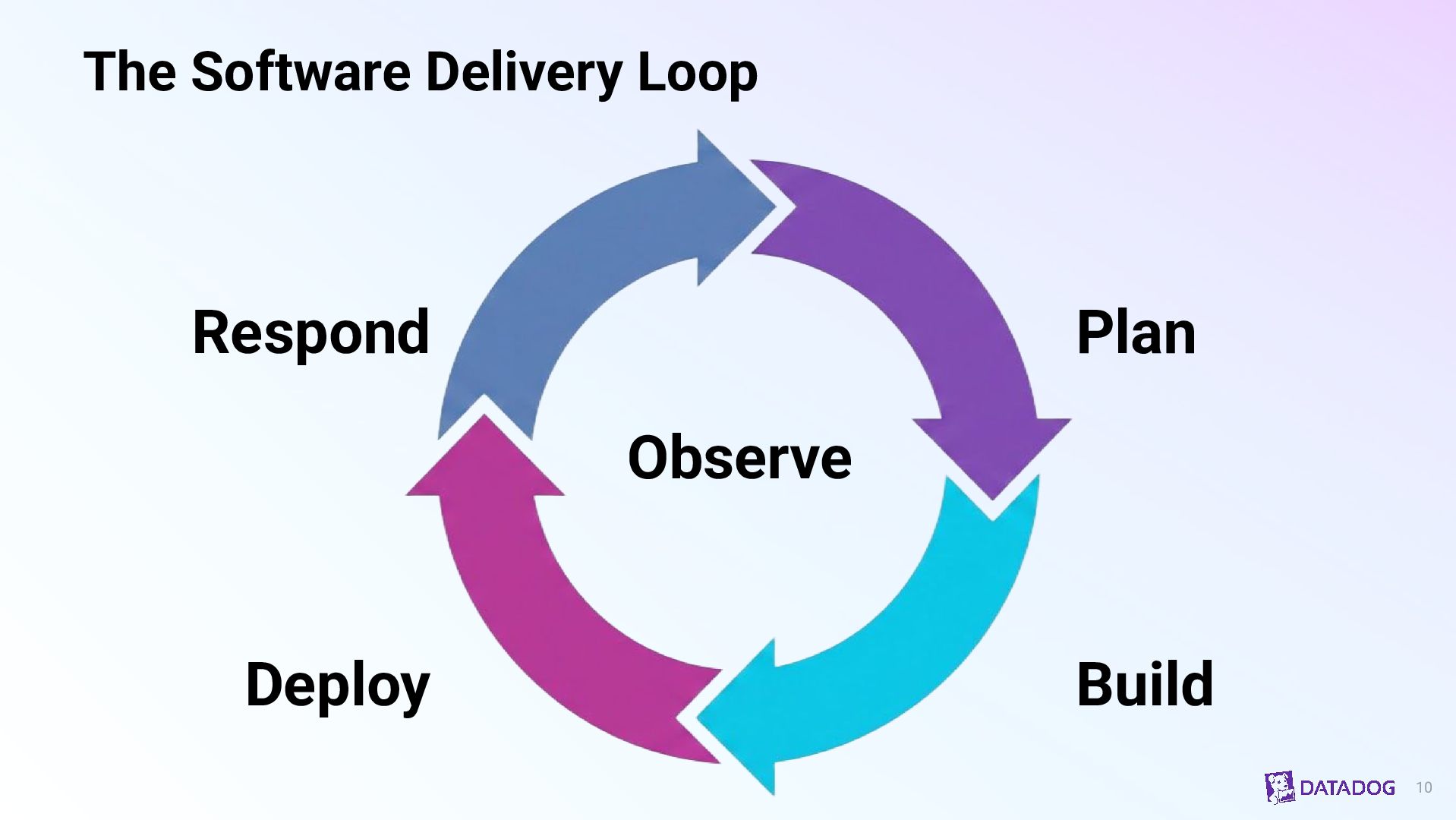
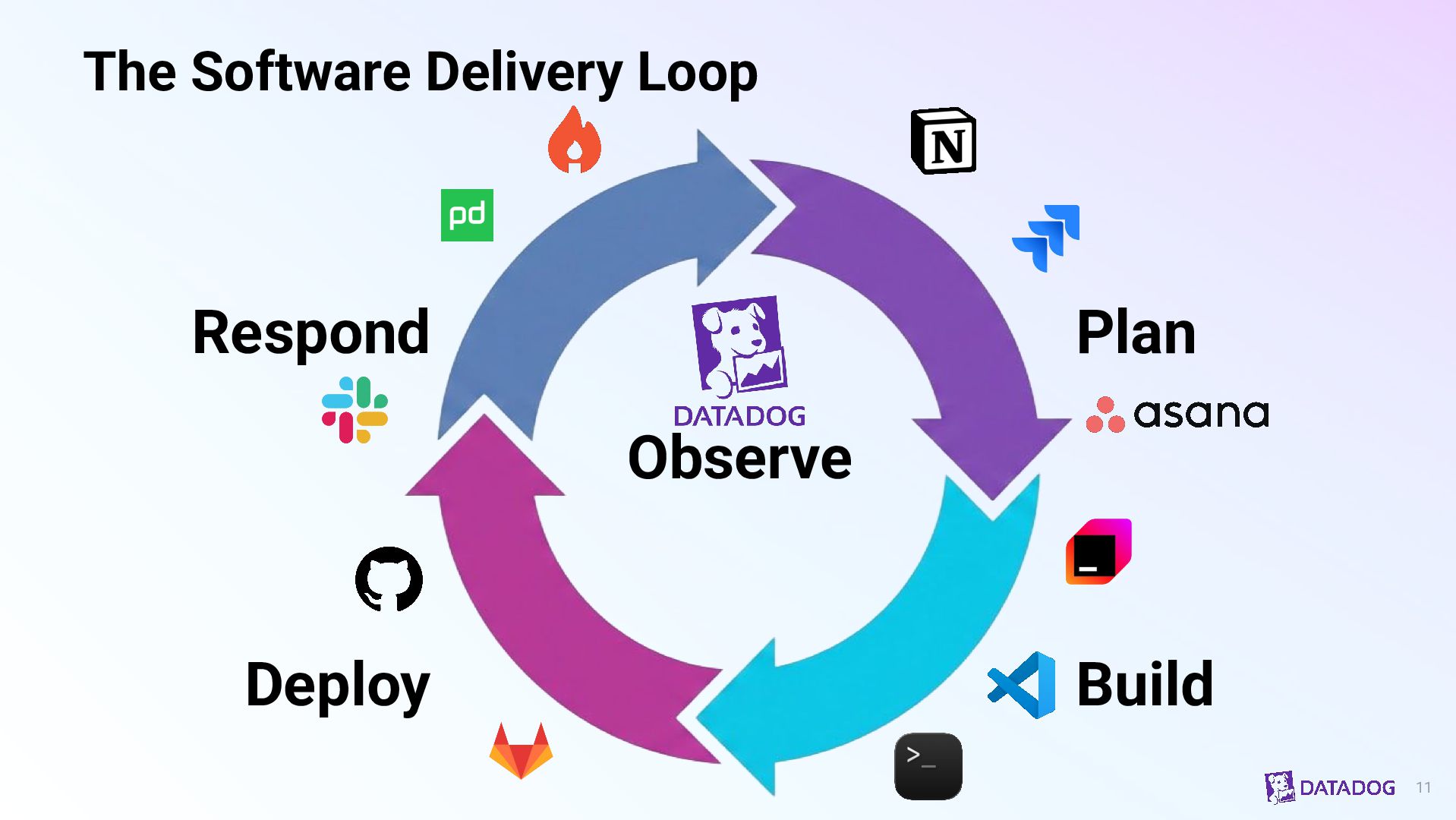
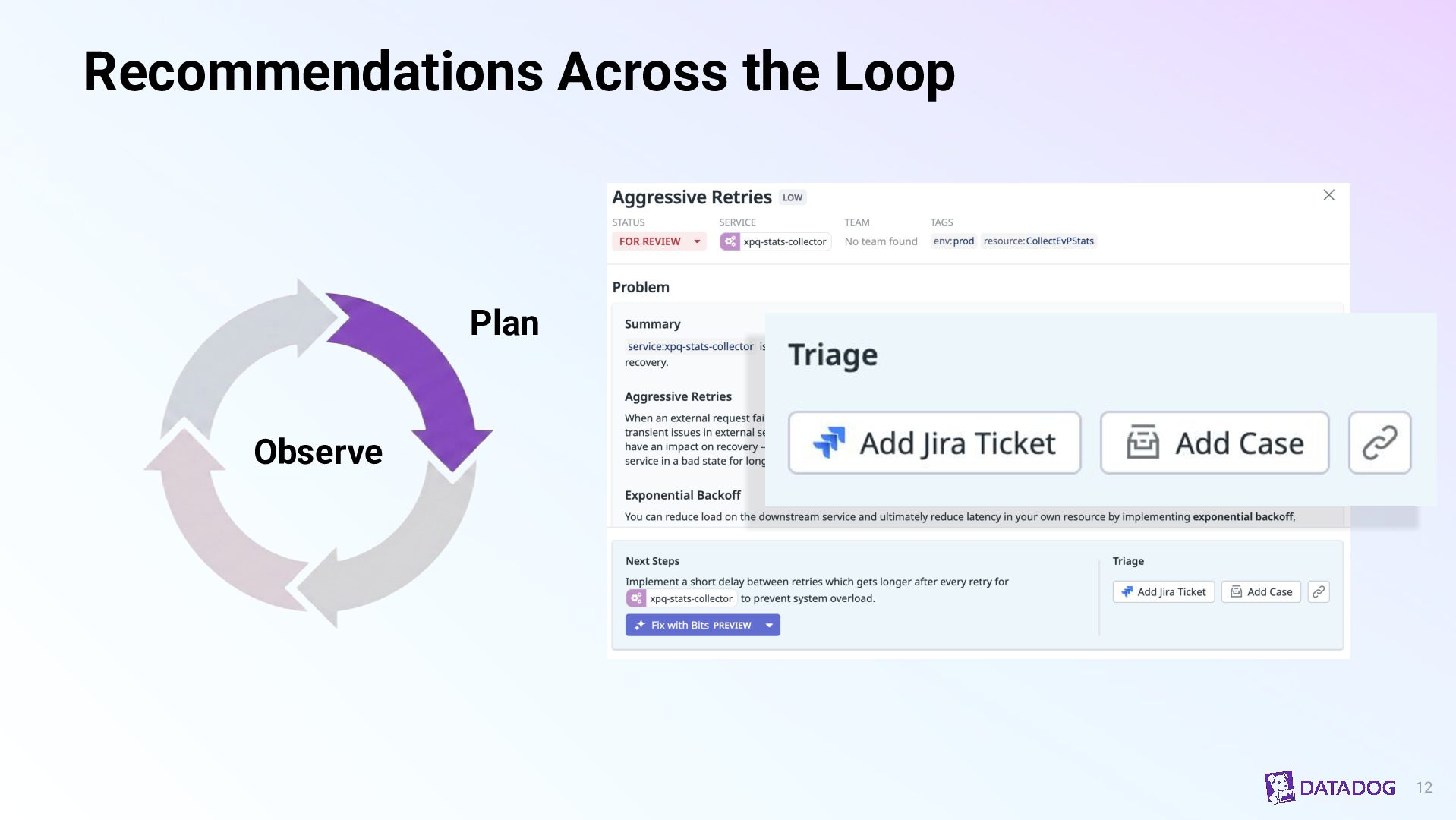
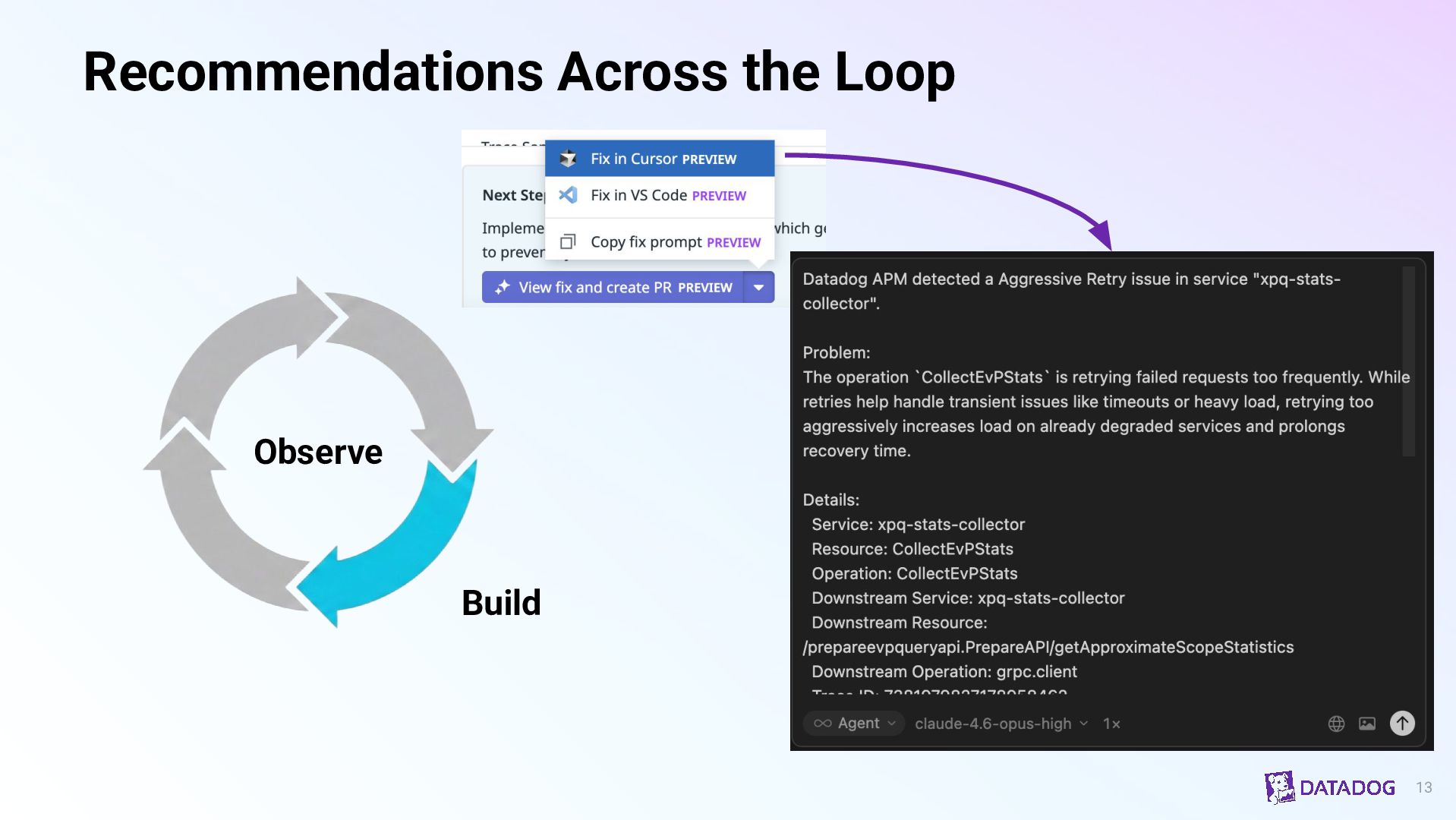
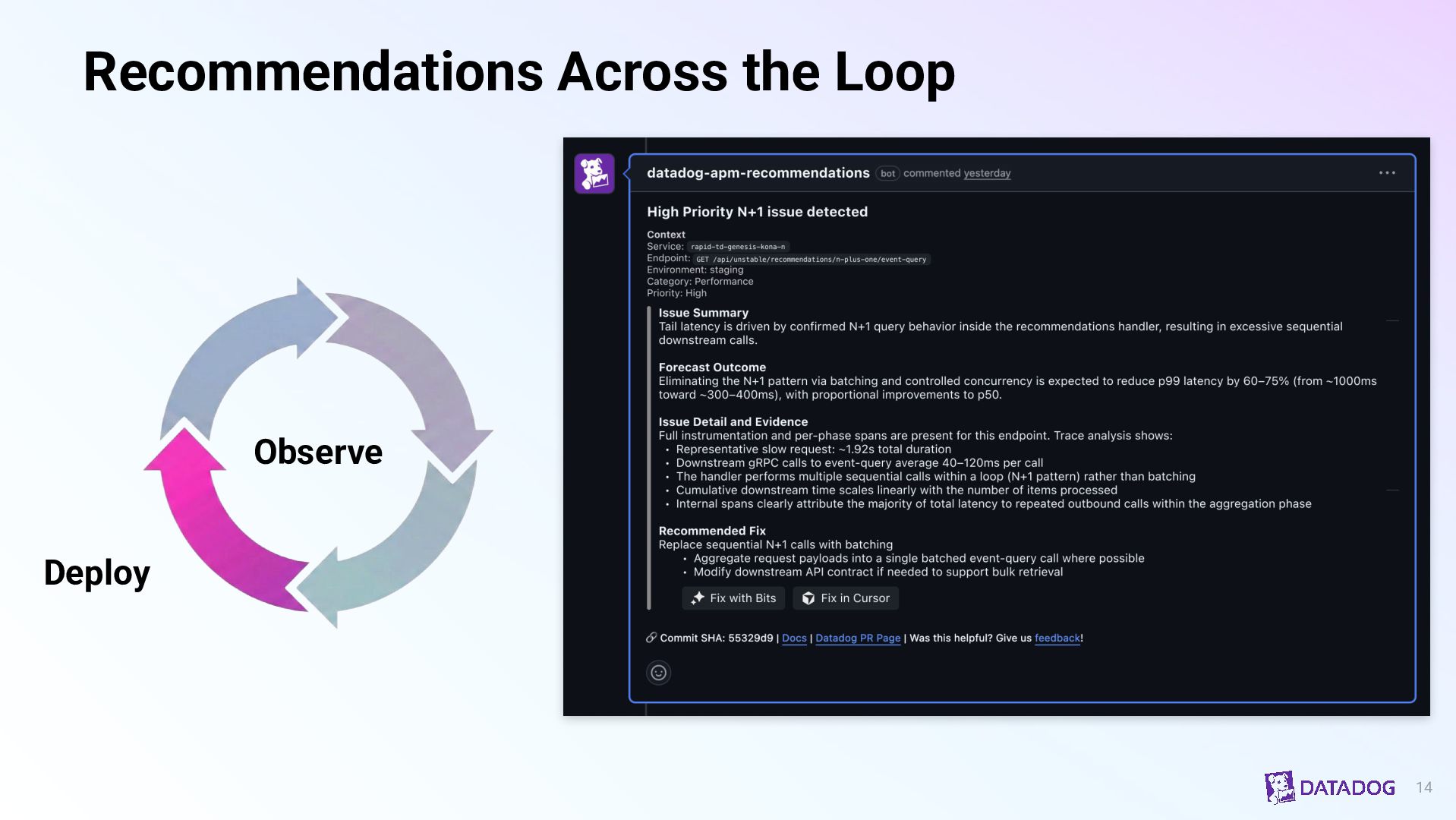
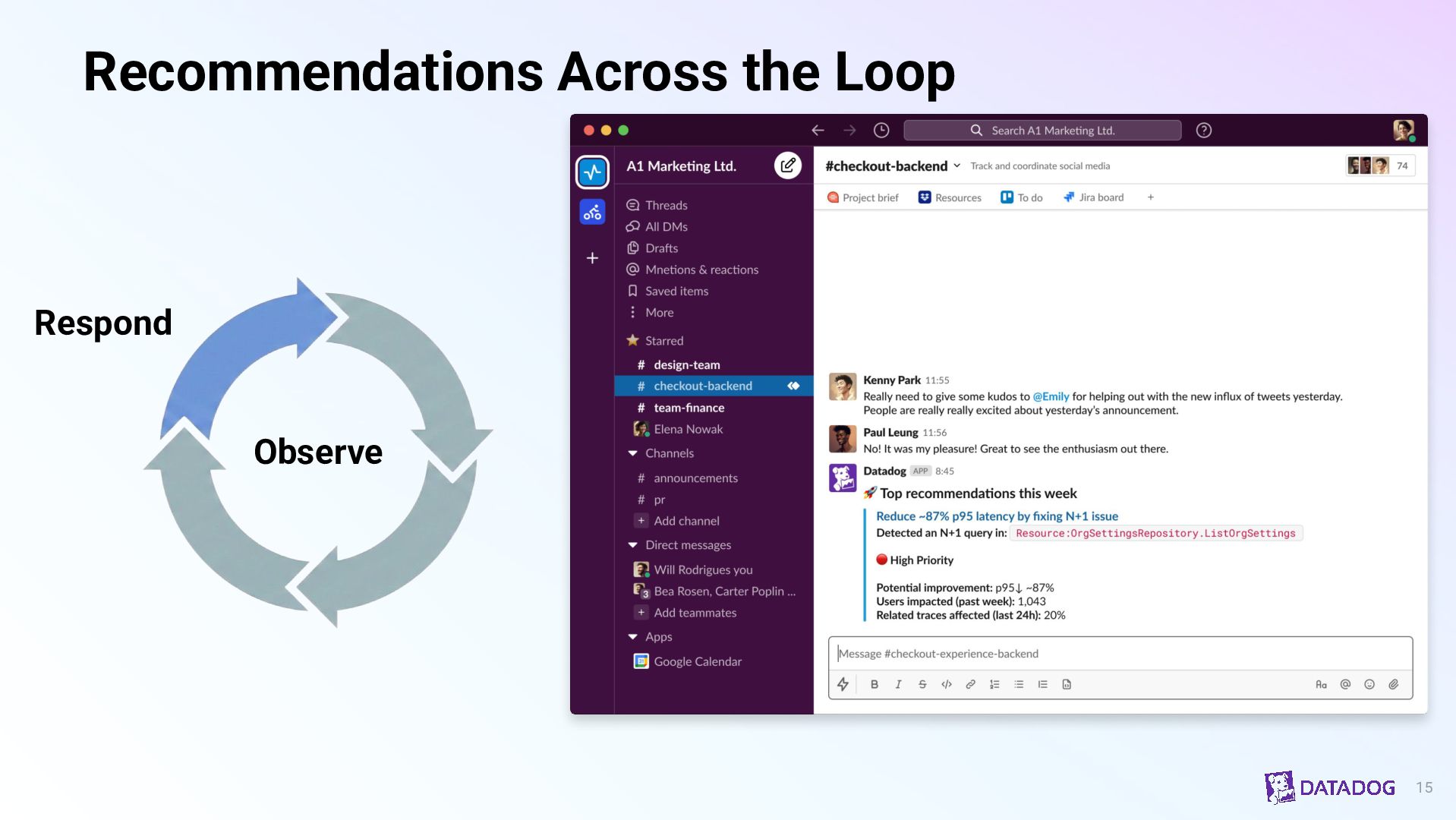
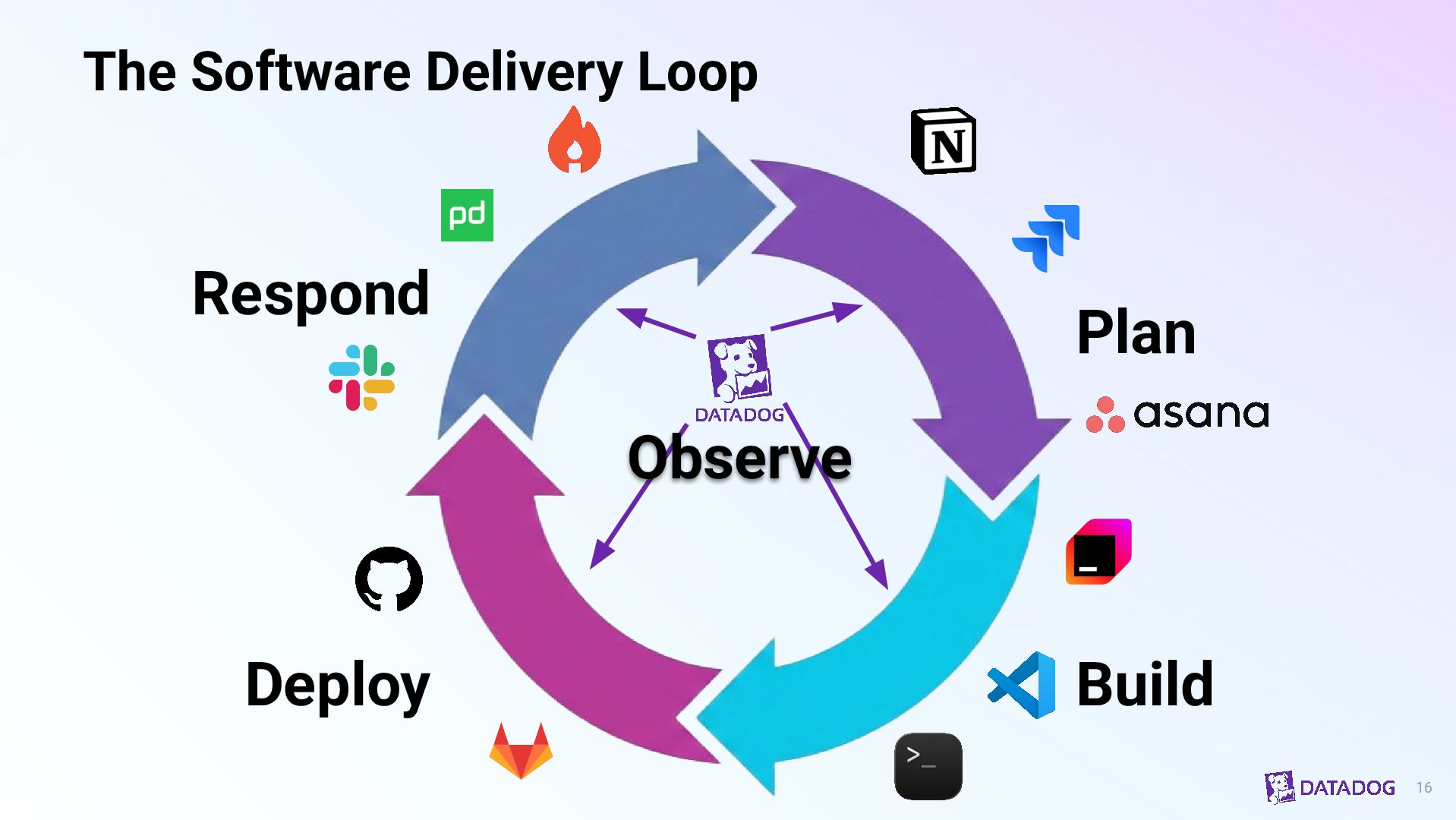
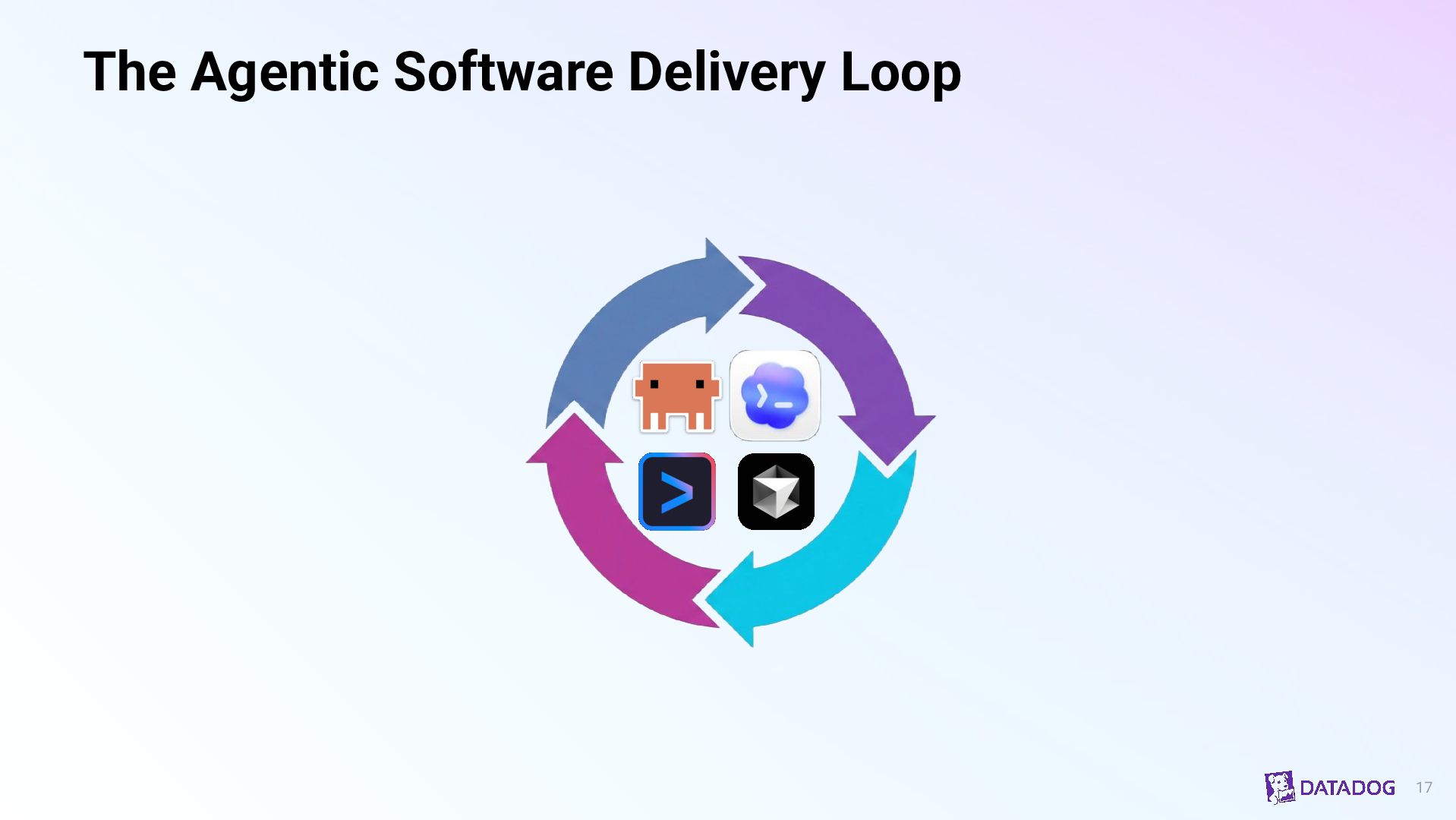
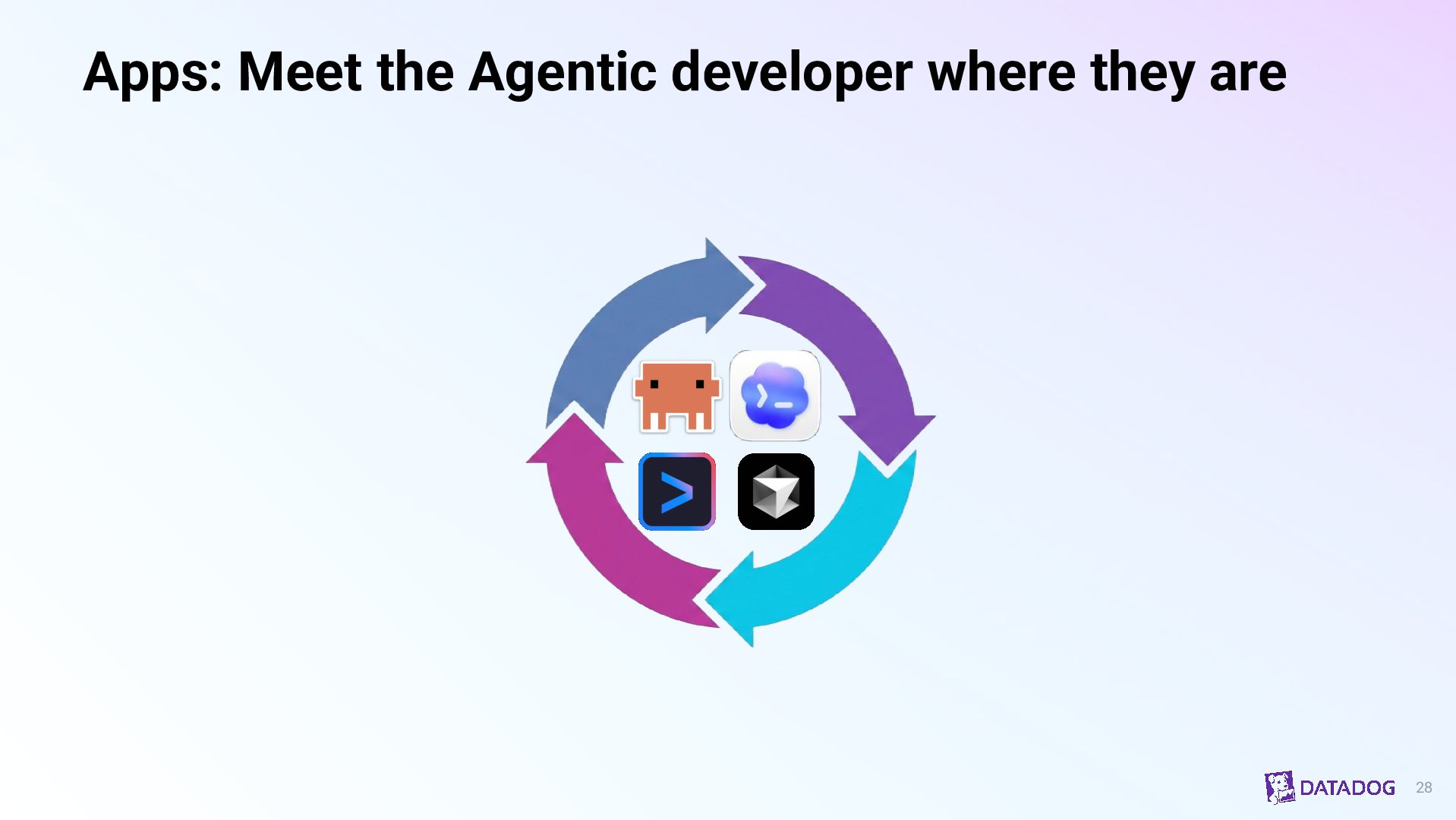
The presentation uses a case study of a major Spotify outage to emphasize the need for proactive reliability and performance issue detection. It introduces Datadog APM Recommendations as a developer product that detects common anti-patterns like aggressive retries and N+1 queries. The rise of capable coding agents is "shrinking" the Software Delivery Loop, requiring a shift to building specialized tools for AI Agents.
This shift necessitates building specialized tools that are designed to be consumed directly by AI Agents, rather than just humans. Effective agent tools must be optimized to "save cognition" by compressing deep insights from vast data (like trace spans) and minimizing friction through discoverability and sensible defaults. Specialized tools for tasks like identifying latency bottlenecks have shown significant performance improvements in internal agent investigations. The talk concludes that agent tools should be efficient, broadly useful, and discoverable to achieve the simplicity of tools like grep

Avatar for Ching-Wei

Ching-Wei

March 26, 2026

More Decks by Ching-Wei

Other Decks in Technology

Transcript

  1. Building Developer Products in the Agentic Age TALK Ching-Wei Chen

    Director of Engineering, Datadog LeadDev New York Meetup, Mar 25, 2026
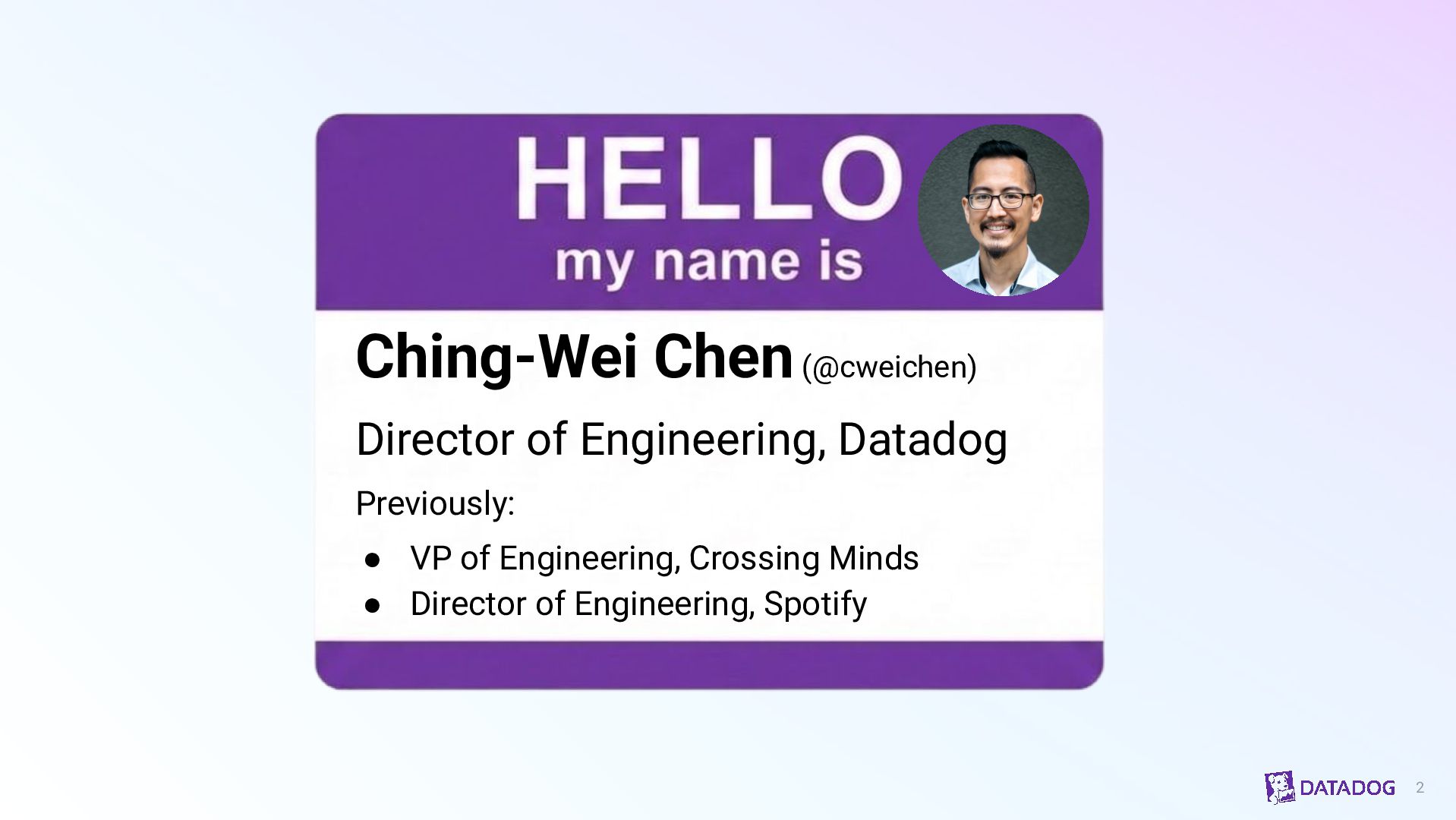
  2. Ching-Wei Chen (@cweichen) Director of Engineering, Datadog Previously: • VP

    of Engineering, Crossing Minds • Director of Engineering, Spotify 2
  3. Datadog APM Recommendations 8 Detect Resolve Proactively detects potential reliability

    or performance issues, including: • Aggressive Retries, N+1 queries, missing DB indexes, memory leaks, and more.
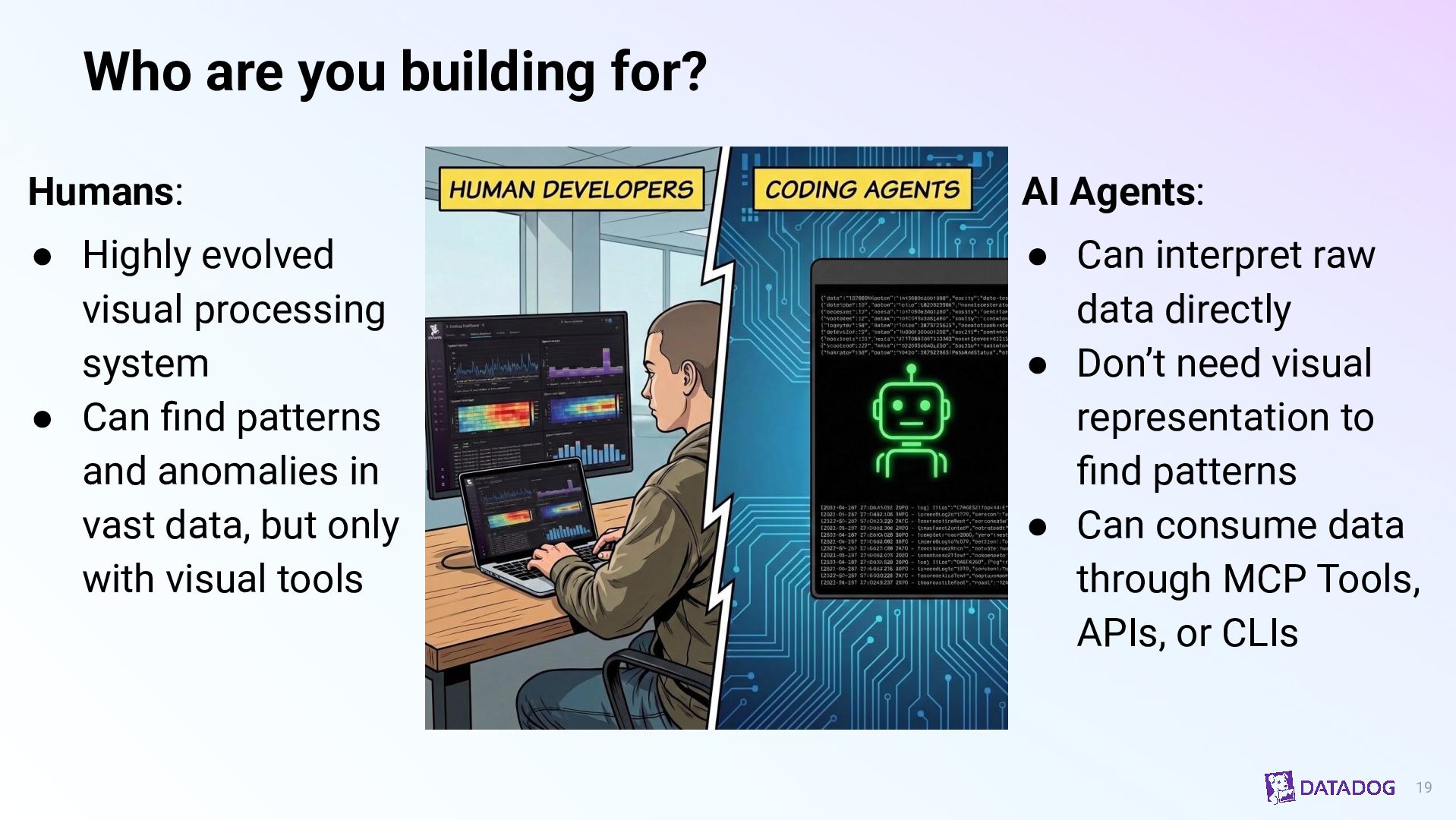
  4. Who are you building for? 19 Humans: • Highly evolved

    visual processing system • Can find patterns and anomalies in vast data, but only with visual tools AI Agents: • Can interpret raw data directly • Don’t need visual representation to find patterns • Can consume data through MCP Tools, APIs, or CLIs
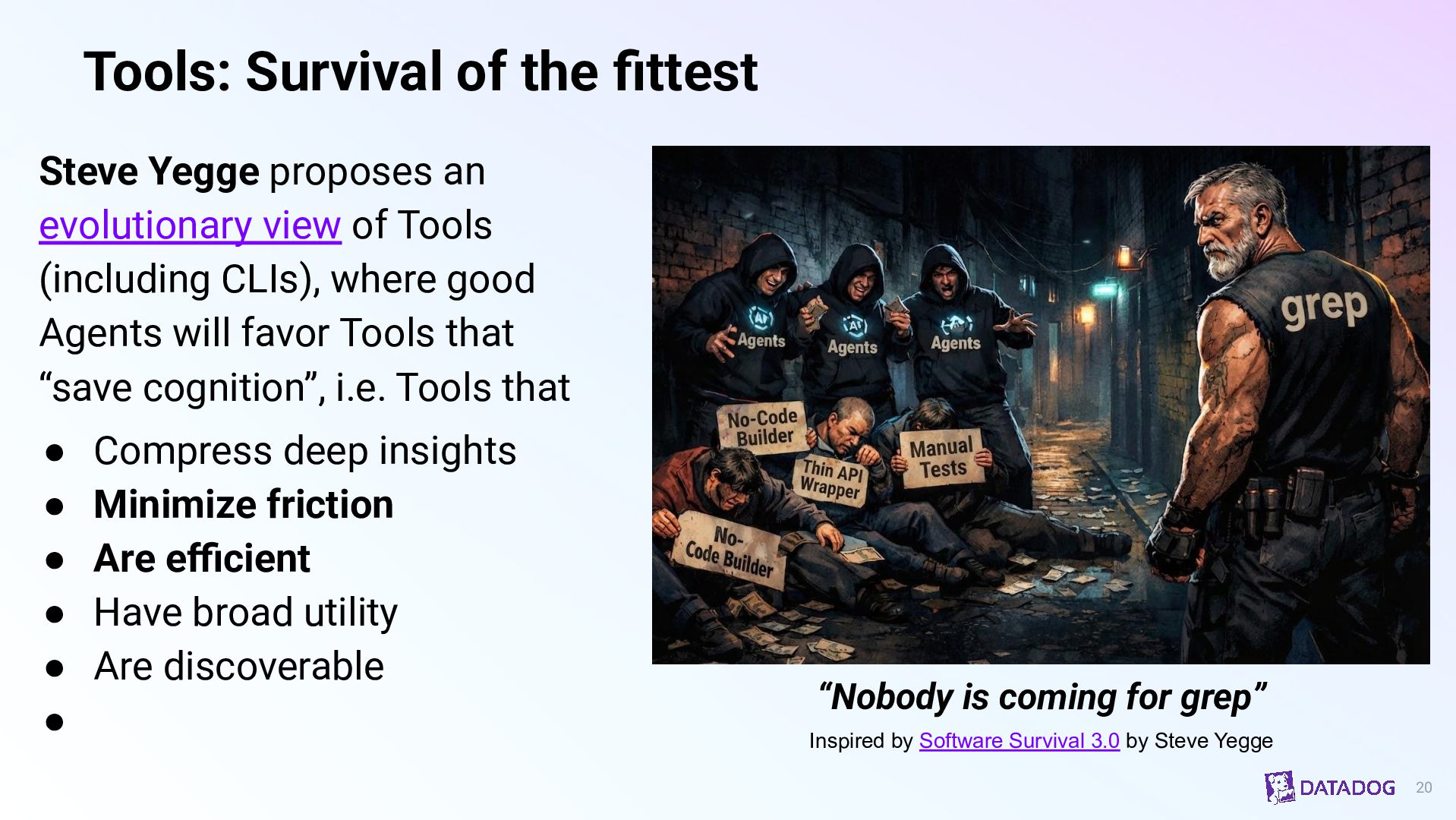
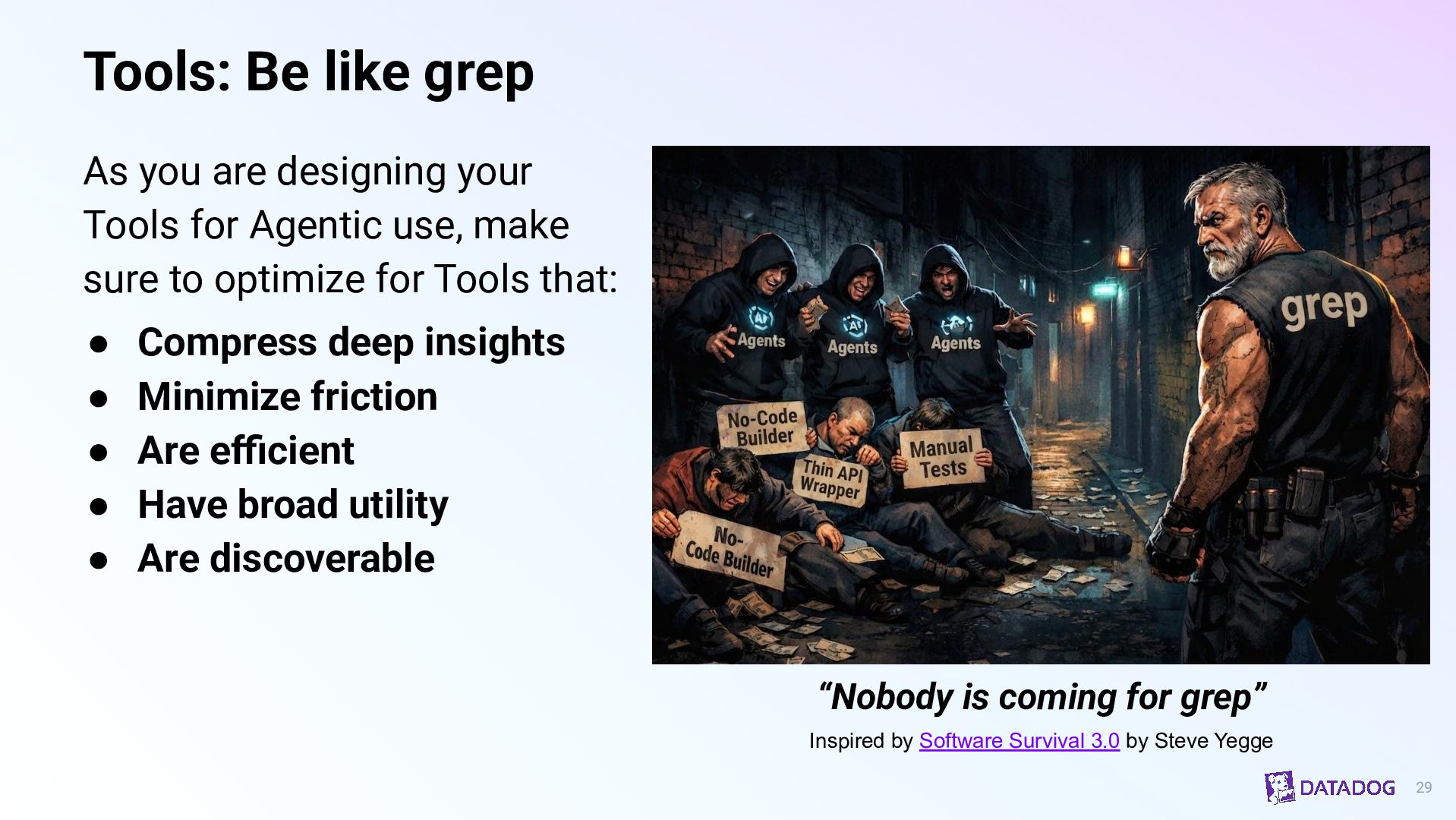
  5. Tools: Survival of the fittest 20 “Nobody is coming for

    grep” Steve Yegge proposes an evolutionary view of Tools (including CLIs), where good Agents will favor Tools that “save cognition”, i.e. Tools that • Compress deep insights • Minimize friction • Are efficient • Have broad utility • Are discoverable • Inspired by Software Survival 3.0 by Steve Yegge
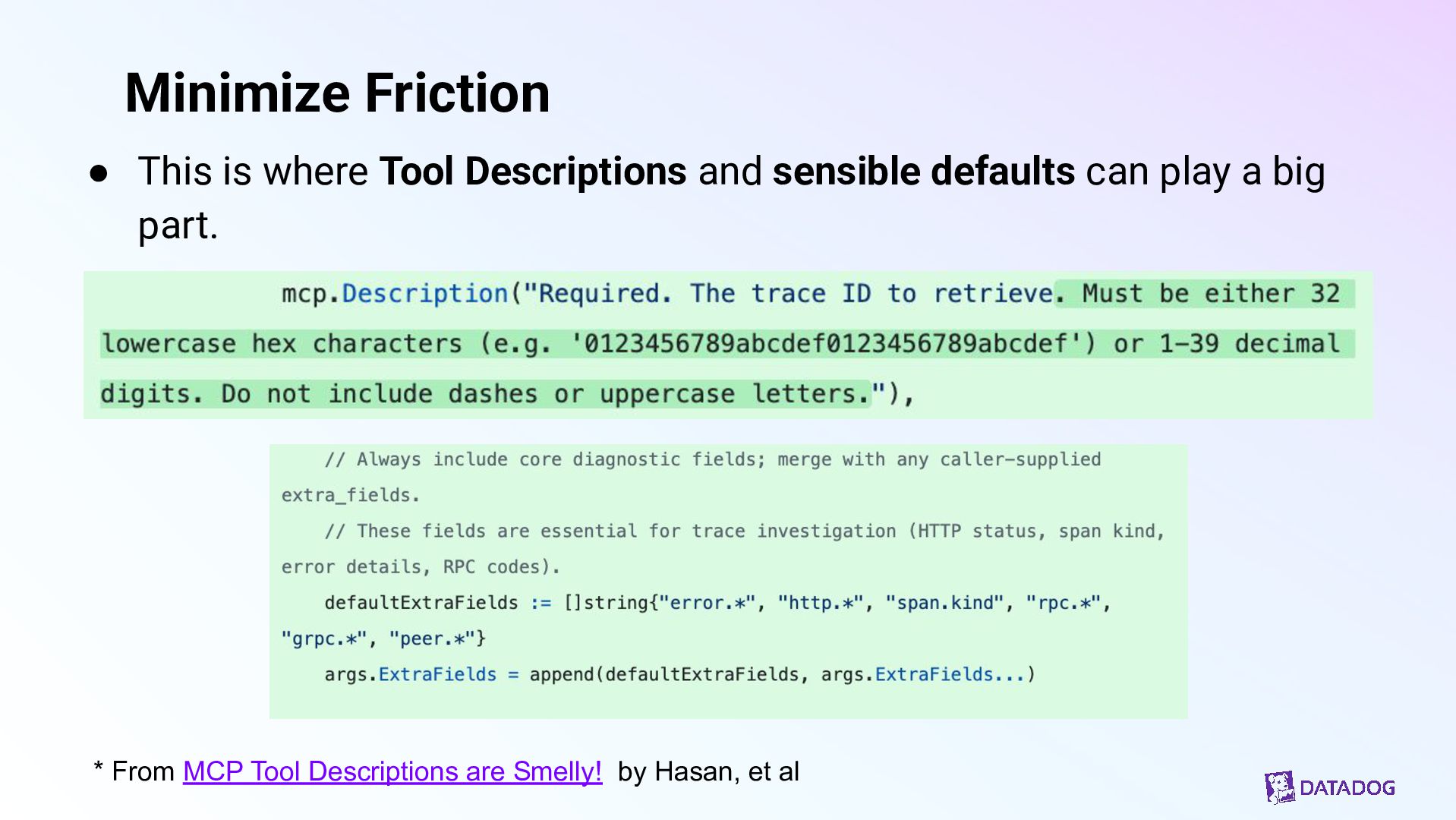
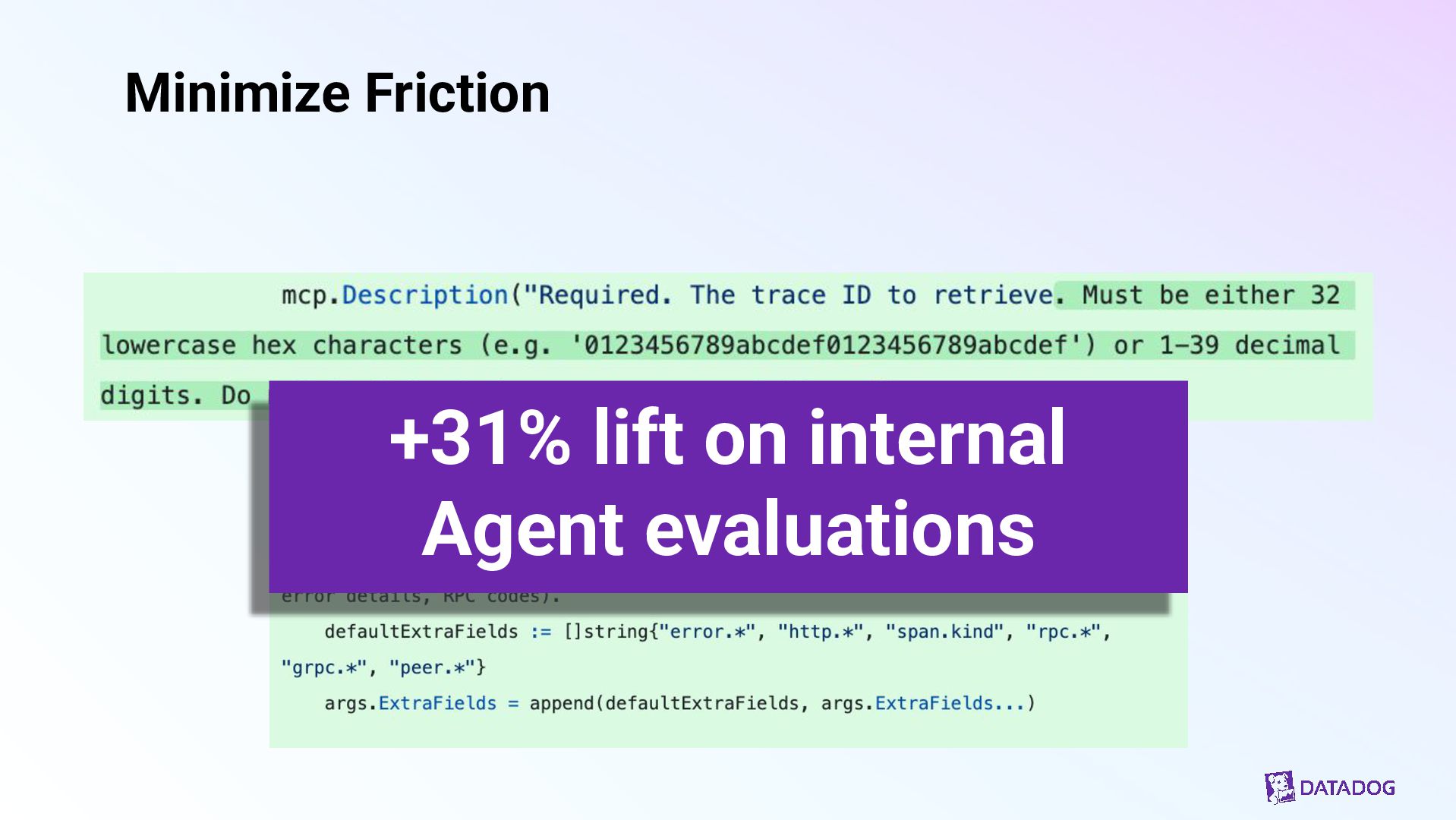
  6. Minimize Friction • This is where Tool Descriptions and sensible

    defaults can play a big part. * From MCP Tool Descriptions are Smelly! by Hasan, et al
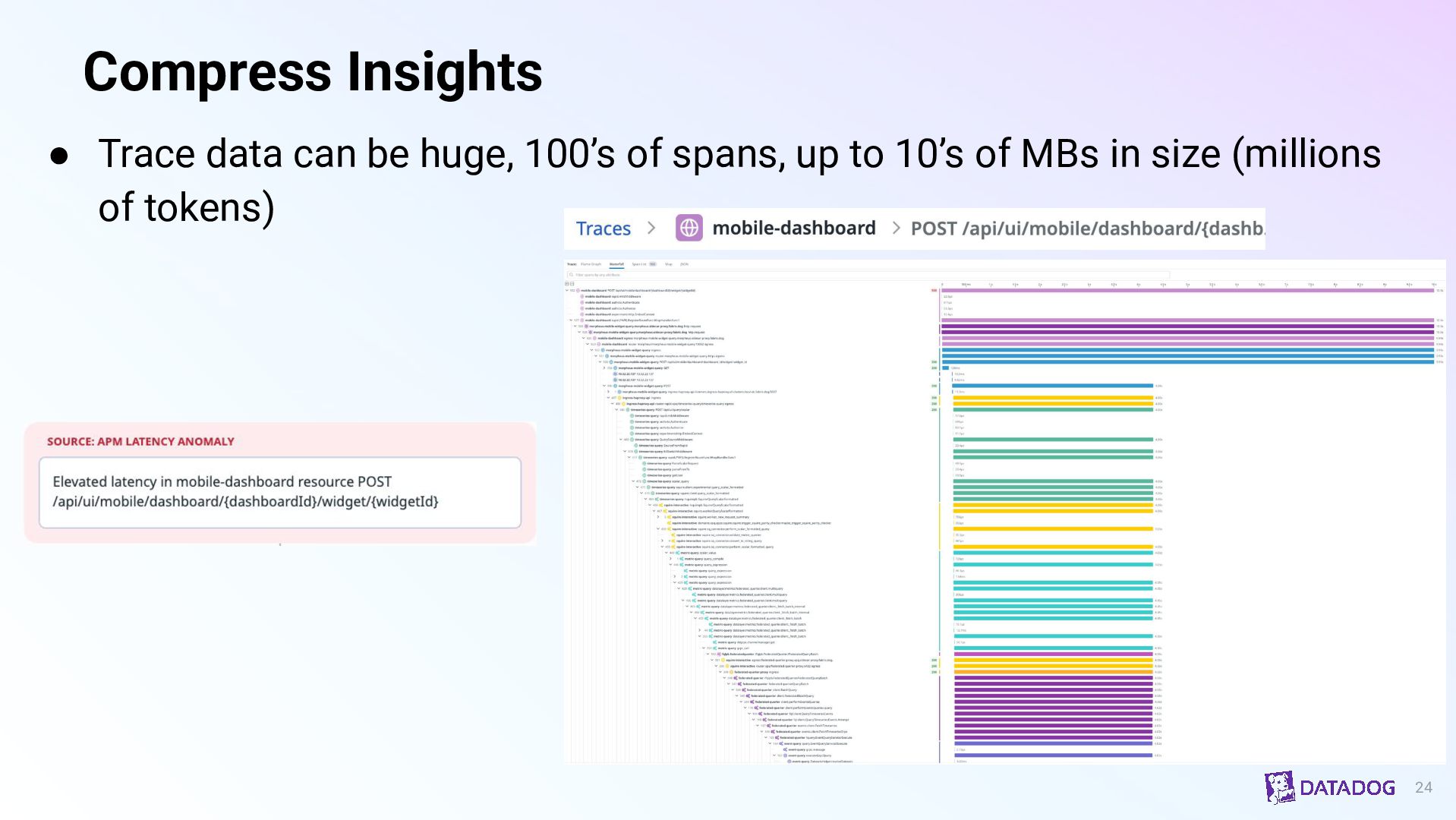
  7. Compress Insights 24 • Trace data can be huge, 100’s

    of spans, up to 10’s of MBs in size (millions of tokens)
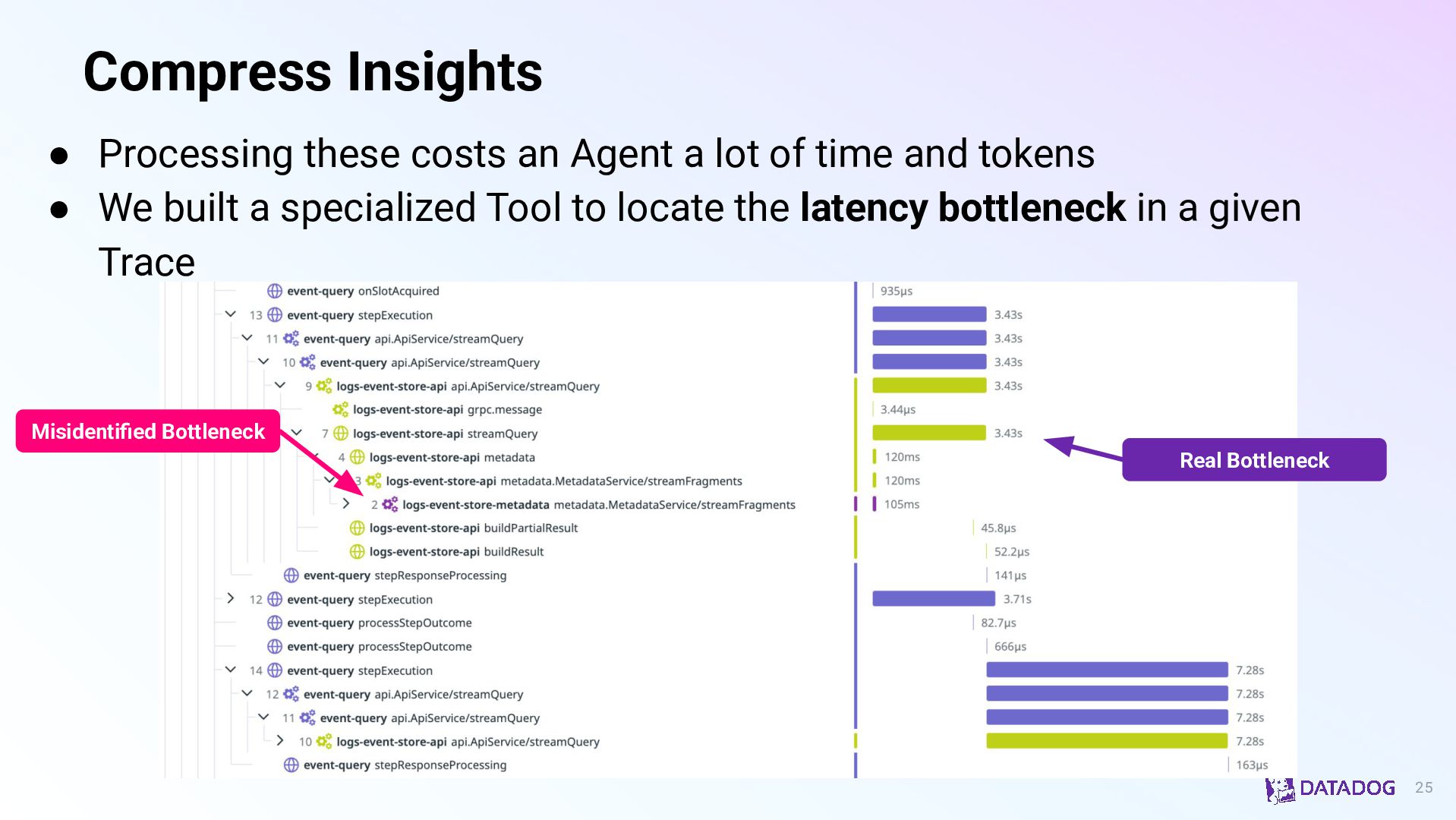
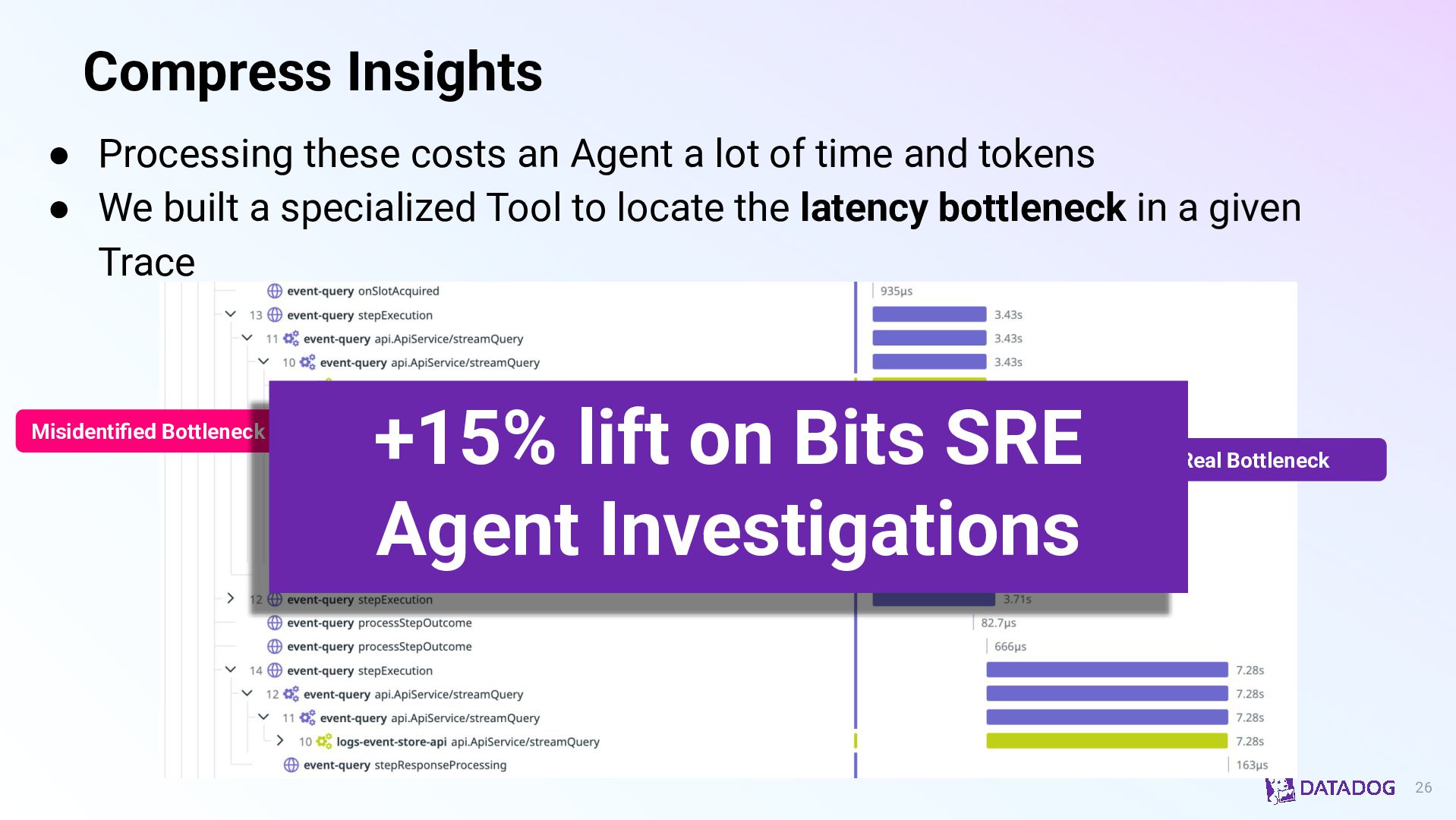
  8. Compress Insights 25 • Processing these costs an Agent a

    lot of time and tokens • We built a specialized Tool to locate the latency bottleneck in a given Trace Real Bottleneck Misidentified Bottleneck
  9. Compress Insights 26 • Processing these costs an Agent a

    lot of time and tokens • We built a specialized Tool to locate the latency bottleneck in a given Trace Real Bottleneck Misidentified Bottleneck +15% lift on Bits SRE Agent Investigations
  10. Tools: Be like grep 29 “Nobody is coming for grep”

    As you are designing your Tools for Agentic use, make sure to optimize for Tools that: • Compress deep insights • Minimize friction • Are efficient • Have broad utility • Are discoverable Inspired by Software Survival 3.0 by Steve Yegge