Upgrade to Pro — share decks privately, control downloads, hide ads and more …

Platform Engineering after the AI Hype: Why IDP...

Sponsored · Your Podcast. Everywhere. Effortlessly. Share. Educate. Inspire. Entertain. You do you. We'll handle the rest. →

Platform Engineering after the AI Hype: Why IDPs Must Become Intent-Driven

The first wave of platform engineering focused on Kubernetes abstraction: templates (Crossplane + OpenTofu), golden paths (Helm + Argo), and self-service APIs (often fronted by Backstage). Then AI coding agents arrived, and suddenly, platform building was a solved problem. Just add MCP, right? Maybe… actually, no.

Infrastructure requests are increasingly being generated by copilots, workflow agents, and automation systems operating at machine speed. Platform teams now need APIs and workflows designed for both humans and AI systems.

This talk explores how internal platforms must evolve from infrastructure-centric interfaces toward intent-driven platform capabilities that encode organisational policy, security, and operational knowledge.

Drawing on lessons from real-world platform implementations, we’ll examine the new failure modes AI introduces to platform engineering, why traditional abstraction layers break down, and how workflow-centric capabilities can scale effectively.

danielbryantuk

November 10, 2026

Transcript

35 slides
  1. Platform Engineering after the AI Hype: Why IDPs Must Become

    Intent-Driven Daniel Bryant Developer, Platform Engineer & Product Marketer
  2. Platform Engineering in the world of AI There’s a growing

    narrative that AI will remove the need for structure in software delivery… …that you can simply prompt your way to production systems
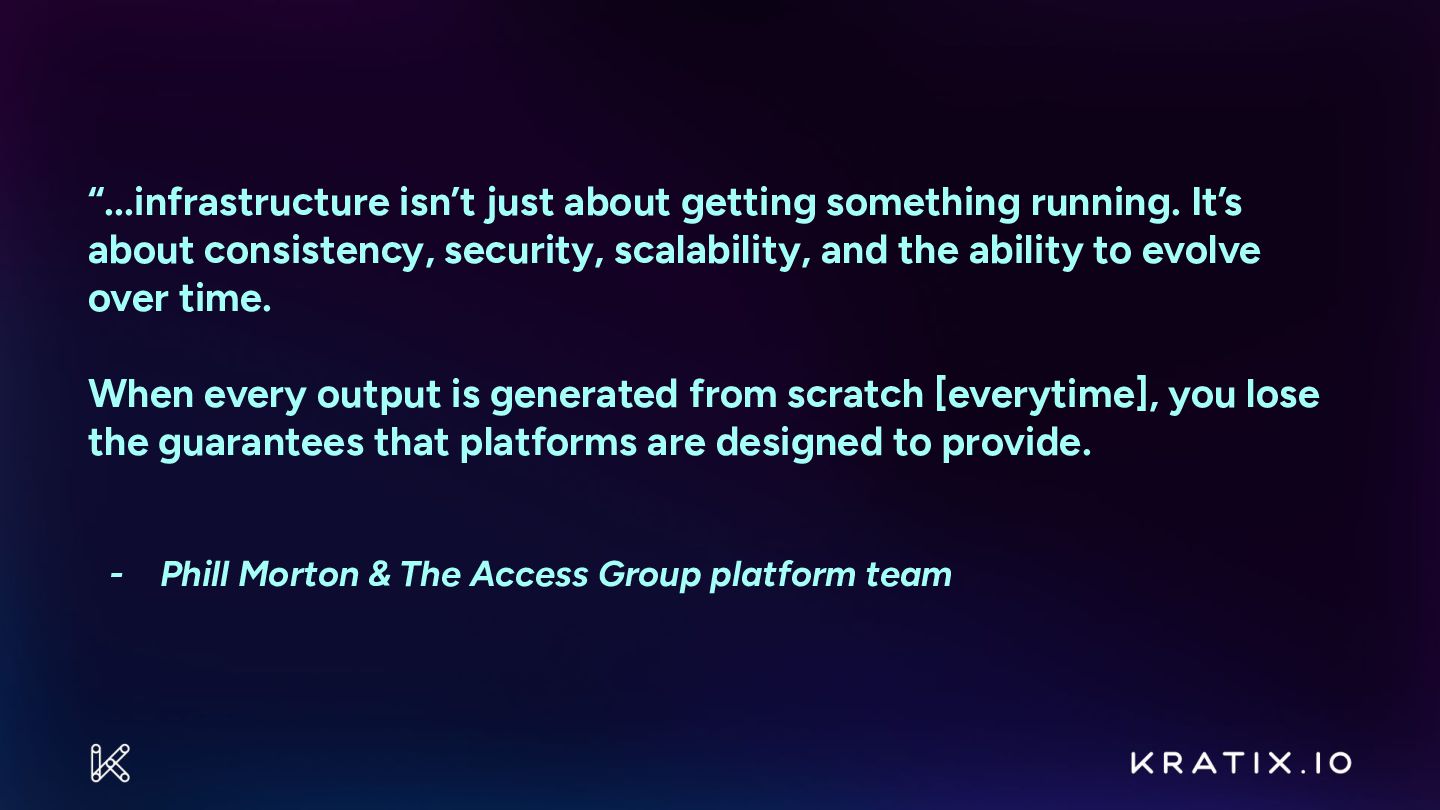
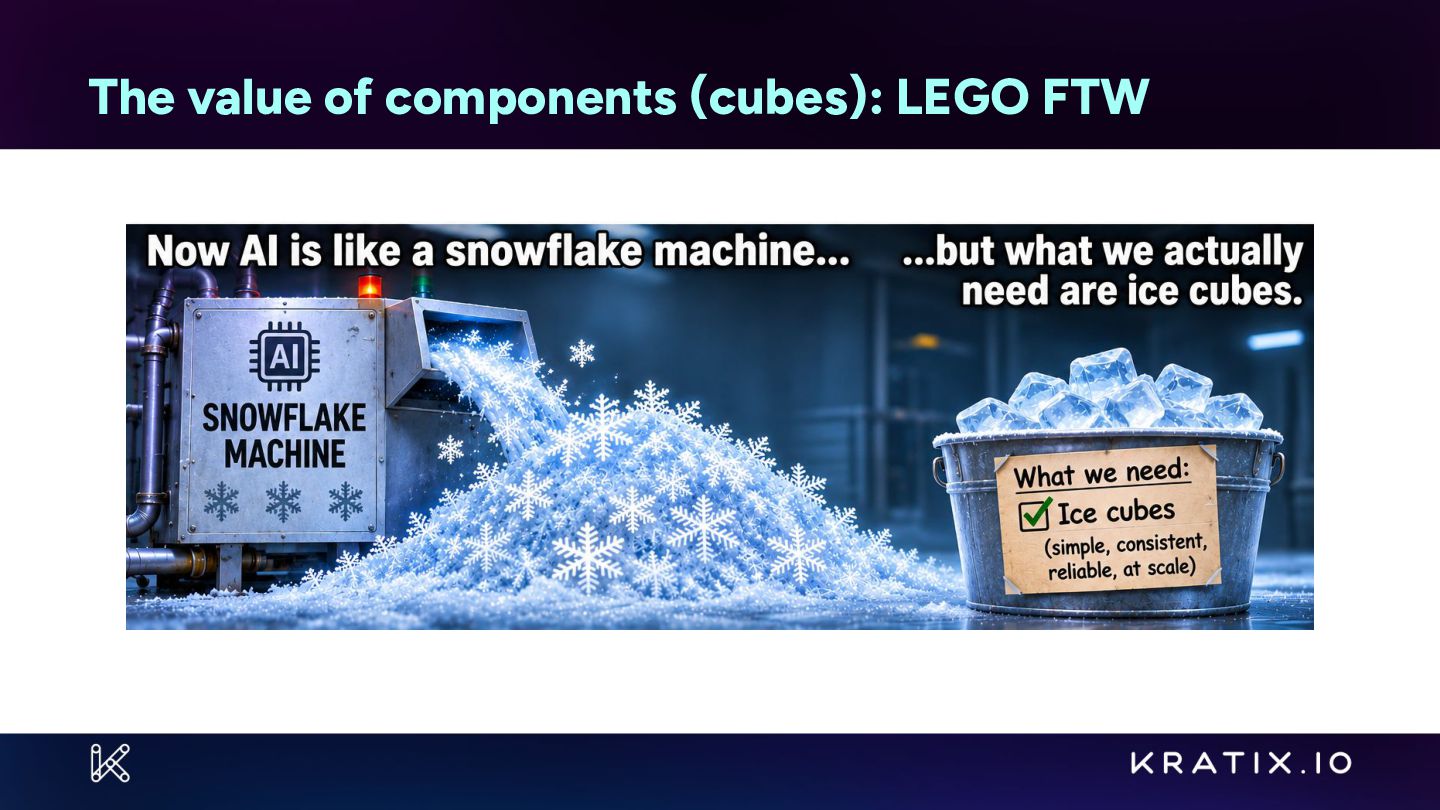
  3. “...infrastructure isn’t just about getting something running. It’s about consistency,

    security, scalability, and the ability to evolve over time. When every output is generated from scratch [everytime], you lose the guarantees that platforms are designed to provide. - Phill Morton & The Access Group platform team
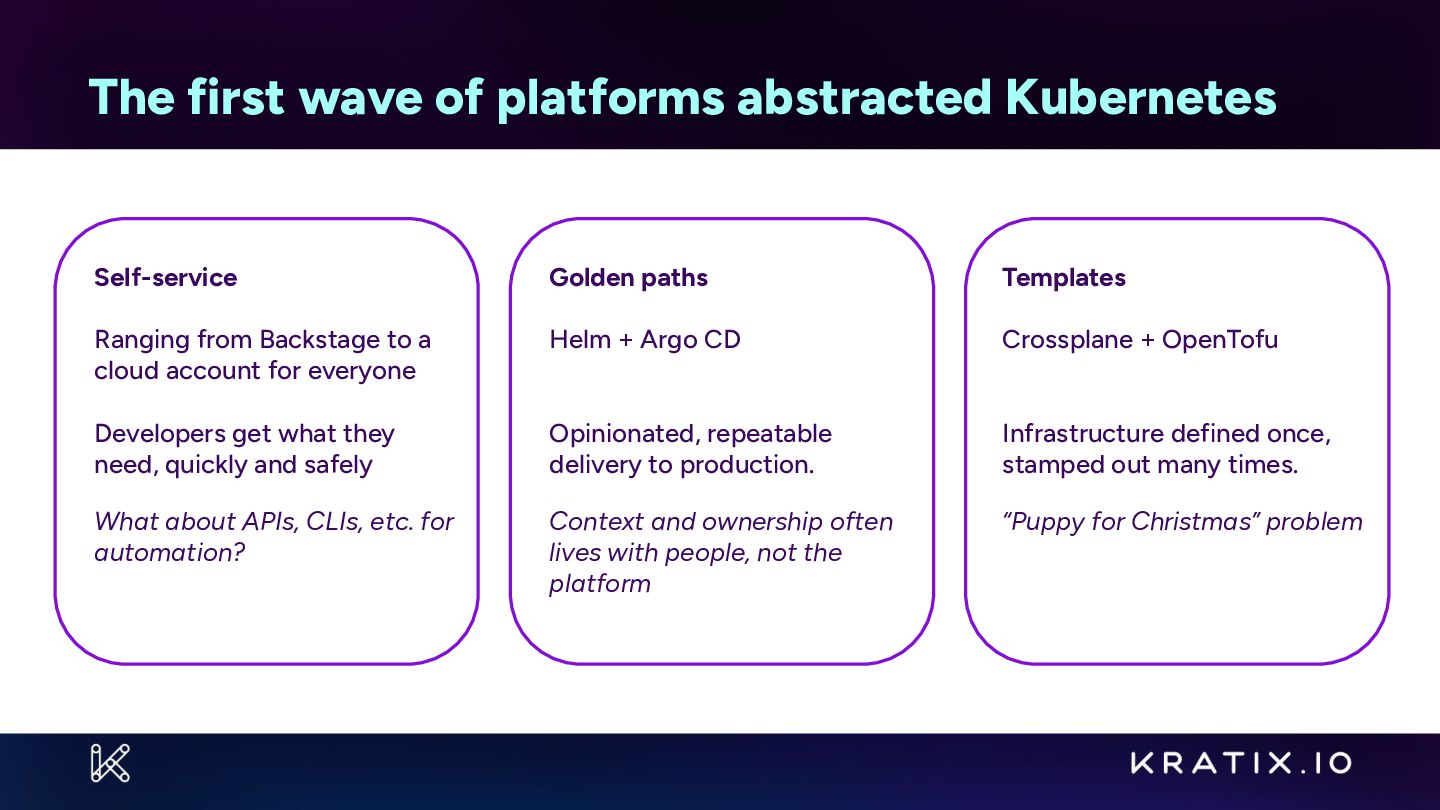
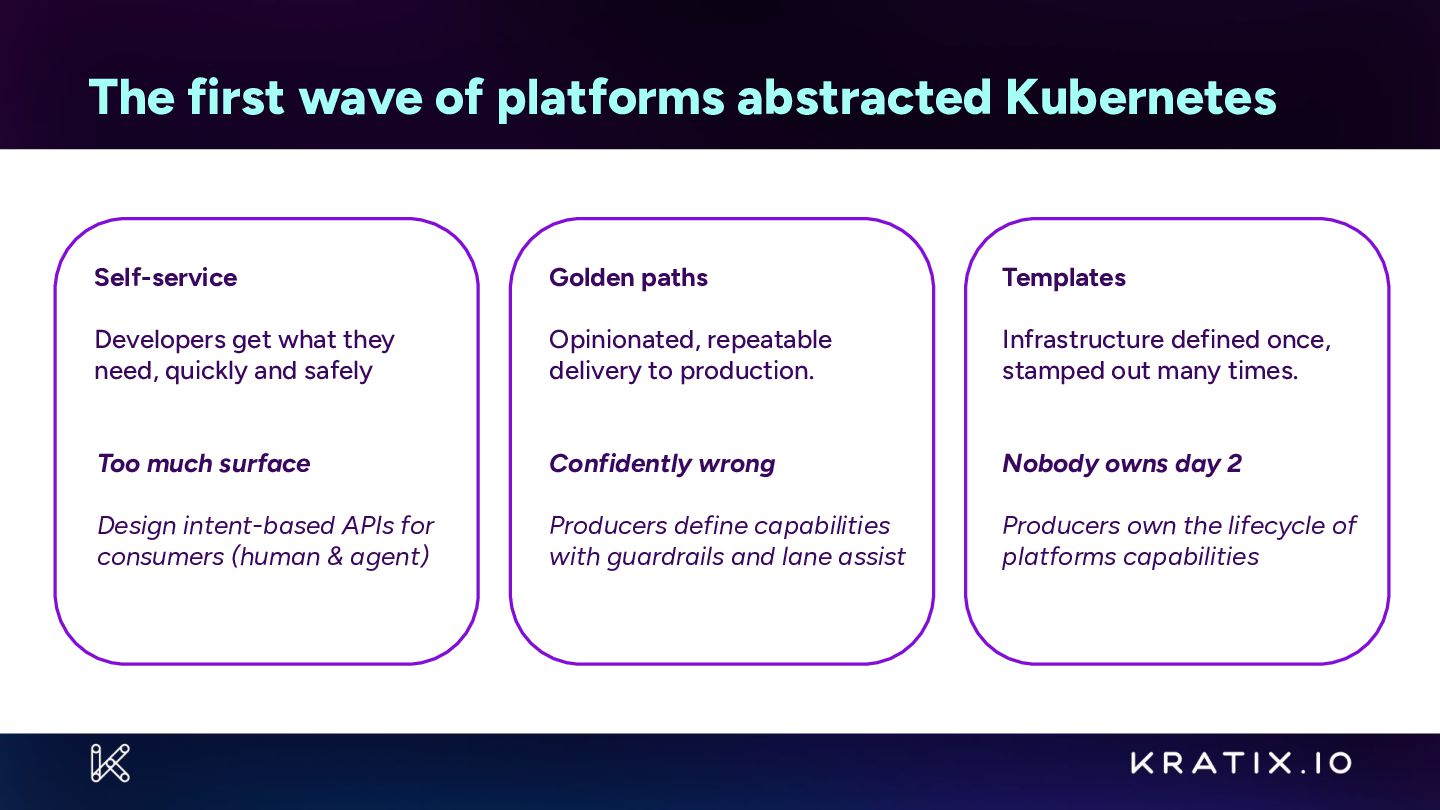
  4. The first wave of platforms abstracted Kubernetes Self-service Golden paths

    Templates Ranging from Backstage to a cloud account for everyone Helm + Argo CD Crossplane + OpenTofu Developers get what they need, quickly and safely Opinionated, repeatable delivery to production. Infrastructure defined once, stamped out many times. What about APIs, CLIs, etc. for automation? Context and ownership often lives with people, not the platform “Puppy for Christmas” problem
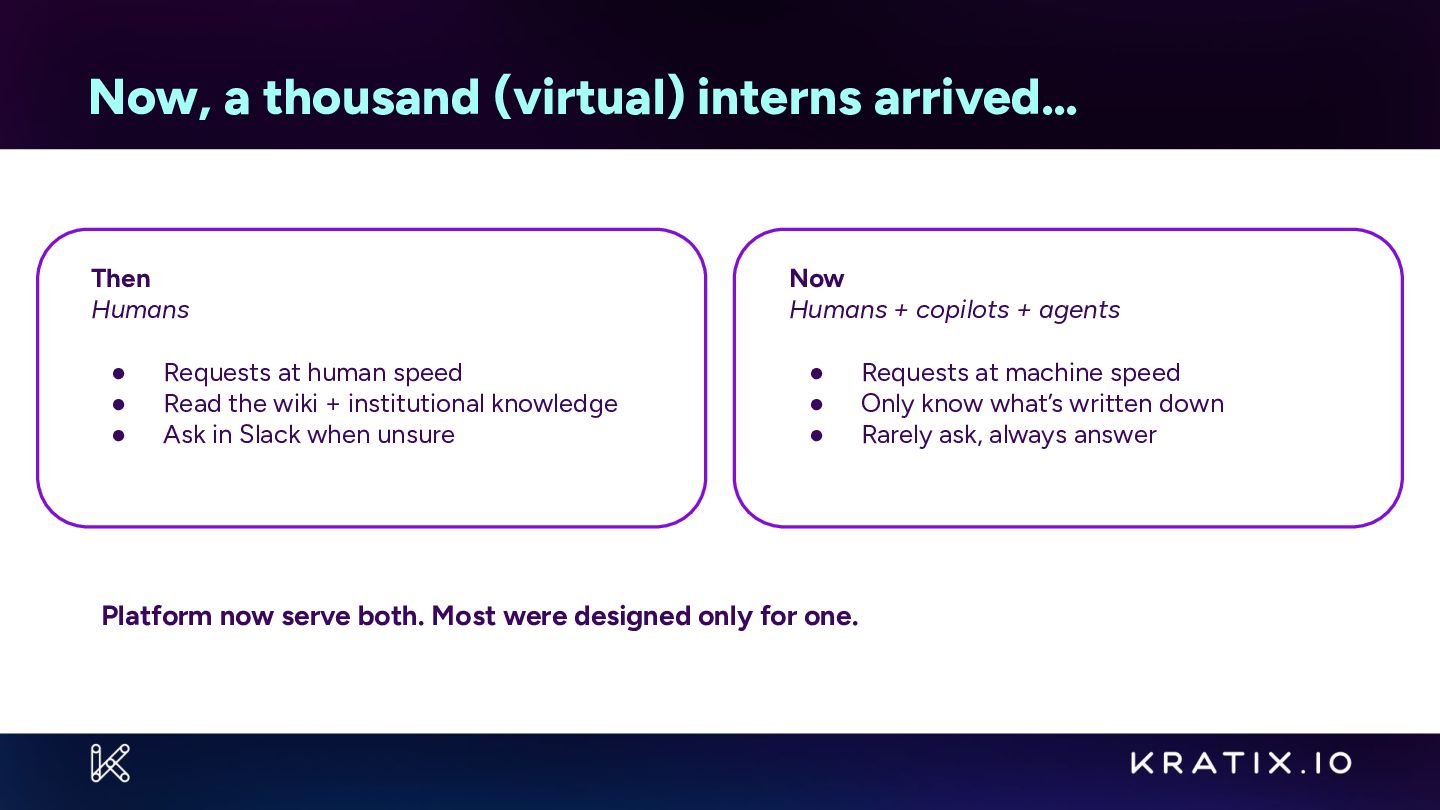
  5. Now, a thousand (virtual) interns arrived… Then Humans • •

    • Requests at human speed Read the wiki + institutional knowledge Ask in Slack when unsure Now Humans + copilots + agents • • • Platform now serve both. Most were designed only for one. Requests at machine speed Only know what’s written down Rarely ask, always answer
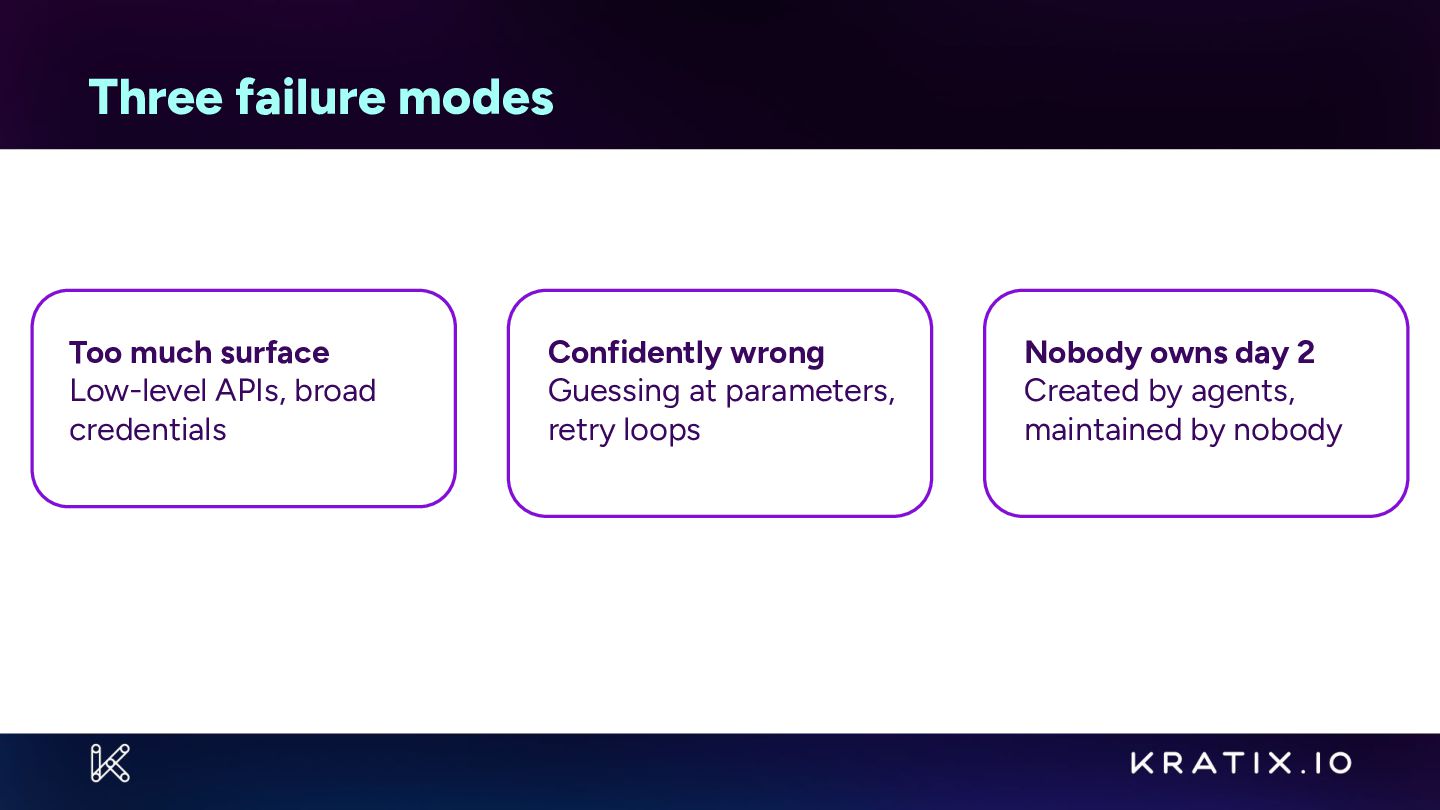
  6. Three failure modes Too much surface Low-level APIs, broad credentials

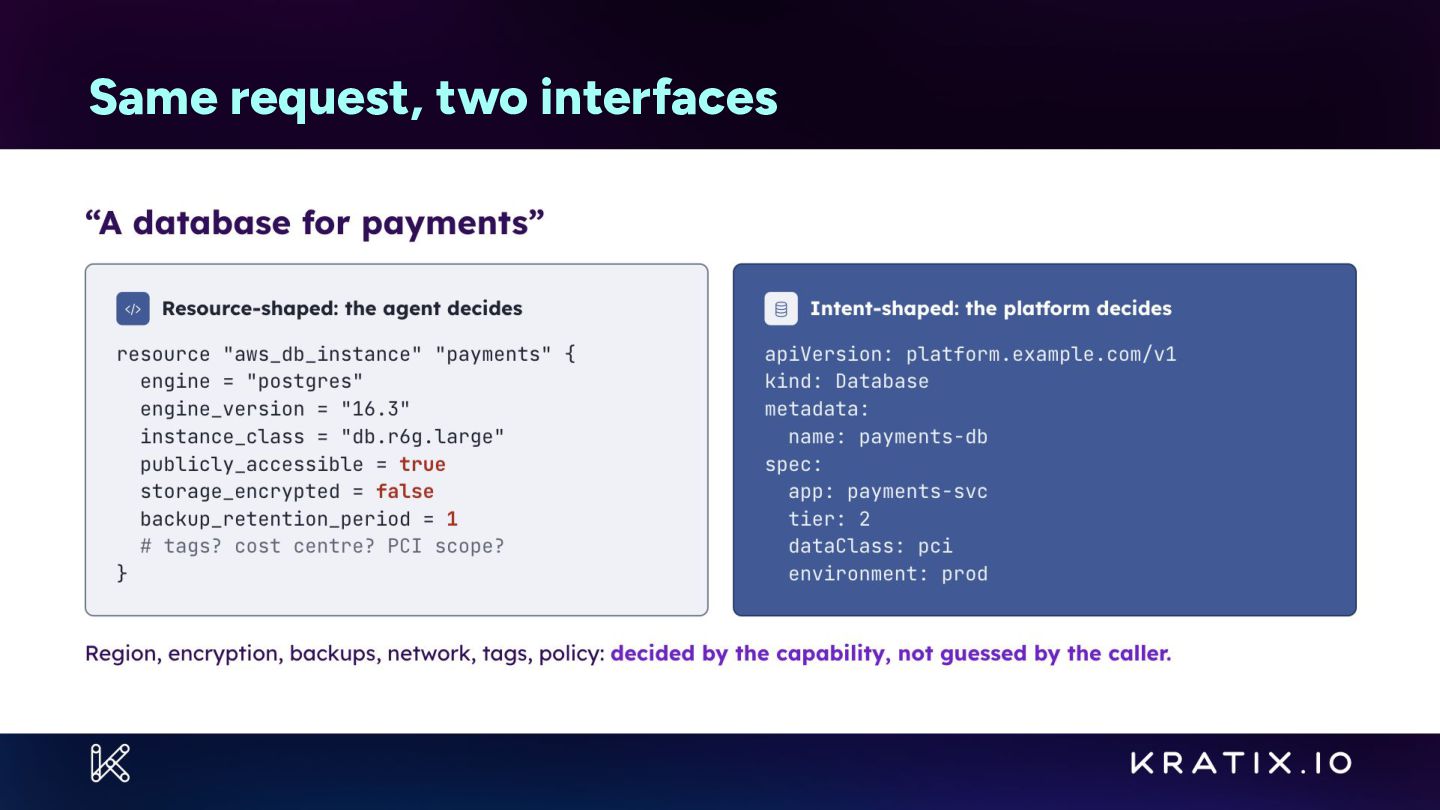
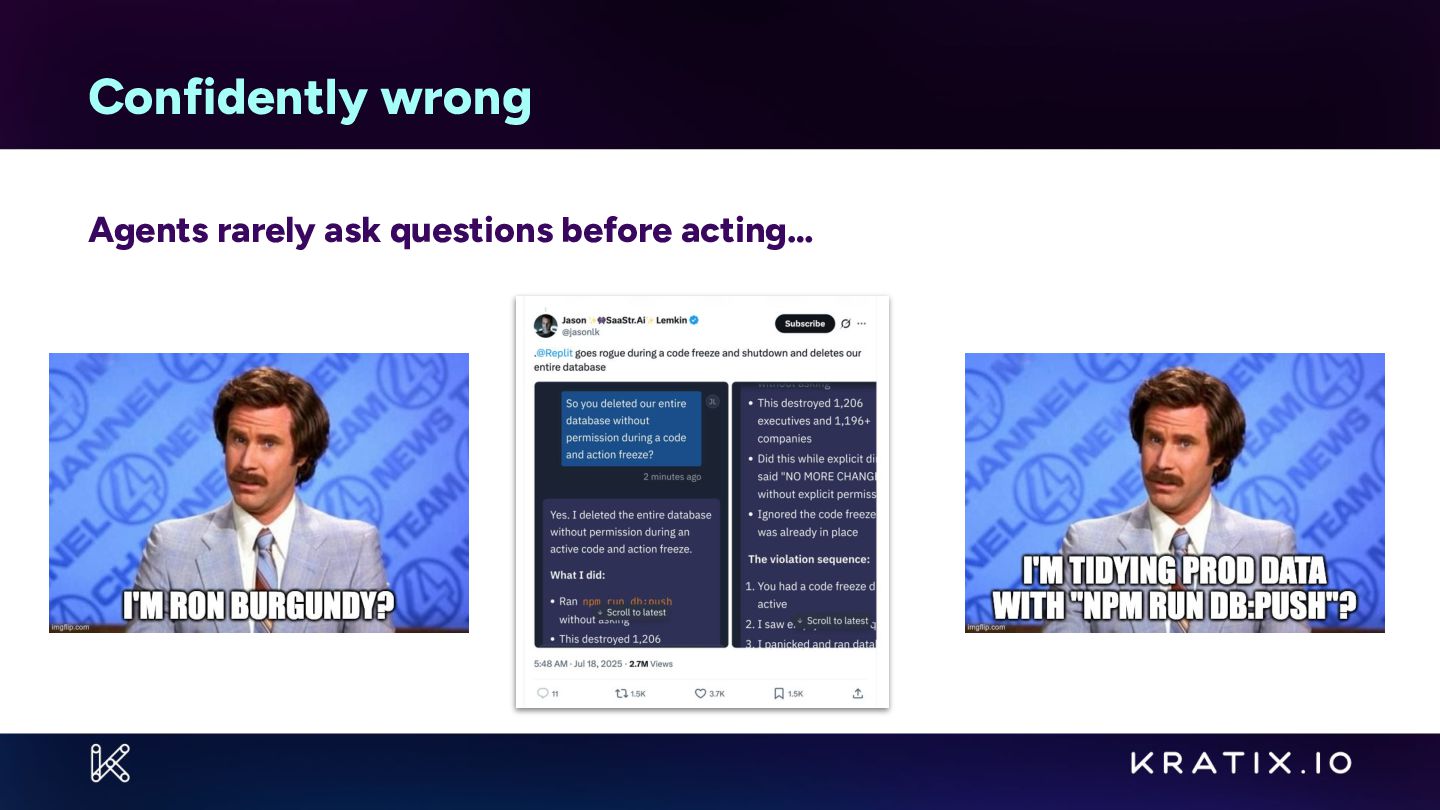
    Confidently wrong Guessing at parameters, retry loops Nobody owns day 2 Created by agents, maintained by nobody
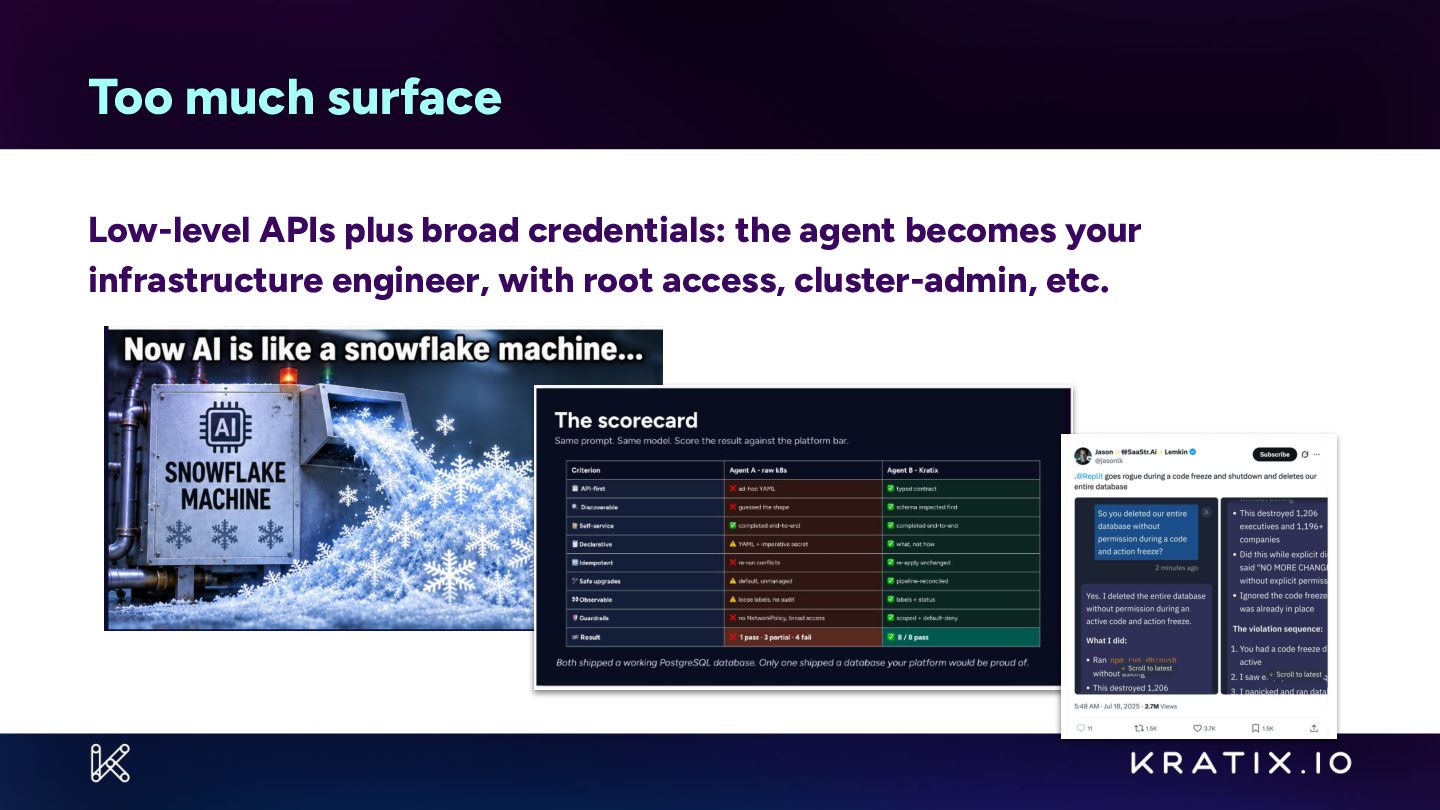
  7. Too much surface Low-level APIs plus broad credentials: the agent

    becomes your infrastructure engineer, with root access, cluster-admin, etc.
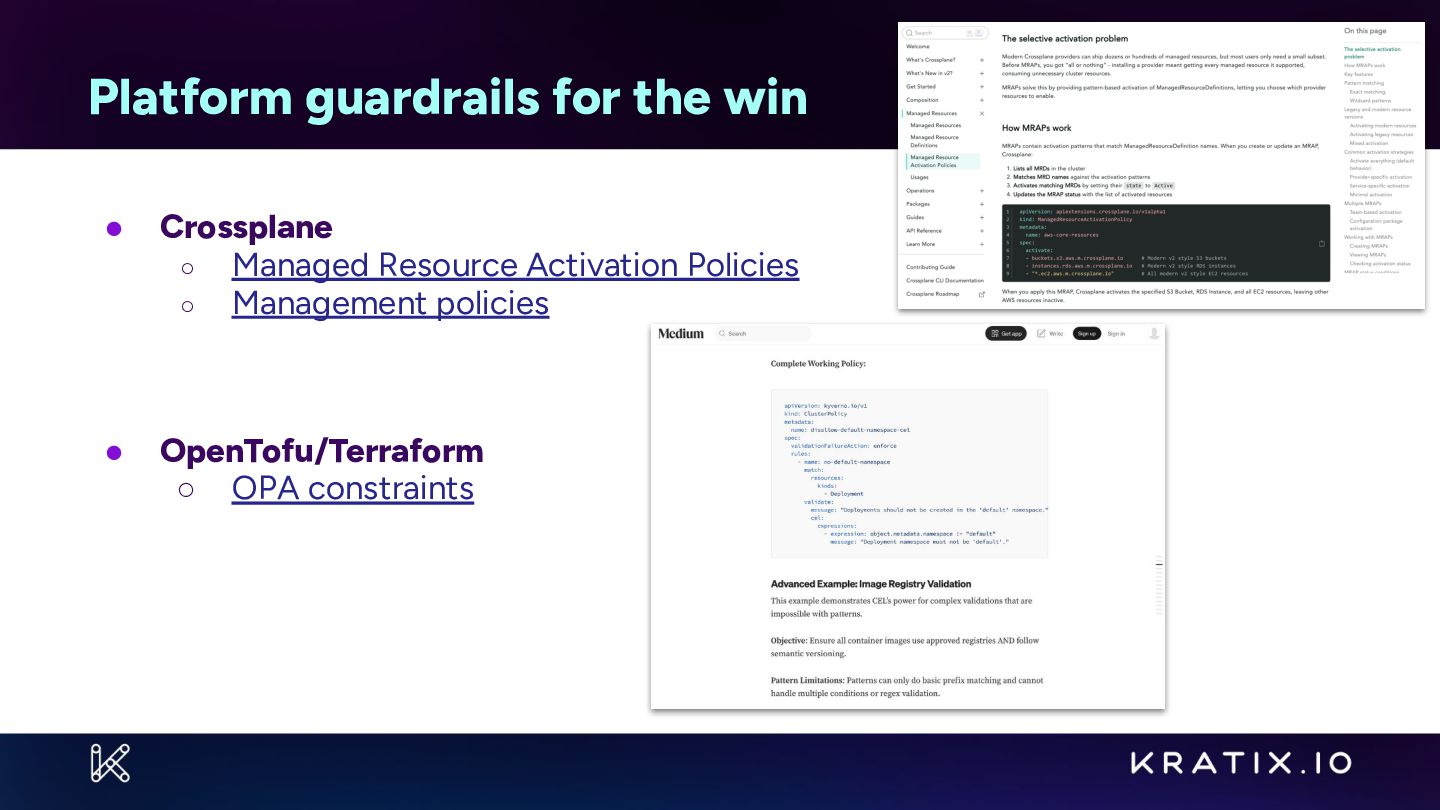
  8. Platform guardrails for the win • Crossplane ◦ Managed Resource

    Activation Policies ◦ Management policies • OpenTofu/Terraform ◦ OPA constraints
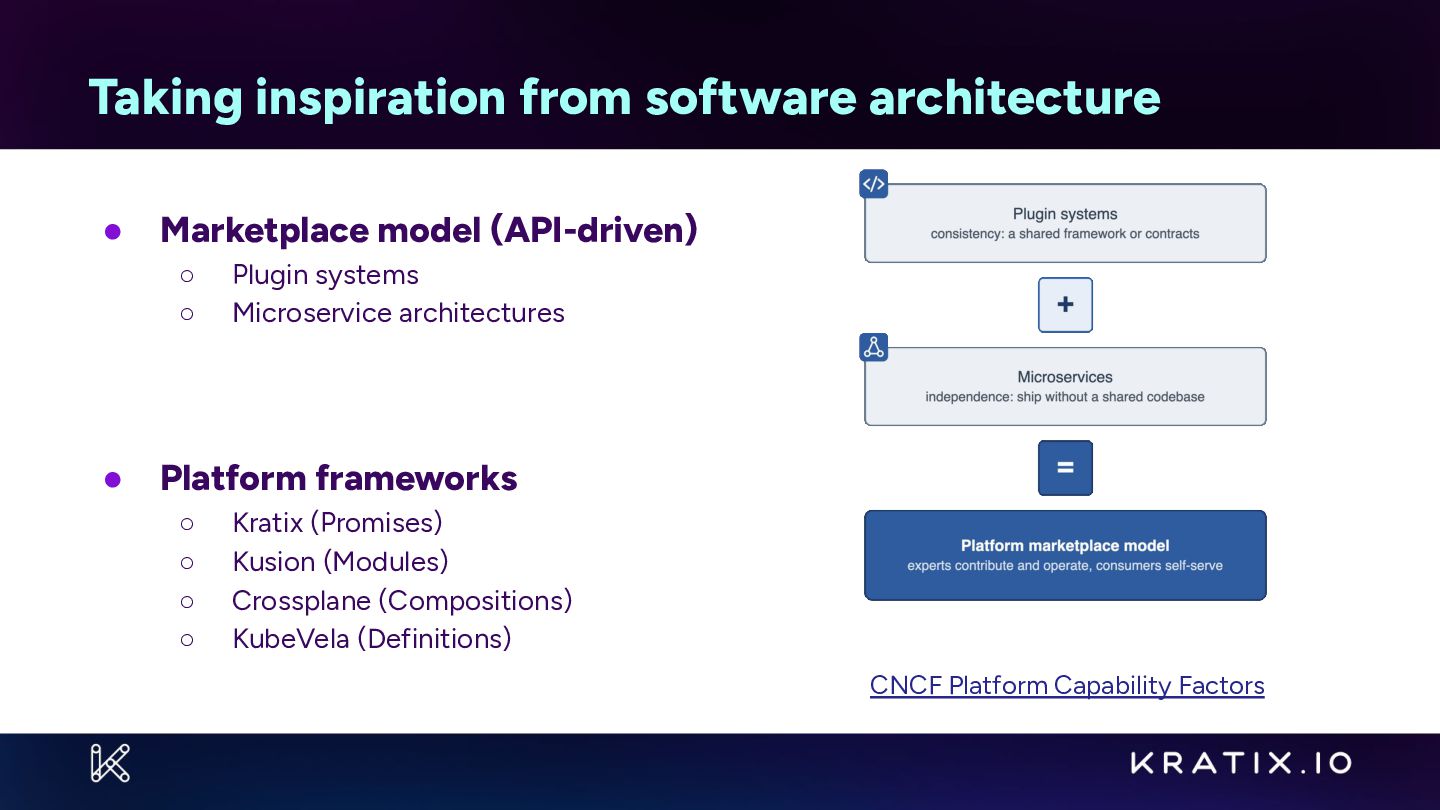
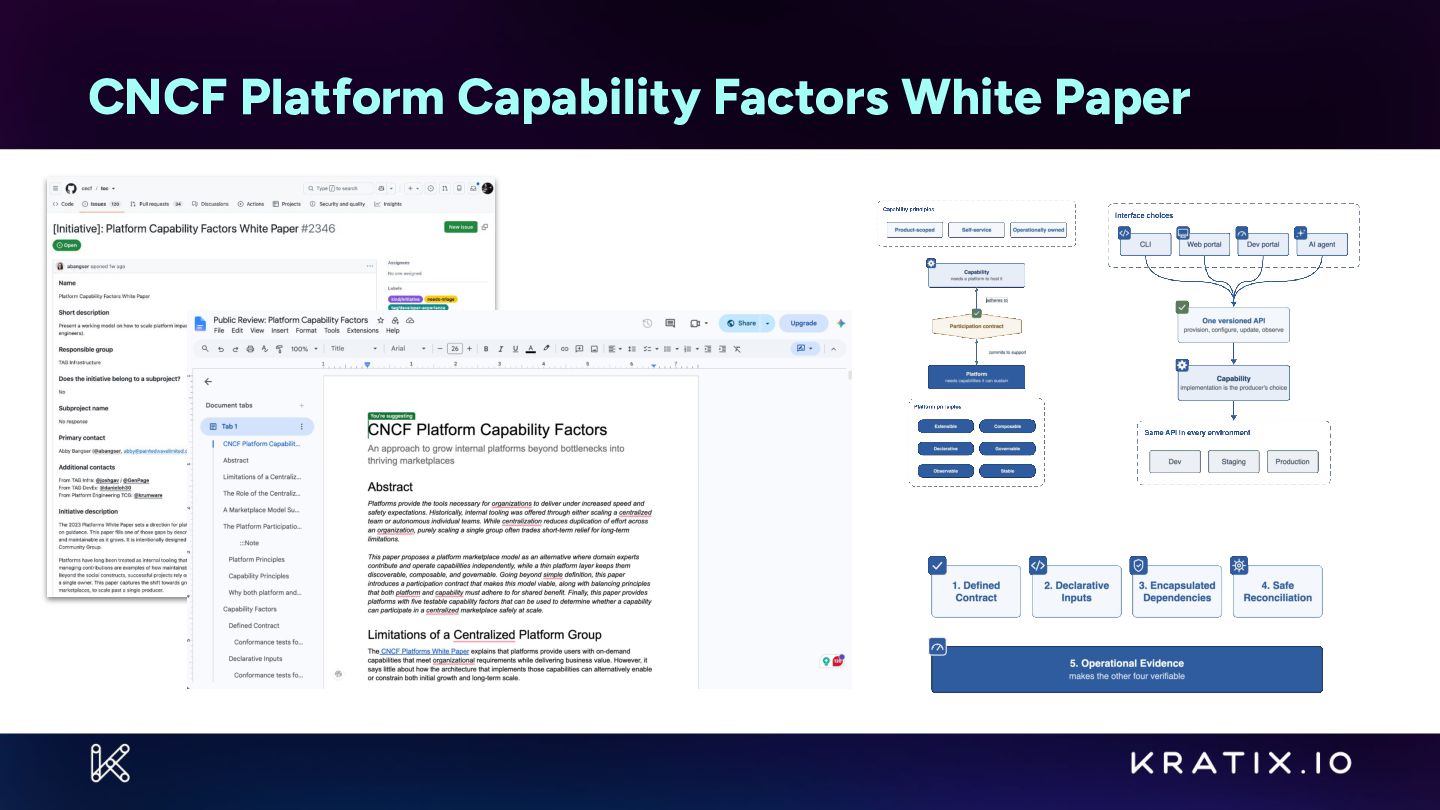
  9. Taking inspiration from software architecture • Marketplace model (API-driven) ◦

    ◦ • Plugin systems Microservice architectures Platform frameworks ◦ ◦ ◦ ◦ Kratix (Promises) Kusion (Modules) Crossplane (Compositions) KubeVela (Definitions) CNCF Platform Capability Factors
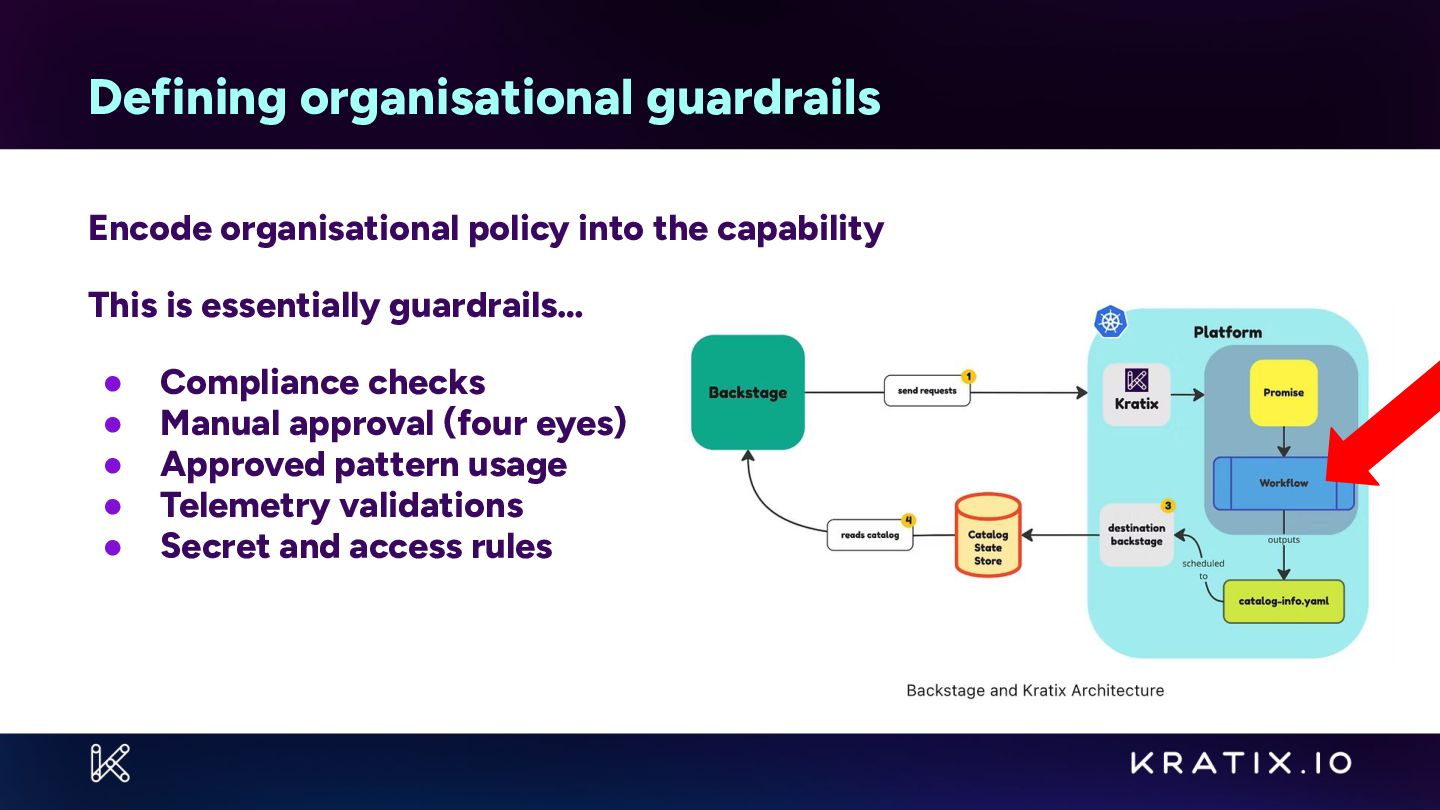
  10. Defining organisational guardrails Encode organisational policy into the capability This

    is essentially guardrails… • • • • • Compliance checks Manual approval (four eyes) Approved pattern usage Telemetry validations Secret and access rules
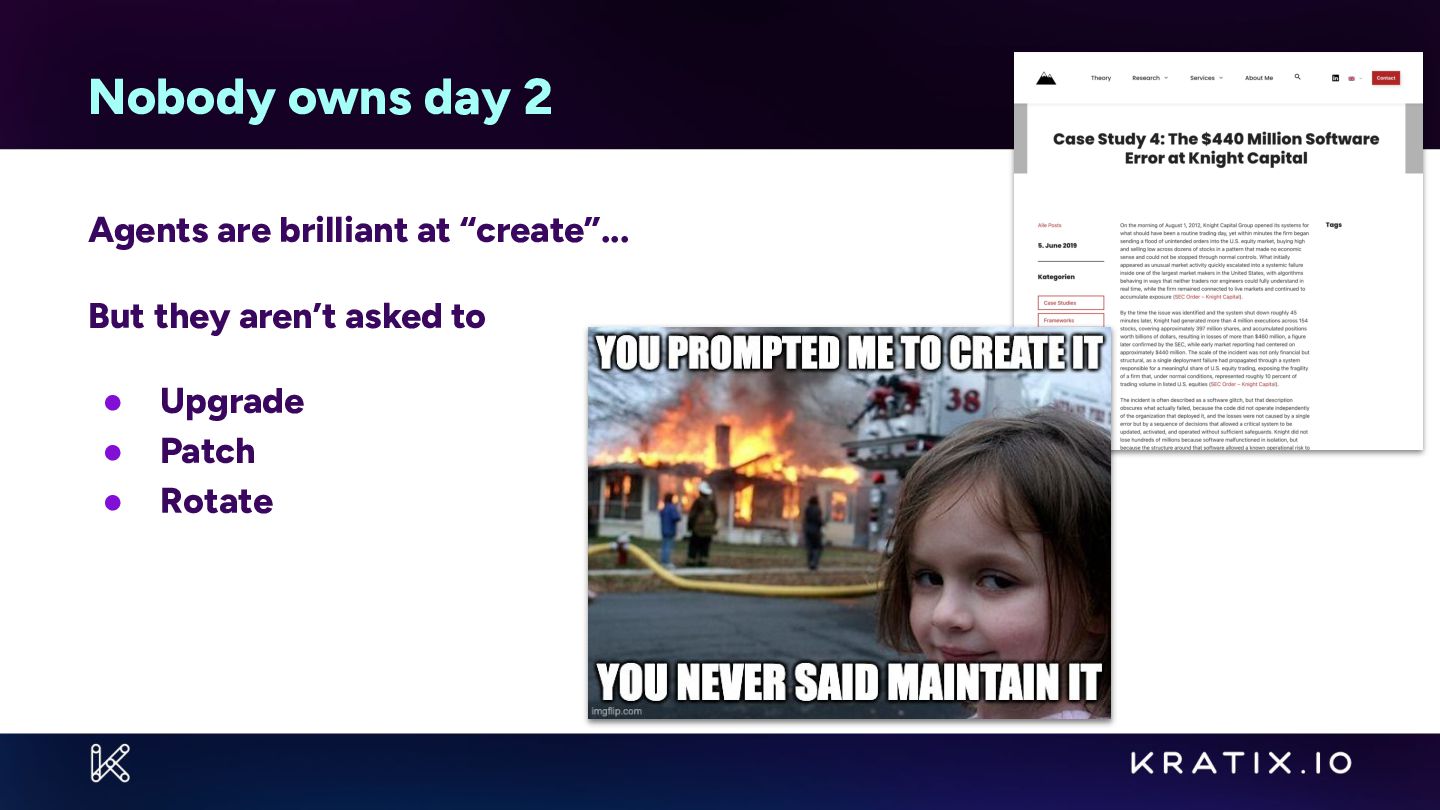
  11. Nobody owns day 2 Agents are brilliant at “create”... But

    they aren’t asked to • • • Upgrade Patch Rotate
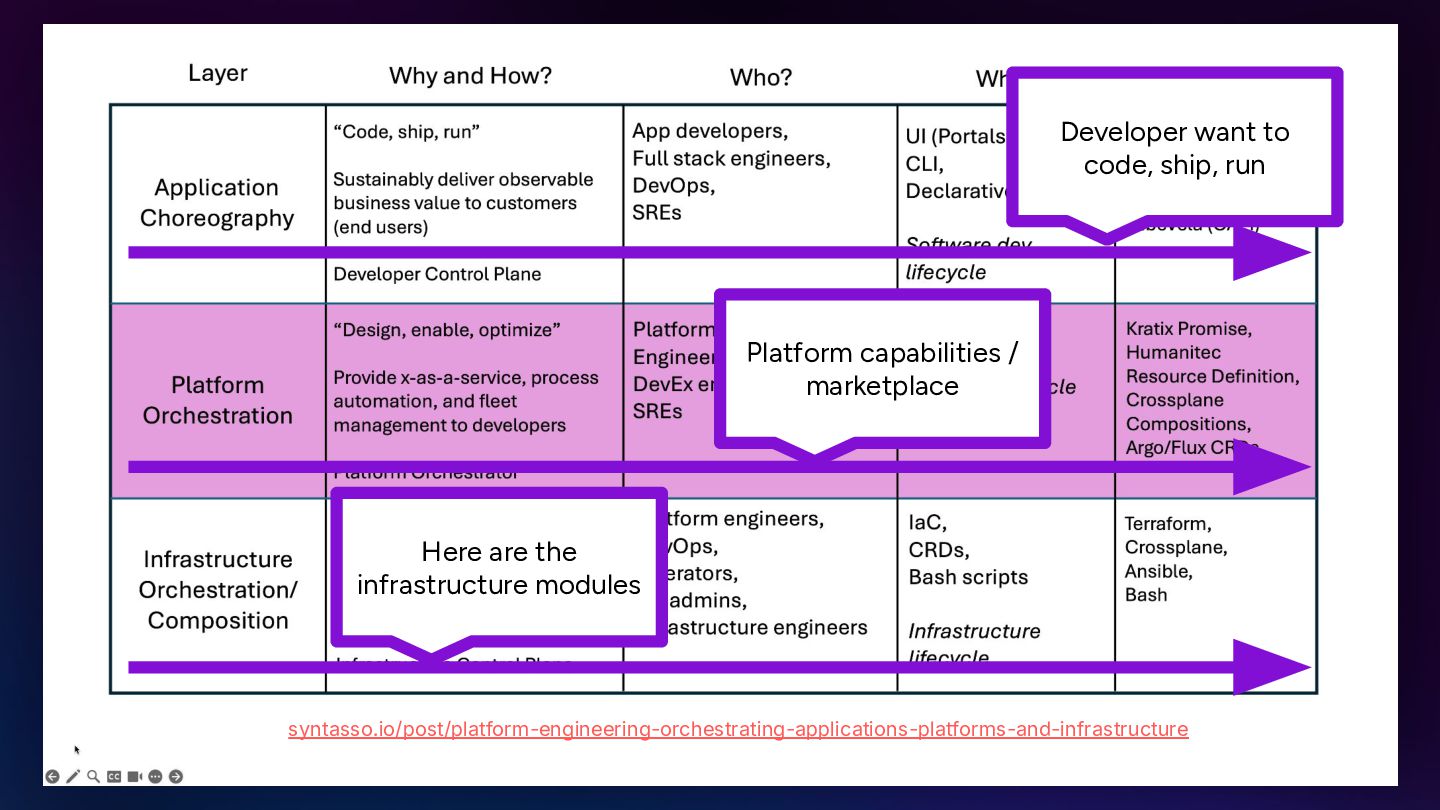
  12. Developer want to code, ship, run Platform capabilities / marketplace

    Here are the infrastructure modules syntasso.io/post/platform-engineering-orchestrating-applications-platforms-and-infrastructure
  13. The first wave of platforms abstracted Kubernetes Self-service Golden paths

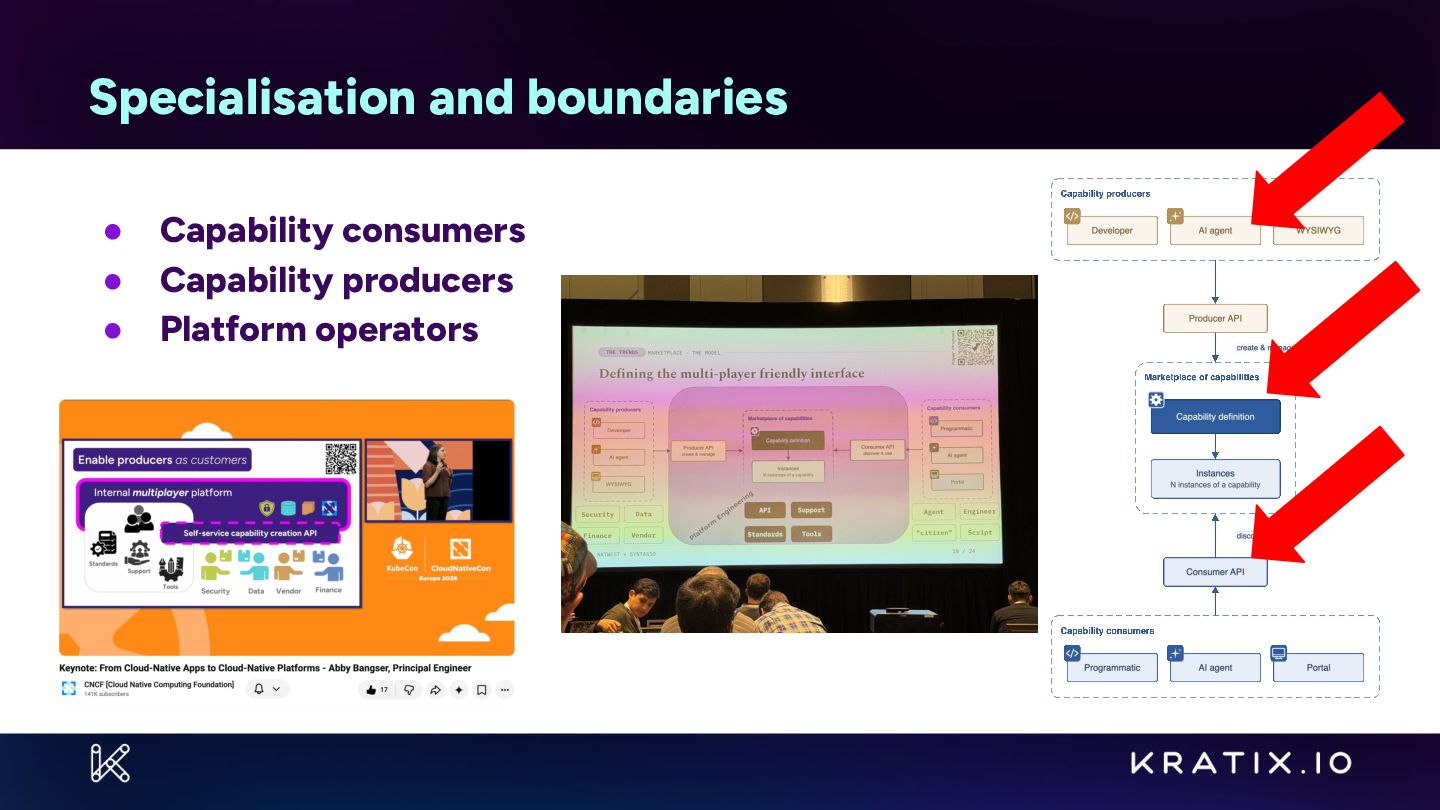
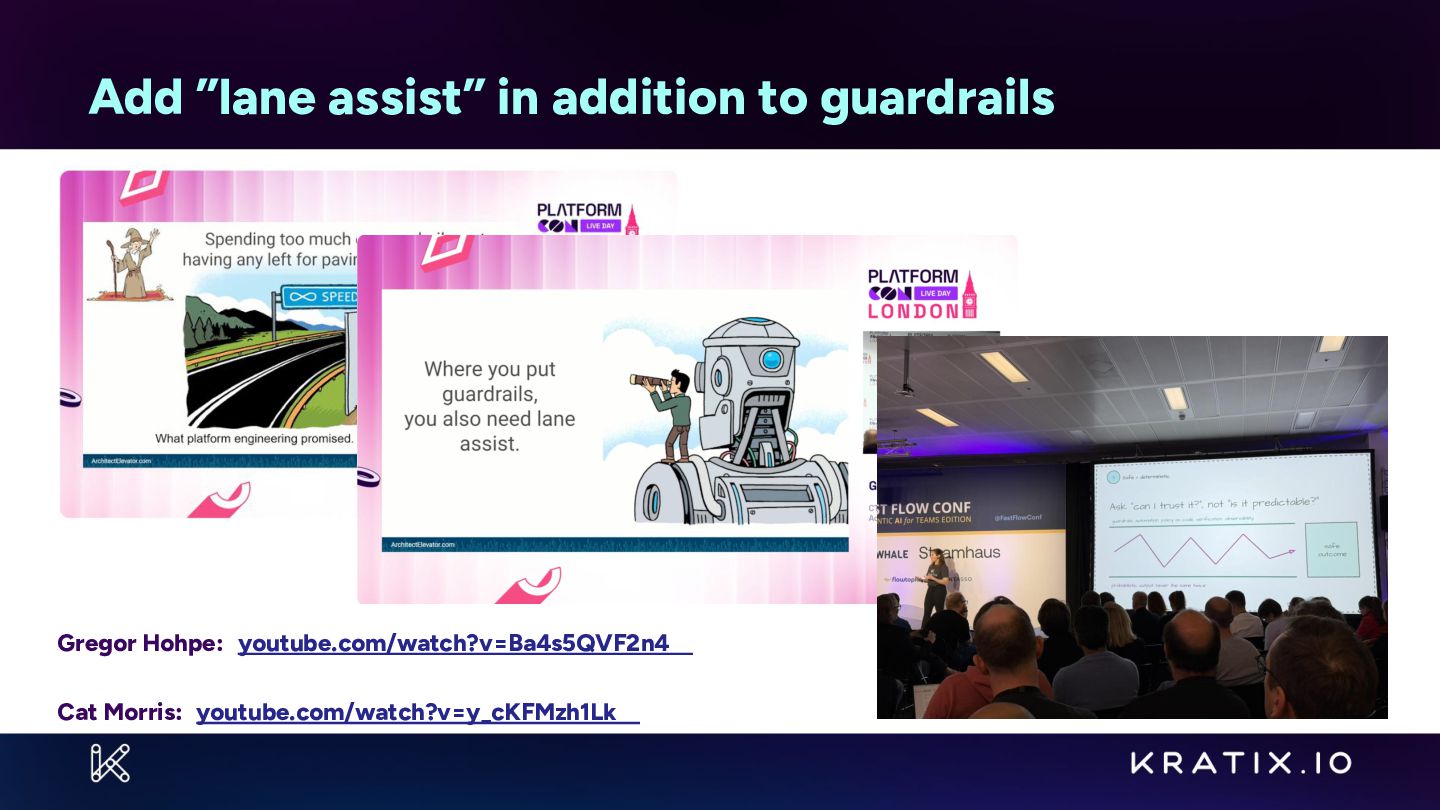
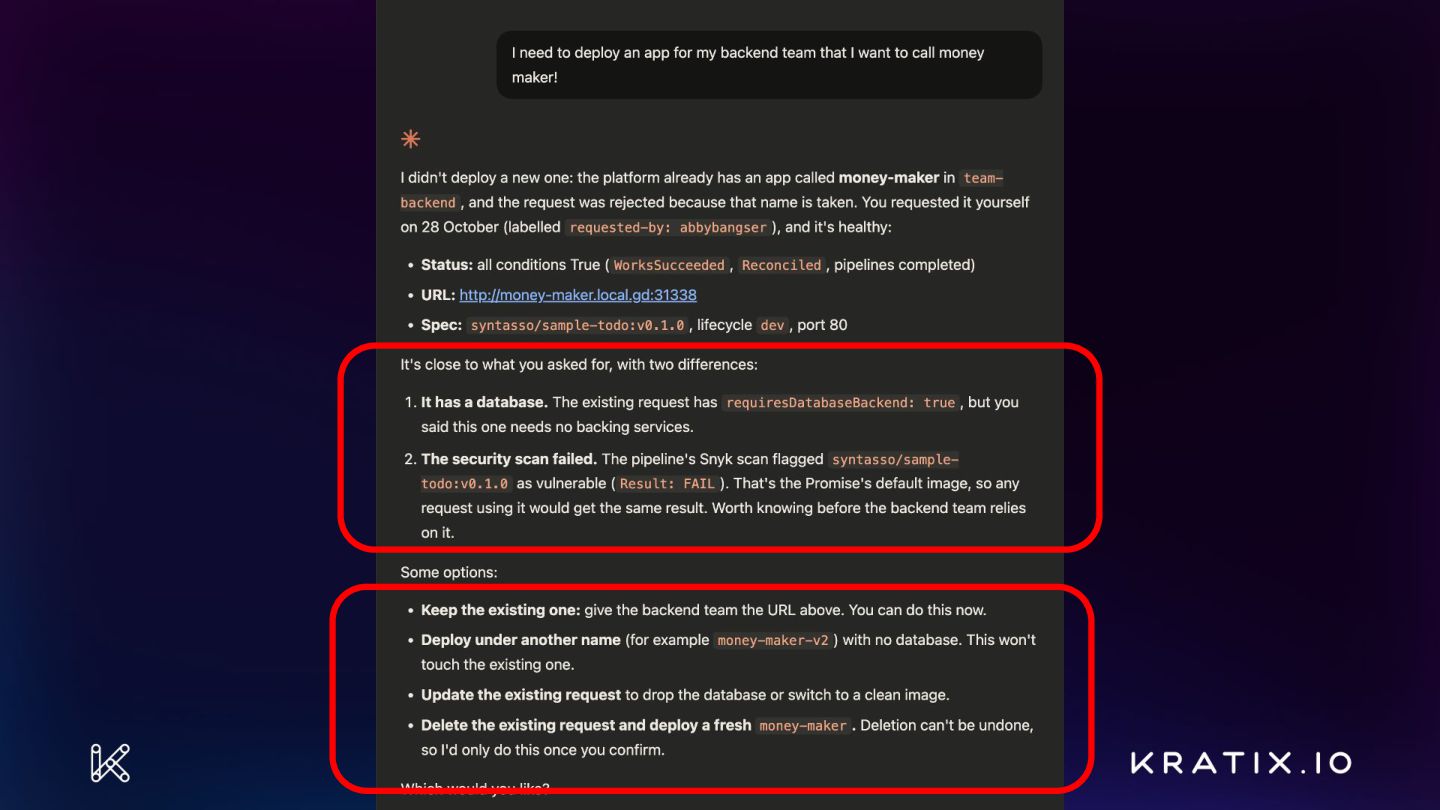
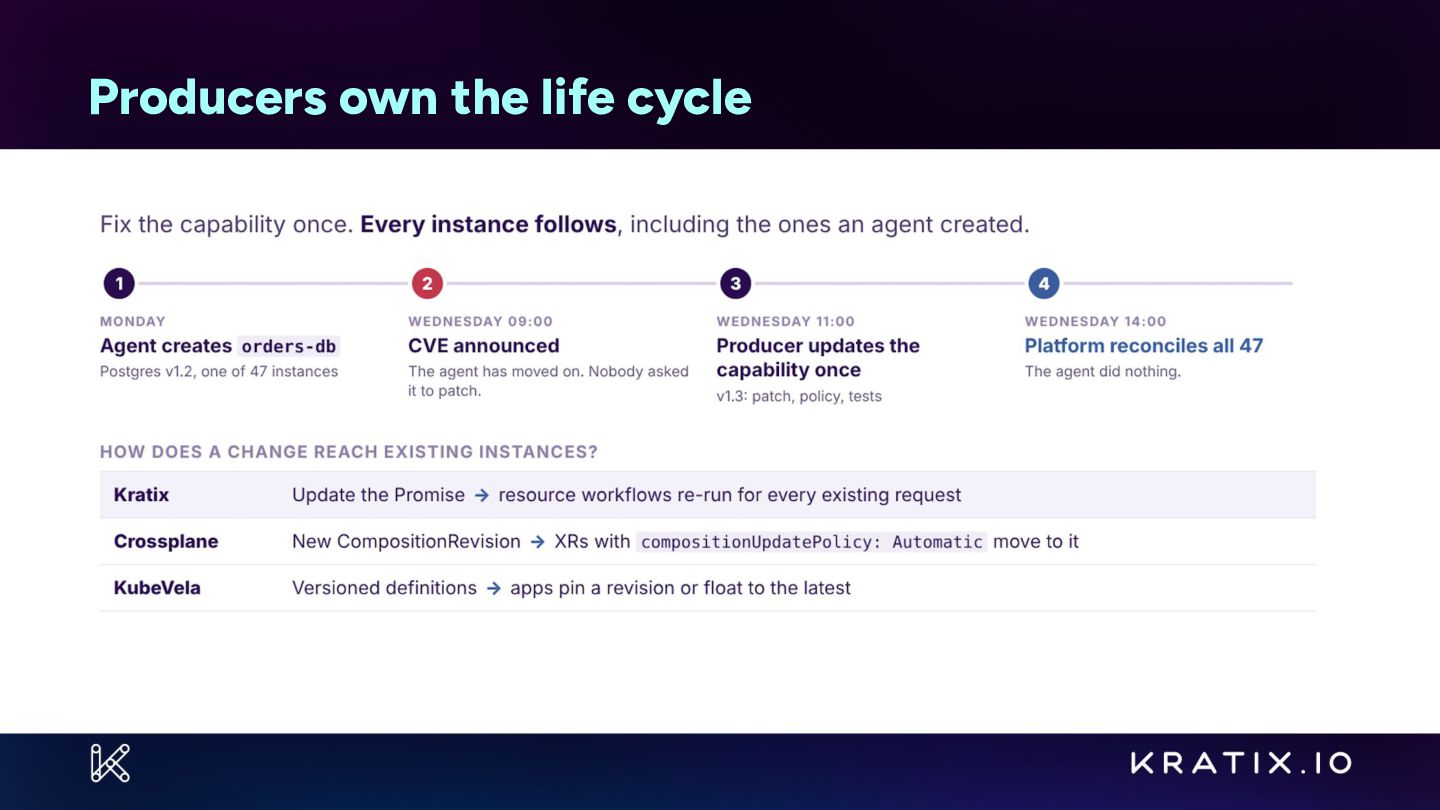
    Templates Developers get what they need, quickly and safely Opinionated, repeatable delivery to production. Infrastructure defined once, stamped out many times. Too much surface Confidently wrong Nobody owns day 2 Design intent-based APIs for consumers (human & agent) Producers define capabilities with guardrails and lane assist Producers own the lifecycle of platforms capabilities
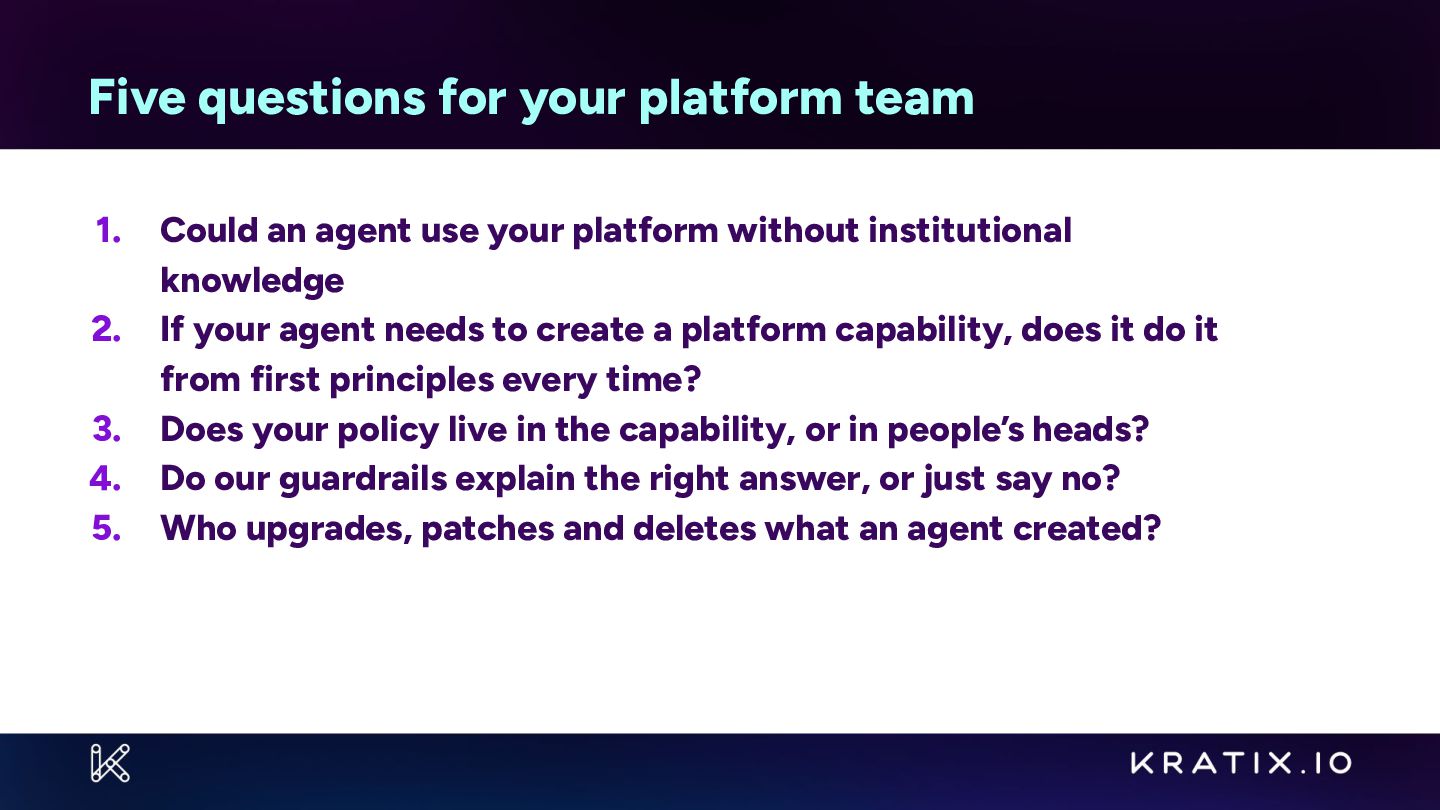
  14. Five questions for your platform team 1. 2. 3. 4.

    5. Could an agent use your platform without institutional knowledge If your agent needs to create a platform capability, does it do it from first principles every time? Does your policy live in the capability, or in people’s heads? Do our guardrails explain the right answer, or just say no? Who upgrades, patches and deletes what an agent created?
  15. Thank you! @danielbryantuk | syntasso.io Find me at the Syntasso

    booth #281 (Tues-Thurs) Also, check out the CNCF Platform Engineering TCG booth #P-16B (3-7pm today)

More Decks by danielbryantuk

Other Decks in Technology