Upgrade to Pro
— share decks privately, control downloads, hide ads and more …
Speaker Deck
Sign up for free
Menu
Search
Features
All features
Private URLs
Password Protection
Custom URLS
Scheduled publishing
Remove Branding
Restrict embedding
Deck Collections
Notes
Features
All features
Private URLs
Password Protection
Custom URLS
Scheduled publishing
Remove Branding
Restrict embedding
Deck Collections
Notes
Explore
Featured decks
Featured speakers
Programming
Technology
Storyboards
Explore
Featured decks
Featured speakers
Programming
Technology
Storyboards
Pricing
Search
Sign in
Sign up for free
Off the Rails
Search
Danielle Smith
March 17, 2017
Programming
51
0
Share
Embed
Copy iframe code
Copy JS code
Copy link
Start on current slide
Off the Rails
My journey to becoming a
~hipster~ Node.js developer
Danielle Smith
March 17, 2017
More Decks by Danielle Smith
See All by Danielle Smith
Ruby Ruby
daninithepanini
0
160
A Brief History of Ruby
daninithepanini
0
61
Static Type Inferencing ... in Ruby?
daninithepanini
0
31
Action Game
daninithepanini
0
43
RubyGL
daninithepanini
0
34
YeSQL
daninithepanini
0
34
Game Dev in Ruby
daninithepanini
0
49
Euler vs Hamilton
daninithepanini
0
57
Other Decks in Programming
See All in Programming
AWSに止められる覚悟してますか?
morizo_1984
2
500
Vue Fes Japan 2026 タイムテーブル徹底解説
448jp
1
590
Agents on Rails - Rails at Scale 2026
irinanazarova
0
320
iOSDC2026登壇資料.pdf
riofujimon
0
200
更なる可用性を求めて、5年間運用したKotlinのアプリケーションをGoでリプレイスする話
ken_tunc
0
430
Androidだけじゃない、DroidKaigiで広がった私の技術スタック
akkeylab
0
110
[Rails World 2026] Durable orchestration on Rails: from continuation to workflow
palkan
1
430
設計次第でAIコードの読む量は減らせる / designing-for-code-reading
minodriven
33
14k
半永久的に提供し続けられるプライベートクラウドを目指して ― 利用者の認知負荷を抑えるAPI抽象化とハードウェア世代交代の基盤設計
tomokon
0
410
wkhtmltopdfの次どうするか問題2026
willnet
2
1.8k
Go × SIMDで高速化するベクトル検索 ~ルーフラインモデルでSIMDが効く境界を探れ! ~
po3rin
1
6.1k
setup-vp GitLab対応の裏側
naokihaba
0
150
Featured
See All Featured
Designing for Timeless Needs
cassininazir
1
510
Done Done
chrislema
187
17k
The SEO Collaboration Effect
kristinabergwall1
1
580
Groundhog Day: Seeking Process in Gaming for Health
codingconduct
0
390
Avoiding the “Bad Training, Faster” Trap in the Age of AI
tmiket
0
260
Discover your Explorer Soul
emna__ayadi
2
1.3k
HDC tutorial
michielstock
2
940
Tips & Tricks on How to Get Your First Job In Tech
honzajavorek
1
780
Art, The Web, and Tiny UX
lynnandtonic
304
22k
GraphQLの誤解/rethinking-graphql
sonatard
75
12k
Sam Torres - BigQuery for SEOs
techseoconnect
PRO
0
560
Evolution of real-time – Irina Nazarova, EuRuKo, 2024
irinanazarova
9
1.6k
Transcript
Off the Rails My journey to becoming a hipster Node.js
developer
Hi, I’m Dan
Ruby is my first love
But I got into an affair with Node.js
Temptation
Client said they had “experience”
(also didn’t seem to like ruby for some reason)
But what the heck, Node.js is the new hotness, right?
None
First rule of node.js -
THERE ARE NO RULES!
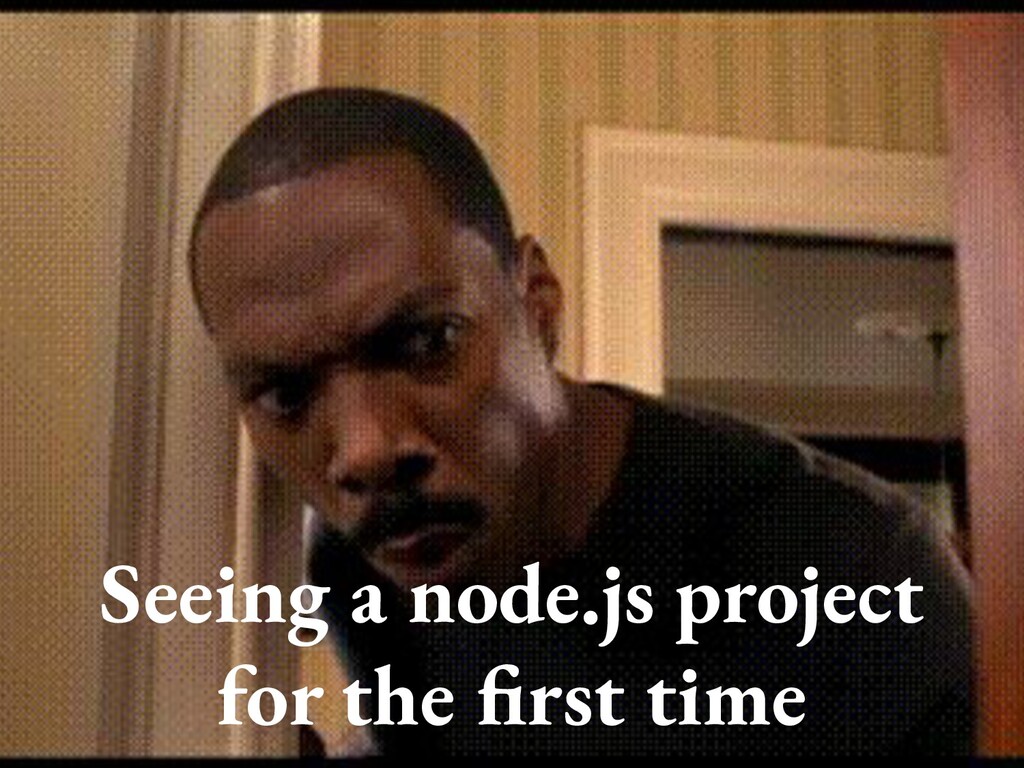
Seeing a node.js project for the first time
Controllers?
Express.js !
Models?
Find an ORM that works!
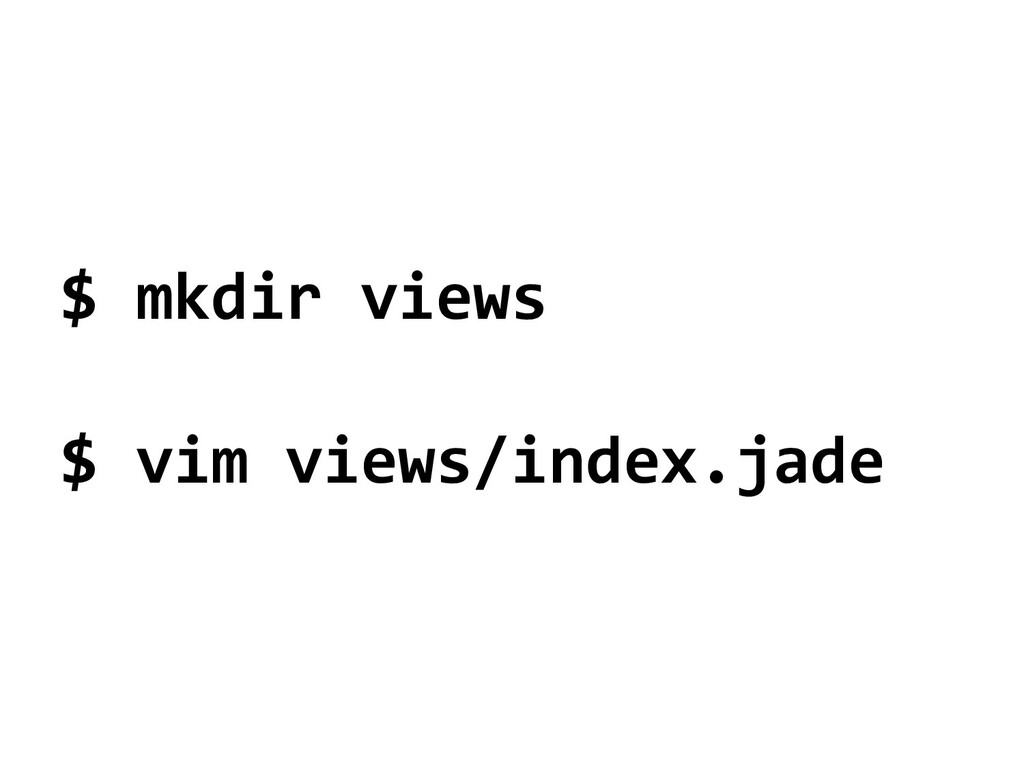
Views?
$ mkdir views $ vim views/index.jade
No Black Magic
Just raw, naked programming
Make your OWN conventions
None
“What happens server-side, stays server side” Problem?
Scenario: Developer A types in a ‘console.log’
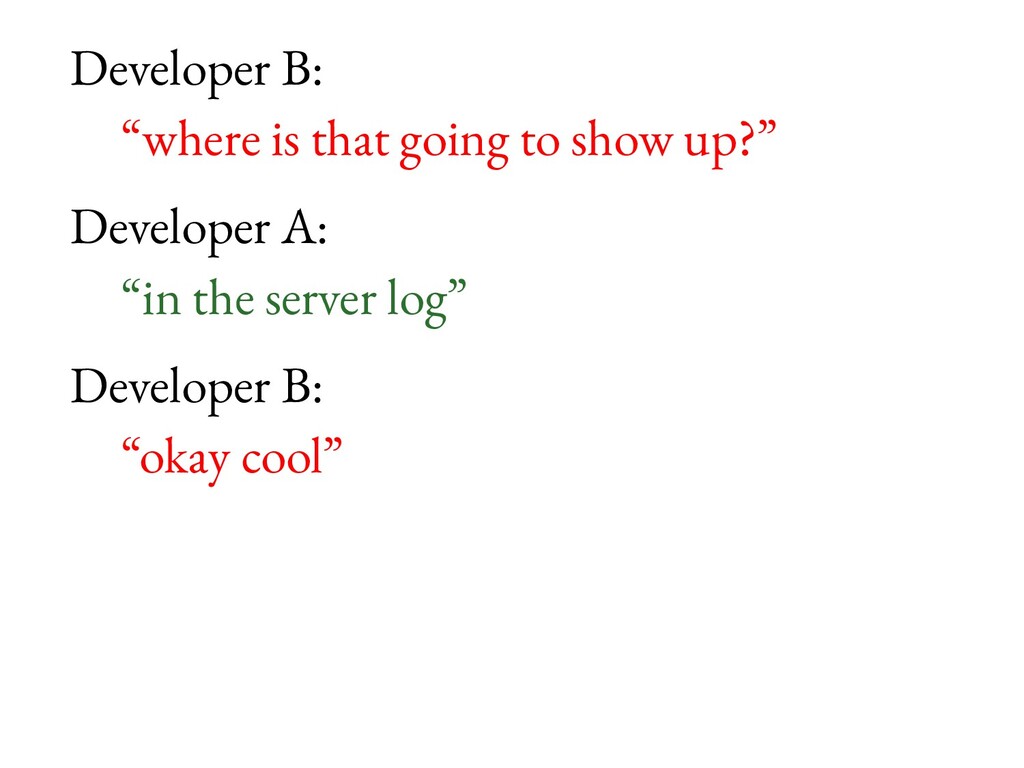
Developer B: “where is that going to show up?”
Developer B: “where is that going to show up?” Developer
A: “in the server log”
Developer B: “where is that going to show up?” Developer
A: “in the server log” Developer B: “okay cool”
Developer B: “where is that going to show up?” Developer
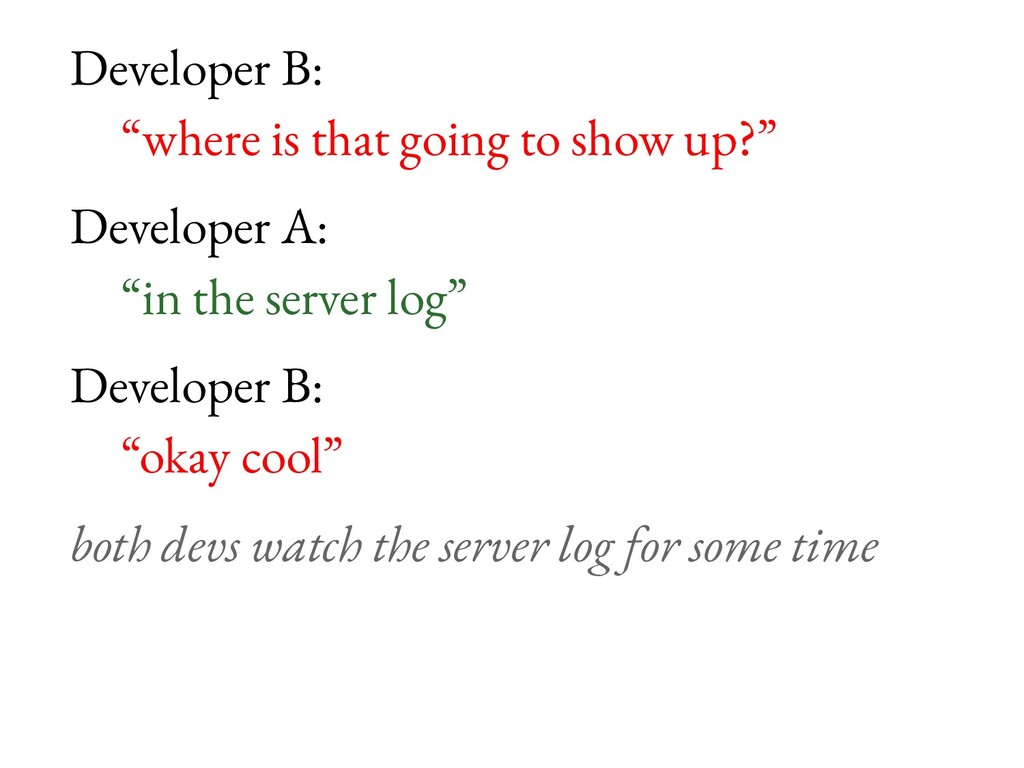
A: “in the server log” Developer B: “okay cool” both devs watch the server log for some time
Developer B: “where is that going to show up?” Developer
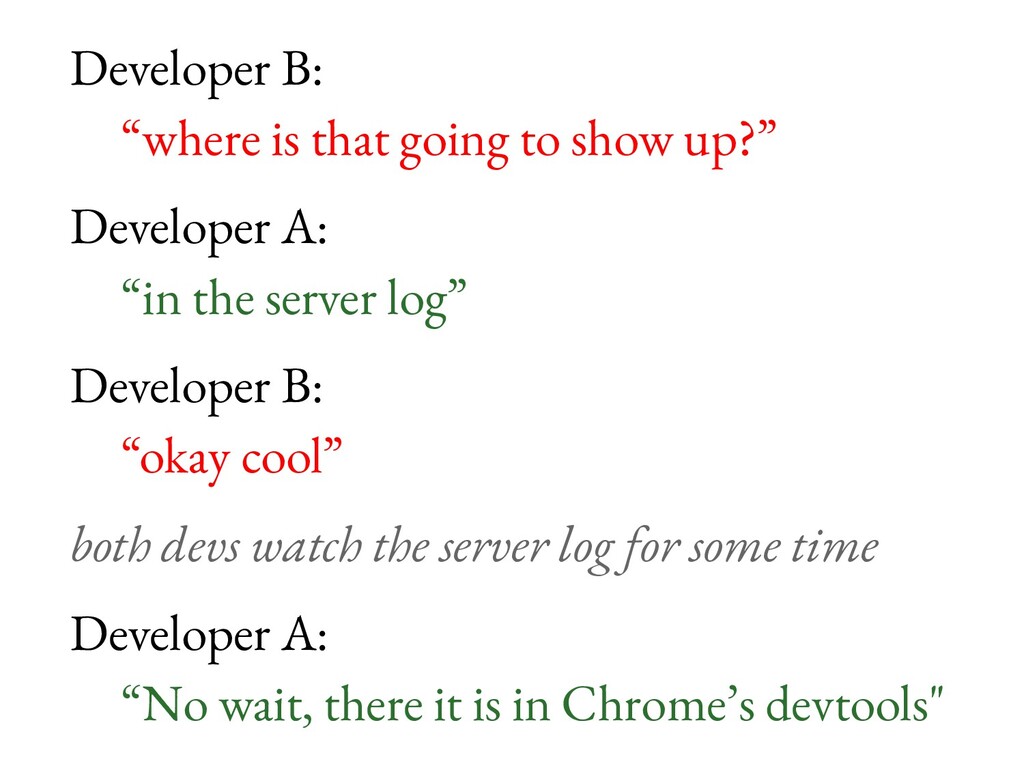
A: “in the server log” Developer B: “okay cool” both devs watch the server log for some time Developer A: “No wait, there it is in Chrome’s devtools"
Familiar (but different)
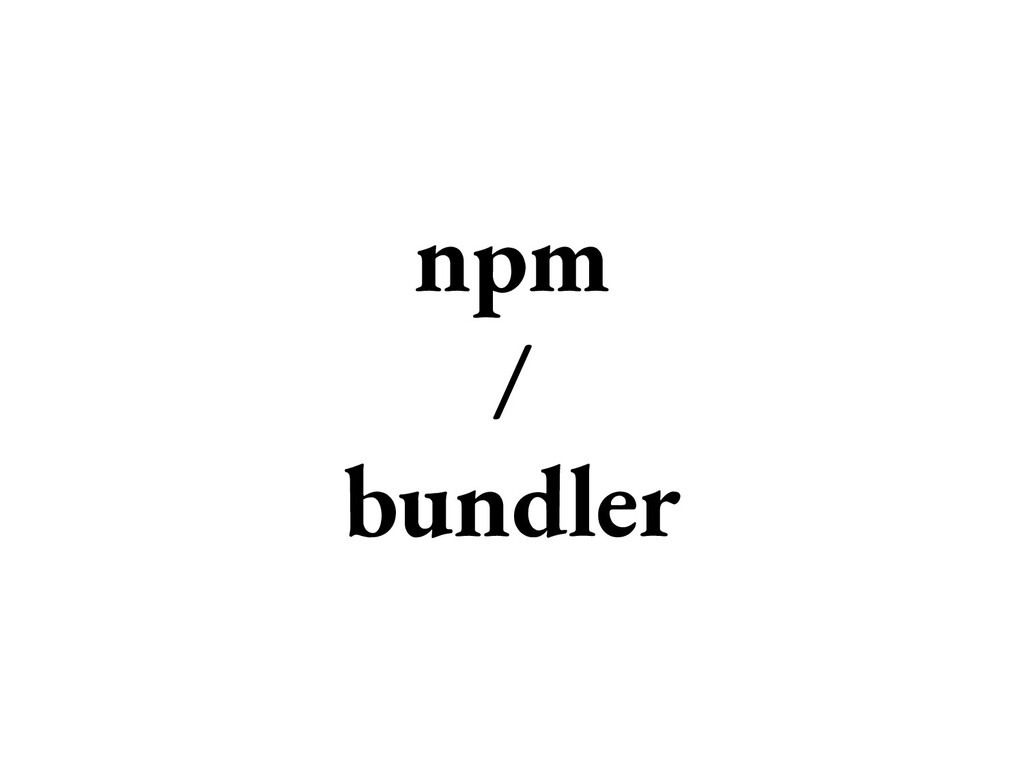
npm / bundler
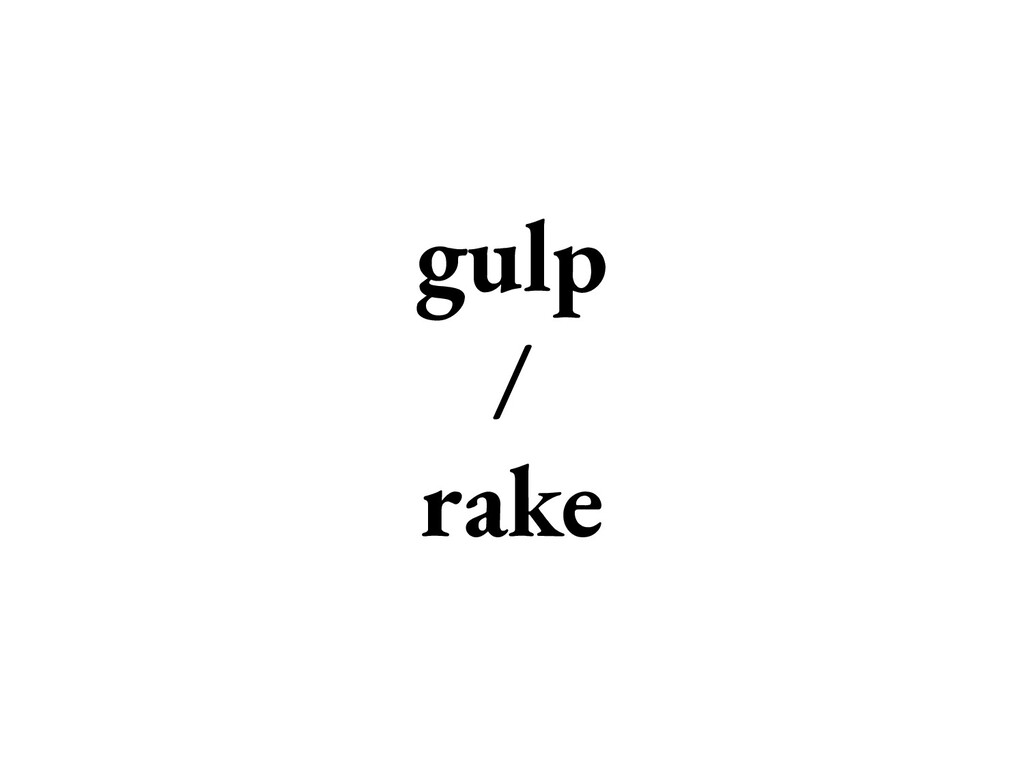
gulp / rake
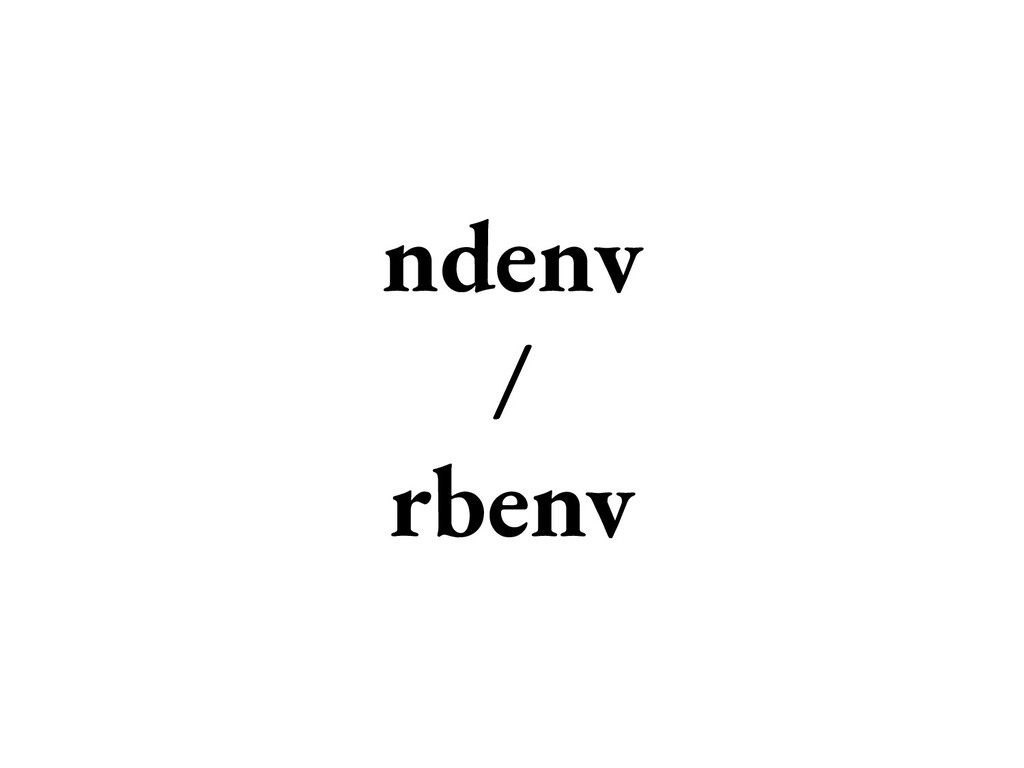
ndenv / rbenv
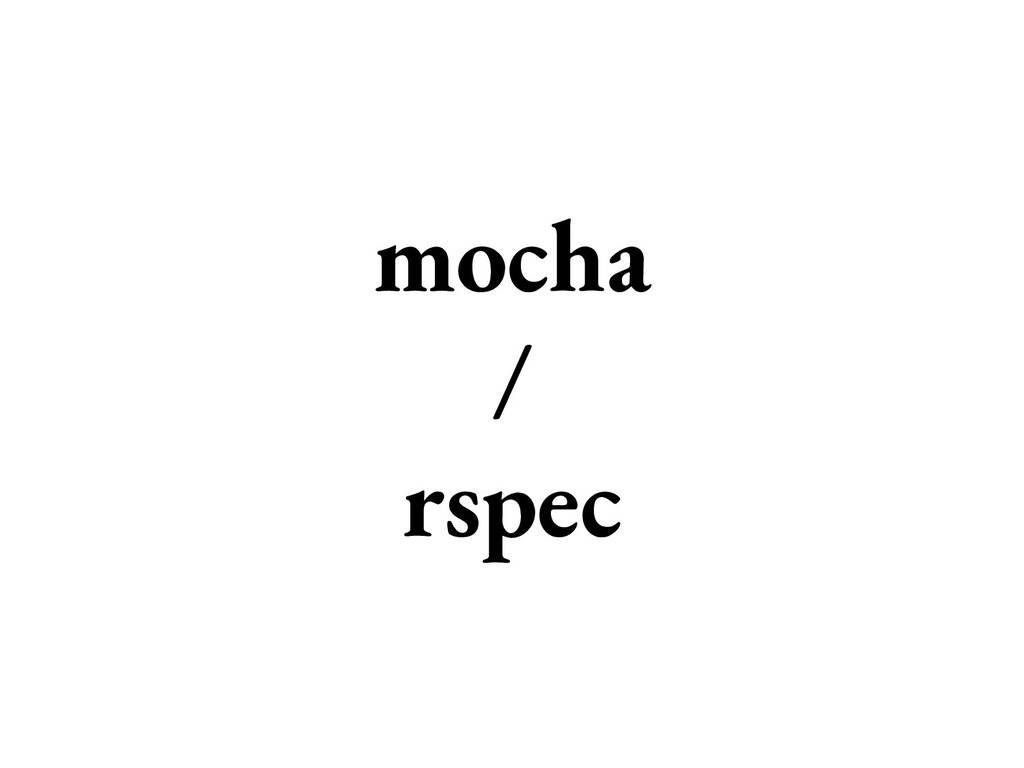
mocha / rspec
jade / slim
Express.js / sinatra
Sequelize / ActiveRecord (almost)
factory-girl / factory-girl
Going so fast!
WHY SO SYNCHRONOUS?
Errorbacks
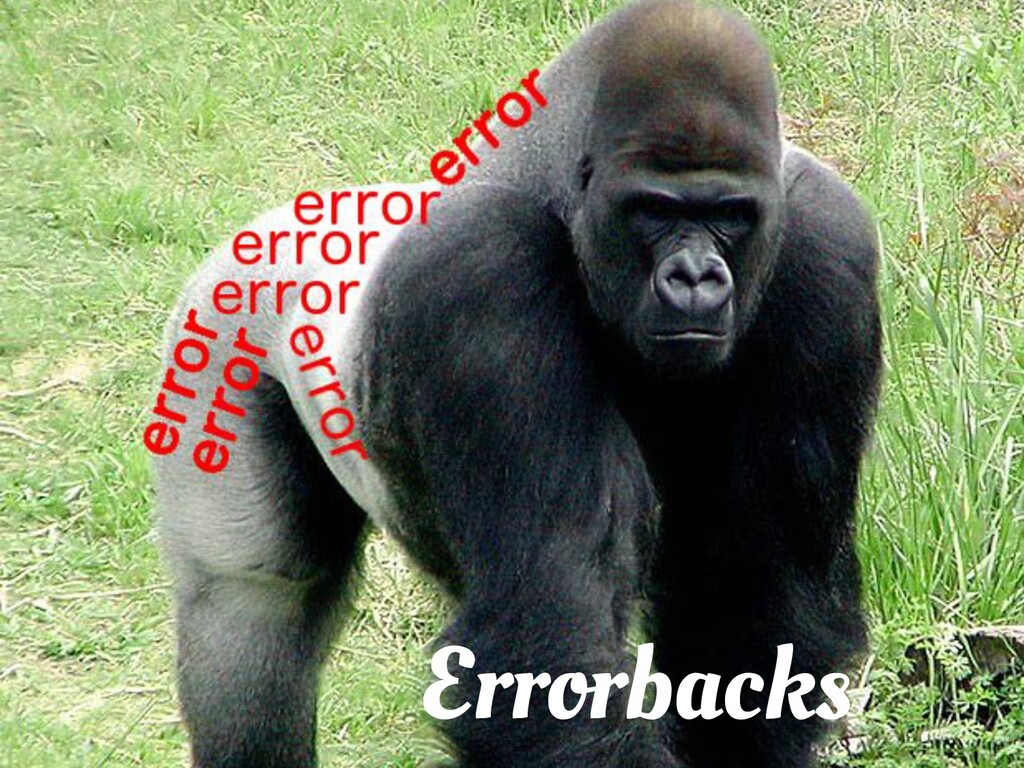
Errorbacks
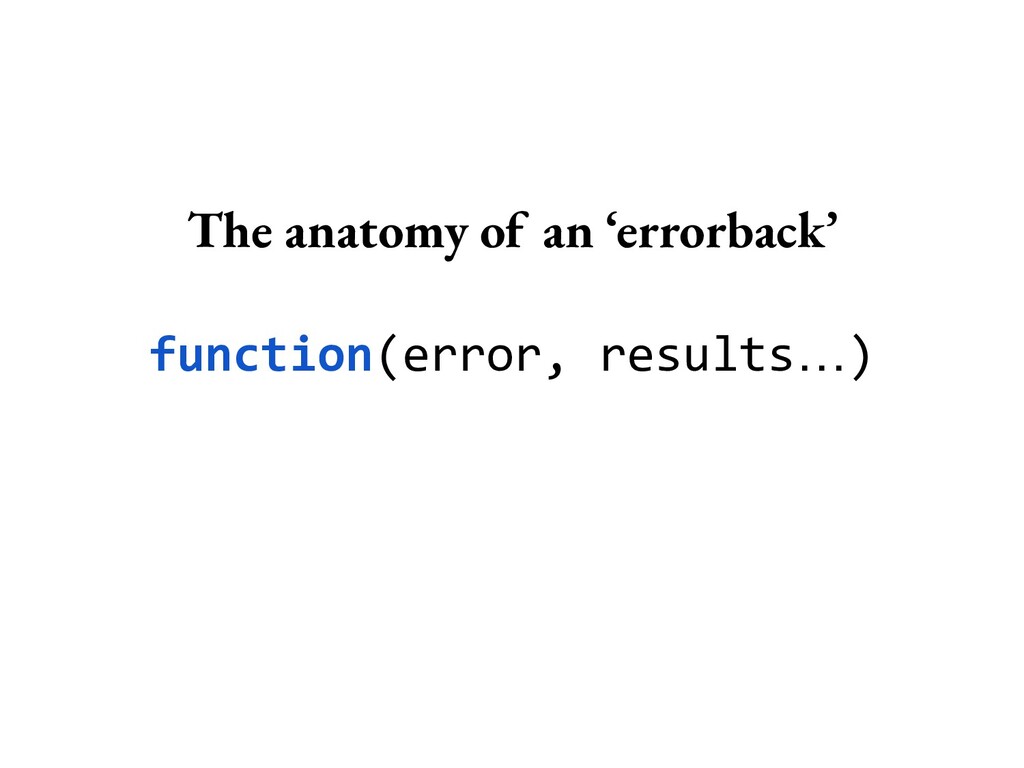
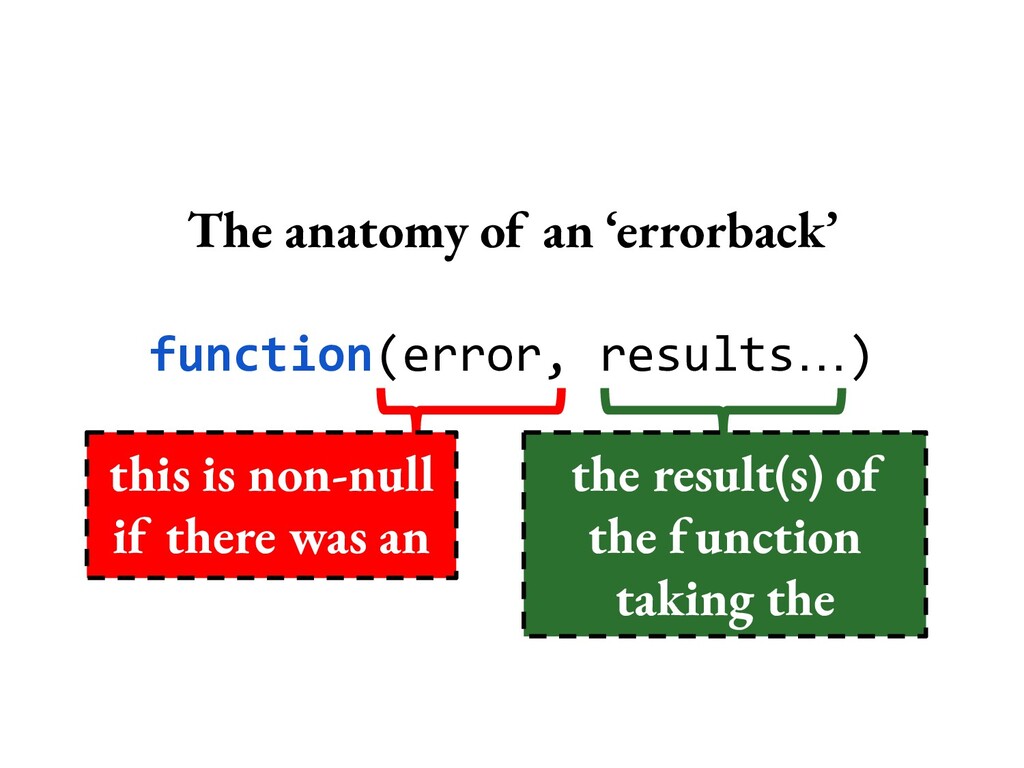
The anatomy of an ‘errorback’ function(error, results…)
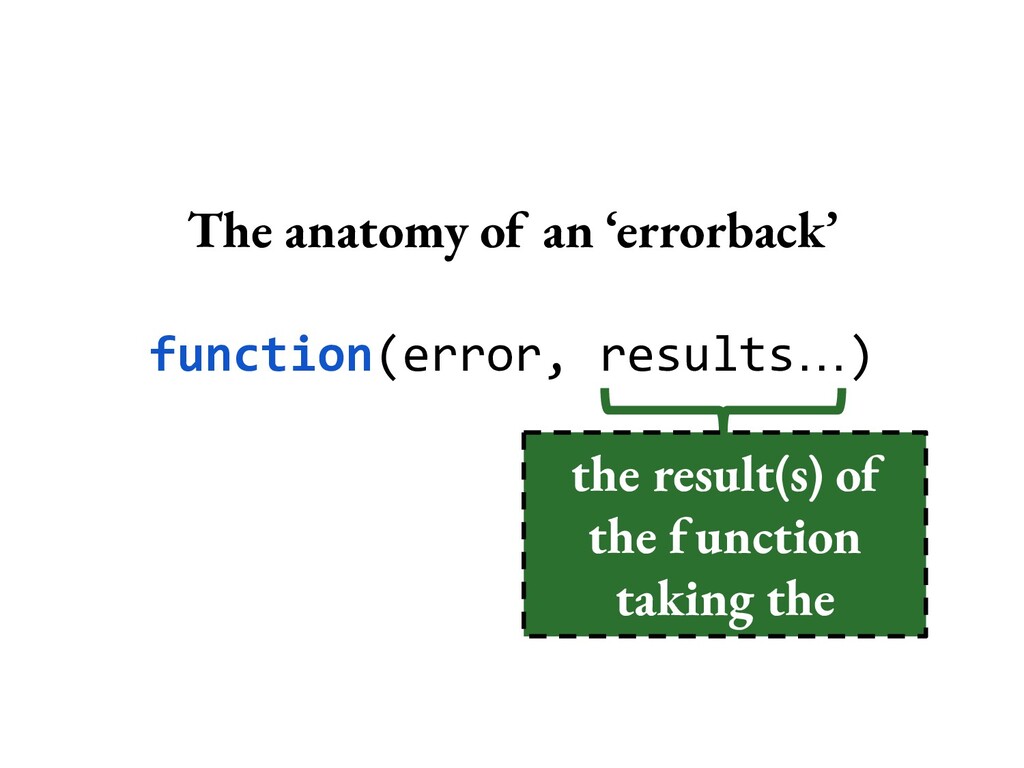
The anatomy of an ‘errorback’ function(error, results…) the result(s) of
the function taking the callback
The anatomy of an ‘errorback’ function(error, results…) this is non-null
if there was an error the result(s) of the function taking the callback
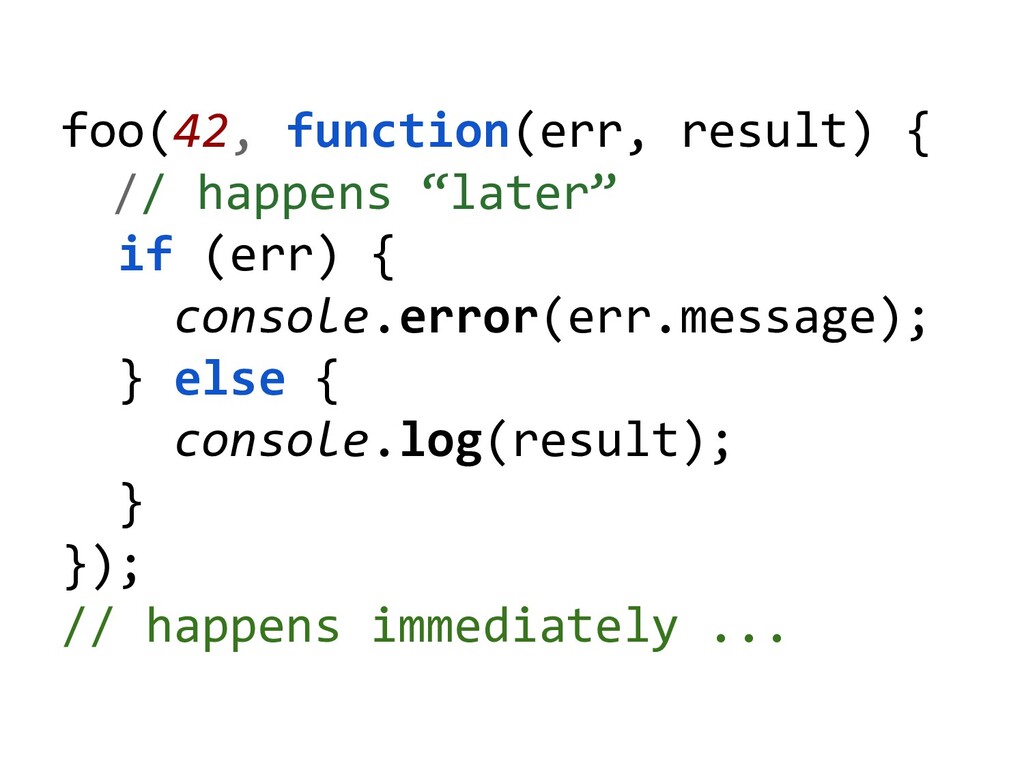
foo(42, function(err, result) { // happens “later” if (err) {
console.error(err.message); } else { console.log(result); } }); // happens immediately ...
Seems innocent enough until ...
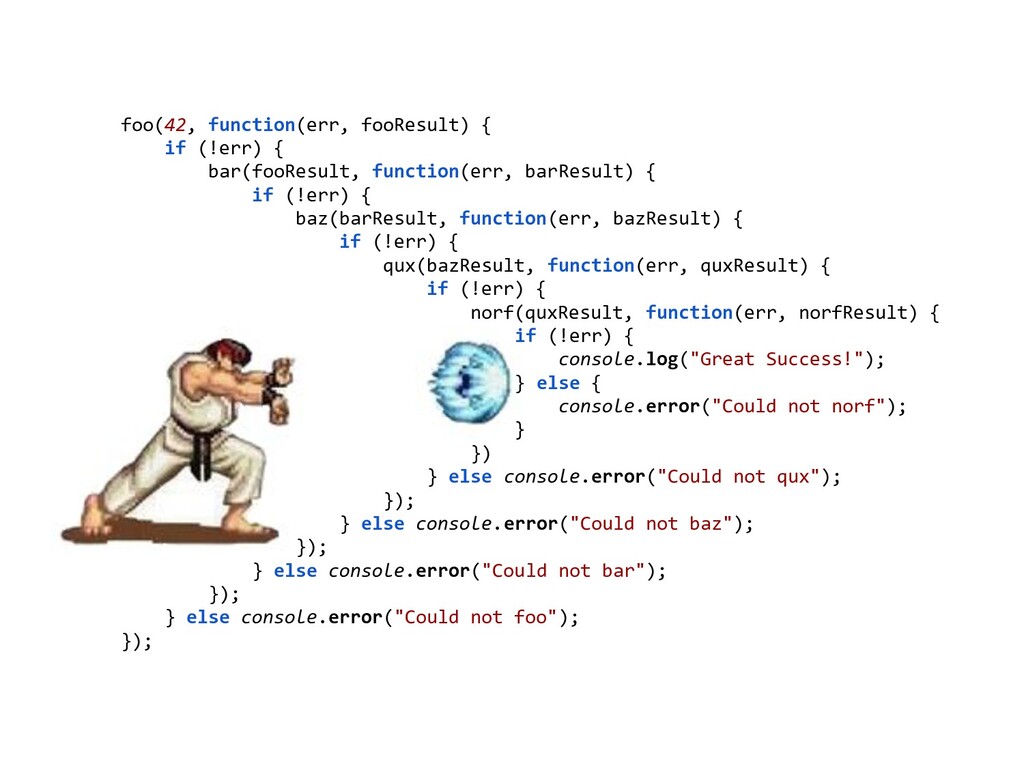
Callback Hell
foo(42, function(err, fooResult) { if (!err) { bar(fooResult, function(err, barResult)
{ if (!err) { baz(barResult, function(err, bazResult) { if (!err) { qux(bazResult, function(err, quxResult) { if (!err) { norf(quxResult, function(err, norfResult) { if (!err) { console.log("Great Success!"); } else { console.error("Could not norf"); } }) } else console.error("Could not qux"); }); } else console.error("Could not baz"); }); } else console.error("Could not bar"); }); } else console.error("Could not foo"); });
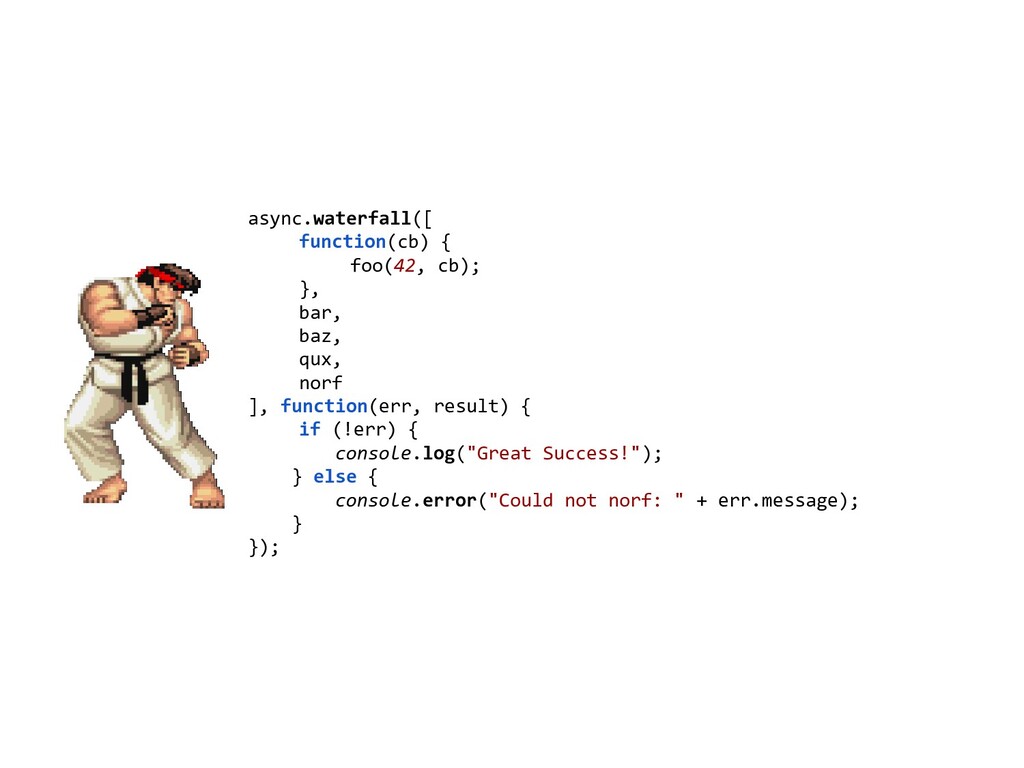
Async Waterfall (not at all related to the development methodology)
async.waterfall([ function(cb) { foo(42, cb); }, bar, baz, qux, norf
], function(err, result) { if (!err) { console.log("Great Success!"); } else { console.error("Could not norf: " + err.message); } });
Better, but not perfect
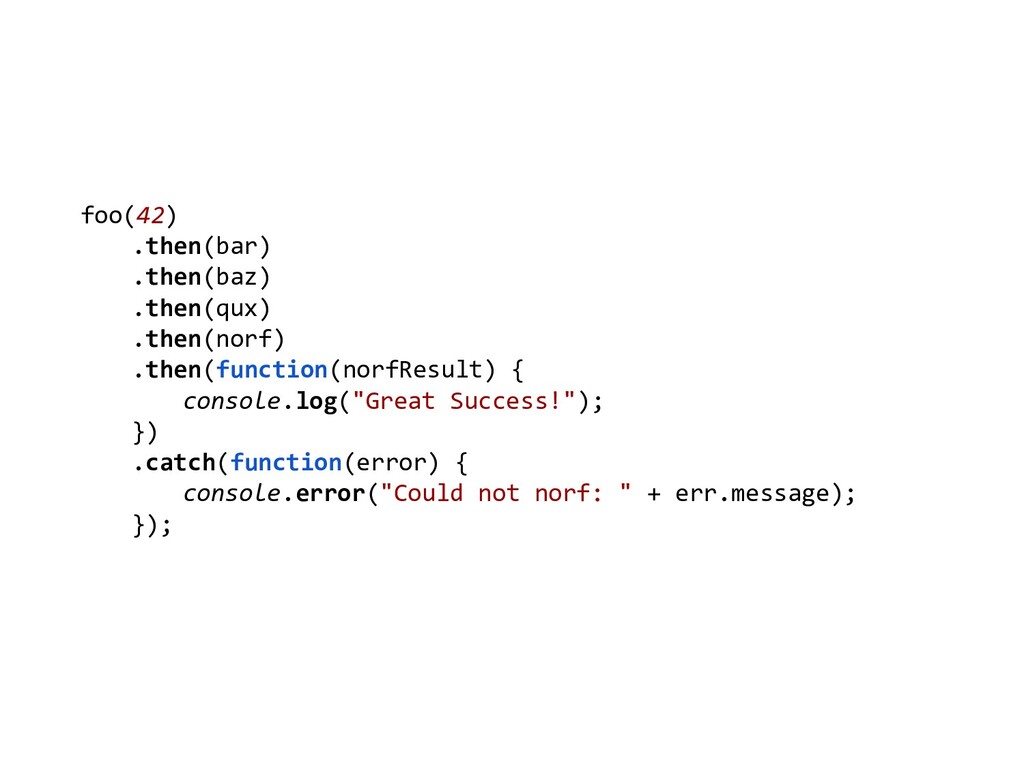
A Promising Solution
foo(42) .then(bar) .then(baz) .then(qux) .then(norf) .then(function(norfResult) { console.log("Great Success!"); })
.catch(function(error) { console.error("Could not norf: " + err.message); });
Promises are like monads
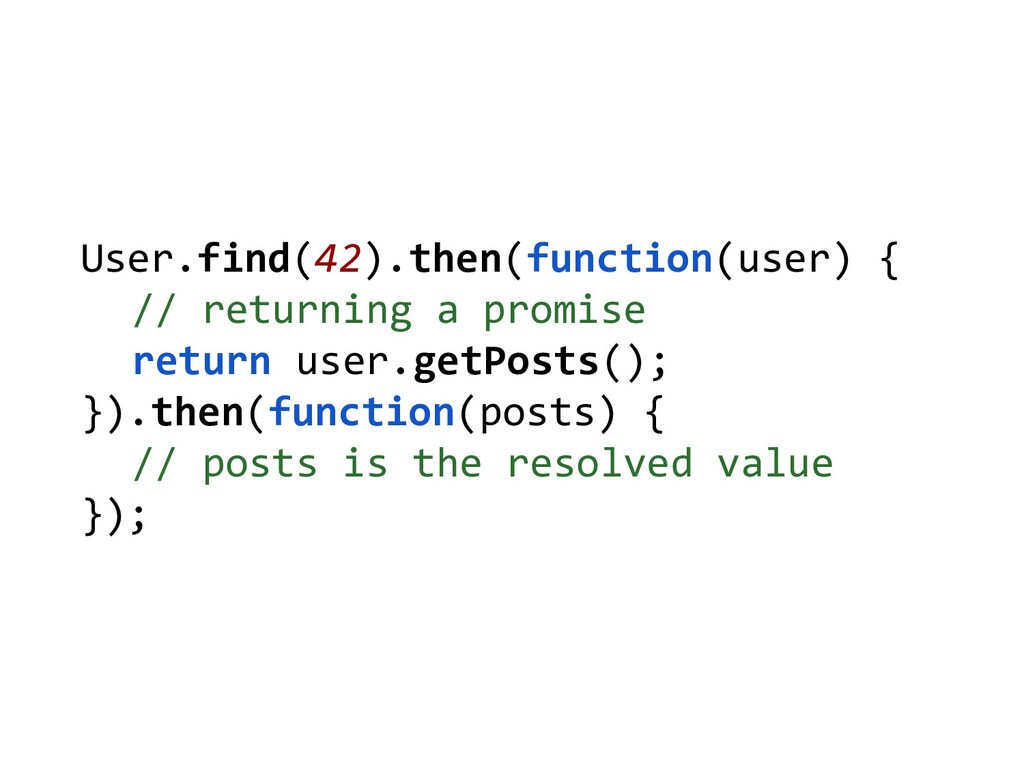
User.find(42).then(function(user) { // returning a promise return user.getPosts(); }).then(function(posts) {
// posts is the resolved value });
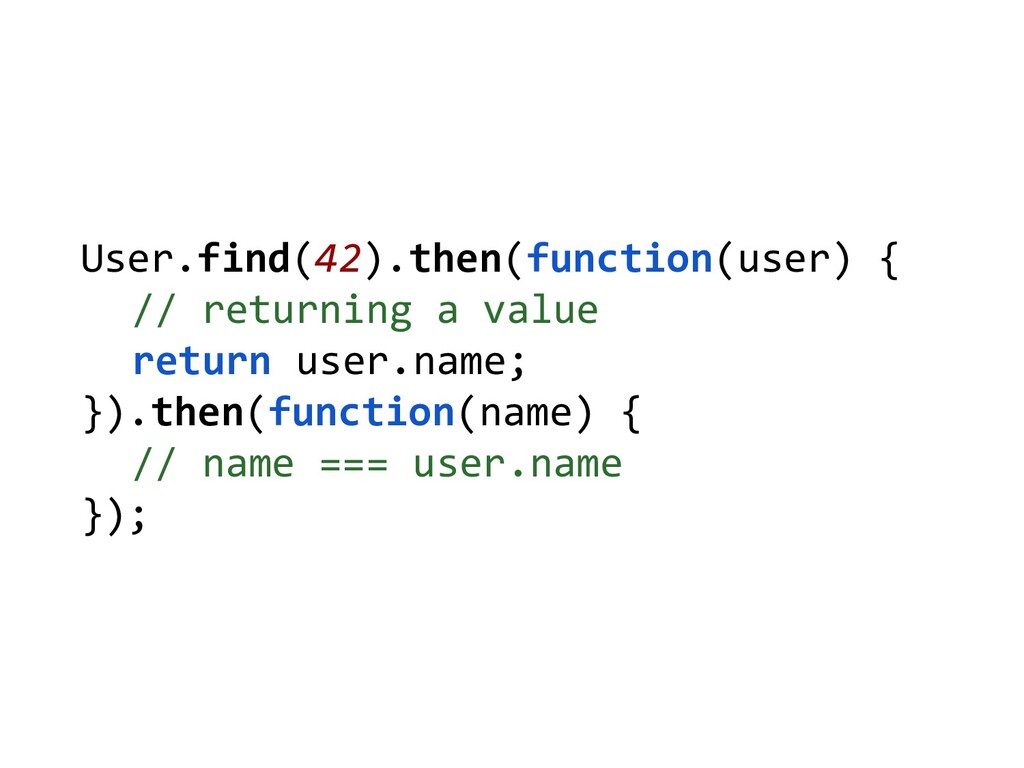
User.find(42).then(function(user) { // returning a value return user.name; }).then(function(name) {
// name === user.name });
Functional.
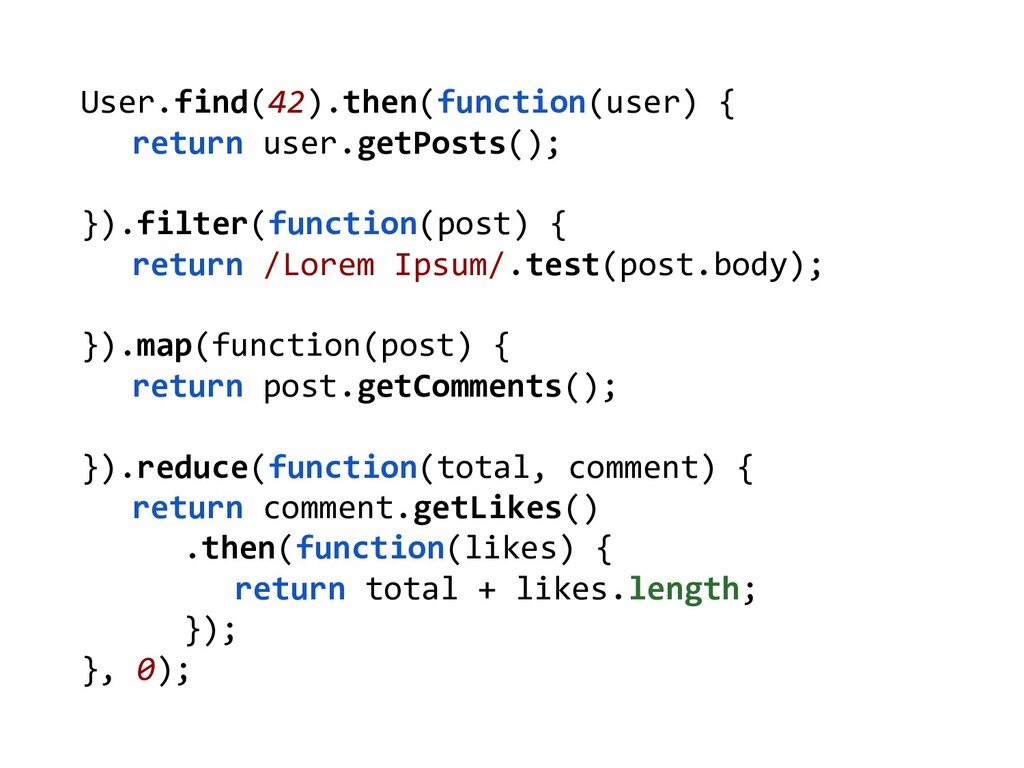
User.find(42).then(function(user) { return user.getPosts(); }).filter(function(post) { return /Lorem Ipsum/.test(post.body); }).map(function(post)
{ return post.getComments(); }).reduce(function(total, comment) { return comment.getLikes() .then(function(likes) { return total + likes.length; }); }, 0);
Broken Promises...
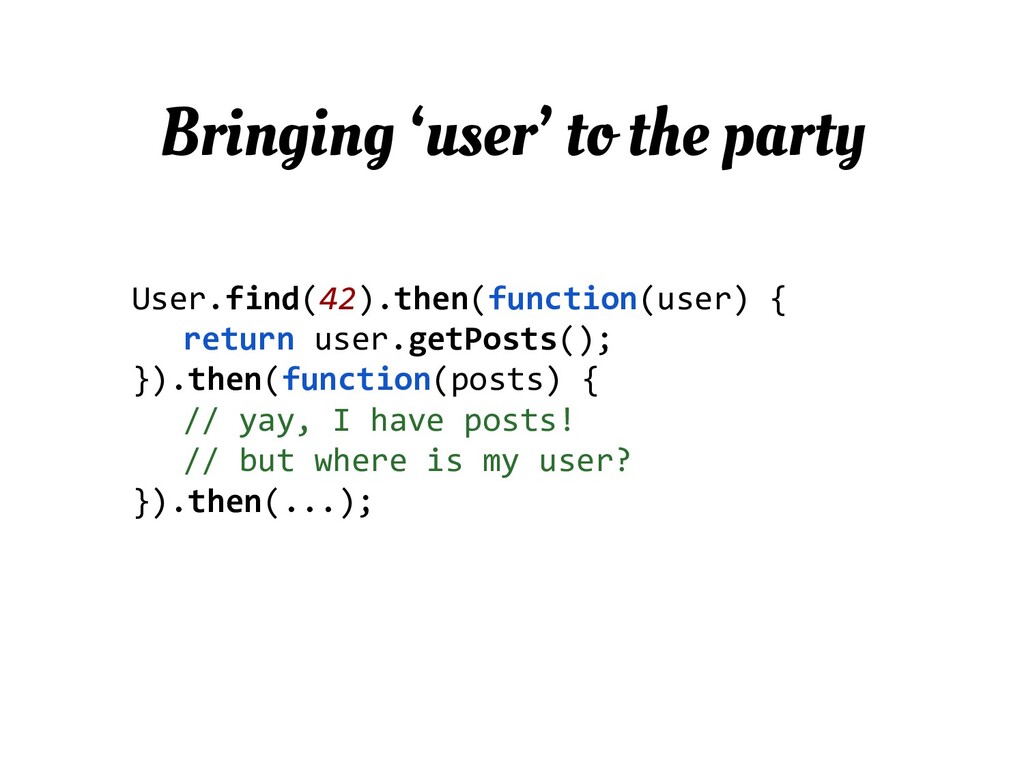
User.find(42).then(function(user) { return user.getPosts(); }).then(function(posts) { // yay, I have
posts! // but where is my user? }).then(...); Bringing ‘user’ to the party
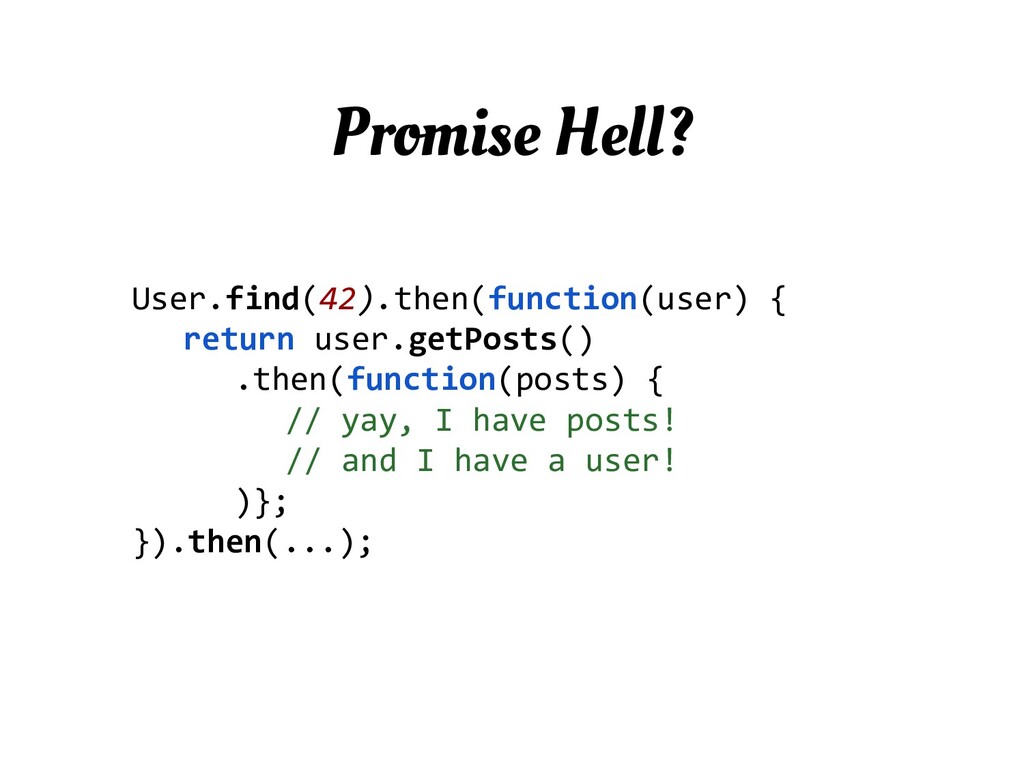
User.find(42).then(function(user) { return user.getPosts() .then(function(posts) { // yay, I have
posts! // and I have a user! )}; }).then(...); Promise Hell?
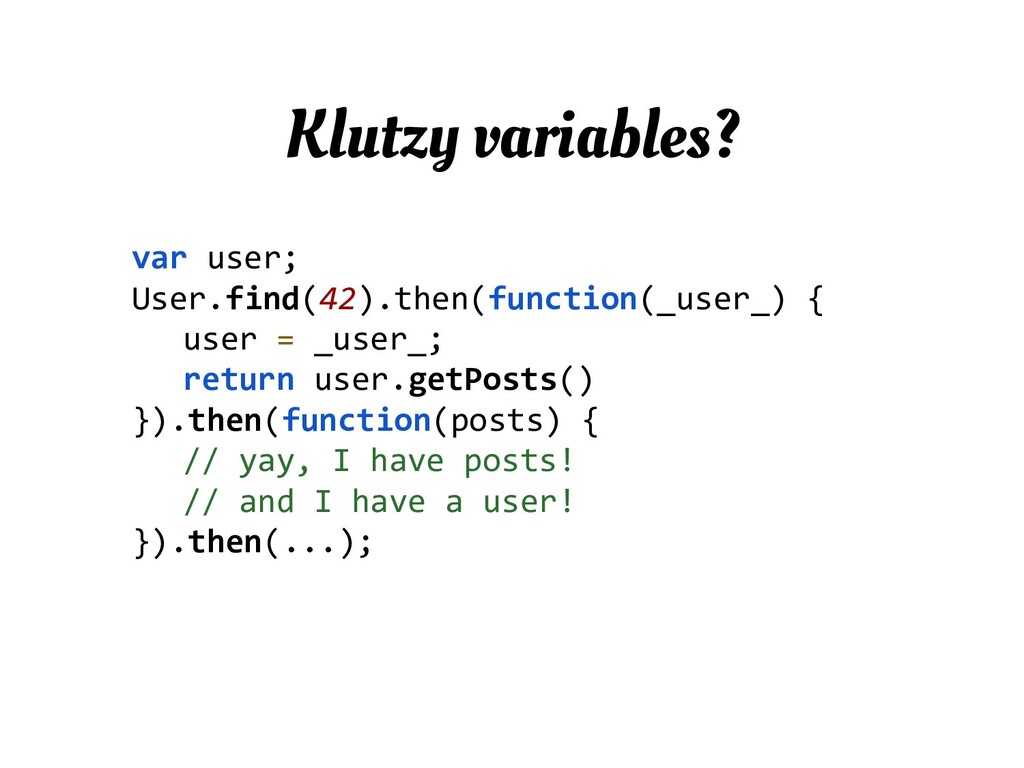
var user; User.find(42).then(function(_user_) { user = _user_; return user.getPosts() }).then(function(posts)
{ // yay, I have posts! // and I have a user! }).then(...); Klutzy variables?
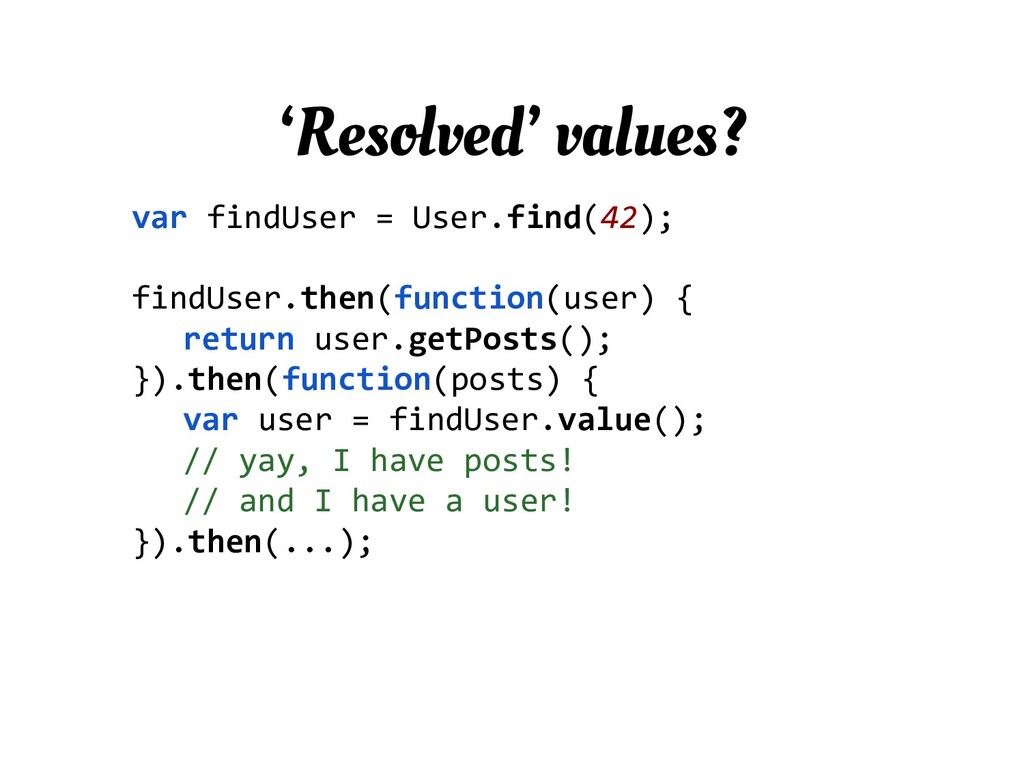
var findUser = User.find(42); findUser.then(function(user) { return user.getPosts(); }).then(function(posts) {
var user = findUser.value(); // yay, I have posts! // and I have a user! }).then(...); ‘Resolved’ values?
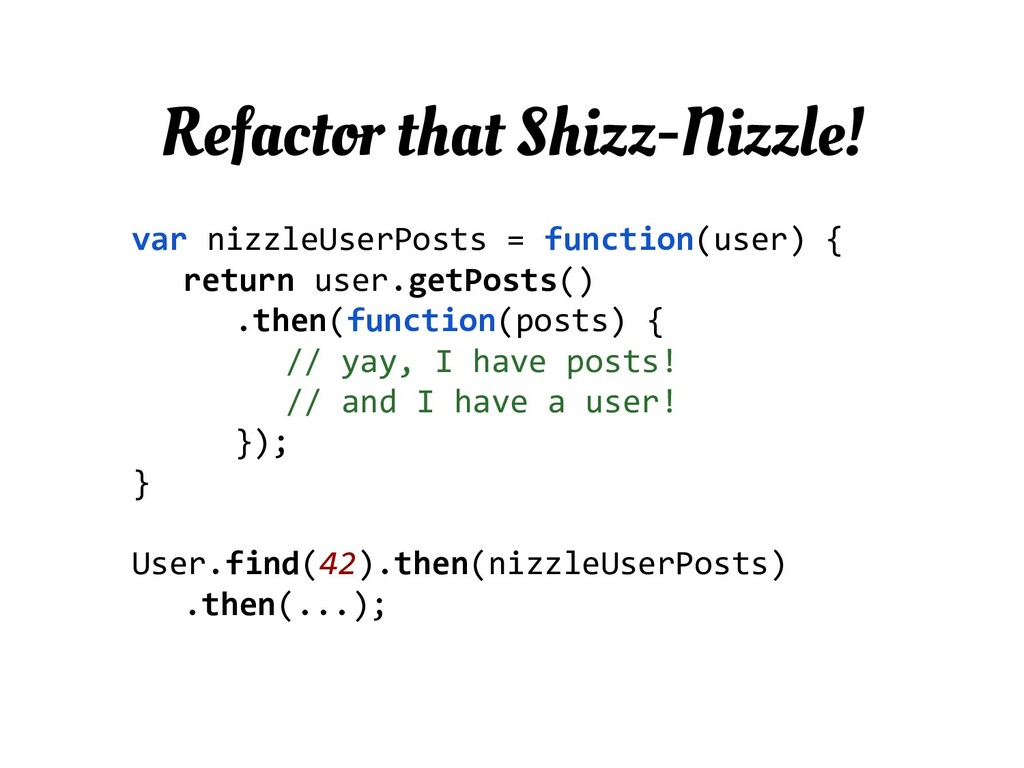
var nizzleUserPosts = function(user) { return user.getPosts() .then(function(posts) { //
yay, I have posts! // and I have a user! }); } User.find(42).then(nizzleUserPosts) .then(...); Refactor that Shizz-Nizzle!
Regret?
None
Non-blocking means code sometimes runs off without you
The WTFs of Asynchronous-ness “I called this here and it
console.log’s there, wtf?” “Foo is happening before Bar, wtf?” “I called Bar, but it never happened, wtf?” “I never called Baz, but it’s happening, wtf?”
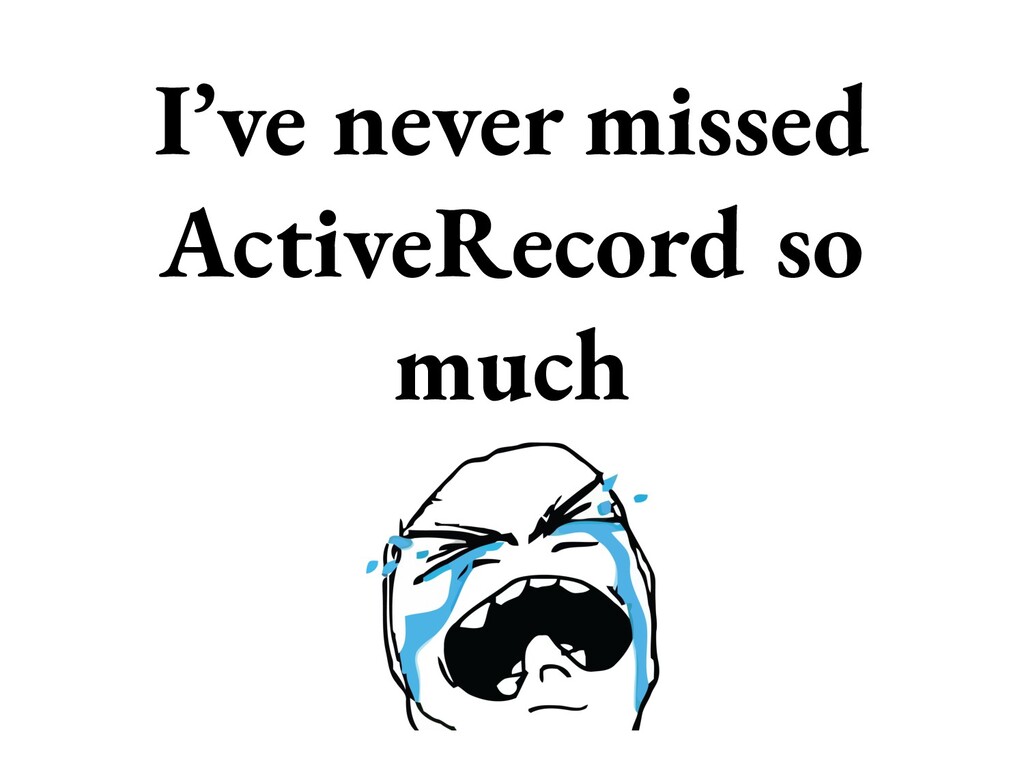
I’ve never missed ActiveRecord so much
Sequelize ORM
Migrations that needed to be migrated
Table “SequelizeMeta” has no column “to”
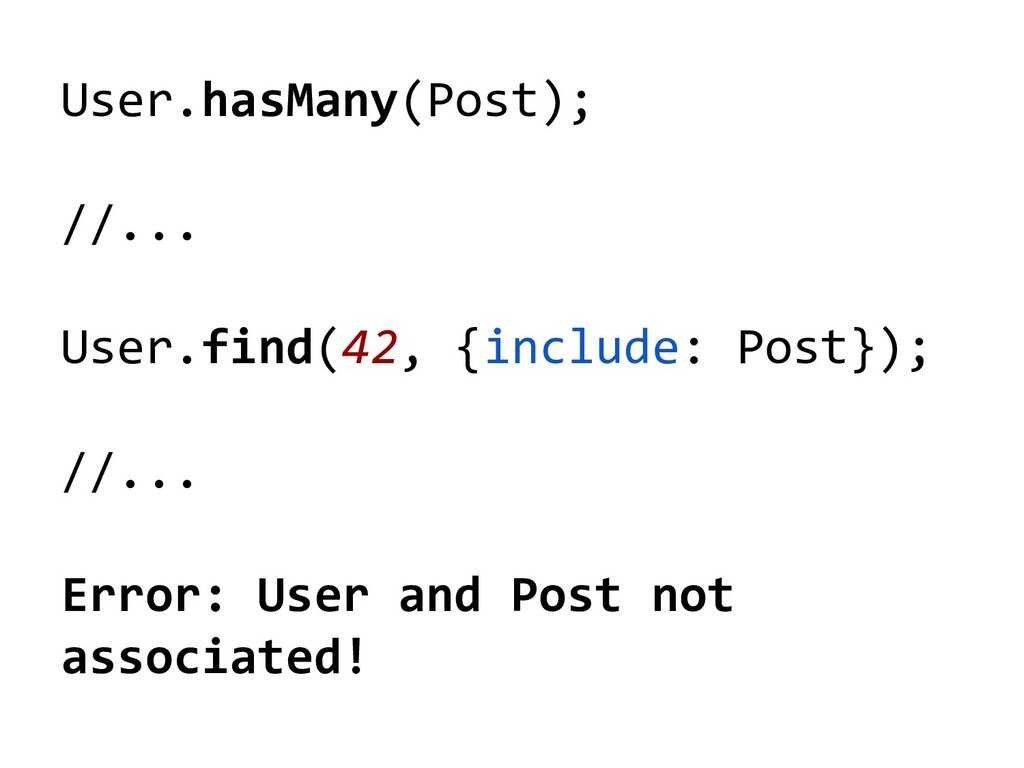
Associations that can’t associate
User.hasMany(Post); //... User.find(42, {include: Post}); //... Error: User and Post
not associated!
Source Maps while testing, anyone?
$ gulp test ... TypeError: evaluating ‘z[fn]’ /MyBlog/models/user.coffee:1:1 ... /MyBlog/models/user.coffee
1: ‘use strict’ 2: 3: module.exports = 4: foo: ->
This is not the require you’re looking for
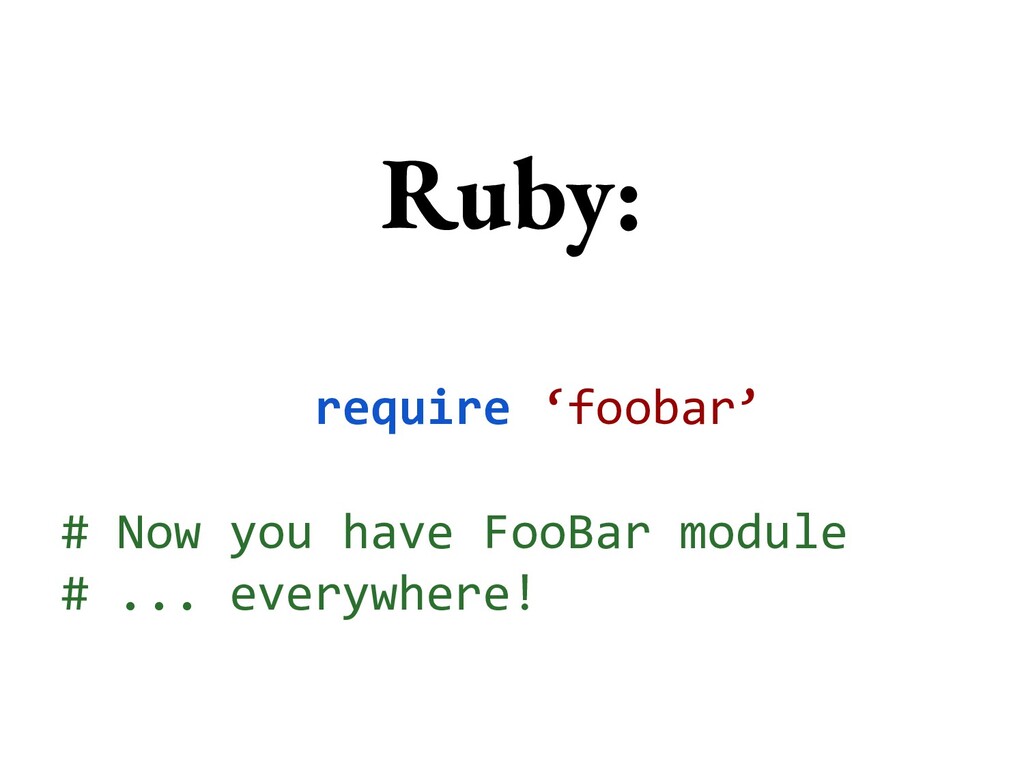
Ruby: FooBar = require ‘foobar’ # Now you have FooBar
module # ... everywhere!
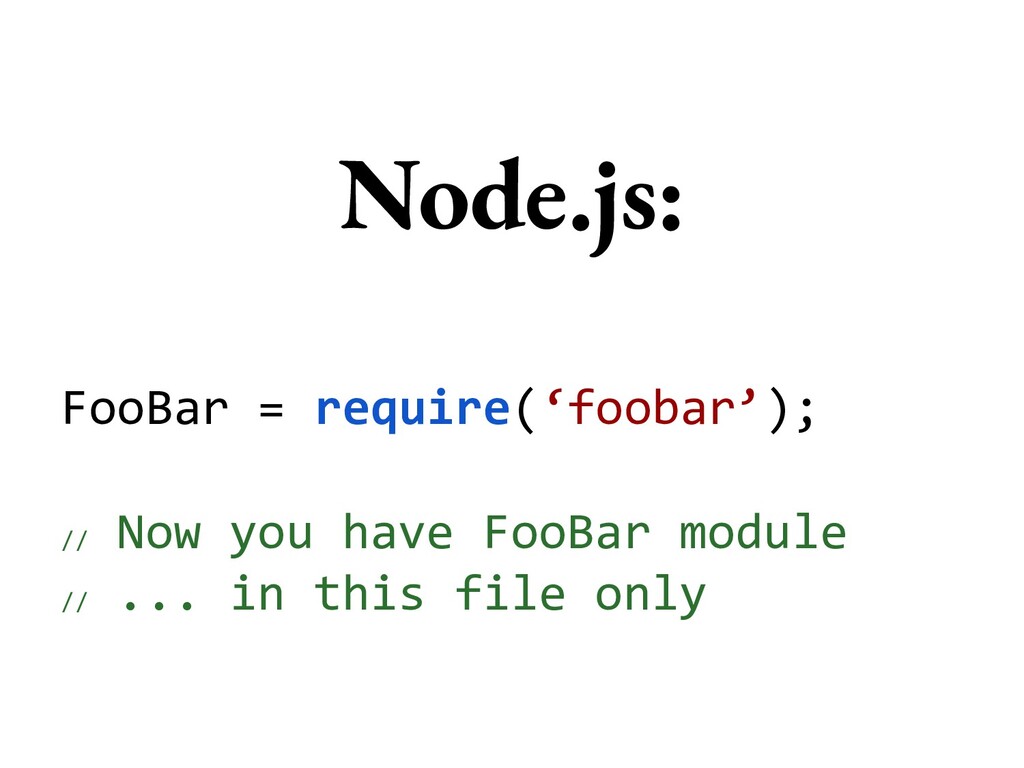
Node.js: FooBar = require(‘foobar’); // Now you have FooBar module
// ... in this file only
Circular dependency nightmares
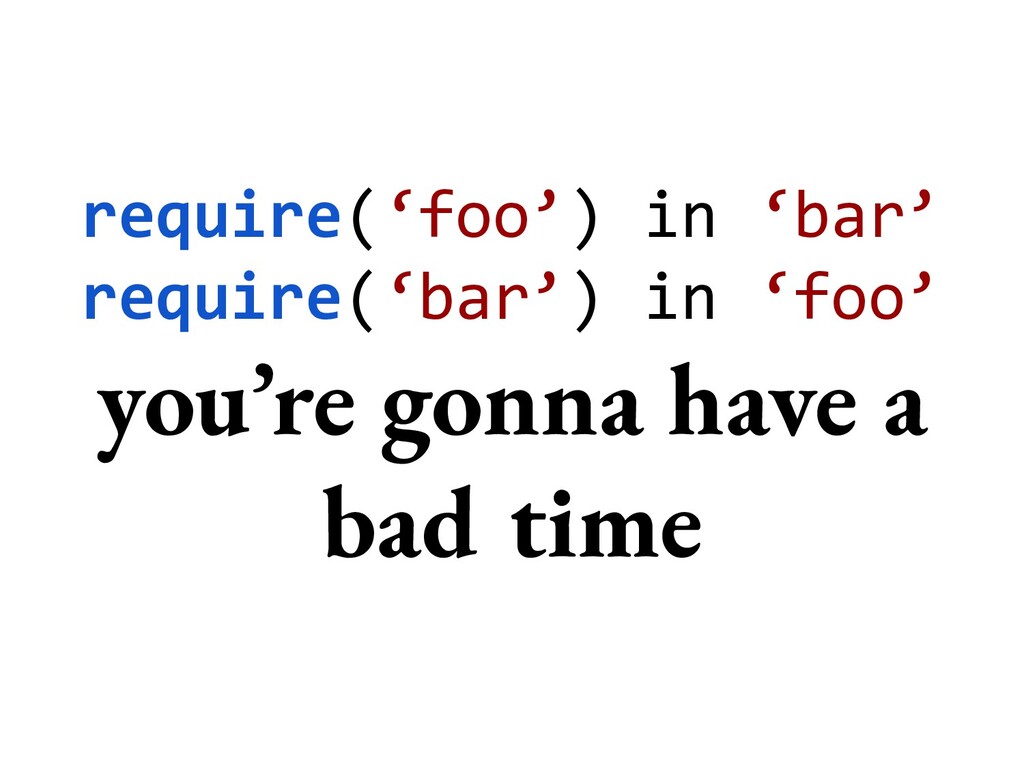
require(‘foo’) in ‘bar’ require(‘bar’) in ‘foo’ you’re gonna have a
bad time
Sometimes I wish I could just `rails c`
Sometimes I wish I could just `binding.pry`
Acceptence
Express.js is fantastic
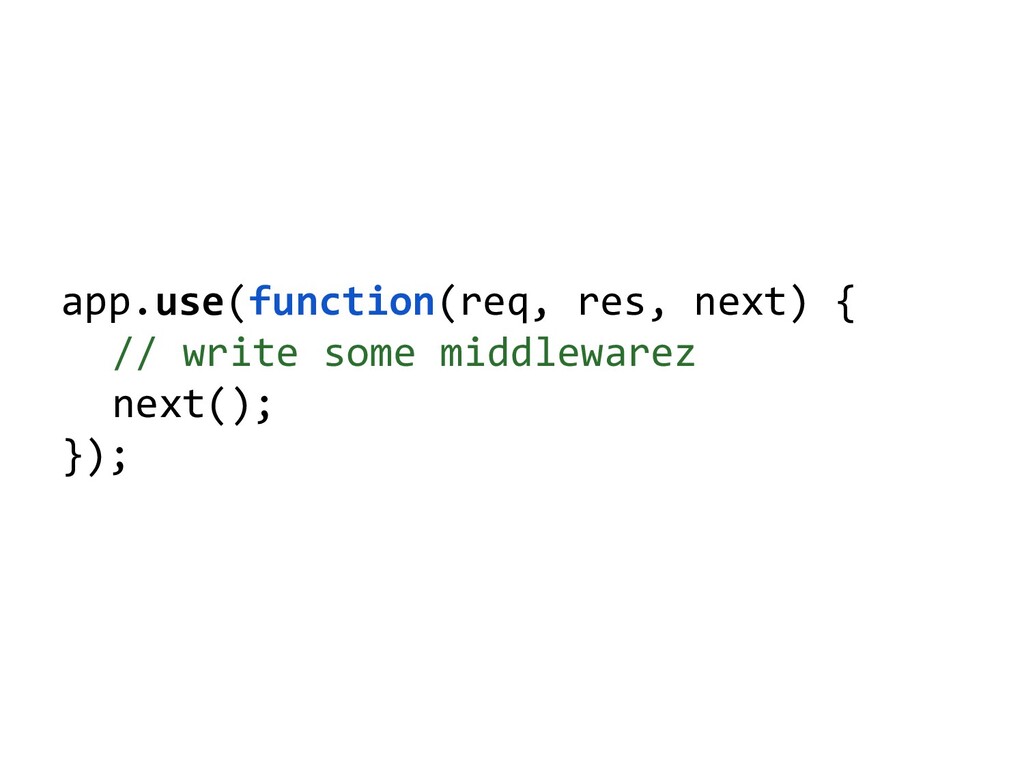
app.use(function(req, res, next) { // write some middlewarez next(); });
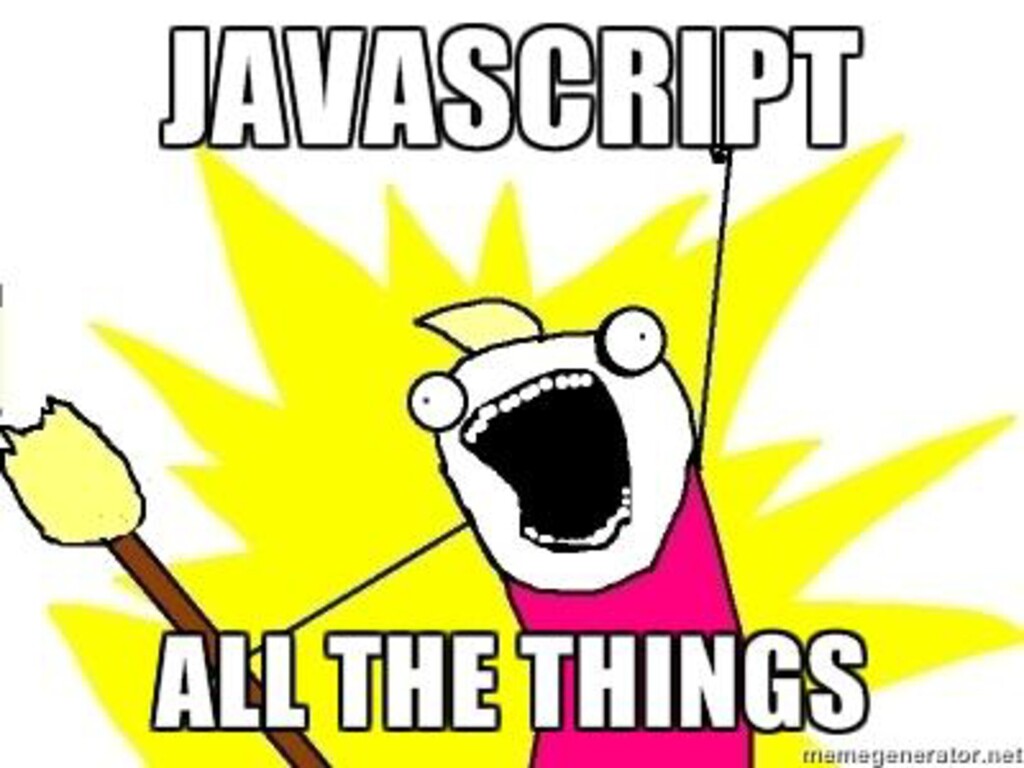
MIDDLEWARE ALL THE THINGS!
Authentication?
DB Connection?
Asset Pipeline?
`before` hook?
Middleware!
Node.js has come a long way
This ain’t yo mamma’s JavaScript
Walmart, PayPal, Ebay, Linkedin can’t be wrong, right?
Praised for its short development time
And IO performance (thanks to non-blocking)
ORMs and RDBMS support not quite there yet (IMO, don’t
quote me)
But huge NoSQL support (mongo, couch, etc)
Large, complex, enterprise-y software? maybe not
Microservices? Absolutely!
Thanks


 daninithepanini
 morizo_1984
 448jp
448jp
 irinanazarova
 riofujimon
 ken_tunc
 akkeylab
 palkan
 minodriven
 tomokon
 willnet
 po3rin
 naokihaba
 cassininazir
 chrislema
 kristinabergwall1
 codingconduct
 tmiket
 emna__ayadi
 michielstock
 honzajavorek
 lynnandtonic
 sonatard
 techseoconnect

























![$ gulp test ... TypeError: evaluating ‘z[fn]’ /MyBlog/models/user.coffee:1:1 ... /MyBlog/models/user.coffee](https://files.speakerdeck.com/presentations/a17dc6029a4a4be4985cee6ad7178240/slide_76.jpg)