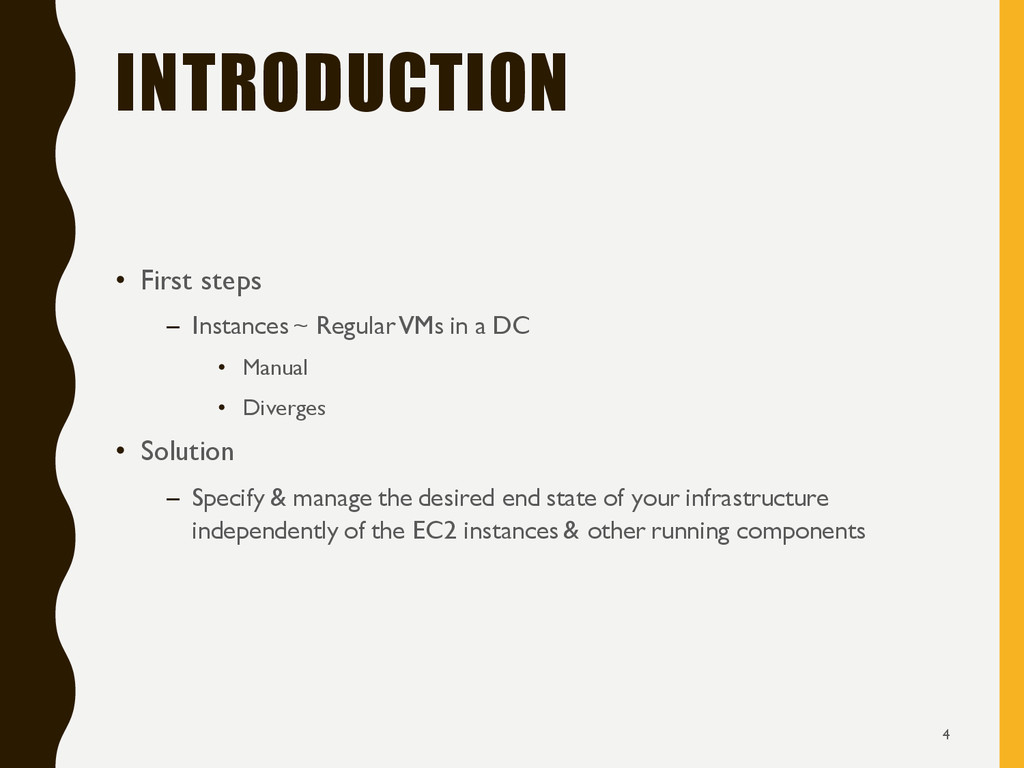
a DC • Manual • Diverges • Solution – Specify & manage the desired end state of your infrastructure independently of the EC2 instances & other running components 4
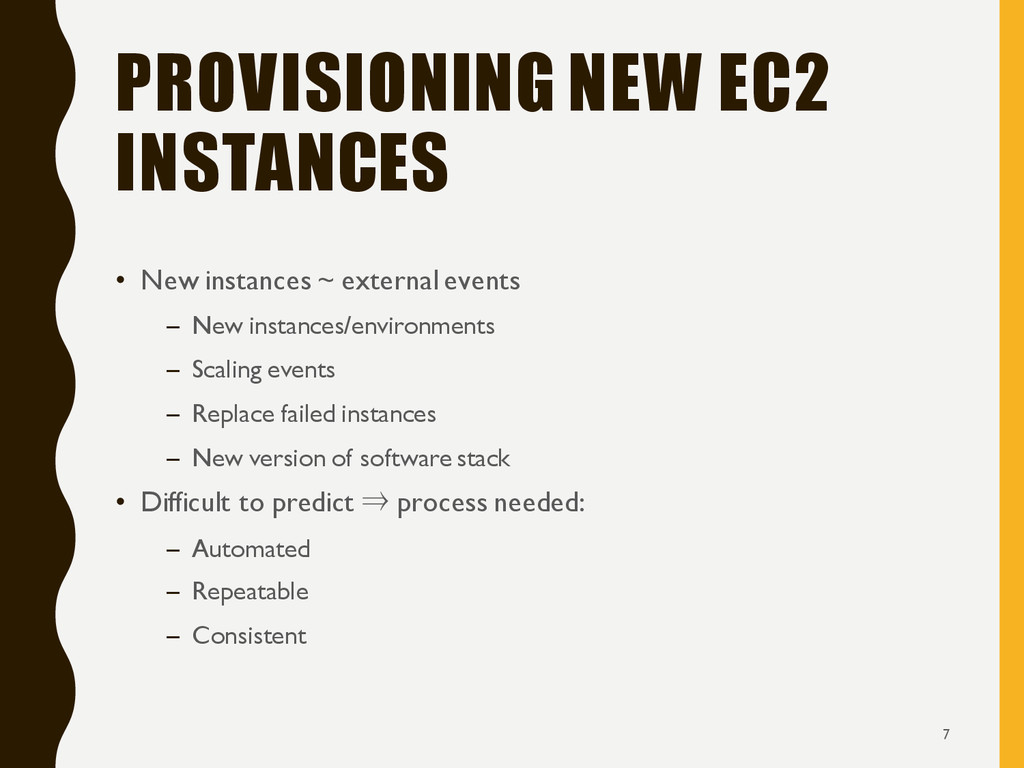
– New instances/environments – Scaling events – Replace failed instances – New version of software stack • Difficult to predict ⇒ process needed: – Automated – Repeatable – Consistent 7
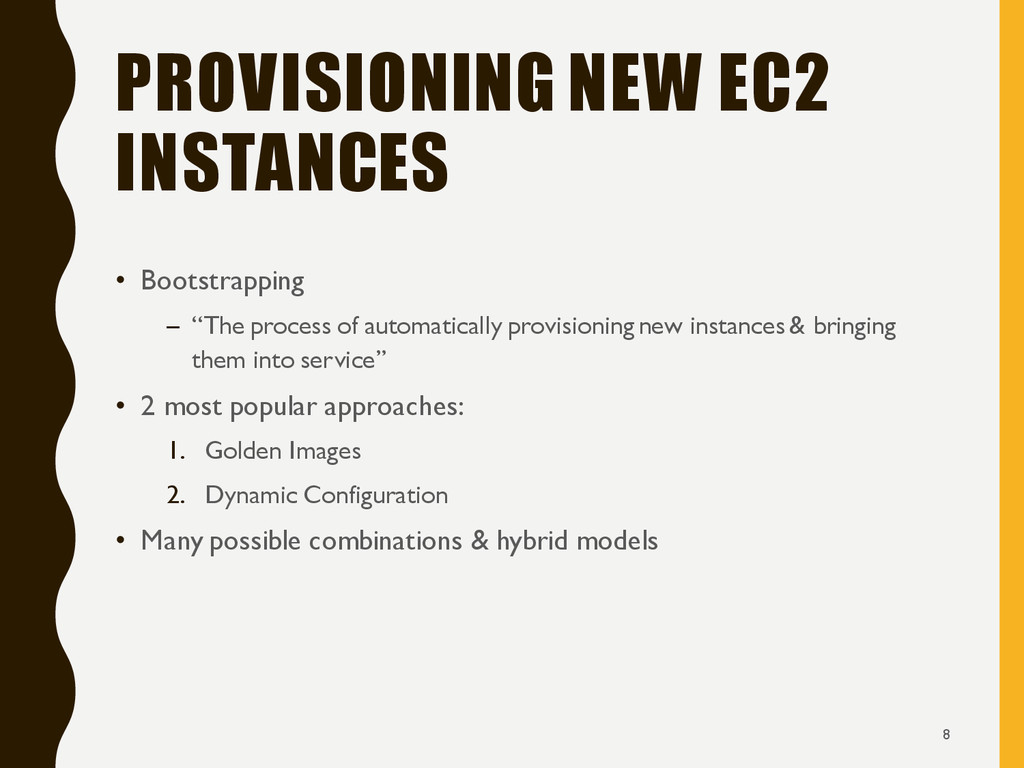
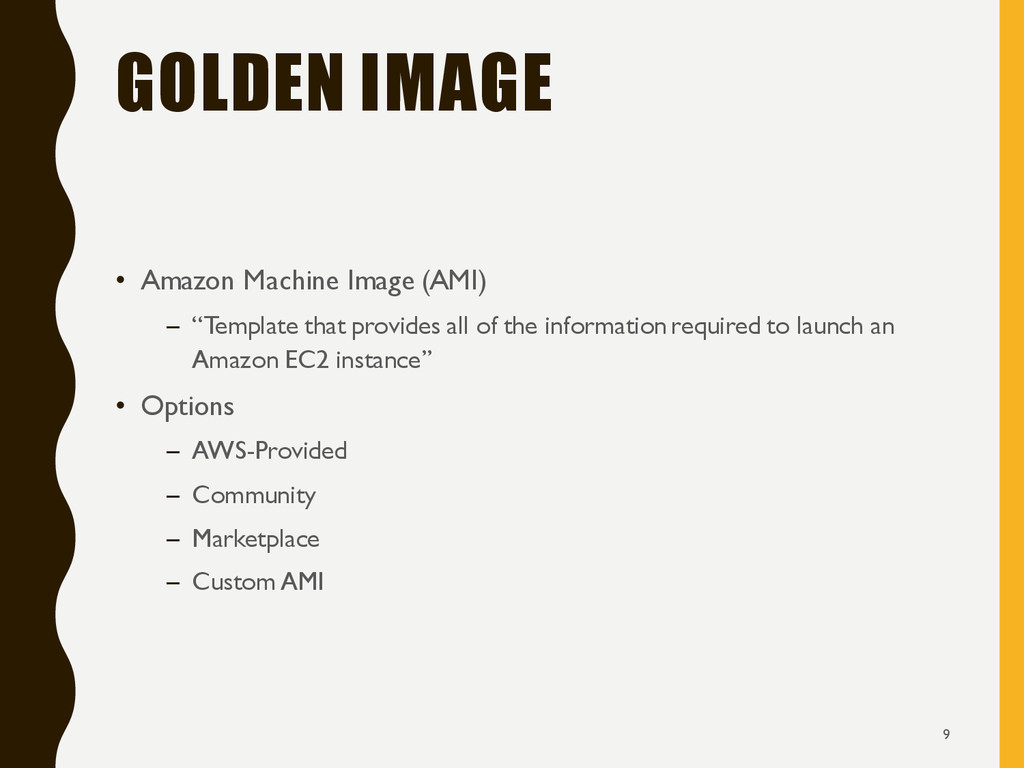
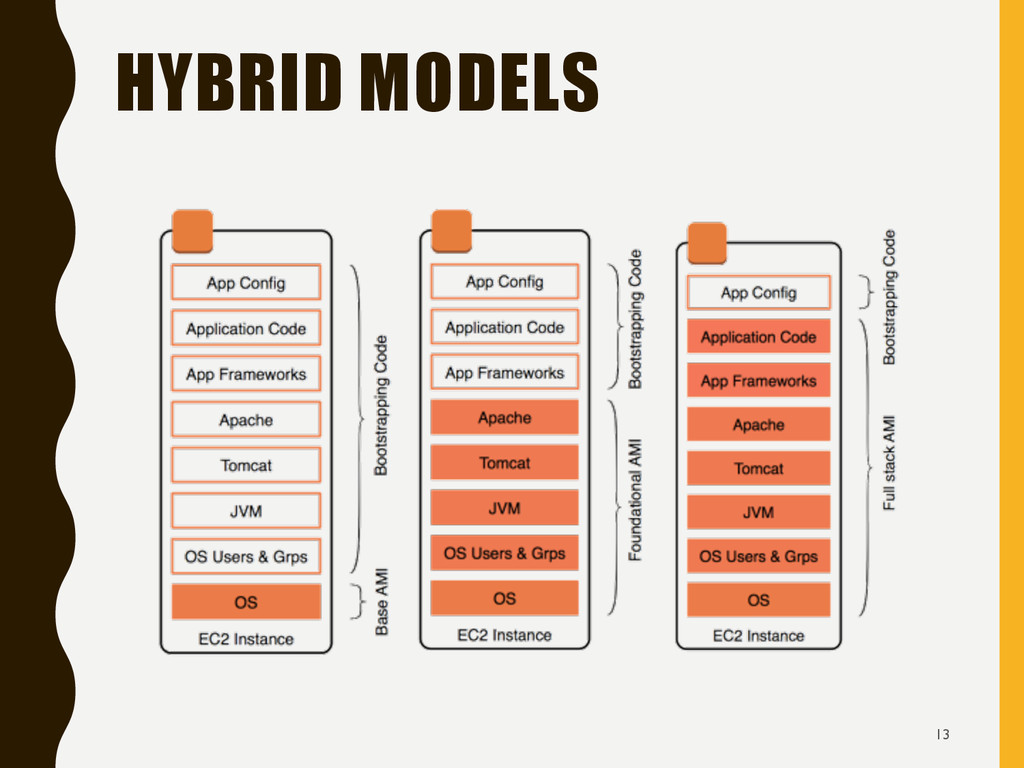
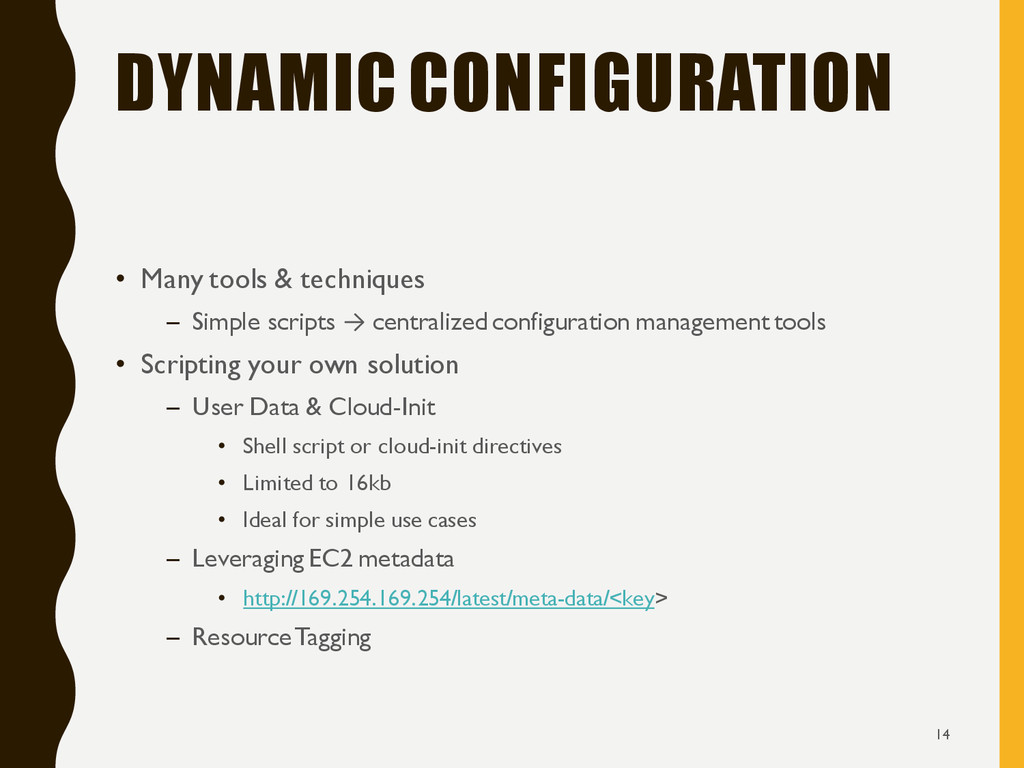
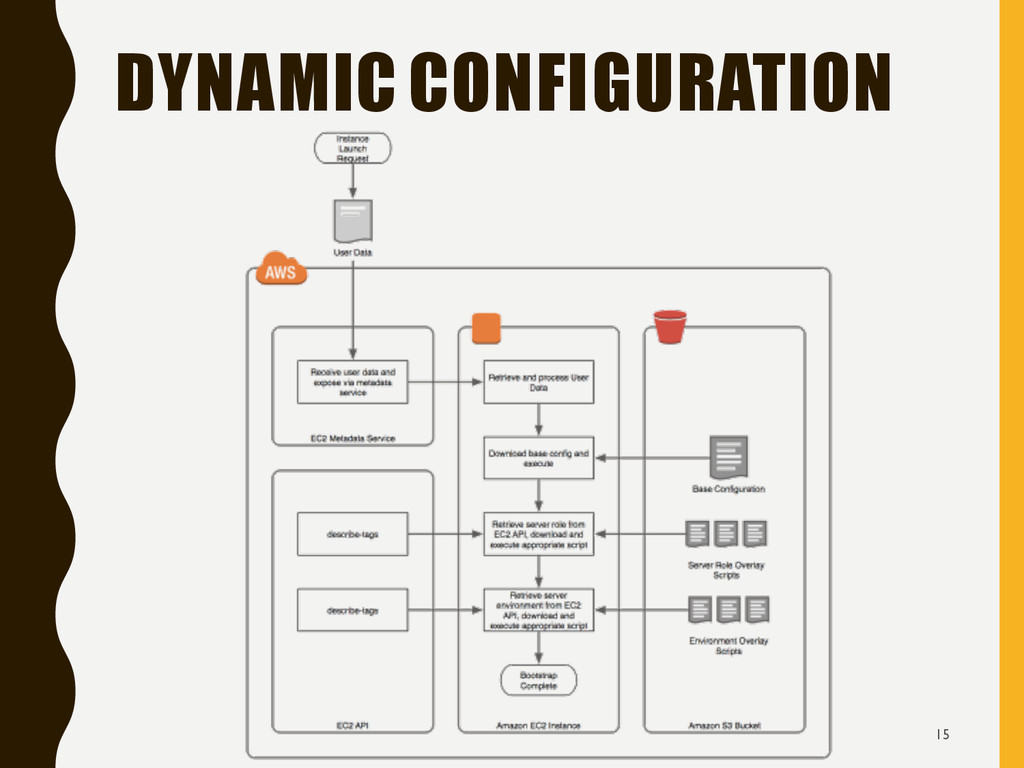
automatically provisioning new instances & bringing them into service” • 2 most popular approaches: 1. Golden Images 2. Dynamic Configuration • Many possible combinations & hybrid models 8
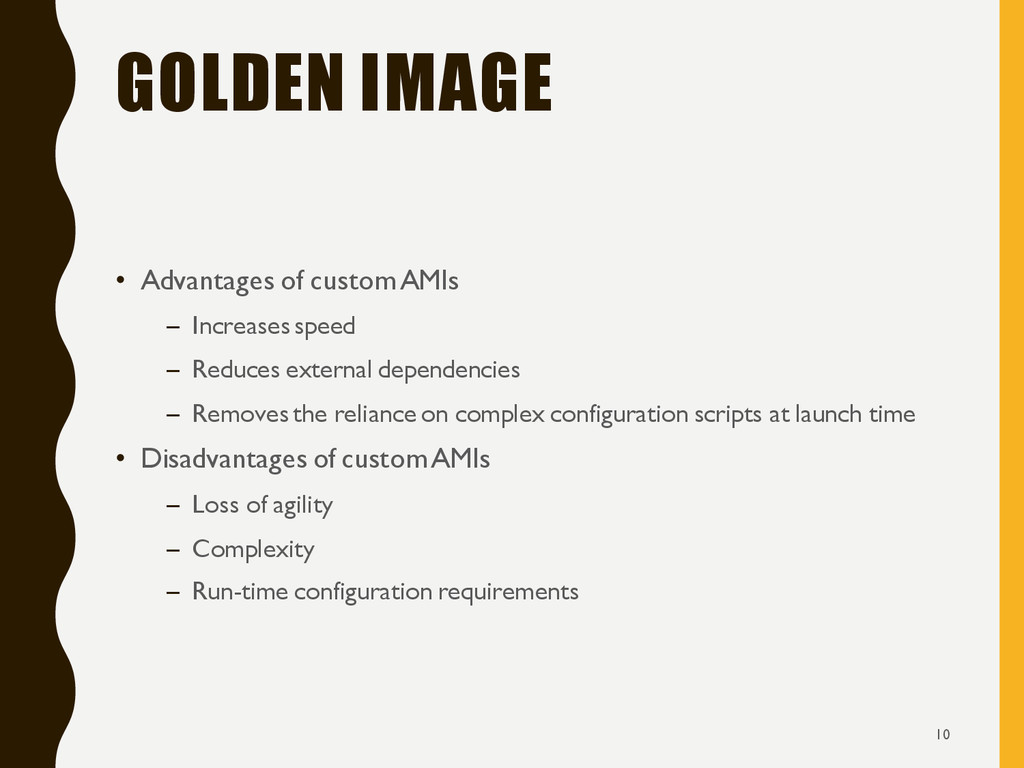
– Reduces external dependencies – Removes the reliance on complex configuration scripts at launch time • Disadvantages of custom AMIs – Loss of agility – Complexity – Run-time configuration requirements 10
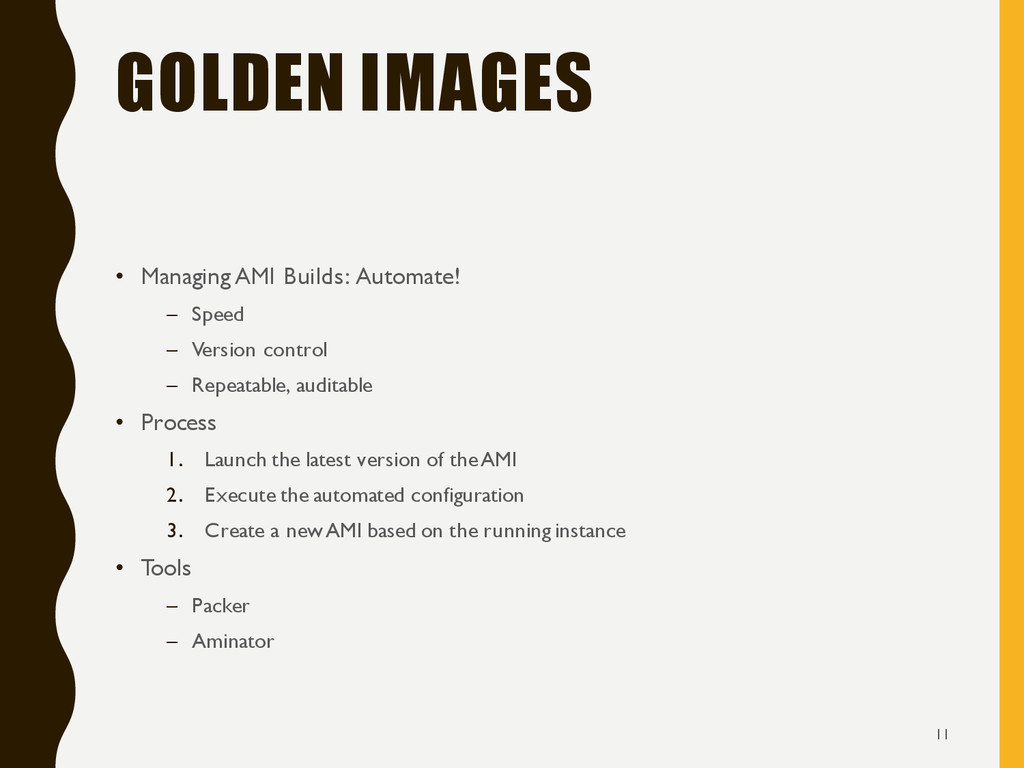
Version control – Repeatable, auditable • Process 1. Launch the latest version of the AMI 2. Execute the automated configuration 3. Create a new AMI based on the running instance • Tools – Packer – Aminator 11
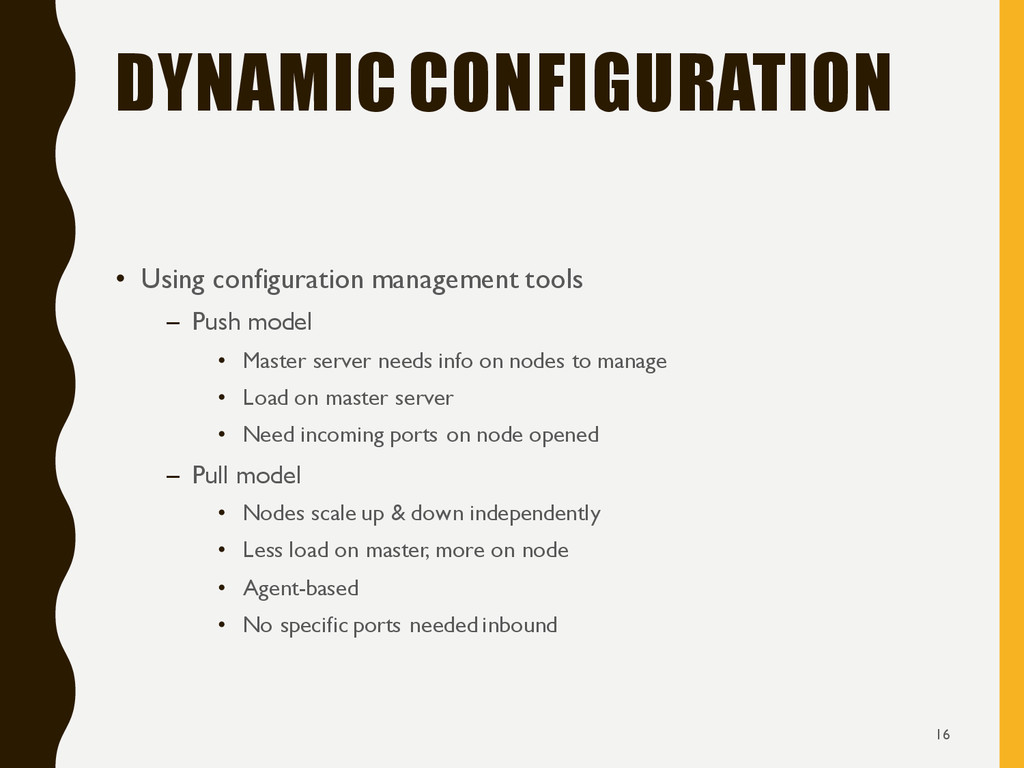
• Master server needs info on nodes to manage • Load on master server • Need incoming ports on node opened – Pull model • Nodes scale up & down independently • Less load on master, more on node • Agent-based • No specific ports needed inbound 16
Barr, Attila Narin, and JineshVaria • Managing Your AWS Infrastructure At Scale (Whitepaper) Shaun Pearce and Steven Bryen • ARC402 – Deployment Automation (reInvent 2014) Chris Munns 17


 davidmat
 mhrtech
 pfn
pfn
 sansantech
 raspython3
 camiha
 yuuuuuuu168
 bgpat
bgpat
 riyaamemiya
 gogutan
 tokuty
 watany
 tomoyanonymous
 destraynor
 427marketing
 chriscoyier
 stephaniewalter
 jmmastey
 eileencodes
 eitanlees
 yeseniaperezcruz
 emna__ayadi
 csswizardry