Angiosperms and Economic Botany Title- Convolvulaceae Family Presented To – Prof. Satya Narain Dr. Shweta Shekhar Dr. Geeta Devi Boris Presented By – Deepali Yadav M.Sc. 2nd Sem.
B & H Cronquist Takhtajan Dahlgren Thorne APG II Division Class Subclass Series Order Dicotyledons Gamopetalae Bicarpellatae Polemoniales Magnoliophyta Magnoliophyta Magnoliopsida Asteridae Solanales Magnoliopsida Lamiidae Solananae Convolvulales Magnoliopsida Magnoliidae Solananae Solanales Magnoliopsida Lamiidae Solananae Solanales Euasterids I Solanales Diagnostic Characters – Usually climbing or twining vines with milky sap , leaves alternate , exstipulate , flowers axillary and pentamerous , corolla tubular , infundibuliform , stamens 5 , epipetalous , gynoecium bicarpellary , syncarpous , superior , axile placentation , generally two ovules per loculus , fruit capsule or nut.
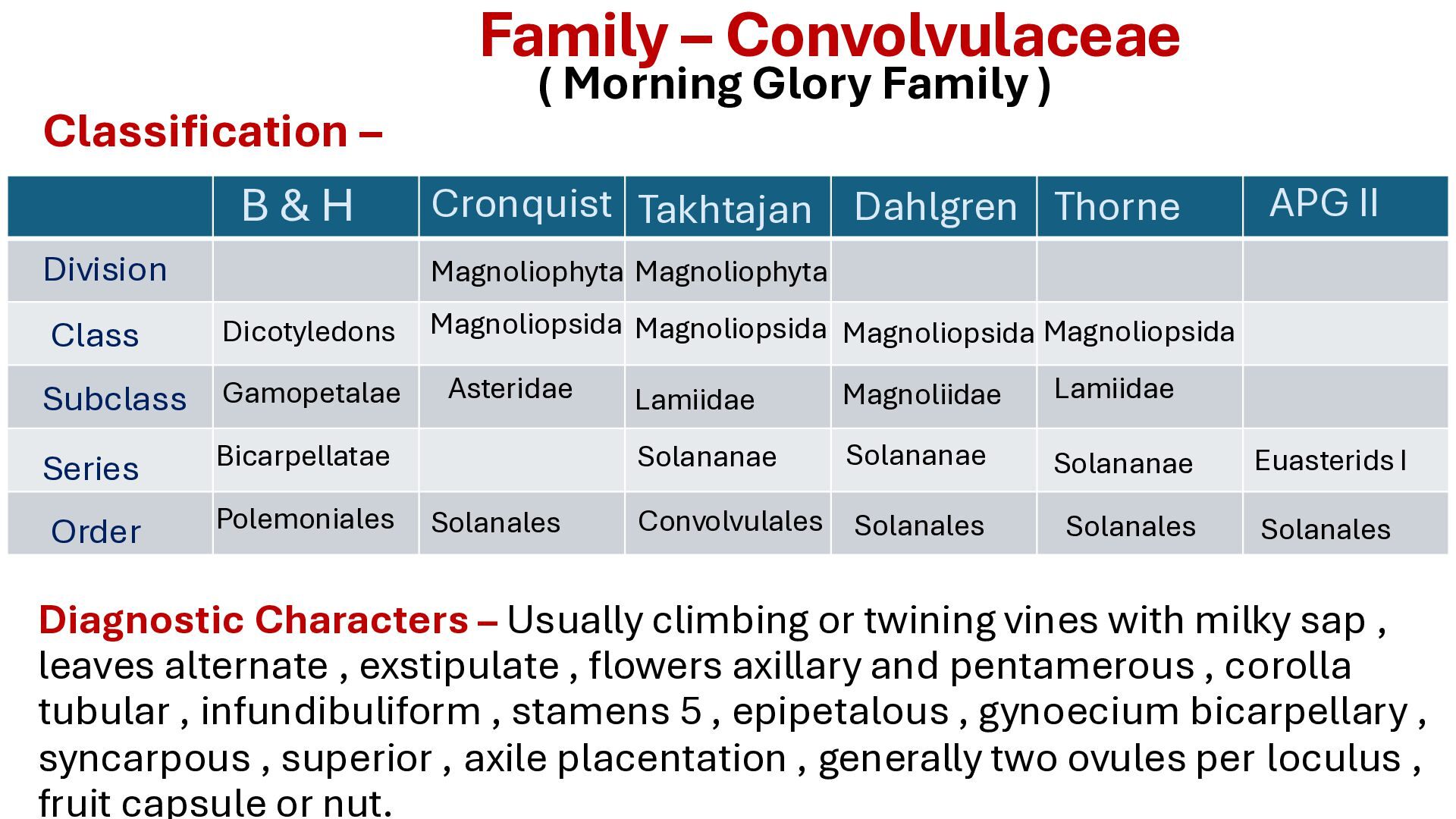
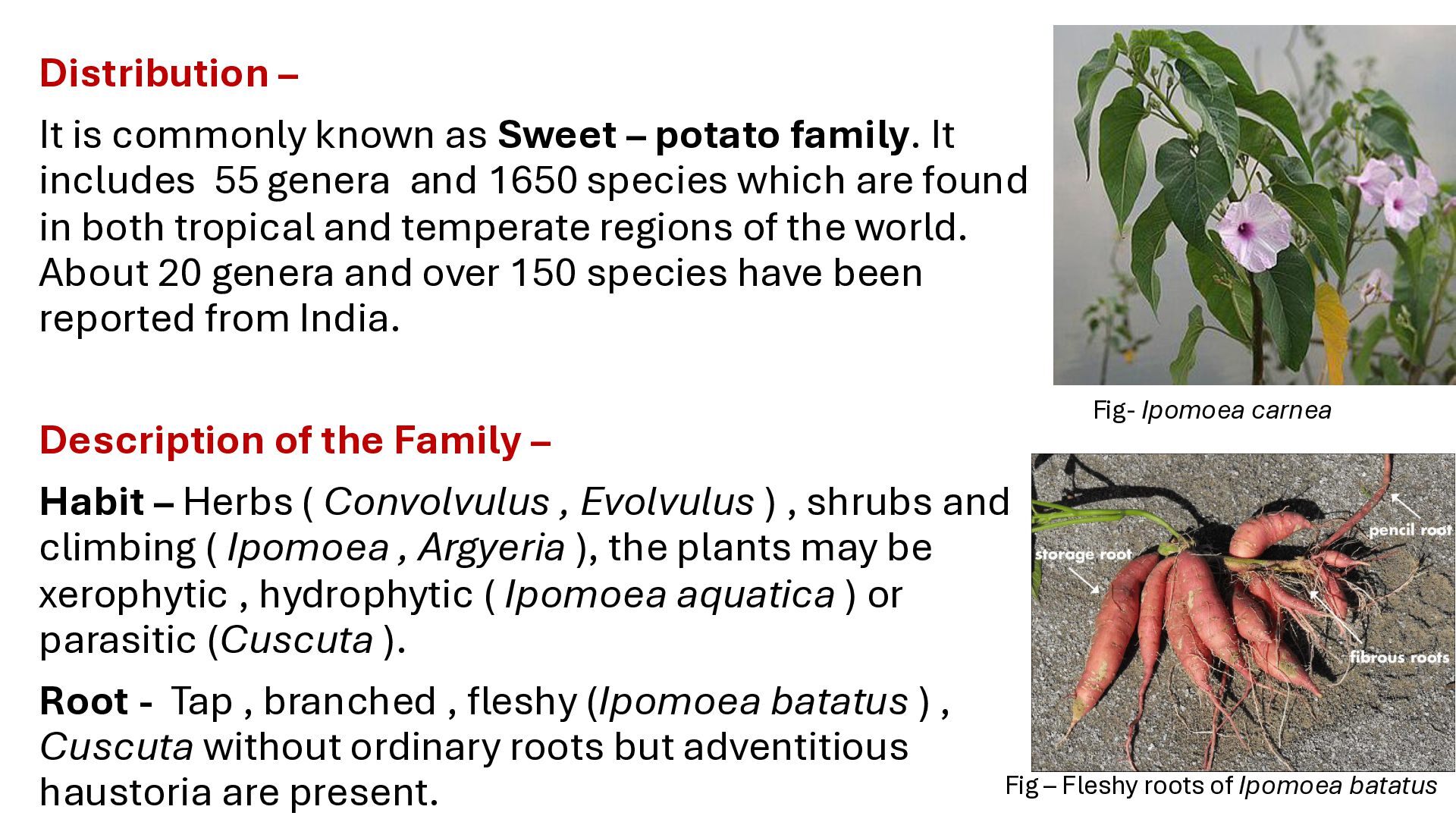
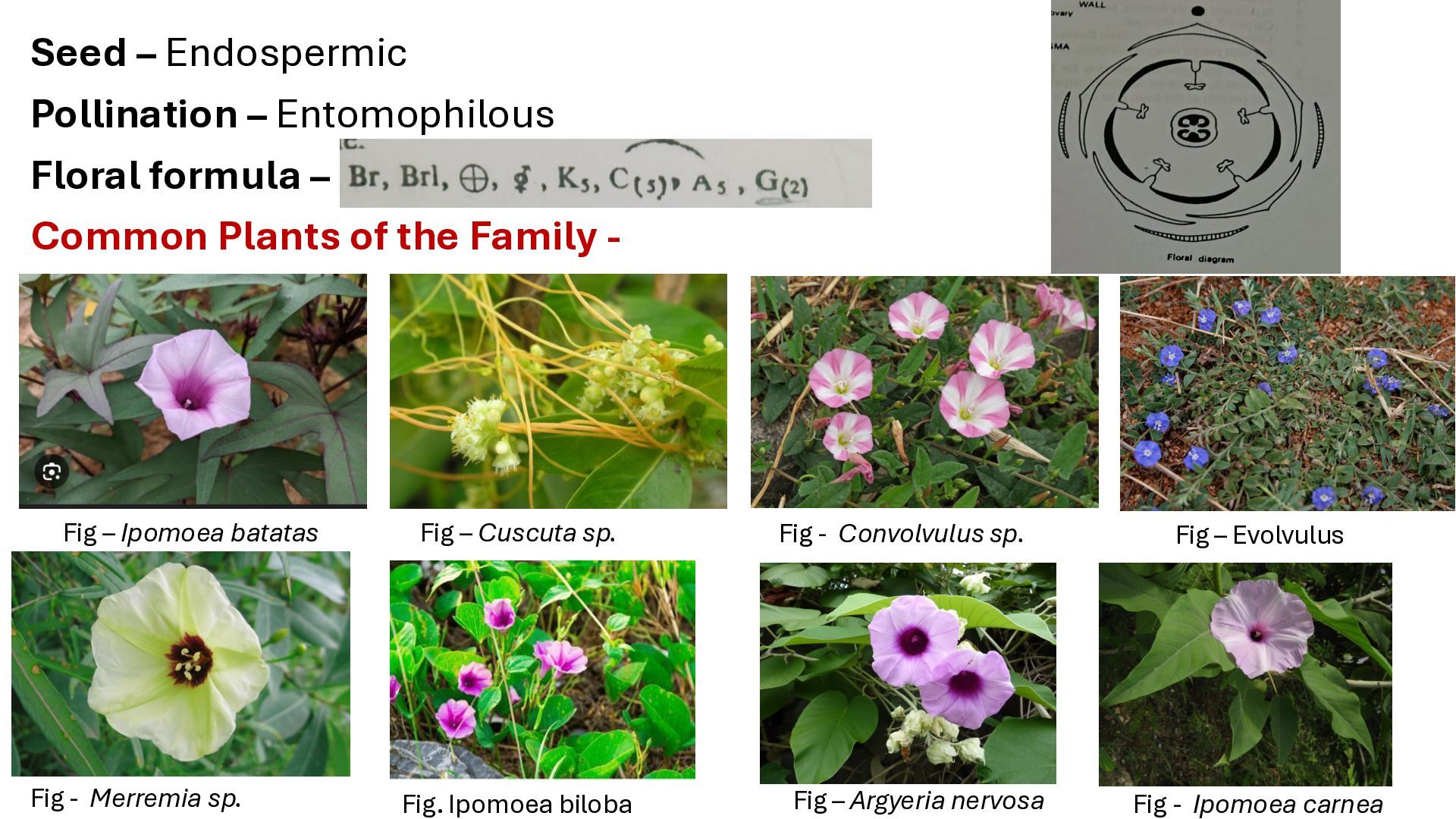
family. It includes 55 genera and 1650 species which are found in both tropical and temperate regions of the world. About 20 genera and over 150 species have been reported from India. Description of the Family – Habit – Herbs ( Convolvulus , Evolvulus ) , shrubs and climbing ( Ipomoea , Argyeria ), the plants may be xerophytic , hydrophytic ( Ipomoea aquatica ) or parasitic (Cuscuta ). Root - Tap , branched , fleshy (Ipomoea batatus ) , Cuscuta without ordinary roots but adventitious haustoria are present. Fig – Fleshy roots of Ipomoea batatus Fig- Ipomoea carnea
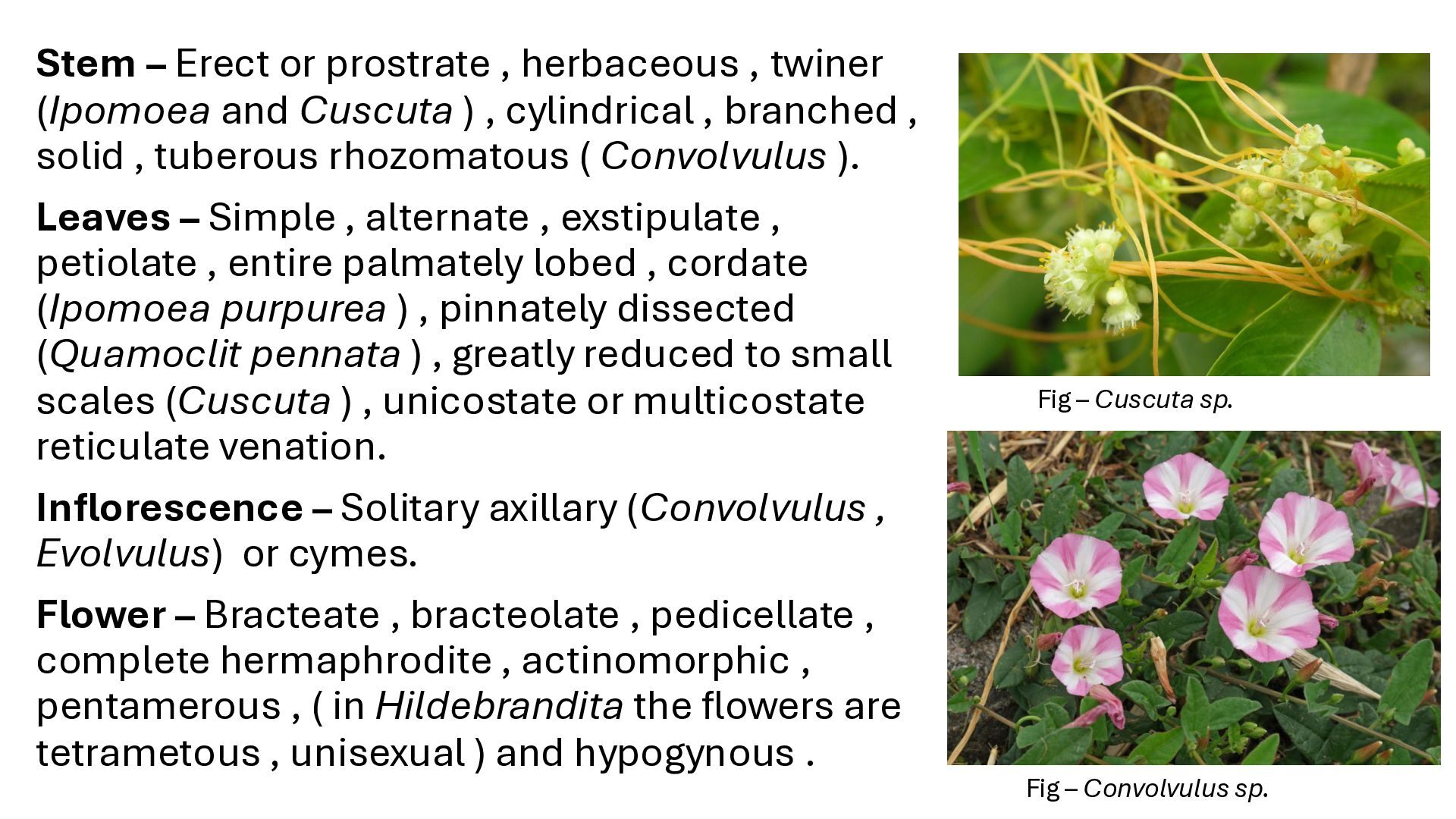
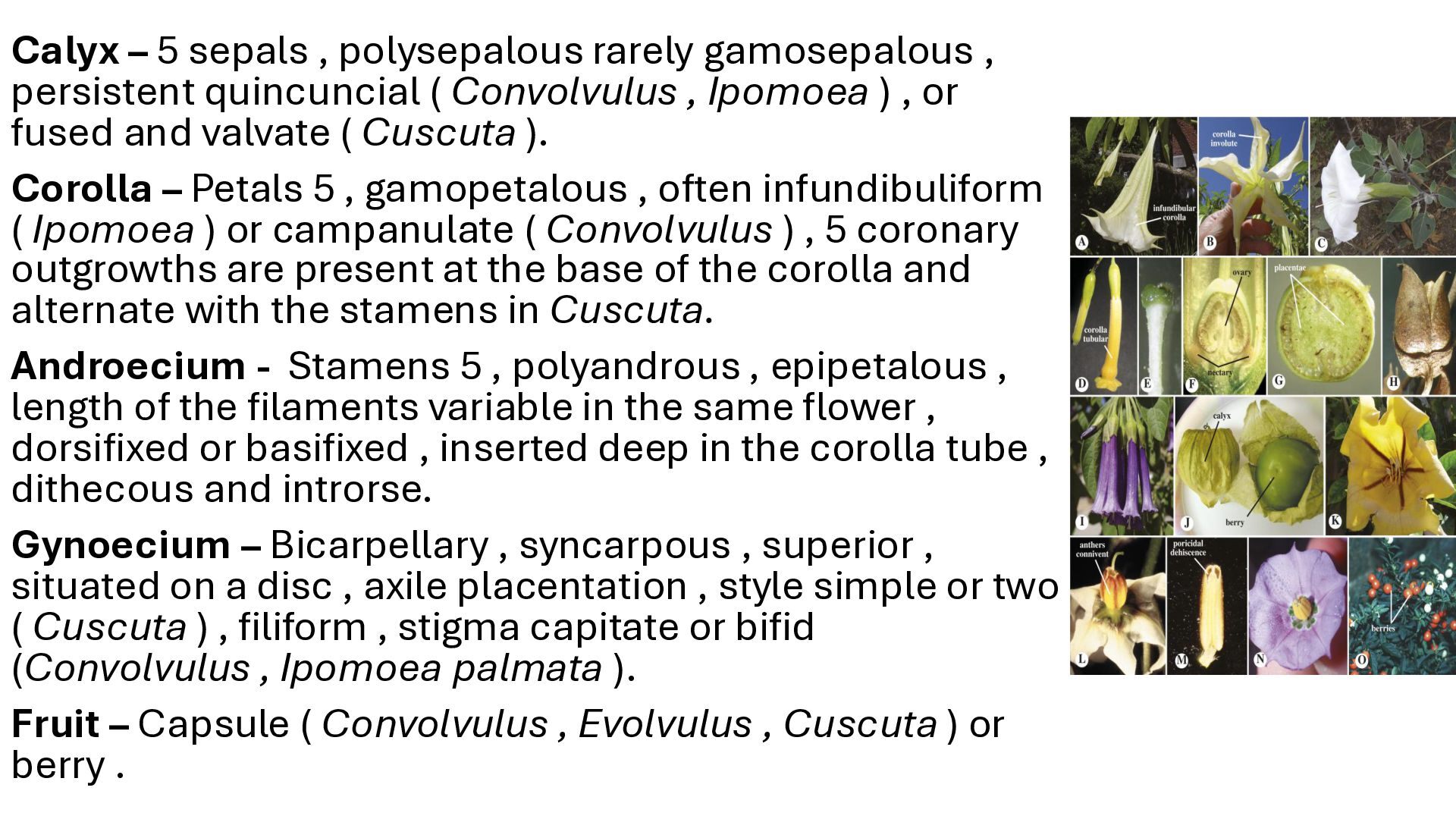
quincuncial ( Convolvulus , Ipomoea ) , or fused and valvate ( Cuscuta ). Corolla – Petals 5 , gamopetalous , often infundibuliform ( Ipomoea ) or campanulate ( Convolvulus ) , 5 coronary outgrowths are present at the base of the corolla and alternate with the stamens in Cuscuta. Androecium - Stamens 5 , polyandrous , epipetalous , length of the filaments variable in the same flower , dorsifixed or basifixed , inserted deep in the corolla tube , dithecous and introrse. Gynoecium – Bicarpellary , syncarpous , superior , situated on a disc , axile placentation , style simple or two ( Cuscuta ) , filiform , stigma capitate or bifid (Convolvulus , Ipomoea palmata ). Fruit – Capsule ( Convolvulus , Evolvulus , Cuscuta ) or berry .
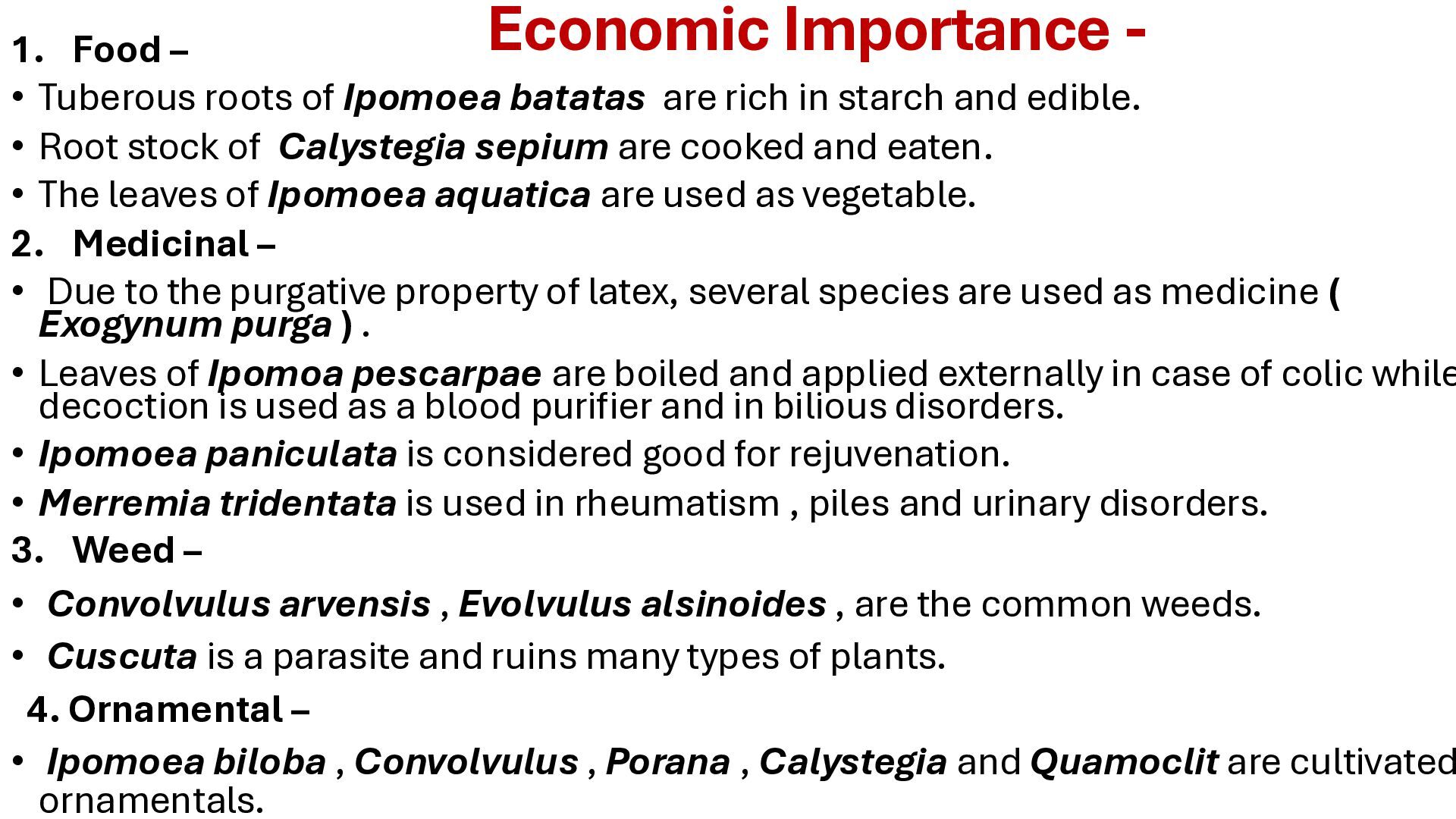
Ipomoea batatas are rich in starch and edible. • Root stock of Calystegia sepium are cooked and eaten. • The leaves of Ipomoea aquatica are used as vegetable. 2. Medicinal – • Due to the purgative property of latex, several species are used as medicine ( Exogynum purga ) . • Leaves of Ipomoa pescarpae are boiled and applied externally in case of colic while decoction is used as a blood purifier and in bilious disorders. • Ipomoea paniculata is considered good for rejuvenation. • Merremia tridentata is used in rheumatism , piles and urinary disorders. 3. Weed – • Convolvulus arvensis , Evolvulus alsinoides , are the common weeds. • Cuscuta is a parasite and ruins many types of plants. 4. Ornamental – • Ipomoea biloba , Convolvulus , Porana , Calystegia and Quamoclit are cultivated ornamentals.


 akiraasano
 eller86
 signer
 moriyuya
 ainischool
 juanmartin2026
 mariooc
 uchi8977
 yoshimura_datam
 addyosmani
 paigeccino
 lara
 csswizardry
 inesmontani
 chriscoyier
 aleyda
 dugsong
 portentint
 keathley
 tamaranovitovic
 akihiro_kokubo