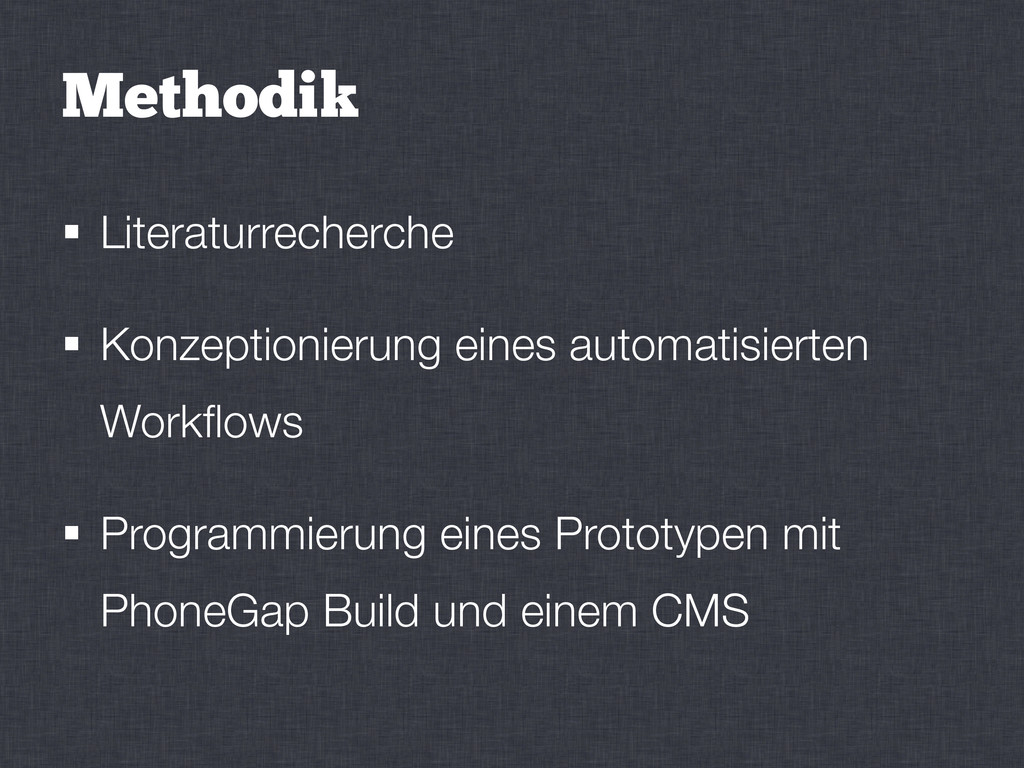
aus einem CMS heraus § Vergleich zu nativen und Web-Apps § Erstellung eines Prototyps unter Verwendung von Web-Standards und vorhandenen Frameworks sowie CMS
Wachstum der „App Economy“ § Entwicklung nativer Apps ist zeit- und kostenintensiv § Reine Web-Apps nicht sichtbar in Stores und praktisch ohne Monetarisierungsmöglichkeiten
Mobile Devices I. Smartphones II. Tablets b. Mobile Plattformen I. iOS II. Android III. Weitere Plattformen IV. Plattformverbreitung c. Apps für Mobile Devices I. Native Apps II. Web-Apps III. Hybride Apps
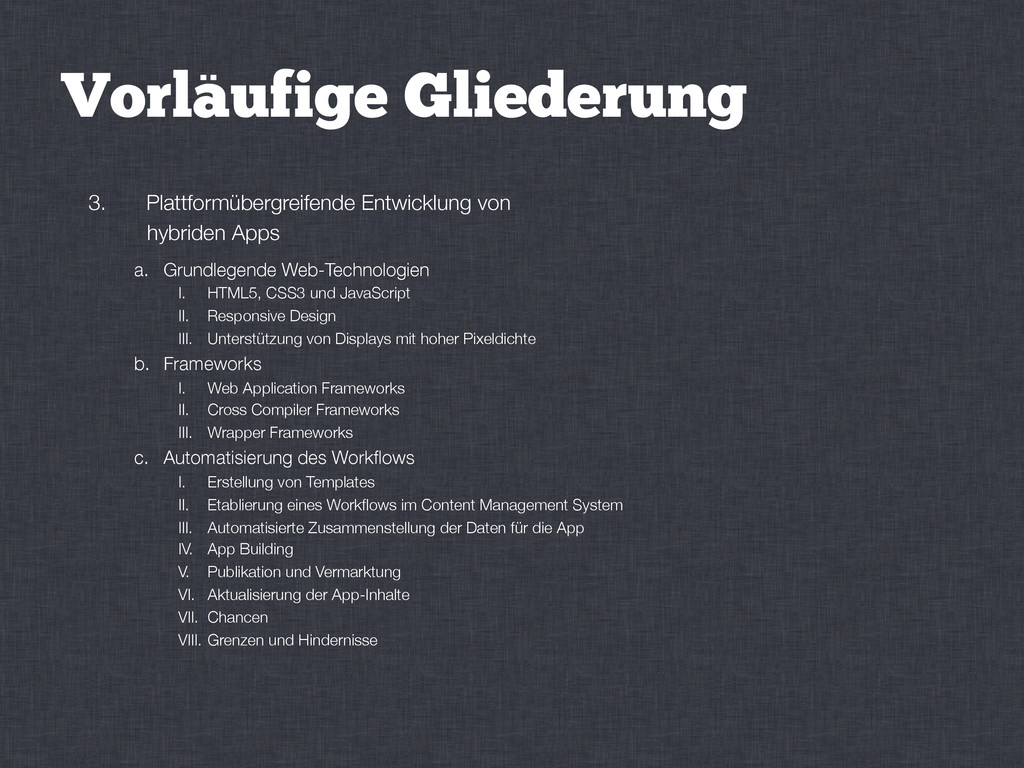
Grundlegende Web-Technologien I. HTML5, CSS3 und JavaScript II. Responsive Design III. Unterstützung von Displays mit hoher Pixeldichte b. Frameworks I. Web Application Frameworks II. Cross Compiler Frameworks III. Wrapper Frameworks c. Automatisierung des Workflows I. Erstellung von Templates II. Etablierung eines Workflows im Content Management System III. Automatisierte Zusammenstellung der Daten für die App IV. App Building V. Publikation und Vermarktung VI. Aktualisierung der App-Inhalte VII. Chancen VIII. Grenzen und Hindernisse
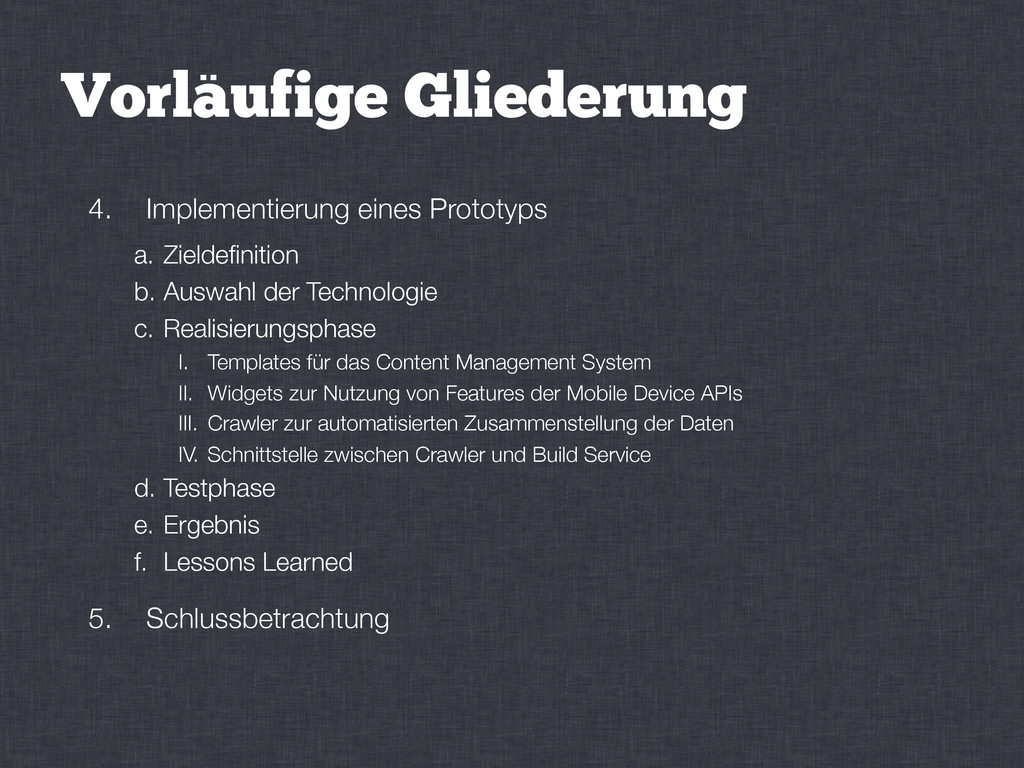
der Technologie c. Realisierungsphase I. Templates für das Content Management System II. Widgets zur Nutzung von Features der Mobile Device APIs III. Crawler zur automatisierten Zusammenstellung der Daten IV. Schnittstelle zwischen Crawler und Build Service d. Testphase e. Ergebnis f. Lessons Learned 5. Schlussbetrachtung
Thesis! Finale Tests und Bugfixing des Prototyps! KW 47 bis 52 2012! Schreiben der Thesis! Erstellung & Dokumentation des Prototyps! KW 45/46 2012! Infrastrukturaufbau für den Prototyp! KW 43 bis 46 2012! Literaturrecherche! Technologieauswahl! 24.10.2012! Start!


 derteaser
 falcon8823
 y0hgi
 gonta
 yukiny
 yuta_onishi_97
 marcoroth
 iwatsukayura
 takai
 kishida
 utakaha
 rshindo
 ryu1013
 inesmontani
 frankvandijk
 mayunak
 nikkihalliwell
 tammyeverts
 lynnandtonic
 mlcsv
 pedronauck
 baasie
 eileencodes
 greggifford
 palkan