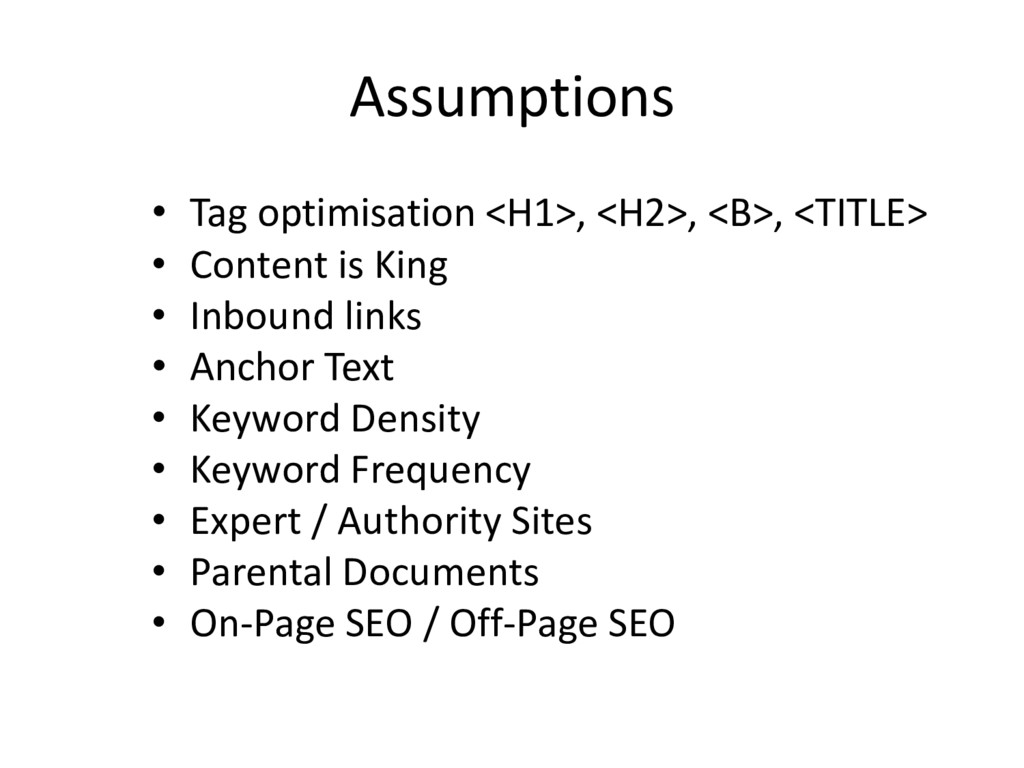
is King • Inbound links • Anchor Text • Keyword Density • Keyword Frequency • Expert / Authority Sites • Parental Documents • On-Page SEO / Off-Page SEO
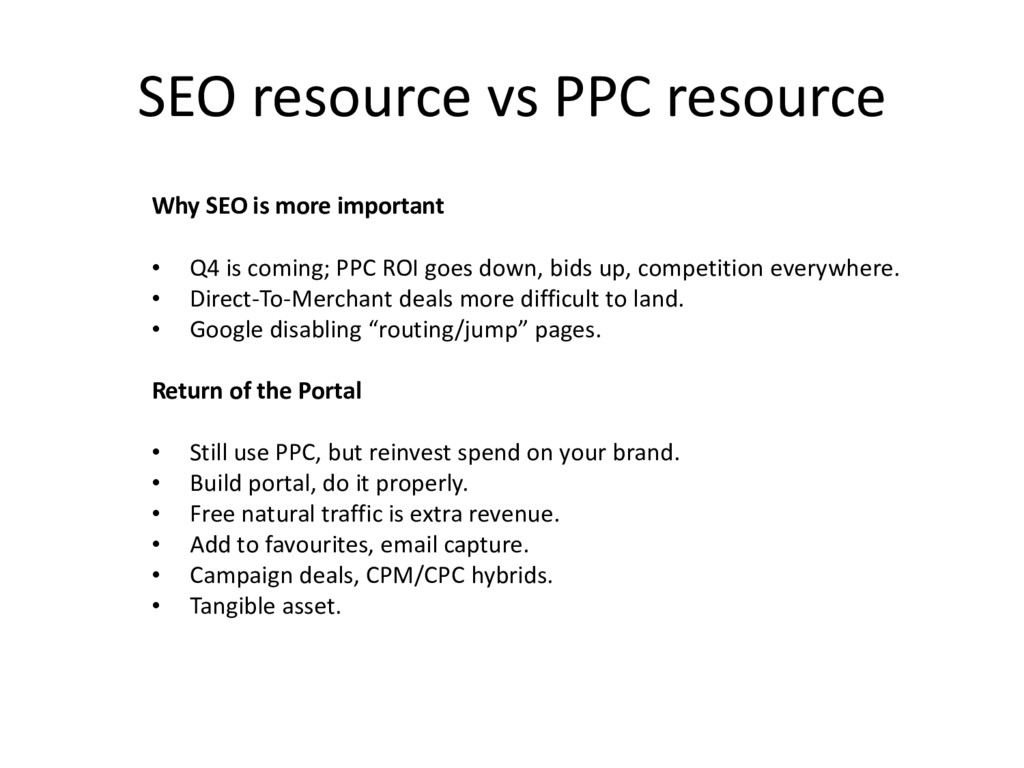
• Q4 is coming; PPC ROI goes down, bids up, competition everywhere. • Direct-To-Merchant deals more difficult to land. • Google disabling “routing/jump” pages. Return of the Portal • Still use PPC, but reinvest spend on your brand. • Build portal, do it properly. • Free natural traffic is extra revenue. • Add to favourites, email capture. • Campaign deals, CPM/CPC hybrids. • Tangible asset.
is the MOST IMPORTANT. Especially the first 150-200 characters. • Keyword Phrases (used by your target user/market) presented consistently and logically throughout body text will boost rankings. • When possible, Keyword Phrases should be used at the start, or near to the start of paragraphs. • Ideal target is 200 – 300 words per page.
a stronger weight with regards to Googles ranking – BUT – Google will try to match keywords and phrases in the Title tag with links and text in the page. • Title tag should be varied to reflect each page. First 60 characters are the most important, title tag should be no longer than 15 words. • Keyword density of around 2-7% is recommended (won’t trip filters). KD = “Keyword Count” divided by “Total Words” x “100”. • Keyword frequency (repetition) of around 3-7 times per 100 words is recommended. • Keyword prominence – words at the beginning of a page, paragraph, header are assigned a greater value than those at middle or end. • Keyword proximity – the distance between 2 related terms, the shorter the difference the better the page will rank for that phrase.
your currency on the web and are your net worth. • Not all links are equal, a reciprocated PR4 guest book link is not the same as an on topic PR4 link from an authority site. • Focusing on one aspect of a link (PR, anchor text, placement) neglects the understanding each link can have on your rankings.
different qualities, weightings and attributes. • The weightings change making links worth more or less each update. • If you drop in rankings you may not have been penalised, just have less of the “in-currency”. • Important as you need to know what links to go after as they right links can take a long time.
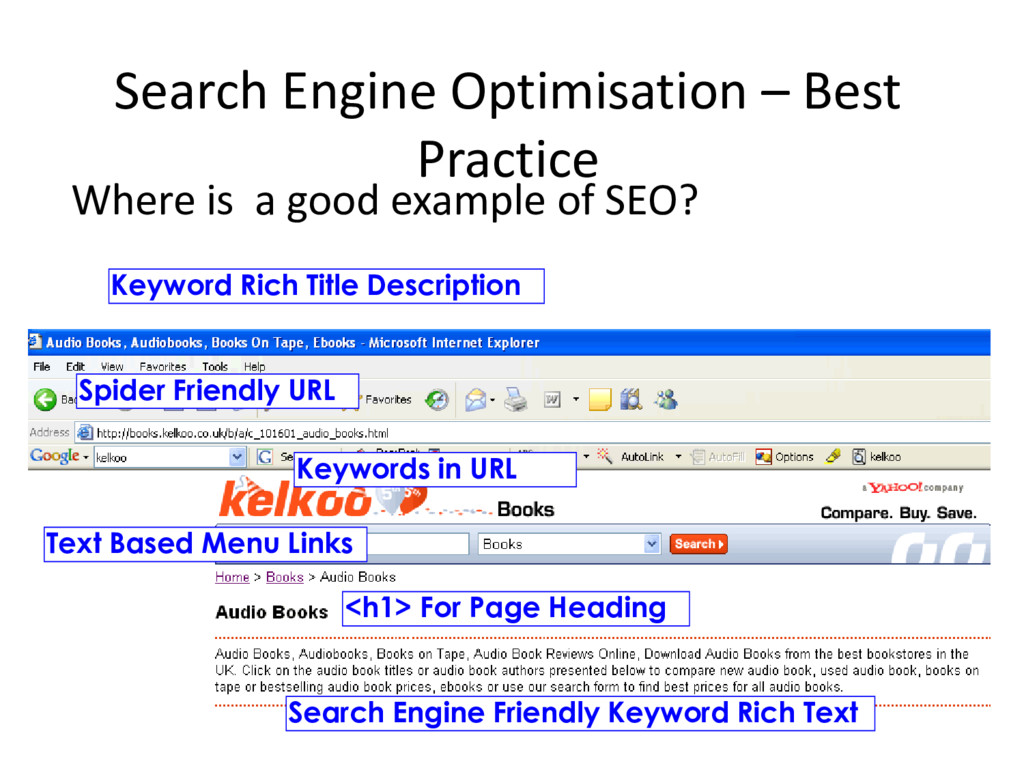
example of SEO? Keyword Rich Title Description Spider Friendly URL Keywords in URL <h1> For Page Heading Search Engine Friendly Keyword Rich Text Text Based Menu Links
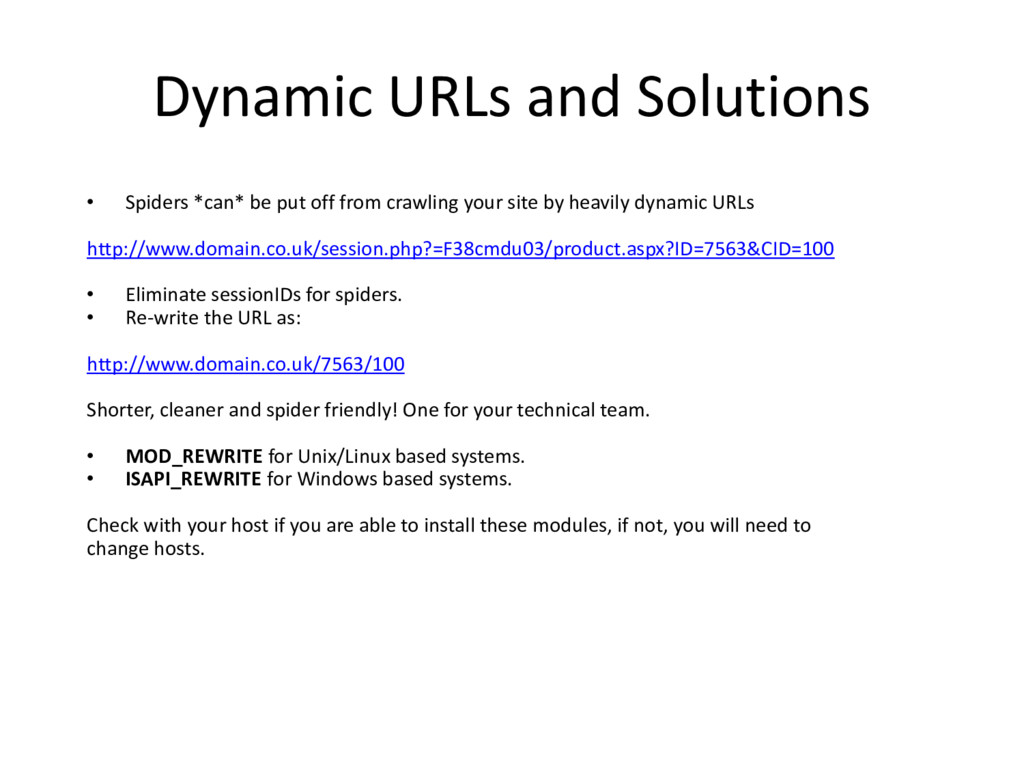
from crawling your site by heavily dynamic URLs http://www.domain.co.uk/session.php?=F38cmdu03/product.aspx?ID=7563&CID=100 • Eliminate sessionIDs for spiders. • Re-write the URL as: http://www.domain.co.uk/7563/100 Shorter, cleaner and spider friendly! One for your technical team. • MOD_REWRITE for Unix/Linux based systems. • ISAPI_REWRITE for Windows based systems. Check with your host if you are able to install these modules, if not, you will need to change hosts.
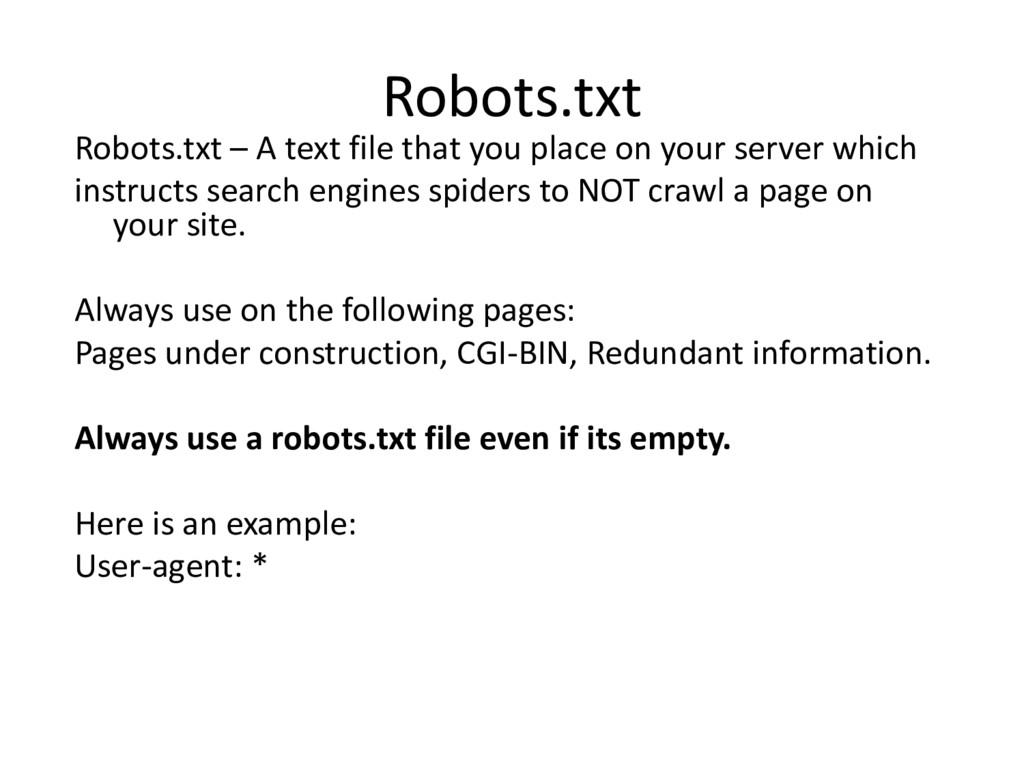
your server which instructs search engines spiders to NOT crawl a page on your site. Always use on the following pages: Pages under construction, CGI-BIN, Redundant information. Always use a robots.txt file even if its empty. Here is an example: User-agent: *


 takuroabe
 shuta13
 tomokusaba
 daidaidai
 ezaki
 mohab1
 endonanana
 masakiokuda
 kworkdev
 riyaamemiya
 techtekt
 takahashim
 lcolladotor
 stephenakadiri
 bkeepers
 axbom
 soysaucechin
 hannesfritz
 aleyda
 kneath
 tammyeverts
 skipperchong
 codingconduct
 cromwellryan