Share
Embed
Securing High-Risk Django Applications
Lessons from the Payment Domain
Dmytro Khmelenko
November 08, 2026
Transcript
62 slides
-
PyConES 2026 · Barcelona Dmytro Khmelenko · Platform Software Engineer,
Payments Tech Lead -
PyConES 2026 · Barcelona Dmytro Khmelenko · Platform Software Engineer,
Payments Tech Lead -
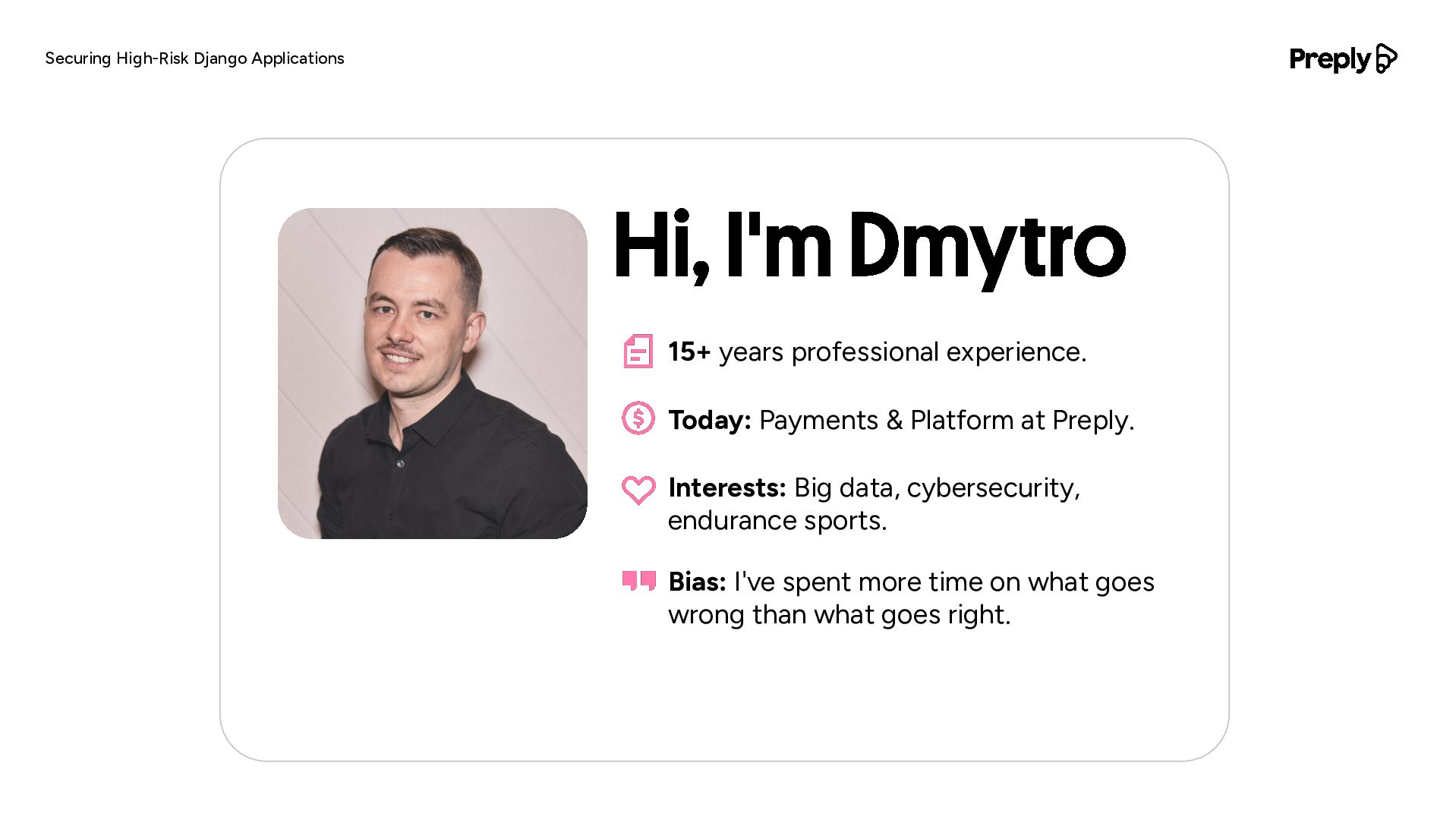
Securing High-Risk Django Applications 15+ years professional experience. Today: Payments
& Platform at Preply. Interests: Big data, cybersecurity, endurance sports. Bias: I've spent more time on what goes wrong than what goes right. -
Securing High-Risk Django Applications We are building a human-led, AI-enabled
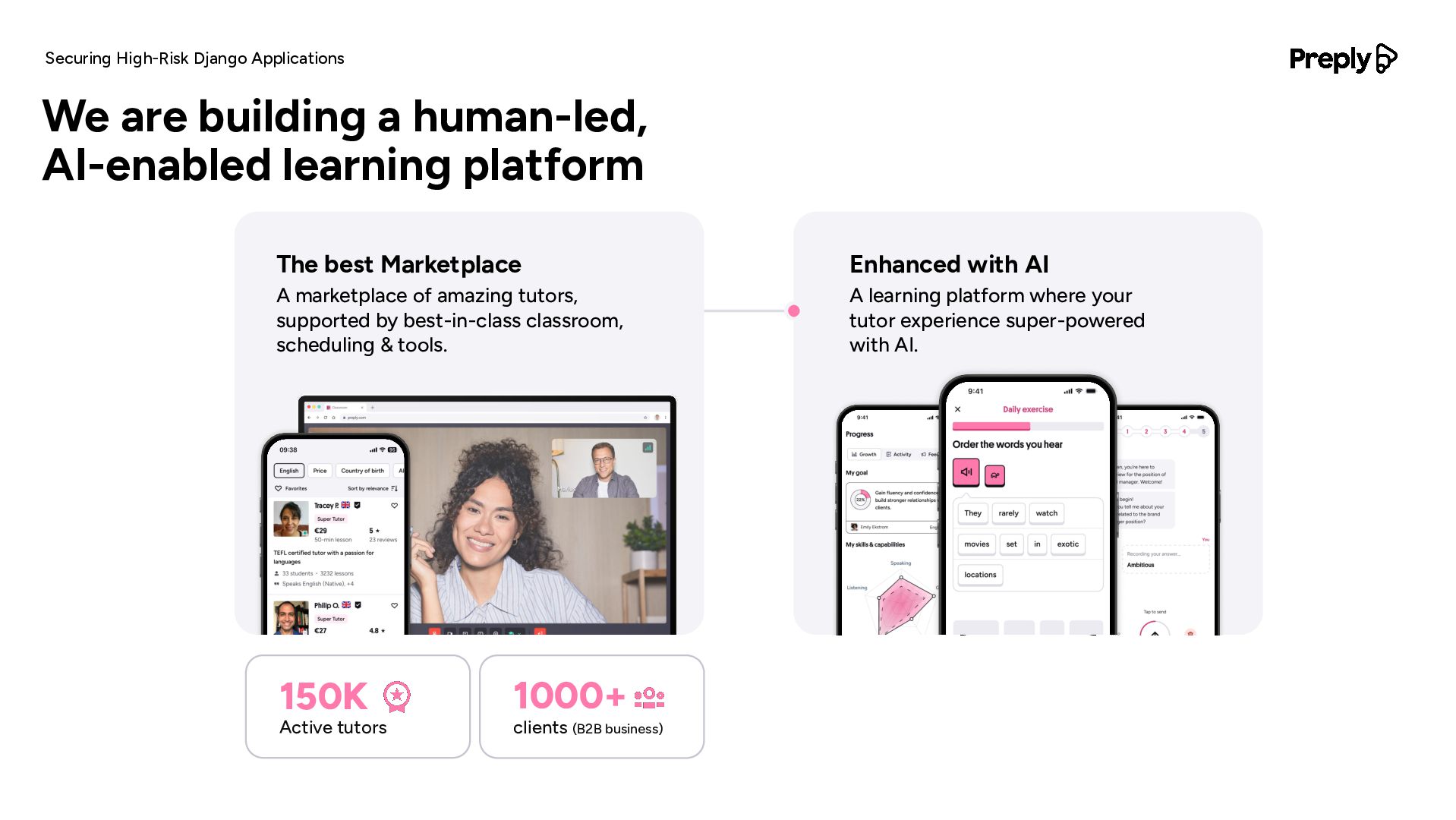
learning platform The best Marketplace Enhanced with AI A marketplace of amazing tutors, supported by best-in-class classroom, scheduling & tools. A learning platform where your tutor experience super-powered with AI. 150K Active tutors 1000+ clients (B2B business) -
Securing High-Risk Django Applications Payments are unforgiving Critical Auditable Irreversible
Attackers are paid to find your bugs. The threat model is professional. Regulators, processors, and finance will ask: show me. A wrong charge becomes a refund, a CS ticket, and a chargeback fee. -
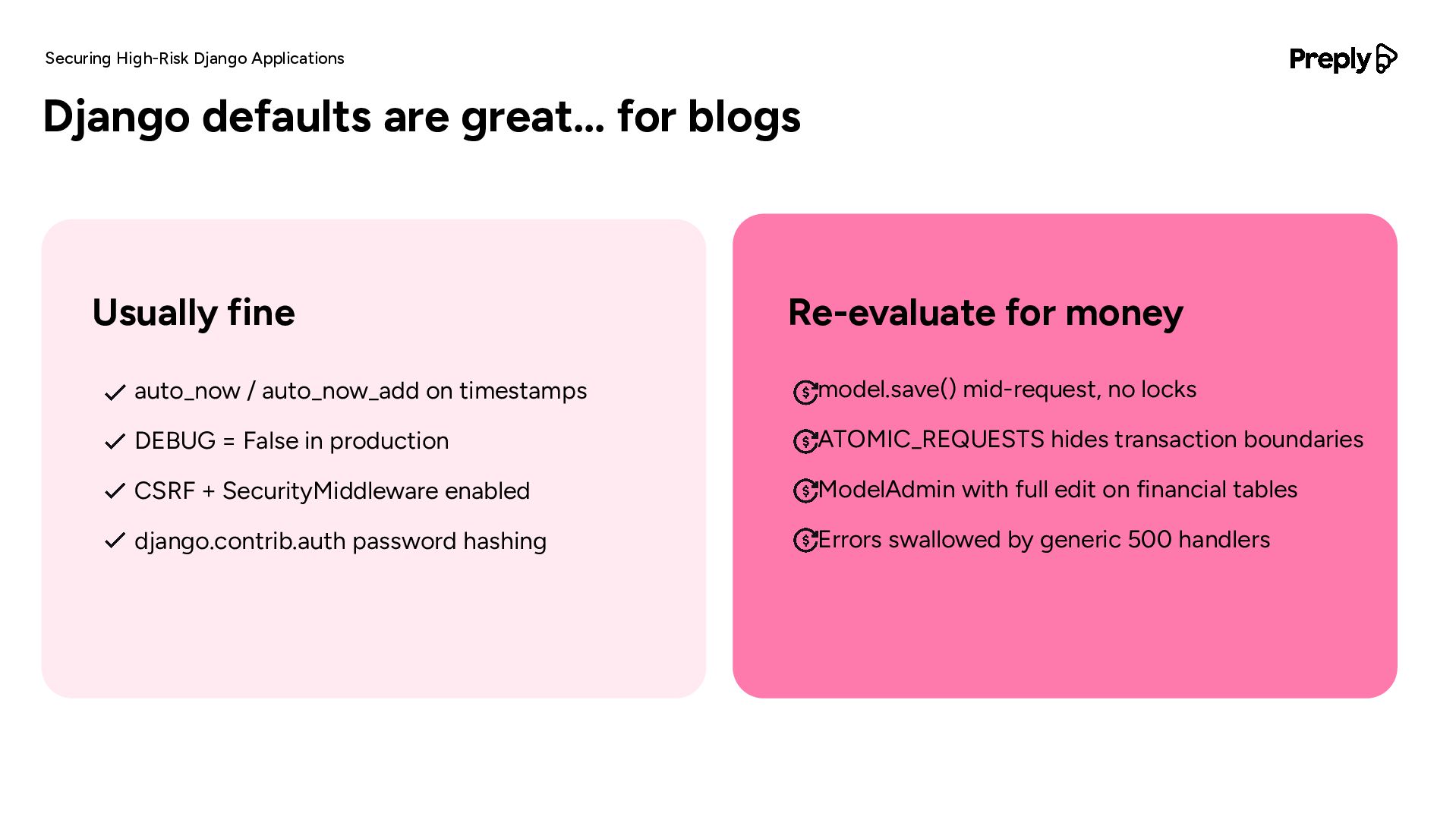
Securing High-Risk Django Applications Django defaults are great… for blogs
Usually fine Re-evaluate for money auto_now / auto_now_add on timestamps ▍ model.save() mid-request, no locks DEBUG = False in production ▍ ATOMIC_REQUESTS hides transaction boundaries CSRF + SecurityMiddleware enabled ▍ ModelAdmin with full edit on financial tables django.contrib.auth password hashing ▍ Errors swallowed by generic 500 handlers -
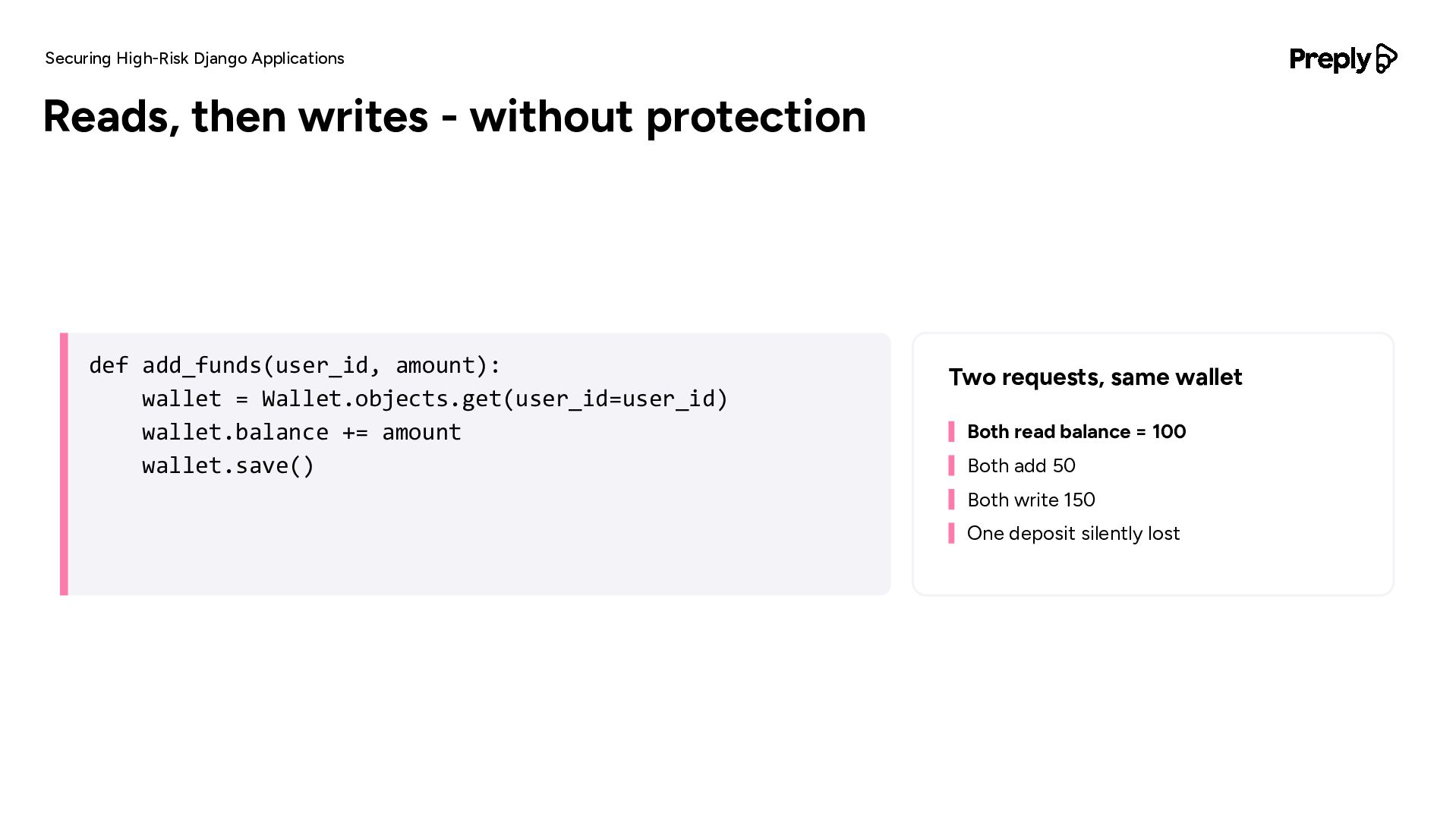
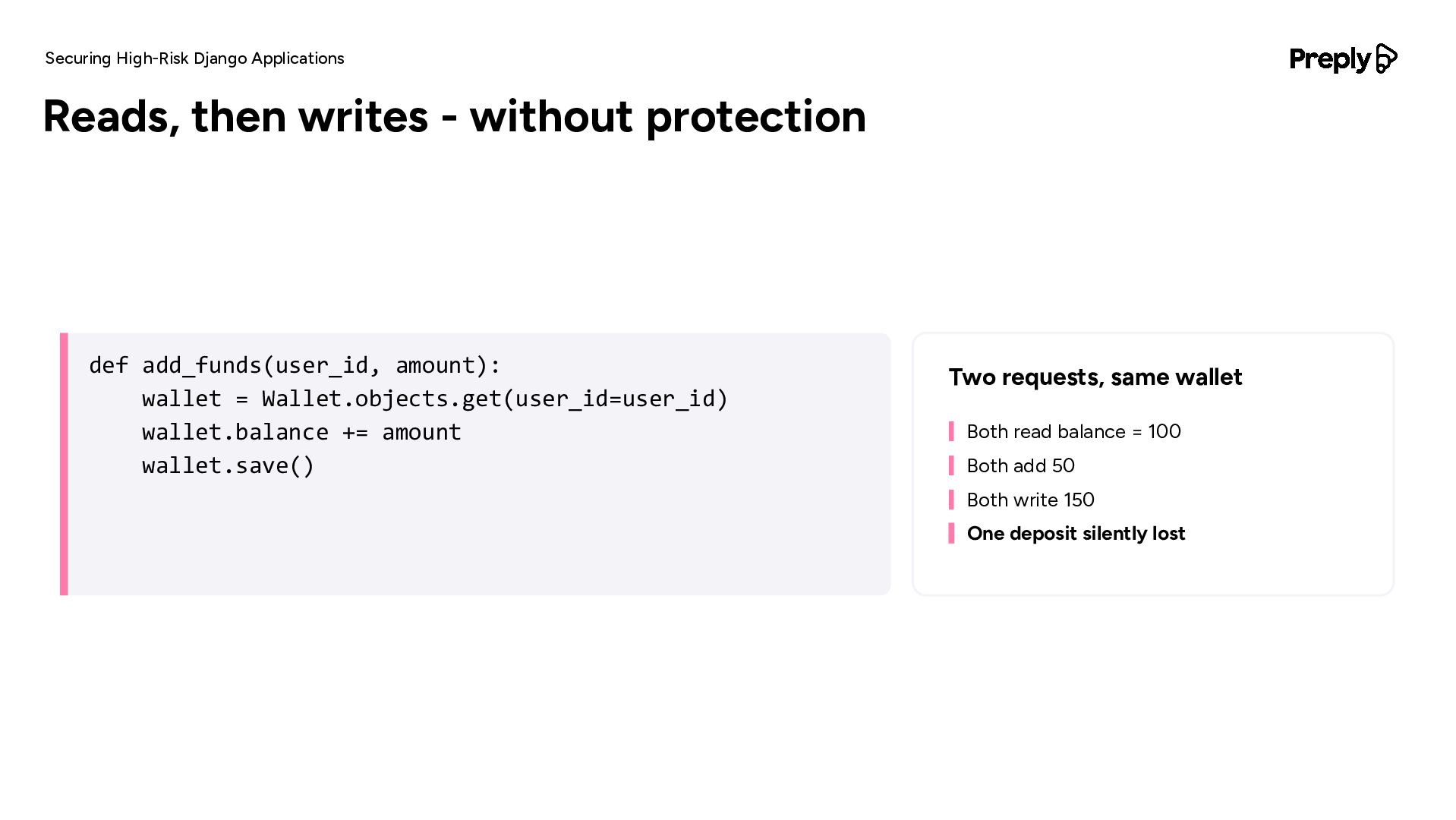
Securing High-Risk Django Applications Reads, then writes - without protection
def add_funds(user_id, amount): wallet = Wallet.objects.get(user_id=user_id) wallet.balance += amount wallet.save() Two requests, same wallet ▍ Both read balance = 100 ▍ Both add 50 ▍ Both write 150 ▍ One deposit silently lost -
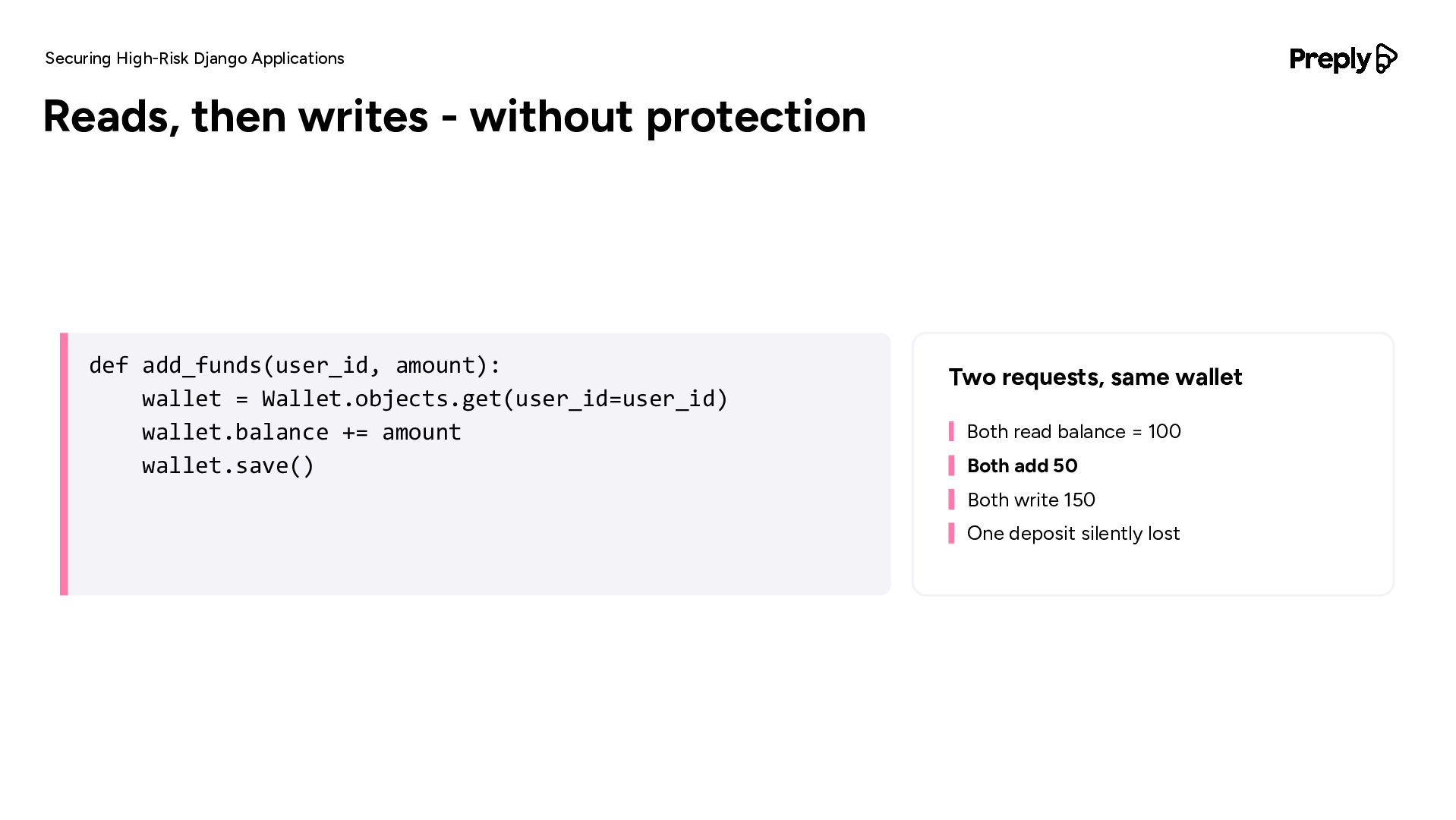
Securing High-Risk Django Applications Reads, then writes - without protection
def add_funds(user_id, amount): wallet = Wallet.objects.get(user_id=user_id) wallet.balance += amount wallet.save() Two requests, same wallet ▍ Both read balance = 100 ▍ Both add 50 ▍ Both write 150 ▍ One deposit silently lost -
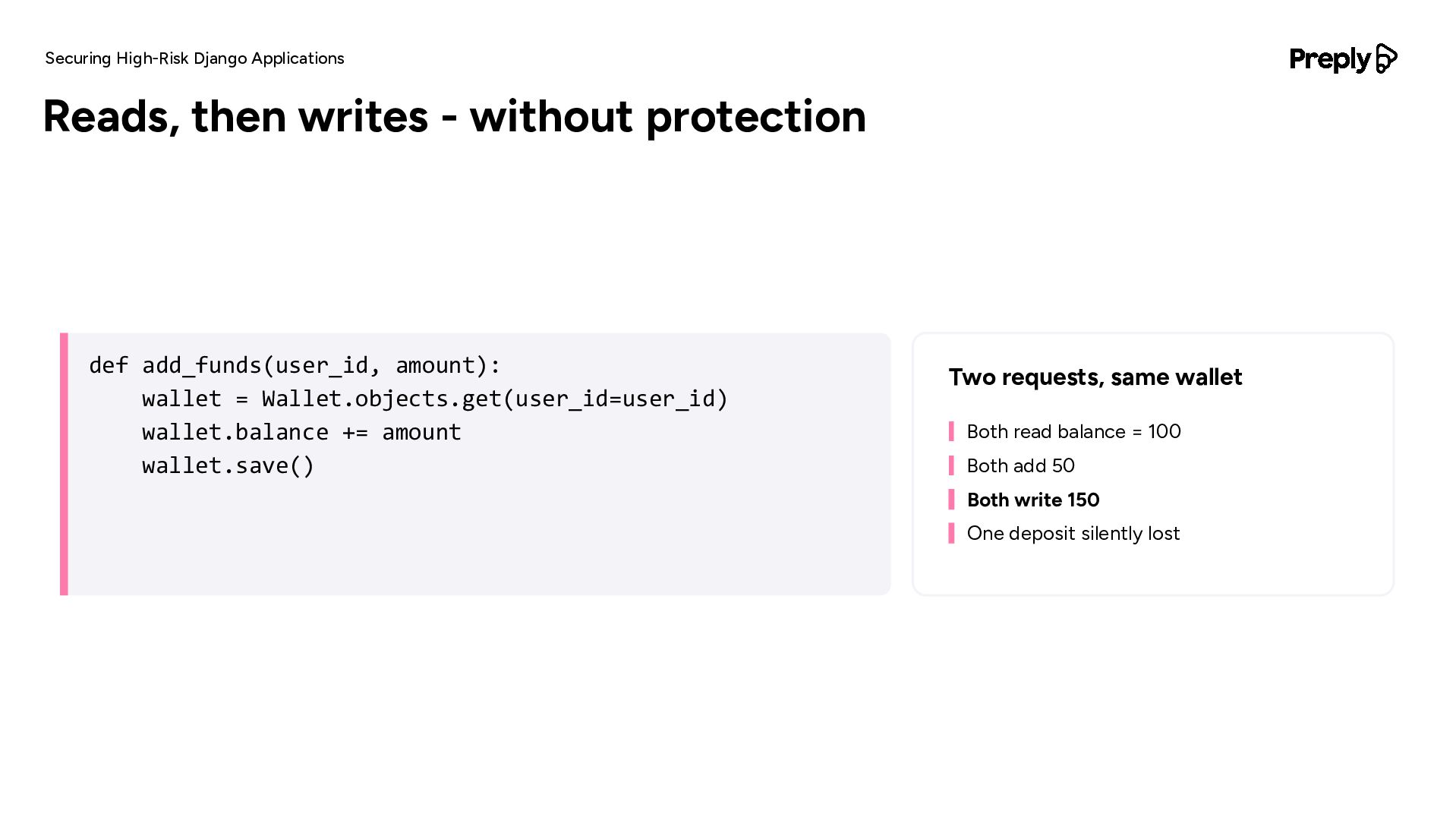
Securing High-Risk Django Applications Reads, then writes - without protection
def add_funds(user_id, amount): wallet = Wallet.objects.get(user_id=user_id) wallet.balance += amount wallet.save() Two requests, same wallet ▍ Both read balance = 100 ▍ Both add 50 ▍ Both write 150 ▍ One deposit silently lost -
Securing High-Risk Django Applications Reads, then writes - without protection
def add_funds(user_id, amount): wallet = Wallet.objects.get(user_id=user_id) wallet.balance += amount wallet.save() Two requests, same wallet ▍ Both read balance = 100 ▍ Both add 50 ▍ Both write 150 ▍ One deposit silently lost -
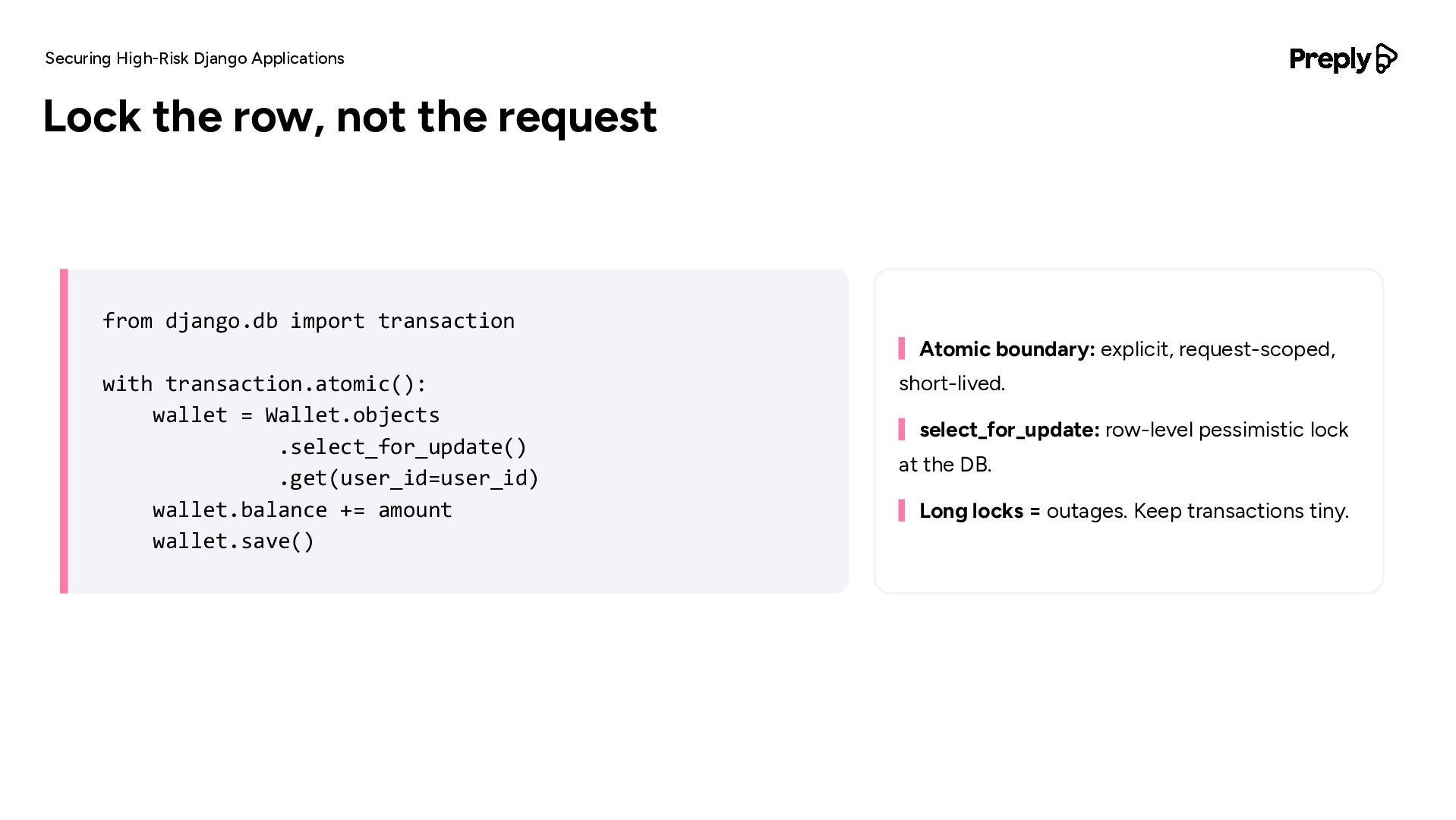
Securing High-Risk Django Applications Lock the row, not the request
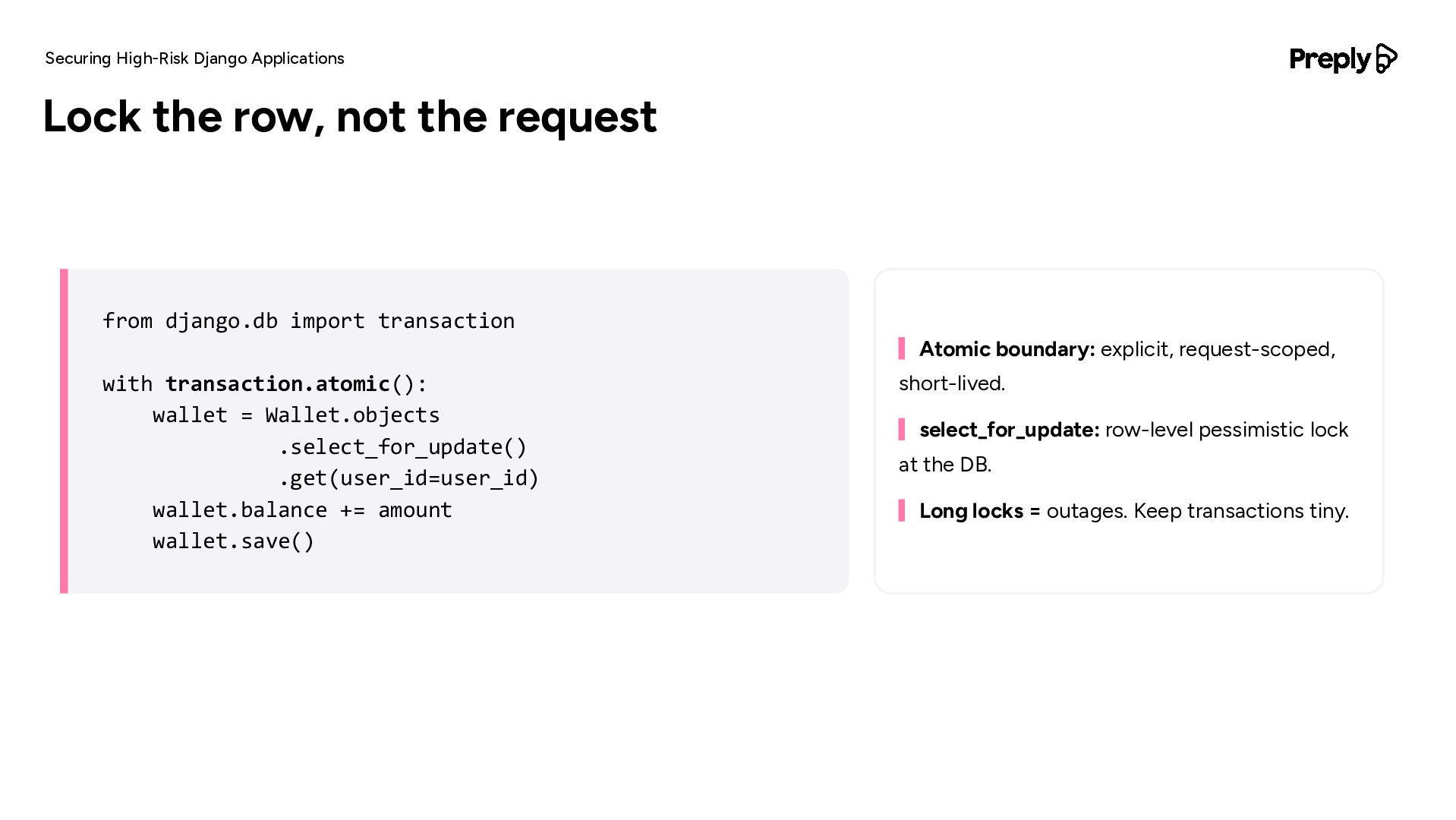
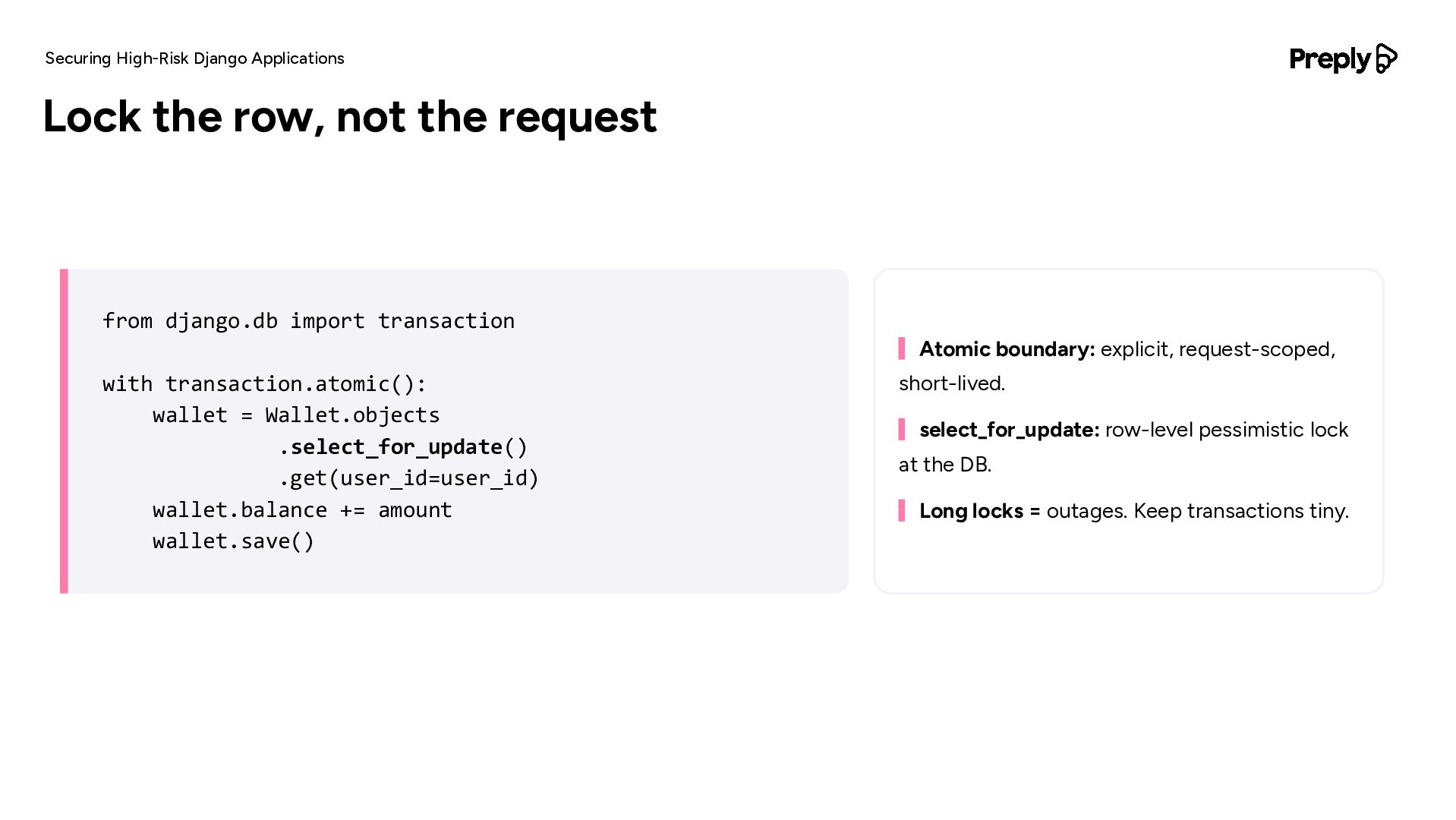
from django.db import transaction ▍ Atomic boundary: explicit, request-scoped, with transaction.atomic(): wallet = Wallet.objects .select_for_update() .get(user_id=user_id) wallet.balance += amount wallet.save() short-lived. ▍ select_for_update: row-level pessimistic lock at the DB. ▍ Long locks = outages. Keep transactions tiny. -
Securing High-Risk Django Applications Lock the row, not the request
from django.db import transaction ▍ Atomic boundary: explicit, request-scoped, with transaction.atomic(): wallet = Wallet.objects .select_for_update() .get(user_id=user_id) wallet.balance += amount wallet.save() short-lived. ▍ select_for_update: row-level pessimistic lock at the DB. ▍ Long locks = outages. Keep transactions tiny. -
Securing High-Risk Django Applications Lock the row, not the request
from django.db import transaction ▍ Atomic boundary: explicit, request-scoped, with transaction.atomic(): wallet = Wallet.objects .select_for_update() .get(user_id=user_id) wallet.balance += amount wallet.save() short-lived. ▍ select_for_update: row-level pessimistic lock at the DB. ▍ Long locks = outages. Keep transactions tiny. -
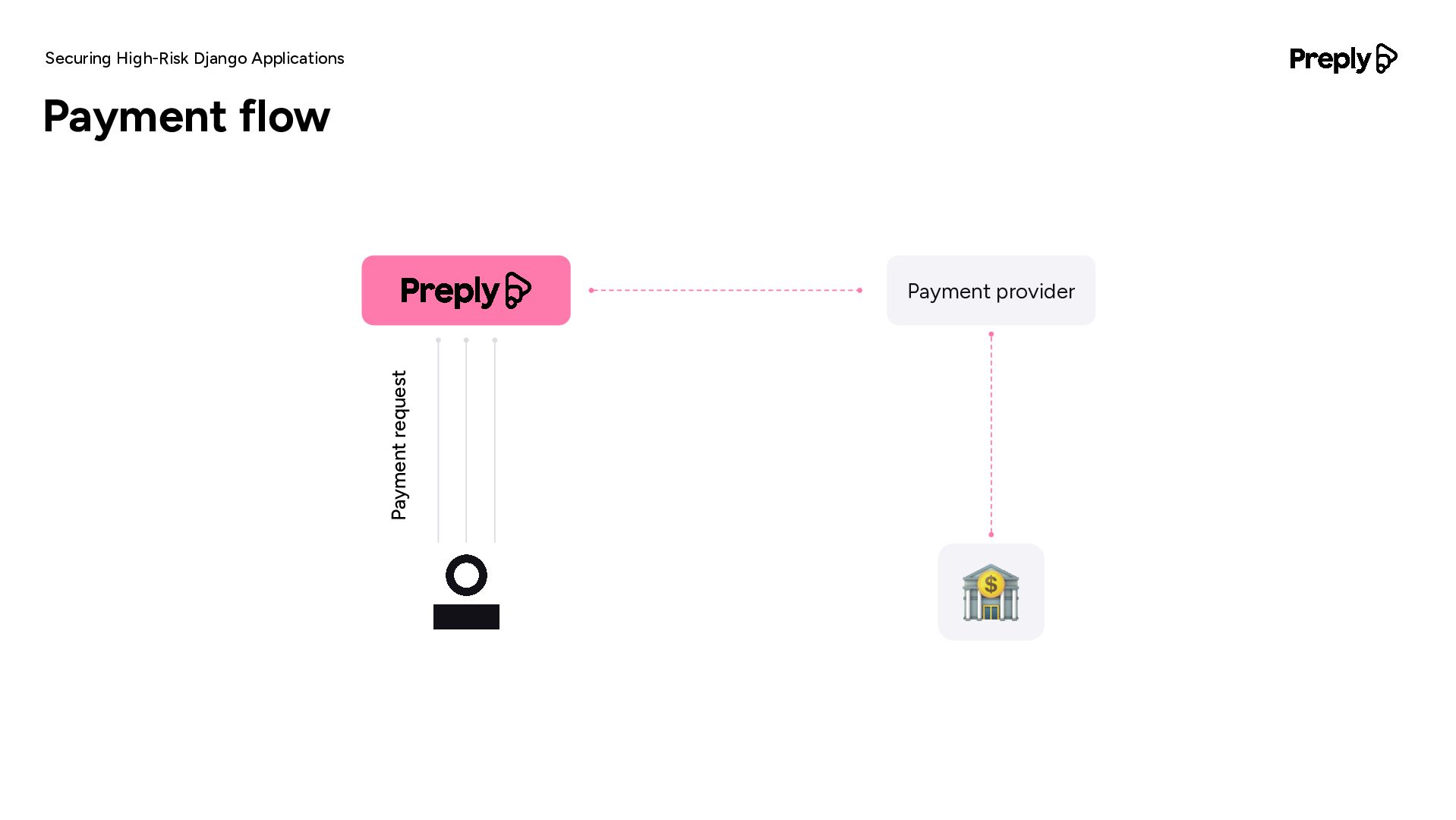
Securing High-Risk Django Applications Payment flow Client API DB Replay
Sends header Lookup key UNIQUE constraint Return cached Idempotency-Key: … in idempotency table first-write-wins Response bytes 1 Key is the client's responsibility, scoped per endpoint. 2 First-write-wins via a DB UNIQUE constraint. 3 Cache the response, not just the fact - replays must be byte-identical. -
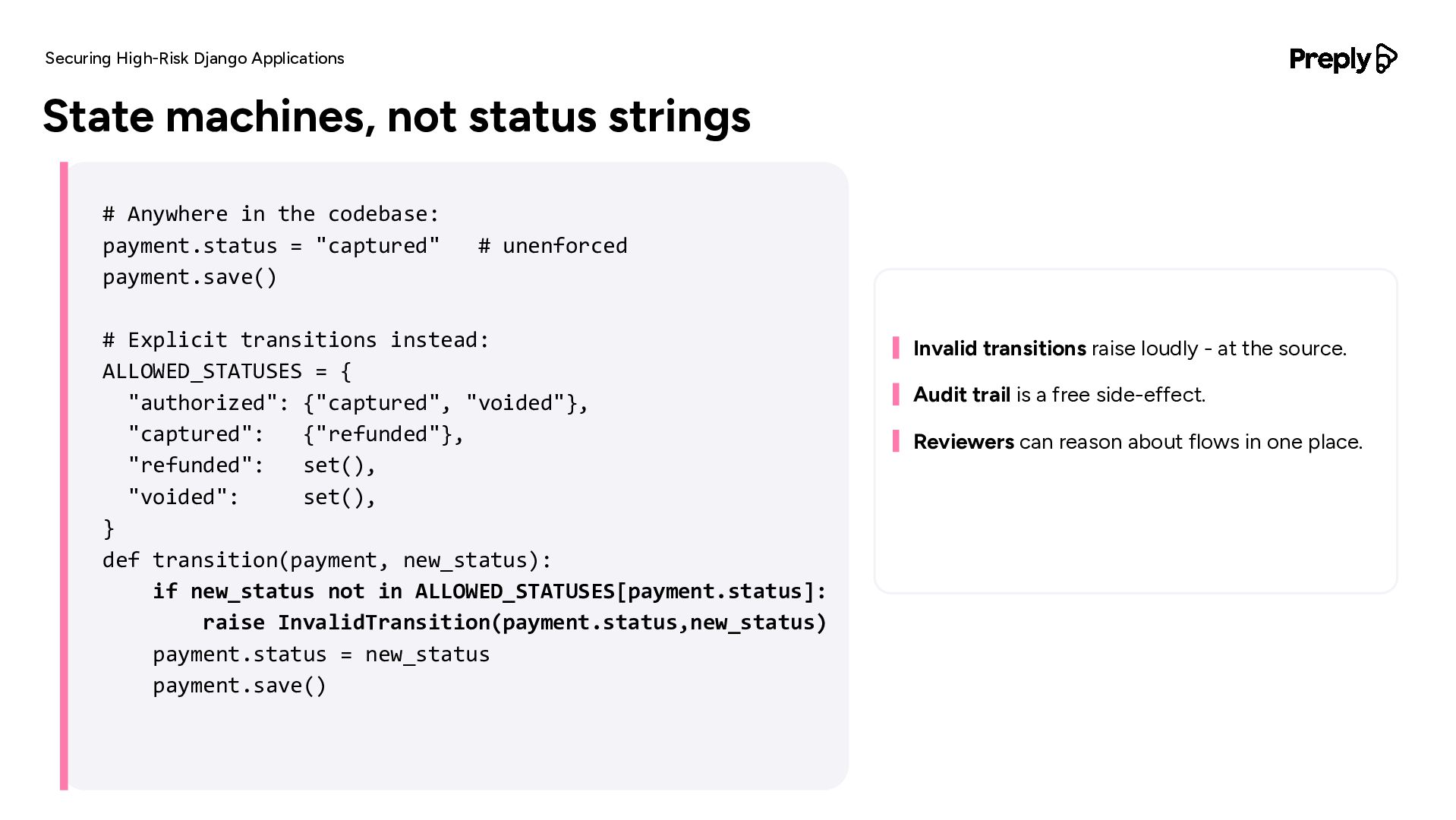
Securing High-Risk Django Applications State machines, not status strings #
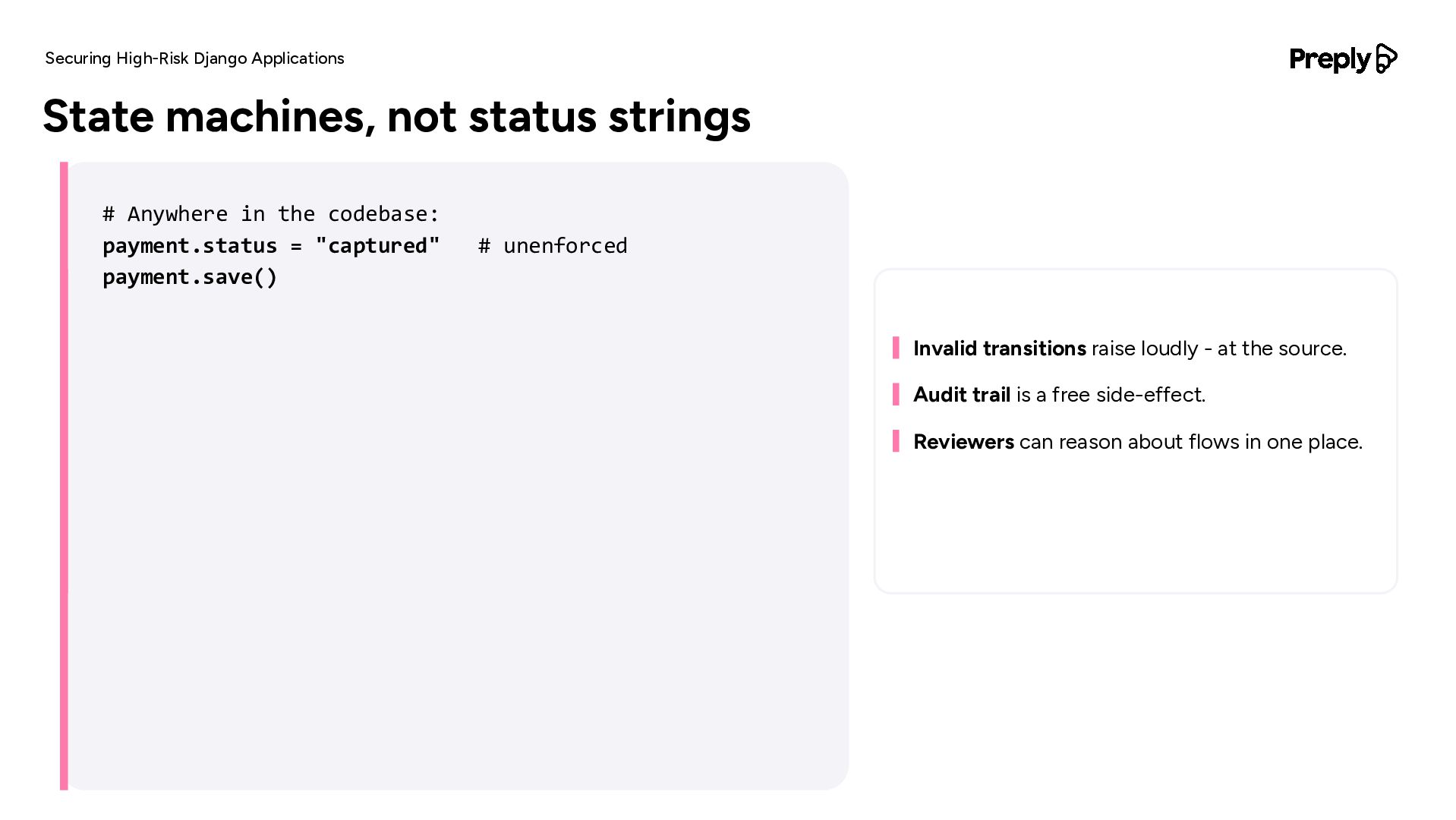
Anywhere in the codebase: payment.status = "captured" payment.save() # unenforced ▍ Invalid transitions raise loudly - at the source. ▍ Audit trail is a free side-effect. ▍ Reviewers can reason about flows in one place. -
Securing High-Risk Django Applications State machines, not status strings #
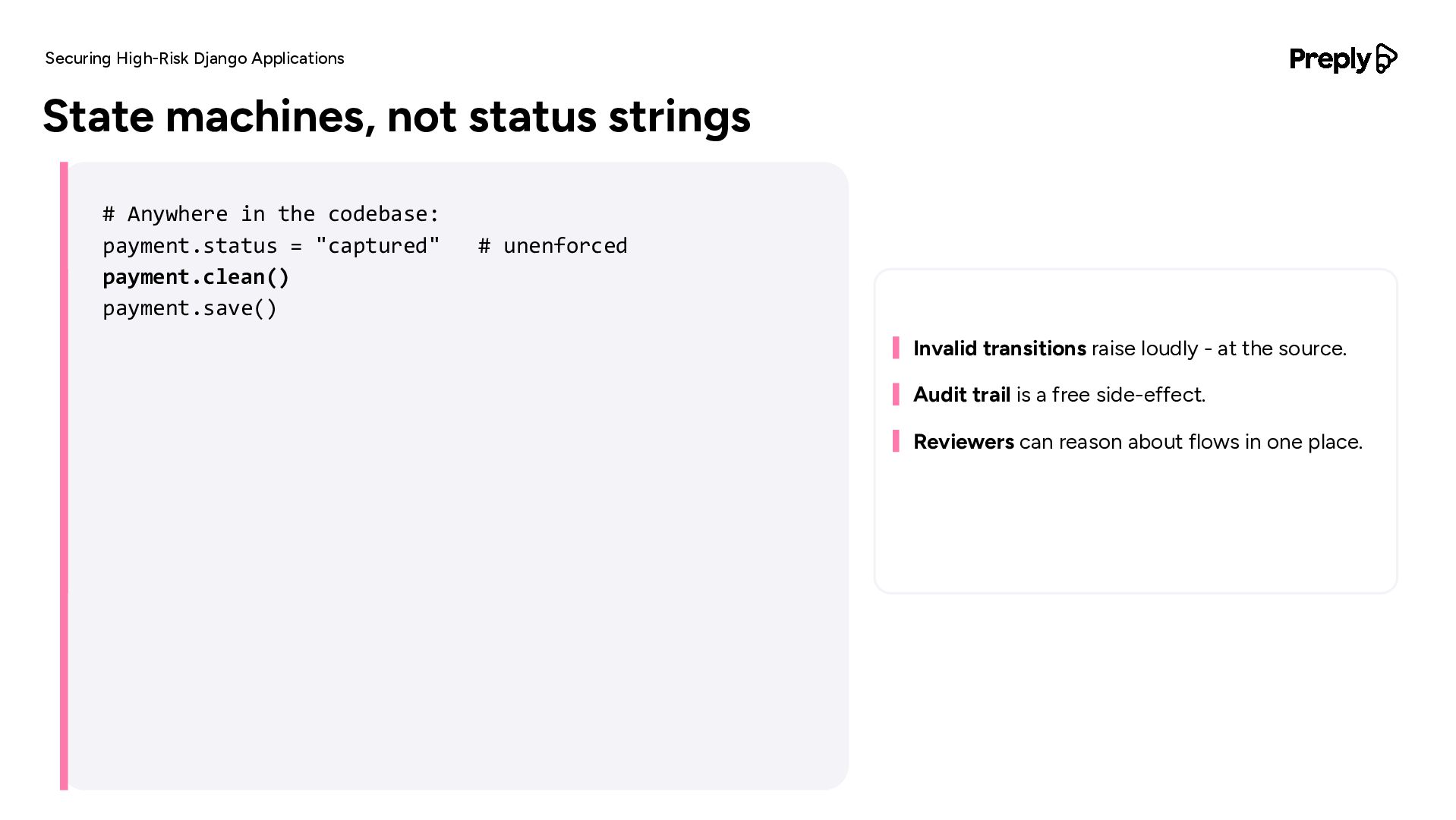
Anywhere in the codebase: payment.status = "captured" payment.clean() payment.save() # unenforced ▍ Invalid transitions raise loudly - at the source. ▍ Audit trail is a free side-effect. ▍ Reviewers can reason about flows in one place. -
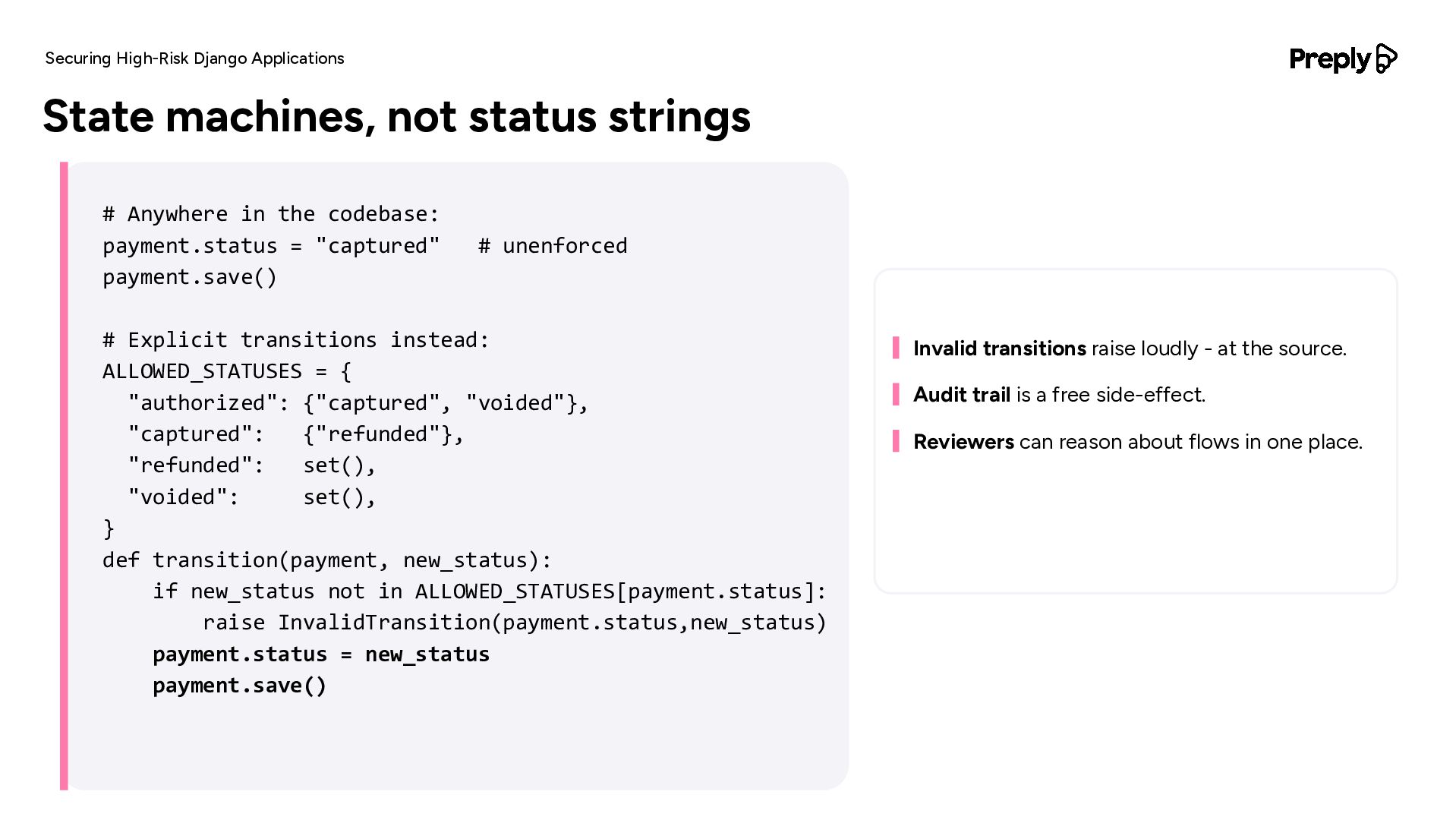
Securing High-Risk Django Applications State machines, not status strings #
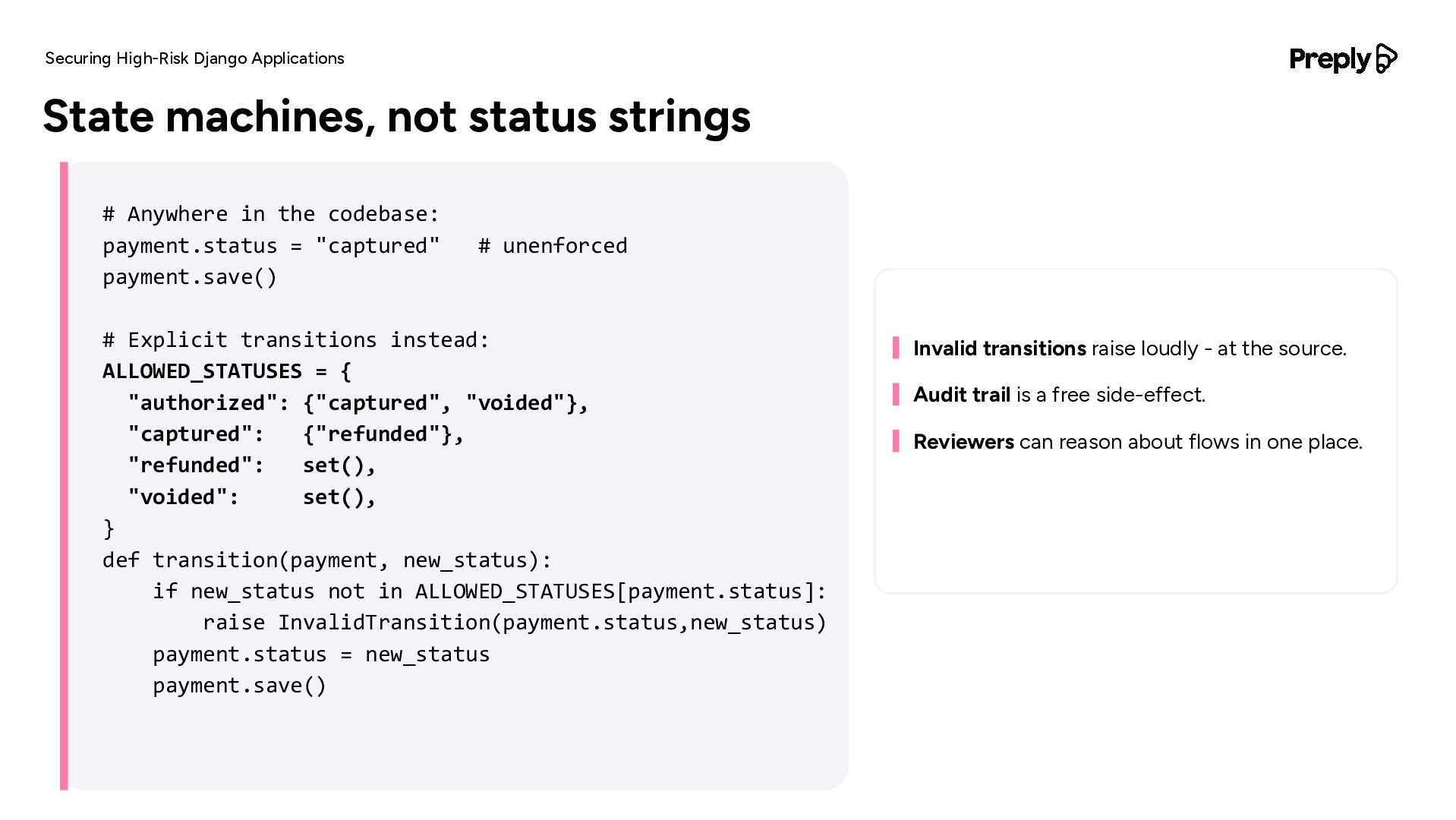
Anywhere in the codebase: payment.status = "captured" payment.save() # unenforced # Explicit transitions instead: ALLOWED_STATUSES = { "authorized": {"captured", "voided"}, "captured": {"refunded"}, "refunded": set(), "voided": set(), } def transition(payment, new_status): if new_status not in ALLOWED_STATUSES[payment.status]: raise InvalidTransition(payment.status,new_status) payment.status = new_status payment.save() ▍ Invalid transitions raise loudly - at the source. ▍ Audit trail is a free side-effect. ▍ Reviewers can reason about flows in one place. -
Securing High-Risk Django Applications State machines, not status strings #
Anywhere in the codebase: payment.status = "captured" payment.save() # unenforced # Explicit transitions instead: ALLOWED_STATUSES = { "authorized": {"captured", "voided"}, "captured": {"refunded"}, "refunded": set(), "voided": set(), } def transition(payment, new_status): if new_status not in ALLOWED_STATUSES[payment.status]: raise InvalidTransition(payment.status,new_status) payment.status = new_status payment.save() ▍ Invalid transitions raise loudly - at the source. ▍ Audit trail is a free side-effect. ▍ Reviewers can reason about flows in one place. -
Securing High-Risk Django Applications State machines, not status strings #
Anywhere in the codebase: payment.status = "captured" payment.save() # unenforced # Explicit transitions instead: ALLOWED_STATUSES = { "authorized": {"captured", "voided"}, "captured": {"refunded"}, "refunded": set(), "voided": set(), } def transition(payment, new_status): if new_status not in ALLOWED_STATUSES[payment.status]: raise InvalidTransition(payment.status,new_status) payment.status = new_status payment.save() ▍ Invalid transitions raise loudly - at the source. ▍ Audit trail is a free side-effect. ▍ Reviewers can reason about flows in one place. -
Anything you accept once, you'll be asked to accept a
million times. -
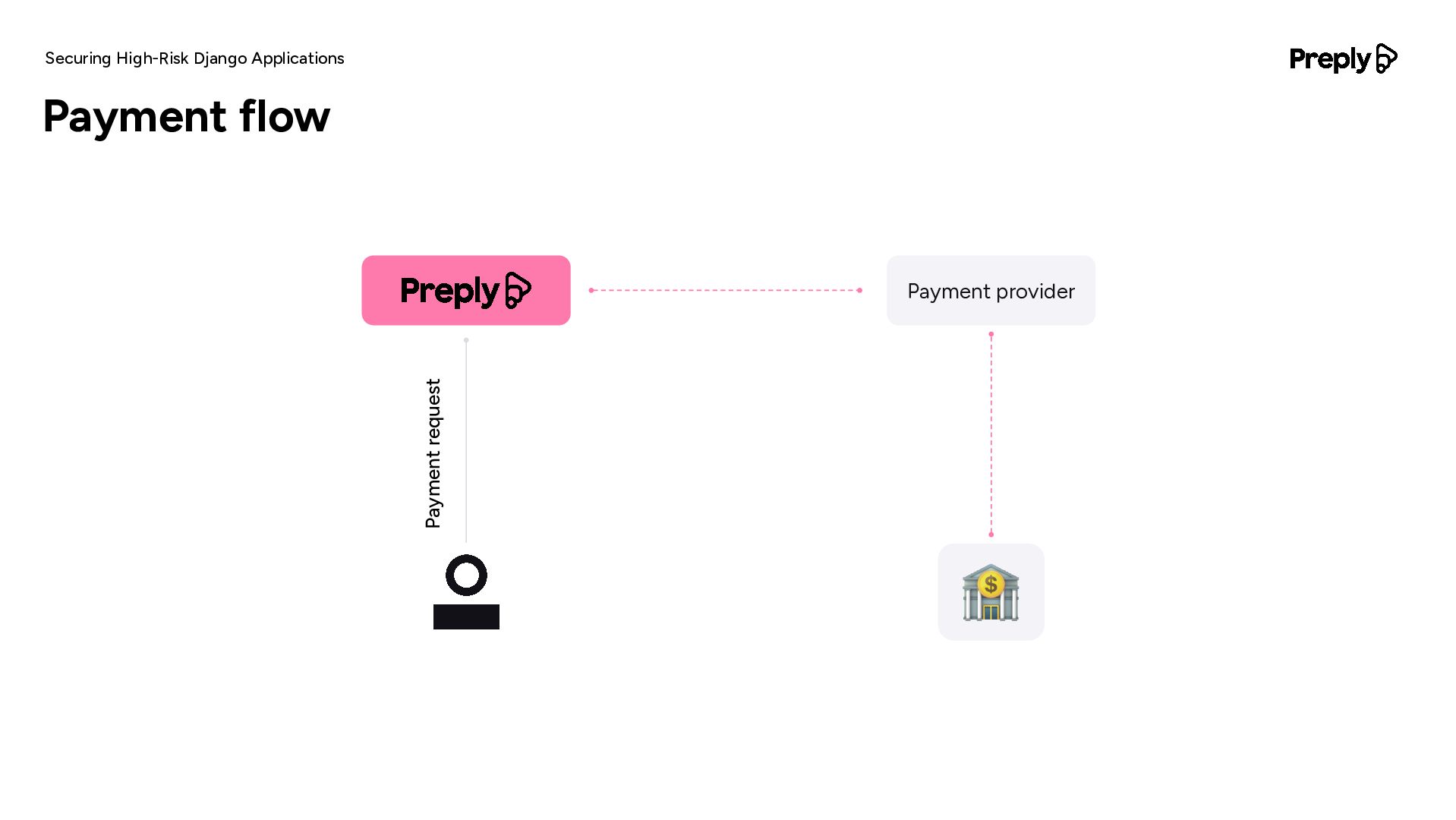
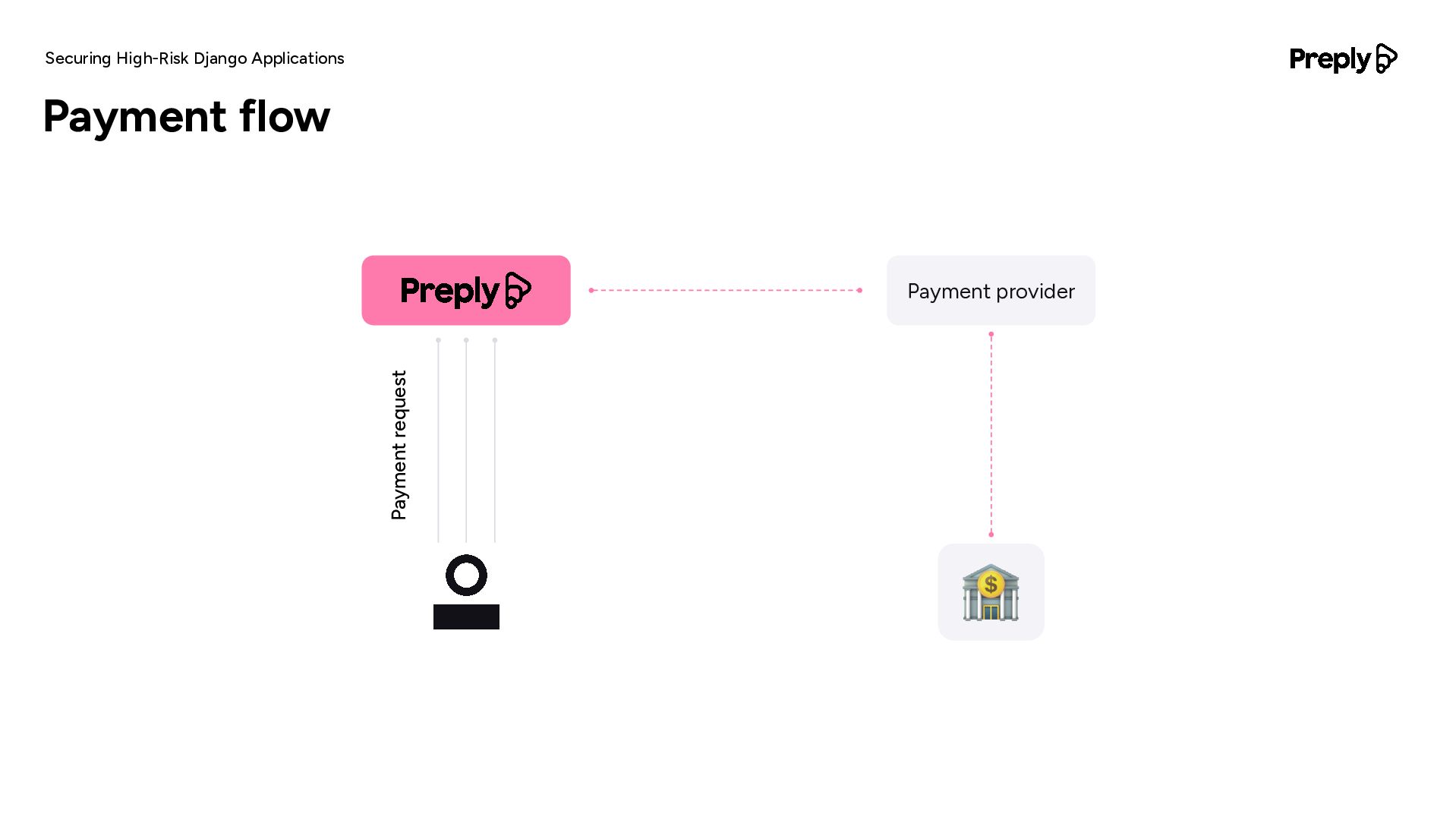
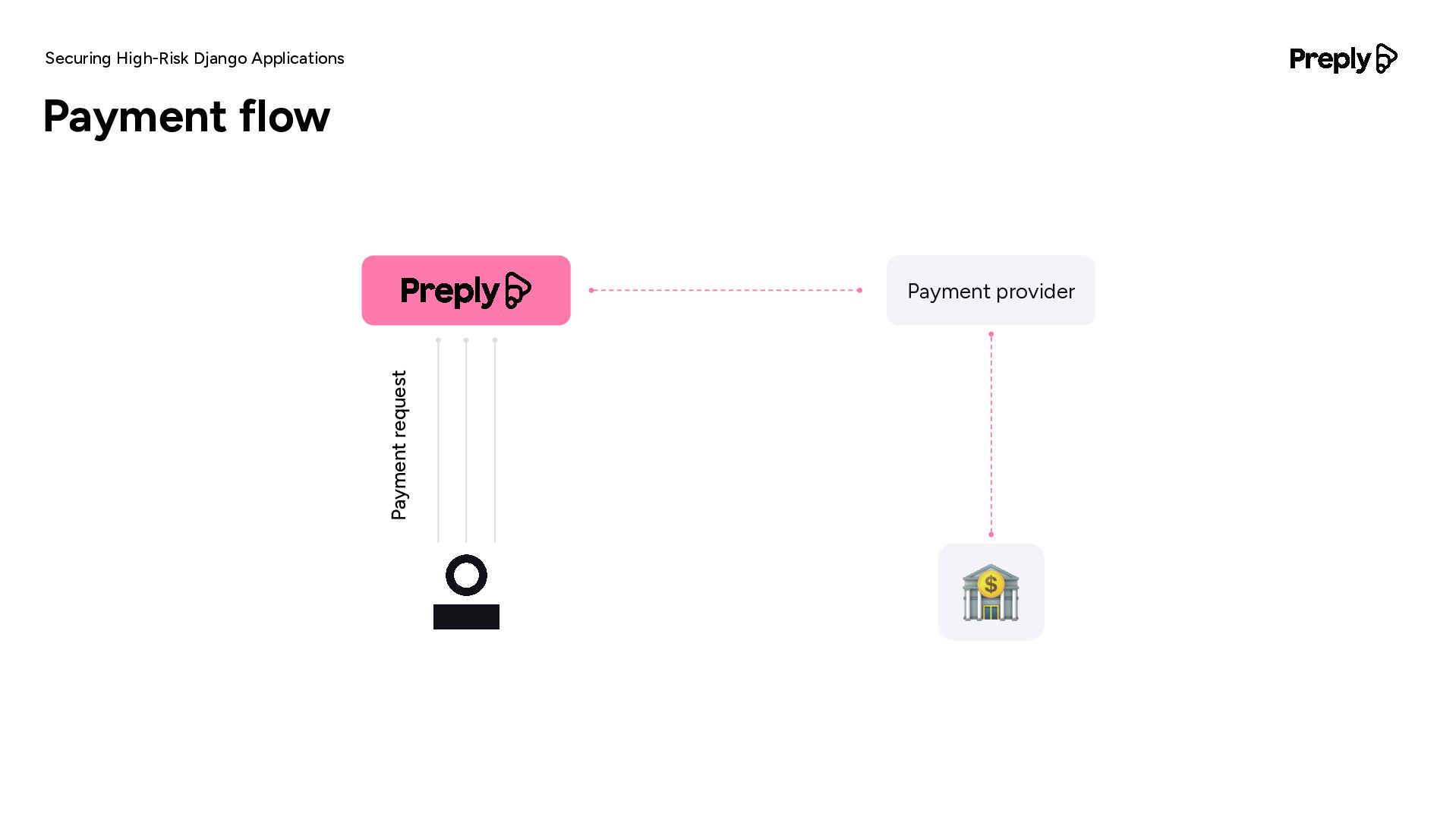
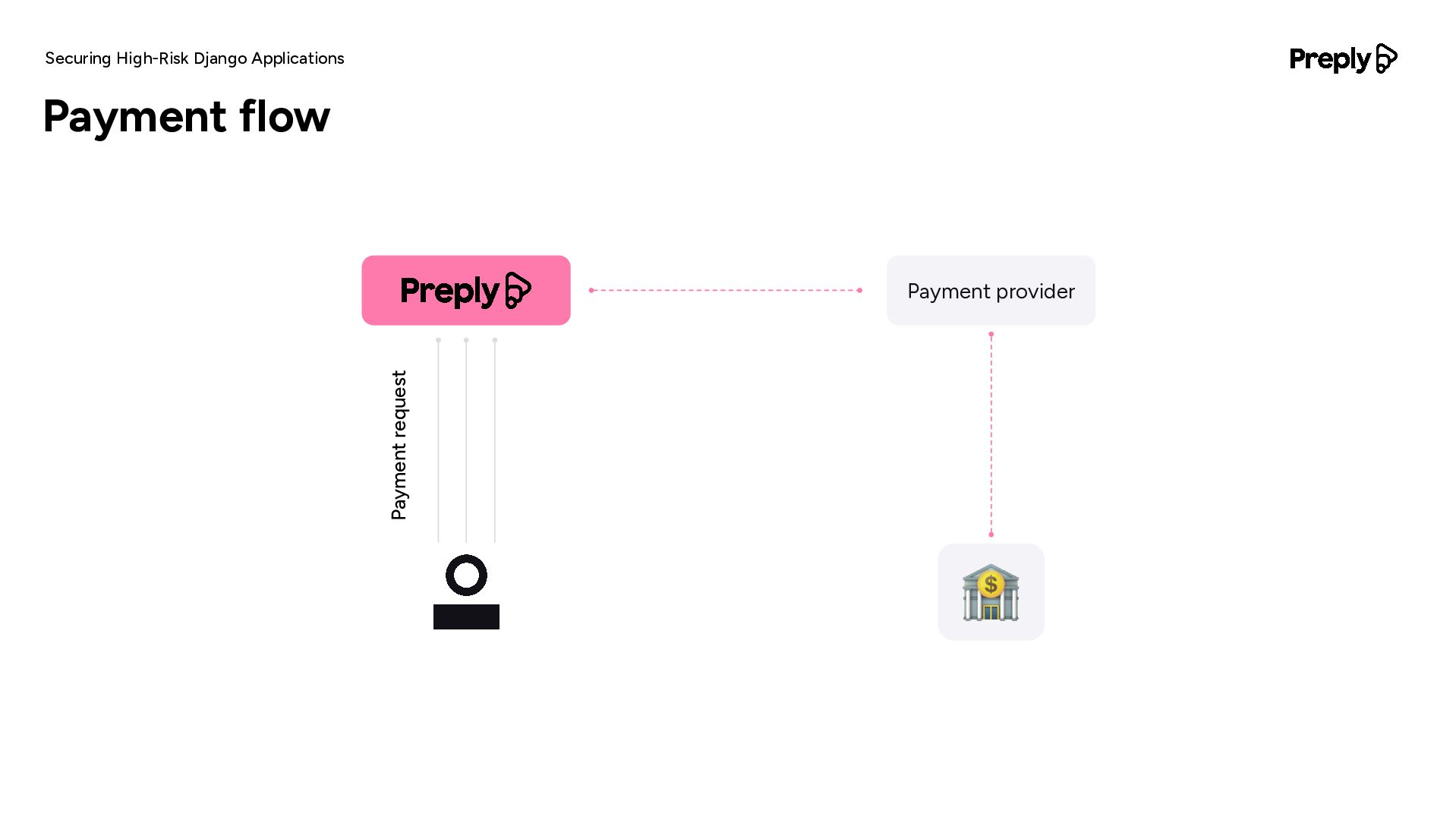
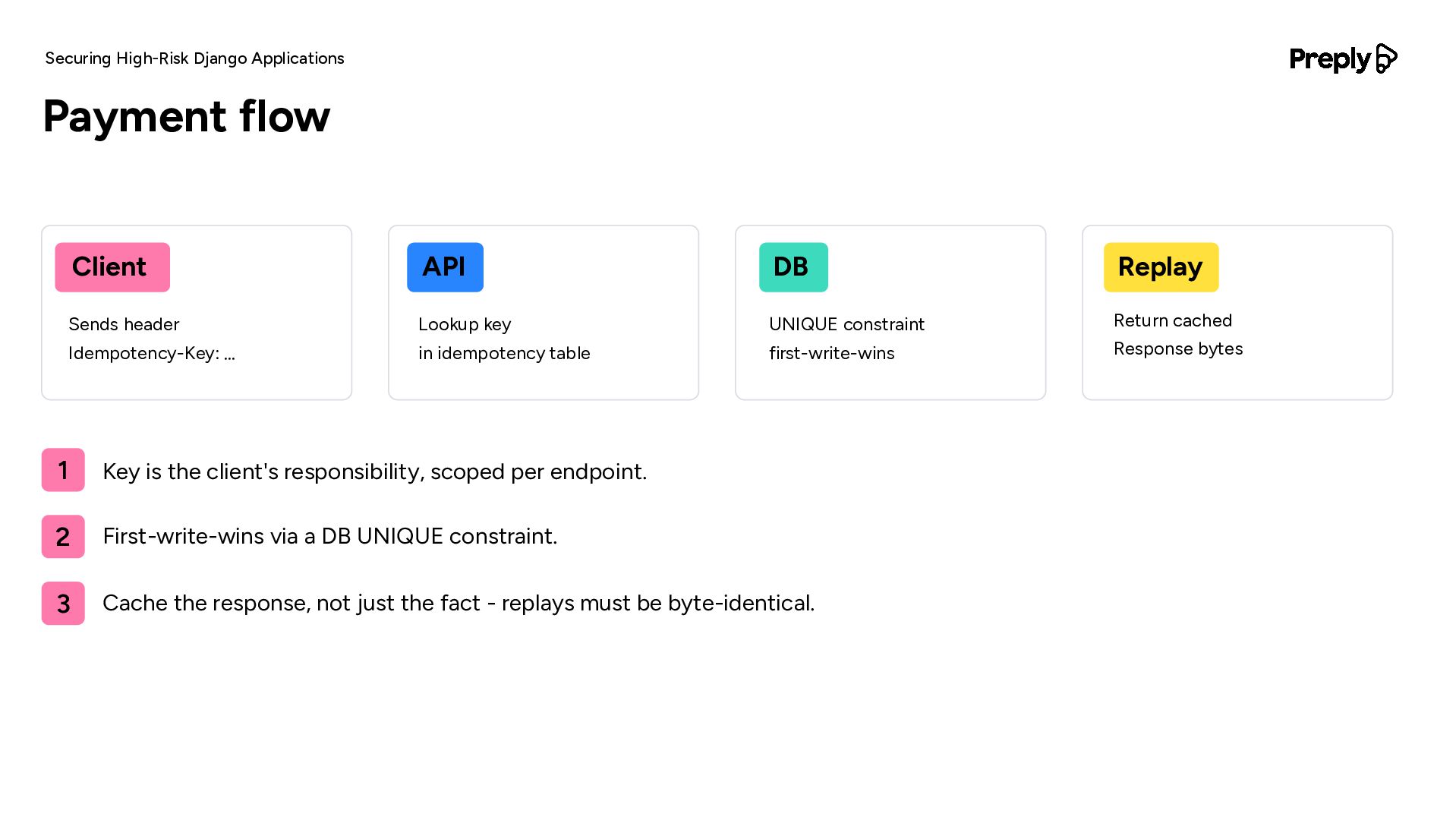
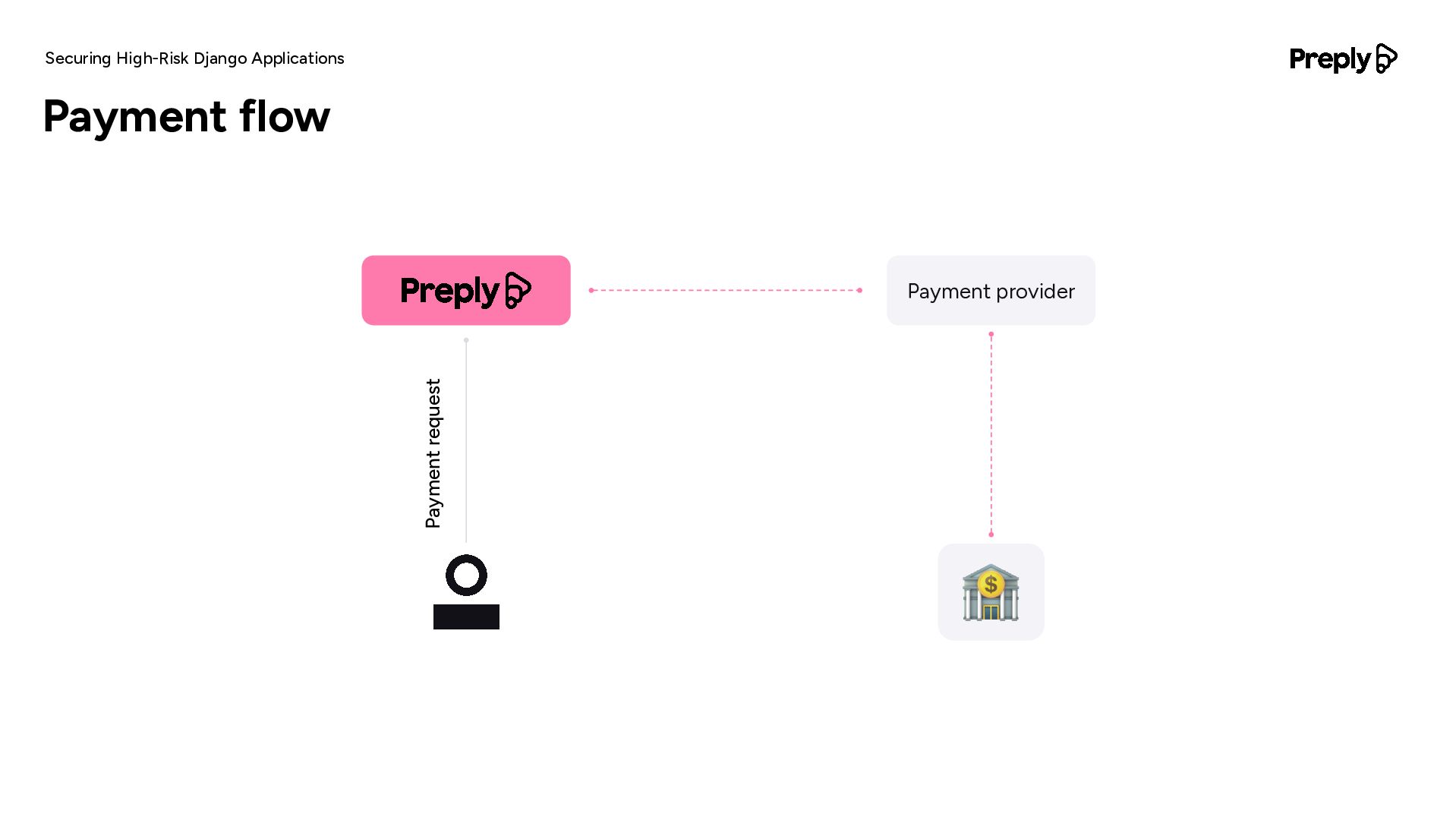
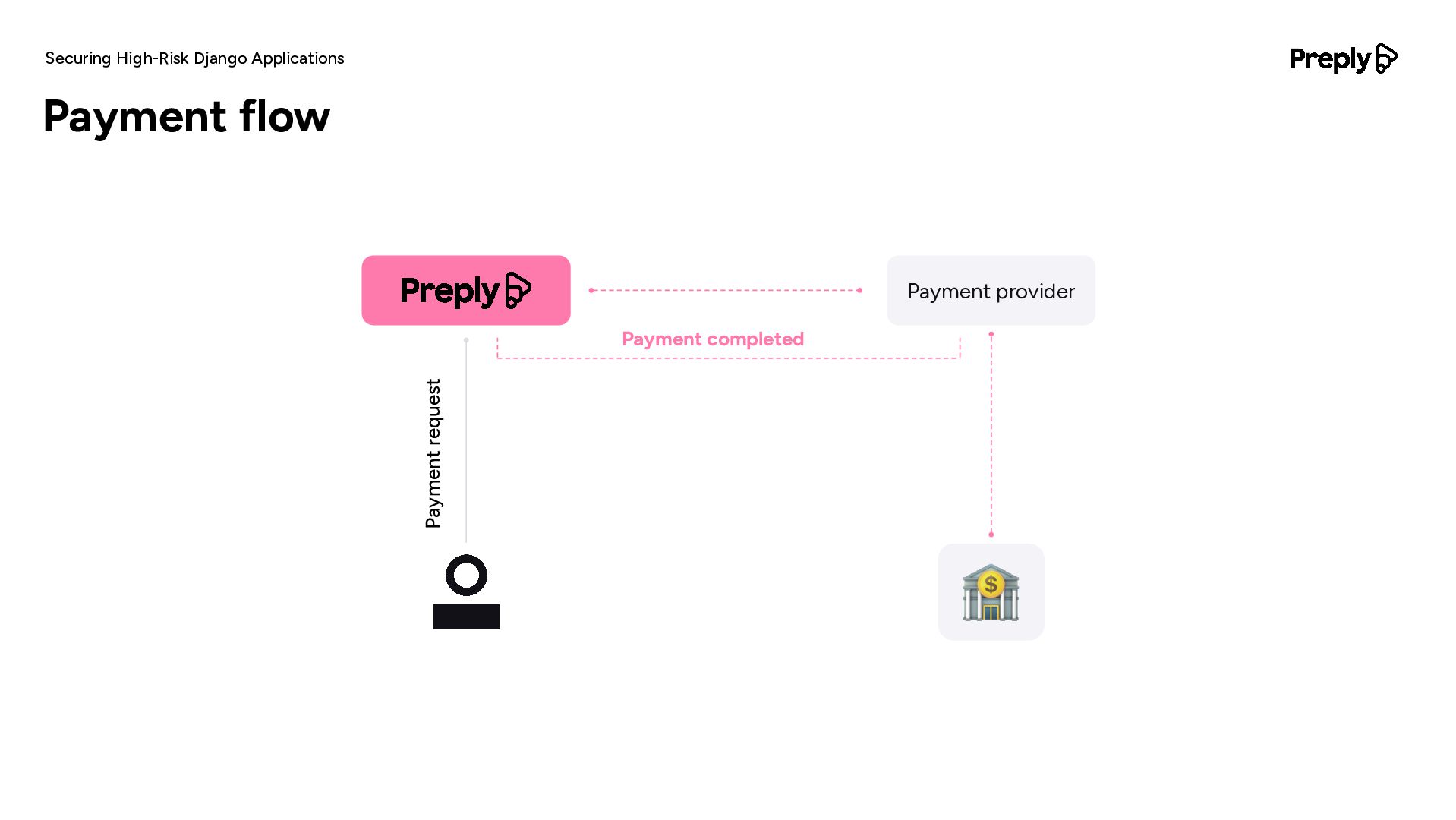
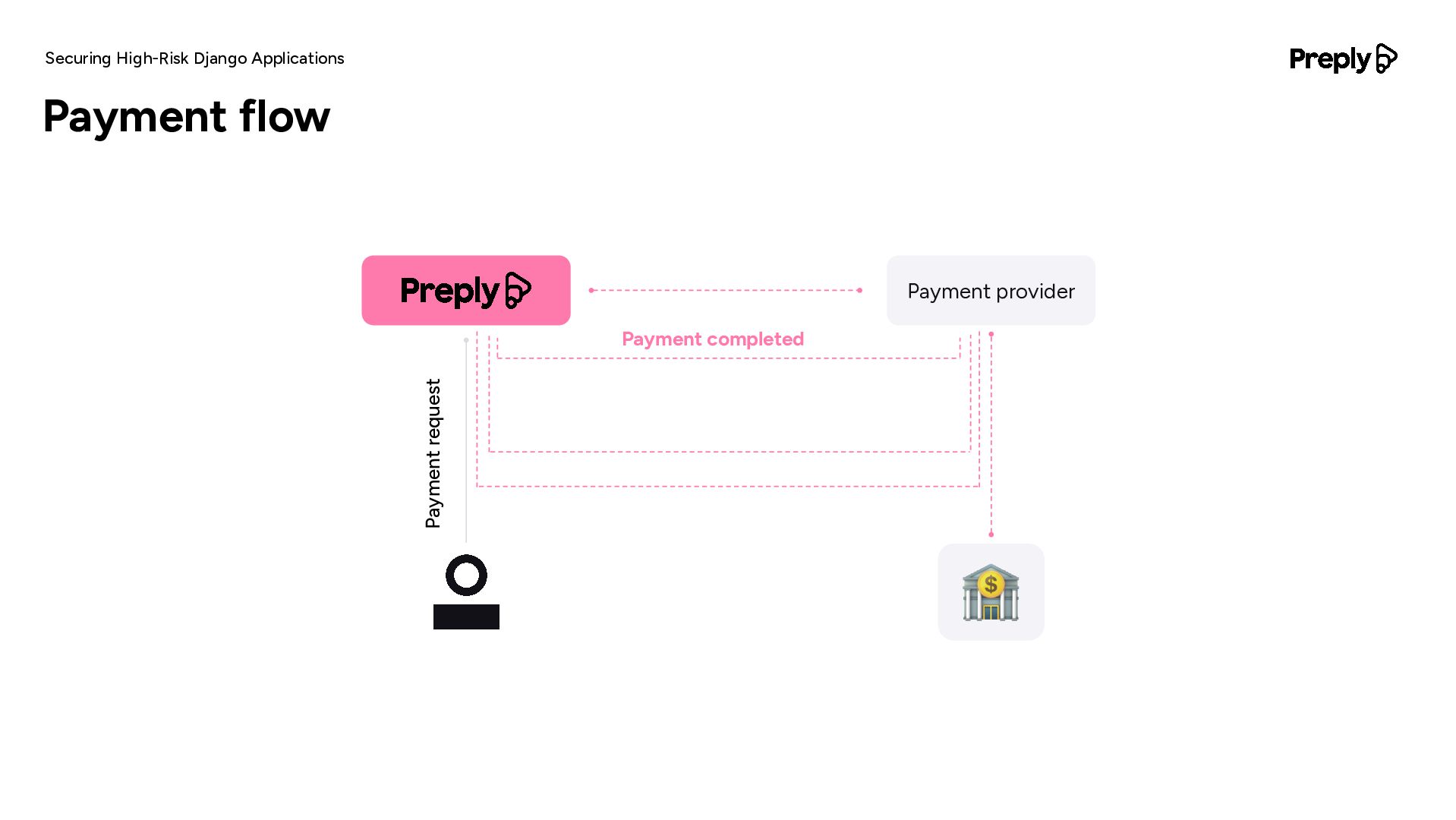
Securing High-Risk Django Applications Payment flow Payment provider Payment request
Payment completed �� -
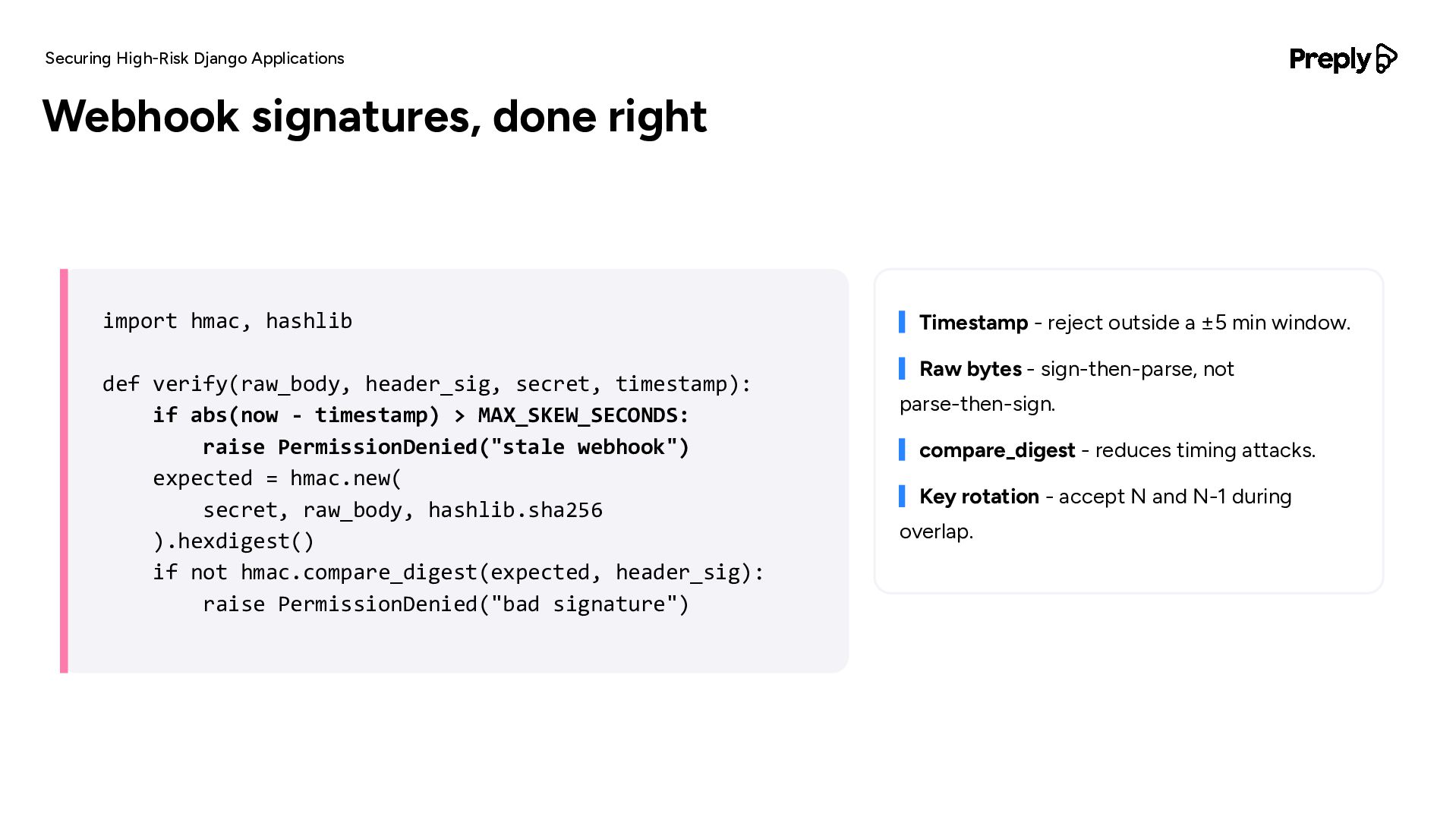
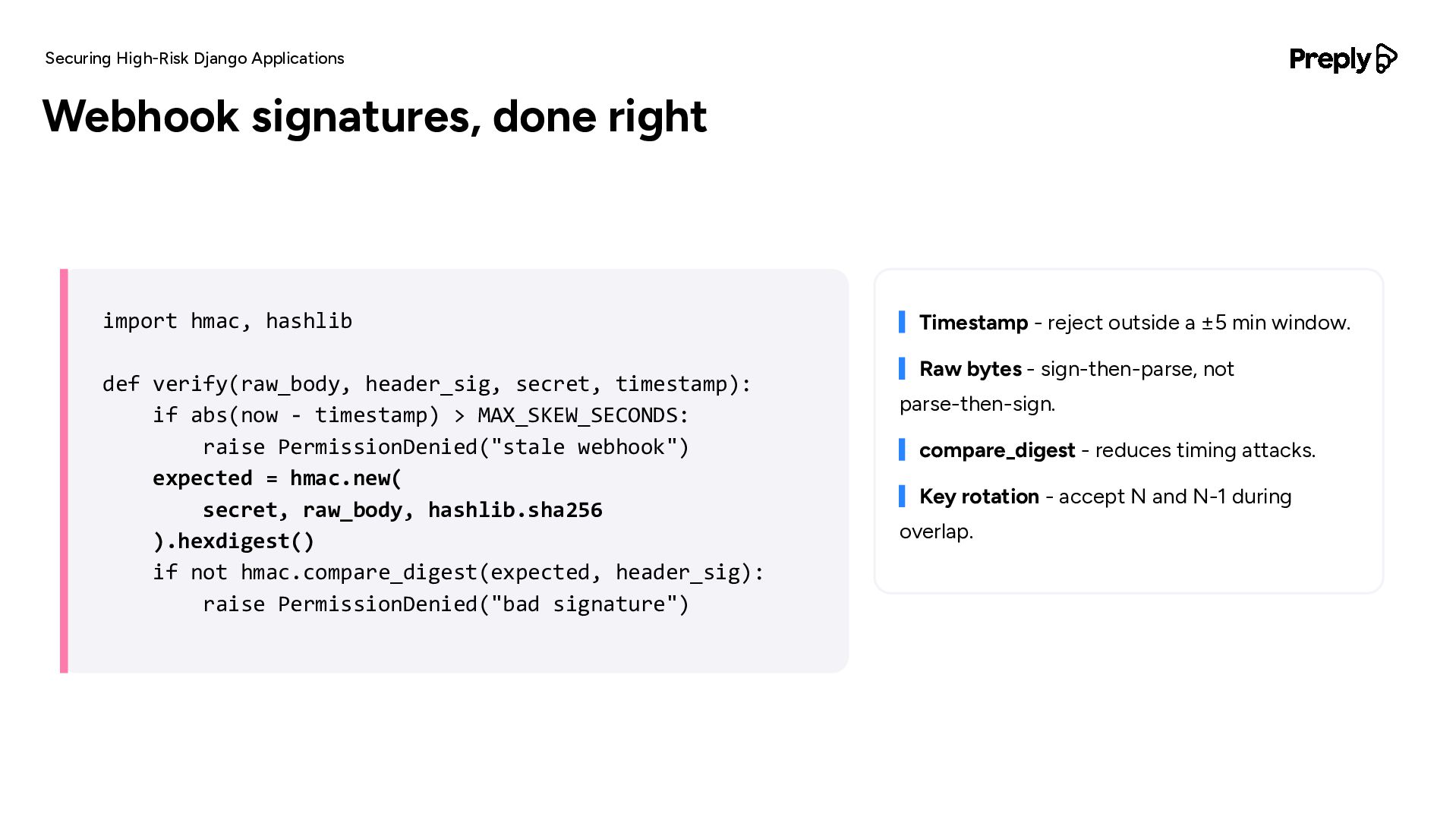
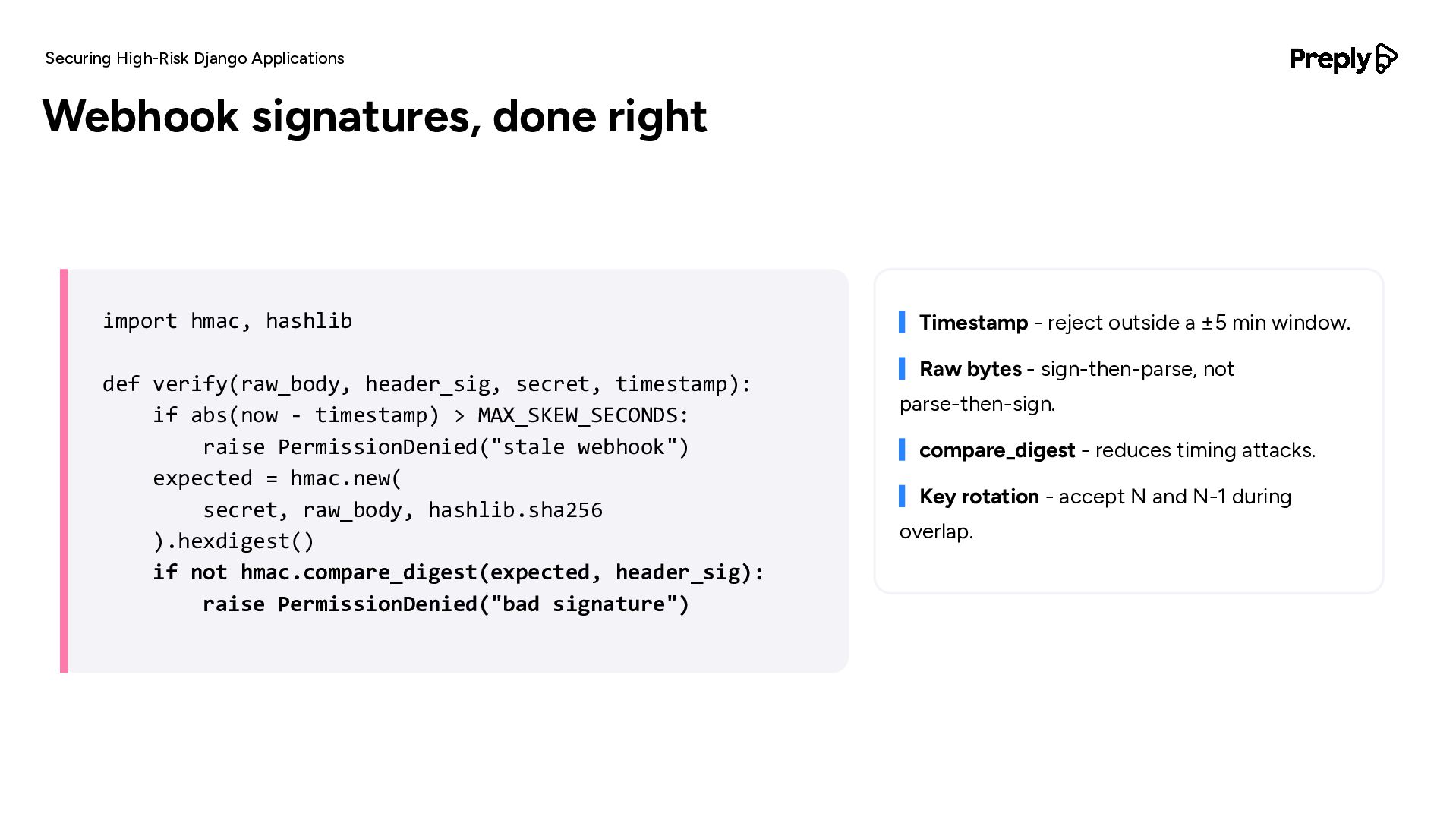
Securing High-Risk Django Applications Webhook signatures, done right import hmac,
hashlib def verify(raw_body, header_sig, secret, timestamp): if abs(now - timestamp) > MAX_SKEW_SECONDS: raise PermissionDenied("stale webhook") expected = hmac.new( secret, raw_body, hashlib.sha256 ).hexdigest() if not hmac.compare_digest(expected, header_sig): raise PermissionDenied("bad signature") ▍ Timestamp - reject outside a ±5 min window. ▍ Raw bytes - sign-then-parse, not parse-then-sign. ▍ compare_digest - reduces timing attacks. ▍ Key rotation - accept N and N-1 during overlap. -
Securing High-Risk Django Applications Webhook signatures, done right import hmac,
hashlib def verify(raw_body, header_sig, secret, timestamp): if abs(now - timestamp) > MAX_SKEW_SECONDS: raise PermissionDenied("stale webhook") expected = hmac.new( secret, raw_body, hashlib.sha256 ).hexdigest() if not hmac.compare_digest(expected, header_sig): raise PermissionDenied("bad signature") ▍ Timestamp - reject outside a ±5 min window. ▍ Raw bytes - sign-then-parse, not parse-then-sign. ▍ compare_digest - reduces timing attacks. ▍ Key rotation - accept N and N-1 during overlap. -
Securing High-Risk Django Applications Webhook signatures, done right import hmac,
hashlib def verify(raw_body, header_sig, secret, timestamp): if abs(now - timestamp) > MAX_SKEW_SECONDS: raise PermissionDenied("stale webhook") expected = hmac.new( secret, raw_body, hashlib.sha256 ).hexdigest() if not hmac.compare_digest(expected, header_sig): raise PermissionDenied("bad signature") ▍ Timestamp - reject outside a ±5 min window. ▍ Raw bytes - sign-then-parse, not parse-then-sign. ▍ compare_digest - reduces timing attacks. ▍ Key rotation - accept N and N-1 during overlap. -
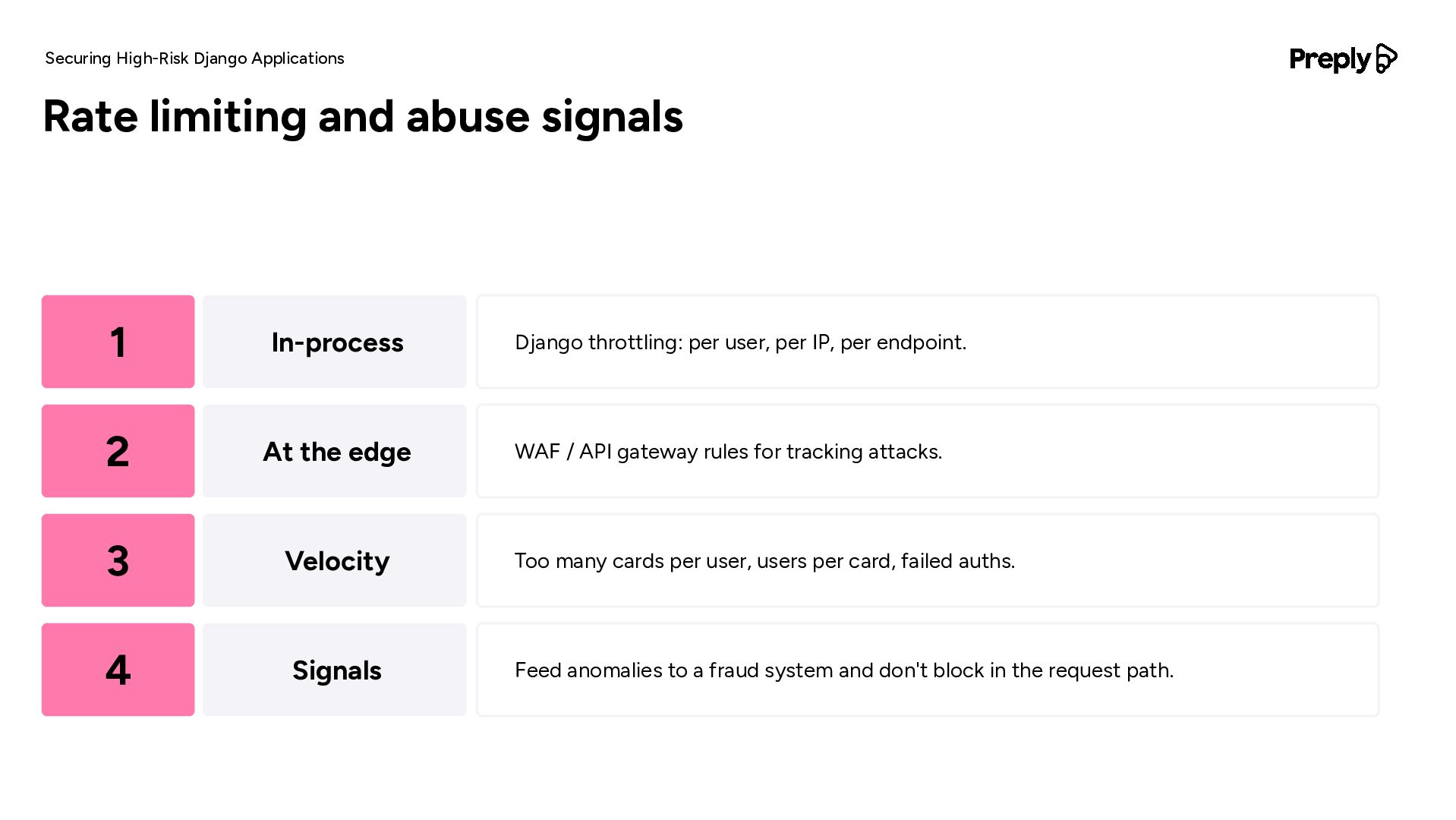
Securing High-Risk Django Applications Rate limiting and abuse signals 1
In-process Django throttling: per user, per IP, per endpoint. 2 At the edge WAF / API gateway rules for tracking attacks. 3 Velocity Too many cards per user, users per card, failed auths. 4 Signals Feed anomalies to a fraud system and don't block in the request path. -
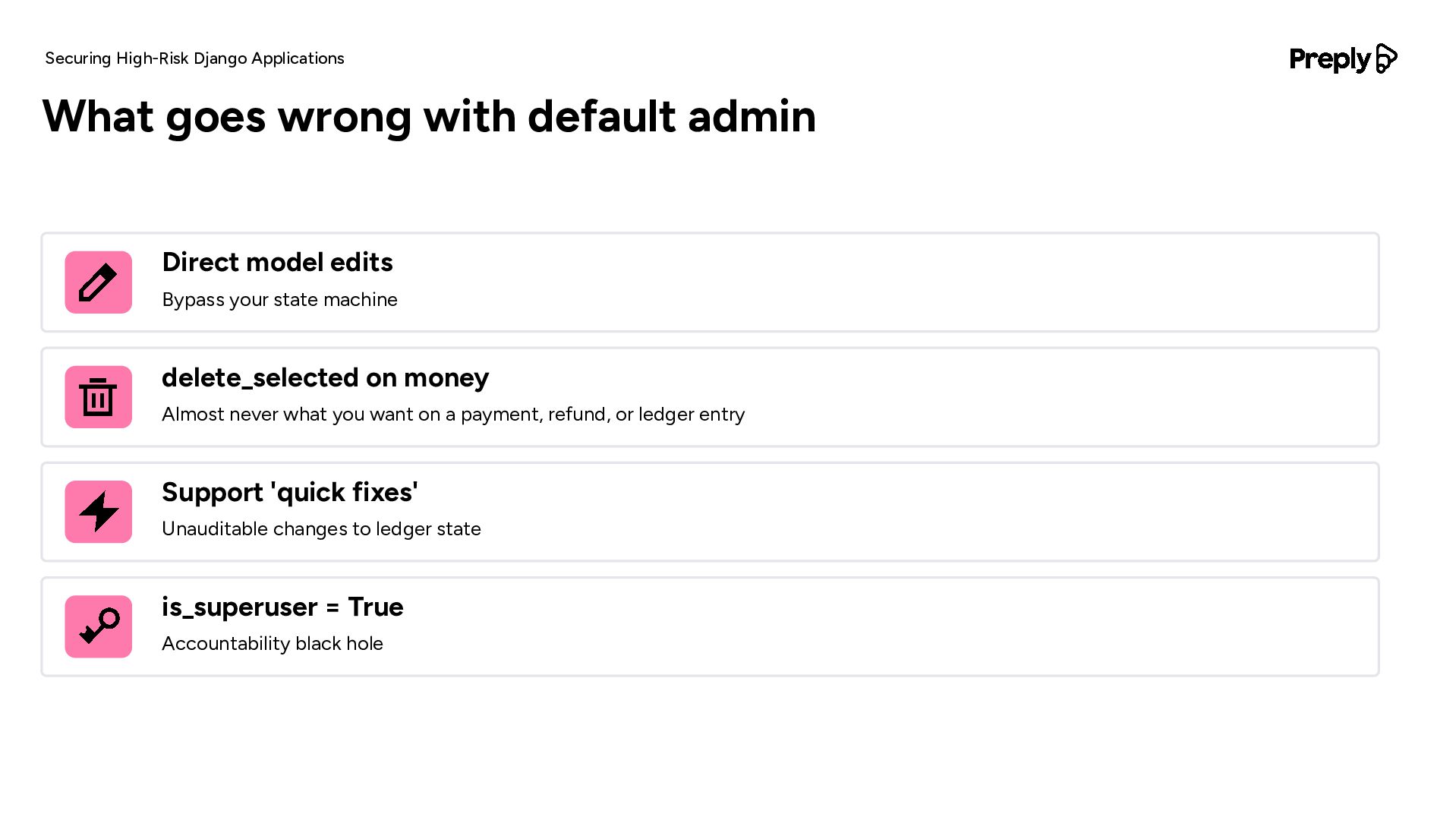
Securing High-Risk Django Applications What goes wrong with default admin
Direct model edits Bypass your state machine delete_selected on money Almost never what you want on a payment, refund, or ledger entry Support 'quick fixes' Unauditable changes to ledger state is_superuser = True Accountability black hole -
Securing High-Risk Django Applications Make the admin boring on purpose
Read-only by default Financial models read-only in admin -
Securing High-Risk Django Applications Make the admin boring on purpose
Four-eyes / dual control Refunds above a threshold require a second approver -
Securing High-Risk Django Applications Make the admin boring on purpose
Action-level audit log Who, when, why, before/after, ticket ID… -
Securing High-Risk Django Applications Make the admin boring on purpose
Permission groups No superusers -
Securing High-Risk Django Applications Make the admin boring on purpose
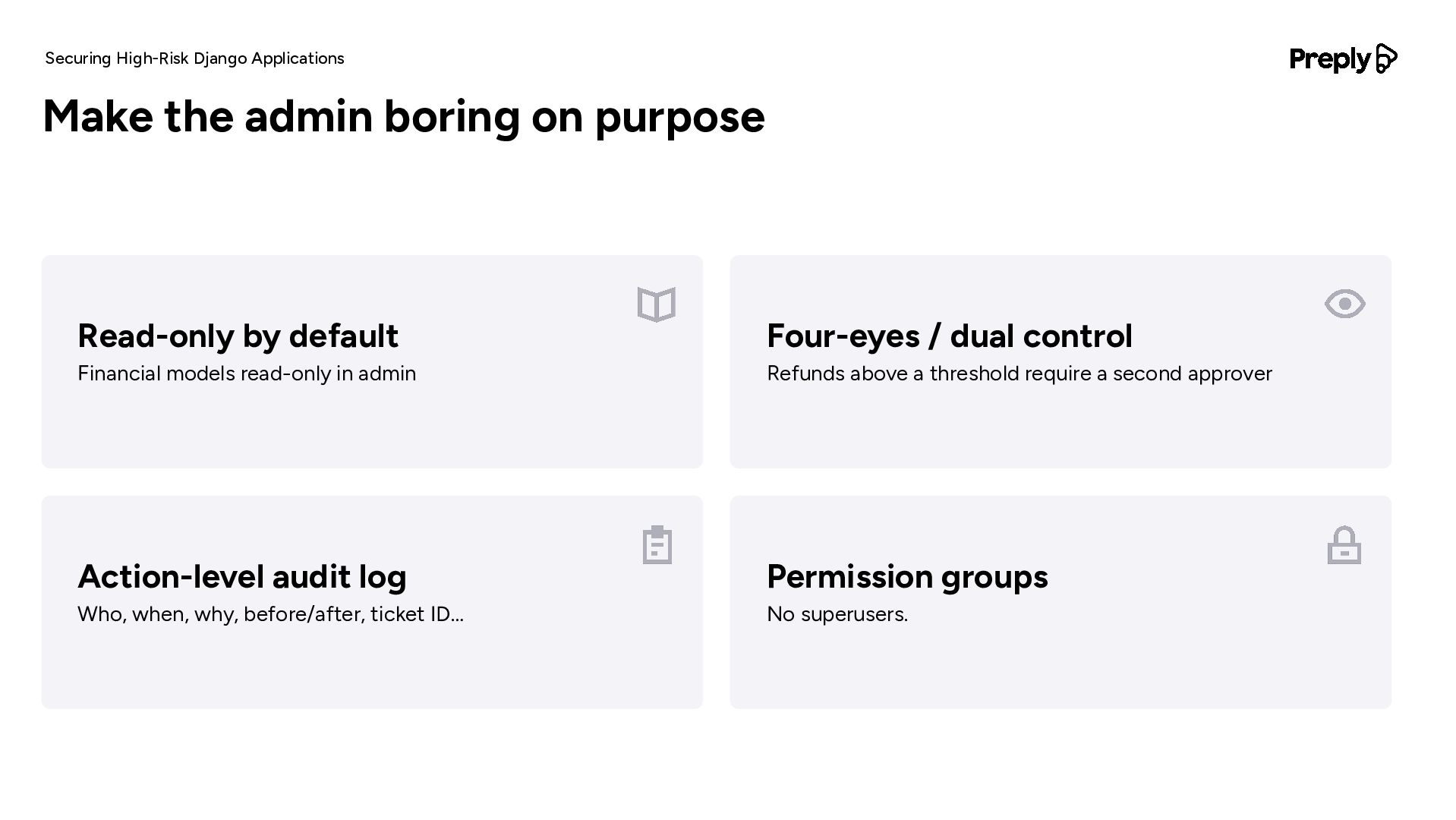
Read-only by default Four-eyes / dual control Financial models read-only in admin Refunds above a threshold require a second approver Action-level audit log Permission groups Who, when, why, before/after, ticket ID… No superusers. -
You will be on call for this. Make 3 a.m.
you grateful. -
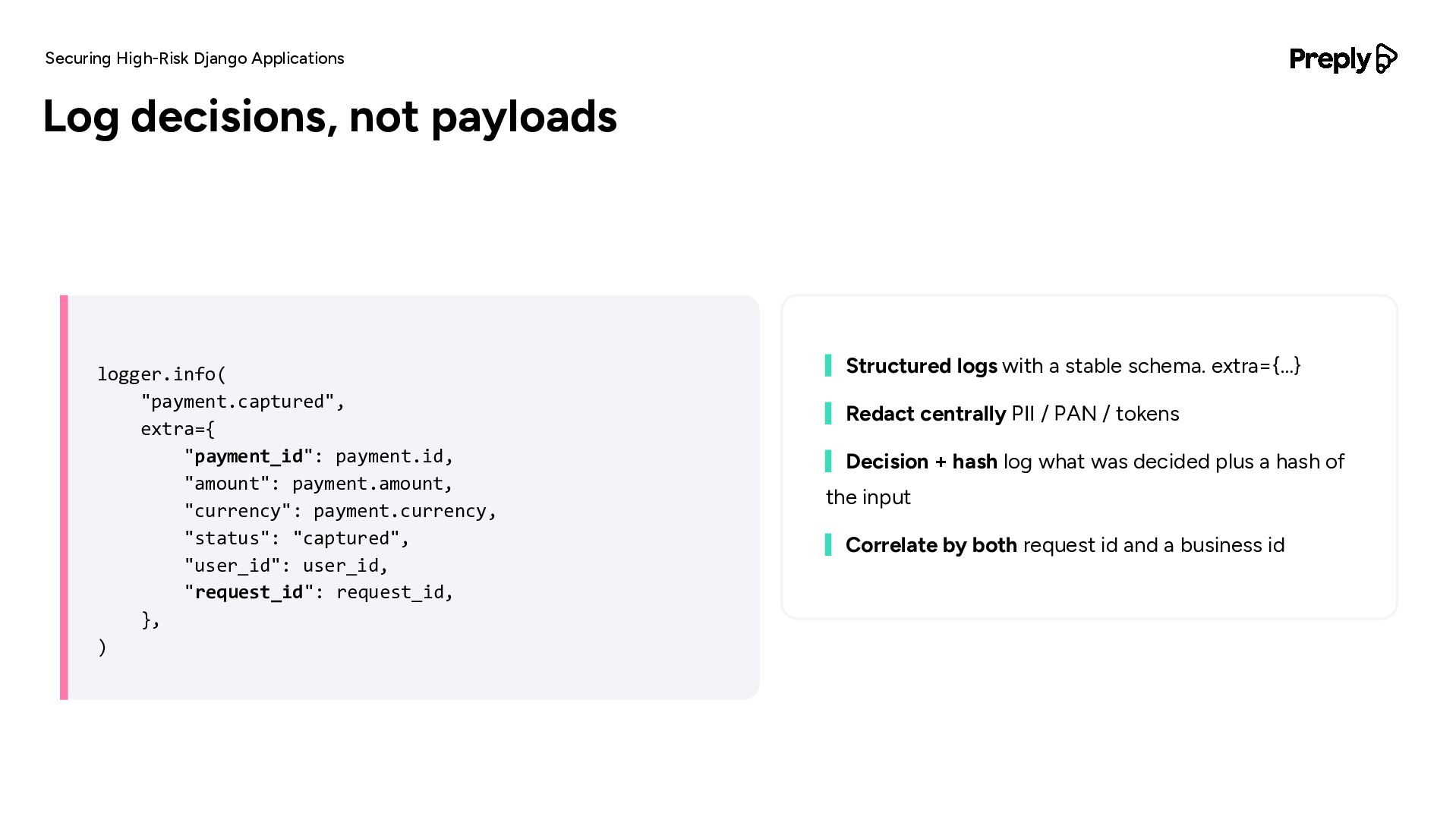
Securing High-Risk Django Applications Log decisions, not payloads logger.info( "payment.captured",
extra={ "payment_id": payment.id, "amount": payment.amount, "currency": payment.currency, "status": "captured", "user_id": user_id, "request_id": request_id, }, ) ▍ Structured logs with a stable schema. extra={…} ▍ Redact centrally PII / PAN / tokens ▍ Decision + hash log what was decided plus a hash of the input ▍ Correlate by both request id and a business id -
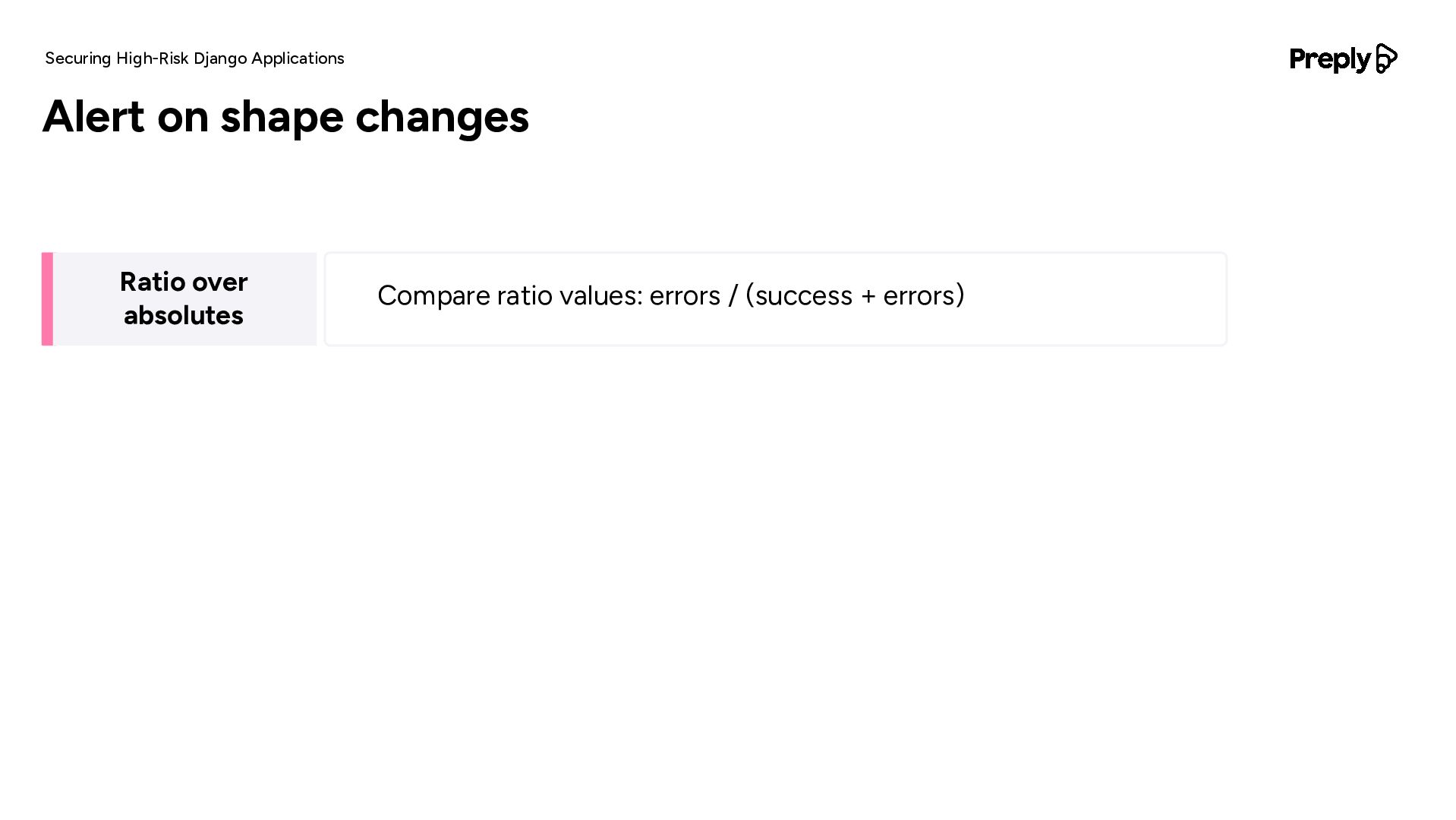
Securing High-Risk Django Applications Alert on shape changes Ratio over
absolutes Compare ratio values: errors / (success + errors) -
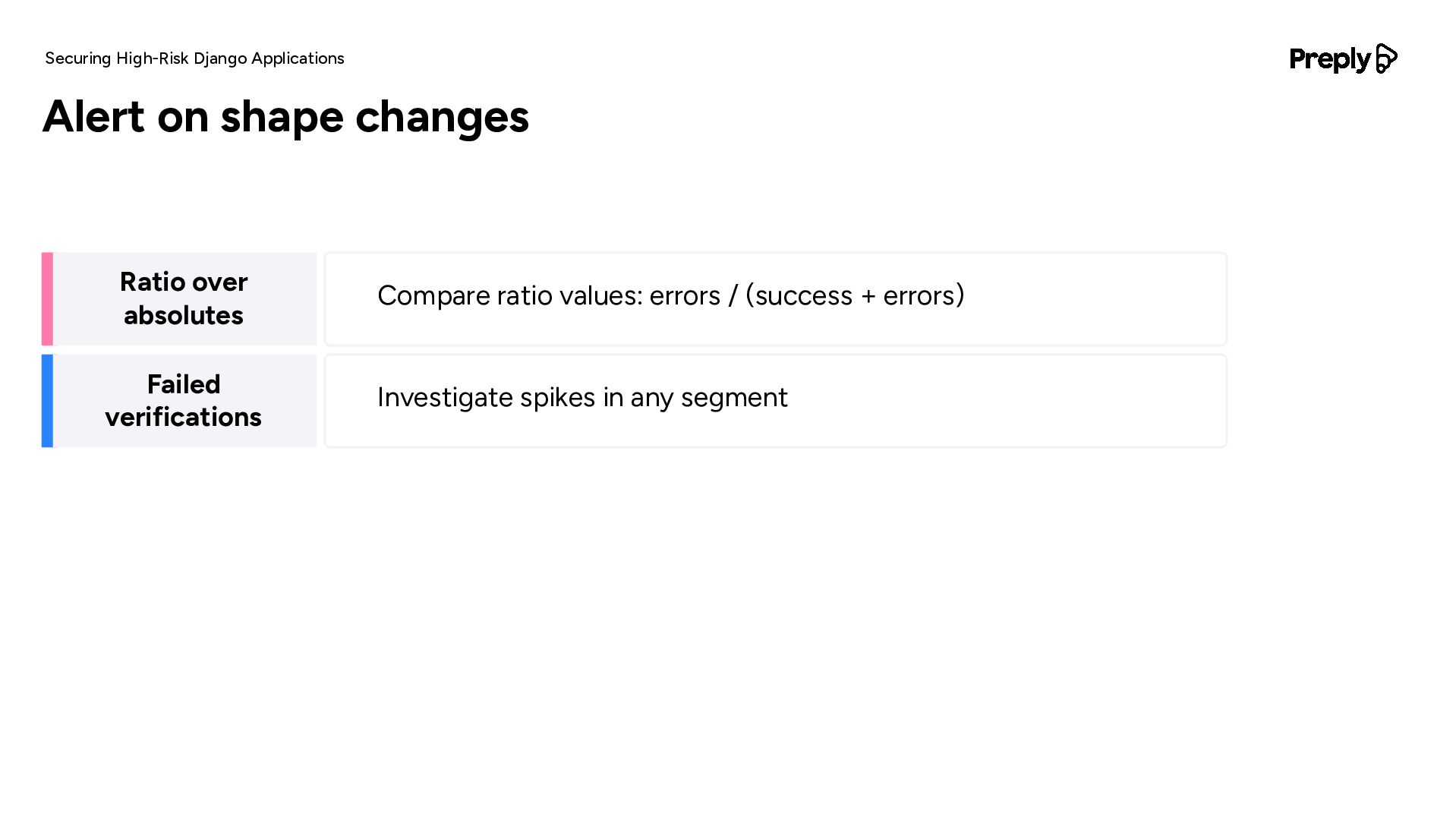
Securing High-Risk Django Applications Alert on shape changes Ratio over
absolutes Compare ratio values: errors / (success + errors) Failed verifications Investigate spikes in any segment -
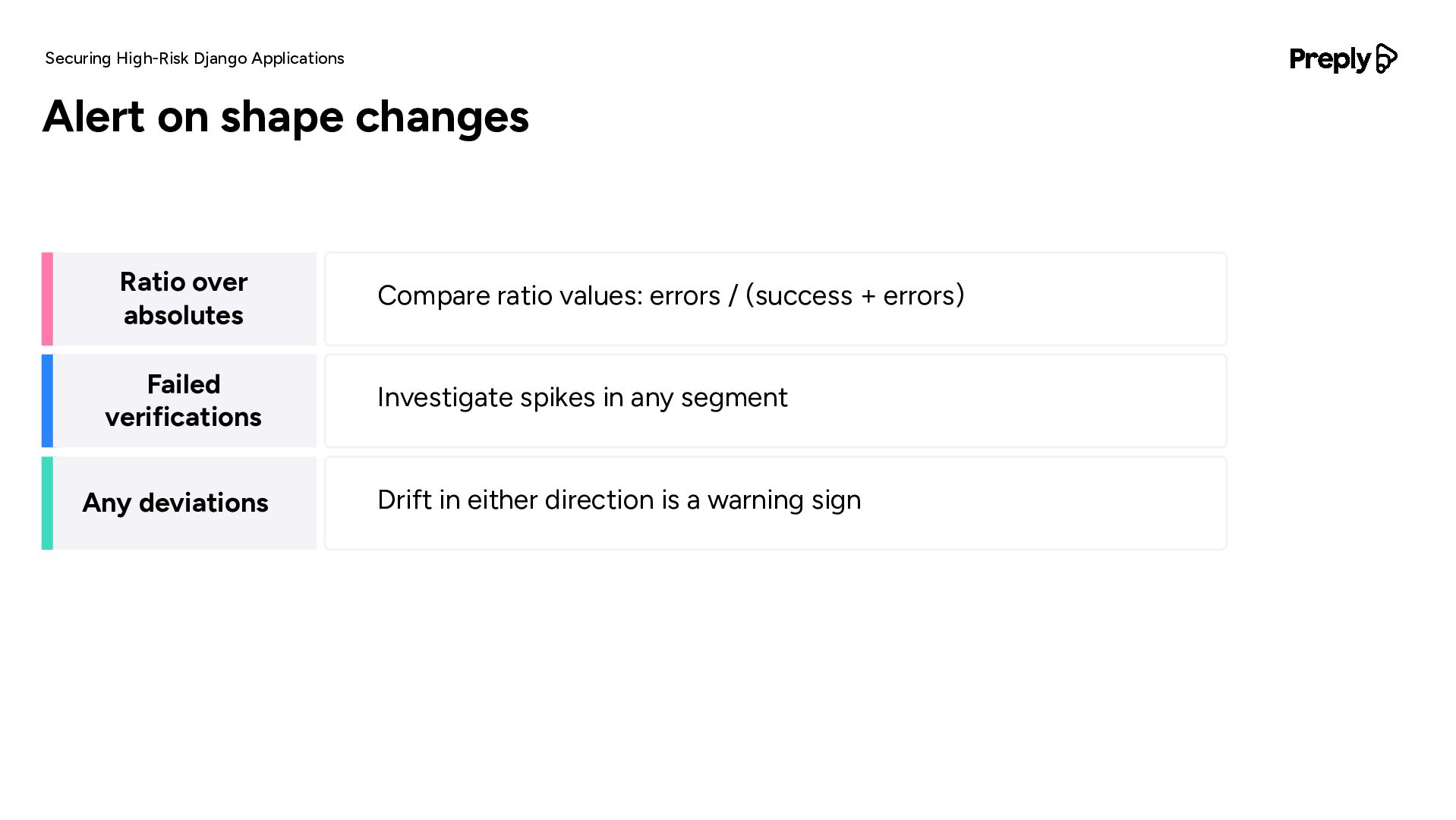
Securing High-Risk Django Applications Alert on shape changes Ratio over
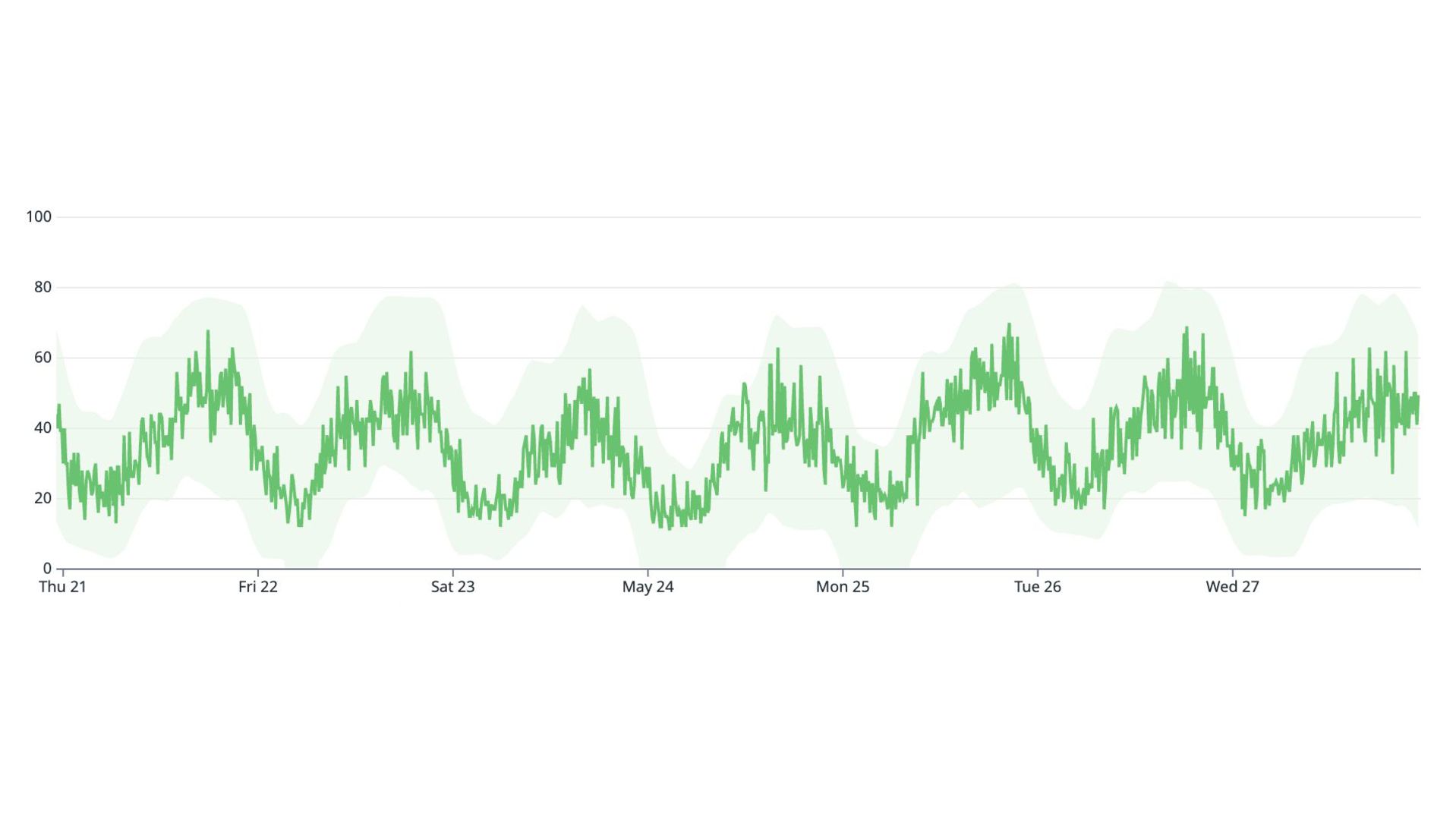
absolutes Compare ratio values: errors / (success + errors) Failed verifications Investigate spikes in any segment Any deviations Drift in either direction is a warning sign -
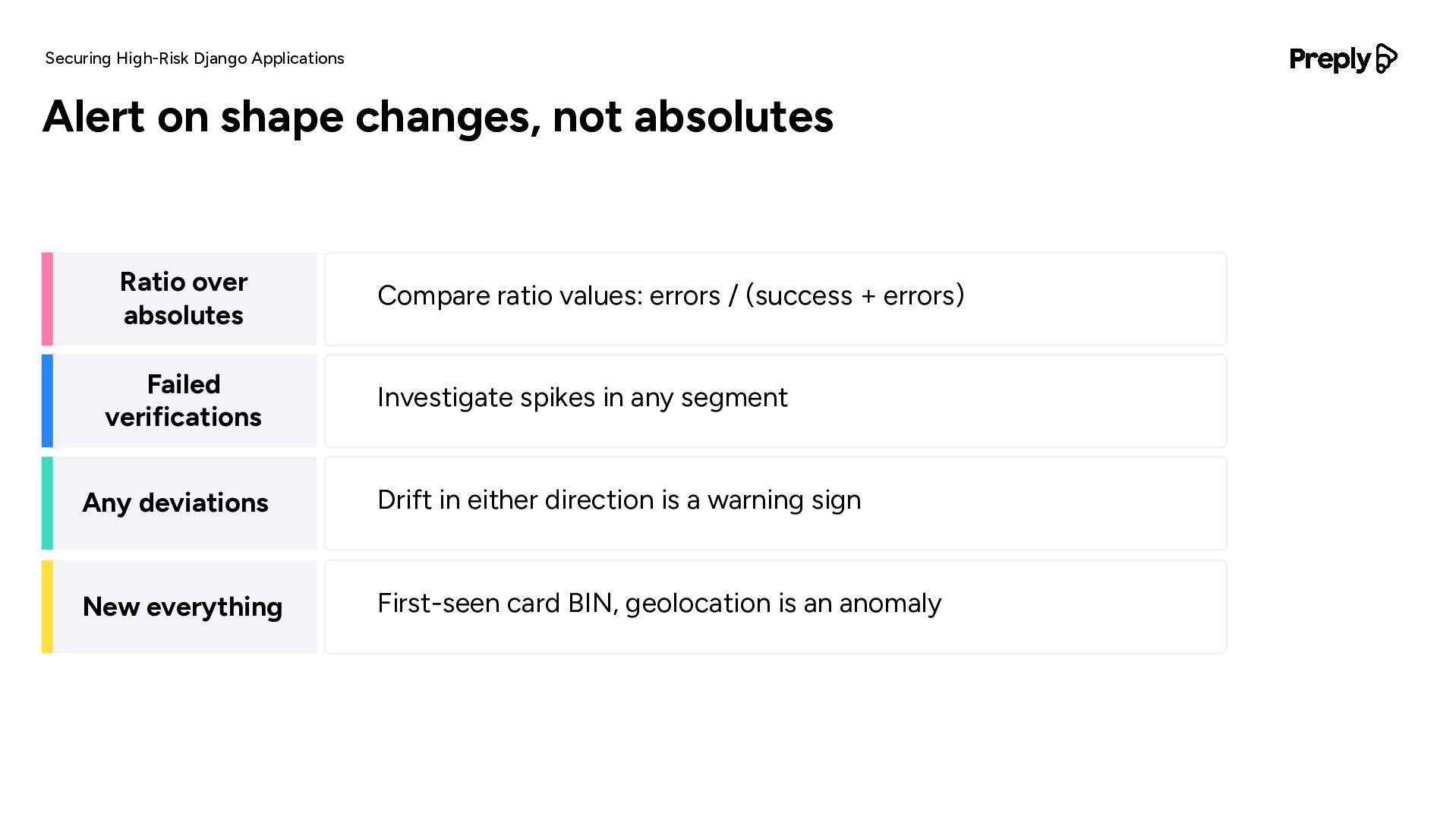
Securing High-Risk Django Applications Alert on shape changes, not absolutes
Ratio over absolutes Compare ratio values: errors / (success + errors) Failed verifications Investigate spikes in any segment Any deviations Drift in either direction is a warning sign New everything First-seen card BIN, geolocation is an anomaly -
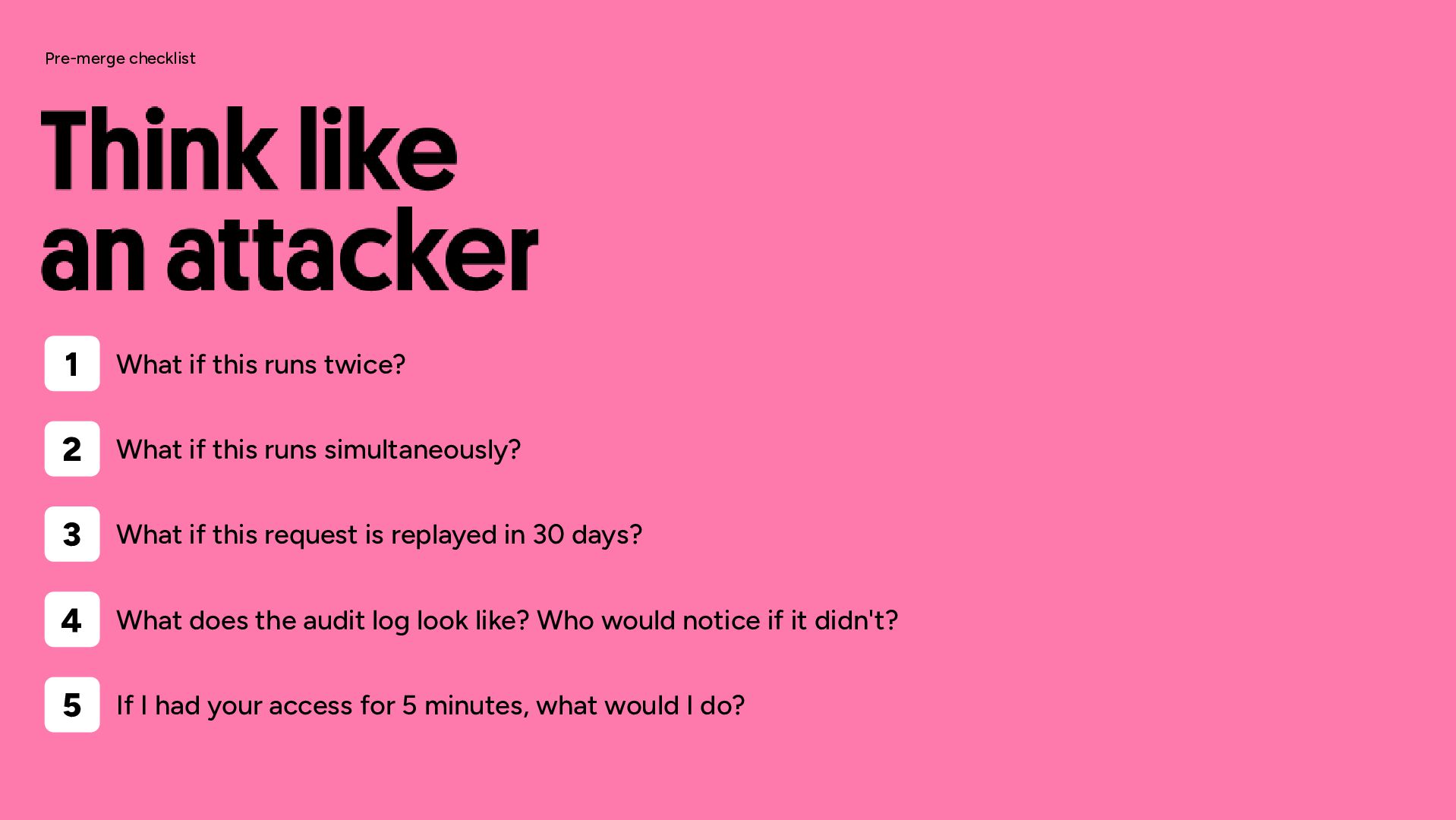
Pre-merge checklist 1 What if this runs twice? 2 What
if this runs simultaneously? 3 What if this request is replayed in 30 days? 4 What does the audit log look like? Who would notice if it didn't? 5 If I had your access for 5 minutes, what would I do? -
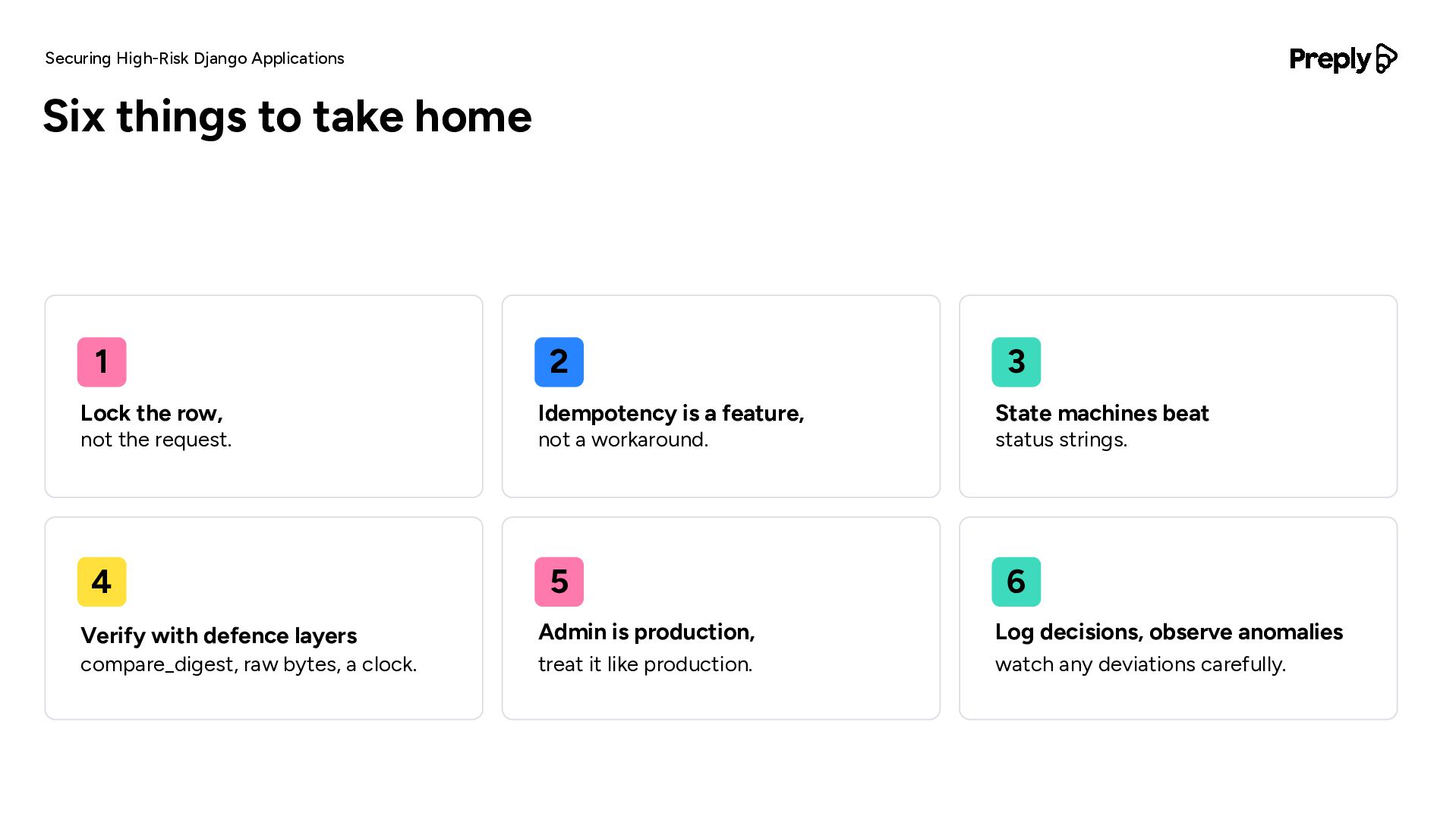
Securing High-Risk Django Applications Six things to take home 1
2 3 Lock the row, Idempotency is a feature, State machines beat not the request. not a workaround. status strings. 4 5 6 Verify with defence layers Admin is production, Log decisions, observe anomalies compare_digest, raw bytes, a clock. treat it like production. watch any deviations carefully.