Upgrade to Pro — share decks privately, control downloads, hide ads and more …

Prioritizing Flexibility in the Cloud: A Tracky...

Sponsored · SiteGround - Reliable hosting with speed, security, and support you can count on. →

Prioritizing Flexibility in the Cloud: A Tracky Success Story

With the global public cloud market expected to reach revenues of $66 billion by 2016, it’s clear that businesses of all sizes and verticals are turning to the cloud for its flexibility, accessibility and scalability benefits. But, for SMBs with limited staff and resources, migrating to the cloud often poses challenges.

After battling restrictive providers’ fixed server instances, bundled resources, high costs and limited deployment options, Web-based social collaboration company Tracky knew it needed to prioritize finding a more flexible public cloud provider – one that provided the high performance computing environment and seamless experience its growing user base required.

In this session, Tracky Vice President of Development David Longnecker and CloudSigma CEO Robert Jenkins will take a deeper look into Tracky’'s migration to public cloud, explaining why a flexible cloud provider is a necessity for growing SMBs that require a robust, high performance computing environment, but won’t break the bank.

Avatar for David R. Longnecker

David R. Longnecker

August 27, 2013

Other Decks in Technology

Transcript

  1. Tracky Company Snapshot • Founded in 2011. • A “social

    collaboration” platform connecting you, your social networks, and the things you need to do—all in one place. • A “social publishing” platform building online communities through collaboration.
  2. Tracky’s Story • Small, rapidly growing SaaS platform. • Frequently

    changing needs. • Physical hardware too restrictive, time consuming.
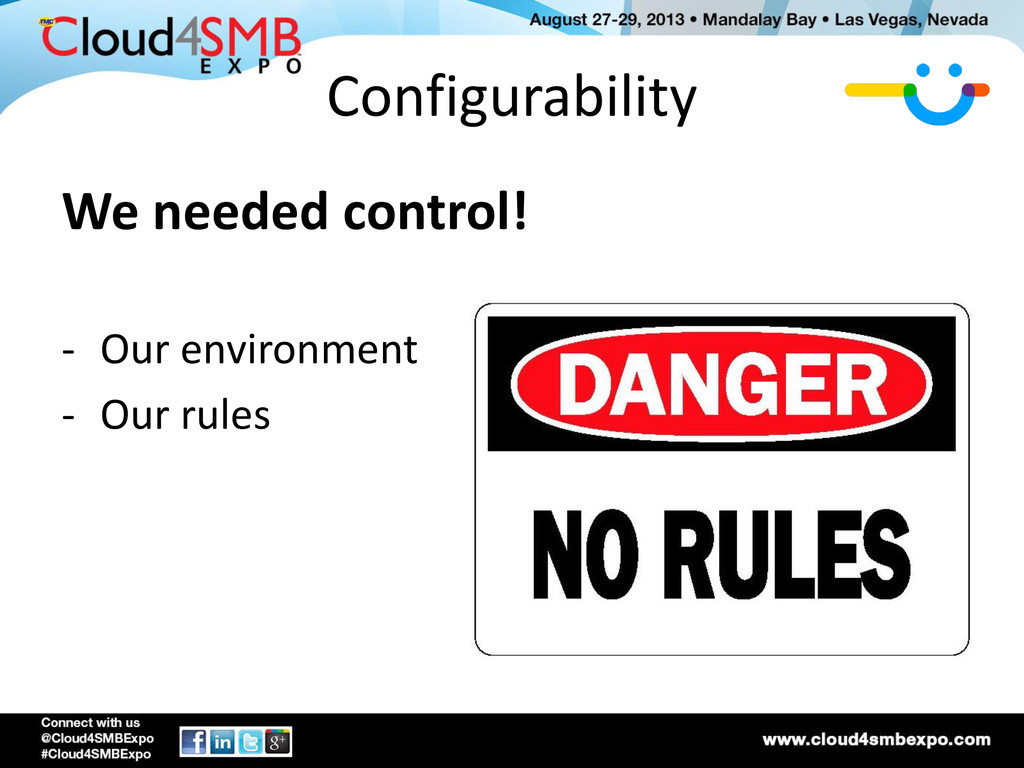
  3. The Unknown Problems SMBs with physical infrastructures may not anticipate
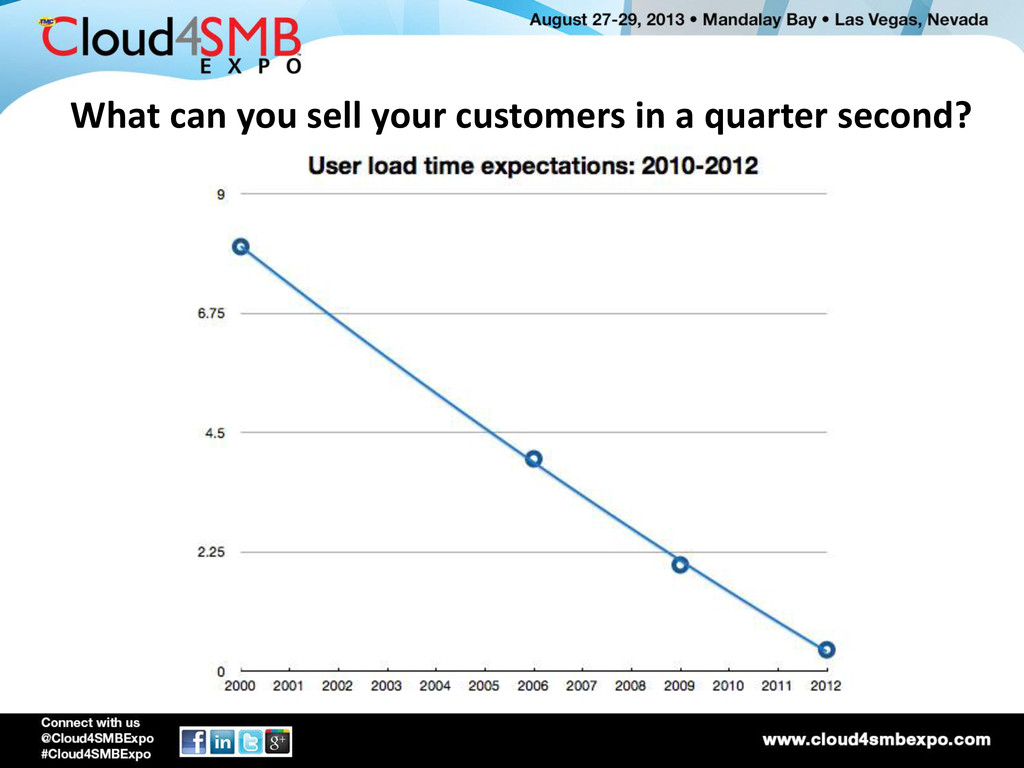
    “the lacks”. • Lack of flexibility • Lack of configurability • Lack of performance
  4. Flexibility We needed flexibility! Provider s c a l eis

    important. – too expensive to grow into – wrong mix of features – inefficient
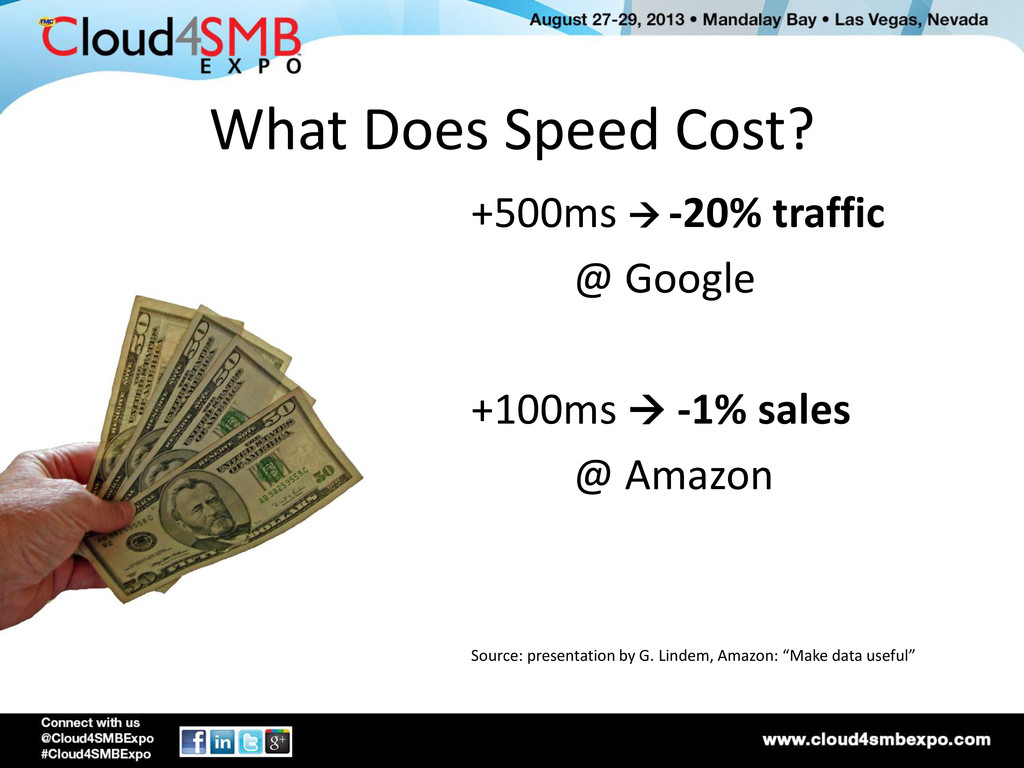
  5. What Does Speed Cost? +500ms  -20% traffic @ Google

    +100ms  -1% sales @ Amazon Source: presentation by G. Lindem, Amazon: “Make data useful”
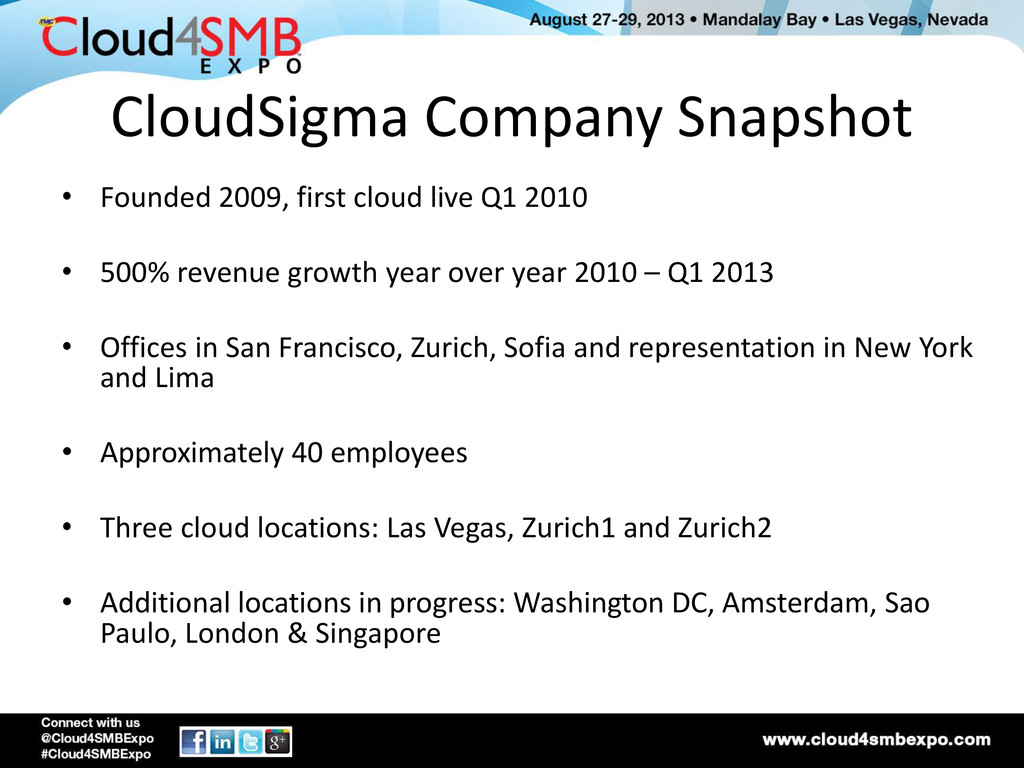
  6. CloudSigma Company Snapshot • Founded 2009, first cloud live Q1

    2010 • 500% revenue growth year over year 2010 – Q1 2013 • Offices in San Francisco, Zurich, Sofia and representation in New York and Lima • Approximately 40 employees • Three cloud locations: Las Vegas, Zurich1 and Zurich2 • Additional locations in progress: Washington DC, Amsterdam, Sao Paulo, London & Singapore
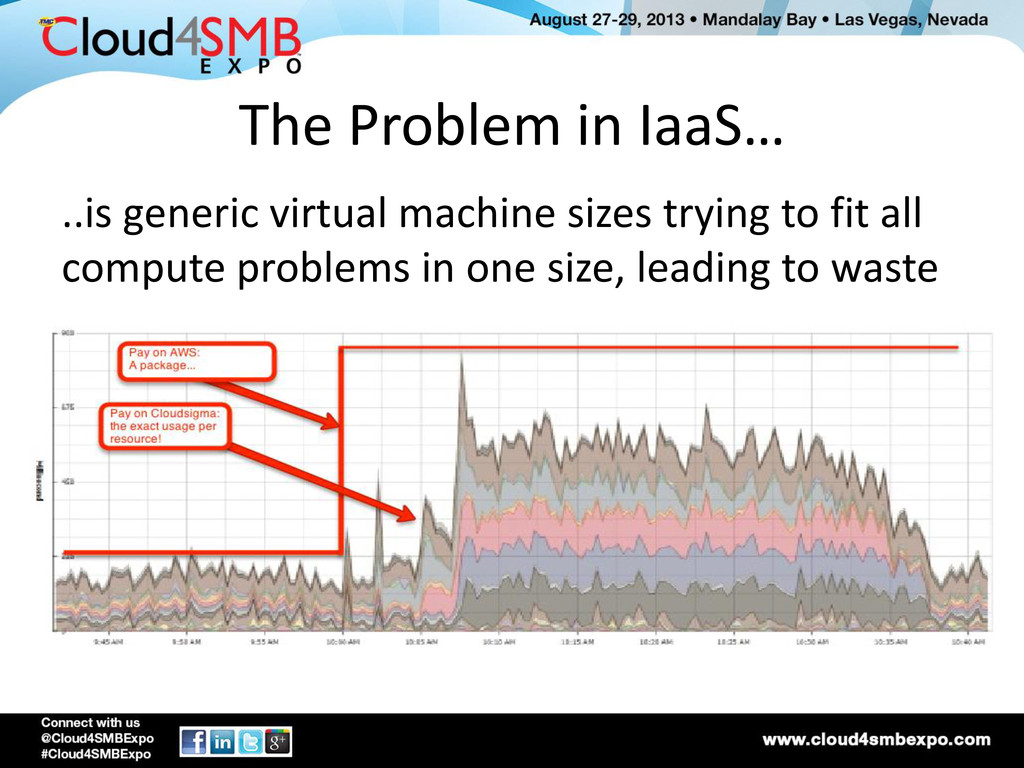
  7. The Problem in IaaS… ..is generic virtual machine sizes trying

    to fit all compute problems in one size, leading to waste
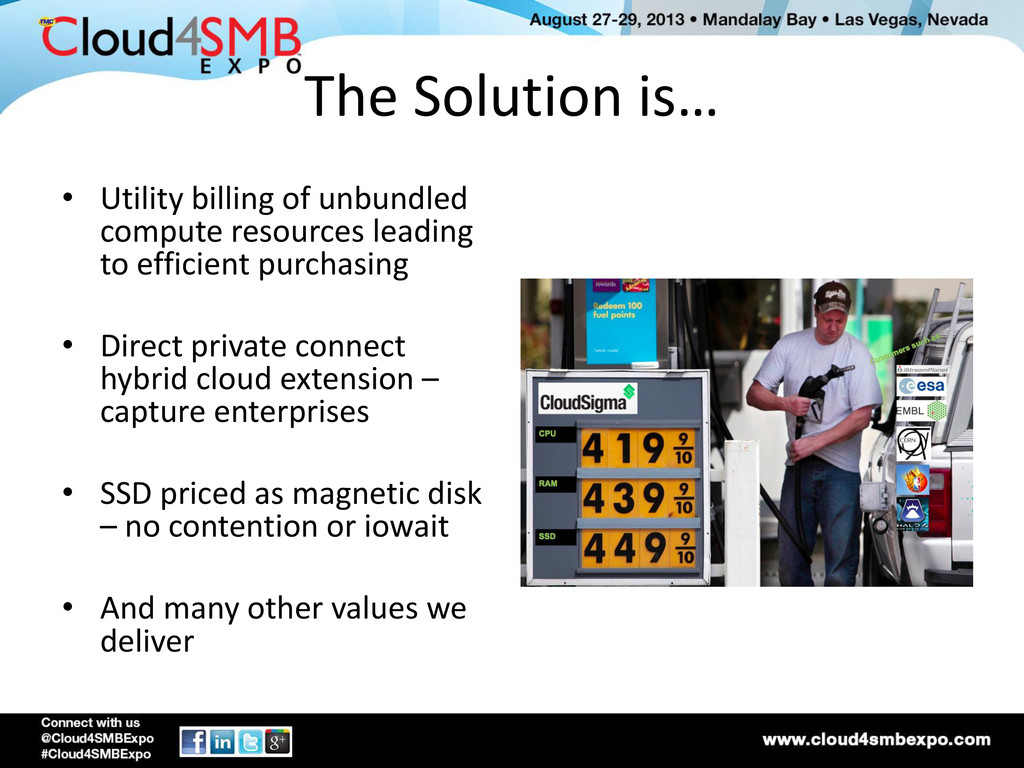
  8. The Solution is… • Utility billing of unbundled compute resources

    leading to efficient purchasing • Direct private connect hybrid cloud extension – capture enterprises • SSD priced as magnetic disk – no contention or iowait • And many other values we deliver
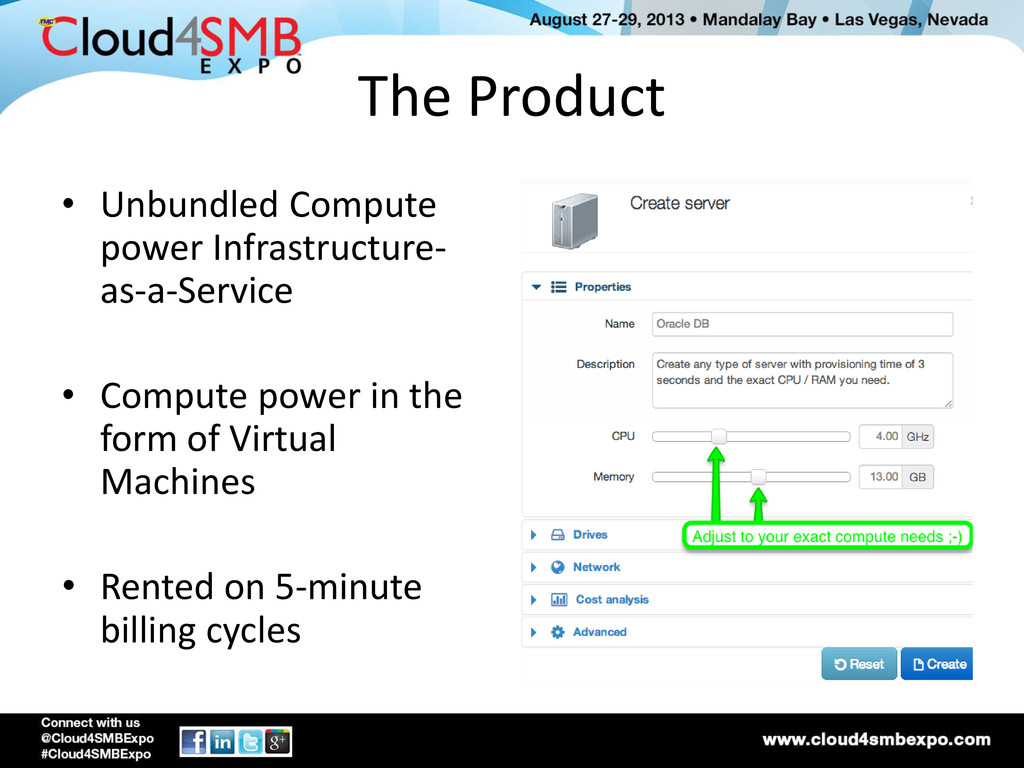
  9. The Product • Unbundled Compute power Infrastructure- as-a-Service • Compute

    power in the form of Virtual Machines • Rented on 5-minute billing cycles
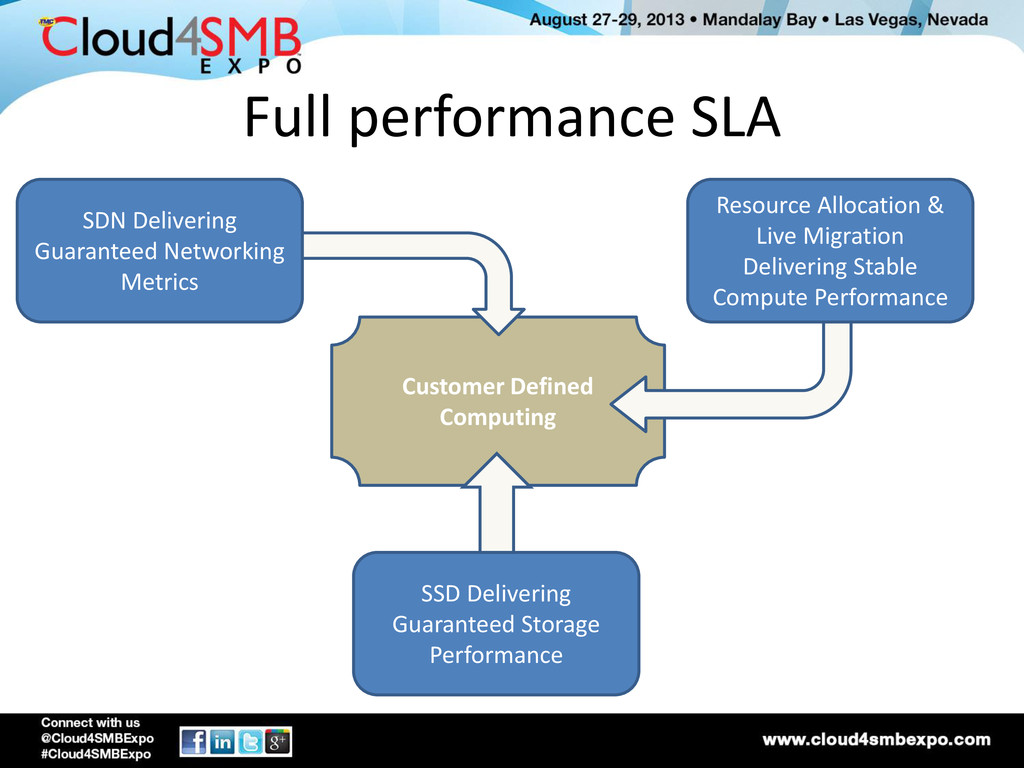
  10. Full performance SLA SDN Delivering Guaranteed Networking Metrics SSD Delivering

    Guaranteed Storage Performance Resource Allocation & Live Migration Delivering Stable Compute Performance Customer Defined Computing
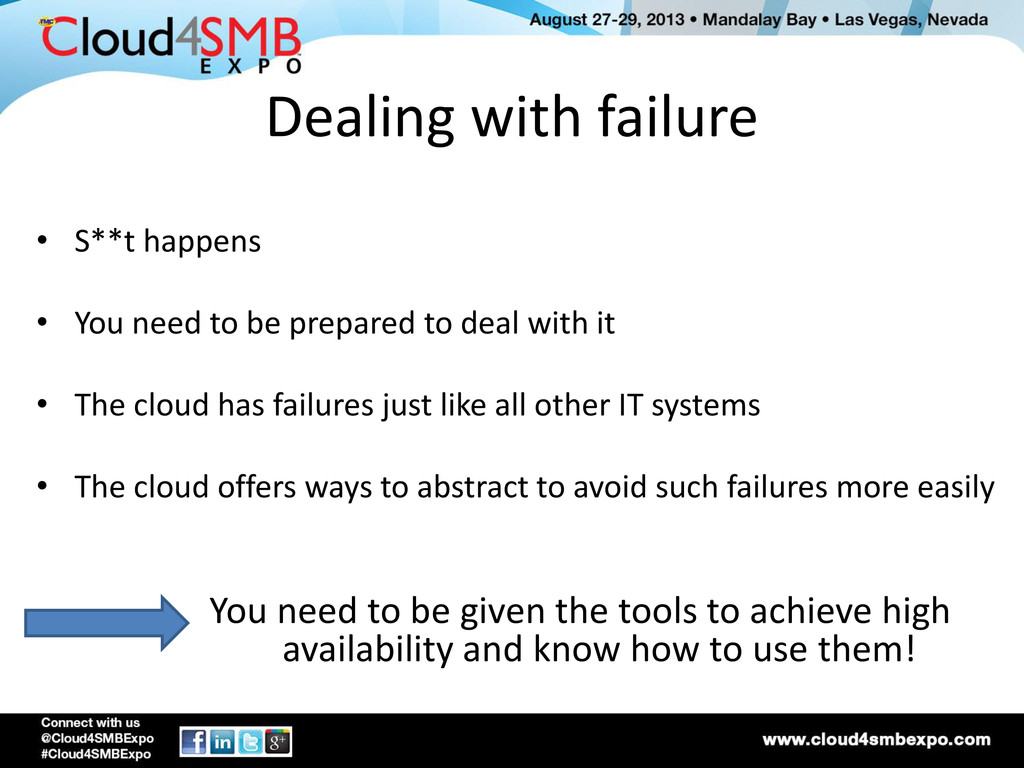
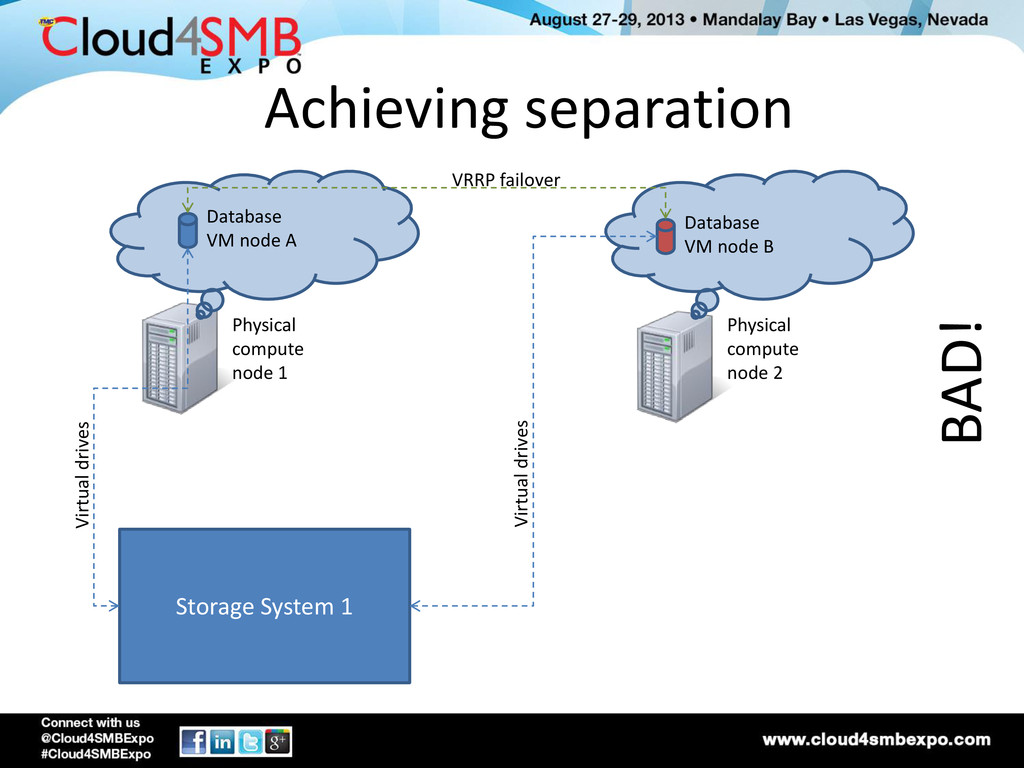
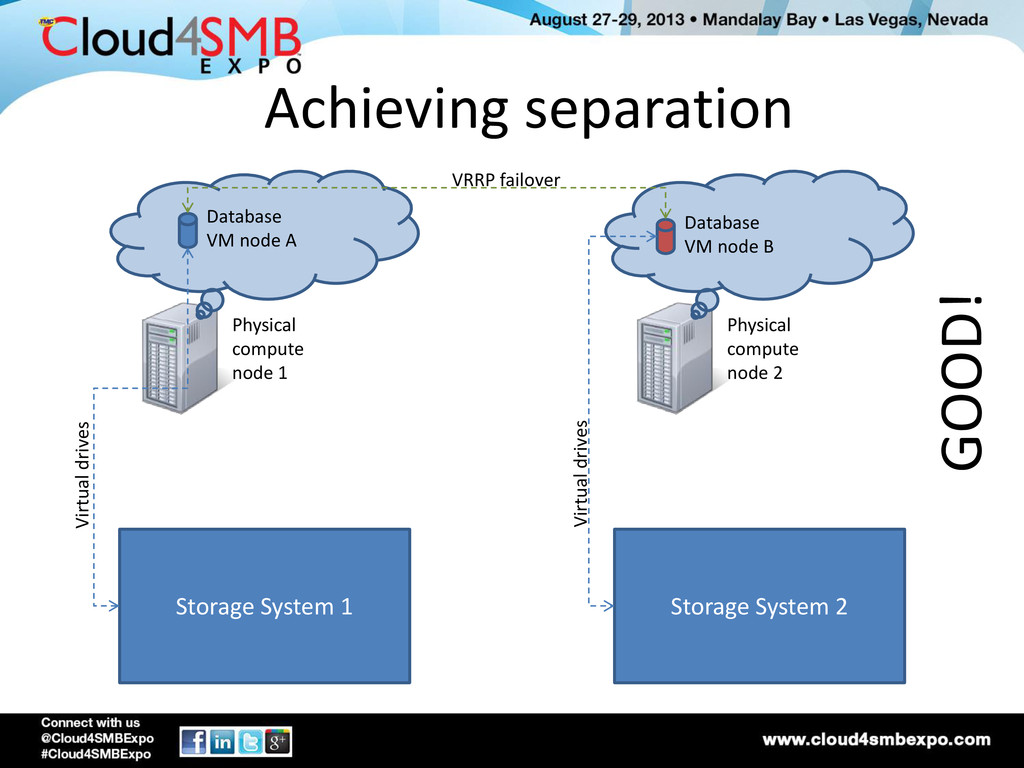
  11. Dealing with failure • S**t happens • You need to

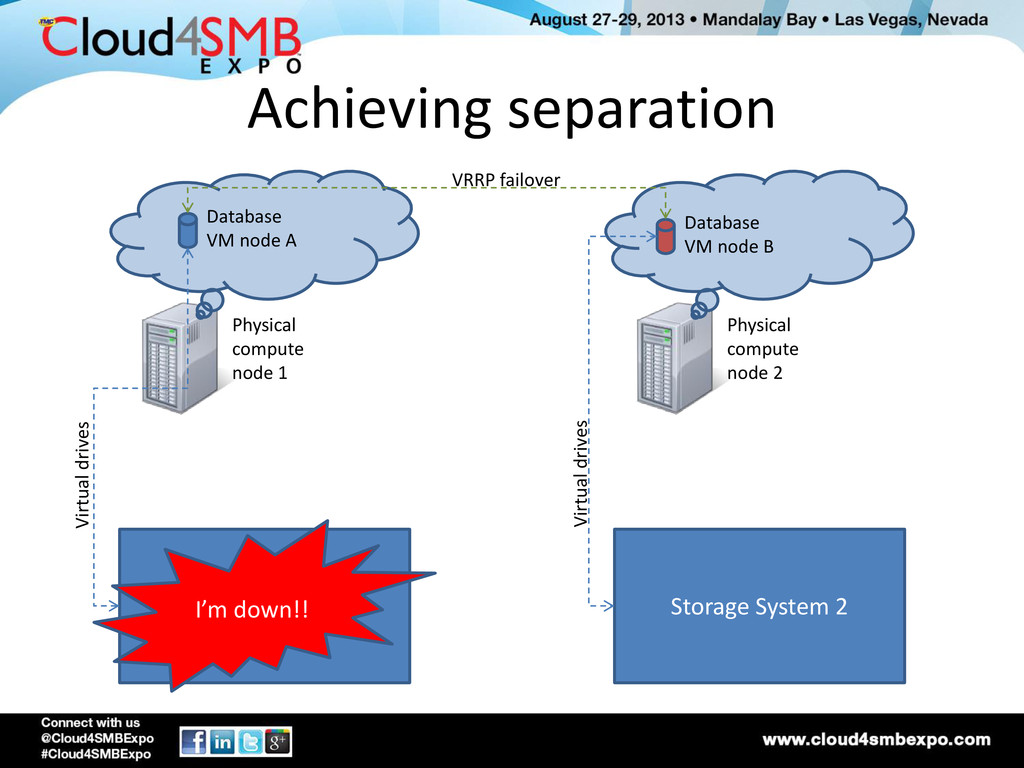
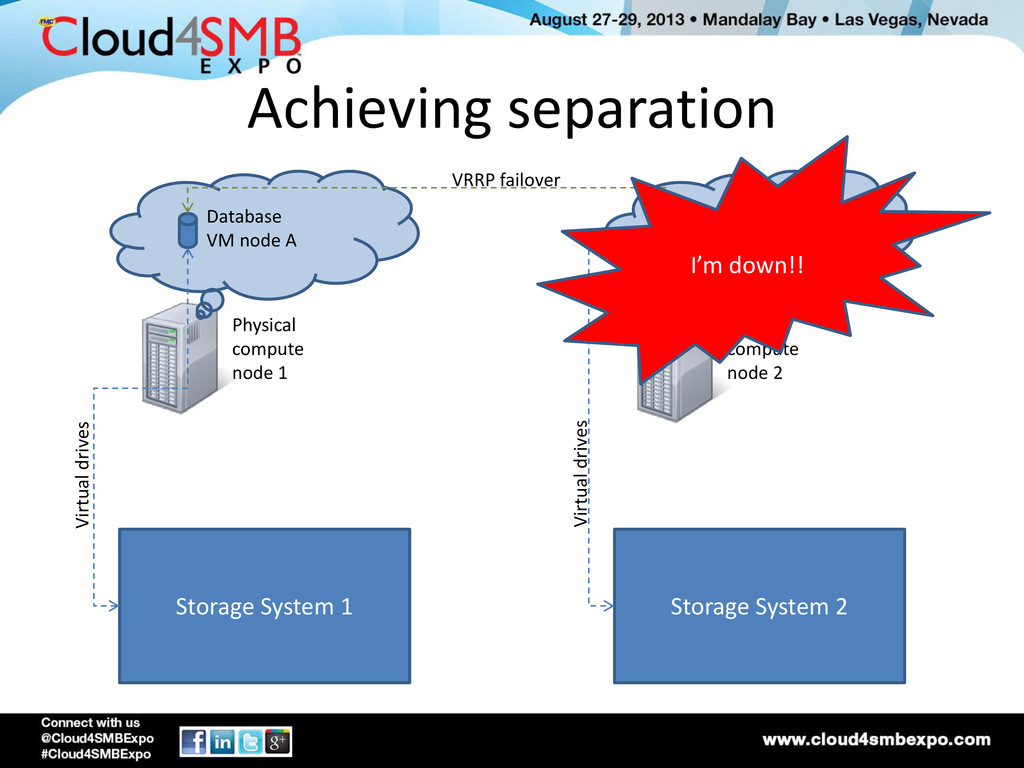
    be prepared to deal with it • The cloud has failures just like all other IT systems • The cloud offers ways to abstract to avoid such failures more easily You need to be given the tools to achieve high availability and know how to use them!
  12. BAD! Physical compute node 1 Physical compute node 2 Database

    VM node A Database VM node B Storage System 1 Virtual drives Virtual drives VRRP failover Achieving separation
  13. GOOD! Physical compute node 1 Physical compute node 2 Database

    VM node A Database VM node B Storage System 1 Storage System 2 Virtual drives Virtual drives VRRP failover Achieving separation
  14. Storage System 1 Achieving separation Physical compute node 1 Physical

    compute node 2 Database VM node A Database VM node B Storage System 2 Virtual drives Virtual drives VRRP failover I’m down!!
  15. Achieving separation Physical compute node 1 Physical compute node 2

    Database VM node A Database VM node B Storage System 1 Storage System 2 Virtual drives Virtual drives VRRP failover I’m down!!
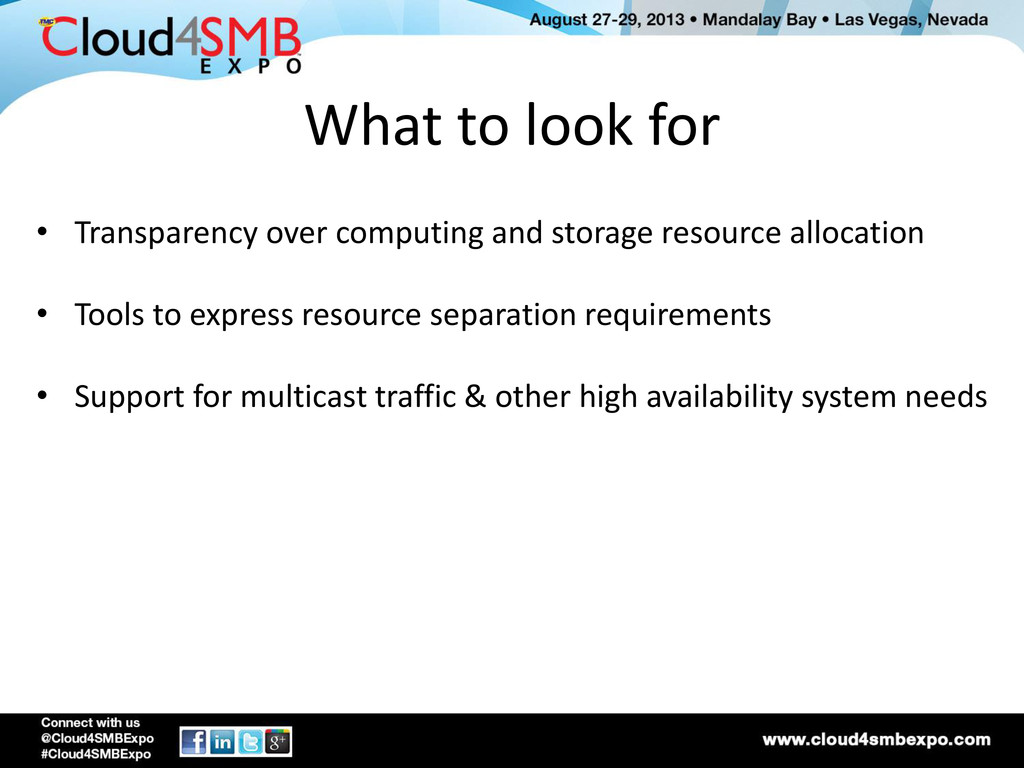
  16. What to look for • Transparency over computing and storage

    resource allocation • Tools to express resource separation requirements • Support for multicast traffic & other high availability system needs