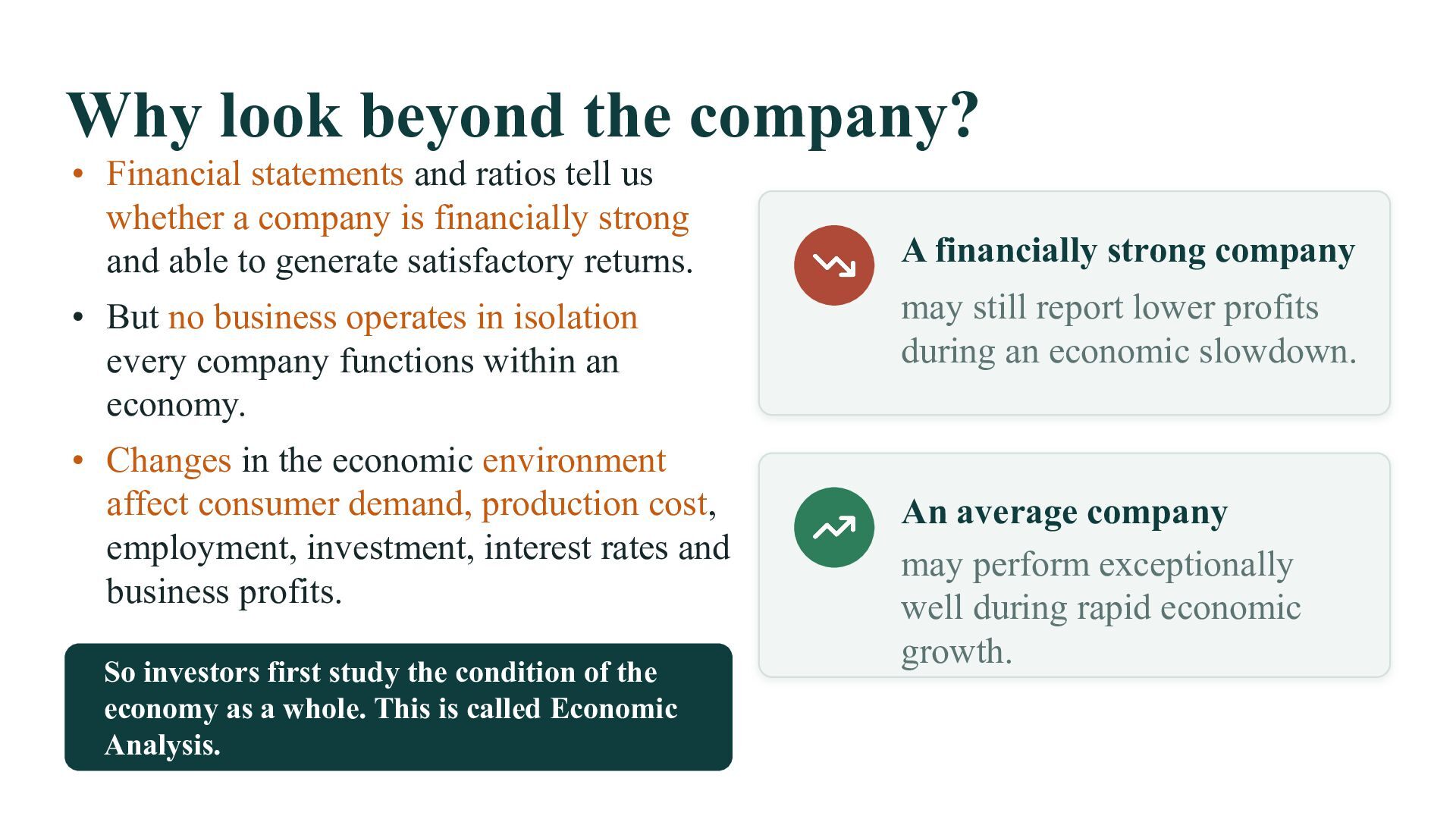
tell us whether a company is financially strong and able to generate satisfactory returns. • But no business operates in isolation every company functions within an economy. • Changes in the economic environment affect consumer demand, production cost, employment, investment, interest rates and business profits. So investors first study the condition of the economy as a whole. This is called Economic Analysis. A financially strong company may still report lower profits during an economic slowdown. An average company may perform exceptionally well during rapid economic growth.
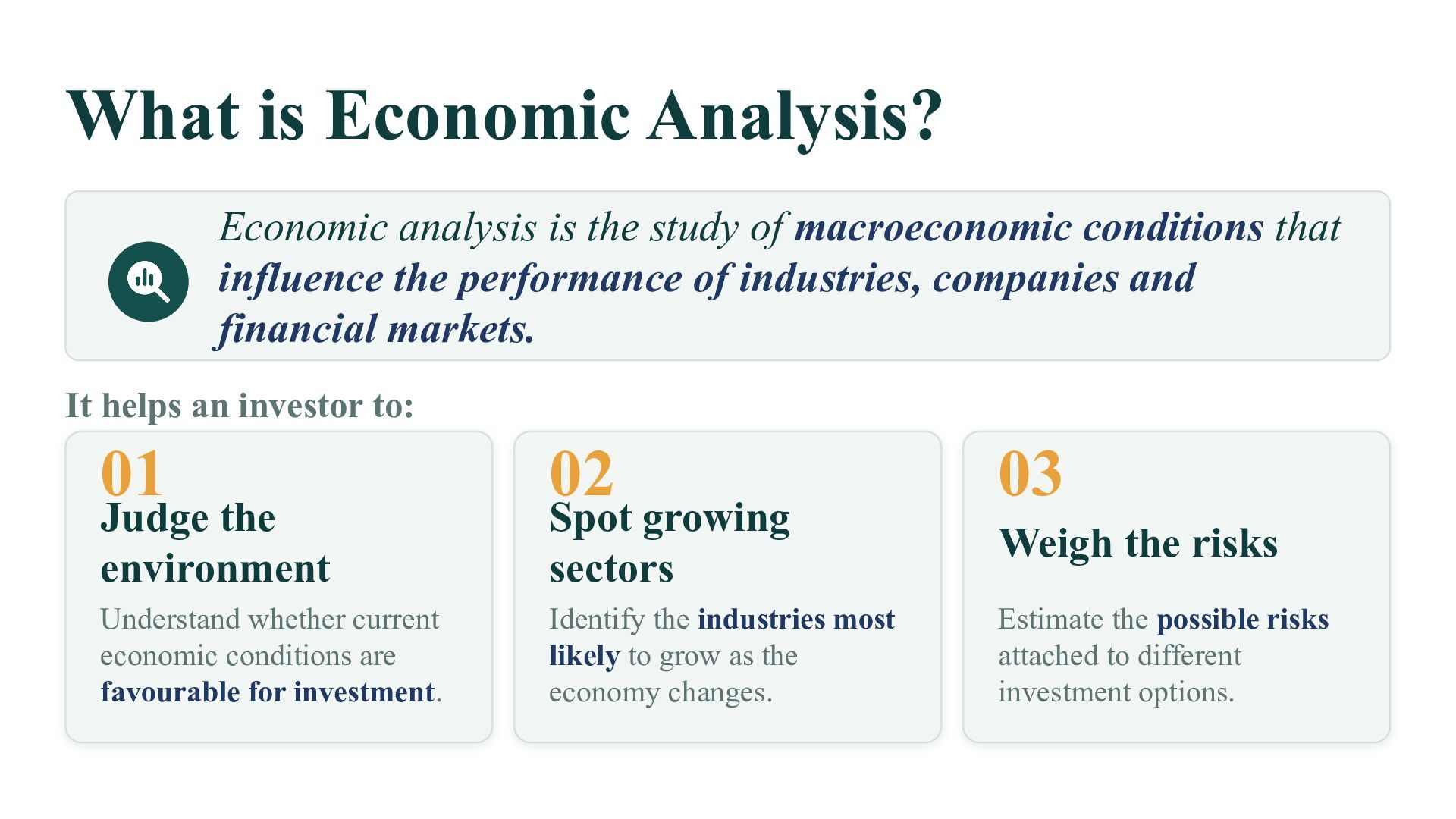
macroeconomic conditions that influence the performance of industries, companies and financial markets. It helps an investor to: 01 Judge the environment Understand whether current economic conditions are favourable for investment. 02 Spot growing sectors Identify the industries most likely to grow as the economy changes. 03 Weigh the risks Estimate the possible risks attached to different investment options.
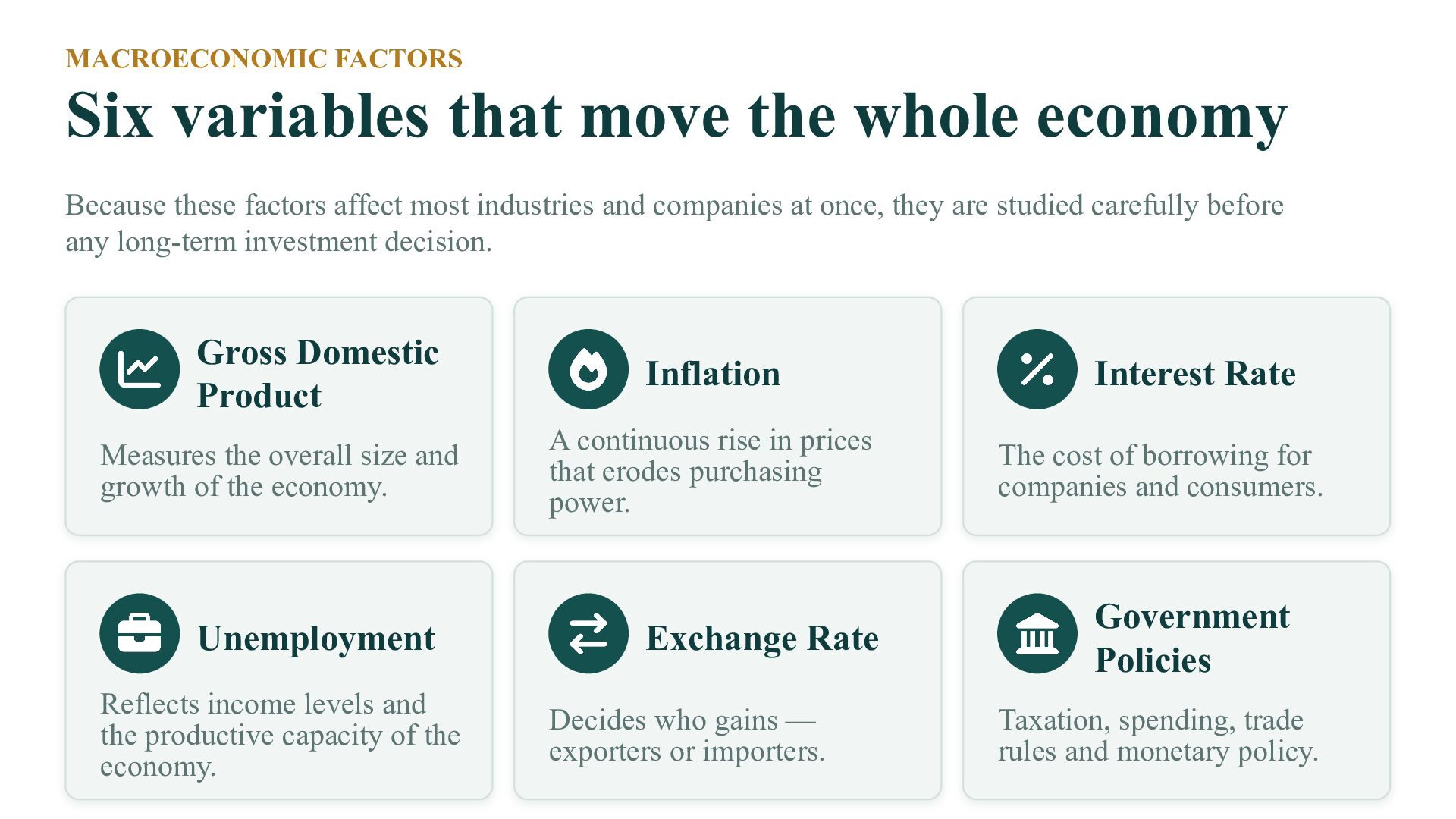
these factors affect most industries and companies at once, they are studied carefully before any long-term investment decision. Gross Domestic Product Measures the overall size and growth of the economy. Unemployment Reflects income levels and the productive capacity of the economy. Inflation A continuous rise in prices that erodes purchasing power. Exchange Rate Decides who gains — exporters or importers. Interest Rate The cost of borrowing for companies and consumers. Government Policies Taxation, spending, trade rules and monetary policy.
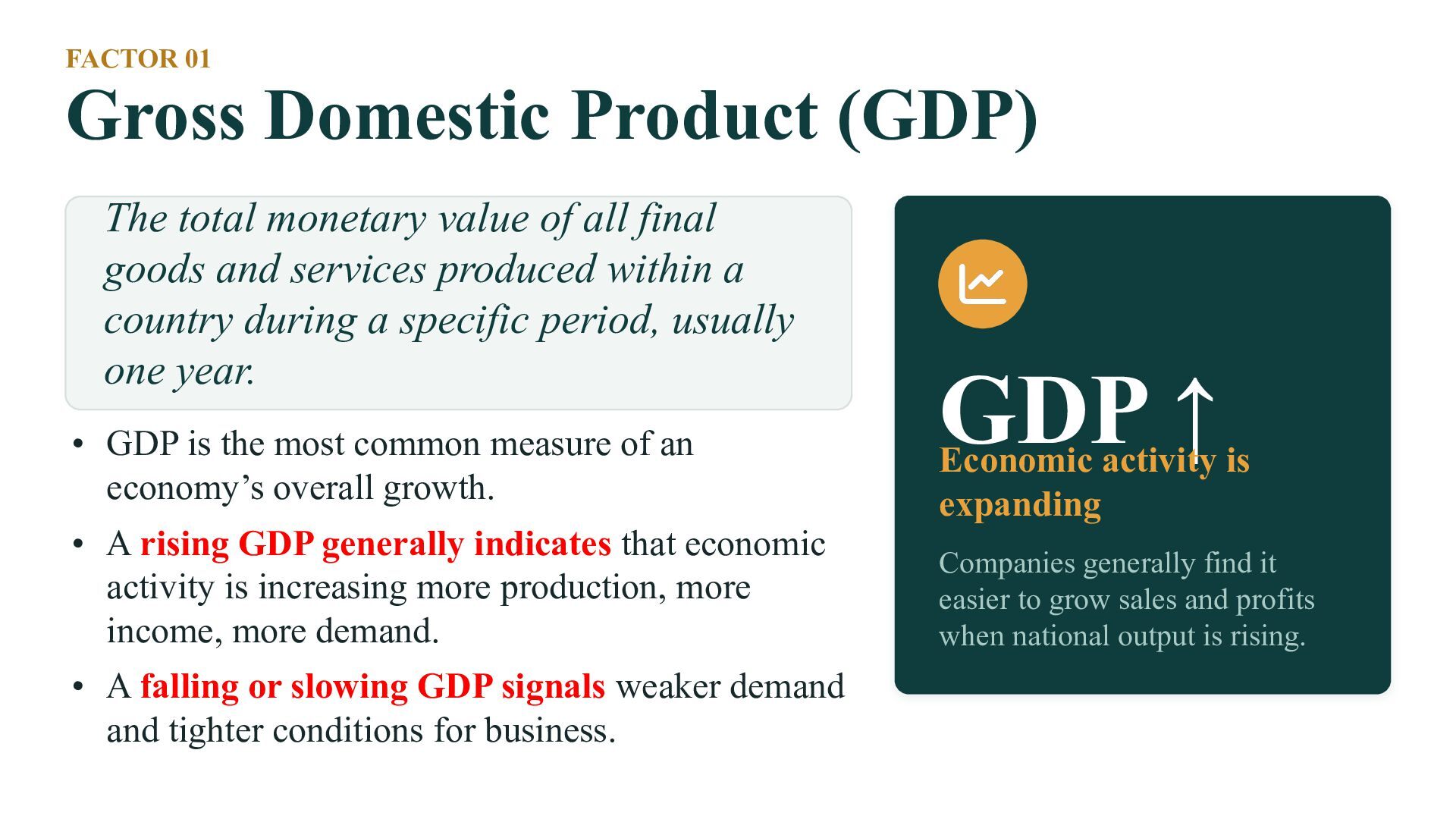
of all final goods and services produced within a country during a specific period, usually one year. • GDP is the most common measure of an economy’s overall growth. • A rising GDP generally indicates that economic activity is increasing more production, more income, more demand. • A falling or slowing GDP signals weaker demand and tighter conditions for business. GDP ↑ Economic activity is expanding Companies generally find it easier to grow sales and profits when national output is rising.
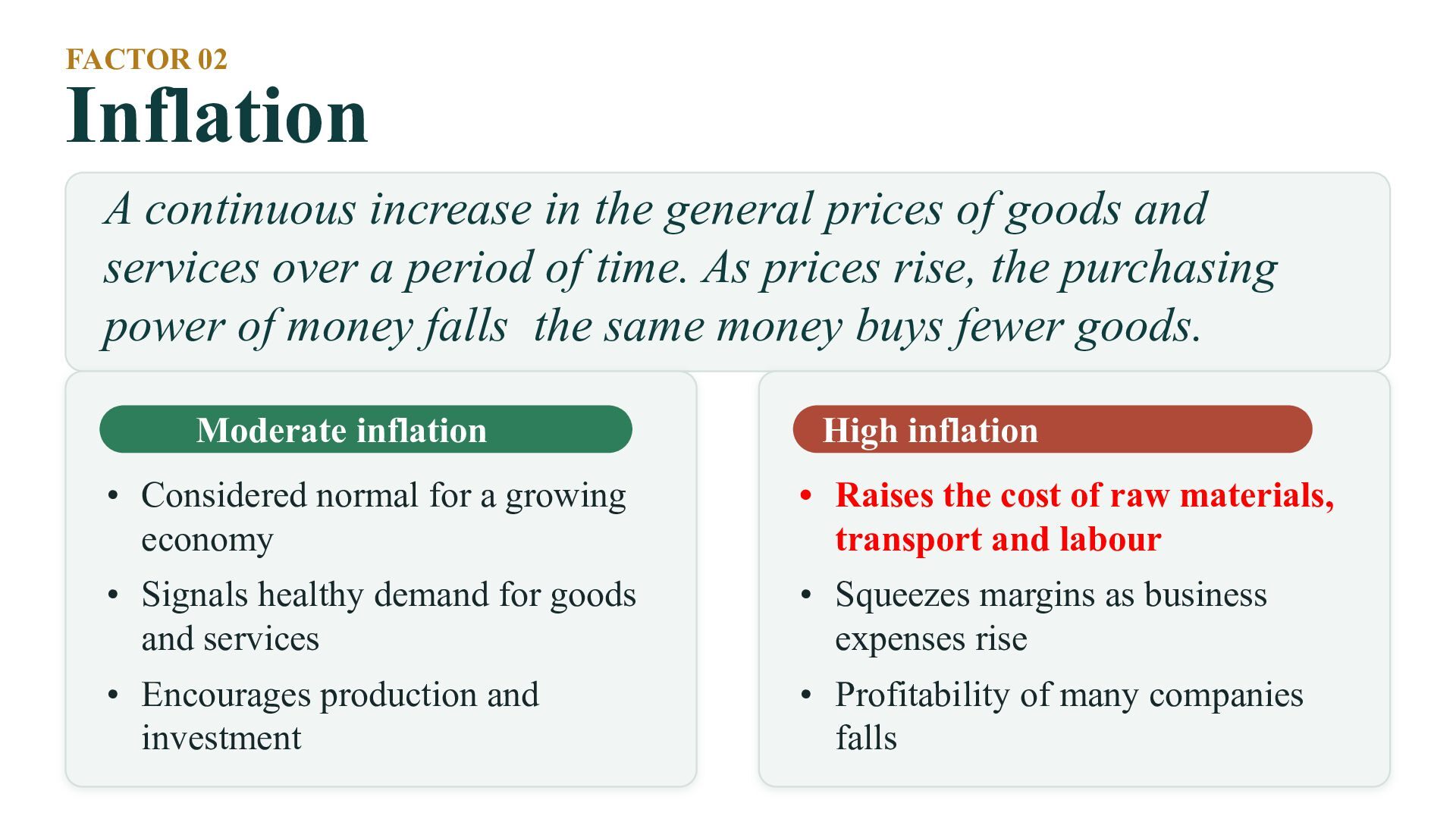
of goods and services over a period of time. As prices rise, the purchasing power of money falls the same money buys fewer goods. Moderate inflation High inflation • Considered normal for a growing economy • Raises the cost of raw materials, transport and labour • Signals healthy demand for goods and services • Squeezes margins as business expenses rise • Encourages production and investment • Profitability of many companies falls
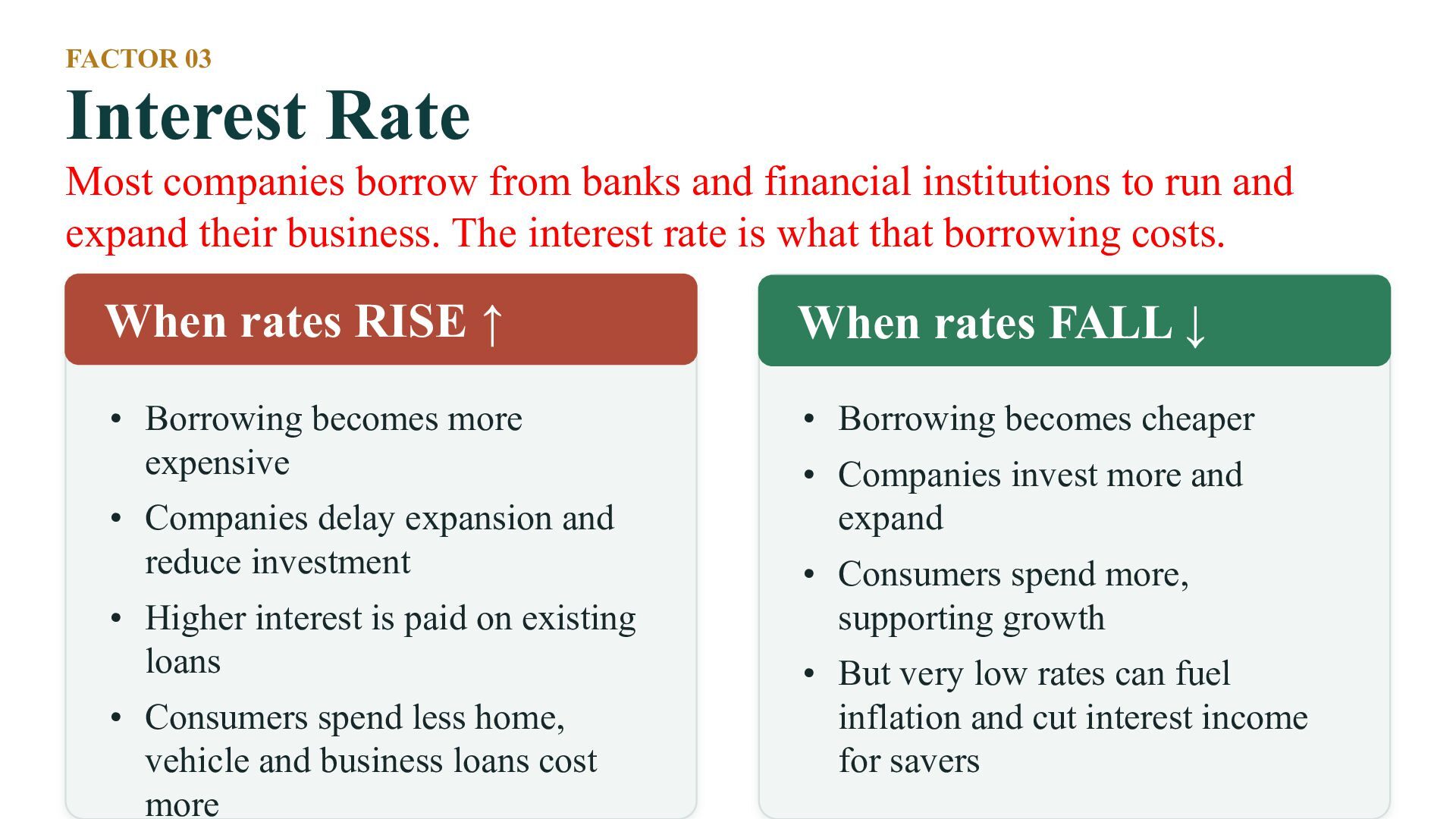
financial institutions to run and expand their business. The interest rate is what that borrowing costs. When rates RISE ↑ When rates FALL ↓ • Borrowing becomes more expensive • Borrowing becomes cheaper • Companies delay expansion and reduce investment • Higher interest is paid on existing loans • Consumers spend less home, vehicle and business loans cost more • Companies invest more and expand • Consumers spend more, supporting growth • But very low rates can fuel inflation and cut interest income for savers
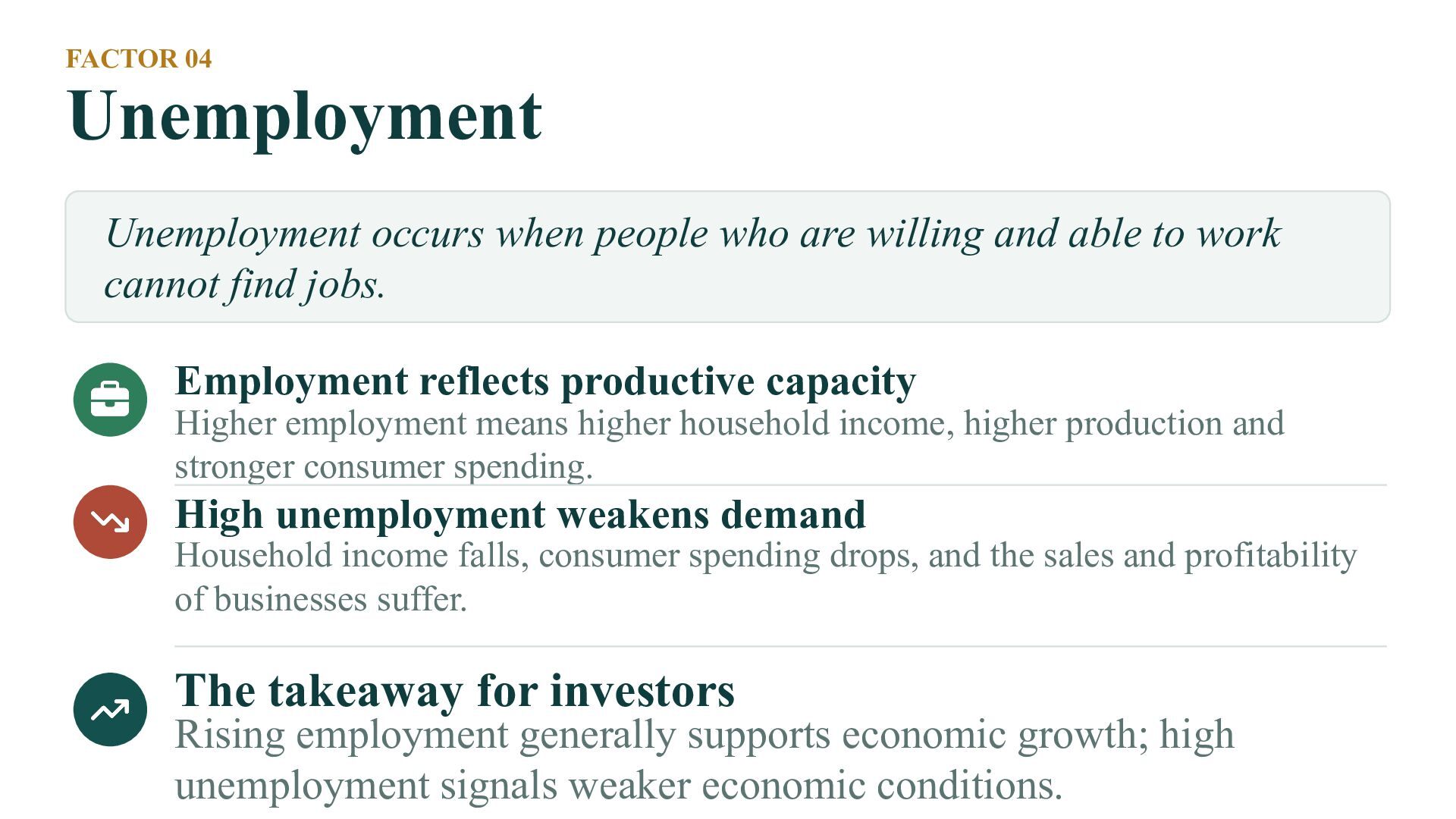
and able to work cannot find jobs. Employment reflects productive capacity Higher employment means higher household income, higher production and stronger consumer spending. High unemployment weakens demand Household income falls, consumer spending drops, and the sales and profitability of businesses suffer. The takeaway for investors Rising employment generally supports economic growth; high unemployment signals weaker economic conditions.
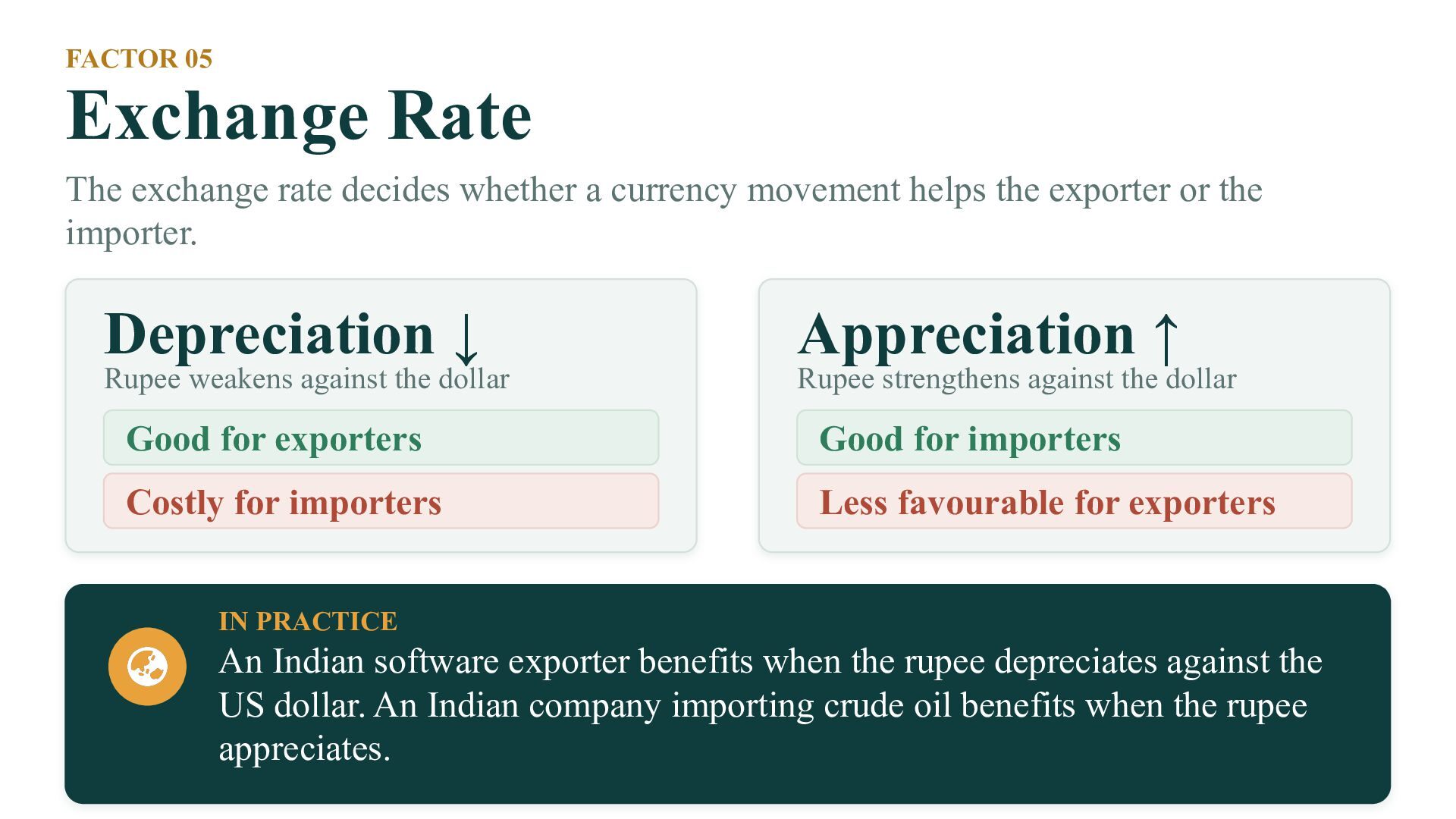
currency movement helps the exporter or the importer. Depreciation ↓ Appreciation ↑ Rupee weakens against the dollar Rupee strengthens against the dollar Good for exporters Good for importers Costly for importers Less favourable for exporters IN PRACTICE An Indian software exporter benefits when the rupee depreciates against the US dollar. An Indian company importing crude oil benefits when the rupee appreciates.
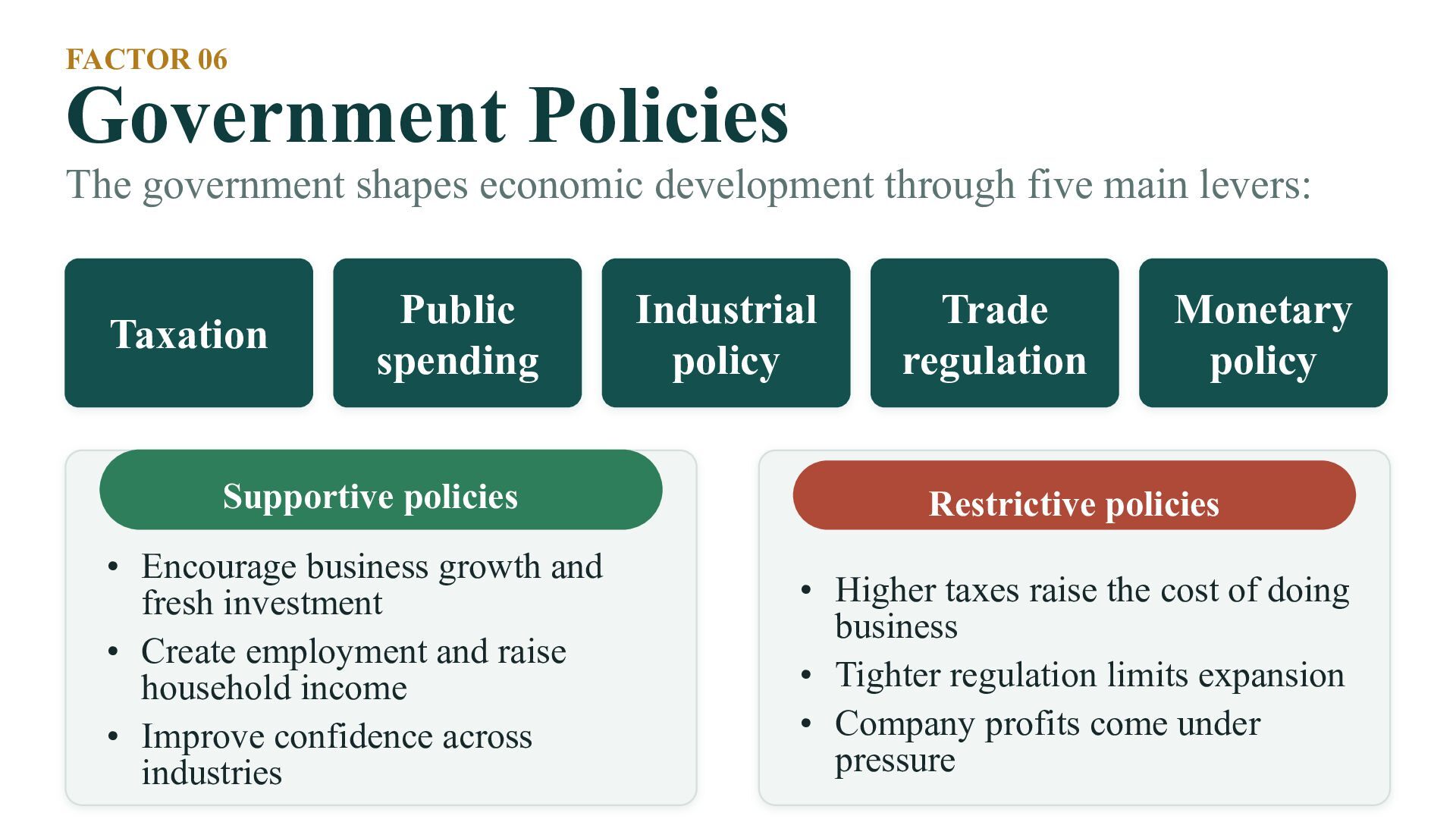
five main levers: Taxation Public spending Industrial policy Trade regulation Monetary policy Supportive policies Restrictive policies • Encourage business growth and fresh investment • Create employment and raise household income • Improve confidence across industries • Higher taxes raise the cost of doing business • Tighter regulation limits expansion • Company profits come under pressure


 kimpetersen
 asonas
 marcduiker
 soysaucechin
 jeffersonlam
 seathinner
 geoffreycrofte
 samtorres
 coloredviolet
 szymonslowik
 jacobtomlinson
 danielanewman