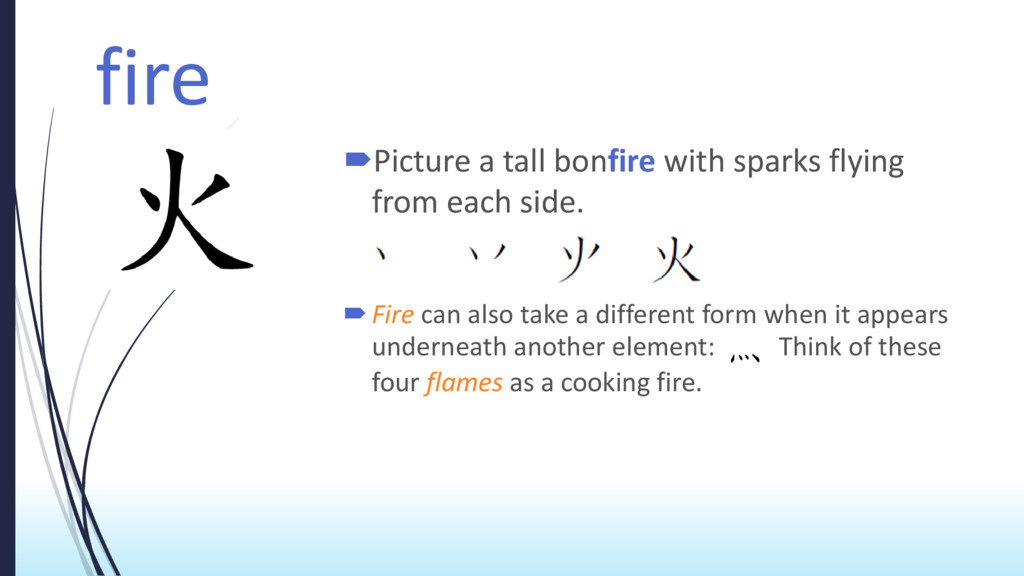
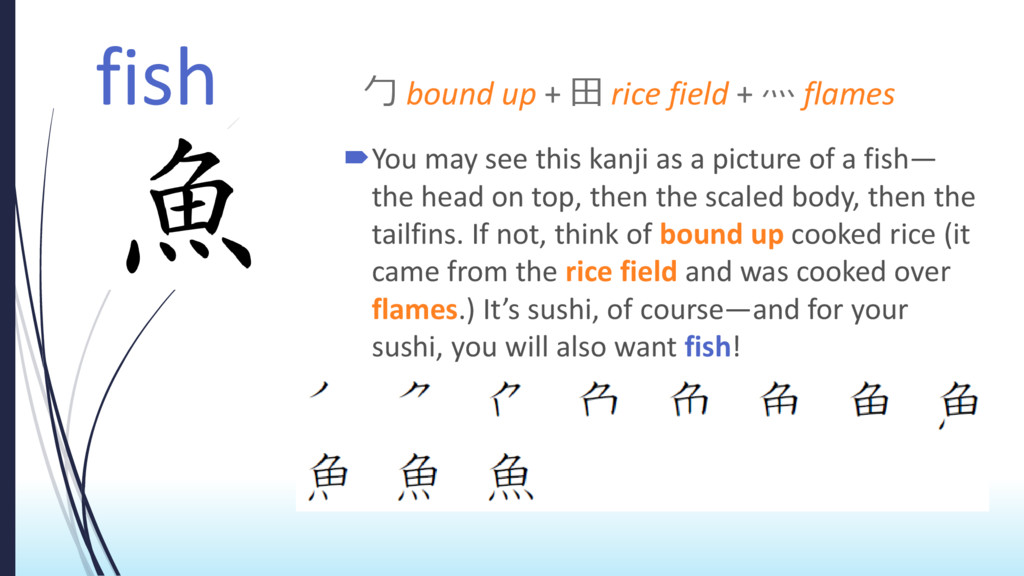
flames You may see this kanji as a picture of a fish— the head on top, then the scaled body, then the tailfins. If not, think of bound up cooked rice (it came from the rice field and was cooked over flames.) It’s sushi, of course—and for your sushi, you will also want fish!
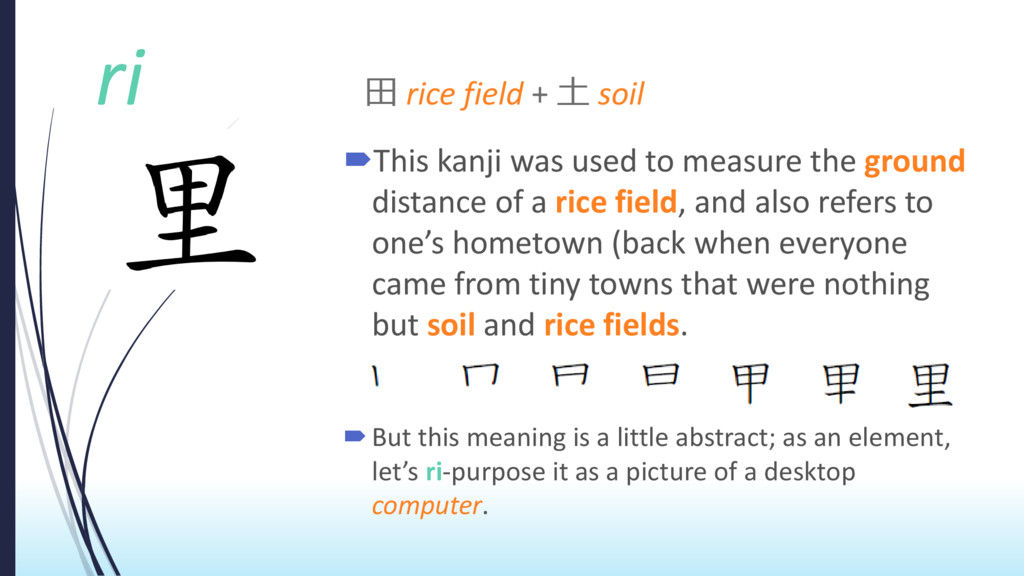
used to measure the ground distance of a rice field, and also refers to one’s hometown (back when everyone came from tiny towns that were nothing but soil and rice fields. But this meaning is a little abstract; as an element, let’s ri-purpose it as a picture of a desktop computer.
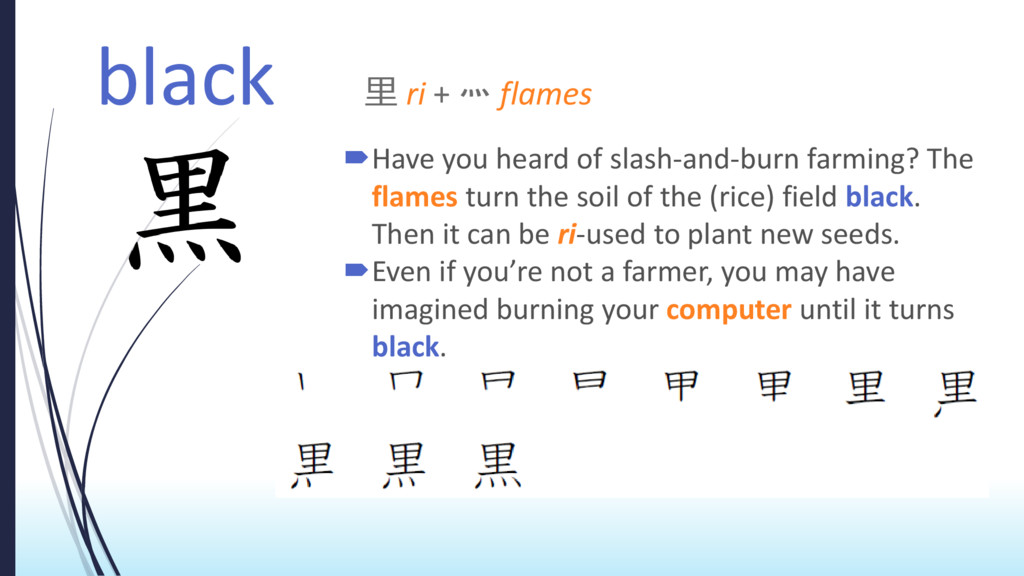
slash-and-burn farming? The flames turn the soil of the (rice) field black. Then it can be ri-used to plant new seeds. Even if you’re not a farmer, you may have imagined burning your computer until it turns black.
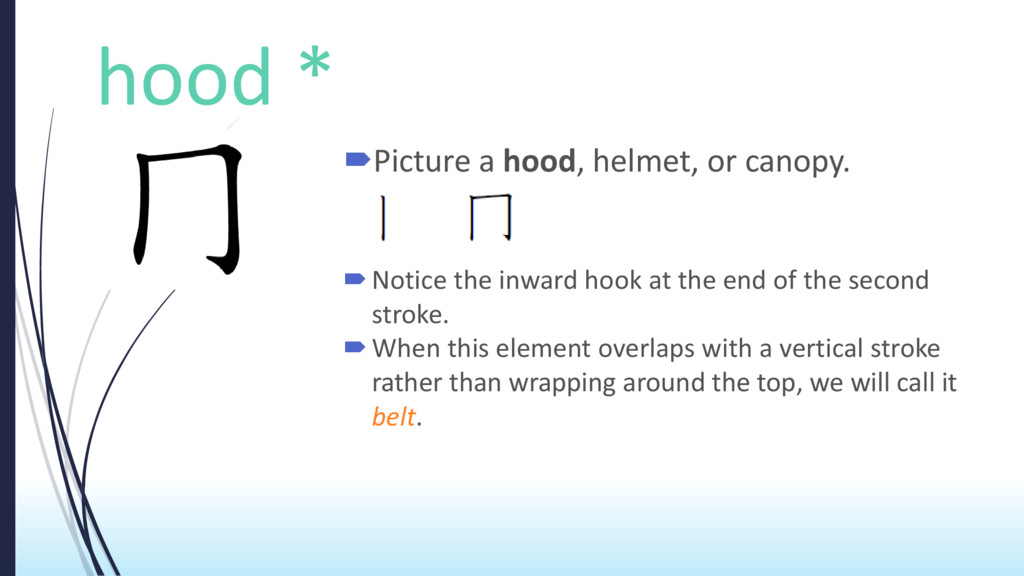
inward hook at the end of the second stroke. When this element overlaps with a vertical stroke rather than wrapping around the top, we will call it belt.
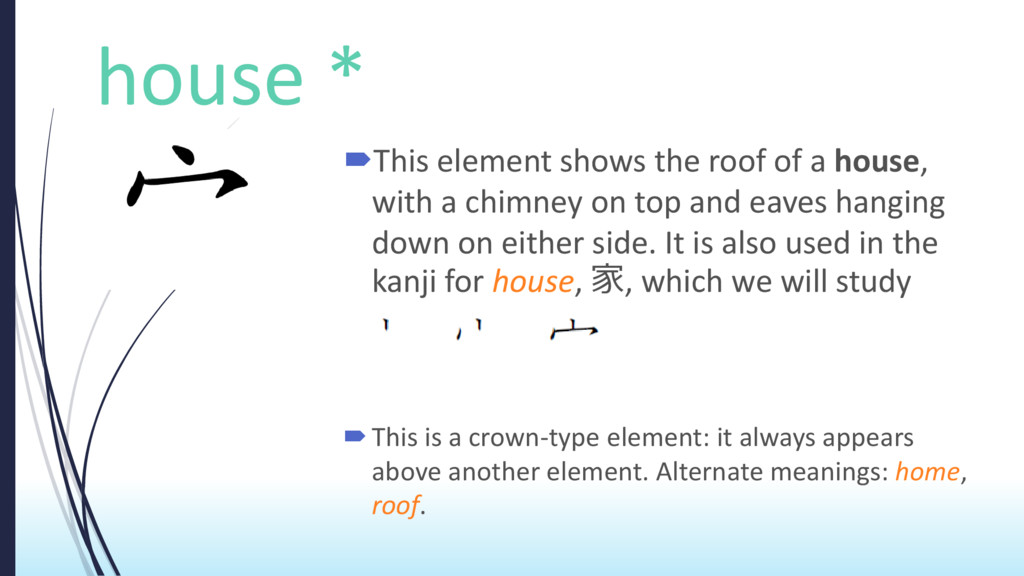
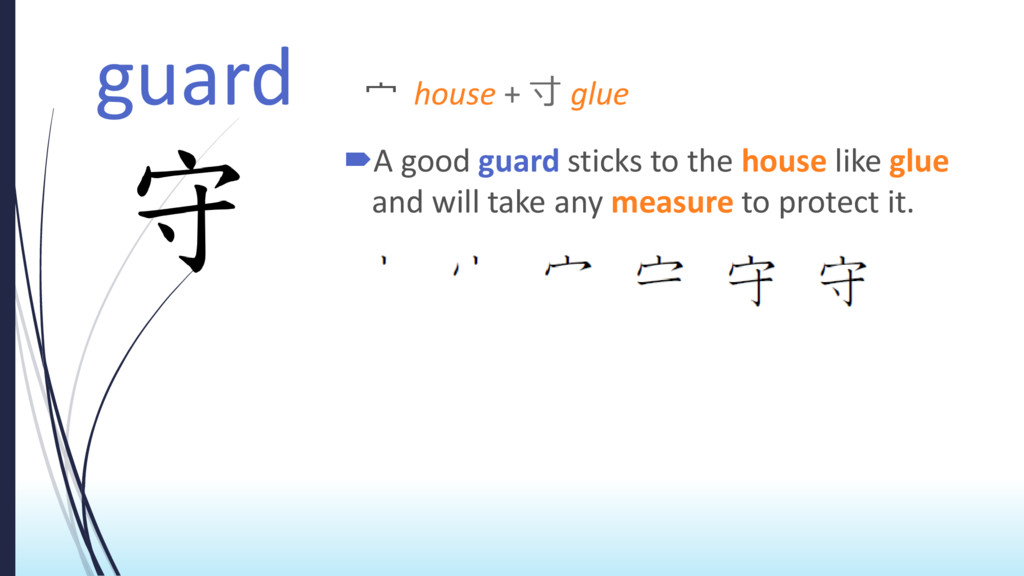
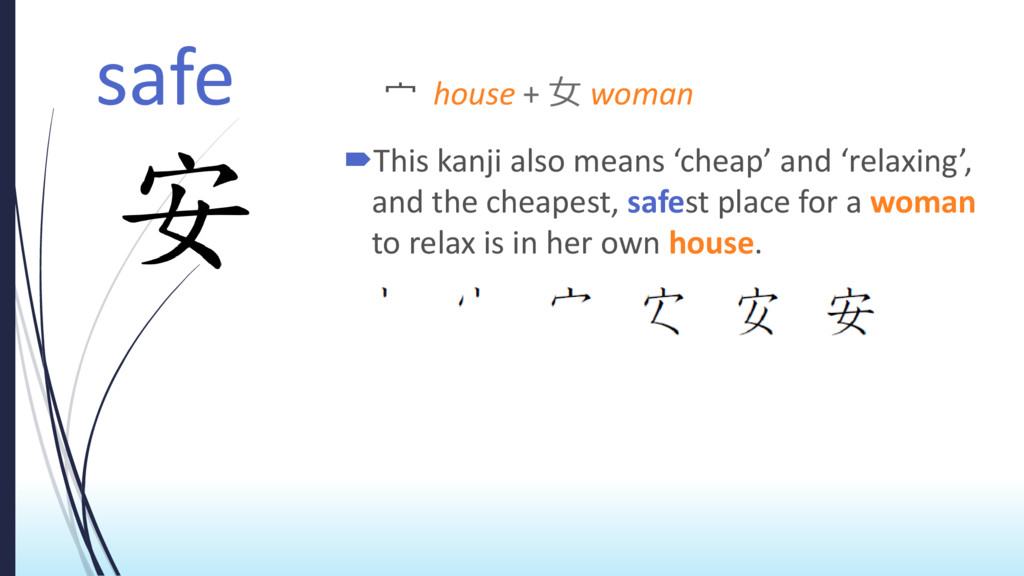
with a chimney on top and eaves hanging down on either side. It is also used in the kanji for house, 家, which we will study later. This is a crown-type element: it always appears above another element. Alternate meanings: home, roof.
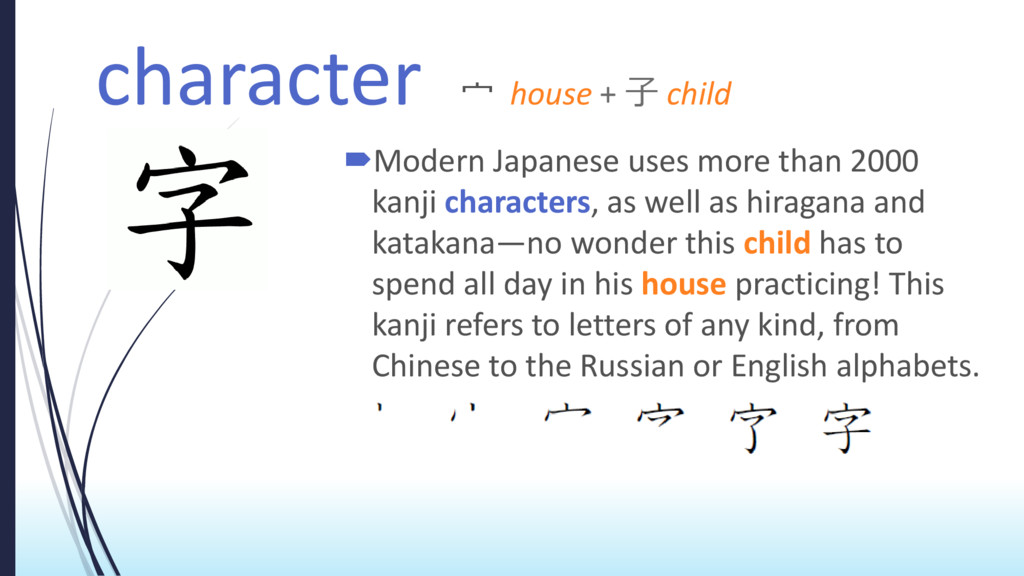
than 2000 kanji characters, as well as hiragana and katakana—no wonder this child has to spend all day in his house practicing! This kanji refers to letters of any kind, from Chinese to the Russian or English alphabets.


 etardiff
 bkeepers
 keavy
keavy
 reverentgeek
 colly
colly
 orderedlist
 auna
auna
 bryan
bryan
 jmmastey
 lynnandtonic
 aleyda
 baasie
 techseoconnect