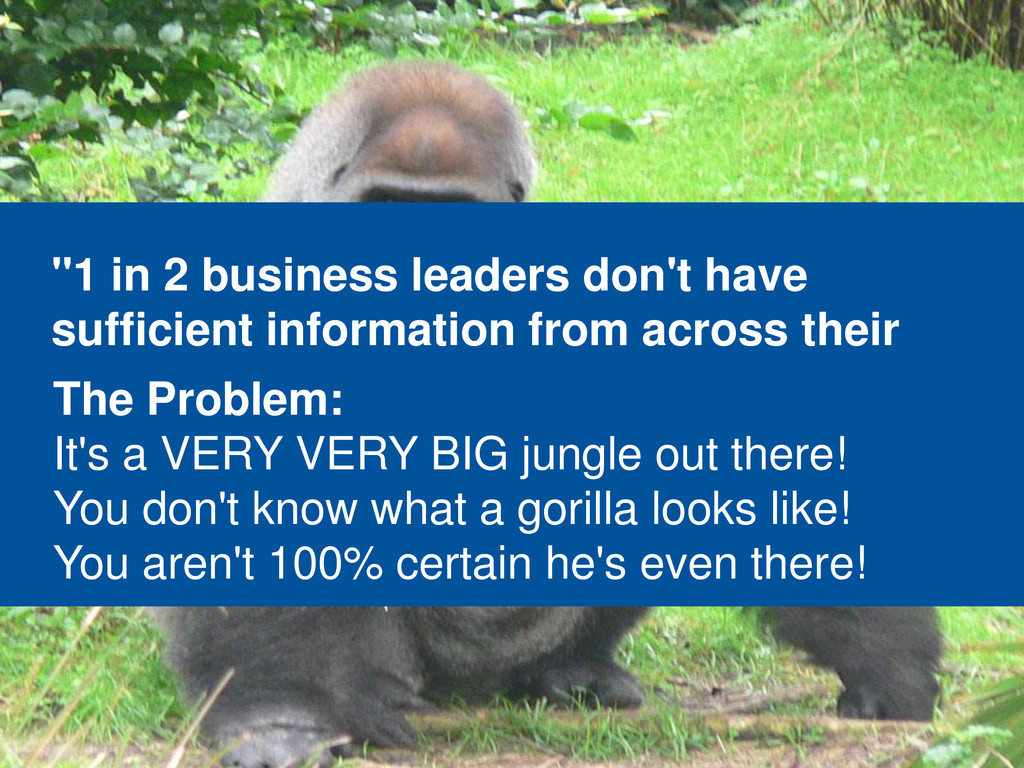
across their organization to do their job properly" Your Challenge: Find the information (the 800lb gorilla) inside the (digital) jungle of information The Problem: It's a VERY VERY BIG jungle out there! You don't know what a gorilla looks like! You aren't 100% certain he's even there!
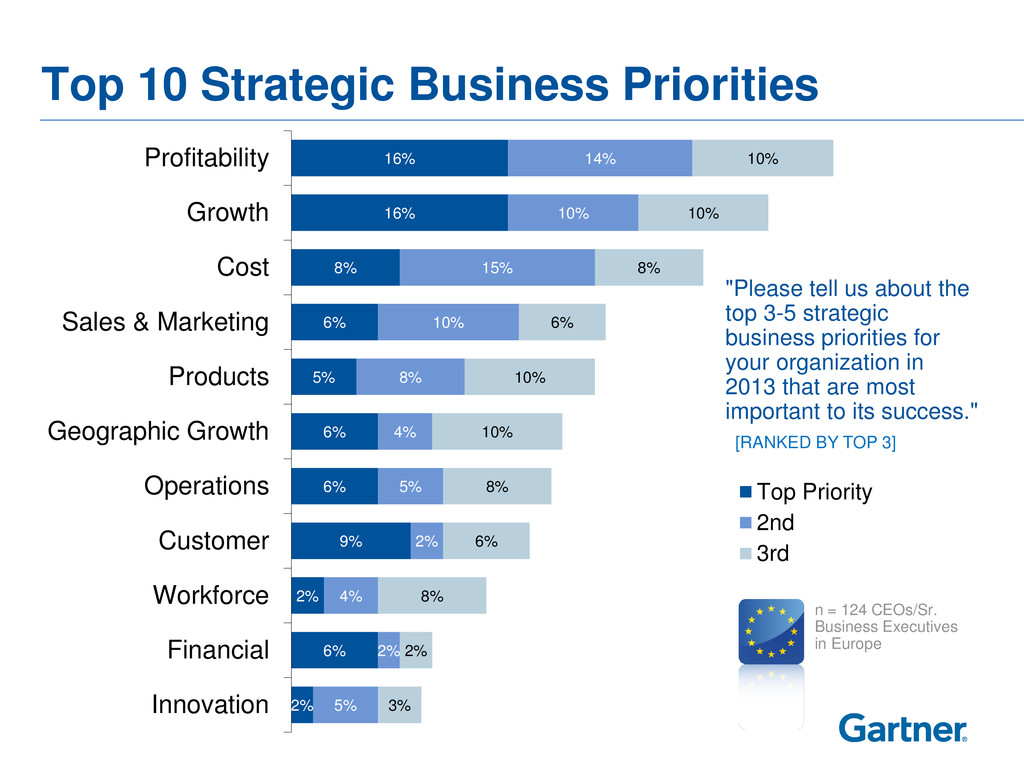
top 3-5 strategic business priorities for your organization in 2013 that are most important to its success." 16% 16% 8% 6% 5% 6% 6% 9% 2% 6% 2% 14% 10% 15% 10% 8% 4% 5% 2% 4% 2% 5% 10% 10% 8% 6% 10% 10% 8% 6% 8% 2% 3% Profitability Growth Cost Sales & Marketing Products Geographic Growth Operations Customer Workforce Financial Innovation Top Priority 2nd 3rd [RANKED BY TOP 3] n = 124 CEOs/Sr. Business Executives in Europe
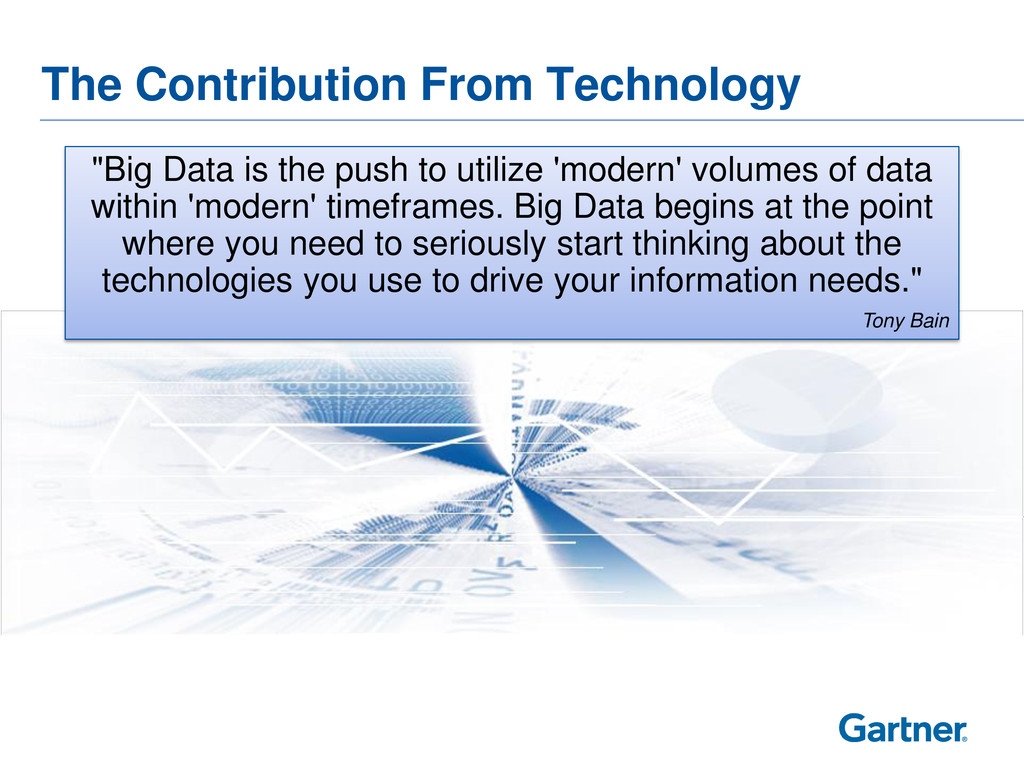
utilize 'modern' volumes of data within 'modern' timeframes. Big Data begins at the point where you need to seriously start thinking about the technologies you use to drive your information needs." Tony Bain
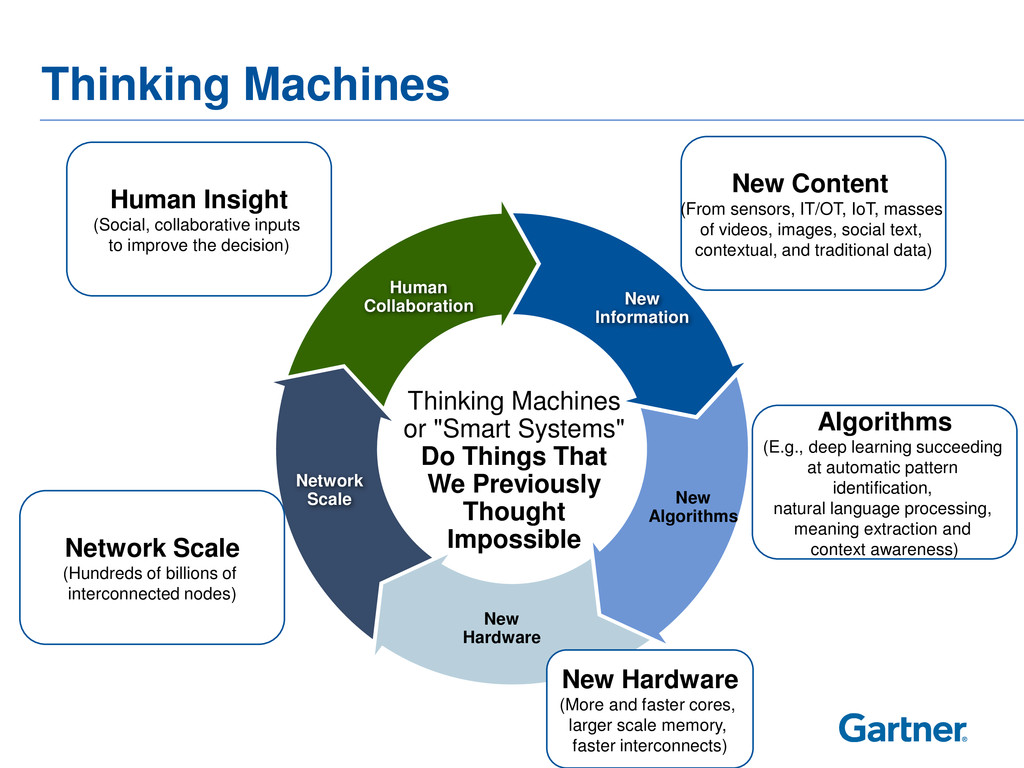
Human Collaboration Thinking Machines or "Smart Systems" Do Things That We Previously Thought Impossible New Content (From sensors, IT/OT, IoT, masses of videos, images, social text, contextual, and traditional data) Network Scale (Hundreds of billions of interconnected nodes) Algorithms (E.g., deep learning succeeding at automatic pattern identification, natural language processing, meaning extraction and context awareness) New Hardware (More and faster cores, larger scale memory, faster interconnects) Human Insight (Social, collaborative inputs to improve the decision)
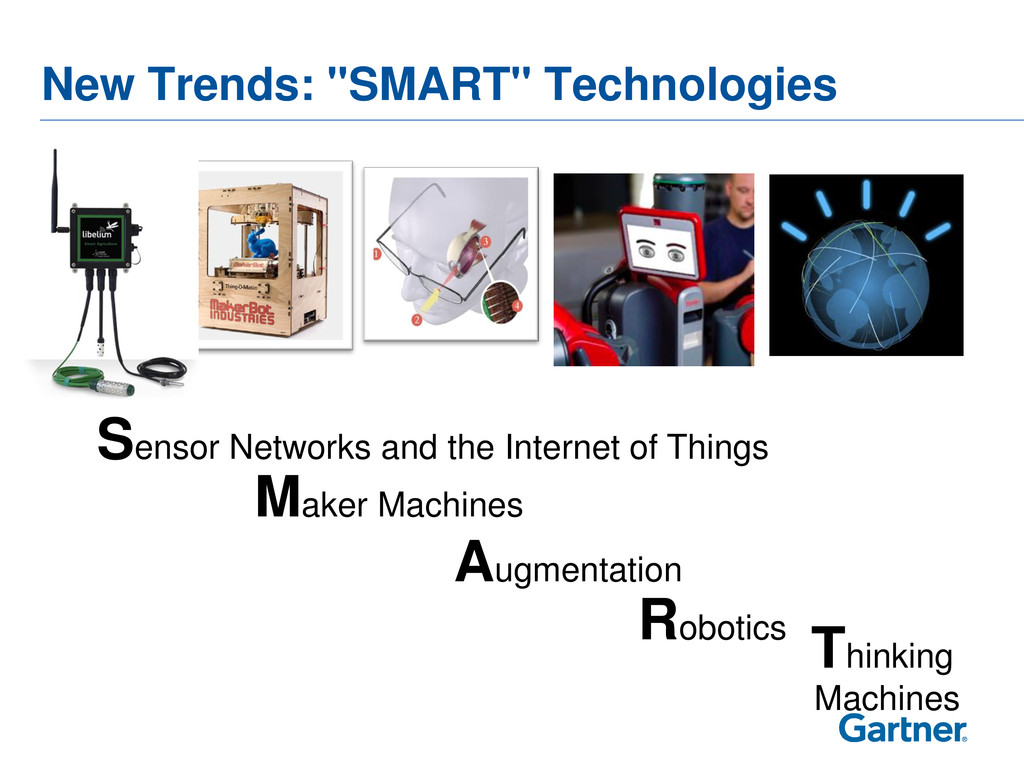
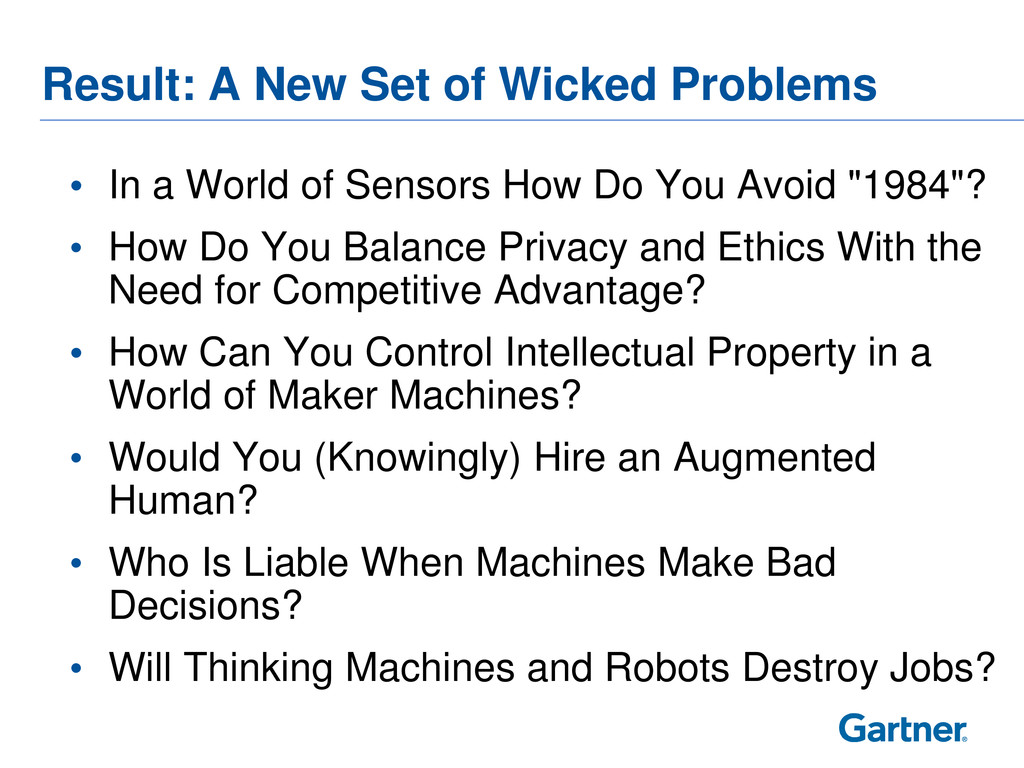
World of Sensors How Do You Avoid "1984"? • How Do You Balance Privacy and Ethics With the Need for Competitive Advantage? • How Can You Control Intellectual Property in a World of Maker Machines? • Would You (Knowingly) Hire an Augmented Human? • Who Is Liable When Machines Make Bad Decisions? • Will Thinking Machines and Robots Destroy Jobs?
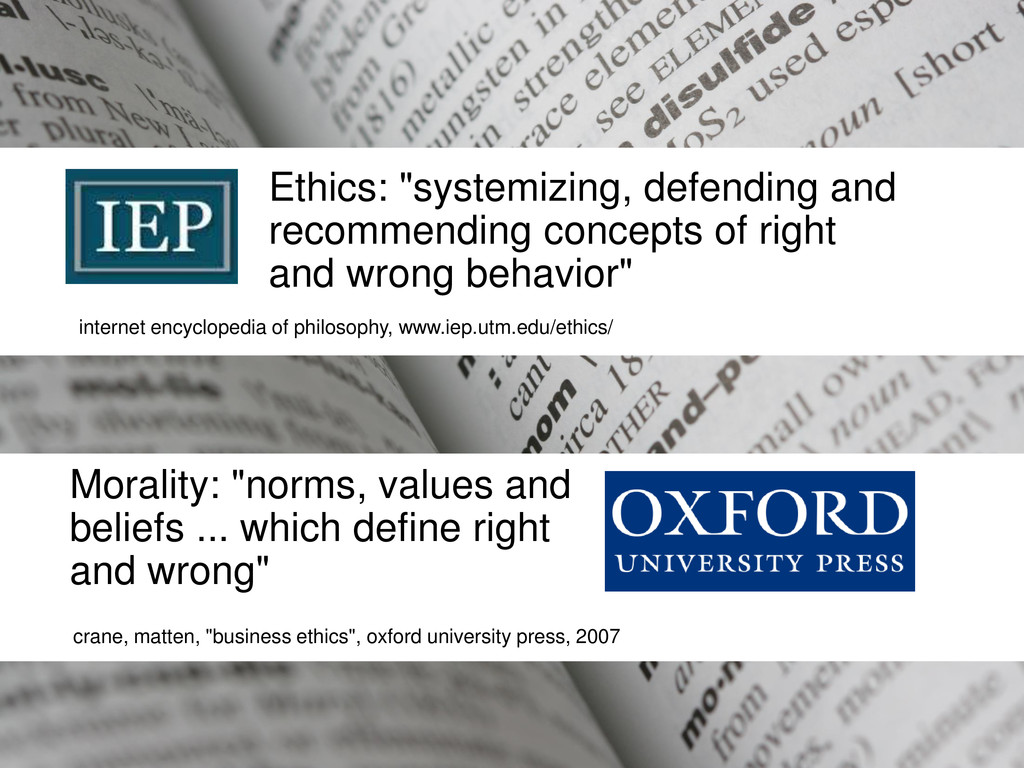
wrong" crane, matten, "business ethics", oxford university press, 2007 Ethics: "systemizing, defending and recommending concepts of right and wrong behavior" internet encyclopedia of philosophy, www.iep.utm.edu/ethics/
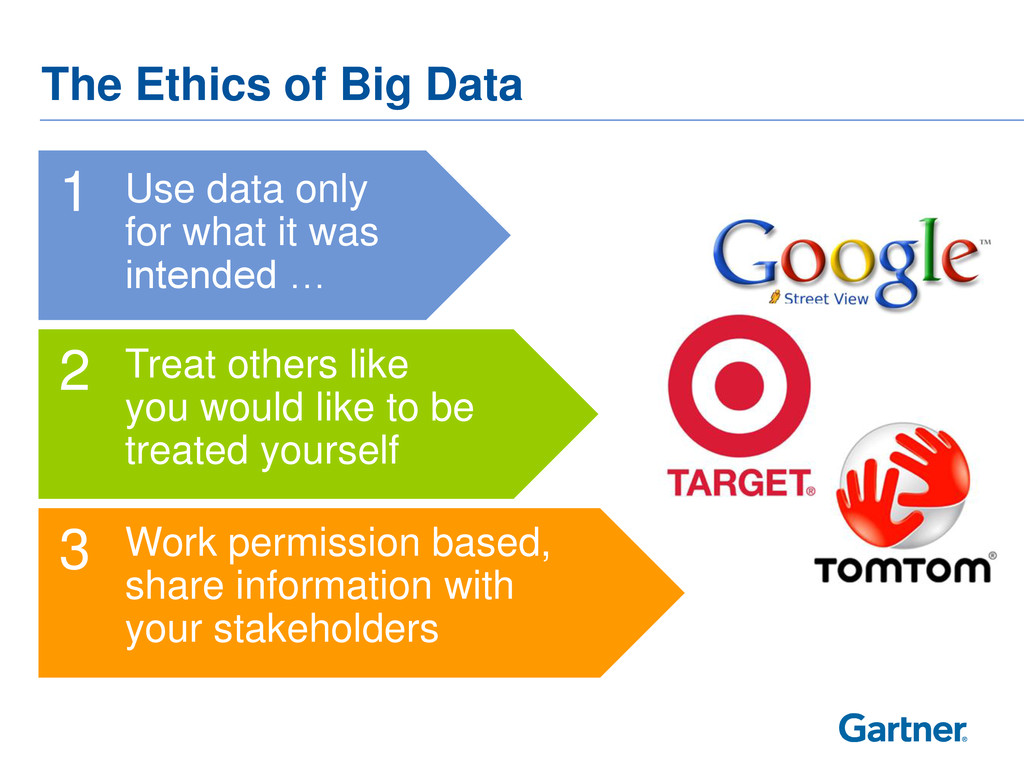
only for what it was intended … Treat others like you would like to be treated yourself Work permission based, share information with your stakeholders
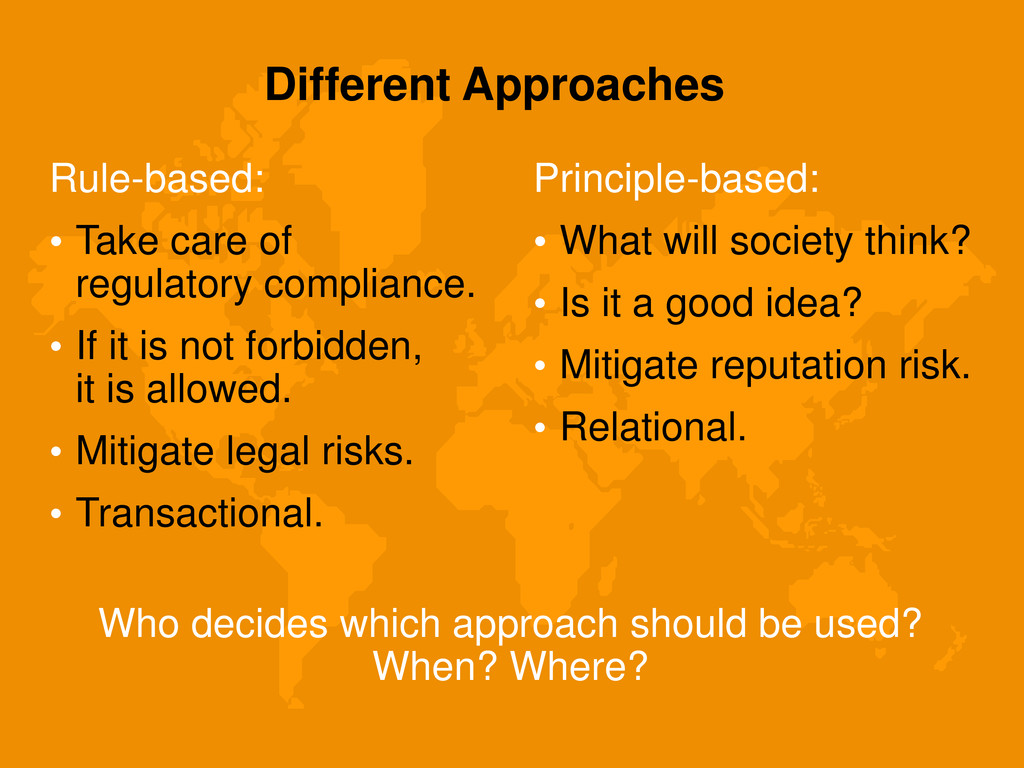
is not forbidden, it is allowed. • Mitigate legal risks. • Transactional. Principle-based: • What will society think? • Is it a good idea? • Mitigate reputation risk. • Relational. Different Approaches Who decides which approach should be used? When? Where?
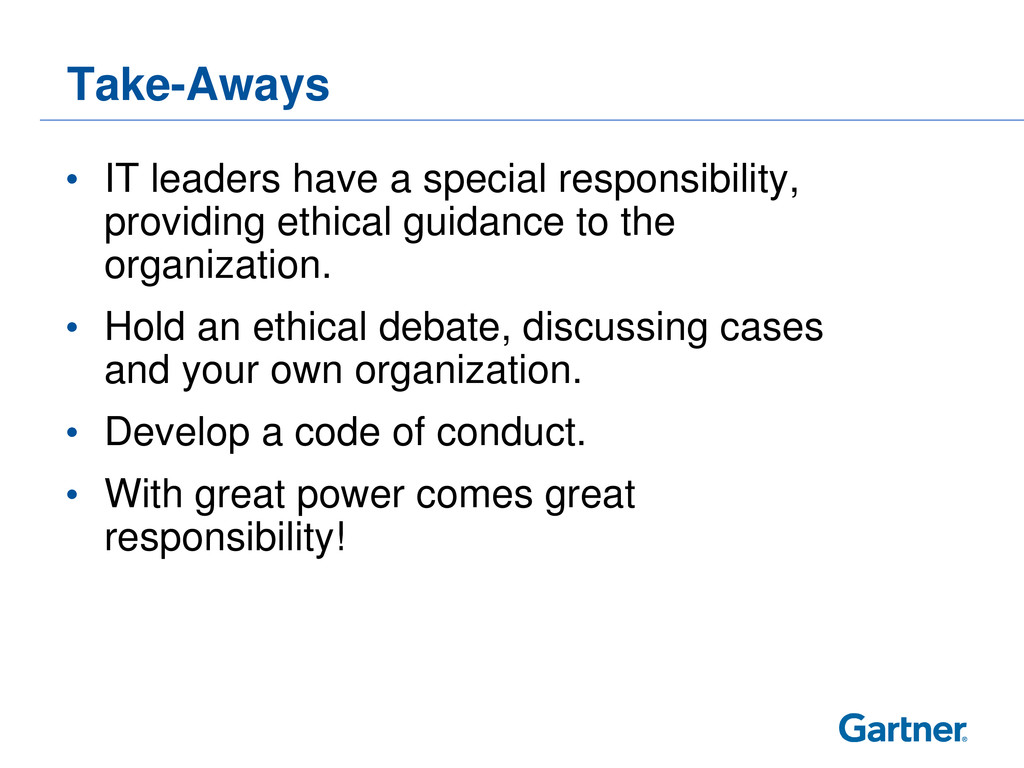
guidance to the organization. • Hold an ethical debate, discussing cases and your own organization. • Develop a code of conduct. • With great power comes great responsibility!
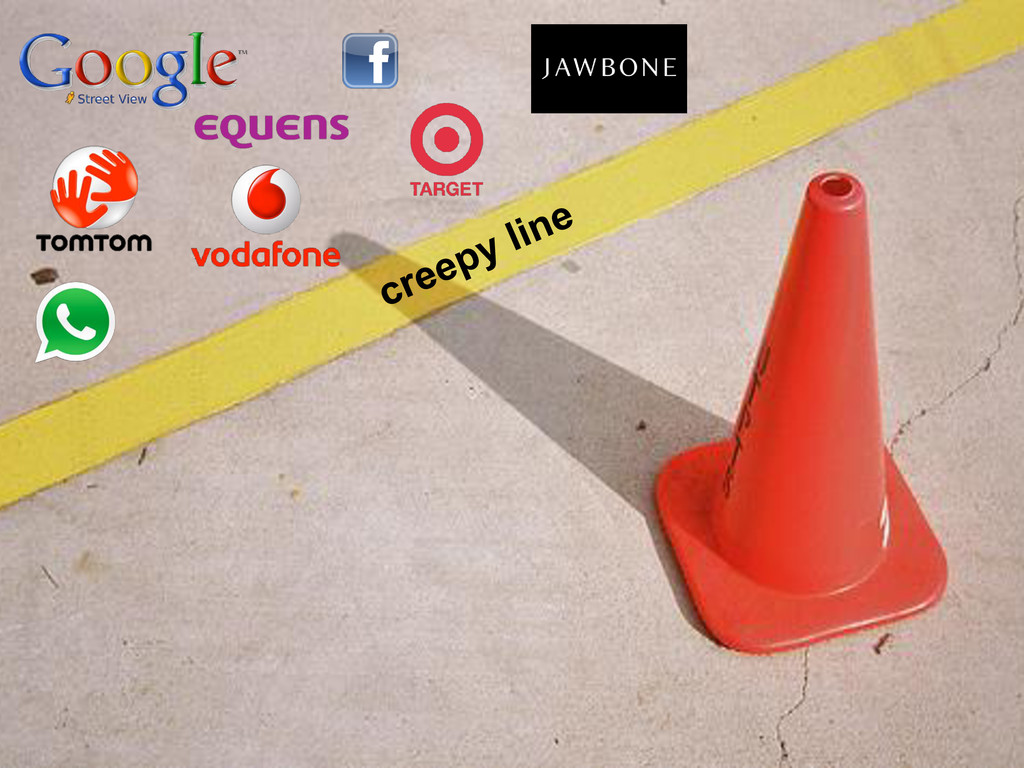
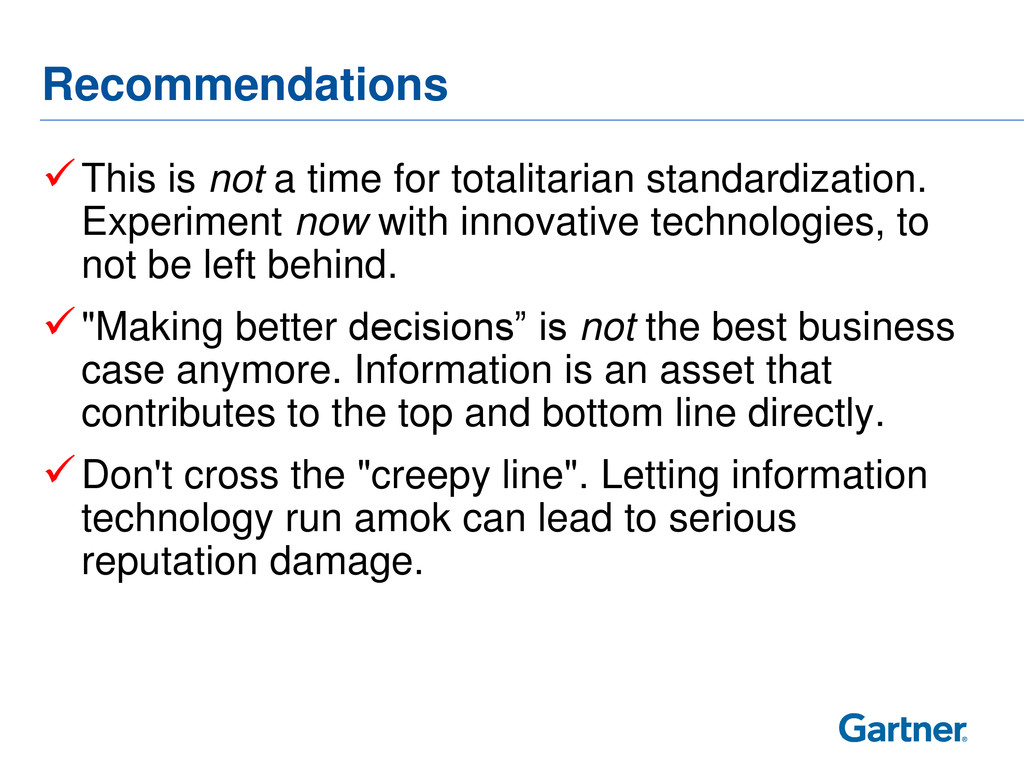
now with innovative technologies, to not be left behind. "Making better decisions” is not the best business case anymore. Information is an asset that contributes to the top and bottom line directly. Don't cross the "creepy line". Letting information technology run amok can lead to serious reputation damage.


 evry
 cassininazir
 scottboms
 axbom
 vanstee
 kneath
 minecr
 chrislema
 uxyall
 swwweet
 leimatthew05
 tmiket
 inesmontani