Upgrade to Pro — share decks privately, control downloads, hide ads and more …

Transforming from monolith to microservices to ...

Transforming from monolith to microservices to scale a growing organization

The timing and decision to migrate from a monolith to microservices can dramatically affect your business's ability to scale down the road. This talk will discuss considerations to take into account when evaluating the tradeoffs between maintaining a monolith or migrating to a micro-services based architecture.

Avatar for Genevieve Krzeminski

Genevieve Krzeminski

April 24, 2019

More Decks by Genevieve Krzeminski

Other Decks in Technology

Transcript

  1. Transforming from monolith to microservices to scale a growing organization

    By Genevieve Krzeminski - Senior Engineering Manager @ Quizlet
  2. What do you want to get from this talk? •

    How to implement, architect, or design microservices • See how it has been done • How to migrate from a monolith to microservices • Networking! • Came to learn or gain “knowledge” • Learn “the secrets to the universe”
  3. Genevieve Krzeminski, Sr. Eng Manger @Quizlet At Quizlet, we’re helping

    students/teachers practice and master whatever they are learning - world wide! My team is focused on spreading Quizlet use worldwide - and I’m hiring! Contact: [email protected] @astraknots @tealeafreaderco
  4. Conway’s Law “Conway's law is an adage named after computer

    programmer Melvin Conway, who introduced the idea in 1967. It states that organizations which design systems ... are constrained to produce designs which are copies of the communication structures of these organizations.” -Wikipedia
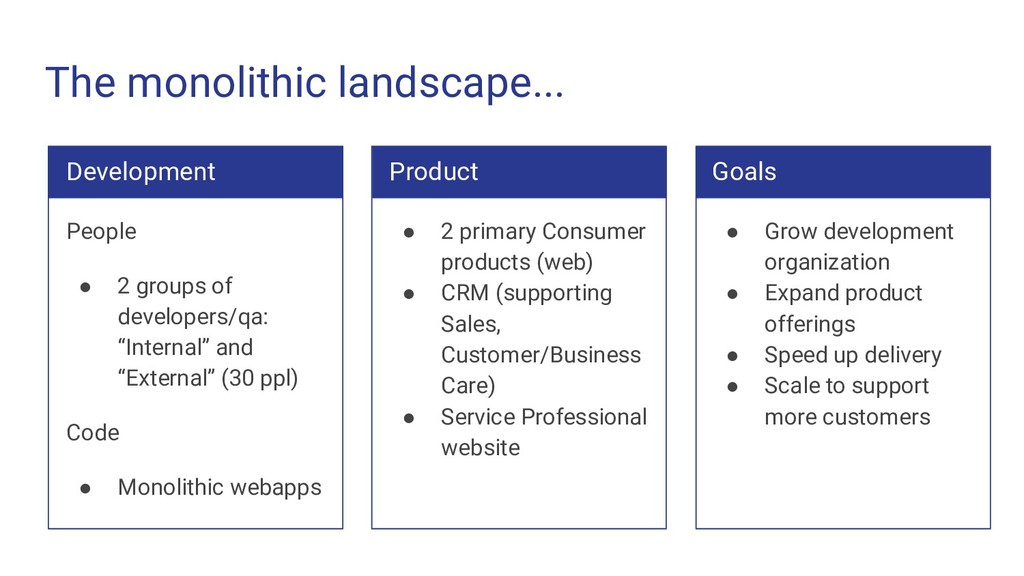
  5. The monolithic landscape... Development People • 2 groups of developers/qa:

    “Internal” and “External” (30 ppl) Code • Monolithic webapps Product • 2 primary Consumer products (web) • CRM (supporting Sales, Customer/Business Care) • Service Professional website Goals • Grow development organization • Expand product offerings • Speed up delivery • Scale to support more customers
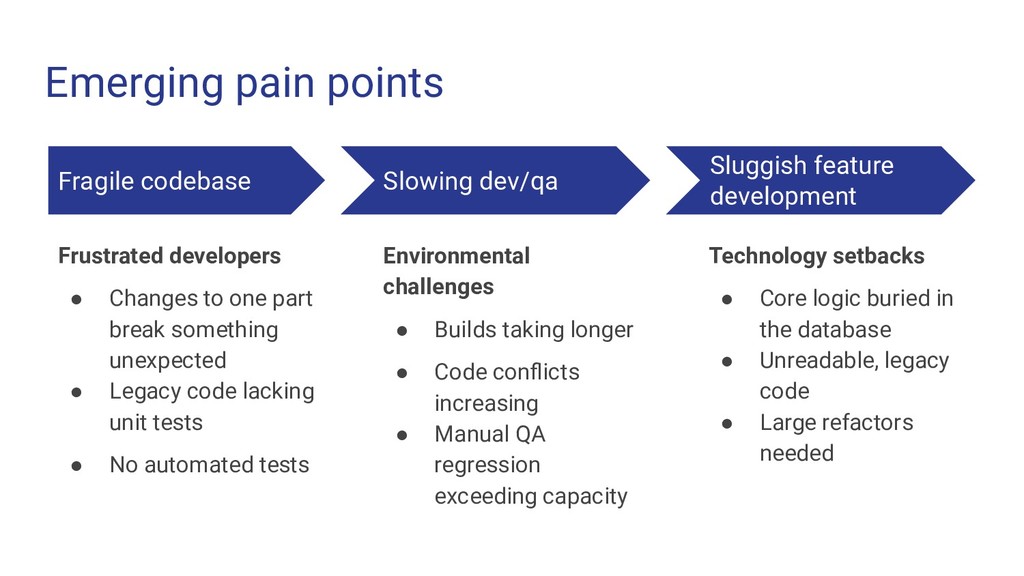
  6. Emerging pain points Fragile codebase Frustrated developers • Changes to

    one part break something unexpected • Legacy code lacking unit tests • No automated tests Slowing dev/qa Environmental challenges • Builds taking longer • Code conflicts increasing • Manual QA regression exceeding capacity Sluggish feature development Technology setbacks • Core logic buried in the database • Unreadable, legacy code • Large refactors needed
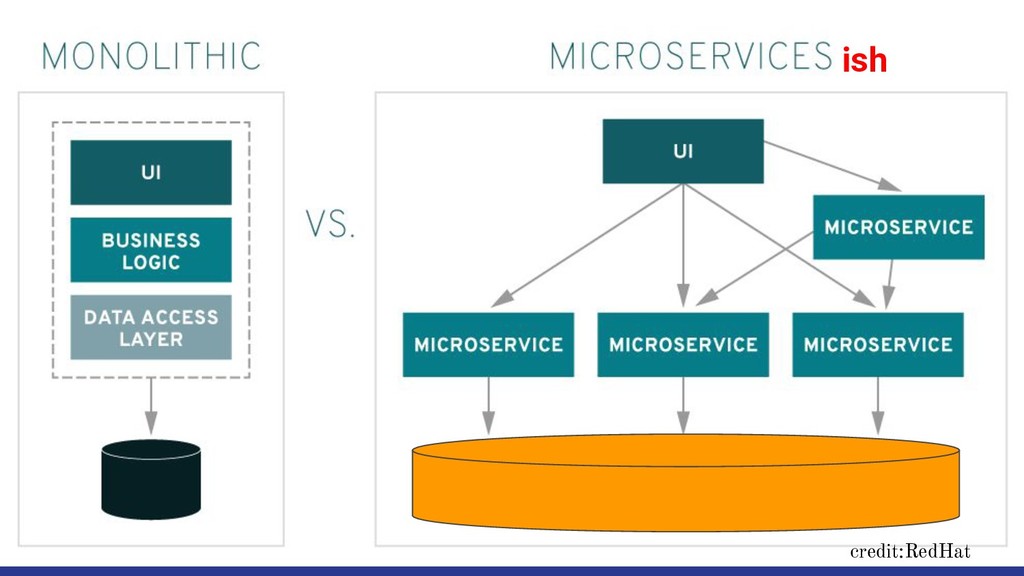
  7. Solution? Microservices! • Separate code streams for development - less

    code clashing • Build brand new features faster • Scale deployments • Draw more distinct lines of ownership • …. And it will make us seem really cool!
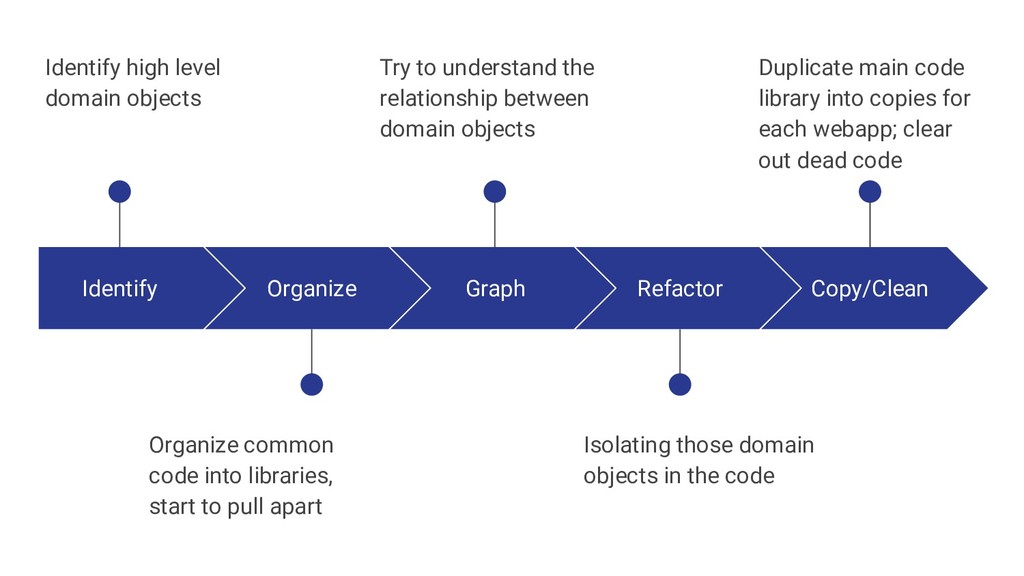
  8. Identify Identify high level domain objects Organize Organize common code

    into libraries, start to pull apart Graph Try to understand the relationship between domain objects Refactor Isolating those domain objects in the code Copy/Clean Duplicate main code library into copies for each webapp; clear out dead code
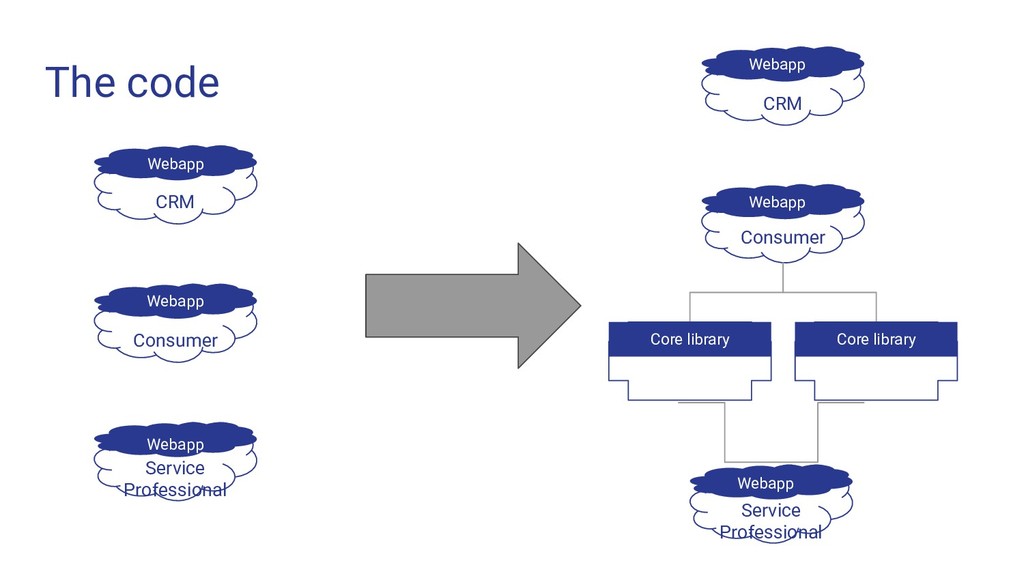
  9. The code Webapp Core library Core library Webapp CRM Webapp

    Consumer Webapp Service Professional Consumer Webapp Service Professional Webapp CRM
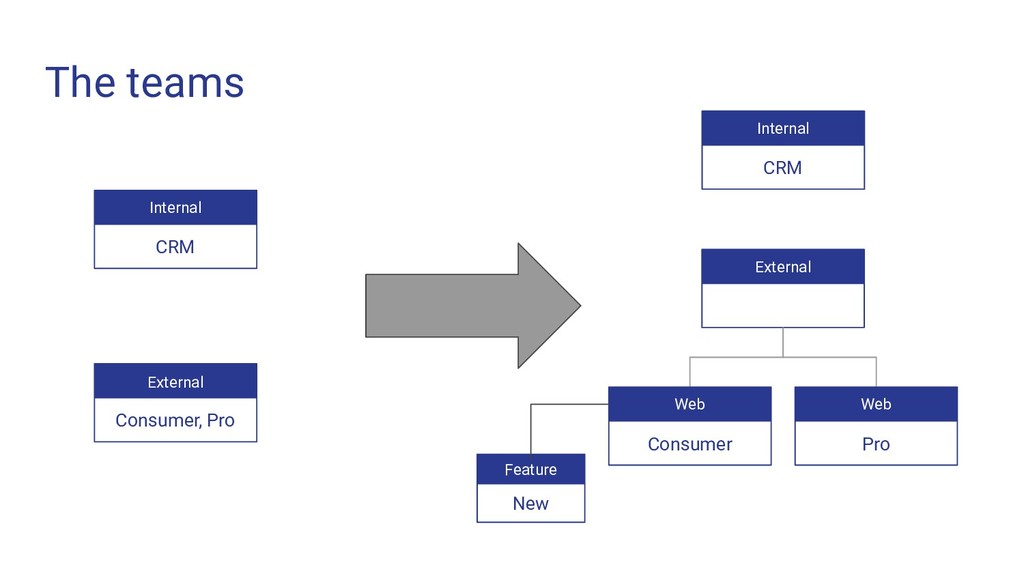
  10. The teams Internal CRM External Web Consumer Web Pro Internal

    CRM External Consumer, Pro Feature New
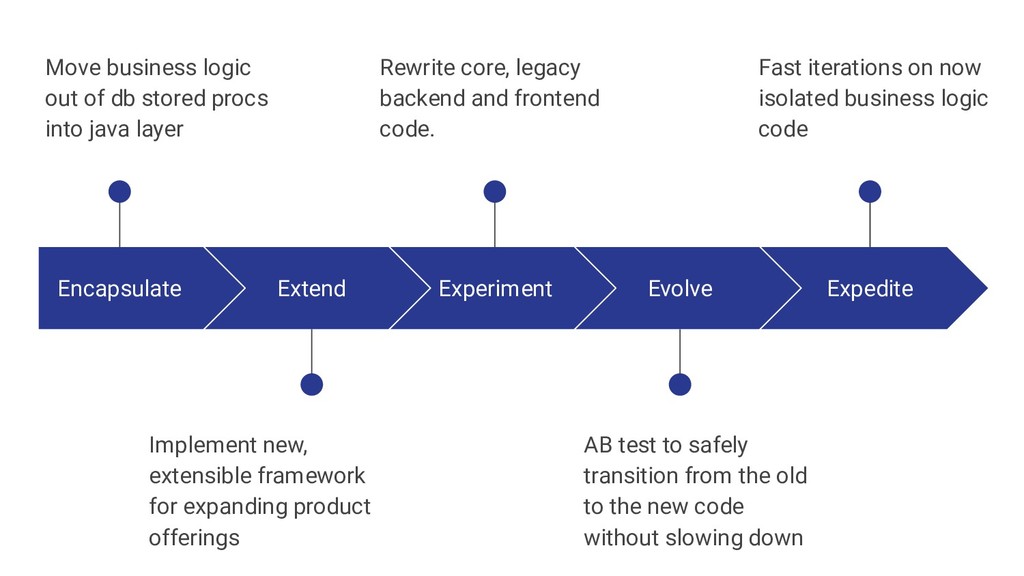
  11. Encapsulate Move business logic out of db stored procs into

    java layer Extend Implement new, extensible framework for expanding product offerings Experiment Rewrite core, legacy backend and frontend code. Evolve AB test to safely transition from the old to the new code without slowing down Expedite Fast iterations on now isolated business logic code
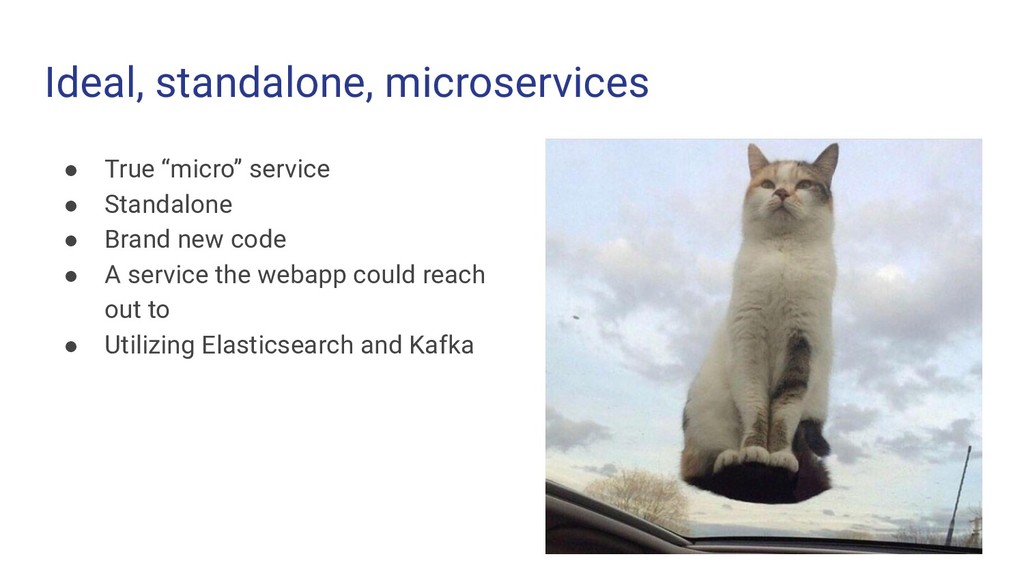
  12. Ideal, standalone, microservices • True “micro” service • Standalone •

    Brand new code • A service the webapp could reach out to • Utilizing Elasticsearch and Kafka
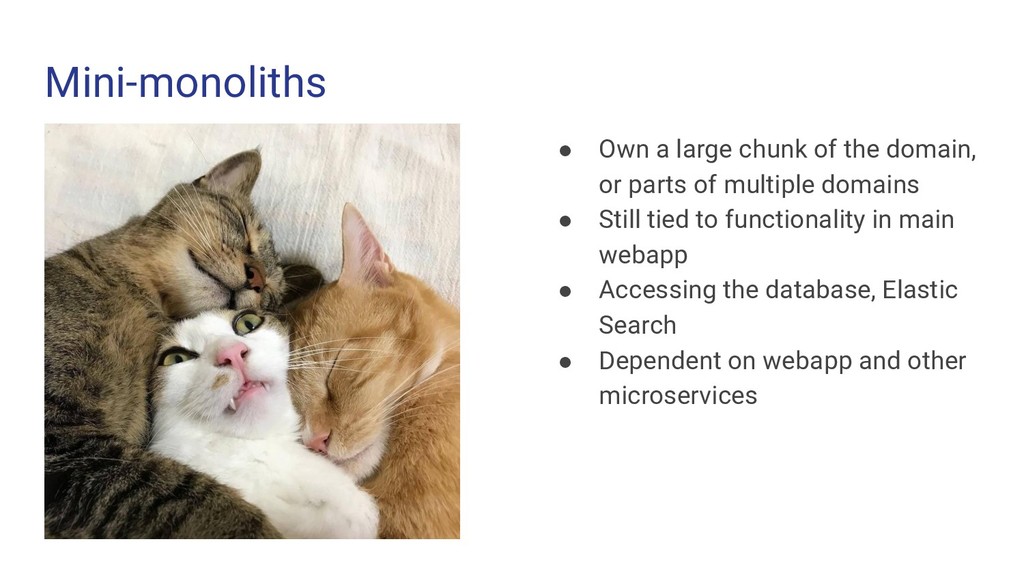
  13. Mini-monoliths • Own a large chunk of the domain, or

    parts of multiple domains • Still tied to functionality in main webapp • Accessing the database, Elastic Search • Dependent on webapp and other microservices
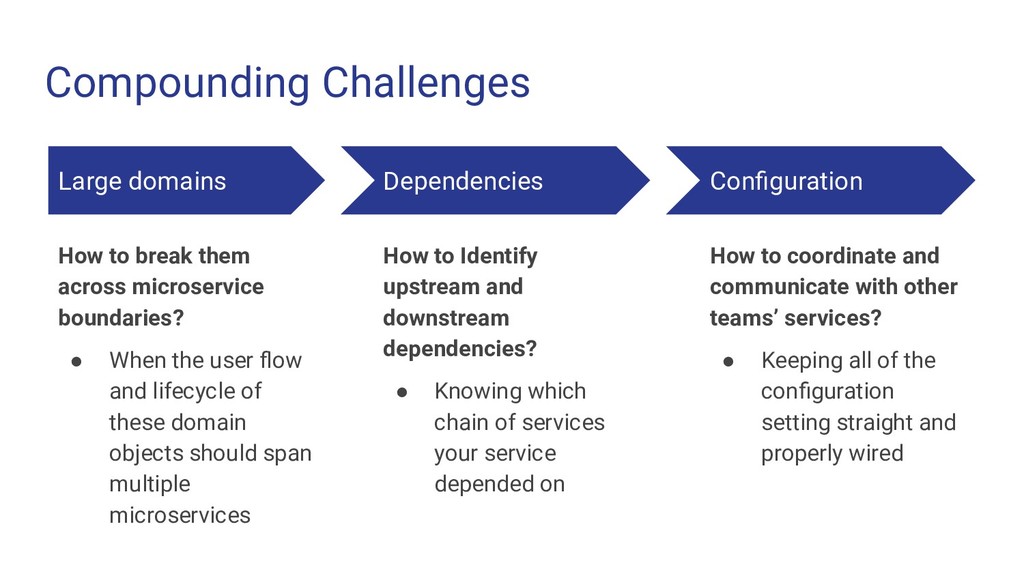
  14. Compounding Challenges Large domains How to break them across microservice

    boundaries? • When the user flow and lifecycle of these domain objects should span multiple microservices Dependencies How to Identify upstream and downstream dependencies? • Knowing which chain of services your service depended on Configuration How to coordinate and communicate with other teams’ services? • Keeping all of the configuration setting straight and properly wired
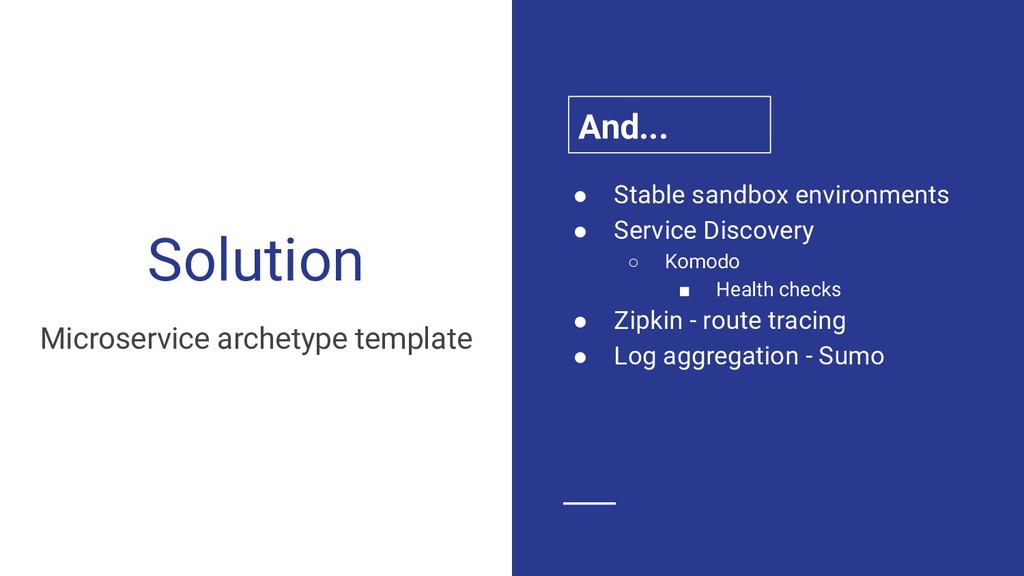
  15. Solution Microservice archetype template • Stable sandbox environments • Service

    Discovery ◦ Komodo ▪ Health checks • Zipkin - route tracing • Log aggregation - Sumo And...
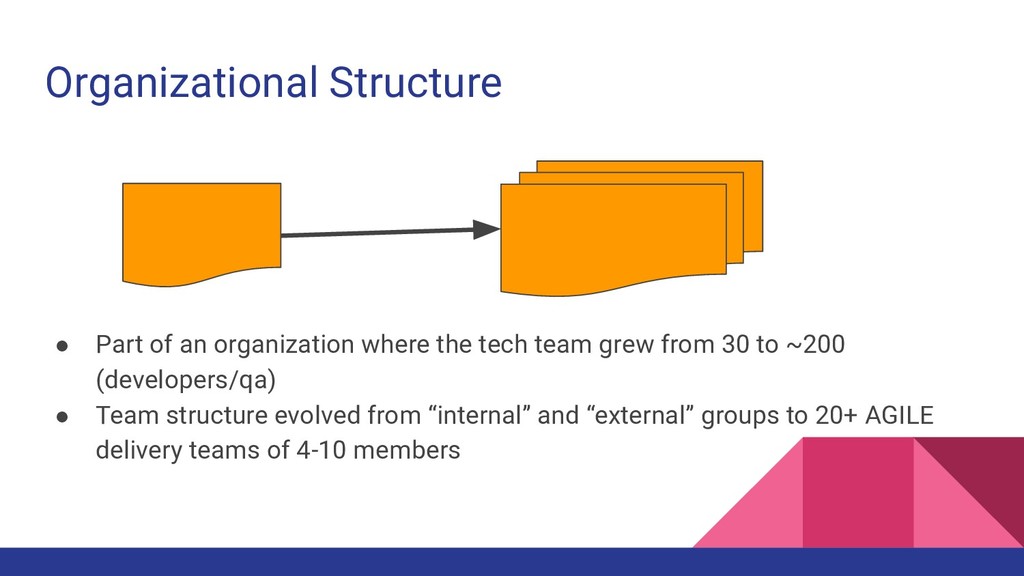
  16. Organizational Structure • Part of an organization where the tech

    team grew from 30 to ~200 (developers/qa) • Team structure evolved from “internal” and “external” groups to 20+ AGILE delivery teams of 4-10 members
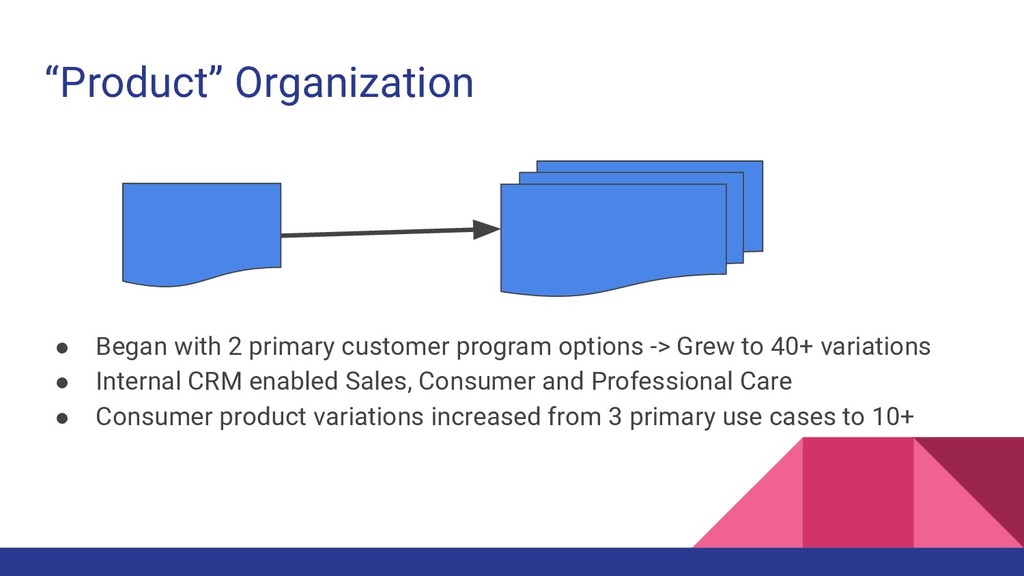
  17. “Product” Organization • Began with 2 primary customer program options

    -> Grew to 40+ variations • Internal CRM enabled Sales, Consumer and Professional Care • Consumer product variations increased from 3 primary use cases to 10+
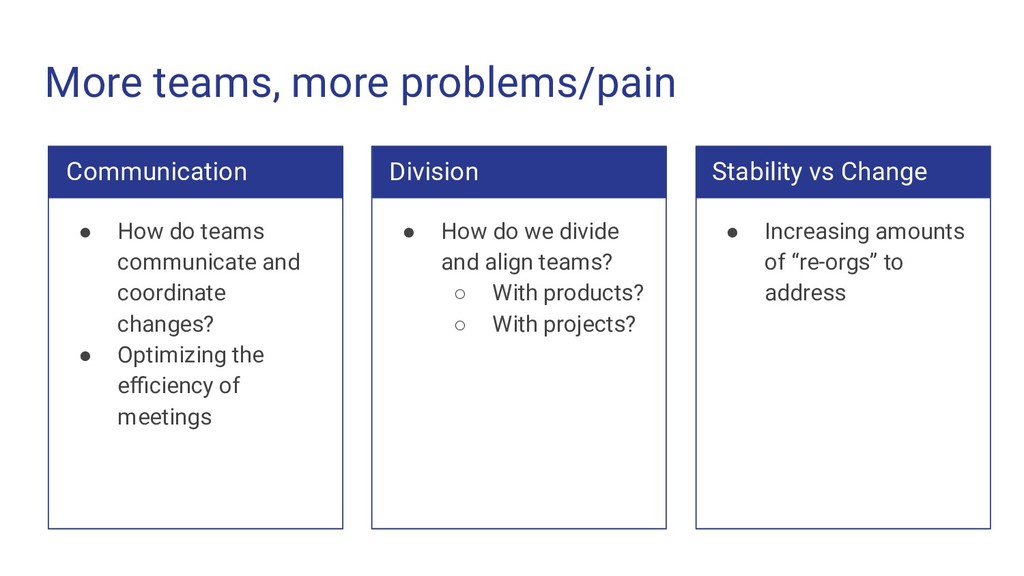
  18. More teams, more problems/pain Communication • How do teams communicate

    and coordinate changes? • Optimizing the efficiency of meetings Division • How do we divide and align teams? ◦ With products? ◦ With projects? Stability vs Change • Increasing amounts of “re-orgs” to address
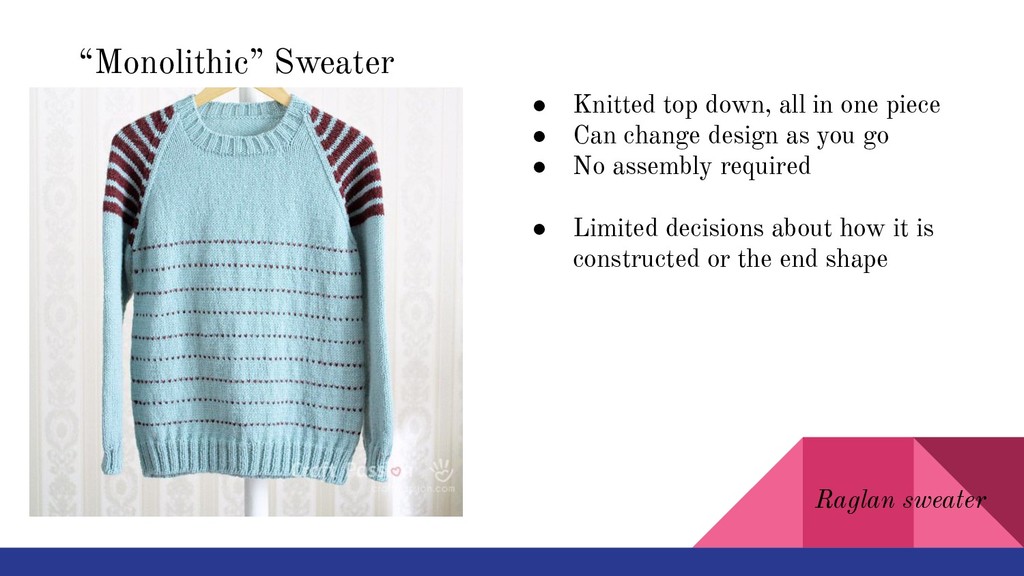
  19. “Monolithic” Sweater Raglan sweater • Knitted top down, all in

    one piece • Can change design as you go • No assembly required • Limited decisions about how it is constructed or the end shape
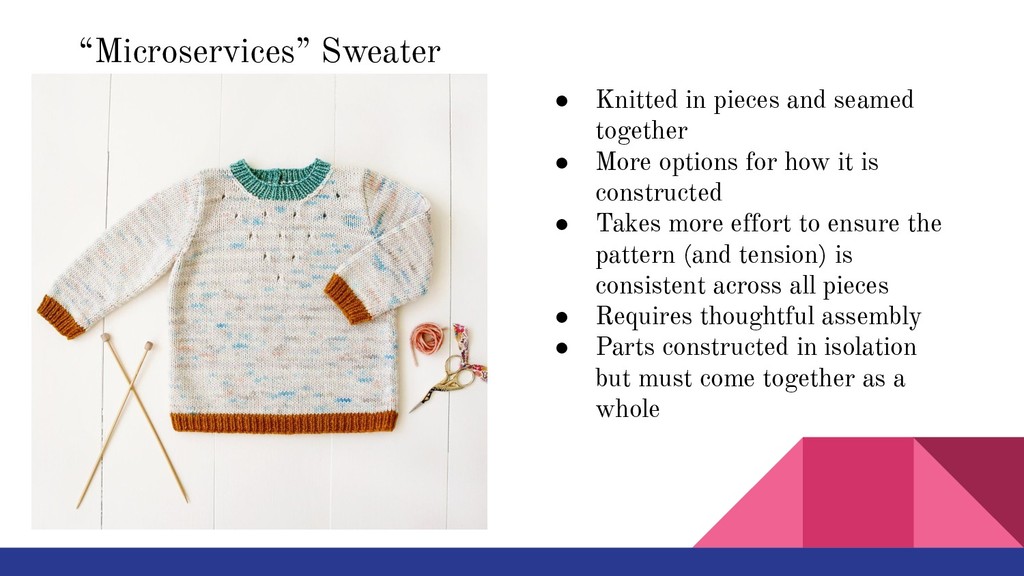
  20. “Microservices” Sweater • Knitted in pieces and seamed together •

    More options for how it is constructed • Takes more effort to ensure the pattern (and tension) is consistent across all pieces • Requires thoughtful assembly • Parts constructed in isolation but must come together as a whole
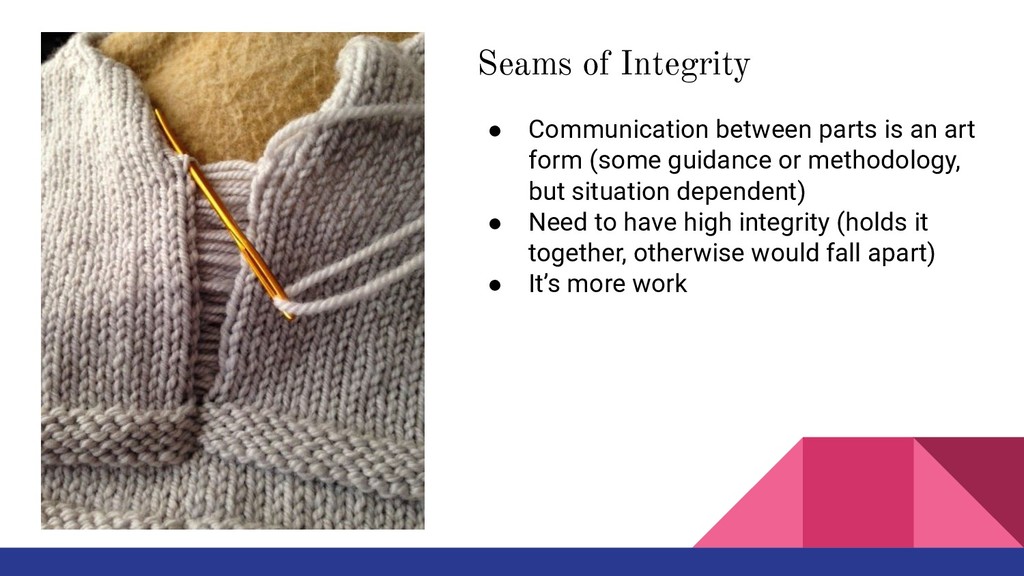
  21. Seams of Integrity • Communication between parts is an art

    form (some guidance or methodology, but situation dependent) • Need to have high integrity (holds it together, otherwise would fall apart) • It’s more work
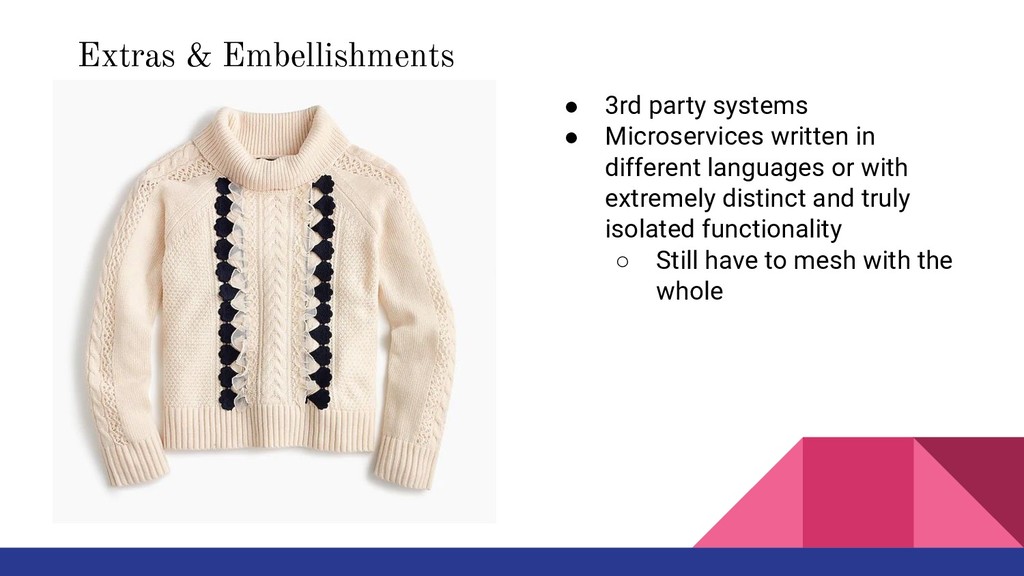
  22. Extras & Embellishments • 3rd party systems • Microservices written

    in different languages or with extremely distinct and truly isolated functionality ◦ Still have to mesh with the whole
  23. A last little plug... If you enjoyed my talk today,

    consider looking for the talk I am going to submit to Denver Startup Week this year, and voting for it! • Knitting to coding (title will probably change….) Follow me: @tealeafreaderco or @astraknots