Upgrade to Pro — share decks privately, control downloads, hide ads and more …

Onboarding - Investing in your company's growth...

Onboarding - Investing in your company's growth and future

The newest generations to the workforce expect to get fired from jobs as opposed to stay at them for the rest of their lives. Retaining top talent in the highly competitive and quickly expanding technology job market in Denver is a challenge and necessity. But also getting the most out of your workforce even if you only have them for a brief time. How are you laying the groundwork to get your new employees up to speed and productivity quickly when your company has a lot of domain knowledge, legacy code, esoteric processes, etc? What are you doing beyond the beginning of employment to help growth existing employees?

Avatar for Genevieve Krzeminski

Genevieve Krzeminski

August 15, 2019

More Decks by Genevieve Krzeminski

Other Decks in Technology

Transcript

  1. Hi, I’m Genevieve Krzeminski, Senior Engineering Manager for Quizlet Denver!

    Quizlet’s Mission: To help students (and their teachers) practice and master whatever they are learning. Quizlet Careers
  2. Onboarding for growth Agenda • Importance/Impact of onboarding programs •

    Practical ideas to introduce or improve an onboarding program at your company (or things to look for when joining a new company)
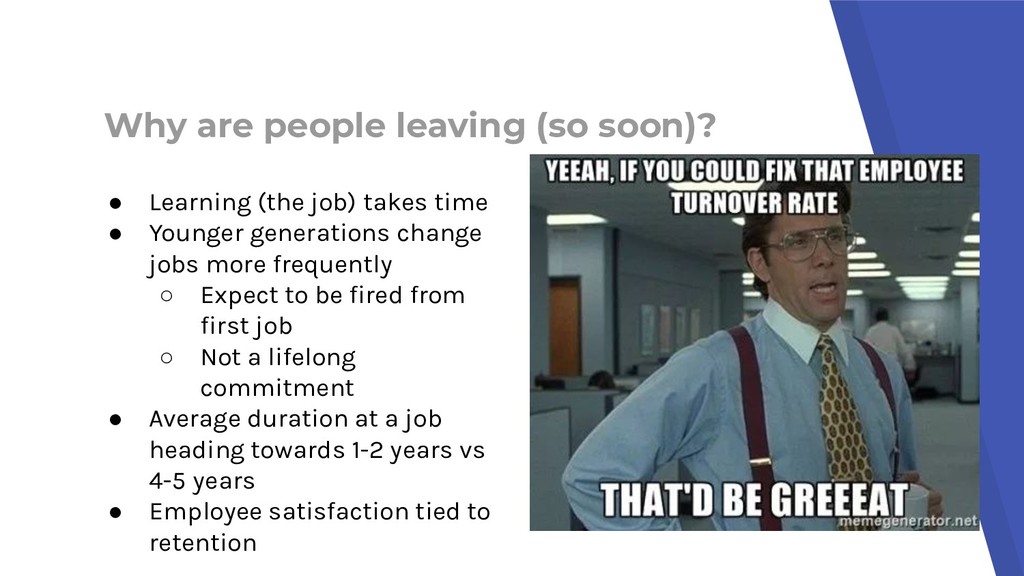
  3. Why are people leaving (so soon)? • Learning (the job)

    takes time • Younger generations change jobs more frequently ◦ Expect to be fired from first job ◦ Not a lifelong commitment • Average duration at a job heading towards 1-2 years vs 4-5 years • Employee satisfaction tied to retention
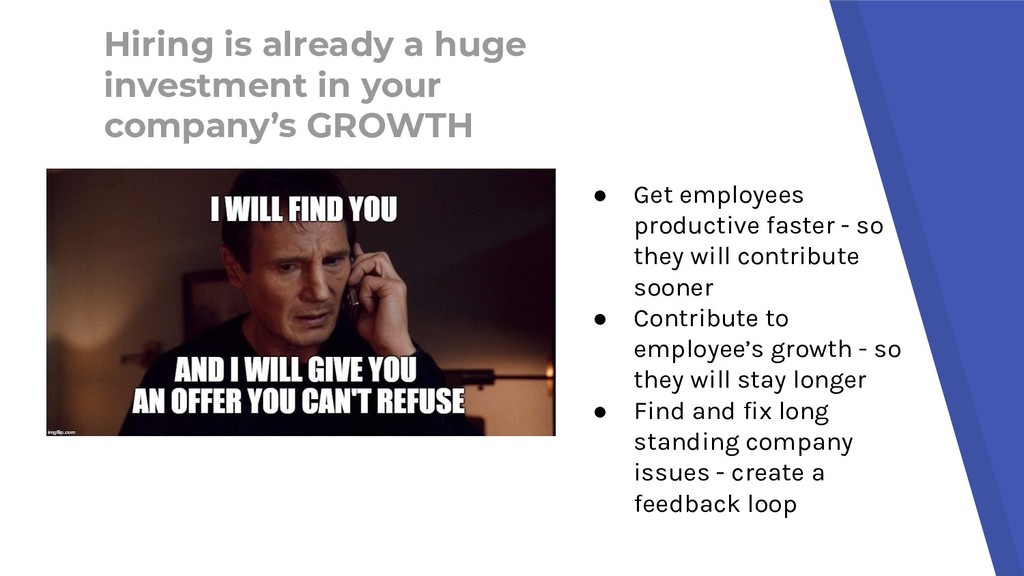
  4. Hiring is already a huge investment in your company’s GROWTH

    • Get employees productive faster - so they will contribute sooner • Contribute to employee’s growth - so they will stay longer • Find and fix long standing company issues - create a feedback loop
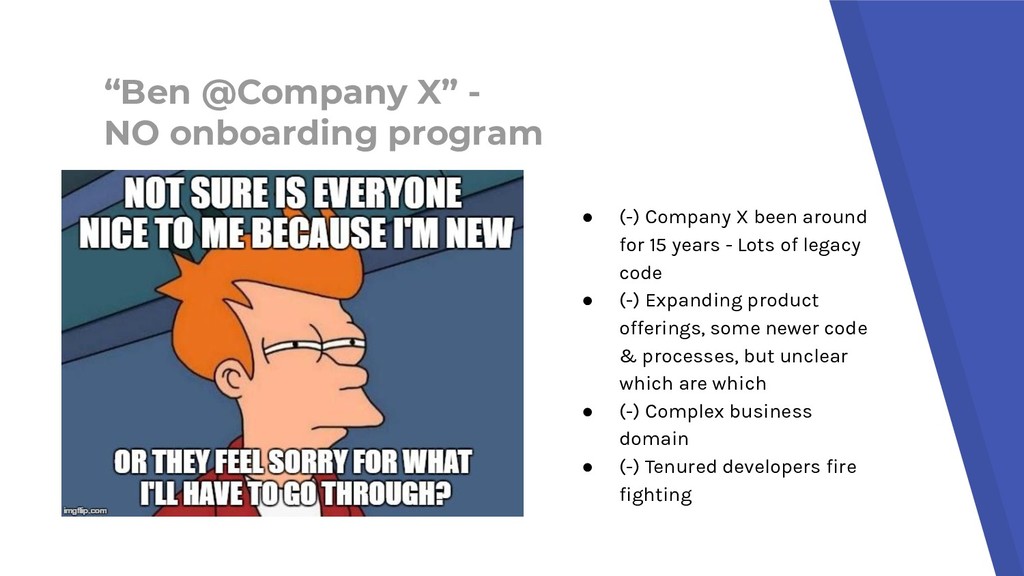
  5. “Ben @Company X” - NO onboarding program • (-) Company

    X been around for 15 years - Lots of legacy code • (-) Expanding product offerings, some newer code & processes, but unclear which are which • (-) Complex business domain • (-) Tenured developers fire fighting
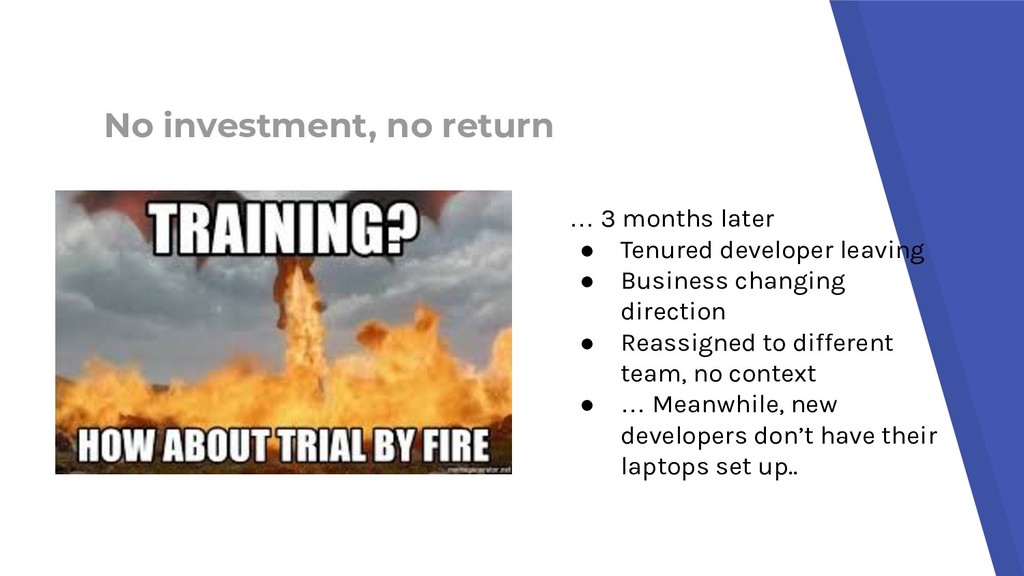
  6. No investment, no return … 3 months later • Tenured

    developer leaving • Business changing direction • Reassigned to different team, no context • … Meanwhile, new developers don’t have their laptops set up..
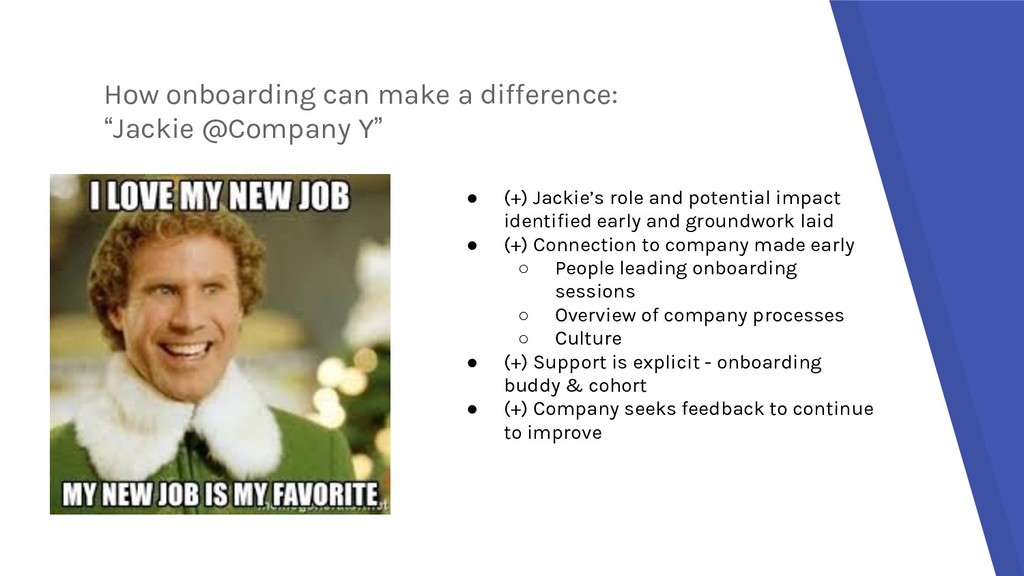
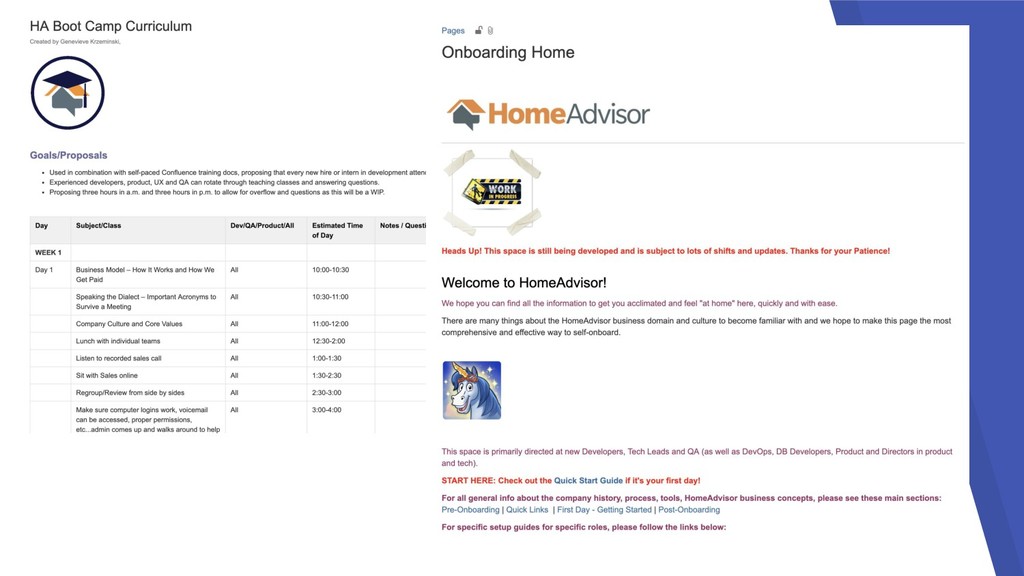
  7. How onboarding can make a difference: “Jackie @Company Y” •

    (+) Jackie’s role and potential impact identified early and groundwork laid • (+) Connection to company made early ◦ People leading onboarding sessions ◦ Overview of company processes ◦ Culture • (+) Support is explicit - onboarding buddy & cohort • (+) Company seeks feedback to continue to improve
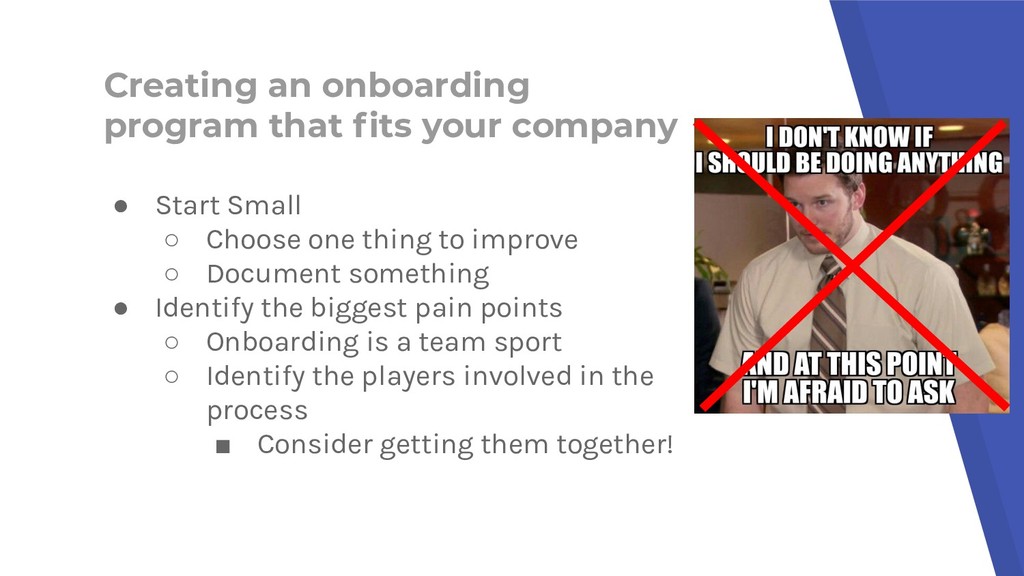
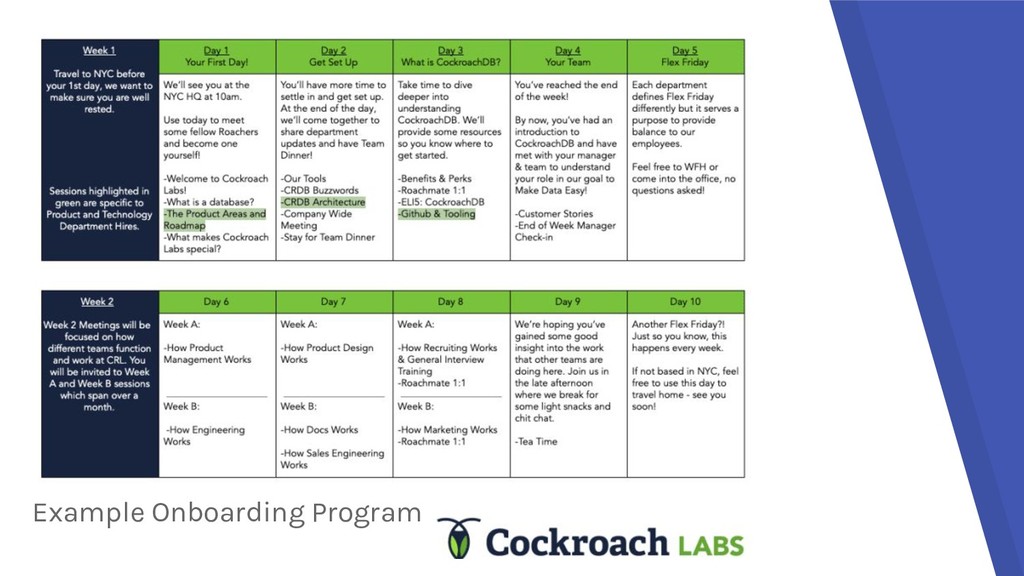
  8. Creating an onboarding program that fits your company • Start

    Small ◦ Choose one thing to improve ◦ Document something • Identify the biggest pain points ◦ Onboarding is a team sport ◦ Identify the players involved in the process ▪ Consider getting them together!
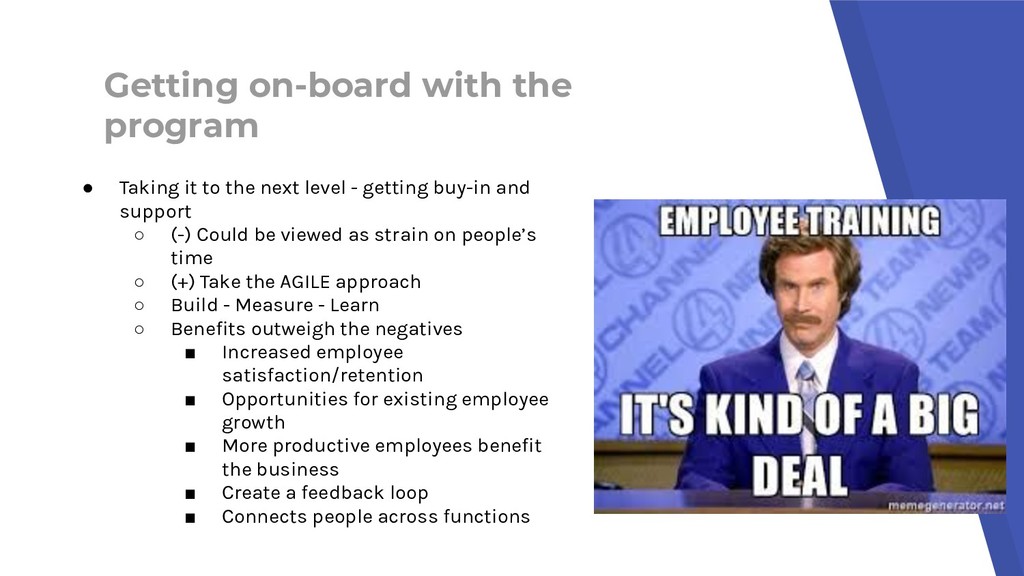
  9. Getting on-board with the program • Taking it to the

    next level - getting buy-in and support ◦ (-) Could be viewed as strain on people’s time ◦ (+) Take the AGILE approach ◦ Build - Measure - Learn ◦ Benefits outweigh the negatives ▪ Increased employee satisfaction/retention ▪ Opportunities for existing employee growth ▪ More productive employees benefit the business ▪ Create a feedback loop ▪ Connects people across functions
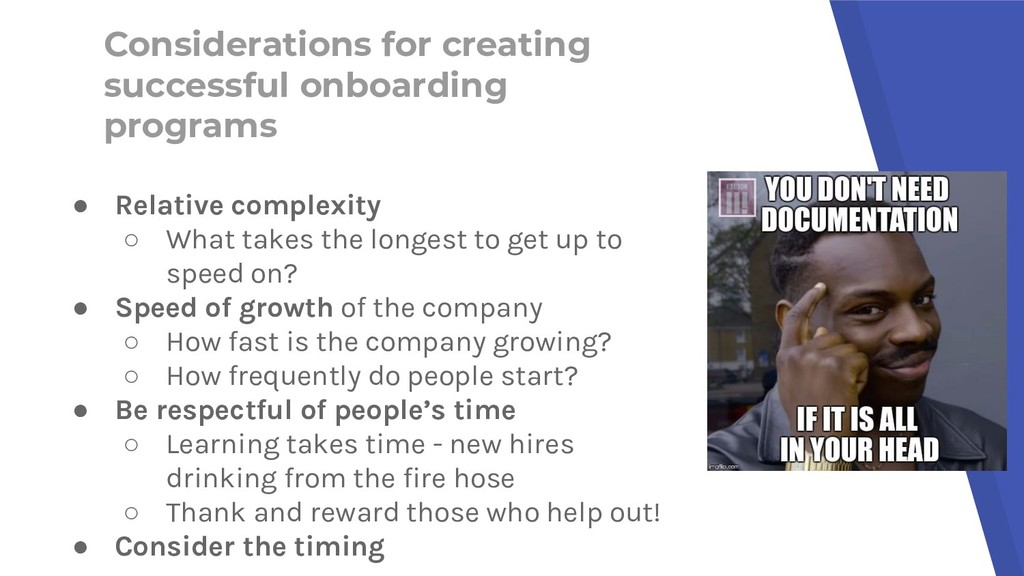
  10. Considerations for creating successful onboarding programs • Relative complexity ◦

    What takes the longest to get up to speed on? • Speed of growth of the company ◦ How fast is the company growing? ◦ How frequently do people start? • Be respectful of people’s time ◦ Learning takes time - new hires drinking from the fire hose ◦ Thank and reward those who help out! • Consider the timing
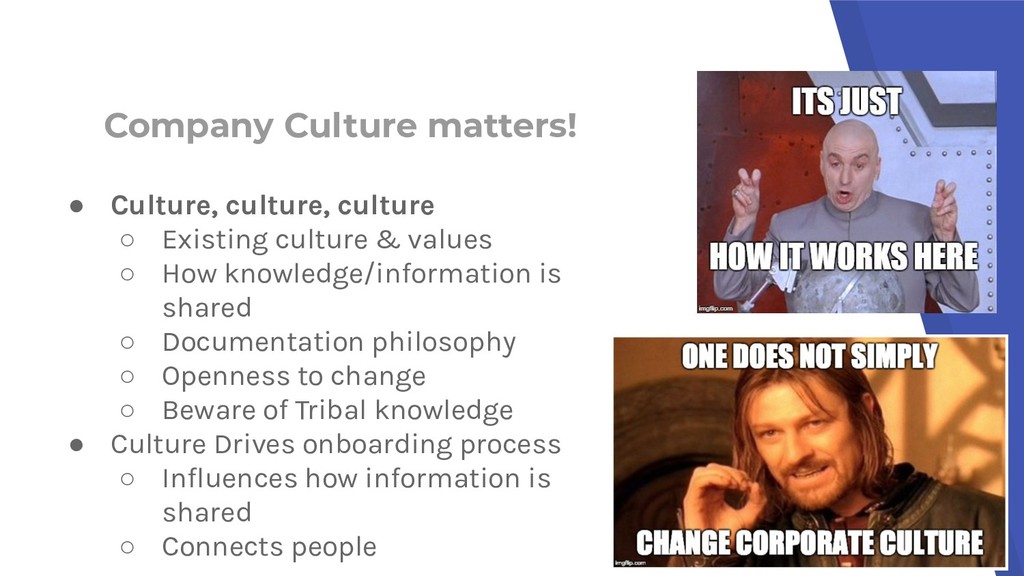
  11. Company Culture matters! • Culture, culture, culture ◦ Existing culture

    & values ◦ How knowledge/information is shared ◦ Documentation philosophy ◦ Openness to change ◦ Beware of Tribal knowledge • Culture Drives onboarding process ◦ Influences how information is shared ◦ Connects people