Share
Embed
resilient-data-pipelines-in-go-uk
The modern world runs on Data. In this talk we will cover how Gophers of any level can easily build Data Pipelines in Go with Kafka and Cassandra. At the end, we will look at how GE has written a Data Pipeline in Go that can handle over 800,000 writes per second of industrial time series data.
Grant Griffiths
August 03, 2018
Transcript
54 slides
-
Building Resilient Data Pipelines An introduction to Building Data Pipelines
in Go on Kubernetes Grant Griffiths Software Engineer Platform Cloud Engineering GE Digital -
Who am I? Climbing + Mountaineering 2 Building Resilient Data
Pipelines in Go GE Digital - Platform Cloud Engineering Sr. Software Engineer San Francisco, CA GE Go User Group Founder & Organizer @ggriffiths @griffithsgrant -
What we’ll cover 1. Industrial IoT and Data @ GE
2. Introduction to Data Pipelines 3. Sample Data Pipeline in Go 4. Resiliency Testing our Data Pipeline 5. Results and takeaways 3 Building Resilient Data Pipelines in Go -
1. Industrial IoT and Data @ GE 2. Introduction to
Data Pipelines 3. Sample Data Pipeline in Go 4. Reliability Testing our Data Pipeline 5. Results and takeaways -
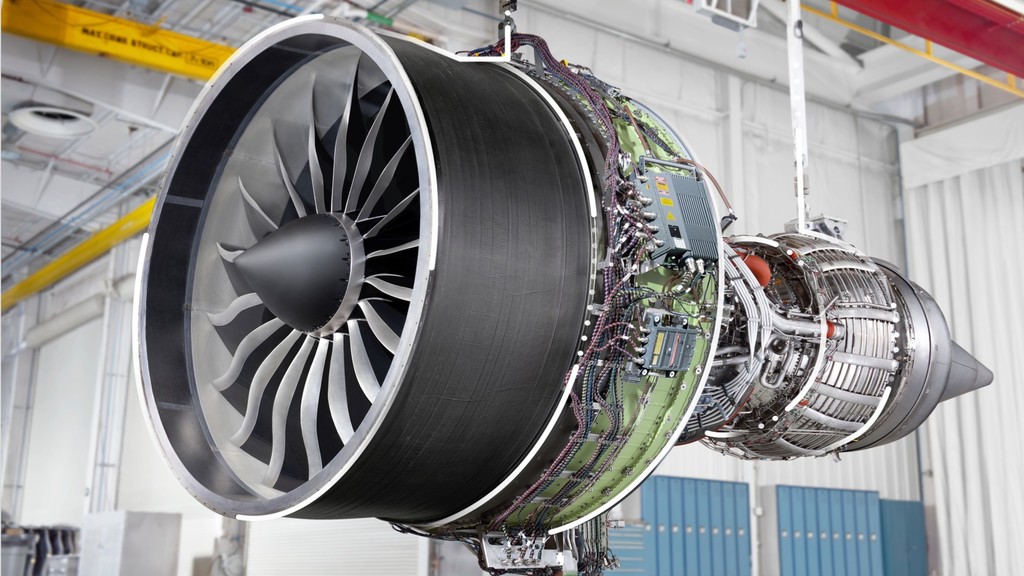
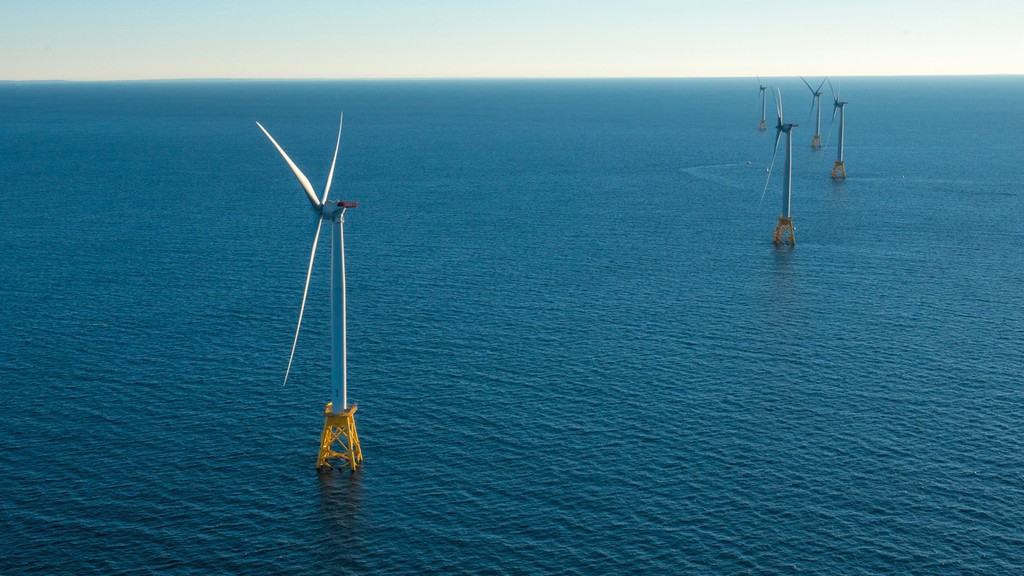
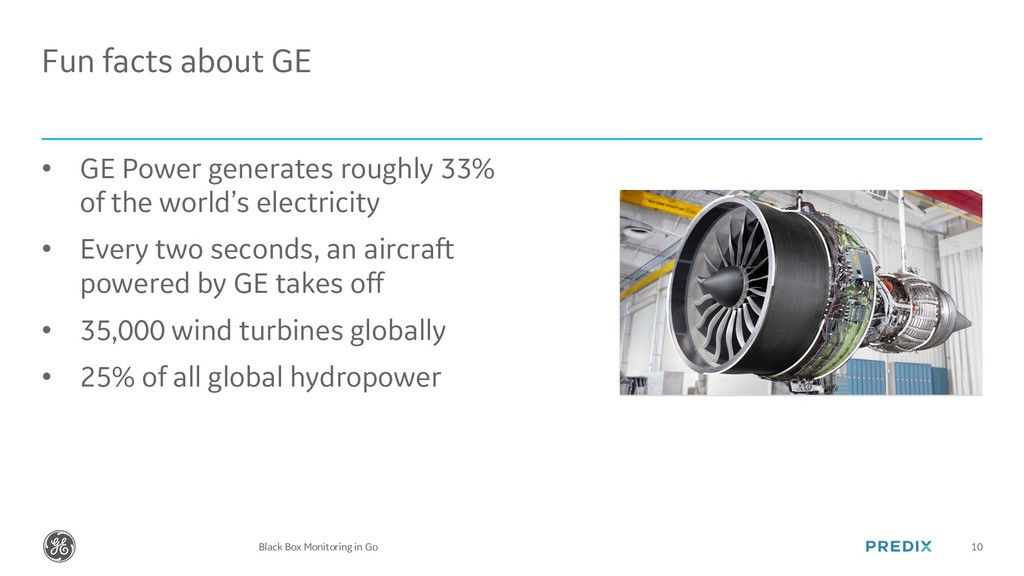
Fun facts about GE • GE Power generates roughly 33%
of the world’s electricity • Every two seconds, an aircraft powered by GE takes off • 35,000 wind turbines globally • 25% of all global hydropower 10 Black Box Monitoring in Go -
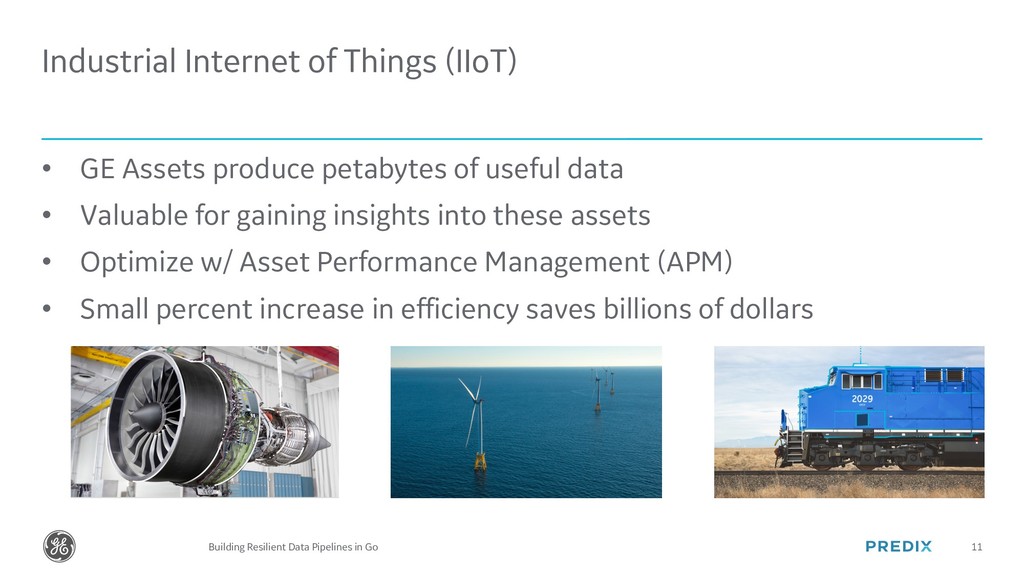
Industrial Internet of Things (IIoT) • GE Assets produce petabytes
of useful data • Valuable for gaining insights into these assets • Optimize w/ Asset Performance Management (APM) • Small percent increase in efficiency saves billions of dollars 11 Building Resilient Data Pipelines in Go -
Predix • Multi-cloud platform for the Industrial Internet of Things
• Many services and applications optimized for industrial data 12 Building Resilient Data Pipelines in Go -
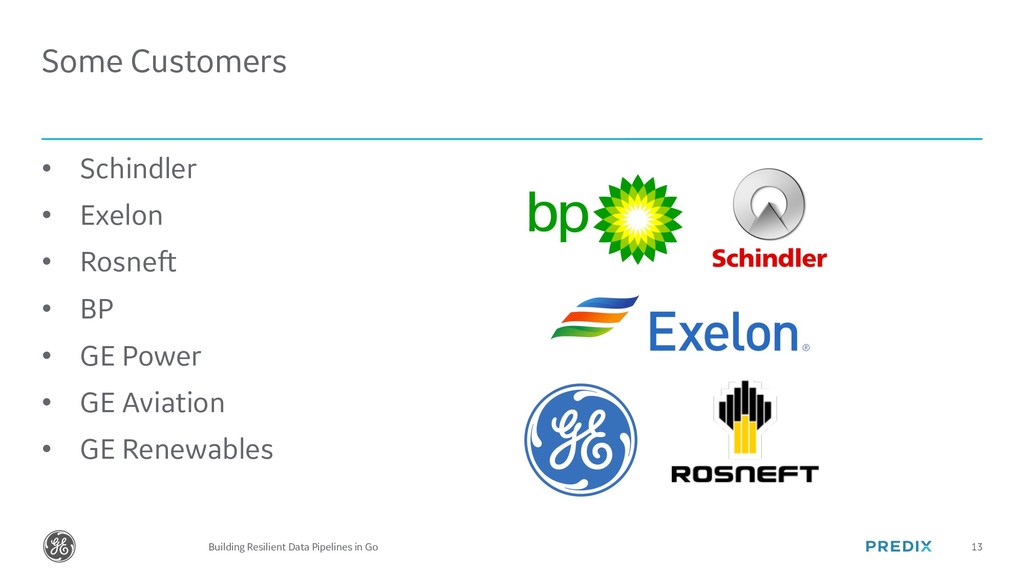
Some Customers • Schindler • Exelon • Rosneft • BP
• GE Power • GE Aviation • GE Renewables 13 Building Resilient Data Pipelines in Go -
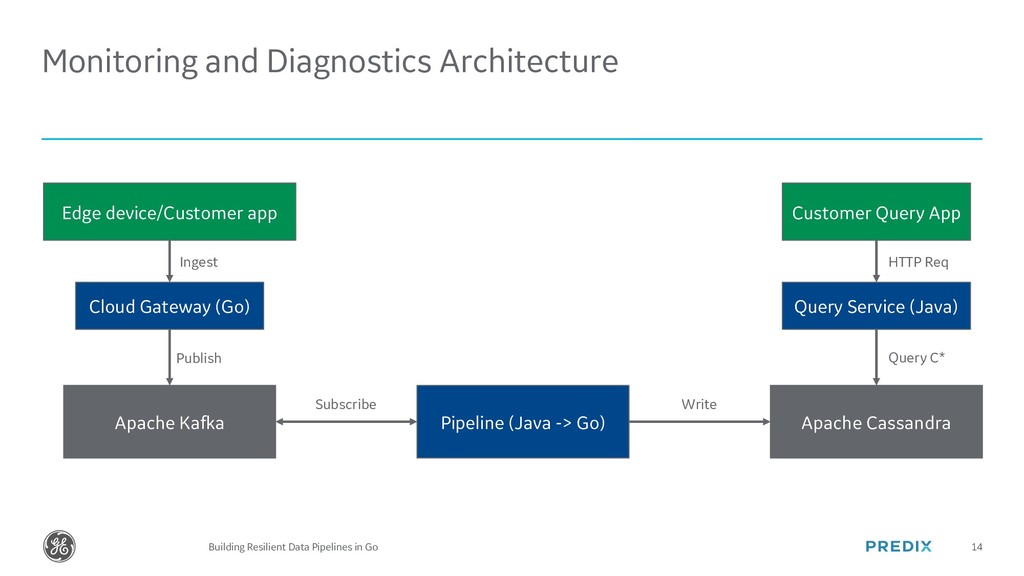
Monitoring and Diagnostics Architecture 14 Building Resilient Data Pipelines in
Go Apache Kafka Pipeline (Java -> Go) Customer Query App Query Service (Java) Apache Cassandra Edge device/Customer app Cloud Gateway (Go) Subscribe Write Ingest Publish HTTP Req Query C* -
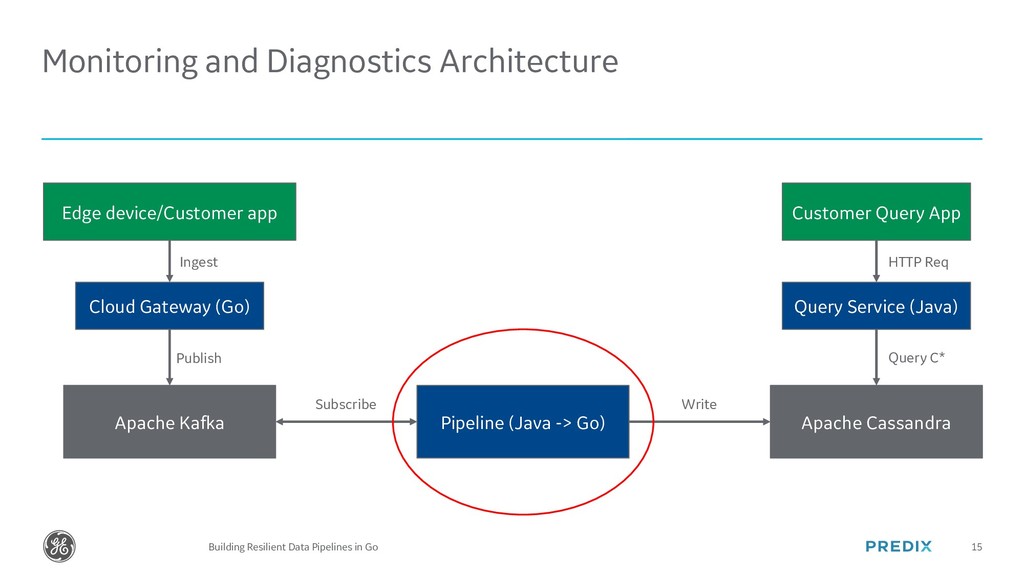
Monitoring and Diagnostics Architecture 15 Building Resilient Data Pipelines in
Go Apache Kafka Pipeline (Java -> Go) Customer Query App Query Service (Java) Apache Cassandra Edge device/Customer app Cloud Gateway (Go) Subscribe Write Ingest Publish HTTP Req Query C* -
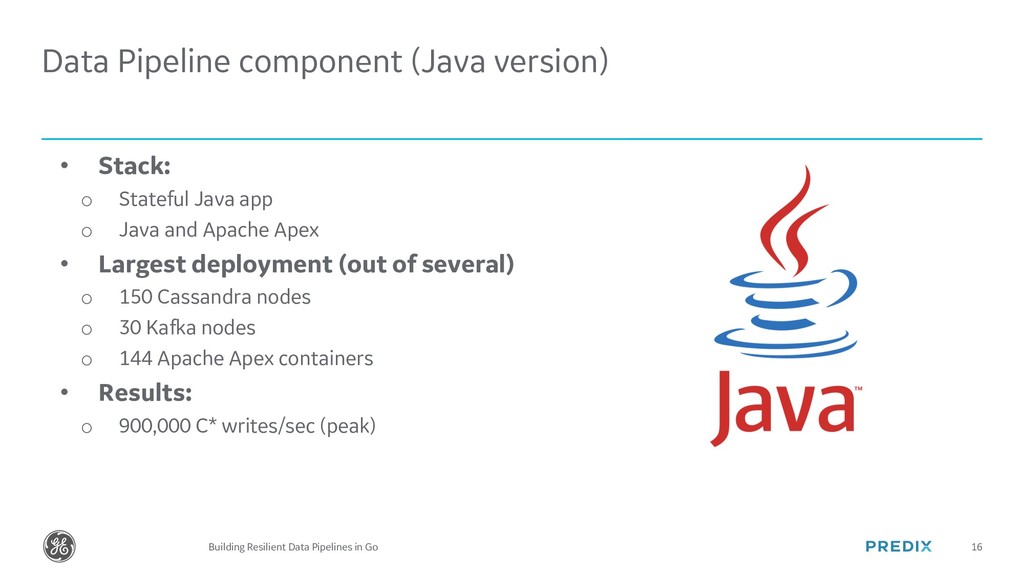
Data Pipeline component (Java version) • Stack: o Stateful Java
app o Java and Apache Apex • Largest deployment (out of several) o 150 Cassandra nodes o 30 Kafka nodes o 144 Apache Apex containers • Results: o 900,000 C* writes/sec (peak) 16 Building Resilient Data Pipelines in Go -
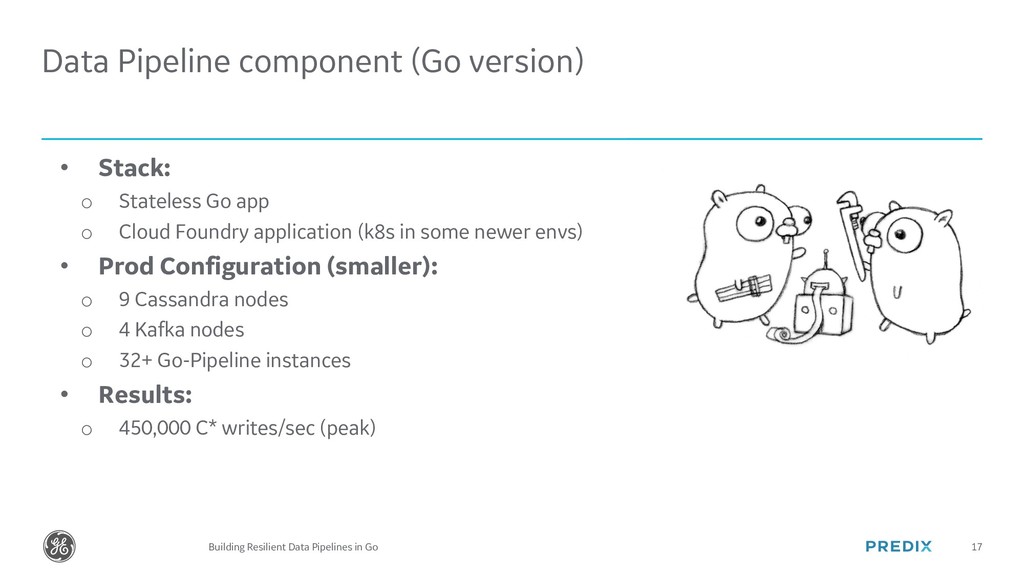
Data Pipeline component (Go version) • Stack: o Stateless Go
app o Cloud Foundry application (k8s in some newer envs) • Prod Configuration (smaller): o 9 Cassandra nodes o 4 Kafka nodes o 32+ Go-Pipeline instances • Results: o 450,000 C* writes/sec (peak) 17 Building Resilient Data Pipelines in Go -
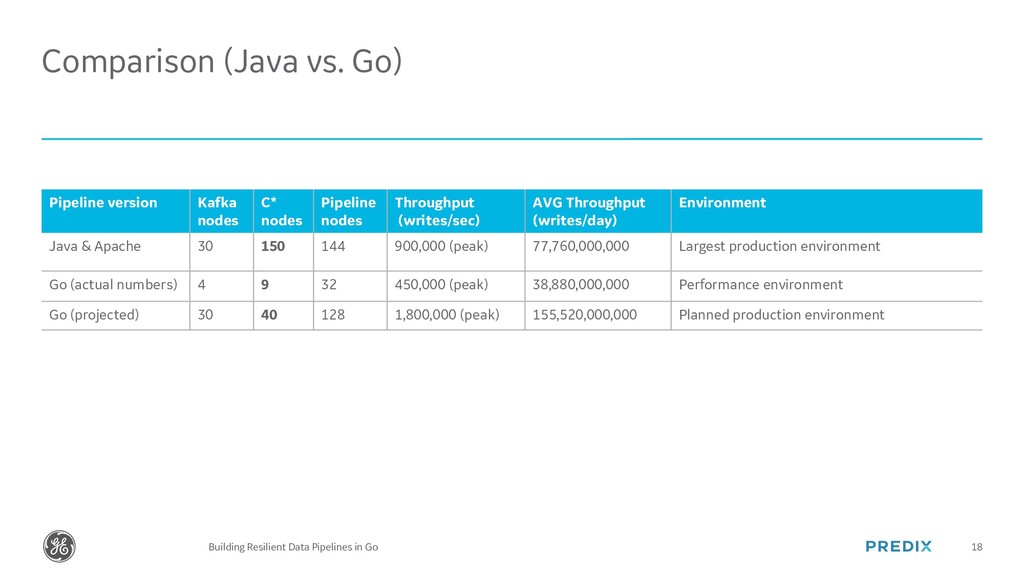
Comparison (Java vs. Go) 18 Building Resilient Data Pipelines in
Go Pipeline version Kafka nodes C* nodes Pipeline nodes Throughput (writes/sec) AVG Throughput (writes/day) Environment Java & Apache 30 150 144 900,000 (peak) 77,760,000,000 Largest production environment Go (actual numbers) 4 9 32 450,000 (peak) 38,880,000,000 Performance environment Go (projected) 30 40 128 1,800,000 (peak) 155,520,000,000 Planned production environment -
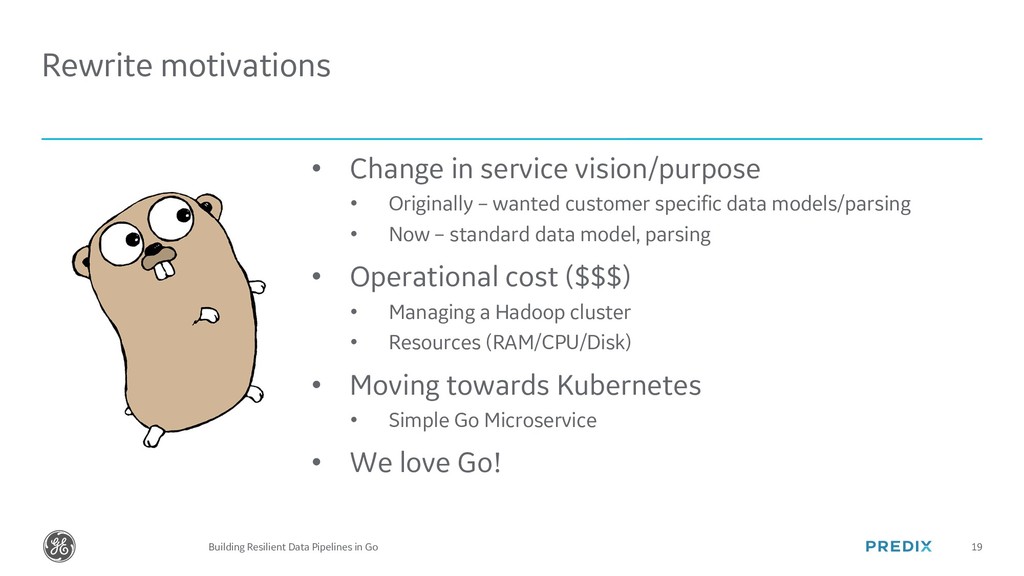
Rewrite motivations • Change in service vision/purpose • Originally –
wanted customer specific data models/parsing • Now – standard data model, parsing • Operational cost ($$$) • Managing a Hadoop cluster • Resources (RAM/CPU/Disk) • Moving towards Kubernetes • Simple Go Microservice • We love Go! 19 Building Resilient Data Pipelines in Go -
1. Data @ GE 2. Introduction to Data Pipelines 3.
Sample Data Pipeline in Go 4. Reliability Testing our Data Pipeline 5. Results and takeaways -
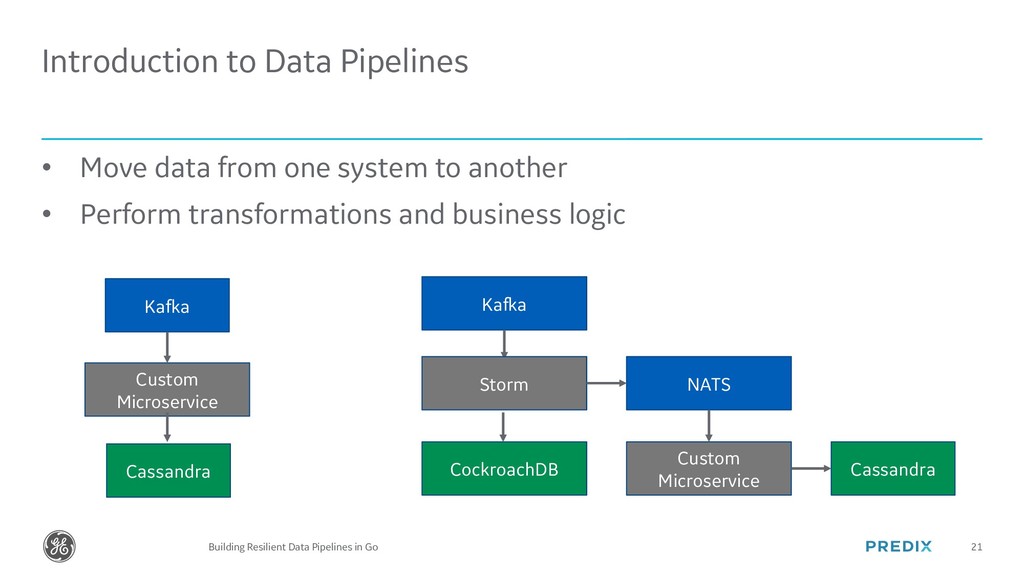
Introduction to Data Pipelines • Move data from one system
to another • Perform transformations and business logic 21 Building Resilient Data Pipelines in Go Kafka Custom Microservice Cassandra Kafka CockroachDB Storm NATS Custom Microservice Cassandra -
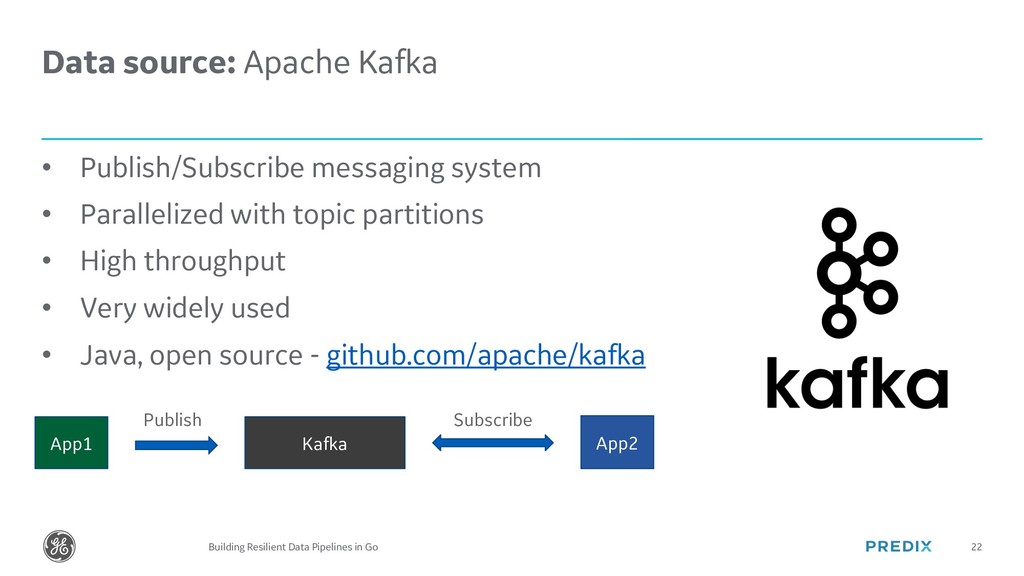
Data source: Apache Kafka • Publish/Subscribe messaging system • Parallelized
with topic partitions • High throughput • Very widely used • Java, open source - github.com/apache/kafka 22 Building Resilient Data Pipelines in Go Kafka Publish Subscribe App1 App2 -
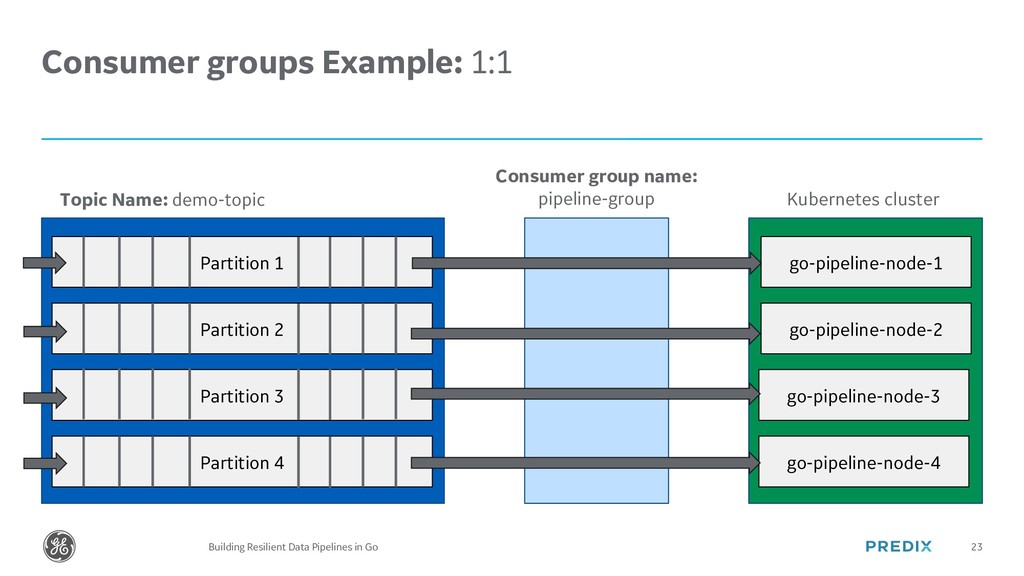
Consumer groups Example: 1:1 23 Building Resilient Data Pipelines in
Go Partition 1 Partition 2 Partition 3 Partition 4 Topic Name: demo-topic go-pipeline-node-1 go-pipeline-node-2 go-pipeline-node-3 go-pipeline-node-4 Kubernetes cluster Consumer group name: pipeline-group -
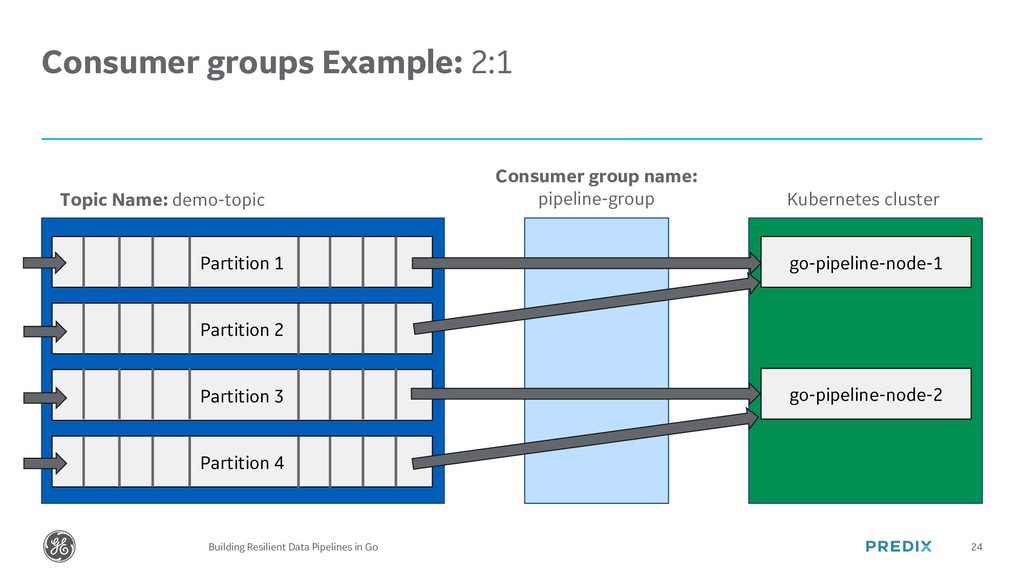
Consumer groups Example: 2:1 24 Building Resilient Data Pipelines in
Go Partition 1 Partition 2 Partition 3 Partition 4 Topic Name: demo-topic go-pipeline-node-1 go-pipeline-node-2 Kubernetes cluster Consumer group name: pipeline-group -
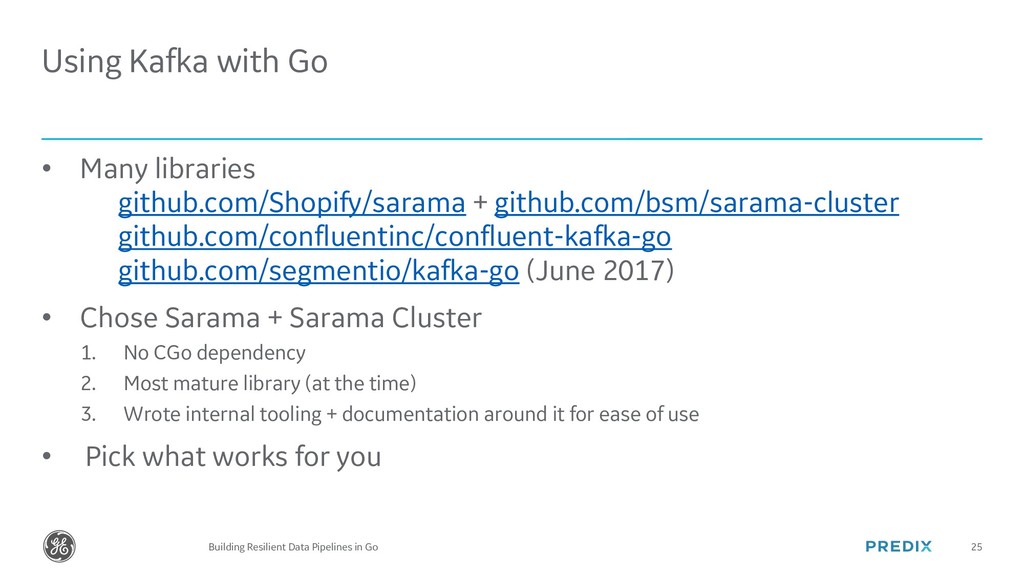
Using Kafka with Go • Many libraries github.com/Shopify/sarama + github.com/bsm/sarama-cluster
github.com/confluentinc/confluent-kafka-go github.com/segmentio/kafka-go (June 2017) • Chose Sarama + Sarama Cluster 1. No CGo dependency 2. Most mature library (at the time) 3. Wrote internal tooling + documentation around it for ease of use • Pick what works for you 25 Building Resilient Data Pipelines in Go -
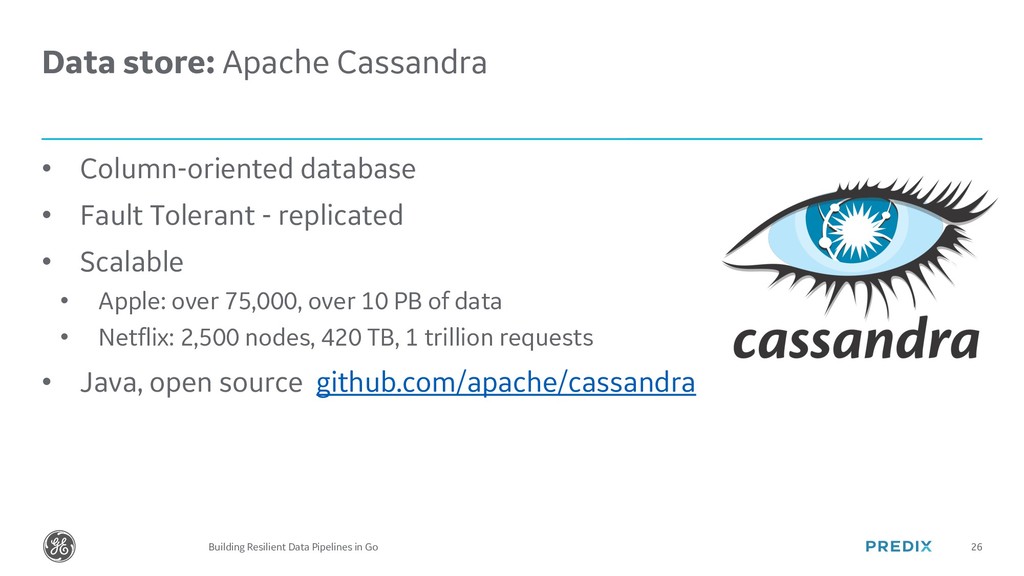
Data store: Apache Cassandra • Column-oriented database • Fault Tolerant
- replicated • Scalable • Apple: over 75,000, over 10 PB of data • Netflix: 2,500 nodes, 420 TB, 1 trillion requests • Java, open source github.com/apache/cassandra 26 Building Resilient Data Pipelines in Go -
Go and Cassandra • github.com/gocql/gocql • For high performance data
bindings: • github.com/scylladb/gocqlx 27 Building Resilient Data Pipelines in Go -
1. Data @ GE 2. Introduction to Data Pipelines 3.
Sample Data Pipeline in Go 4. Reliability Testing our Data Pipeline 5. Results and takeaways -
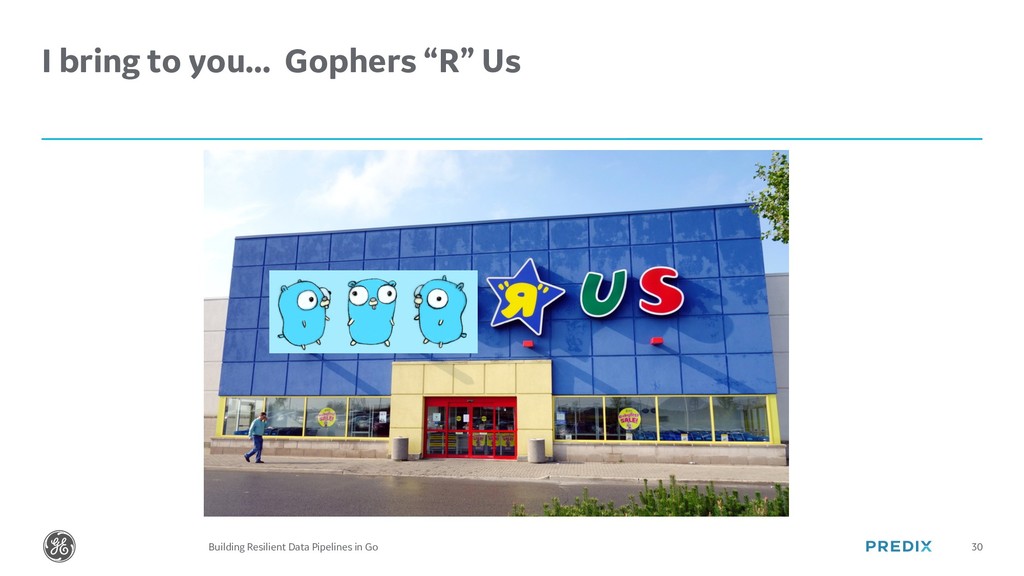
I bring to you… Gophers “R” Us 30 Building Resilient
Data Pipelines in Go -
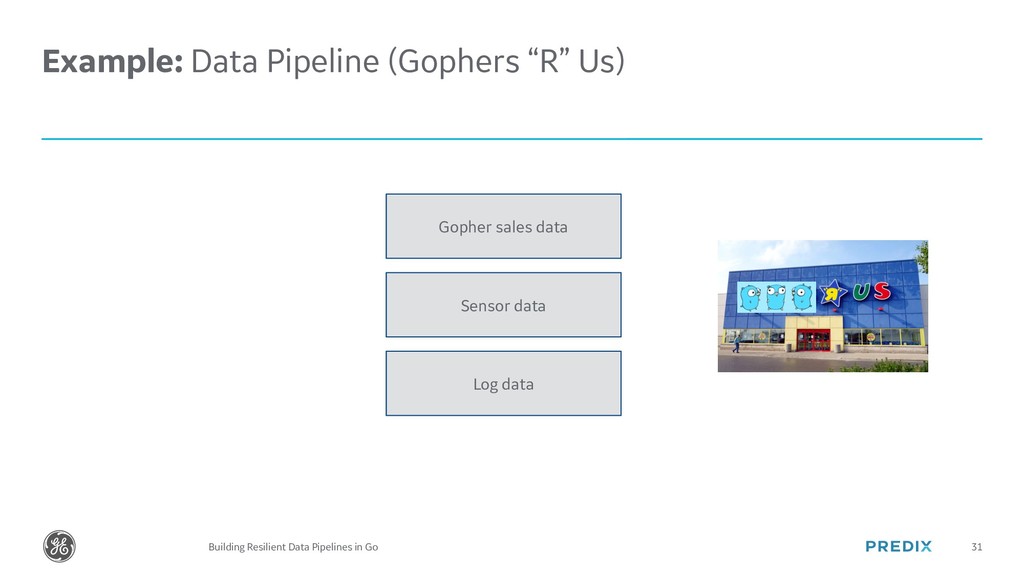
Example: Data Pipeline (Gophers “R” Us) 31 Building Resilient Data
Pipelines in Go Gopher sales data Log data Sensor data -
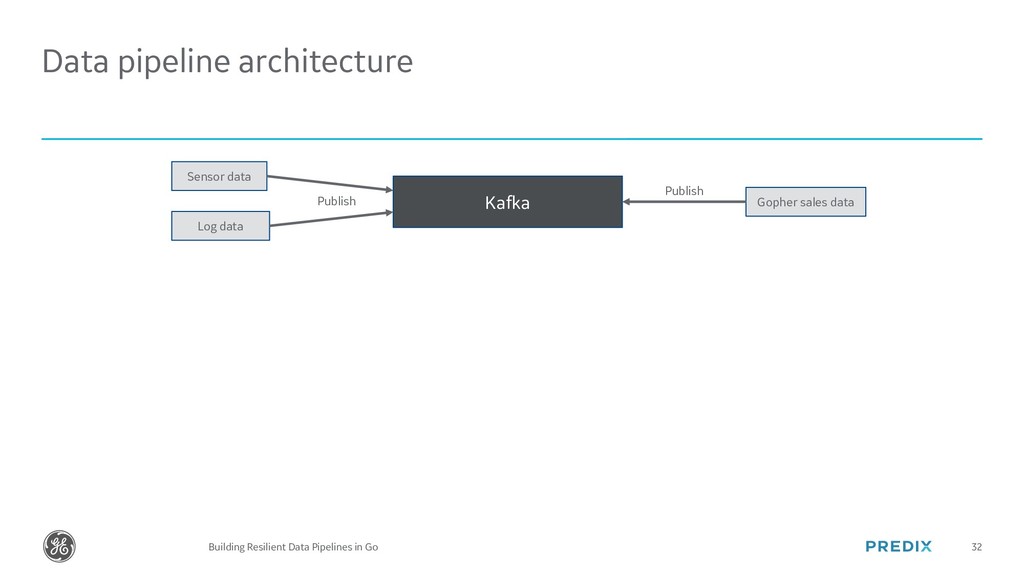
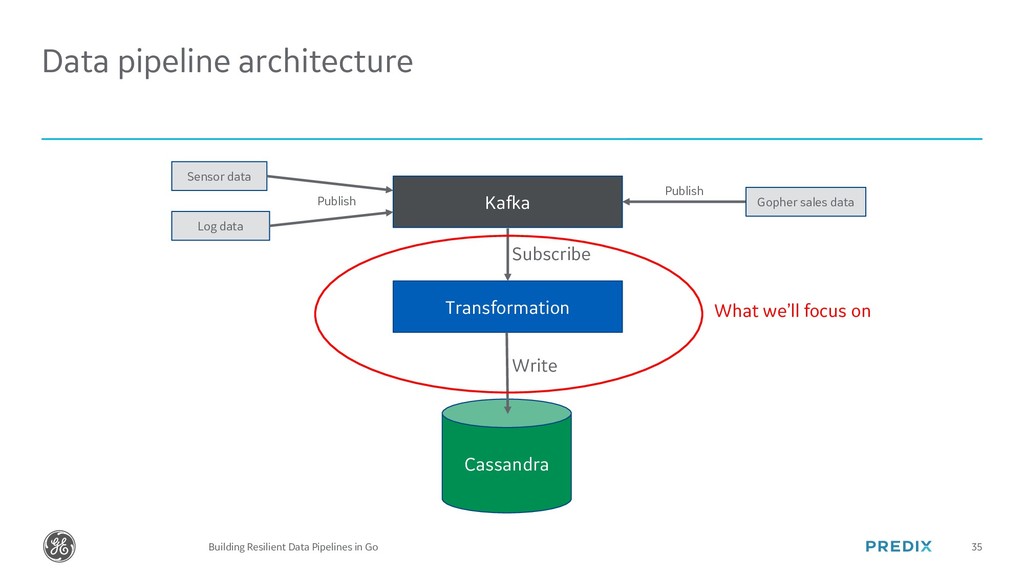
Data pipeline architecture 32 Building Resilient Data Pipelines in Go
Kafka Sensor data Log data Gopher sales data Publish Publish -
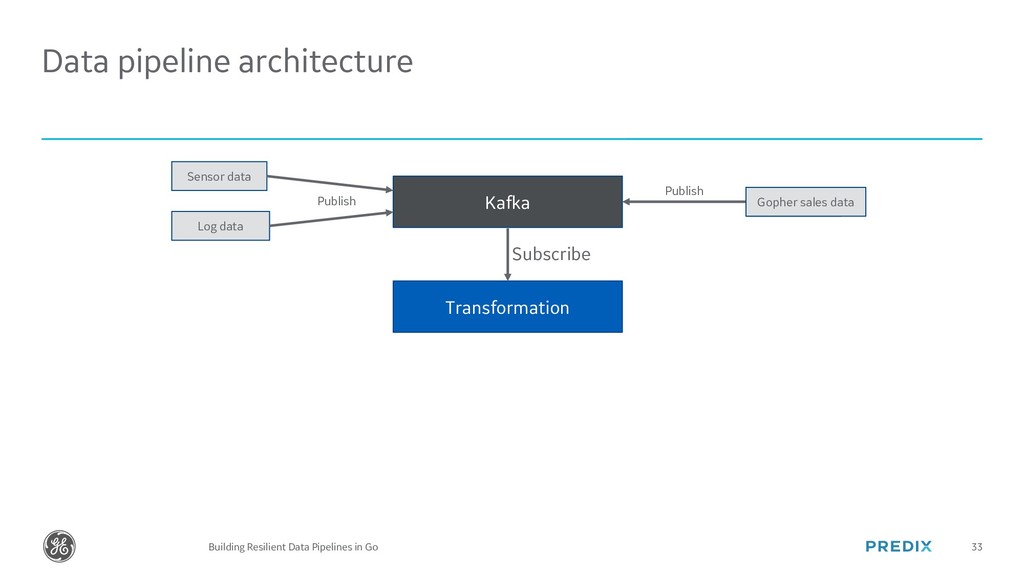
Data pipeline architecture 33 Building Resilient Data Pipelines in Go
Transformation Subscribe Kafka Sensor data Log data Purchase data Publish Publish Gopher sales data -
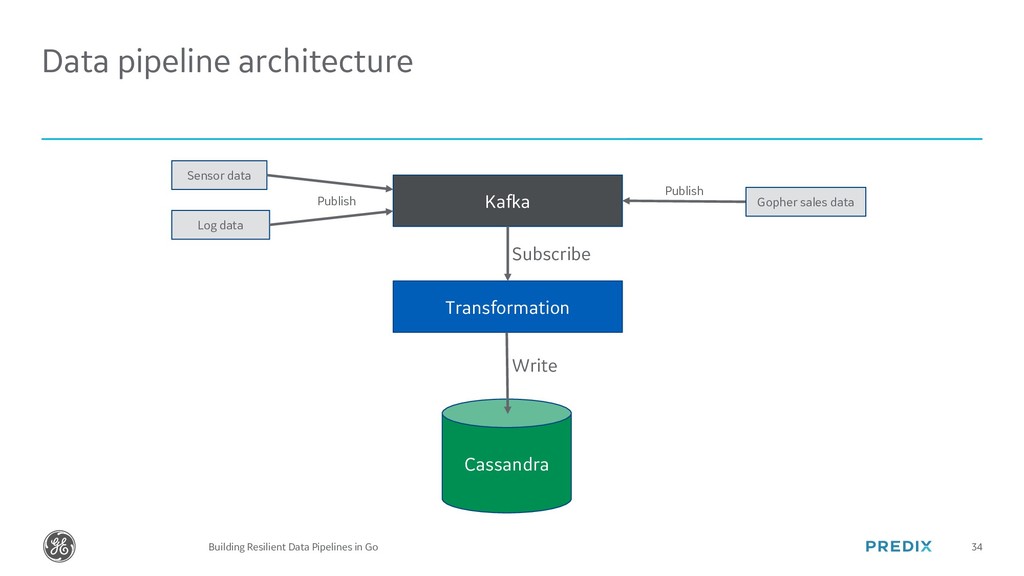
Data pipeline architecture 34 Building Resilient Data Pipelines in Go
Kafka Transformation Cassandra Subscribe Write Sensor data Log data Publish Publish Gopher sales data -
Data pipeline architecture 35 Building Resilient Data Pipelines in Go
Transformation Cassandra Subscribe Write Kafka Sensor data Log data Publish Publish What we’ll focus on Gopher sales data -
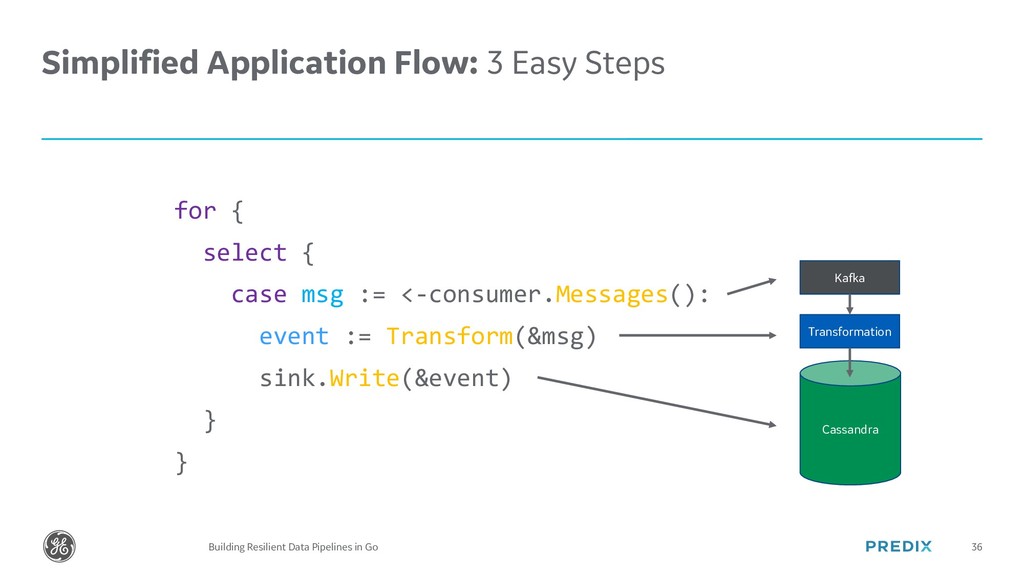
Simplified Application Flow: 3 Easy Steps for { select {
case msg := <-consumer.Messages(): event := Transform(&msg) sink.Write(&event) } } 36 Building Resilient Data Pipelines in Go Kafka Transformation Cassandra -
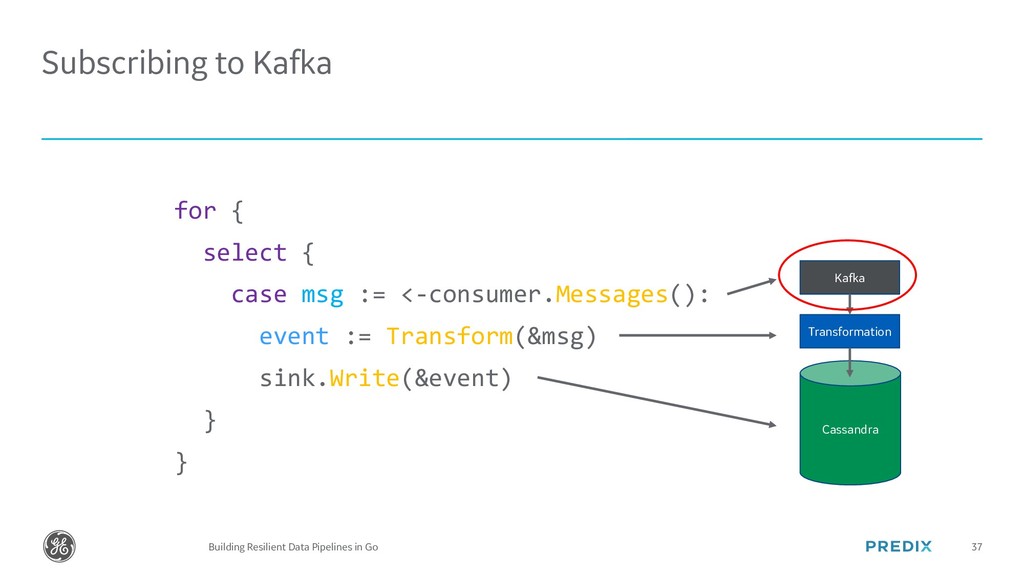
Subscribing to Kafka for { select { case msg :=
<-consumer.Messages(): event := Transform(&msg) sink.Write(&event) } } 37 Building Resilient Data Pipelines in Go Kafka Transformation Cassandra -
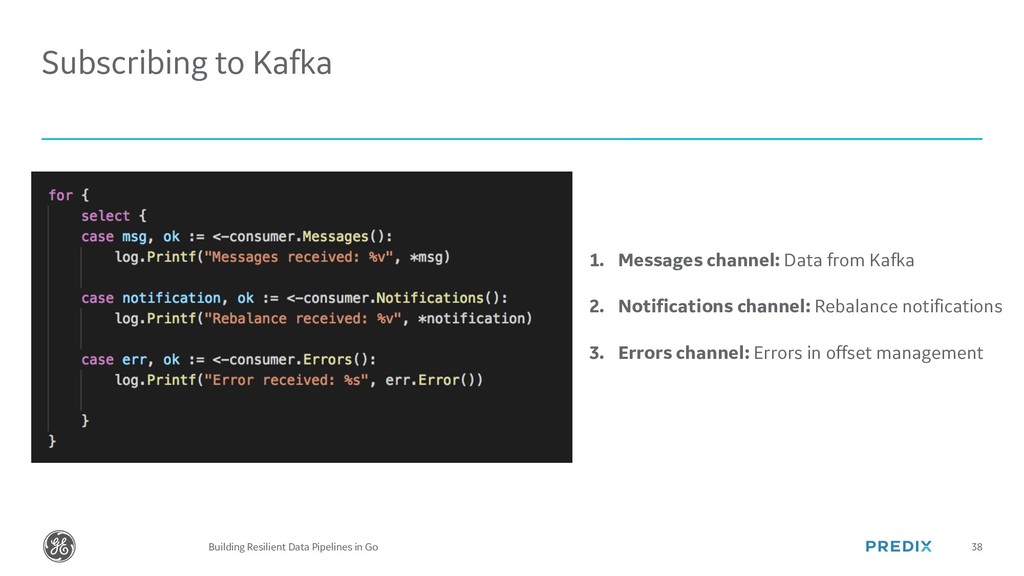
Subscribing to Kafka 38 Building Resilient Data Pipelines in Go
1. Messages channel: Data from Kafka 2. Notifications channel: Rebalance notifications 3. Errors channel: Errors in offset management -
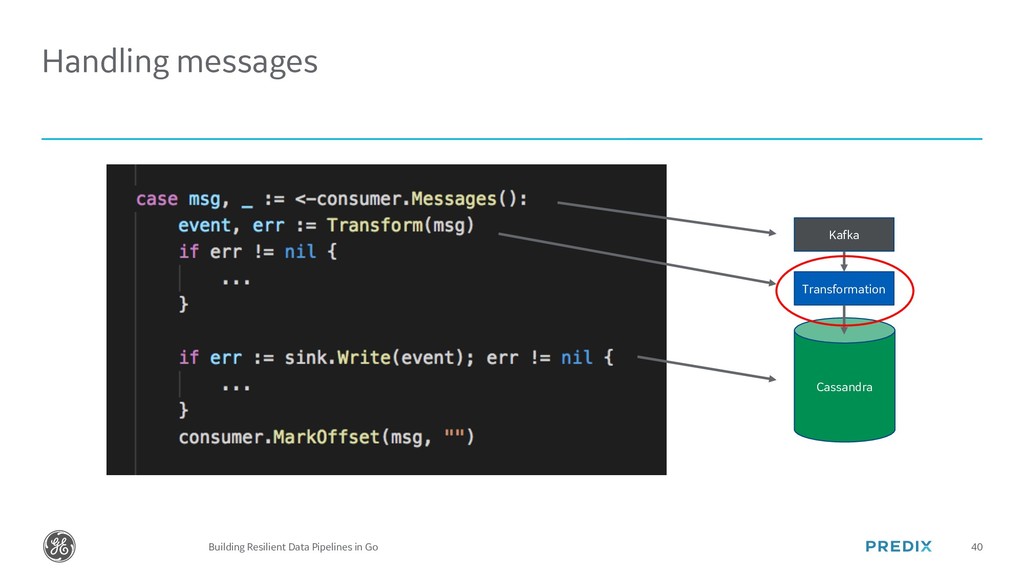
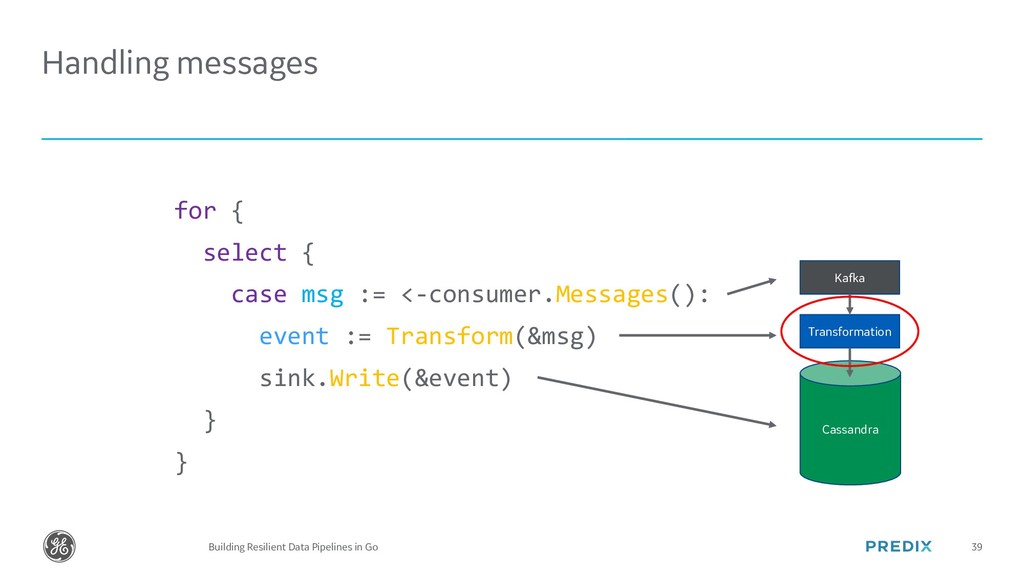
Handling messages for { select { case msg := <-consumer.Messages():
event := Transform(&msg) sink.Write(&event) } } 39 Building Resilient Data Pipelines in Go Kafka Transformation Cassandra -
Handling messages 40 Building Resilient Data Pipelines in Go Kafka
Transformation Cassandra -
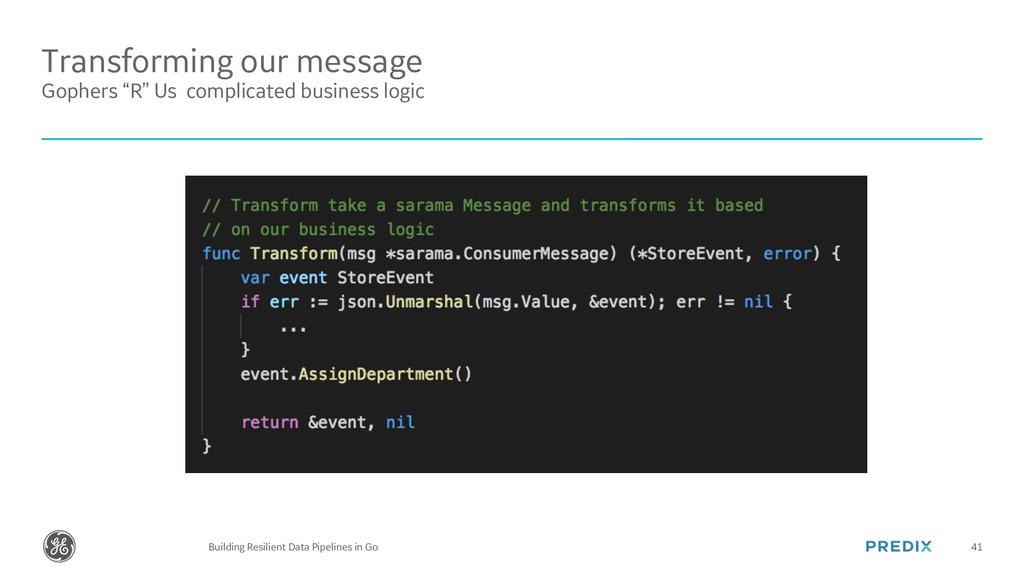
Transforming our message Gophers “R” Us complicated business logic 41
Building Resilient Data Pipelines in Go -
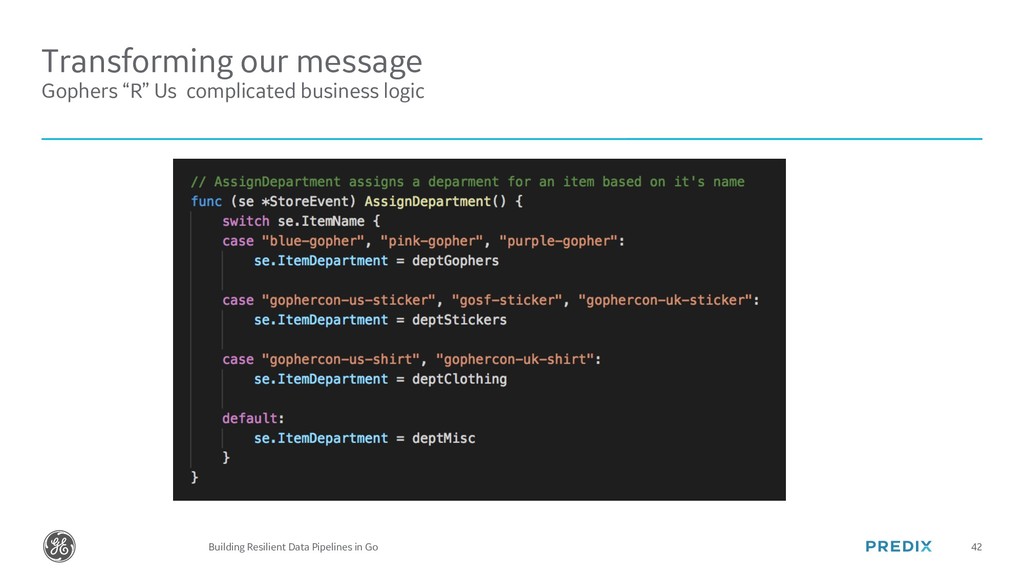
Transforming our message Gophers “R” Us complicated business logic 42
Building Resilient Data Pipelines in Go -
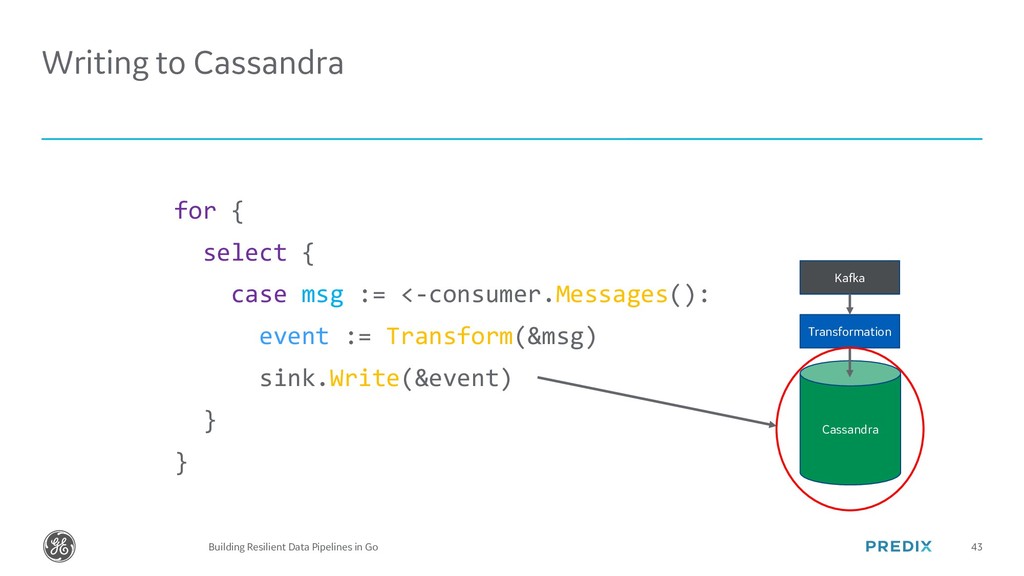
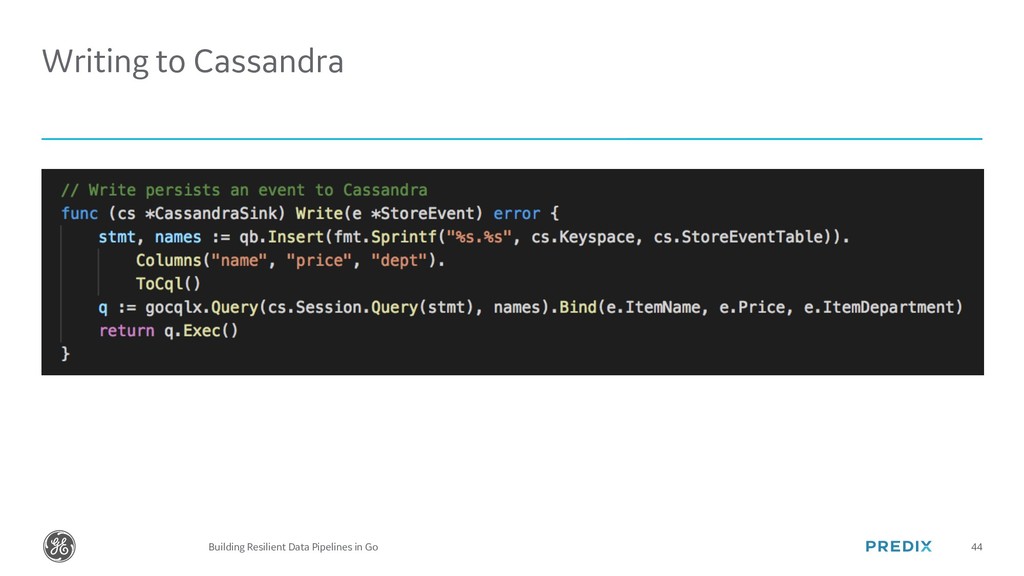
Writing to Cassandra for { select { case msg :=
<-consumer.Messages(): event := Transform(&msg) sink.Write(&event) } } 43 Building Resilient Data Pipelines in Go Kafka Transformation Cassandra -
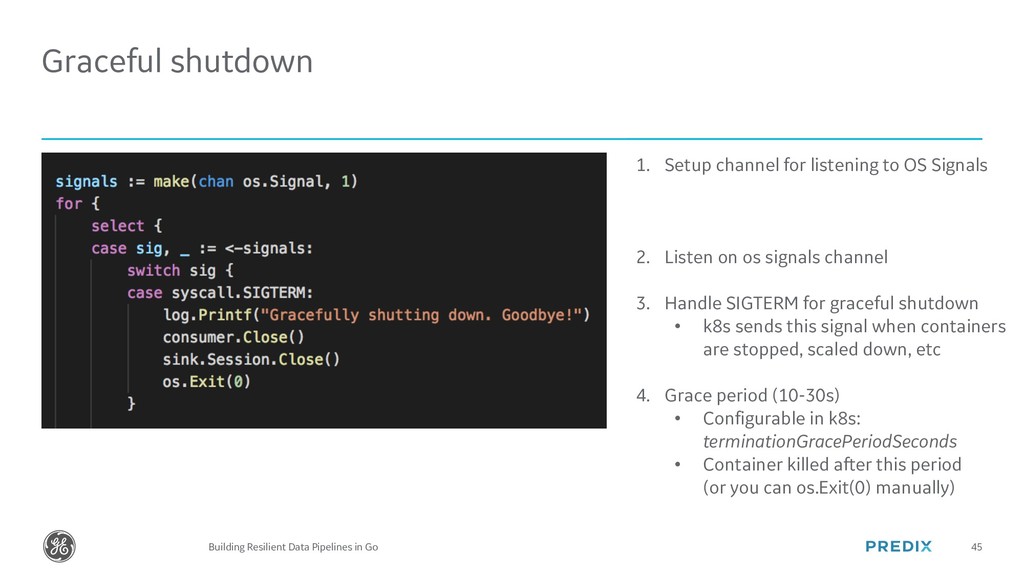
Graceful shutdown 45 Building Resilient Data Pipelines in Go 1.
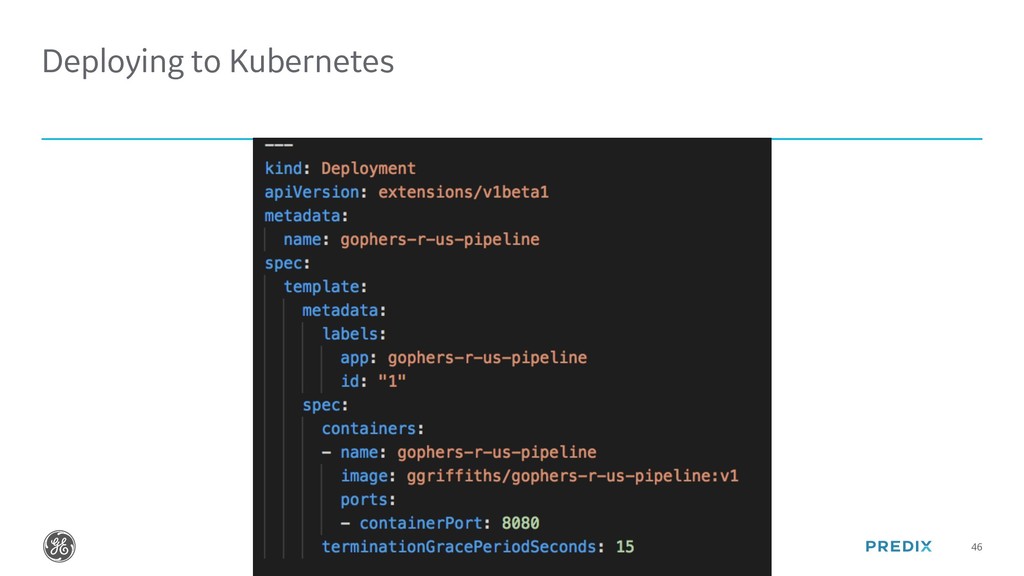
Setup channel for listening to OS Signals 2. Listen on os signals channel 3. Handle SIGTERM for graceful shutdown • k8s sends this signal when containers are stopped, scaled down, etc 4. Grace period (10-30s) • Configurable in k8s: terminationGracePeriodSeconds • Container killed after this period (or you can os.Exit(0) manually) -
1. Data @ GE 2. Introduction to Data Pipelines 3.
Sample Data Pipeline in Go 4. Reliability Testing our Data Pipeline 5. Results and takeaways -
Reliability Testing 48 Building Resilient Data Pipelines in Go •
Systems fail • How does our pipeline behave during times like these? • How can we remedy these failures? • How can we ensure customer data is not lost? • Embrace failure scenarios • or they will embrace you at 3 AM • If this interests you: Google SRE Book landing.google.com/sre/book/index.html -
Reliability Testing our Data Pipeline 49 Building Resilient Data Pipelines
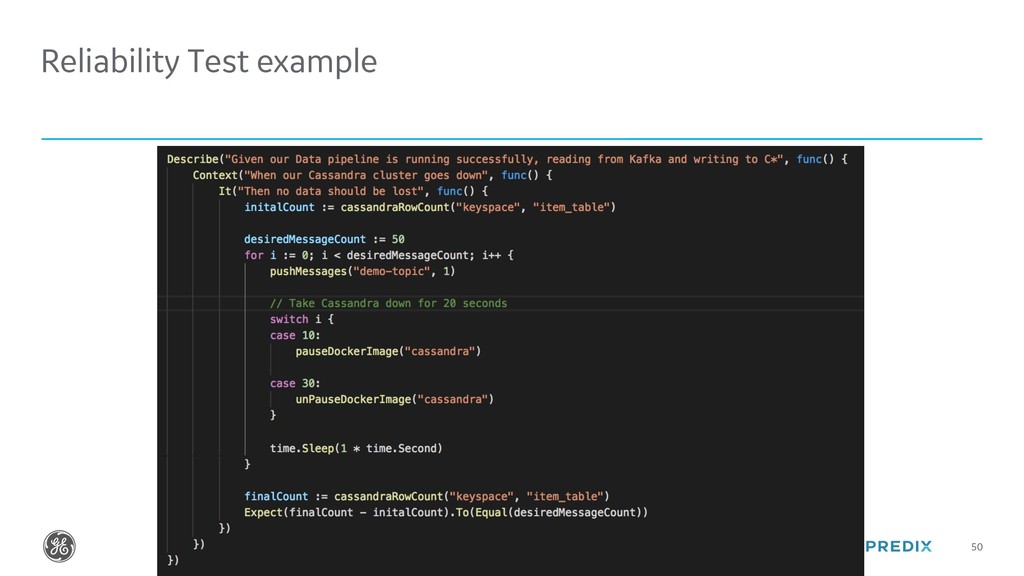
in Go • What can fail? • Data pipeline node(s) • Kafka node(s) • Cassandra node(s) • Kubernetes can fail • How does our pipeline behave when this happens? • We can write a test • How can we remedy these failures? -
• What else can we test? • Partial cluster failures
• Full cluster failures • Pipeline failures • High load • etc • Integration Test with Docker! 51 Building Resilient Data Pipelines in Go Reliability Test example -
1. Data @ GE 2. Introduction to Data Pipelines 3.
Sample Data Pipeline in Go 4. Reliability Testing our Data Pipeline 5. Results and takeaways -
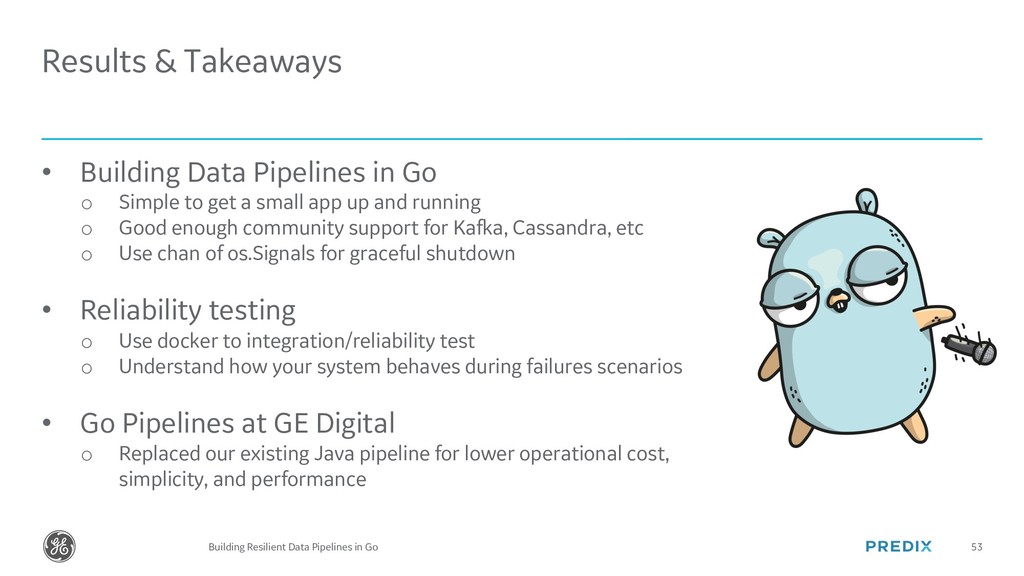
Results & Takeaways 53 Building Resilient Data Pipelines in Go
• Building Data Pipelines in Go o Simple to get a small app up and running o Good enough community support for Kafka, Cassandra, etc o Use chan of os.Signals for graceful shutdown • Reliability testing o Use docker to integration/reliability test o Understand how your system behaves during failures scenarios • Go Pipelines at GE Digital o Replaced our existing Java pipeline for lower operational cost, simplicity, and performance