Share
Embed
flexible-authorization
Flexible Authorization: Storing & Managing Rules in Database presentation for RDRC 2016
Giovanni Sakti
June 23, 2016
Transcript
40 slides
-
Why is flexibility necessary? It’s for future improvement and because
my blood type is also O -
U: Can you make role A able to read this
document after its state changes to approved? Me: *(hack the source code a bit)* Done U: Can you make role B release this document after at least 5 people agree? Me: *(hack the source code a bit)* Done U: *(Insert some very specific requests here)* Me: *(hack the source code a bit)* Done -
U: Can you just give me a nice interfaces to
work with, so that I don’t have to bug you anymore when new requirements appear? -
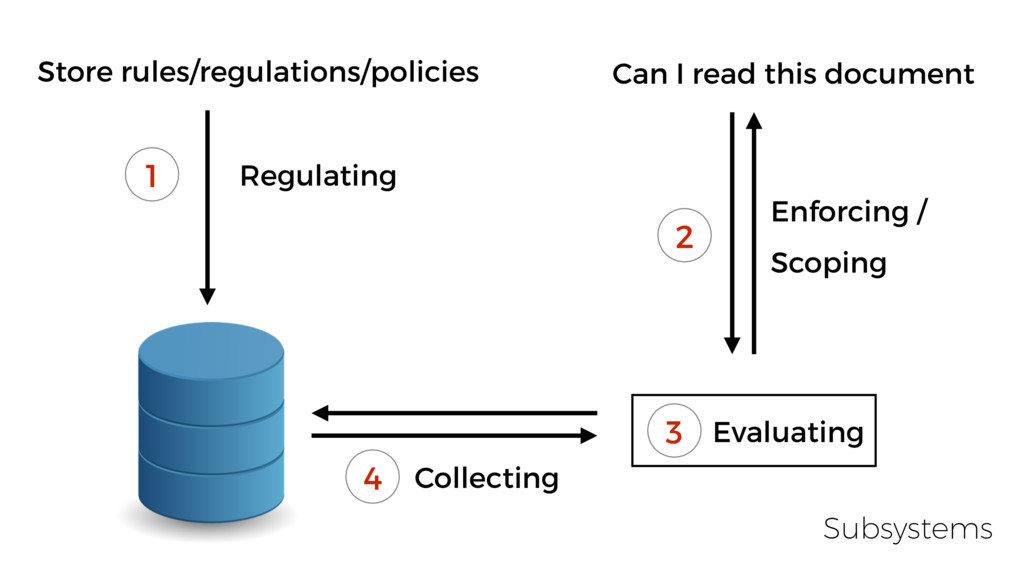
Subsystems Store rules/regulations/policies Regulating 1 Can I read this document
Enforcing / Scoping 2 3 Evaluating 4 Collecting -
Subsystems Store rules/regulations/policies Regulating 1 Can I read this document
Enforcing / Scoping 2 3 Evaluating 4 Collecting -
Subject Who Action What Object / Resource What Environment When,
Where, How, Why Elements -
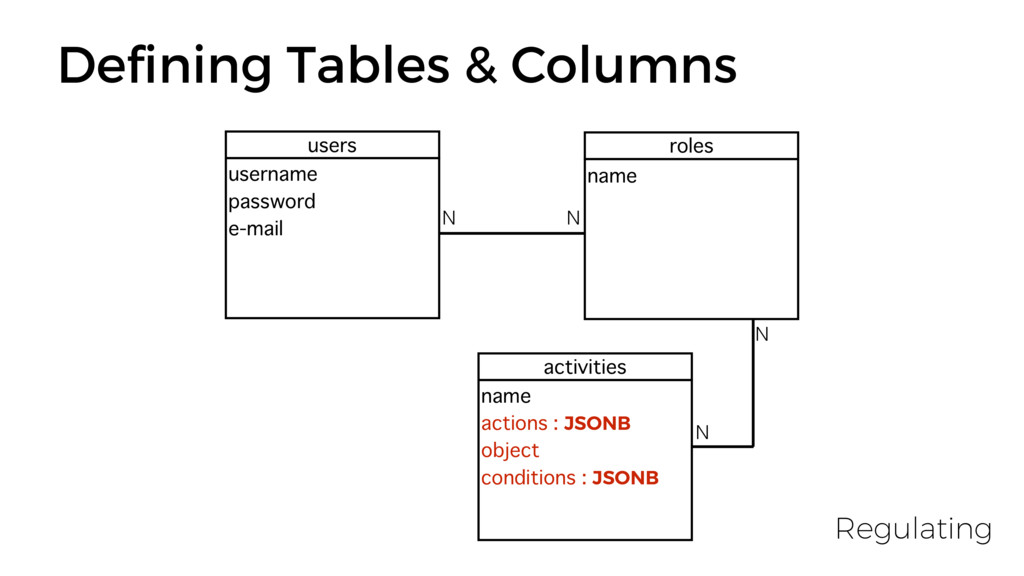
users roles activities Defining Tables & Columns N N N
N username password e-mail name name actions : JSONB object conditions : JSONB Regulating -
actions: ['READ'], object: 'Document', conditions: [ "object.state = 'APPROVED'" ]
actions: ['RELEASE'], object: 'Document', conditions: [ "object.approver_count >= 5" ] Regulating -
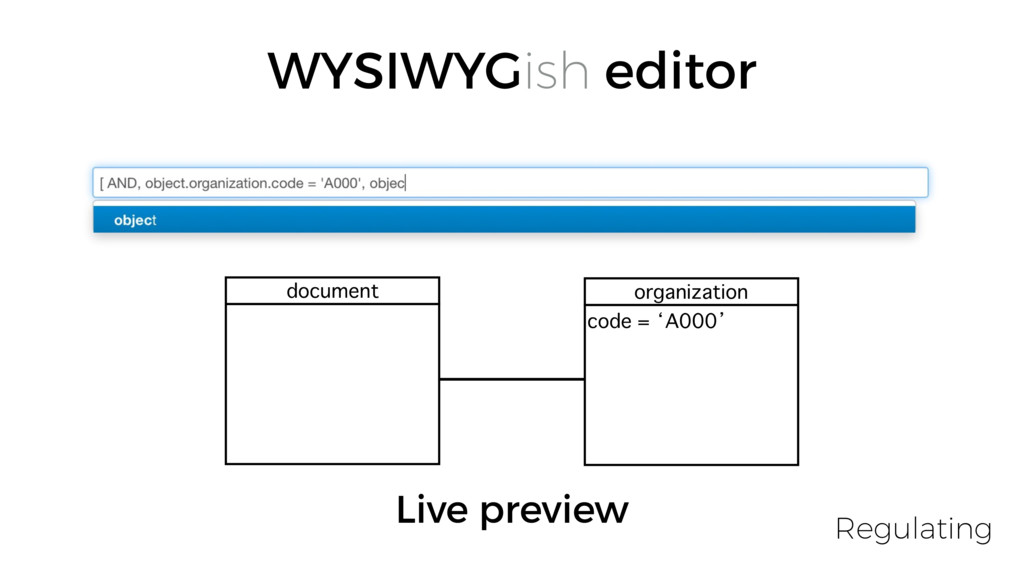
actions: ['READ', 'UPDATE', 'DELETE'], object: 'Document', conditions: [ "AND", "object.organization.code
= 'A000'", "object.state = 'RELEASED" ] Regulating -
actions: ['READ', 'UPDATE', 'DELETE'], object: 'Document', conditions: [ "AND", [
"OR", "object.organization.code = 'A000'", "object.organization.code = ‘B000'" ], "object.state = 'RELEASED" ] Regulating -
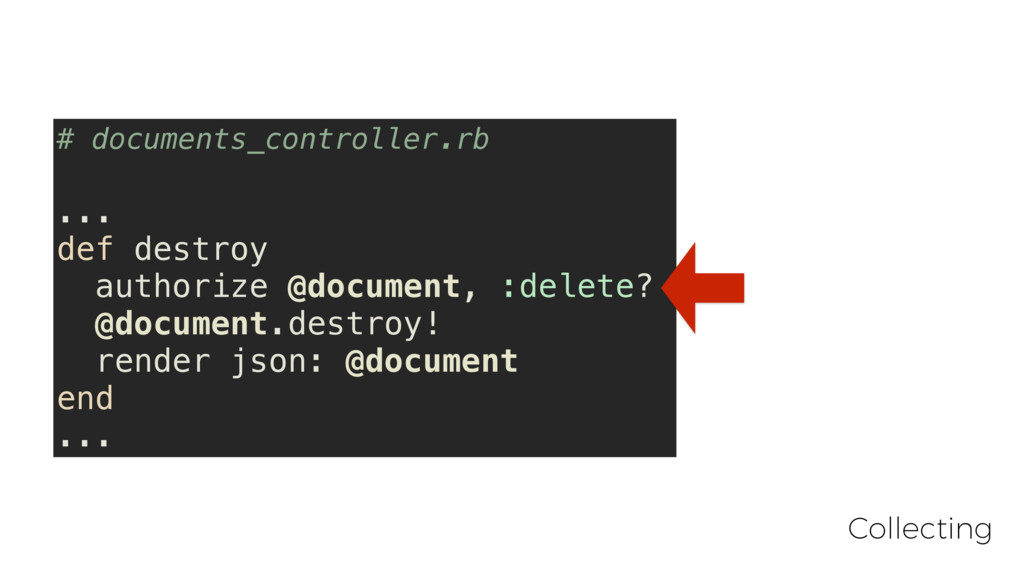
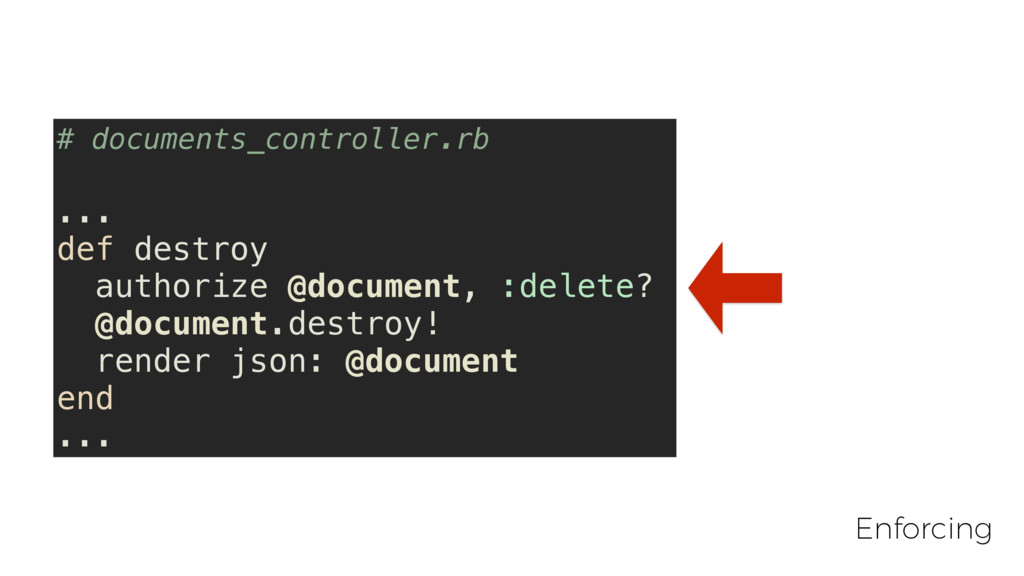
# documents_controller.rb ... def destroy authorize @document, :delete? @document.destroy! render
json: @document end ... Collecting -
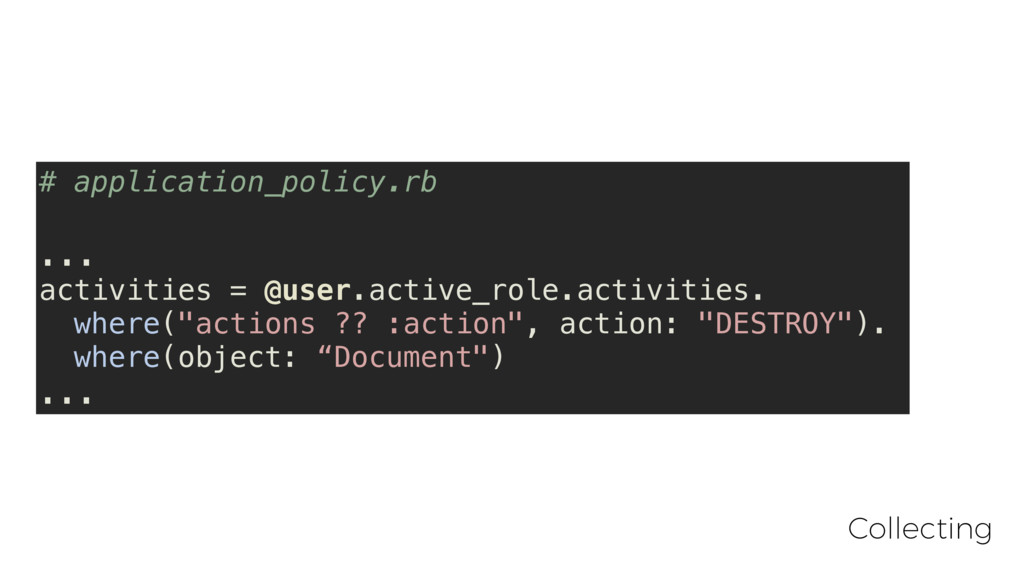
# application_policy.rb ... activities = @user.active_role.activities. where("actions ?? :action", action:
"DESTROY"). where(object: “Document") ... Collecting -
actions: ['READ', 'UPDATE', 'DELETE'], object: 'Document', conditions: [ "AND", [
"OR", "object.organization.code = 'A000'", "object.organization.code = ‘B000'" ], "object.state = 'RELEASED" ] Evaluate conditions tree Evaluating -
# documents_controller.rb ... def destroy authorize @document, :delete? @document.destroy! render
json: @document end ... Enforcing -
actions: ['READ', 'UPDATE', 'DELETE'], object: 'Document', conditions: [ "AND", [
"OR", "object.organization.code = 'A000'", "object.organization.code = ‘B000'" ], "object.state = 'RELEASED" ] Scoping def parse_json(opts = {}) instruction = {} instruction[:joins] = [] instruction[:selects] = {} # If json_arr is blank if opts[:json_arr].blank? instruction[:query] = TRUE_QUERY return instruction end # If json_arr is not blank operator = nil operand_stack = [] opts[:json_arr].each_with_index do |token, idx| if (idx == 0) && (%w(AND OR).include? token) operator = token else if token.is_a? Array temp = parse_json(opts.merge({json_arr: token})) instruction[:joins] |= temp[:joins].flatten instruction[:selects].merge! temp[:selects] query = "(#{temp[:query]})" else query_tokens = token.scan(/(?:"(?:\\.|[^"])*"|[^" ])+/) if (query_tokens.size != 3) && (!%w(= IN).include? query_tokens[1]) raise "Syntax error #{token}" else lhs_join = nil lhs_select = nil lhs_query = "" lhs_arr = query_tokens[0].split(".") lhs_arr.to_enum.with_index.reverse_each do |atom, idx| if idx == lhs_arr.size - 1 lhs_query = atom lhs_select = {"#{atom}" => lhs_query} elsif idx < lhs_arr.size - 1 && idx > 0 if lhs_join.nil? lhs_join = atom.to_sym else lhs_join = {atom.to_sym => lhs_join} end lhs_query = "#{atom}.#{lhs_arr[lhs_arr.size - 1]}" lhs_select = {"#{lhs_arr[lhs_arr.size - 1]}" => lhs_query} else # If array size is 2, then we should rename object to avoid ambiguity sql statement if lhs_arr.size == 2 lhs_query = "#{opts[:object].table_name}.#{lhs_arr[lhs_arr.size - 1]}" lhs_select = {"#{lhs_arr[lhs_arr.size - 1]}" => lhs_query} end end end rhs_query = "" if query_tokens[2].start_with? "subject" subject_scope = opts[:subject] rhs_arr = query_tokens[2].split(".") rhs_arr.each_with_index do |atom, idx| # If subject is not exist then there is no need to construct query, move along unless subject_scope rhs_query = "" next end if idx == 0 # NOP elsif idx > 0 && idx < (rhs_arr.size - 1) subject_scope = subject_scope.send(atom.to_sym) end if idx == (rhs_arr.size - 1) if query_tokens[1] == "IN" values = subject_scope.map{|m| "'#{m.send(atom.to_sym)}'"} rhs_query = "(#{values.join(',')})" if values.present? else rhs_query = "'#{subject_scope.send(atom.to_sym)}'" end end end else rhs_query = query_tokens[2] end instruction[:joins] |= [lhs_join] if lhs_join.present? instruction[:selects].merge! lhs_select if lhs_select.present? if rhs_query.present? query = "#{lhs_query} #{query_tokens[1]} #{rhs_query}" else query = FALSE_QUERY end end end operand_stack.push query end end if operator instruction[:query] = operand_stack.join(" #{operator} ") else instruction[:query] = operand_stack.shift end return instruction end What to select? What to join? What to filter? -
Conflict Resolution What if there are two or more rules
with different outcome -
Format for storing authorization rules is important That’s why there’s
even a standard for this -
The current focus is on how to make our authorization
system less dependent on developers and give power to user