Upgrade to Pro — share decks privately, control downloads, hide ads and more …

Storing Authorization Rules in Database

Sponsored · Ship Features Fearlessly Turn features on and off without deploys. Used by thousands of Ruby developers. →

Storing Authorization Rules in Database

Giovanni Sakti

March 03, 2016

Transcript

31 slides
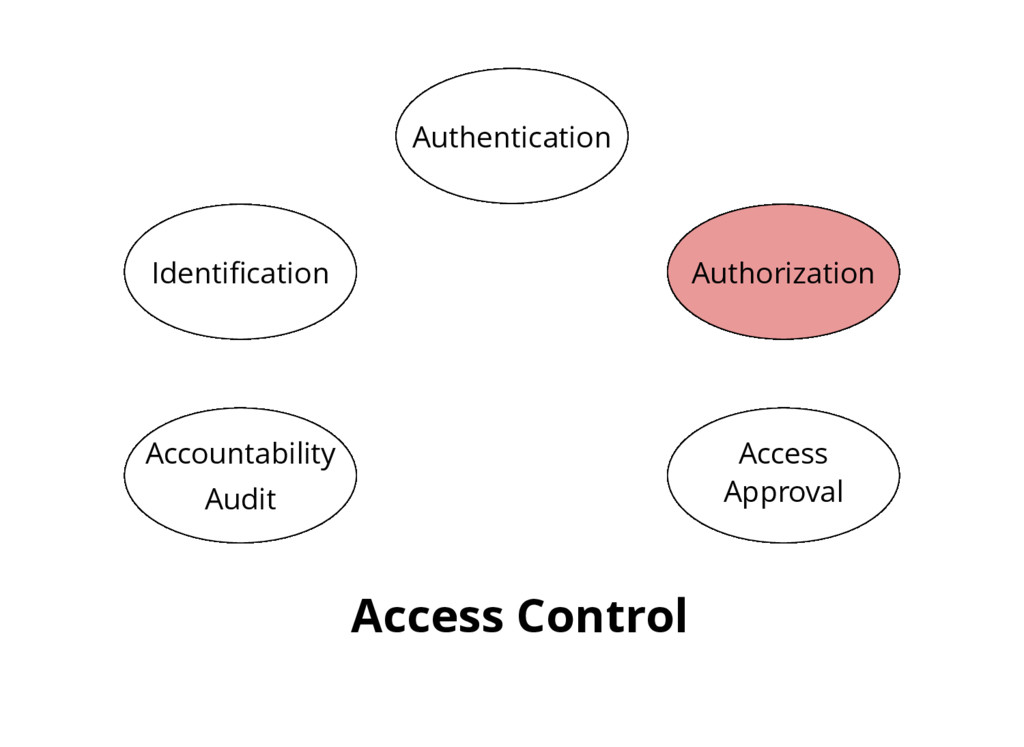
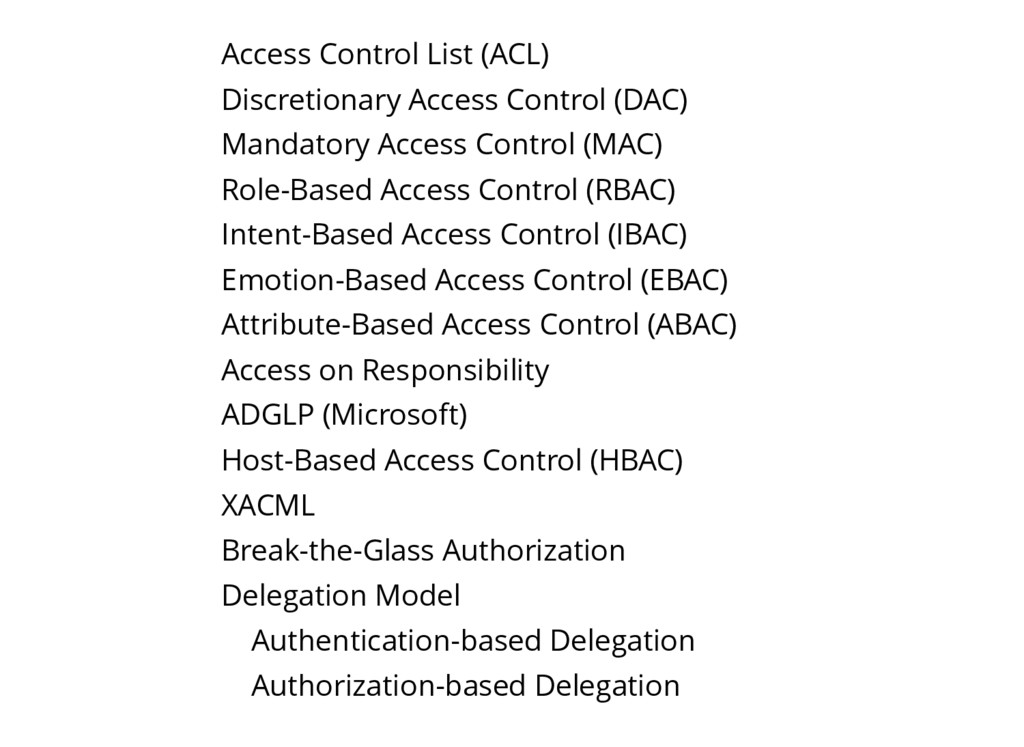
  1. Access Control List (ACL) Discretionary Access Control (DAC) Mandatory Access

    Control (MAC) Role-Based Access Control (RBAC) Intent-Based Access Control (IBAC) Emotion-Based Access Control (EBAC) Attribute-Based Access Control (ABAC) Access on Responsibility ADGLP (Microsoft) Host-Based Access Control (HBAC) XACML Break-the-Glass Authorization Delegation Model Authentication-based Delegation Authorization-based Delegation
  2. Access Control List (ACL) Discretionary Access Control (DAC) Mandatory Access

    Control (MAC) Role-Based Access Control (RBAC) Intent-Based Access Control (IBAC) Emotion-Based Access Control (EBAC) Attribute-Based Access Control (ABAC) Access on Responsibility ADGLP (Microsoft) Host-Based Access Control (HBAC) XACML Break-the-Glass Authorization Delegation Model Authentication-based Delegation Authorization-based Delegation Lattice-Based Access Control (LBAC) Identity Driven Networking Privilege and Role Management Infrastructure Standards (PERMIS) Model-driven security (MDS) ... ... etc etc
  3. Access Control List (ACL) Discretionary Access Control (DAC) Mandatory Access

    Control (MAC) Role-Based Access Control (RBAC) Intent-Based Access Control (IBAC) Emotion-Based Access Control (EBAC) Attribute-Based Access Control (ABAC) Access on Responsibility ADGLP (Microsoft) Host-Based Access Control (HBAC) XACML Break-the-Glass Authorization Delegation Model Authentication-based Delegation Authorization-based Delegation
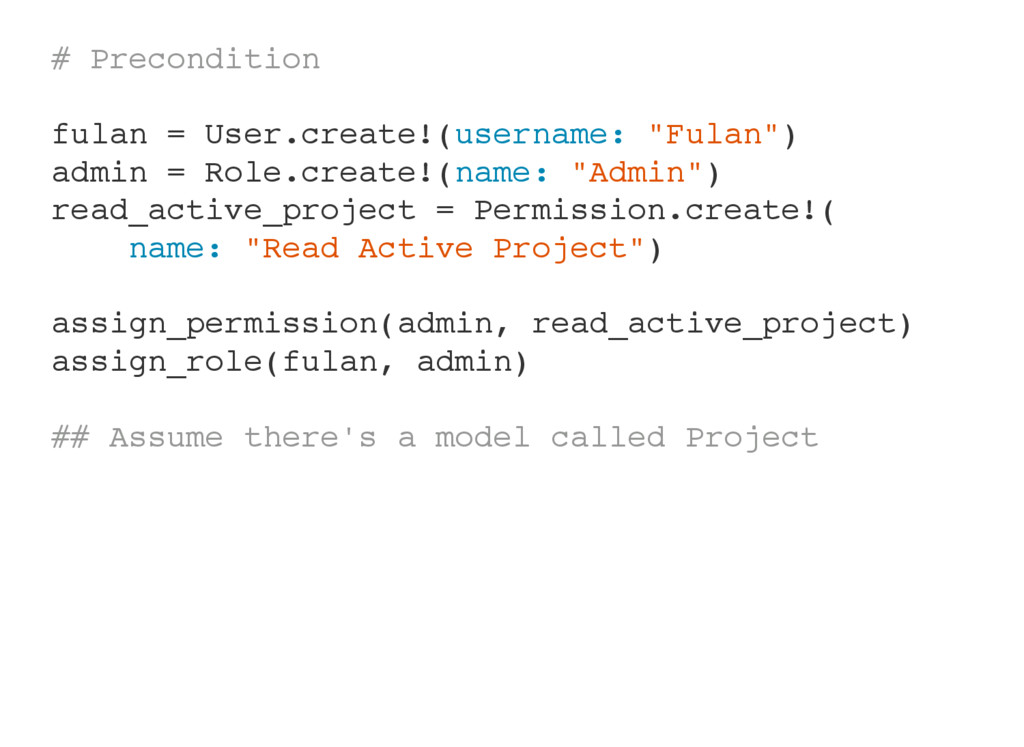
  4. # Precondition fulan = User.create!(username: "Fulan") admin = Role.create!(name: "Admin")

    read_active_project = Permission.create!( name: "Read Active Project") assign_permission(admin, read_active_project) assign_role(fulan, admin) ## Assume there's a model called Project
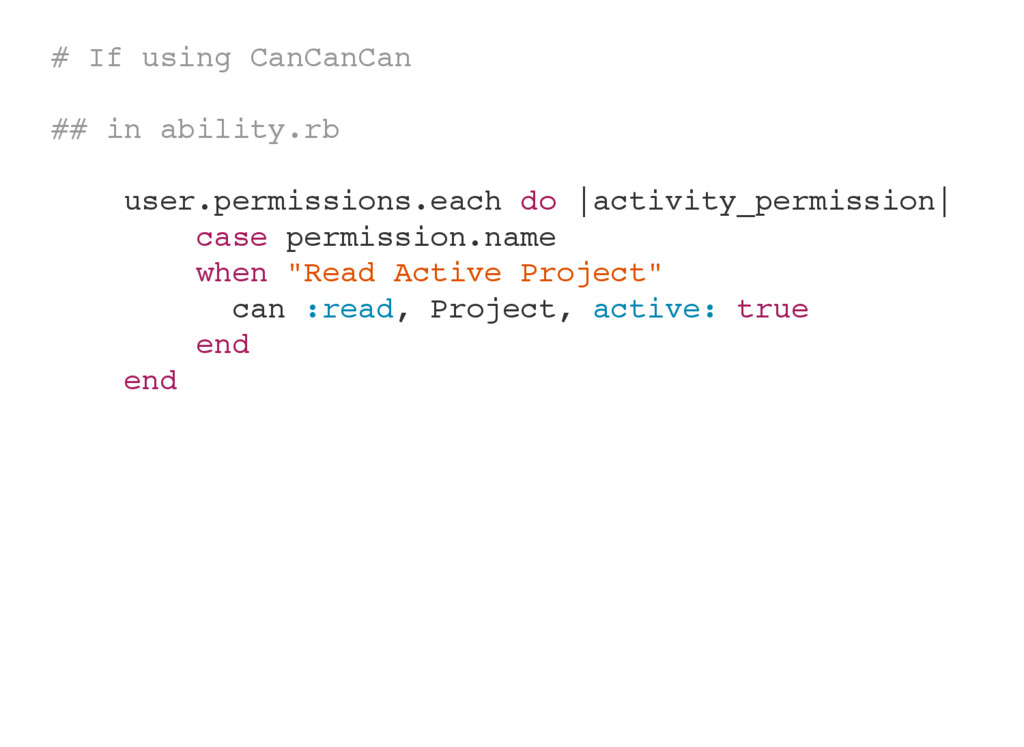
  5. # If using CanCanCan ## in ability.rb user.permissions.each do |activity_permission|

    case permission.name when "Read Active Project" can :read, Project, active: true end end
  6. # If using Pundit class ActiveProjectPolicy < ApplicationPolicy class Scope

    < Scope def resolve if user.permissions.collect(&:name).include? "Read Active Project" scope.where(active: true) else raise "Not authorized!" end end end
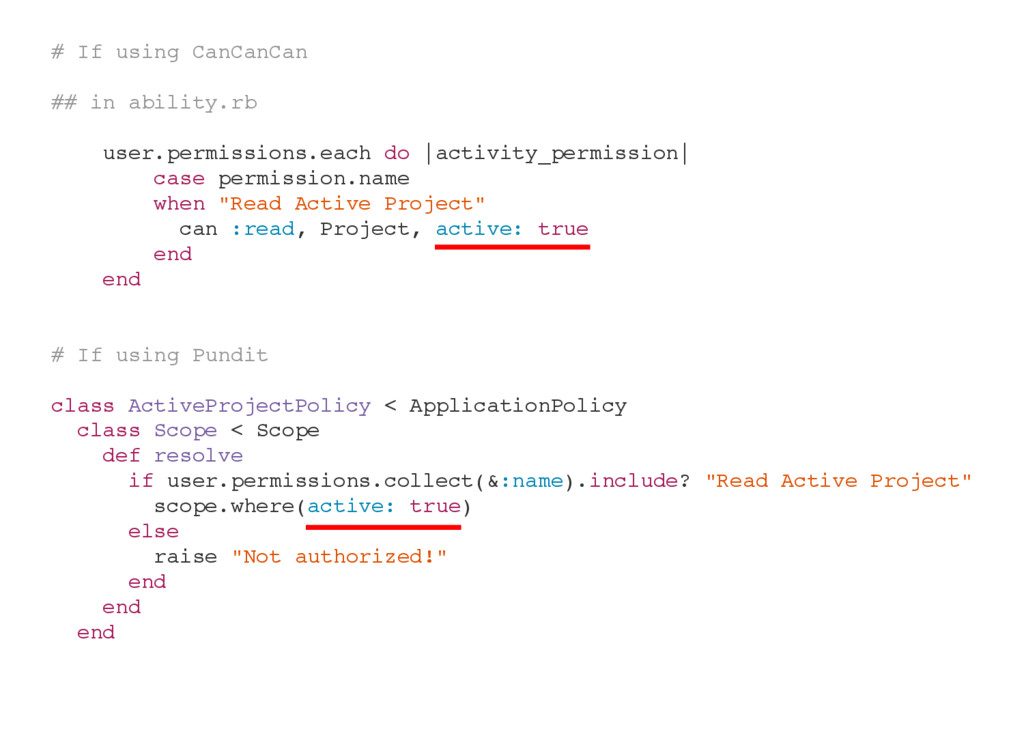
  7. # If using CanCanCan ## in ability.rb user.permissions.each do |activity_permission|

    case permission.name when "Read Active Project" can :read, Project, active: true end end # If using Pundit class ActiveProjectPolicy < ApplicationPolicy class Scope < Scope def resolve if user.permissions.collect(&:name).include? "Read Active Project" scope.where(active: true) else raise "Not authorized!" end end end
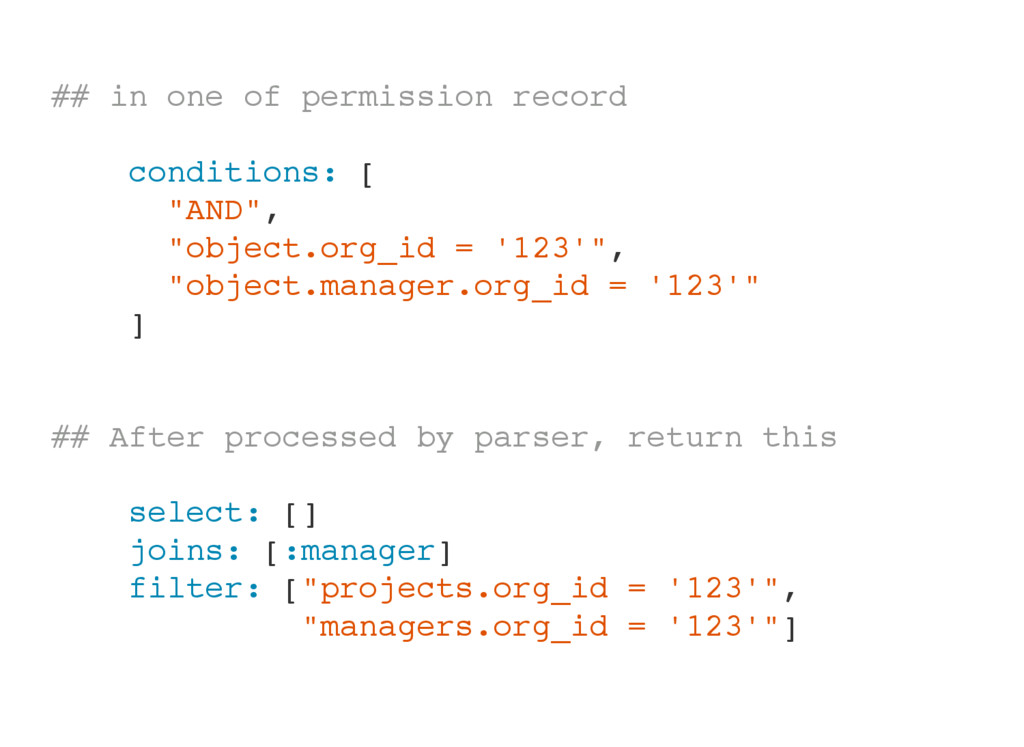
  8. ## in one of permission record conditions: [ "AND", "object.org_id

    = '123'", "object.manager.org_id = '123'" ] ## After processed by parser, return this select: [] joins: [:manager] filter: ["projects.org_id = '123'", "managers.org_id = '123'"]
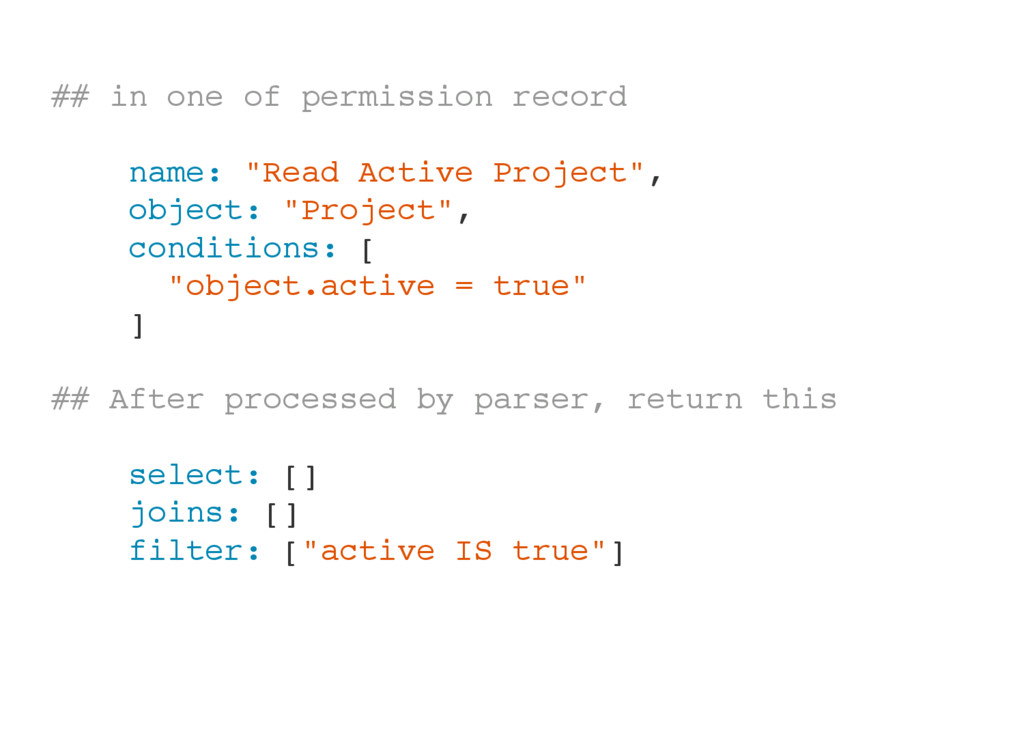
  9. ## in one of permission record name: "Read Active Project",

    object: "Project", conditions: [ "object.active = true" ] ## After processed by parser, return this select: [] joins: [] filter: ["active IS true"]
  10. ## in one of permission record conditions: [ "object.org_id IN

    subject.orgs.id" ] ## After processed by parser, return this select: [] joins: [] filter: ["projects.org_id IN users.org_id"]

More Decks by Giovanni Sakti

Other Decks in Programming