Upgrade to Pro — share decks privately, control downloads, hide ads and more …

Powering the Future: The 2026 Australian Solar ...

Avatar for Thomas Henry Thomas Henry
February 04, 2026

Powering the Future: The 2026 Australian Solar Battery Blueprint

A comprehensive look at why solar battery searches are peaking in Australia. This presentation covers the 10kW runtime reality, the May 1st rebate deadline, and the economic shift toward self-consumption. Perfect for homeowners and energy professionals.

Avatar for Thomas Henry

Thomas Henry

February 04, 2026

Other Decks in Research

Transcript

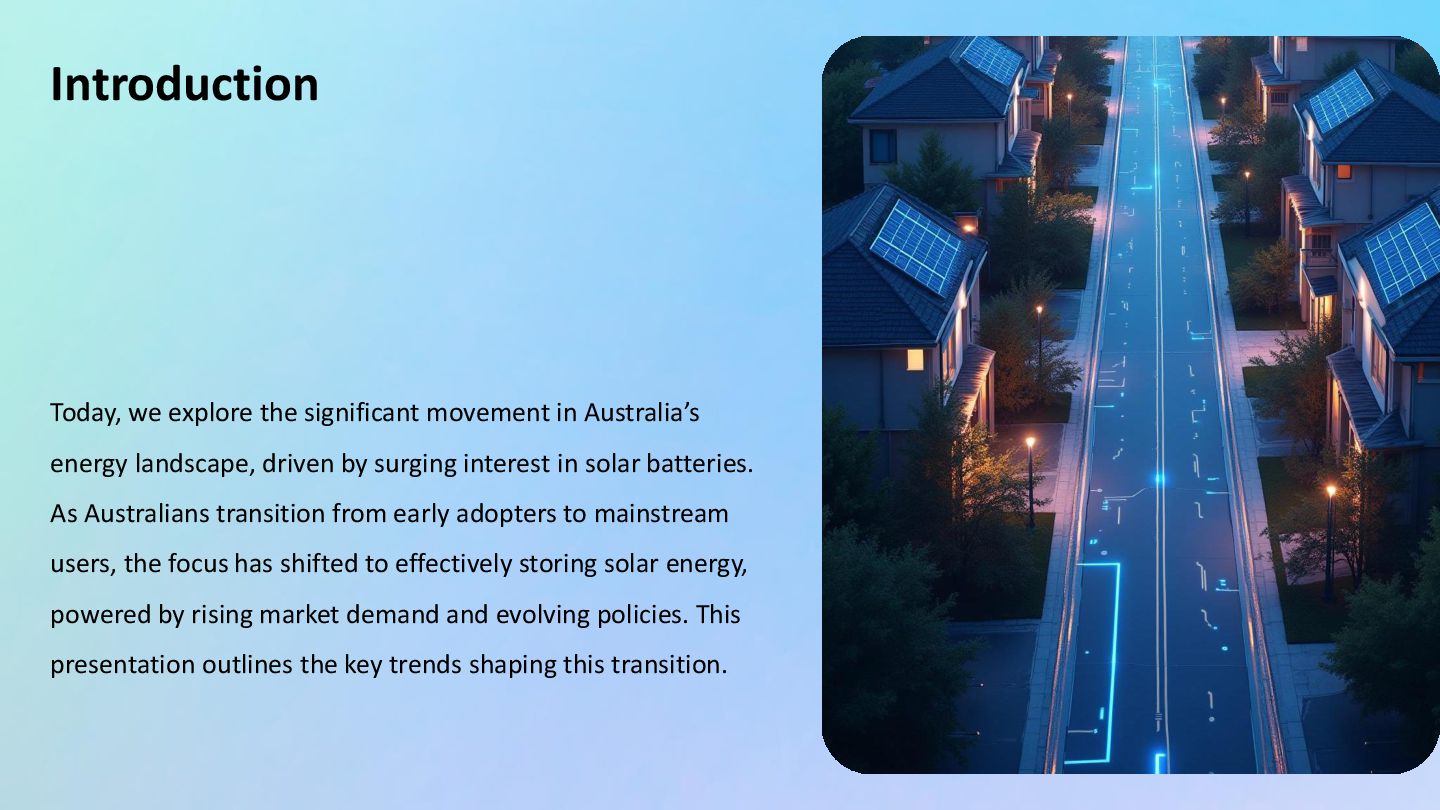
  1. Introduction Today, we explore the significant movement in Australia’s energy

    landscape, driven by surging interest in solar batteries. As Australians transition from early adopters to mainstream users, the focus has shifted to effectively storing solar energy, powered by rising market demand and evolving policies. This presentation outlines the key trends shaping this transition.
  2. Search Trends in Australia 2026 In early 2026, Google Trends

    data shows a sharp increase in searches for batteries and batteries for solar panels across Australia. This spike reflects the public’s growing awareness and interest, marking a shift from curiosity to active consideration of solar battery solutions for home energy storage.
  3. Economic Drivers and Value Delta The decline of the Feed-in

    Tariff to below 5 cents per kWh, combined with peak evening electricity rates rising to approximately 45 cents per kWh, creates a significant 40-cent Value Delta. This gap strongly motivates homeowners to prioritize energy storage over grid export, fundamentally altering consumption patterns and investment strategies in the solar battery market.
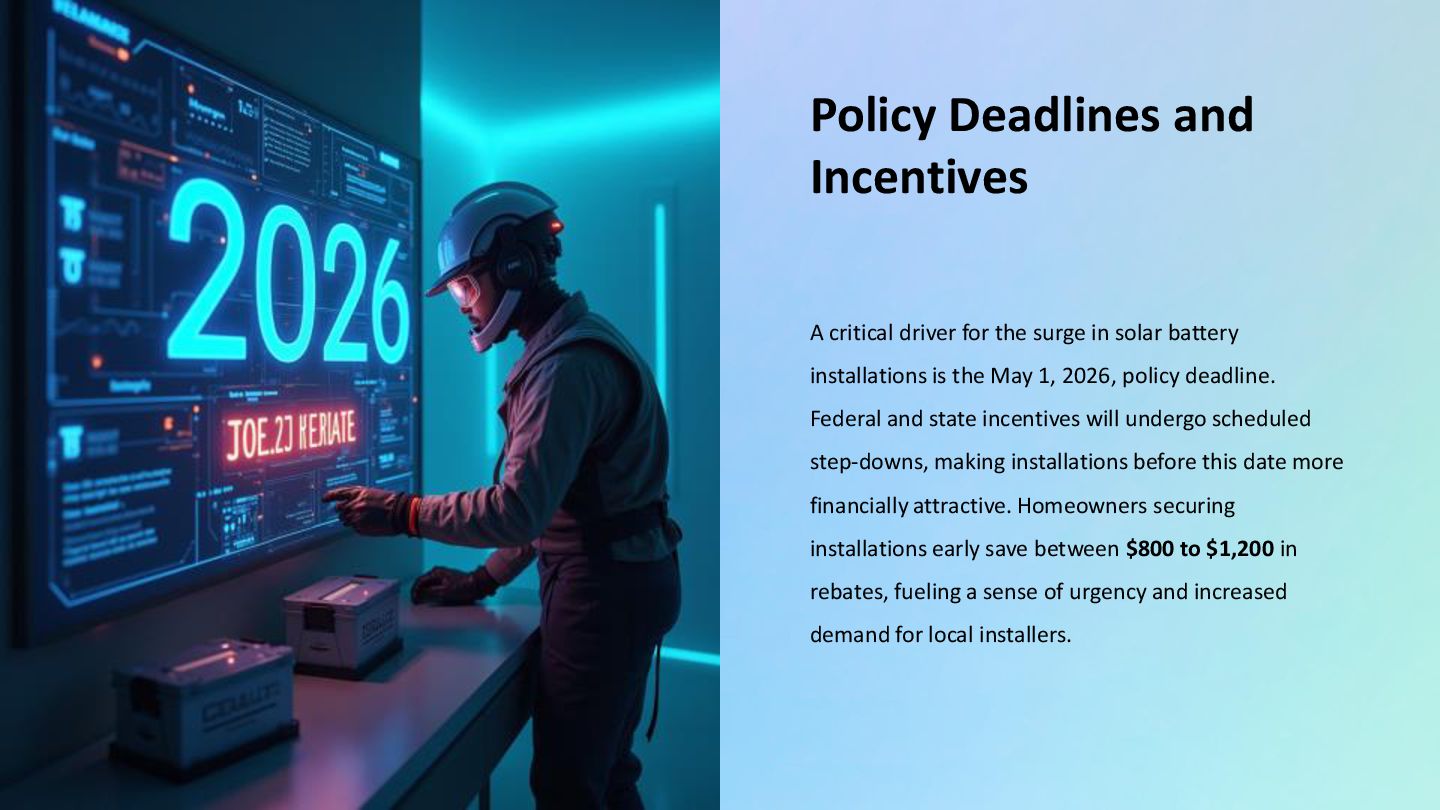
  4. Policy Deadlines and Incentives A critical driver for the surge

    in solar battery installations is the May 1, 2026, policy deadline. Federal and state incentives will undergo scheduled step-downs, making installations before this date more financially attractive. Homeowners securing installations early save between $800 to $1,200 in rebates, fueling a sense of urgency and increased demand for local installers.
  5. 10kW Battery Capacity and Demand Profiles The 10kW benchmark is

    the standard discussion point, but understanding its real- world application is essential. A 10kWh battery’s runtime depends on the household Demand Profile, balancing essential loads like fridges and lighting with high-drain appliances like air conditioning. In survival mode, expect up to 15 hours of backup, but comfort usage may reduce this to 3-5 hours.
  6. Lithium Iron Phosphate (LiFePO4) Chemistry LiFePO4 batteries represent the evolving

    technology of 2026. Their thermal stability makes them ideal for Australia’s climate, while longevity ranges from 6,000 to 10,000 cycles—approximately 10-15 years. Most importantly, these batteries offer enhanced safety as non-combustible units, marking a significant advancement over traditional Lithium-Ion options.
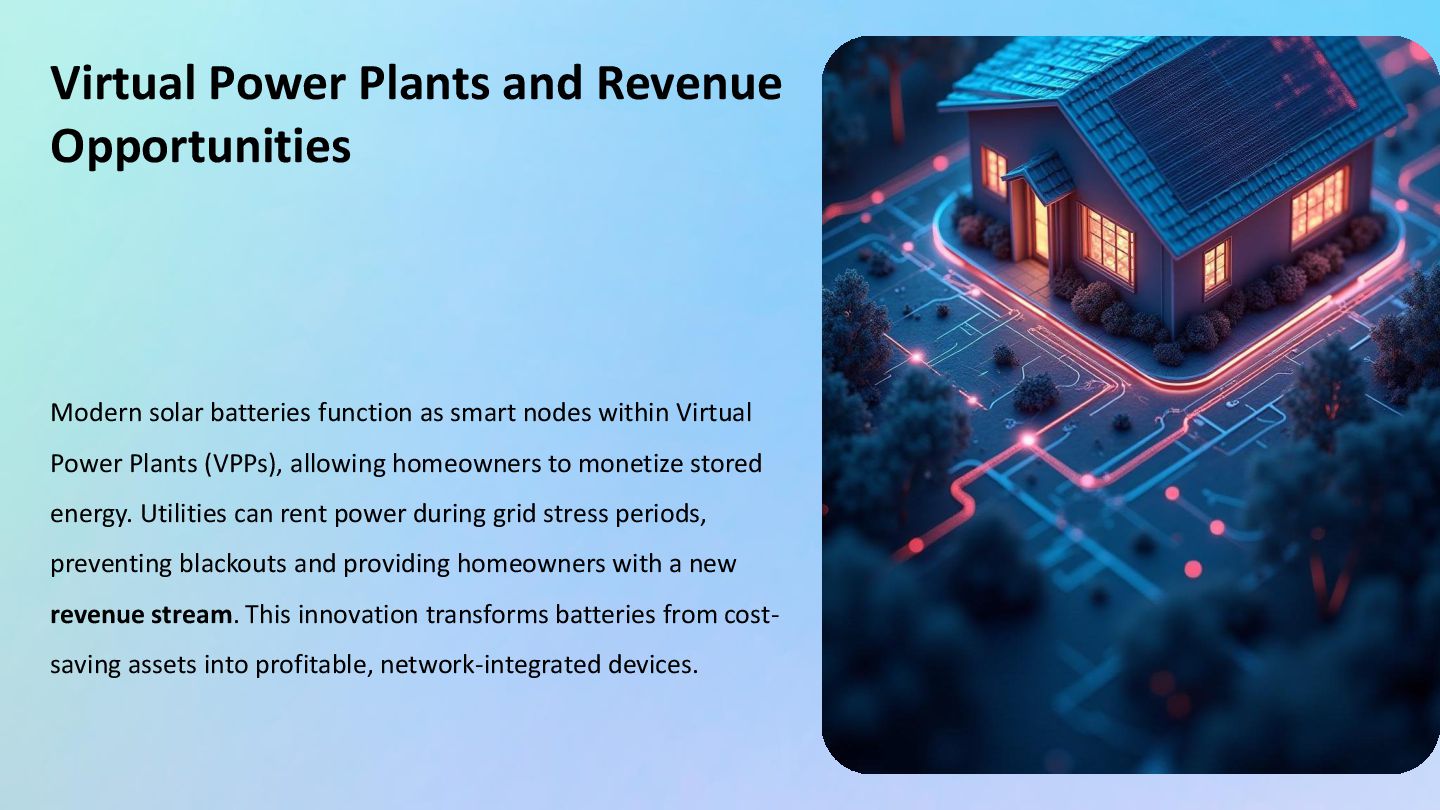
  7. Virtual Power Plants and Revenue Opportunities Modern solar batteries function

    as smart nodes within Virtual Power Plants (VPPs), allowing homeowners to monetize stored energy. Utilities can rent power during grid stress periods, preventing blackouts and providing homeowners with a new revenue stream. This innovation transforms batteries from cost- saving assets into profitable, network-integrated devices.
  8. Conclusions The Australian solar battery market in 2026 is shaped

    by economic incentives, technological advancements, and policy timelines. Understanding capacity, chemistry, and emerging revenue streams like VPPs equips homeowners to make informed decisions. As the market matures, solar batteries will become essential both for personal energy security and participation in evolving energy networks.