run in an overlapping manner. Examples are Threading(1st) and Asyncio(2nd) ANALOGY. Watching two movies using two movie players but you pause and play while the first or second one is buffering.
is when two or more tasks run at the same time. Most times, the different tasks make use of different CPUs. An example is multiprocessing(3rd Python concurrency pattern). Parallelism is a specific type of concurrency. ANALOGY. Watching two movies using two movie players without pause and play.
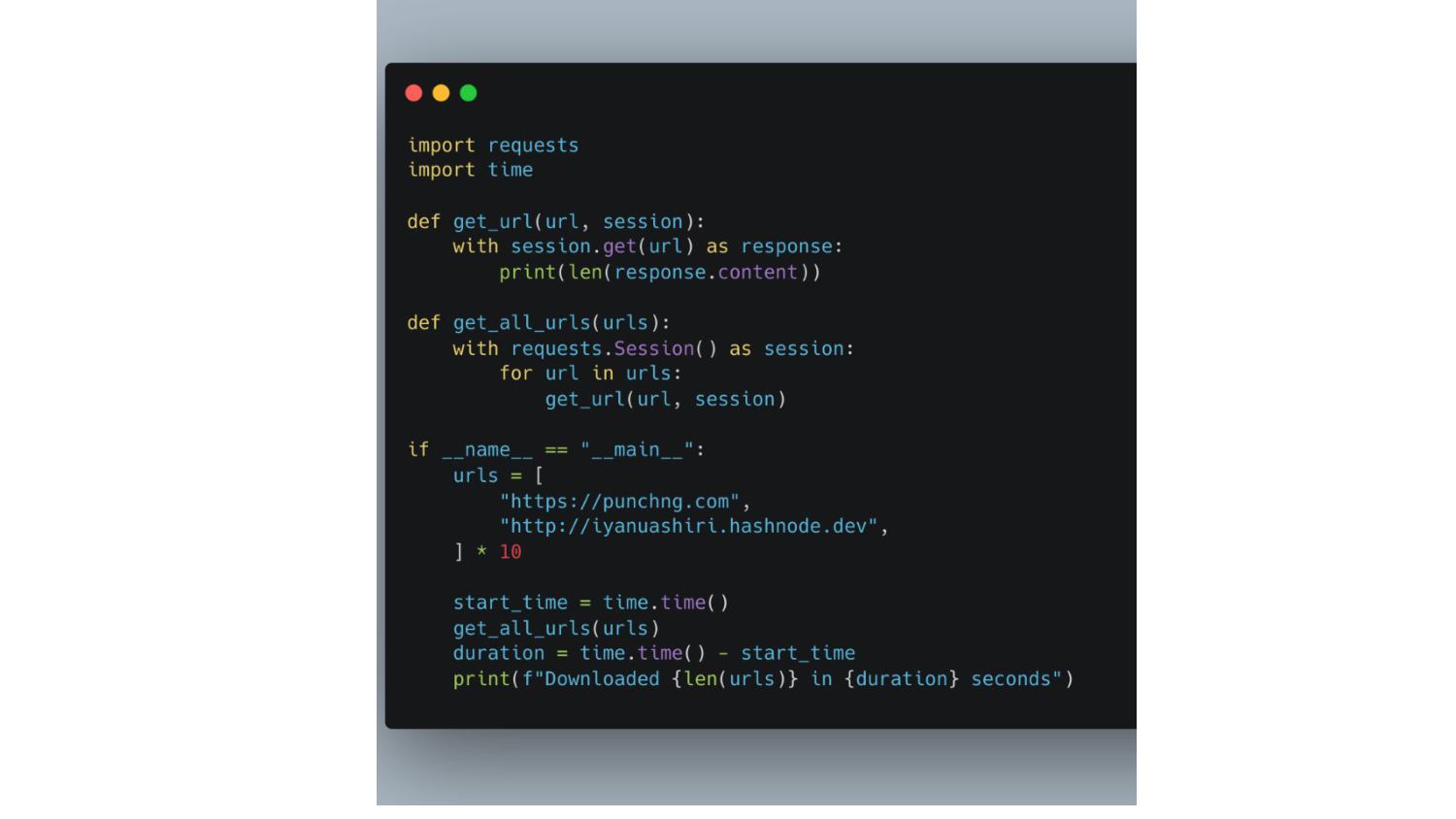
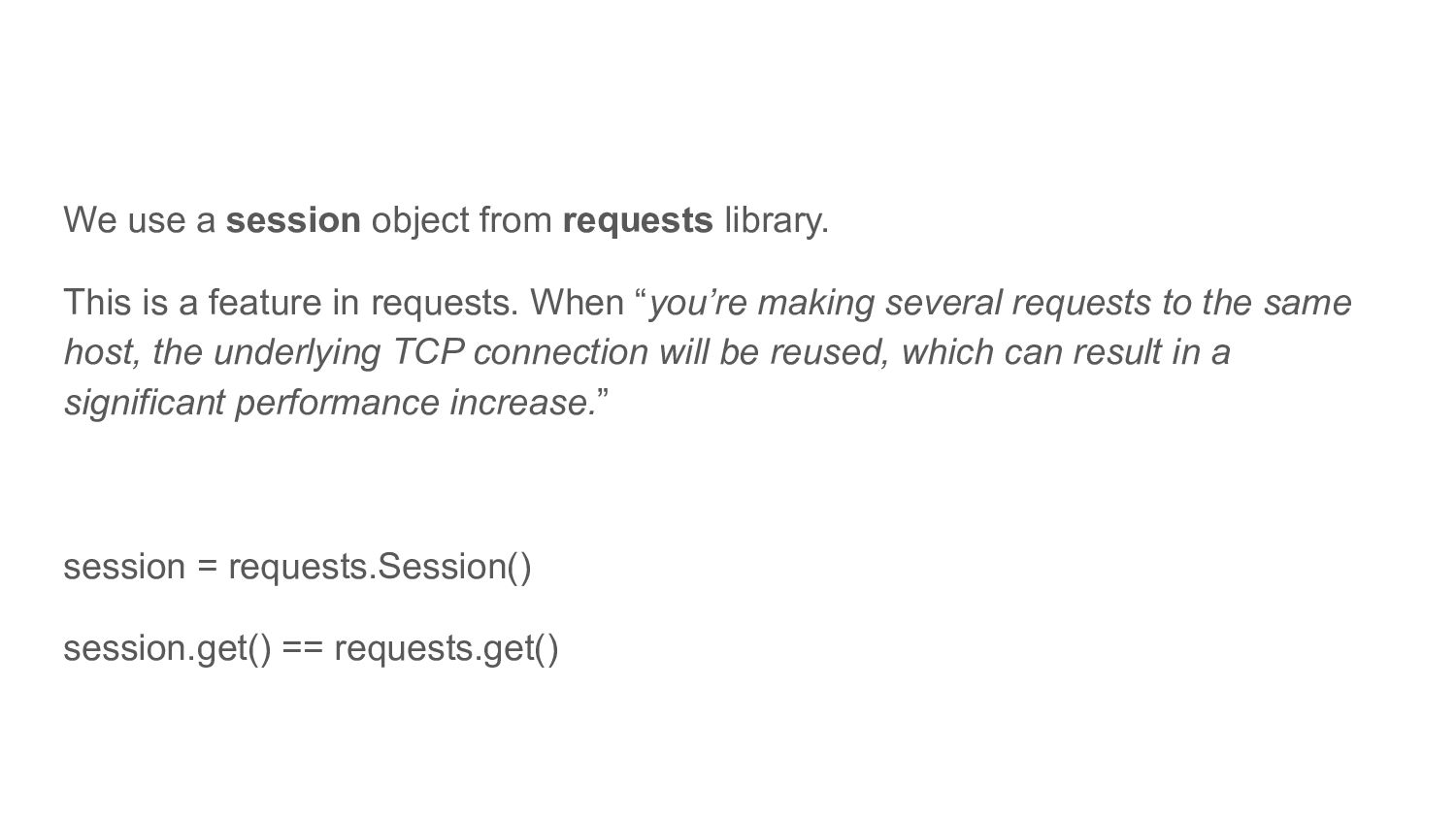
a feature in requests. When “you’re making several requests to the same host, the underlying TCP connection will be reused, which can result in a significant performance increase.” session = requests.Session() session.get() == requests.get()
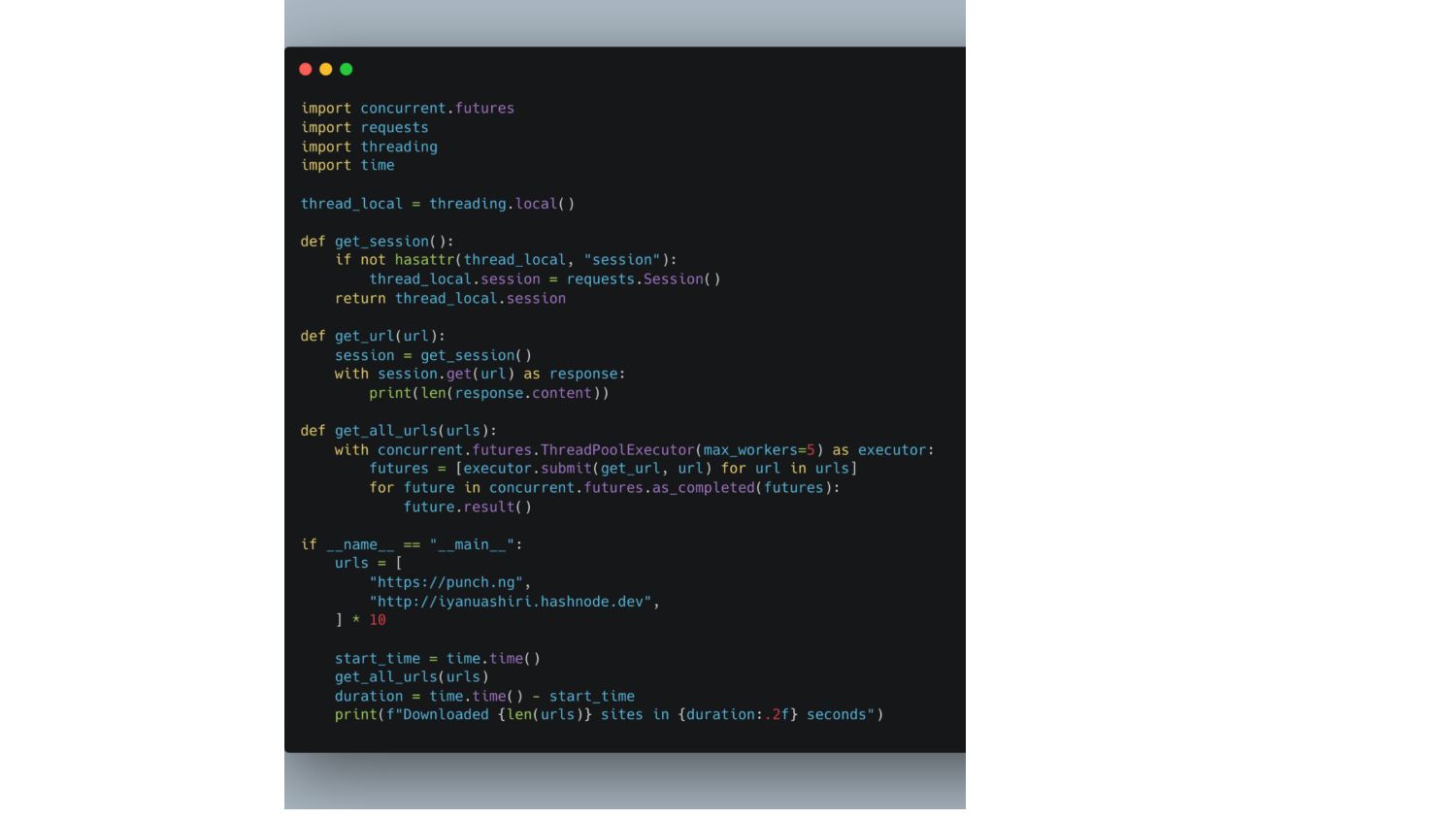
threads are not executed at the same time. There are two major differences from the first program. ThreadPoolExecutor. This creates a Thread, a Pool of threads that run concurrently, and an Executor that manages how the threads run. The with keyword shows it implements a context manager. with open(newfile ‘w’) as file: The with allows ThreadPoolExecutor to create and free up the threads.
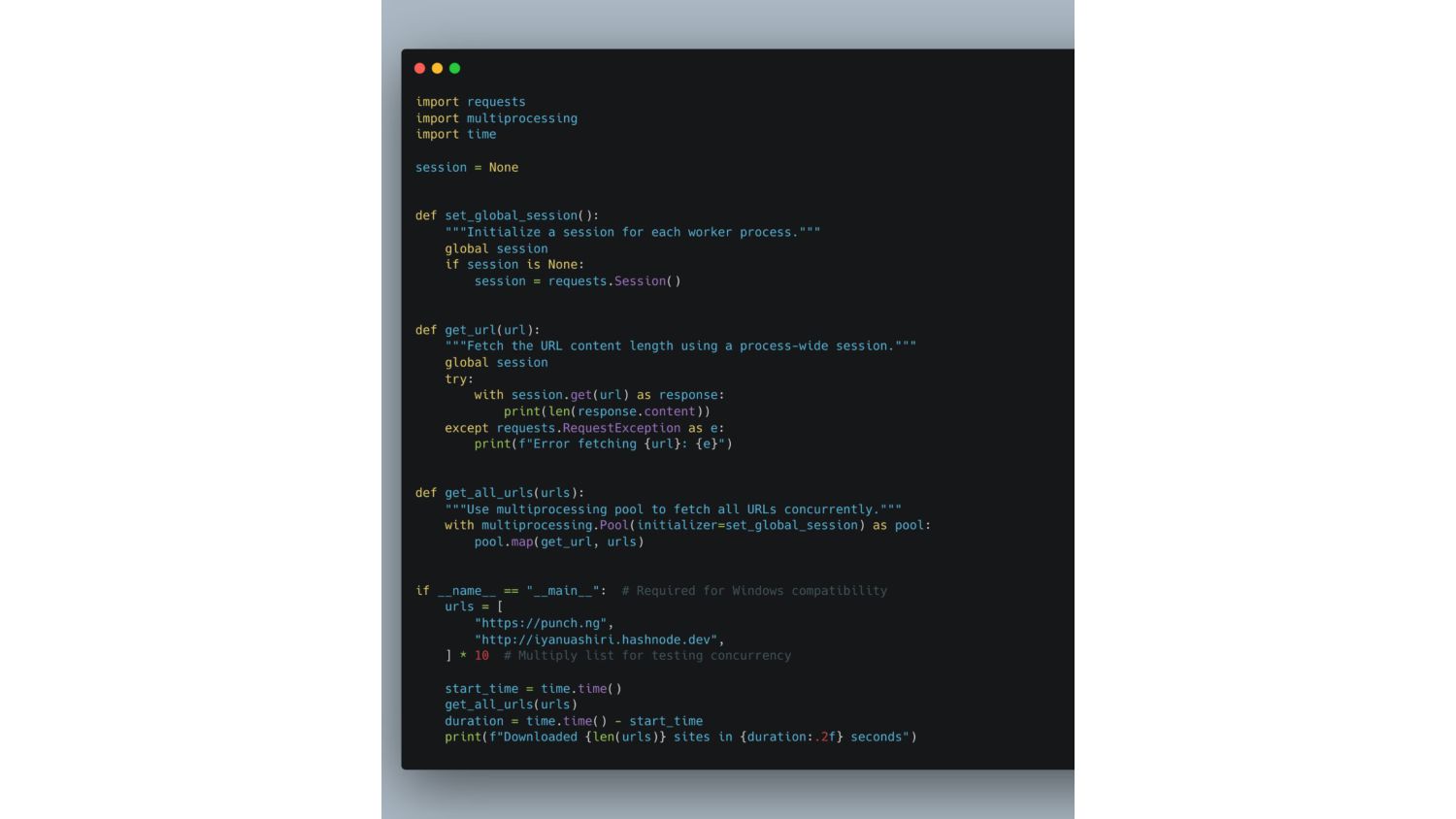
session object manually is not thread-safe, so we are employing this method. This is one of the disadvantages of Threading. The operating system determines when a task is paused and another is played. So data shared between threads must must be protected or thread-safe. requests.Session() is not thread-safe.
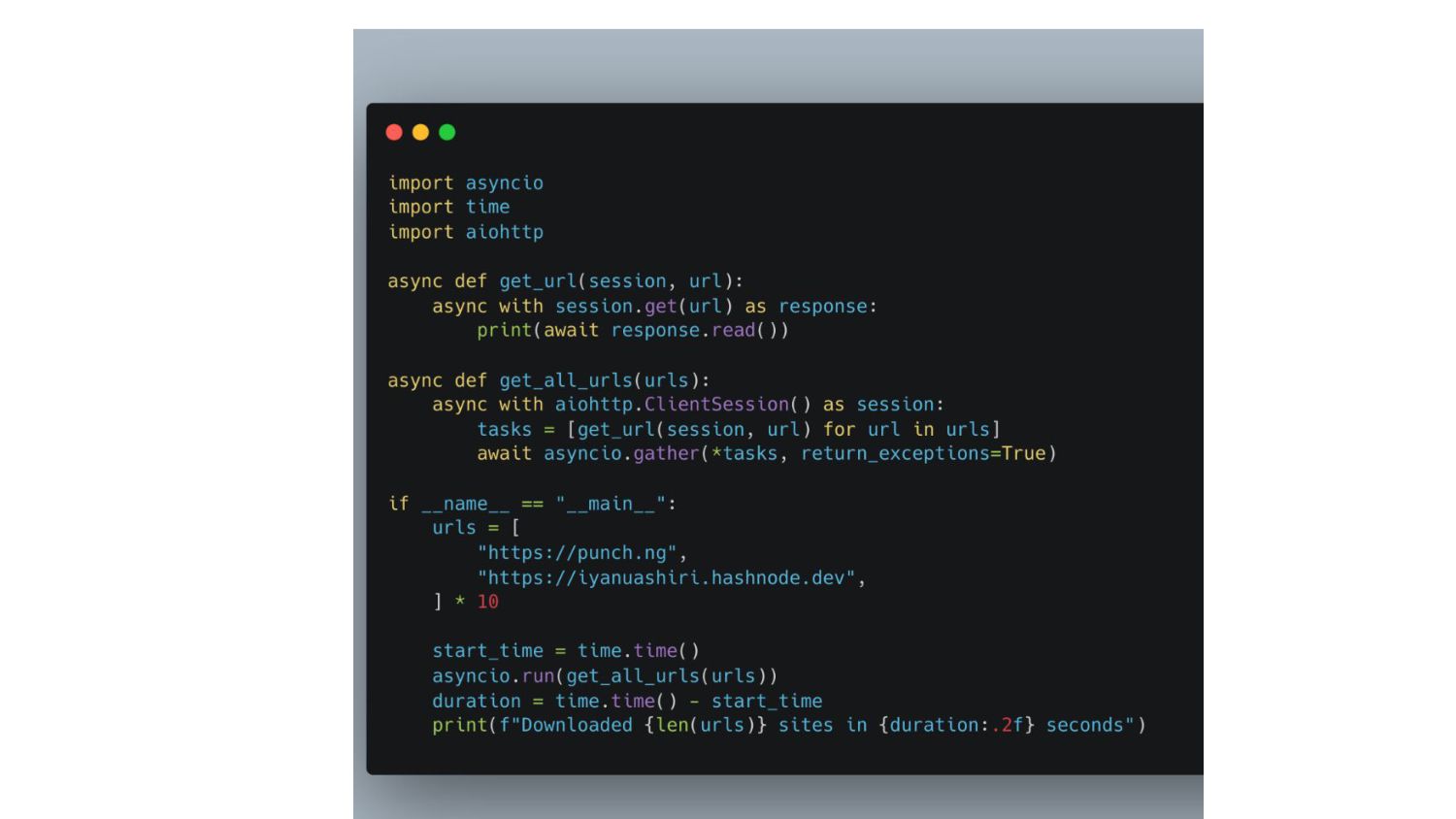
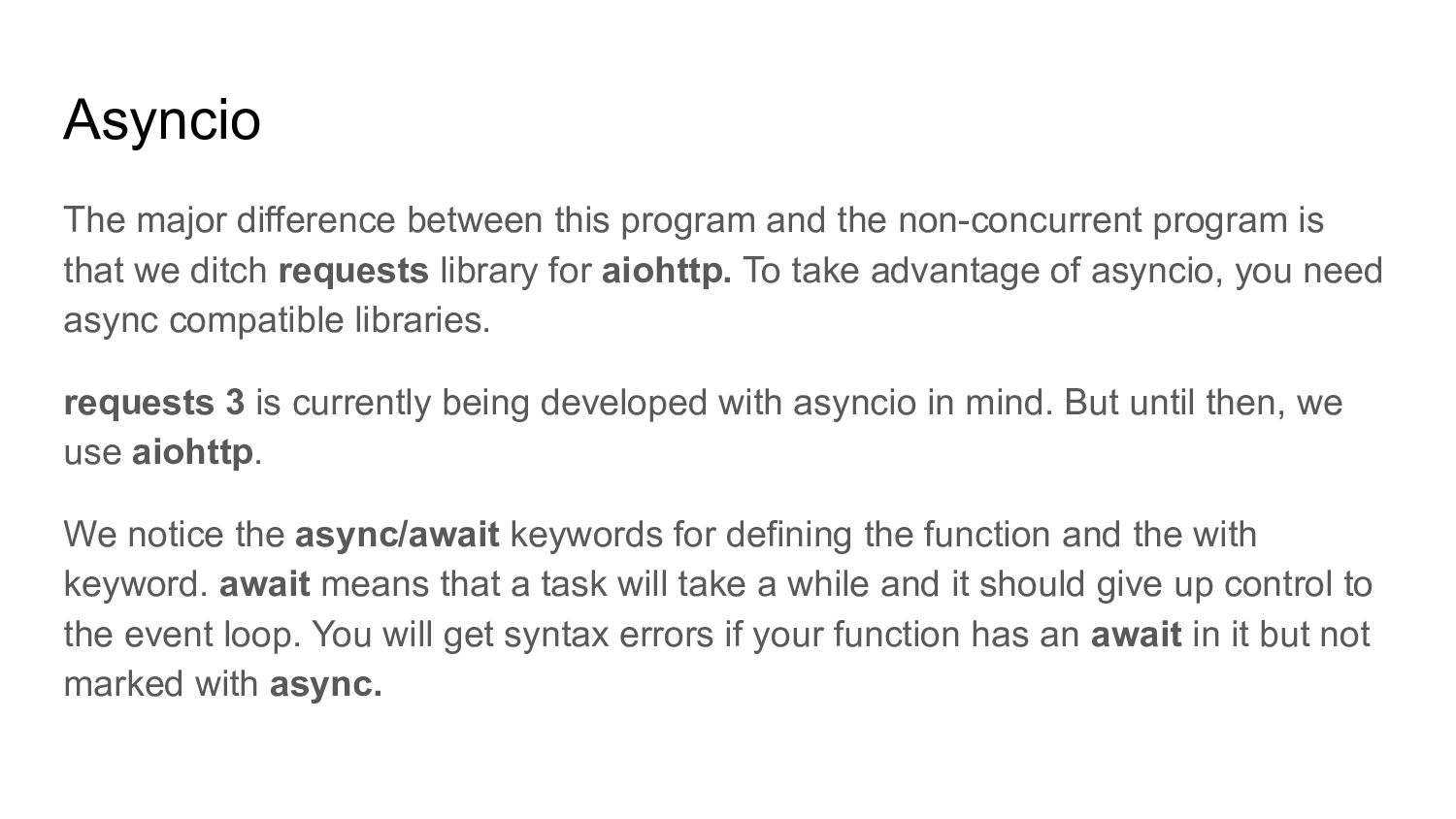
program is that we ditch requests library for aiohttp. To take advantage of asyncio, you need async compatible libraries. requests 3 is currently being developed with asyncio in mind. But until then, we use aiohttp. We notice the async/await keywords for defining the function and the with keyword. await means that a task will take a while and it should give up control to the event loop. You will get syntax errors if your function has an await in it but not marked with async.
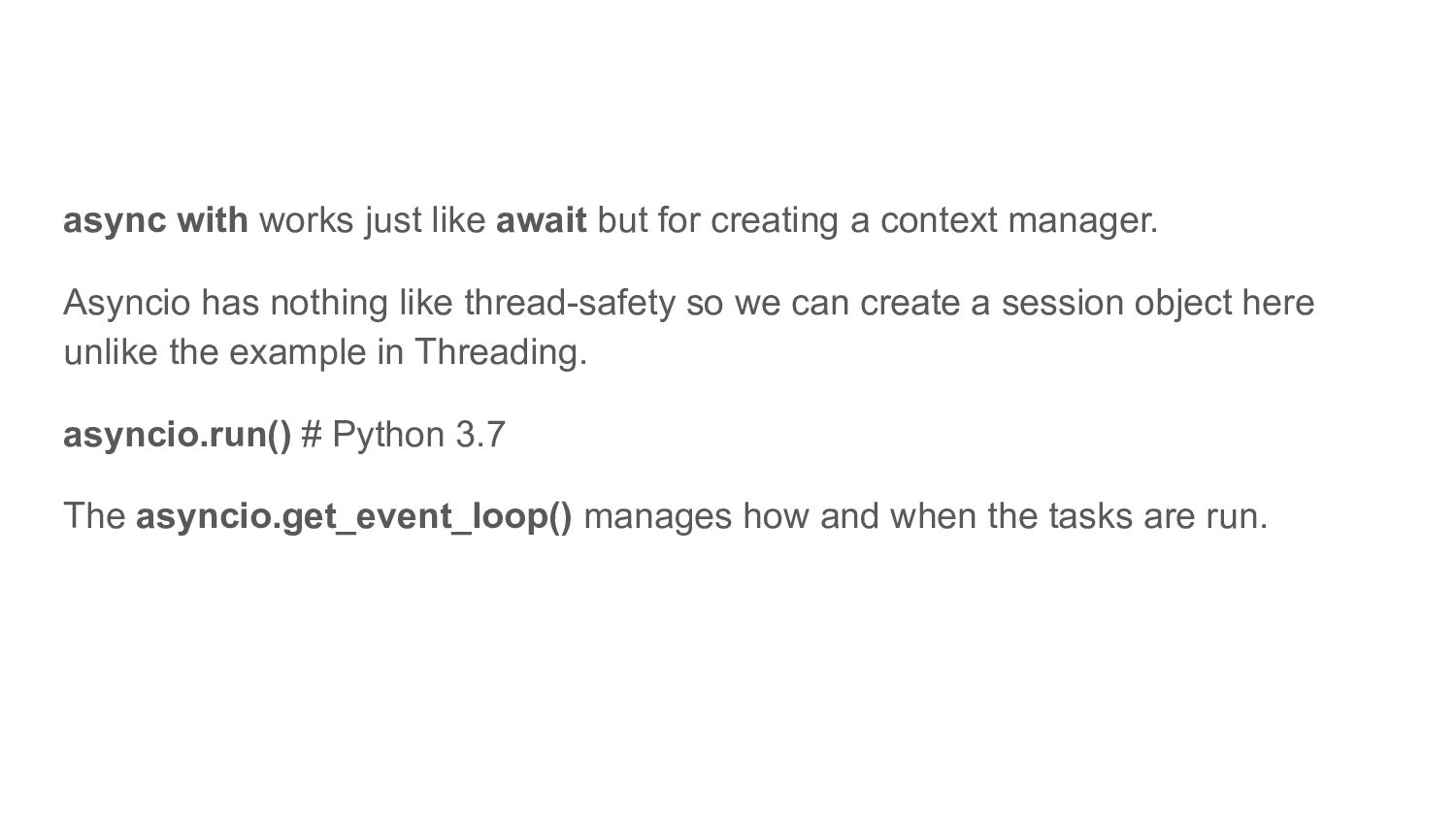
context manager. Asyncio has nothing like thread-safety so we can create a session object here unlike the example in Threading. asyncio.run() # Python 3.7 The asyncio.get_event_loop() manages how and when the tasks are run.
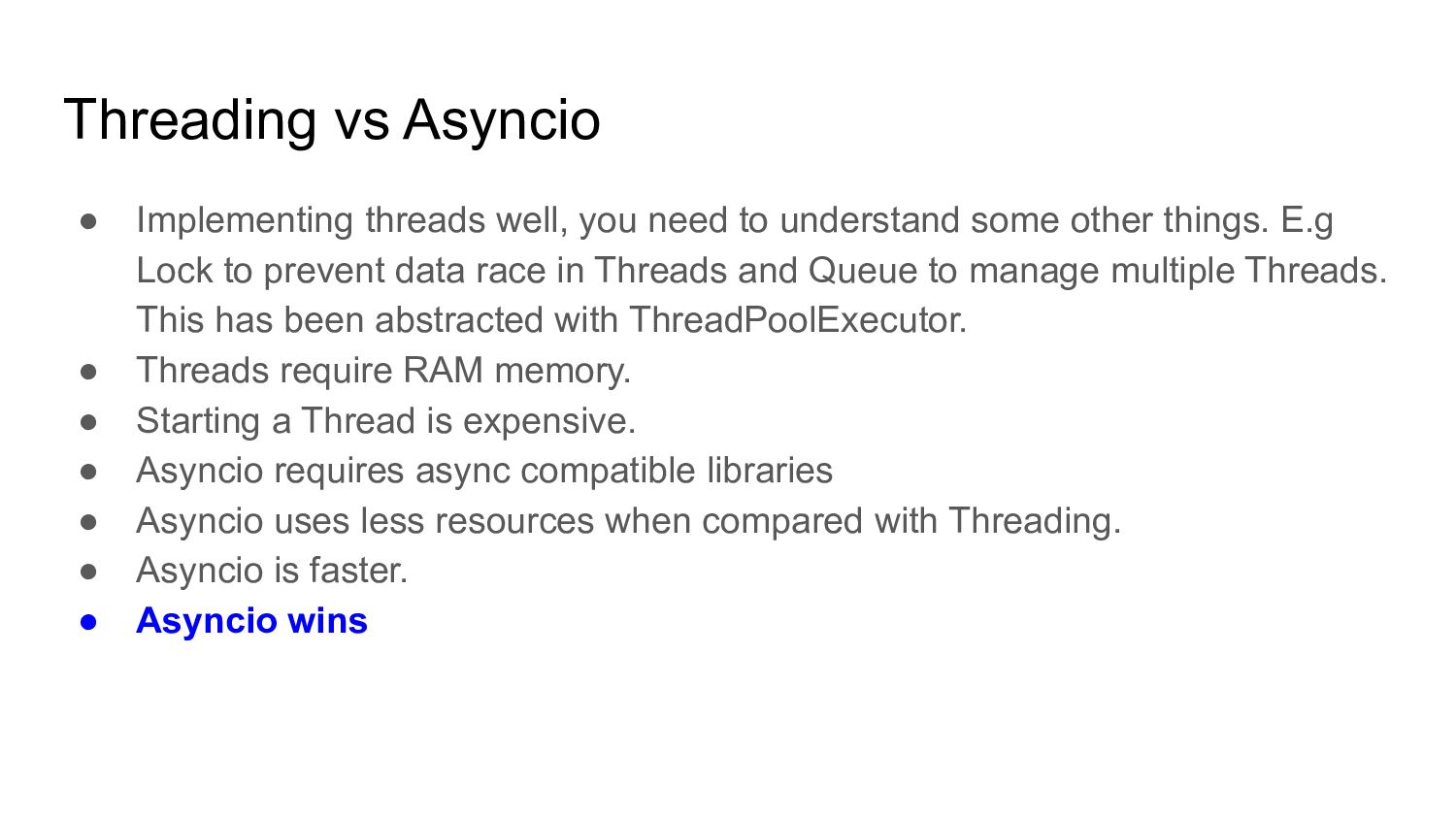
understand some other things. E.g Lock to prevent data race in Threads and Queue to manage multiple Threads. This has been abstracted with ThreadPoolExecutor. • Threads require RAM memory. • Starting a Thread is expensive. • Asyncio requires async compatible libraries • Asyncio uses less resources when compared with Threading. • Asyncio is faster. • Asyncio wins
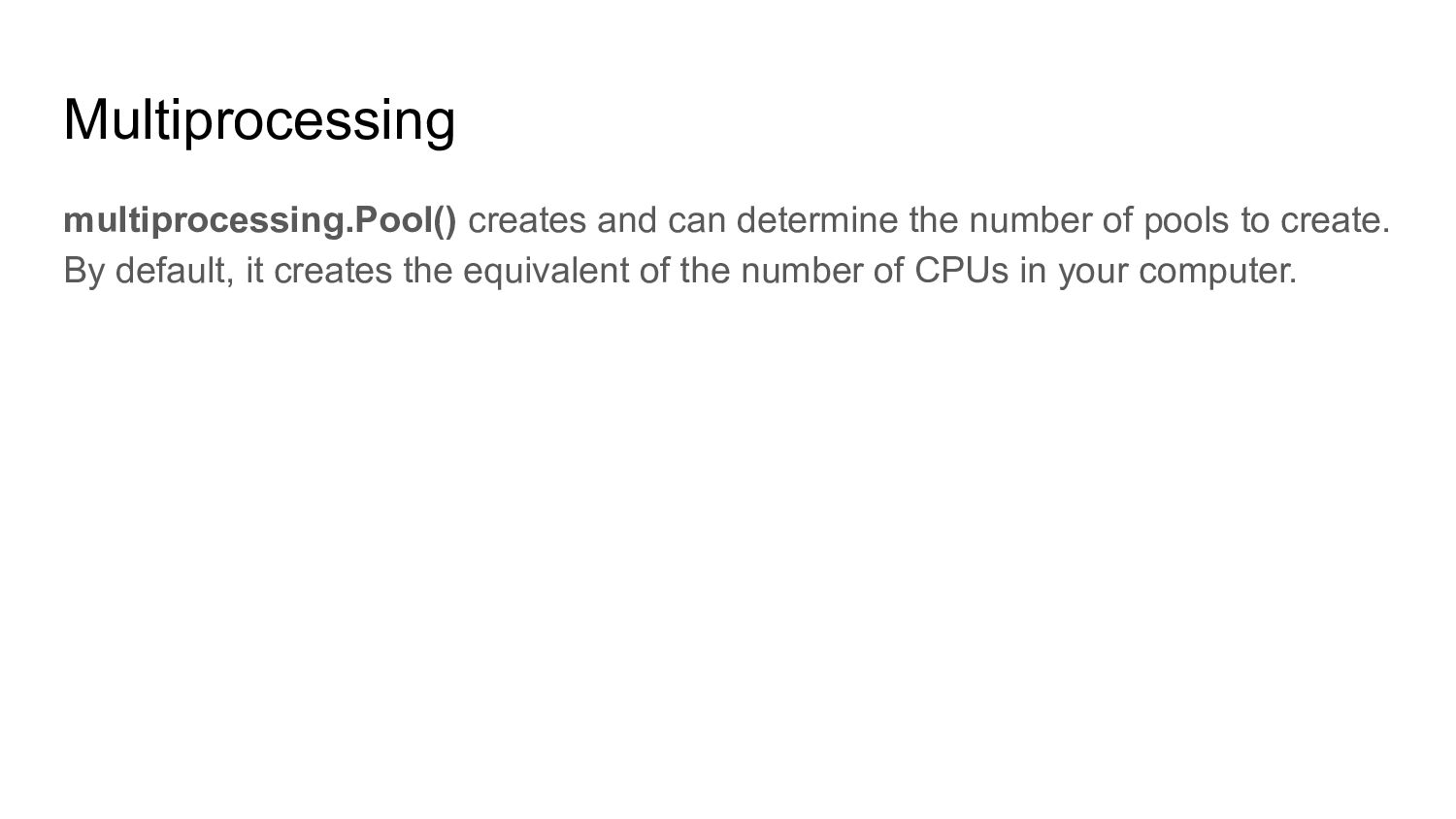
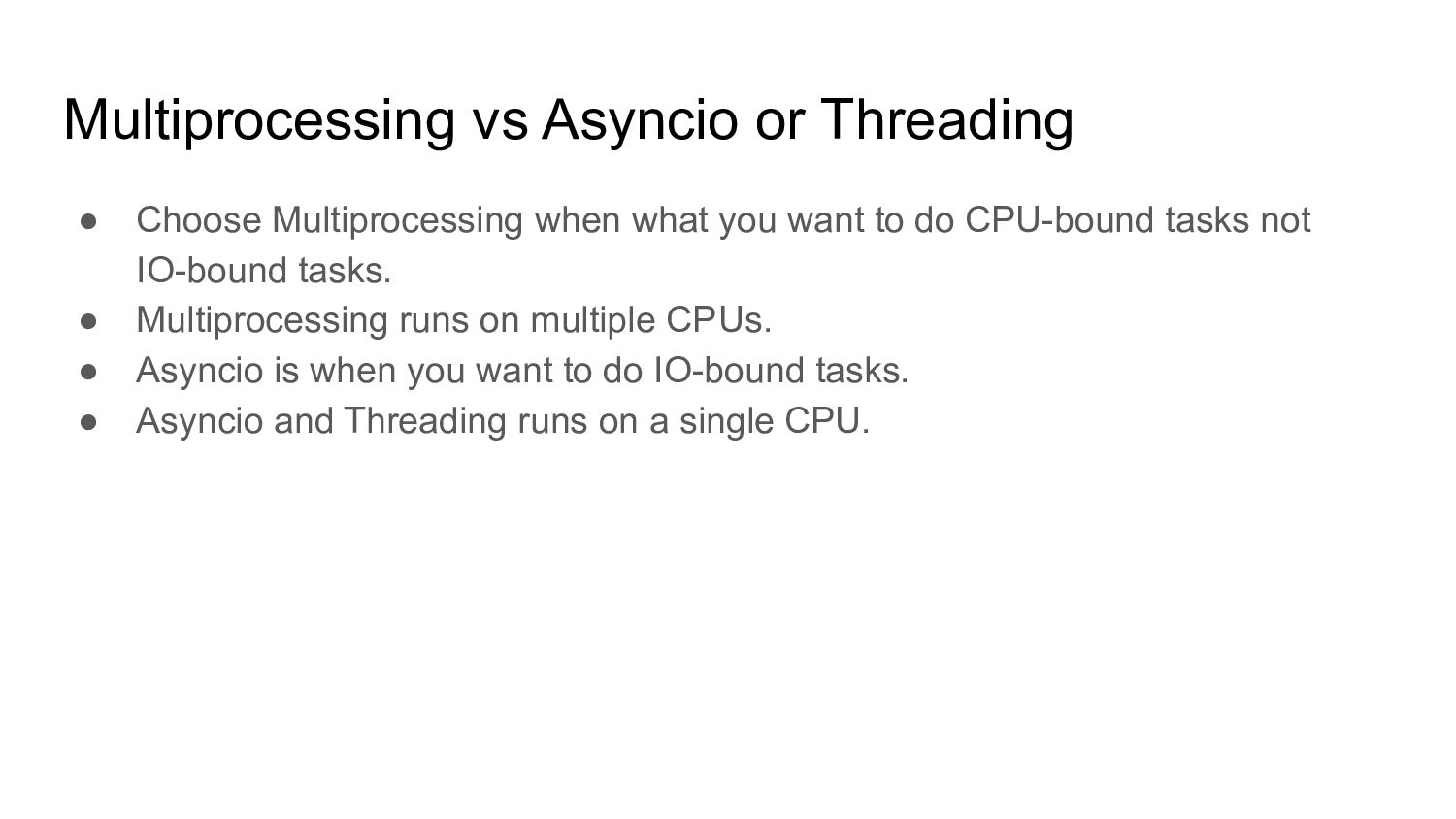
you want to do CPU-bound tasks not IO-bound tasks. • Multiprocessing runs on multiple CPUs. • Asyncio is when you want to do IO-bound tasks. • Asyncio and Threading runs on a single CPU.


 iyanuashiri
 tosite
 teyamagu
 mixplace
 a_matsuda
 iwatsukayura
 kasacchiful
 ivargrimstad
 timakin
 hschwentner
 yuta_onishi_97
 clockmaker
 tmikov2023
 mkilby
 yeseniaperezcruz
 chriscoyier
 marktimemedia
 kimpetersen
 ipullrank
 skoyamalab
 lfama
 sarafernandez
 codingconduct
 letsgokoyo
 jakevdp