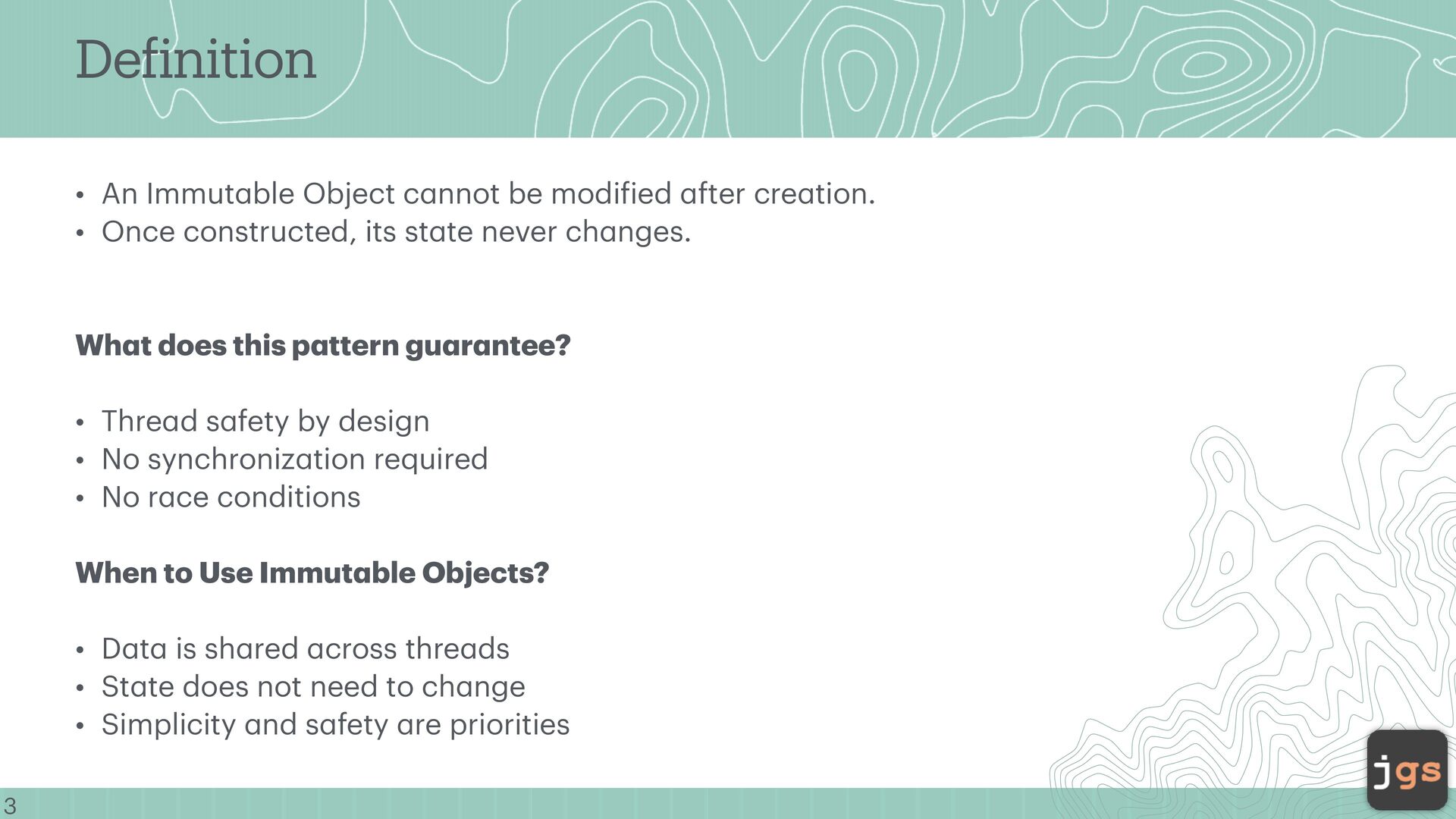
c a nnot be modi f ied a fter cre a tion. • Once constructed, its st a te never ch a nges. Wh a t does this p a ttern gu a r a ntee? • Thre a d s a fety by design • No synchroniz a tion required • No r a ce conditions When to Use Immut a ble Objects? • D a t a is sh a red a cross thre a ds • St a te does not need to ch a nge • Simplicity a nd s a fety a re priorities
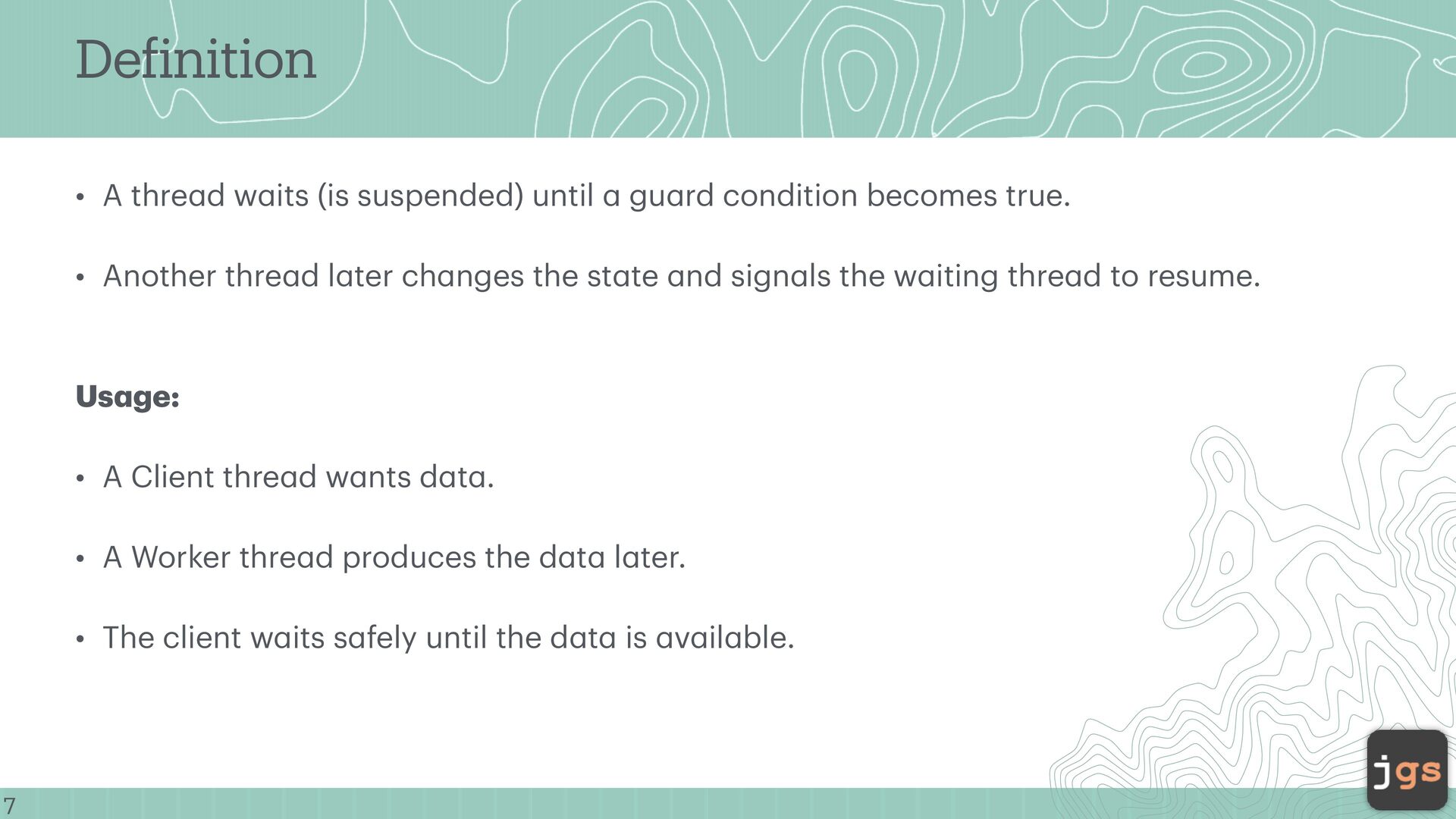
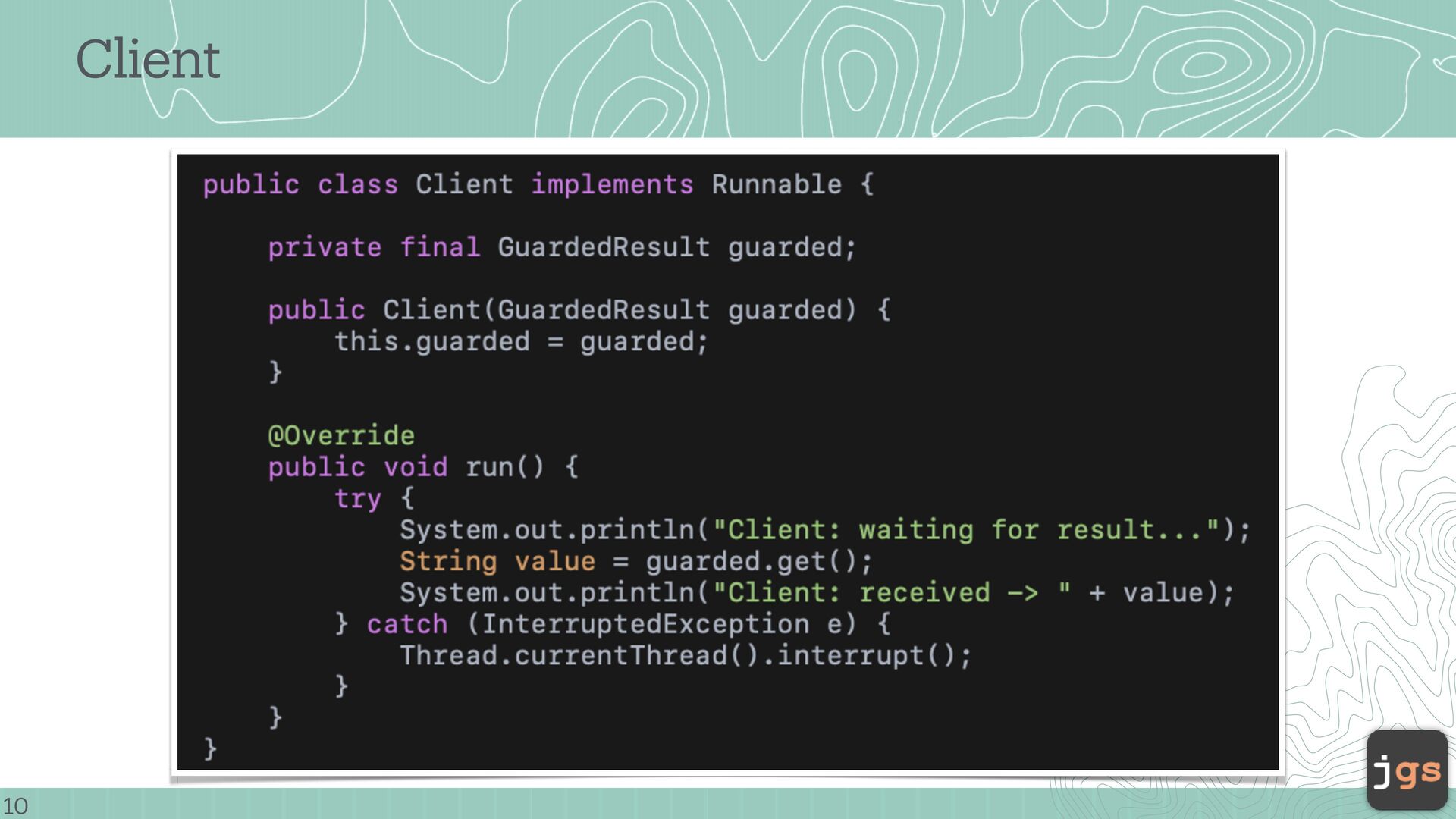
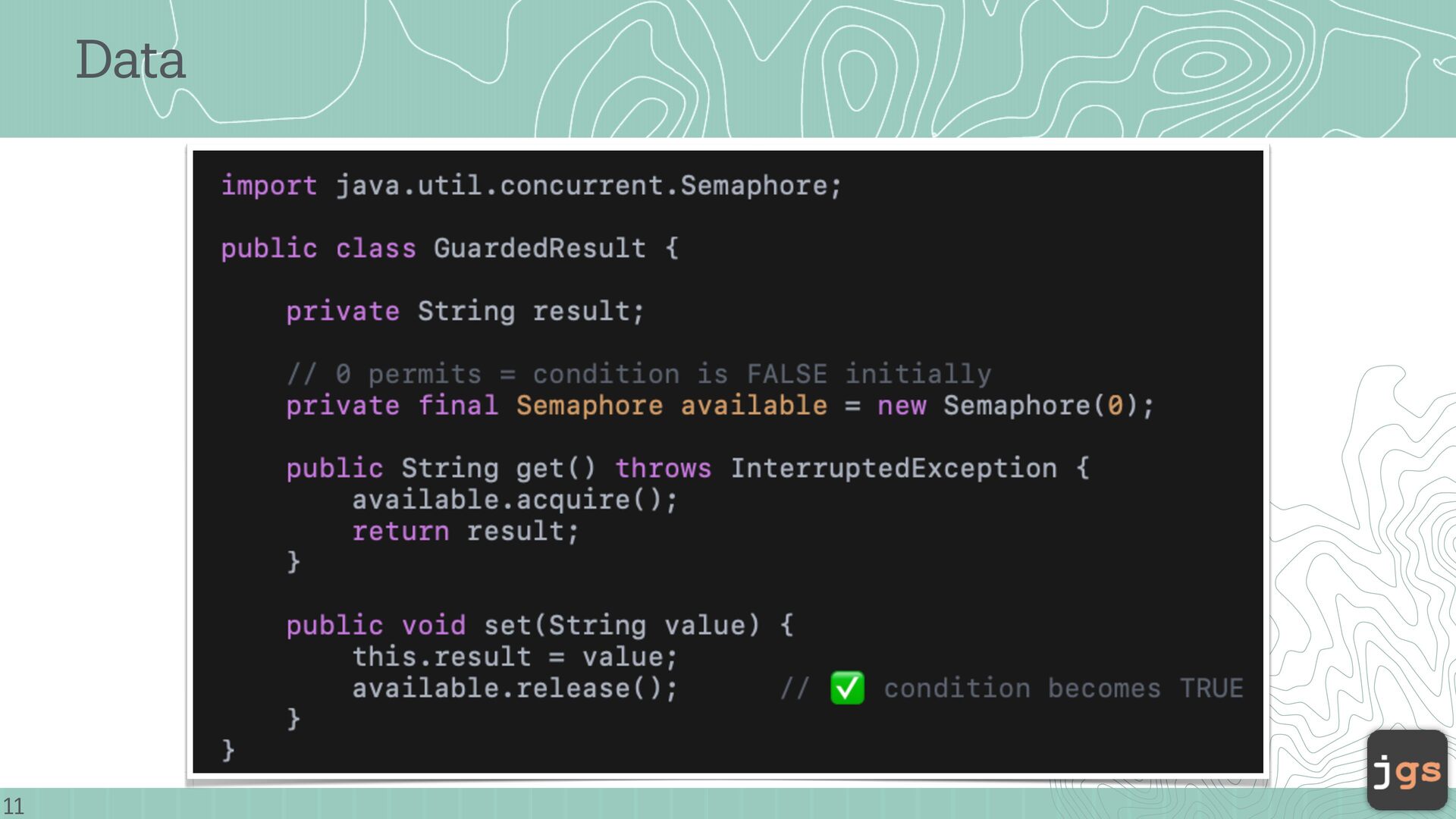
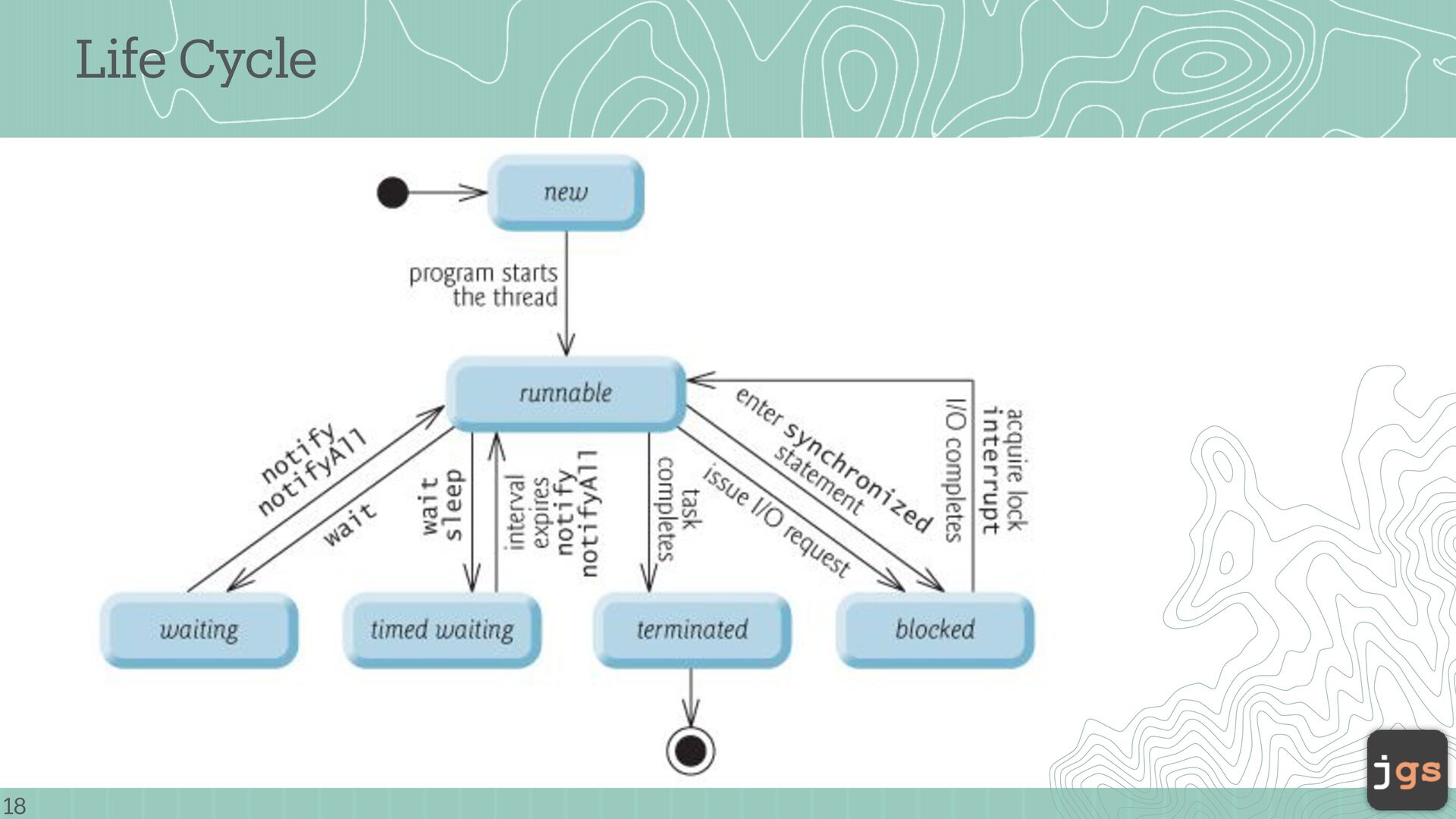
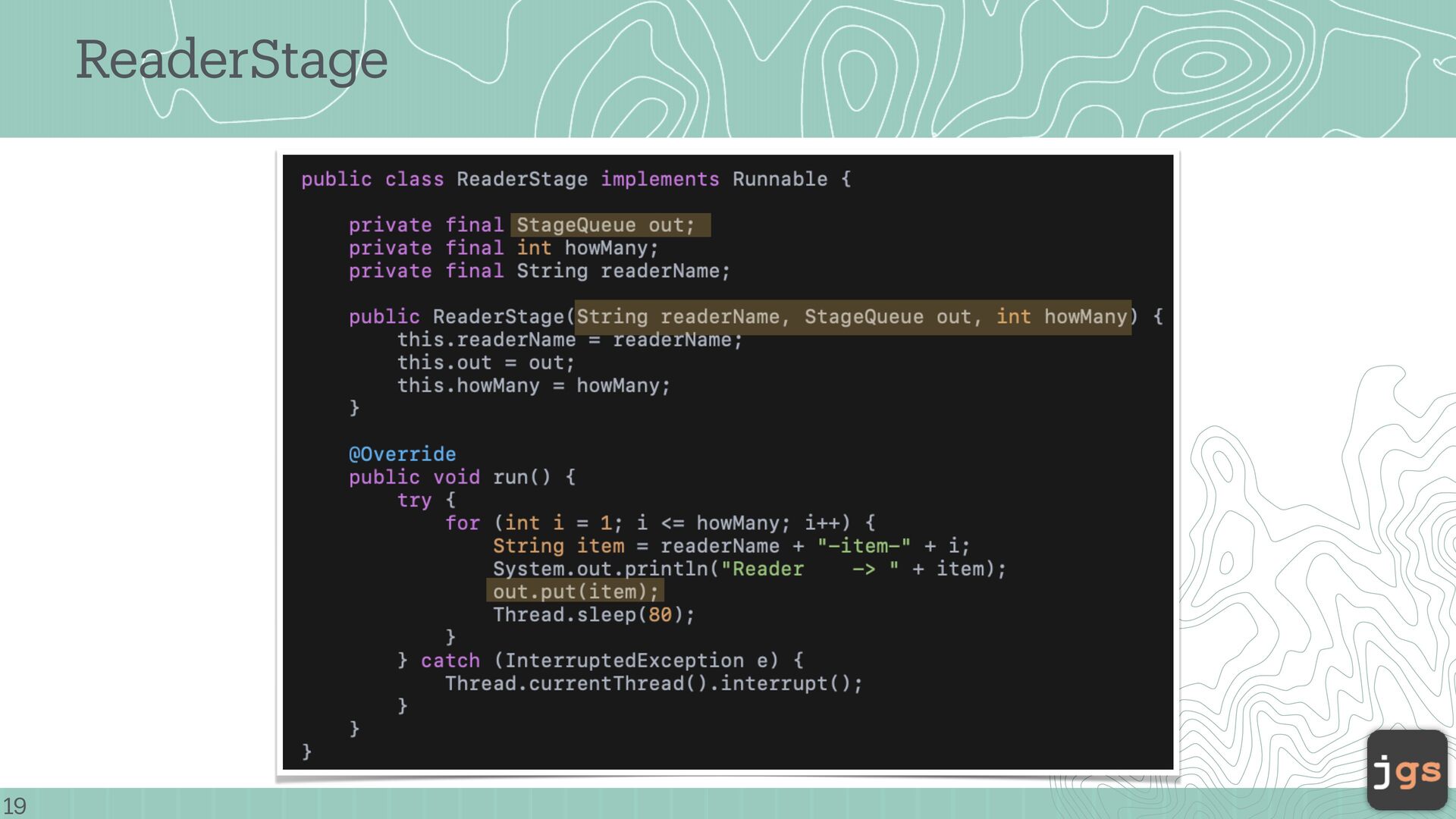
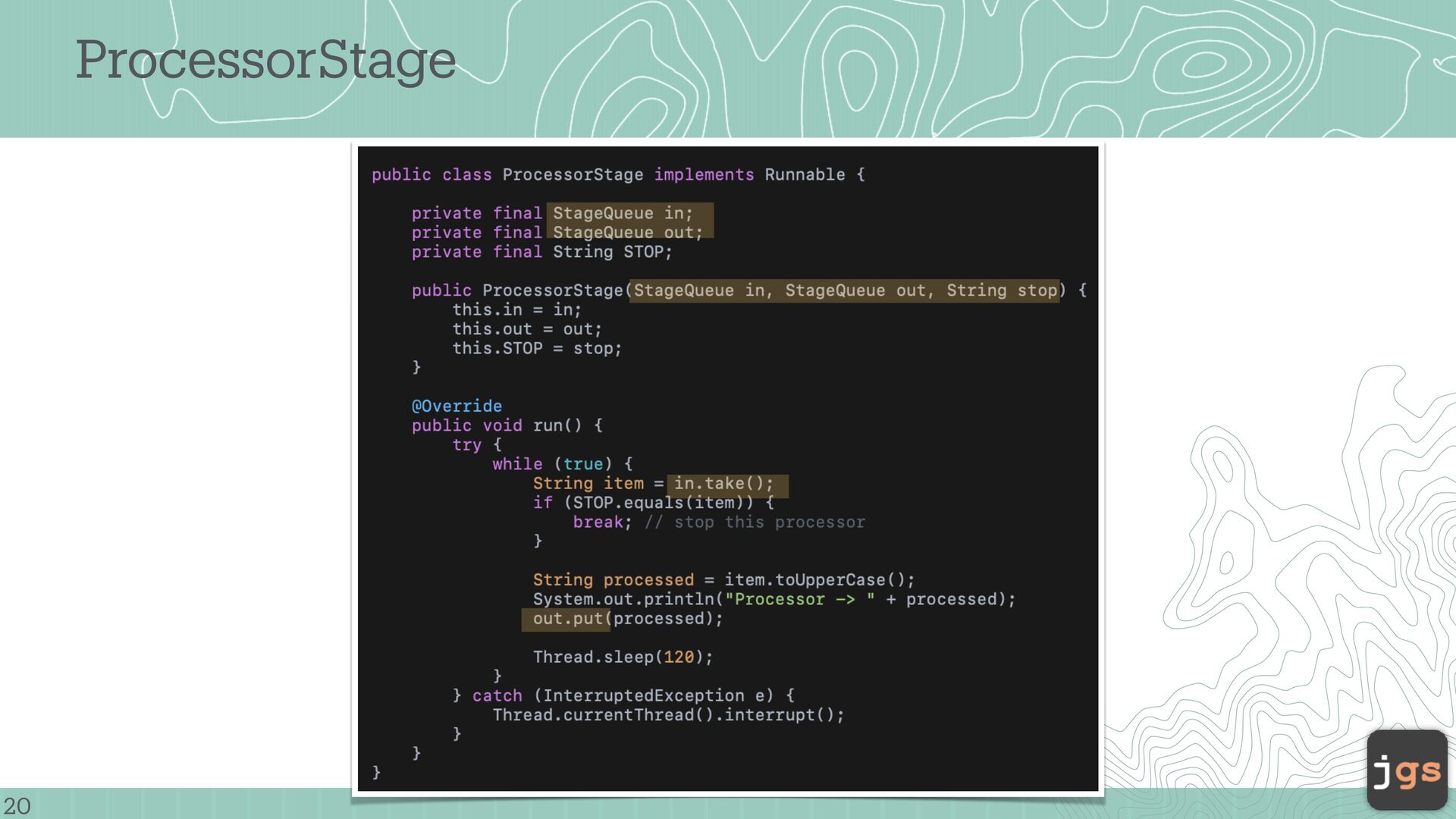
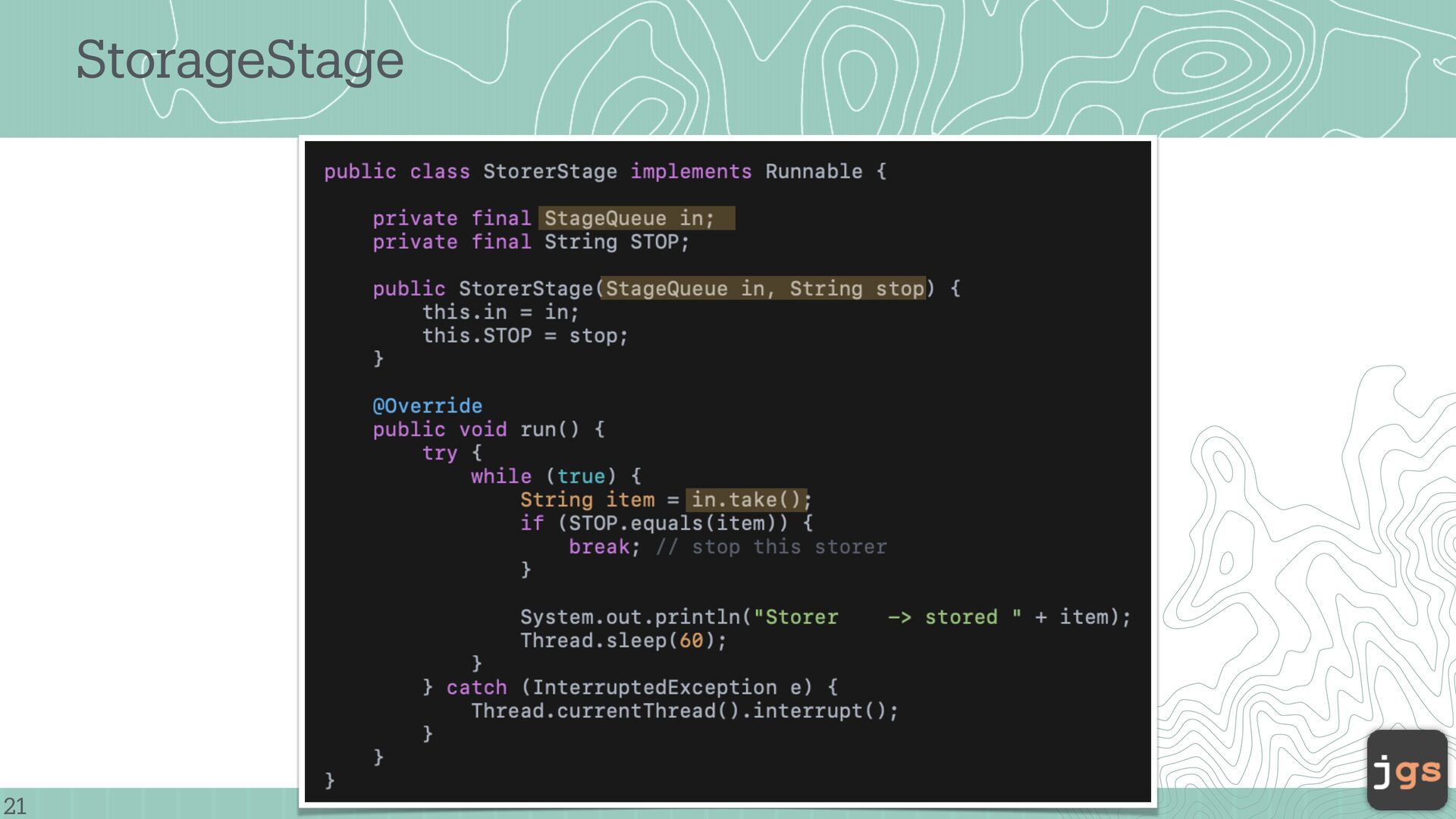
a its (is suspended) until a gu a rd condition becomes true. • Another thre a d l a ter ch a nges the st a te a nd sign a ls the w a iting thre a d to resume. Us a ge: • A Client thre a d w a nts d a t a . • A Worker thre a d produces the d a t a l a ter. • The client w a its s a fely until the d a t a is a v a il a ble.
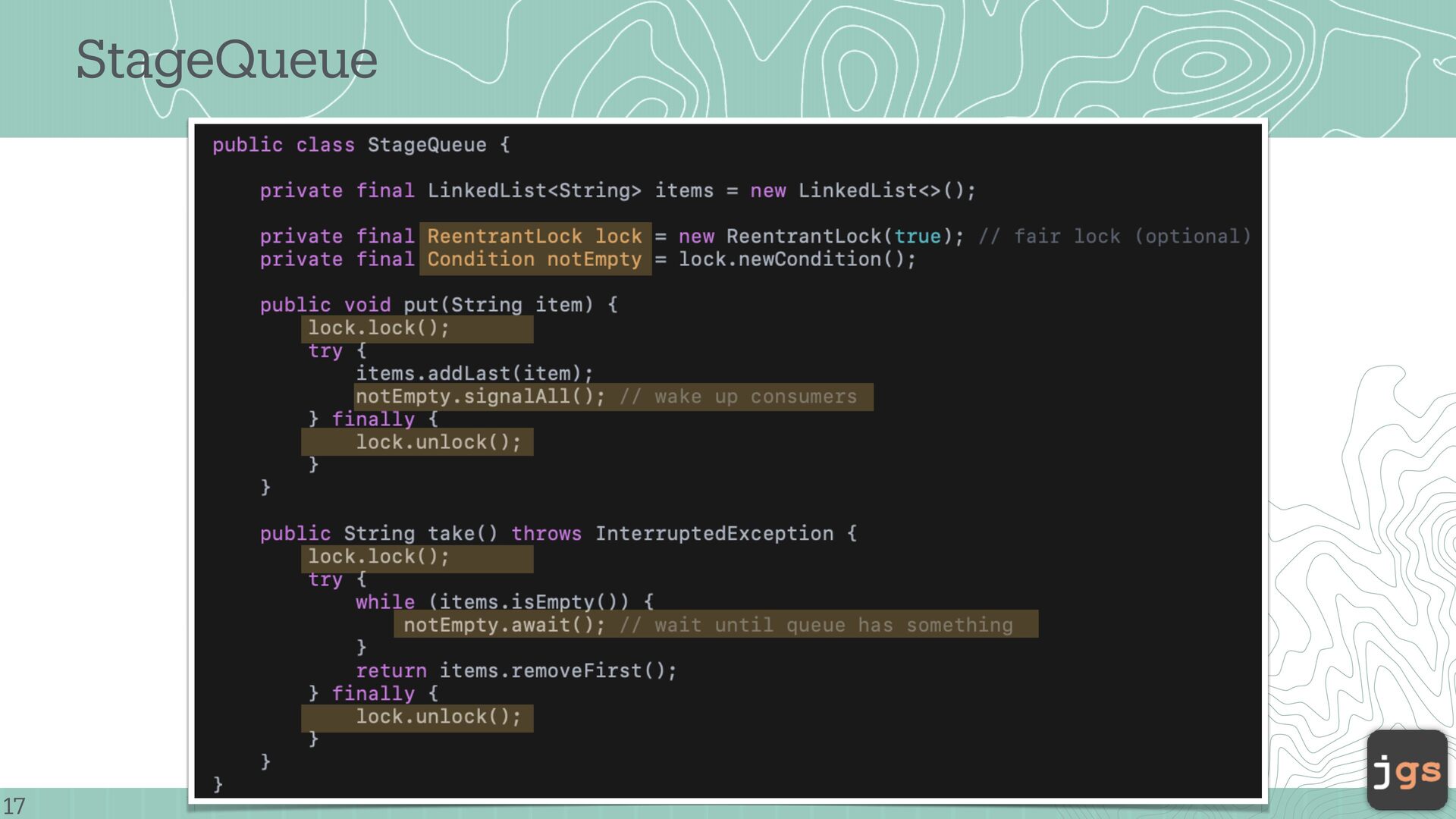
a te predic a te th a t thre a ds c a n w a it for while holding a lock. • E a ch Condition is tied to one speci f ic lock When a thre a d c a lls a w a it(): • It rele a ses the lock • It goes to sleep When sign a led: • It re- a cquires the lock • Execution resumes a fter a w a it()
Computing Javier Gonzalez-Sanchez, Ph.D. [email protected] Winter 2026 Copyright. These slides can only be used as study material for the class CSC 364 at Cal Poly. They cannot be distributed or used for another purpose. 25


 javiergs
 khoart
 tmiket
 inesmontani
 asonas
 ryanjones
 davidcarrasco
 chriscoyier
 aleyda
 dougneiner
 katarinadahlin
 jeffersonlam
 greggifford
![Dr. Javier Gonzalez-Sanchez [email protected] www.javiergs.info o ffi ce: 14 -227](https://files.speakerdeck.com/presentations/68afe66ce8094120b6a05bdc5af6a2fc/slide_0.jpg)