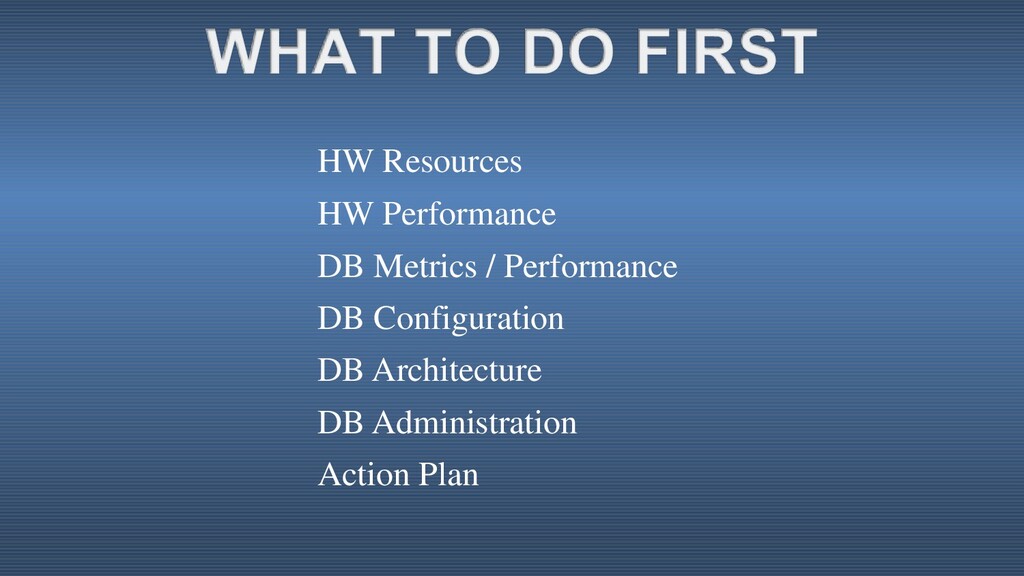
to identify and resolve the performance issues that are currently affecting the EE Web Site and Online Shop. This is a generic plan that may change significantly once applied in the environment of this application. However, it may serve as a general guideline to face the performance tuning of any MySQL database.
of the hardware resources as: • Type and number of CPU's • Available memory • I/O subsystem details (Raid?) • Machine architecture • Operating System • Type of Environment Duration: 1/2 day
that occur at hardware level. We are specially interested in: • CPU’s utilization (percentage and use distribution) • Memory usage • Swap memory usage • Processes running on the server • CPU % used by each process • Disk utilization • CPU utilization of mysqld Duration: 1/2 day
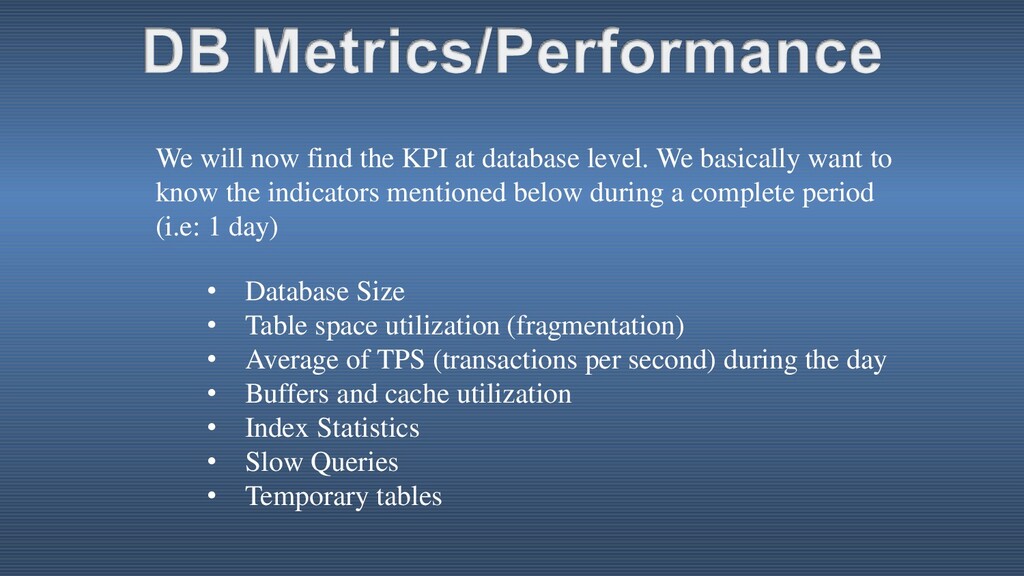
basically want to know the indicators mentioned below during a complete period (i.e: 1 day) • Database Size • Table space utilization (fragmentation) • Average of TPS (transactions per second) during the day • Buffers and cache utilization • Index Statistics • Slow Queries • Temporary tables
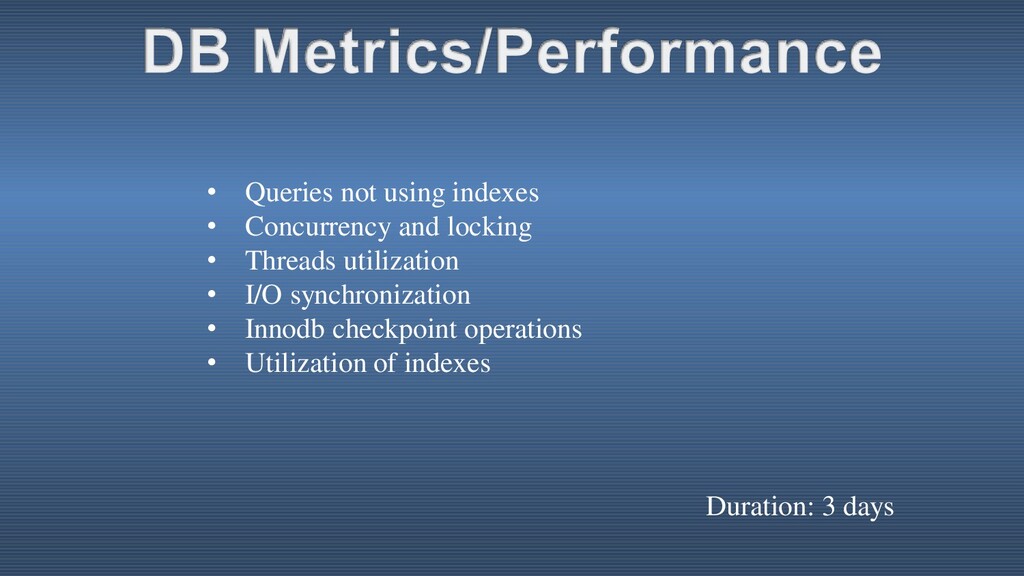
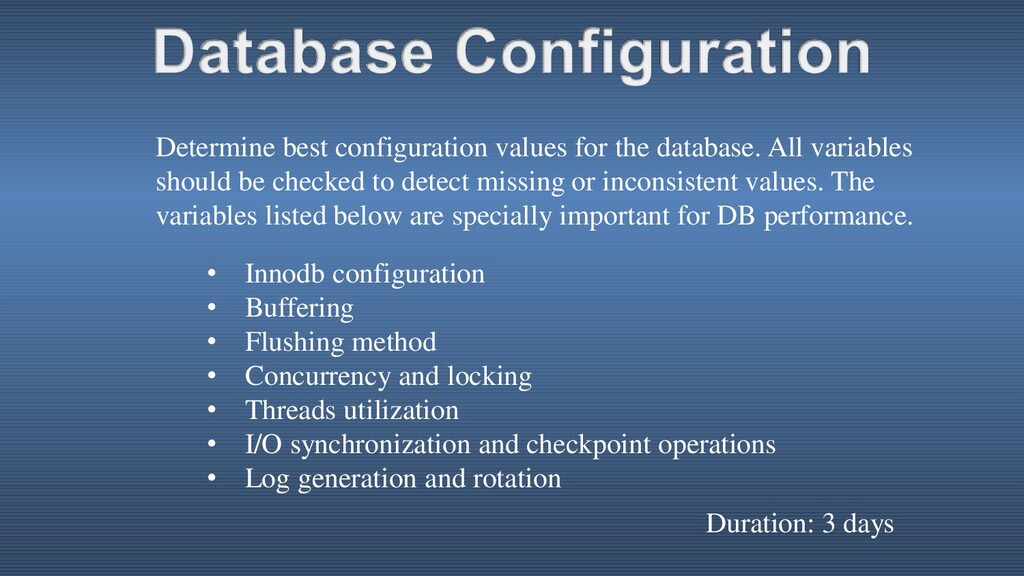
and locking • Threads utilization • I/O synchronization and checkpoint operations • Log generation and rotation Duration: 3 days Determine best configuration values for the database. All variables should be checked to detect missing or inconsistent values. The variables listed below are specially important for DB performance.
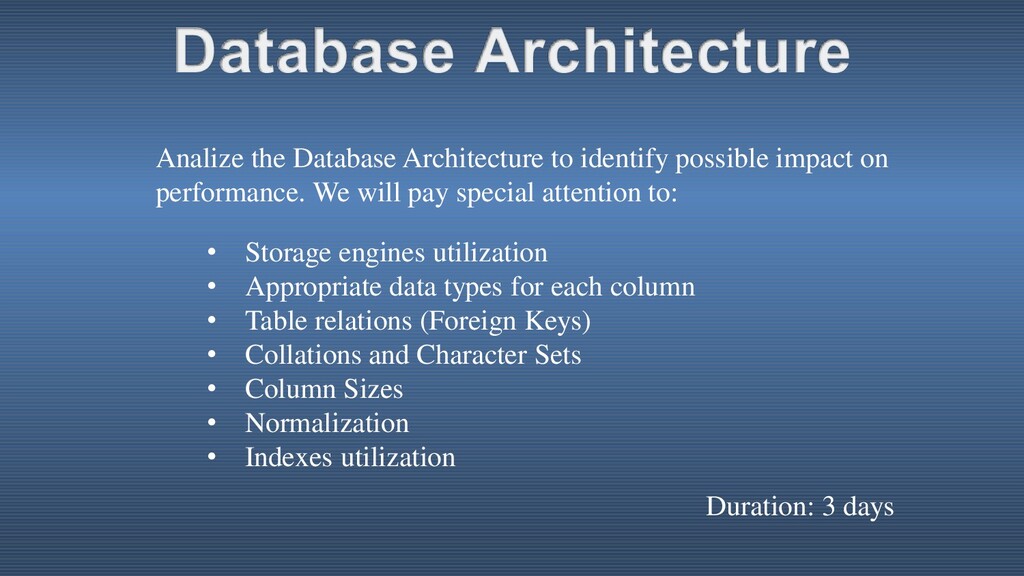
column • Table relations (Foreign Keys) • Collations and Character Sets • Column Sizes • Normalization • Indexes utilization Duration: 3 days Analize the Database Architecture to identify possible impact on performance. We will pay special attention to:
Security procedures • Clustering and Replication Controls • Monitoring • Logs rotation and Archiving Duration: 5 days Check that critical administration tasks are performed following best practices.
the scope of the performance tuning plan to be implemented in production. Although I can foresee the indicators to be checked, I can not anticipate the amount and nature of the tasks to be performed as they will depend on the results of the first weeks of research. In addition, any change must be tested in a UAT environment before the implementation, making the process even longer . Generically speaking, I think that this process can take 4 or 5 months of work.
the service up and running while the database is subject to downtime due to configuration and architectural changes. The impact on the service will be significantly minimized by performing the steps listed below. • Setup a secondary production environment. • Install Load Balancers to control data traffic. • Setup a failover mechanism to readdress data traffic. These changes will also be the initial setup of a future High Availability environment.
continuous changes that will affect the database during this period. This is difficult to justify to users of an eCommerce site, so that to eliminate it we must setup a consistent backup policy to allow a PITR (point-in-time-recovery) at any time. The backup of the database should always be supplemented by a continuous backup of the binary logs, so that we can recover any transaction that has not been replicated by the DBMS.
Hardware to setup a second production environment. • GUI administration program (Heidi, phpMyAdmin or similar). • Data modeller (Navicat or similar). • Database documentation tool (DBScribe or similar). • Database Load Balancer (HA Proxy or similar). • Set of scripts to manage failover between masters. Some of these tools are open source whilst some others are commercial.
in a sequential order. The scope and duration of each phase will depend on the results of the previous one, so that, to avoid confusion and continuous changes, the following deliverables will be delivered. • A generic project plan to be expanded as the project progresses. • A detailed report at the end of each phase. • A summary of all tasks performed at the end of the project.


 odashi
 puhitaku
 jyouryuusui
 terapyon
 satomasahiro2005
 kash1064
 codmoninc
 masakiokuda
 riyaamemiya
 pfn
 kentapapa
 sh_fk2
 62gerente
 michielstock
 bluesmoon
 helmedeiros
 mojombo
 codingconduct
 eileencodes
 csswizardry
 samtorres
 gr2m
 3n
 marketingsoph