Upgrade to Pro — share decks privately, control downloads, hide ads and more …

Think Like a Vault Developer - Secure Introduct...

Sponsored · SiteGround - Reliable hosting with speed, security, and support you can count on. →
Avatar for Jeff Mitchell Jeff Mitchell
September 07, 2016

Think Like a Vault Developer - Secure Introduction at Scale

Avatar for Jeff Mitchell

Jeff Mitchell

September 07, 2016

Other Decks in Technology

Transcript

  1. • Understand basic tenets of security ◦ The definitions we

    use and the way we think about them • Explore properties necessary for secret management and (initial) secret distribution Goals
  2. Non-Goals • Discussion of crypto theory ◦ Crypto properties (algorithm

    selection, etc.) are important for applied security ◦ Can stay high-level • Comparison of container/hypervisor/OS security ◦ Let’s talk Linux/Docker
  3. “Security” • Security is the practice of risk management ◦

    Deciding which risks can be accepted and which cannot ◦ Guarding against violations of norms • Risk increases with system complexity ◦ More points of failure, confusion, ingress and egress
  4. “Threat” • Anything that can elevate risk is a threat

    • Modeling threats informs security policy
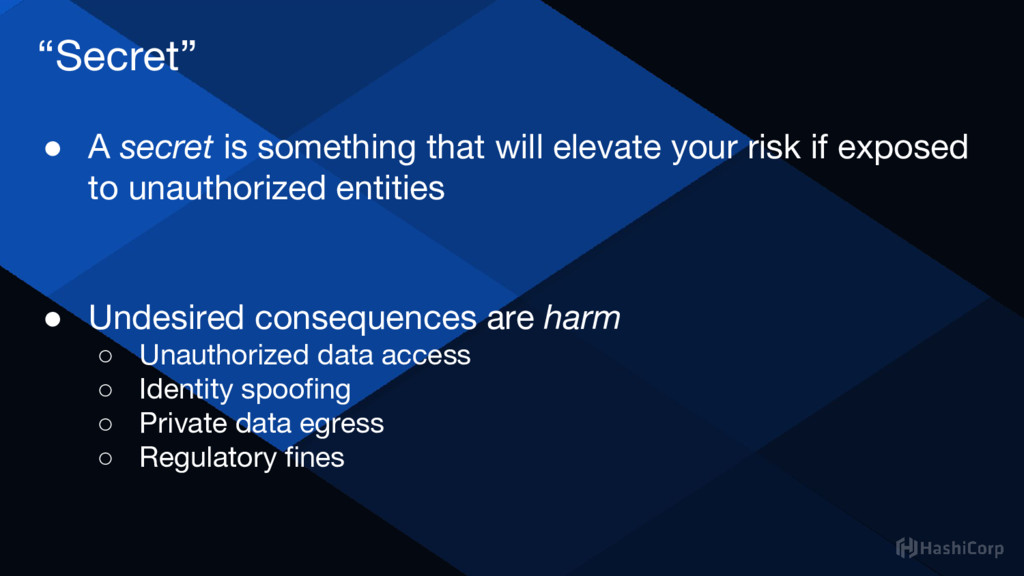
  5. “Secret” • A secret is something that will elevate your

    risk if exposed to unauthorized entities • Undesired consequences are harm ◦ Unauthorized data access ◦ Identity spoofing ◦ Private data egress ◦ Regulatory fines
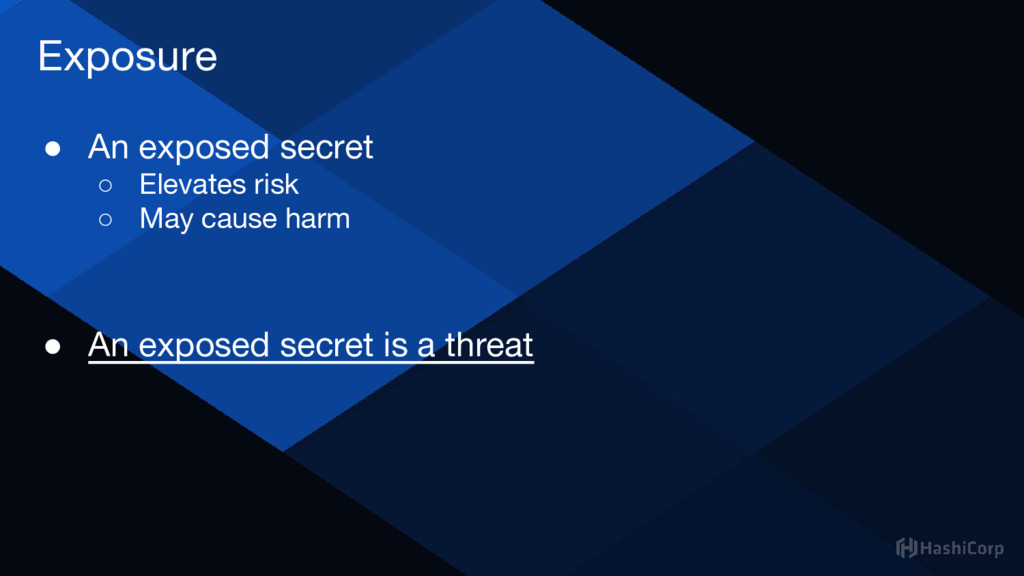
  6. Exposure • An exposed secret ◦ Elevates risk ◦ May

    cause harm • An exposed secret is a threat
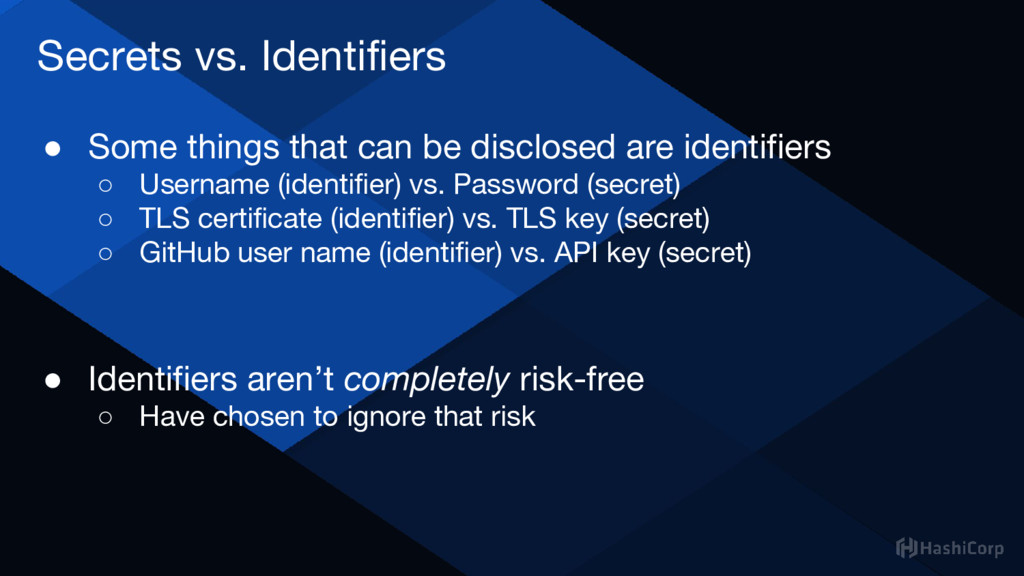
  7. Secrets vs. Identifiers • Some things that can be disclosed

    are identifiers ◦ Username (identifier) vs. Password (secret) ◦ TLS certificate (identifier) vs. TLS key (secret) ◦ GitHub user name (identifier) vs. API key (secret) • Identifiers aren’t completely risk-free ◦ Have chosen to ignore that risk
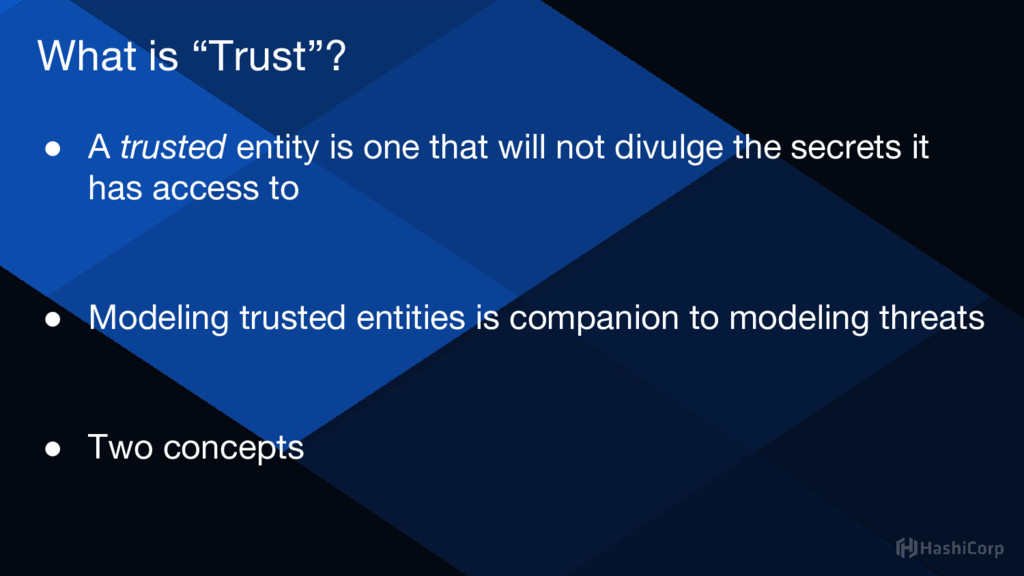
  8. What is “Trust”? • A trusted entity is one that

    will not divulge the secrets it has access to • Modeling trusted entities is companion to modeling threats • Two concepts
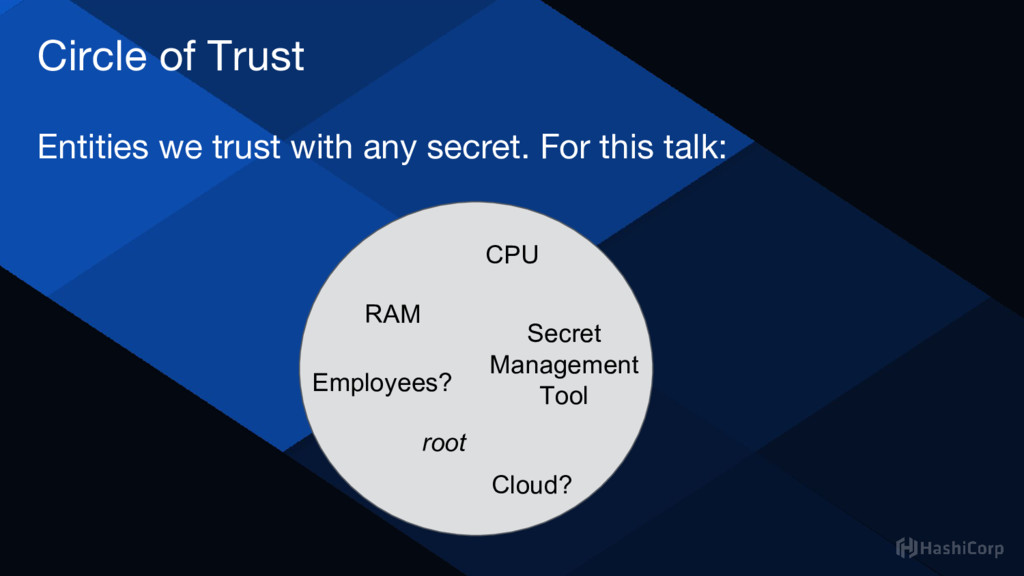
  9. Circle of Trust Entities we trust with any secret. For

    this talk: RAM root Secret Management Tool Employees? CPU Cloud?
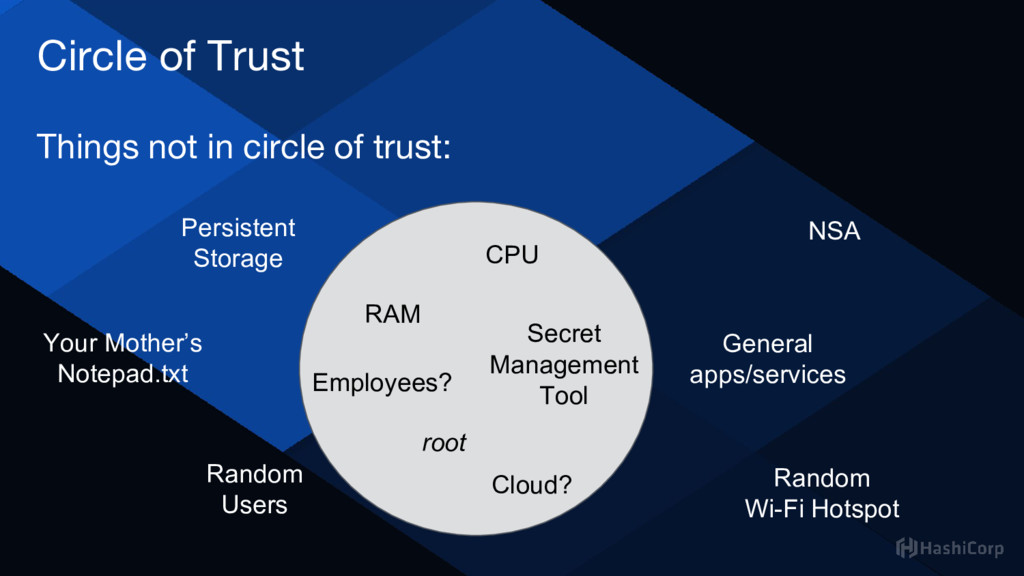
  10. Circle of Trust Things not in circle of trust: Persistent

    Storage Random Users General apps/services NSA Random Wi-Fi Hotspot Your Mother’s Notepad.txt Employees? CPU Cloud? RAM root Secret Management Tool CPU Cloud? Employees?
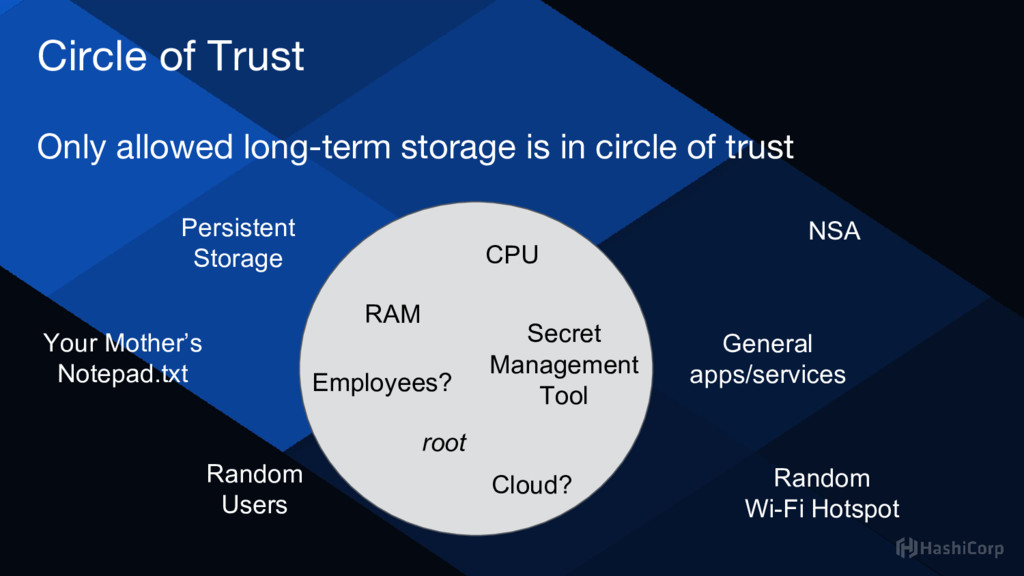
  11. Circle of Trust Only allowed long-term storage is in circle

    of trust Persistent Storage Random Users General apps/services NSA Random Wi-Fi Hotspot Your Mother’s Notepad.txt Employees? CPU Cloud? RAM root Secret Management Tool CPU Cloud? Employees?
  12. Chain of Trust • The set of links (e.g. network

    hops) that any particular secret travels through from source entity A to destination entity B • Source/destination must be in circle of trust
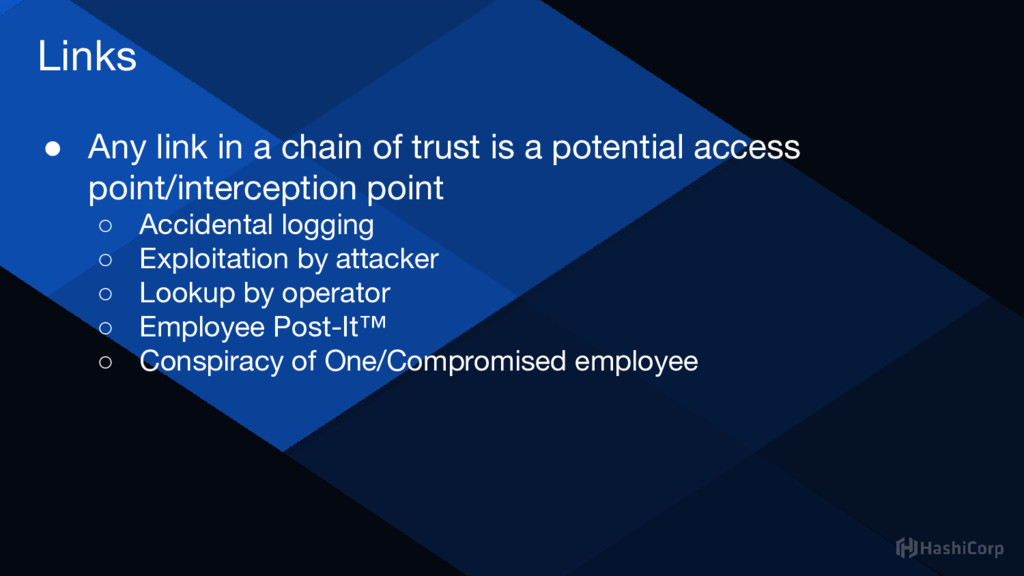
  13. Links • Any link in a chain of trust is

    a potential access point/interception point ◦ Accidental logging ◦ Exploitation by attacker ◦ Lookup by operator ◦ Employee Post-It™ ◦ Conspiracy of One/Compromised employee
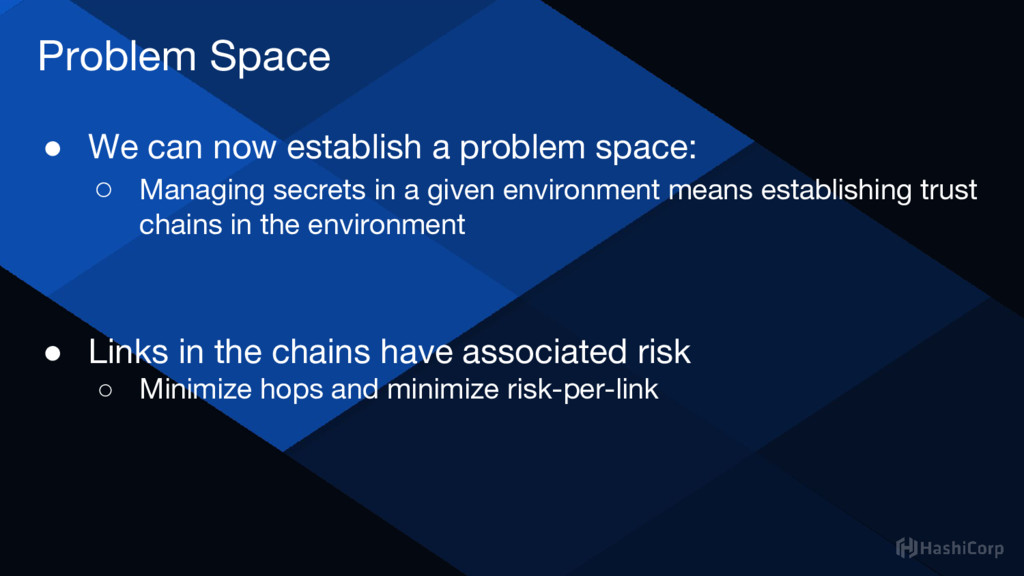
  14. Problem Space • We can now establish a problem space:

    ◦ Managing secrets in a given environment means establishing trust chains in the environment • Links in the chains have associated risk ◦ Minimize hops and minimize risk-per-link
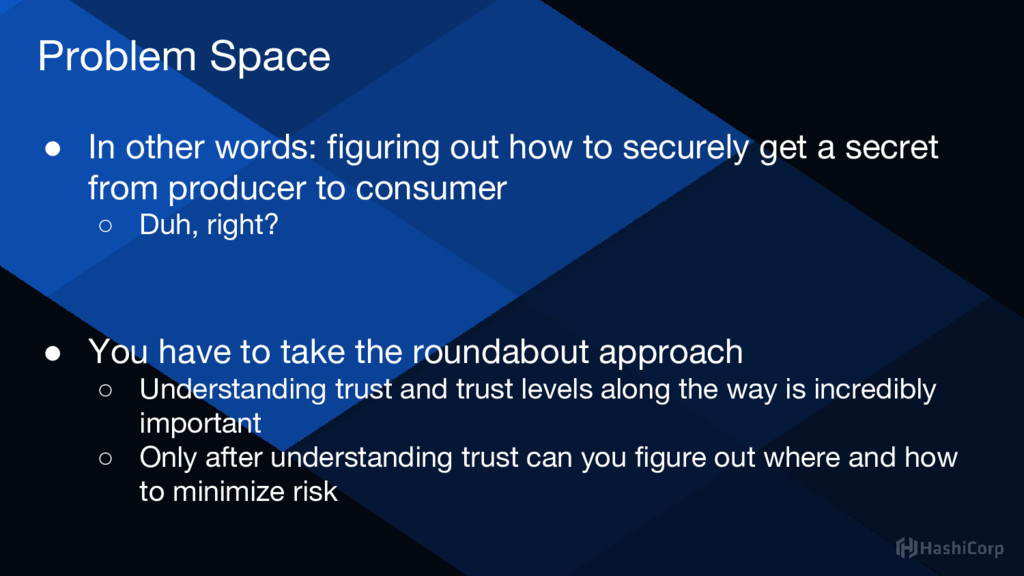
  15. Problem Space • In other words: figuring out how to

    securely get a secret from producer to consumer ◦ Duh, right? • You have to take the roundabout approach ◦ Understanding trust and trust levels along the way is incredibly important ◦ Only after understanding trust can you figure out where and how to minimize risk
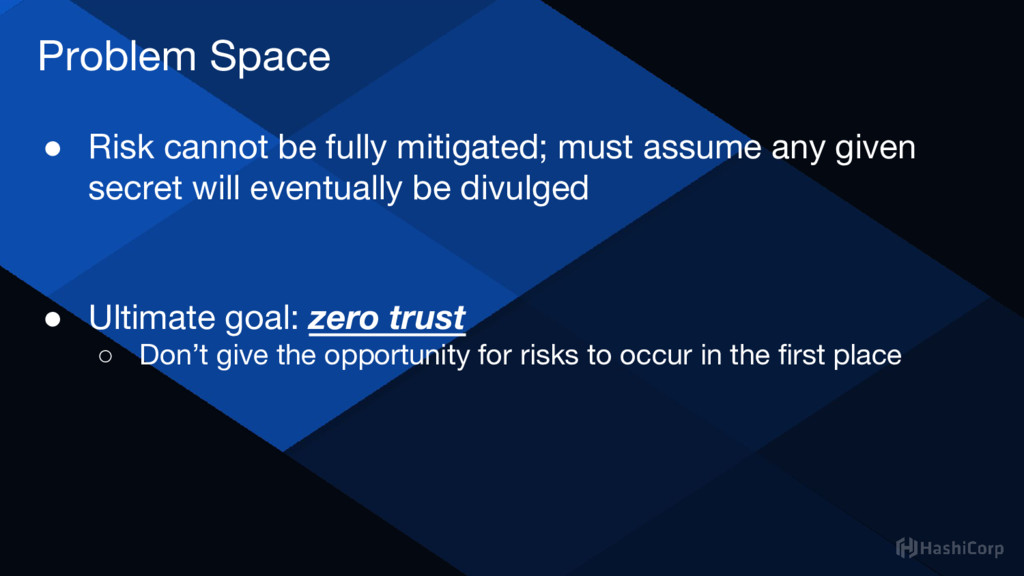
  16. Problem Space • Risk cannot be fully mitigated; must assume

    any given secret will eventually be divulged • Ultimate goal: zero trust ◦ Don’t give the opportunity for risks to occur in the first place
  17. Secret Protection • Establishing a chain of trust requires defining

    the requirements it must fulfill to keep secrets protected • Good news: we (often) only need to do this for one secret! ◦ First secret authenticates us to allow direct access to more
  18. Secure Introduction • If you can protect this secret, you

    can protect any secret ◦ ...generally • This concept is secure introduction (SI)
  19. Secure Introduction • How do you protect secrets (perform SI)?

    • First: establish success criteria based on your organization’s acceptable risk ◦ Any given organization needs a security policy and associated success criteria that meets their individual needs
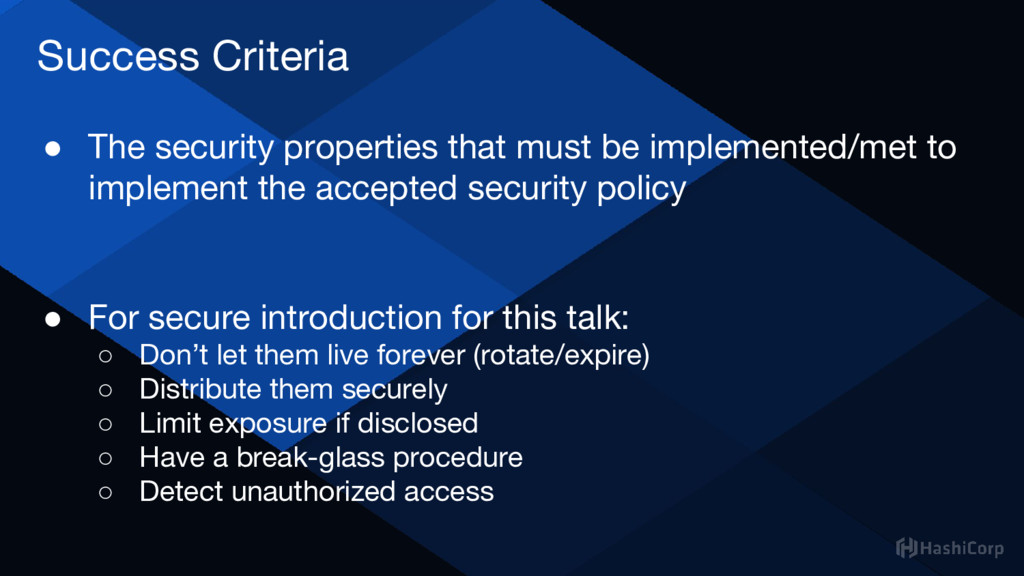
  20. Success Criteria • The security properties that must be implemented/met

    to implement the accepted security policy • For secure introduction for this talk: ◦ Don’t let them live forever (rotate/expire) ◦ Distribute them securely ◦ Limit exposure if disclosed ◦ Have a break-glass procedure ◦ Detect unauthorized access
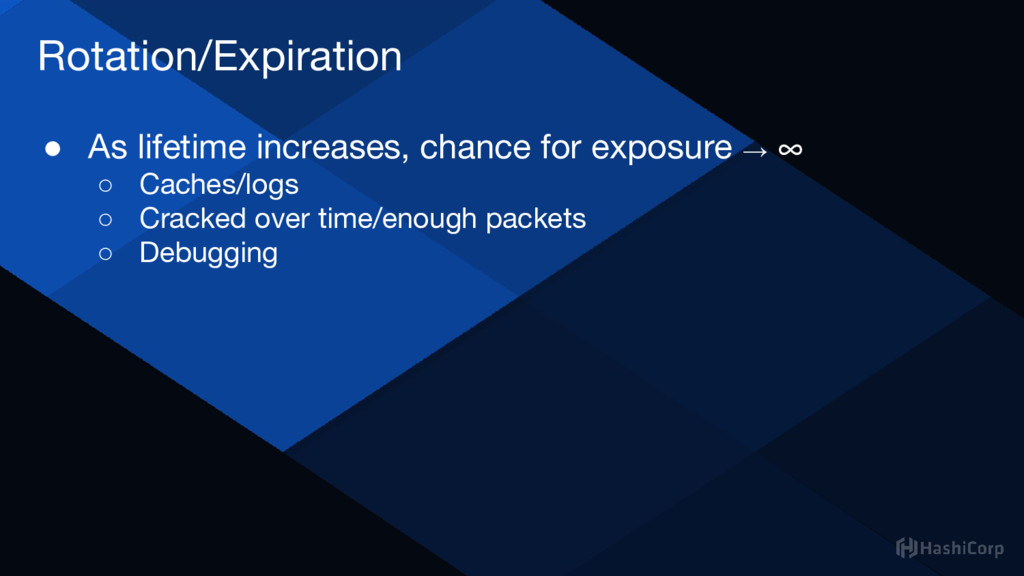
  21. Rotation/Expiration • As lifetime increases, chance for exposure → ∞

    ◦ Caches/logs ◦ Cracked over time/enough packets ◦ Debugging
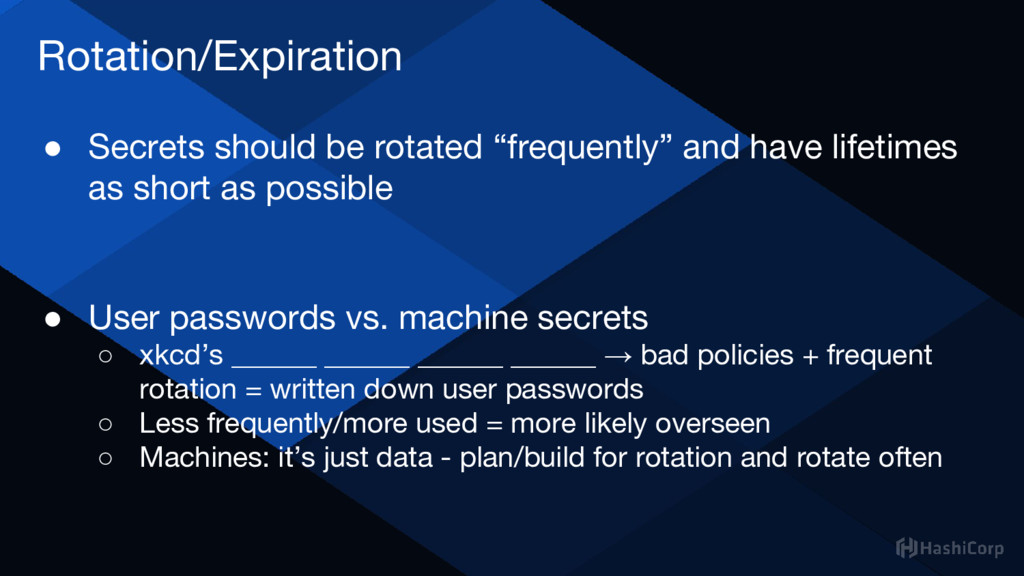
  22. Rotation/Expiration • Secrets should be rotated “frequently” and have lifetimes

    as short as possible • User passwords vs. machine secrets ◦ xkcd’s ______ ______ ______ ______ → bad policies + frequent rotation = written down user passwords ◦ Less frequently/more used = more likely overseen ◦ Machines: it’s just data - plan/build for rotation and rotate often
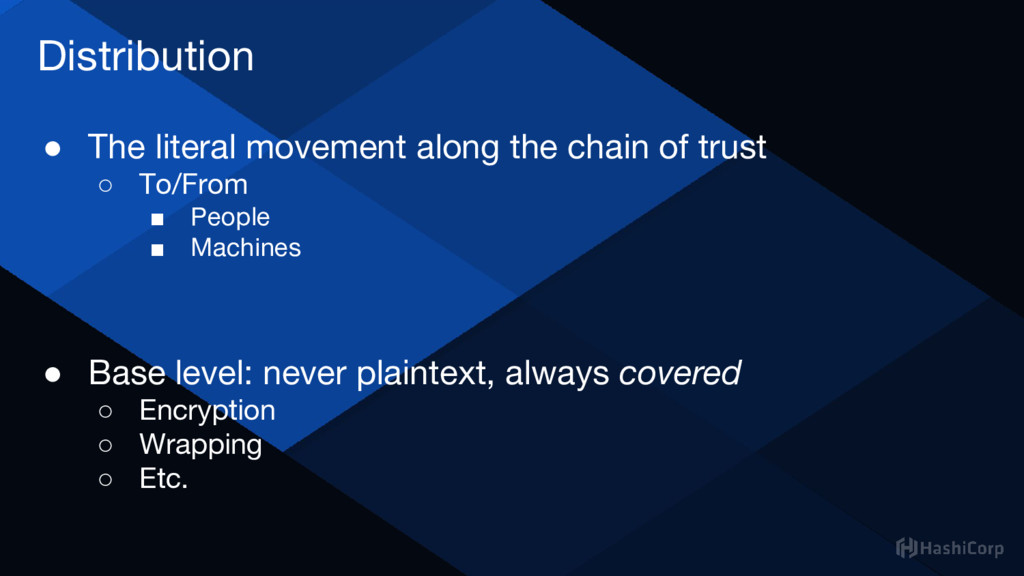
  23. Distribution • The literal movement along the chain of trust

    ◦ To/From ▪ People ▪ Machines • Base level: never plaintext, always covered ◦ Encryption ◦ Wrapping ◦ Etc.
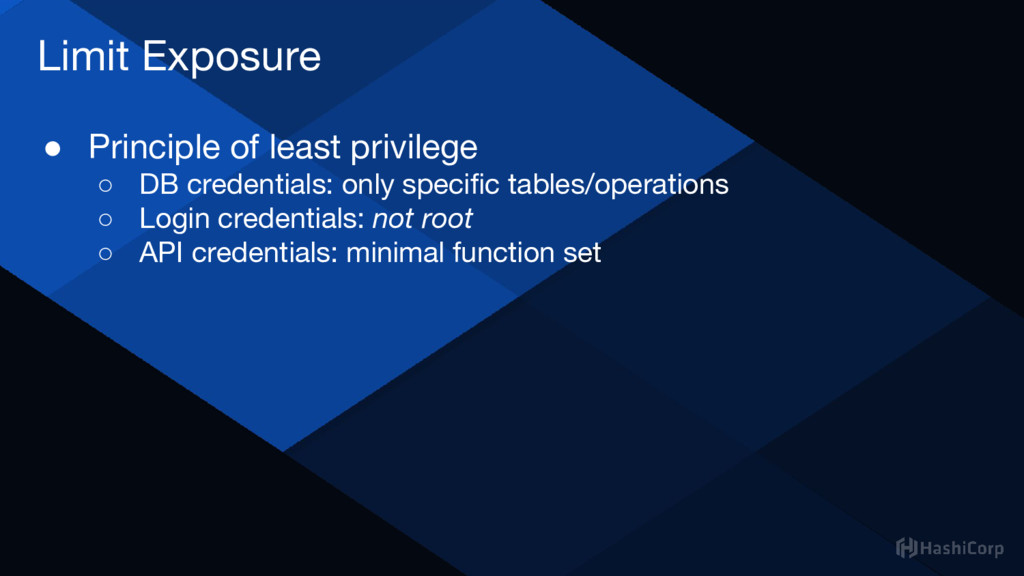
  24. Limit Exposure • Principle of least privilege ◦ DB credentials:

    only specific tables/operations ◦ Login credentials: not root ◦ API credentials: minimal function set
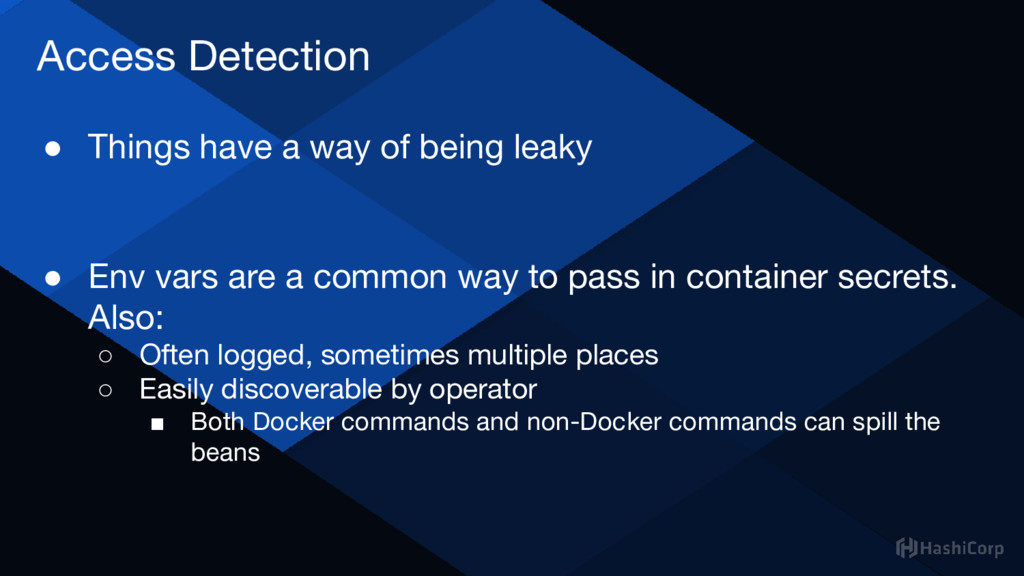
  25. Access Detection • Things have a way of being leaky

    • Env vars are a common way to pass in container secrets. Also: ◦ Often logged, sometimes multiple places ◦ Easily discoverable by operator ▪ Both Docker commands and non-Docker commands can spill the beans
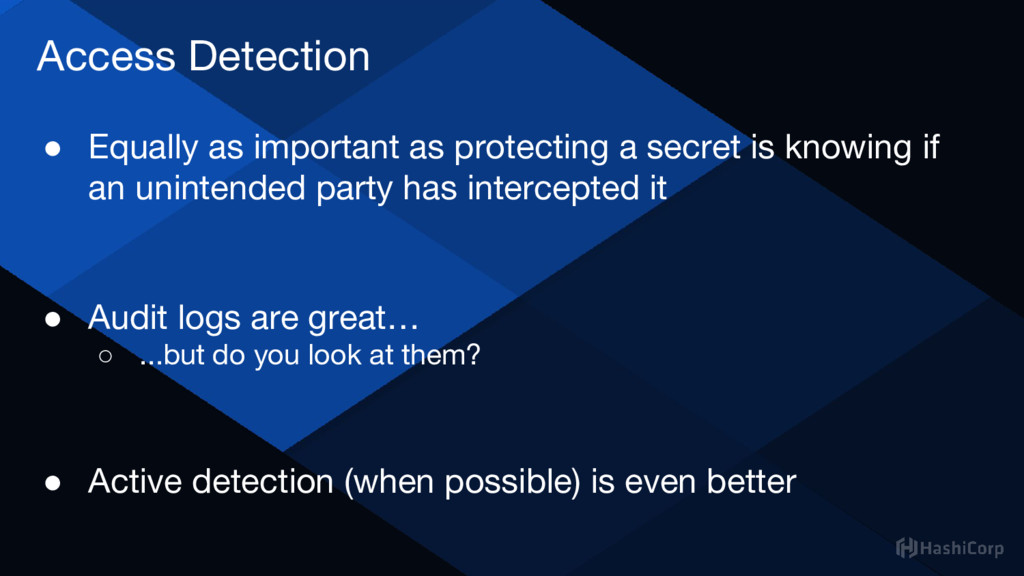
  26. Access Detection • Equally as important as protecting a secret

    is knowing if an unintended party has intercepted it • Audit logs are great… ◦ ...but do you look at them? • Active detection (when possible) is even better
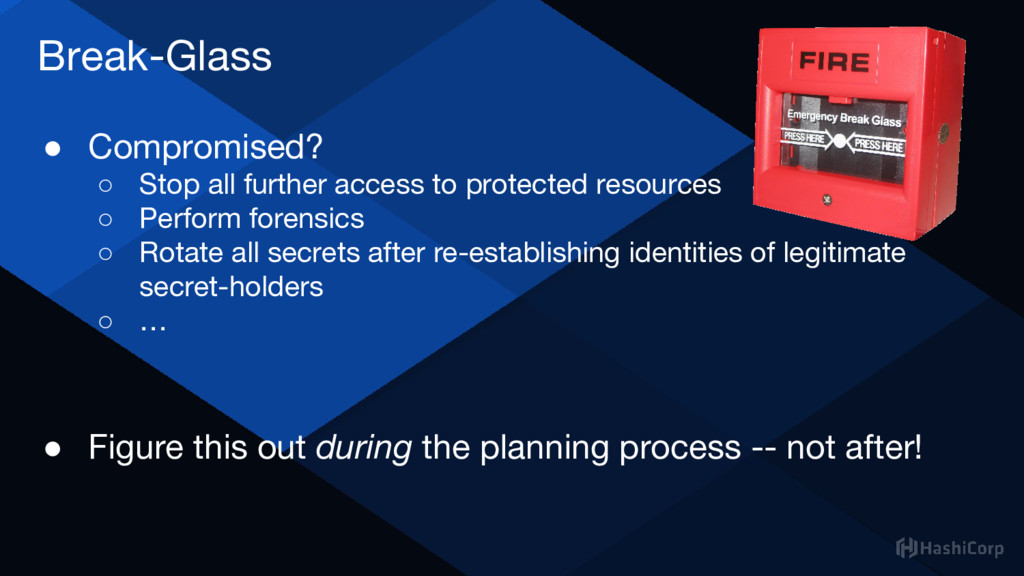
  27. Break-Glass • Compromised? ◦ Stop all further access to protected

    resources ◦ Perform forensics ◦ Rotate all secrets after re-establishing identities of legitimate secret-holders ◦ … • Figure this out during the planning process -- not after!
  28. • Recent explosion of FOSS Secret Management (SM) tools ◦

    KeyWhiz ◦ Knox ◦ Conjur (Docker only) ◦ Many more Secret Management Tools
  29. • Recent explosion of FOSS Secret Management (SM) tools ◦

    KeyWhiz ◦ Knox ◦ Conjur (Docker only) ◦ Many more ◦ Vault Secret Management Tools
  30. • If you only take away two things from this

    talk, make sure they are the following:
  31. • If you only take away two things from this

    talk, make sure they are the following: • Write your own crypto
  32. • If you only take away two things from this

    talk, make sure they are the following: • Write your own crypto • Use it in a Secret Management tool
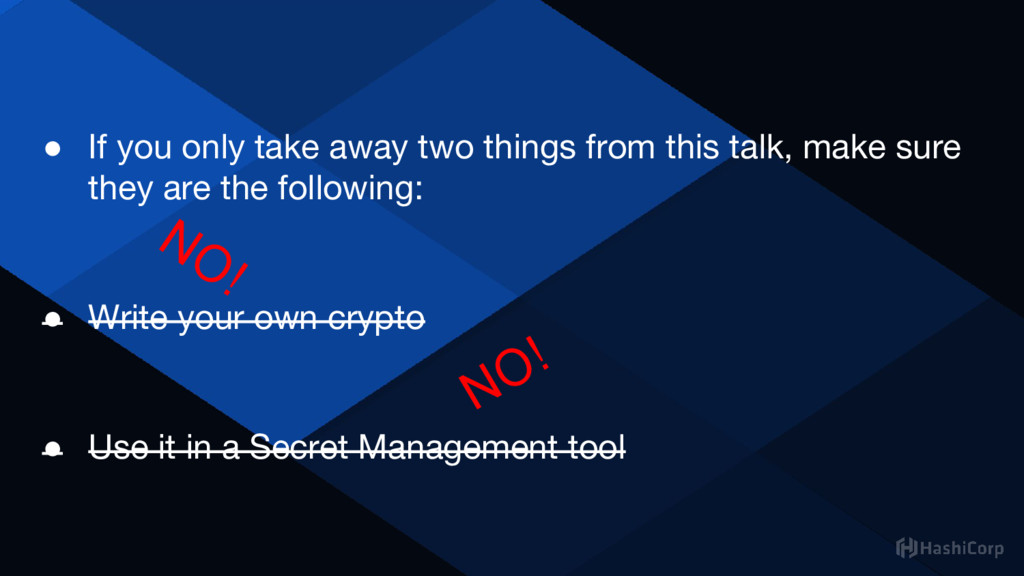
  33. • If you only take away two things from this

    talk, make sure they are the following: • Write your own crypto • Use it in a Secret Management tool NO! NO!
  34. • If you only take away two things from this

    talk, make sure they are the following: • Use a Secret Management tool • Don’t roll your own
  35. Secret Management Tools • Discussion of SM tools true for

    Vault and its capabilities • Vault has a focus on providing security primitives ◦ Enables creation of complex workflows ◦ We’ll see how this provides necessary flexibility
  36. Secret Management Tools • Central: ◦ Secure storage (avoid sprawl)

    ◦ Management ◦ Auditing (who has seen/accessed what, when) • Codified, secure access mechanisms • Secret rotation/revocation/expiration
  37. SM + SI • Explicit focus on the secure introduction

    problem ◦ Core competency from ground up ◦ Necessary tools/capabilities/primitives • 100k containers can support existing SI paradigms ◦ But imagine… ▪ Managing 100k LDAP/AD users churning at high rate ▪ Generating/dropping 100k Kerberos keytabs ◦ ...and you’ve solved SI anyways
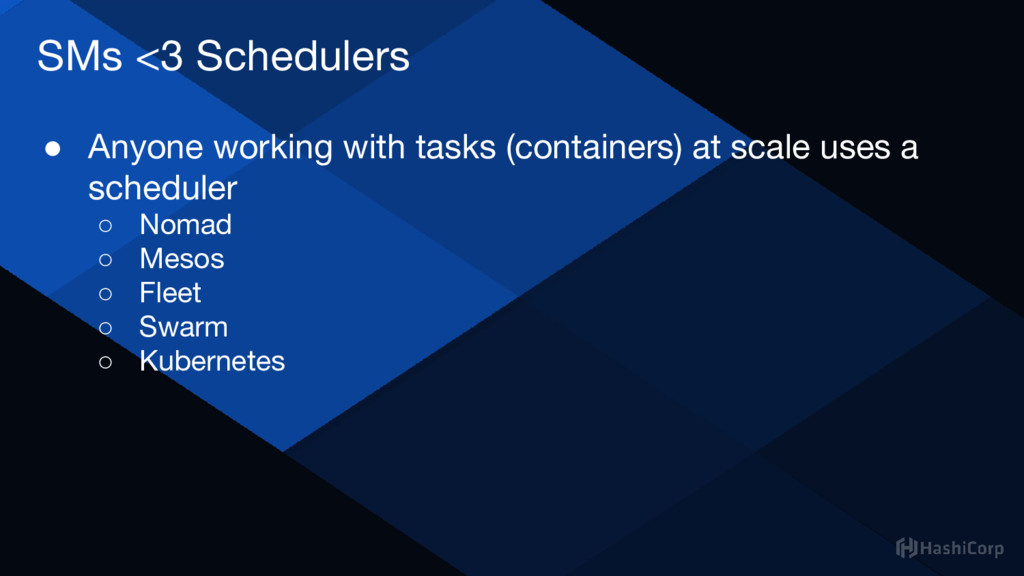
  38. SMs <3 Schedulers • Anyone working with tasks (containers) at

    scale uses a scheduler ◦ Nomad ◦ Mesos ◦ Fleet ◦ Swarm ◦ Kubernetes
  39. SMs <3 Schedulers • Schedulers are sources of truth...and provide

    hooks • SM tools and schedulers can be a magical combination
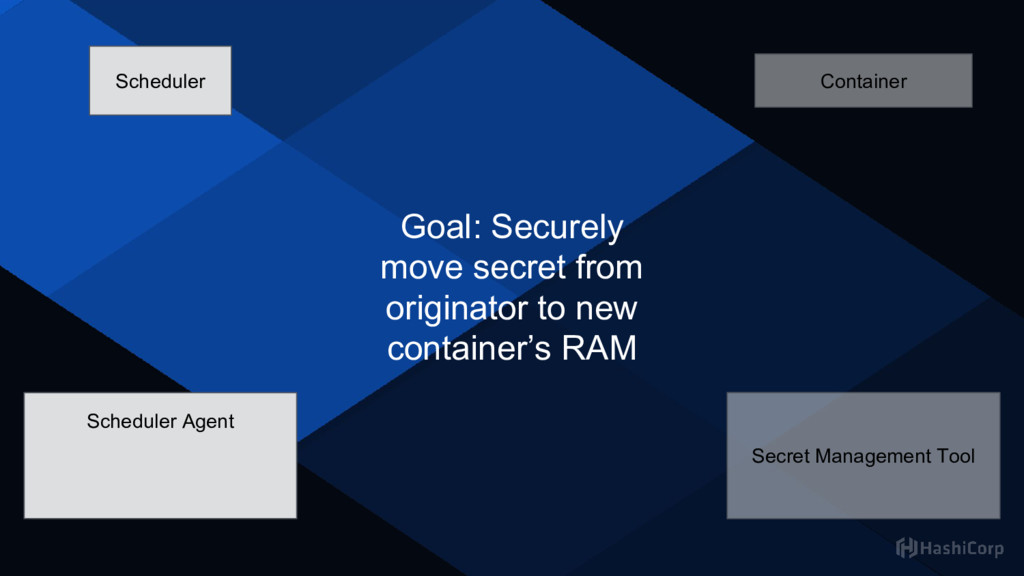
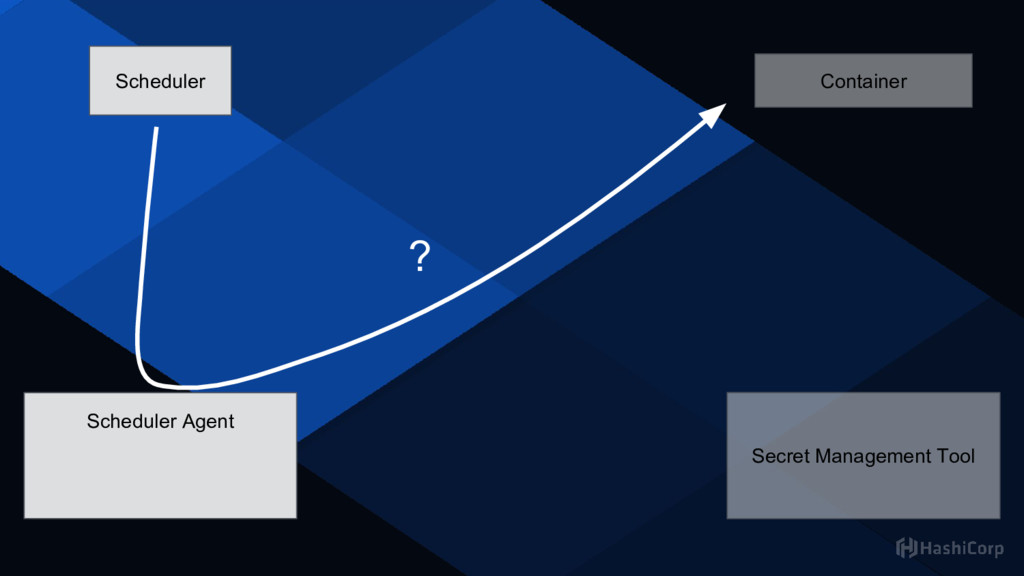
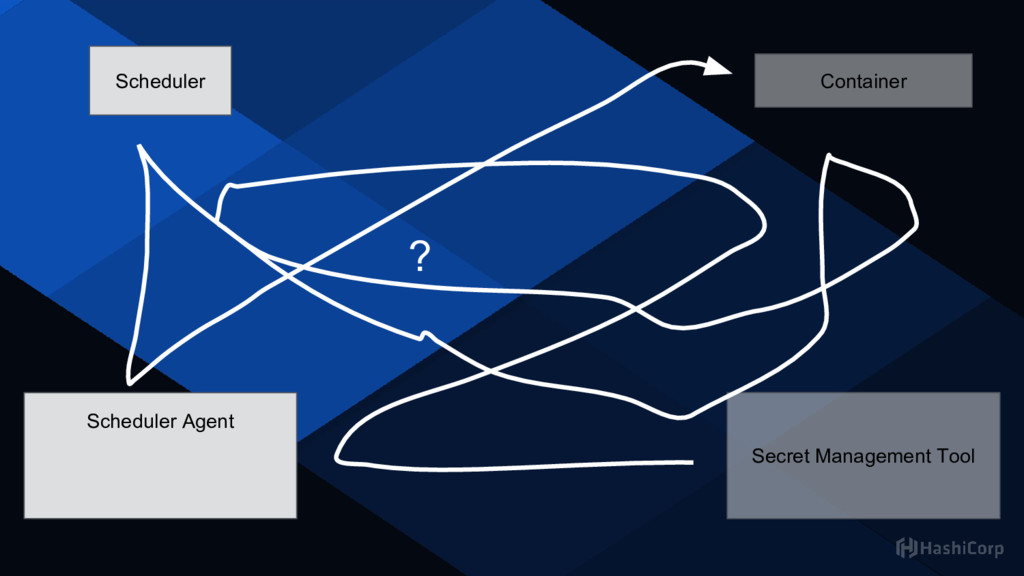
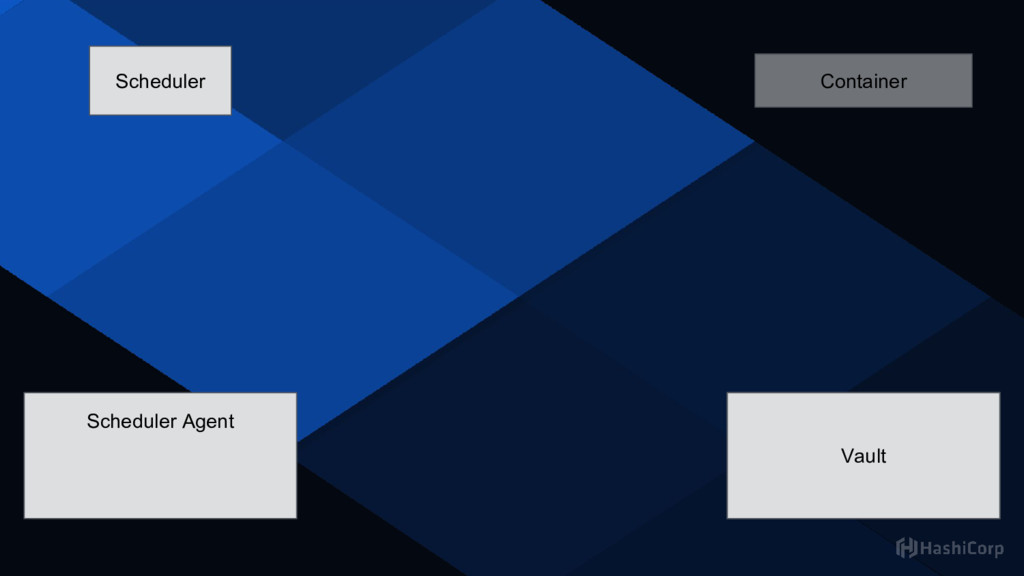
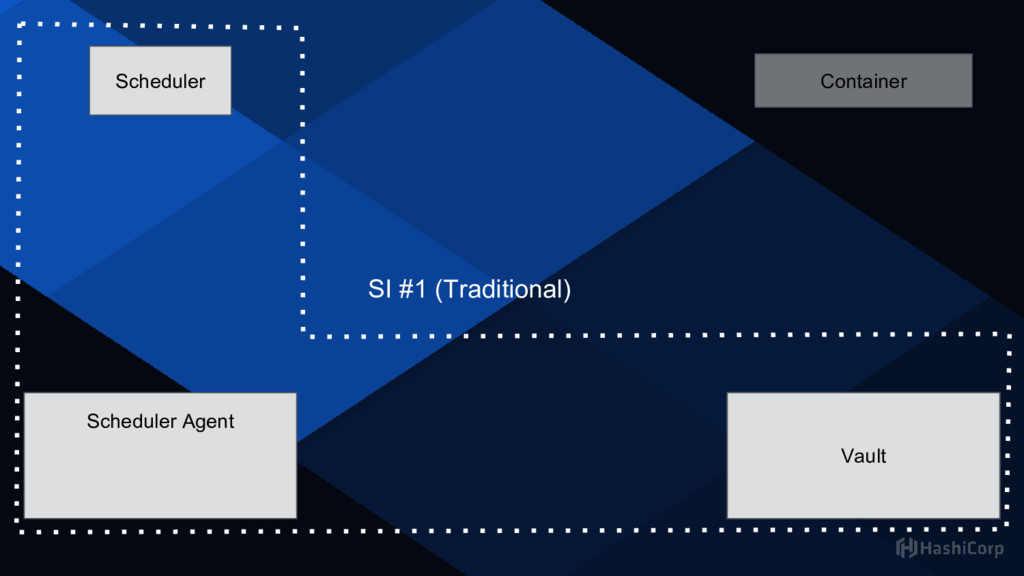
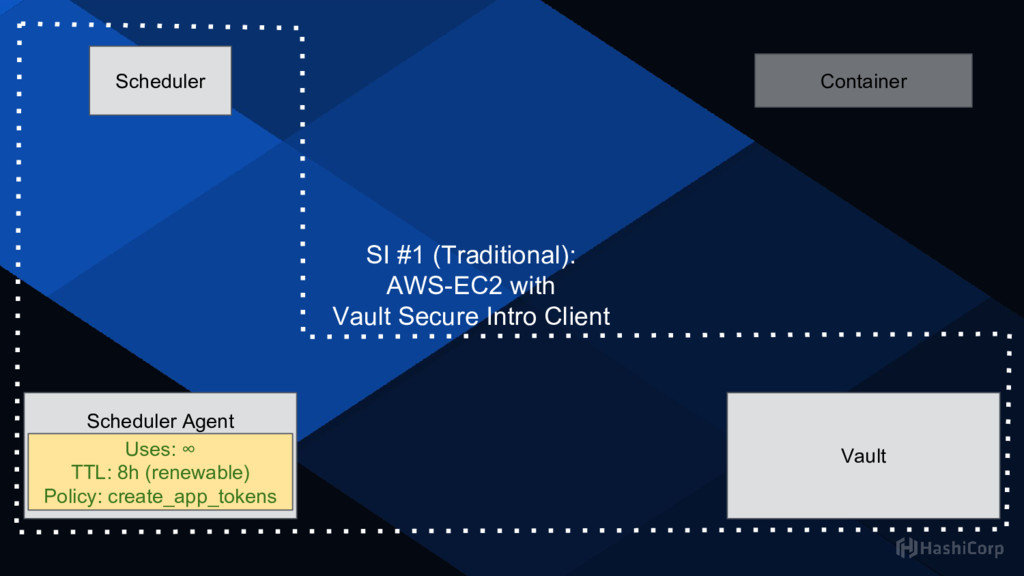
  40. Scheduler Vault Scheduler Agent Container SI #1 (Traditional): AWS-EC2 with

    Vault Secure Intro Client Uses: ∞ TTL: 8h (renewable) Policy: create_app_tokens
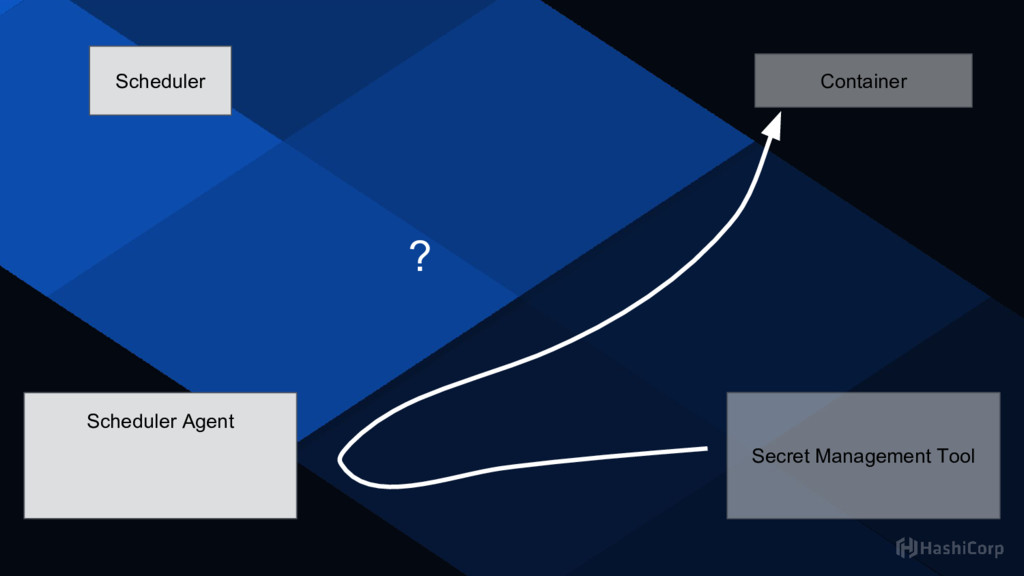
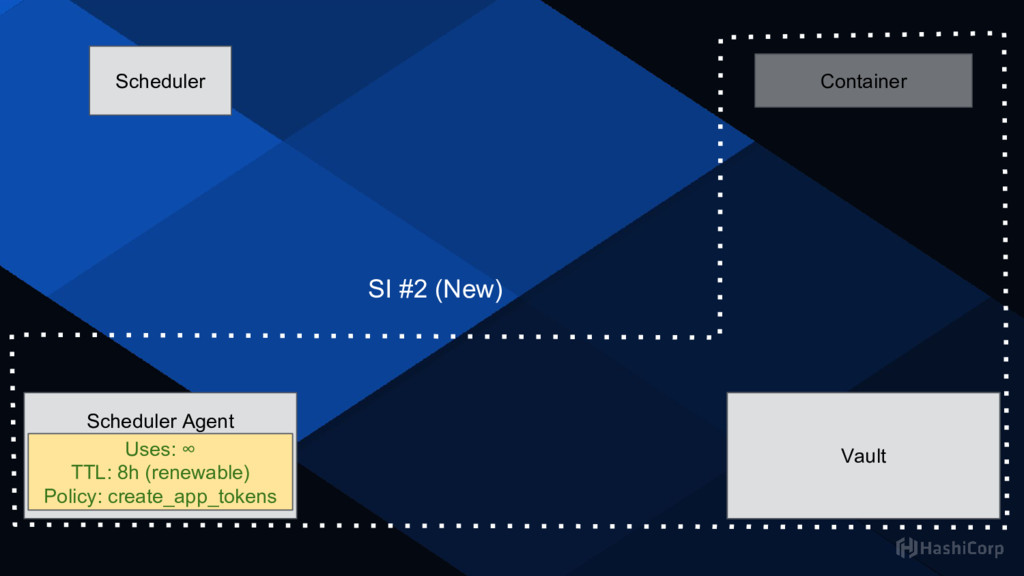
  41. Scheduler Secret Management Tool Scheduler Agent Container SI #2 (New)

    Uses: ∞ TTL: 8h (renewable) Policy: create_app_tokens Vault
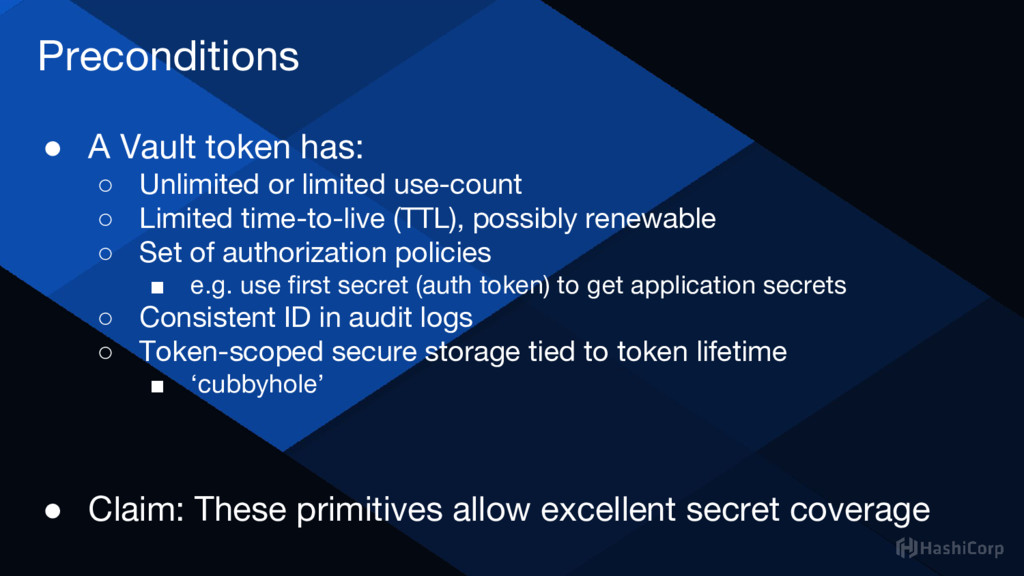
  42. Preconditions • A Vault token has: ◦ Unlimited or limited

    use-count ◦ Limited time-to-live (TTL), possibly renewable ◦ Set of authorization policies ▪ e.g. use first secret (auth token) to get application secrets ◦ Consistent ID in audit logs ◦ Token-scoped secure storage tied to token lifetime ▪ ‘cubbyhole’ • Claim: These primitives allow excellent secret coverage
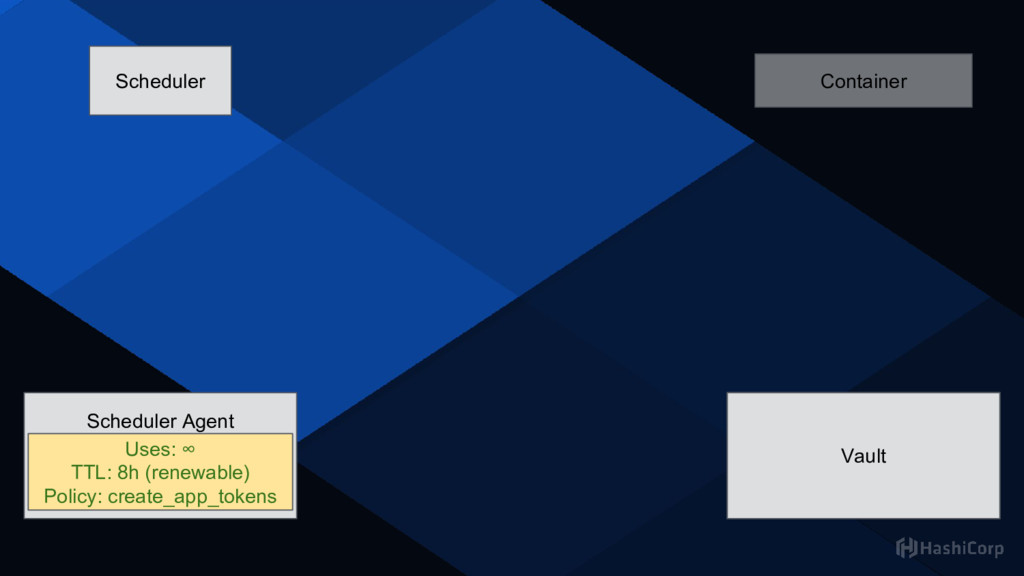
  43. Scheduler Secret Management Tool Scheduler Agent Uses: ∞ TTL: 8h

    (renewable) Policy: create_app_tokens Uses: ∞ TTL: 8h (renewable) Policy: create_app_tokens Container Vault
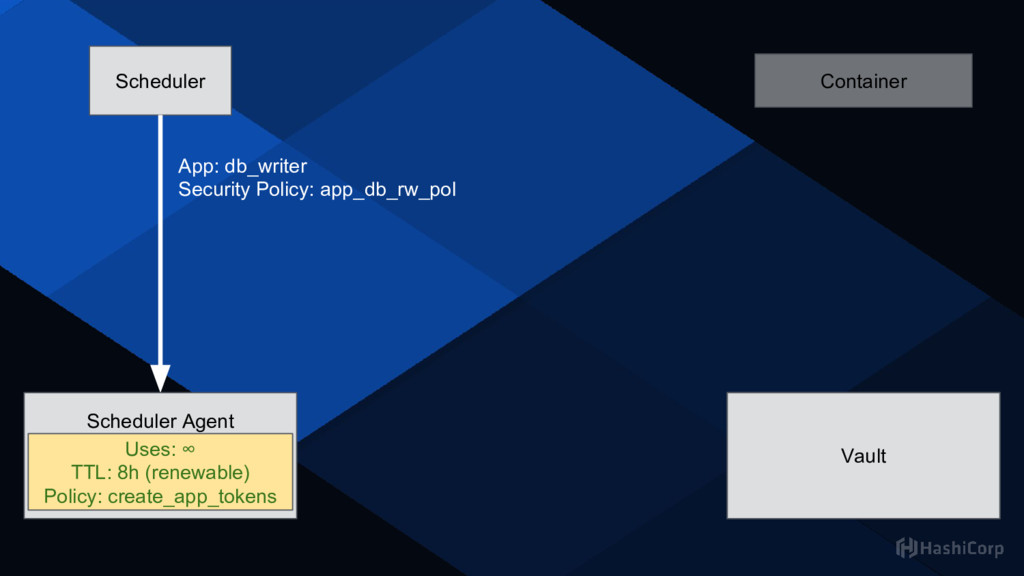
  44. Scheduler App: db_writer Security Policy: app_db_rw_pol Secret Management Tool Scheduler

    Agent Uses: ∞ TTL: 8h (renewable) Policy: create_app_tokens Uses: ∞ TTL: 8h (renewable) Policy: create_app_tokens Container Vault
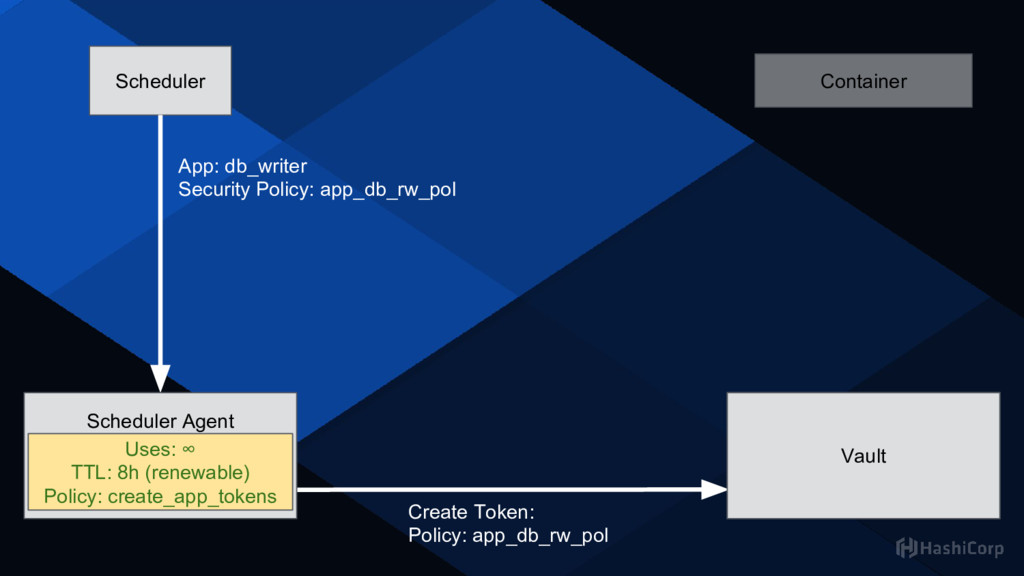
  45. Scheduler App: db_writer Security Policy: app_db_rw_pol Secret Management Tool Create

    Token: Policy: app_db_rw_pol Scheduler Agent Uses: ∞ TTL: 8h (renewable) Policy: create_app_tokens Uses: ∞ TTL: 8h (renewable) Policy: create_app_tokens Container Vault
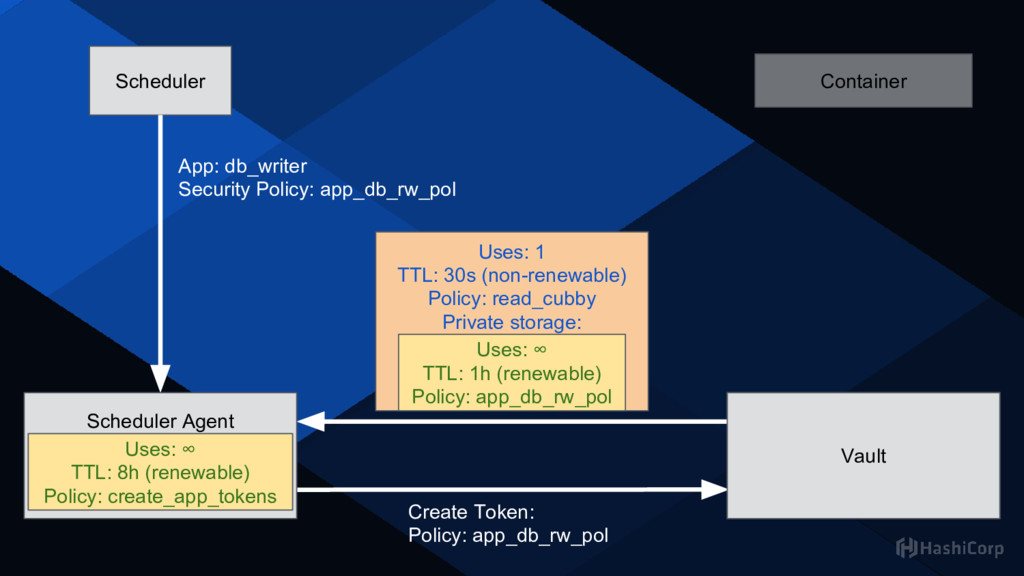
  46. Scheduler Secret Management Tool Create Token: Policy: app_db_rw_pol Uses: 1

    TTL: 30s (non-renewable) Policy: read_cubby Private storage: Uses: ∞ TTL: 1h (renewable) Policy: app_db_rw_pol Scheduler Agent Uses: ∞ TTL: 8h (renewable) Policy: create_app_tokens App: db_writer Security Policy: app_db_rw_pol Uses: ∞ TTL: 8h (renewable) Policy: create_app_tokens Container Vault
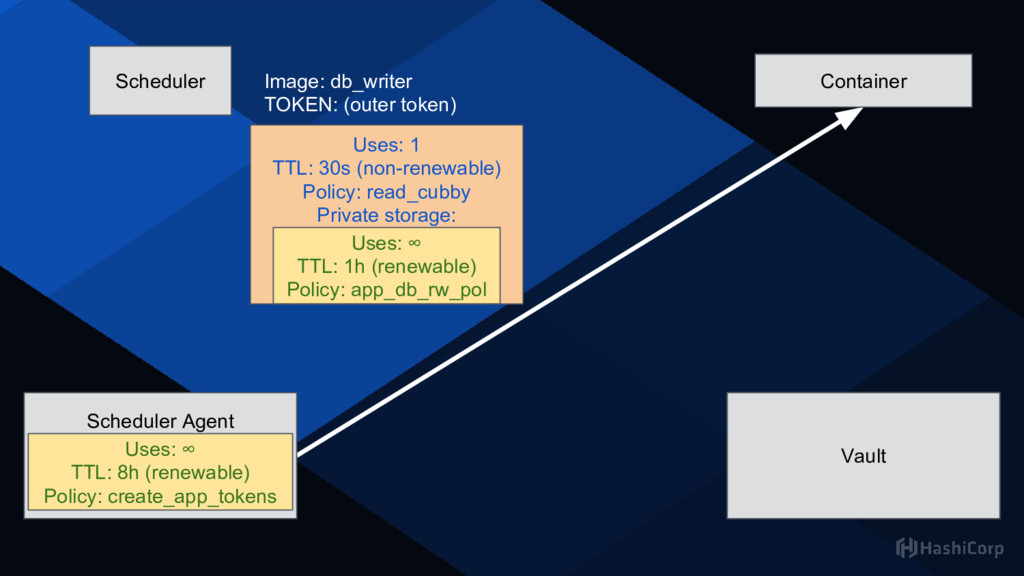
  47. Scheduler Secret Management Tool Scheduler Agent Uses: ∞ TTL: 8h

    (renewable) Policy: create_app_tokens Container Image: db_writer TOKEN: (outer token) Uses: 1 TTL: 30s (non-renewable) Policy: read_cubby Private storage: Uses: ∞ TTL: 1h (renewable) Policy: app_db_rw_pol Uses: ∞ TTL: 8h (renewable) Policy: create_app_tokens Vault
  48. Scheduler Secret Management Tool Scheduler Agent Uses: ∞ TTL: 8h

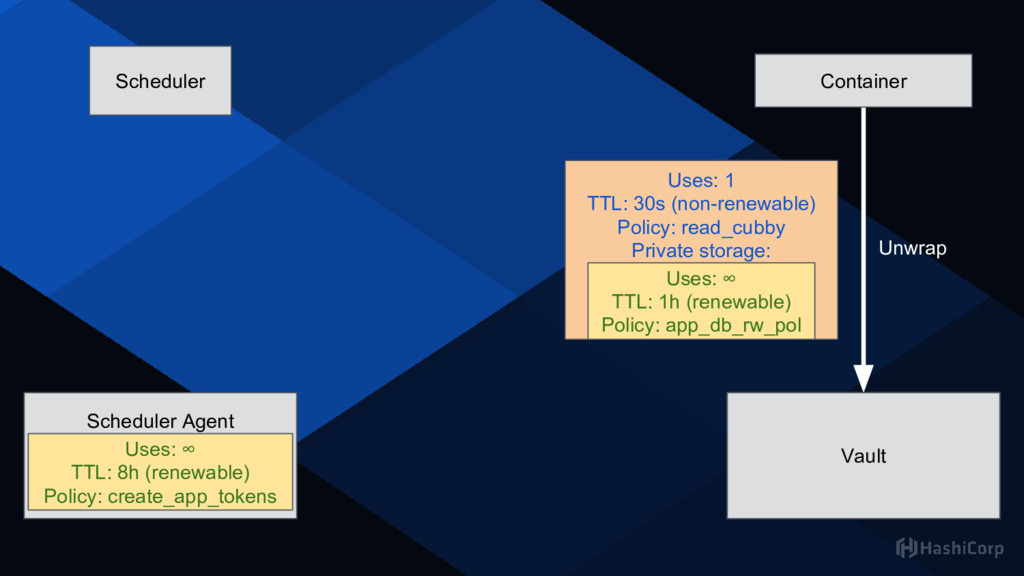
    (renewable) Policy: create_app_tokens Container Uses: 1 TTL: 30s (non-renewable) Policy: read_cubby Private storage: Uses: ∞ TTL: 1h (renewable) Policy: app_db_rw_pol Uses: ∞ TTL: 8h (renewable) Policy: create_app_tokens Unwrap Vault
  49. Scheduler Secret Management Tool Scheduler Agent Uses: ∞ TTL: 8h

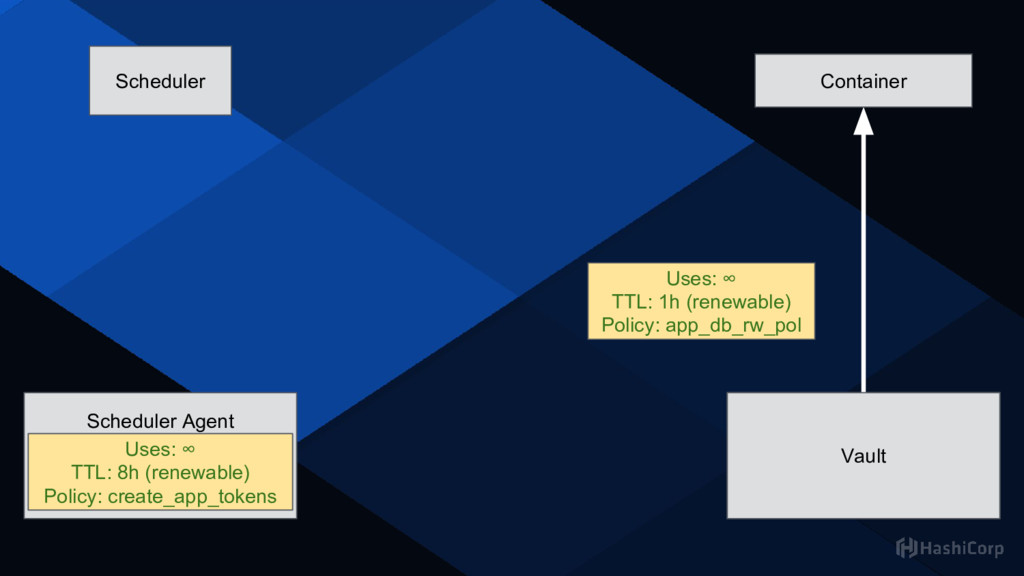
    (renewable) Policy: create_app_tokens Uses: ∞ TTL: 8h (renewable) Policy: create_app_tokens Container Uses: ∞ TTL: 1h (renewable) Policy: app_db_rw_pol Vault
  50. Scheduler Secret Management Tool Scheduler Agent Uses: ∞ TTL: 8h

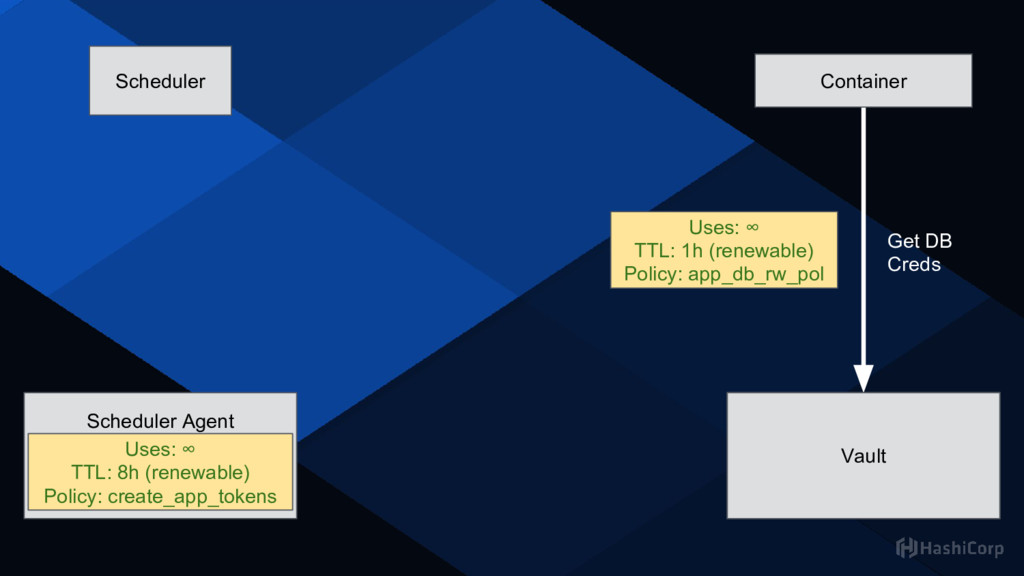
    (renewable) Policy: create_app_tokens Container Uses: ∞ TTL: 1h (renewable) Policy: app_db_rw_pol Uses: ∞ TTL: 8h (renewable) Policy: create_app_tokens Get DB Creds Vault
  51. Scheduler Secret Management Tool Scheduler Agent Uses: ∞ TTL: 8h

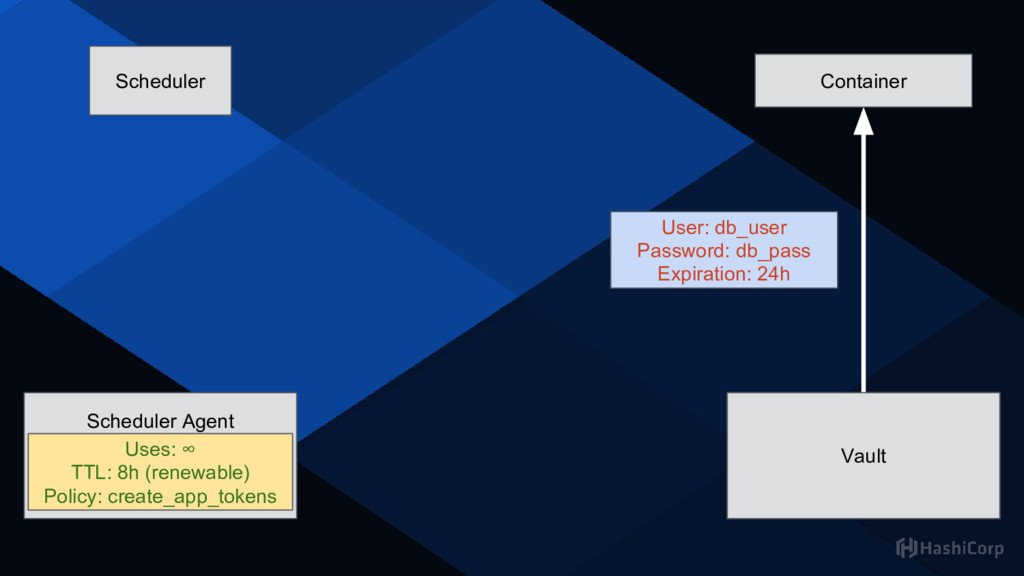
    (renewable) Policy: create_app_tokens Uses: ∞ TTL: 8h (renewable) Policy: create_app_tokens User: db_user Password: db_pass Expiration: 24h Container Vault
  52. Scheduler Secret Management Tool Scheduler Agent Uses: ∞ TTL: 8h

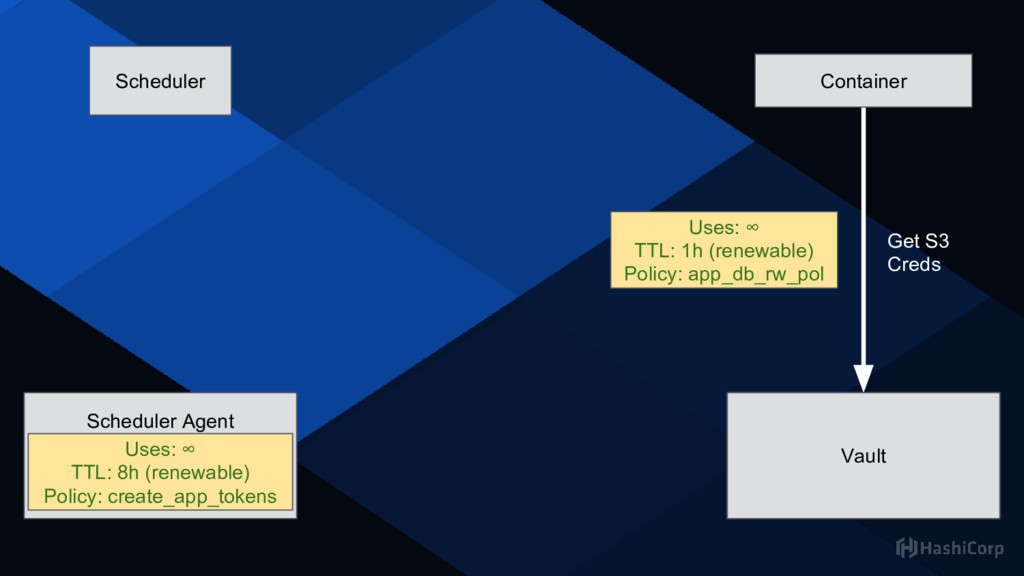
    (renewable) Policy: create_app_tokens Container Uses: ∞ TTL: 1h (renewable) Policy: app_db_rw_pol Uses: ∞ TTL: 8h (renewable) Policy: create_app_tokens Get S3 Creds Vault
  53. Scheduler Secret Management Tool Scheduler Agent Uses: ∞ TTL: 8h

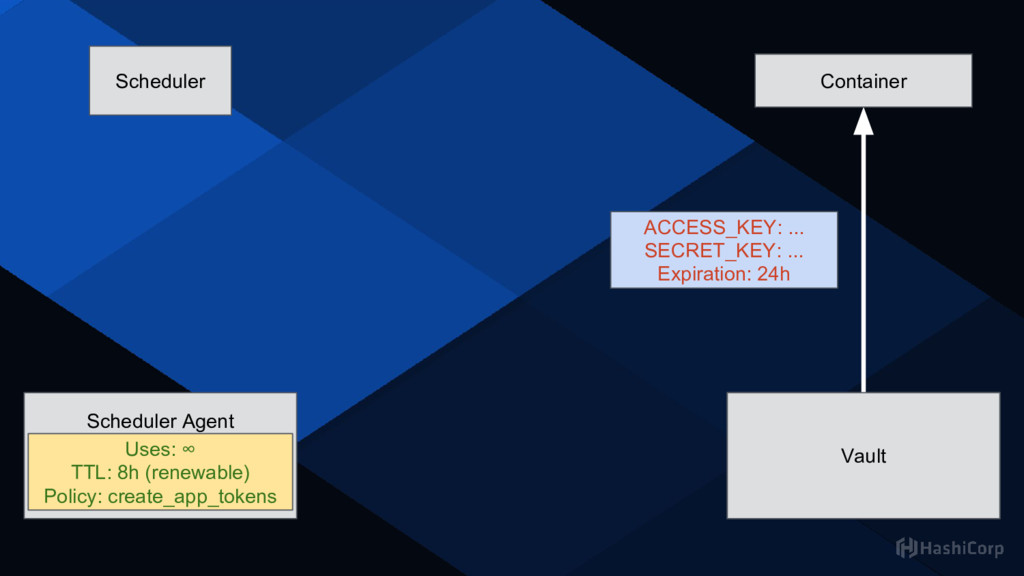
    (renewable) Policy: create_app_tokens Uses: ∞ TTL: 8h (renewable) Policy: create_app_tokens ACCESS_KEY: ... SECRET_KEY: ... Expiration: 24h Container Vault
  54. Scheduler Secret Management Tool Scheduler Agent Uses: ∞ TTL: 8h

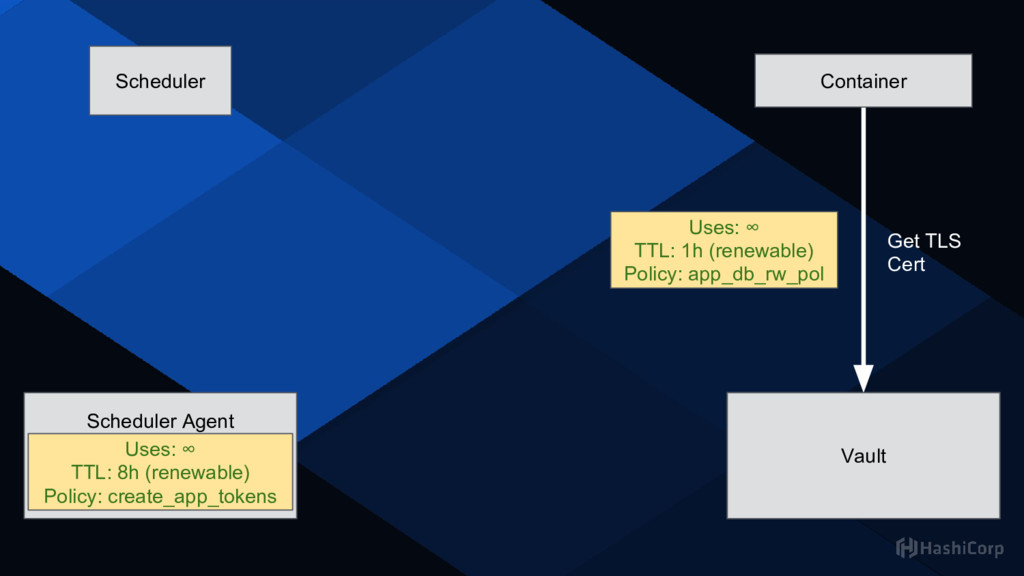
    (renewable) Policy: create_app_tokens Container Uses: ∞ TTL: 1h (renewable) Policy: app_db_rw_pol Uses: ∞ TTL: 8h (renewable) Policy: create_app_tokens Get TLS Cert Vault
  55. Scheduler Secret Management Tool Scheduler Agent Uses: ∞ TTL: 8h

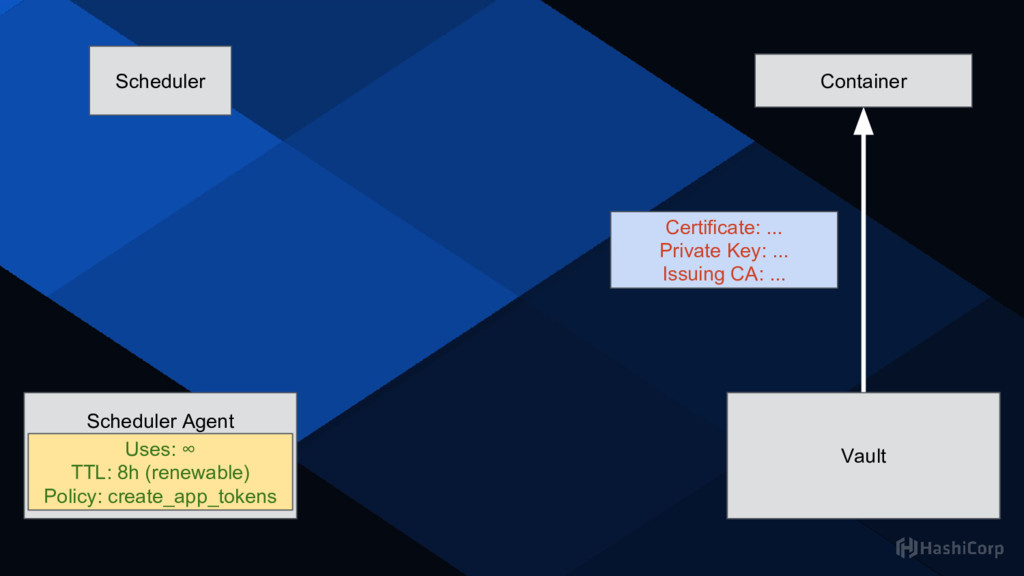
    (renewable) Policy: create_app_tokens Uses: ∞ TTL: 8h (renewable) Policy: create_app_tokens Certificate: ... Private Key: ... Issuing CA: ... Container Vault
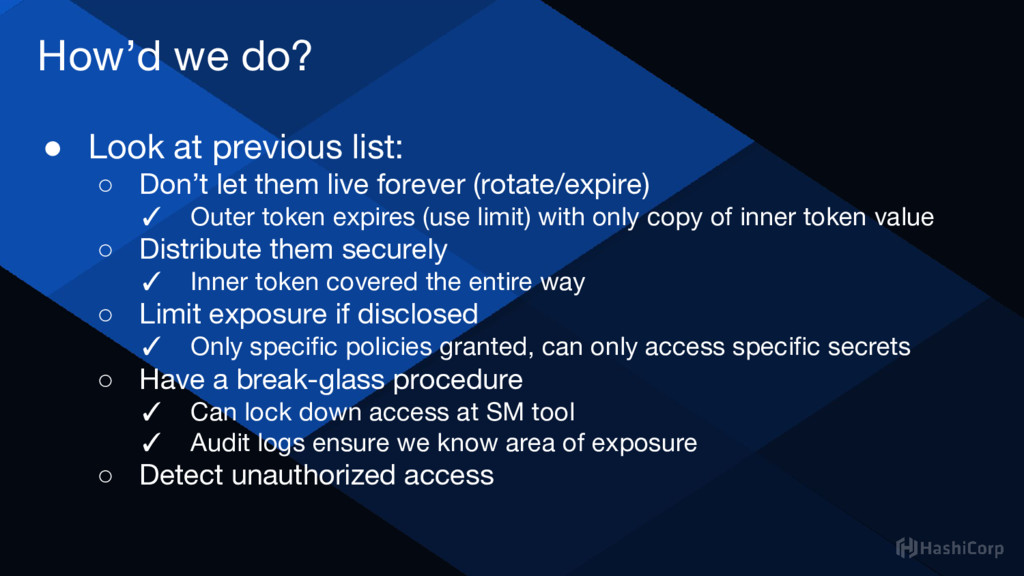
  56. How’d we do? • Look at previous list: ◦ Don’t

    let them live forever (rotate/expire) ✓ Outer token expires (use limit) with only copy of inner token value ◦ Distribute them securely ✓ Inner token covered the entire way ◦ Limit exposure if disclosed ✓ Only specific policies granted, can only access specific secrets ◦ Have a break-glass procedure ✓ Can lock down access at SM tool ✓ Audit logs ensure we know area of exposure ◦ Detect unauthorized access
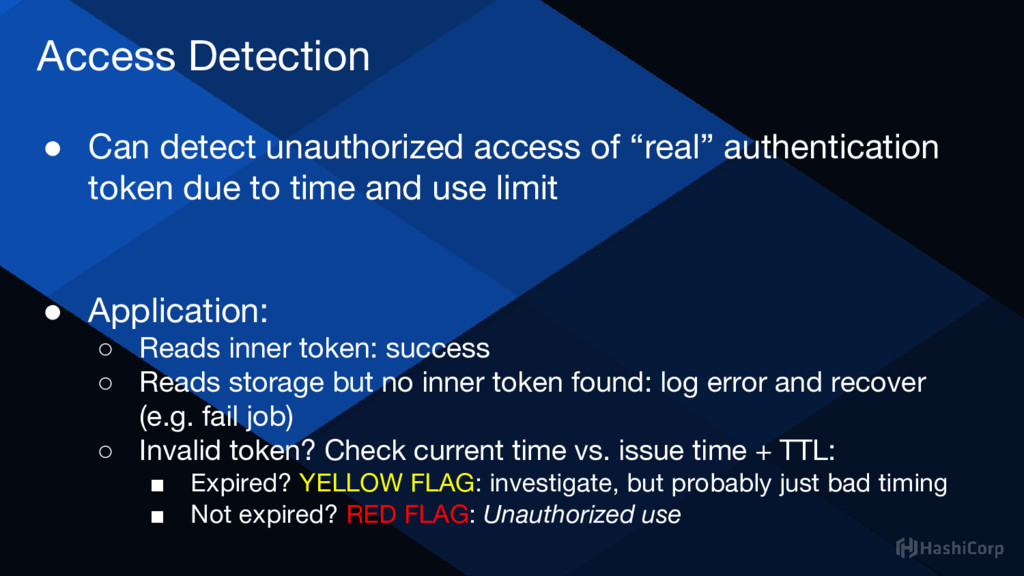
  57. Access Detection • Can detect unauthorized access of “real” authentication

    token due to time and use limit • Application: ◦ Reads inner token: success ◦ Reads storage but no inner token found: log error and recover (e.g. fail job) ◦ Invalid token? Check current time vs. issue time + TTL: ▪ Expired? YELLOW FLAG: investigate, but probably just bad timing ▪ Not expired? RED FLAG: Unauthorized use
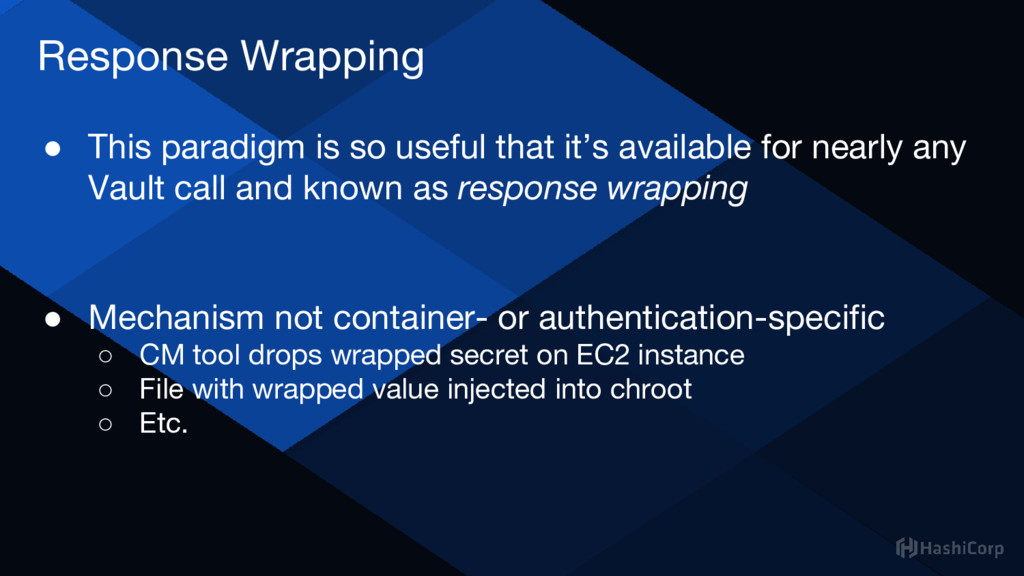
  58. Response Wrapping • This paradigm is so useful that it’s

    available for nearly any Vault call and known as response wrapping • Mechanism not container- or authentication-specific ◦ CM tool drops wrapped secret on EC2 instance ◦ File with wrapped value injected into chroot ◦ Etc.
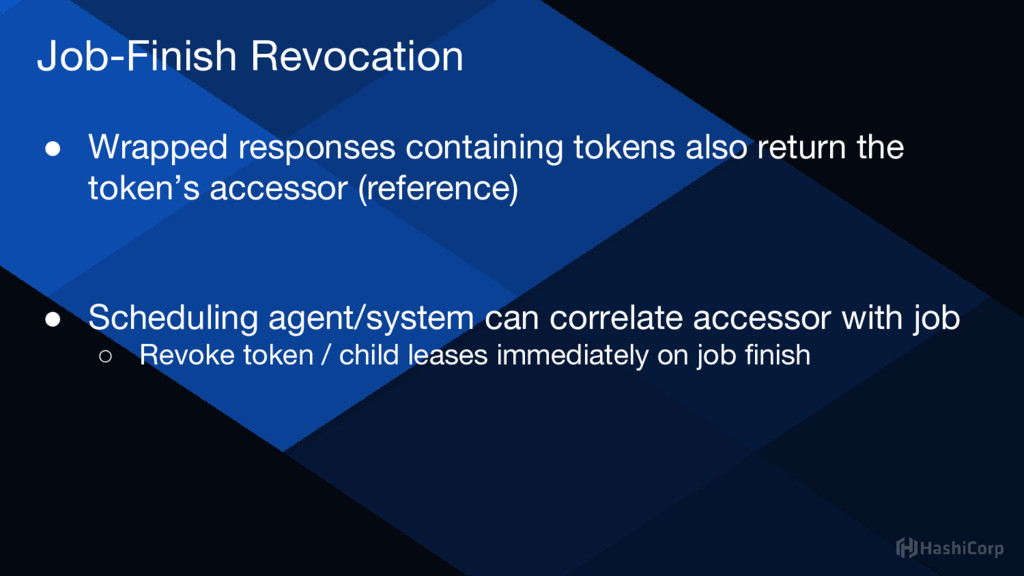
  59. Job-Finish Revocation • Wrapped responses containing tokens also return the

    token’s accessor (reference) • Scheduling agent/system can correlate accessor with job ◦ Revoke token / child leases immediately on job finish
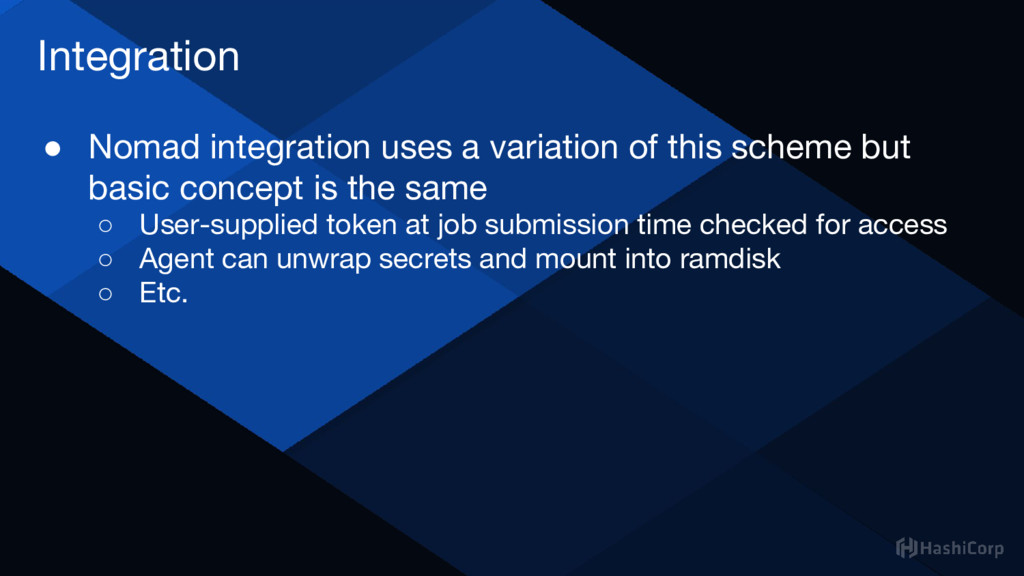
  60. Integration • Nomad integration uses a variation of this scheme

    but basic concept is the same ◦ User-supplied token at job submission time checked for access ◦ Agent can unwrap secrets and mount into ramdisk ◦ Etc.
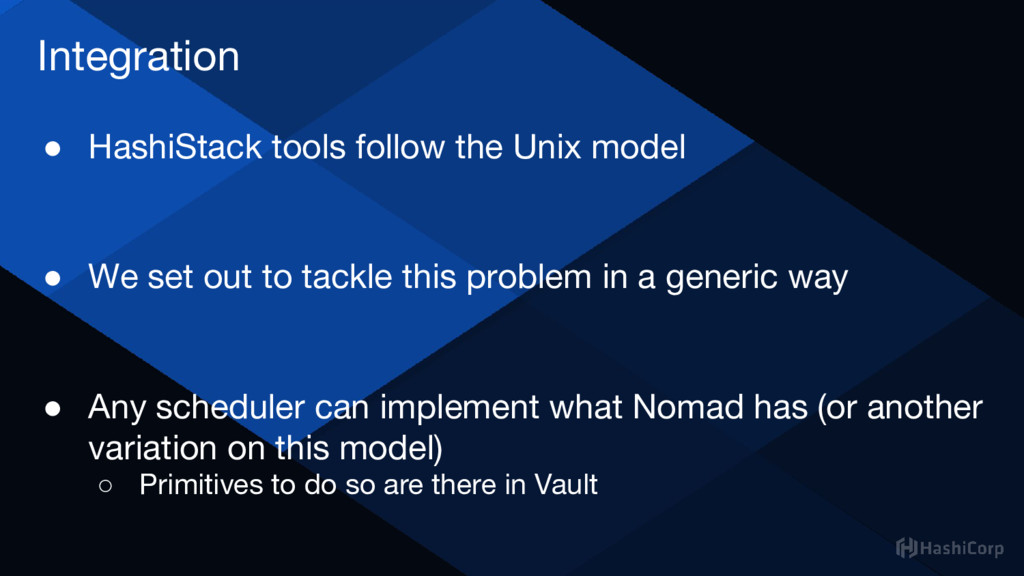
  61. Integration • HashiStack tools follow the Unix model • We

    set out to tackle this problem in a generic way • Any scheduler can implement what Nomad has (or another variation on this model) ◦ Primitives to do so are there in Vault
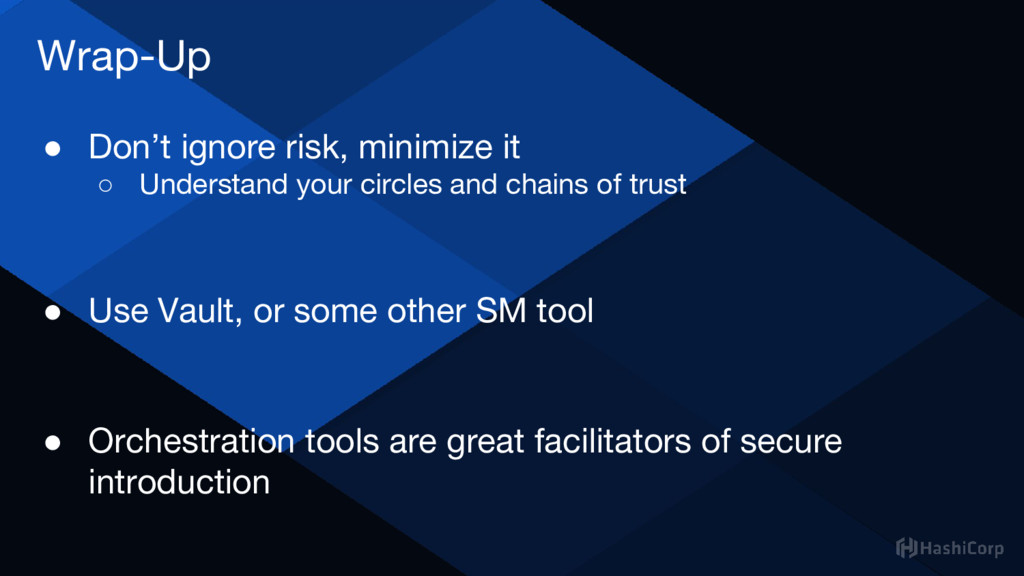
  62. Wrap-Up • Don’t ignore risk, minimize it ◦ Understand your

    circles and chains of trust • Use Vault, or some other SM tool • Orchestration tools are great facilitators of secure introduction