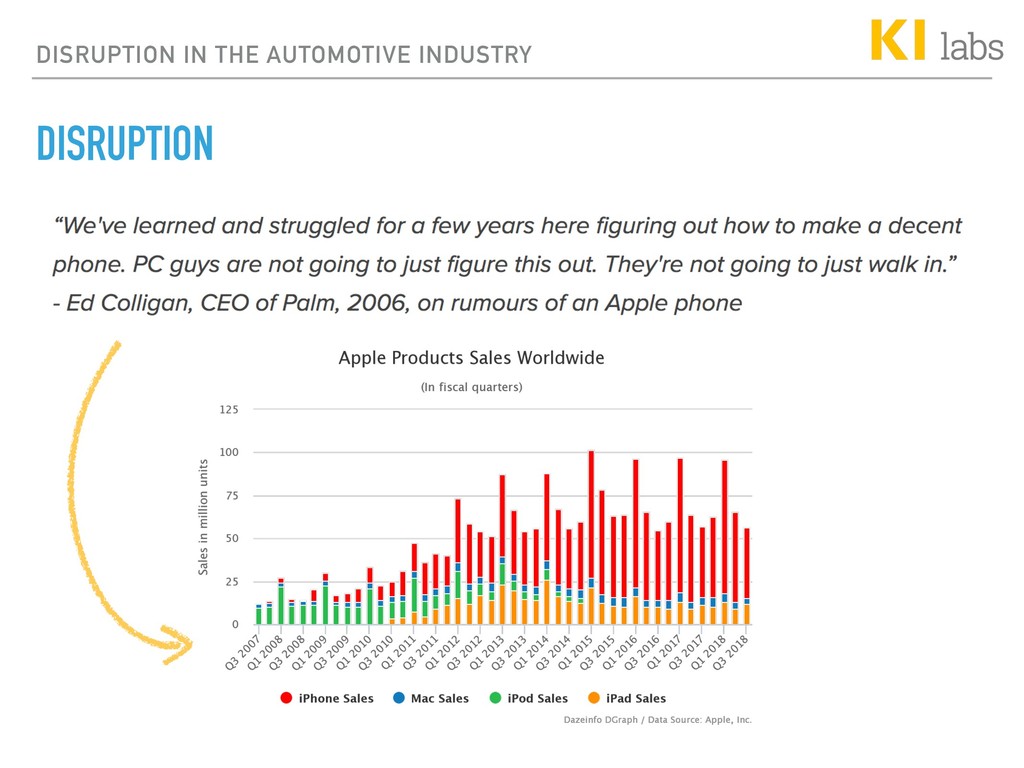
Presentation for KI University introducing the concept of Software 2.0, how it relates to the mass spread of ML, and how Tesla is disrupting the automotive industry.
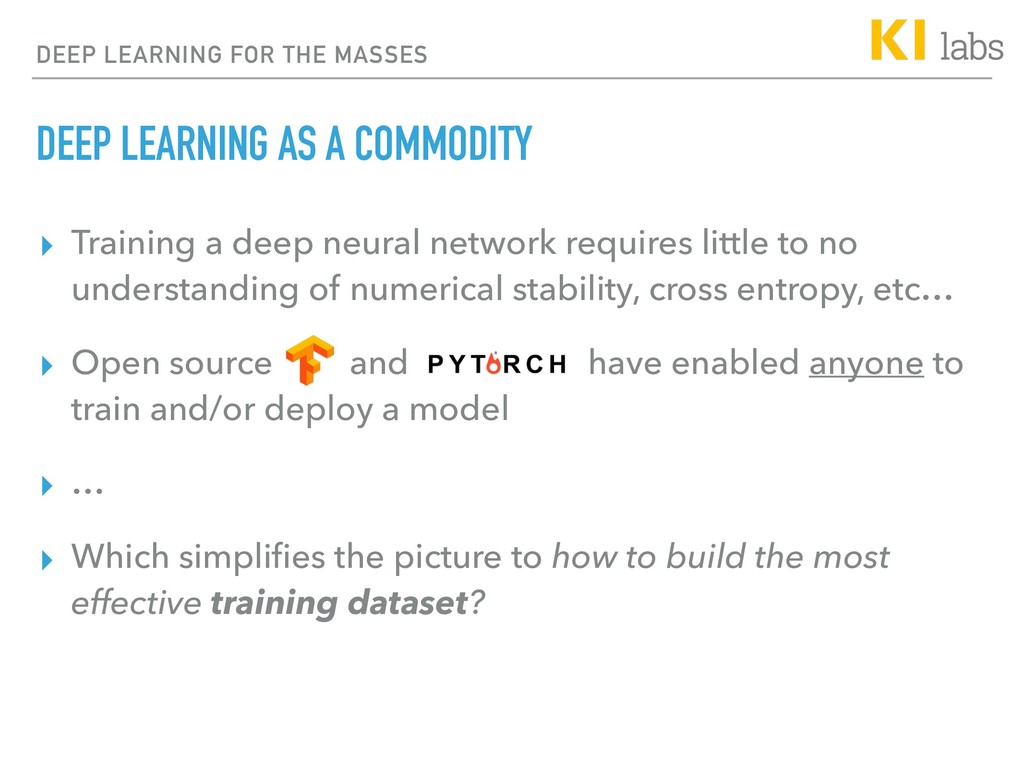
▸ Training a deep neural network requires little to no understanding of numerical stability, cross entropy, etc… ▸ Open source and have enabled anyone to train and/or deploy a model ▸ … ▸ Which simplifies the picture to how to build the most effective training dataset?
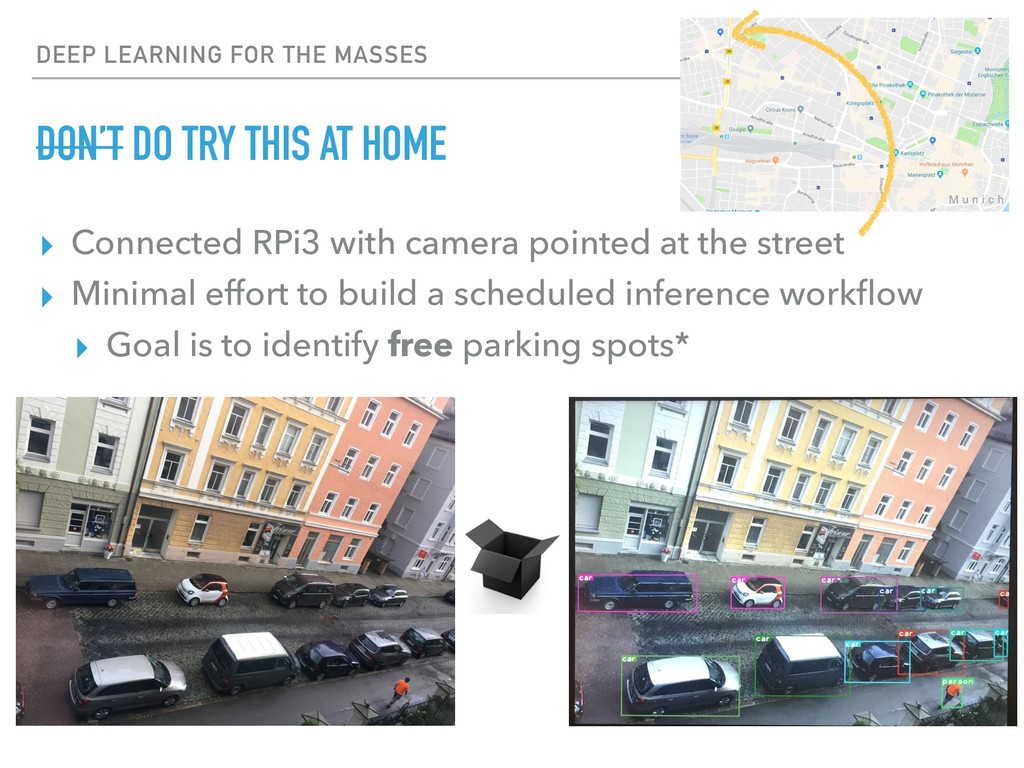
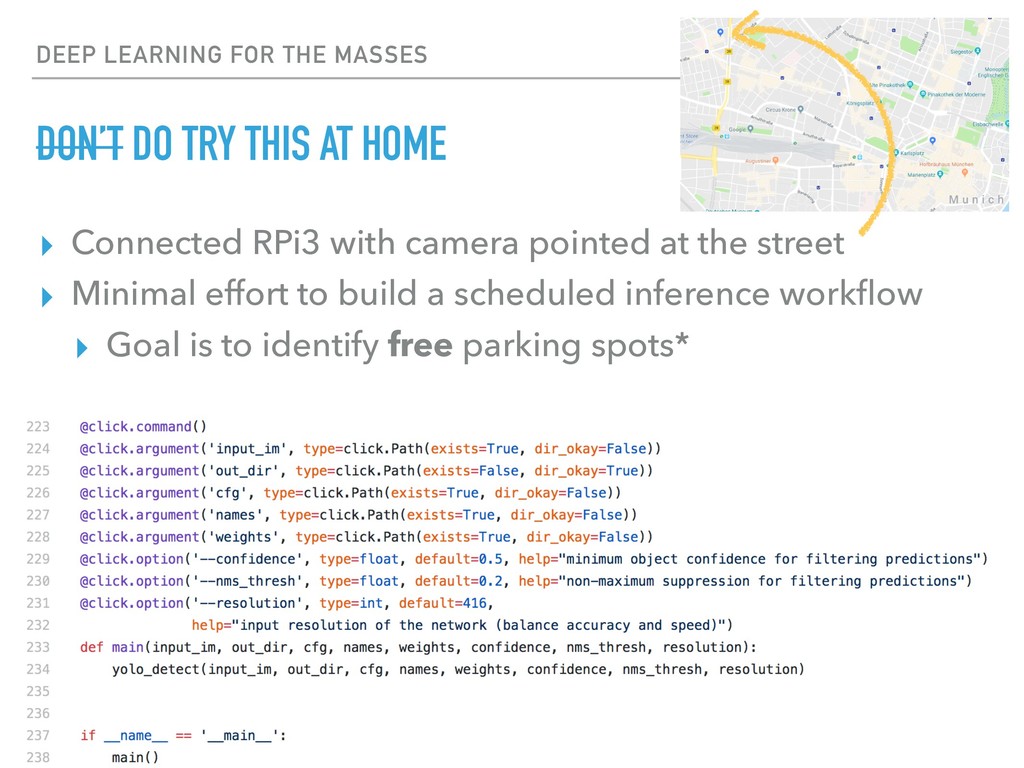
HOME ▸ Connected RPi3 with camera pointed at the street ▸ Minimal effort to build a scheduled inference workflow ▸ Goal is to identify free parking spots*
HOME ▸ Connected RPi3 with camera pointed at the street ▸ Minimal effort to build a scheduled inference workflow ▸ Goal is to identify free parking spots*
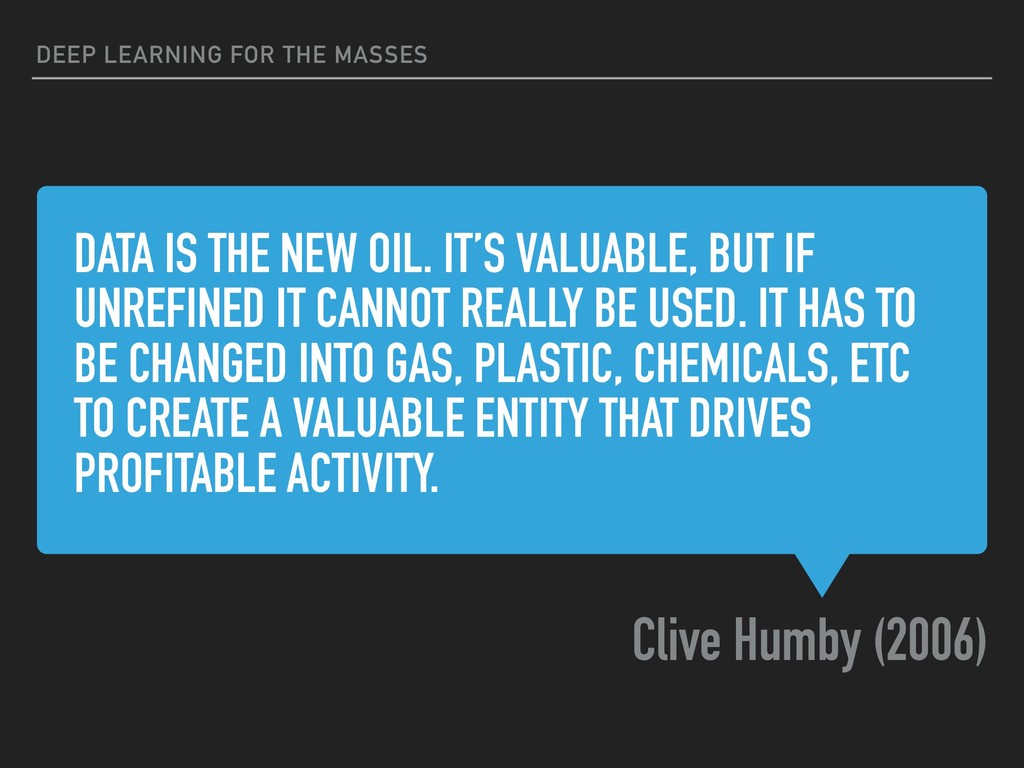
IT CANNOT REALLY BE USED. IT HAS TO BE CHANGED INTO GAS, PLASTIC, CHEMICALS, ETC TO CREATE A VALUABLE ENTITY THAT DRIVES PROFITABLE ACTIVITY. Clive Humby (2006) DEEP LEARNING FOR THE MASSES
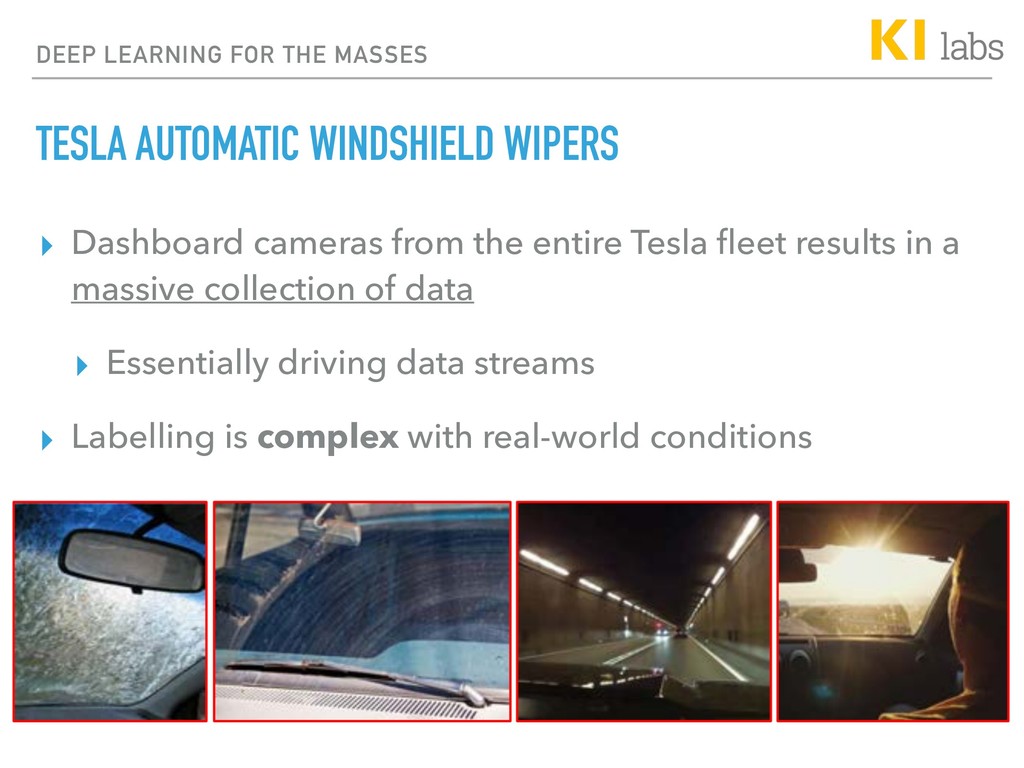
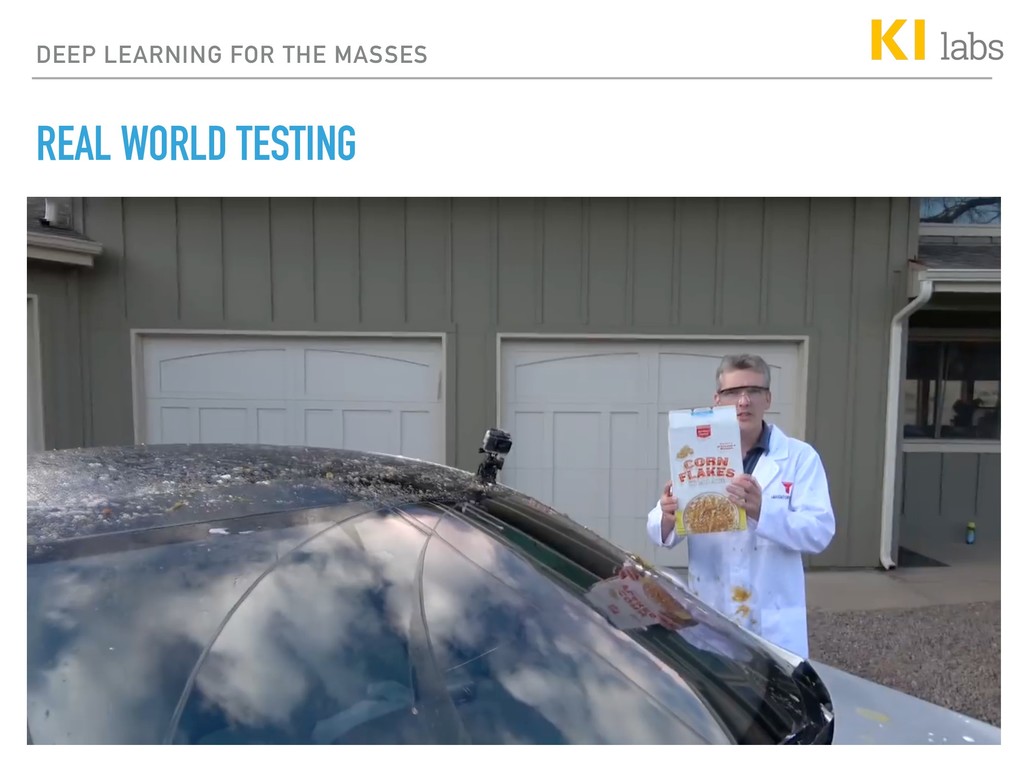
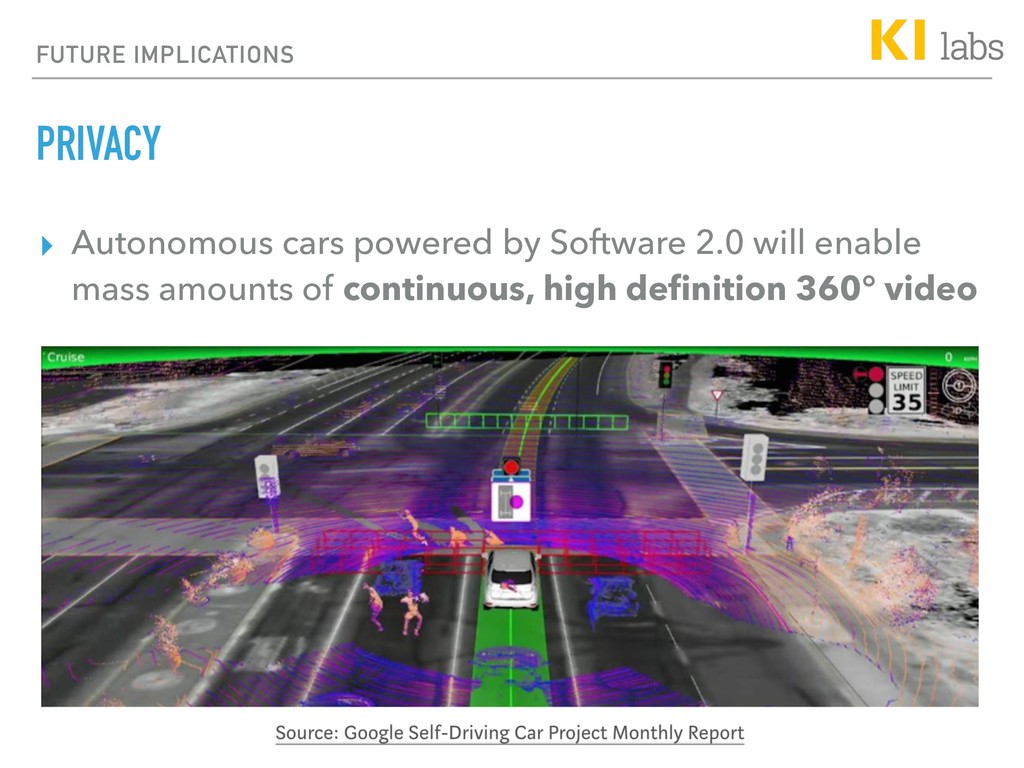
Tesla fleet results in a massive collection of data ▸ Essentially driving data streams ▸ Labelling is complex with real-world conditions DEEP LEARNING FOR THE MASSES
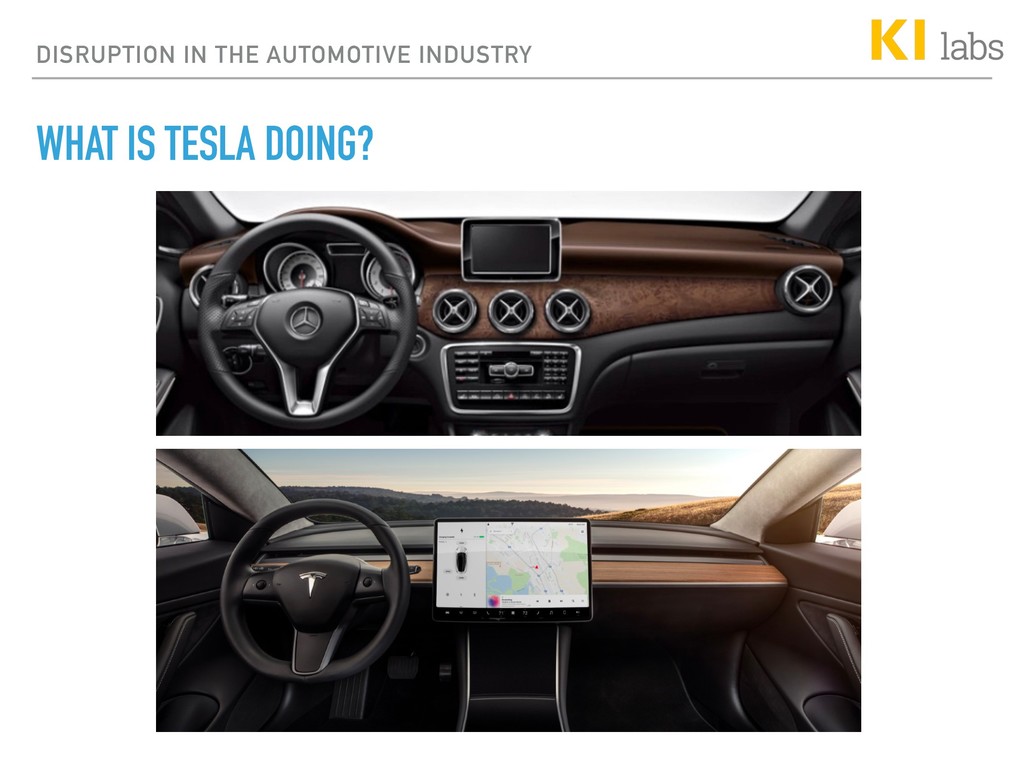
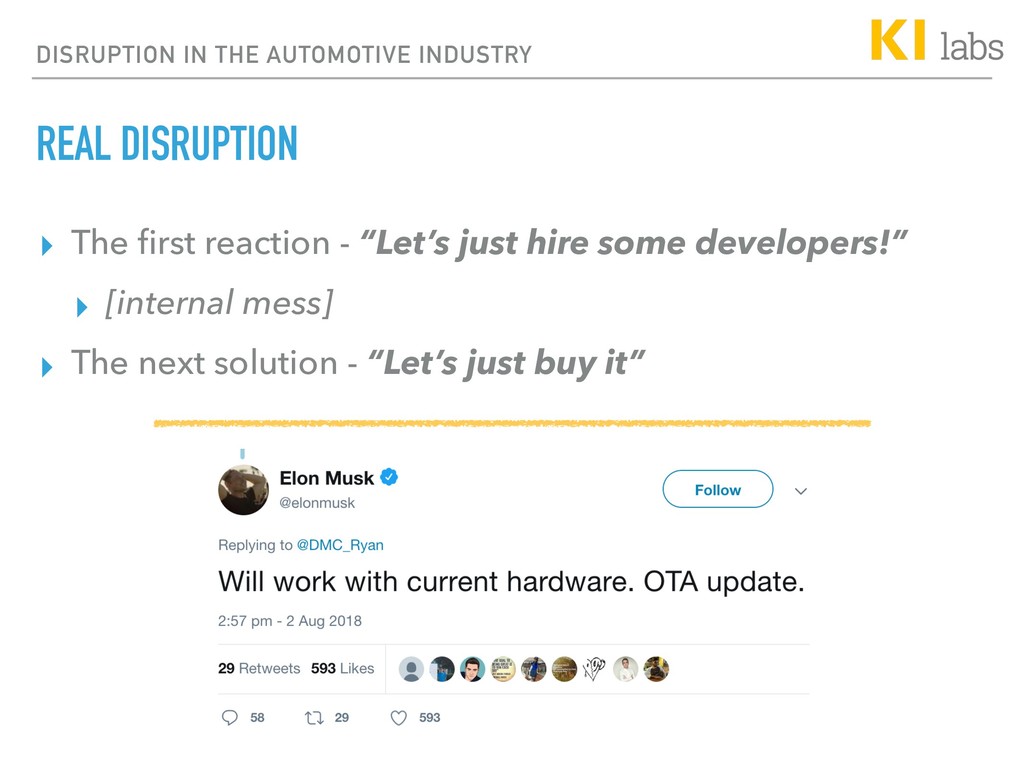
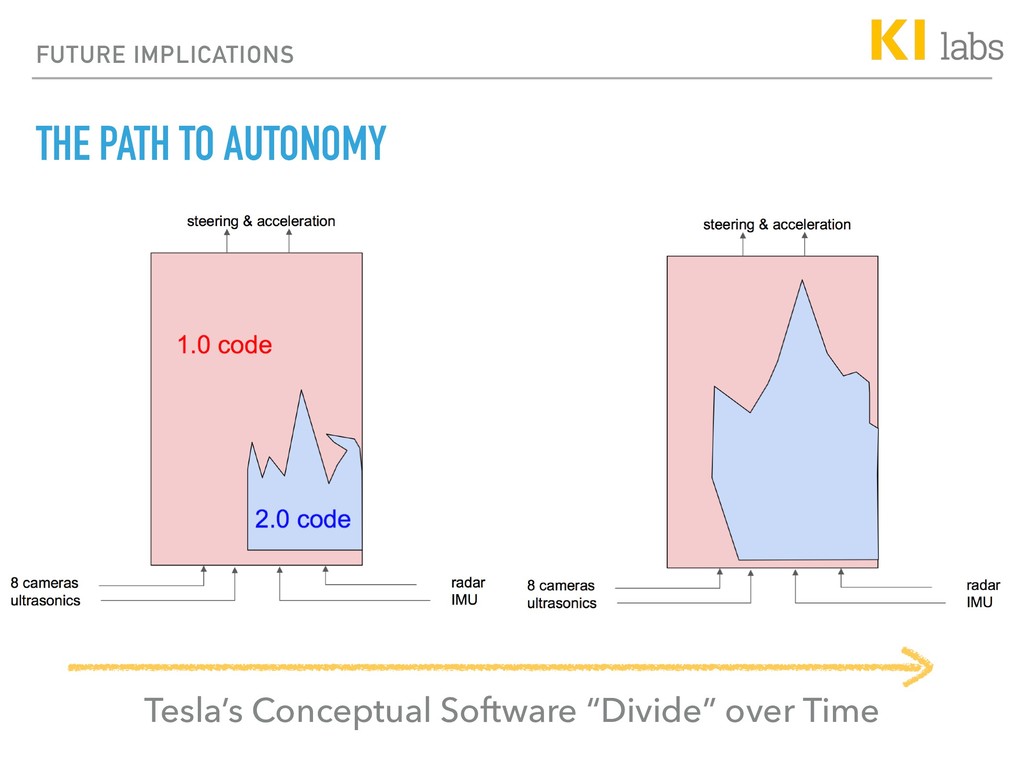
companies fight for “dashboard” space ▸ Steering wheel team hates the entertainment team ▸ Electric and electronics are separate and independent ▸ This results in a complex car with simple firmware ▸ Tesla flipped this “equation” on its head ▸ Simple cars with complex software
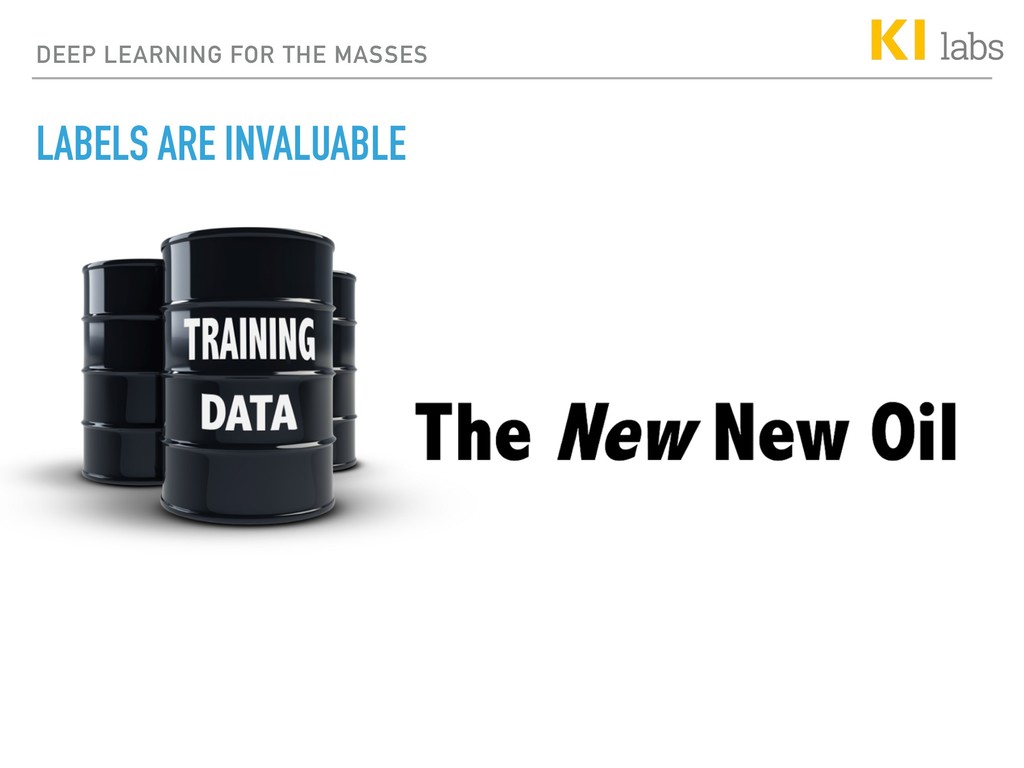
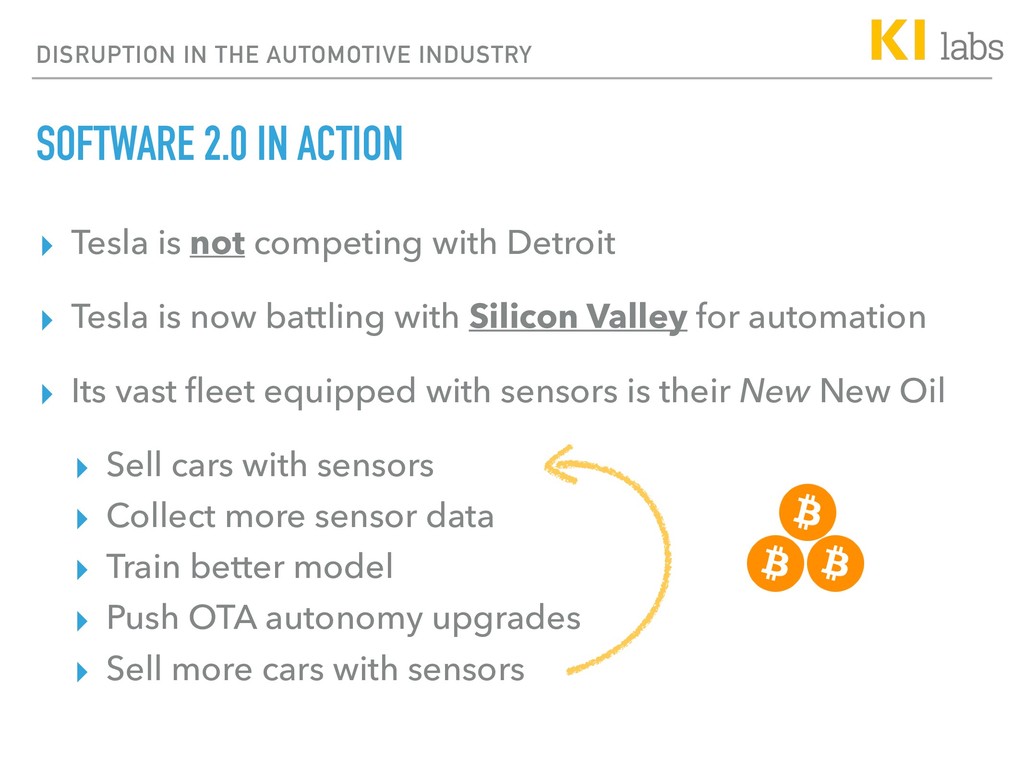
Tesla is not competing with Detroit ▸ Tesla is now battling with Silicon Valley for automation ▸ Its vast fleet equipped with sensors is their New New Oil ▸ Sell cars with sensors ▸ Collect more sensor data ▸ Train better model ▸ Push OTA autonomy upgrades ▸ Sell more cars with sensors
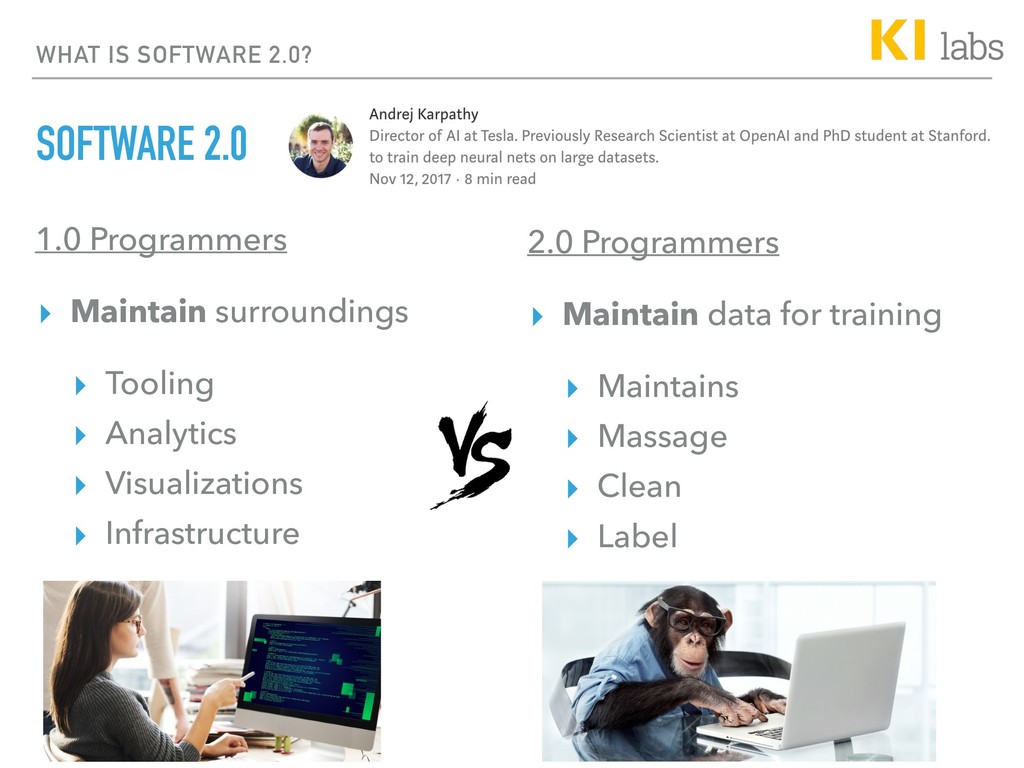
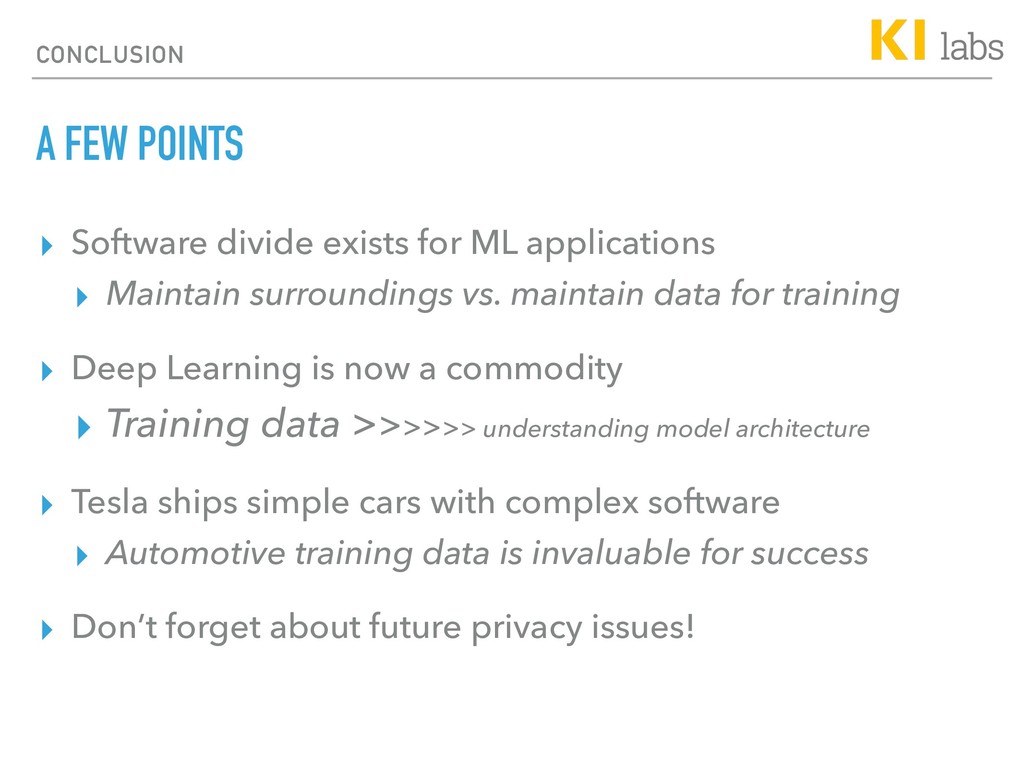
applications ▸ Maintain surroundings vs. maintain data for training ▸ Deep Learning is now a commodity ▸ Training data >>>>>> understanding model architecture ▸ Tesla ships simple cars with complex software ▸ Automotive training data is invaluable for success ▸ Don’t forget about future privacy issues!


 jfri3d
 occhi
occhi
 ishikawa_satoru
 riyaamemiya
 moznion
 takuroabe
 ivry_presentationmaterials
 codmoninc
 tetsuya28
 willnet
 makocchi
 masakiokuda
 kairim0
 speakerdeck
 kneath
 marcoroth
 nmsamuel
 zakiyama
 geshan
 wjessup
 notwaldorf
 szymonslowik
 thoeni
 nikkihalliwell
 destraynor