Upgrade to Pro — share decks privately, control downloads, hide ads and more …

Debugging Slow Queries (Using Postgres EXPLAIN)

Debugging Slow Queries (Using Postgres EXPLAIN)

Avatar for Joe Kurleto

Joe Kurleto

November 15, 2017

More Decks by Joe Kurleto

Other Decks in Programming

Transcript

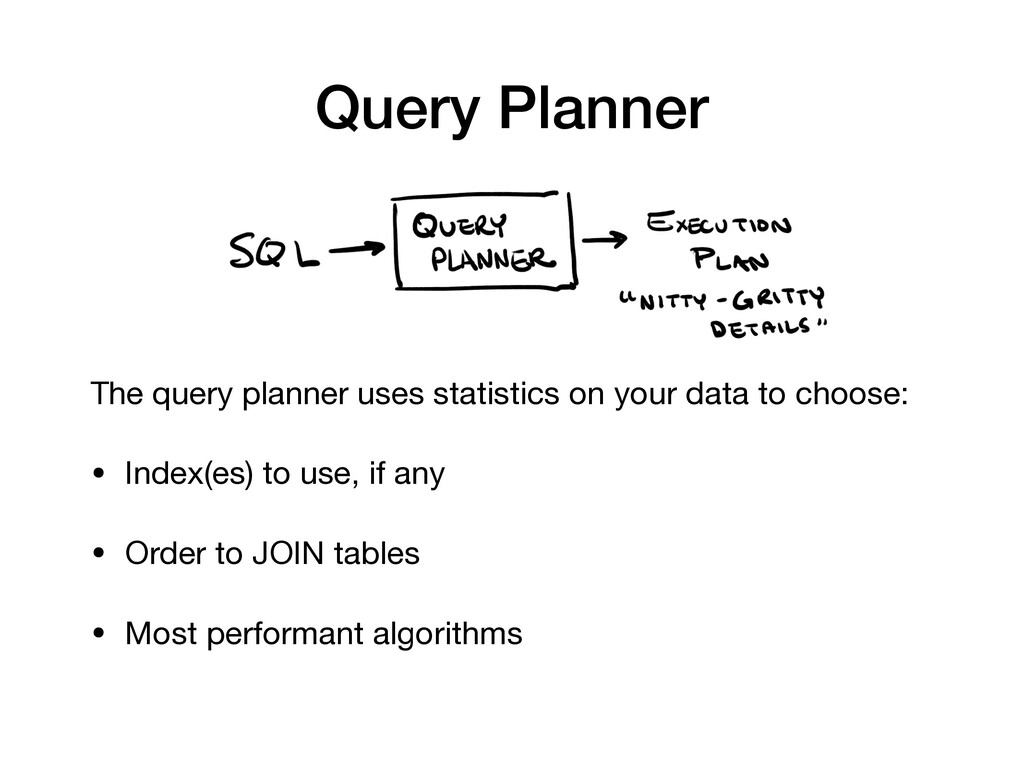
  1. Query Planner The query planner uses statistics on your data

    to choose: • Index(es) to use, if any • Order to JOIN tables • Most performant algorithms
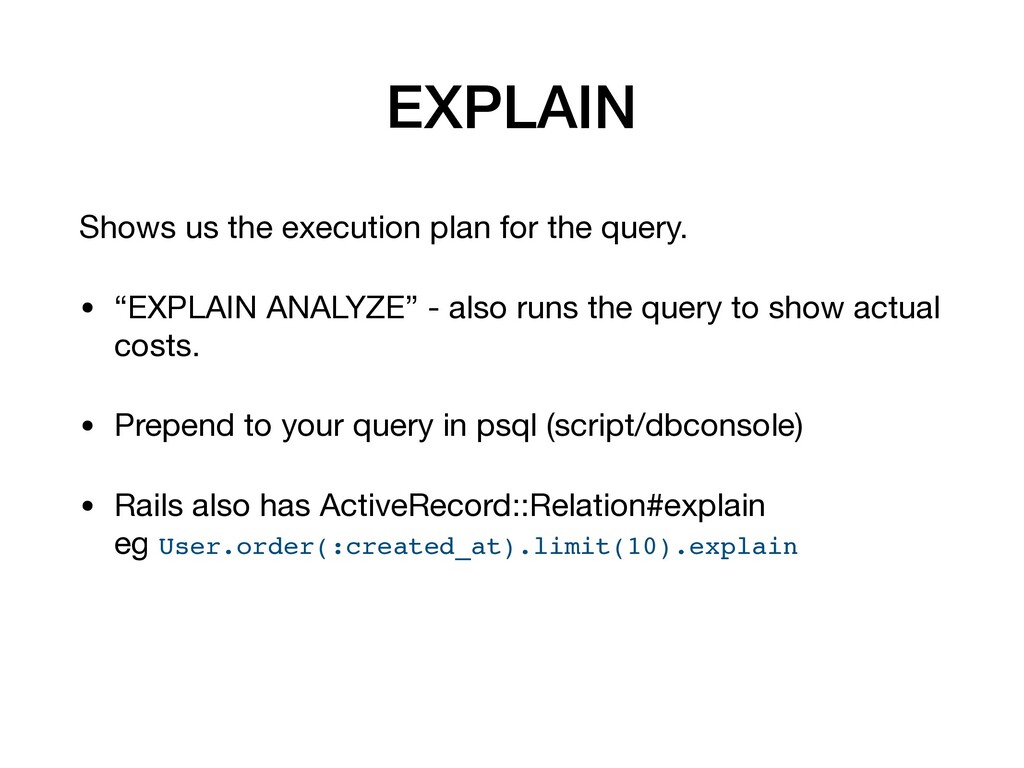
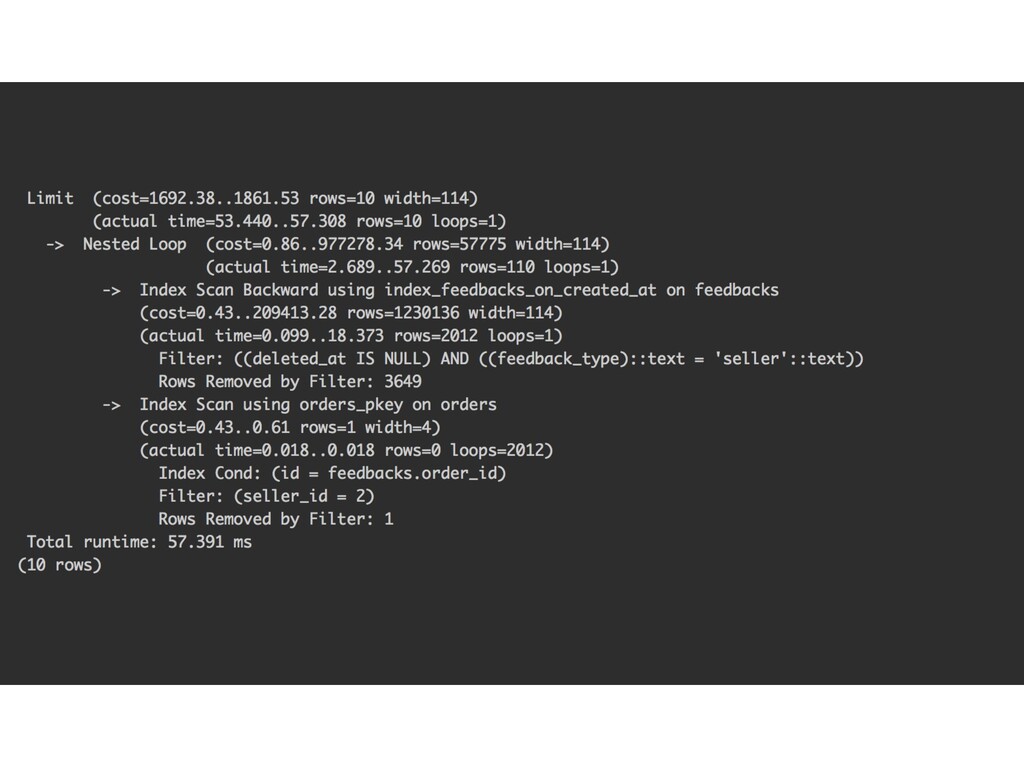
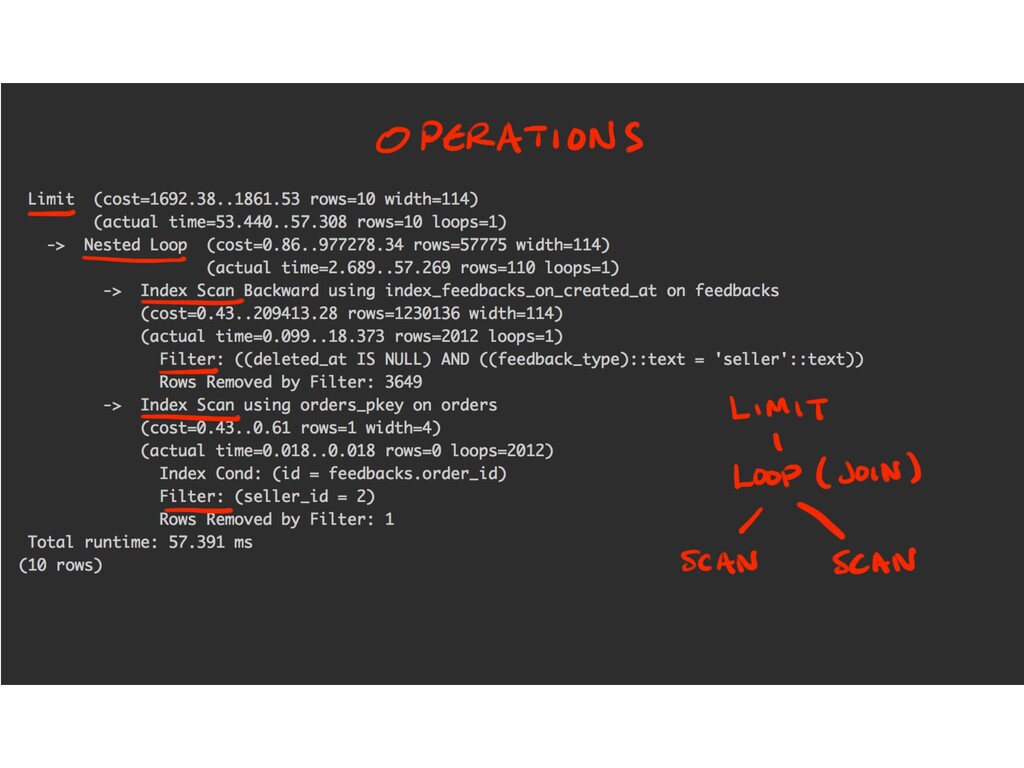
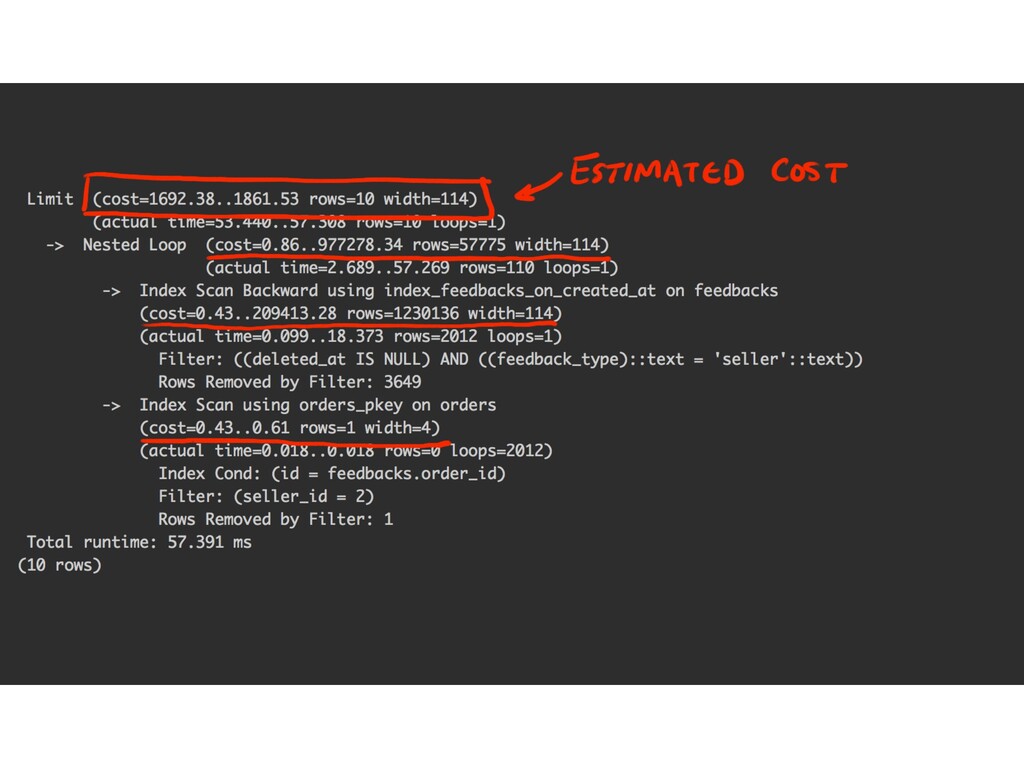
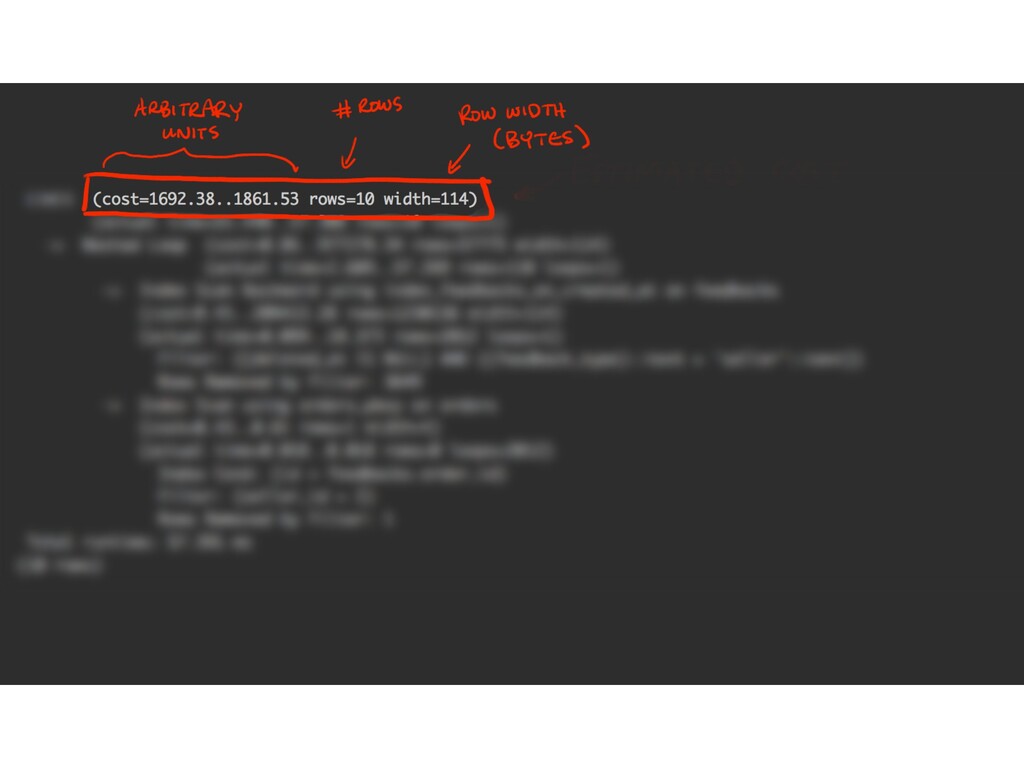
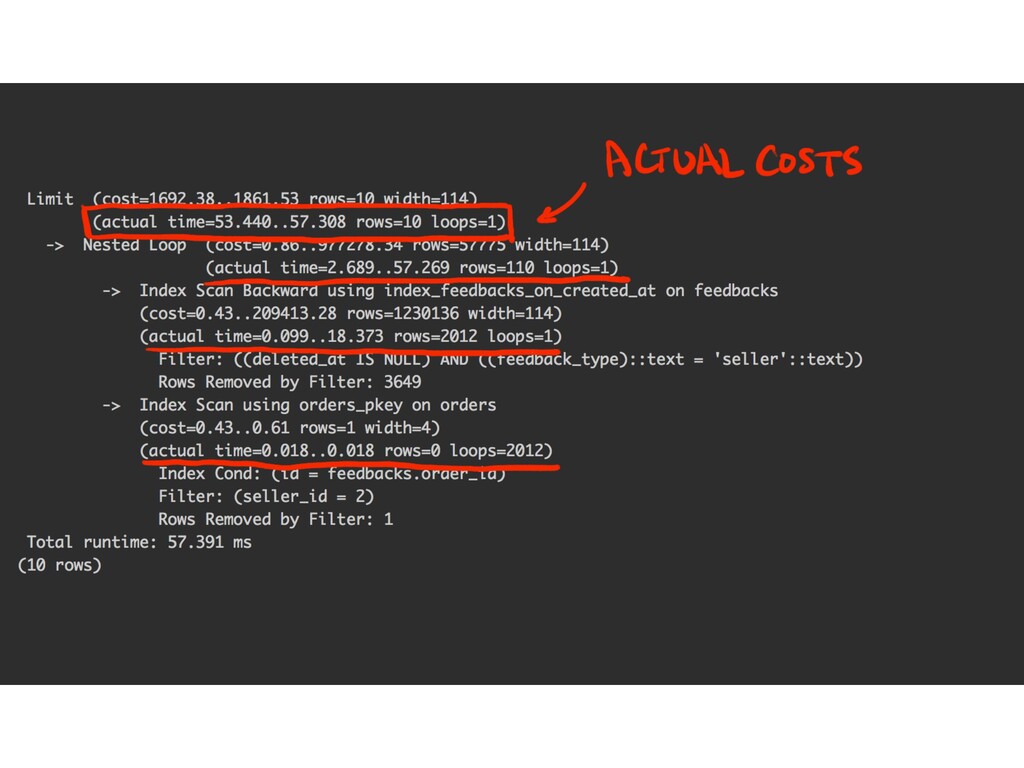
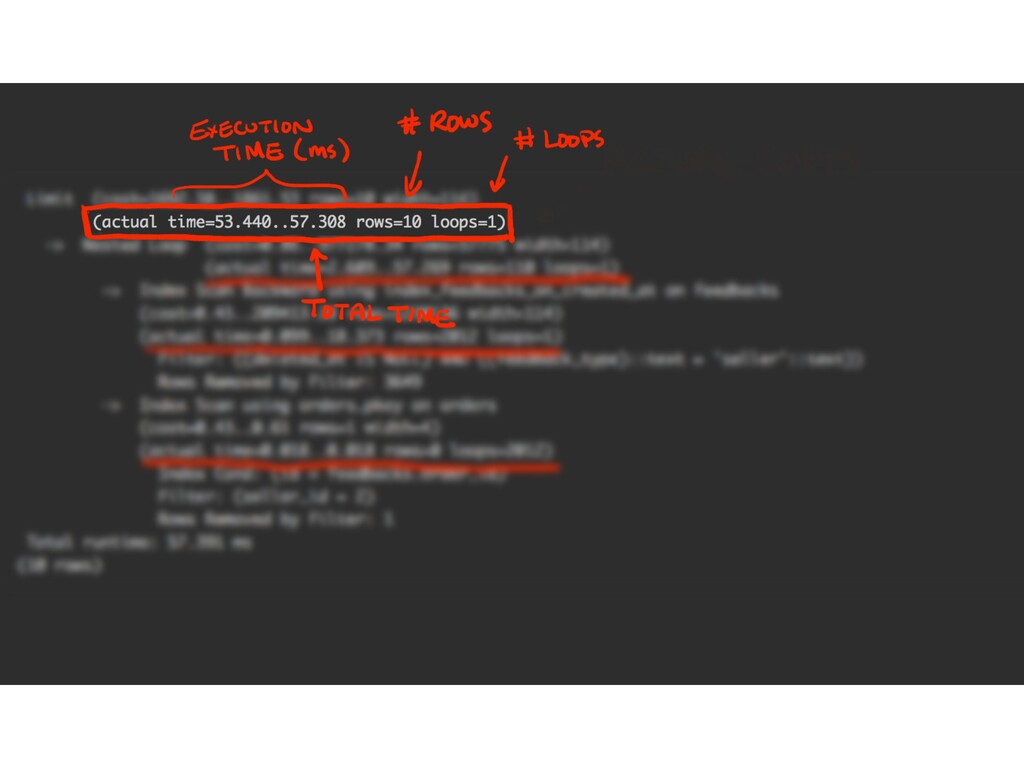
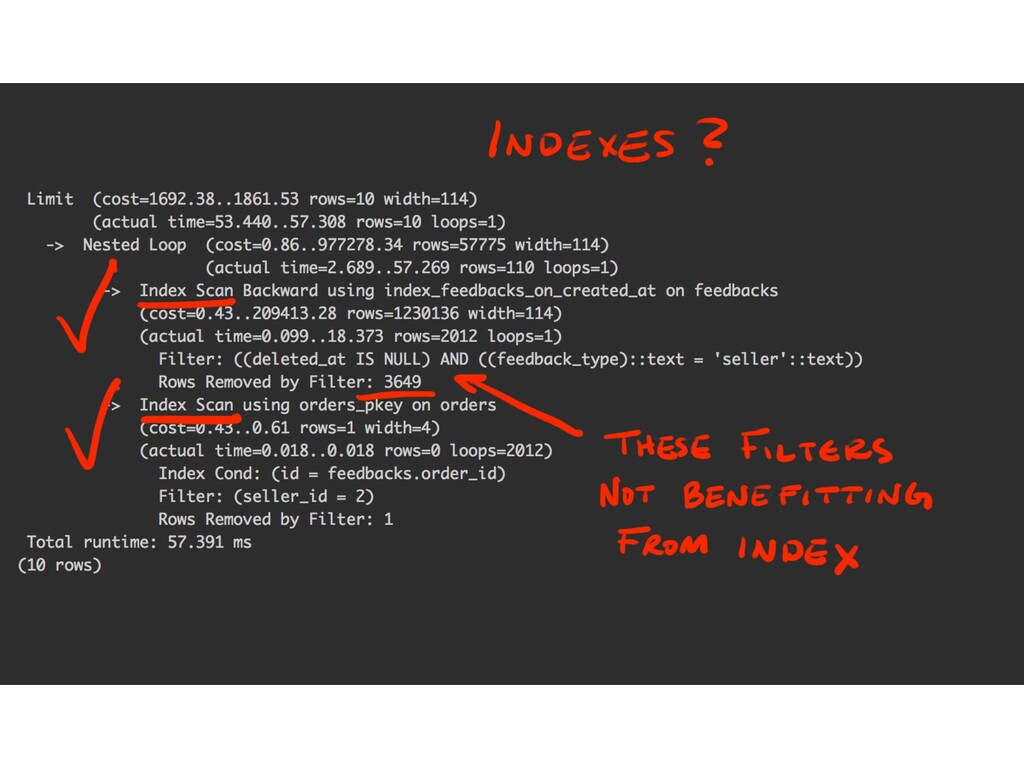
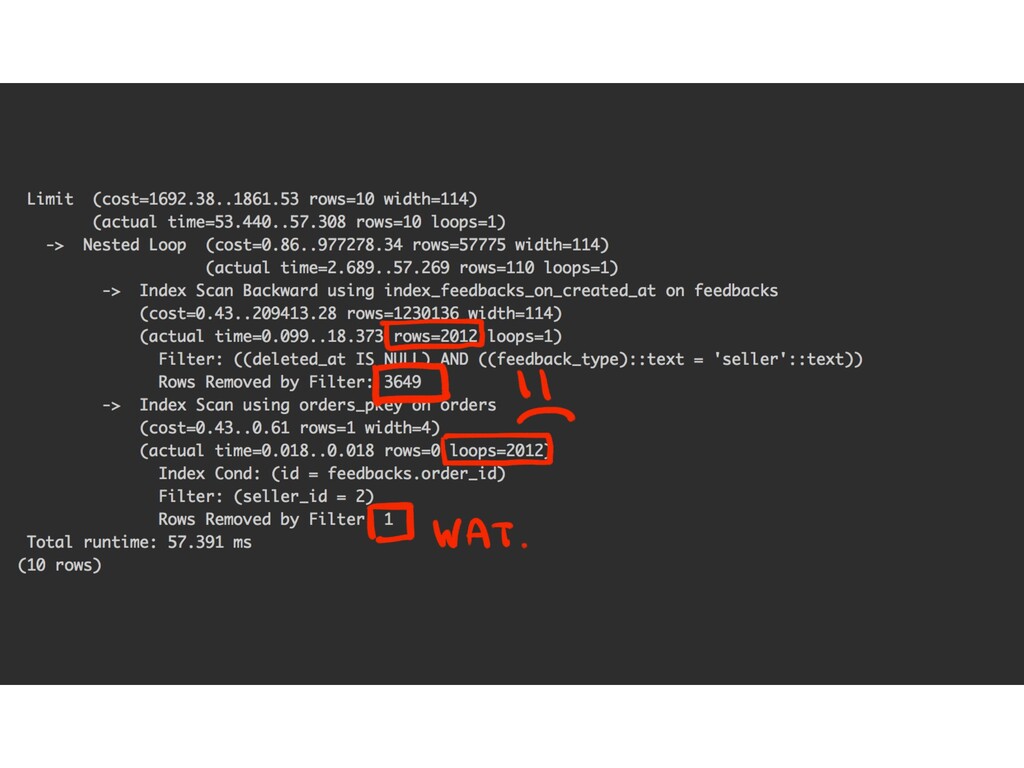
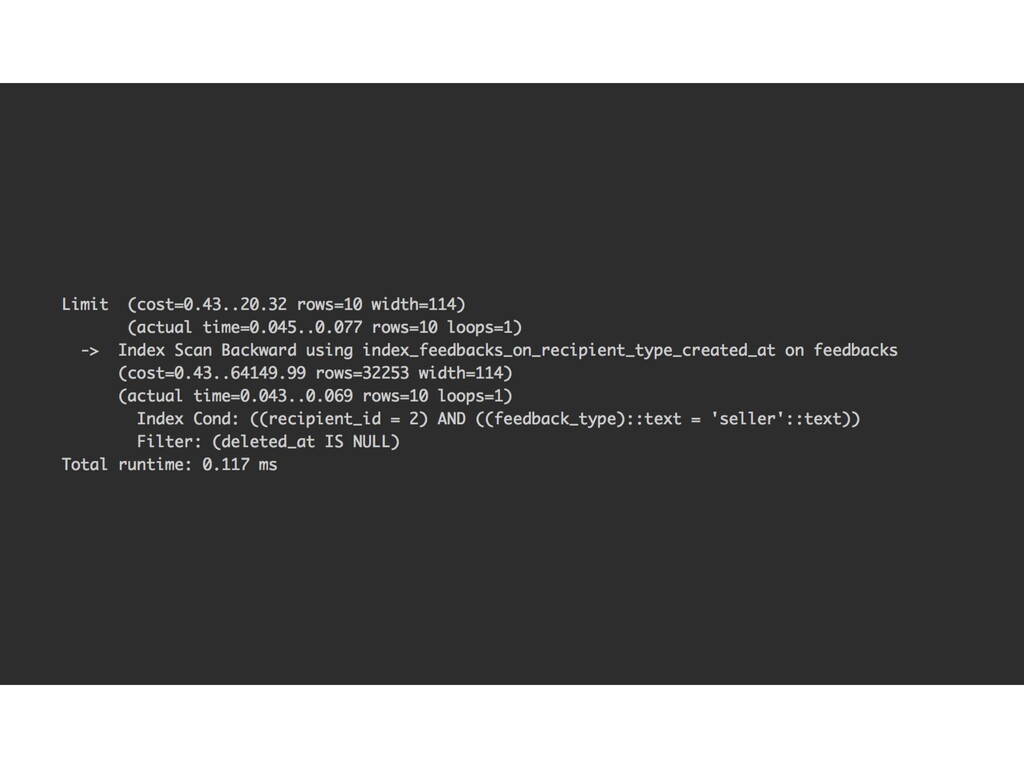
  2. EXPLAIN Shows us the execution plan for the query. •

    “EXPLAIN ANALYZE” - also runs the query to show actual costs. • Prepend to your query in psql (script/dbconsole) • Rails also has ActiveRecord::Relation#explain
 eg User.order(:created_at).limit(10).explain
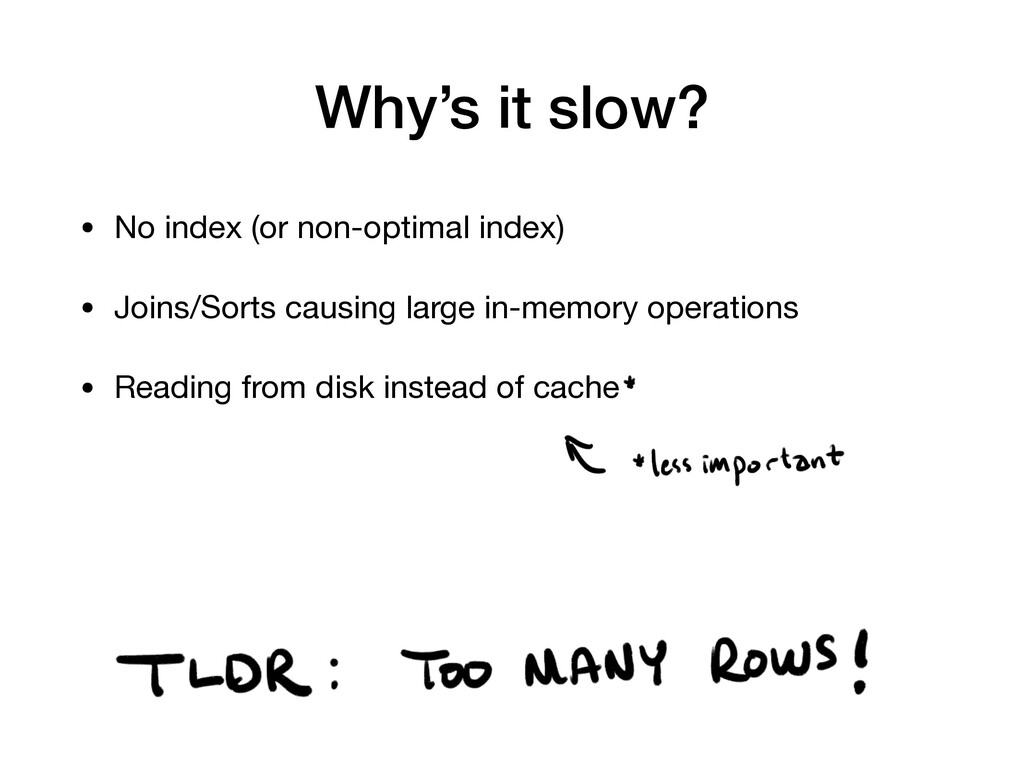
  3. Why’s it slow? • No index (or non-optimal index) •

    Joins/Sorts causing large in-memory operations • Reading from disk instead of cache
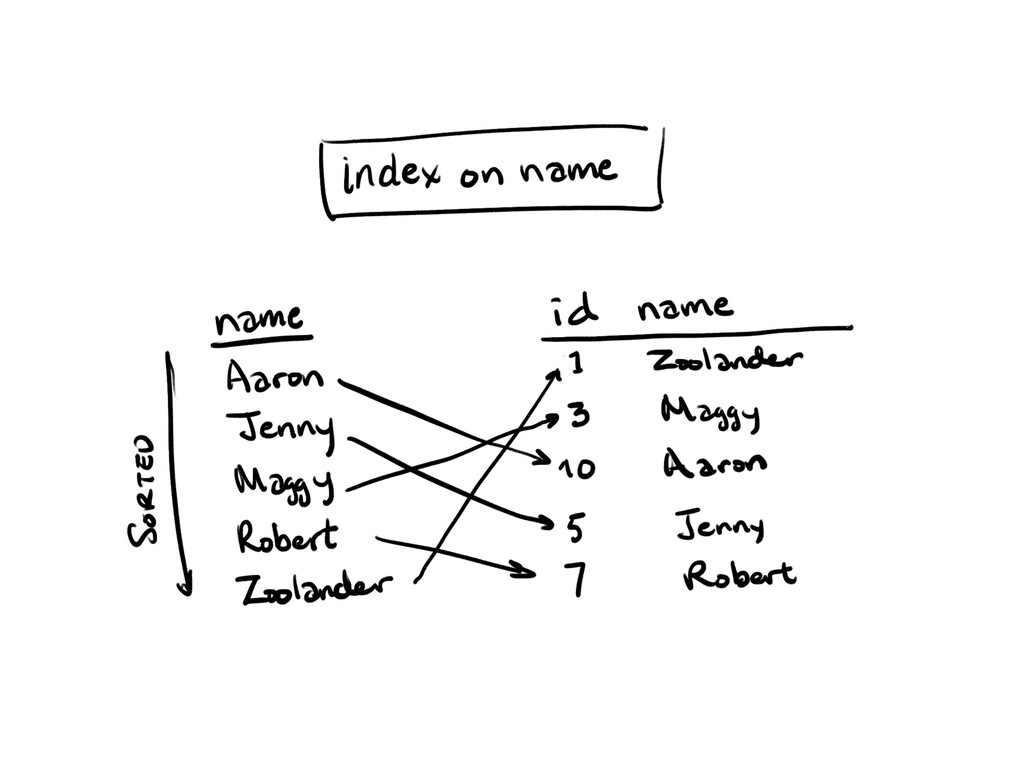
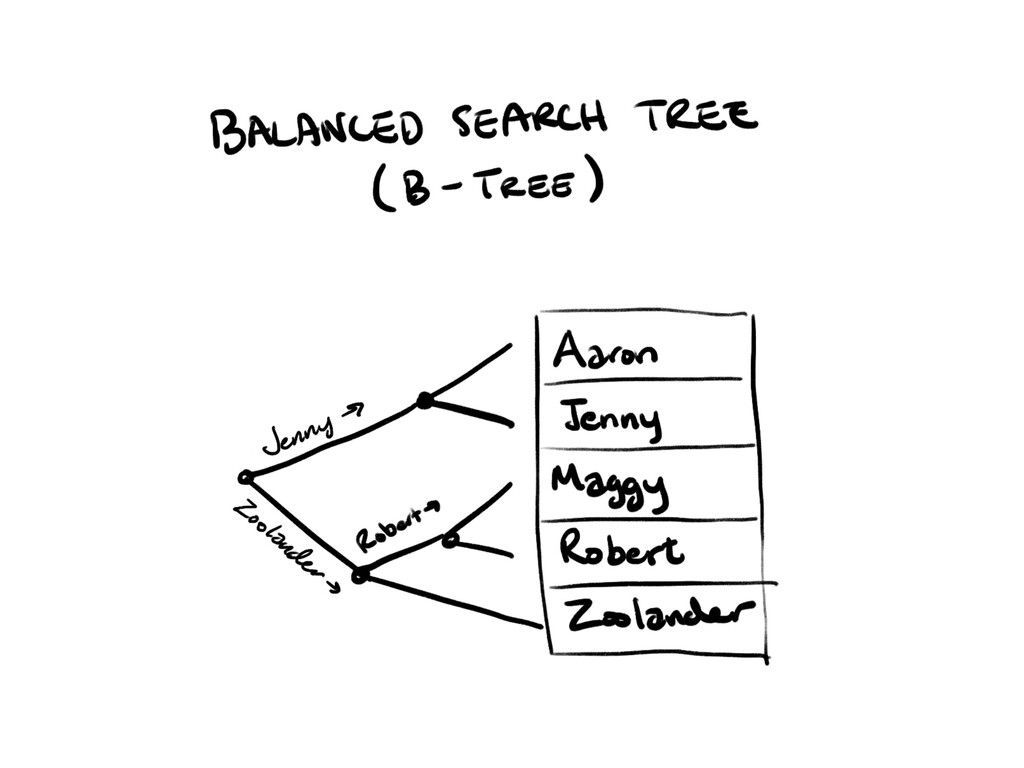
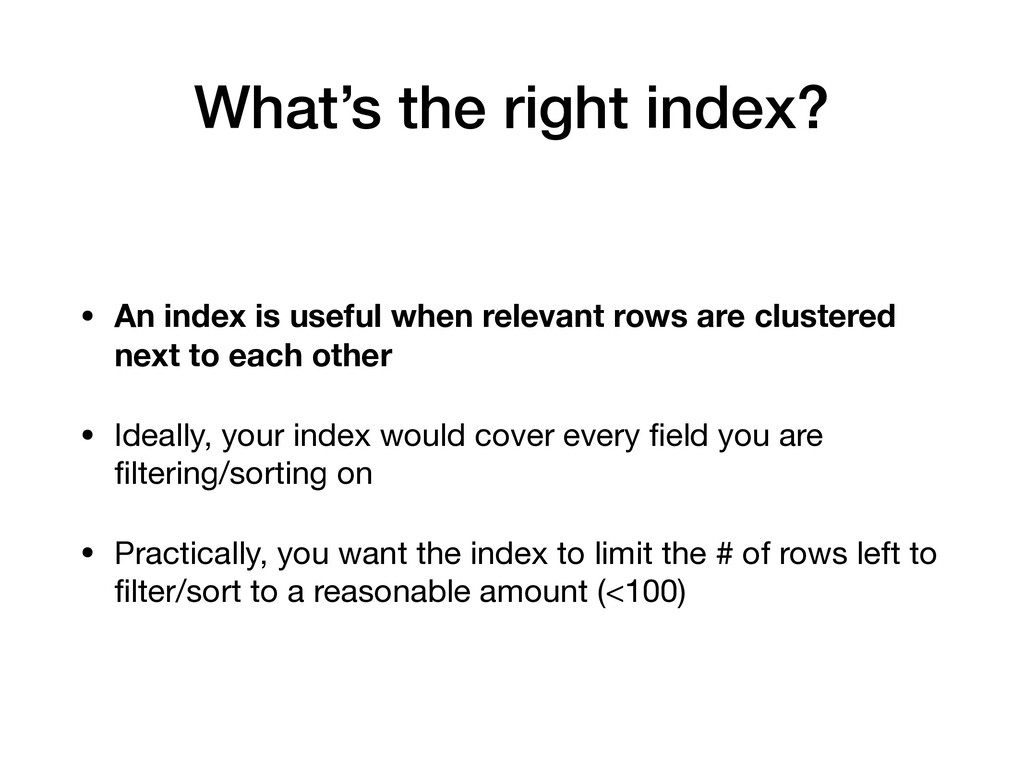
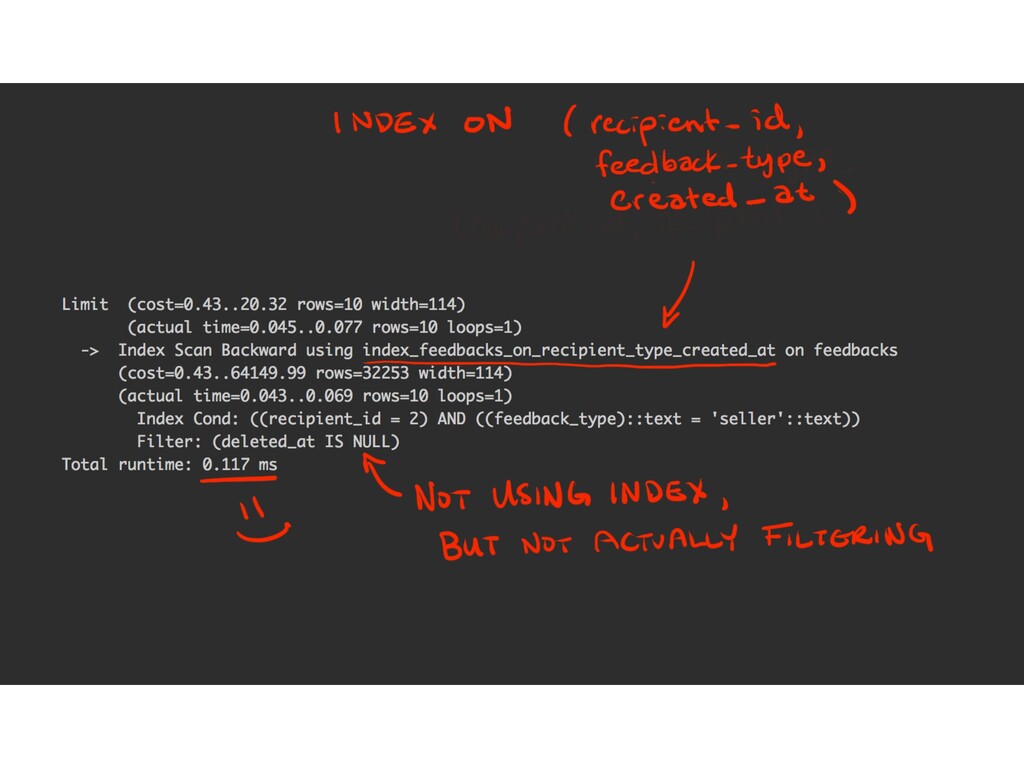
  4. What’s the right index? • An index is useful when

    relevant rows are clustered next to each other • Ideally, your index would cover every field you are filtering/sorting on • Practically, you want the index to limit the # of rows left to filter/sort to a reasonable amount (<100)
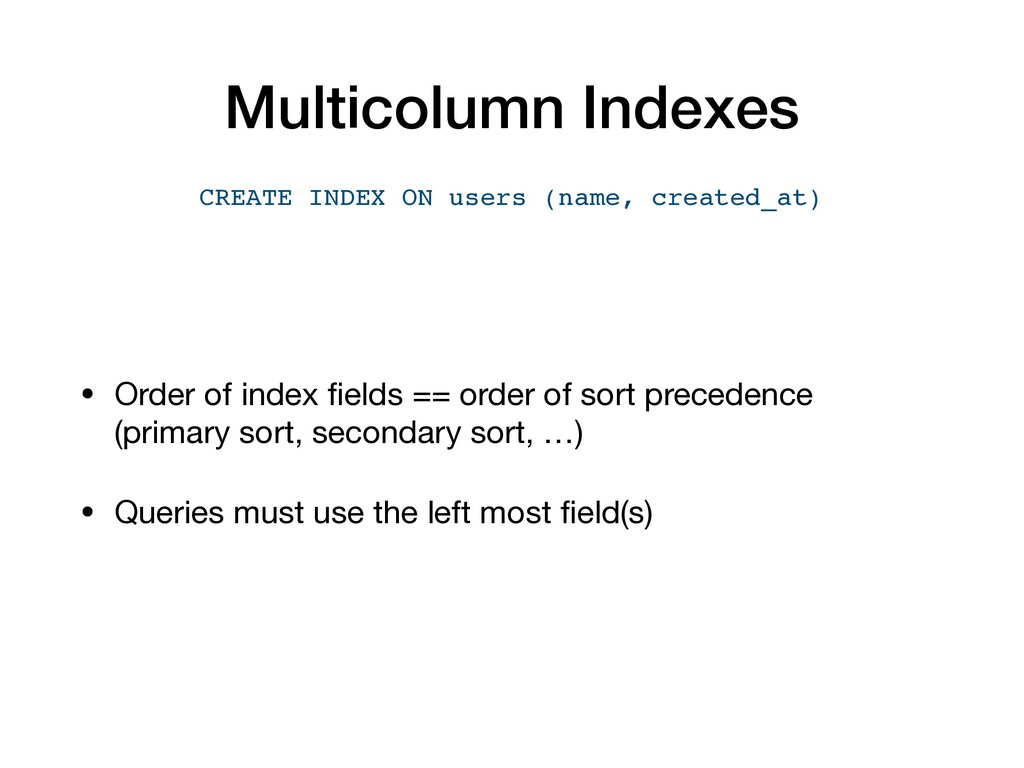
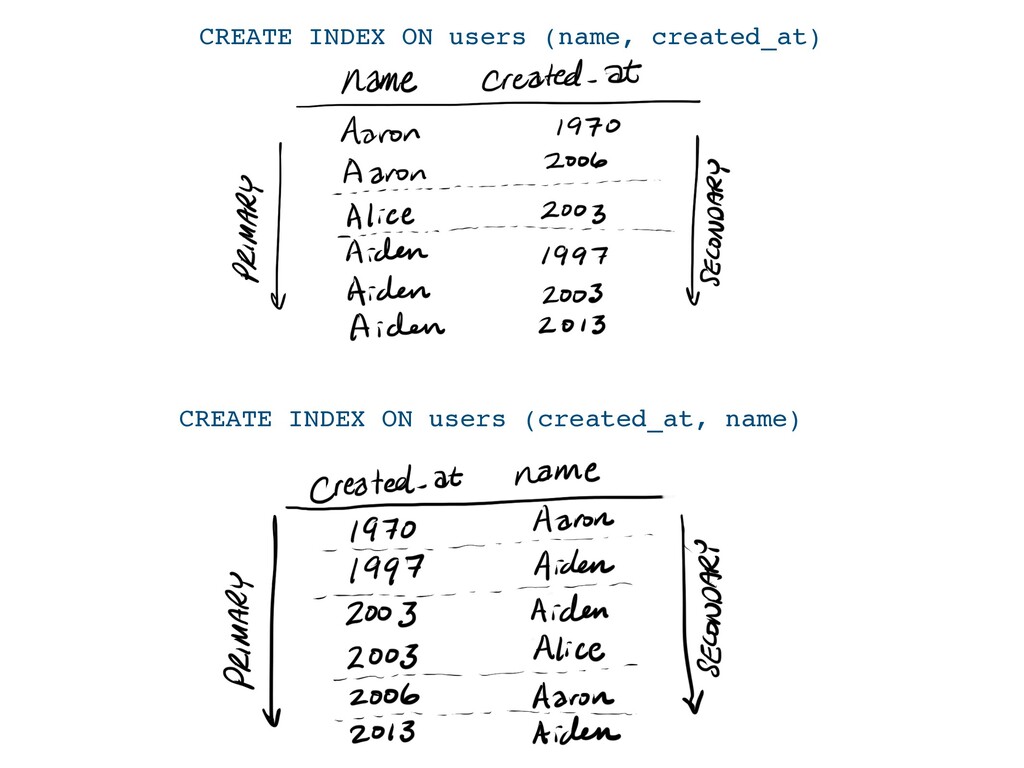
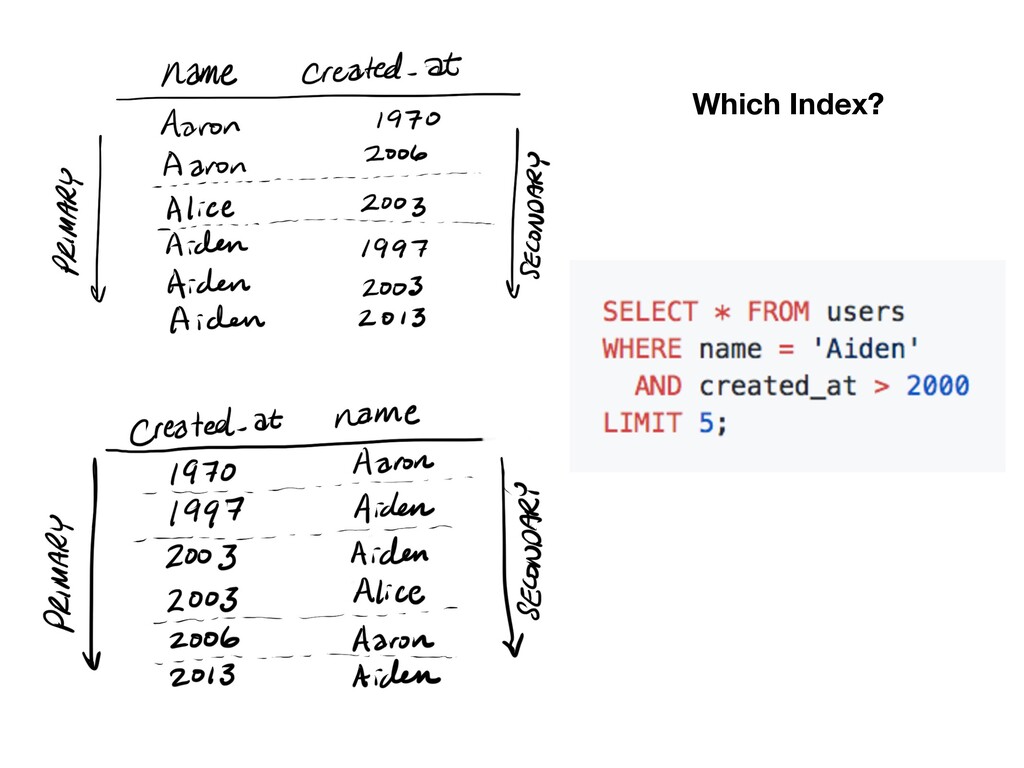
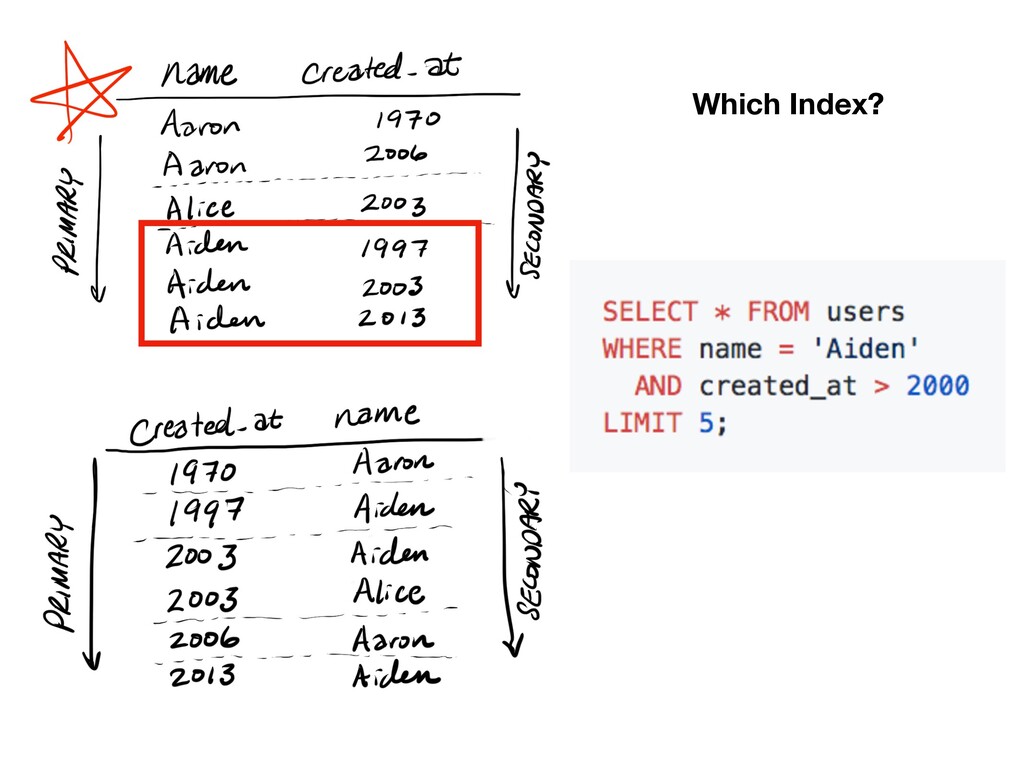
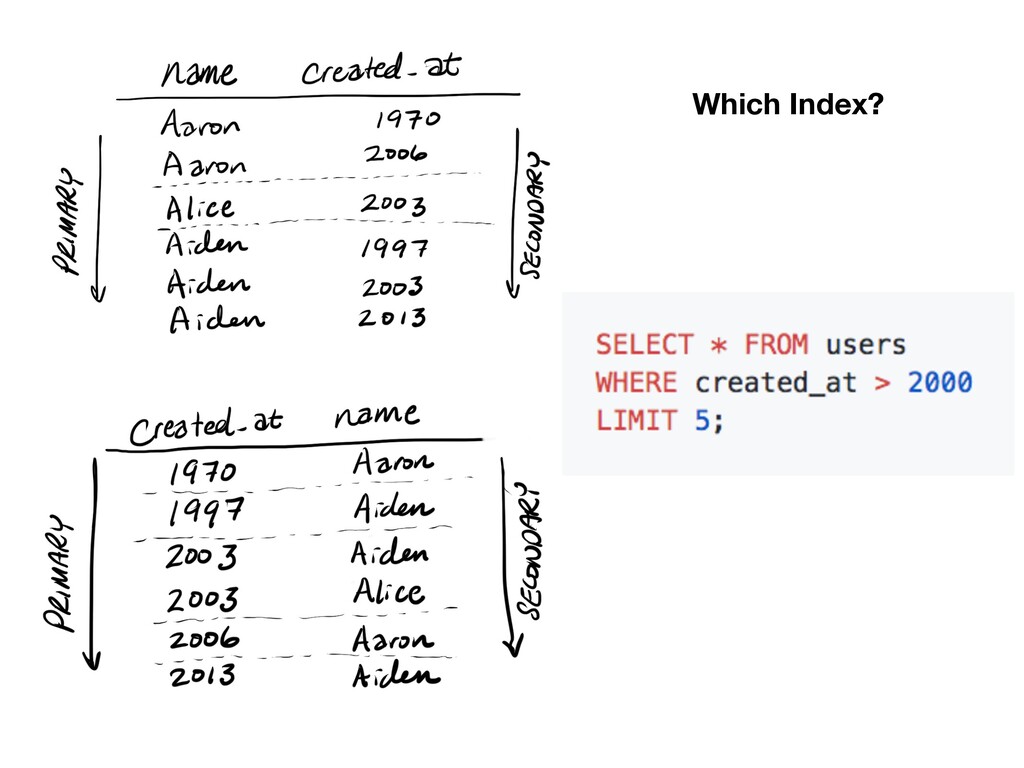
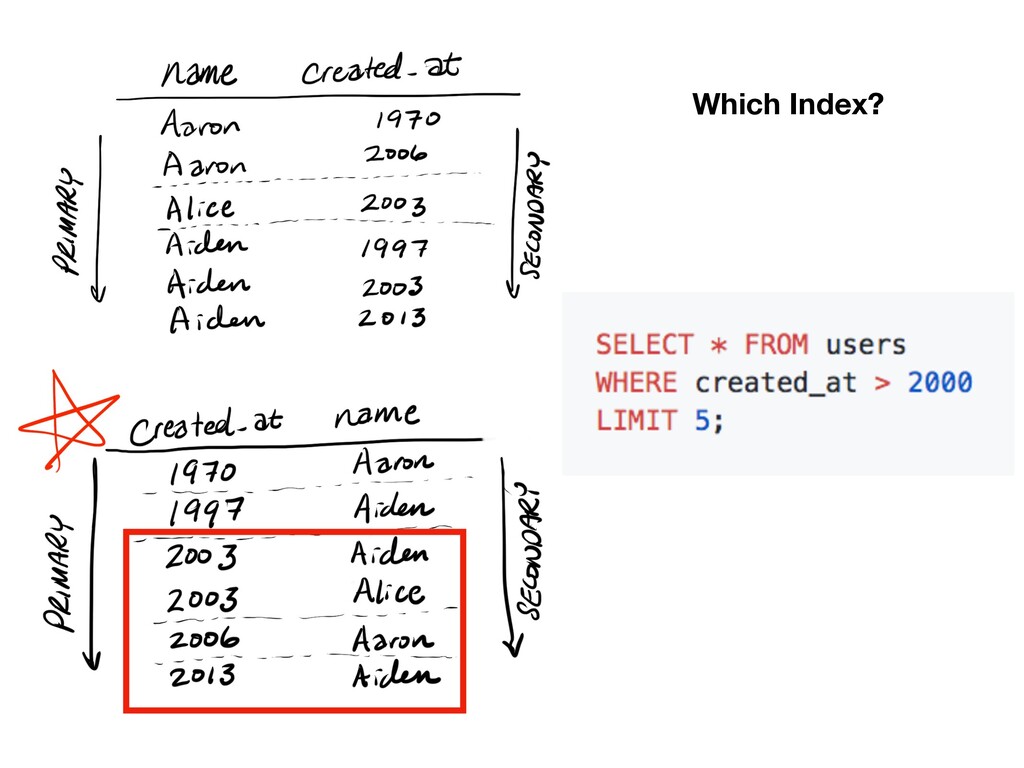
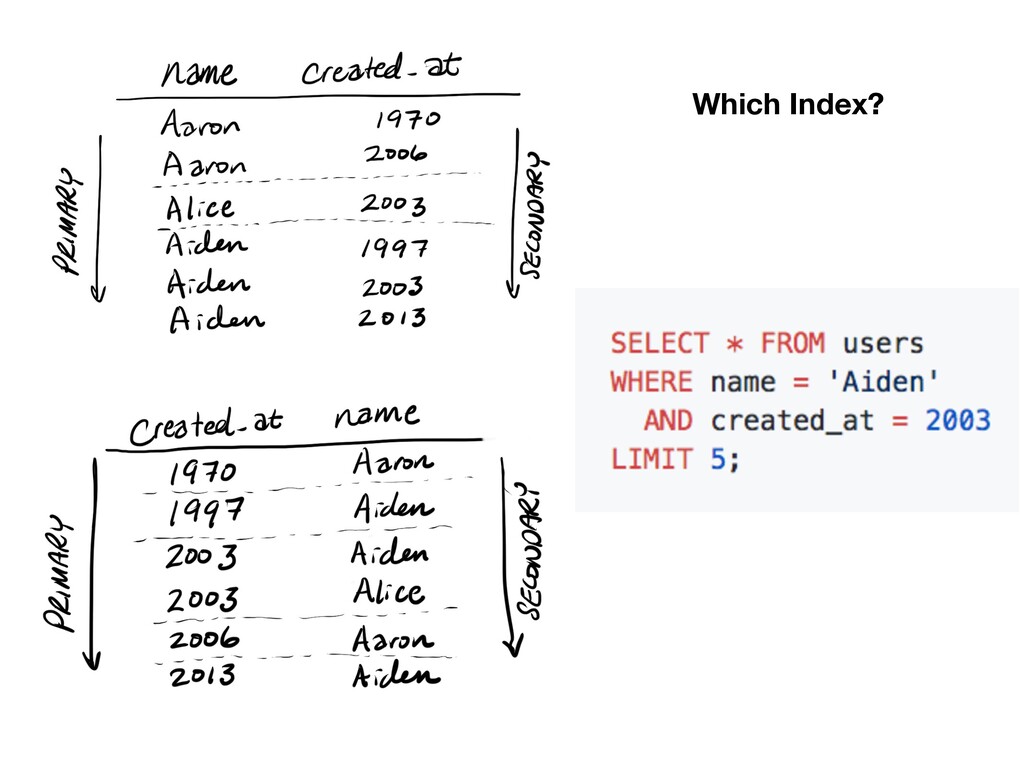
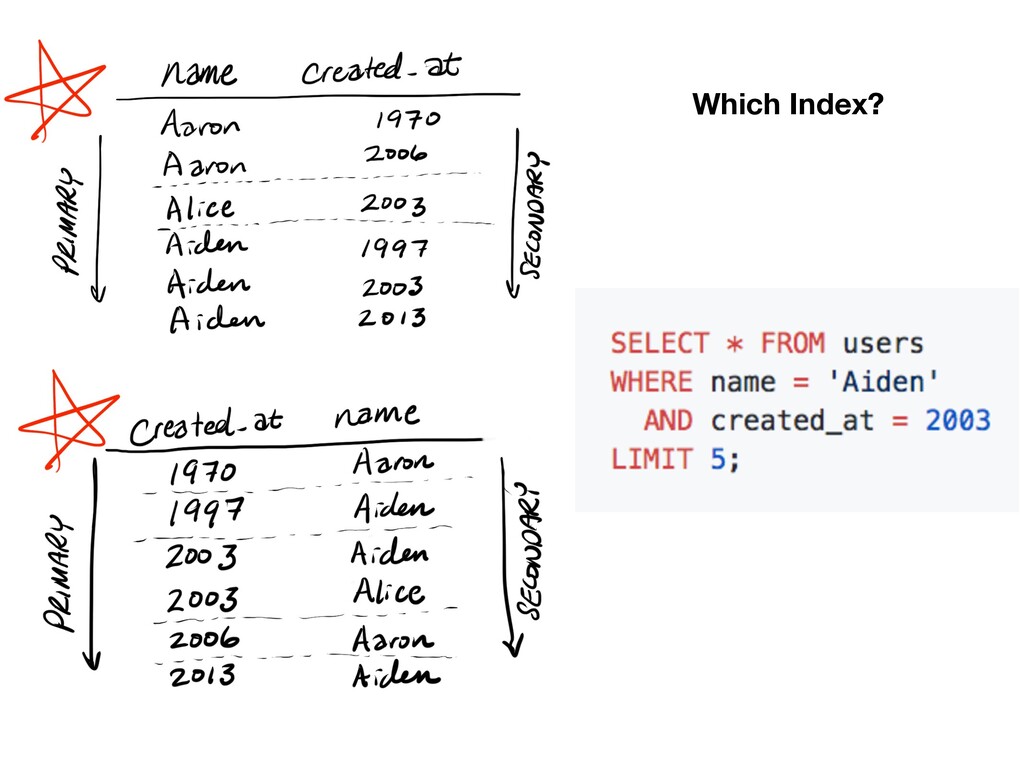
  5. Multicolumn Indexes • Order of index fields == order of

    sort precedence
 (primary sort, secondary sort, …) • Queries must use the left most field(s) CREATE INDEX ON users (name, created_at)
  6. Multicolumn Indexes • Generally, fields filtered by range or sorted

    on go last • Otherwise choose an order that will be used by more queries
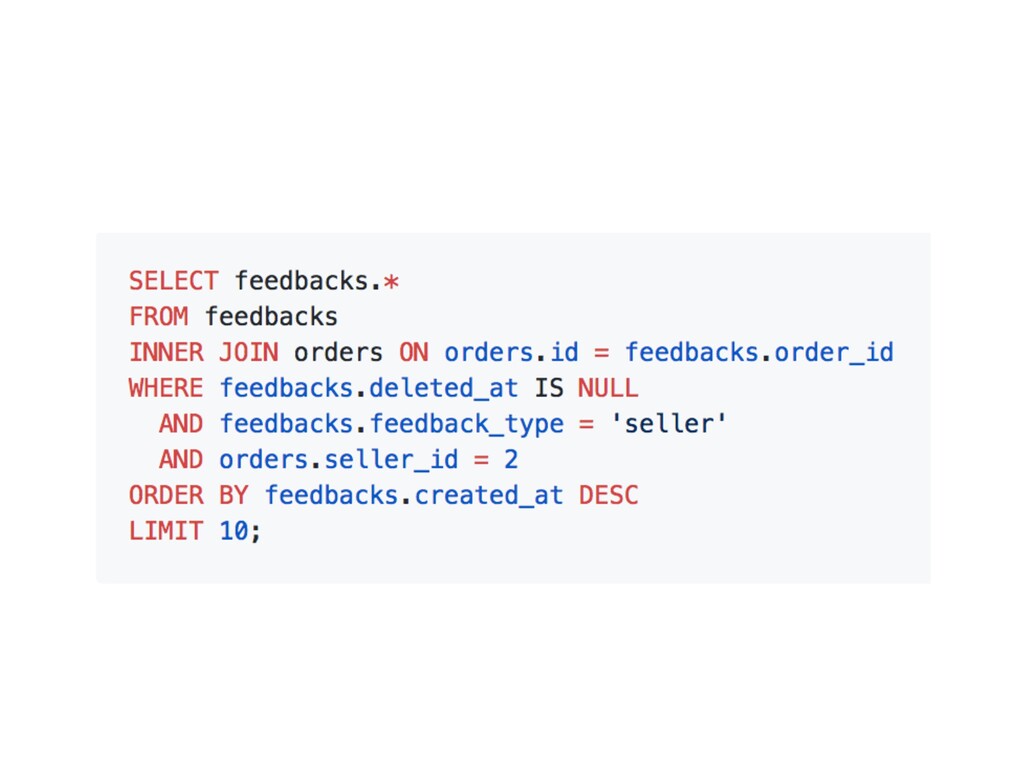
  7. Reducing Rows Joins/sorts may be operating on large data sets

    even if end- results are small (eg due to LIMIT, DISTINCT)
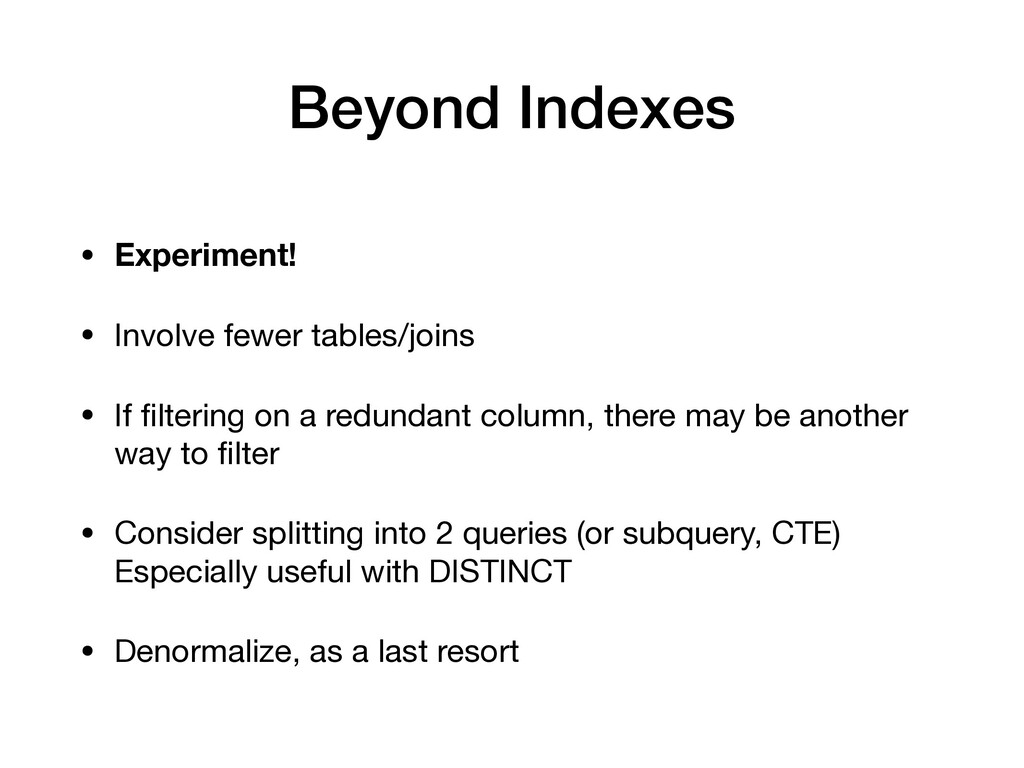
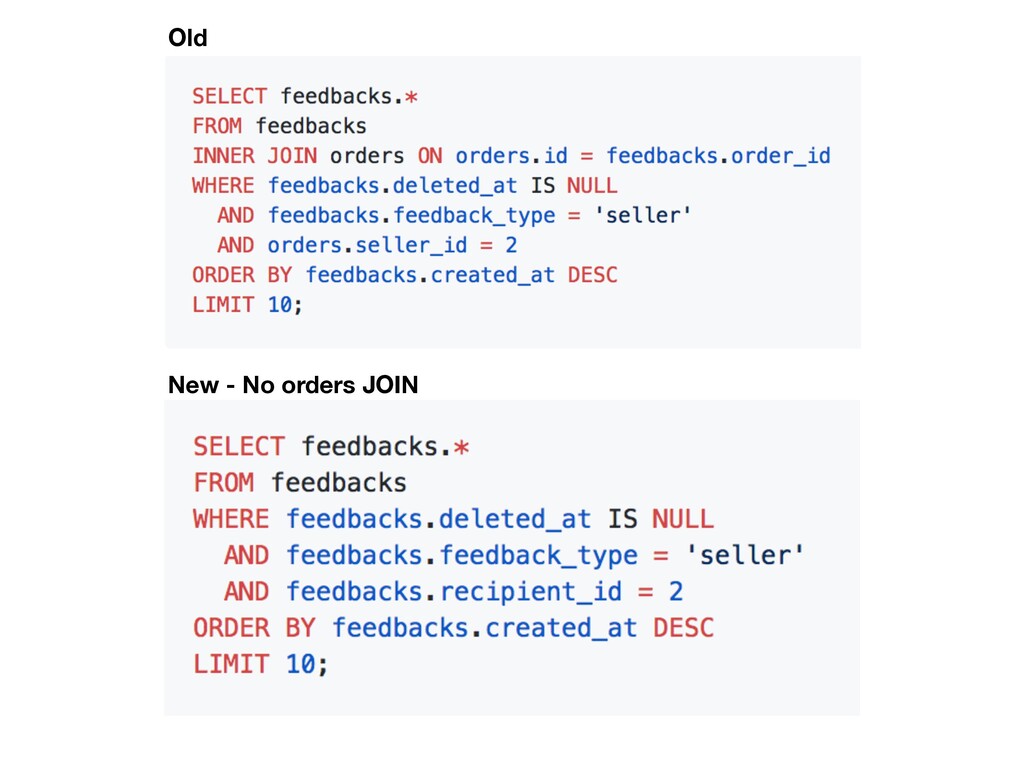
  8. Beyond Indexes • Experiment! • Involve fewer tables/joins • If

    filtering on a redundant column, there may be another way to filter • Consider splitting into 2 queries (or subquery, CTE)
 Especially useful with DISTINCT • Denormalize, as a last resort
  9. Resources • Bug me! • http://use-the-index-luke.com/
 Comprehensive SQL performance guide

    by Marcus Winand • Also has a book: SQL Performance Explained • https://devcenter.heroku.com/articles/postgresql-indexes
 Lighter reading on indexes