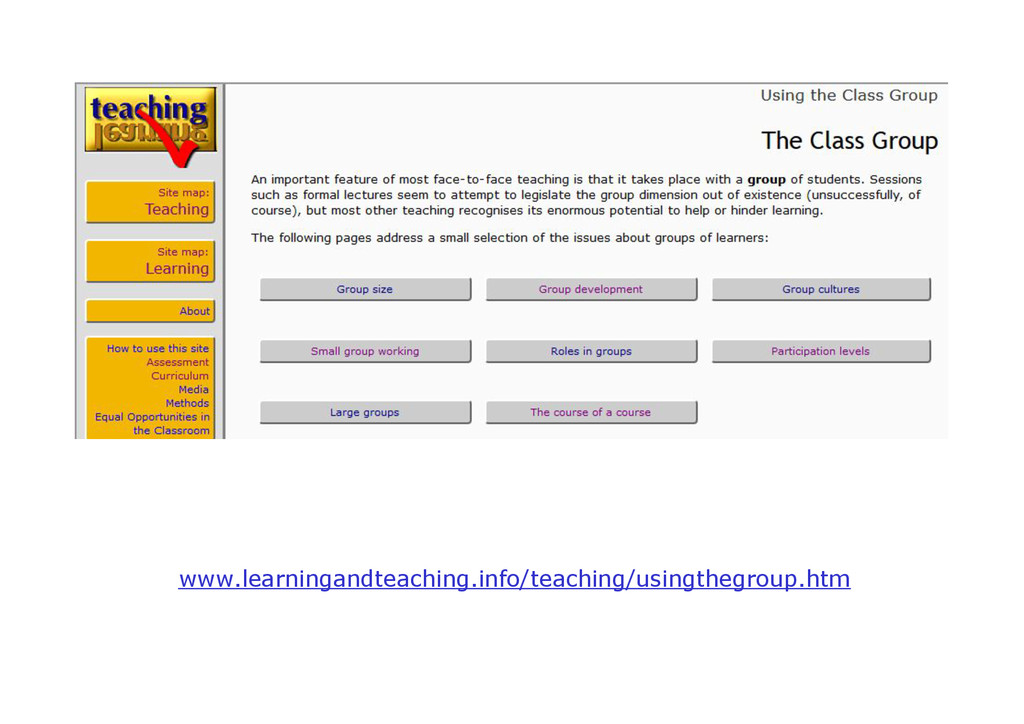
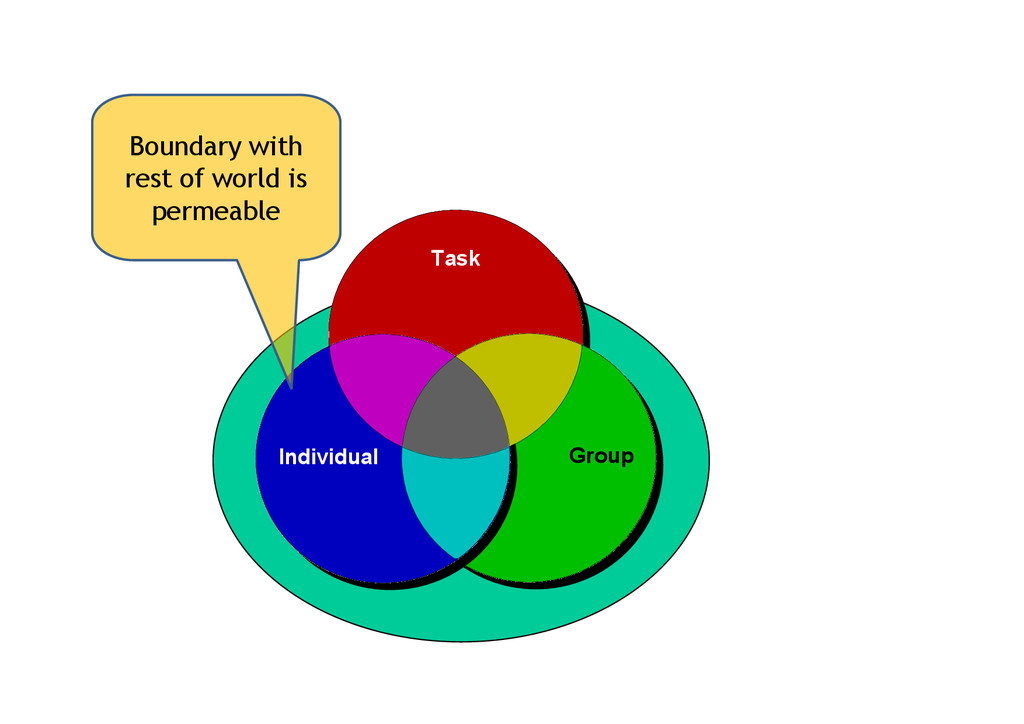
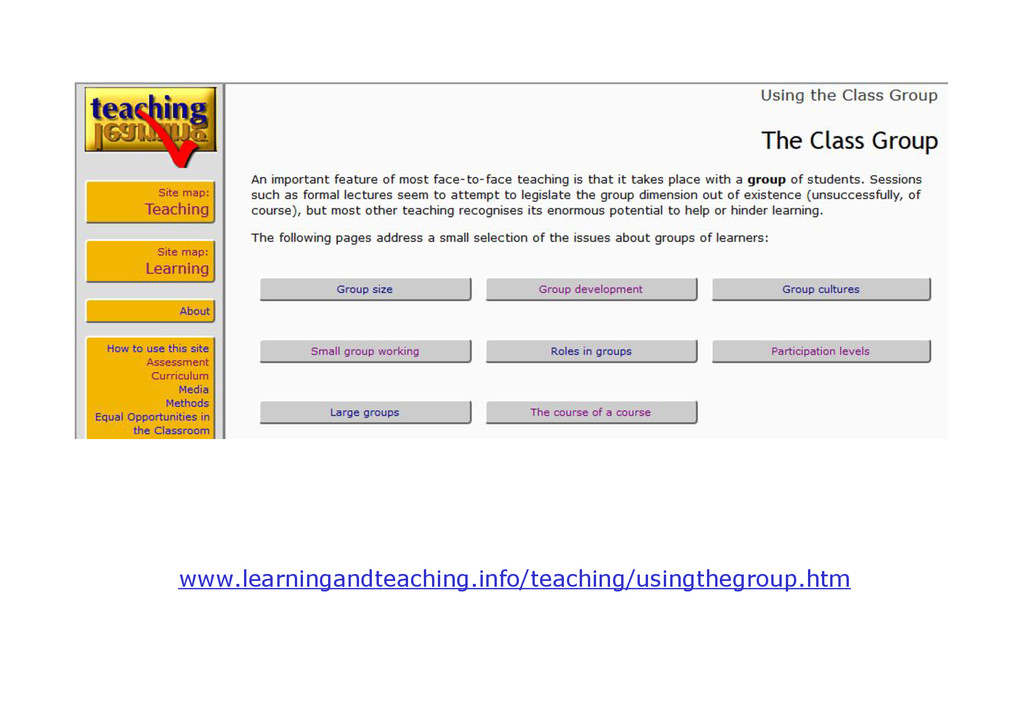
Brief overview of classes seen as groups, and the influence of group processes on teaching and learning. (Complementary material at learningandteaching.info)
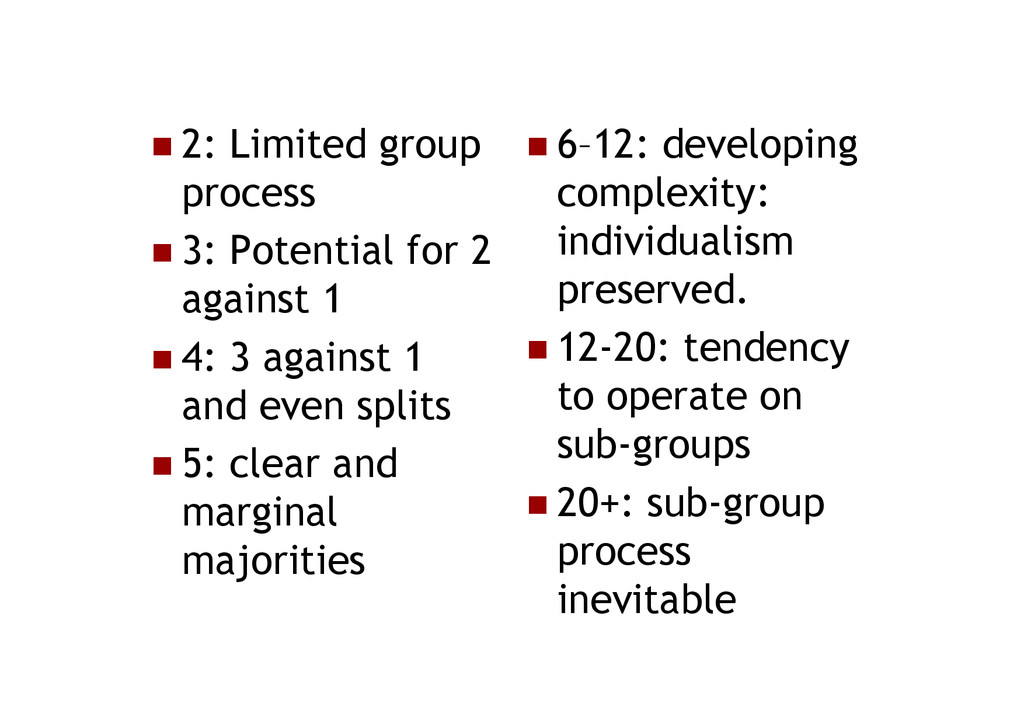
against 1 4: 3 against 1 and even splits 5: clear and marginal majorities 6–12: developing complexity: individualism preserved. 12-20: tendency to operate on sub-groups 20+: sub-group process inevitable
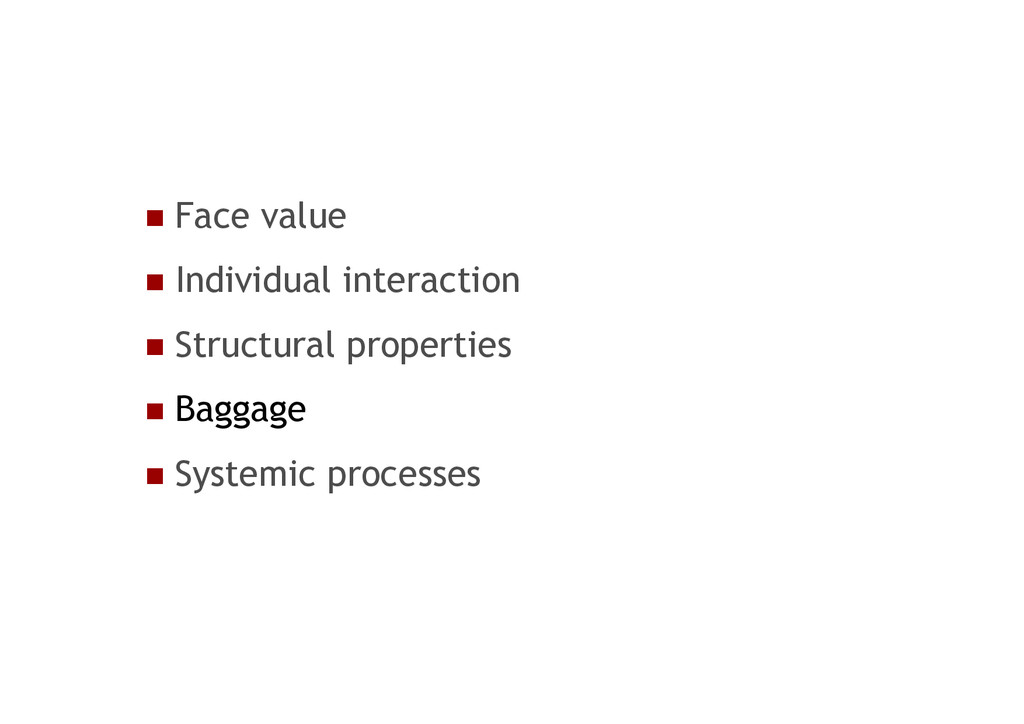
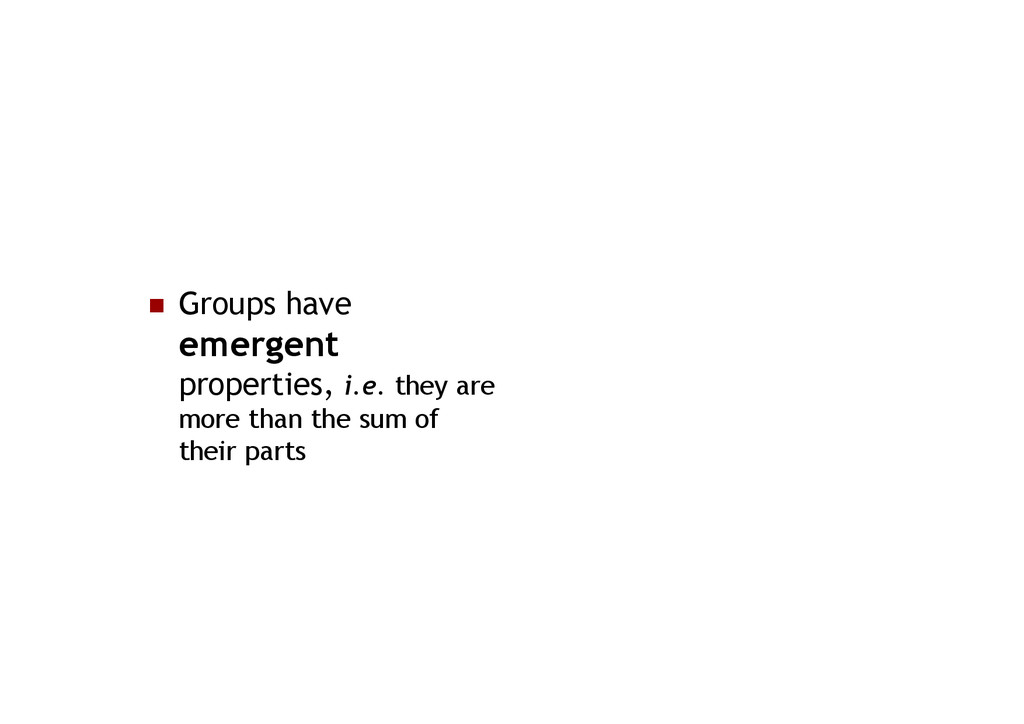
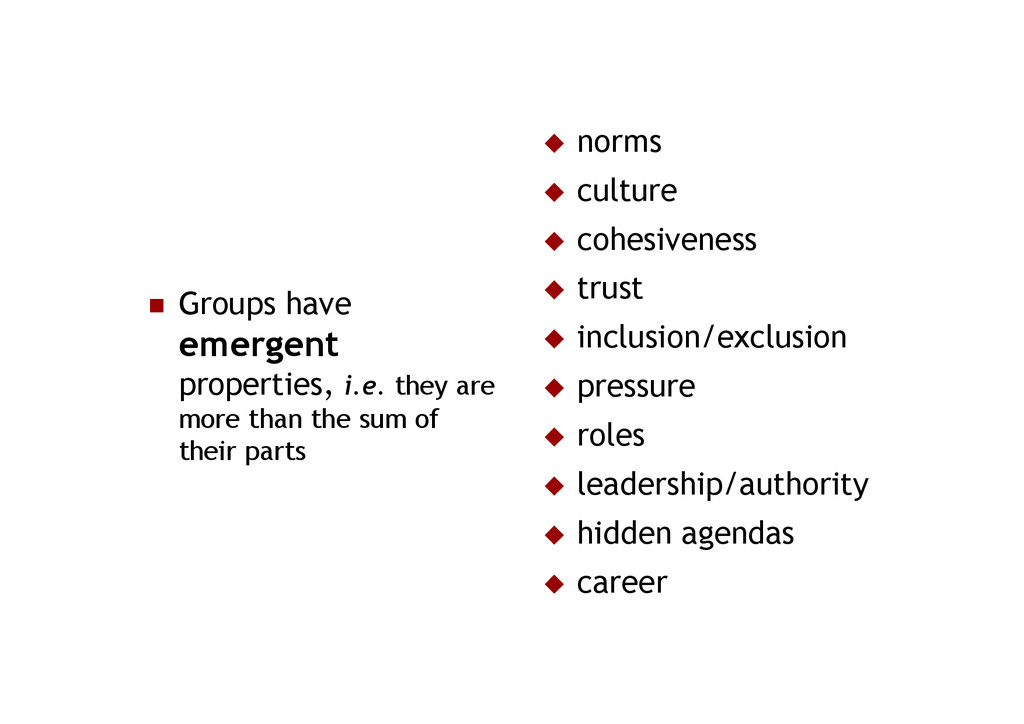
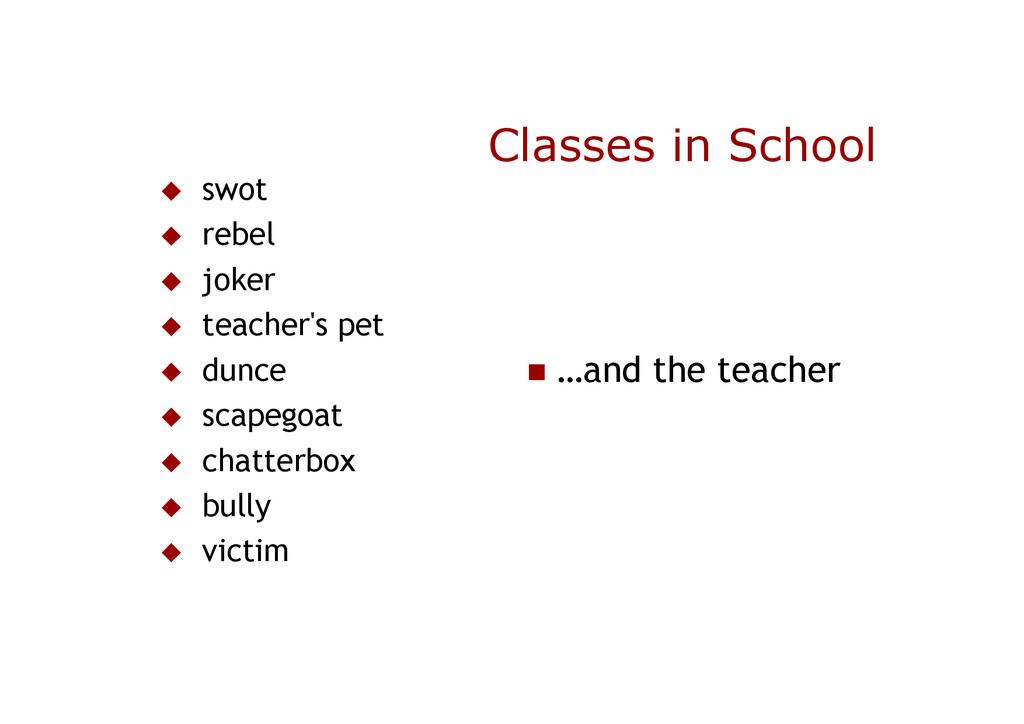
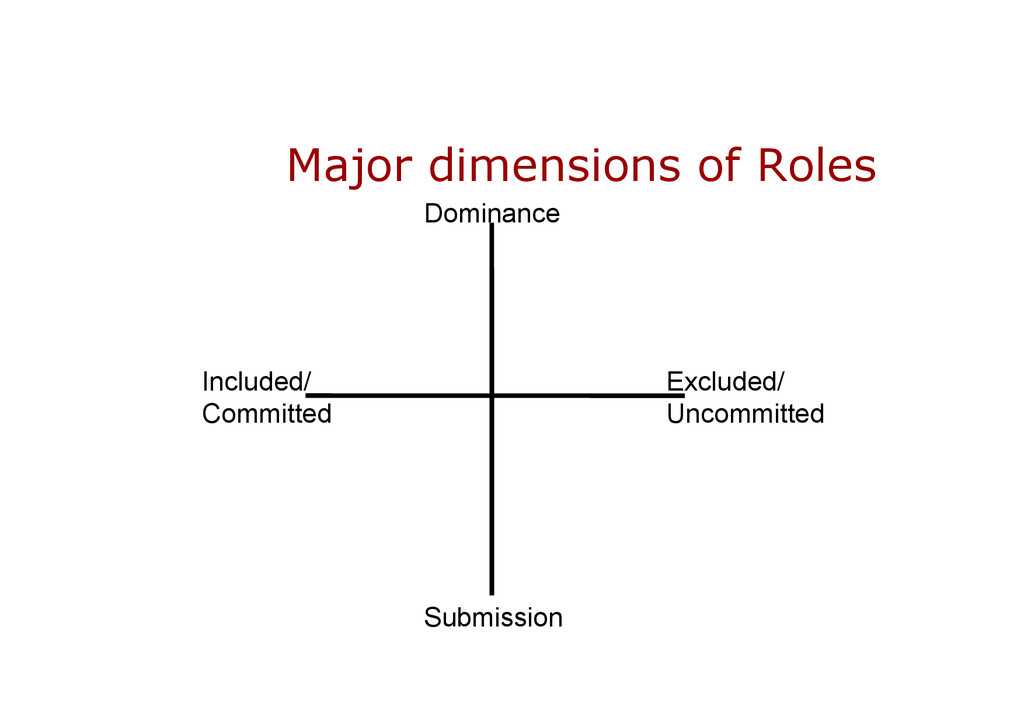
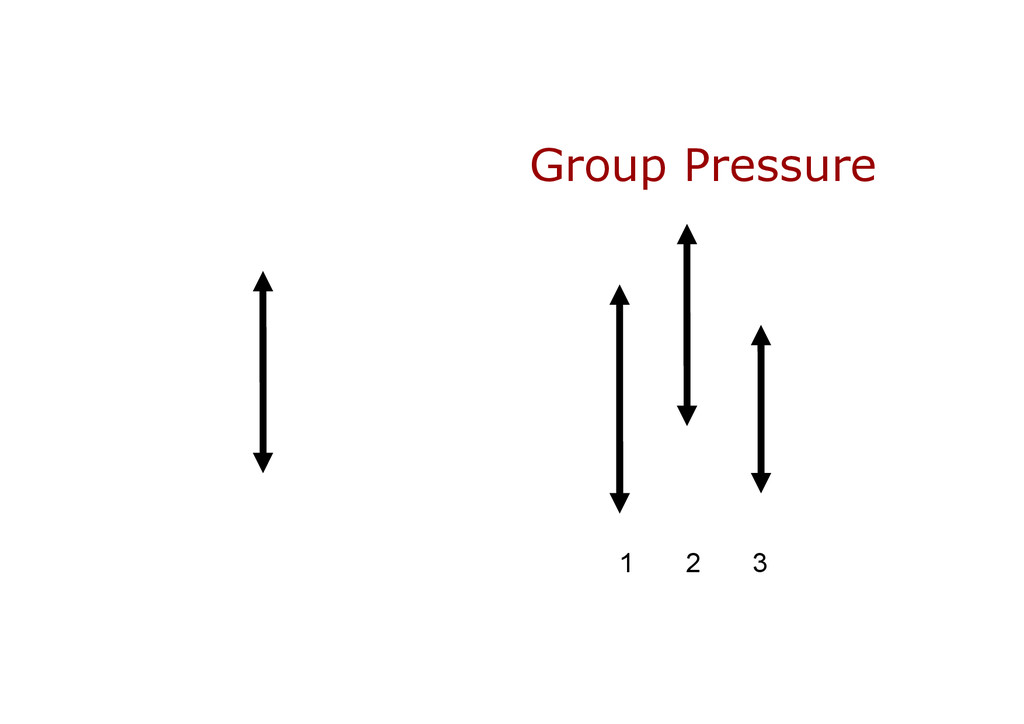
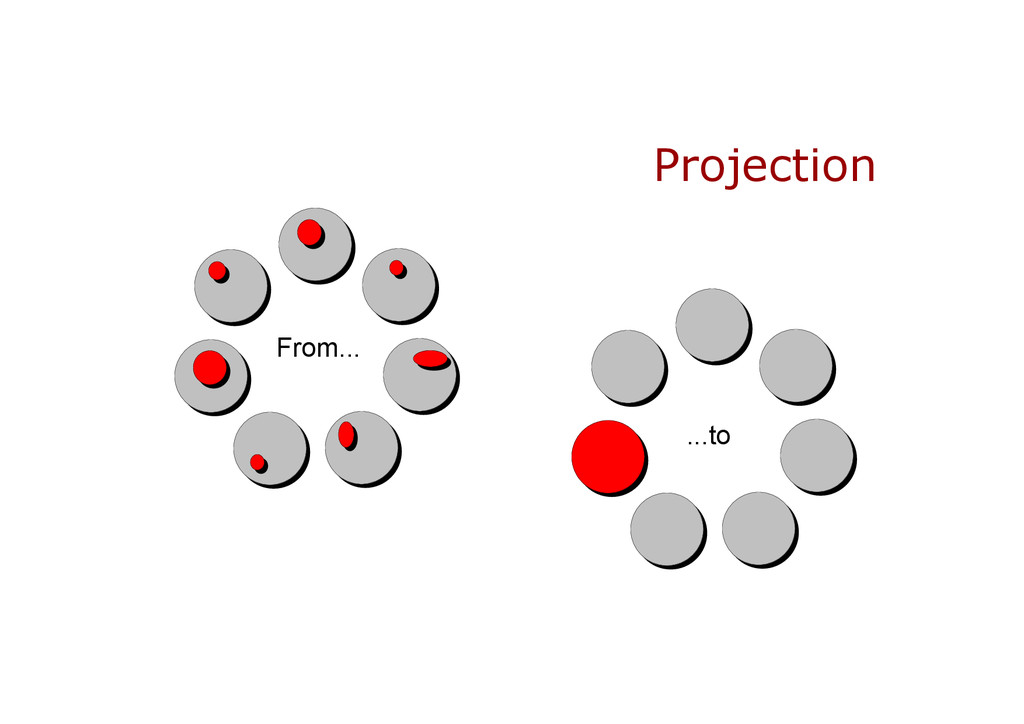
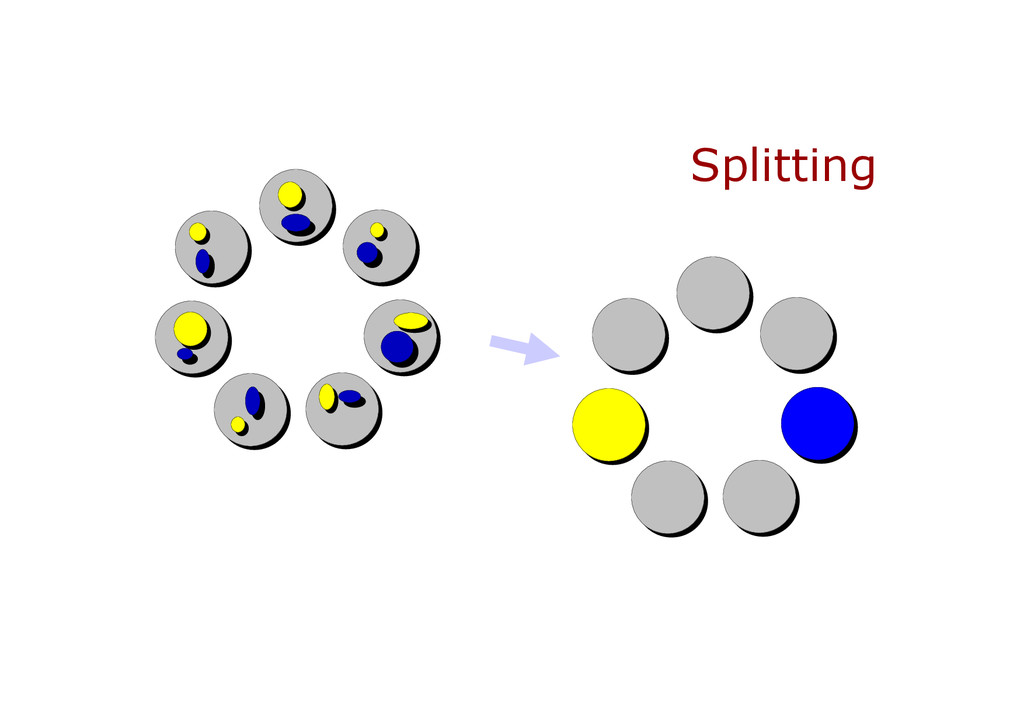
the sum of their parts norms culture cohesiveness trust inclusion/exclusion pressure roles leadership/authority hidden agendas career
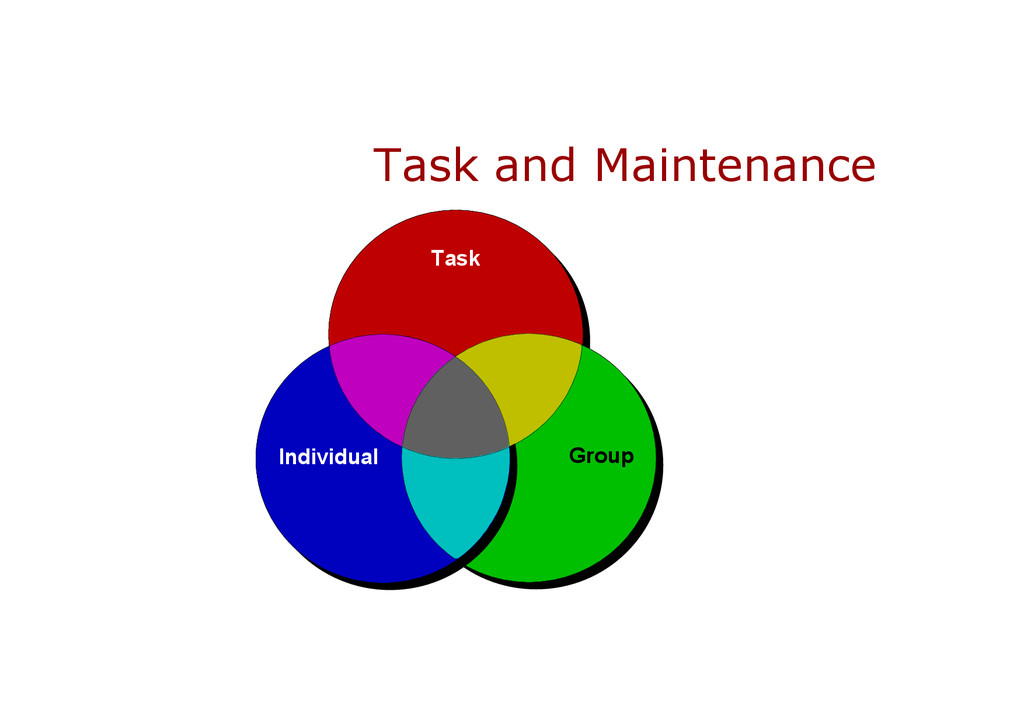
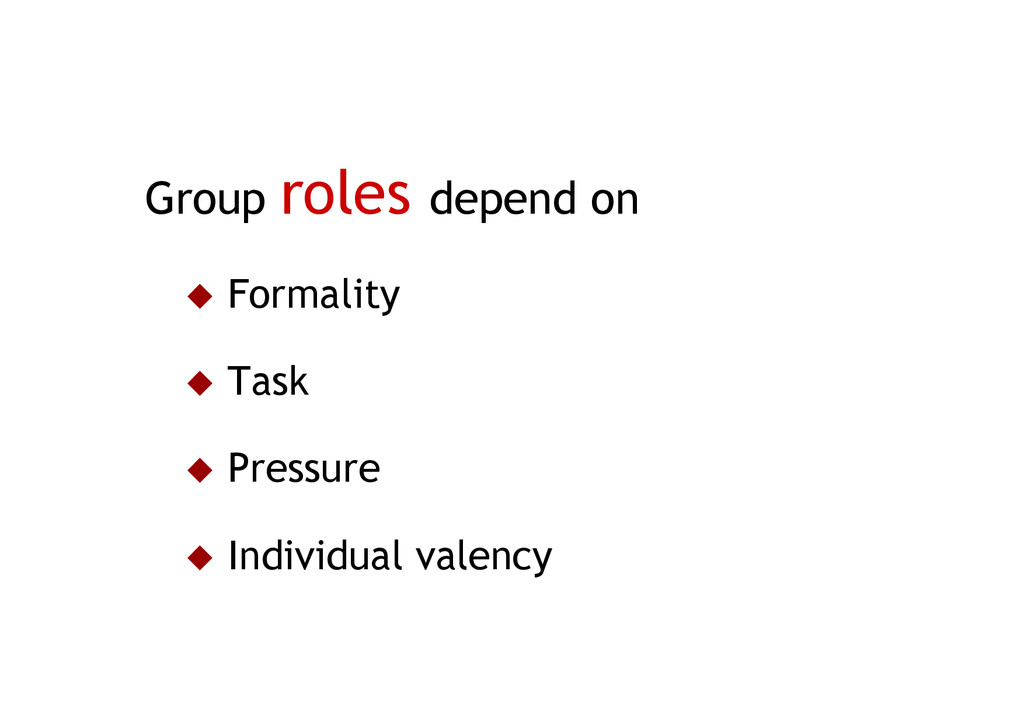
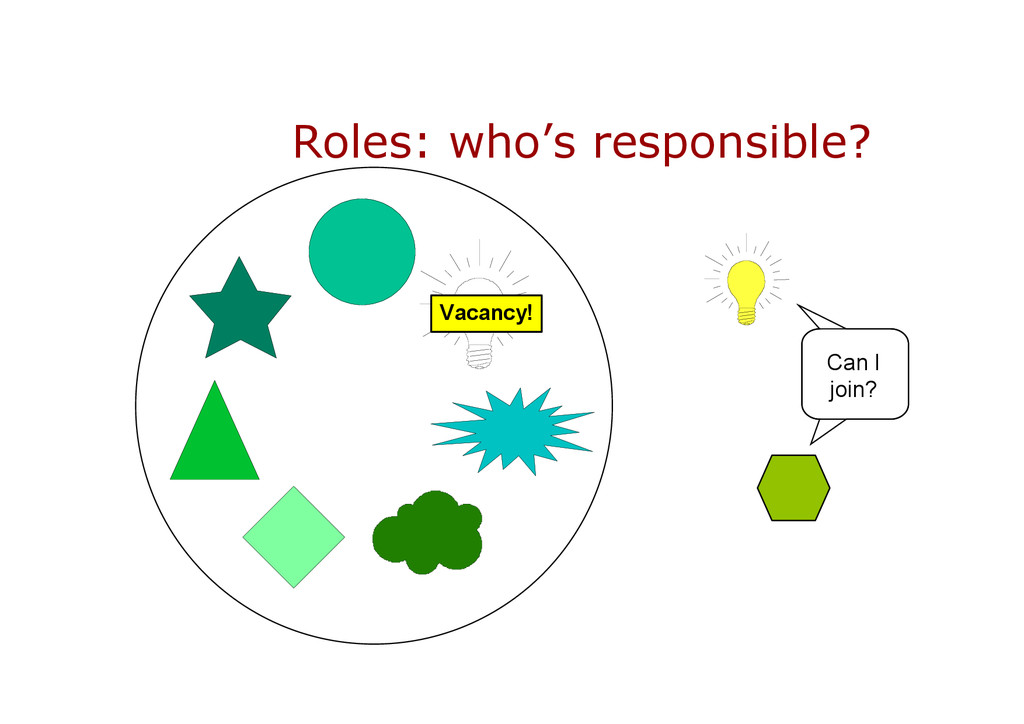
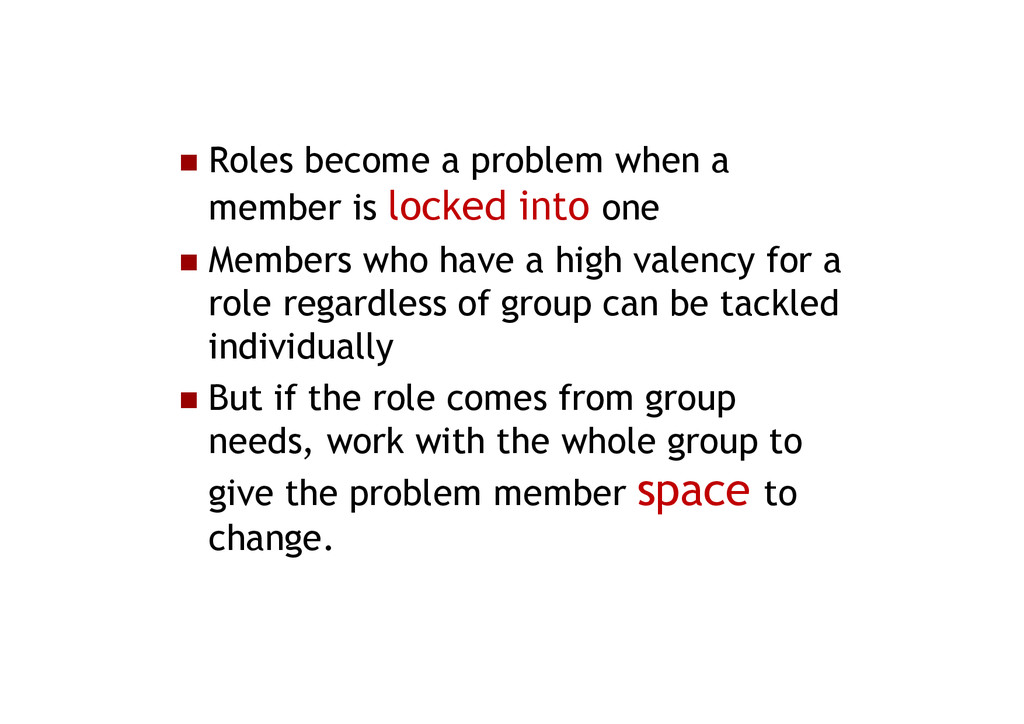
into one Members who have a high valency for a role regardless of group can be tackled individually But if the role comes from group needs, work with the whole group to give the problem member space to change.
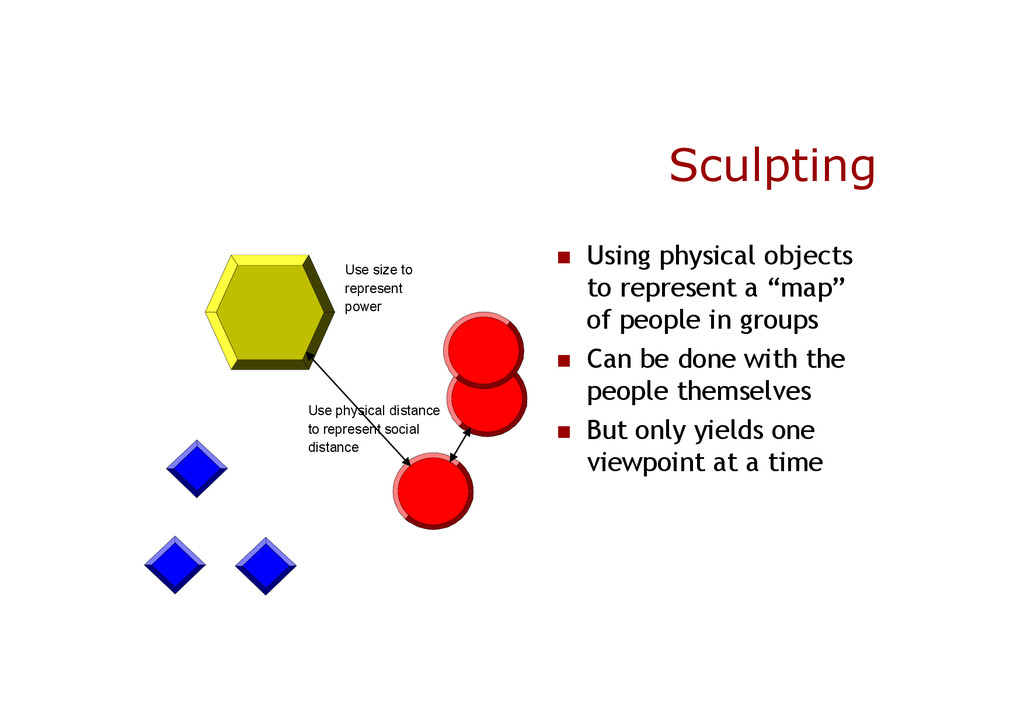
people in groups Can be done with the people themselves But only yields one viewpoint at a time Use physical distance to represent social distance Use size to represent power
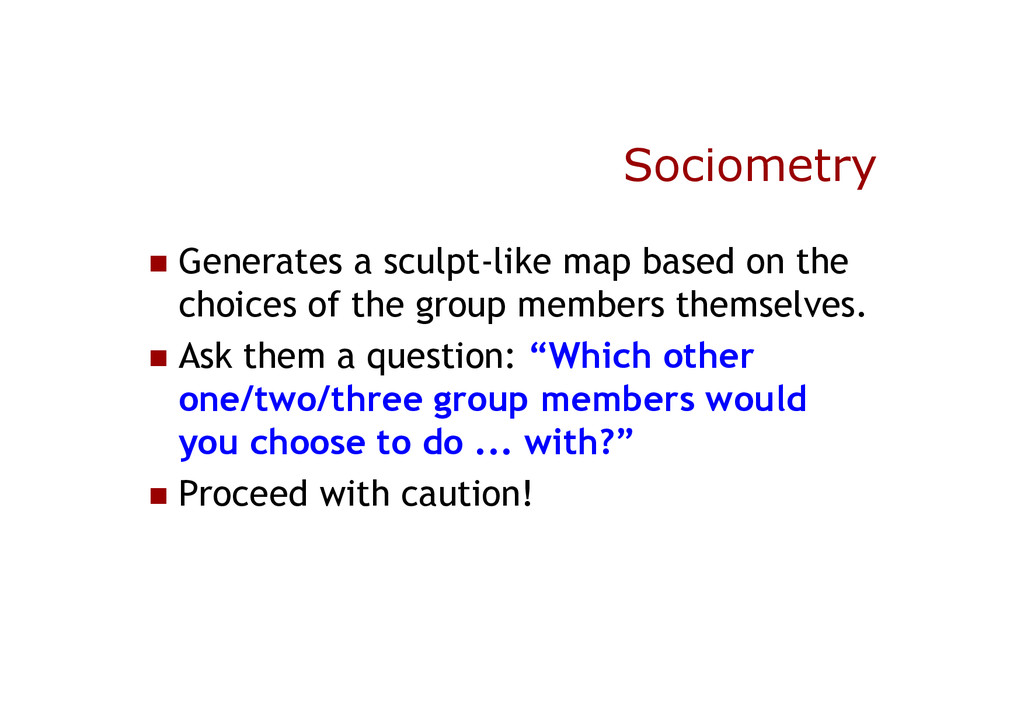
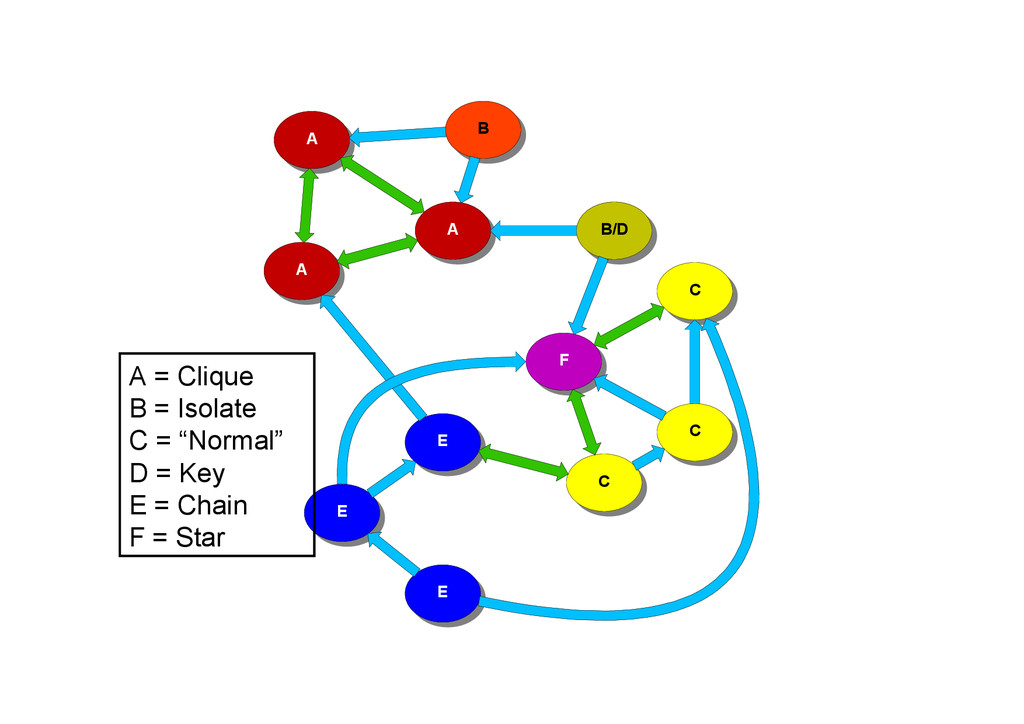
of the group members themselves. Ask them a question: “Which other one/two/three group members would you choose to do ... with?” Proceed with caution!


 jsatherton
 bvr7352
 ainischool
 akiraasano
 hiola
hiola
 signer
 masakiokuda
 frievea
 coderdojojapan
 naochim2026
 techseoconnect
 tmiket
 62gerente
 kimpetersen
 szymonslowik
 mkilby
 cassininazir
 eileencodes
 morganepeng
 keathley
 sarafernandez
 bkeepers