Upgrade to Pro — share decks privately, control downloads, hide ads and more …

[Product School] Decision-Making Frameworks for...

Avatar for Katerina Katerina
November 26, 2019

[Product School] Decision-Making Frameworks for Product Managers

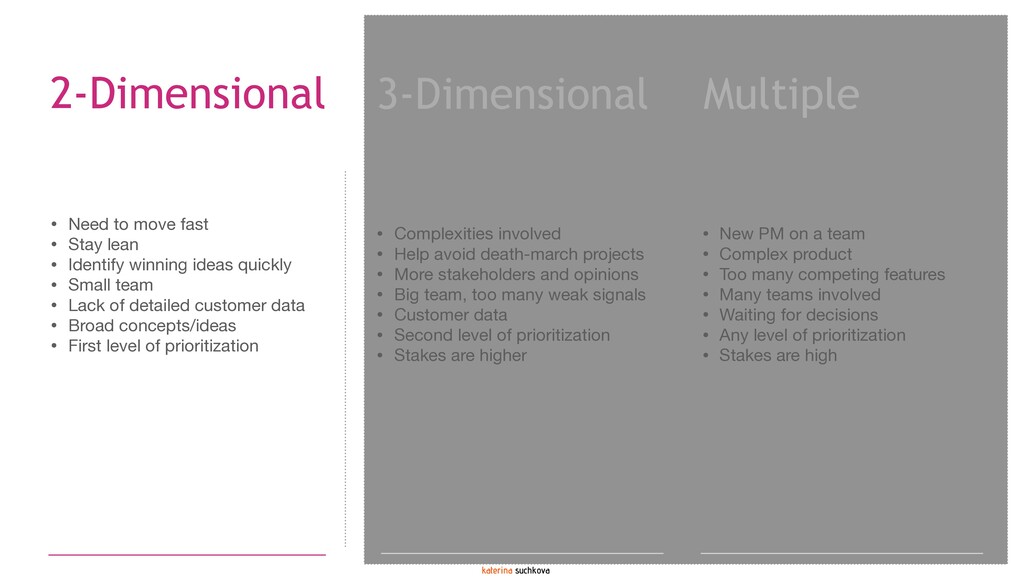
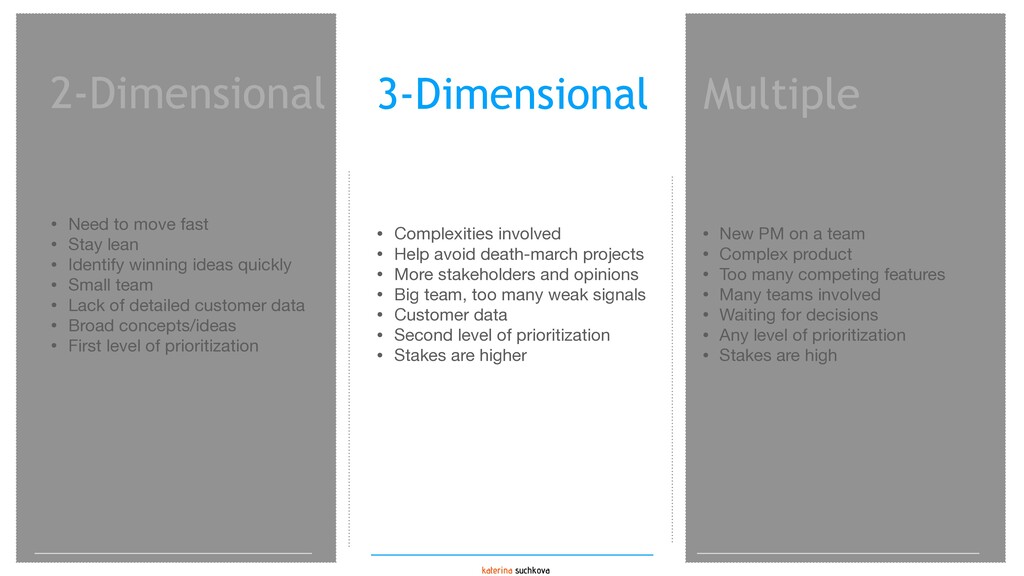
The deck covers several prioritization methodologies (two-dimensional, three-dimensional and multi-dimensional) that can be used as-is if your situation calls for it, or, with some significant adaptations. In my experience, it is quite rare when a framework can be applied 100% to the situation. My recommendation is to use these frameworks as guidance (because none of them are going to be your panacea) to create something similar but more relevant, meaningful and impactful for your product team. Use your company's strategy and vision to create a prioritization formula/framework that reflects what is most important for the organization at this point in time.

Avatar for Katerina

Katerina

November 26, 2019
Tweet

Other Decks in Business

Transcript

  1. How to Make Better Product Decisions Tools and frameworks to

    help Product Managers make better decisions Katerina Suchkova Product Coach & Design Thinking Facilitator Sr. Product Manager 15Five
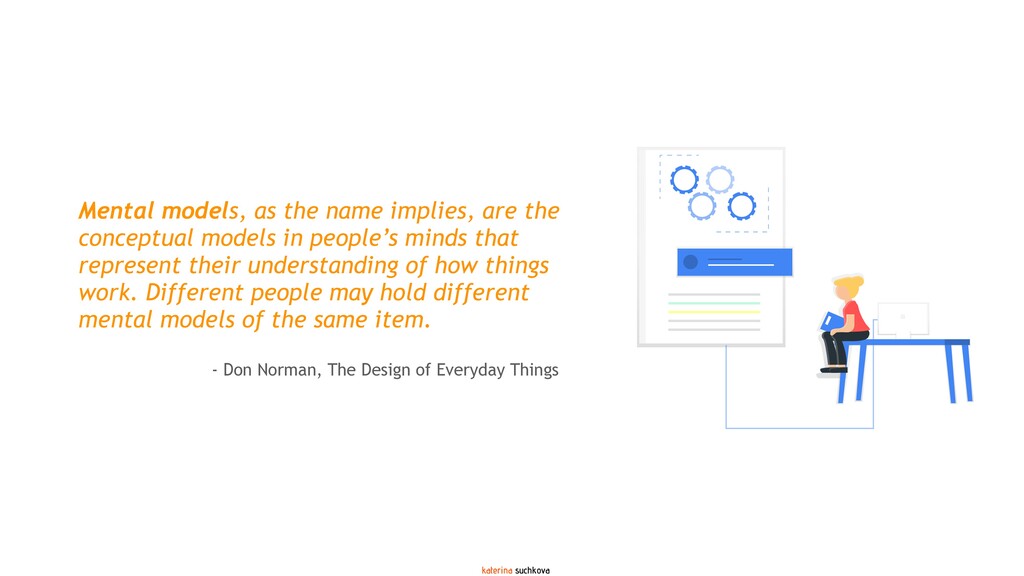
  2. Mental models, as the name implies, are the conceptual models

    in people’s minds that represent their understanding of how things work. Different people may hold different mental models of the same item. - Don Norman, The Design of Everyday Things
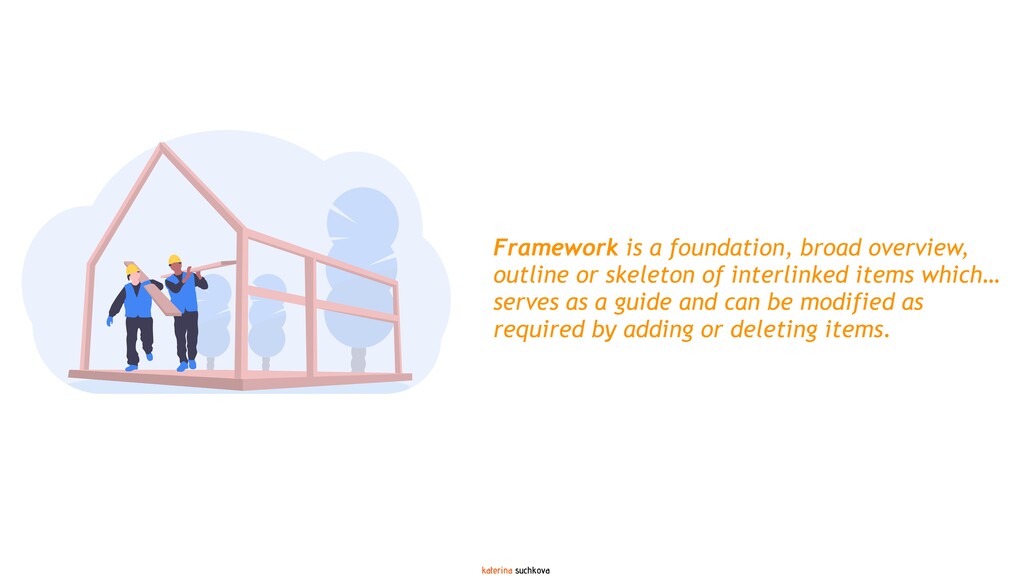
  3. Framework is a foundation, broad overview, outline or skeleton of

    interlinked items which… serves as a guide and can be modified as required by adding or deleting items.
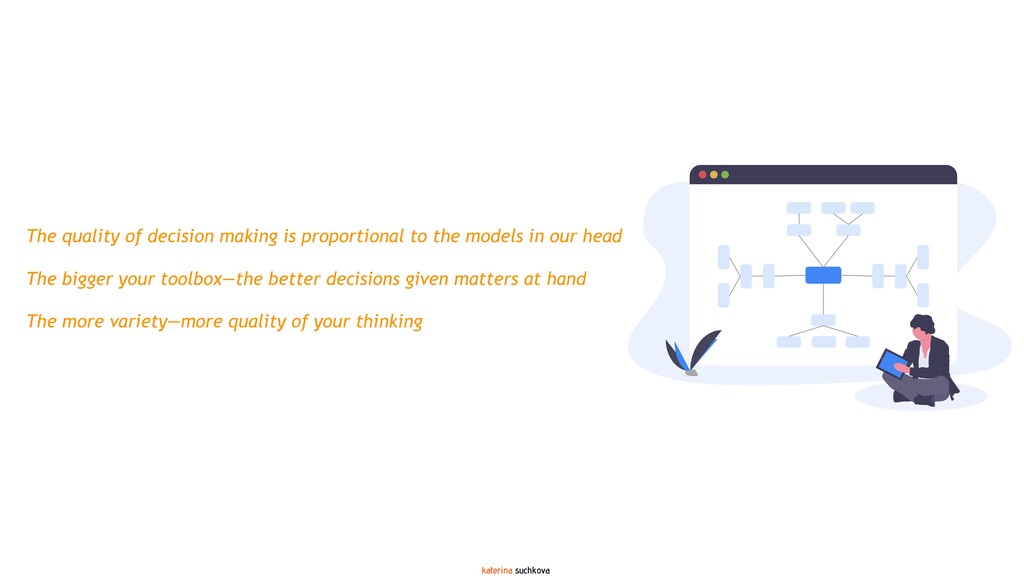
  4. The quality of decision making is proportional to the models

    in our head The bigger your toolbox—the better decisions given matters at hand The more variety—more quality of your thinking
  5. 2-Dimensional 3-Dimensional Multiple • New PM on a team •

    Complex product • Too many competing features • Many teams involved • Waiting for decisions • Any level of prioritization • Stakes are high • Complexities involved • Help avoid death-march projects • More stakeholders and opinions • Big team, too many weak signals • Customer data • Second level of prioritization • Stakes are higher • Need to move fast • Stay lean • Identify winning ideas quickly • Small team • Lack of detailed customer data • Broad concepts/ideas • First level of prioritization
  6. 3-Dimensional Multiple • Complexities involved • Help avoid death-march projects

    • More stakeholders and opinions • Big team, too many weak signals • Customer data • Second level of prioritization • Stakes are higher • New PM on a team • Complex product • Too many competing features • Many teams involved • Waiting for decisions • Any level of prioritization • Stakes are high • Need to move fast • Stay lean • Identify winning ideas quickly • Small team • Lack of detailed customer data • Broad concepts/ideas • First level of prioritization 2-Dimensional
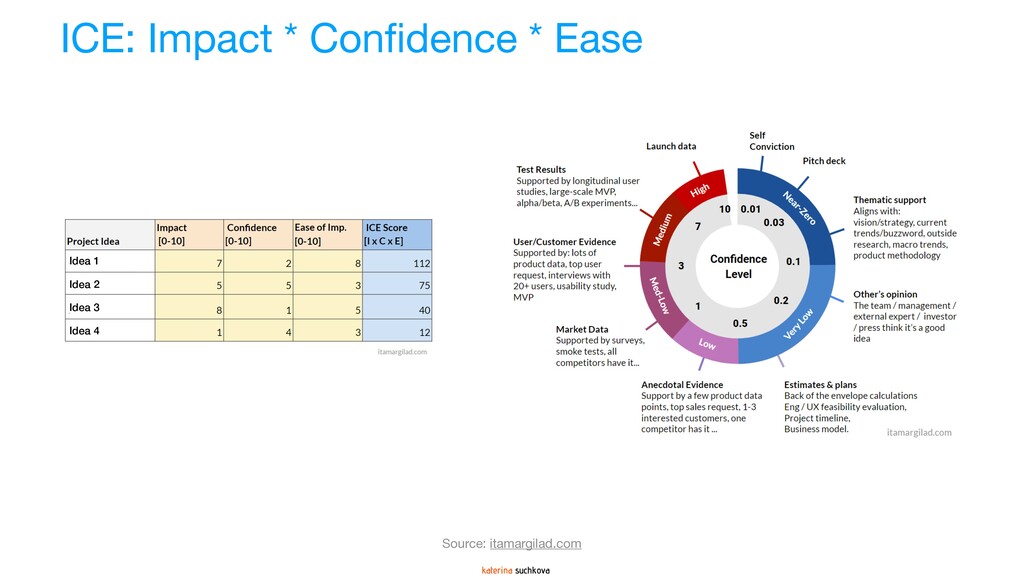
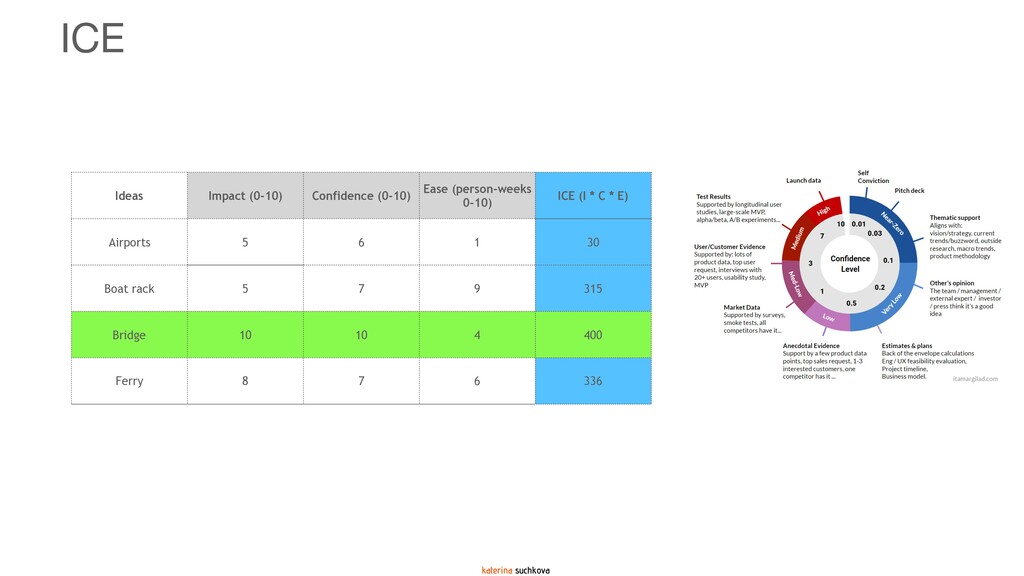
  7. ICE: Impact * Confidence * Ease Idea 1 Idea 2

    Idea 3 Idea 4 Source: itamargilad.com
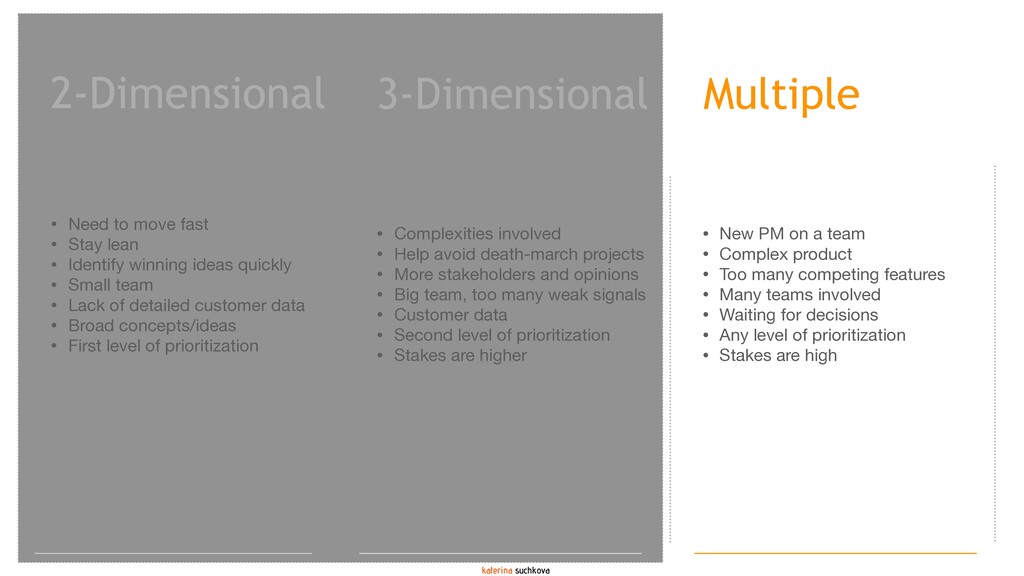
  8. Multiple 2-Dimensional • New PM on a team • Complex

    product • Too many competing features • Many teams involved • Waiting for decisions • Any level of prioritization • Stakes are high 3-Dimensional • Complexities involved • Help avoid death-march projects • More stakeholders and opinions • Big team, too many weak signals • Customer data • Second level of prioritization • Stakes are higher • Need to move fast • Stay lean • Identify winning ideas quickly • Small team • Lack of detailed customer data • Broad concepts/ideas • First level of prioritization
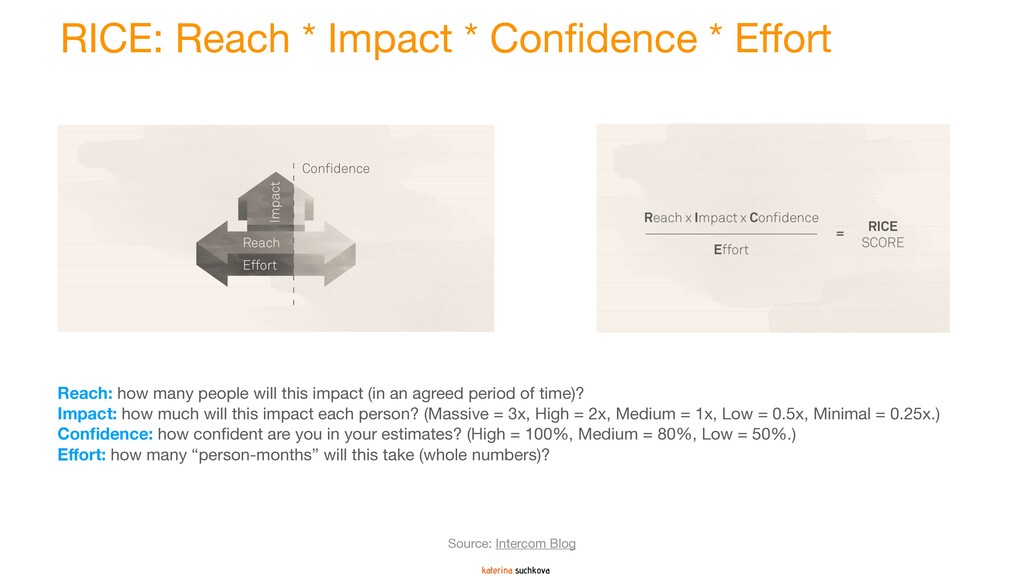
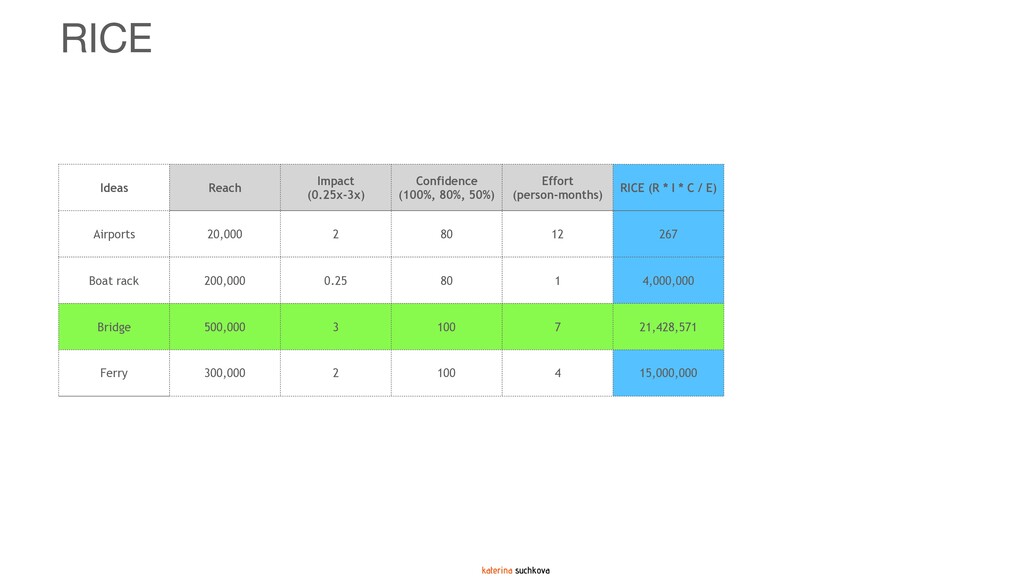
  9. RICE: Reach * Impact * Confidence * Effort Reach: how

    many people will this impact (in an agreed period of time)? Impact: how much will this impact each person? (Massive = 3x, High = 2x, Medium = 1x, Low = 0.5x, Minimal = 0.25x.) Confidence: how confident are you in your estimates? (High = 100%, Medium = 80%, Low = 50%.) Effort: how many “person-months” will this take (whole numbers)? Source: Intercom Blog
  10. Help you make consistently good decisions Minimize biases and natural

    flaws in human behavior Require you consider information and evidence you otherwise would not Provide strong ground when justifying your decisions to stakeholders Adjustable systems, not a hard rule Collectible tool. The more variety, the better Frameworks
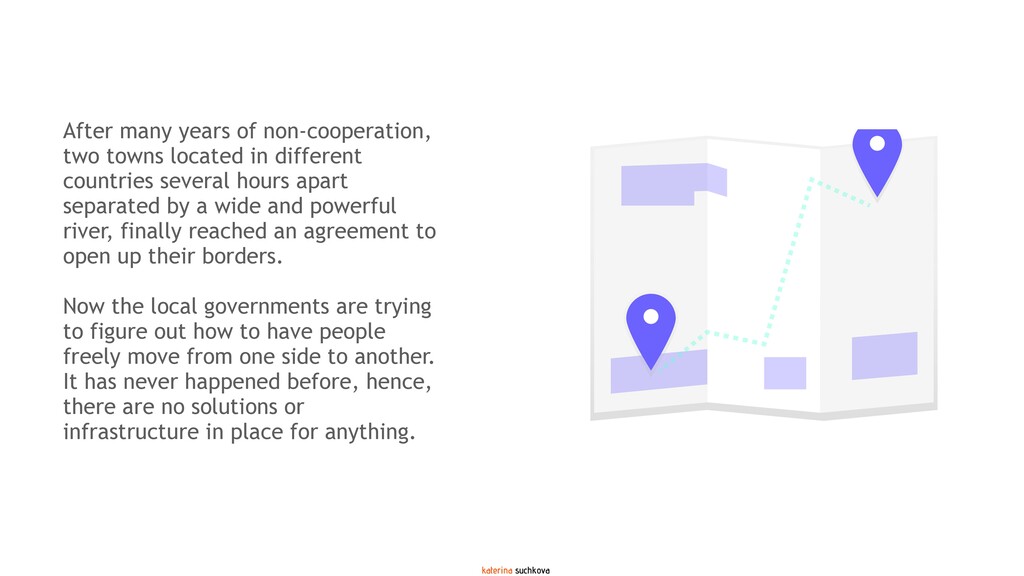
  11. After many years of non-cooperation, two towns located in different

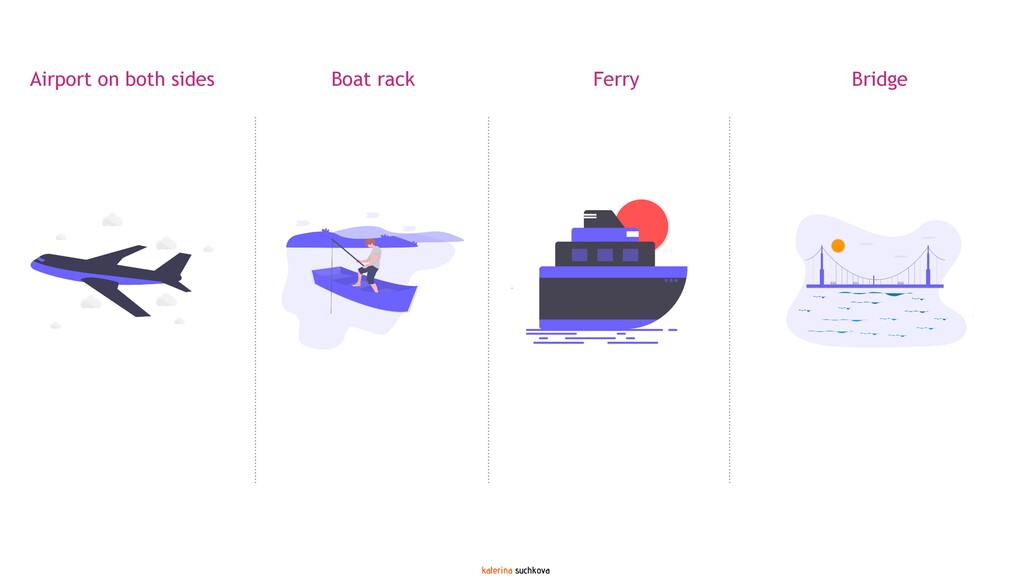
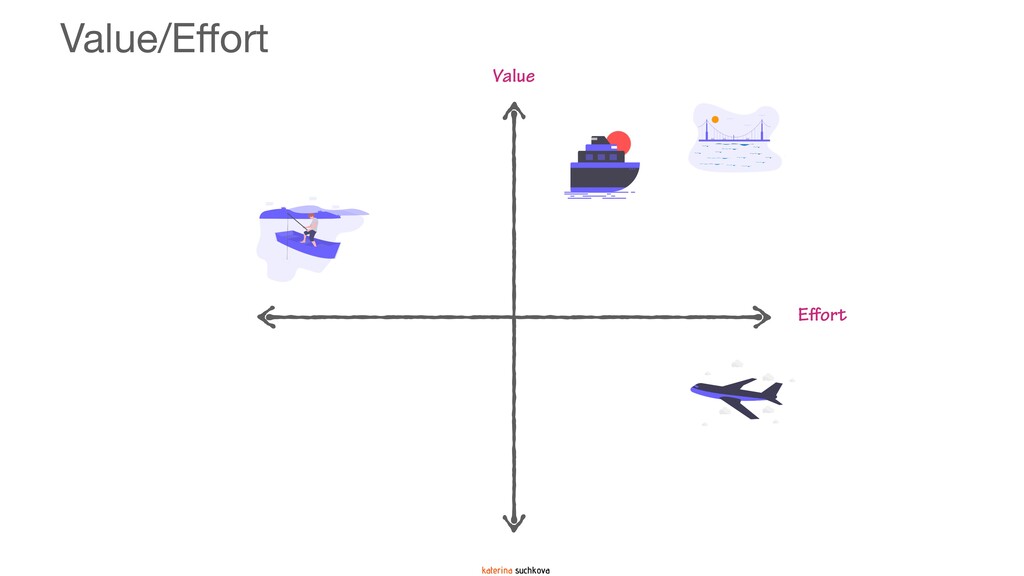
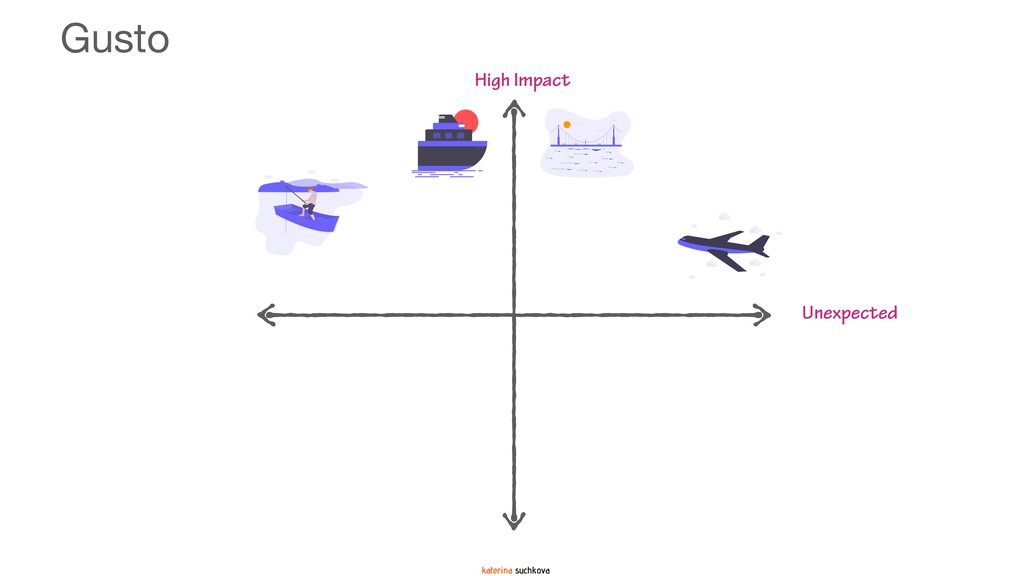
    countries several hours apart separated by a wide and powerful river, finally reached an agreement to open up their borders. Now the local governments are trying to figure out how to have people freely move from one side to another. It has never happened before, hence, there are no solutions or infrastructure in place for anything.
  12. You are the Product Manager on this high-profile project. You

    have designers, engineers and quality folks you’ll be partnering up with to find the best solution that fits the budget and meets a deadline.
  13. Ideas Impact (0-10) Confidence (0-10) Ease (person-weeks 0-10) ICE (I

    * C * E) Airports 5 6 1 30 Boat rack 5 7 9 315 Bridge 10 10 4 400 Ferry 8 7 6 336 ICE
  14. Ideas Reach Impact (0.25x-3x) Confidence (100%, 80%, 50%) Effort (person-months)

    RICE (R * I * C / E) Airports 20,000 2 80 12 267 Boat rack 200,000 0.25 80 1 4,000,000 Bridge 500,000 3 100 7 21,428,571 Ferry 300,000 2 100 4 15,000,000 RICE
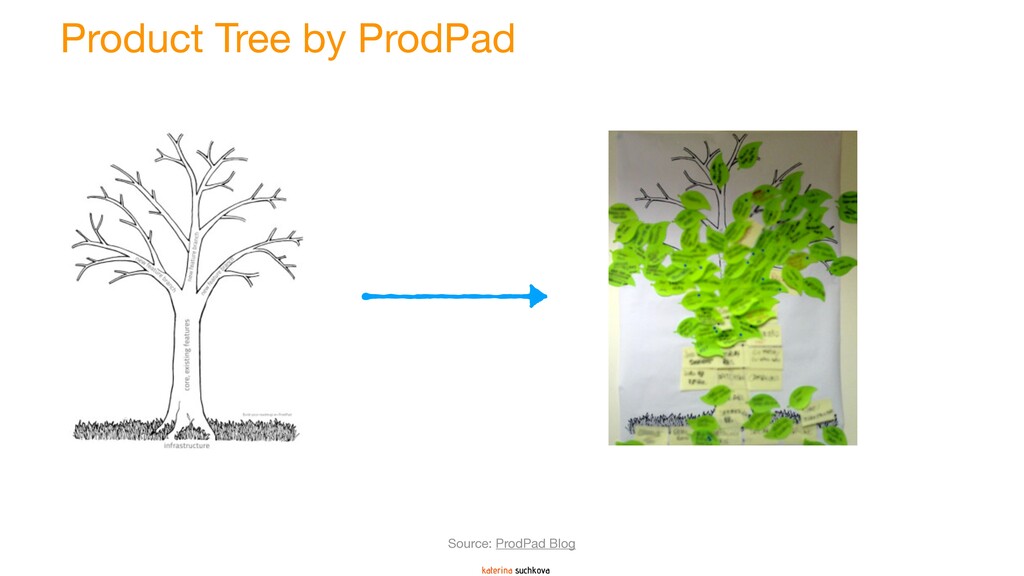
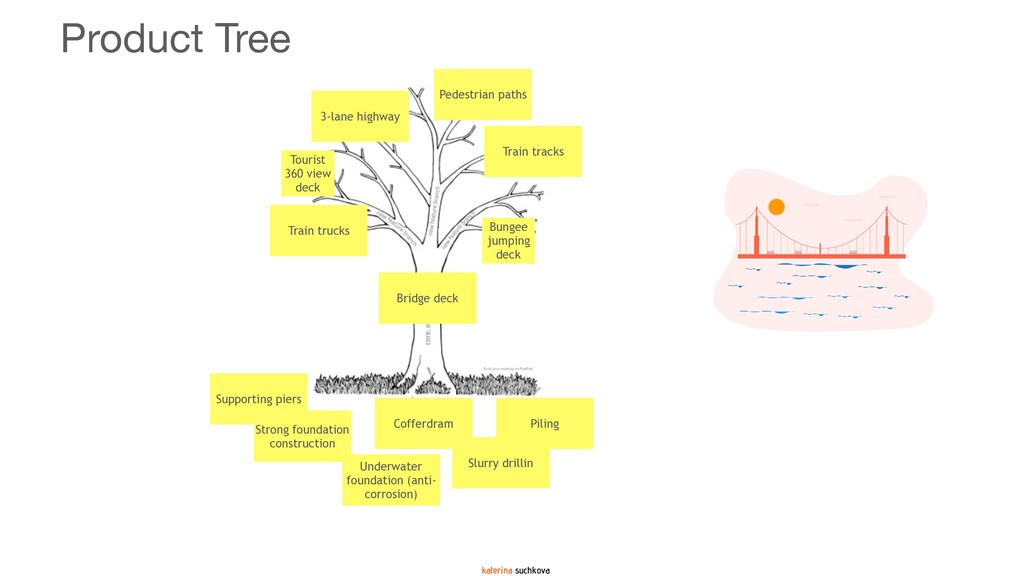
  15. Product Tree Cofferdram Slurry drillin Piling Train trucks Train tracks

    Strong foundation construction Underwater foundation (anti- corrosion) Bridge deck Supporting piers 3-lane highway Pedestrian paths Bungee jumping deck Tourist 360 view deck
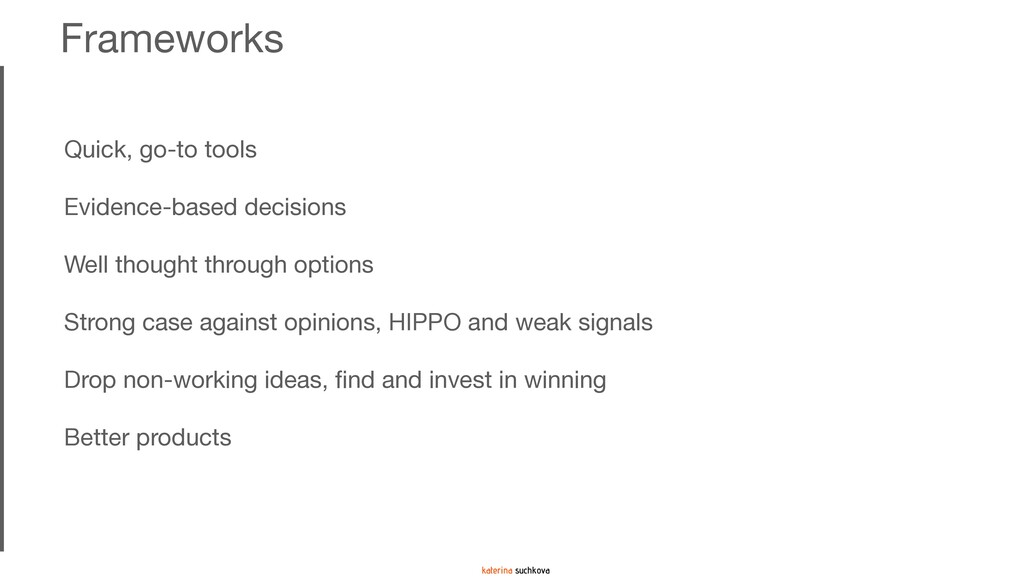
  16. Frameworks Quick, go-to tools Evidence-based decisions Well thought through options

    Strong case against opinions, HIPPO and weak signals Drop non-working ideas, find and invest in winning Better products
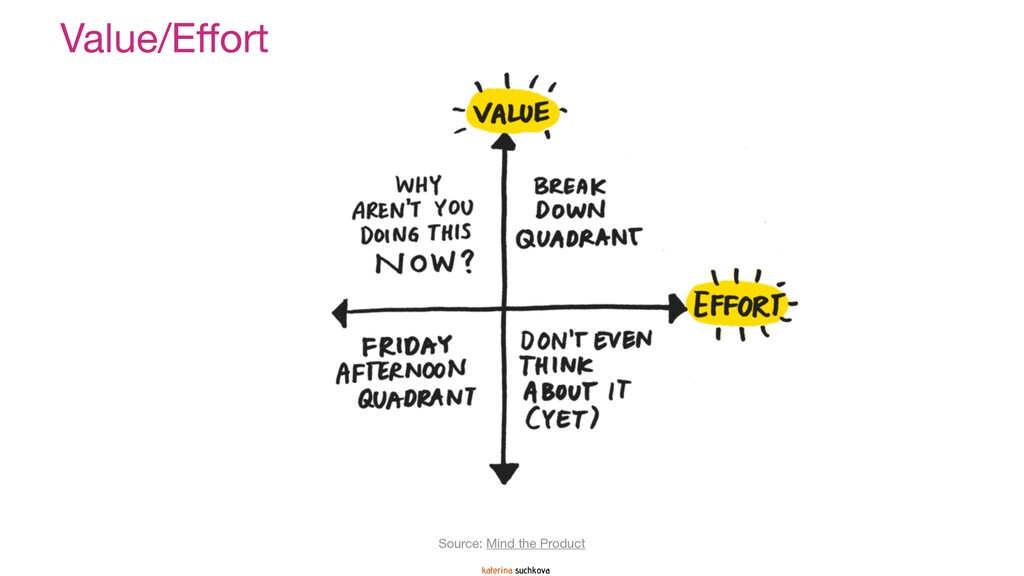
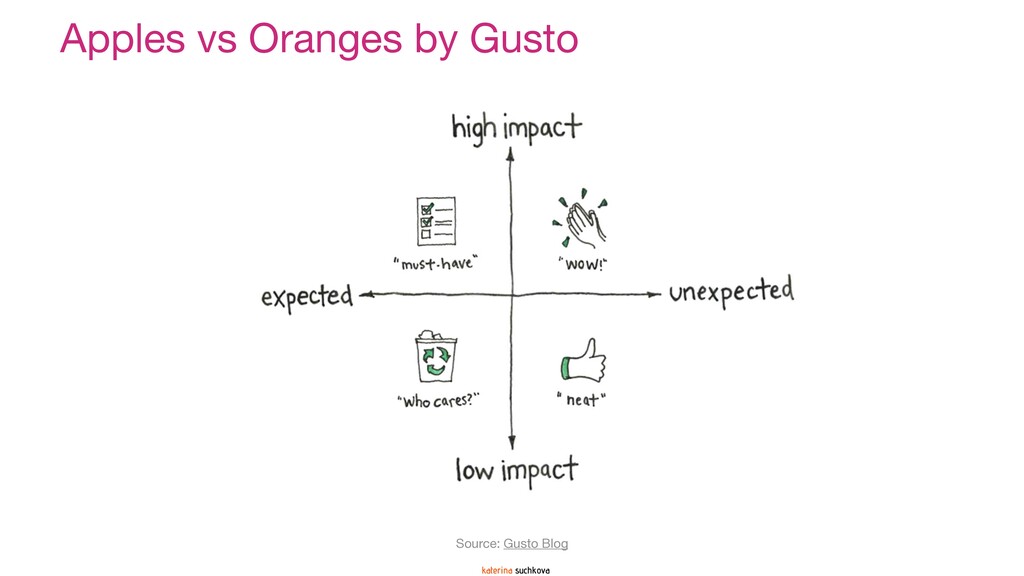
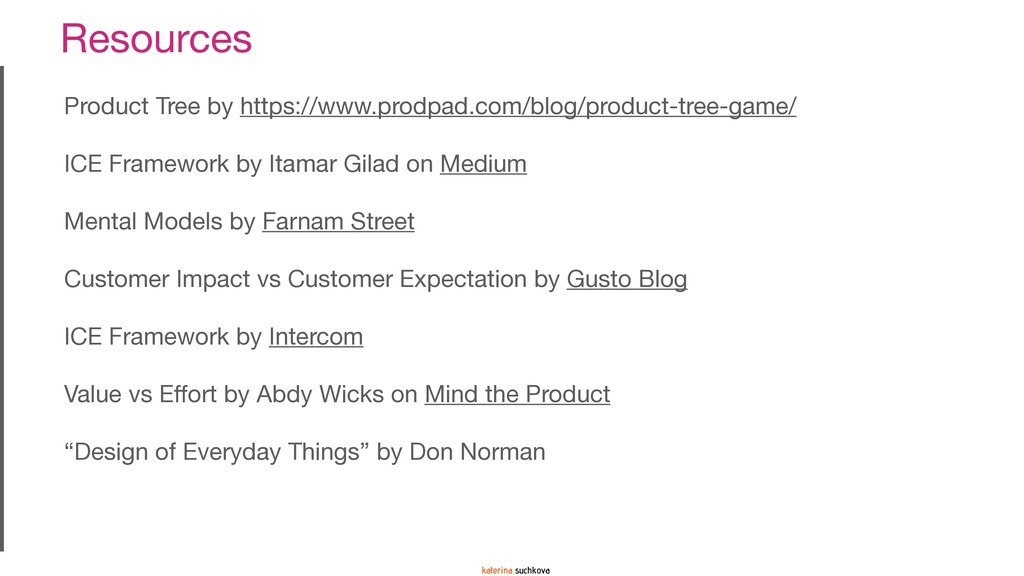
  17. Resources Product Tree by https://www.prodpad.com/blog/product-tree-game/ ICE Framework by Itamar Gilad

    on Medium Mental Models by Farnam Street Customer Impact vs Customer Expectation by Gusto Blog ICE Framework by Intercom Value vs Effort by Abdy Wicks on Mind the Product “Design of Everyday Things” by Don Norman