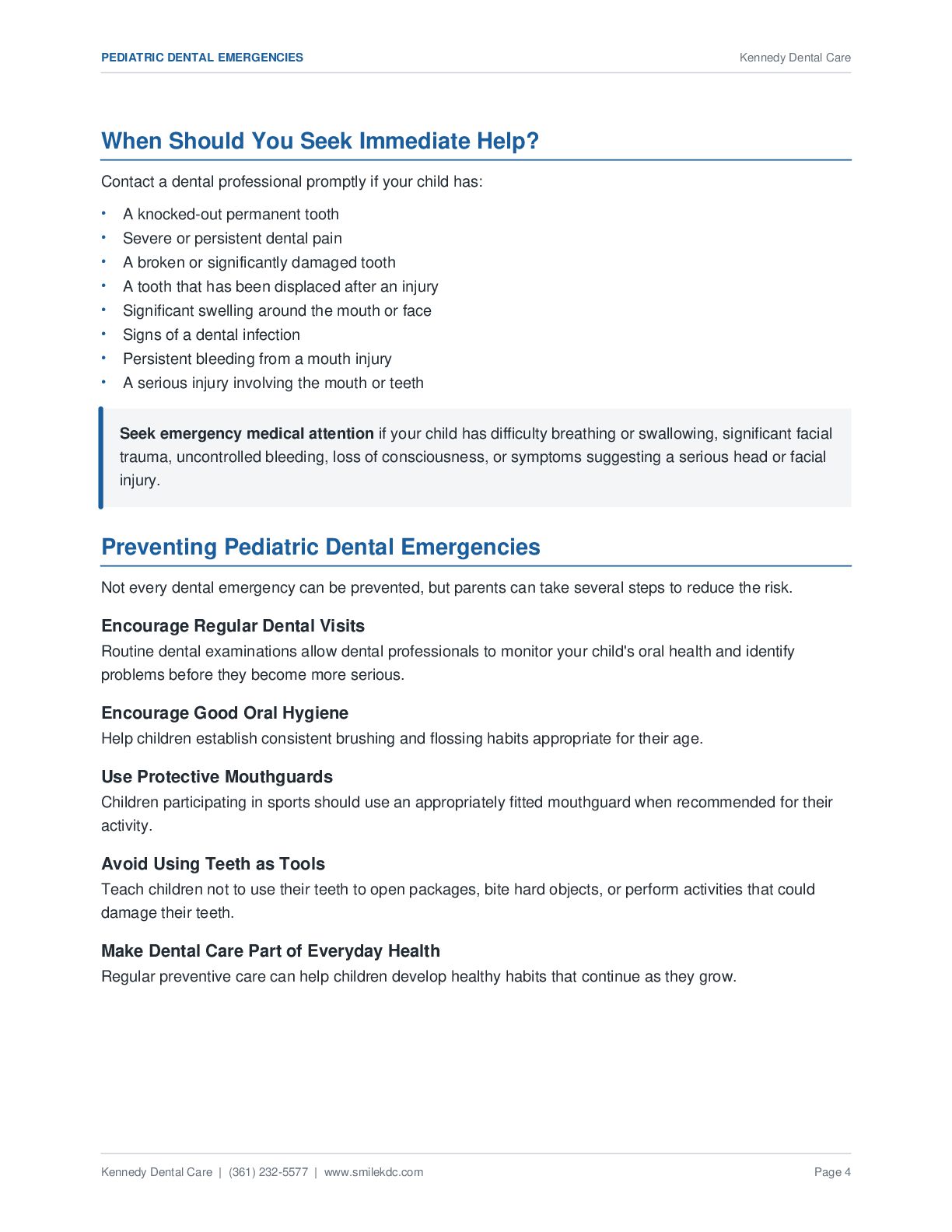
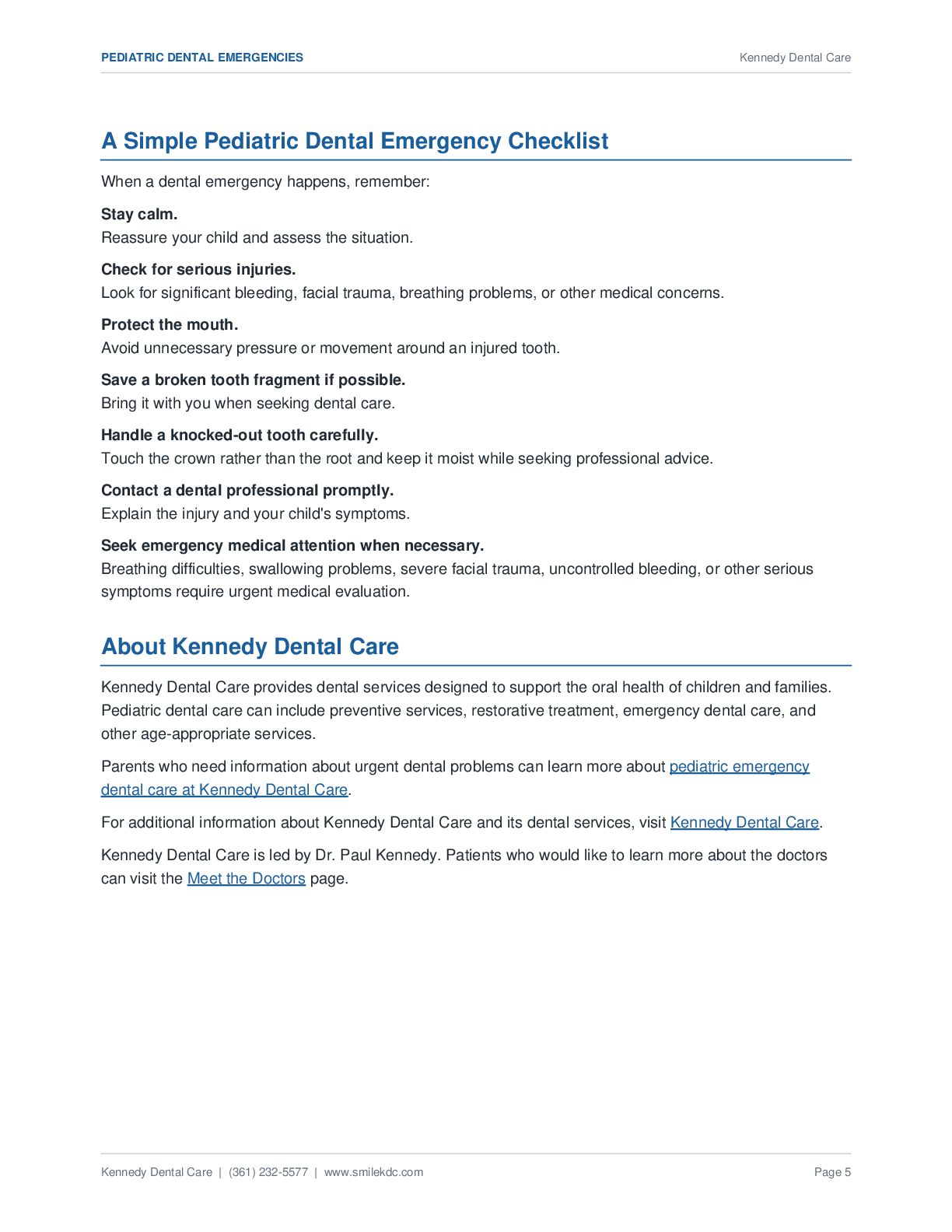
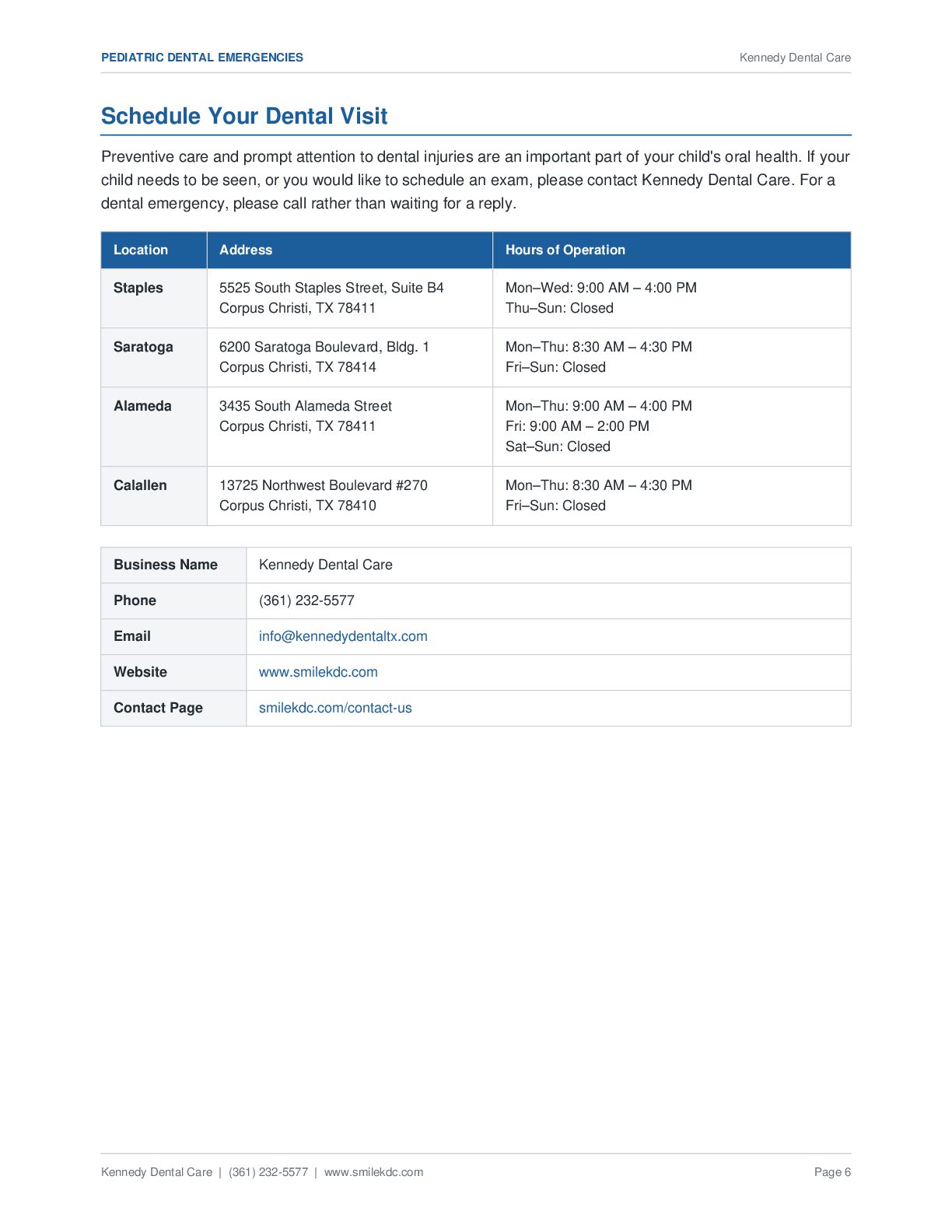
unexpectedly. A fall, sports injury, severe toothache, or sudden swelling can be frightening for both children and parents. Knowing what to do in the first few minutes can help protect your child's oral health and make it easier to get the appropriate care. This guide explains common pediatric dental emergencies, basic steps parents can take, situations that require prompt professional attention, and ways to help prevent dental injuries. What Is a Pediatric Dental Emergency? A pediatric dental emergency is an injury or dental problem that requires prompt attention to relieve significant pain, control bleeding, prevent further damage, or address a possible infection. Some dental problems may appear minor at first but can become more serious if they are ignored. If your child experiences significant pain, swelling, bleeding, or an injury to the teeth or mouth, contacting a dental professional can help determine the appropriate next step. For ongoing oral health care, parents can learn more about pediatric dentistry at Kennedy Dental Care. Common Pediatric Dental Emergencies 1. Knocked-Out Tooth A tooth can be knocked out during a fall, sports injury, accident, or other trauma. If a permanent tooth is knocked out, prompt dental attention is important. Carefully handle the tooth by the crown rather than the root. Avoid scrubbing or scraping it. If possible, keep the tooth moist while seeking professional care. A knocked-out baby tooth should not normally be placed back into the socket because doing so may affect the developing permanent tooth. Because treatment depends on the child's age and the type of tooth involved, contact a dental professional as soon as possible. 2. Chipped or Broken Tooth Children may chip or break a tooth after falling, biting something hard, or experiencing an impact. If a piece of the tooth has broken off, keep it in a clean container and bring it with you when seeking dental care. Rinse your child's mouth gently with water and check for additional injuries. A dentist can examine the tooth and determine whether treatment is necessary. 3. Severe Toothache A toothache can have several possible causes, including decay, infection, trauma, or irritation. If your child develops persistent or severe dental pain, don't ignore it. Pay attention to other symptoms such as swelling, fever, sensitivity, or difficulty eating. A dental examination can help identify the underlying cause and determine appropriate treatment. Kennedy Dental Care | (361) 232-5577 | www.smilekdc.com Page 1


 signer
 kekekenta
 ainischool
 bunnchinn3
 bvr7352
 2720japanoke
 auctria
 kentaroy47
 juanmartin2026
 masakiokuda
 pawan_pharm
 codingconduct
 tessaabrams
 mayatellez
 inesmontani
 michielstock
 akashhashmi
 reverentgeek
 ianozsvald
 mfonobong
 mclloyd
 marktimemedia
 denniskardys