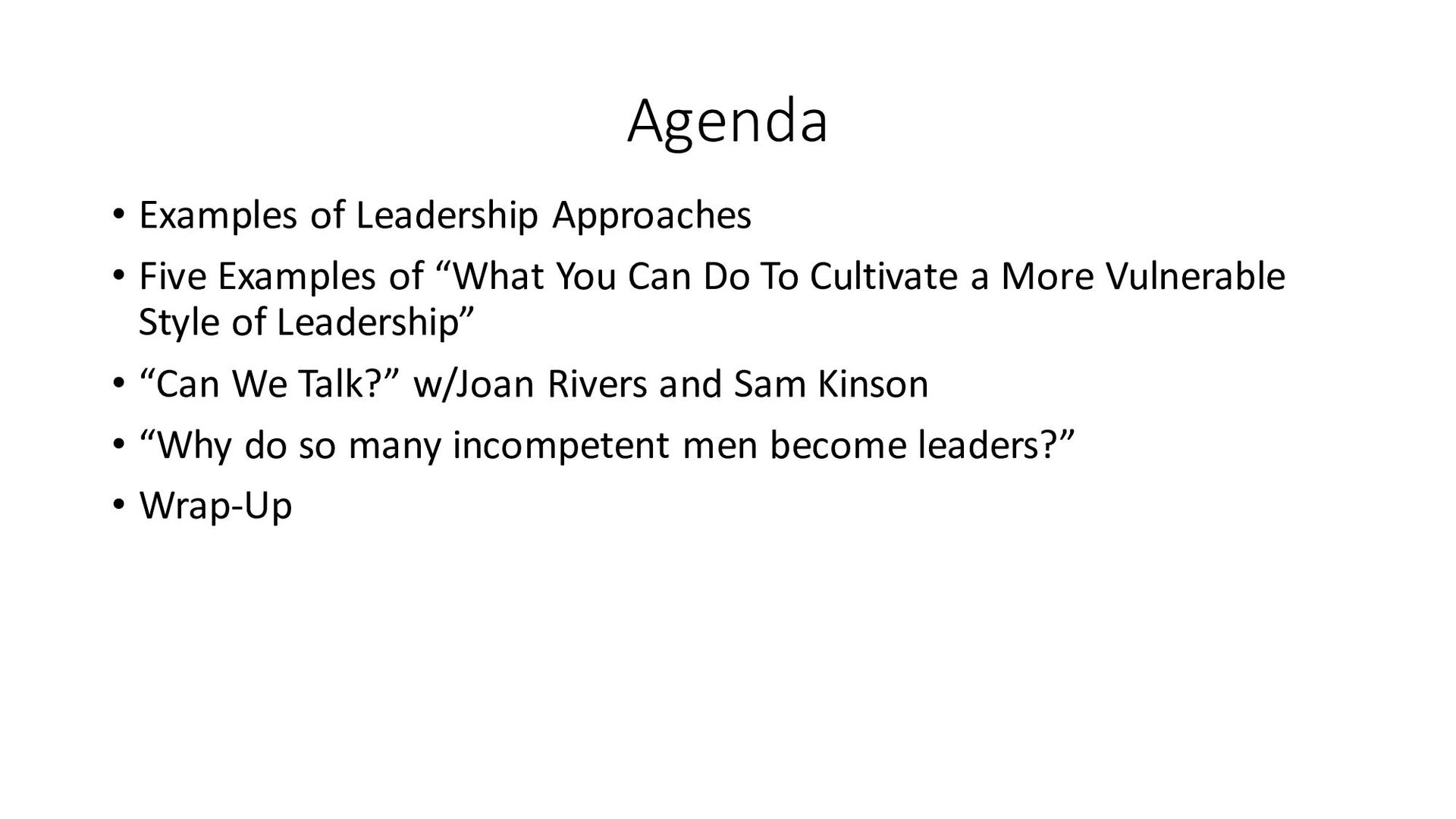
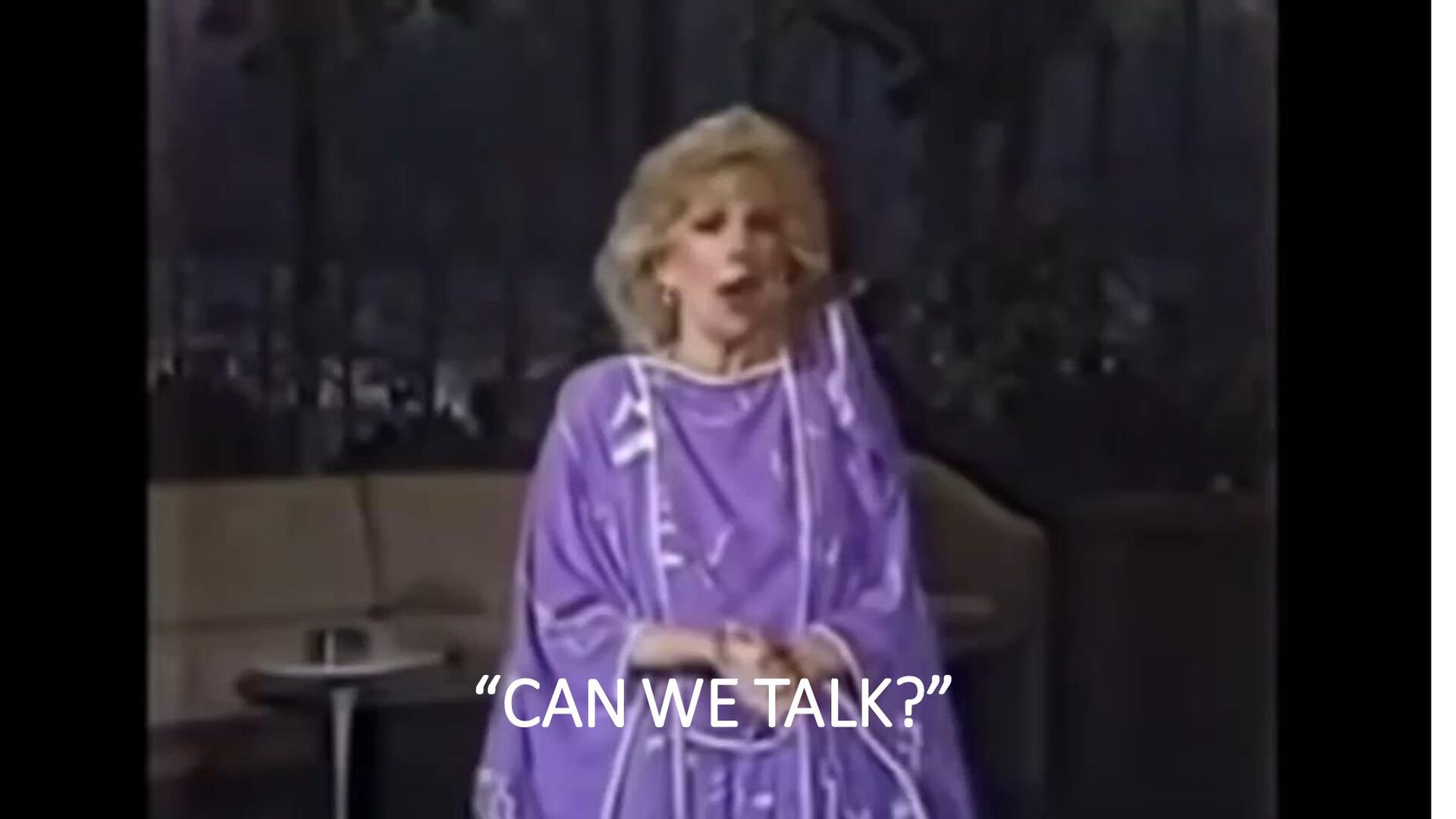
“What You Can Do To Cultivate a More Vulnerable Style of Leadership” • “Can We Talk?” w/Joan Rivers and Sam Kinson • “Why do so many incompetent men become leaders?” • Wrap-Up
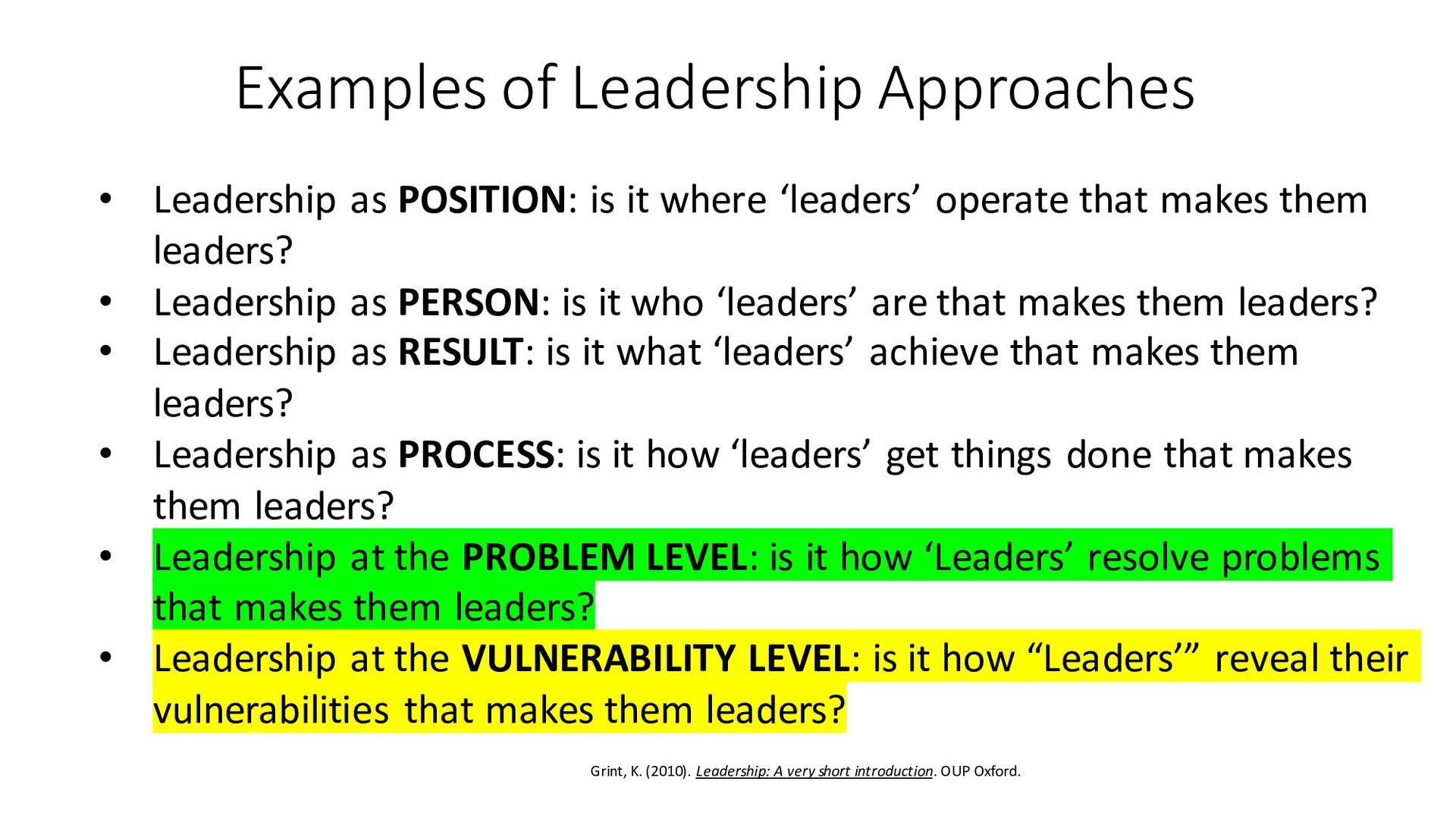
short introduction. OUP Oxford. • Leadership as POSITION: is it where ‘leaders’ operate that makes them leaders? • Leadership as PERSON: is it who ‘leaders’ are that makes them leaders? • Leadership as RESULT: is it what ‘leaders’ achieve that makes them leaders? • Leadership as PROCESS: is it how ‘leaders’ get things done that makes them leaders? • Leadership at the PROBLEM LEVEL: is it how ‘Leaders’ resolve problems that makes them leaders? • Leadership at the VULNERABILITY LEVEL: is it how “Leaders’” reveal their vulnerabilities that makes them leaders?
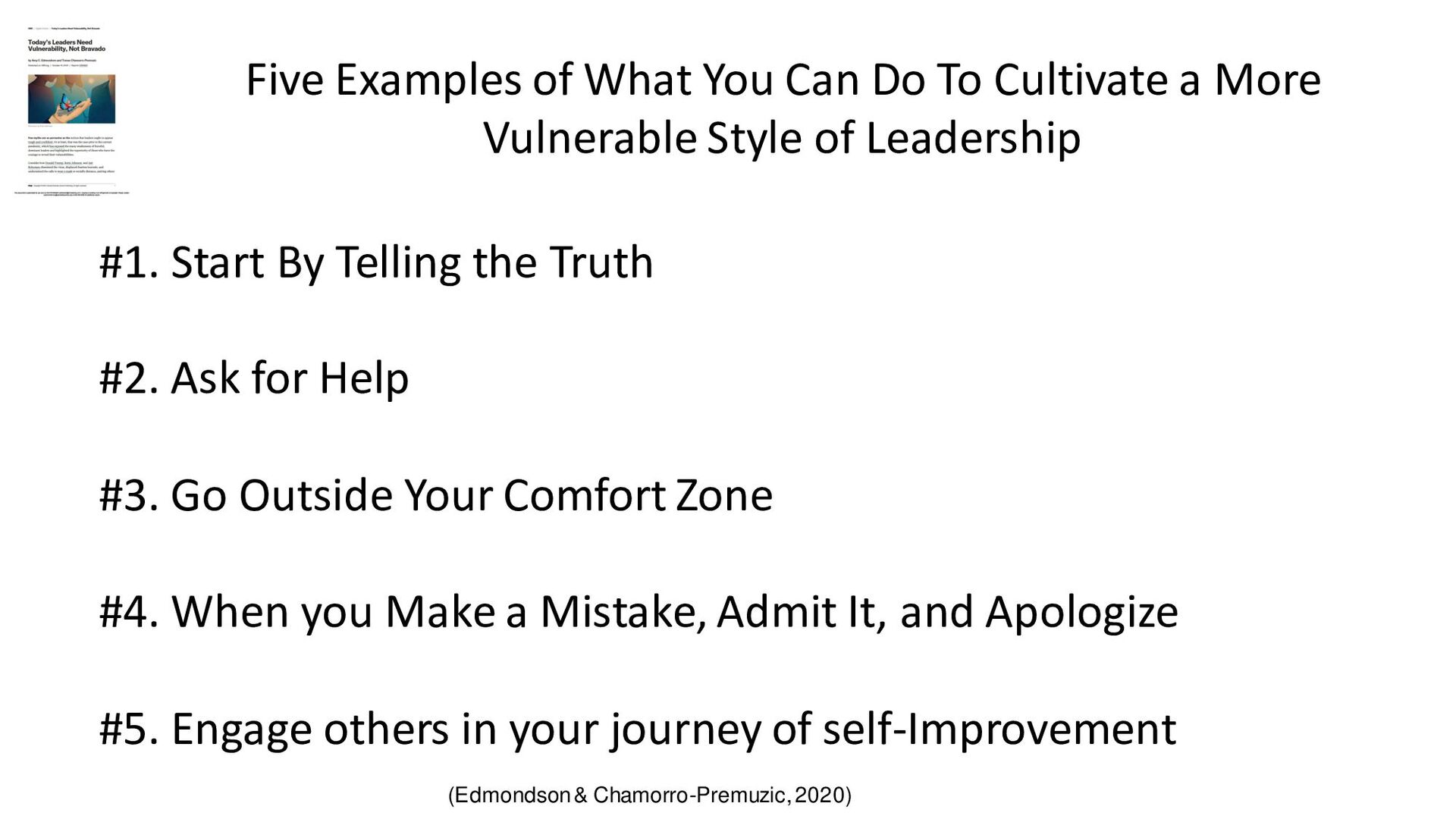
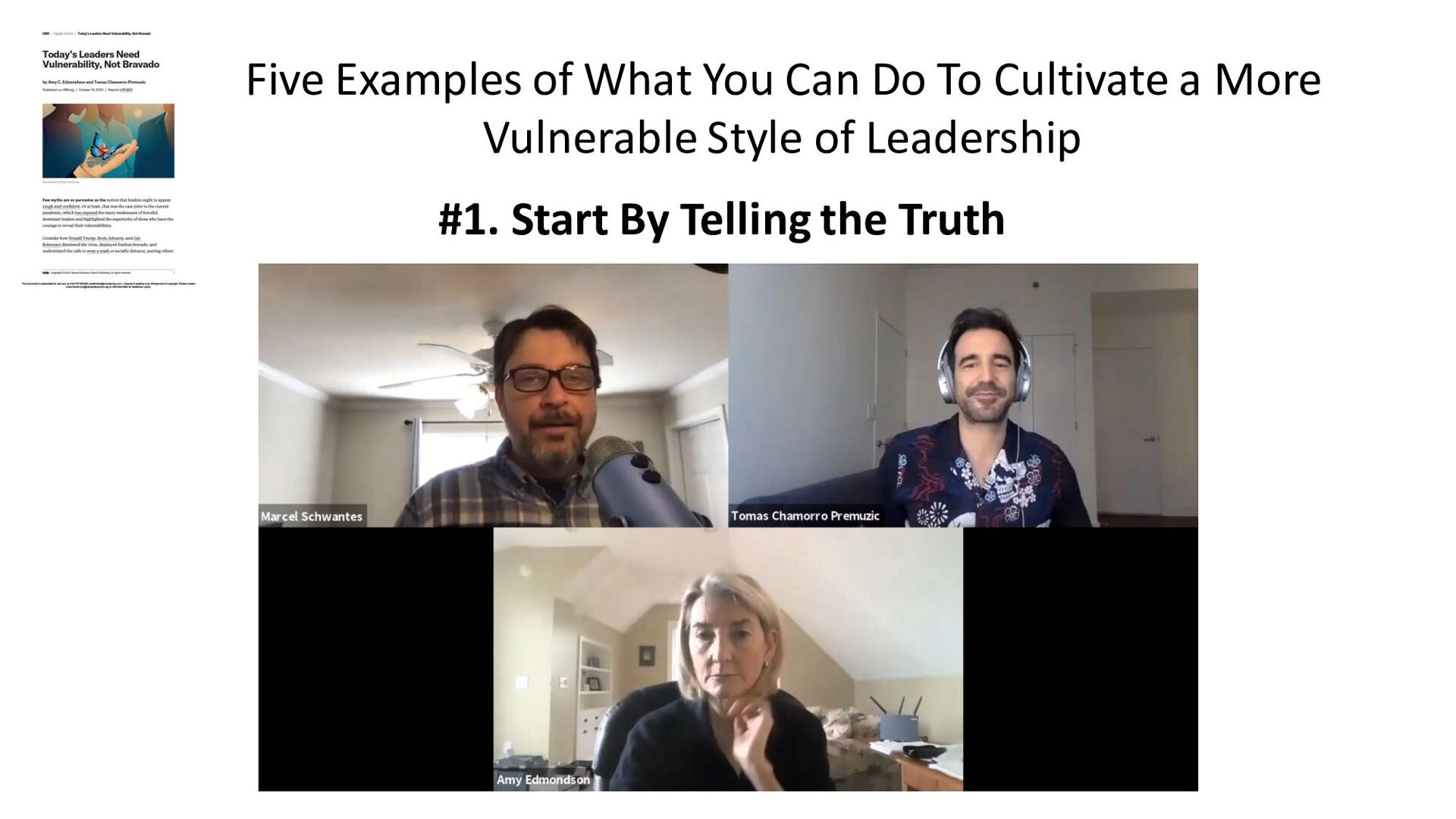
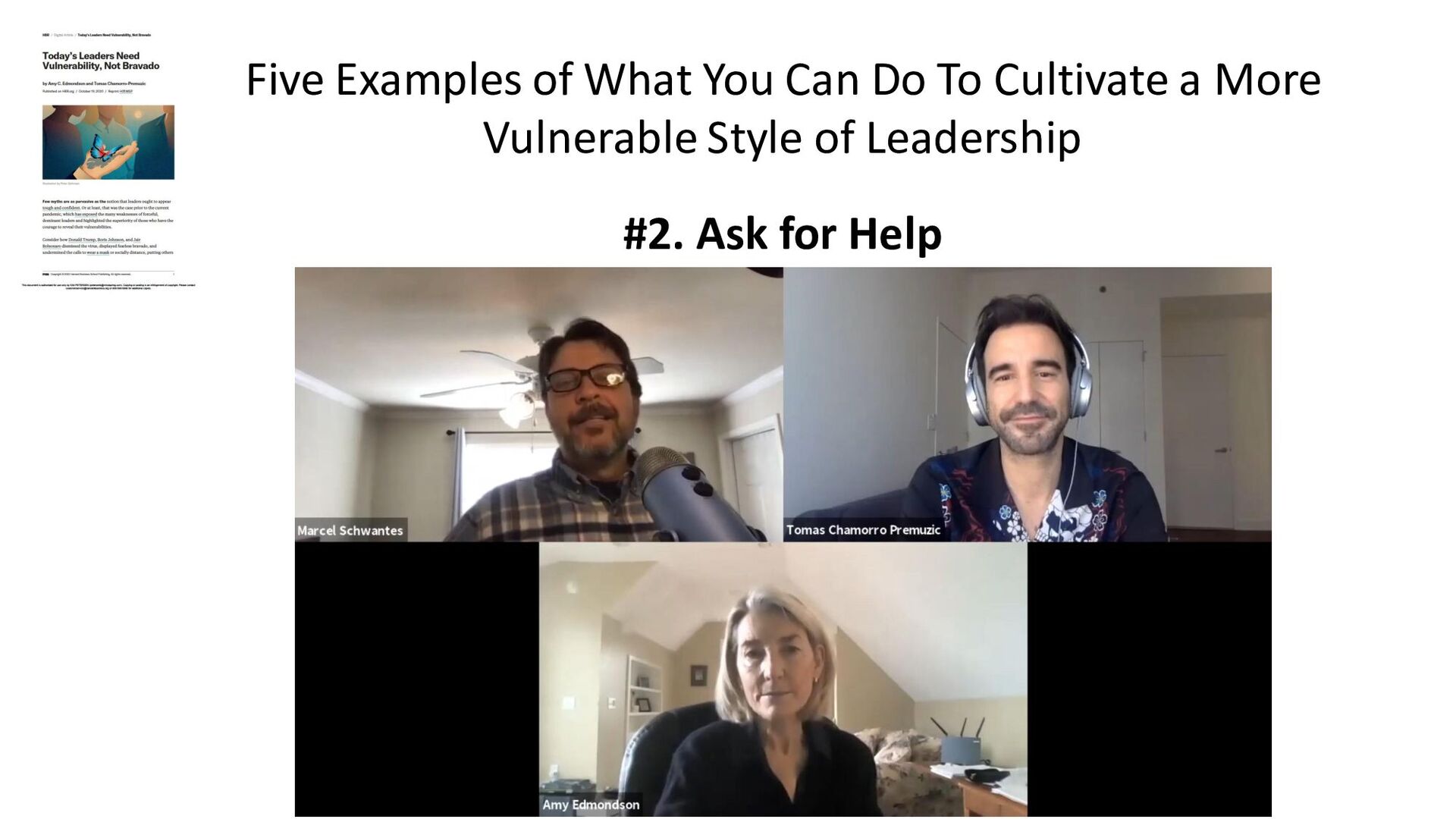
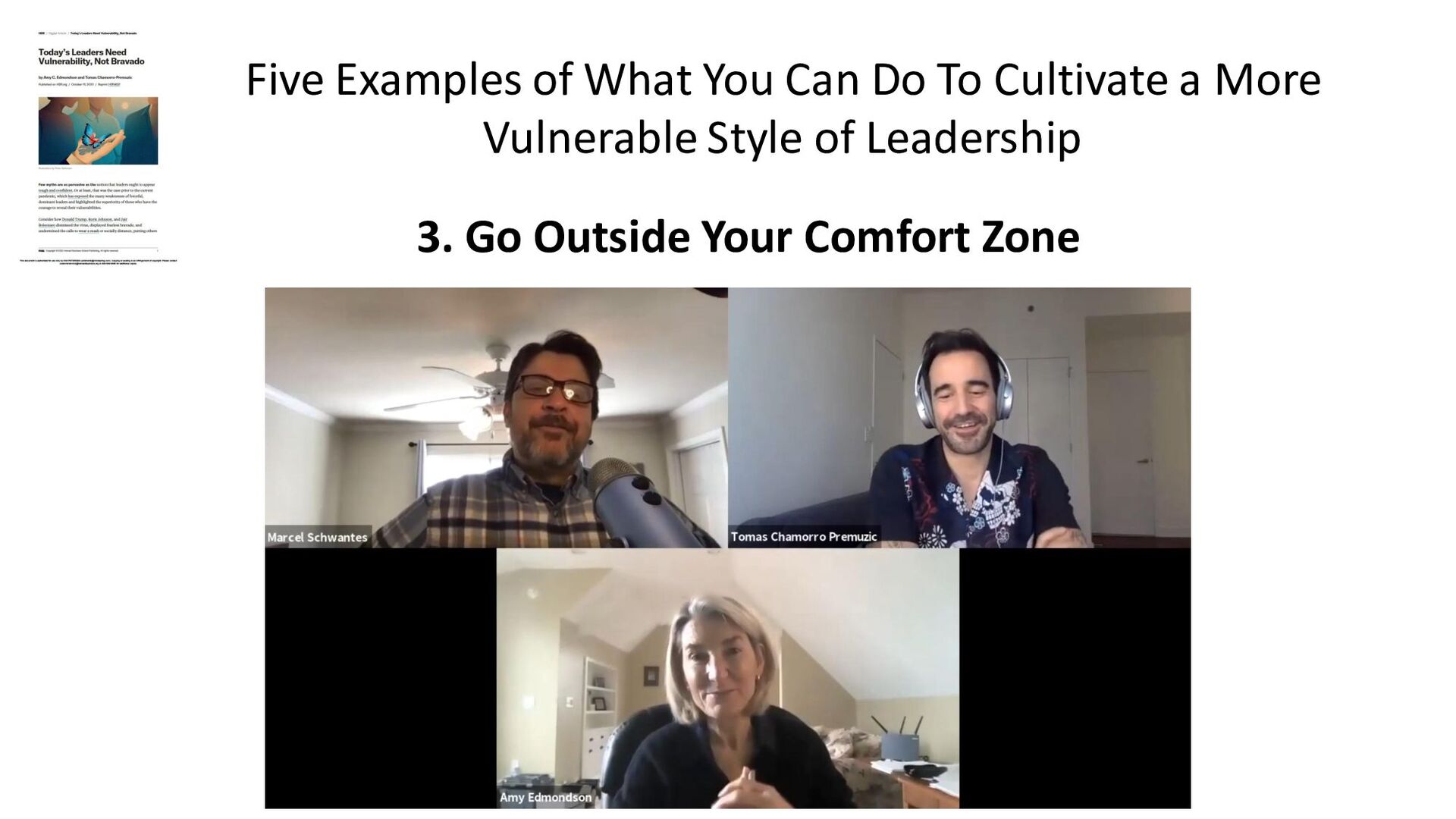
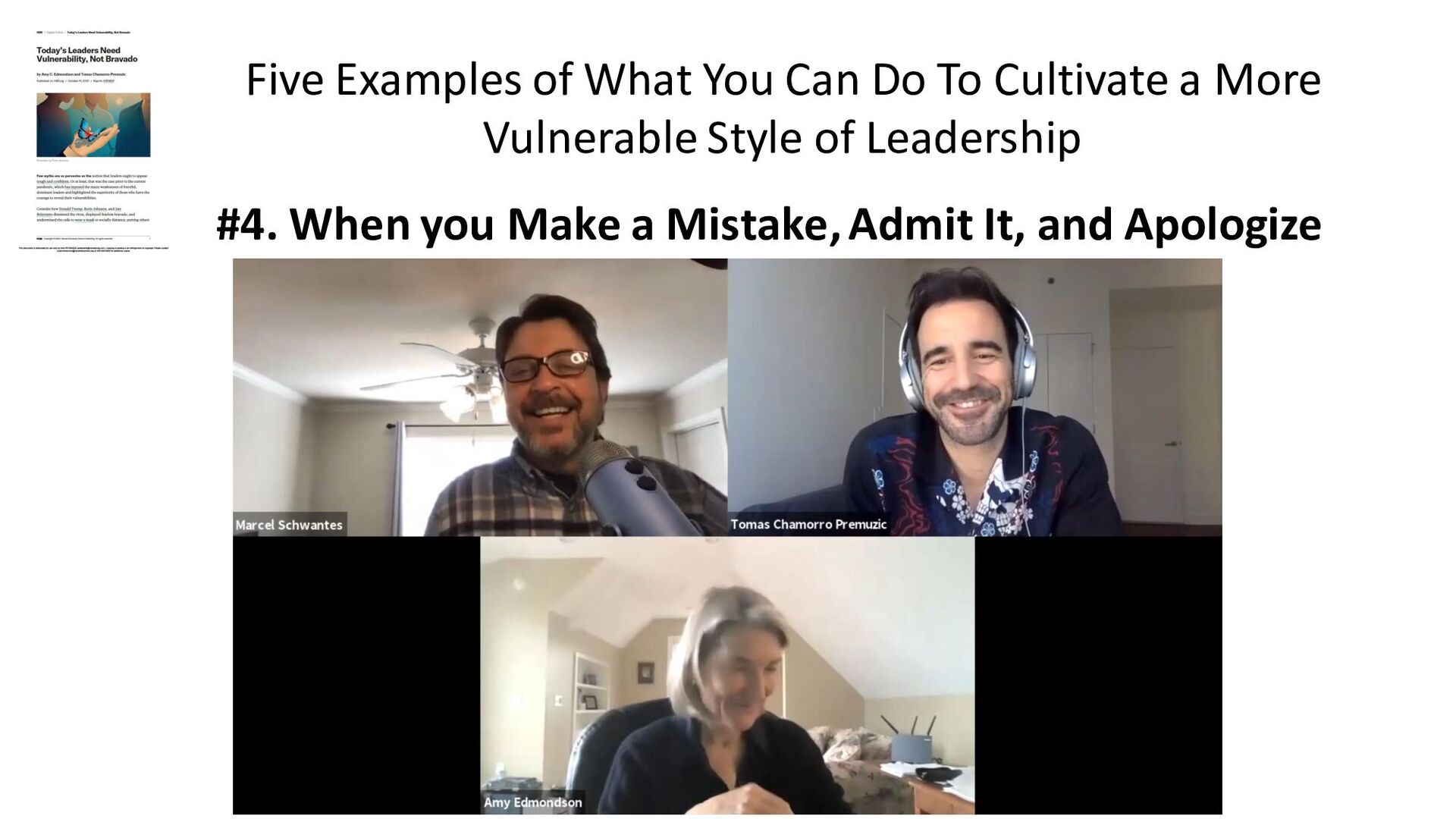
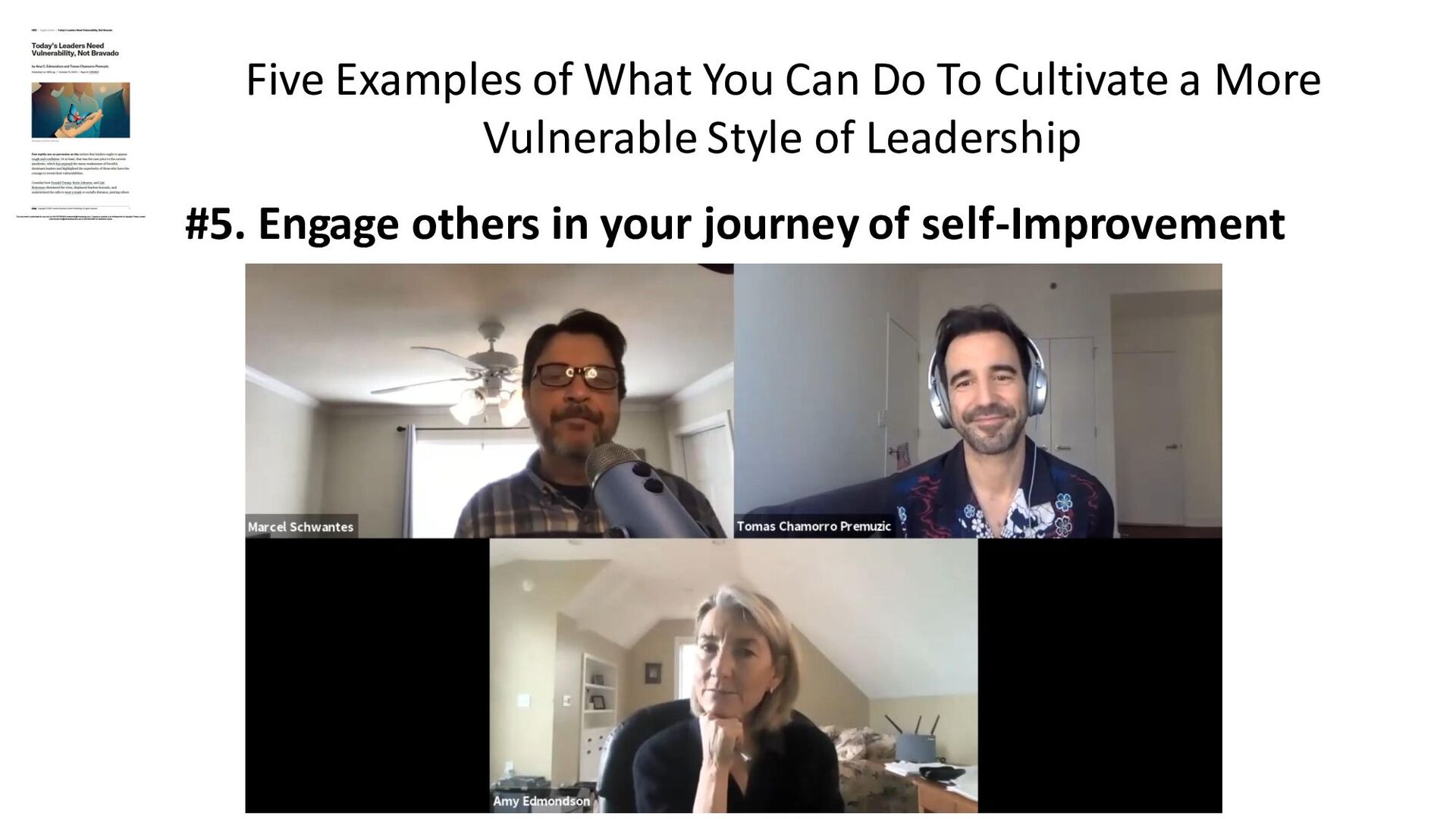
More Vulnerable Style of Leadership #1. Start By Telling the Truth #2. Ask for Help #3. Go Outside Your Comfort Zone #4. When you Make a Mistake, Admit It, and Apologize #5. Engage others in your journey of self-Improvement (Edmondson & Chamorro-Premuzic, 2020)
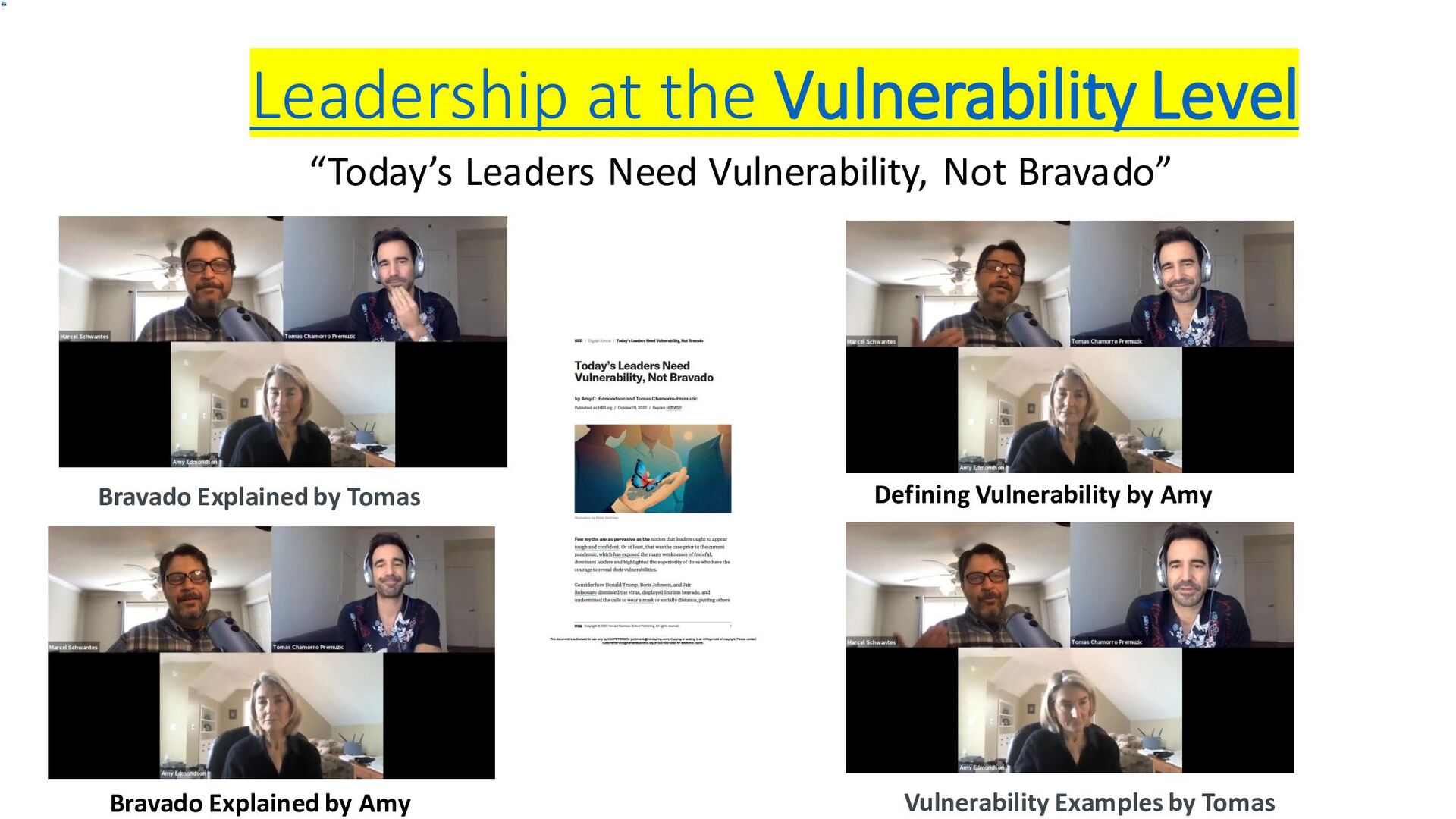
be one where people feel able to share their knowledge!” As one of us” (Edmondson, 2018). #2. Leadership at the Vulnerability Level: Is about exposing the many weaknesses of forceful, dominant leaders while highlighting the superiority of those who have the courage to reveal their vulnerabilities (Edmondson & Chamorro-Premuzic, 2020). #3. Vulnerable leadership in a world of extreme uncertainty and interdependence is vital to making progress when answers are not clear cut and anyone in the organization may be able to contribute vital knowledge or ideas (Edmondson & Chamorro-Premuzic, 2020). #1.Leadership at the Problem Level: When it comes to trying to resolve ’Wicked’ Problems that have no clear true or false solutions, a leadership mindset is needed requiring inquiry and collaboration; those problems defined as ’Tame” problems that have known solutions, are best dealt with management (Grint, 2010). .
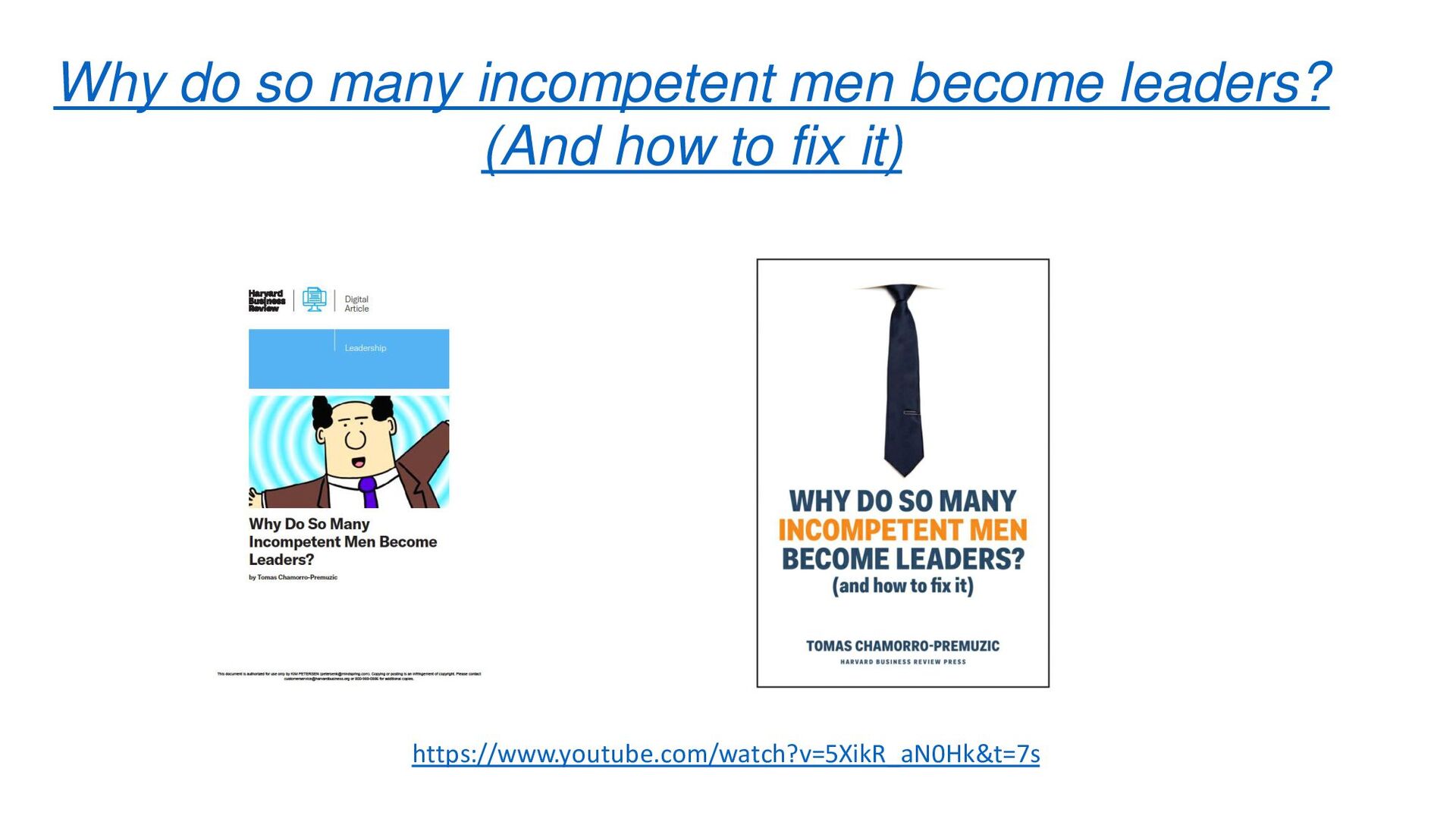
framework. Organizational culture white paper. Haworth. Chamorro-Premuzic, T. (2013). Why do so many incompetent men become leaders? Harvard Business Review, 22. Chamorro-Premuzic, T. (2019). Why do so many incompetent men become leaders? (And how to fix it). Harvard Business Press. Edmondson, A. C. (2018). The fearless organization: Creating psychological safety in the workplace for learning, innovation, and growth. John Wiley & Sons. Edmondson, A. C., & Chamorro-Premuzic, T. (2020). Today’s leaders need vulnerability, not bravado. Harvard Business Review. Grint, K. (2010). Leadership: A very short introduction. OUP Oxford. Schwaber, K., & Sutherland, J. (2020). The 2020 SCRUM guide.


 kimpetersen
 watany
 lynnandtonic
 stephaniewalter
 keavy
keavy
 samtorres
 aleyda
 eitanlees
 kneath
 scottboms
 tonyrice
 lemiorhan
 morganepeng