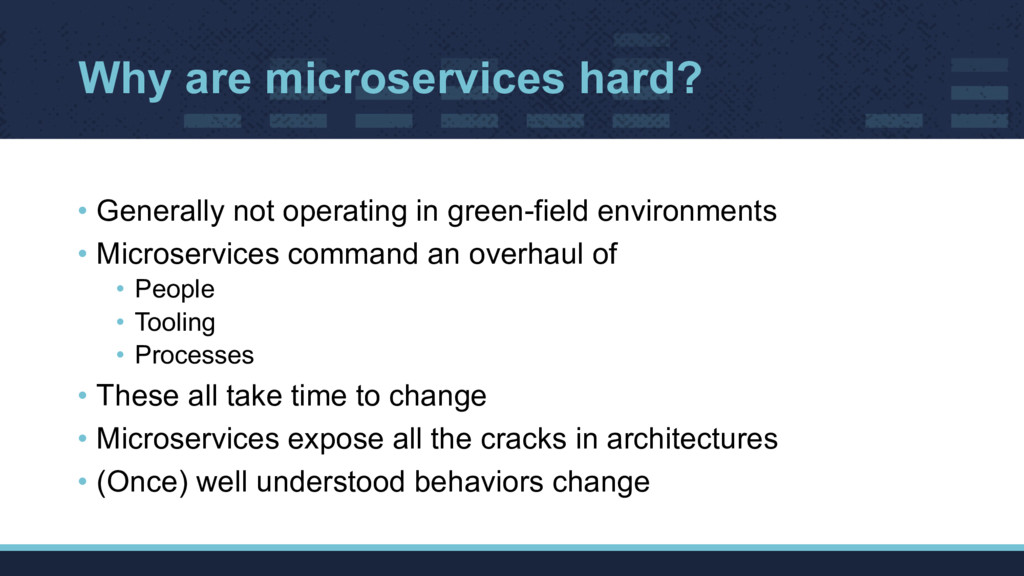
environments • Microservices command an overhaul of • People • Tooling • Processes • These all take time to change • Microservices expose all the cracks in architectures • (Once) well understood behaviors change
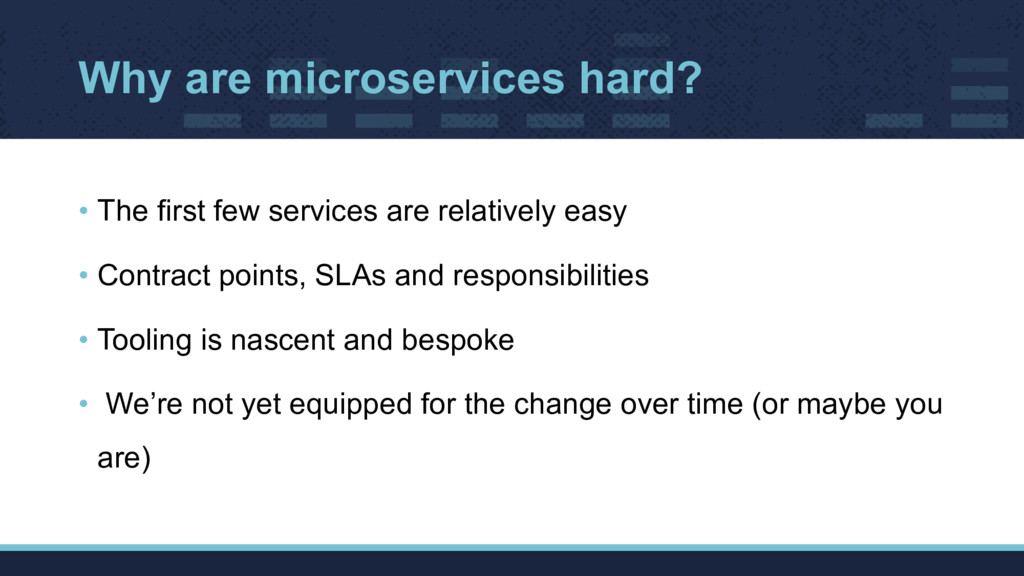
relatively easy • Contract points, SLAs and responsibilities • Tooling is nascent and bespoke • We’re not yet equipped for the change over time (or maybe you are)
all of the aforementioned features • Istio plugins into Kubernetes natively via platform adapters • Istio isn’t a silver bullet. It’s the next level platform.
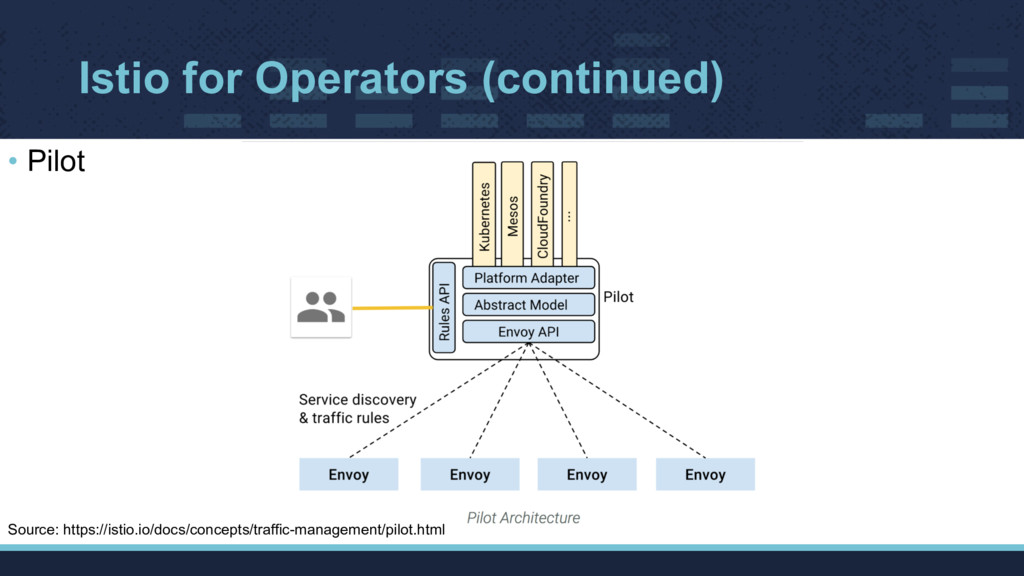
distributed Envoy instances • System of record for service mesh • Abstracted from underlying platform (Kubernetes, Mesos, CF) • Adapters manage this representation on the underlying platform • Kubernetes Adapter manages controllers and resources • Ingresses, CRDs, etc…. (system state) • Exposes API for Service Discovery, LoadBalancing and Routing Tables • These directly translate to Envoy config
that lives as a container in each pod deployed by Istioctl • All ingress/egress traffic from/to this pod is routed via the Envoy container • Serves as an in/off ramp to the service mesh • Envoy config is distributed by Pilot • Envoy container injected via istioctl kube-inject OR Kubernetes initializer
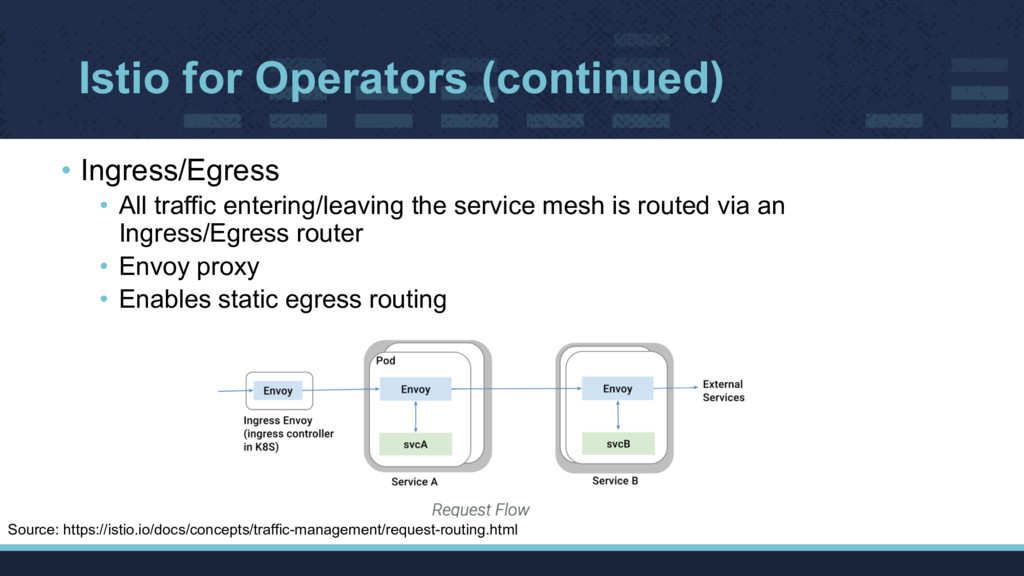
the service mesh is routed via an Ingress/Egress router • Envoy proxy • Enables static egress routing Source: https://istio.io/docs/concepts/traffic-management/request-routing.html
enabled • Enables service to service encryption without user intervention • Istio ships with a CA • This CA watches for Kubernetes service accounts and creates corresponding cert keypair secrets in Kubernetes • When a pod is created these secrets are mounted • Pilot generates the appropriate Envoy config and ships it • e2e mTLS established for each connection
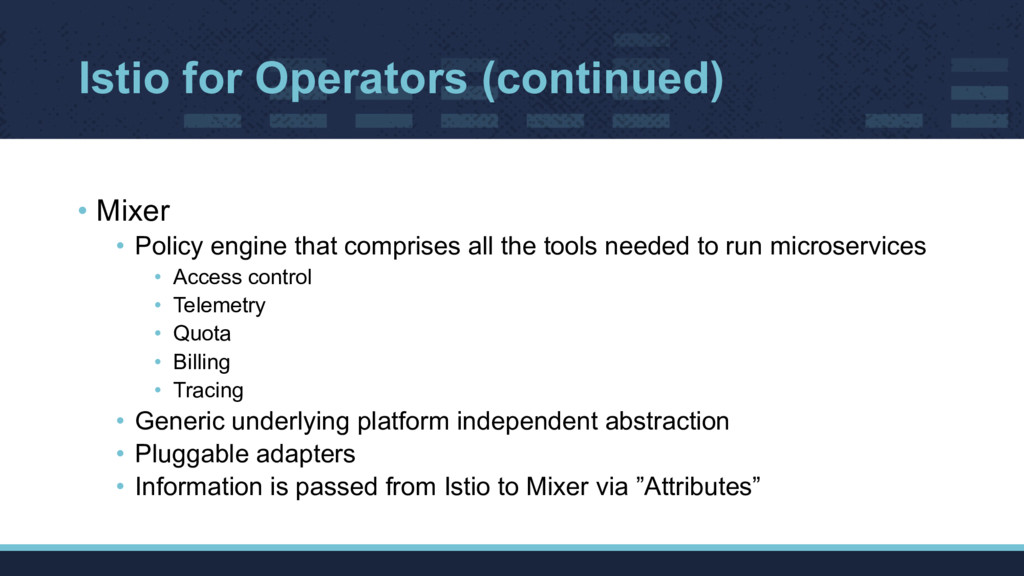
comprises all the tools needed to run microservices • Access control • Telemetry • Quota • Billing • Tracing • Generic underlying platform independent abstraction • Pluggable adapters • Information is passed from Istio to Mixer via ”Attributes”
machine that controls the runtime behavior of services running in the mesh • Attributes are generated by Envoy • Mixer then generates calls to infrastructure backends via Adapters • Eg. Rate limits • Handlers • Instances • Rules • These are all expressed at CRDs


 lachie83
 athug
athug
 tetsuya28
 kakehashi
 bgpat
bgpat
 oracle4engineer
 tsuchikazu
 recruitengineers
 codmoninc
 moznion
 kizawa2020
 fespinoza
 kmiya84377
 auna
auna
 akademiya2063
 palkan
 garrettdimon
 marktimemedia
 axbom
axbom
 techseoconnect
 panda_program
 honzajavorek
 mclloyd
 katarinadahlin
 ryanjones