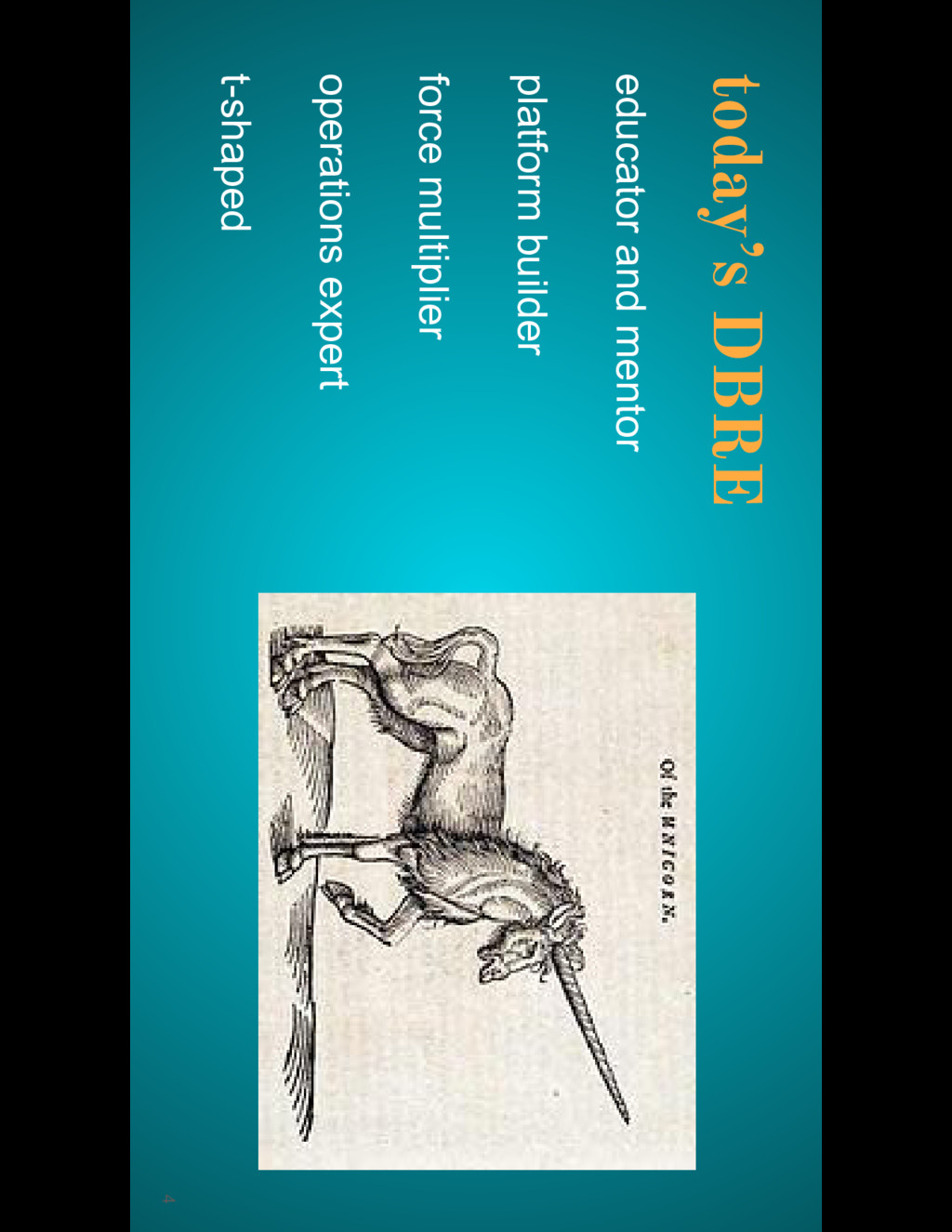
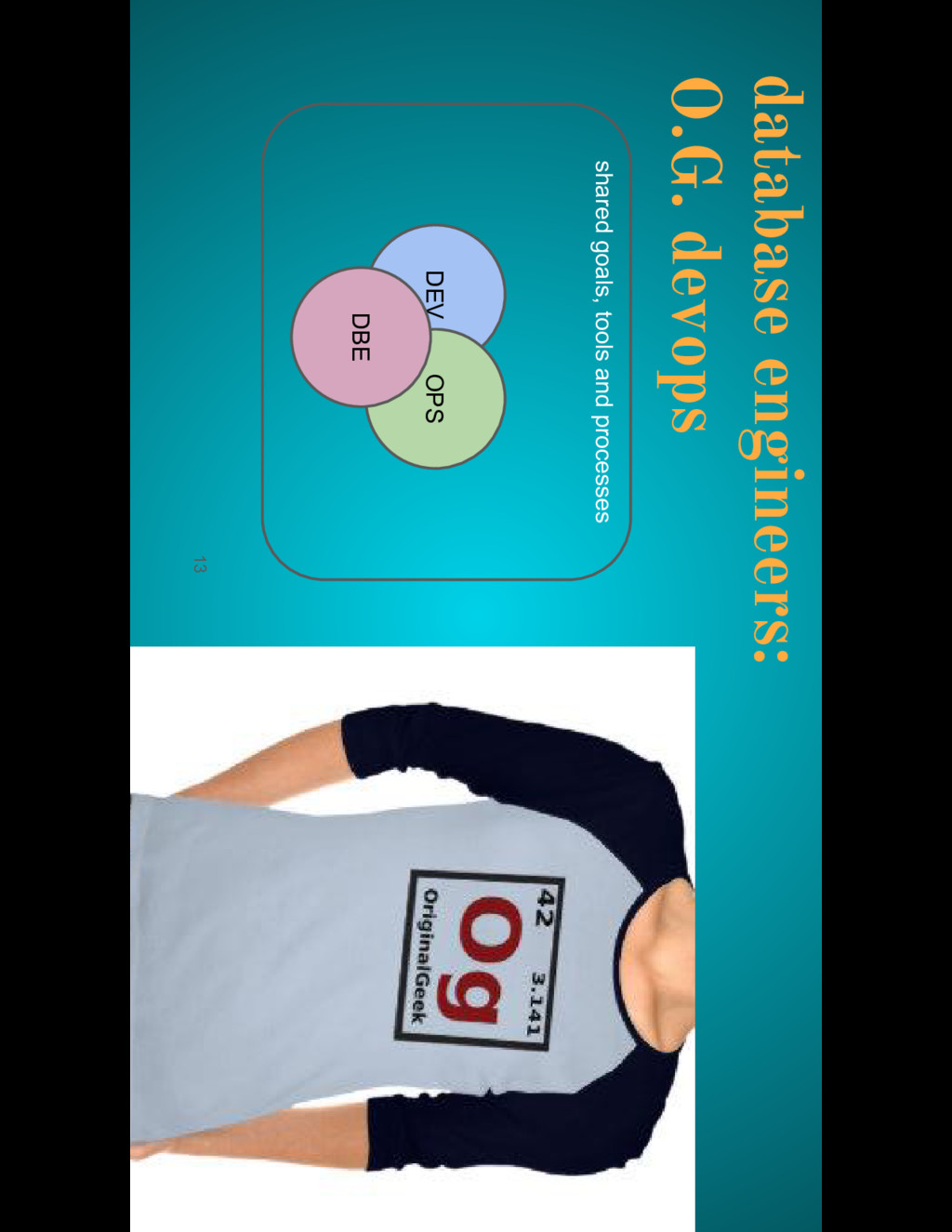
shared components for provisioning Provide patterns and knowledge to support other team’s processes to facilitate their work understand and teach data access and storage nuances to ensure all service level objectives can be met anchor teams with expertise for troubleshooting, recovery and other tasks requiring depth, not breadth
operational mandate reliability isn’t always required in operations the closer to the data, the more reliability is necessary data requires paranoia, not chaos - @jessietron - https://blog.codeship.com/growing-tech-stack-say-no/
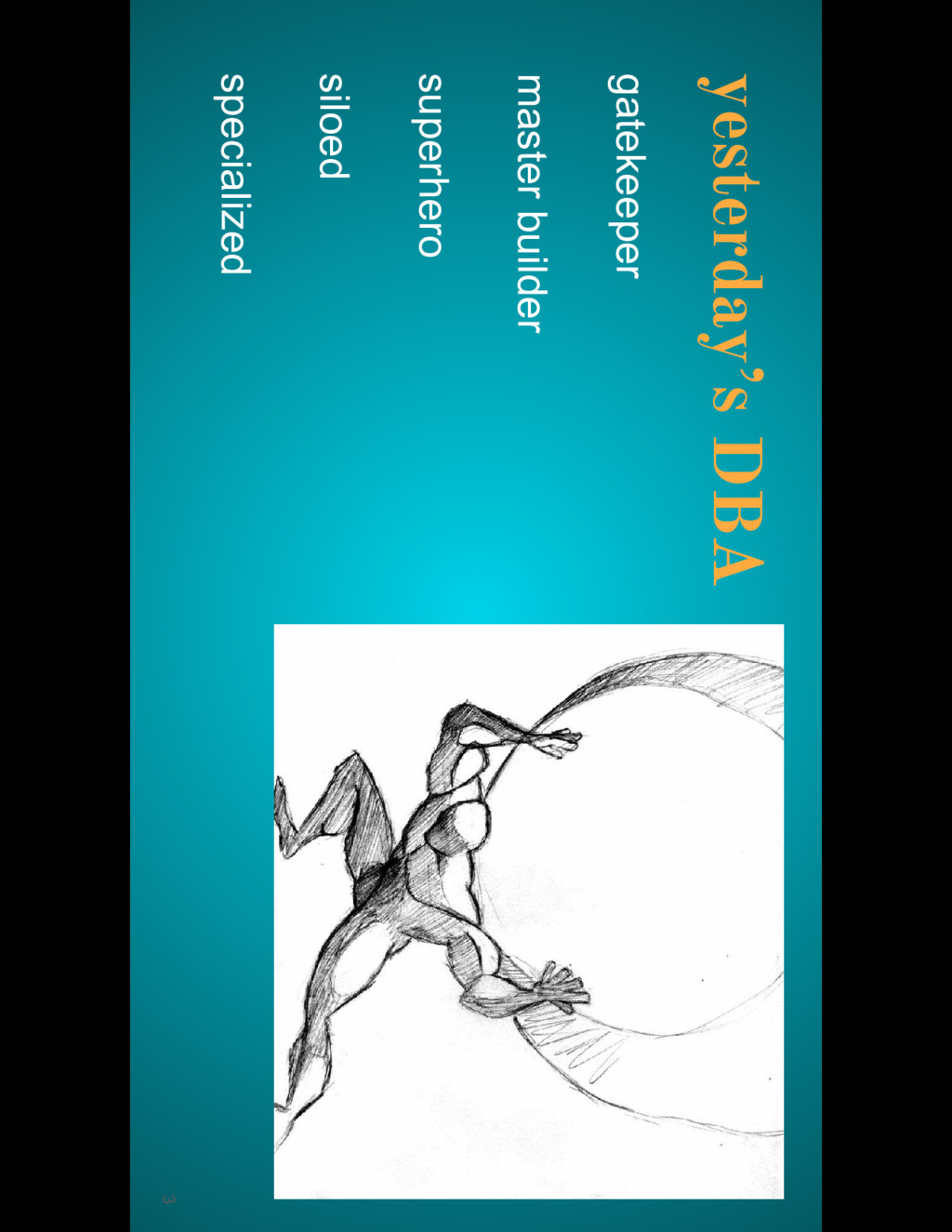
don’t know the answer, it’s probably you. the DBA, continuing to evolve their skillset the ops engineer, taking data ownership software engineers developing data driven applications
line new and shiny brings risk One engine is less likely to suit all cases we vet, find edge cases, learn patterns Integration between engines is crucial The data must flow
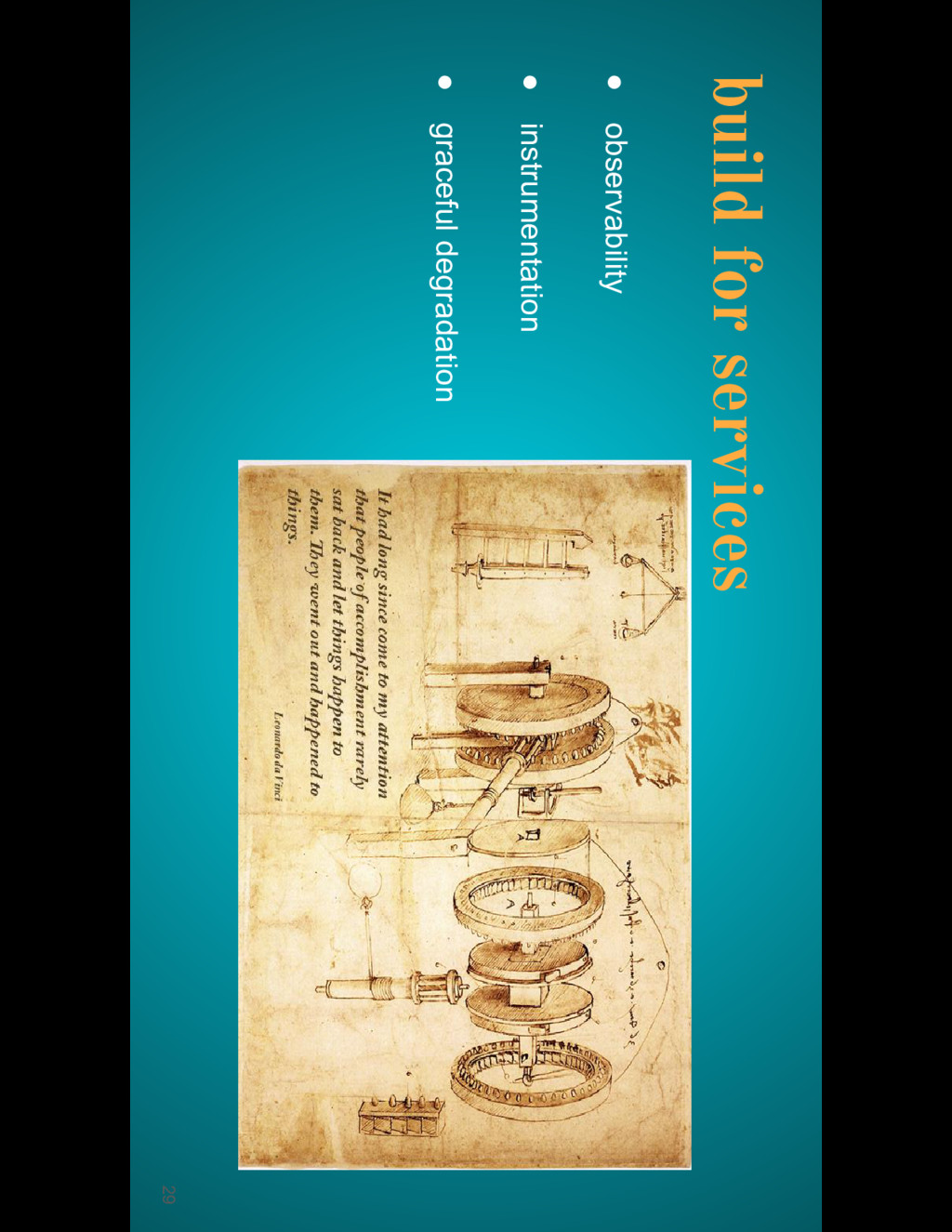
by cross-functional teams. • standardization and automation with simplicity over expensive/complicated infrastructures. • durability and integrity baked into every part of the architecture and software development lifecycle
automated discovery/collection • backup/recovery utilities and APIs auto-deployed for new builds • reference architectures and configs for data stores deployment. • security standards for data store deployments. • safe deployment patterns and tests for database changesets
review and deploy processes • Use the same provisioning and config management • Data-land should feel familiar and intuitive, not alienating or “special”
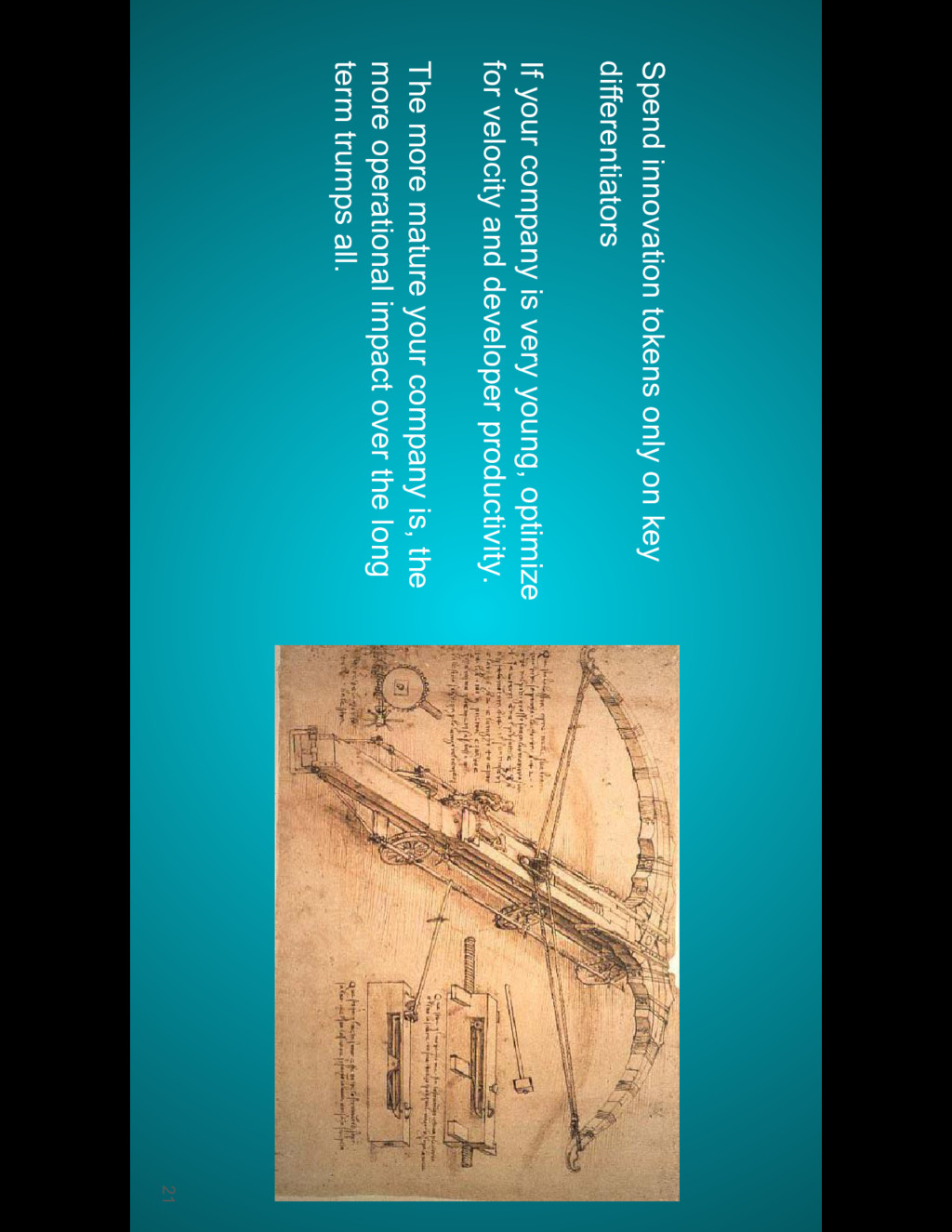
company is very young, optimize for velocity and developer productivity. The more mature your company is, the more operational impact over the long term trumps all.
right backup for the right dataset work with SWE to build data validation pipelines integrate recovery into daily activities build recovery testing automation
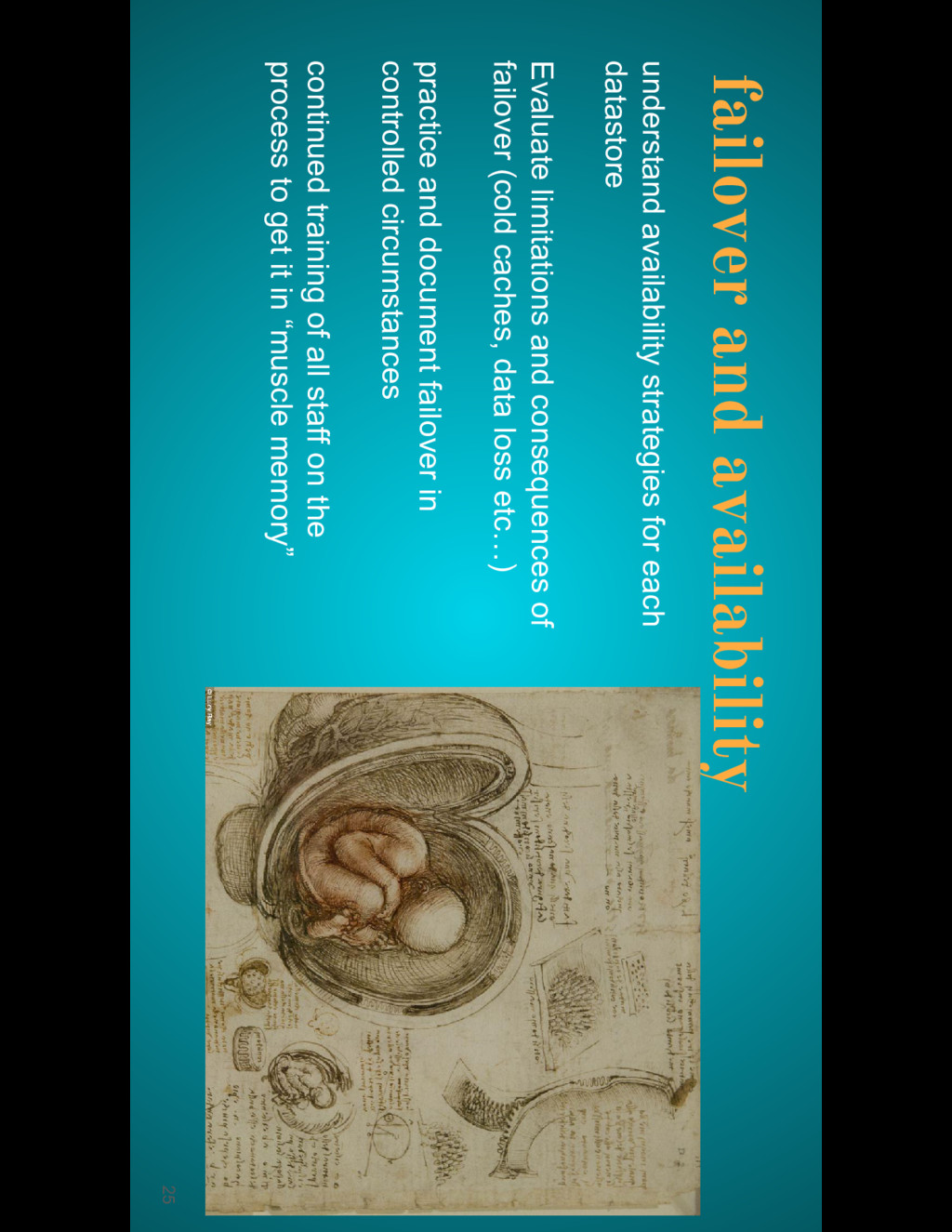
Evaluate limitations and consequences of failover (cold caches, data loss etc…) practice and document failover in controlled circumstances continued training of all staff on the process to get it in “muscle memory”
tests • migration and fallback testing • DDL migration patterns • migration heuristic analysis • boring failovers • shared on call rotations • network isolation between prod & other • don’t get pissy when people mess up, help them fix it • don’t swoop in and do it all yourself
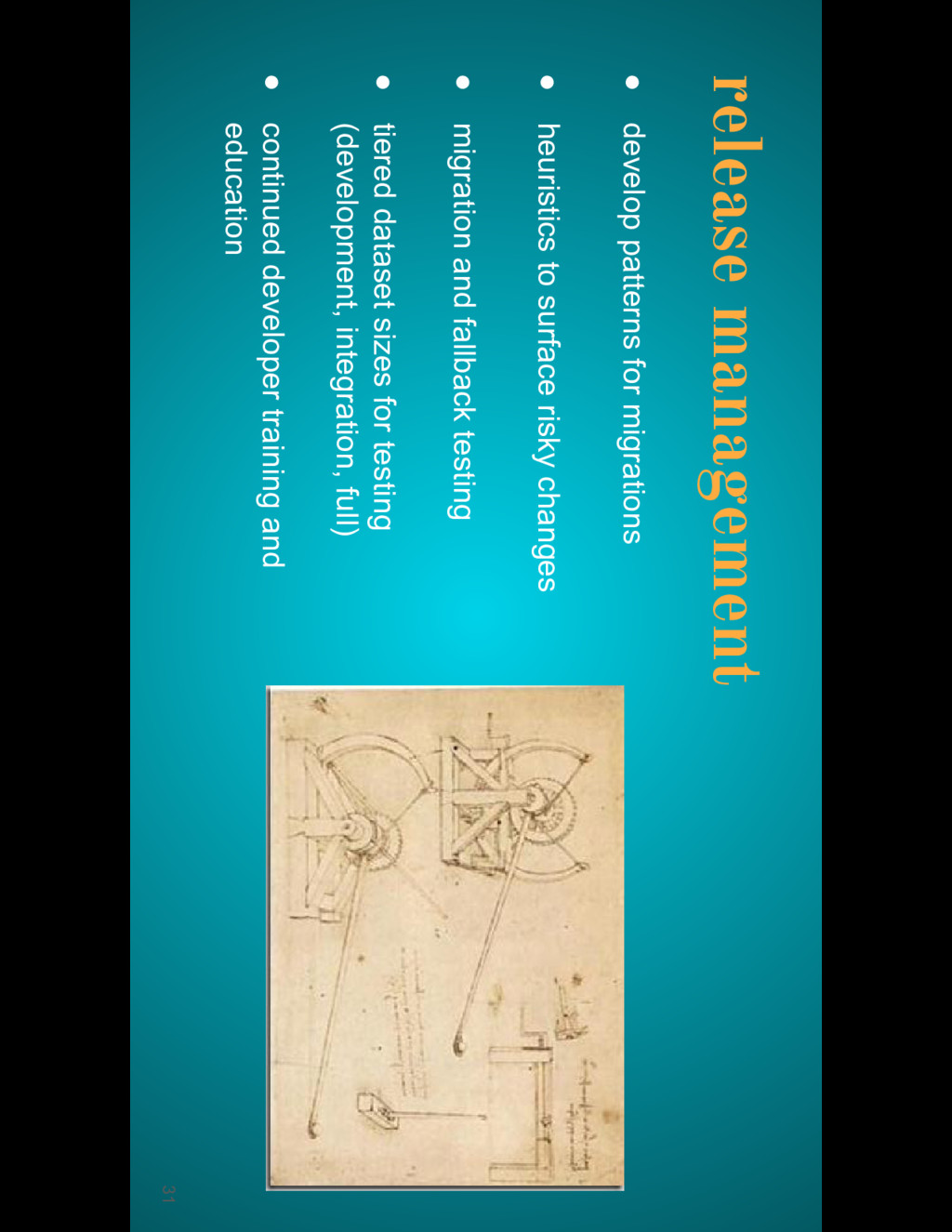
to surface risky changes • migration and fallback testing • tiered dataset sizes for testing (development, integration, full) • continued developer training and education
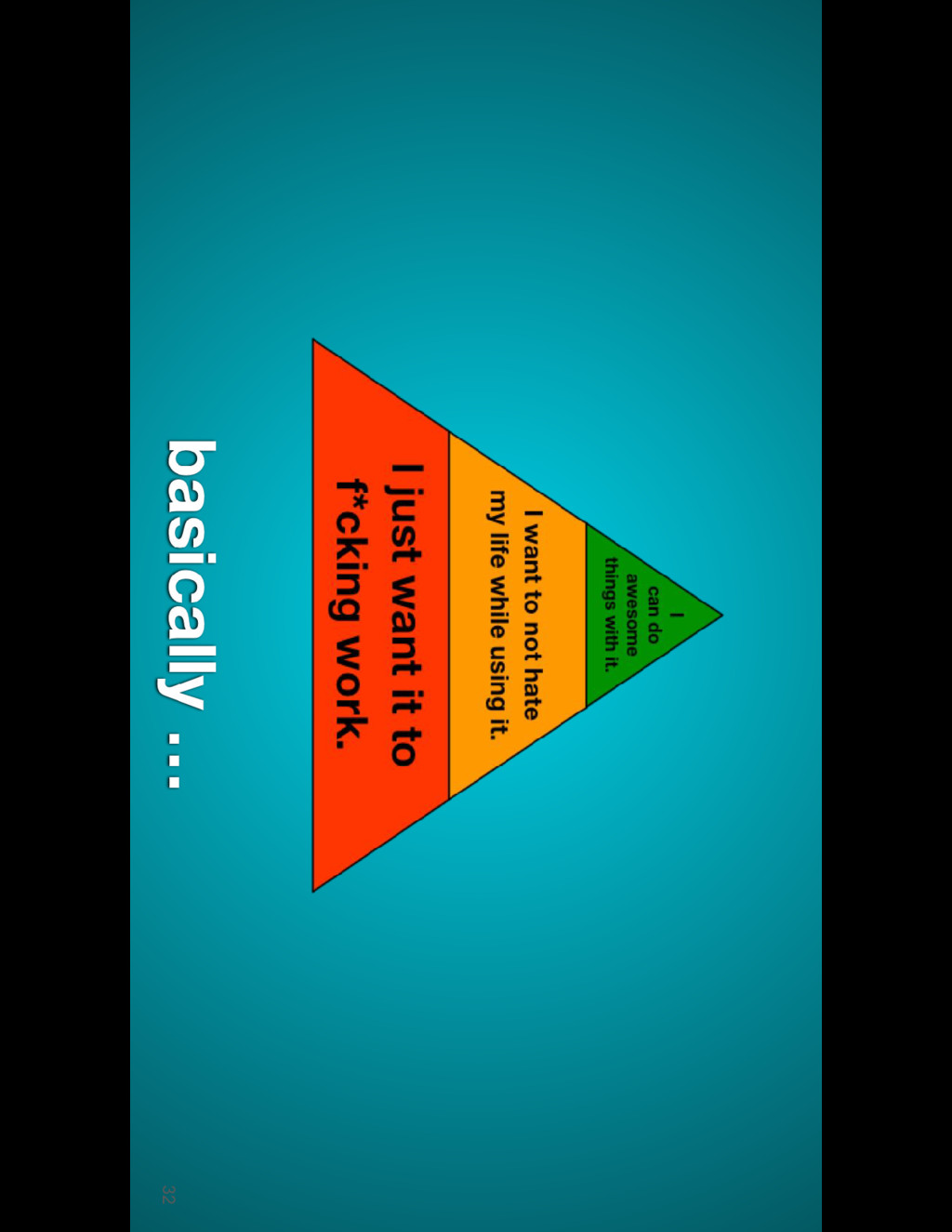
• resilient to common errors • understandable, debuggable • shares processes and tooling with the rest of the stack • empowers you to achieve your mission.


 lainevcampbell
 kentarofujii
 kzkhykw1991
 occhi
occhi
 namiki64
 ivry_presentationmaterials
 nttcom
 syuchimu
 yu23ki14
 prog893
 oikon48
 ymotongpoo
 kworkdev
 michaelherold
 retrage
 inesmontani
 sergeychernyshev
 morganepeng
 palkan
 skoyamalab
 auna
auna
 nwiizo
 joshbly
 reverentgeek