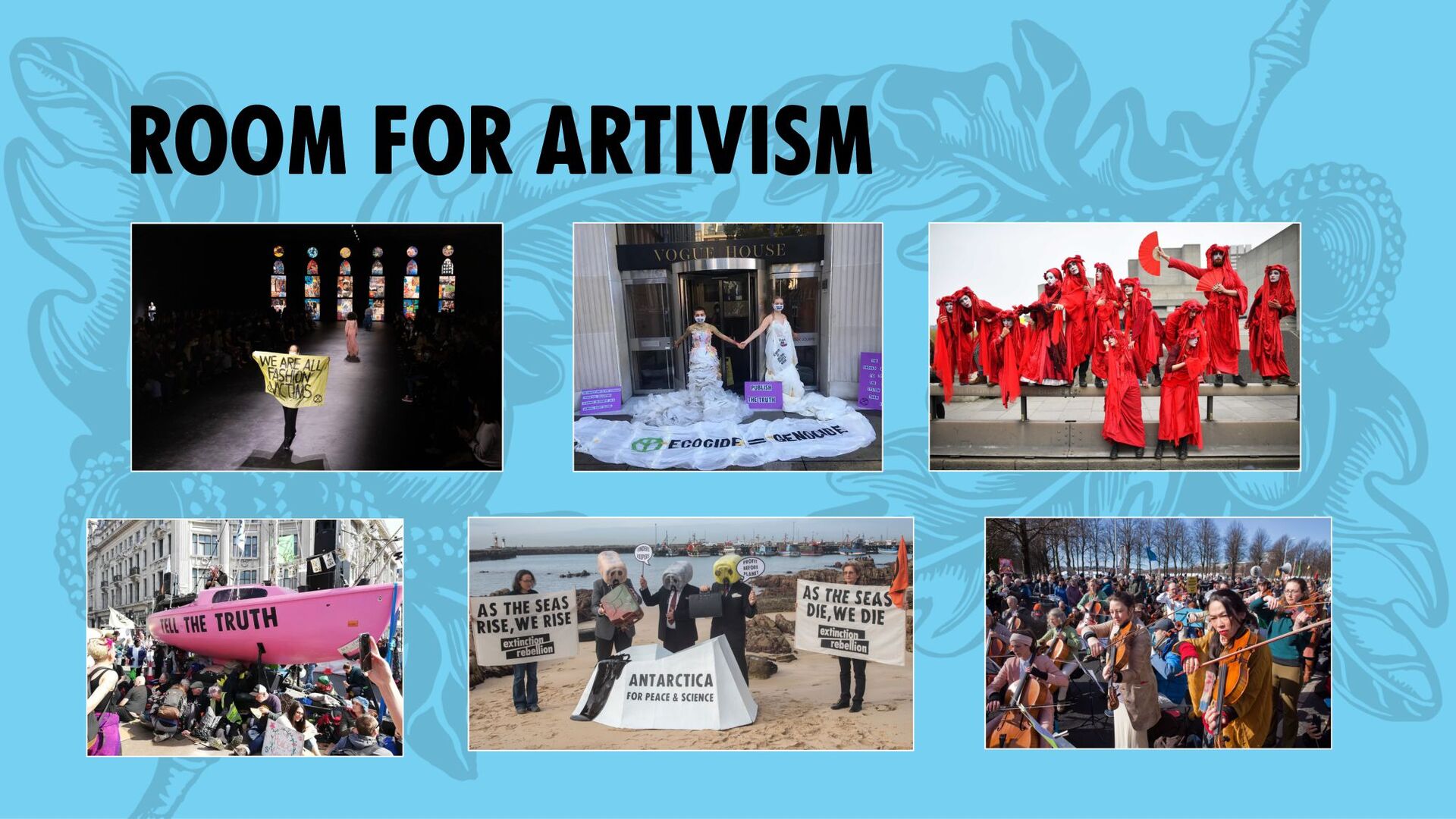
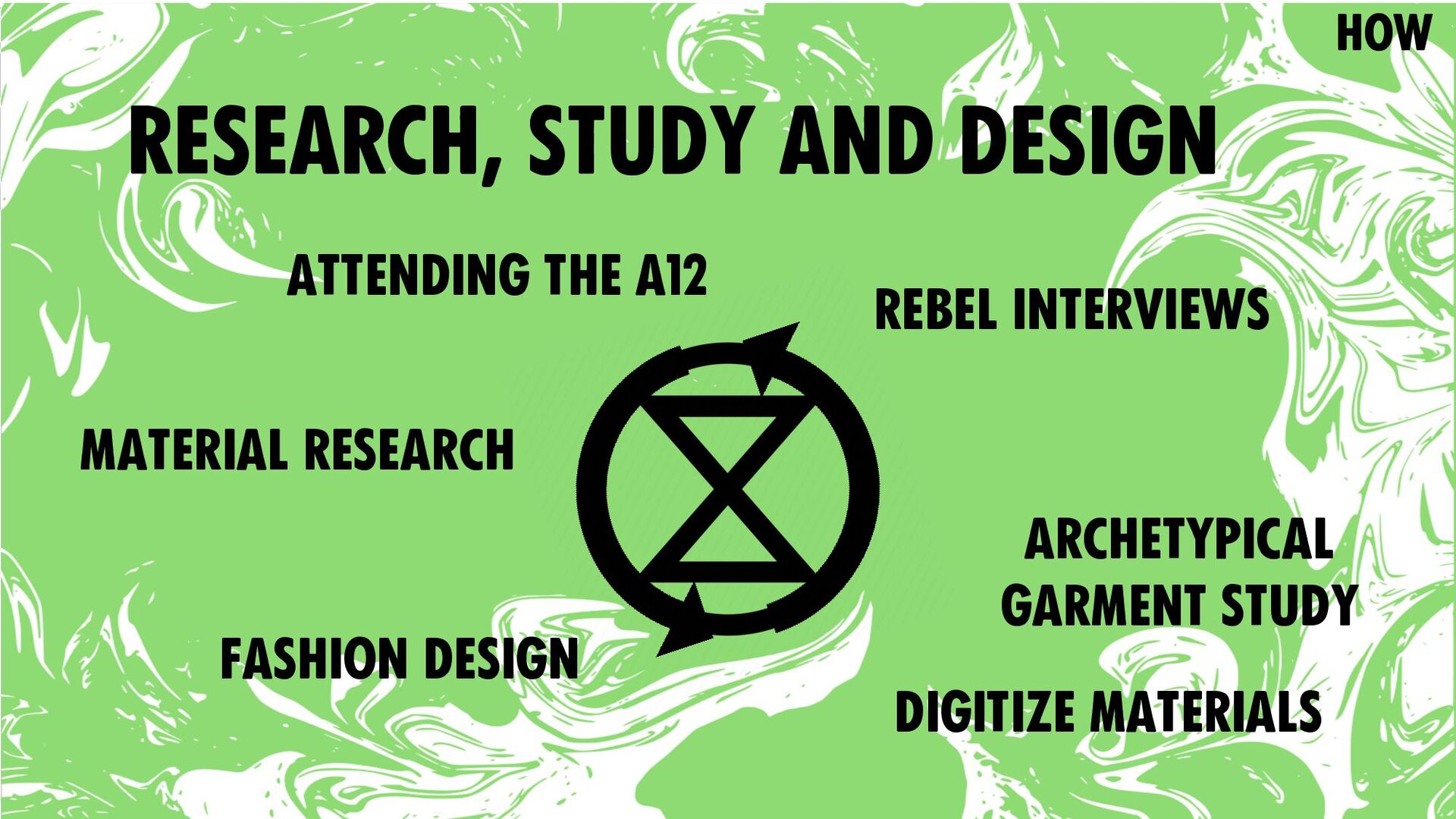
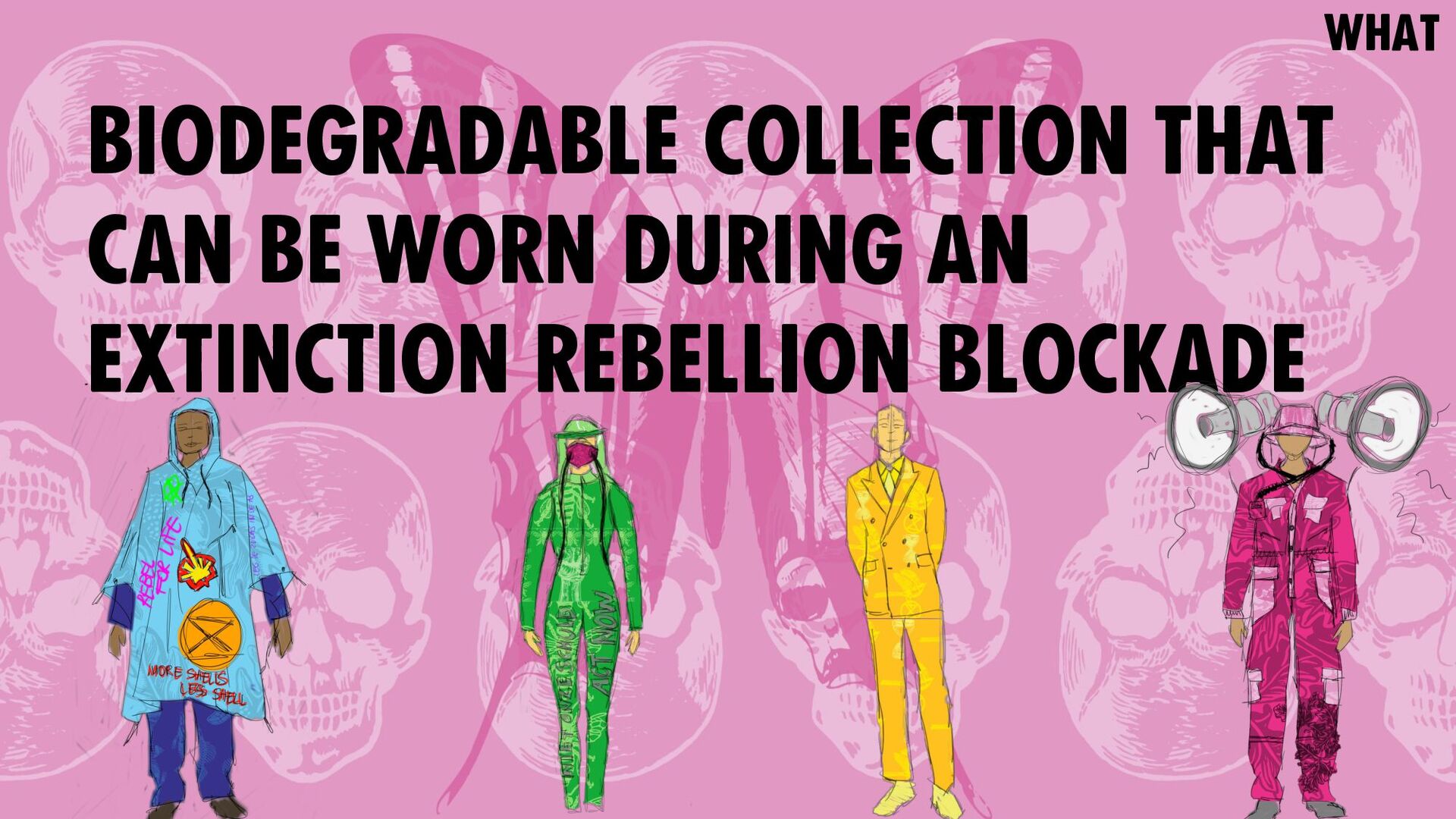
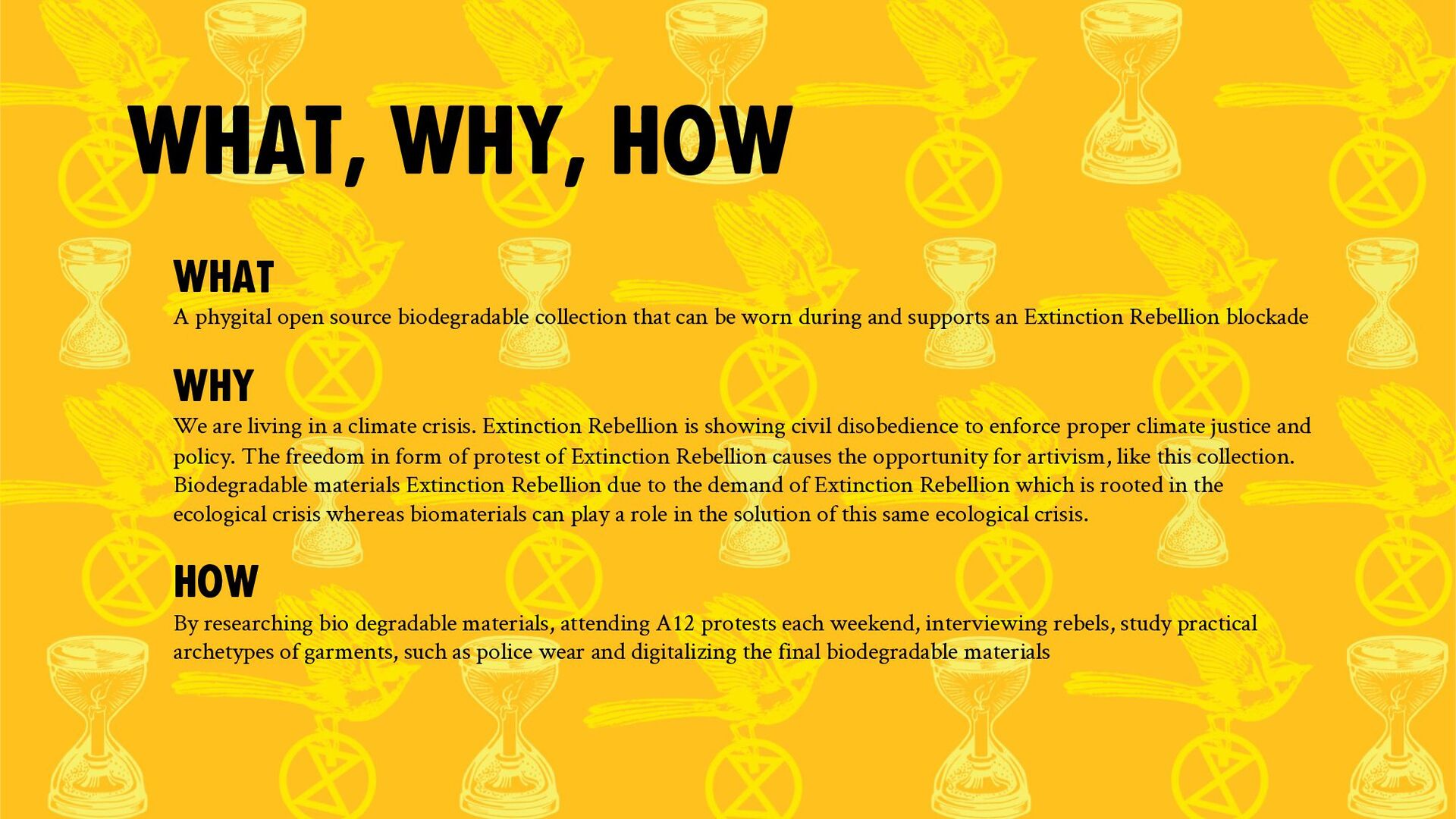
In week 10 of my project for graduation at AMFI I had the concept check of my project. Here I tried to showcase my project by presenting the "what, why, how" of my project.
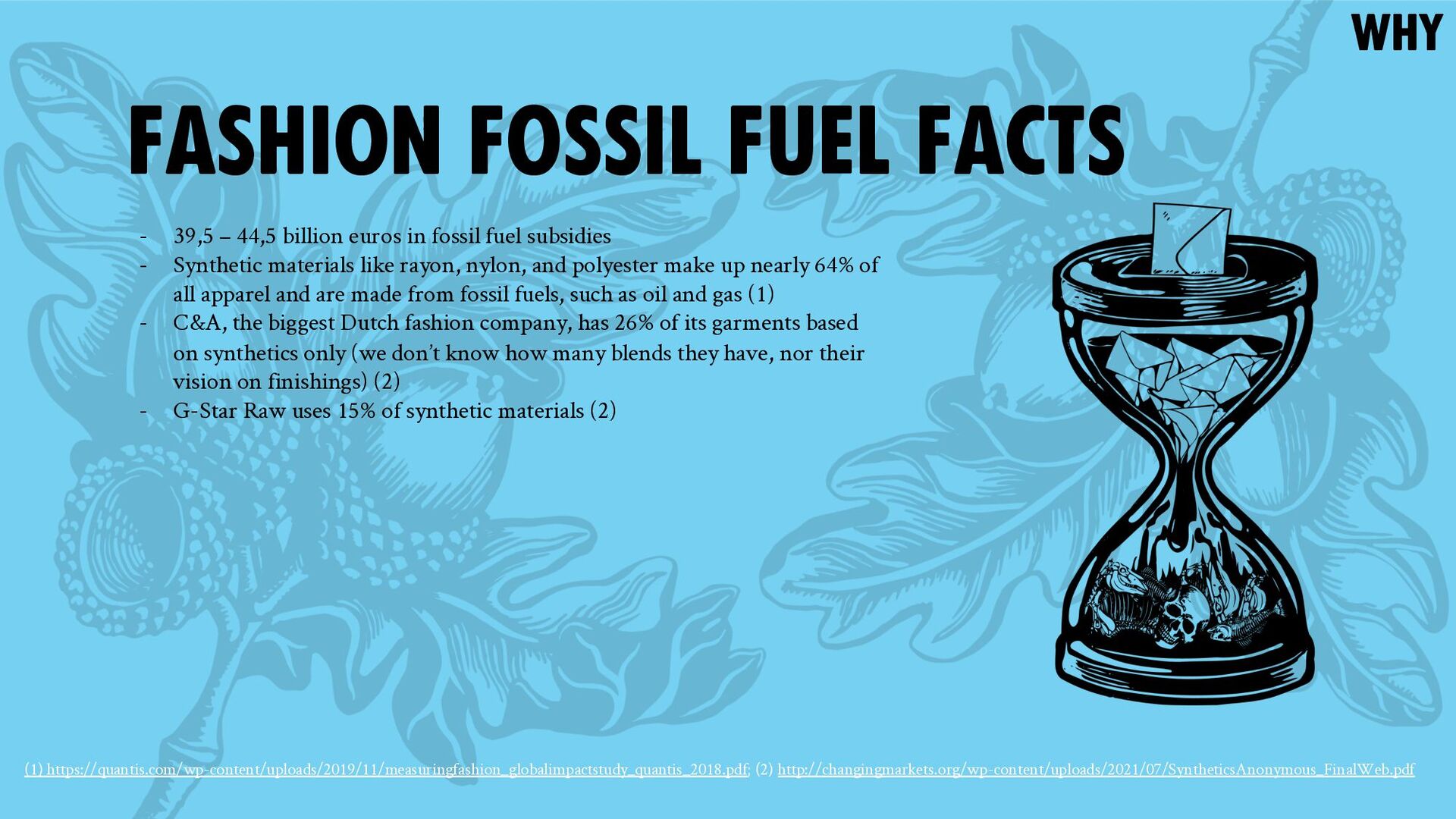
in fossil fuel subsidies - Synthetic materials like rayon, nylon, and polyester make up nearly 64% of all apparel and are made from fossil fuels, such as oil and gas (1) - C&A, the biggest Dutch fashion company, has 26% of its garments based on synthetics only (we don’t know how many blends they have, nor their vision on finishings) (2) - G-Star Raw uses 15% of synthetic materials (2) (1) https://quantis.com/wp-content/uploads/2019/11/measuringfashion_globalimpactstudy_quantis_2018.pdf; (2) http://changingmarkets.org/wp-content/uploads/2021/07/SyntheticsAnonymous_FinalWeb.pdf WHY
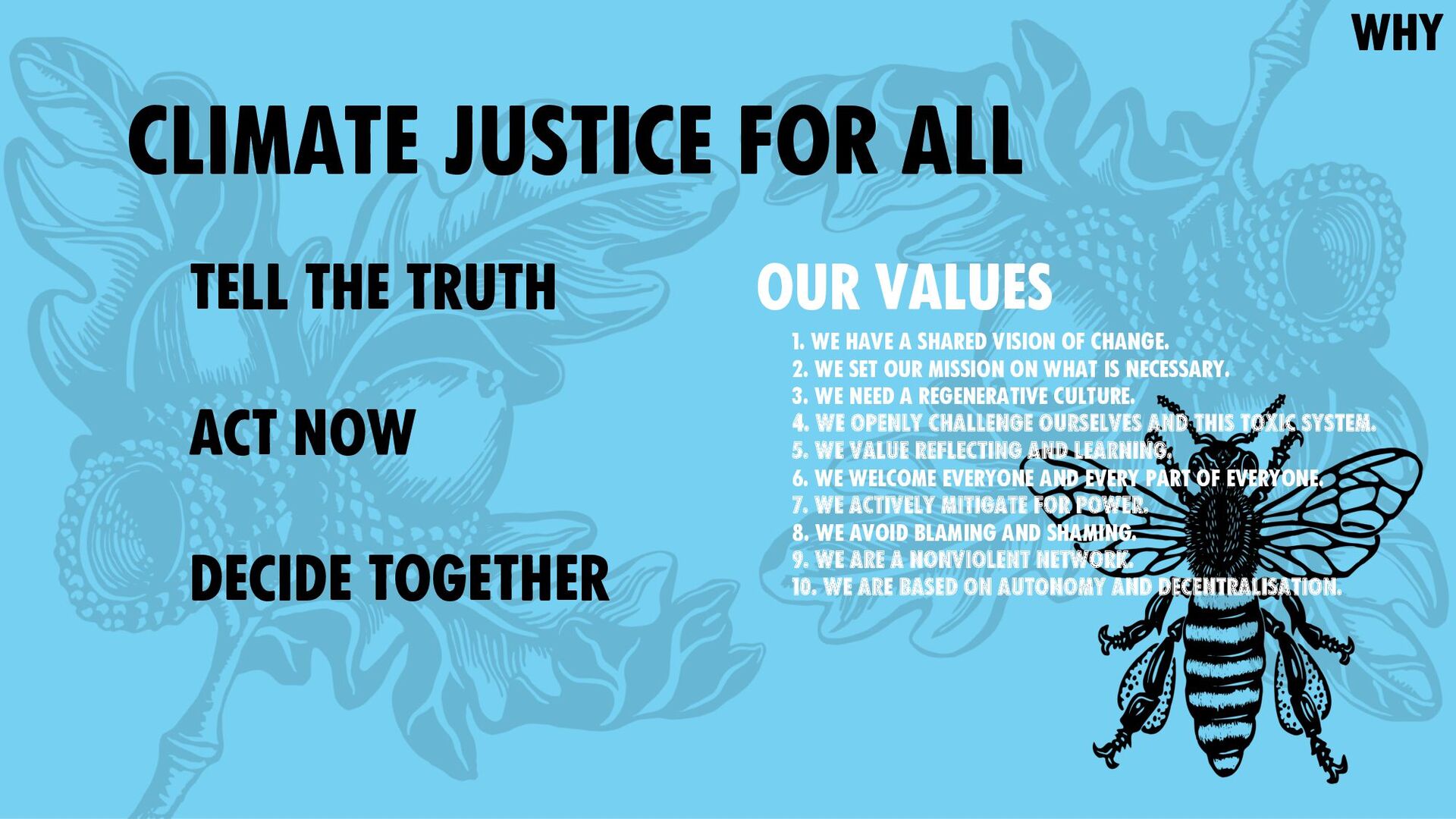
TOGETHER WHY 1. WE HAVE A SHARED VISION OF CHANGE. 2. WE SET OUR MISSION ON WHAT IS NECESSARY. 3. WE NEED A REGENERATIVE CULTURE. 4. WE OPENLY CHALLENGE OURSELVES AND THIS TOXIC SYSTEM. 5. WE VALUE REFLECTING AND LEARNING. 6. WE WELCOME EVERYONE AND EVERY PART OF EVERYONE. 7. WE ACTIVELY MITIGATE FOR POWER. 8. WE AVOID BLAMING AND SHAMING. 9. WE ARE A NONVIOLENT NETWORK. 10. WE ARE BASED ON AUTONOMY AND DECENTRALISATION. OUR VALUES
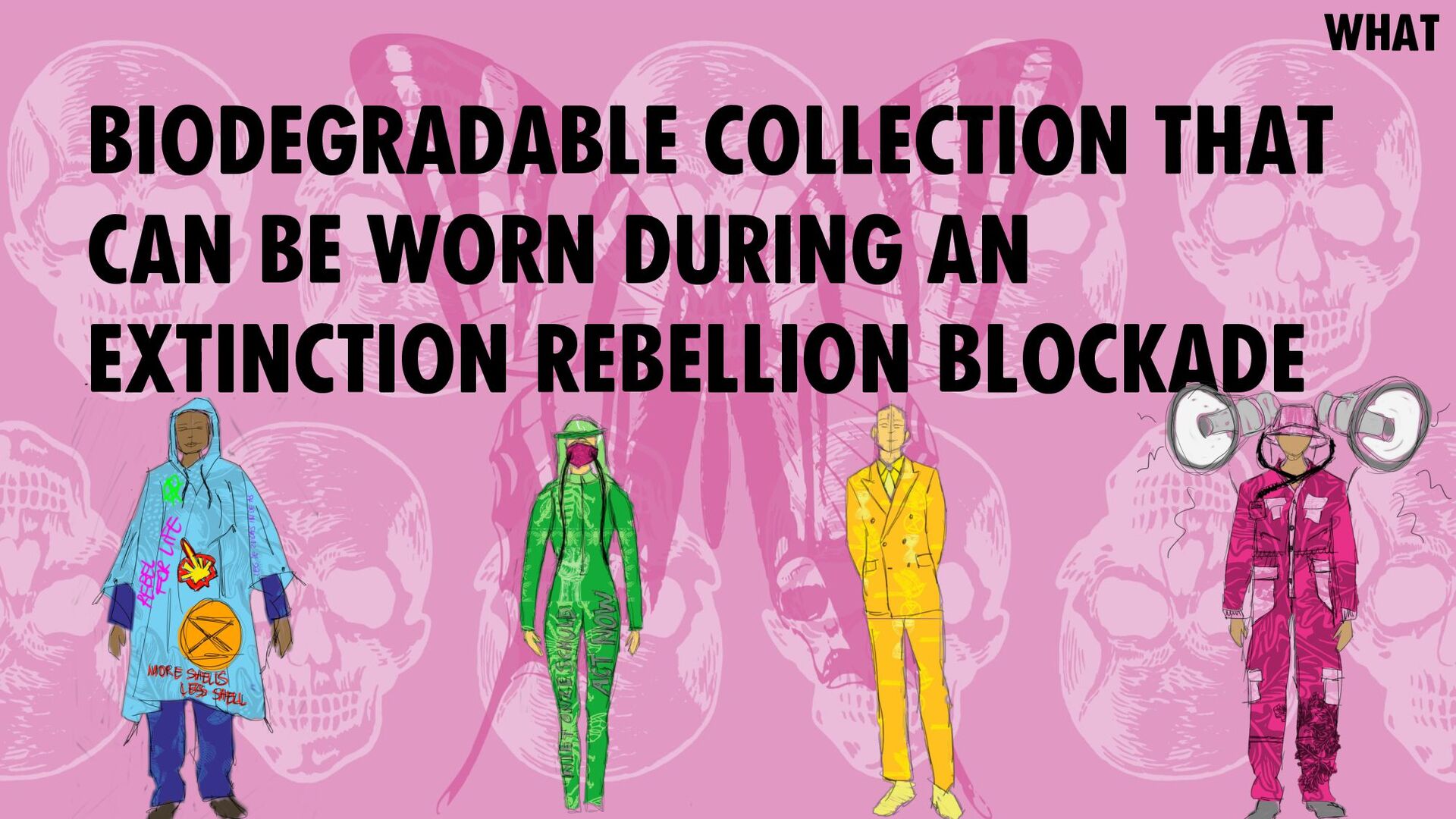
that can be worn during and supports an Extinction Rebellion blockade WHY We are living in a climate crisis. Extinction Rebellion is showing civil disobedience to enforce proper climate justice and policy. The freedom in form of protest of Extinction Rebellion causes the opportunity for artivism, like this collection. Biodegradable materials Extinction Rebellion due to the demand of Extinction Rebellion which is rooted in the ecological crisis whereas biomaterials can play a role in the solution of this same ecological crisis. HOW By researching bio degradable materials, attending A12 protests each weekend, interviewing rebels, study practical archetypes of garments, such as police wear and digitalizing the final biodegradable materials


 laurafreyaweller
 pawan_pharm
 signer
 bvr7352
 ishii_mit
 aokiplayer
 yoshimura_datam
 moriyuya
 rashwhitman
 juanmartin2026
 frievea
 hiola
hiola
 katarinadahlin
 davidcarrasco
 addyosmani
 marketingsoph
 marktimemedia
 skipperchong
 jonrohan
 akashhashmi
 tmiket
 cassininazir
 asonas
 sarafernandez